Get 20% OFF All Premium 3D & STL Models!

In the dynamic landscape of 3D visualization and interactive experiences, the pursuit of photorealism and technical precision drives innovation. From cinematic automotive advertisements to immersive virtual reality showrooms and high-octane racing games, the demand for meticulously crafted 3D car models is ever-growing. These digital assets are the bedrock upon which stunning visuals and engaging simulations are built, requiring not just aesthetic accuracy but also robust technical integrity.
Among the countless vehicles that capture the imagination, the Mercedes-Benz AMG CLA 35 Shooting Brake stands out as a prime example of engineering prowess meeting striking design. Its aggressive AMG styling, sweeping roofline, and dynamic stance encapsulate modern European automotive excellence. Translating such a complex, high-performance machine into a digital twin demands an expert touch, yielding a 3D model that serves as a versatile tool for professionals across diverse industries. This article will delve into the intricacies of creating and utilizing high-fidelity 3D car models, with a spotlight on how exceptional assets, like the Mercedes-Benz AMG CLA 35 Shooting Brake 3D model available at 88cars3d.com, empower creators to achieve unparalleled digital realism and functionality.
Creating a truly high-fidelity 3D car model is a delicate balance between artistic interpretation and precise technical execution. It requires an understanding of complex surfacing, material properties, and optimal data structuring to ensure the model performs flawlessly across various applications, from static renders to real-time simulations.
The journey begins long before the first polygon is laid. Extensive research, including technical drawings, photographic references, and even lidar scans of the actual vehicle, forms the foundation. Every curve, panel gap, and ventilation detail must be accurately translated. This painstaking process ensures that the digital representation captures the authentic character and proportions of the original design. For a vehicle like the Mercedes-Benz AMG CLA 35 Shooting Brake, which boasts distinct design elements such as the Panamericana-style grille and a unique shooting brake profile, precision in this initial phase is paramount.
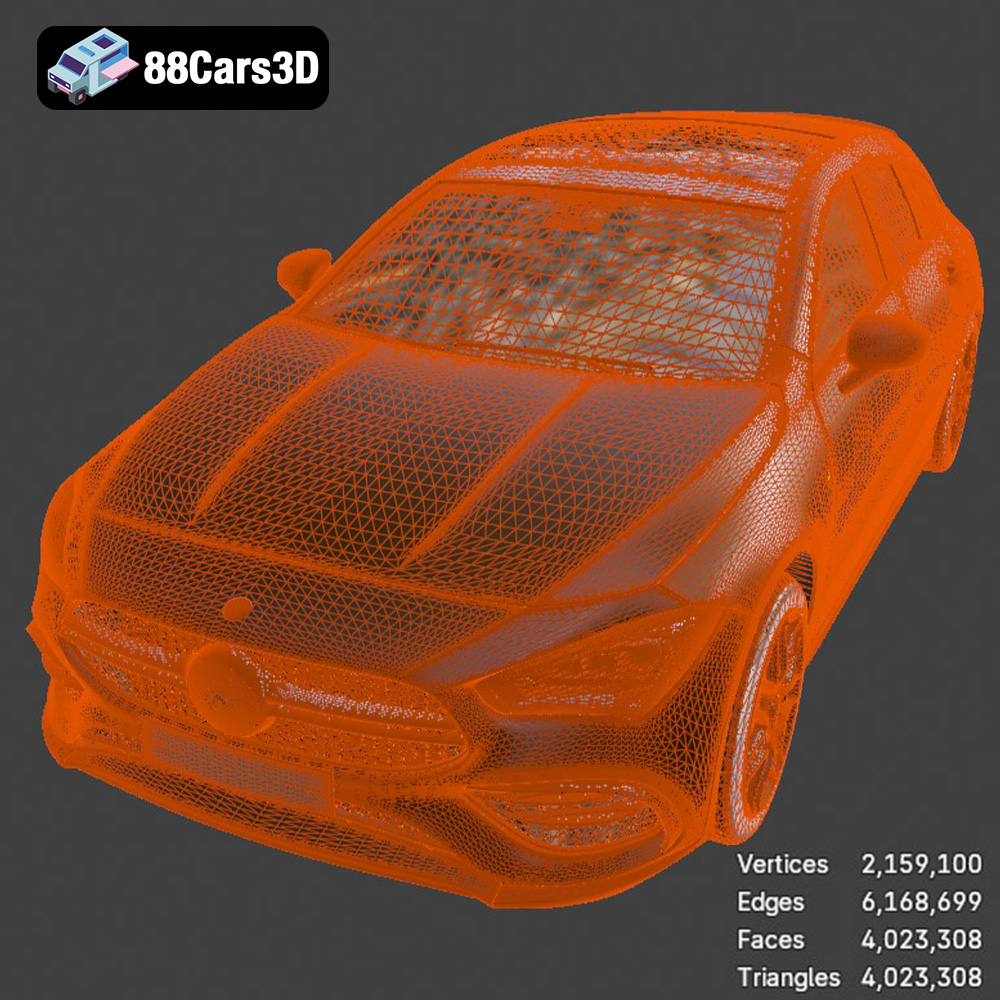
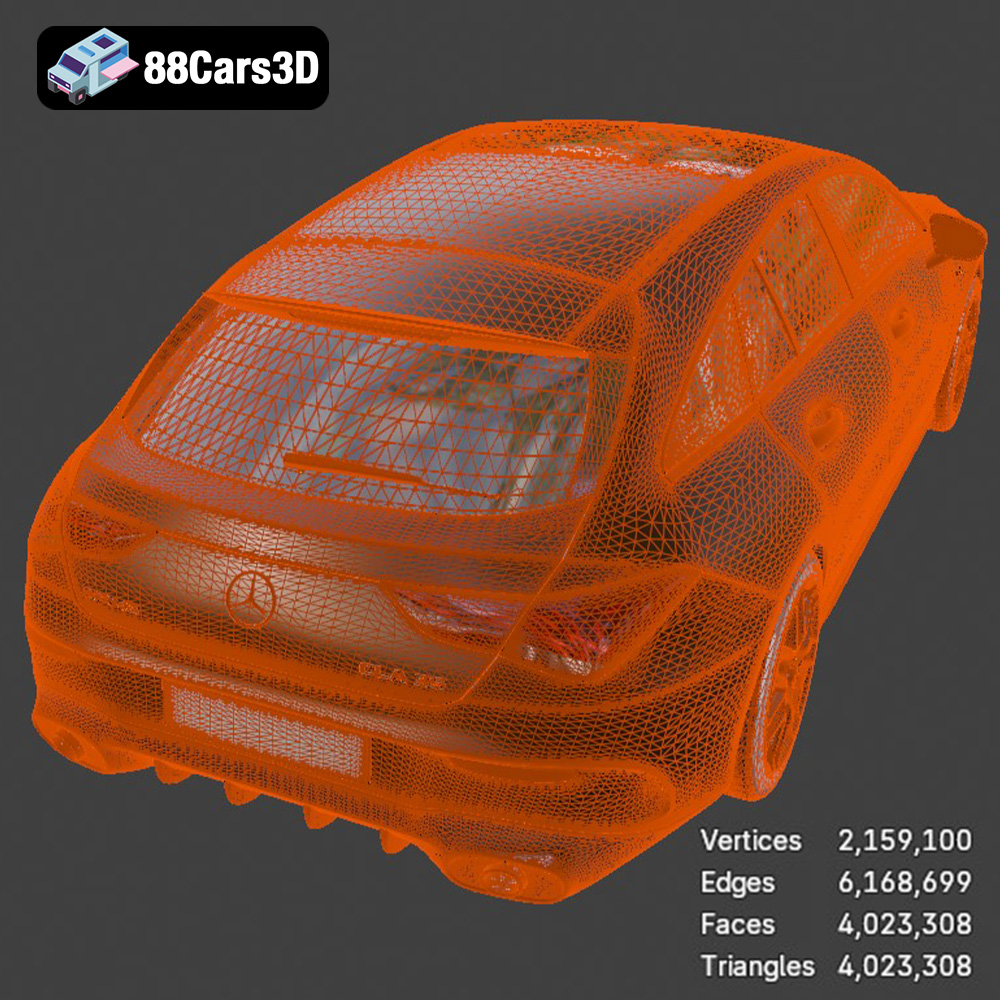
The “fidelity” of a 3D model is often quantified by its polygonal detail. A higher polygon count generally allows for smoother curves and more intricate details, leading to greater visual realism. However, it’s not just about raw numbers; clean topology—the arrangement of polygons—is equally crucial. A well-optimized mesh ensures smooth deformations during animation, efficient UV mapping for texturing, and manageable performance in real-time engines. The Mercedes-Benz AMG CLA 35 Shooting Brake 3D model exemplifies this with a topology of 4,023,308 triangles. This count strikes a perfect balance: high enough to capture every nuance for cinematic rendering, yet structured efficiently enough to be scaled and optimized for demanding game development or AR/VR applications where performance is critical.
The versatility of a 3D asset is often defined by the range of file formats it supports. Each format is engineered for specific purposes, offering unique advantages in terms of compatibility, data retention, and optimization for particular workflows. Understanding these differences is crucial for any professional working with 3D models, ensuring smooth integration into diverse software environments and project pipelines. The Mercedes-Benz AMG CLA 35 Shooting Brake 3D model is thoughtfully provided in a comprehensive suite of formats, maximizing its utility for various creative endeavors.
The .blend file is the native format for Blender, a popular open-source 3D creation suite. It encapsulates an entire Blender scene, including the 3D model’s geometry, materials, textures, lighting setups, cameras, animations, physics simulations, and even custom scripts. This format is ideal for users who primarily work within Blender, offering full editability and the ability to leverage all of Blender’s powerful features. For artists seeking to modify the Mercedes-Benz AMG CLA 35 Shooting Brake model’s materials, adjust its lighting, or integrate it into a complex Blender scene, the .blend file provides the most comprehensive starting point.
FBX (Filmbox) is a proprietary file format owned by Autodesk and is widely regarded as an industry-standard format for exchanging 3D data between different software applications. It excels at storing models, animation data (skeletons, skinning, keyframes), cameras, and lights. .fbx is particularly favored in game development for engines like Unreal and Unity, and in real-time pipelines, due to its robust support for animations and PBR (Physically Based Rendering) materials. When you download the Mercedes-Benz AMG CLA 35 Shooting Brake model in .fbx format, you’re getting an asset ready for immediate integration into your game engine or animation software, maintaining high fidelity of geometry and material assignments.
OBJ (or Wavefront OBJ) is one of the oldest and most universally supported 3D file formats. It’s a simple, text-based format primarily used to store 3D geometry data—specifically vertex positions, UV coordinates, vertex normals, and polygonal faces. While .obj files do not store animation, lighting, or complex material properties (these are usually stored in an accompanying .mtl file), their widespread compatibility makes them excellent for simple model exchange between almost any 3D software. For static renders or base geometry importing, the .obj version of the AMG CLA 35 Shooting Brake model ensures broad cross-software compatibility.
GLB (GL Transmission Format Binary) is a relatively newer format designed for the efficient transmission and loading of 3D scenes and models in web and AR/VR applications. It’s a binary version of glTF, which packages all necessary data (geometry, textures, materials, animations) into a single, self-contained file. This makes .glb incredibly efficient for browser-based display, interactive web experiences, and mobile augmented reality. The .glb variant of the Mercedes-Benz AMG CLA 35 Shooting Brake model is perfectly optimized for showcasing the vehicle in virtual showrooms or within immersive AR/VR environments, offering excellent visual quality with minimal loading times.
STL (Stereolithography) is the de facto standard file format for 3D printing. It represents a 3D model as a series of connected triangles, essentially describing the surface geometry of an object without color, texture, or other CAD attributes. For hobbyists and professionals looking to physically manifest the Mercedes-Benz AMG CLA 35 Shooting Brake, the .stl format is essential. It provides a clean, triangulated mesh directly suitable for slicing software, enabling the creation of physical scale models with impressive accuracy, adhering to the detailed 3D print settings provided with the model.
PLY (Polygon File Format) is another format for storing 3D data, particularly popular in scientific and CAD applications, as well as for models acquired through 3D scanning. It can store various properties beyond just geometry, such as color, transparency, surface normals, and texture coordinates, often per vertex. While less common for general model exchange than FBX or OBJ, .ply offers a robust solution for precision mesh data, useful for specific engineering or analysis workflows where vertex-level attribute precision is critical for the CLA 35 Shooting Brake.
While .unreal isn’t a traditional file extension like the others, it signifies an asset that has been specifically prepared and optimized for seamless integration into Unreal Engine. This typically means the asset, often an FBX, has been imported, had its materials set up with Unreal’s PBR workflow, and possibly includes LODs (Levels of Detail), collision meshes, and proper pivot points configured for an Unreal Engine project. This ready-to-use nature saves significant development time, allowing creators to immediately leverage the Mercedes-Benz AMG CLA 35 Shooting Brake model in their real-time environments without extensive re-configuration.
The .max file is the native format for Autodesk 3ds Max, a leading software for 3D modeling, animation, rendering, and visualization. Similar to .blend, it contains all elements of a 3ds Max scene, including geometry, complex material definitions, textures, lighting, cameras, animation, and scene hierarchies. For users entrenched in the 3ds Max ecosystem, the .max file offers complete editability and the ability to work with the model in its original, uncompressed state, making it ideal for high-end rendering and detailed animation projects involving the Mercedes-Benz AMG CLA 35 Shooting Brake.
This comprehensive array of file formats ensures that the Mercedes-Benz AMG CLA 35 Shooting Brake 3D model from 88cars3d.com is a truly versatile and professional-grade asset, adaptable to virtually any project requirement or software pipeline.
Beyond file formats, the true value of a premium 3D model lies in its meticulous attention to detail and its readiness for complex applications. The Mercedes-Benz AMG CLA 35 Shooting Brake 3D model embodies this dedication, translating a real-world marvel into a digital powerhouse.
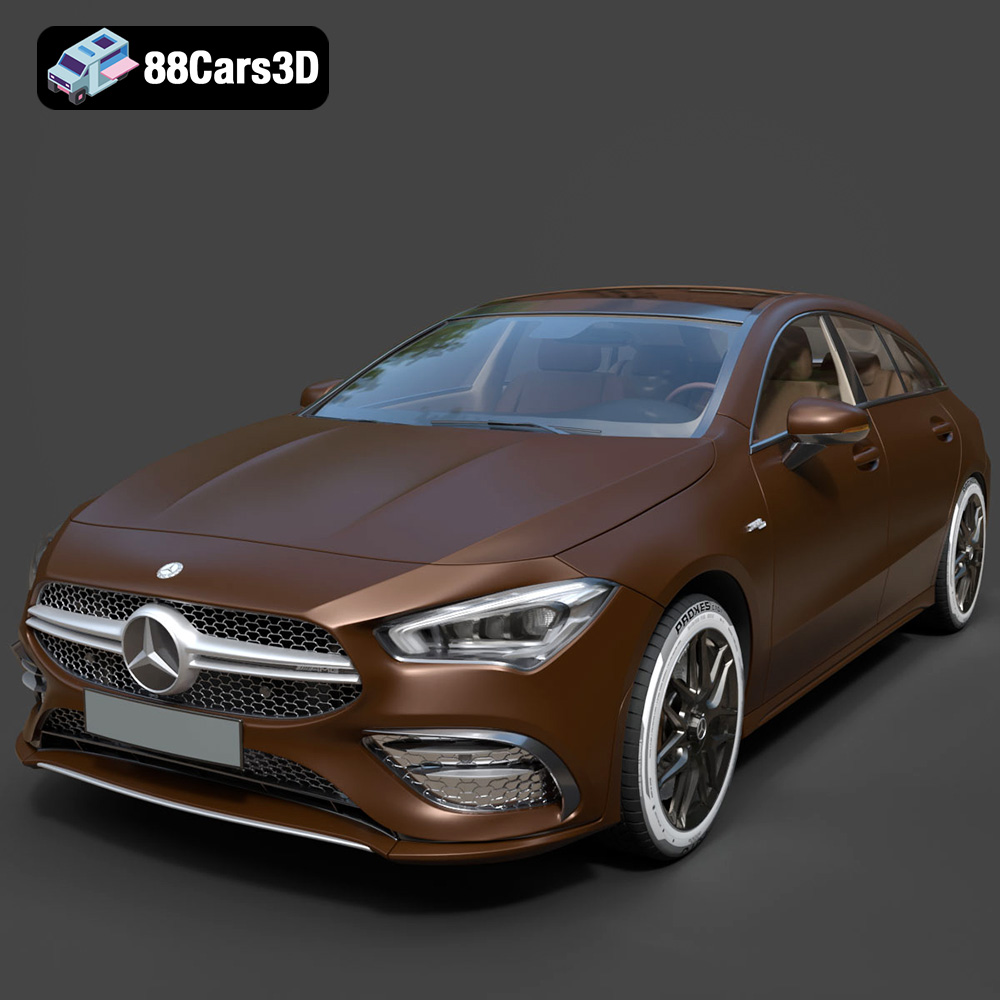
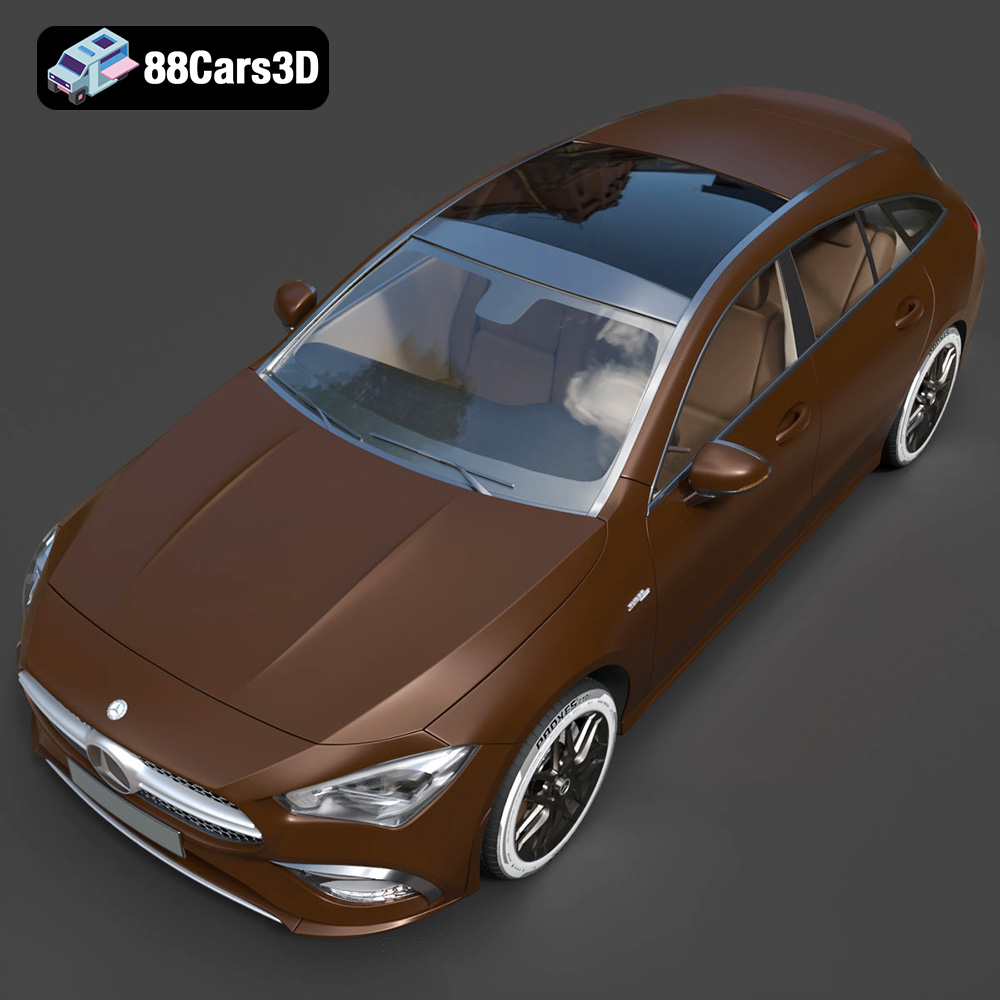
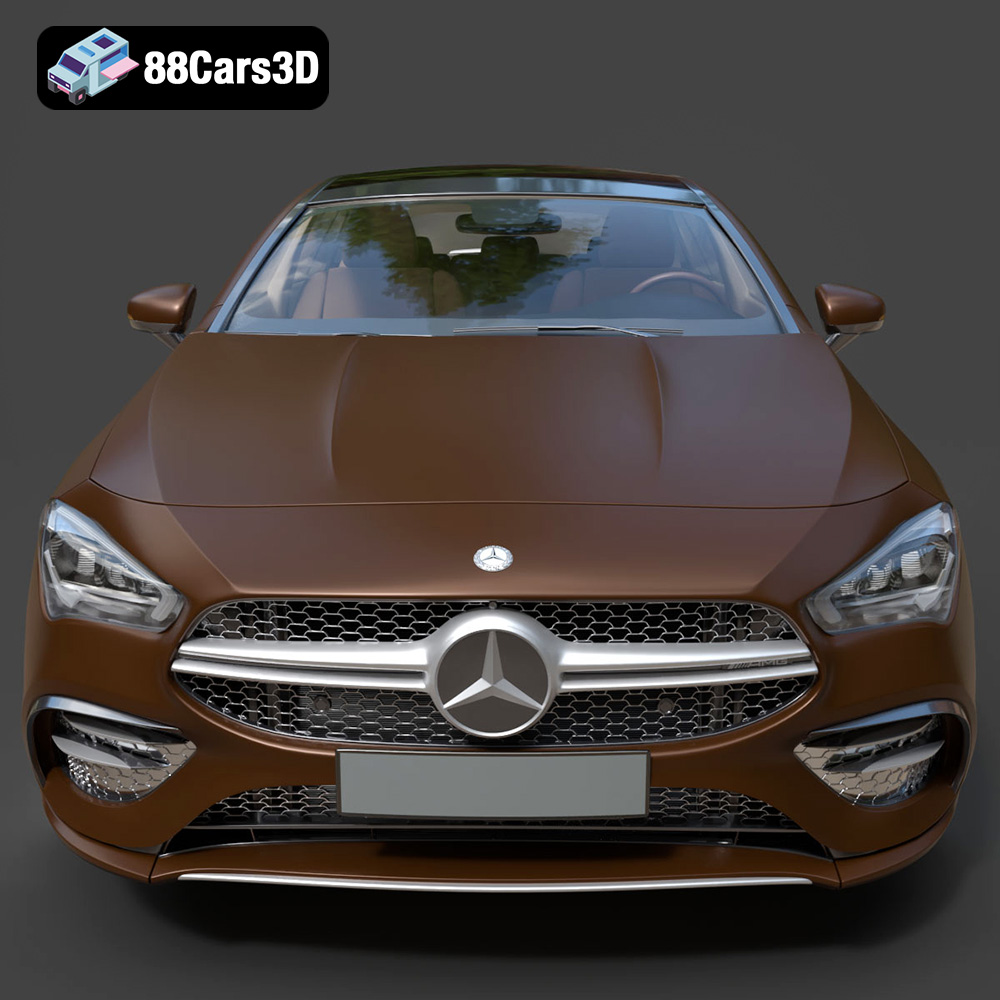
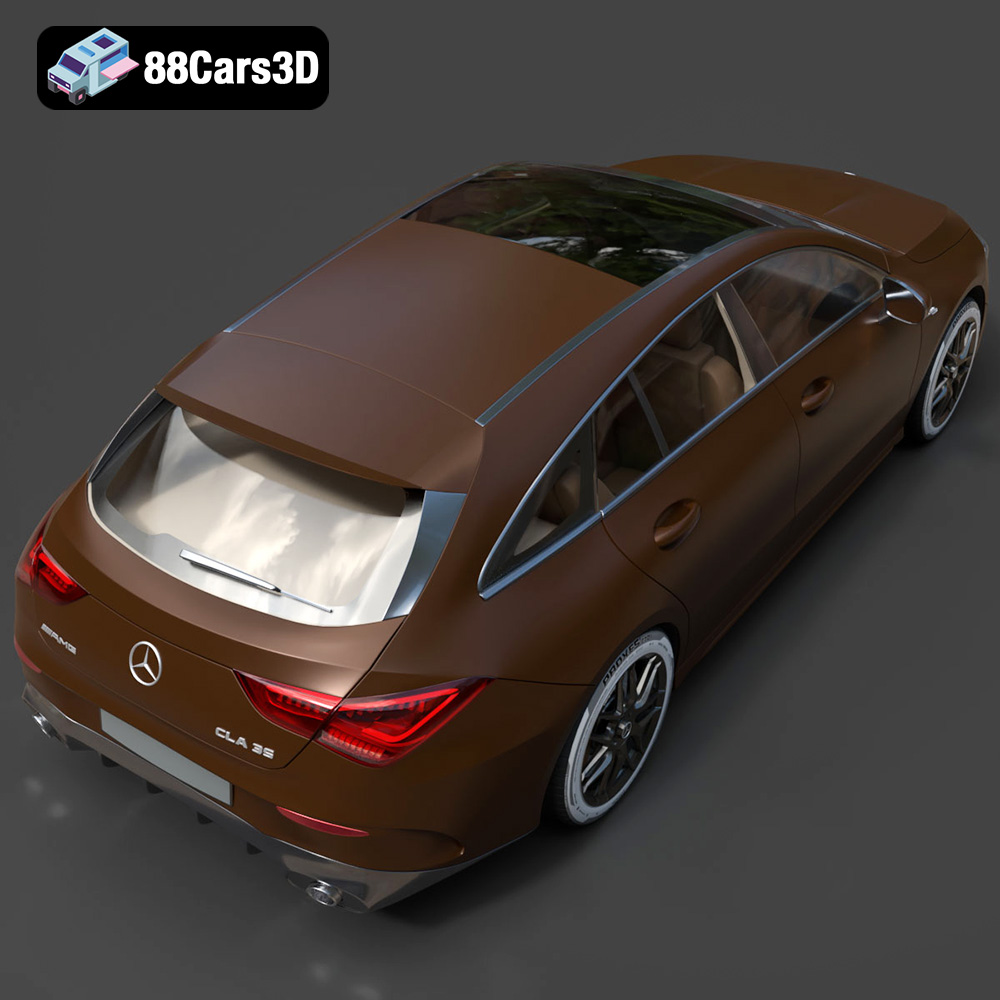
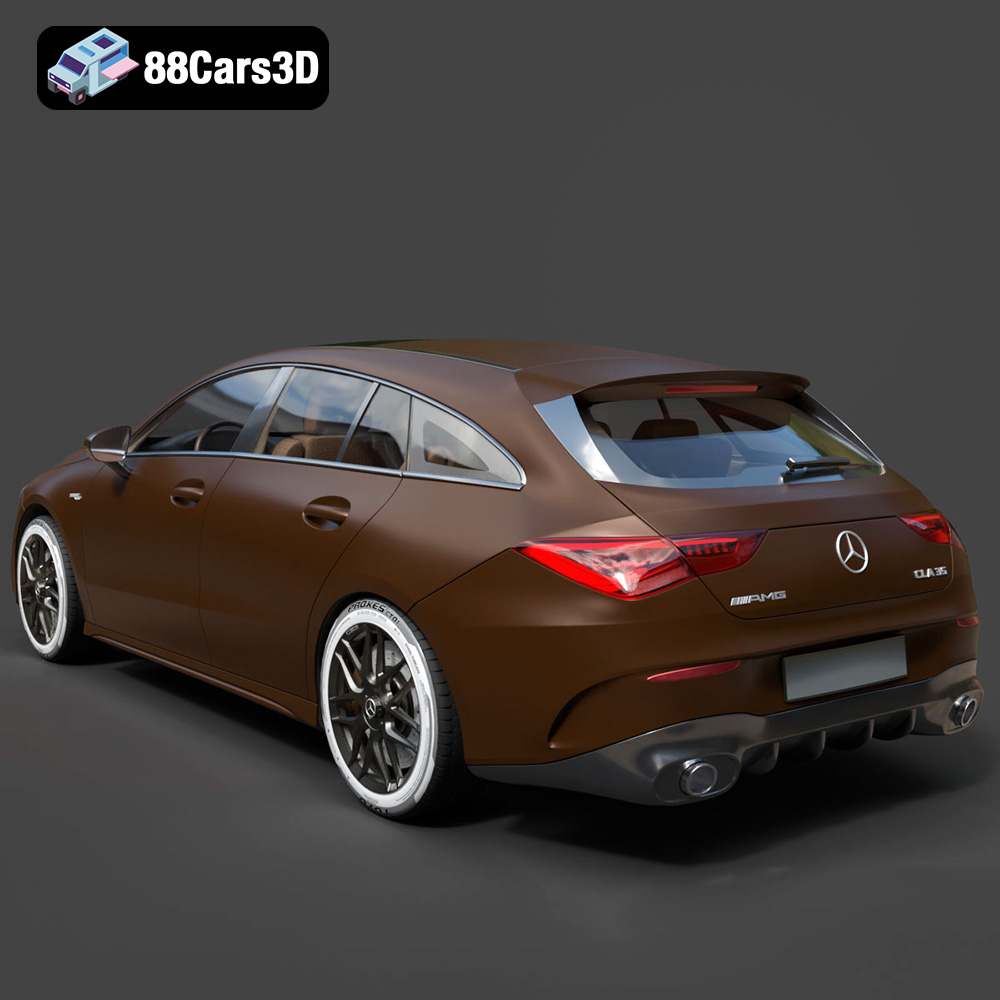
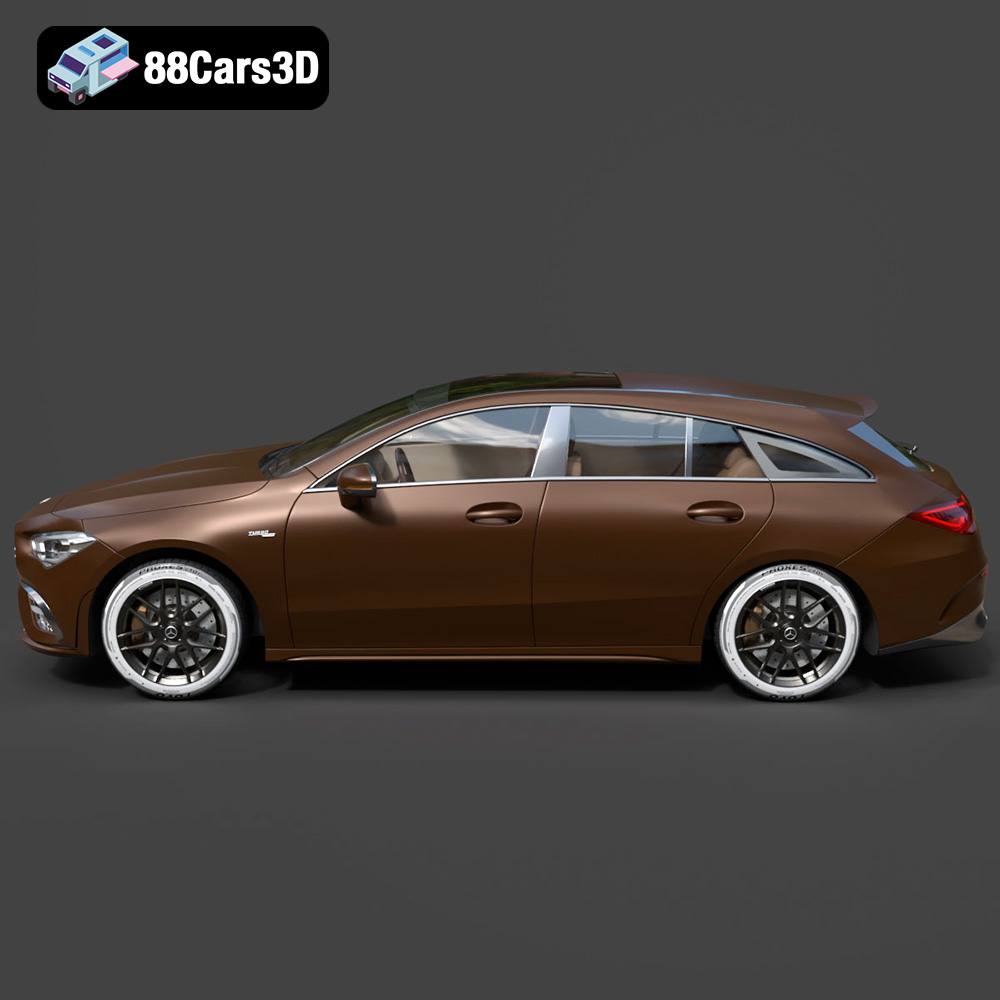
The external appearance of the AMG CLA 35 Shooting Brake is where its distinctive character truly shines. The 3D model captures its aggressive AMG styling, from the signature Panamericana-style grille and sporty front splitter to the muscular rear diffuser and dual round exhaust tailpipes. Every LED High Performance headlamp and distinct taillight signature is precisely replicated, ensuring photorealistic lighting interactions. The multi-spoke AMG light-alloy wheels with realistic low-profile tires are meticulously modeled, right down to the detailed sport suspension components and AMG-branded brake calipers. Crucially for animators and game developers, the model features separate components for the wheels, suspension, and steering, all with proper pivot setups. This enables realistic wheel rotation, suspension travel, and steering articulation, making it perfect for dynamic driving sequences or interactive simulations. The entire model is built to real-world scale accuracy, based on the actual vehicle chassis, guaranteeing perfect integration into architectural visualizations or realistic driving environments.
The interior of the Mercedes-Benz AMG CLA 35 Shooting Brake is just as compelling as its exterior. The 3D model brings the cockpit to life with sport-contoured AMG Performance seats featuring intricate stitching details, a flat-bottomed Nappa leather AMG steering wheel, and a highly detailed MBUX dual-screen digital instrument cluster and infotainment system. Precise interior controls, including sport pedals, paddle shifters, and center console touchpads, are all faithfully recreated. This level of interior detail is invaluable for first-person perspective (POV) in gaming and VR simulations, offering users an immersive and authentic experience. The optimized geometry ensures that even with such high detail, the model remains performant enough for real-time engines, allowing for fluid interaction and rendering within complex virtual environments.
The technical excellence of a 3D model like the Mercedes-Benz AMG CLA 35 Shooting Brake finds its ultimate purpose in its application across various professional domains. From high-end marketing campaigns to interactive digital experiences, its versatility is a key asset.
For automotive studios, advertising agencies, and architectural visualization firms, photorealistic rendering is paramount. The Mercedes-Benz AMG CLA 35 Shooting Brake 3D model is an ideal candidate for producing stunning visuals. In workflows using software like Autodesk 3ds Max with V-Ray or Corona Renderer, or Blender with Cycles, the model’s high polygon count and clean topology allow for breathtaking detail. Artists can craft elaborate studio lighting setups, integrate the vehicle seamlessly into dynamic lifestyle scenes, or place it within architectural renders with impeccable realism. The ability to customize body colors, material finishes (matte, gloss, metallic), and adapt lighting for different environments further enhances its value for brand campaigns and product configurators, ensuring every visual tells a compelling story.
The game development and AR/VR industries demand models that are not only visually impressive but also optimized for real-time performance. The Mercedes-Benz AMG CLA 35 Shooting Brake model, with its robust 4,023,308 triangle count, is perfectly suited as a “game-ready” asset. While exceptionally detailed for cinematic quality, its clean mesh structure allows for efficient creation of Level of Detail (LOD) variations, ensuring smooth performance across various platforms. Developers can leverage the .fbx or .unreal formats for seamless integration into Unreal Engine or Unity, creating compelling open-world games, realistic racing titles, or advanced driving simulators. In AR/VR, the .glb format enables the creation of immersive virtual showrooms, where potential customers can explore the vehicle in 3D, or interactive configurators that allow real-time customization, pushing the boundaries of virtual interaction.
Beyond digital displays, the Mercedes-Benz AMG CLA 35 Shooting Brake 3D model offers the unique opportunity to bridge the gap between virtual and physical reality through 3D printing. The provided .stl format makes it directly compatible with 3D printing software. Hobbyists and professional model makers can produce highly detailed physical replicas, bringing the digital design into the tangible world. The model includes specific 3D print settings recommendations, such as scales (1:12 / 1:18 / 1:24), layer height (0.04–0.12 mm, with resin printing recommended for fine details), wall thickness, infill percentages, and crucial support requirements for intricate parts like the exhaust and mirrors. Post-processing suggestions, including sanding, priming, and applying authentic factory colors with metallic finishes, ensure that the printed model achieves a professional, display-worthy finish.
A premium 3D asset provides a foundation, but its true power is unlocked through seamless integration into existing workflows and flexible customization options. The Mercedes-Benz AMG CLA 35 Shooting Brake 3D model is designed with this professional adaptability in mind, ensuring creators can achieve their vision with efficiency and precision.
The provision of multiple file formats (.blend, .fbx, .obj, .max) ensures broad compatibility with industry-standard 3D software. Importing the Mercedes-Benz AMG CLA 35 Shooting Brake into 3ds Max, Blender, or Unreal Engine is a straightforward process. Once imported, the model’s clean topology and well-defined UVs (essential for accurate texture mapping, even if not explicitly detailed in polycount) facilitate an efficient material setup. Artists can easily apply PBR (Physically Based Rendering) textures for photorealistic surface properties—whether it’s the gleam of metallic paint, the subtle sheen of Nappa leather, or the intricate details of carbon fiber elements. This ready-to-use structure significantly reduces the setup time, allowing artists to focus more on creative direction rather than technical preparation.
No two projects are identical, and the ability to customize a 3D model is invaluable. The Mercedes-Benz AMG CLA 35 Shooting Brake model offers extensive customization options, giving artists the freedom to tailor its appearance to specific project requirements. Users can easily change body colors, experimenting with factory hues or custom finishes to match brand guidelines or artistic visions. Modifying tire textures to represent off-road, street, or racing variants can dramatically alter the vehicle’s character. Adjusting material finishes—from a high-gloss show car look to a subtle matte stealth finish—provides further stylistic control. Furthermore, adapting the lighting for different environments, such as a sunny outdoor scene, a dramatic studio setup, or an atmospheric night drive, can profoundly impact the mood and realism of a render. This flexibility ensures that the Mercedes-Benz AMG CLA 35 Shooting Brake 3D model is not just a static asset, but a dynamic canvas for creative expression.
In the realm of professional 3D content creation, the difference between good and exceptional often lies in the quality and versatility of the underlying assets. A meticulously crafted 3D car model, such as the Mercedes-Benz AMG CLA 35 Shooting Brake, transcends being merely a digital object; it becomes a powerful tool that unlocks a myriad of creative possibilities across diverse industries. From hyper-realistic automotive rendering and immersive game development to cutting-edge AR/VR experiences and detailed 3D printing projects, the value of a technically precise and aesthetically accurate model is immeasurable.
The Mercedes-Benz AMG CLA 35 Shooting Brake 3D model, with its impressive 4,023,308 triangle topology, precise interior and exterior details, animation-ready components, and comprehensive file format support, exemplifies the pinnacle of professional 3D asset development. It offers creators a robust foundation, allowing them to focus on innovation and storytelling rather than grappling with technical imperfections. For professionals seeking to elevate their projects with premium 3D car models, exploring the curated selection at 88cars3d.com, including this exceptional Mercedes-Benz AMG CLA 35 Shooting Brake, is a definitive step towards achieving unparalleled visual fidelity and creative freedom.
The Mercedes-Benz AMG CLA 35 Shooting Brake is a striking blend of sports car performance and practical estate versatility. With its aggressive AMG styling, sweeping roofline, and dynamic stance, this vehicle stands out in the compact luxury segment. Key visual elements include the signature AMG Panamericana-style grille, a sporty front splitter, dual round exhaust tailpipes, and a muscular rear diffuser. Under the hood lies the spirit of a 2.0-liter turbocharged inline-4 engine, making it a masterclass in modern European automotive design. This 3D model boasts an exceptional level of detail with a topology of 4,023,308 triangles, ensuring maximum visual fidelity for high-end rendering while maintaining an optimized structure that can be scaled for real-time engines. It is meticulously crafted to deliver photorealistic results, making it highly versatile for various professional applications including AAA game development, immersive AR/VR experiences, cinematic animation, and high-resolution automotive visualization.
$90.00
.blend
.fbx
.glb
.max
.obj
.ply
.rendering
.sports car
.stl
.unreal
amg-cla-35
car-3d-model
estate-car
game asset
game-ready
highly-detailed
luxury car
mercedes-benz
optimized
shooting-brake
station-wagon
VR/AR