Get 20% OFF All Premium 3D & STL Models!

The roar of a big-block V8, the unmistakable silhouette of raw power, and an era defined by untamed American muscle – the 1969 Chevrolet Chevelle SS remains an automotive legend. More than just a car, it’s a cultural icon, a symbol of freedom and performance that continues to ignite passion decades later. For 3D artists, game developers, automotive visualizers, and AR/VR creators, bringing such a revered classic into the digital realm presents a unique challenge and an incredible opportunity. It requires meticulous attention to detail, technical precision, and a deep understanding of how to translate physical presence into virtual fidelity.
Imagine harnessing that power and presence within your next project. The Chevrolet Chevelle SS 1969 3D Model featured on 88cars3d.com embodies this very pursuit. It’s not just a collection of polygons; it’s a carefully crafted digital asset designed to meet the rigorous demands of modern creative pipelines. From high-fidelity automotive rendering to game-ready optimization, this model offers a versatile foundation for a myriad of applications. This blog post will delve deep into the technical intricacies, workflow considerations, and boundless creative potential unleashed when a legend like the ’69 Chevelle SS is perfectly sculpted in three dimensions.
The foundation of any successful 3D project lies in choosing the correct file format. Each format serves a specific purpose, offering unique advantages for compatibility, functionality, and optimization across different software and platforms. Understanding these nuances is critical for efficient workflows, especially when working with complex 3D car models like the Chevrolet Chevelle SS 1969. The model from 88cars3d.com thoughtfully provides a comprehensive suite of formats, ensuring maximum flexibility for professionals.
The .blend file format is Blender’s native project file. It’s much more than just a mesh; it’s a complete scene package. When you open a .blend file, you’re loading all the elements of the original Blender project: the 3D model geometry, materials (with all their complex nodes and textures), lighting setups, cameras, animation data, physics simulations, and even scene organization (collections, layers). This format is ideal for users working primarily within Blender who need full editability and access to every aspect of the scene without losing any data during export/import processes. For the Chevelle SS, the .blend file provides the most comprehensive starting point for Blender artists to customize, animate, and render with complete control over the model’s detailed topology and material definitions.
.fbx (Filmbox) is arguably the most widely adopted proprietary file format for 3D content interchange, developed by Autodesk. Its strength lies in its ability to store not just mesh data (vertices, faces, UVs), but also skeletal animations, blend shapes, lights, cameras, and material definitions. This makes .fbx indispensable for pipelines involving multiple software packages, particularly for game development. Both Unreal Engine and Unity rely heavily on .fbx for importing complex animated assets. The Chevelle SS 1969 3D Model’s .fbx version is perfectly structured for real-time engines, ensuring that its optimized geometry, pivot setups for wheels and steering, and potentially basic material slots transfer seamlessly, ready for engine-specific material setup and physics integration.
The .obj (Wavefront OBJ) format is a classic, universal format for 3D geometry. It’s highly compatible across almost all 3D software applications. An .obj file primarily stores vertex positions, UV coordinates, normals, and face information. It can reference an accompanying .mtl (Material Template Library) file for basic material properties and texture paths, though it doesn’t embed textures or complex shaders directly. While it lacks animation or scene data, its simplicity and widespread support make it excellent for cross-software mesh transfer, especially when the primary concern is the raw geometric data. For the Chevelle SS, the .obj provides a clean, reliable mesh for integration into virtually any 3D environment where more advanced features aren’t immediately required.
.glb (GL Transmission Format Binary) is the binary version of glTF, a royalty-free specification for 3D scenes and models. It’s specifically designed for efficient transmission and loading of 3D content, particularly for web-based applications, augmented reality (AR), and virtual reality (VR). A .glb file packages all necessary data – geometry, materials, textures, and animations – into a single, compact file, making it ideal for fast loading times and deployment in browser-based viewers or mobile AR apps. Its optimization for real-time rendering and smaller file size is a huge advantage for immersive experiences, making the Chevelle SS .glb file perfect for interactive web configurators or virtual showrooms.
.stl (Stereolithography) is the de facto standard file format for 3D printing. Unlike other formats that store complex mesh data, .stl represents a 3D object as a collection of unconnected triangles, forming the surface geometry. It does not carry color, texture, or material information, focusing solely on the object’s shape for additive manufacturing. While the Chevelle SS model is highly detailed, its .stl output is crucial for hobbyists and professionals looking to physically manifest the digital model. The provided .stl conversion allows for precise scaling and preparation for FDM or resin printing, capturing the iconic curves and features in a tangible form.
The .ply (Polygon File Format) is another widely used format for storing 3D data, particularly known for its ability to handle more complex information beyond just geometry. While similar to .obj in storing vertices, faces, and normals, .ply can also store additional properties like vertex colors, transparency, confidence values, and surface properties. It’s often used for data generated by 3D scanners, CAD applications, or for scientific and analytical purposes where precision and extra data attributes are important. For specialized applications or direct integration with certain engineering or scanning software, the Chevelle SS .ply file offers a robust and precise representation.
The .unreal format signifies an asset specifically packaged and optimized for Unreal Engine. This isn’t a universal format; rather, it’s an asset that has been prepared and potentially exported directly from a pre-configured Unreal project or pipeline. This often means it comes with pre-assigned materials, LODs (Levels of Detail), collision meshes, and potentially even blueprint scripts ready for immediate integration. The .unreal version of the Chevelle SS 1969 3D Model streamlines the development process significantly for Unreal Engine users, bypassing many initial setup steps and providing an engine-ready asset that’s already compliant with Unreal’s ecosystem.
Finally, the .max file is the native project format for Autodesk 3ds Max. Similar to the .blend file for Blender, a .max file contains the entire scene data, including all 3D objects, modifiers, materials, textures, lights, cameras, animations, and render settings specific to 3ds Max. For professionals whose primary DCC (Digital Content Creation) tool is 3ds Max, the .max file provides maximum flexibility and editability. It allows full access to the original construction of the Chevelle SS model, enabling advanced animation, complex rendering setups with V-Ray or Corona, and intricate customization without any loss of data inherent in cross-format conversions.
Bringing a revered classic like the 1969 Chevrolet Chevelle SS into the digital realm is an art form that blends technical skill with a deep appreciation for automotive history. The 3D model available at 88cars3d.com exemplifies this synthesis, offering a meticulously crafted representation that respects the original while providing the versatility required for modern creative pipelines.
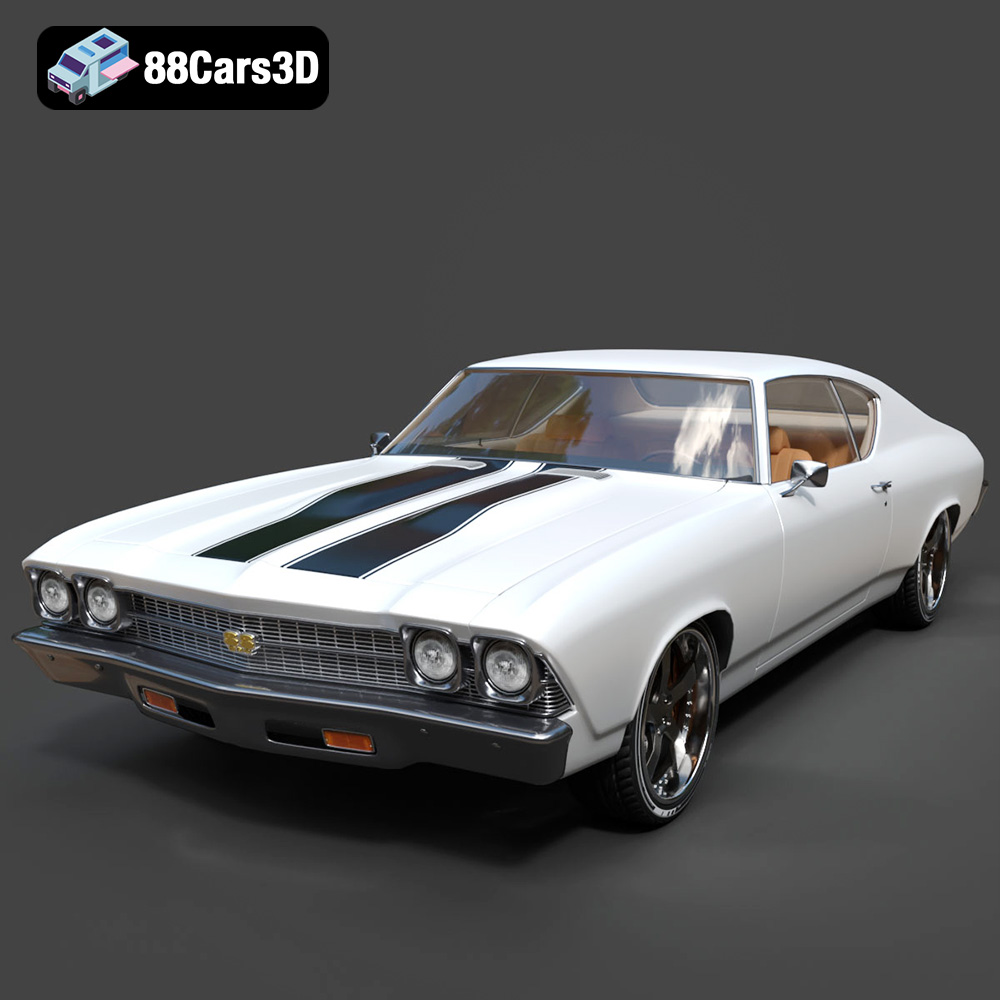
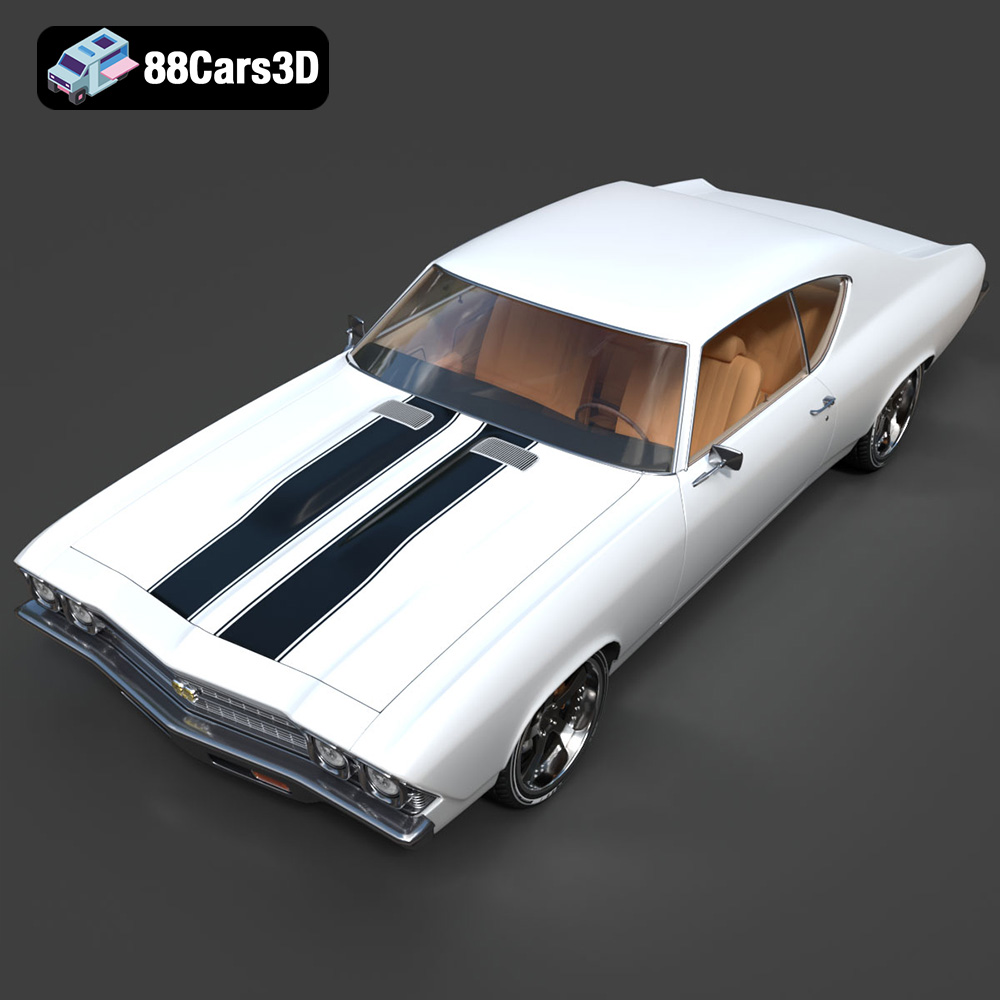
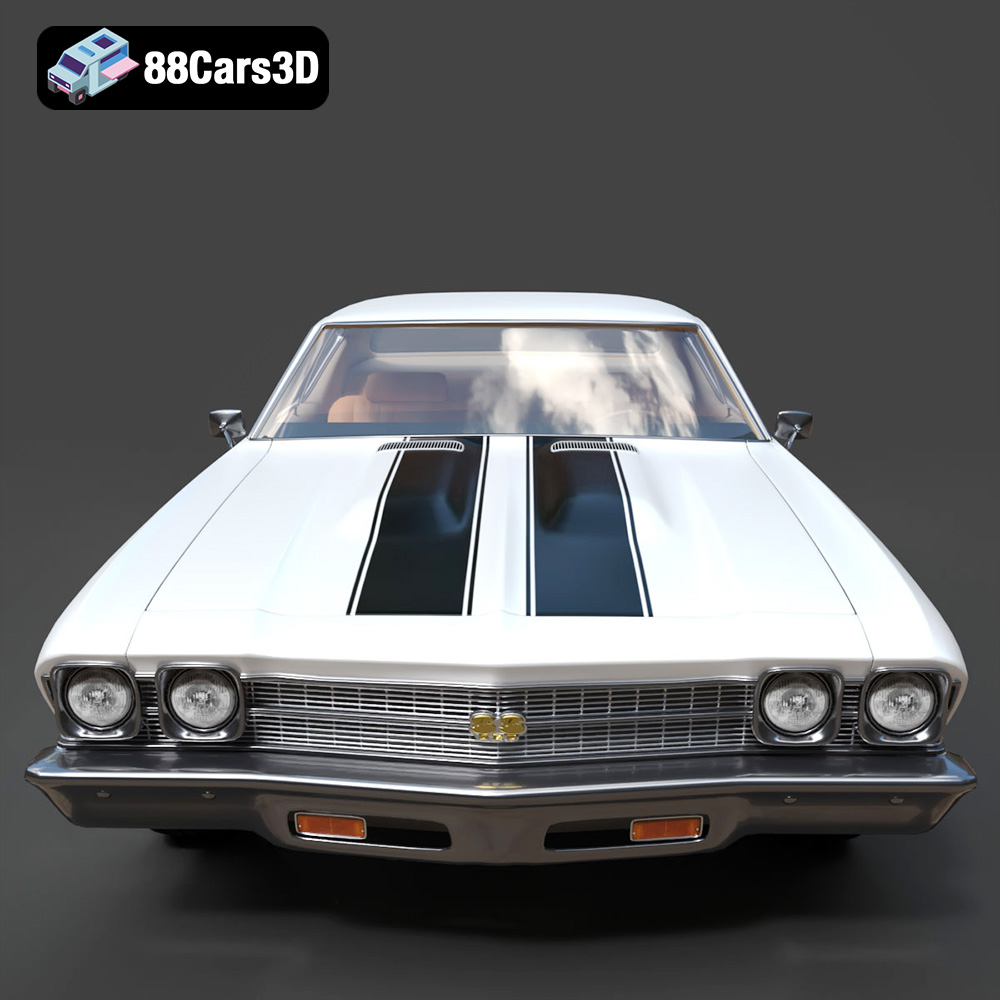
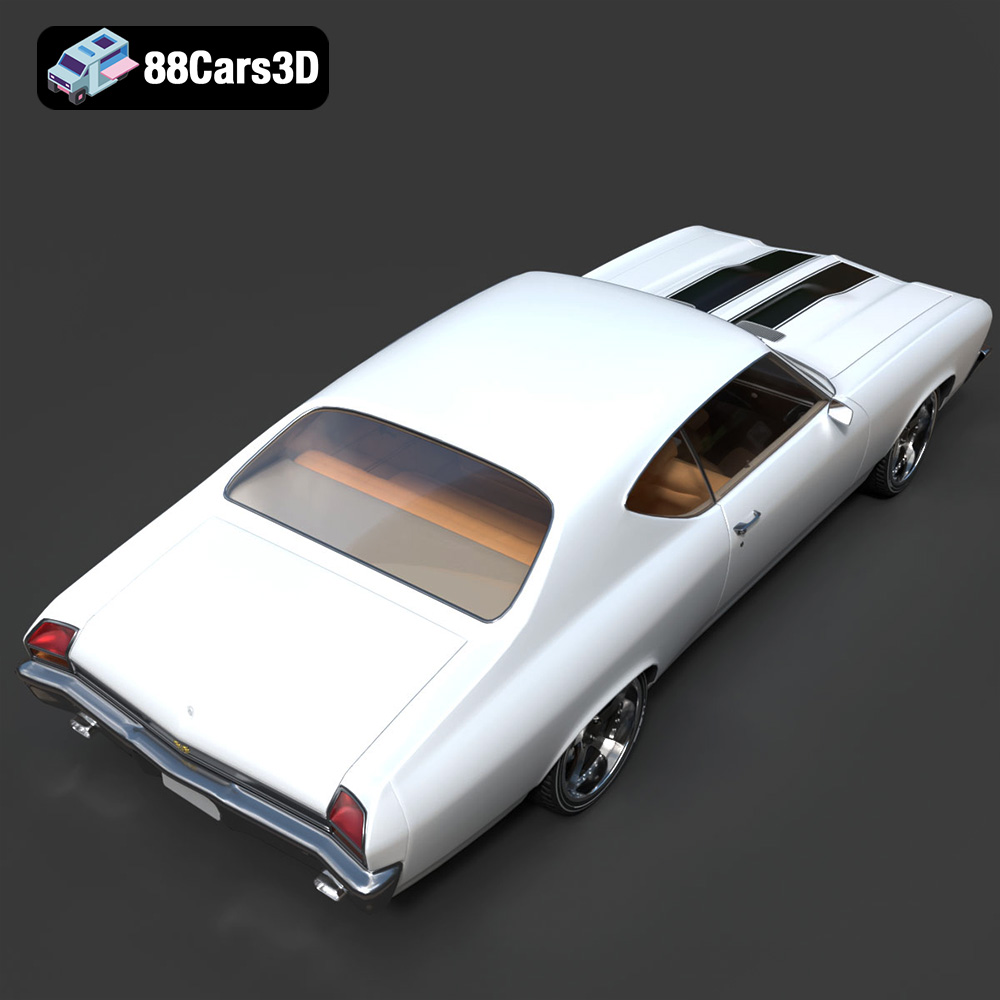
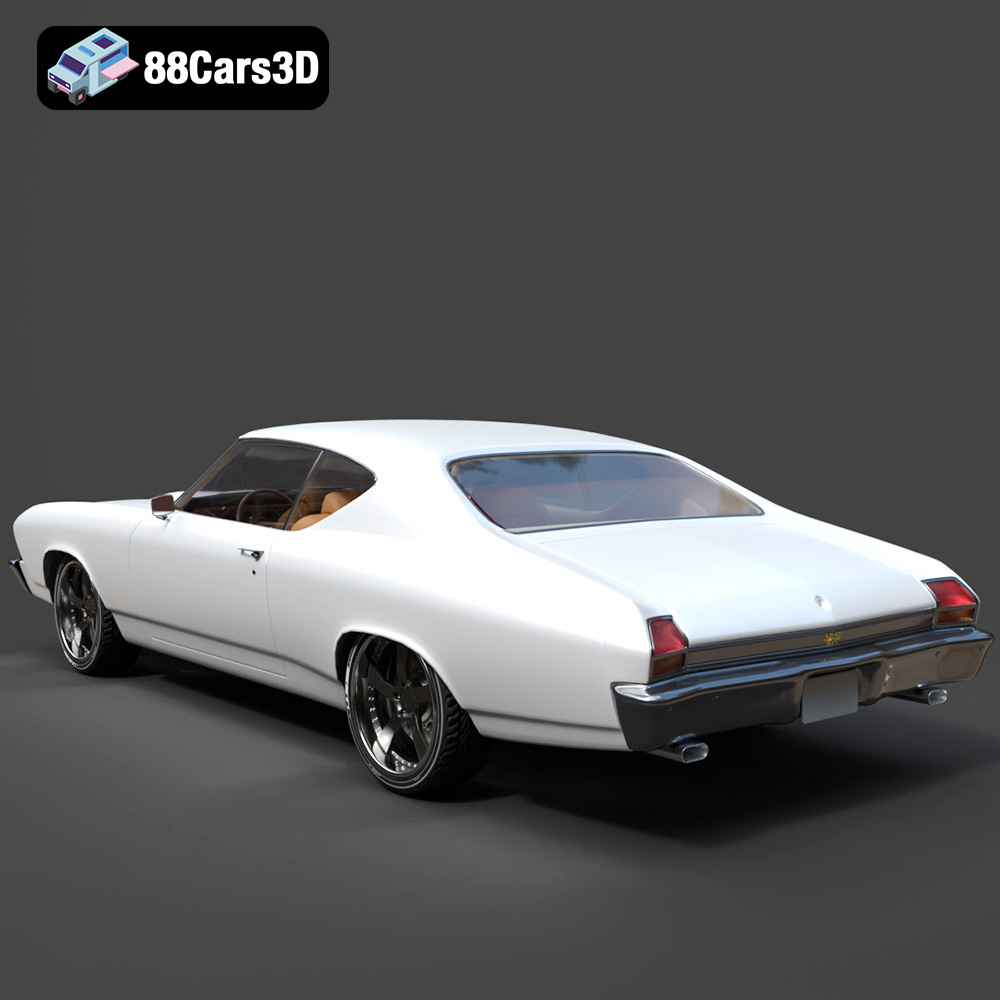
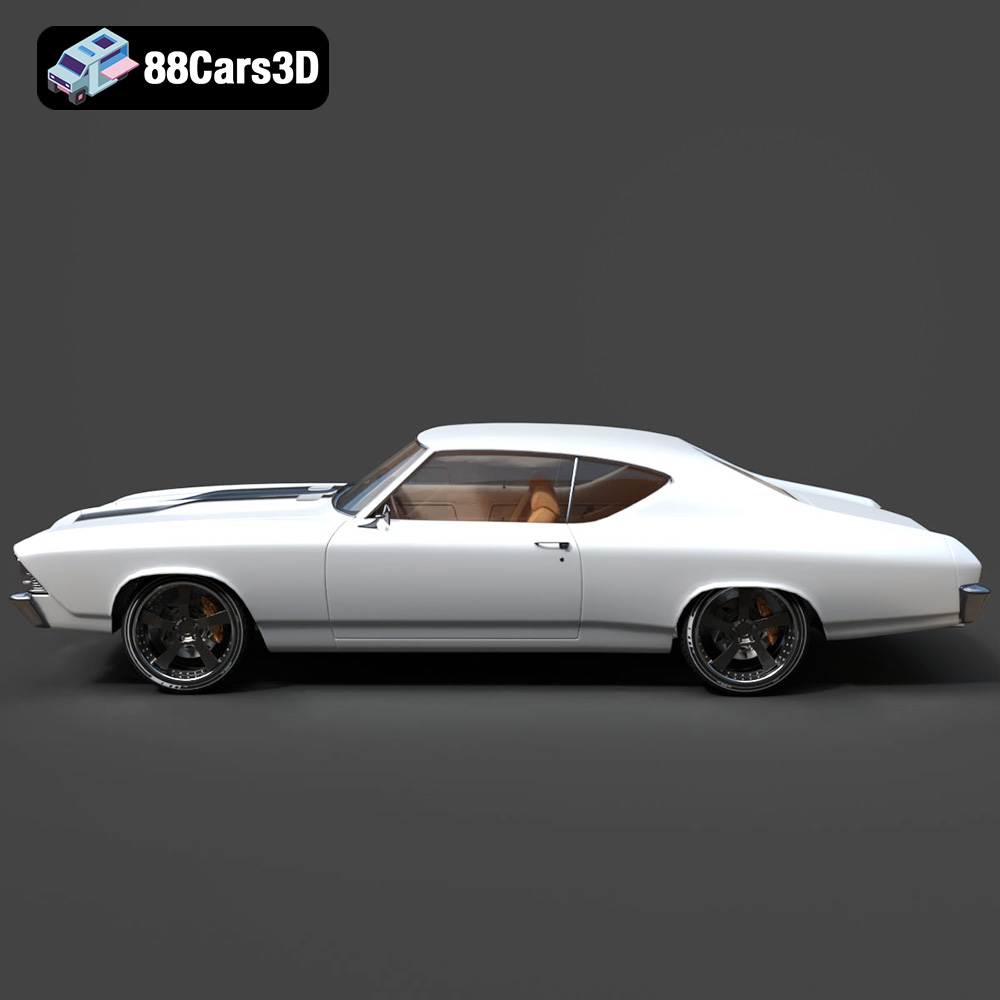
The core of any exceptional 3D car model lies in its authenticity. This Chevelle SS model leaves no stone unturned in recreating the imposing presence of the original. Its muscular proportions and aggressive stance are instantly recognizable, capturing the very essence of American muscle. Every subtle curve of the body, from the iconic “coke bottle” waistline to the flared wheel arches, has been recreated with precision. The distinctive quad-headlight front grille, a signature of the ’69 model, is rendered with impressive fidelity, complemented by the authentic rear taillight panel.
Beyond the surface, the model boasts a detailed big-block V8 engine bay, complete with visible components, ready for hood-open displays in virtual showrooms or close-up cinematic shots. The authentic dual exhaust system with its chrome-finished tips and the classic SS rally wheels wrapped in period-correct wide-tread tires further elevate the realism. Even the suspension and undercarriage components are detailed, an often-overlooked area that adds significant depth for professional automotive rendering and vehicle dynamics simulations. Crucially, the separate wheels, suspension, and steering components are pivot-ready, essential for accurate animation in racing games or virtual vehicle demonstrations.
Stepping inside (virtually, of course), the level of detail continues to impress. The authentically crafted bucket seats and detailed center console immediately transport you to the cockpit of this legendary machine. The classic SS steering wheel with accurate column details and the meticulously recreated instrument cluster, complete with vintage dashboard gauges, offer an immersive experience. Precise control details, including the classic floor shifter and foot pedals, are optimized for first-person POV in gaming or VR, ensuring that every element contributes to a believable and engaging interaction.
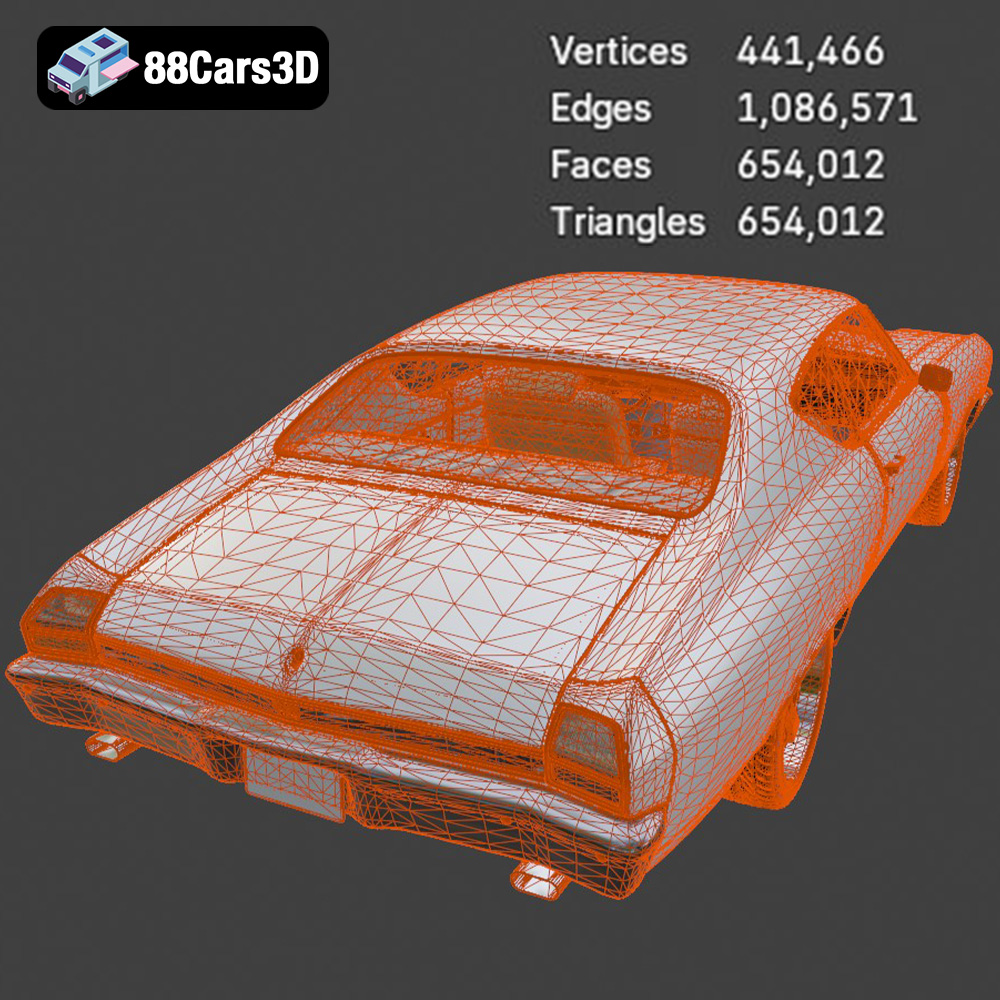
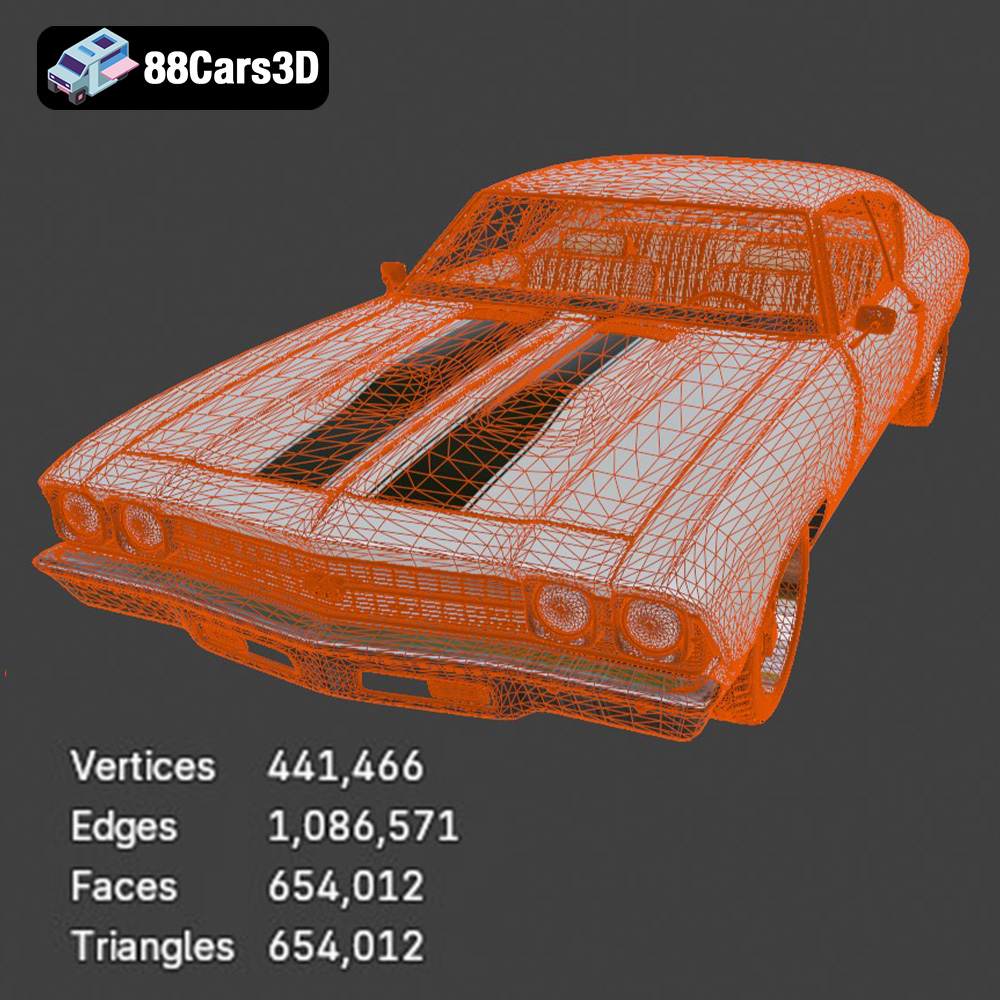
Visual fidelity is nothing without technical prowess. The Chevelle SS model strikes an exceptional balance with its highly detailed topology of 654,012 triangles. This polycount is strategically chosen to provide incredible visual realism for high-end rendering and cinematic sequences, while simultaneously remaining efficiently structured for robust game development and real-time engines like Unreal and Unity. This “game-ready & optimized” nature means developers can integrate it with confidence, knowing it won’t unduly burden performance while still looking stunning.
Further enhancing its utility, the model adheres to real-world scale accuracy, a critical factor for architectural visualization, VR/AR experiences, and realistic simulations. Proper pivot setups for steering, wheel rotation, and suspension travel are implemented, making animation straightforward and accurate. This level of technical consideration makes the Chevelle SS model not just a beautiful asset, but a highly functional and versatile tool compatible with major 3D software platforms and real-time rendering engines.
The true value of a high-quality 3D asset lies in its seamless integration into diverse professional workflows. Whether you’re building an immersive game world, crafting a photorealistic advertisement, or designing a virtual showroom, the Chevrolet Chevelle SS 1969 3D Model provides a robust foundation. Its multi-format availability ensures that artists and developers can pick the right tool for the job.
For game developers, performance and visual quality must coexist. The Chevelle SS model’s optimized geometry, with its 654,012 triangles, is a sweet spot for modern racing titles, open-world adventures, and simulators. The inclusion of .fbx and a dedicated .unreal file format is a game-changer. The .fbx file, being the industry standard for game asset exchange, ensures that mesh data, pivot points, and basic material assignments transfer smoothly into both Unreal Engine and Unity. Once imported, developers can quickly set up advanced PBR (Physically Based Rendering) materials using the engine’s native material editors, leveraging the model’s clean UV mapping (implied for such a professional asset) to apply high-resolution textures for paint, chrome, glass, and interior fabrics.
The .unreal file format takes this a step further, offering an engine-ready asset that might include pre-configured material instances, collision meshes, and even basic LODs (Levels of Detail) if included in the original package, drastically reducing setup time. Developers can immediately focus on implementing vehicle physics, adding dynamic lighting, and scripting interactive elements. Imagine racing this iconic muscle car through a virtual city, its detailed suspension responding to every bump, or having it as a centerpiece in a virtual garage, ready for player customization. The proper pivot setup for steering and wheel rotation makes implementing realistic vehicle controls straightforward, allowing for authentic driving experiences.
For those focused on photorealistic imagery and cinematic sequences, the Chevrolet Chevelle SS 1969 3D Model truly shines. The availability of .max and .blend native files provides artists with maximum control within their preferred DCC applications. In 3ds Max, artists can load the .max file to access the original scene structure, modifiers, and potentially pre-configured V-Ray or Corona Renderer materials. This allows for intricate adjustments to paint finishes (metallic flakes, clear coat depth), chrome reflections, and glass refraction, achieving hyper-realistic results. Similarly, Blender artists can utilize the .blend file to tap into the full power of Cycles or Eevee, leveraging nodal materials, complex lighting setups (HDRI environments, studio lighting), and advanced compositing techniques.
The detailed geometry, particularly the engine bay, interior, and undercarriage, becomes paramount for close-up glamour shots and product visualizations. Artists can animate camera fly-throughs, create dynamic lighting scenarios to highlight the Chevelle’s aggressive lines, or produce stunning brand campaigns for classic car shows and dealerships. The “Customization Options” explicitly allow for changing body colors (from iconic LeMans Blue to custom finishes), modifying tire textures (drag slicks vs. street variants), and adjusting material finishes (matte, gloss, classic chrome). This flexibility means the model can be tailored to any artistic vision, from a pristine showroom piece to a weathered street racer, providing endless possibilities for automotive rendering and cinematic storytelling.
The utility of a high-quality 3D model extends far beyond rendering on a screen. Modern technology allows us to interact with digital assets in tangible ways and immerse ourselves in them like never before. The Chevrolet Chevelle SS 1969 3D Model is engineered to excel in these expanding frontiers, from physical replication to interactive virtual worlds.
For enthusiasts, collectors, or even design validation, the ability to physically manifest a digital model is incredibly appealing. The inclusion of the .stl format specifically caters to 3D printing, enabling users to transform the virtual Chevelle SS into a physical collectible. The model’s intricate details translate well into print, allowing for stunning scale replicas. The product description offers comprehensive 3D Print Settings, guiding users through the process:
This level of guidance demonstrates a thoughtful approach to 3D print readiness, allowing anyone with access to a 3D printer to create a tangible piece of automotive history from the digital Chevrolet Chevelle SS 1969 3D Model.
The frontier of interactive experiences often involves augmented reality (AR) and virtual reality (VR), along with web-based 3D applications. Here, optimization and ease of deployment are paramount. The .glb format shines in this context. Its single-file nature, compact size, and built-in optimization make it perfect for rapid loading and display in mobile AR apps, VR environments, and browser-based WebGL viewers. Imagine a potential customer using their phone to place a virtual 1969 Chevelle SS in their driveway, rotating it, changing its color, and even peering inside, all in real-time. This is the power the .glb format unlocks for interactive configurators and virtual showrooms.
Furthermore, the “Game-Ready & Optimized” nature of the base model (654,012 triangles) is a direct advantage for these demanding real-time environments. It means the model will render smoothly on a wide range of devices, from high-end VR headsets to standard smartphones, delivering a fluid and immersive experience without performance bottlenecks. The accurate real-world scale also plays a crucial role in AR/VR, ensuring that the car appears true-to-life when superimposed onto the real world or explored in a virtual space, enhancing the sense of presence and realism.
Investing in a high-quality 3D asset like the Chevrolet Chevelle SS 1969 3D Model is more than just acquiring a single item; it’s about gaining a versatile tool that can adapt to evolving project requirements and creative visions. The true value comes from its inherent flexibility and the long-term benefits it provides to any professional pipeline.
One of the most significant advantages of a well-structured 3D model is its capacity for customization. The Chevelle SS model from 88cars3d.com offers extensive “Customization Options,” empowering artists to adapt the asset to specific project needs:
This level of creative freedom ensures that the asset isn’t static; it’s a dynamic canvas upon which countless unique iterations of the 1969 Chevelle SS can be brought to life. Having editable native files like .blend and .max further enhances this, allowing for deeper modifications like adding accessories, custom body kits (if desired), or even subtle structural changes without complex re-modeling.
In the fast-paced world of 3D production, time is money, and quality is paramount. Sourcing pre-made, high-quality 3D car models significantly reduces development time compared to modeling from scratch. A professionally optimized asset like this Chevelle SS saves countless hours that would otherwise be spent on modeling, retopology, UV mapping, and initial material setup. This efficiency translates directly into faster project turnarounds and more resources freed up for creative refinement and iteration.
Furthermore, investing in a robust asset ensures future-proofing. A model with clean topology, proper pivot points, real-world scale, and a range of compatible file formats will remain useful across multiple projects and evolving software versions. It’s a scalable asset that can be downscaled for mobile games or upscaled for cinematic advertising, maintaining its fidelity throughout. When you choose a model from a reputable source like 88cars3d.com, you’re not just buying a file; you’re acquiring a reliable, production-ready tool backed by expertise, ready to be deployed across game development, automotive rendering, AR/VR, and even 3D printing applications, ensuring maximum return on your creative investment.
The 1969 Chevrolet Chevelle SS is more than just an automotive icon; it’s a testament to an era of power and style. Bringing such a legend into the digital realm requires precision, optimization, and versatility. The Chevrolet Chevelle SS 1969 3D Model featured on 88cars3d.com delivers on all fronts, offering unparalleled authenticity, technical robustness, and comprehensive file format support for any professional workflow.
From its meticulously detailed exterior and interior to its game-ready optimized topology of 654,012 triangles, this model is engineered for excellence. Whether you’re integrating it into a high-octane racing game using Unreal Engine, crafting stunning photorealistic renders in 3ds Max or Blender, developing immersive AR/VR experiences with its .glb format, or even 3D printing a physical replica with the .stl, this asset provides the flexibility and quality you need. Its thoughtful design, coupled with extensive customization options, ensures it will serve as a dynamic and invaluable component in your creative arsenal.
For any professional seeking high-quality 3D car models that stand up to the most rigorous demands of modern production, the Chevrolet Chevelle SS 1969 3D Model from 88cars3d.com represents a smart and powerful choice. It’s more than a model; it’s a gateway to driving digital dreams.
The 1969 Chevrolet Chevelle SS stands as a pinnacle of the American muscle car golden era, bringing aggressive styling and legendary performance to the street. This highly accurate 3D model captures the imposing presence of the iconic ’69 model, featuring its signature muscular body lines, distinctive quad-headlight front grille, and classic dual exhaust system. Every curve of its storied chassis has been meticulously recreated to reflect the raw power and heritage that made the Chevelle SS a feared competitor on the drag strip and a beloved icon among automotive enthusiasts. Boasting a highly detailed topology of 654,012 triangles, this model offers incredible visual fidelity while remaining efficiently structured for robust game development and high-end rendering workflows. Whether you need extreme close-up shots for automotive visualization or a reliable asset for modern racing titles, this model delivers unparalleled realism. Its precise optimization makes it a versatile choice for real-time game engines, VR/AR applications, and stunning cinematic animations.
$46.50
.1969
.blend
.chevrolet
.fbx
.glb
.max
.obj
.ply
.rendering
.stl
.unreal
car-3d-model
chevelle-ss
classic-car
game asset
game-ready
muscle-car
optimized
VR/AR