Get 20% OFF All Premium 3D & STL Models!

In the dynamic worlds of automotive design, game development, and high-fidelity visualization, the demand for truly exceptional 3D car models has never been greater. Whether you’re a seasoned professional creating breathtaking cinematic renders, an indie developer building the next open-world racing sensation, or an architect crafting immersive virtual tours, the quality of your digital assets dictates the realism and impact of your final output. Precision, accuracy, and optimization are not just buzzwords; they are the bedrock upon which professional-grade projects are built.
Today, artists and developers require assets that are not only visually stunning but also technically robust, offering seamless integration across diverse software environments and real-time engines. This often means navigating complex workflows, understanding various file formats, and ensuring every polygon serves a purpose. It’s a pursuit of digital perfection, where every curve, every reflection, and every mechanical component must stand up to intense scrutiny.
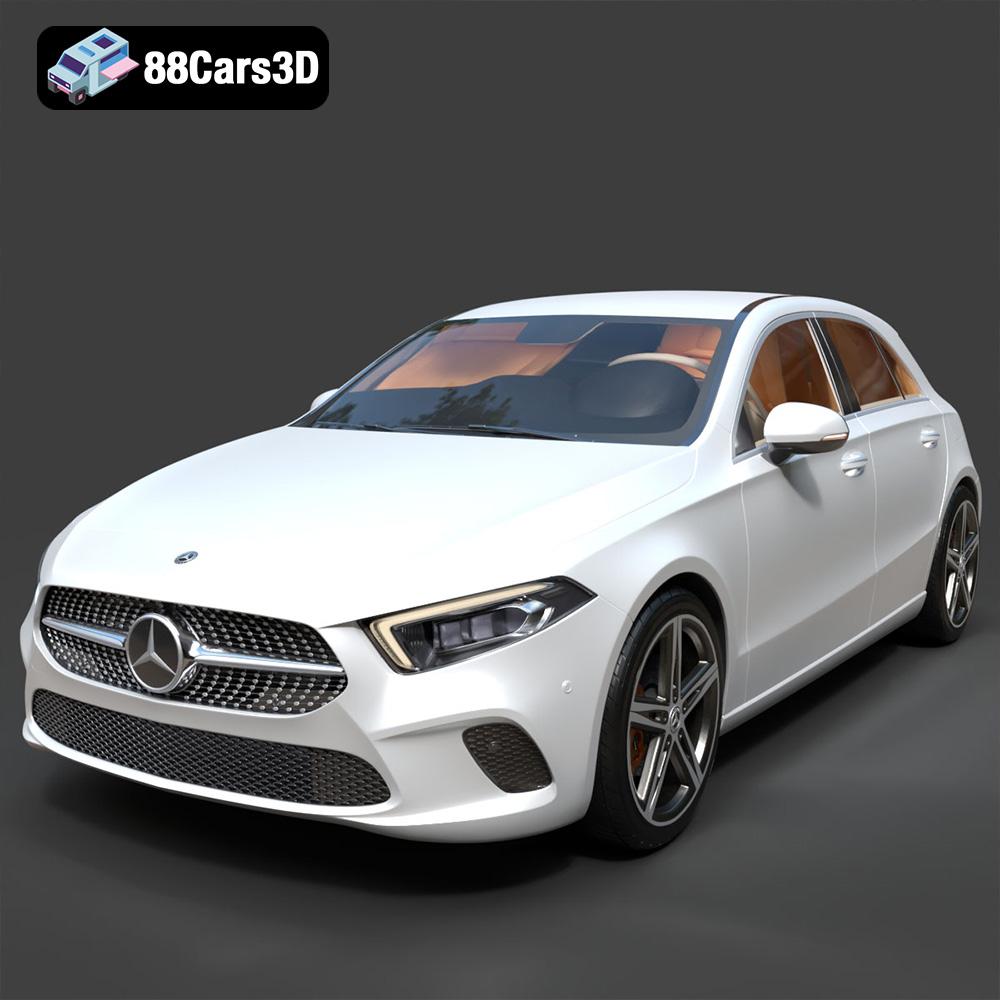
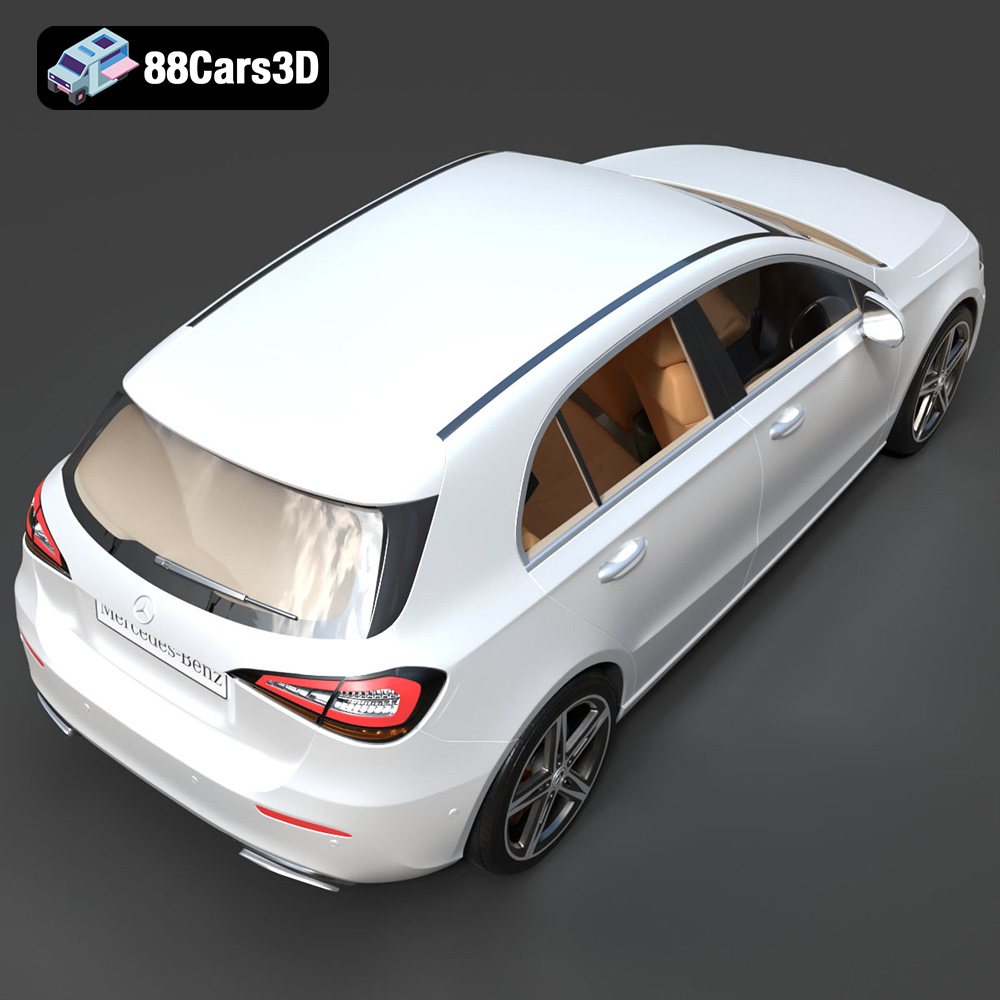
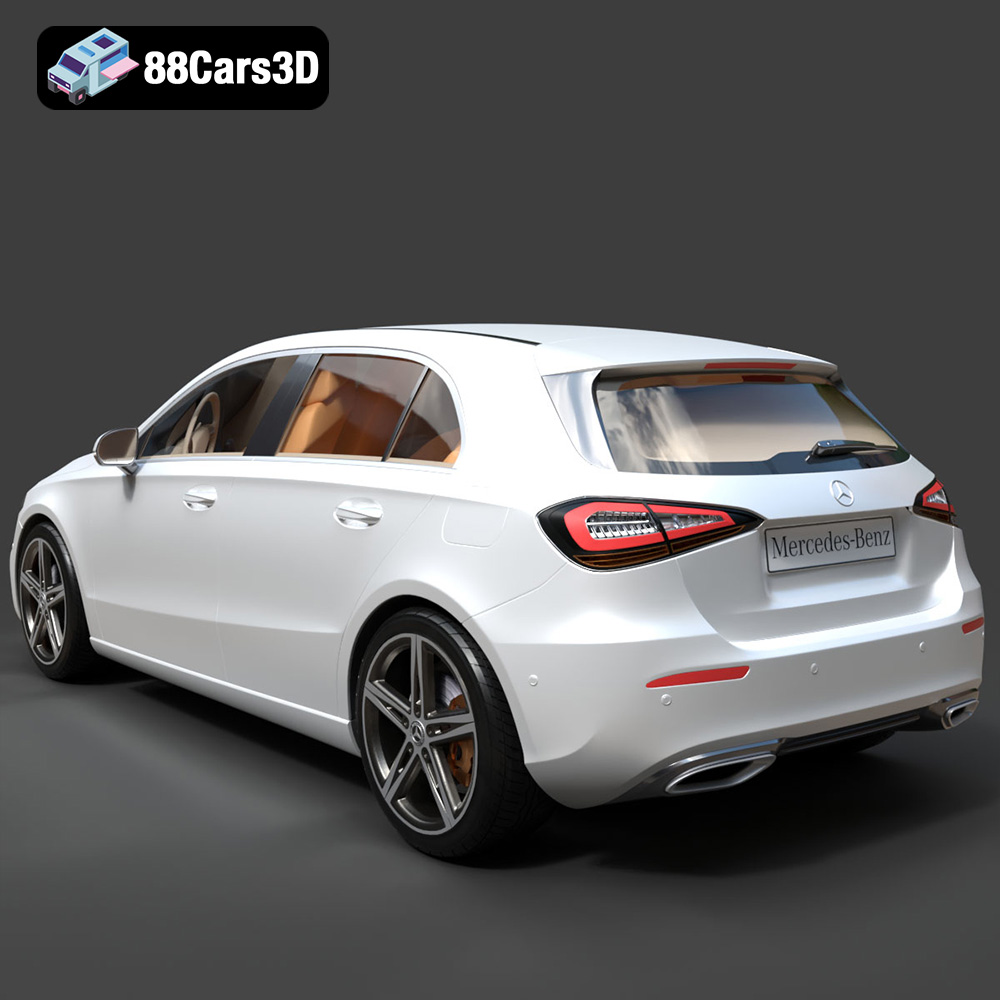
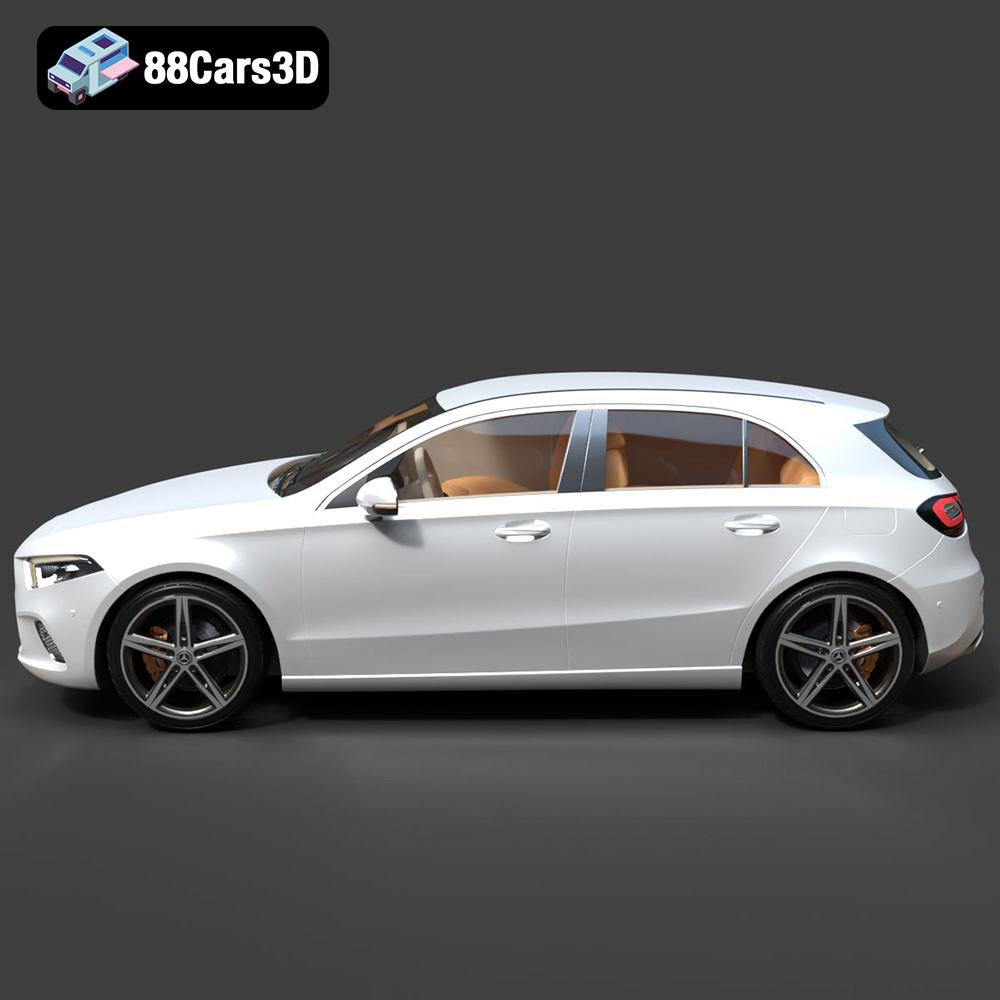
One such example of this meticulous attention to detail is the Mercedes Benz A H-08 3D Model, a compact luxury vehicle that epitomizes modern automotive aesthetics. This model, available on 88cars3d.com, is engineered to meet the stringent demands of professional production pipelines, offering a blend of artistic fidelity and technical readiness. Its aerodynamic silhouette, prominent grille, and sophisticated styling cues are meticulously replicated, making it an invaluable asset for a myriad of applications, from photorealistic advertising campaigns to highly interactive AR/VR experiences.
The automotive industry has embraced 3D technology like few others. From concept sketching and prototyping to marketing and virtual showrooms, 3D models are central to every stage. Designers utilize them to iterate rapidly, engineers use them for simulations, and marketing teams leverage them for breathtaking visuals that captivate audiences. The evolution of rendering technologies, real-time engines, and hardware has pushed the boundaries of what’s possible, requiring 3D car models to constantly raise their bar in terms of detail, accuracy, and performance.
This push for realism means going beyond just exterior aesthetics. Detailed interiors, functional components, and even accurate undercarriage elements are now expected. A premium model, such as the Mercedes Benz A H-08, must deliver on all fronts, providing a holistic digital representation that can be dissected, animated, and rendered from any angle without compromise. This level of detail empowers creators to tell richer stories and build more engaging interactive experiences.
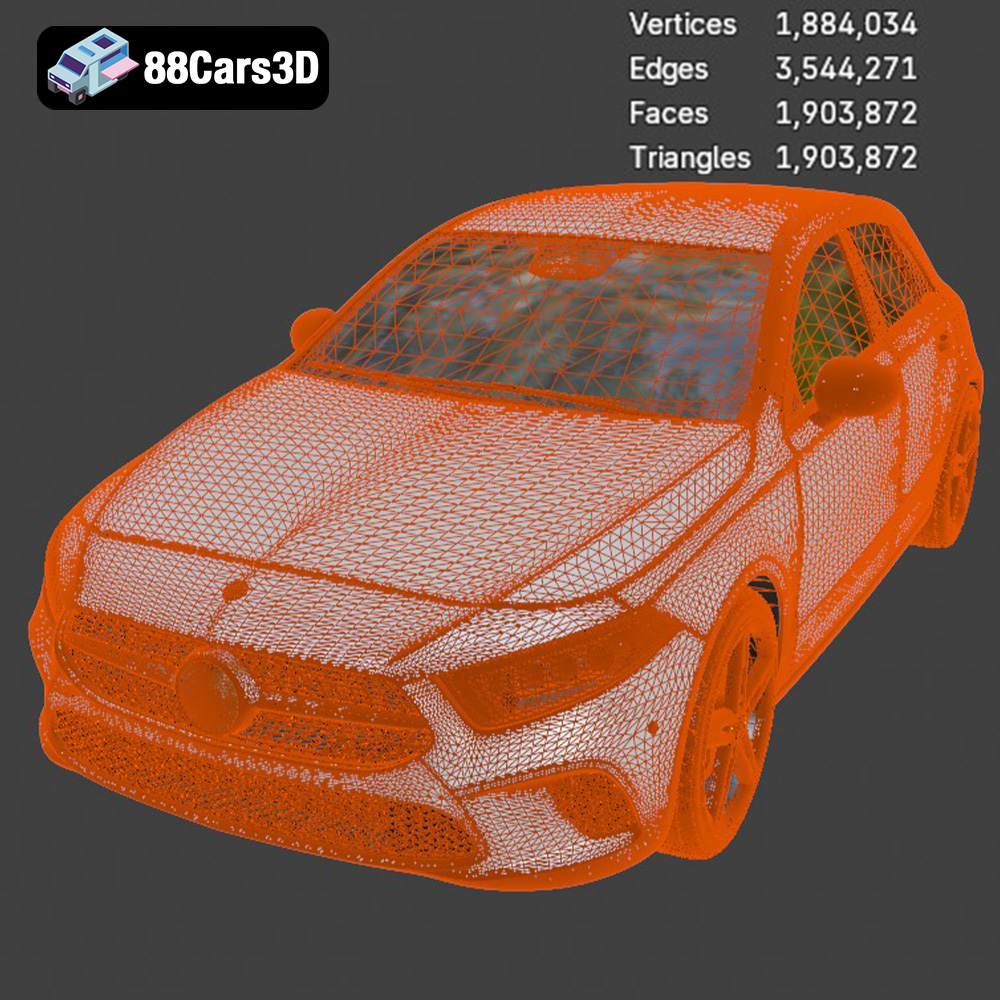
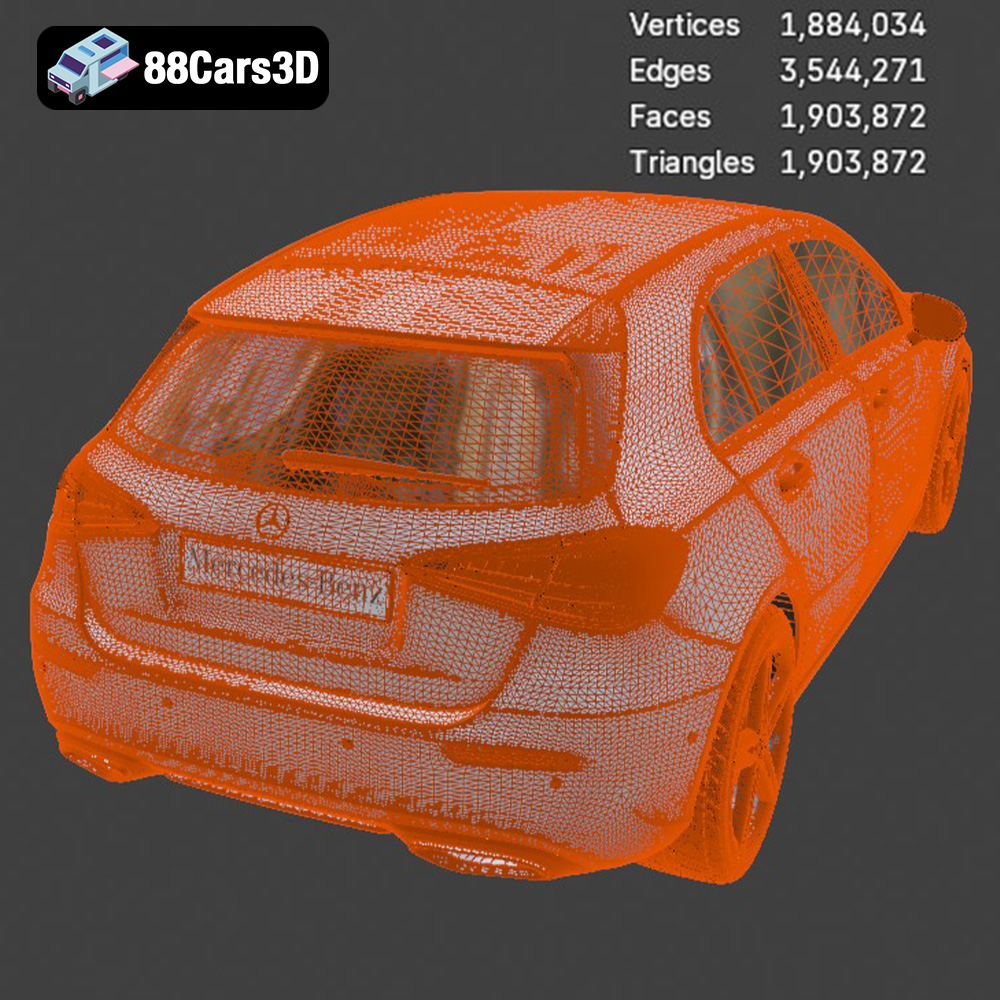
The Mercedes Benz A H-08 3D model stands as a testament to what high-fidelity digital automotive assets can achieve. With a dense topology boasting 1,903,872 triangles, it strikes an optimal balance between visual richness and performance, making it suitable for both static high-resolution renders and dynamic real-time environments like Unreal Engine 5 with Nanite. Every exterior feature, from its precise chassis geometry and authentic exhaust system to its high-fidelity lighting assemblies and detailed alloy wheels, has been carefully crafted.
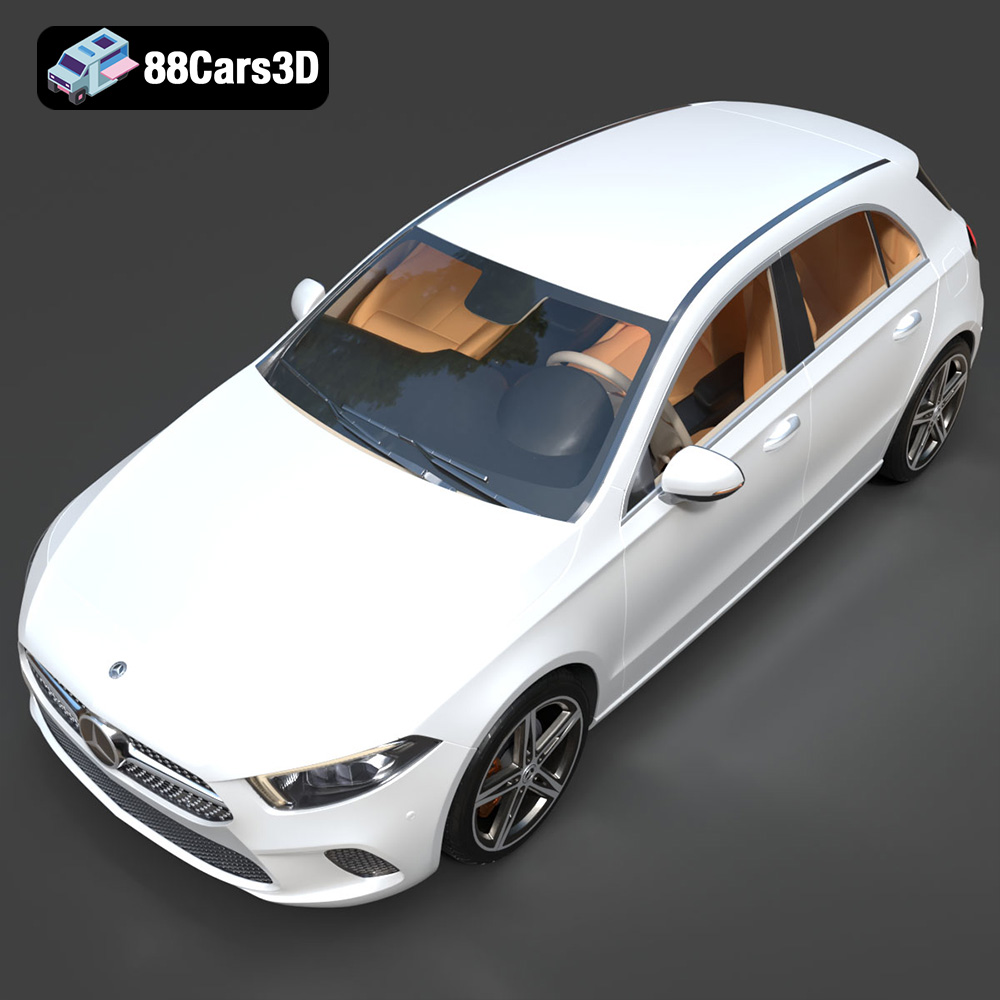
Beyond the surface, the interior features a meticulously sculpted cockpit with premium seats, an accurate steering wheel with multi-function controls, and modern digital instrument clusters. This attention to both external and internal details ensures that whether your project demands a sweeping exterior shot or an immersive first-person cockpit view for gaming or VR, the model is prepared. Such comprehensive detailing saves countless hours of modeling work, allowing professionals to focus on artistic direction and project specific implementations.
The versatility of a 3D car model is often defined by the range of file formats it supports. Each format serves specific purposes, catering to different software, pipelines, and end-uses. Understanding these distinctions is crucial for seamless workflow integration and achieving optimal results. The Mercedes Benz A H-08 model offers an extensive suite of formats, ensuring maximum compatibility across the industry.
The .blend file is Blender’s native format, containing an entire Blender scene with all its data: meshes, materials, textures, animations, cameras, lighting, and even modifiers. It’s the ideal format for users working within the Blender environment, offering full editability and access to the original scene setup. For the Mercedes Benz A H-08, a .blend file provides immediate access to the meticulously organized mesh data, Cycles or Eevee materials, and any pre-configured lighting or camera setups, allowing for direct modification or rendering within Blender without any loss of data fidelity. This is invaluable for artists who want to dissect the model, learn from its construction, or make specific design alterations.
The Filmbox (.fbx) format, owned by Autodesk, has become a de facto standard for exchanging 3D data between various applications, especially in game development and animation. It supports geometry, materials, textures, bones, skinning, and animations, making it incredibly versatile. For models like the Mercedes Benz A H-08, the .fbx format is perfect for exporting to game engines like Unreal Engine and Unity, or to other DCC (Digital Content Creation) software like Maya or 3ds Max. Its robust support for animation data, including proper pivot setups for wheels, suspension, and steering, ensures that the vehicle can be easily rigged and animated in real-time environments. The .fbx format is highly optimized for real-time pipelines, balancing detail with performance.
The Wavefront OBJ (.obj) format is one of the oldest and most widely supported 3D file formats. It primarily stores geometric data (vertices, normals, UVs, faces) and references external material (.mtl) files for color and texture information. While it doesn’t support animation or rigging, its universal compatibility makes it excellent for static mesh exchange between virtually any 3D software. For the Mercedes Benz A H-08, the .obj file is a reliable fallback for importing the base geometry into obscure software or for workflows where simplicity is preferred. It’s also often used as a clean mesh basis for sculpting or retopology projects.
GLB (GL Transmission Format Binary) is a compact, self-contained binary version of the glTF format. It’s specifically designed for efficient transmission and loading of 3D scenes and models in web browsers, augmented reality (AR), and virtual reality (VR) applications. A single .glb file contains all model data, including geometry, materials, textures, and animation, making it incredibly easy to integrate. For the Mercedes Benz A H-08, the .glb format is critical for creating immersive virtual showrooms, AR configurators, or integrating the car into web-based 3D viewers, where performance and quick loading times are paramount.
Stereolithography (.stl) is the standard file format for 3D printing. It describes only the surface geometry of a 3D object using a collection of triangular facets, without color, texture, or other CAD attributes. While primarily for additive manufacturing, an .stl version of the Mercedes Benz A H-08 allows hobbyists and professionals to bring the digital model into the physical world. This is perfect for creating display-scale models or prototypes. The product description highlights specific print settings, emphasizing the model’s readiness for physical fabrication, ideally with resin printers for fine details.
The Polygon File Format (.ply), sometimes referred to as the Stanford Triangle Format, is primarily used for storing 3D data from 3D scanners. It can store a wider range of properties, including color per vertex, normal information, and confidence values. While less common for direct model exchange in animation or games, its robust support for precision mesh data makes it suitable for engineering applications, detailed analysis, or workflows involving scanned assets. For the Mercedes Benz A H-08, a .ply file ensures that the geometric accuracy is preserved for highly technical visualization or conversion tasks.
The .unreal format, or more accurately, assets imported and packaged within an Unreal Engine project, signifies an asset that is truly “engine-ready.” This typically means the asset has been optimized, has proper material setups (including PBR workflows), LODs (Levels of Detail), and potentially Nanite compatibility for UE5. For the Mercedes Benz A H-08, the inclusion of an “unreal” option suggests the model has been specifically prepared to leverage Unreal Engine’s advanced rendering capabilities, offering immediate integration into game environments or architectural visualizations without extensive re-configuration. This saves massive amounts of development time.
The .max file is the native file format for Autodesk 3ds Max, a leading software for 3D modeling, animation, rendering, and compositing. Similar to .blend, a .max file contains the complete scene, including geometry, materials, lighting, cameras, animation, and scene setup. For users entrenched in the 3ds Max ecosystem, this format provides full editability and leverages all the powerful tools and renderers (like V-Ray or Corona) that 3ds Max offers. The Mercedes Benz A H-08 in .max format allows for deep customization, advanced animation rigging, and high-end photorealistic rendering directly within a professional studio environment.
Creating photorealistic automotive renders is an art form that blends technical proficiency with artistic vision. The foundation of any stunning render is a high-quality 3D model, and the Mercedes Benz A H-08, with its exquisite detail and robust topology, provides an excellent starting point. Professional workflows often involve multiple software packages, but the core principles of material creation, lighting, and camera work remain constant.
In 3ds Max, artists can import the provided .max or .fbx file, giving them immediate access to the model’s geometry and potentially pre-configured material slots. For rendering, V-Ray and Corona Renderer are industry staples, offering unparalleled realism. The workflow involves setting up a physically based rendering (PBR) material for the car paint, utilizing complex shaders that simulate clear coat, metallic flakes, and subsurface scattering for headlights. Attention is paid to creating accurate reflections on the sleek body panels, ensuring the environment interacts realistically with the car’s surface. Similarly, Blender users can leverage the .blend file, tapping into Cycles or Eevee render engines. Cycles, with its physically accurate path tracing, is ideal for achieving stunning photorealism, while Eevee offers real-time rendering capabilities for rapid iteration.
The Mercedes Benz A H-08’s detailed engine compartment, structural elements, and realistic suspension components mean artists can create X-ray or cutaway renders, showcasing the intricate engineering beneath the surface. This level of detail elevates the narrative potential of any visualization, moving beyond just aesthetic appeal to highlight functional beauty.
Achieving photorealism extends beyond just the model; it critically depends on materials and lighting. Car paint, for instance, is one of the most complex materials to replicate digitally. It typically involves multiple layers: a base color, metallic flakes, a clear coat, and sometimes a protective film. Each layer needs accurate reflection, refraction, and specular properties. The Mercedes Benz A H-08’s “factory colors with metallic finishes” suggestion for 3D printing post-processing perfectly encapsulates the goal for digital rendering as well. Tires require specific textures for tread patterns and sidewall details, while glass elements need precise refraction indices and subtle imperfections to look convincing.
Lighting is equally crucial. Studio lighting setups, often using HDRIs (High Dynamic Range Images) combined with carefully placed area lights, are essential for bringing out the contours and reflections of the vehicle. For exterior shots, an HDRI of a specific environment can instantly place the car in a realistic setting, while artificial lights can be added to emphasize certain features or create dramatic shadows. The goal is to make the digital car indistinguishable from its real-world counterpart, a feat made significantly easier with a high-fidelity base like the Mercedes Benz A H-08.
Cinematic renders go beyond static images; they tell a story. This involves careful camera placement, depth of field, motion blur, and post-processing. With the Mercedes Benz A H-08 model’s separate wheels, suspension, and steering components, artists can animate simple movements like a gentle turn or a slight suspension dip over an uneven surface, adding subtle realism to renders. The ability to customize body colors and material finishes allows for quick iterations to match branding guidelines or explore different moods for a visual campaign. From high-speed action shots to elegant studio presentations, the model provides the flexibility required to craft compelling visual narratives.
The world of interactive media – video games, AR, and VR – places unique demands on 3D assets. Performance is paramount, requiring models that are not only visually appealing but also highly optimized to run smoothly on diverse hardware. The Mercedes Benz A H-08 3D model is specifically “Game-Ready & Optimized,” making it an ideal choice for next-generation interactive experiences.
With 1,903,872 triangles, the Mercedes Benz A H-08 strikes a balance for high-end real-time engines. For Unreal Engine 5, this polycount is perfectly suited for Nanite, Epic Games’ virtualized micro-polygon geometry system. Nanite allows artists to import film-quality assets directly into the engine, automatically handling LODs (Levels of Detail) and optimizing rendering performance without compromising visual fidelity. This means the highly detailed exterior and interior of the Mercedes Benz A H-08 can be fully utilized within an interactive game environment, providing stunning visual realism without bogging down the frame rate.
For Unity or other engines that might not have a direct Nanite equivalent, traditional optimization techniques such as manual LOD creation (lower poly versions for distant objects) and efficient texture packing are still critical. The model’s clean topology and proper pivot setup are foundational for these processes, ensuring that even when simplified, the visual integrity of the vehicle is maintained. Game developers often need to implement custom collision meshes, and a well-structured base model makes this process far more straightforward.
A static car model is of little use in a dynamic game. The Mercedes Benz A H-08’s design includes separate wheels, suspension, and steering components, along with a “proper pivot setup for steering, wheel rotation, and suspension travel.” This is a crucial technical advantage for game development. It allows animators and programmers to quickly integrate the model into a vehicle physics system. Wheels can rotate independently, suspension can compress and expand realistically over terrain, and the steering wheel can turn in sync with the front wheels, providing an authentic driving experience. This pre-configured articulation saves significant development time, allowing teams to focus on gameplay mechanics and environmental design.
Furthermore, the detailed cockpit and interior, optimized for first-person POV, are essential for immersive driving games or simulations. Players can truly feel like they are inside the vehicle, interacting with the steering wheel, digital instrument cluster, and infotainment screens, enhancing the overall realism and engagement.
The capabilities of the Mercedes Benz A H-08 model extend seamlessly into augmented reality (AR) and virtual reality (VR) applications. Its optimized geometry and inclusion of the .glb format make it perfect for immersive virtual showrooms and mobile AR experiences. Imagine a customer exploring a car configurator in VR, walking around the Mercedes Benz A H-08, opening its doors, and even sitting inside, all rendered in high fidelity. Or consider an AR app that projects the car onto your driveway, allowing you to visualize it in real-world scale before purchase.
These applications demand robust performance and stunning visuals. The Mercedes Benz A H-08 delivers on both, enabling businesses to create engaging, interactive product experiences that captivate potential buyers and provide a level of immersion previously unimaginable. The ability to quickly change body colors, adjust material finishes, and adapt lighting within these environments makes customization and personalization a core feature of the AR/VR experience.
The utility of a high-quality 3D model isn’t limited to digital screens. With the advent of advanced additive manufacturing, these digital assets can transcend into physical objects, offering tangible representations for display, prototyping, or even artistic endeavors. The Mercedes Benz A H-08 model caters to this demand with its support for 3D printing and extensive customization options.
The inclusion of the .stl file format means the Mercedes Benz A H-08 can be easily prepared for 3D printing. This opens up a fascinating avenue for designers, hobbyists, and automotive enthusiasts to create physical replicas of this iconic vehicle. The product description provides highly specific 3D print settings, which is invaluable for successful printing:
These guidelines not only assure a successful print but also hint at the underlying clean geometry of the digital model, which is a prerequisite for reliable 3D printability. Artists can create stunning physical prototypes for presentations or unique collectibles, further expanding the value of the digital asset.
Beyond its raw detail, the Mercedes Benz A H-08 model is designed for extensive customization, allowing users to adapt it to specific project needs or personal preferences. This flexibility is a hallmark of professional-grade 3D assets and a key reason why models from marketplaces like 88cars3d.com are so highly valued. The customization options include:
These customization capabilities empower artists and developers to rapidly iterate on designs, create unique variations, and integrate the model seamlessly into a wide range of creative projects without needing to start from scratch. This versatility accelerates production pipelines and ensures that the asset remains relevant across diverse applications.
Investing in high-quality 3D car models like the Mercedes Benz A H-08 from a reputable source like 88cars3d.com offers a significant strategic advantage in today’s competitive digital landscape. It’s not merely about acquiring a model; it’s about acquiring a powerful tool that enhances efficiency, ensures quality, and expands creative possibilities across various industries.
Time is a critical commodity in any professional production. Starting with a pre-built, high-fidelity 3D asset eliminates the need for extensive modeling, texturing, and optimization from the ground up, which can take hundreds of hours for a model of this complexity. This acceleration allows teams to allocate resources to other crucial aspects of a project, such as animation, environment design, or interactive logic.
Furthermore, using accurately modeled vehicles ensures brand consistency, particularly important for automotive manufacturers and their marketing partners. A precisely rendered Mercedes Benz A H-08 maintains the integrity of the brand’s design language and quality standards, which is vital for advertising campaigns, virtual product launches, and dealer configurators. The real-world scale accuracy and authentic details of the model mean that digital representations perfectly align with their physical counterparts.
Consider a luxury automotive brand looking to launch a new compact car. They could use the Mercedes Benz A H-08 model to:
.stl output.Each of these applications leverages different aspects of the model’s technical specifications and file format support, demonstrating its versatility and value across a range of professional use cases. From a game developer building an open-world title where numerous vehicles need to populate the scene efficiently, to an architectural visualization studio needing a realistic car to anchor a street-level render, the Mercedes Benz A H-08 model provides a robust solution.
The demand for high-quality 3D car models is a constant in the rapidly evolving digital landscape. As rendering technologies advance and real-time experiences become more immersive, the foundational assets must keep pace. The Mercedes Benz A H-08 3D model exemplifies the level of detail, optimization, and versatility required by professionals today. Its comprehensive file format support, meticulous attention to both exterior and interior features, and game-ready specifications make it an invaluable asset for anyone working in automotive rendering, game development, AR/VR, or 3D printing.
By investing in premium assets from trusted marketplaces like 88cars3d.com, creators can streamline their workflows, achieve unparalleled visual fidelity, and push the boundaries of what’s possible in their respective fields. The future of design, visualization, and interactive entertainment is undeniably 3D, and the journey begins with assets that are built for excellence.
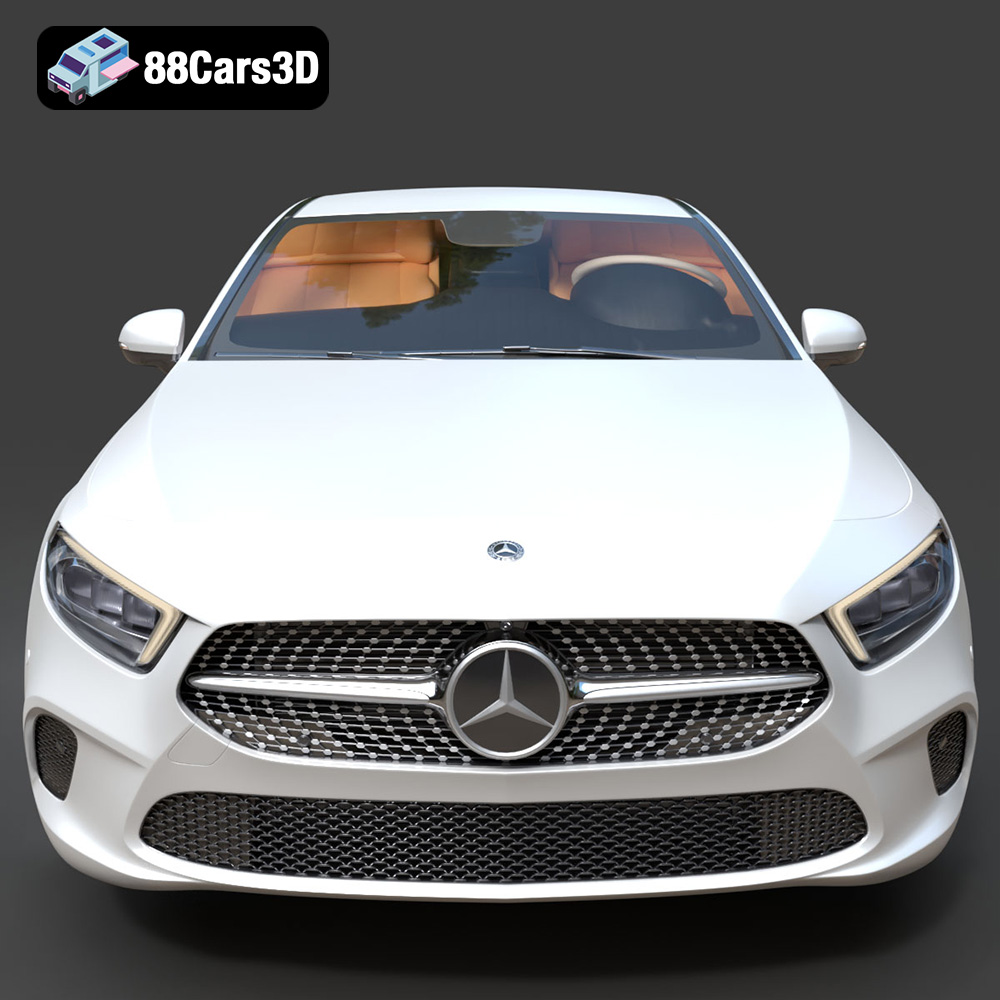
The Mercedes Benz A H-08 represents a blend of compact luxury and modern automotive design. Characterized by its aerodynamic silhouette, prominent front grille, and sophisticated styling cues, this 3D model captures the essence of premium urban mobility. Attention has been given to the sleek body panels, integrated exhaust system, and distinctive LED lighting elements that define its contemporary aesthetic.
Boasting a dense topology with 1,903,872 triangles, this high-fidelity 3D model is optimized for high-end rendering, Unreal Engine 5 Nanite, and advanced visualizations. It delivers photorealistic visual fidelity, making it an exceptional asset for next-generation game development, AR/VR configurators, high-quality animation, and architectural visualization.
Perfect for luxury automotive renders, immersive virtual showrooms, high-end racing games, and urban environment simulations.
.blend, .fbx, .obj, .glb, .stl, .ply, .unreal, .max
Tags:
mercedes-benz, a-h-08, luxury-car, compact-car, car-3d-model, game-ready, high-poly, optimized, game-asset, rendering, vr-ar, blend, fbx, obj, glb, stl, ply, unreal, max
$83.50
.blend
.fbx
.glb
.max
.obj
.ply
.rendering
.stl
.unreal
a-h-08
car-3d-model
compact-car
game asset
game-ready
high poly
luxury car
mercedes-benz
optimized
VR/AR