Get 20% OFF All Premium 3D & STL Models!

In the dynamic world of digital creation, the demand for high-fidelity 3D assets continues to escalate across industries. From captivating game environments to photorealistic architectural visualizations and cutting-edge AR/VR experiences, premium 3D models are the bedrock of compelling visuals. Automotive design, in particular, thrives on precision and authenticity, requiring models that not only look stunning but also function seamlessly within complex pipelines. Whether you’re an independent game developer, a seasoned visualization artist, or an automotive engineer, the quality of your 3D car models can significantly impact the final output and efficiency of your projects.
This pursuit of digital perfection brings us to a prime example of an expertly crafted asset: the **BMW M5 2008 3D Model**. This isn’t just a digital representation; it’s a meticulously engineered asset that captures the essence of a legendary sports sedan, designed to elevate your projects to new heights. Its versatility and technical precision make it an invaluable tool for a wide array of applications, setting a benchmark for what a high-quality 3D car model should offer.
Navigating the diverse landscape of 3D software and applications often requires a solid understanding of various file formats. Each format serves a specific purpose, offering unique advantages in terms of compatibility, data preservation, and optimization for particular workflows. Selecting the correct format is crucial for maintaining model integrity, material fidelity, and animation capabilities as assets move through different stages of a project. The BMW M5 2008 3D Model, available on 88cars3d.com, is offered in an extensive range of formats, ensuring maximum utility for every professional.
The `.blend` format is the native file type for Blender, the powerful open-source 3D creation suite. When you receive a `.blend` file, you’re getting a fully editable Blender scene. This means all geometry, materials (with their node setups), textures, lighting, camera settings, and even animation data are preserved exactly as they were created. For artists primarily working in Blender, this format offers the most flexibility for customization, rigging, and rendering within their familiar environment. It’s ideal for those who want to dive deep into the model’s construction, modify its topology, or re-purpose its components with full control.
`.fbx` (Filmbox) is arguably the most widely adopted proprietary 3D interchange format, developed by Autodesk. Its strength lies in its ability to encapsulate a vast amount of 3D data, including mesh geometry, textures, materials, rigging, skinning, and animation, all within a single file. This makes `.fbx` an indispensable format for game engines like Unreal Engine and Unity, as well as for transferring assets between different DCC (Digital Content Creation) applications such as 3ds Max, Maya, and Cinema 4D. For the BMW M5 2008 3D Model, the `.fbx` ensures robust import into real-time pipelines, preserving critical elements like pivot points, hierarchy, and basic material assignments for a smooth transition.
`.obj` (Wavefront OBJ) is a simple, universally recognized file format that primarily stores geometry data (vertices, normals, UV coordinates) and references to external material files (.mtl). While it doesn’t support complex features like rigging or animation, its simplicity makes it incredibly robust for cross-software compatibility. Almost every 3D application can import and export `.obj` files. It’s an excellent choice when you need a clean mesh for sculpting, texturing in external applications, or simply as a foundational asset that can be easily brought into any environment without worrying about proprietary software restrictions.
`.glb` (GLB File Format), a binary version of glTF (GL Transmission Format), is an emerging powerhouse for web-based 3D, augmented reality (AR), and virtual reality (VR) applications. It’s designed to be a compact, efficient, and runtime-agnostic format, allowing for quick loading and rendering of 3D models with PBR (Physically Based Rendering) materials. A `.glb` file embeds all necessary data – geometry, materials, textures, and even animations – into a single file, making it perfect for experiences where fast streaming and small file sizes are paramount. The BMW M5 2008 3D Model in `.glb` format is ideal for showcasing in online configurators, mobile AR apps, or interactive web experiences.
`.stl` (Stereolithography) is the de facto standard format for 3D printing. It represents a 3D model as a series of connected triangles (a tessellated surface) without color, texture, or other advanced attributes. Its simplicity ensures compatibility with virtually all 3D printers and slicing software. When preparing the BMW M5 2008 3D Model for physical output, the `.stl` version is essential, allowing hobbyists and professionals alike to bring this iconic vehicle into the tangible world.
`.ply` (Polygon File Format) is often used for storing 3D data from 3D scanners, CAD software, and scientific applications. It can store not only geometry but also color, transparency, and other properties associated with vertices and faces. While less common in general animation and rendering pipelines compared to `.fbx` or `.obj`, `.ply` is valuable for precise engineering, reverse engineering, and applications requiring highly detailed mesh analysis.
The `.unreal` format (often referring to a `.uasset` or a directly packaged asset ready for Unreal Engine import) signifies an asset specifically prepared and optimized for the Unreal Engine ecosystem. This typically means it has been rigorously tested for performance within the engine, includes proper material setups using Unreal’s PBR shaders, correct scaling, collision meshes, and potentially LODs (Levels of Detail). Using an `.unreal` asset like the BMW M5 2008 3D Model saves significant time in the import and setup process, allowing developers to drop it directly into their projects with minimal configuration, ensuring it runs optimally in real-time.
`.max` is the native file format for Autodesk 3ds Max, a powerful 3D modeling, animation, rendering, and compositing software. Similar to `.blend` for Blender, a `.max` file contains the complete 3ds Max scene, including geometry, modifiers, materials, lighting, cameras, animations, and render settings. For users deeply integrated into the 3ds Max workflow, this format provides full editability and access to all the creation tools and plugins within 3ds Max, offering the most control over the asset’s various components for advanced rendering or animation tasks.
Choosing the right format can streamline your workflow and ensure the integrity and functionality of your 3D assets, making the comprehensive selection offered by 88cars3d.com a distinct advantage.
The creation of a truly authentic 3D car model is a labor of precision, balancing technical accuracy with artistic interpretation. It’s about capturing not just the form, but the very spirit of the vehicle. The BMW M5 2008 is a car steeped in automotive legend, and its 3D model reflects this through meticulous attention to detail, designed to bring this iconic machine to life in any digital medium.
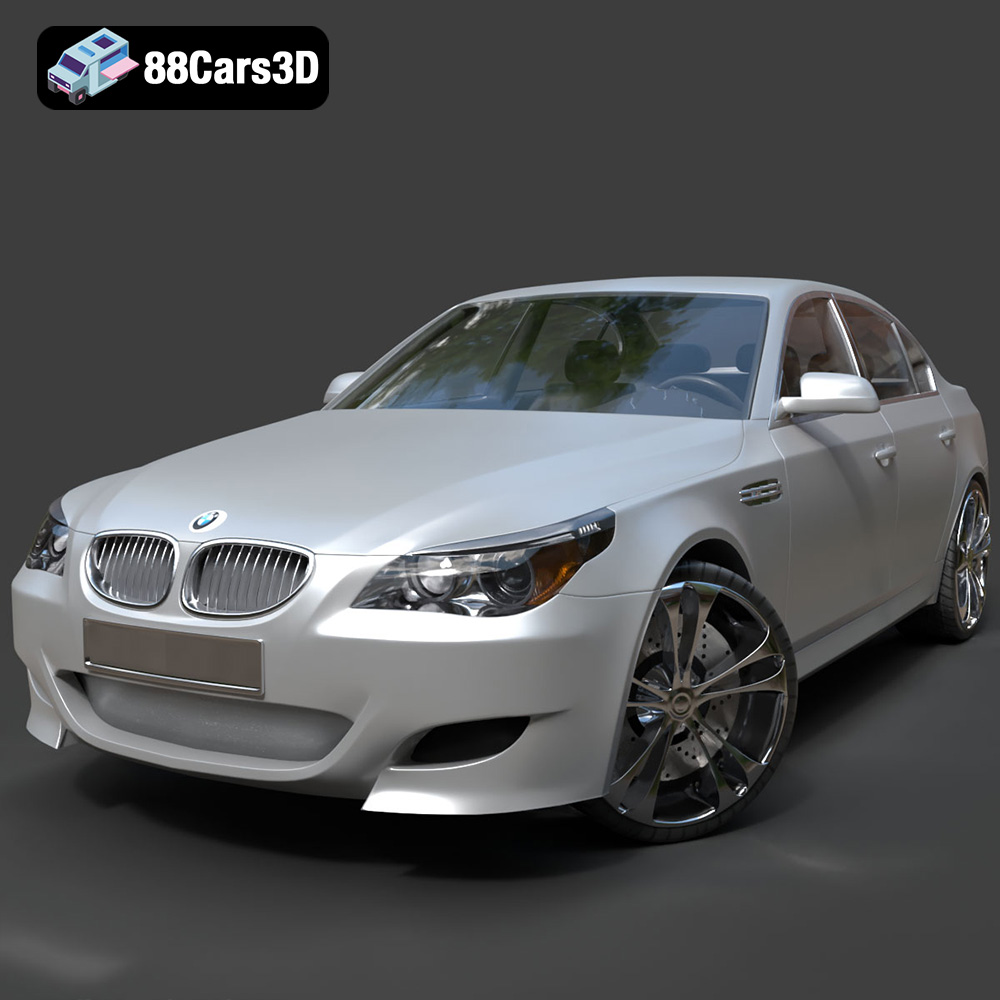
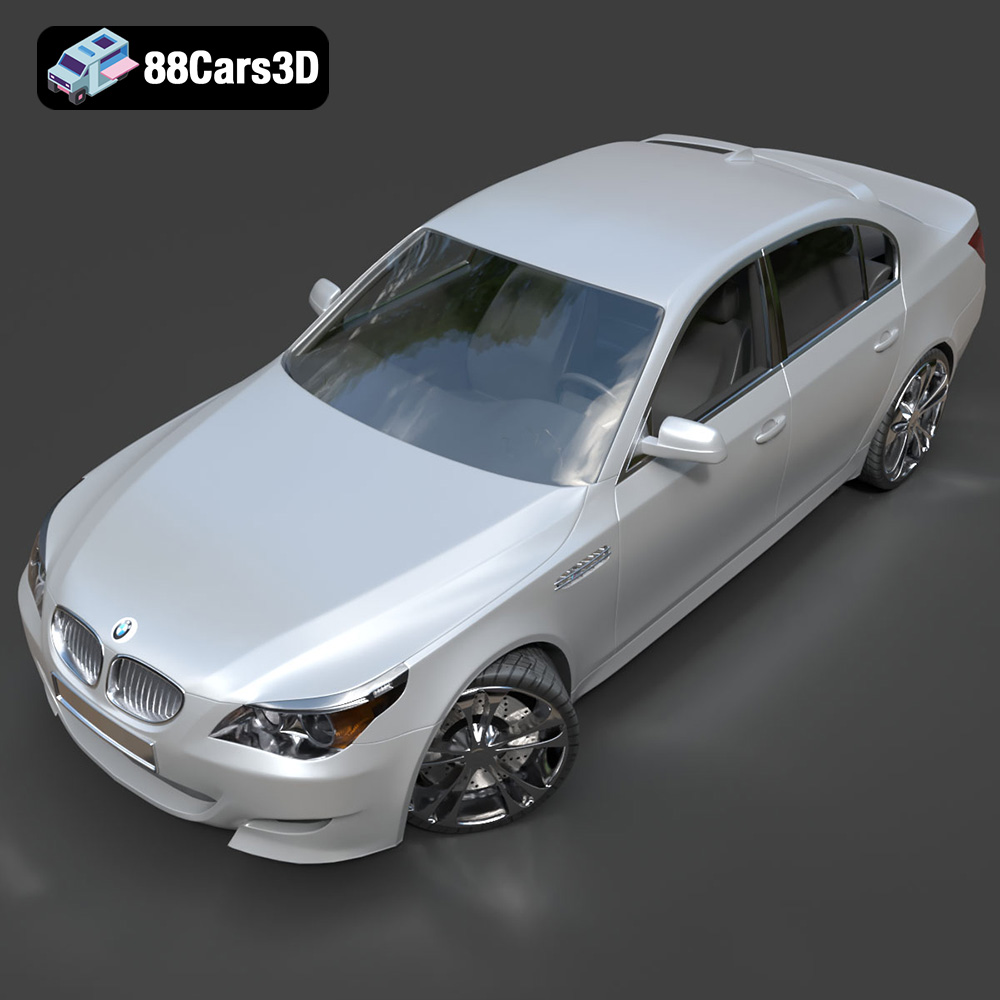
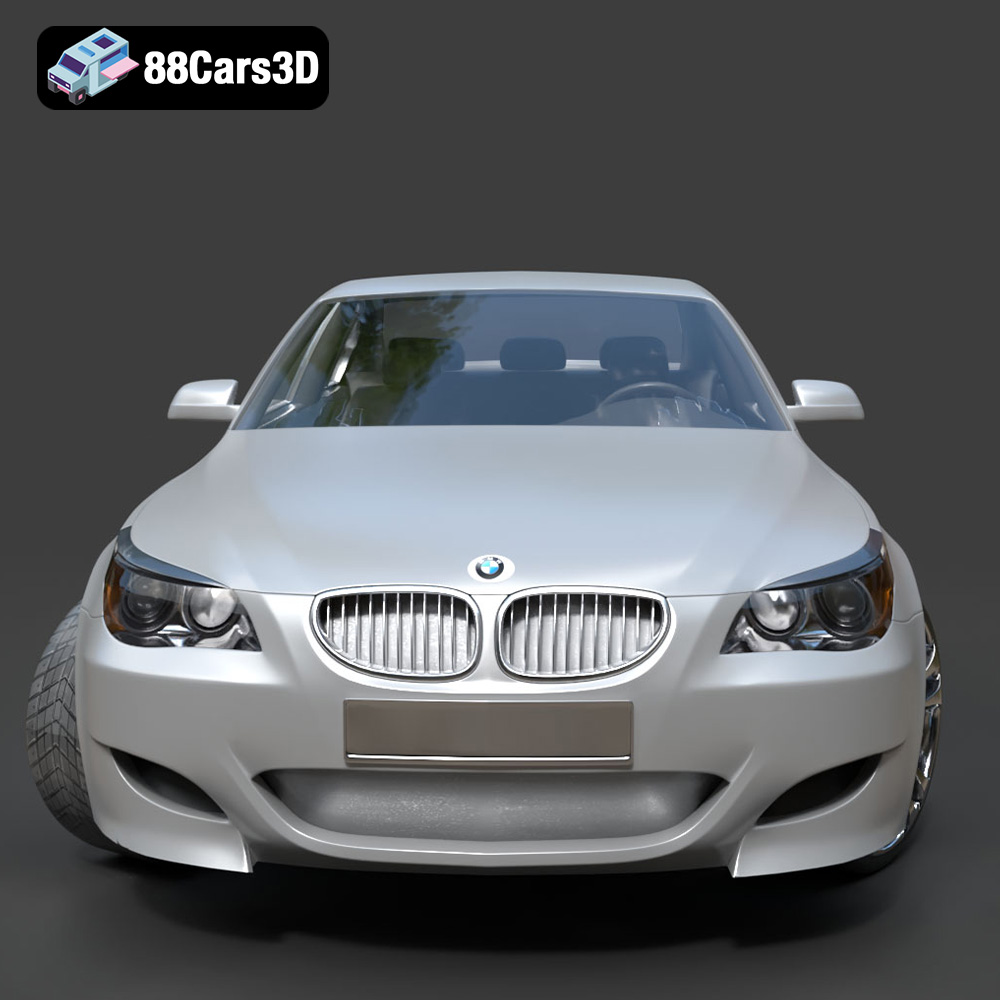
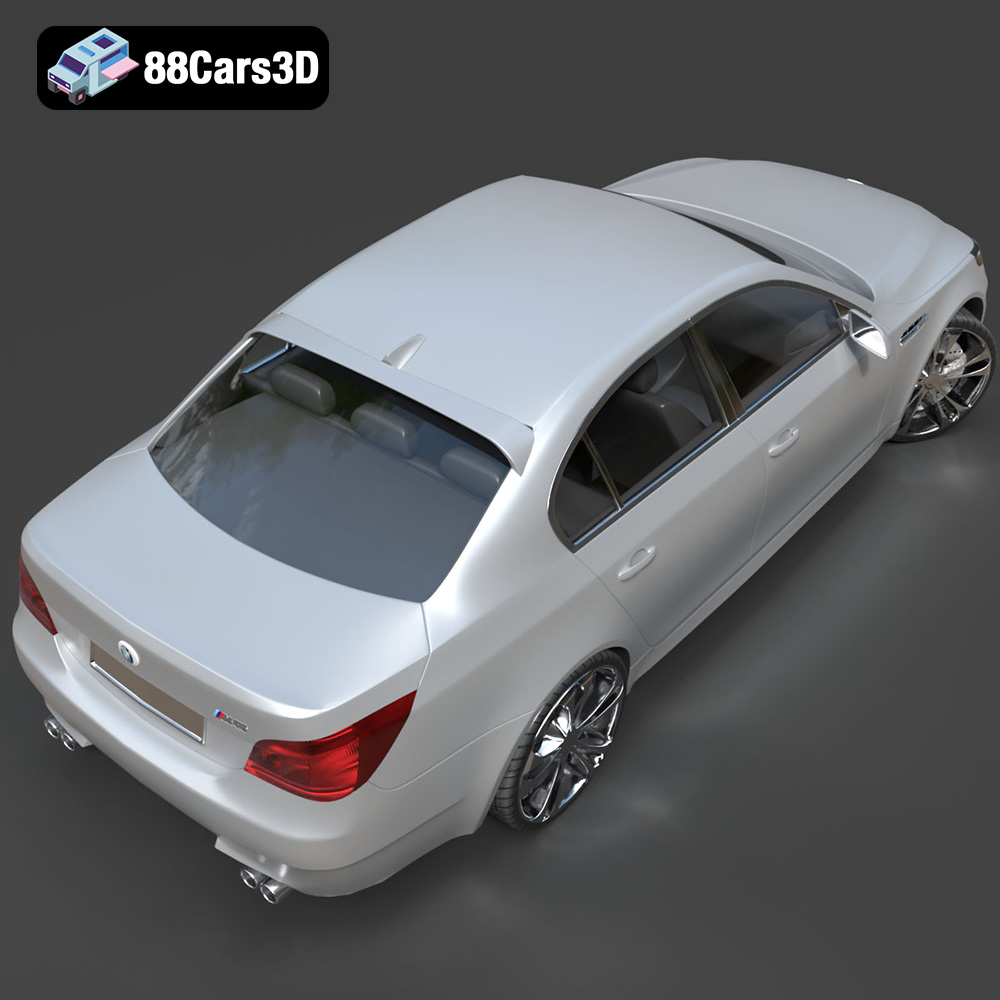
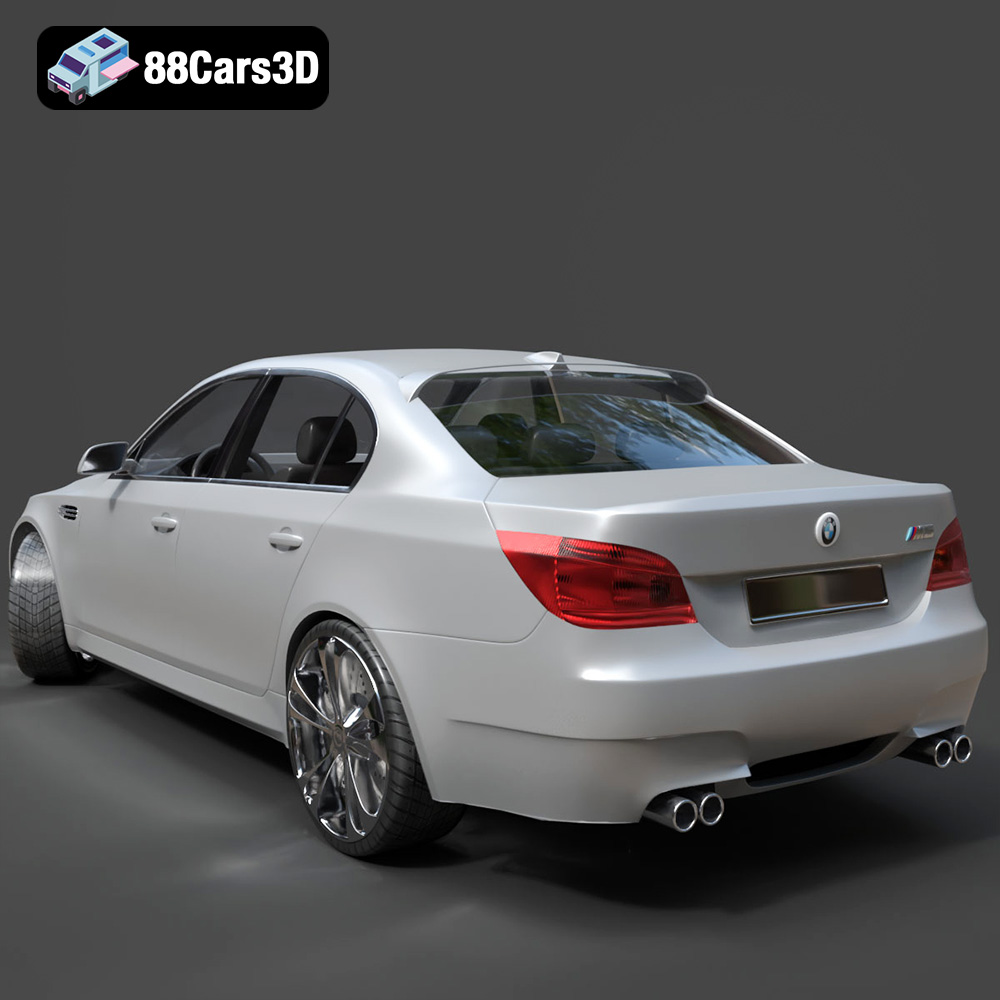
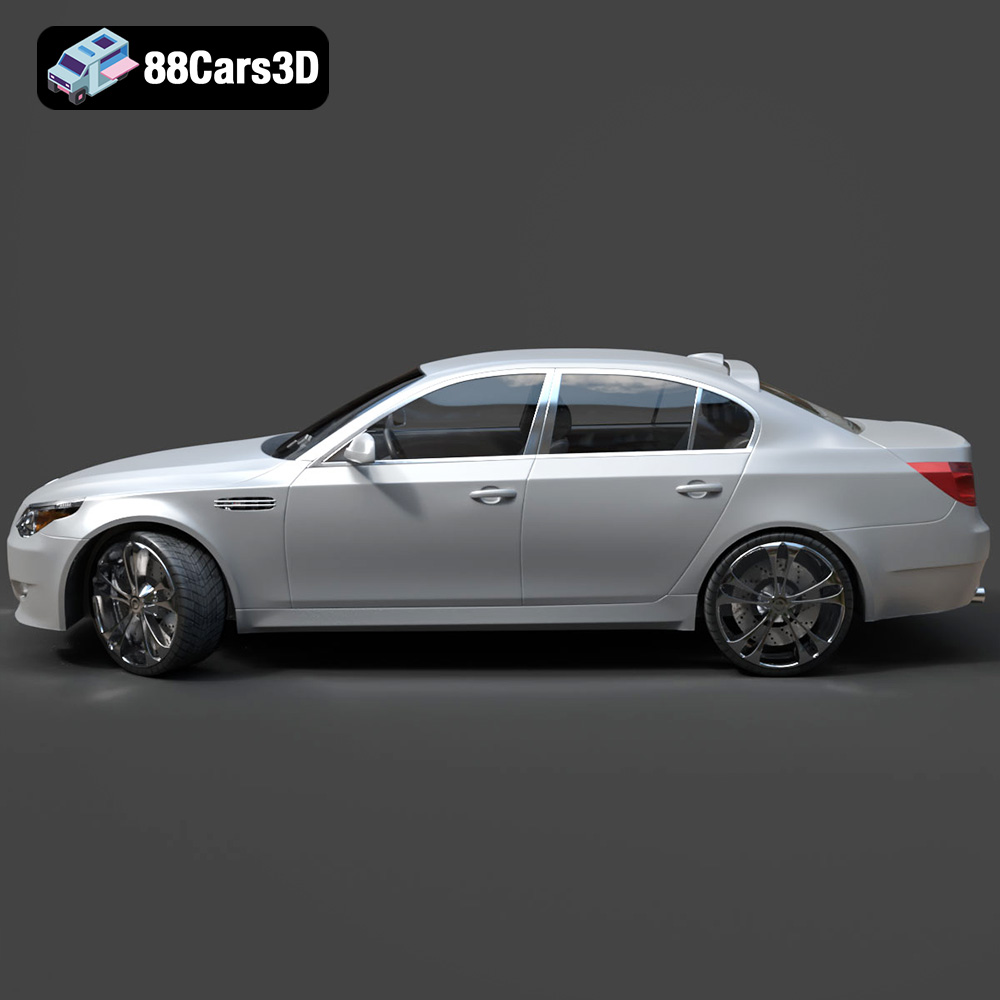
The first impression of any car, real or digital, is its exterior. For the BMW M5 2008, this means conveying its aggressive yet refined stance. The 3D model masterfully replicates the vehicle’s accurate frame geometry and proportions, ensuring that every curve and panel gap aligns with the real-world counterpart. Key visual elements are faithfully reproduced: the distinctive M-specific front fascia with its large air intakes, the flared wheel arches that hint at the power beneath, and the signature quad exhaust system integrated into the rear diffuser. The iconic kidney grilles are rendered with precision, as are the authentic Bi-Xenon headlights and L-shaped LED taillights, each contributing to the model’s photorealistic potential. Even the M-style lightweight alloy wheels with high-performance tire treads and the detailed sport suspension components are individually modeled, providing the necessary depth and realism for close-up renders and dynamic animations. This level of detail makes the BMW M5 2008 3D model an exceptional asset for any project demanding visual accuracy.
While the exterior draws the eye, the interior is where the driving experience is truly felt. The **BMW M5 2008 3D Model** extends its meticulous detailing into the cockpit, offering a rich environment for first-person perspectives and virtual tours. Artists will appreciate the heavily bolstered M sport leather seats, faithfully reproducing their ergonomic design and stitching. The thick-rimmed M multi-function steering wheel, complete with paddle shifters, is ready for virtual hands to grip. The instrument cluster, featuring the M-specific tachometer, provides crucial visual cues, while intricate control details such like the pedals, the iconic SMG shifter, and the revolutionary iDrive dial are all present. This comprehensive interior modeling is particularly valuable for game development, where optimized geometry for first-person POV enhances player immersion, allowing for authentic virtual driving experiences.
A truly professional 3D car model is more than just visually appealing; it’s technically sound and optimized for performance across a spectrum of applications. The BMW M5 2008 3D Model exemplifies this technical mastery, designed to be both game-ready and visually stunning for high-end rendering.
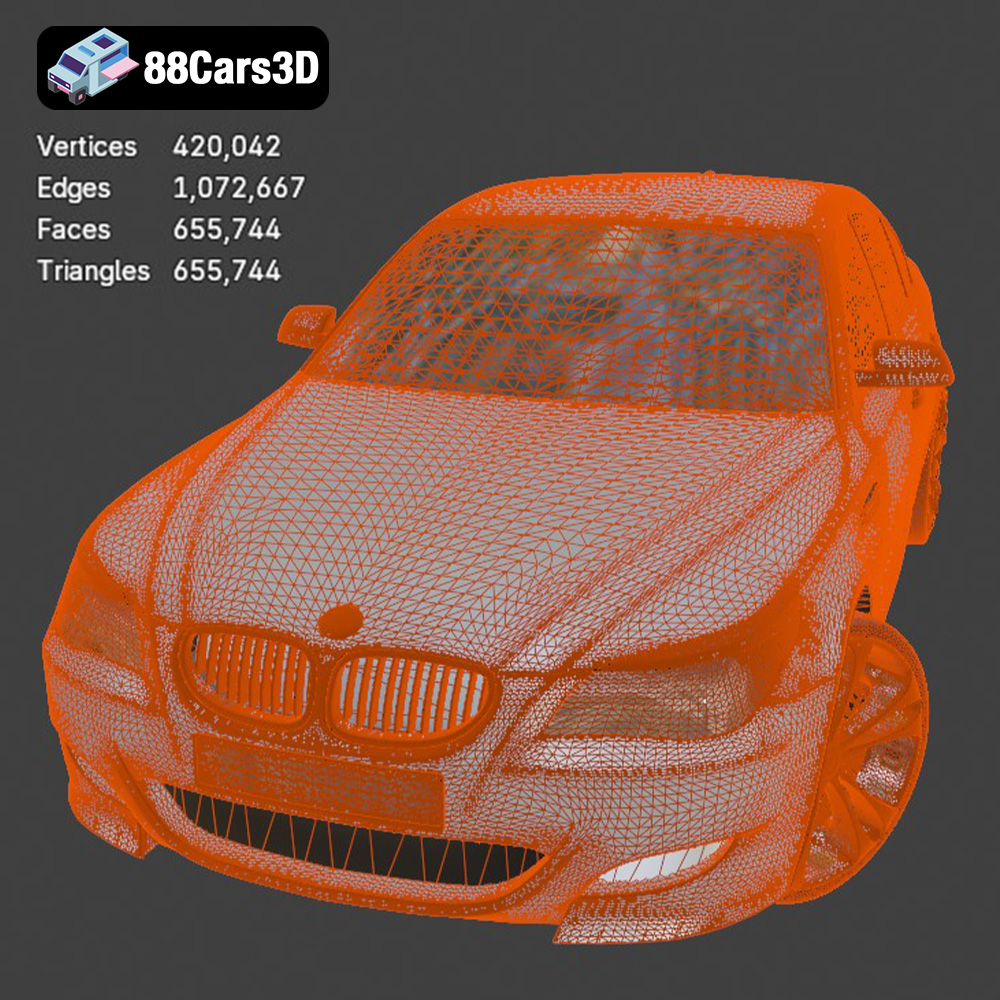
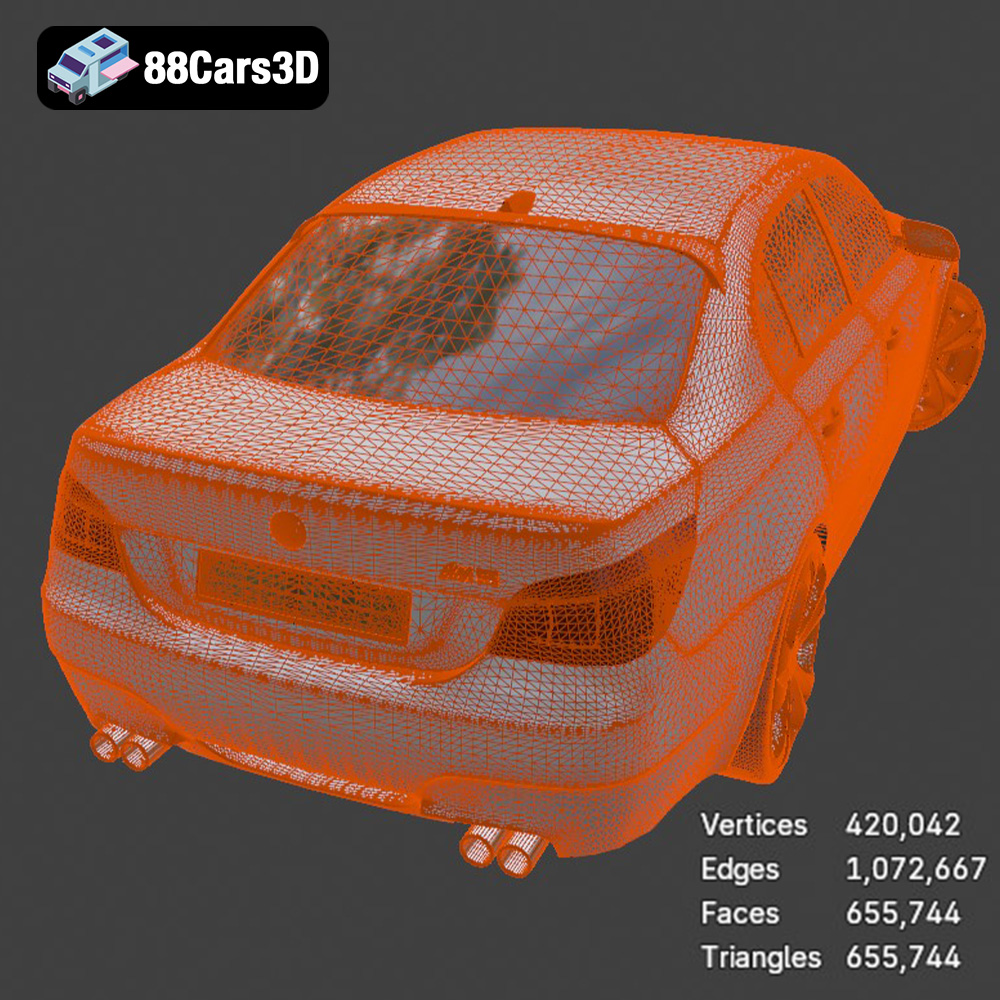
One of the most critical aspects of a versatile 3D asset is its polygon count. The BMW M5 2008 3D Model boasts a well-structured topology with a triangle count of 655,744. This number strikes a perfect balance, providing exceptional visual realism without overburdening real-time engines like Unreal Engine and Unity. For game developers, this means the model can be integrated into open-world environments or high-speed racing simulations with optimized performance, maintaining high frame rates while still delivering stunning visuals. Furthermore, the model is built to real-world scale accuracy, based on actual vehicle chassis dimensions, which is paramount for realistic physics simulations and seamless integration into architectural visualization scenes where scale is key. This meticulous optimization ensures that whether you’re creating a cinematic cutscene or an interactive AR experience, the model performs flawlessly.
Beyond static beauty, the ability to animate a 3D car model brings it to life. This BMW M5 2008 model features a proper pivot setup for steering, wheel rotation, and suspension travel. The wheels, suspension, and steering components are separated, allowing for independent animation – crucial for dynamic game mechanics, realistic drive cycles, and cinematic sequences. This modularity extends to customization options, enabling users to change body colors (including authentic factory finishes), modify tire textures for different scenarios, adjust material finishes (matte, gloss, metallic), and adapt lighting to suit various environments. This flexibility makes the model an incredibly powerful tool for artists and developers looking to create unique and engaging visual narratives. The team at 88cars3d.com understands that flexibility is key, providing assets that can be tailored to specific project needs.
The true value of a premium 3D car model lies in its seamless integration into various professional workflows. From game development studios to architectural visualization firms, a well-prepared asset like the BMW M5 2008 3D Model can drastically cut production time and elevate the quality of the final output.
For game developers, integrating realistic 3D car models is fundamental to creating immersive experiences. The BMW M5 2008, with its game-ready optimization and detailed components, is an ideal asset for titles built in Unreal Engine or Unity. Its optimized polycount ensures smooth performance in racing simulators, urban open-world environments, and even mobile game projects. Developers can leverage the separated wheels, suspension, and steering to implement accurate physics, vehicle dynamics, and advanced animation systems. The model’s real-world scale makes it perfect for consistent integration into existing game worlds, while its robust file formats like `.fbx` and `.unreal` facilitate quick import and setup, allowing artists to focus on gameplay and environment design rather than asset preparation.
In architectural visualization (arch-viz) and cinematic rendering, photorealism is paramount. A high-quality vehicle model can transform a static scene into a vibrant, believable environment. Whether using 3ds Max, Blender, or other rendering engines like V-Ray or Cycles, the BMW M5 2008 3D Model provides the necessary detail for stunning results. Its accurate geometry, detailed materials, and realistic proportions allow visualization artists to place the M5 in luxury virtual showrooms, driveways of meticulously designed homes, or sophisticated urban landscapes. The ability to customize colors and material finishes enables seamless integration with brand campaigns or specific client requests, enhancing the overall storytelling and aesthetic appeal of the visualization. Its inclusion of `.max` and `.blend` files gives full control over the scene for advanced lighting setups and intricate camera animations.
The burgeoning fields of Augmented Reality (AR) and Virtual Reality (VR) demand highly optimized yet visually rich 3D assets. The BMW M5 2008 3D Model is perfectly suited for these immersive applications, especially with its `.glb` format. Imagine an interactive virtual showroom where potential buyers can explore the M5 in full 3D, changing colors and features in real-time. Or an AR experience where the M5 is seamlessly overlaid onto a real-world environment via a smartphone camera. Its optimized geometry and PBR-ready materials ensure a smooth, high-fidelity experience across various AR/VR platforms, making it an invaluable tool for virtual product configurators and engaging brand experiences that push the boundaries of digital interaction.
The utility of a premium 3D model isn’t confined to digital screens; it can transcend into the physical realm through 3D printing. The BMW M5 2008 3D Model, specifically provided in an `.stl` format, offers enthusiasts and professionals the unique opportunity to hold a tangible representation of this automotive icon. This process involves careful preparation and understanding of 3D printing specifics to ensure a successful outcome.
Translating a digital mesh into a physical object requires thoughtful consideration of print settings. For the BMW M5 2008, recommended scales typically range from 1:12 to 1:24, offering a good balance between detail and manageable print size for hobbyists. When it comes to layer height, a range of 0.04–0.12 mm is suggested, with resin printing often recommended for achieving the finest details on intricate parts like the kidney grilles, wheel spokes, and interior components. Wall thickness is another crucial factor, with 1.2–2.0 mm generally advised to ensure structural integrity without making the model excessively heavy or material-intensive. An infill of 20–30% provides a good balance between strength and material usage.
Successful 3D printing often extends beyond the machine. Supports are almost always required for detailed parts such as the exhaust system, side mirrors, and any overhangs to prevent warping or collapse during printing. The print orientation of the main frame, often angled, is critical for achieving structural integrity, while wheels are typically printed separately to allow for cleaner details and easier post-processing. After printing, post-processing is key to a polished result. This includes carefully removing supports, sanding down any rough edges or layer lines, applying a primer to create a smooth surface, and finally, painting with authentic factory colors, potentially incorporating metallic finishes to truly capture the M5’s luxurious appeal. This hands-on process allows creators to bring a piece of digital art into the real world with stunning realism.
The world of 3D modeling demands both artistic vision and technical precision. The **BMW M5 2008 3D Model** stands as a testament to this principle, offering an exceptionally detailed, optimized, and versatile asset for a multitude of professional applications. From its meticulously recreated exterior and interior features to its game-ready topology and extensive file format compatibility, this model provides an invaluable foundation for game development, architectural visualization, cinematic rendering, AR/VR experiences, and even physical 3D printing.
Its ability to seamlessly integrate into diverse workflows, coupled with customization options, empowers creators to achieve their artistic and technical objectives with efficiency and excellence. Whether you’re aiming for photorealistic renders or a high-performance in-game asset, the attention to detail and professional-grade construction of this 3D model makes it a standout choice. For artists and developers seeking top-tier 3D car models that deliver both visual fidelity and technical robustness, exploring the offerings at 88cars3d.com, including this remarkable BMW M5 2008 model, is an investment in quality and creative potential.
Experience the legendary BMW M5 2008 (E60 generation), a defining sports sedan famed for its Formula 1-inspired naturally aspirated V10 engine and striking aerodynamic styling. This 3D model faithfully captures the vehicle’s heritage, showcasing key visual elements like the aggressive front fascia, flared wheel arches, signature quad exhaust system, and iconic kidney grilles that make this super saloon truly special.
Designed with meticulous attention to detail, this 3D model features a well-structured topology with a triangle count of 655,744. It offers exceptional game-ready optimization and high-end visual fidelity, making it a premier asset for real-time applications, game development, AR/VR experiences, professional animation, and architectural visualization.
Perfect for high-speed racing simulations, urban open-world environments, luxury virtual showrooms, and photorealistic cinematic renderings.
.blend, .fbx, .obj, .glb, .stl, .ply, .unreal, .max
Tags:
bmw, m5, 2008, e60, sports-sedan, luxury-car, car-3d-model, game-ready, low-poly, optimized, game-asset, rendering, vr-ar, blend, fbx, obj, glb, stl, ply, unreal, max
$46.50
.2008
.blend
.bmw
.e60
.fbx
.glb
.m5
.max
.obj
.ply
.rendering
.stl
.unreal
car-3d-model
game asset
game-ready
low-poly
luxury car
optimized
sports-sedan
VR/AR