Get 20% OFF All Premium 3D & STL Models!

The roar of a V8 engine, the sleek lines of a fastback, and the undeniable presence of a true American legend—the 1969 Ford Mustang Mach 1 is more than just a car; it’s an icon. Its aggressive stance, distinctive sportsroof, and high-performance pedigree have cemented its place in automotive history. For designers, game developers, animators, and enthusiasts, bringing such a revered vehicle into the digital realm requires unparalleled attention to detail and technical precision. This is where high-quality 3D car models become indispensable tools, bridging the gap between historical reverence and modern digital artistry.
Imagine recreating epic chase scenes, populating a virtual showroom with a piece of automotive heritage, or integrating a classic into a cutting-edge racing simulation. Such ambitious projects demand not only visual authenticity but also robust, optimized 3D assets. The Ford Mustang Mach 1 1969 3D model is meticulously crafted to meet these exact requirements, offering a level of fidelity and versatility that empowers professionals across various industries. Whether your goal is photorealistic rendering, real-time game integration, or even 3D printing a physical replica, this model provides the foundation you need to elevate your creative vision.
Navigating the world of 3D modeling often involves choosing the right file format for your specific needs. Each format serves a unique purpose, optimized for different software, applications, and stages of the production pipeline. Understanding these distinctions is crucial for seamless workflow integration and achieving optimal results. The Ford Mustang Mach 1 1969 3D model, available on 88cars3d.com, exemplifies this versatility by offering a comprehensive suite of file formats, ensuring compatibility with virtually any professional setup.
The
The
The
The
Similar to .blend for Blender,
The 1969 Ford Mustang Mach 1 isn’t just a car; it’s a statement. Its design language speaks volumes about the golden era of American muscle. Recreating this legend in 3D demands an almost obsessive commitment to authenticity, ensuring that every curve, every vent, and every iconic detail is faithfully represented. This 3D model of the Mach 1 excels in this regard, bringing the spirit of the original into the digital realm with stunning accuracy.
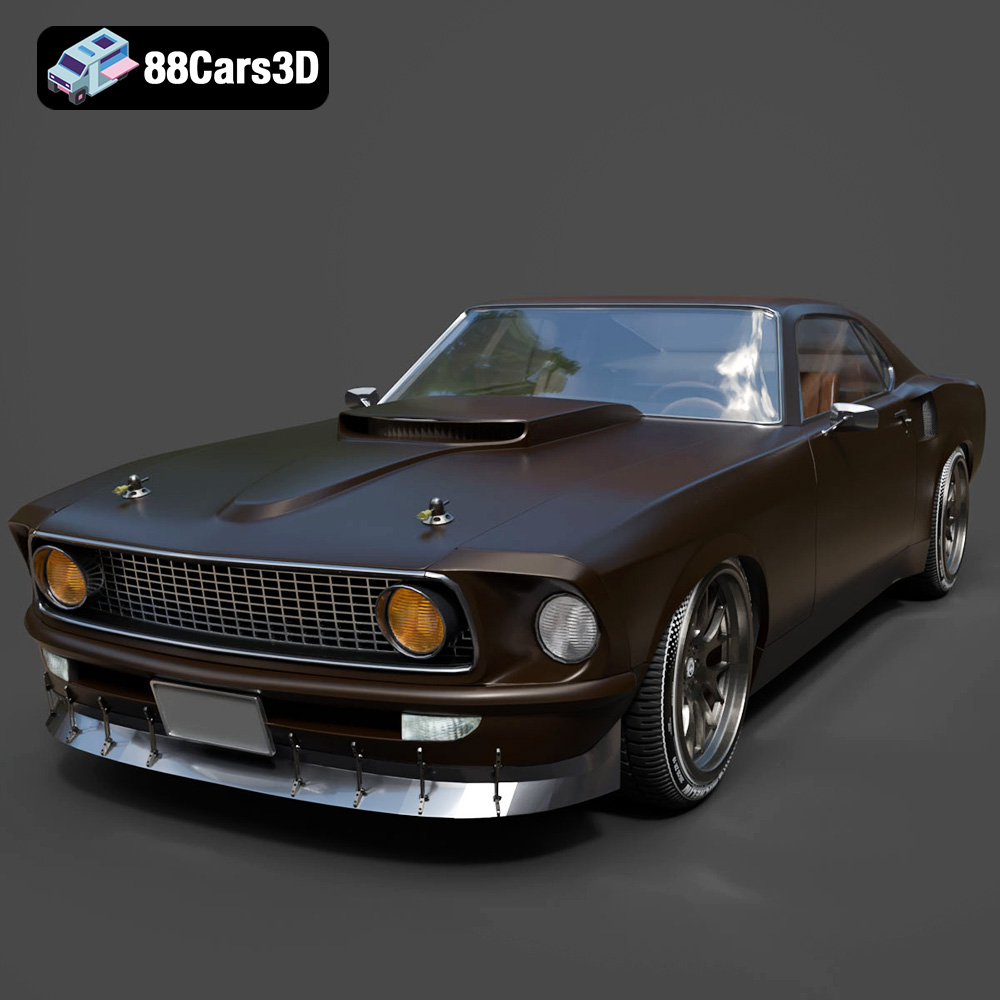
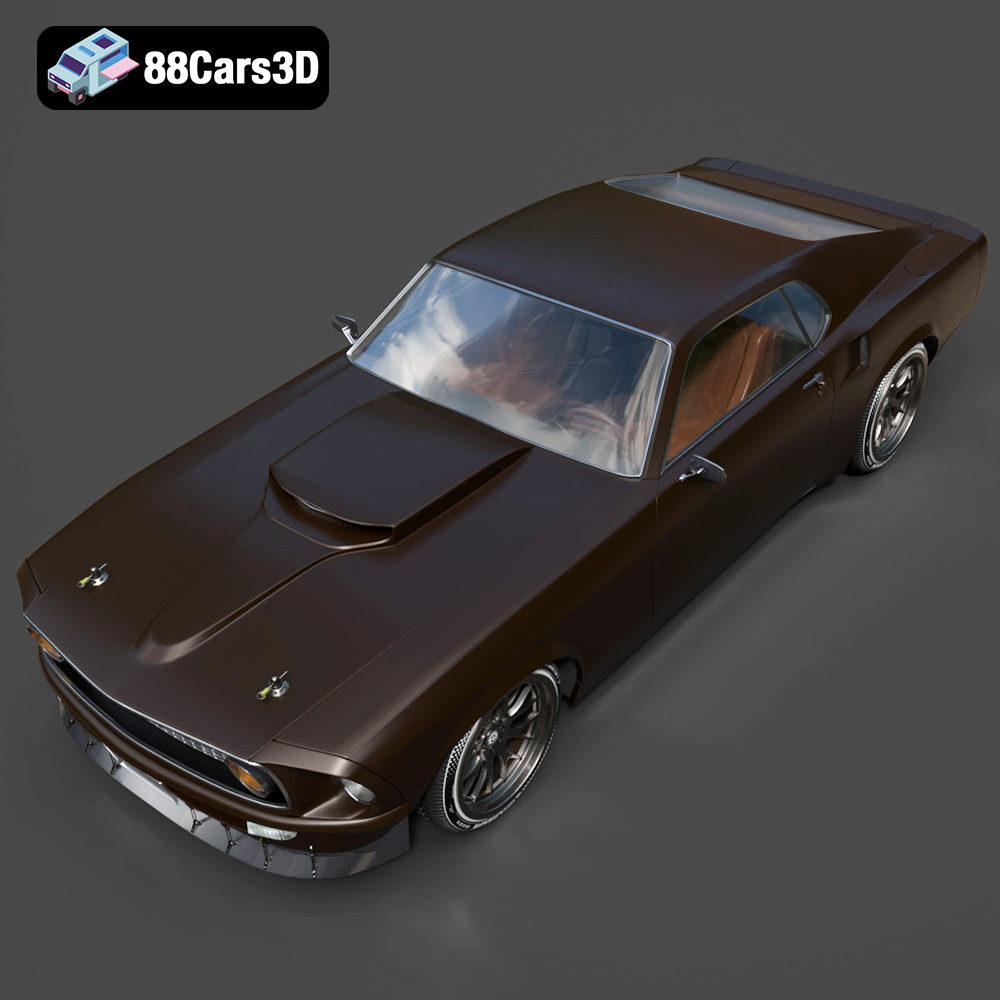
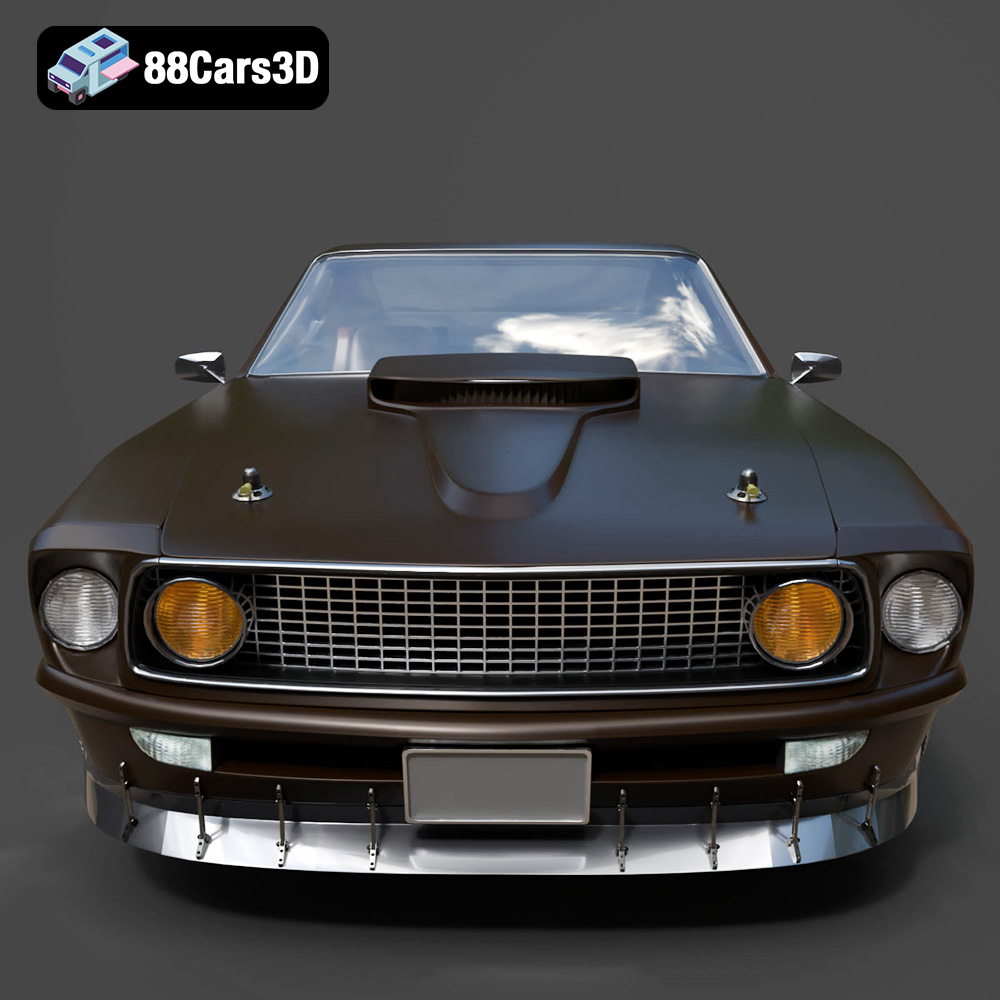
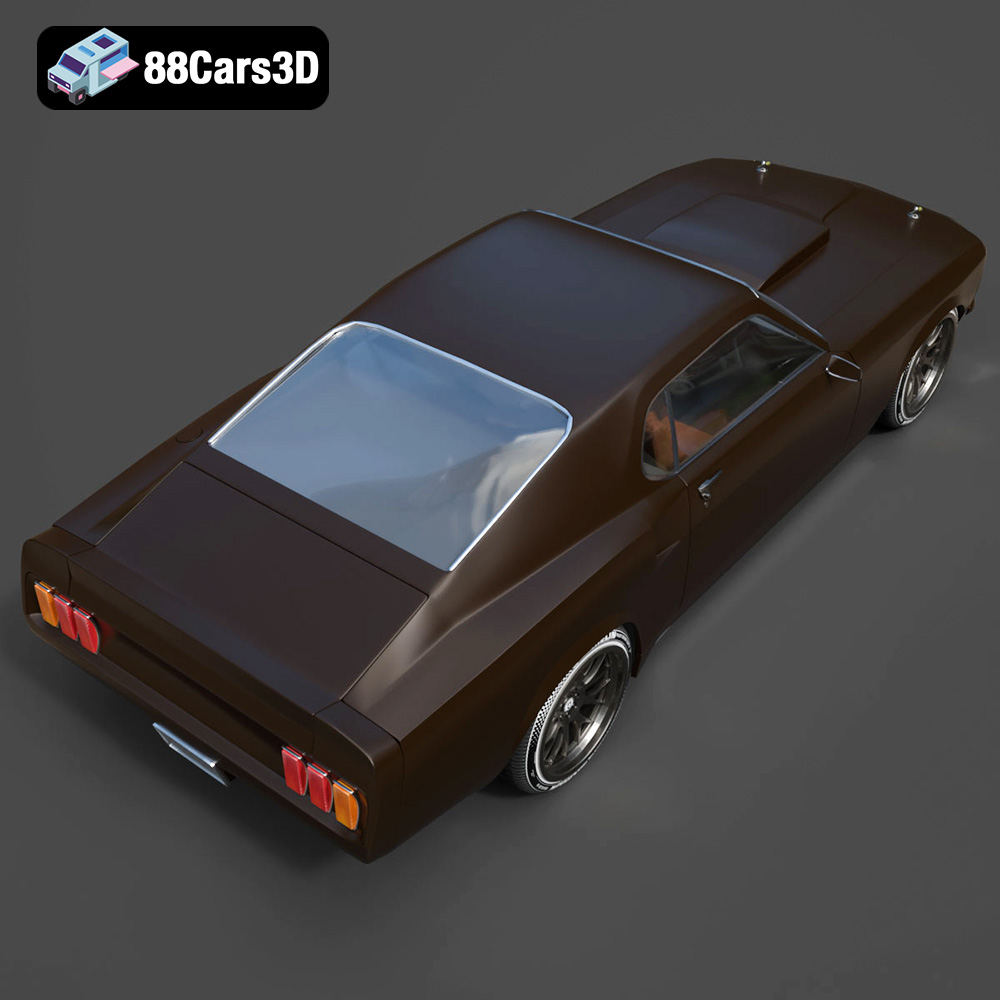
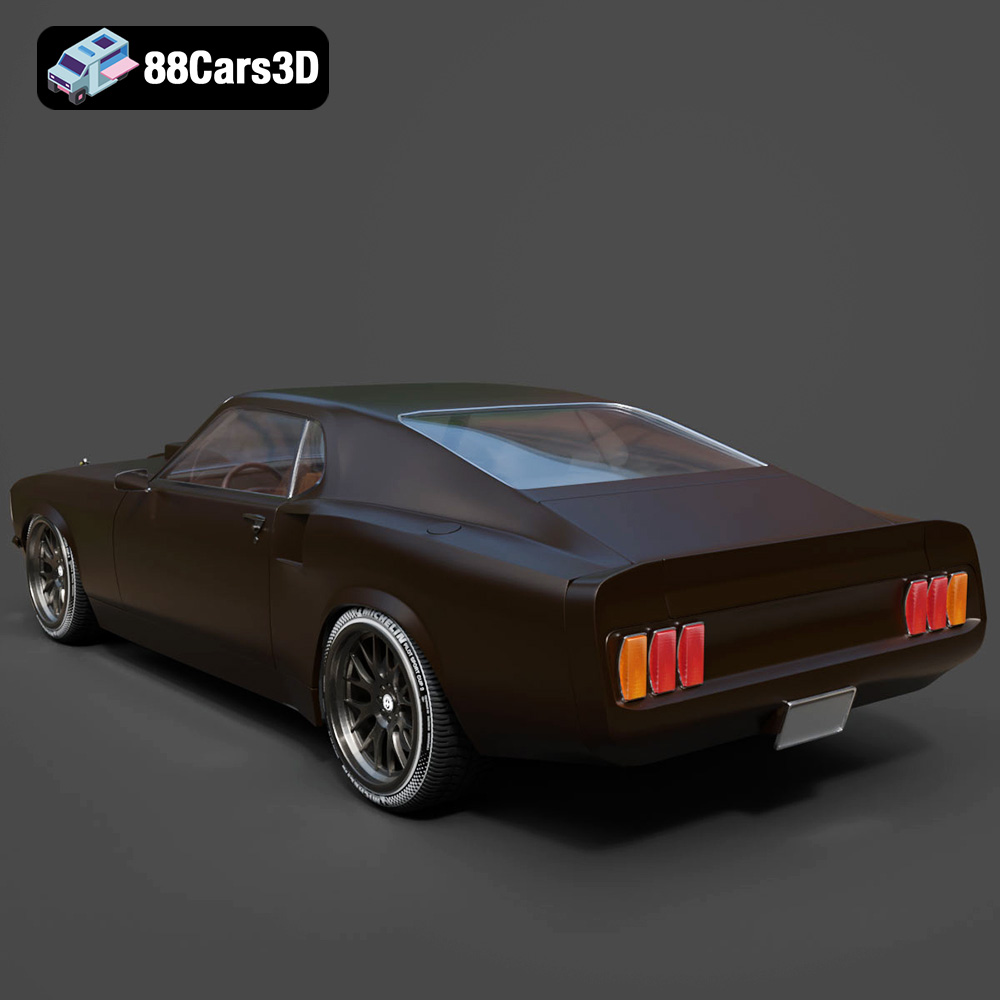
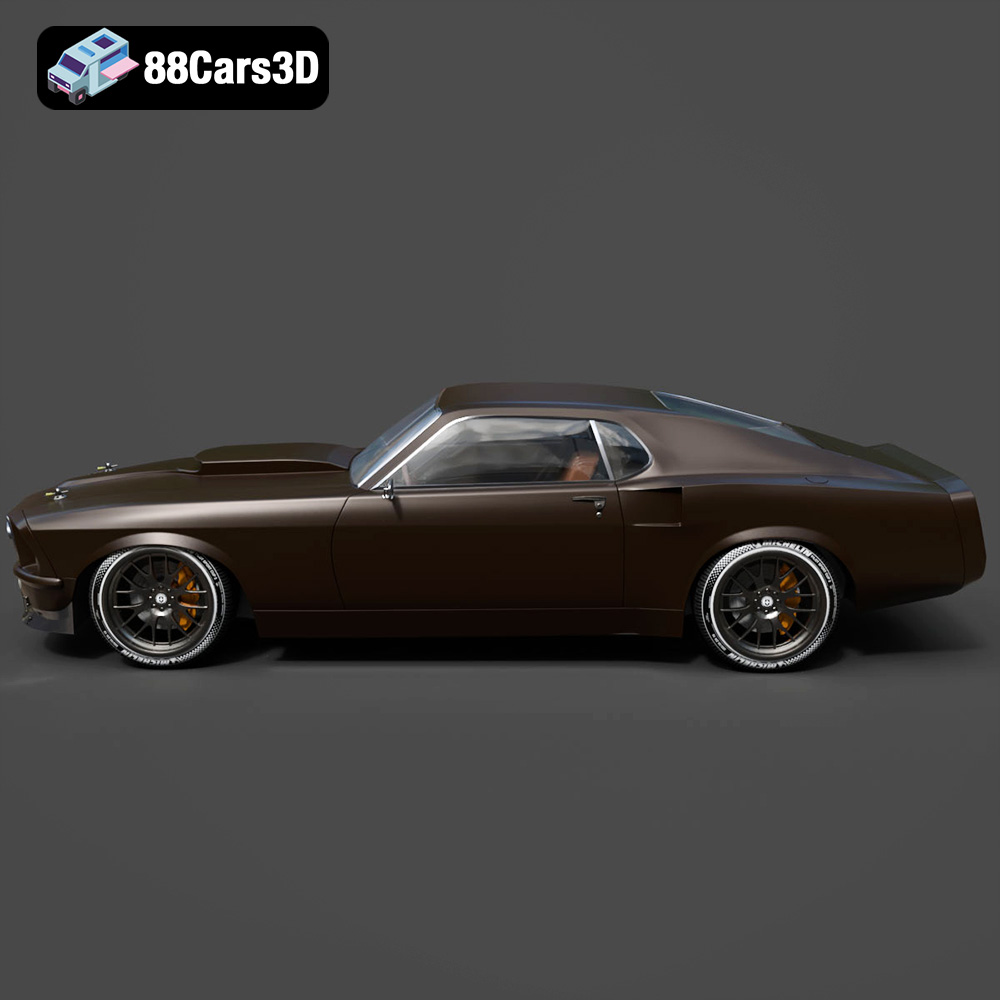
The model meticulously captures the Mach 1’s aggressive and unmistakable exterior. From the menacing front grille, flanked by its classic quad headlights, to the distinctive hood scoop and the muscular rear haunches, every element is sculpted with precision. The signature sportsroof styling, a hallmark of the 1969 fastback, is rendered with the correct proportions and subtle nuances that define its aerodynamic profile. Even the authentic dual exhaust system with its chrome-tipped tailpipes and the period-correct Magnum 500 style wheels with muscular tires contribute to an overall sense of realism that will satisfy even the most discerning automotive enthusiasts. The detailed undercarriage and classic leaf-spring suspension details further enhance its authenticity, making it suitable for close-up shots or even underside views in a virtual showroom.
The experience of a classic car extends beyond its exterior, and the interior of the 1969 Mach 1 is just as iconic. This 3D model delivers a highly immersive cockpit, complete with high-back bucket seats featuring classic vinyl upholstery styling. The authentic wood-grain trimmed three-spoke steering wheel immediately evokes a sense of nostalgia, while the detailed multi-dial instrument cluster and dashboard fascia provide all the necessary visual cues. Every control detail, from the pedals and levers to the classic T-bar shifter, is accurately modeled, making it perfect for first-person POV in gaming or immersive VR applications. The optimized geometry ensures that this interior detail doesn’t come at the cost of performance, striking a balance crucial for real-time environments.
No muscle car 3D model would be complete without a glimpse under the hood. This Ford Mustang Mach 1 1969 model features a highly detailed V8 engine block and accurately modeled engine bay components. While not always visible in every rendering or game scenario, the inclusion of this detail is a testament to the model’s comprehensive nature and its suitability for diverse applications. It allows for compelling hood-open presentations, engine bay showcases, or even animated sequences depicting maintenance or performance upgrades, adding another layer of realism and versatility to the asset.
In the demanding world of 3D production, a beautiful model is only truly valuable if it’s technically sound and optimized for various workflows. The Ford Mustang Mach 1 1969 3D model strikes an exemplary balance between visual fidelity and technical efficiency, making it a powerful asset for professionals in game development, rendering, and interactive experiences.
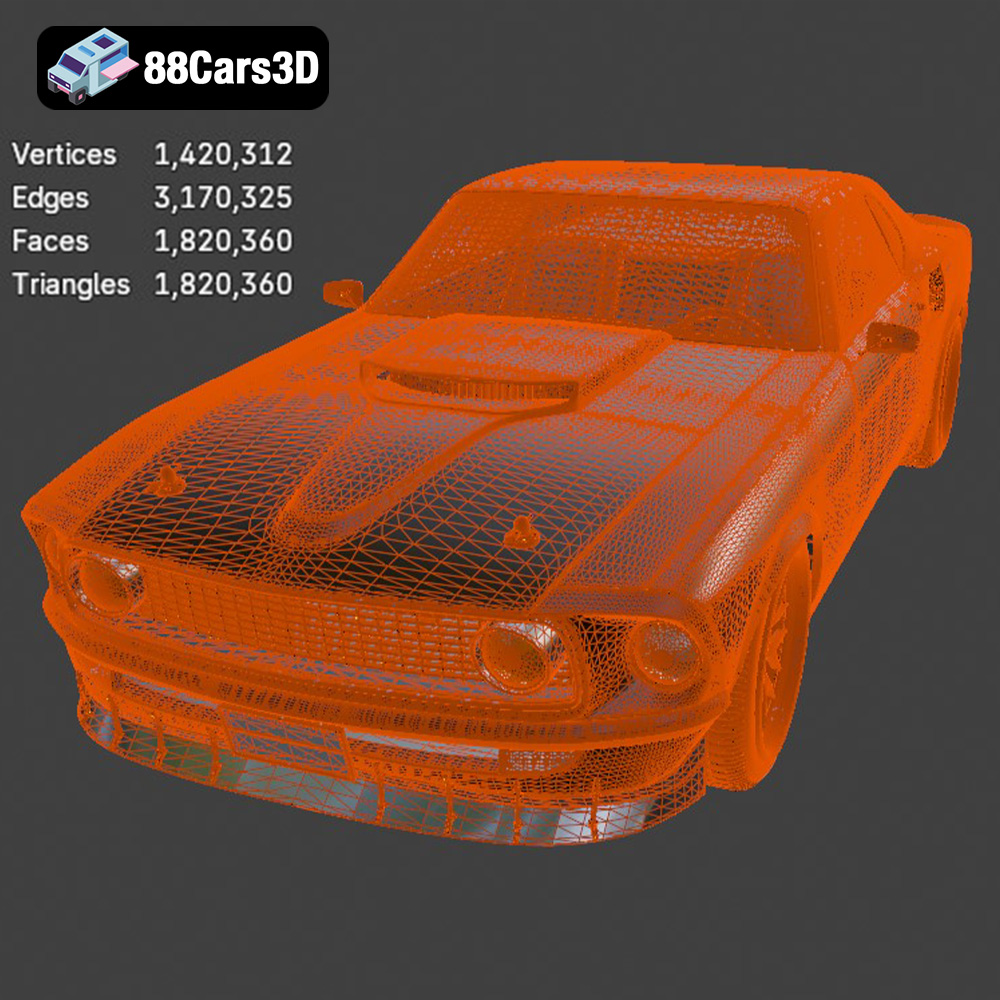
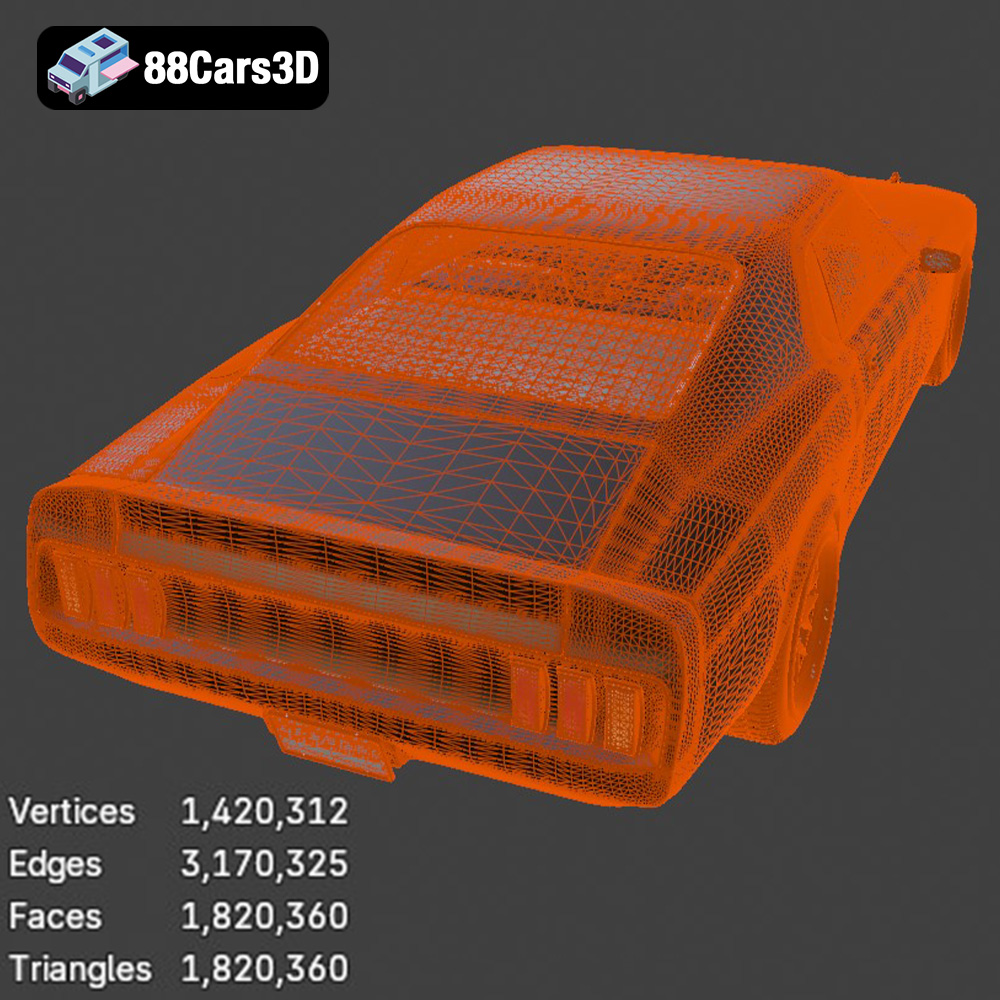
With a highly detailed topology of 1,820,360 triangles, this model achieves a perfect balance for real-time engines like Unreal and Unity. This polycount is substantial enough to deliver high-end visual realism, capturing the intricate details of the Mach 1 without becoming overly heavy and impacting performance in a game or VR environment. Its game-ready optimization means developers can integrate it directly into racing titles, open-world games, or simulators with minimal modification. The clean mesh and efficient UV mapping further contribute to smooth texture application and rendering, ensuring excellent visual quality even under tight performance budgets.
For those focused on cinematic animation, architectural visualizations, or automotive brand campaigns, the model’s robust detail is a significant advantage. The meticulously modeled geometry translates into stunning photorealistic results when rendered with advanced lighting and shading techniques in software like 3ds Max or Blender. Real-world scale accuracy, based on actual vehicle chassis dimensions, ensures that the car sits correctly within any scene and interacts realistically with environmental elements. This precision is critical for creating believable lifestyle renders or virtual studio setups where authenticity is paramount.
A static model is only half the story for an automotive asset. This Mach 1 3D model comes with separate wheels, suspension, and steering components, along with proper pivot setups for each. This crucial detail allows for seamless animation of steering, realistic wheel rotation, and accurate suspension travel. For game developers, this means easier integration with physics engines and vehicle controllers. For animators, it provides the flexibility to create dynamic driving sequences, car commercials, or interactive configurators where the vehicle responds realistically to user input. This foresight in preparation saves countless hours of setup time and opens up a world of possibilities for dynamic content creation.
The versatility of a well-crafted 3D car model is immense, and the Ford Mustang Mach 1 1969 model from 88cars3d.com is designed to be a linchpin across a spectrum of professional applications. Its technical excellence and visual fidelity make it suitable for a wide range of creative endeavors.
For game developers, this Mustang Mach 1 is a dream asset. Its optimized polycount and game-ready status make it ideal for integration into racing titles, open-world adventures, and driving simulators. Imagine the thrill of piloting this classic muscle car through a virtual landscape, with realistic physics and handling. The separated components for wheels, suspension, and steering greatly simplify the process of implementing vehicle dynamics and animation. Developers can leverage its high detail for close-up replays and cinematic moments, while its efficient structure ensures smooth gameplay, creating truly immersive and historically accurate driving experiences.
The burgeoning fields of Augmented Reality (AR) and Virtual Reality (VR) demand highly optimized yet visually striking 3D assets. The Mach 1 model is perfect for creating immersive virtual showrooms where customers can interact with a classic car in a digital space, examining its features from every angle. Beyond showrooms, it can be used in AR applications for interactive product displays, or even educational VR experiences that delve into automotive history. The .glb file format, specifically optimized for AR/VR and web-based display, ensures efficient loading and smooth performance on various devices, making it a prime candidate for cutting-edge interactive solutions.
When the goal is to produce stunning, photorealistic images or cinematic animations, the Mach 1 model shines. Its detailed geometry and real-world scale make it an excellent choice for automotive marketing campaigns, lifestyle scenes, and studio lighting setups. Architects can integrate it into visualizations to add character and scale to a modern garage or a retro-themed street scene. Film and VFX artists can use it as a hero asset in period pieces or high-octane action sequences, confident that its visual quality will stand up to the closest scrutiny. The compatibility with major 3D software platforms like 3ds Max and Blender ensures that artists can leverage their preferred rendering engines for maximum visual impact.
Beyond digital screens, this model also offers the exciting possibility of physical manifestation through 3D printing. Convertible to the .stl format, hobbyists and professionals can bring a tangible piece of automotive history to their desks. The product description provides excellent recommendations for 3D print settings, including scale (1:12 / 1:18 / 1:24), layer height, wall thickness, infill, and crucial support requirements for detailed parts. Resin printing is specifically recommended for capturing the fine details, ensuring that the printed model accurately reflects the digital precision. This capability extends the model’s utility from virtual showcases to tangible collectibles or even physical design prototypes.
A truly versatile 3D model offers more than just fidelity; it provides flexibility for customization and seamless integration into existing production pipelines. The Ford Mustang Mach 1 1969 3D model is built with customization in mind, allowing artists and developers to tailor its appearance to fit specific project requirements, and its multiple file formats ensure broad compatibility with industry-standard software.
One of the most powerful aspects of working with a high-quality 3D model is the ability to customize its appearance. Users can easily change body and panel colors, experimenting with authentic factory colors, custom finishes, or even unique paint jobs to match a brand or creative vision. The model’s material setups allow for adjustments to tire textures, switching between off-road and street variants to suit different scenarios. Furthermore, material finishes can be modified—from a pristine gloss to a rugged matte or a sophisticated metallic sheen—to achieve distinct aesthetic effects. This level of control empowers artists to create unique renditions of the classic Mach 1, adapting it to various moods and settings.
Given the inclusion of .max and .blend native files, integrating the Mustang Mach 1 into Autodesk 3ds Max or Blender is a straightforward process. In 3ds Max, artists can leverage its powerful modeling tools to further refine or adapt parts, animate complex sequences using its robust animation capabilities, and create breathtaking renders with V-Ray or Corona. Similarly, Blender users benefit from the native .blend file, which retains all scene information, modifiers, and node-based materials. This allows for immediate manipulation, custom shader development, advanced lighting setups using Cycles or Eevee, and complex scene composition, making the model instantly productive within these popular DCC applications.
For game developers, the .fbx and dedicated .unreal files are invaluable for bringing the Mach 1 into Unreal Engine. The .fbx provides a robust, animation-ready mesh that imports cleanly, while the .unreal file often comes with pre-configured materials, textures, and even basic collision meshes, significantly accelerating the setup process. Once in Unreal, developers can fine-tune materials using the engine’s powerful node-based shader editor, apply physics assets for realistic vehicle behavior, set up Level of Detail (LOD) groups for performance optimization, and integrate it into advanced game systems. This smooth workflow integration ensures that the classic Mustang can be a star asset in any real-time interactive experience, delivering both visual appeal and optimal performance.
The 1969 Ford Mustang Mach 1 is an undeniable icon, and its digital counterpart, the Ford Mustang Mach 1 1969 3D model, stands as a testament to meticulous craftsmanship and technical foresight. From its historically accurate exterior and detailed interior to its game-ready optimization and comprehensive file format support, this model is engineered to be a cornerstone for professionals across various digital industries. Whether you’re an automotive renderer aiming for photorealism, a game developer seeking authentic assets for racing titles, an AR/VR creator building immersive experiences, or even a hobbyist looking to 3D print a piece of history, this model offers unparalleled value.
Its robust technical specifications, including an optimized polycount and animation-ready components, ensure smooth integration into demanding workflows. The availability of formats like .blend, .fbx, .obj, .glb, .stl, .ply, .unreal, and .max guarantees compatibility with virtually any software or application you might use. This versatility, combined with the potential for extensive customization, makes it an indispensable resource for bringing the legend of the Mach 1 to life in the digital realm.
For those in search of high-quality 3D car models that blend artistic precision with technical excellence, look no further. This Mach 1 model, available at 88cars3d.com, is more than just an asset; it’s an investment in quality, efficiency, and creative potential, ready to drive your next project to success.
The 1969 Ford Mustang Mach 1 stands as a defining pillar of American muscle car heritage. This legendary fastback is celebrated for its aggressive stance, signature sportsroof styling, and high-performance V8 pedigree. Our 3D model meticulously captures its iconic visual elements, from the menacing front grille and quad headlights to the muscular rear haunches, distinctive hood scoop, and classic dual exhaust system.
Boasting a highly detailed topology of 1,820,360 triangles, this 3D model is crafted for maximum visual fidelity while maintaining optimized structures for modern rendering engines. It is designed to deliver photorealistic results for high-end rendering, game development, cinematic animation, and interactive AR/VR applications.
Perfect for virtual showrooms, classic car racing games, architectural visualizations, and automotive brand campaigns.
$82.50
.1969
.blend
.fbx
.ford
.glb
.max
.obj
.ply
.rendering
.stl
.unreal
car-3d-model
classic-car
game asset
game-ready
muscle-car
mustang-mach-1
optimized
VR/AR