Get 20% OFF All Premium 3D & STL Models!

In the dynamic world of 3D visualization, automotive design stands as a pinnacle of technical artistry. From breathtaking cinematic renders to hyper-realistic game environments and interactive AR/VR experiences, the demand for exceptionally detailed and versatile 3D car models has never been higher. Digital artists, game developers, architects, and product visualizers constantly seek assets that not only look authentic but also integrate seamlessly into diverse professional workflows. This quest for perfection often begins with finding a robust, well-structured 3D model that can serve as a reliable foundation.
Today, we embark on a journey into the intricate world of premium digital vehicles, using the illustrious Lexus LX600 3D model as our prime example. This isn’t just a static representation; it’s a meticulously crafted digital twin, poised to elevate any project to a new echelon of visual fidelity. Whether you’re aiming for a lavish lifestyle rendering, an adventurous off-road game simulation, or a virtual showroom configurator, a model of this caliber, like those found at 88cars3d.com, offers the raw power and flexibility needed to bring your vision to life.
The choice of file format for a 3D model is often as critical as the model’s geometry itself. Each format carries specific strengths and is optimized for different stages of the 3D pipeline, from initial modeling and animation to real-time rendering and physical production. Understanding these distinctions is paramount for any professional leveraging assets like the Lexus LX600 3D model. This premium model thoughtfully includes a comprehensive suite of formats, ensuring maximum compatibility and utility across a vast array of software and platforms.
The .blend format is native to Blender, the popular open-source 3D creation suite. When you download a .blend file, you’re getting a fully editable Blender scene, complete with all its associated data: mesh geometry, materials, textures, lighting setups, cameras, animations, and even modifiers. For artists who primarily use Blender, this means immediate access to the entire project, allowing for deep customization, adjustments, and the full power of Blender’s robust toolset. It’s the ideal choice for continued development or intricate scene composition within the Blender ecosystem.
As Autodesk’s proprietary format, .fbx (Filmbox) has become an industry standard for exchanging 3D data between different software applications. Its strength lies in its ability to store not just geometry, but also materials (though often simplified), textures, animations, skinning, and camera data in a highly efficient manner. This makes it ideal for pipelines involving multiple software, such as modeling in 3ds Max and then exporting to Unreal Engine or Unity for game development. The Lexus LX600’s .fbx version is perfectly structured for real-time engines, ensuring smooth import and setup for game-ready environments.
The .obj (Wavefront Object) format is one of the oldest and most universally supported 3D file types. It’s a simple, text-based format primarily used to store geometry (vertices, normals, texture coordinates, and faces) and can reference external material (.mtl) and texture files. While it doesn’t support animation or complex scene data, its widespread compatibility makes it a safe bet for cross-software transfers when only the mesh and basic materials are needed. It’s an excellent fallback or starting point for artists working across various modeling applications.
.glb (GL Transmission Format Binary) is the binary version of glTF, a royalty-free specification for the efficient transmission and loading of 3D scenes and models by applications. What makes .glb truly stand out is its “all-in-one” nature: it packages geometry, materials, textures, and even animation into a single, self-contained file. This optimization for web, AR, and VR applications means faster loading times and easier integration into browser-based experiences or mobile AR apps. For the Lexus LX600, the .glb format is crucial for creating interactive virtual showrooms or immersive mobile AR experiences, where performance and ease of use are paramount.
.stl (STereoLithography) is the most common file format for 3D printing. It represents a 3D model as a series of connected triangles, describing only the surface geometry of an object without color, texture, or other CAD attributes. While simple, this universality makes it the go-to format for hobbyists and professionals looking to physically manifest their digital creations. The Lexus LX600’s .stl output allows enthusiasts to print miniature replicas, making the digital model tangible.
The .ply (Polygon File Format) is another format for storing 3D data, particularly known for its ability to save properties like color, transparency, and normals per vertex or face. It’s often used in applications dealing with 3D scanners, CAD software, and scientific analysis, where precise mesh data and per-element attributes are crucial. For specific engineering or analytical tasks involving the Lexus LX600’s geometry, the .ply format offers a robust and detailed representation.
The .unreal format signifies an asset specifically prepared and optimized for direct import into the Unreal Engine. This often implies pre-configured materials, collision meshes, LODs (Levels of Detail), and proper pivot points, streamlining the workflow significantly. While often a wrapper or specialized import process rather than a standalone file type, its inclusion with the Lexus LX600 model means that integration into Unreal Engine projects is as smooth and efficient as possible, saving countless hours of setup.
Similar to .blend for Blender, .max is the native file format for Autodesk 3ds Max, a powerful 3D modeling, animation, rendering, and compositing software. An included .max file provides access to the full 3ds Max project, allowing for complete control over all aspects of the model: topology, materials, rigging, lighting, and animation setups. For professionals working within the 3ds Max ecosystem, this format offers the highest level of editability and flexibility, making it ideal for high-end rendering and detailed animation projects.
Capturing the essence of a luxury vehicle like the Lexus LX600 in a digital format requires an unparalleled commitment to detail and technical precision. This 3D model doesn’t just replicate the vehicle; it reconstructs it with a level of fidelity that borders on the photorealistic, making it a stellar asset for any professional project.
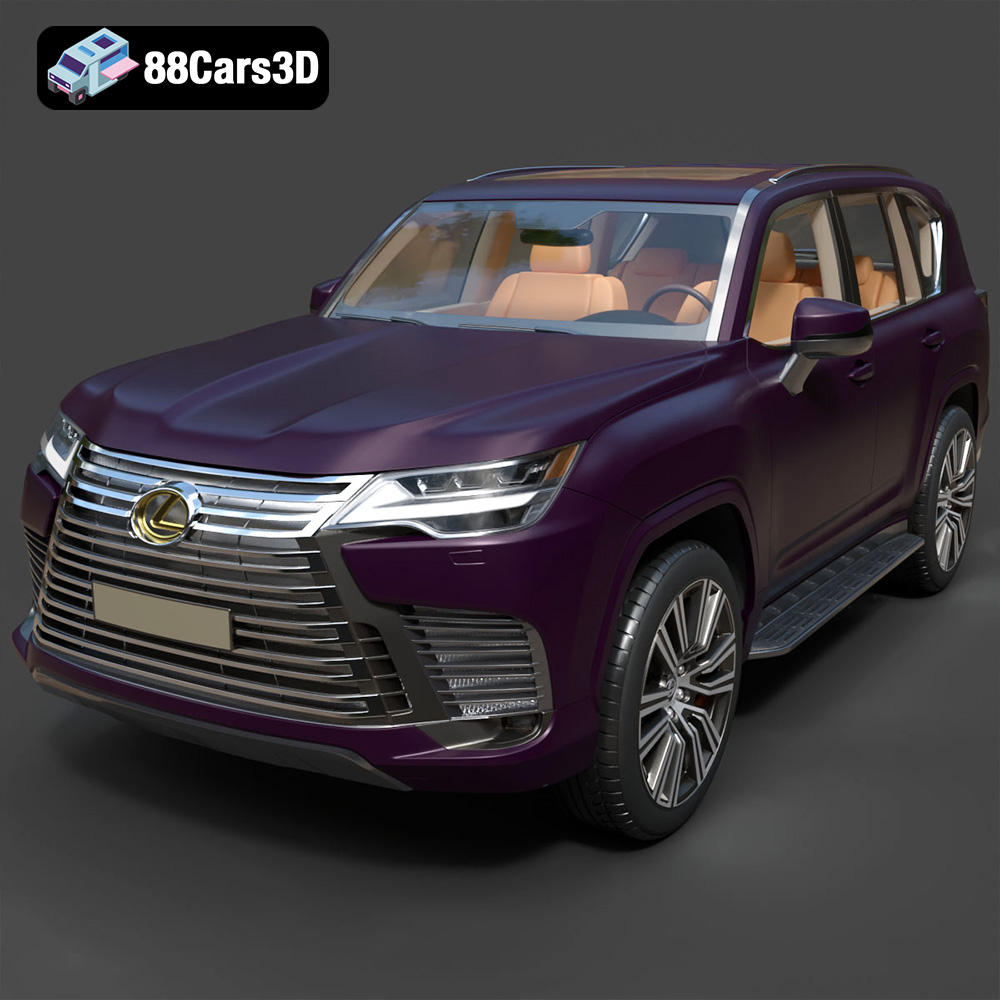
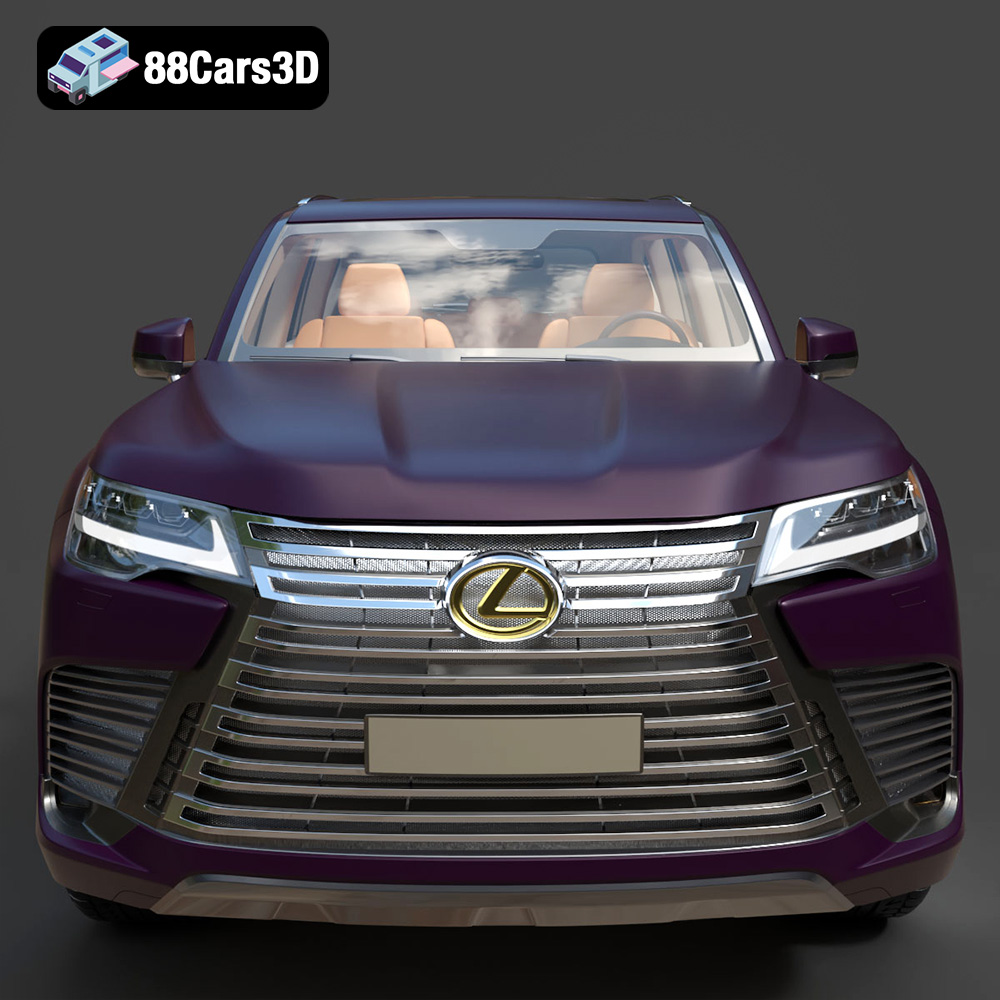
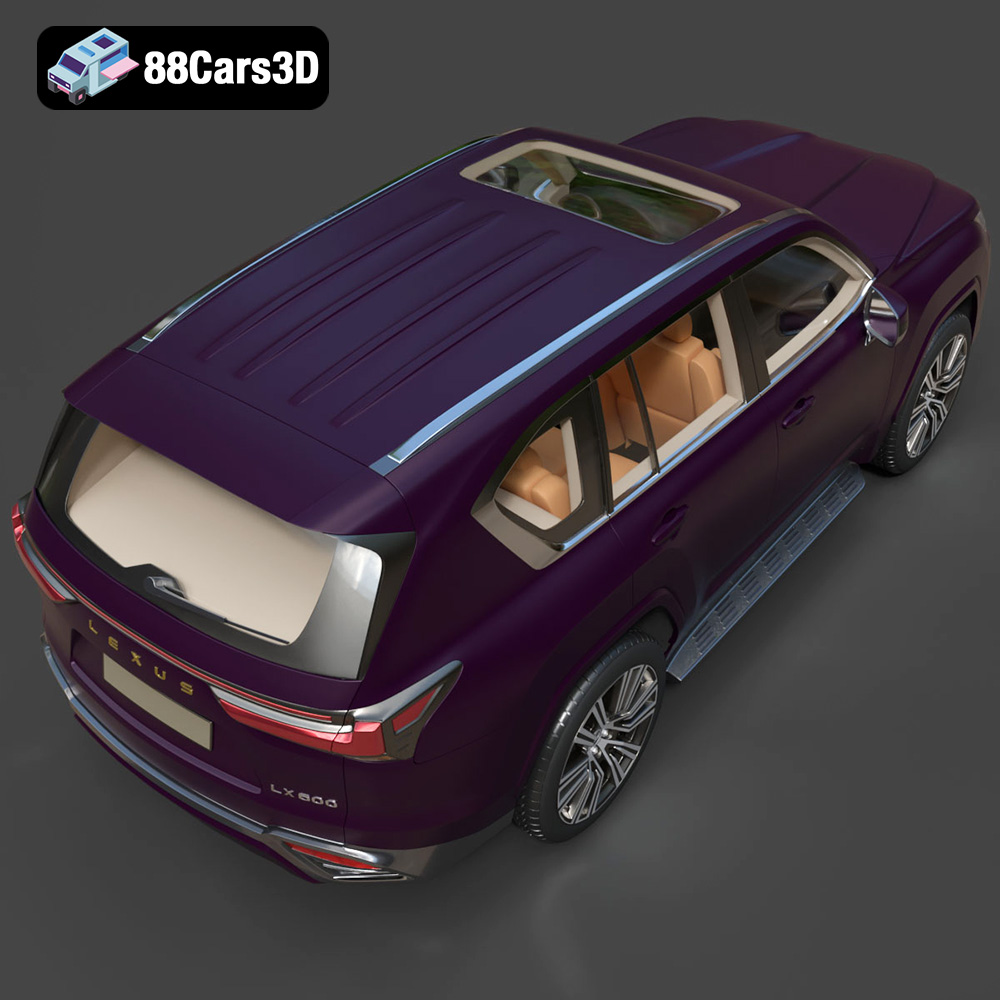
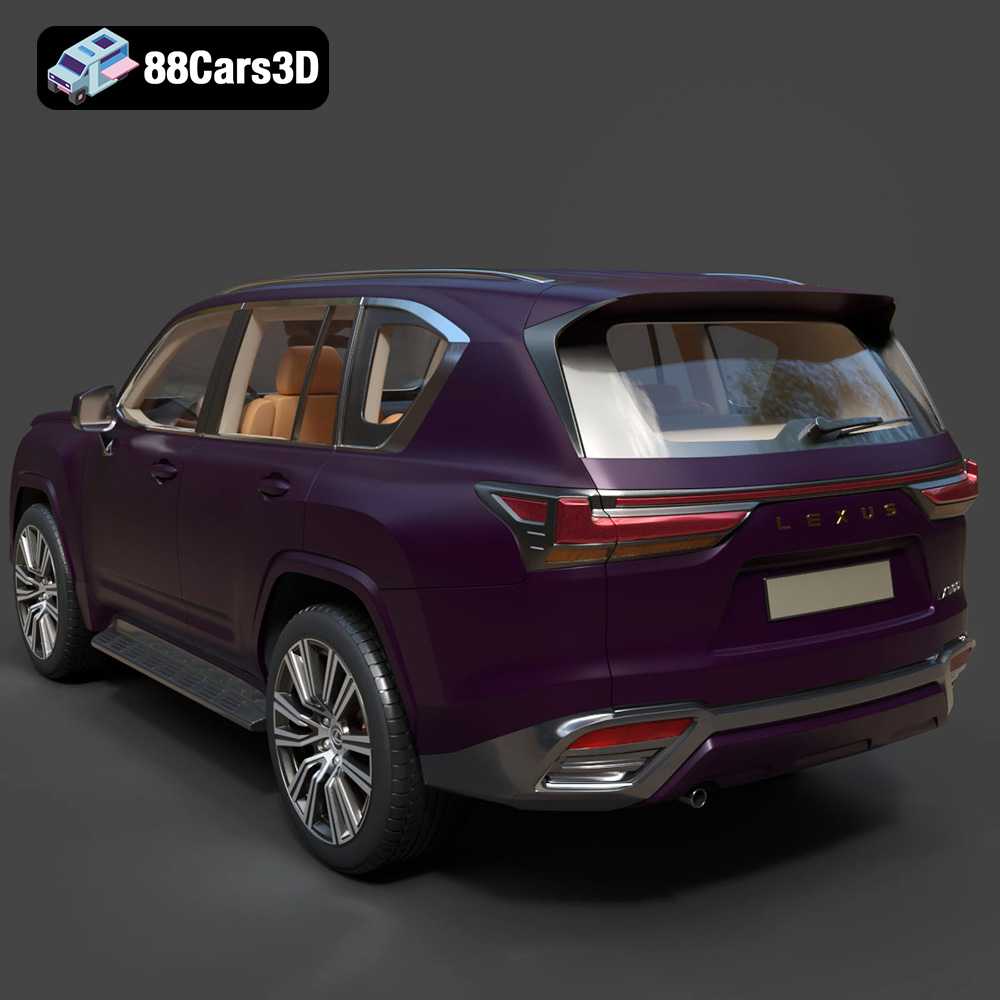
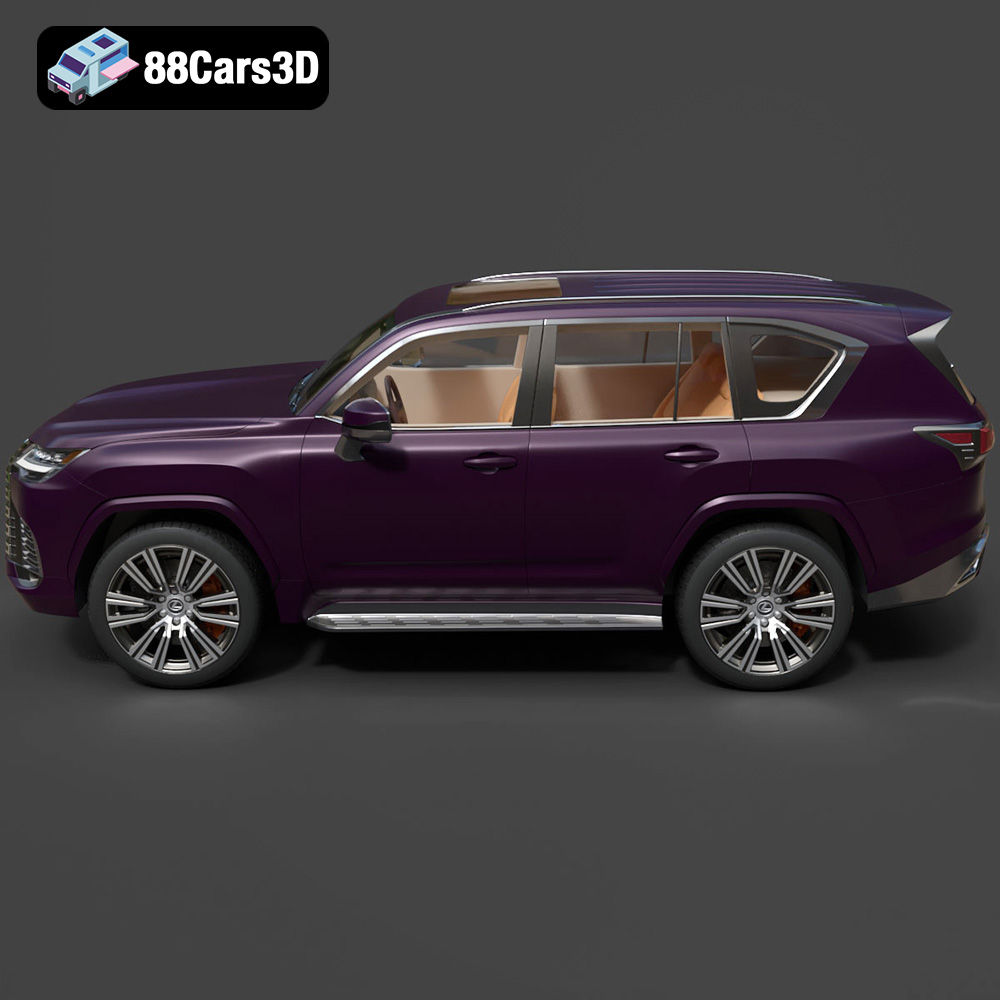
The Lexus LX600 is renowned for its imposing presence, and this 3D model meticulously translates every curve and contour into digital perfection. The iconic massive spindle grille, a signature element of Lexus design, is rendered with intricate precision, making it immediately recognizable. Muscular wheel arches and sophisticated bodywork flow seamlessly, reflecting the vehicle’s blend of rugged capability and refined elegance. Even the often-overlooked details are present: a detailed representation of the formidable twin-turbo V6 engine block compartment, an elegant dual exhaust system with premium chrome-finished tips, and signature L-shaped LED matrix headlights paired with a full-width rear light bar. The high-detail large-diameter alloy wheels, coupled with realistic premium all-terrain tires and adaptive variable suspension detailing, underscore its off-road pedigree and ensure authentic visual performance in any scene. Crucially, separate components for wheels, suspension, and steering are included, paving the way for advanced animation and dynamic simulations.
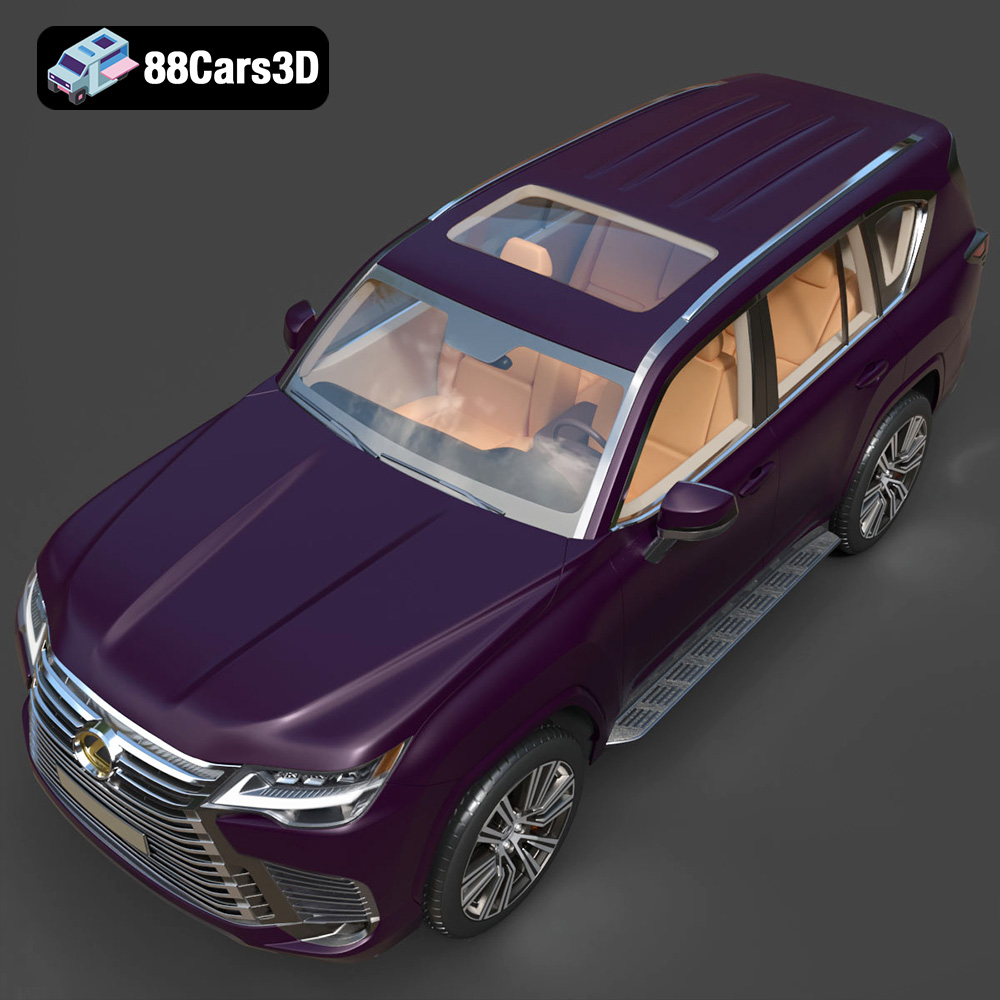
The exterior only tells half the story of a luxury SUV; the interior is where true comfort and technological prowess reside. The Lexus LX600 3D model extends its attention to detail into the cockpit, offering a sumptuous and highly interactive environment. Multi-contour leather seating details, complete with precise stitching, invite the viewer into a world of comfort. The heated, wood-trimmed steering wheel, the dual-screen infotainment cluster, and the digital driver display are all faithfully replicated, providing a rich, tactile experience even in the digital realm. Intricate control details, including pedals, the gear shifter, and drive mode selector dials, are present, ensuring authenticity for close-up shots or first-person viewpoints. This level of interior optimization is particularly valuable for gaming and VR experiences, where immersion is key.
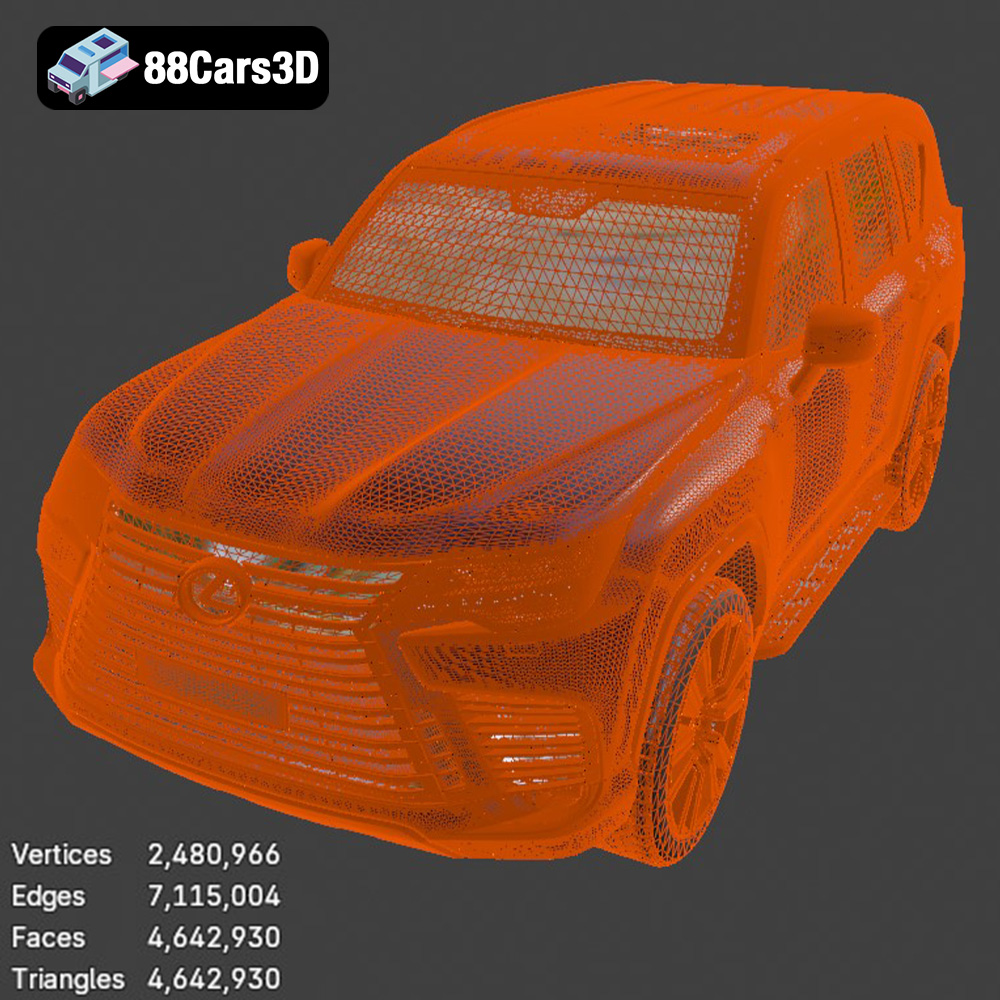
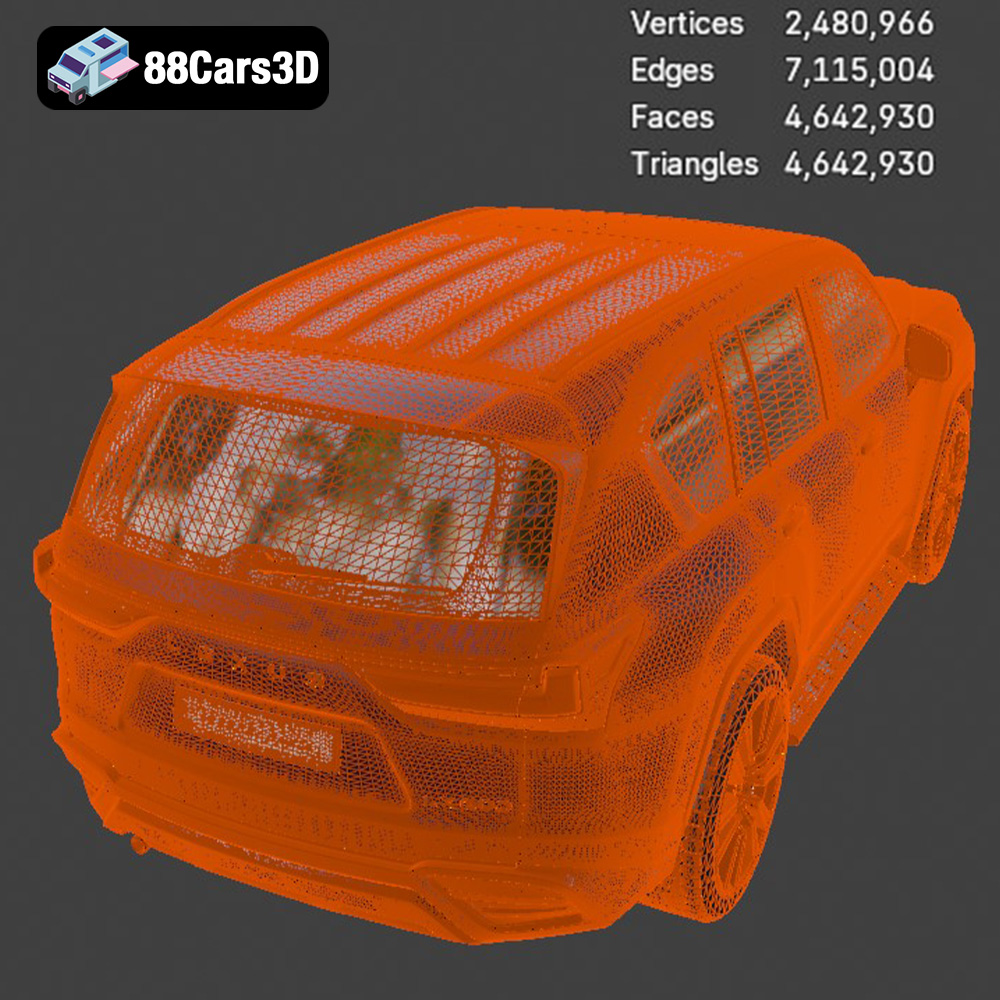
Behind the stunning visuals lies a testament to technical excellence. With 4,642,930 triangles, the Lexus LX600 3D model achieves an incredibly high level of visual fidelity, ideal for cinematic rendering where every minute detail matters. Yet, this geometry is structured to allow for optimization, striking a perfect balance for demanding use cases like next-gen game development and immersive AR/VR configurations. The model boasts real-world scale accuracy, ensuring proportional correctness in any integrated scene. Furthermore, proper pivot setups for steering, wheel rotation, and suspension travel are already configured, significantly accelerating animation workflows and enhancing realism. Its compatibility with major 3D software platforms and real-time rendering engines means it’s a truly versatile asset, ready for any professional challenge.
A premium 3D model’s true value is unlocked through its seamless integration into various professional pipelines. The Lexus LX600 3D model, with its robust structure and multiple file formats, is designed to be a cornerstone asset for a wide range of digital creative endeavors.
For artists focused on photorealistic imagery and cinematic sequences, the Lexus LX600 model is an invaluable asset. When imported into software like 3ds Max (.max) or Blender (.blend), the model’s detailed geometry and material separation allow for extensive artistic control. Artists can leverage powerful rendering engines such as V-Ray, Corona Renderer, or Cycles to achieve stunning results. Imagine placing the LX600 in a luxurious architectural visualization scene, a high-end studio lighting setup, or a picturesque landscape. The ability to customize body colors, material finishes (matte, gloss, metallic), and adapt lighting for different environments transforms the base model into an infinitely adaptable prop. Its high poly count ensures smooth surfaces and crisp details even in extreme close-ups, making it perfect for brand campaigns and lifestyle renderings that demand absolute visual perfection.
The phrase “game-ready” for a model with 4.6 million triangles might seem contradictory, but for modern next-gen game development, this level of detail is increasingly sought after. The Lexus LX600’s optimized geometry and inclusion of .fbx and .unreal formats make it ideal for integration into engines like Unreal Engine and Unity. Developers can import the .fbx, which efficiently carries mesh, material, and animation data, or directly utilize the .unreal asset for streamlined setup. The pre-set pivot points for steering, wheel rotation, and suspension travel are critical for implementing realistic vehicle physics and animations, transforming it from a static object into a fully drivable in-game asset. For open-world games, racing titles, or even intricate vehicle simulators, this model provides an exceptional blend of visual fidelity and performance, ensuring an immersive player experience without compromising on graphical quality.
The versatility of the Lexus LX600 3D model extends beyond traditional screen-based applications, opening doors to physical creation and cutting-edge interactive experiences.
For enthusiasts and collectors, the ability to physically hold a miniature replica of a favorite luxury vehicle is a unique joy. The inclusion of the .stl format caters directly to the 3D printing community. This format converts the complex geometry into a printable mesh, allowing hobbyists to bring the Lexus LX600 into the physical world. The provided 3D print settings are invaluable: recommended scales (1:12, 1:18, 1:24), layer heights (0.04–0.12 mm, with resin printing recommended for fine details), wall thickness (1.2–2.0 mm), and infill (20–30%) guidance. Furthermore, detailed instructions on support requirements (especially for delicate parts like exhaust and mirrors) and optimal print orientation (frame angled for structural integrity, wheels printed separately) ensure successful output. Post-processing steps like sanding, priming, and applying authentic factory colors with metallic finishes allow for a truly display-worthy model, showcasing the intricate details of its digital counterpart.
The rapidly expanding fields of Augmented Reality (AR) and Virtual Reality (VR) demand highly optimized yet visually appealing 3D assets. The Lexus LX600 3D model, particularly in its .glb format, is perfectly suited for these immersive platforms. The .glb format, optimized for web and mobile, allows for quick loading and efficient rendering in AR/VR applications, making it ideal for creating interactive virtual showrooms where customers can explore the vehicle in a 360-degree environment. Imagine a virtual configurator where users can change colors, interior trims, and wheel options in real-time, all powered by this highly detailed model. For mobile AR experiences, users could project the LX600 into their real-world environment, observing its scale and design from any angle. The optimized geometry and clean topology ensure smooth performance on a variety of devices, providing a truly engaging and fluid immersive experience.
Investing in a high-quality 3D model like the Lexus LX600 is not just about acquiring an asset; it’s about gaining a versatile tool that can be adapted and re-purposed for countless projects, extending its value far into the future.
The true power of a meticulously crafted 3D model lies in its inherent flexibility. The Lexus LX600 3D model provides extensive customization options that allow artists to tailor it precisely to their creative vision. Imagine changing the body color from a classic metallic black to a vibrant custom finish, or swapping out the premium all-terrain tires for sleek street variants to suit a different scene. Adjusting material finishes—from a subtle matte to a glossy showroom shine or a sophisticated metallic sheen—can dramatically alter the vehicle’s mood and presence. Furthermore, adapting lighting for different environments, whether it’s a dramatic sunset, a crisp studio shoot, or the harsh light of a desert landscape, allows the model to convey a wide range of narratives. This level of detailed control ensures that the LX600 can be seamlessly integrated into diverse projects, always looking fresh and purposeful.
In the fast-paced world of digital content creation, time is a precious commodity. Starting a project with a pre-made, high-quality 3D asset like the Lexus LX600 3D model from 88cars3d.com is a strategic decision that saves countless hours of modeling, texturing, and optimization. It allows creators to bypass the foundational work and immediately dive into the creative aspects of their project—scene composition, animation, lighting, and rendering. This model is more than just a digital file; it’s a robust, future-proof asset that can continually add value to your professional portfolio. Its comprehensive technical specifications, combined with its aesthetic excellence, make it a wise investment for anyone seeking to produce top-tier automotive visualization, compelling game content, or cutting-edge AR/VR experiences. By choosing such a versatile and detailed model, you are equipping your digital garage with a tool that will elevate the quality and efficiency of your work for years to come.
The digital automotive landscape is continually evolving, demanding ever-higher standards of fidelity, flexibility, and performance from 3D assets. The Lexus LX600 3D model embodies this pursuit of excellence, offering a robust, meticulously detailed, and highly versatile asset that caters to the diverse needs of modern digital creators. From its uncompromising exterior and interior craftsmanship to its game-ready optimization and extensive file format compatibility, this model stands as a testament to what premium 3D car models can achieve.
Whether your goal is to produce cinematic renders, build immersive game environments, create interactive AR/VR experiences, or even bring a physical replica to life through 3D printing, the Lexus LX600 3D model provides the foundational quality and technical readiness to succeed. It’s a strategic investment that streamlines workflows, enhances visual impact, and ultimately empowers artists and developers to realize their most ambitious visions. For those seeking top-tier 3D models that deliver on every front, explore the curated selection at 88cars3d.com and discover assets that truly drive digital innovation.
The Lexus LX600 stands as the pinnacle of luxury SUVs, combining legendary off-road capability with uncompromising flagship refinement. This meticulously crafted 3D model captures the vehicle’s imposing presence, featuring its iconic massive spindle grille, muscular wheel arches, and sophisticated bodywork. Under the hood lies the representation of its formidable twin-turbo V6 engine, while the bold exterior styling is complemented by an elegant exhaust system and intricate aerodynamic details. With an incredibly detailed topology of 4,642,930 triangles, this model delivers unparalleled visual fidelity designed for cinematic rendering and high-end automotive visualization. Despite the high polygon count, the geometry is structured to allow for optimization, making it highly versatile. It stands ready for demanding use cases such as next-gen game development, immersive AR/VR configurations, high-end animation, and architectural visual integration.
$90.00
.blend
.fbx
.glb
.lexus
.luxury suv
.lx600
.max
.obj
.ply
.rendering
.stl
.unreal
car-3d-model
game asset
game-ready
high poly
optimized
SUV
VR/AR