Get 20% OFF All Premium 3D & STL Models!

In the fast-paced world of digital creation, high-quality 3D car models are no longer just an advantage – they are an absolute necessity. From blockbuster game titles and photorealistic architectural visualizations to cutting-edge AR/VR experiences and detailed product configurators, the demand for meticulously crafted automotive assets continues to surge. Professionals across industries require models that not only look authentic but are also technically robust, optimized for performance, and versatile enough to integrate seamlessly into diverse workflows. This pursuit of digital realism and functional efficiency defines the forefront of 3D automotive design today.
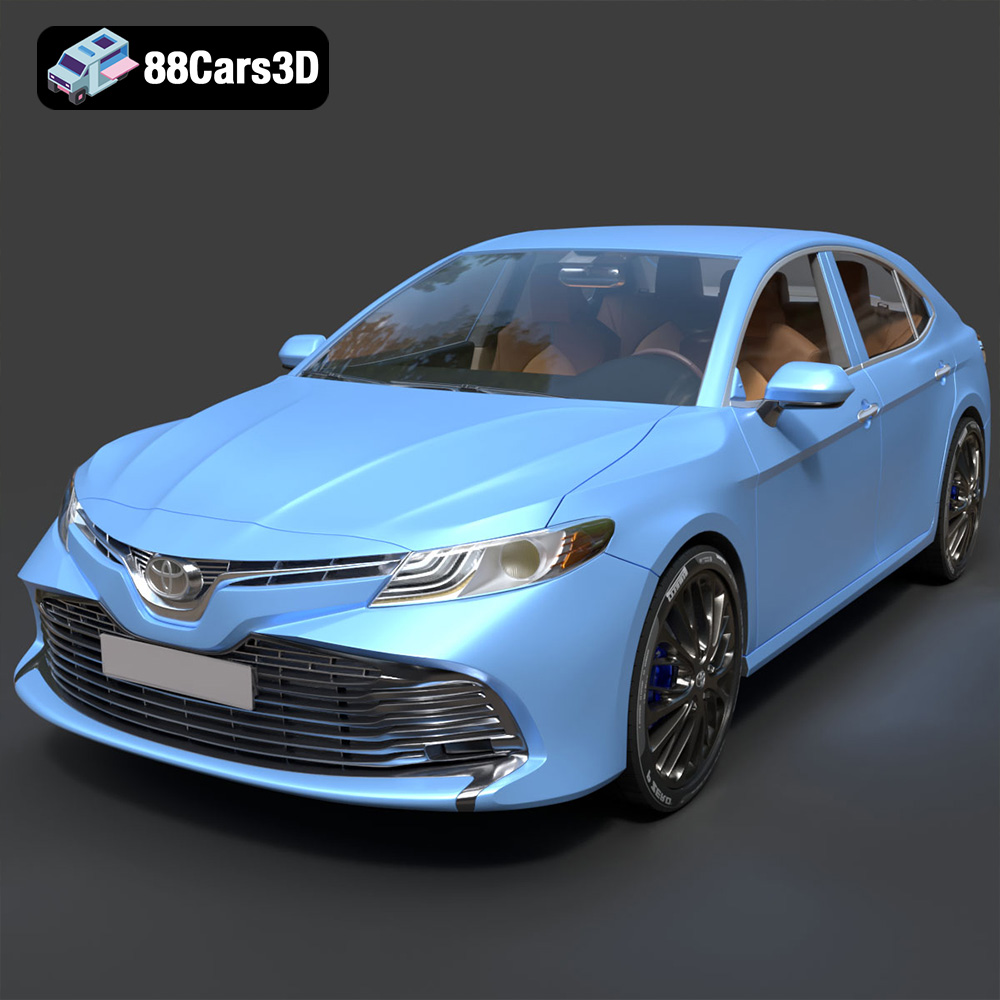
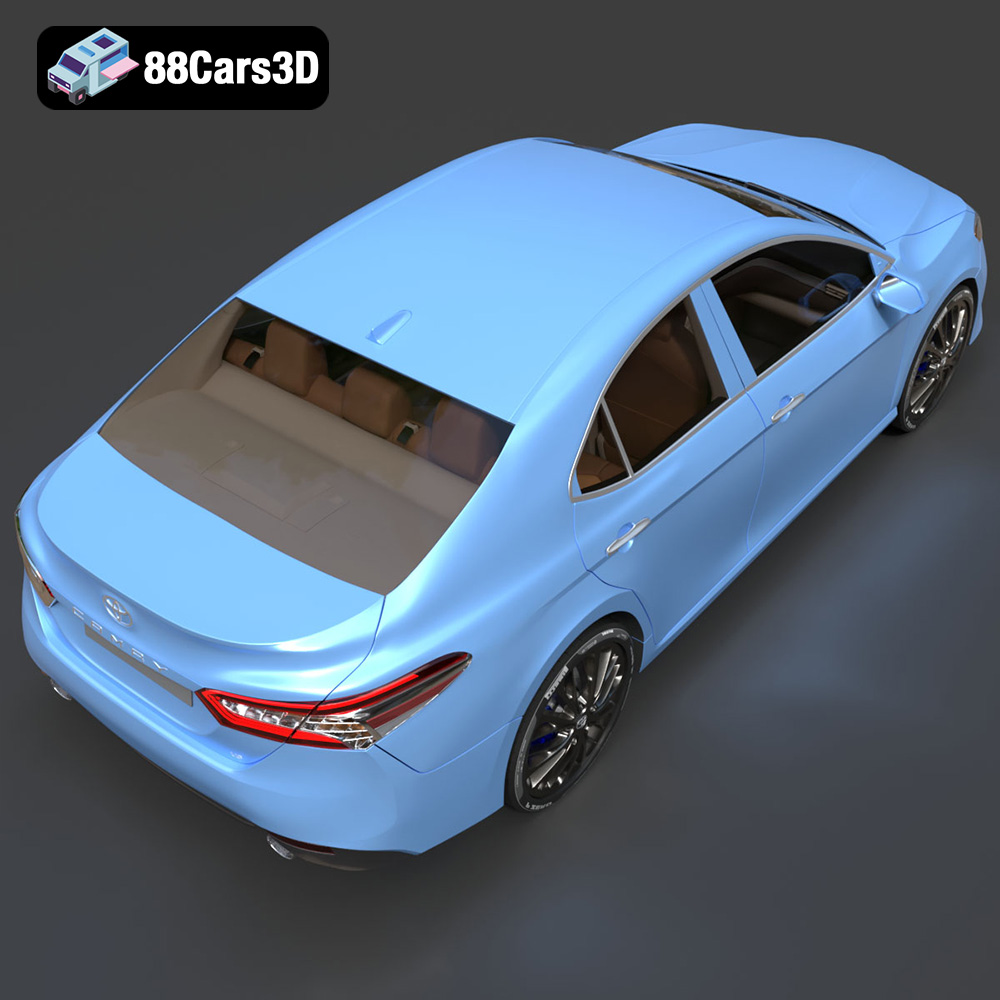
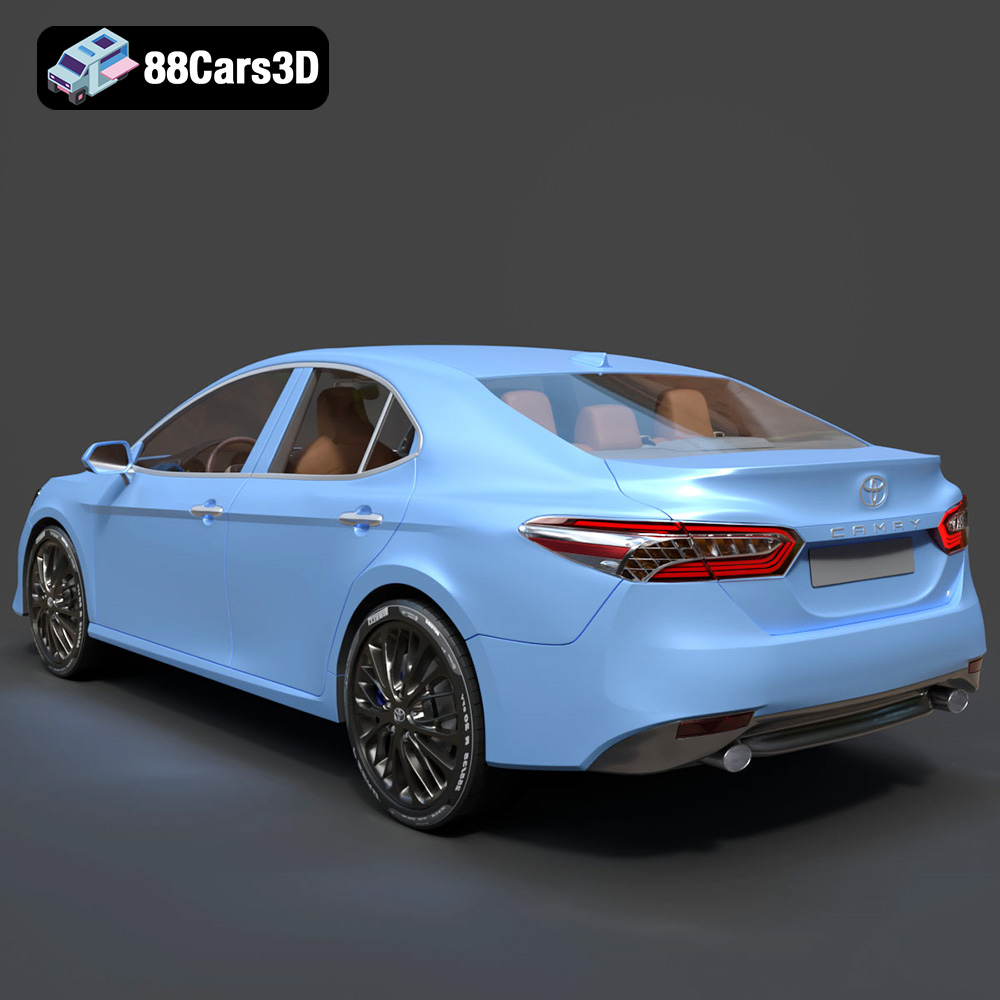
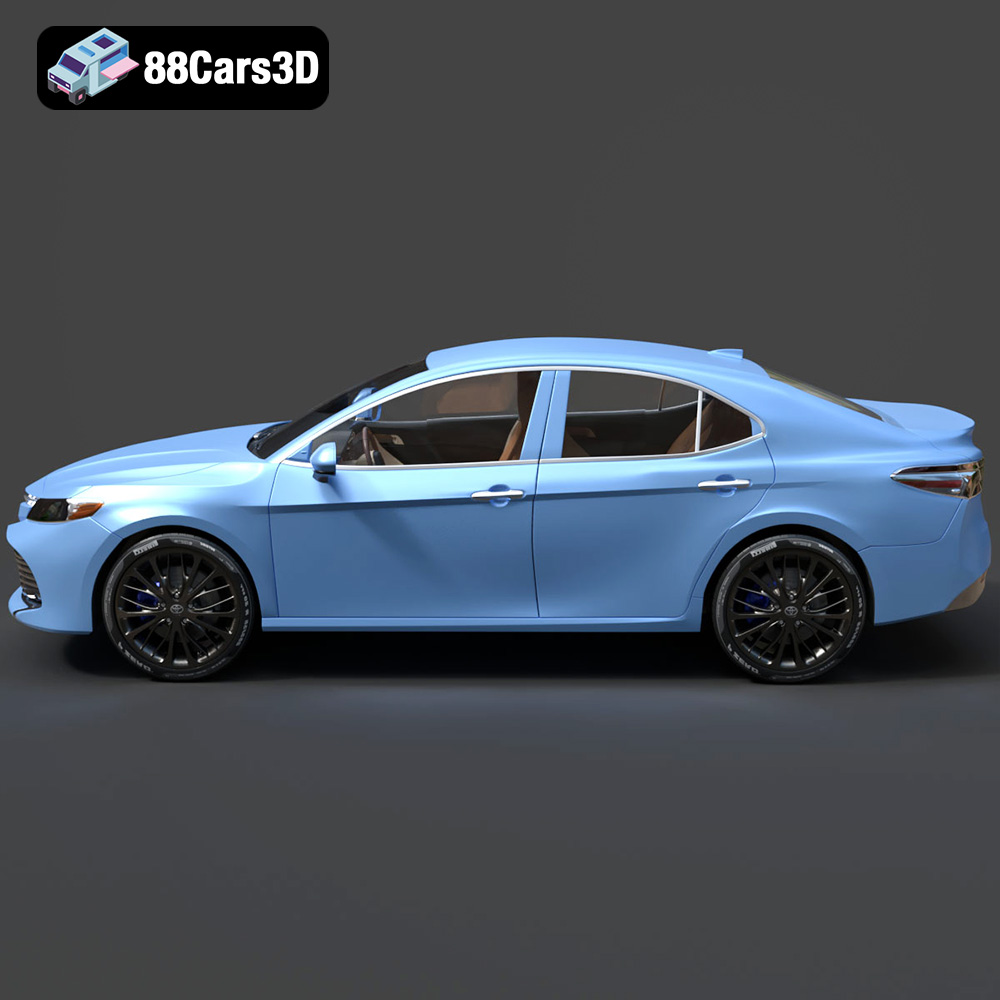
At the heart of this evolving landscape lies the core challenge: finding models that strike the perfect balance between visual fidelity and technical optimization. A prime example of such a meticulously engineered asset is the 2018 Toyota Camry 3D model, available on 88cars3d.com. This model encapsulates the revolutionary design and dynamic essence of the real-world vehicle, providing a powerful foundation for a myriad of professional applications. It’s a testament to how a well-structured 3D asset can streamline complex projects, accelerate development cycles, and elevate the final output to new levels of immersion and authenticity.
The choice of file format for a 3D model is often as crucial as the model’s design itself, dictating compatibility, feature retention, and overall workflow efficiency. Understanding the strengths and weaknesses of each format is paramount for any professional working with 3D automotive assets. The Toyota Camry 2018 3D model, for instance, comes equipped with an extensive range of formats, ensuring maximum flexibility for various pipelines.
.blend – Fully Editable Blender Scene with Materials
The native Blender format, .blend, offers a complete and editable scene, including all mesh data, materials, textures, lighting, cameras, and animation curves. For artists and studios primarily operating within Blender, this is the most direct and uncompromised way to access the model. It allows for immediate deep customization, enabling users to tweak topology, modify shader graphs, or even extend the existing animation setup with ease. The .blend file for the Toyota Camry 2018 provides a rich starting point for anyone leveraging Blender’s powerful rendering capabilities (Cycles or Eevee) or its robust animation tools.
.fbx – Ideal for Unreal, Unity, and Real-Time Pipelines
FBX (Filmbox) is an industry-standard proprietary file format developed by Autodesk, widely adopted for its excellent interoperability between 3D applications and game engines. It supports mesh data, materials, textures, animations, and even rigging information. For game developers using Unreal Engine or Unity, the .fbx version of the Camry is often the go-to choice due to its reliable import process and efficient handling of complex scenes. It provides a robust, pre-optimized asset ready for real-time environments, maintaining pivot points and hierarchical structures crucial for animation and interaction.
.obj – Universal Format for Cross-Software Compatibility
OBJ (or Wavefront OBJ) is one of the most widely supported and simplest 3D file formats, making it a universal choice for basic mesh exchange. It stores vertex positions, UV coordinates, normals, and material references (via an accompanying .mtl file). While it doesn’t support animation or rigging, its simplicity ensures almost universal compatibility across virtually all 3D software packages, from ZBrush to Maya to C4D. For general rendering or static visualizations where complex rigging isn’t immediately required, the .obj version of the Toyota Camry 2018 offers a clean and accessible mesh.
.glb – Optimized for AR, VR, and Browser-Based Display
GLB is the binary version of glTF (Graphics Language Transmission Format), designed for efficient transmission and loading of 3D scenes and models in web and mobile applications. It’s quickly becoming the standard for AR, VR, and interactive web experiences due to its compact size and comprehensive support for PBR materials, animations, and scene graphs. The .glb file for the Camry 2018 is perfectly optimized for deploying interactive virtual showrooms or AR filters, offering a lightweight yet visually rich asset that can be viewed directly in a browser or on a smartphone.
.stl – Suitable for 3D Printing Output
STL (stereolithography) is the de facto standard for 3D printing. It represents a 3D model as a collection of unconnected triangles, forming the surface geometry. It contains no color, texture, or material information, focusing solely on the object’s shape for additive manufacturing. When preparing the Toyota Camry 2018 for physical prototyping or hobbyist printing, the .stl format is essential. It provides the raw mesh data necessary for slicer software to generate print paths, making the digital model tangible.
.ply – Precision Mesh Format for CAD or Analysis
PLY (Polygon File Format, or Stanford Triangle Format) is a file format for storing 3D data, particularly point clouds and polygon meshes. Unlike STL, PLY can store color, transparency, and other attributes, making it suitable for more precise applications, especially in areas like 3D scanning, CAD, or scientific analysis. For engineering-focused visualization or detailed geometric analysis of the Camry 2018’s structure, the .ply format offers a robust and attribute-rich representation.
.unreal – Engine-Ready Asset for Real-Time Environments
While often used interchangeably with .fbx, some marketplaces provide specifically packaged .unreal assets. This might refer to an Unreal Engine project file or a highly optimized .fbx file pre-configured for direct import with specific material setups, collision meshes, and sometimes even basic Blueprint scripting tailored for Unreal. This format for the Toyota Camry 2018 is a huge time-saver for Unreal developers, minimizing post-import setup and ensuring consistency.
.max – Editable 3ds Max Project for Animation and Rendering
The .max file is the native project file for Autodesk 3ds Max, a powerhouse for architectural visualization, animation, and game asset creation. Similar to .blend, it contains the complete scene data, including geometry, materials (like V-Ray or Corona shaders), lighting setups, cameras, and animations. For artists working within 3ds Max, the .max version of the Camry provides full access to the original scene, enabling advanced customization, complex rendering setups, and professional-grade animation workflows.
Photorealistic automotive rendering is a specialized skill that combines artistic vision with technical precision. It’s about transforming a 3D model into an image indistinguishable from a photograph, often surpassing reality in its ability to highlight design features. The 2018 Toyota Camry 3D model provides an exceptional foundation for achieving such results.
At its core, realism in rendering hinges on accurate physical properties. This means meticulous attention to lighting, material shaders, and environment interaction. For a vehicle like the Toyota Camry 2018, its sleek body panels demand realistic reflections and refractions, mimicking glossy paint, polished chrome, and clear glass. Understanding how light interacts with different surfaces – from the subtle metallic flake in the paint to the diffuse texture of the tire rubber – is paramount. High-resolution textures for elements like tire treads and interior upholstery further enhance the sense of tangibility, making the digital car feel real.
When aiming for cinematic quality, 3ds Max, paired with renderers like V-Ray or Corona, offers an unparalleled workflow. Starting with the provided .max file for the Toyota Camry 2018, the process begins by reviewing the existing material setups. Typically, these professional models come with PBR (Physically Based Rendering) ready materials, but fine-tuning them for a specific lighting scenario is crucial.
1. Environment Setup: An HDRI (High Dynamic Range Image) acts as both a light source and a reflection map, instantly providing realistic reflections on the car’s body. Combining this with targeted area lights or photometric lights can simulate studio setups or specific outdoor conditions.
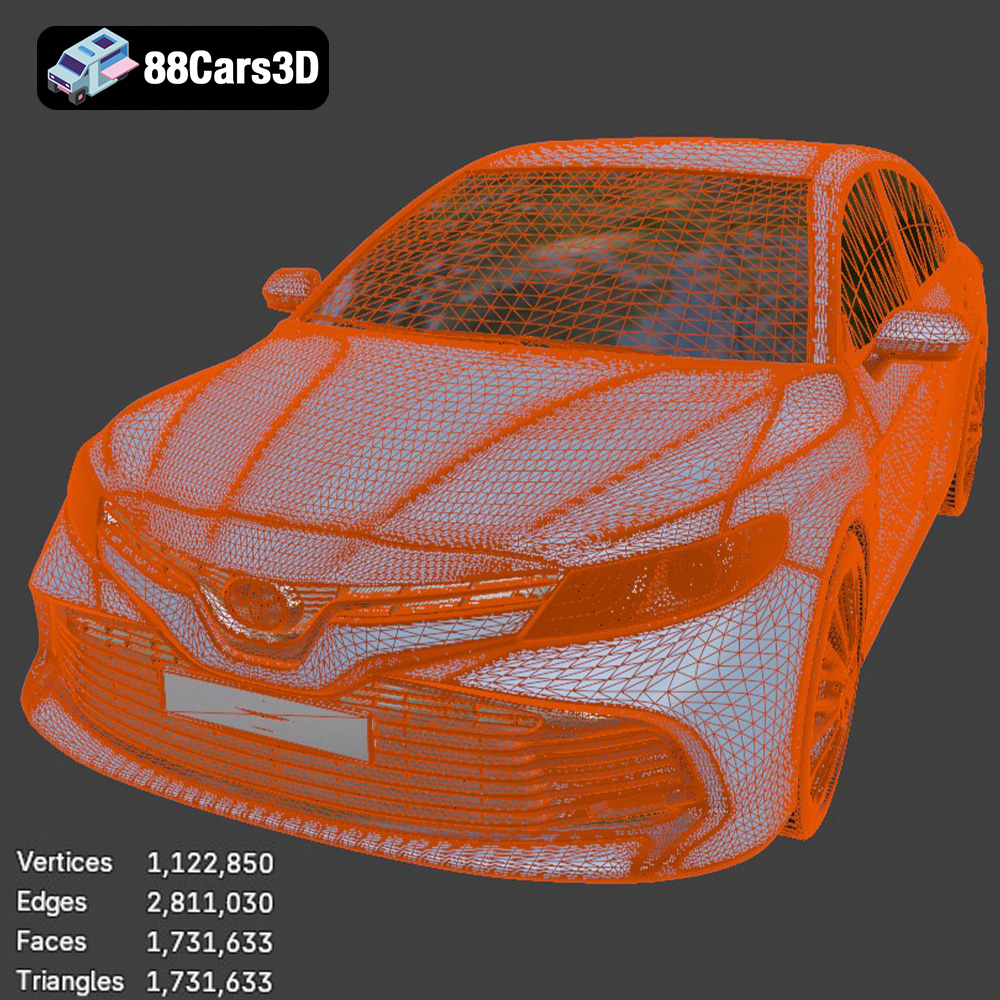
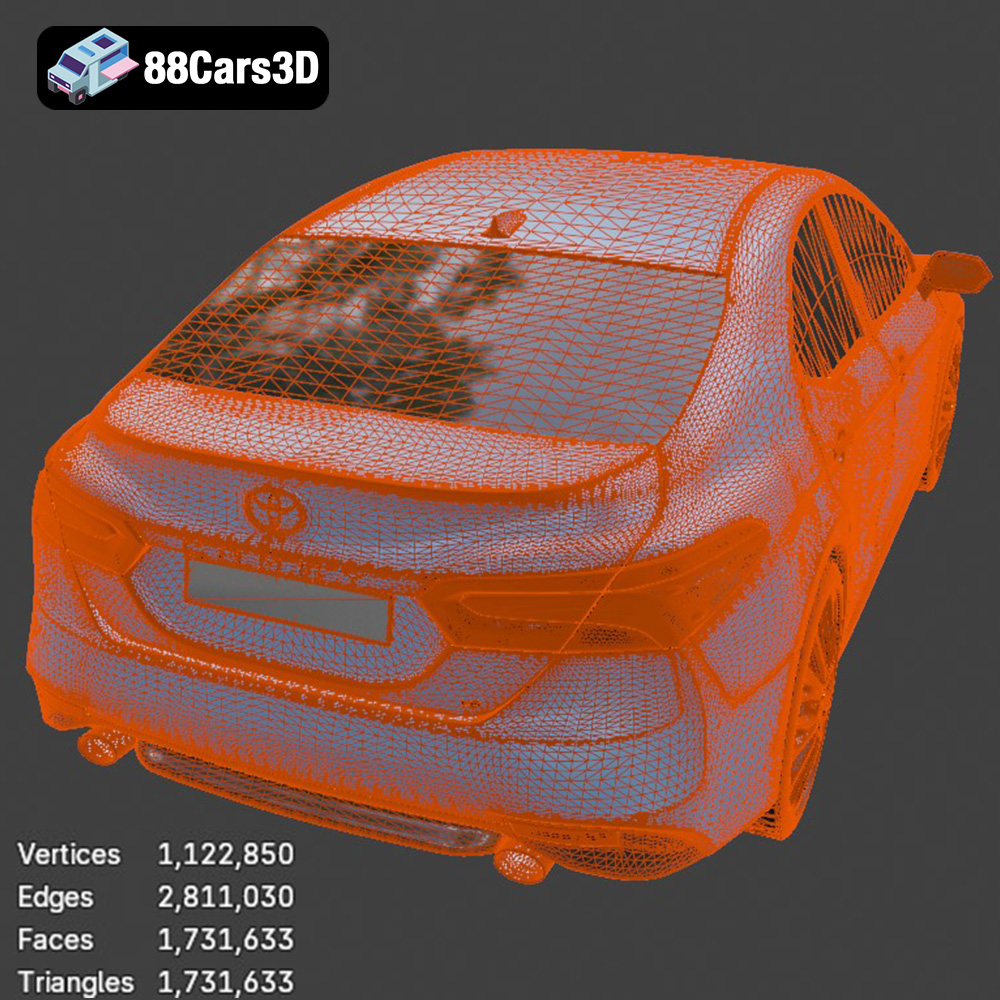
2. Material Refinement: Adjusting parameters like glossiness, IOR (Index of Refraction) for glass, and subtle metallic flakes in the paint shader are key. The detailed topology of the Camry model, boasting 1,731,633 triangles, ensures that even close-up renders reveal smooth curves and crisp edges, vital for high-quality reflections.
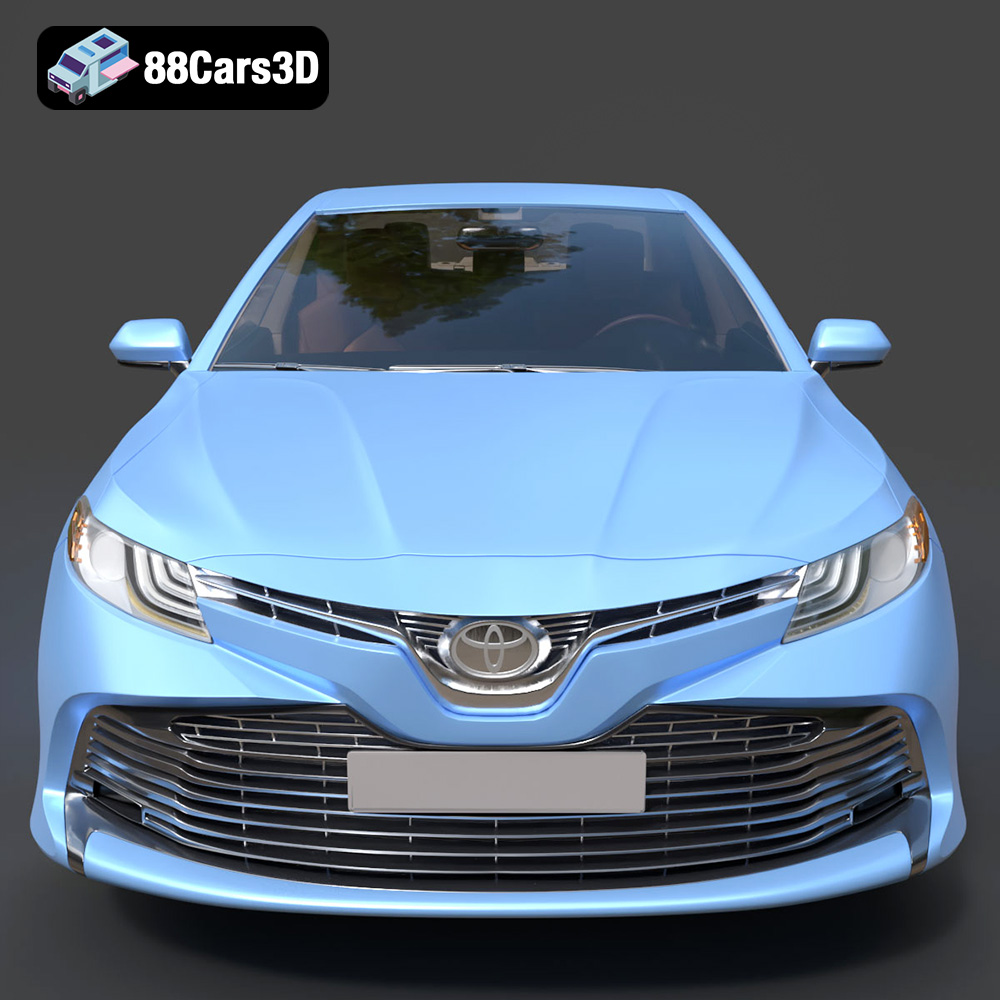
3. Camera Angles and Depth of Field: Employing real-world camera settings, including focal length and aperture, helps achieve cinematic depth of field, drawing the viewer’s eye to key design elements like the aggressive front grille or the sleek character lines.
4. Rendering and Optimization: Utilizing render passes (e.g., reflections, refractions, shadows, ambient occlusion) allows for greater control in post-production. Even with a high-poly model like the Camry, efficient render settings and distributed rendering can optimize render times without sacrificing quality.
The raw render is only the beginning. Post-processing in tools like Photoshop or Nuke can elevate the image significantly. This includes color grading to set the mood, adding subtle lens flares or bloom, sharpening details, and compositing with backplates or environment elements. This final stage is where the “art” truly shines, transforming a technically accurate render into a captivating visual narrative.
In the realm of game development, the challenge shifts from pure photorealism to a delicate balance of visual quality and real-time performance. Game assets, especially vehicles, must be optimized to run smoothly across various hardware while maintaining a high degree of fidelity. The Toyota Camry 2018 3D model is specifically designed with these considerations in mind, making it an ideal choice for game developers.
Real-time engines like Unreal and Unity demand efficient asset management. The Camry model’s stated 1,731,633 triangle count is a sweet spot – detailed enough for modern console and PC games, yet optimized to prevent excessive draw calls. Key optimization strategies include:
* PBR Materials: Using physically based rendering workflows ensures that materials react realistically to different lighting conditions within the game engine, contributing to immersion without complex shader setups.
* Efficient UV Mapping: Clean, non-overlapping UVs are crucial for applying textures efficiently and preventing visual artifacts. The Camry model would feature well-laid-out UVs to support high-resolution texture maps for body paint, interior elements, and tires.
* LODs (Levels of Detail): Although not explicitly stated, professional game-ready assets typically incorporate LODs, which automatically switch to lower-polygon versions of the model as the vehicle moves further from the camera, significantly reducing rendering load.
Unreal Engine, a favorite among AAA game studios, offers a robust pipeline for vehicle integration. Using the provided .fbx or .unreal file for the Toyota Camry 2018 simplifies the process dramatically:
1. Import: Importing the .fbx or .unreal file into Unreal’s content browser is straightforward. Ensure import settings correctly handle materials, textures, and skeletal meshes if the car is rigged for animation.
2. Material Setup: Leverage Unreal’s powerful material editor to set up realistic PBR materials. This involves connecting texture maps (Albedo, Normal, Roughness, Metallic, Ambient Occlusion) to the appropriate nodes, achieving realistic reflections, and surface details.
3. Physics and Blueprints: The Camry model comes with “proper pivot setup for steering, wheel rotation, and suspension travel,” which is invaluable for setting up vehicle physics. Using Unreal’s Chaos Vehicle physics system or a custom Blueprint, developers can connect these pivots to drive realistic wheel spin, steering, and suspension compression, making the driving experience authentic.
4. Collision: Accurate collision meshes are essential for realistic interaction with the game world. The model should include simplified collision geometry that allows the car to interact naturally with environments and other vehicles without excessive computational cost.
The optimized geometry and PBR materials of the Toyota Camry 2018 3D model make it perfectly suited for immersive virtual reality and augmented reality applications. Whether creating a virtual showroom where customers can explore the car’s interior in 1:1 scale or developing an AR configurator that projects the Camry onto a real-world driveway, the model’s balance of detail and performance ensures a smooth, high-fidelity experience on target devices. The .glb format, in particular, is an asset to web-based AR/VR projects, allowing for easy integration and efficient loading times.
Bridging the gap between the digital and physical realms, 3D printing offers a unique avenue for designers, engineers, and hobbyists to bring their virtual creations to life. The Toyota Camry 2018 3D model, specifically prepared in .stl format, provides an excellent opportunity for physical manifestation.
The journey from a digital 3D model to a tangible object requires careful preparation. While the original model is designed for screen-based rendering, the .stl and .ply formats provided are specifically tailored for additive manufacturing. These formats strip away material and lighting data, focusing solely on the geometric shell of the object, which is precisely what a 3D printer needs to know. The detailed topology of the Camry model ensures that even at smaller scales, subtle curves and intricate details of the vehicle’s design are preserved when converted to the triangular mesh of an STL file.
Successful 3D printing depends heavily on adhering to recommended settings. For the Toyota Camry 2018 model, the following guidelines are crucial:
* Scale: Recommended scales like 1:12, 1:18, or 1:24 are ideal for balancing detail with printability. Smaller scales might lose fine details, while larger scales demand more material and print time.
* Layer Height: A finer layer height (0.04–0.12 mm) is critical, especially when using resin printers, to capture the car’s smooth surfaces and intricate elements like the grille, headlights, and wheels without visible layer lines.
* Wall Thickness: Ensuring a minimum wall thickness (1.2–2.0 mm) prevents parts from becoming too fragile or failing during printing.
* Infill: A 20–30% infill provides sufficient structural integrity without excessive material usage or increased print time.
* Supports: Due to the Camry’s complex geometry, supports are unequivocally required for overhangs such as the exhaust, mirrors, and undercarriage details. Proper support placement is vital to avoid damaging the model upon removal.
* Print Orientation: Printing the main frame angled can improve structural integrity and reduce the need for extensive supports on certain surfaces. Wheels are typically printed separately to achieve better detail and allow for post-processing like painting.
* Post-processing: For a professional finish, post-processing is a must. This involves sanding to smooth surfaces, applying primer for an even base, and then painting with authentic factory colors, potentially with metallic finishes to mimic the real car’s paint job.
3D printed car models serve various purposes. Designers might use them for physical design reviews, allowing them to assess proportions and tactile qualities that are harder to judge on a screen. Engineering teams could use them for rapid prototyping, testing form factors before committing to expensive manufacturing. For hobbyists, a 3D printed Toyota Camry 2018 model offers the joy of creating a highly detailed replica, perfect for display or custom projects. The ability to print separate components like wheels and suspension allows for even greater customization and assembly challenges.
Investing in a high-quality 3D car model from a reputable source like 88cars3d.com extends far beyond acquiring just a visual asset. It’s about empowering diverse creative and technical workflows, saving valuable production time, and ensuring consistent excellence across projects.
The true power of a meticulously constructed 3D model reveals itself in its animatability and interactive potential. The Toyota Camry 2018 model is built with separate wheels, suspension, and steering components, along with proper pivot setups. This enables:
* Realistic Driving Simulations: Animators can precisely control wheel rotation, steering input, and suspension compression/rebound for lifelike driving sequences. This is critical for driving simulators, cinematic car chases, or even demonstrating vehicle dynamics in educational content.
* Interactive Experiences: In AR/VR, these separate components allow for real-time user interaction. Imagine a configurator where a user can open doors, rotate wheels, or even watch the suspension articulate, providing a richer, more engaging experience than static imagery.
* Showcasing Engineering: The detailed engine bay and undercarriage detailing, combined with animatable components, can be used to visually explain the engineering marvels of the car in a dynamic way.
A professional-grade 3D car model is not a rigid, unchangeable object; it’s a flexible foundation. The Toyota Camry 2018 model offers extensive customization options:
* Color and Finish: Easily change body paint colors to match factory options or custom finishes (matte, gloss, metallic), allowing for diverse marketing campaigns or personalized configurators.
* Material Adjustment: Adapt tire textures for different scenarios (e.g., street, off-road, racing slicks), modify interior upholstery, or change trim materials to fit specific visual requirements.
* Environmental Lighting: The model’s robust material setup ensures it responds correctly to varied lighting conditions, making it adaptable to any scene, whether a sunny urban street or a dramatic studio backdrop.
This level of adaptability means a single model can serve multiple purposes, significantly enhancing its return on investment for studios and individual artists alike.
In a competitive digital landscape, the distinction between good and excellent often comes down to the quality of source assets. Sourcing high-fidelity 3D car models like the Toyota Camry 2018 from platforms such as 88cars3d.com ensures that you begin with a technically sound, visually accurate, and fully optimized foundation. This saves countless hours of modeling, unwrapping, and optimization work that would otherwise be required, allowing artists and developers to focus on creativity, scene assembly, and project-specific customizations. It’s about leveraging expertly crafted digital assets to achieve professional-grade results efficiently and reliably.
The world of 3D modeling for automotive design, rendering, and game development is continuously pushing the boundaries of realism and interactive experience. At the heart of this innovation are high-quality 3D car models that serve as versatile and robust assets for a multitude of applications. The 2018 Toyota Camry 3D model stands as a prime example of such an asset – meticulously detailed, technically optimized, and available in a comprehensive array of file formats to suit any professional workflow.
From creating breathtaking cinematic renders in 3ds Max to crafting immersive, performance-driven experiences in Unreal Engine, or even producing physical prototypes through 3D printing, this model offers unparalleled flexibility. Its precise geometry, game-ready optimization, and adaptable features make it an invaluable tool for designers, artists, and developers aiming for the highest standards of digital fidelity and functional integration. By choosing expertly crafted 3D car models like the Toyota Camry 2018 from 88cars3d.com, professionals can streamline their pipelines, achieve superior results, and focus on pushing their creative visions further. Explore the possibilities and elevate your projects with models built for excellence.
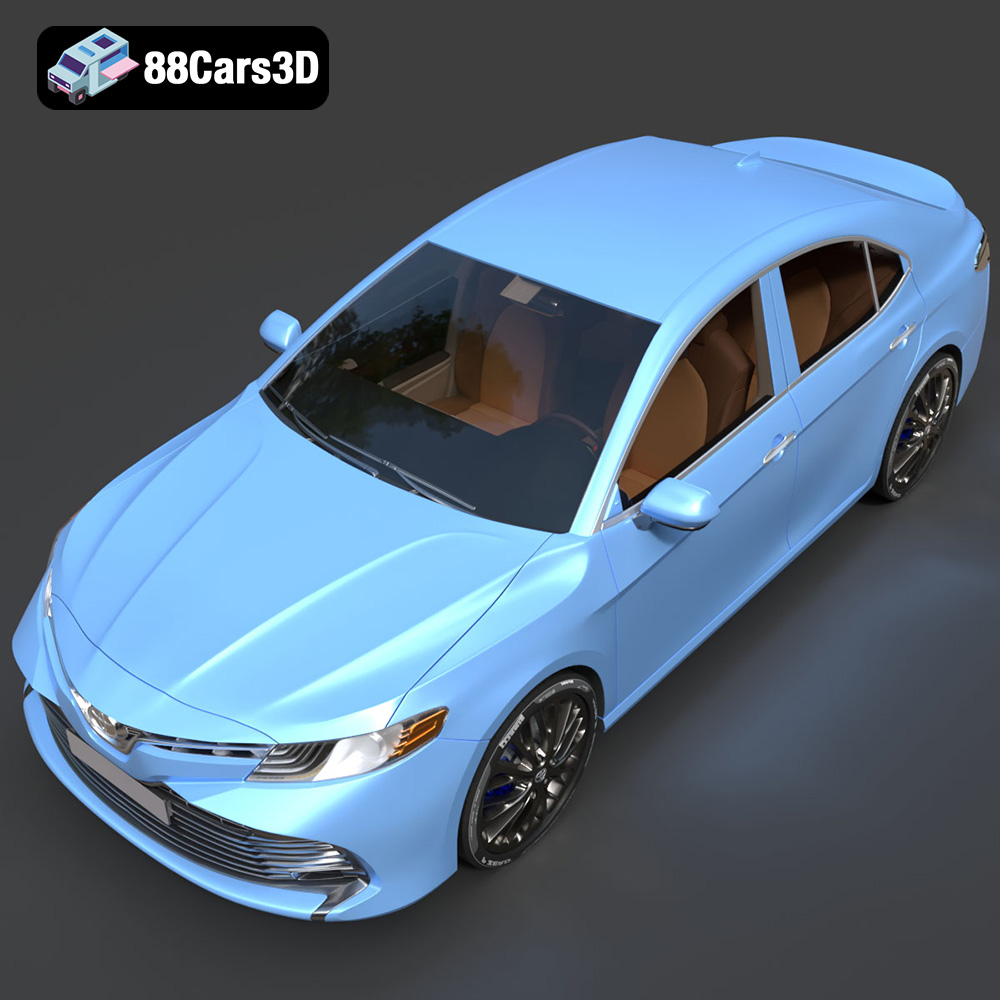
The 2018 Toyota Camry marked a revolutionary shift for the legendary sedan, introducing a bold, aggressive design language and the dynamic TNGA platform. This highly detailed 3D model perfectly captures the vehicle’s striking aerodynamic silhouette, featuring its distinct front grille, sleek character lines, and modern lighting elements that redefined the midsize sedan category. Boasting a detailed topology of 1,731,633 triangles, this model delivers unparalleled visual fidelity while remaining suitable for high-end rendering and real-time engine integration. It is meticulously structured to serve professional workflows, whether you are developing immersive driving simulators, creating stunning architectural visualizations, or building interactive virtual showrooms.
$81.50
.blend
.camry
.fbx
.glb
.max
.obj
.ply
.rendering
.sedan
.stl
.toyota
.unreal
camry-2018
car-3d-model
classic-car
game asset
game-ready
low-poly
optimized
VR/AR