Get 20% OFF All Premium 3D & STL Models!

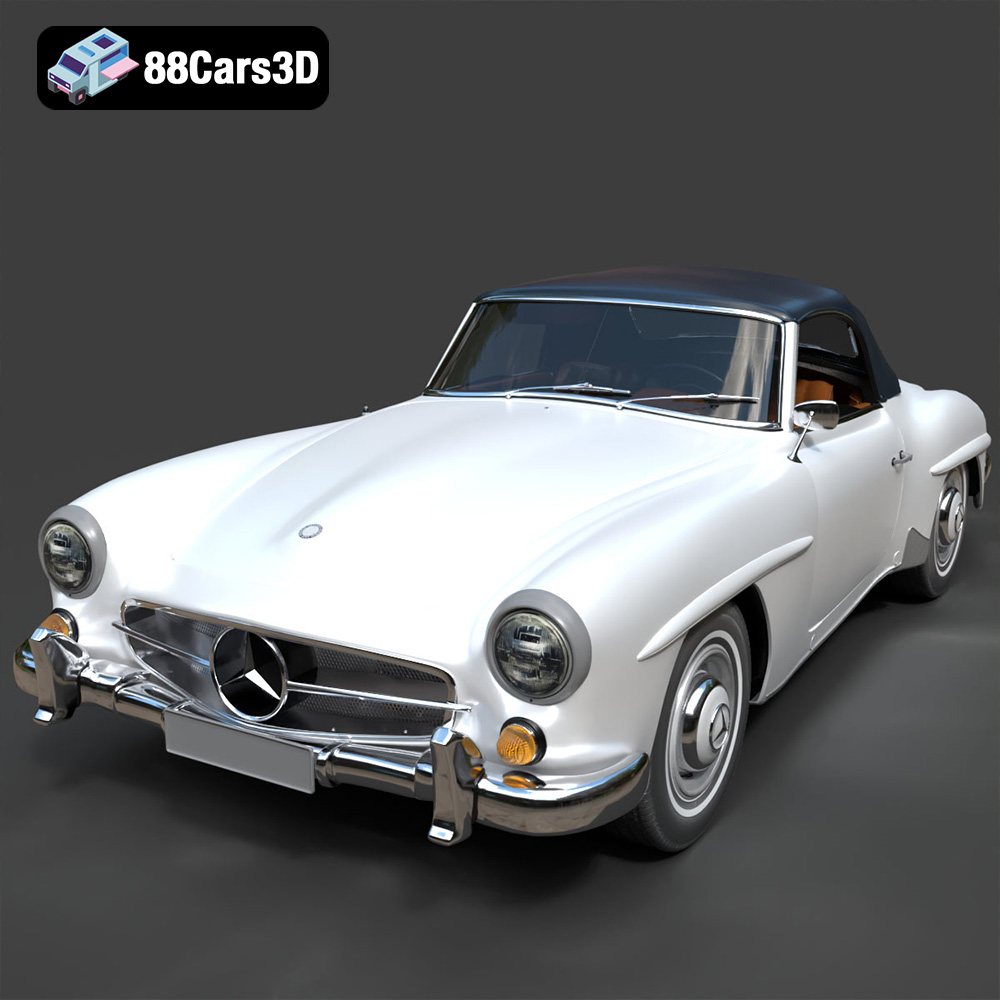
In the world of automotive design, few vehicles capture the imagination quite like the Mercedes Benz 190SL. A true emblem of 1950s elegance, this classic roadster, with its sweeping curves, iconic grille, and luxurious open-top styling, continues to define vintage motoring. Its timeless appeal transcends generations, making it a coveted subject for enthusiasts and a prime candidate for digital recreation in modern visualization and interactive experiences.
For professionals in game development, architectural visualization, AR/VR, and cinematic rendering, the availability of high-quality 3D car models is not just a convenience—it’s a necessity. These assets form the backbone of immersive environments, realistic product showcases, and engaging interactive content. When a model perfectly encapsulates the spirit and detail of its real-world counterpart, it elevates the entire project. This is precisely what the Mercedes Benz 190SL 3D Model offers: an unparalleled level of detail and optimization for a myriad of applications.
Whether you’re crafting a nostalgic racing game, a luxury lifestyle render, or an interactive virtual showroom, a meticulously crafted asset like the 190SL model from 88cars3d.com provides the foundation for stunning results. Its balanced topology, accurate dimensions, and comprehensive material setup ensure it seamlessly integrates into even the most demanding professional pipelines.
Navigating the diverse landscape of 3D software and engines requires a deep understanding of file formats. Each format serves a specific purpose, excelling in certain applications while potentially falling short in others. The Mercedes Benz 190SL 3D Model stands out by offering a comprehensive suite of formats, ensuring maximum compatibility and utility across various professional workflows. Let’s delve into the technical nuances of each, understanding when and why to choose them.
The .blend format is Blender’s native file type. It encapsulates an entire Blender scene, including meshes, materials, textures, lighting, cameras, animations, rigging, and even physics simulations. This makes it incredibly powerful for users entrenched in the Blender ecosystem, providing a fully editable and self-contained project. For artists who prefer Blender for modeling, texturing, or rendering (using Cycles or Eevee), the .blend file is the most flexible starting point. It allows for direct manipulation of the model’s topology, UVs, and PBR materials, making it ideal for deep customization or integration into larger Blender-based projects.
Autodesk’s .fbx (Filmbox) format is arguably the most widely adopted interchange format in the 3D industry. It’s a binary format that efficiently stores 3D model data, including meshes, materials, textures, skeletal animation, and scene hierarchies. Its robust support for these complex data types makes it ideal for transferring assets between different 3D software packages (e.g., 3ds Max to Maya, Blender to Substance Painter) and, critically, for importing into game engines like Unreal Engine and Unity. For the Mercedes Benz 190SL, the .fbx ensures that the detailed geometry, pivot points for animation (wheels, steering, suspension), and material assignments are preserved when moving into real-time pipelines, making it a true game asset.
The .obj (Wavefront OBJ) format is a venerable and highly universal text-based format primarily used for exchanging raw 3D geometry. It stores vertex positions, UV coordinates, vertex normals, and polygonal faces. While it’s excellent for mesh data and basic material references (via an associated .mtl file), it lacks support for advanced features like animation, rigging, or complex scene graphs. Its simplicity makes it incredibly compatible across almost all 3D software. For static renders or base geometry import, .obj is a reliable choice, often serving as a fallback when other formats present compatibility issues. It’s a lightweight, widely supported solution for getting the pure form of the 190SL into any application.
.glb (GL Transmission Format Binary) is an increasingly vital format, particularly for modern web-based and immersive applications. It’s a self-contained, binary format that efficiently packages 3D models, materials, textures, and animations into a single file. Optimized for compact size and fast loading, .glb is perfect for AR/VR experiences, 3D viewers on websites, and mobile applications. Its PBR (Physically Based Rendering) material support ensures consistent visual fidelity across different platforms. When deploying the Mercedes Benz 190SL into a virtual showroom accessible via a browser or a mobile AR configurator, the .glb format is the go-to for seamless integration and performance.
The .stl (Stereolithography) format is the standard for 3D printing. It represents 3D models as a collection of unconnected triangles (a tessellated surface). Crucially, .stl files contain only geometry data—no color, texture, or material information. For 3D printing the Mercedes Benz 190SL, the .stl file is what your slicing software will process. It requires the model to be “manifold” (watertight with no holes or overlapping geometry) to print successfully. The inclusion of an .stl file makes this 3D car model valuable not just for digital projects, but for creating tangible, physical replicas for hobbyists and collectors.
The .ply (Polygon File Format) is another format for storing 3D data, often used for data acquired from 3D scanners or for CAD applications. It can store a wide range of properties, including color, transparency, surface normals, and texture coordinates, per vertex or per face. While less common for general 3D asset exchange than .fbx or .obj, .ply offers a higher degree of precision for mesh data and is excellent for applications requiring detailed geometric analysis or for working with dense point clouds. For projects requiring forensic level accuracy or reverse engineering, the .ply format for the 190SL could be particularly useful.
The .unreal format, while not a single universal file type, typically refers to an asset or a project package meticulously prepared for direct import and optimal performance within Unreal Engine. This often means the model (likely imported as .fbx originally) has been processed, had its materials converted to Unreal’s native shaders, collision meshes generated, LODs (Levels of Detail) set up, and perhaps even basic physics assets configured. The inclusion of an “Unreal-ready” asset for the Mercedes Benz 190SL signifies that it’s been specifically tailored for the engine’s requirements, saving developers significant time in asset preparation and ensuring seamless integration into game environments or high-fidelity real-time cinematic productions.
Similar to .blend for Blender, the .max format is the native file type for Autodesk 3ds Max. It stores a complete 3ds Max scene, including all geometric data, materials (V-Ray, Corona, Standard, etc.), lights, cameras, modifiers, and animation. For professionals working in 3ds Max, especially those involved in high-end architectural visualization, product rendering, or animation, the .max file provides the most comprehensive and editable version of the Mercedes Benz 190SL. It allows for full control over the model’s structure and the utilization of 3ds Max’s powerful rendering and animation toolsets.
This comprehensive array of formats ensures that the Mercedes Benz 190SL 3D Model is not just a beautiful asset, but a highly versatile and workflow-compatible tool for any digital artist or developer, regardless of their preferred software or target application.
Creating a truly premium 3D car model, especially of an automotive icon like the Mercedes Benz 190SL, is a meticulous blend of artistic vision and technical precision. It goes far beyond simply replicating shapes; it involves capturing the essence, the engineering, and the subtle nuances that give a vehicle its character. The 190SL model available on 88cars3d.com exemplifies this dedication to quality, boasting a level of detail and optimization that sets it apart.
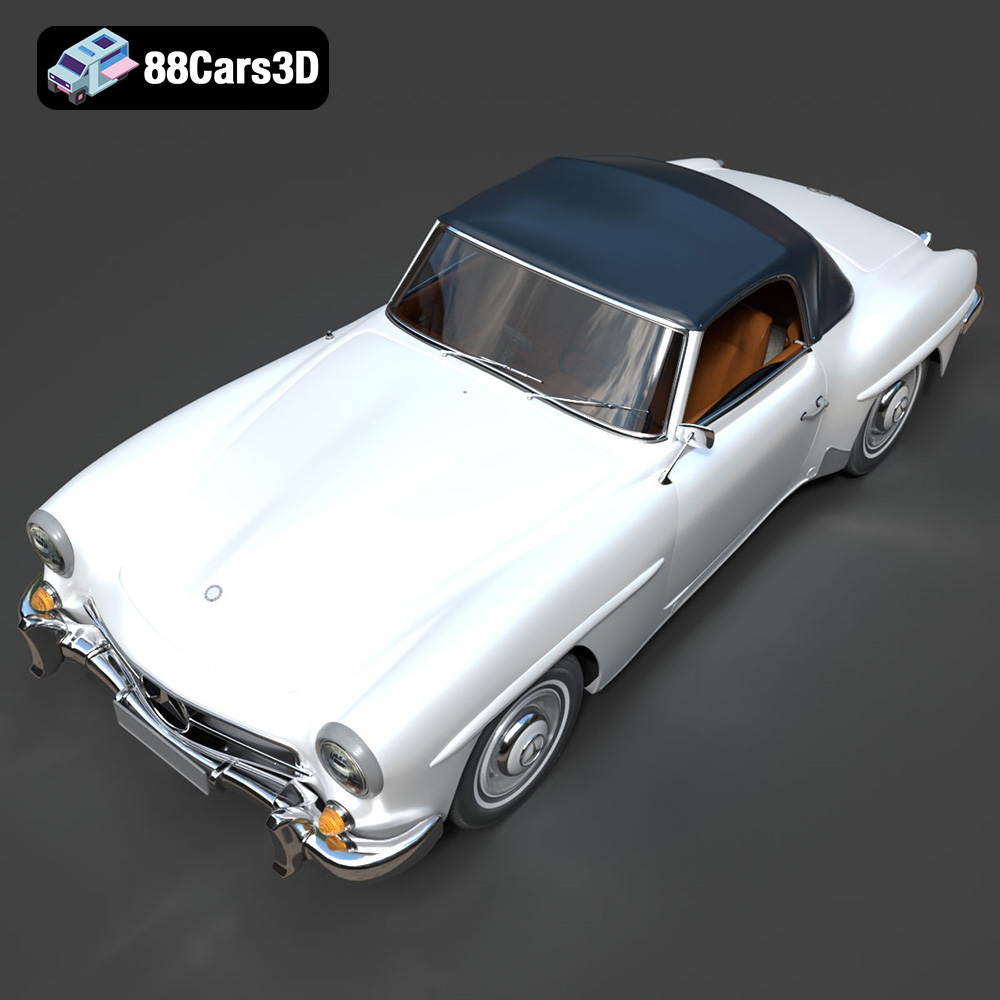
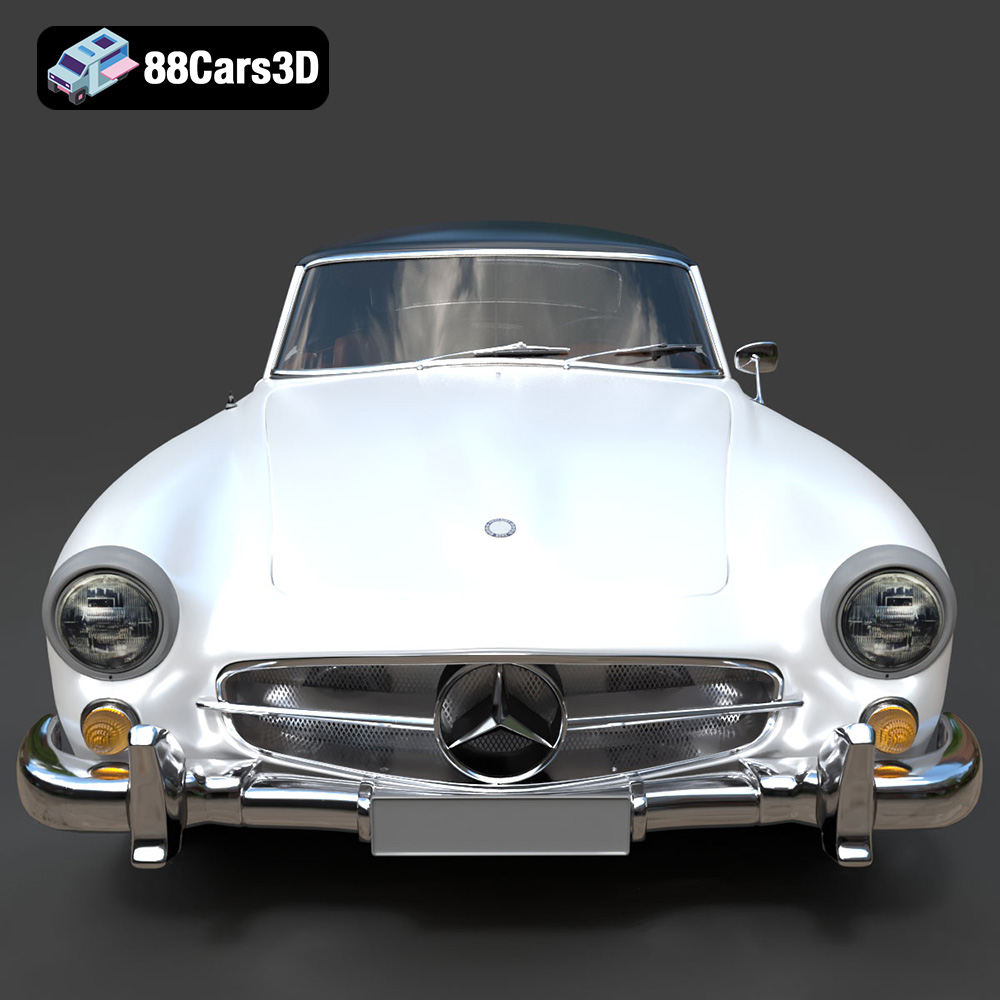
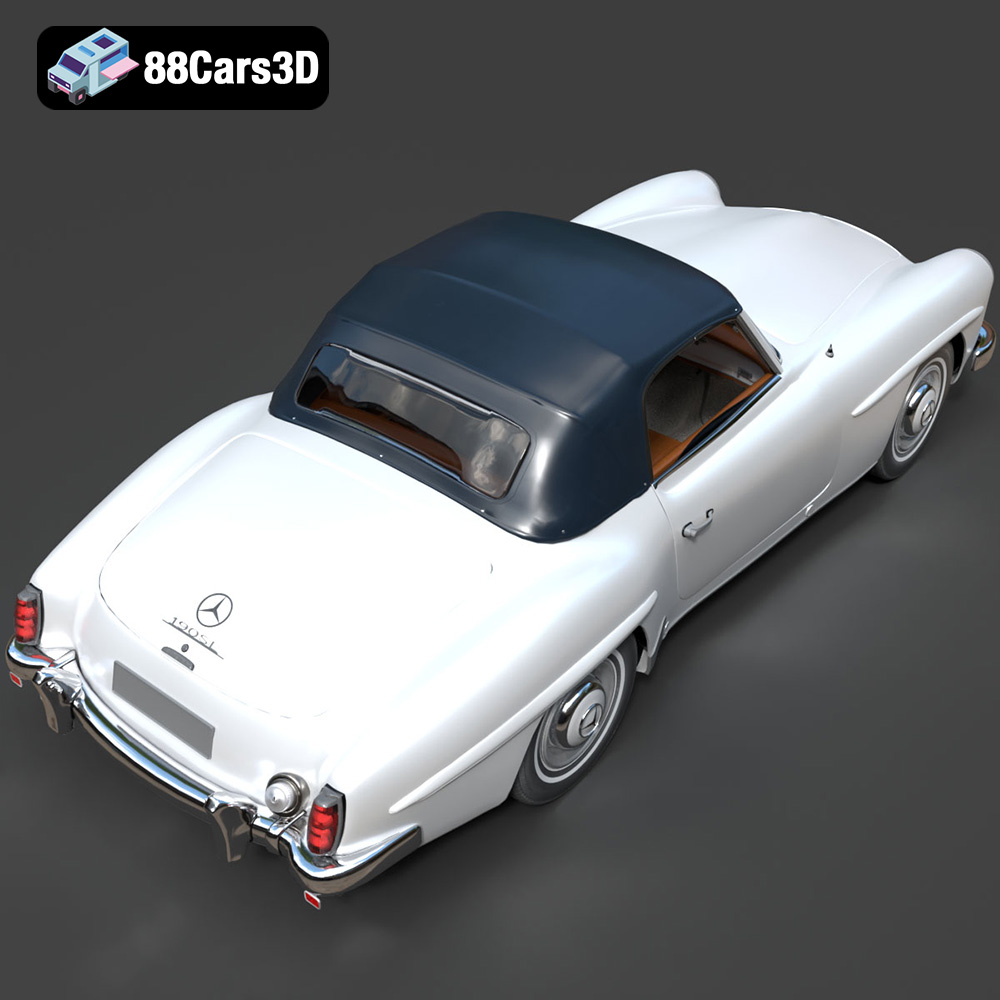
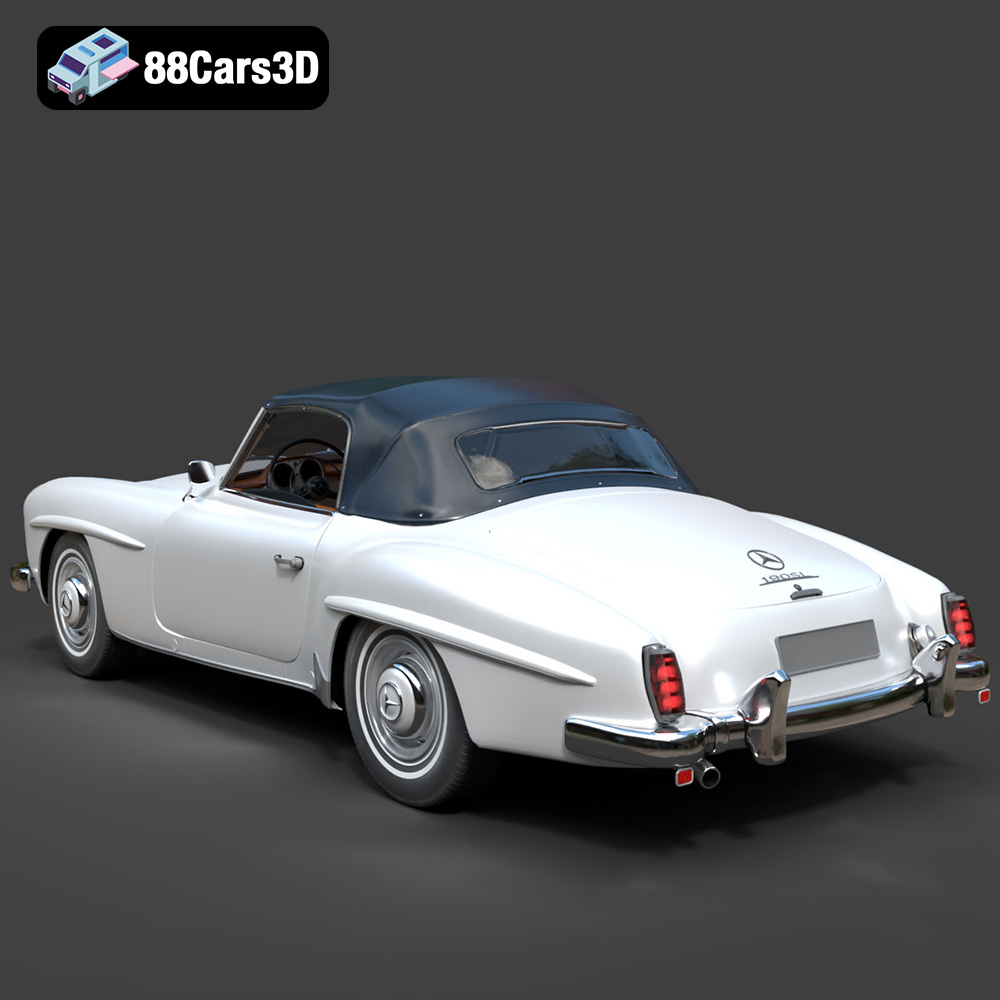
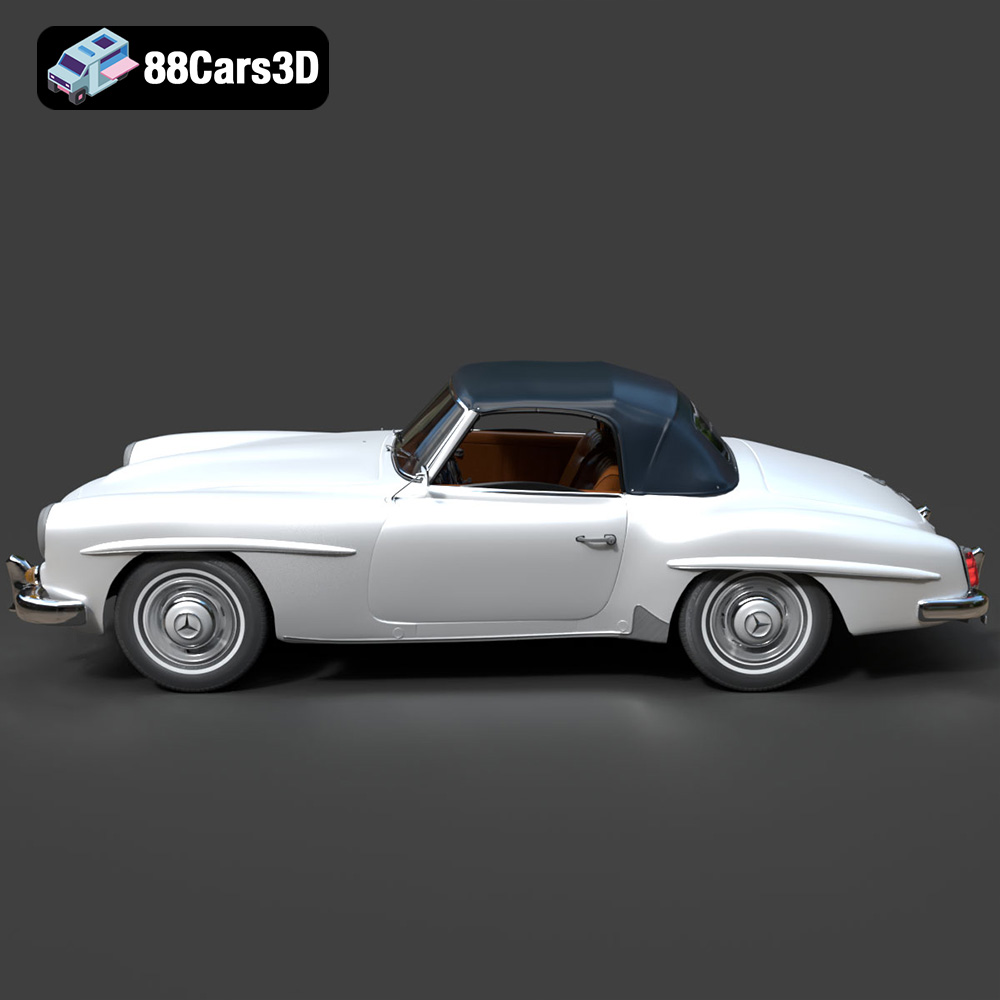
The exterior of the Mercedes Benz 190SL is its most defining feature, characterized by its elegant, sweeping curves and balanced proportions. A high-quality 3D model must flawlessly replicate these aspects. This model achieves accurate frame geometry, ensuring that every curve and panel gap aligns with the original vehicle. But the detail extends beyond the primary silhouette:
The cockpit of the 190SL was a sanctuary of luxury, and the 3D model meticulously recreates this experience. From the textures to the intricate components, the interior is designed for immersion:
Beneath the beautiful surface lies a robust technical framework. The quality of a 3D model is often defined by its underlying technical specifications:
This comprehensive approach to design and technical execution ensures that the Mercedes Benz 190SL 3D Model is not just visually stunning but also highly functional and adaptable for a wide range of professional applications.
The true value of a premium 3D asset lies in its seamless integration into diverse professional pipelines. The Mercedes Benz 190SL 3D Model, with its array of file formats and meticulous design, is engineered for versatility. From cinematic sequences to interactive simulations, this model provides a solid foundation for creative and technical excellence.
For studios specializing in automotive rendering, product visualization, or advertising, realism is paramount. The 190SL model’s high-fidelity geometry and PBR-ready materials make it an ideal candidate for stunning visual output. Utilizing software like 3ds Max with V-Ray or Corona Renderer, or Blender with Cycles, artists can achieve breathtaking results:
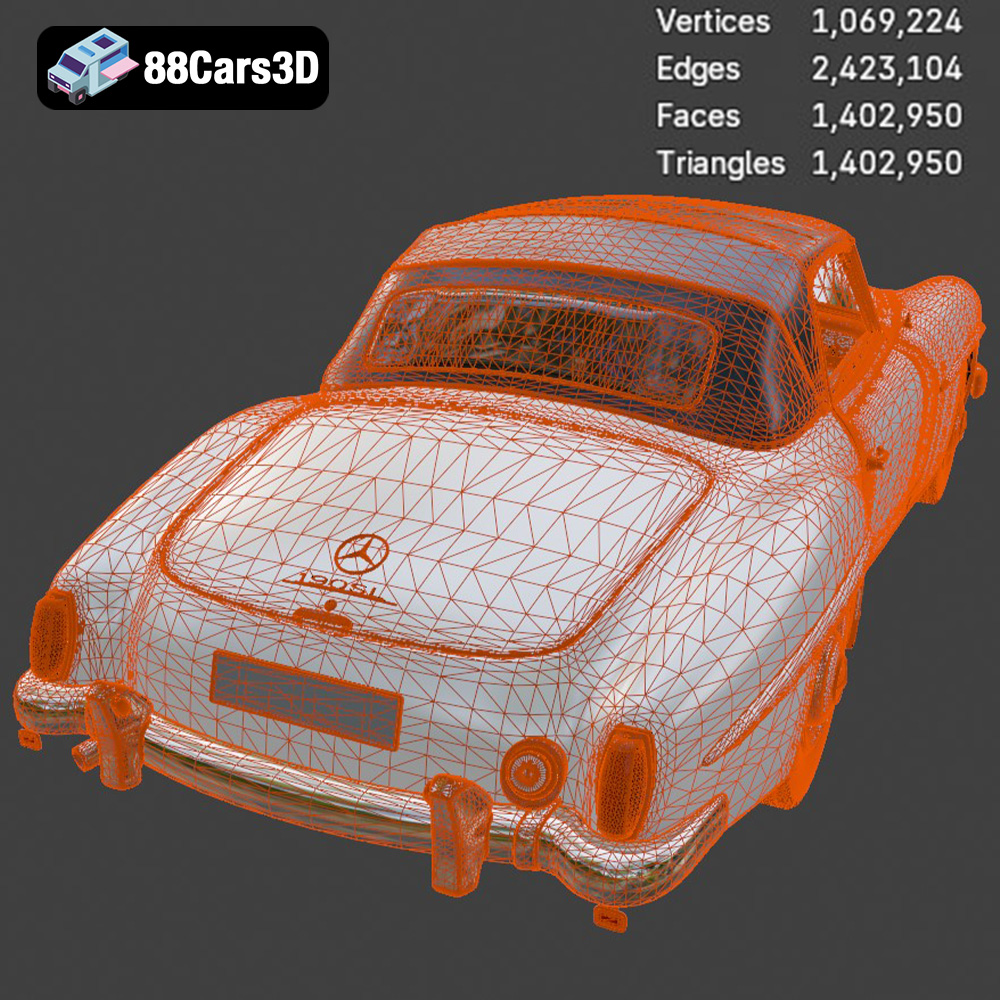
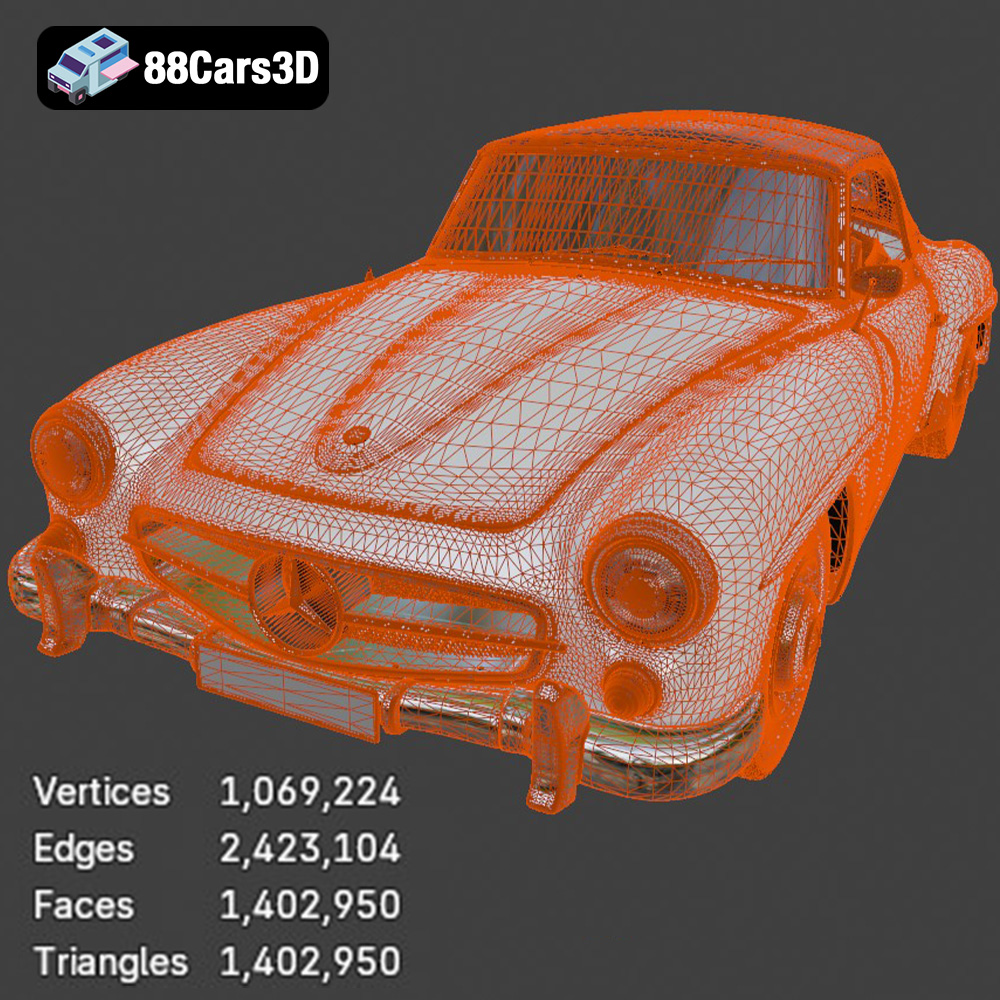
The “game-ready & optimized” nature of the 190SL model makes it an invaluable asset for game developers. Its topology of 1402950 triangles is a sweet spot, offering visual richness without crippling performance in modern game engines like Unreal Engine and Unity.
The burgeoning fields of Augmented Reality (AR) and Virtual Reality (VR) demand highly optimized assets that can run smoothly on a wide range of devices, from high-end VR headsets to mobile phones. The 190SL model is particularly well-suited for these applications, especially with its .glb format.
The versatility and technical readiness of the Mercedes Benz 190SL 3D Model make it an indispensable asset for any professional aiming to produce top-tier digital content across multiple platforms.
The Mercedes Benz 190SL 3D Model extends its utility beyond digital screens, offering the exciting possibility of tangible creation through 3D printing. For hobbyists, collectors, or designers looking for a physical prototype, the inclusion of the .stl format, coupled with detailed print settings, makes this a seamless transition from virtual asset to real-world collectible.
The journey to a successful 3D print begins with proper preparation. The .stl file format, specifically designed for additive manufacturing, converts the intricate geometry of the 190SL into a language understandable by 3D printers.
Once the print is complete, the art of post-processing begins, transforming a raw print into a display-worthy replica. This stage allows for significant artistic interpretation and refinement.
The ability to transform the Mercedes Benz 190SL 3D Model into a physical object offers a unique dimension of engagement, bridging the gap between digital artistry and tangible craftsmanship, creating a truly personal classic car showcase.
A high-quality 3D model isn’t just about accurate representation; it’s also about flexibility. Professionals often need to adapt assets to fit specific project requirements, branding guidelines, or artistic visions. The Mercedes Benz 190SL 3D Model offers extensive customization options, allowing artists to breathe new life into this classic and tailor it to any scenario.
The core of visual customization lies in manipulating materials and textures. The 190SL model is built with PBR (Physically Based Rendering) principles in mind, which means its textures (Albedo/Base Color, Normal, Roughness, Metallic, Ambient Occlusion) behave realistically under various lighting conditions, and are easily adjustable.
The perception of any 3D model is heavily influenced by its environment and lighting. The robust nature of the 190SL model means it responds beautifully to various lighting scenarios, enhancing its visual appeal and integrating it seamlessly into diverse virtual worlds.
This extensive capacity for customization ensures that the Mercedes Benz 190SL 3D Model isn’t a static asset but a dynamic tool that empowers artists and developers to realize their unique creative visions, making it an incredibly versatile addition to any professional 3D library.
The Mercedes Benz 190SL stands as a testament to automotive design excellence, a classic that continues to inspire awe and admiration. In the realm of 3D content creation, this admiration translates into a demand for high-fidelity, meticulously crafted digital representations that can meet the rigorous demands of modern professional workflows. The Mercedes Benz 190SL 3D Model featured on 88cars3d.com rises to this challenge, offering an unparalleled combination of artistic detail and technical optimization.
From its accurately sculpted exterior, complete with engine bay fidelity and period-correct accents, to its luxuriously detailed and first-person-optimized interior, every aspect of this 3D car model has been considered. The careful balance of a 1402950-triangle topology ensures it’s perfectly suited for everything from cinematic automotive rendering to high-performance game environments and immersive AR/VR experiences. The extensive array of included file formats—.blend, .fbx, .obj, .glb, .stl, .ply, .unreal, and .max—guarantees maximum compatibility and flexibility across virtually any professional software or engine, making it a truly versatile asset.
Beyond its digital applications, the provision of a ready-to-print .stl file, complete with detailed print settings, opens up new avenues for hobbyists and collectors to bring this classic roadster into the physical world. The model’s inherent customizability, from body colors and material finishes to lighting and environmental setups, ensures it can be adapted to any project’s unique vision.
In a landscape where time is precious and quality is paramount, acquiring a professional-grade 3D car model like the Mercedes Benz 190SL from 88cars3d.com represents a smart investment. It empowers artists and developers to focus on creativity, confident that their foundational assets are of the highest standard. Experience the seamless blend of history and technology, and elevate your next project with this timeless classic.
The Mercedes Benz 190SL is a legendary classic roadster that defines 1950s automotive elegance. Known for its sweeping curves, iconic front grille, and luxurious open-top styling, it remains a timeless symbol of vintage motoring. This model accurately captures the beautiful chrome bumpers, distinct inline-four engine bay details, and the classic rear taillights that made it an icon of its era. Boasting a highly detailed topology of 1402950 triangles, this 3D model offers unparalleled visual fidelity while retaining essential game-ready optimization principles. It is a premium asset meticulously crafted for high-end rendering, game development, AR/VR applications, and cinematic animation. Perfect for classic car showcases, vintage racing games, luxury lifestyle renders, and immersive virtual showrooms.
$71.99
.190sl
.blend
.fbx
.glb
.max
.obj
.ply
.rendering
.roadster
.stl
.unreal
car-3d-model
classic-car
game asset
game-ready
low-poly
luxury car
mercedes-benz
optimized
vintage-car
VR/AR


An absolute joy to print. The parts fit together seamlessly during assembly. Brilliant work on this model!