Get 20% OFF All Premium 3D & STL Models!

In the dynamic world of 3D visualization, the demand for high-fidelity assets that blend aesthetic excellence with technical precision has never been greater. Whether for cinematic realism, immersive game development, or cutting-edge augmented and virtual reality experiences, a premium 3D model forms the bedrock of any successful project. Today, we’re taking an in-depth look at a truly exceptional offering that embodies this pinnacle of digital craftsmanship: the Rolls-Royce Cullinan 2019 3D Model.
The Rolls-Royce Cullinan, the marque’s first-ever SUV, is a symbol of unparalleled luxury and engineering prowess. Its commanding presence, iconic Pantheon grille, and the ethereal Spirit of Ecstasy ornament define an automotive legend. Translating such a masterpiece into a digital format requires immense skill and attention to detail, and this particular 3D model delivers precisely that. Expertly crafted for a diverse range of applications, from high-end automotive rendering to real-time game environments, it stands as a testament to what’s possible when art and technology converge. Available on 88cars3d.com, this model provides an invaluable asset for professionals seeking to elevate their projects with genuine digital luxury.
The versatility of any professional-grade 3D model hinges significantly on the file formats it supports. Different formats are optimized for different stages of the production pipeline, from initial modeling and animation to real-time deployment and physical fabrication. The Rolls-Royce Cullinan 2019 3D Model excels in this regard by offering a comprehensive suite of formats, ensuring maximum compatibility and utility across various platforms and workflows. Understanding each is crucial for leveraging the full potential of your 3D car models.
The .blend file is the native format for Blender, a powerful open-source 3D creation suite. When a model is provided in .blend, it typically means a fully editable Blender scene. This includes not just the mesh geometry but also materials, textures, lighting setups, cameras, and even animation data if present. For artists and studios primarily working in Blender, this format offers the most flexibility for customization, modifications, and seamless integration into existing Blender projects. You can easily adjust topology, unwrap new UVs, or rebuild shader networks specific to Cycles or Eevee rendering engines.
As one of the most widely adopted proprietary file formats, .fbx (Filmbox) is crucial for interoperability. Developed by Autodesk, it’s designed to transfer data between various 3D applications, making it ideal for pipelines involving multiple software packages. Crucially, .fbx supports mesh geometry, materials, textures, cameras, and a robust array of animation data including skeletal animation, morph targets, and blend shapes. For game development (Unreal, Unity) and real-time visualization, .fbx is often the go-to format for importing complex animated models, ensuring that pivot points, hierarchical structures, and transforms are preserved.
The .obj (Wavefront OBJ) format is a highly universal and widely supported open standard. It’s excellent for exchanging purely geometric data between almost any 3D software. An .obj file primarily contains vertex positions, UV coordinates, vertex normals, and polygonal faces. While it can reference external material files (.mtl) for basic color and texture map information, it doesn’t store advanced shader networks, animation, or rigging data. Its strength lies in its simplicity and ubiquity, making it a reliable choice for static model transfers and foundational geometry sharing across diverse 3D applications.
.glb is the binary form of the GL Transmission Format (.gltf), an open standard for 3D scenes and models developed by the Khronos Group. The .glb format is highly optimized for web-based applications, augmented reality (AR), virtual reality (VR), and mobile viewing. It’s a single file containing geometry, materials, textures, and animation, making it incredibly efficient for streaming and display in browsers or lightweight viewers. For interactive experiences or embedding a high-quality 3D car model directly onto a website, .glb offers exceptional performance and ease of use.
The .stl (Stereolithography) format is the de facto standard for 3D printing and rapid prototyping. It represents a 3D model as a series of connected triangles, describing only the surface geometry without color, texture, or material properties. While not suitable for rendering or animation, its simplicity makes it perfect for conveying the physical shape to 3D printers. The Rolls-Royce Cullinan model, when provided in .stl, allows hobbyists and professionals to fabricate a tangible replica, ideal for scale models or product design reviews. The product description highlights specific print settings like recommended scale, layer height, and support requirements, which are crucial for a successful print.
The .ply (Polygon File Format) is another format for storing 3D data, often used for scanned data, CAD models, or scientific applications requiring high precision. It can store a wider range of properties than .obj, including color per vertex, normal vectors, and transparency, making it suitable for complex meshes with detailed attribute data. While less common for general rendering compared to .fbx or .obj, its inclusion signifies a commitment to providing a robust dataset for specific engineering or analysis workflows where mesh integrity and attribute retention are paramount.
While “.unreal” isn’t a standard file extension, its inclusion implies that the asset is provided in a format or package specifically optimized and pre-configured for direct import and use within Unreal Engine. This could mean a .uasset file or a folder structure ready to be dropped into an Unreal project, complete with pre-configured materials, collision meshes, LODs (Levels of Detail), and potentially even basic blueprints for functionality. This greatly streamlines the workflow for game developers, saving significant time on setup and optimization compared to importing a generic .fbx.
Similar to .blend, the .max file is the native format for Autodesk 3ds Max, a leading software for 3D modeling, animation, and rendering in architectural visualization, design, and game development. A .max file contains the complete scene, including geometry, modifiers, materials, lights, cameras, and animation data. For users of 3ds Max, this format provides full control over every aspect of the model, allowing for extensive customization, rigging, animation, and rendering using powerful renderers like V-Ray or Corona.
The availability of all these formats with the Rolls-Royce Cullinan 2019 3D Model truly underscores its value, making it an incredibly versatile and future-proof asset for any professional pipeline.
The Rolls-Royce Cullinan 2019 3D Model isn’t just a collection of polygons; it’s a meticulously engineered digital representation of an automotive icon. Its design seamlessly blends aristocratic elegance with formidable off-road capability, and this model captures every nuance, making it perfect for high-end automotive rendering and visualization projects. The commitment to realism ensures that whether it’s featured in a high-octane game or a serene architectural visualization, its presence is undeniably authentic.
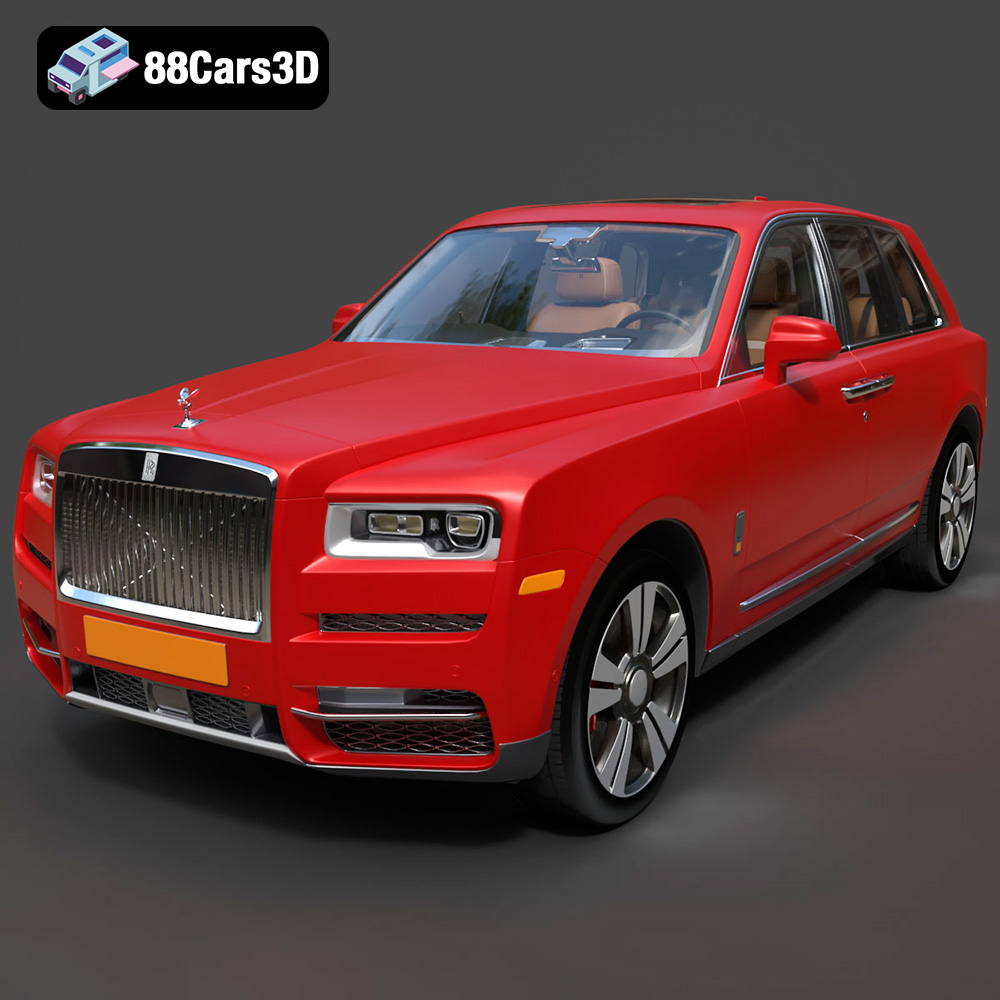
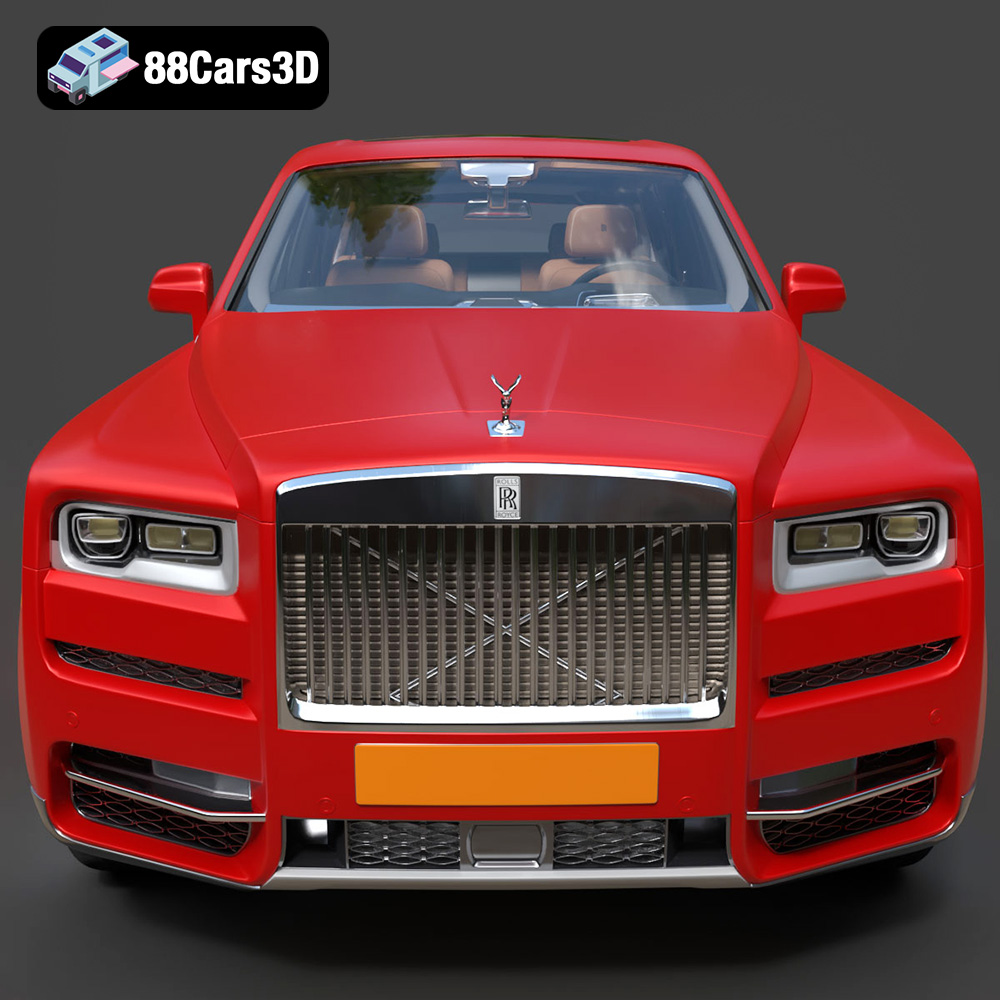
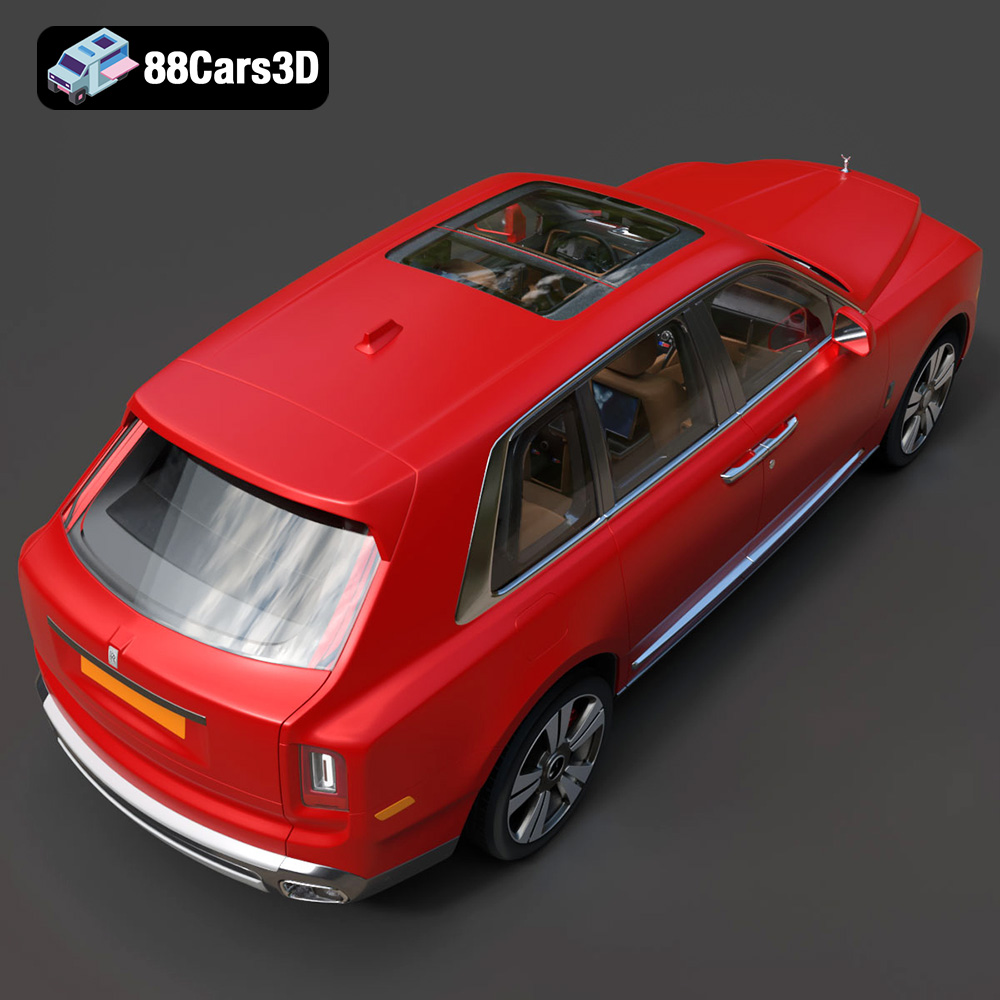
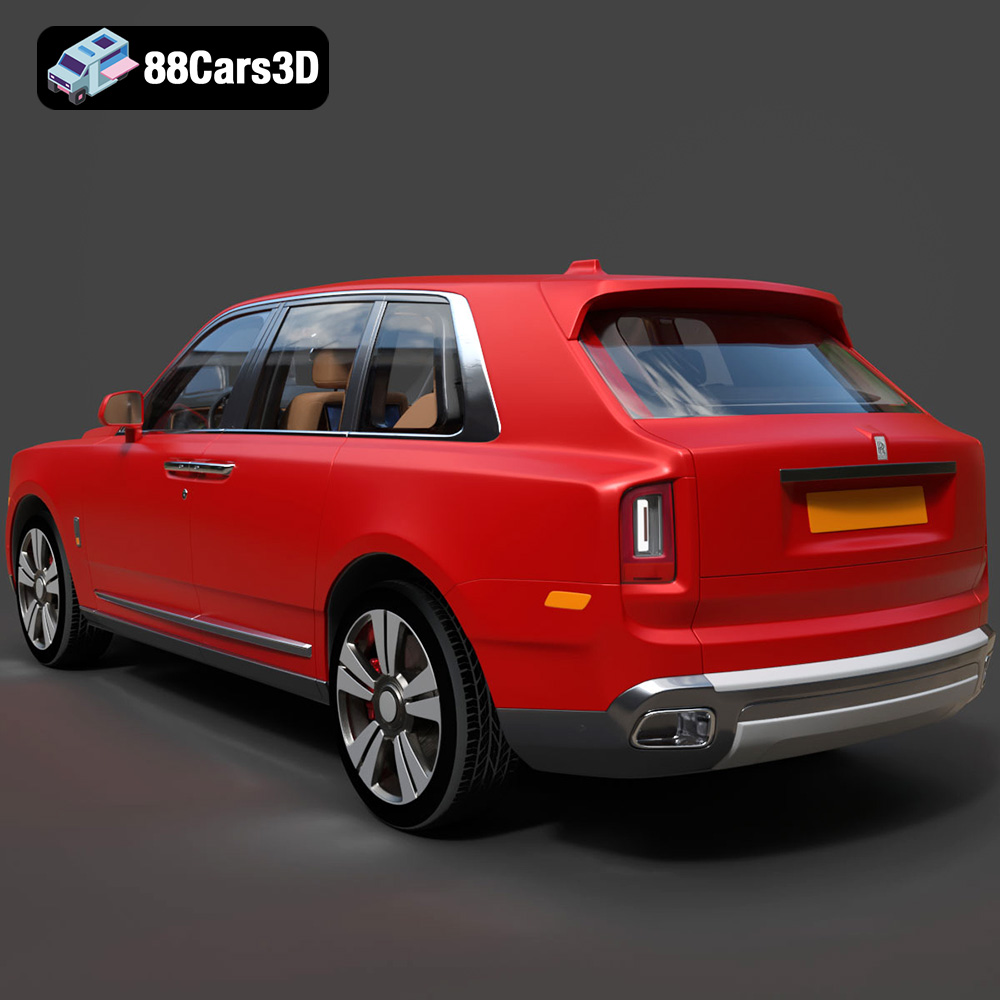
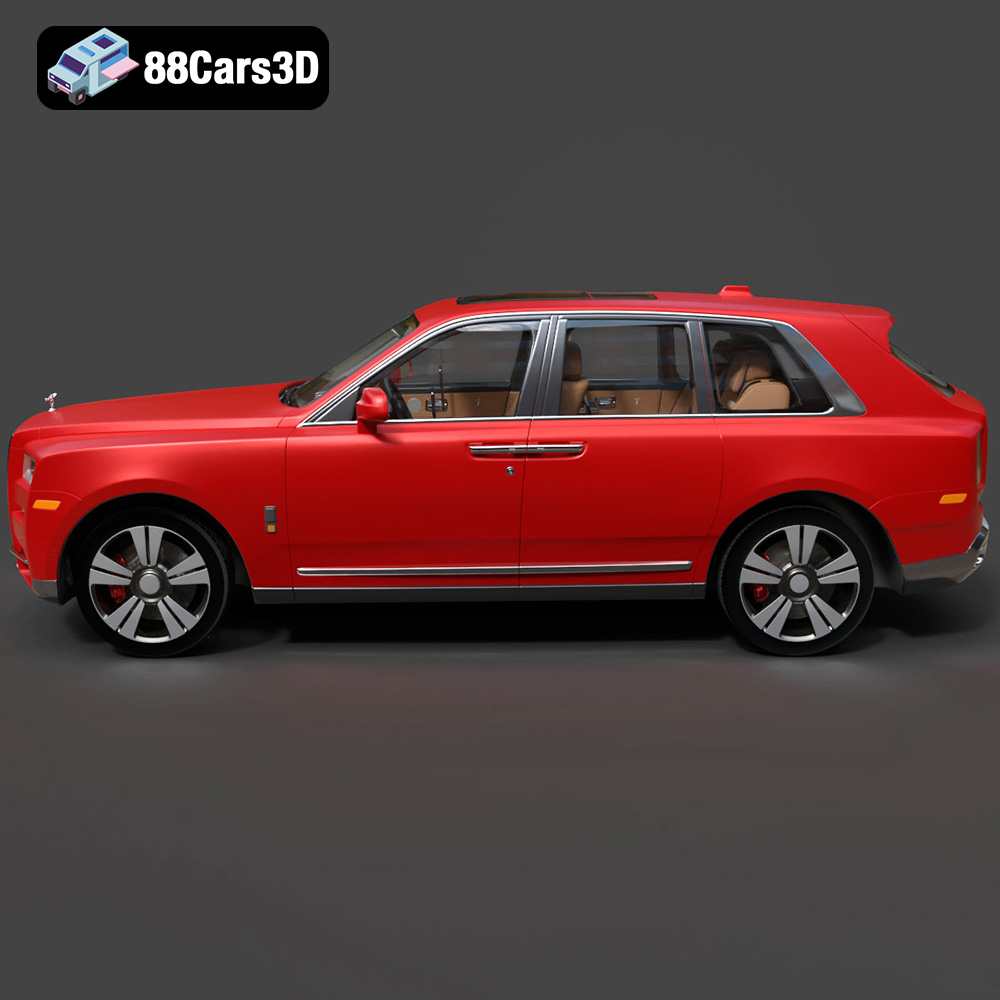
From the moment you inspect the exterior of this 3D model, the dedication to accuracy is palpable. The accurate frame geometry and proportions faithfully reproduce the Cullinan’s commanding stance. The signature Pantheon grille, a hallmark of Rolls-Royce design, is rendered with intricate detail, as is the iconic Spirit of Ecstasy hood ornament. Specific exterior features like the signature LED headlights and classic taillight assemblies are precisely modeled, contributing to the vehicle’s realistic lighting signatures in any digital scene. Furthermore, the intricate multi-spoke alloy wheels boast precise tire tread patterns, while accurate air suspension details and chassis underpinnings add depth to even the closest inspections. Crucially for animators and game developers, the wheels, suspension, and steering components are separated, allowing for realistic animation of steering, rotation, and suspension travel—a vital feature for any interactive 3D car model.
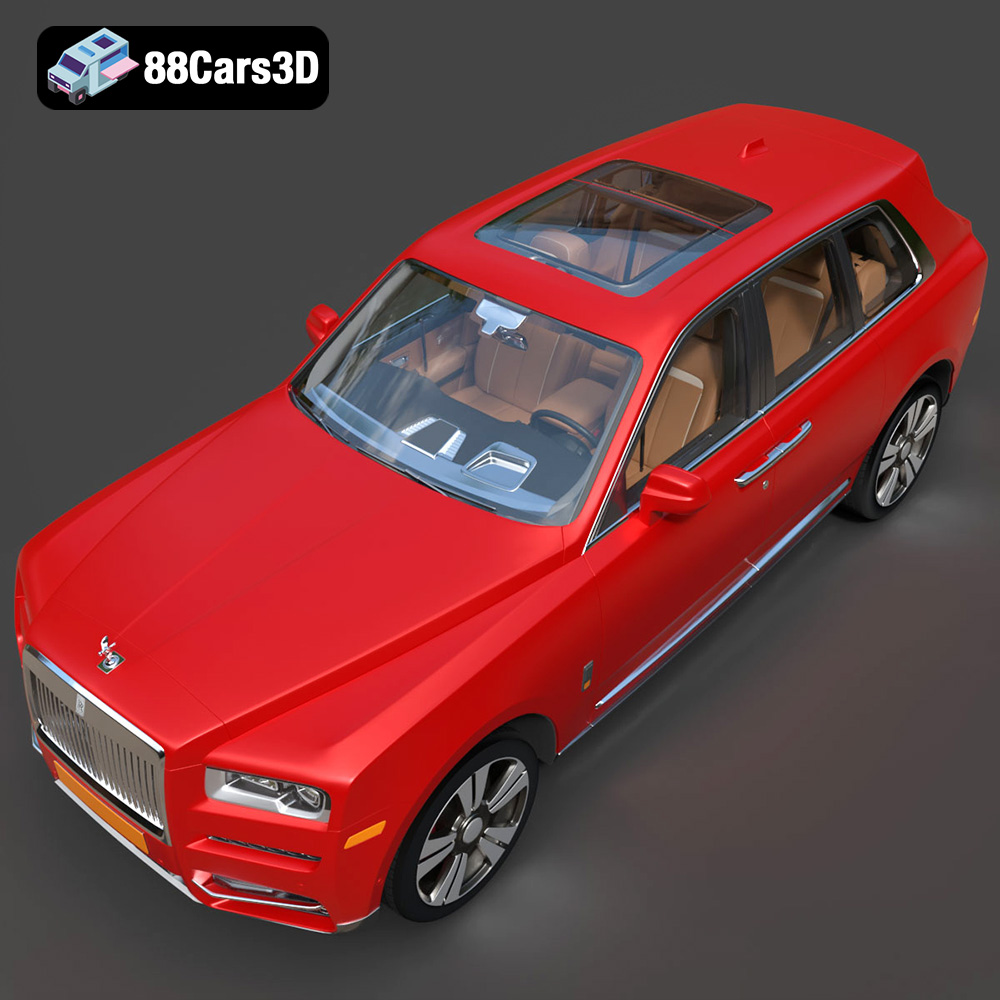
The luxury of the Cullinan extends to its interior, and the 3D model faithfully recreates this bespoke environment. The cockpit features luxurious bespoke leather seating and upholstery detailing, providing a rich visual experience. The classic-meets-modern steering wheel and column are accurately modeled, along with a high-fidelity digital and analog instrument cluster that provides realistic readout potential. The detailed center console, pedals, gear selector, and climate controls complete the immersive interior. For game developers, the optimized geometry for first-person POV (Point of View) in gaming is a significant advantage, ensuring smooth performance even in graphically demanding environments, making it a stellar game asset.
The true genius of this Rolls-Royce Cullinan 2019 3D Model lies in its ability to bridge the gap between stunning visual fidelity and practical performance. It’s a prime example of how premium 3D car models can be both art and engineering marvels, optimized for a wide array of applications.
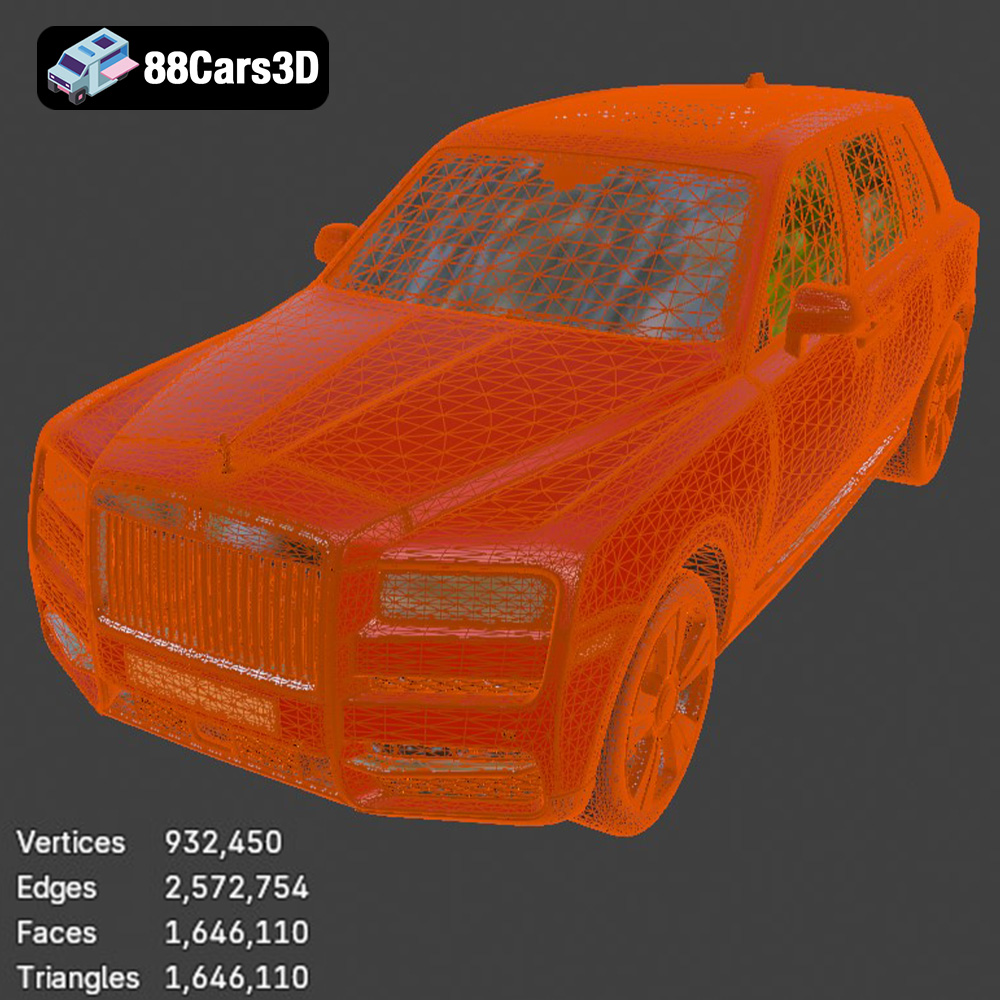
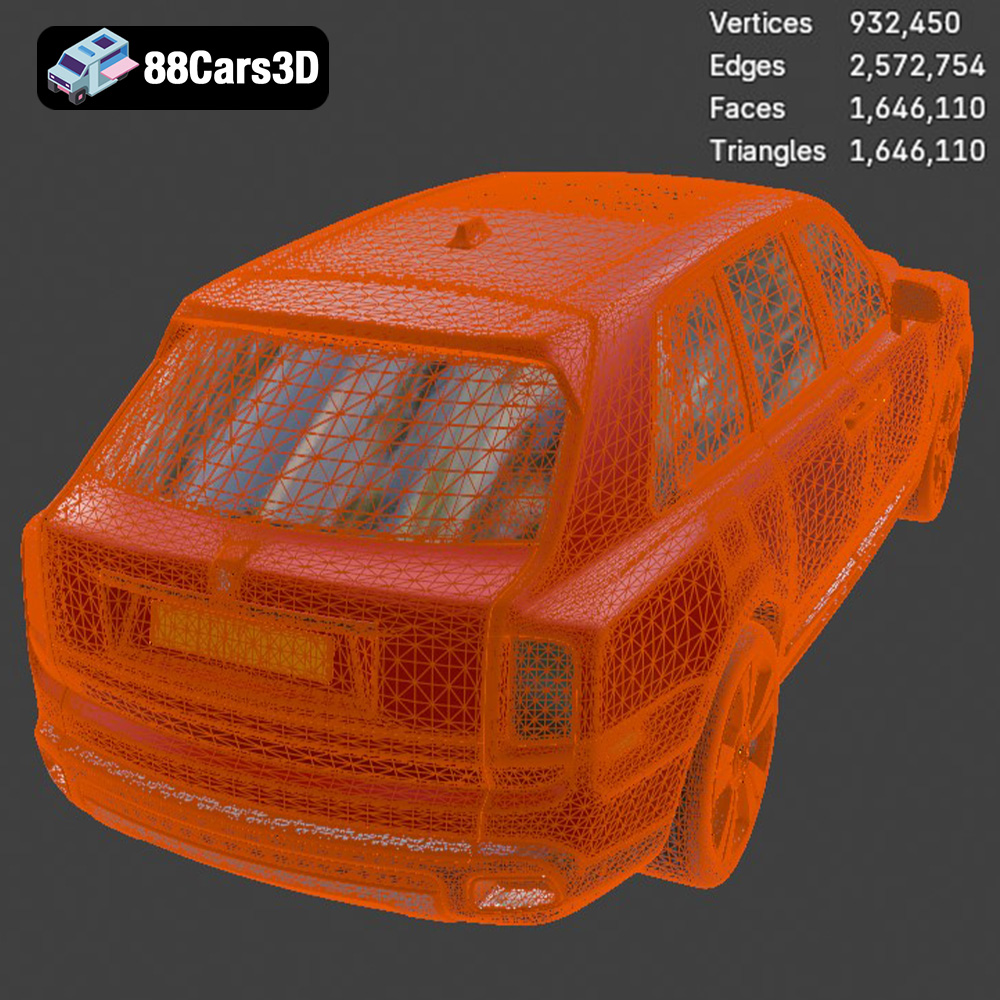
The model boasts an impressive 1,646,110 triangles. This specific polycount isn’t arbitrary; it represents a carefully chosen balance. For high-end automotive rendering and cinematic sequences, this level of detail allows for exceptional visual realism, capturing the subtle curves and sharp edges of the Cullinan without sacrificing smoothness. Simultaneously, this polycount is remarkably optimized, striking a perfect balance for real-time engines like Unreal and Unity. This “game-ready” optimization means developers can integrate the model into open-world games, racing titles, or simulators while maintaining high frame rates and performance. Achieving this balance is a significant technical advantage, distinguishing high-quality game assets from mere visual showcases. The model’s real-world scale accuracy, based on actual vehicle chassis, further enhances its credibility and ease of integration into established scene scales.
Beyond static beauty, the functional aspects of the model are meticulously addressed. The proper pivot setup for steering, wheel rotation, and suspension travel is a critical technical advantage. This thoughtful preparation saves countless hours for animators and developers who require realistic vehicle movement. For automotive rendering, this means creating dynamic driving sequences or showcasing suspension articulation with ease. In game development, it translates directly into responsive and believable vehicle physics. The compatibility with major 3D software platforms and real-time rendering engines ensures that these pre-configured pivots and hierarchies are maintained upon import, allowing for immediate rigging or integration into existing vehicle systems.
A premium 3D car model like the Rolls-Royce Cullinan 2019 is designed to streamline and enhance professional pipelines across multiple industries. Its versatility, facilitated by the array of included file formats and optimized geometry, makes it an invaluable asset for various creative and technical endeavors.
For studios specializing in automotive rendering for advertising, product showcases, or design visualization, this model is a powerhouse. Using the native `.max` or `.blend` files, artists gain full control over the scene. In 3ds Max, workflows involve importing the model, applying advanced physically based rendering (PBR) materials, setting up complex studio lighting environments (HDRI, area lights), and positioning cameras for dramatic shots. With renderers like V-Ray or Corona, the detailed geometry of the Cullinan truly shines, allowing for photorealistic output that rivals actual photography. Similarly, Blender users can leverage Cycles or Eevee, adjusting materials, adding volumetric effects, and animating cameras to create stunning cinematic sequences. For example, a marketing agency tasked with creating a luxury brand campaign could use this model to produce high-resolution hero shots and dynamic video advertisements, showcasing the Cullinan in virtual environments that are impossible or too costly to achieve in real life.
The “game-ready” optimization of the Rolls-Royce Cullinan 2019 3D Model makes it an ideal game asset for real-time applications. Developers can import the `.fbx` file, or take advantage of the implied `.unreal` optimized asset, directly into Unreal Engine or Unity. The balanced polycount ensures high frame rates, even when multiple vehicles are present in a scene. Key workflows involve setting up custom material instances (e.g., changing body colors, adapting material finishes as specified in the product description), implementing vehicle physics, and integrating the pre-setup pivot points for realistic steering and suspension. This model is perfect for creating open-world environments, realistic driving simulators, or interactive automotive configurators where users can customize the vehicle in real-time. Imagine an AR/VR studio building a virtual showroom experience where potential customers can walk around, interact with, and even “drive” the Cullinan in a completely immersive digital space—the optimized model makes this not just possible, but highly performant.
The utility of this model extends beyond digital screens. The inclusion of the `.stl` format opens up possibilities for 3D printing, allowing for the creation of physical scale models. Hobbyists and product designers can use the recommended print settings (e.g., 1:12/1:18/1:24 scale, 0.04–0.12 mm layer height for resin printing) to produce highly detailed replicas of the Cullinan. A product design firm, for instance, might 3D print a scaled version for client presentations or as part of a concept vehicle prototyping workflow. Furthermore, the `.glb` format is a game-changer for modern web and mobile AR/VR experiences. It enables developers to easily embed the 3D model into websites for interactive viewers, or deploy it in mobile AR applications where the Cullinan can appear life-sized in a user’s real-world environment. This bridges the gap between digital content and tangible experiences, proving the model’s immense versatility.
A truly professional 3D car model is not just accurate but also adaptable. The Rolls-Royce Cullinan 2019 3D Model offers extensive customization options, empowering artists and developers to tailor its appearance to perfectly match their creative vision or project requirements.
The ability to easily modify the visual attributes of a 3D model is paramount for diverse projects. With this Cullinan model, artists can readily change body and tank colors, applying anything from authentic factory colors to custom finishes like unique pearlescent paints or matte wraps. The model allows for modification of tire textures, enabling a quick switch between on-road performance tires and rugged off-road variants, instantly altering the vehicle’s character. Adjusting material finishes—from high-gloss paintwork to subtle metallic sheens or sophisticated matte textures—is straightforward, giving complete control over the vehicle’s perceived luxury. Furthermore, adapting lighting for different environments, whether it’s the harsh sunlight of a desert or the soft glow of a showroom, significantly impacts the mood and realism of any automotive rendering. This level of granular control ensures that the Cullinan can seamlessly fit into any narrative or aesthetic.
Investing in a high-quality 3D car model like the Rolls-Royce Cullinan 2019 from 88cars3d.com isn’t just about acquiring a single asset; it’s about future-proofing your digital content library. A well-optimized, highly detailed base model significantly reduces development time for future projects that require luxury automotive presence. Its clean topology, game-ready optimization, and comprehensive file format support mean it can be reused, adapted, and integrated into evolving technologies and platforms with minimal effort. This strategic acquisition empowers studios to take on a wider range of projects, from high-stakes advertising campaigns to cutting-edge interactive experiences, always confident in the visual integrity and performance of their core assets.
The Rolls-Royce Cullinan 2019 3D Model is an exemplary asset that truly stands out in the competitive landscape of digital automotive design. Its impressive fidelity, boasting over 1.6 million triangles, combined with meticulous optimization, positions it as a versatile tool for virtually any professional application. From stunning automotive rendering and cinematic animations in 3ds Max or Blender to seamless integration into real-time game development with Unreal Engine and Unity, and even tangible 3D printing via the STL format, this model delivers on all fronts.
The comprehensive range of included file formats—.blend, .fbx, .obj, .glb, .stl, .ply, .unreal, and .max—ensures unparalleled compatibility and flexibility across diverse pipelines. Whether you’re an architect visualizing a luxury estate, a game developer populating an open-world environment, or an AR/VR designer crafting immersive experiences, this model provides the necessary foundation for excellence. Its detailed exterior and interior, combined with animation-ready components and extensive customization options, make it more than just a model; it’s a strategic investment in digital quality.
For those seeking the pinnacle of 3D car models to elevate their projects, the Rolls-Royce Cullinan 2019 3D Model available at 88cars3d.com is an indispensable asset that combines the ultimate expression of luxury with cutting-edge technical execution.
Experience the ultimate expression of luxury with the Rolls-Royce Cullinan 2019. As the marque’s first-ever SUV, the Cullinan redefines opulence with its commanding presence, signature Pantheon grille, iconic Spirit of Ecstasy hood ornament, and imposing silhouette. Powered by a formidable 6.75-liter twin-turbocharged V12 engine, its design seamlessly blends aristocratic elegance with rugged off-road capability. This premium 3D model boasts an impressive 1646110 triangles, delivering exceptional visual fidelity and uncompromising detail. Expertly modeled with game-ready optimization in mind, it provides the perfect balance between high-end aesthetic appeal and performance for diverse applications, including game development, high-end AR/VR experiences, architectural visualization, and cinematic animations. Perfect for luxury lifestyle renderings, automotive configurators, open-world video games, and VIP virtual environments.
$80.50
.2019
.blend
.cullinan
.fbx
.glb
.luxury suv
.max
.obj
.ply
.rendering
.stl
.unreal
car-3d-model
game asset
game-ready
low-poly
optimized
rolls-royce
SUV
VR/AR