Get 20% OFF All Premium 3D & STL Models!

In the world of automotive design, history isn’t just a record of past achievements; it’s a wellspring of inspiration, a benchmark for timeless aesthetics, and a testament to engineering prowess. For designers, game developers, architects, and visual artists, the challenge lies in transcending the physical limitations of these legendary machines and bringing them into the digital realm with impeccable accuracy and fidelity. This is where high-quality 3D car models become indispensable tools, bridging the gap between historical reverence and modern technological application.
Imagine recreating the roaring twenties, the opulent thirties, or the post-war elegance of the fifties. Each era boasts iconic vehicles that define their time. One such automotive masterpiece is the Mercedes-Benz 540K Roadster 1936 – a car that epitomized luxury, power, and avant-garde design of its period. Translating such a complex, historically significant vehicle into a digital asset demands not just artistic skill, but profound technical understanding. A premium 3D model, like the Mercedes-Benz 540K Roadster 1936 available on 88cars3d.com, offers an unparalleled opportunity to explore, visualize, and interact with these legends across various digital mediums, from photorealistic renders to immersive virtual reality experiences.
This article delves deep into the technical intricacies, artistic considerations, and diverse applications of high-fidelity 3D car models. We will explore the critical role of various file formats, the demanding workflows in leading 3D software and game engines, and how a meticulously crafted asset such as the Mercedes-Benz 540K Roadster serves as a foundational element for professional projects, ensuring accuracy, performance, and breathtaking realism.
The versatility and compatibility of a 3D model are often defined by the file formats it supports. Each format is designed with specific use cases and technical advantages in mind, making the choice crucial for integration into various pipelines, from rendering and animation to game development and 3D printing. Understanding these distinctions is fundamental for any professional working with digital assets.
The `.blend` file format is the native format for Blender, a powerful and popular open-source 3D creation suite. A `.blend` file is far more than just geometry; it’s a complete scene package, containing all aspects of a Blender project. This includes not only the mesh data (vertices, edges, faces) for models like the Mercedes-Benz 540K Roadster, but also materials, textures, lighting setups, cameras, animation data, rigging, physics simulations, modifiers, and even custom scripts. Its primary advantage is its comprehensive nature, allowing for full editability and seamless continuation of work within Blender. For artists who use Blender as their primary DCC (Digital Content Creation) tool, receiving a `.blend` file means having immediate access to every parameter and setting used by the original creator, facilitating complex modifications or rendering without conversion issues.
Autodesk’s `.fbx` (Filmbox) format is arguably the most widely adopted interchange format in the 3D industry, especially within game development and animation. It’s designed to transfer a broad range of 3D data between different software applications while maintaining as much information as possible. An `.fbx` file can encapsulate geometry (meshes, polygons, NURBS), materials, textures, skeleton definitions, animation data (keyframes, animation stacks), camera information, and lighting. Its robust nature makes it ideal for exporting complex animated assets like a rigged car model into game engines like Unreal Engine or Unity, or between DCC applications such as 3ds Max, Maya, and Blender. While highly compatible, users must be mindful of version compatibility and potential limitations with specific material types when importing into different software.
The `.obj` (Wavefront OBJ) format is one of the oldest and most universally supported 3D file formats. It’s a simple, text-based format primarily used to define geometry – vertices, vertex normals, texture coordinates, and faces. Unlike `.fbx`, `.obj` typically doesn’t store animation, rigging, or complex material properties (though it can link to `.mtl` files for basic material definitions and texture paths). Its strength lies in its widespread compatibility, making it a reliable choice for transferring static mesh data between virtually any 3D software. For the Mercedes-Benz 540K Roadster, an `.obj` file would provide the core geometric structure, allowing artists to apply their preferred materials and textures in their chosen rendering engine.
The `.glb` (GL Transmission Format Binary) format is a binary version of `.gltf` and has rapidly gained prominence for its efficiency and suitability for web-based 3D, augmented reality (AR), and virtual reality (VR) applications. `.glb` packages geometry, materials, textures, animations, and scene hierarchy into a single, self-contained file. Its key advantage is its compact size and fast loading times, as all assets are embedded. This makes it perfect for displaying interactive 3D models of cars in web browsers without needing complex plugins, or for deploying them on mobile AR/VR platforms where performance and file size are critical considerations. The Mercedes-Benz 540K Roadster as a `.glb` asset would be perfect for a virtual showroom experience.
The `.stl` (Stereolithography) format is the de facto standard for 3D printing. It represents a 3D model as a series of connected triangles (a triangulated surface). Unlike other formats, `.stl` contains only the surface geometry and no color, texture, or material information. It’s a ‘dumb’ format in this regard, solely focused on defining the shape for additive manufacturing processes. When preparing the Mercedes-Benz 540K Roadster for 3D printing, the `.stl` file ensures that the printer has an accurate, watertight mesh to build upon, with considerations for scale and structural integrity being paramount.
The `.ply` (Polygon File Format) is another format that stores geometric data, including vertices, faces, vertex normals, and sometimes color or texture coordinates per vertex. While similar to `.obj` in its focus on geometry, `.ply` is often favored in academic and research settings, as well as for storing data from 3D scanners, CAD systems, and scientific applications due to its flexibility in representing various types of data associated with vertices and faces. It can be particularly useful for precise mesh analysis or when working with models derived from scanned real-world objects, making it a robust option for the high-precision details of a classic car.
While not a standalone file format in the traditional sense, `.unreal` implies an asset specifically packaged and optimized for direct import and use within Unreal Engine. This often means the model has been pre-processed, has correct pivot points, UVs, collision meshes, LODs (Levels of Detail), and potentially includes Unreal-specific material setups or blueprints. Assets designated as `.unreal` are designed for maximum efficiency and seamless integration into a real-time game or visualization project, bypassing many common import issues. For a complex asset like the Mercedes-Benz 540K Roadster, an `.unreal` package signifies that it’s ready to drop into a scene and perform optimally.
Similar to `.blend` for Blender, the `.max` file is the native project file for Autodesk 3ds Max. It contains the entire scene data, including geometry, materials, textures, lighting, cameras, animation, and any specific 3ds Max modifiers or plugins used. For professionals working within a 3ds Max pipeline, a `.max` file provides the most complete and editable version of the Mercedes-Benz 540K Roadster model, allowing for full customization, advanced rigging, and high-end V-Ray or Corona renders.
Recreating a historical vehicle like the Mercedes-Benz 540K Roadster 1936 in 3D is an exacting process that demands both artistic vision and technical precision. The goal is to capture not just the form, but the very essence and feel of the original, making it visually compelling and historically accurate. The 3D model of the 540K Roadster available on 88cars3d.com stands as a testament to this meticulous approach, boasting features that elevate it beyond a simple digital replica.
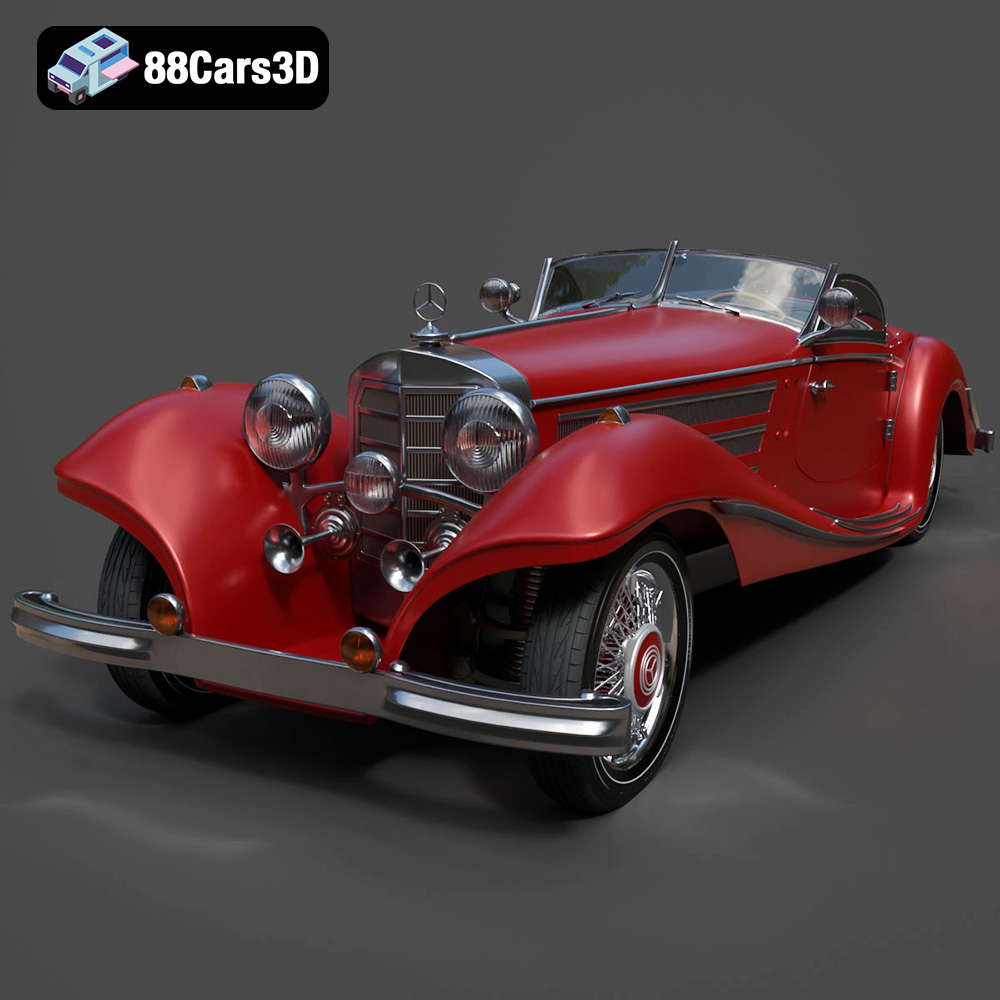
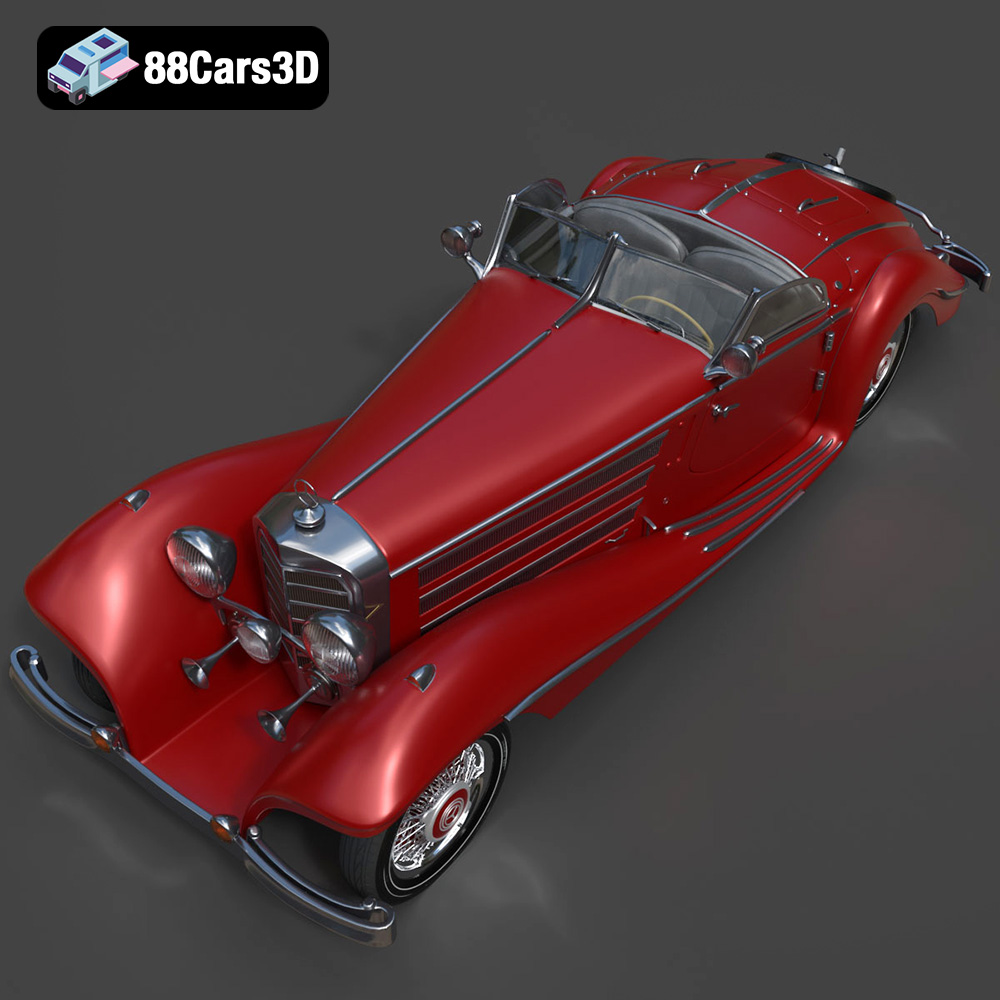
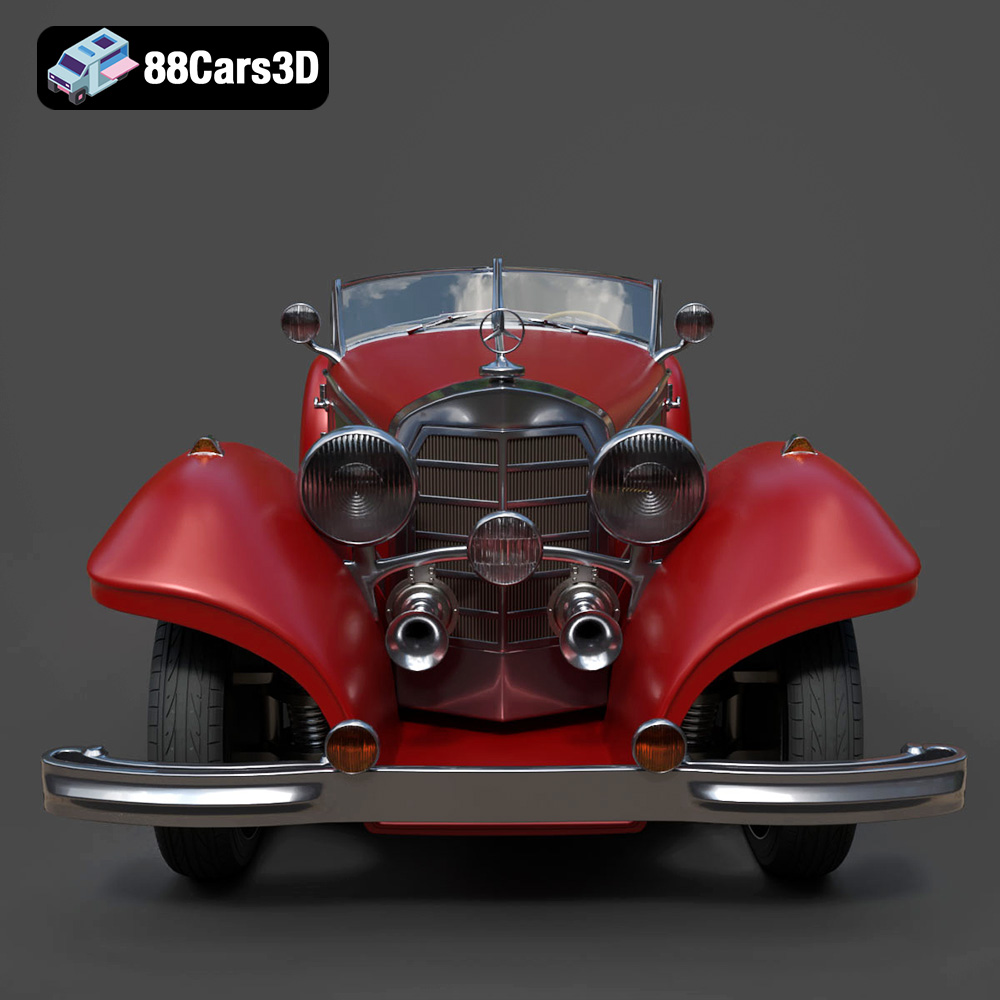
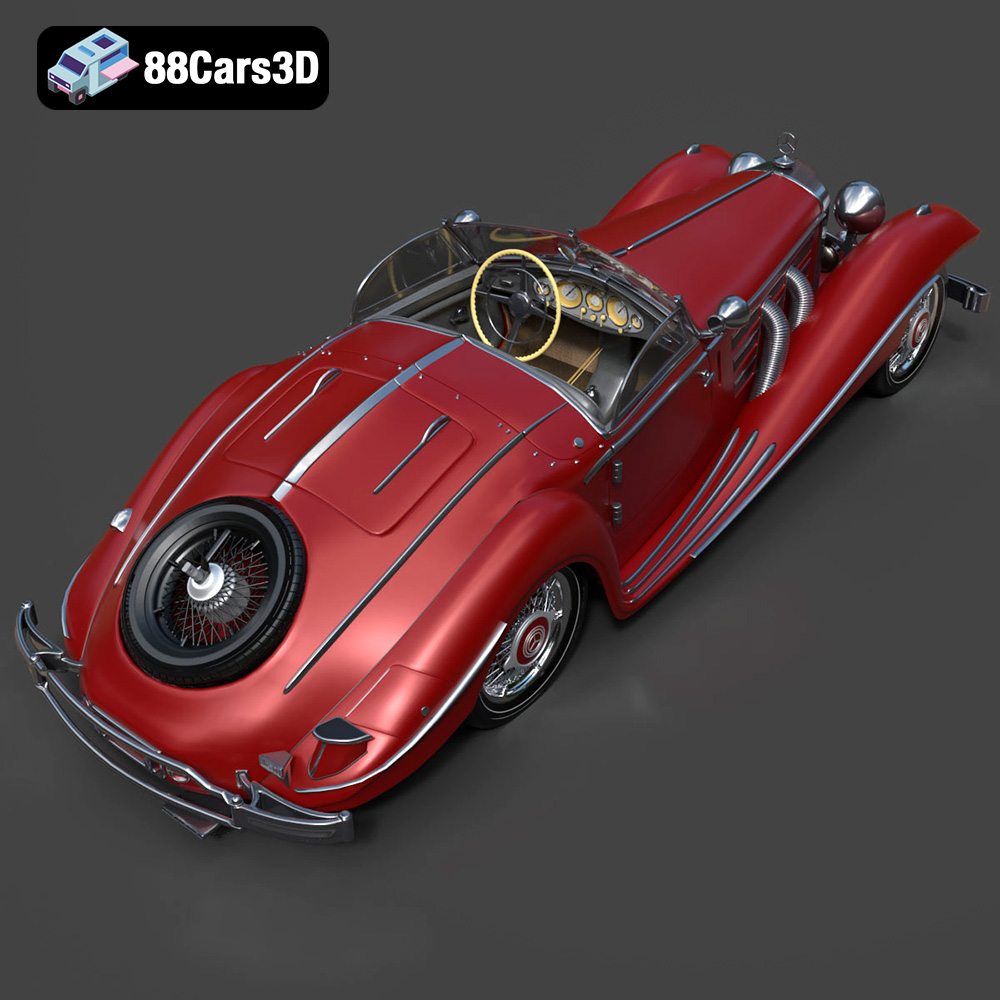
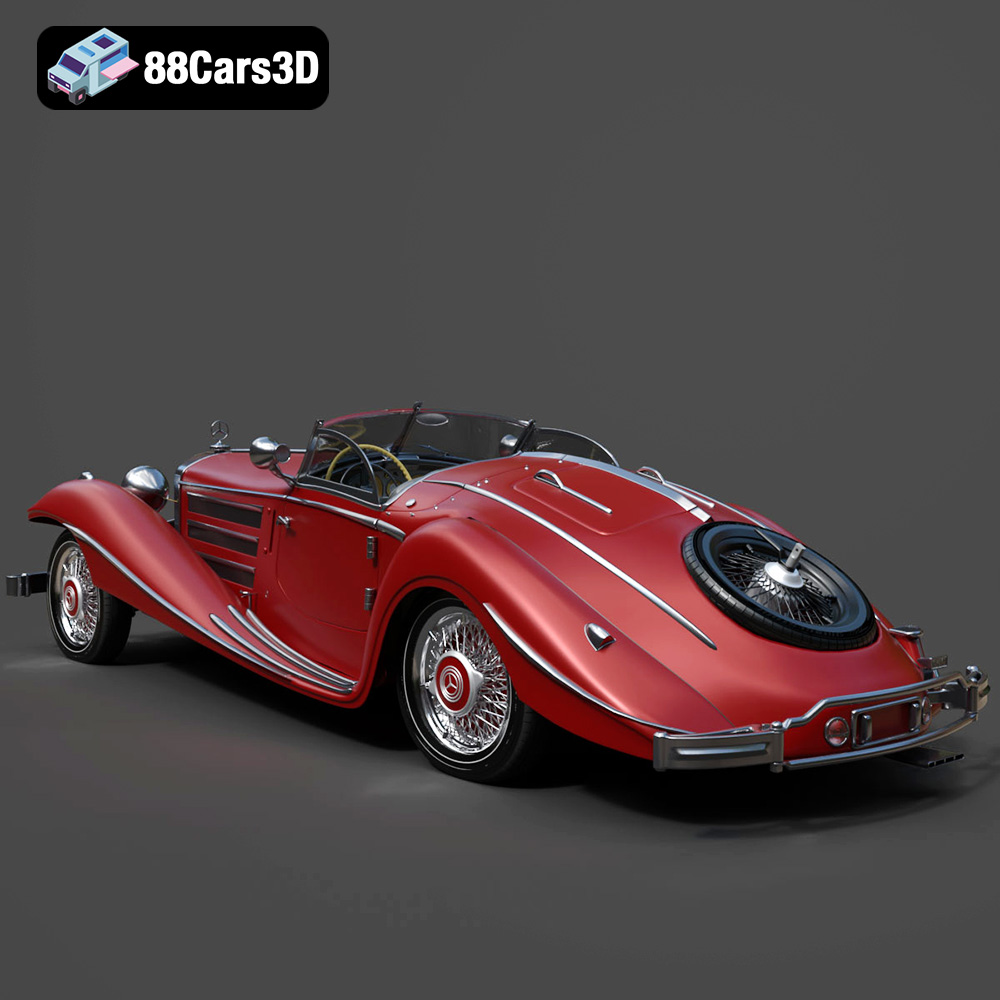
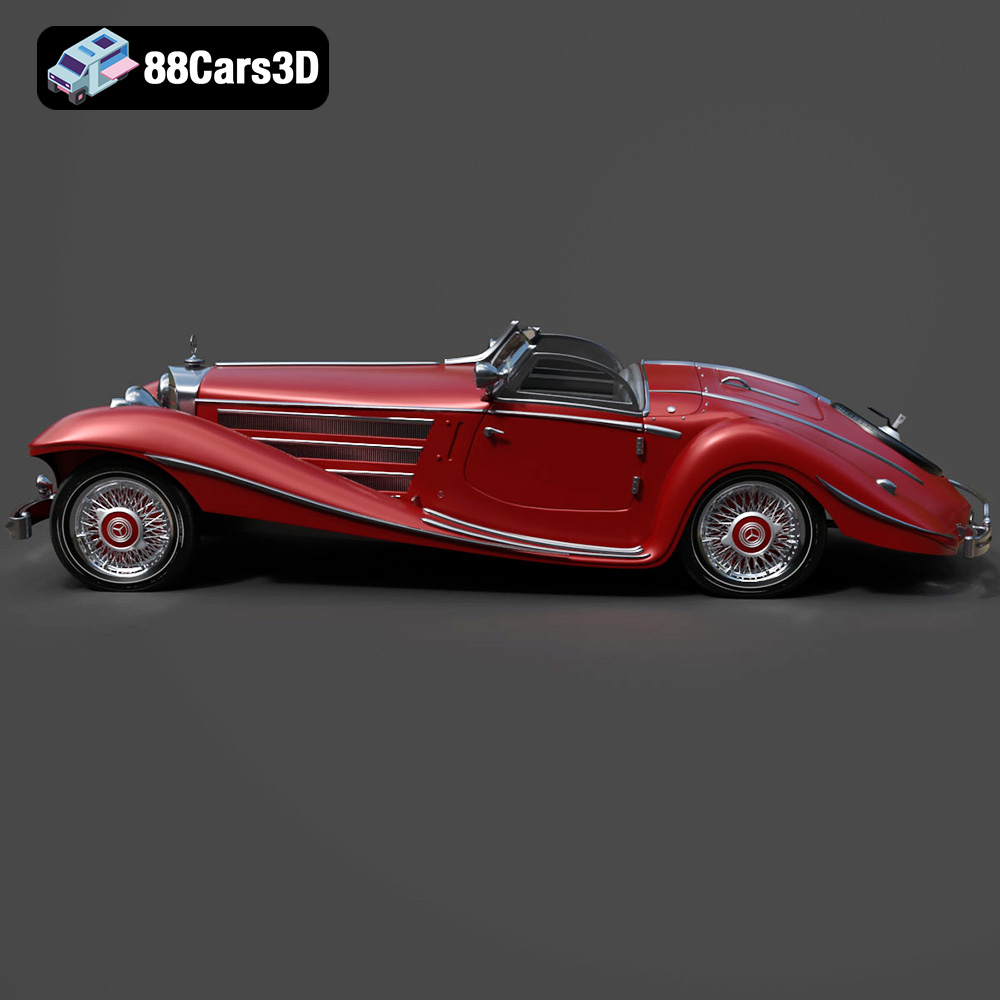
The exterior of the 540K Roadster is defined by its sweeping lines, majestic fenders, and an unmistakable presence. The 3D model meticulously recreates these elements. The geometry of the frame and the elegant proportions are accurately scaled to real-world dimensions, ensuring that every curve and panel reflects the original design. Key highlights include the detailed straight-eight engine block with its supercharger elements, visible through the elongated hood – a crucial power statement of the era. The signature external chrome exhaust pipes, cascading from the hood, are not merely aesthetic; their intricate modeling speaks to the attention paid to even the smallest, yet most iconic, details. Authentic period-correct lighting, including the large classic headlamps and delicate taillights, further enhances its realism. The intricate wire-spoke wheels fitted with classic whitewall tires are a complex geometric challenge, flawlessly executed to add a layer of vintage charm and authenticity. Furthermore, a detailed classic suspension chassis setup and separate components for wheels, suspension, and steering ensure that the model is not only visually accurate but also prepared for complex animation scenarios.
The interior of a classic car is where much of its character truly resides, and the 540K Roadster’s cockpit is no exception. The 3D model delivers a luxurious and historically accurate interior, starting with the tufted leather bench seating, carefully modeled to convey texture and comfort. The large-diameter, vintage-style steering wheel, with its precise spoke detailing, is a focal point, inviting interaction. An accurate analog instrument cluster, featuring classic dial faces, captures the functional elegance of the period. Every detail, from the authentic floor-mounted shifter and handbrake to the mechanical pedal assembly, is rendered with painstaking accuracy. For game developers, the optimization of this geometry for first-person POV is a significant advantage, allowing for immersive driving experiences where the player can truly feel connected to this historical machine.
In modern game development and real-time visualization, balancing visual fidelity with performance is an ongoing challenge. High-quality 3D car models must be not only stunning to look at but also efficient enough to render smoothly within interactive environments. The Mercedes-Benz 540K Roadster 3D model from 88cars3d.com is engineered with this balance in mind, making it a premier asset for real-time applications.
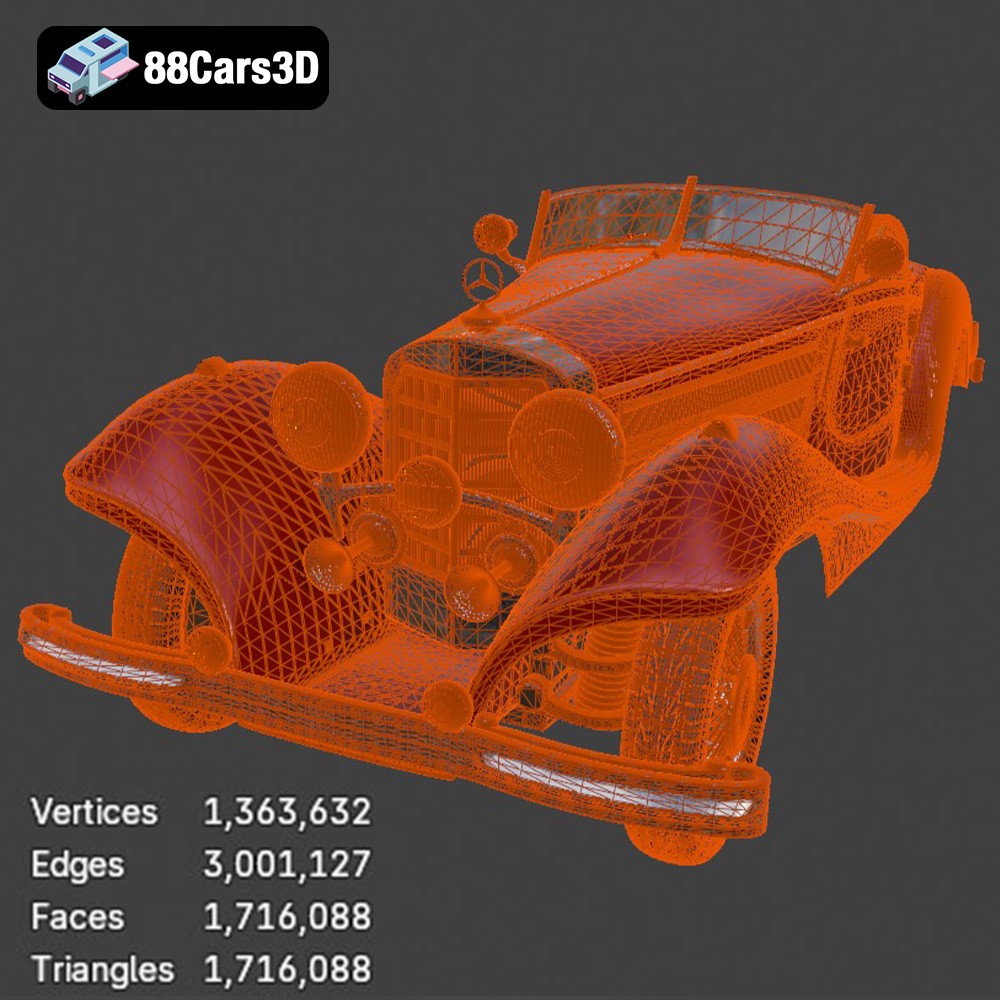
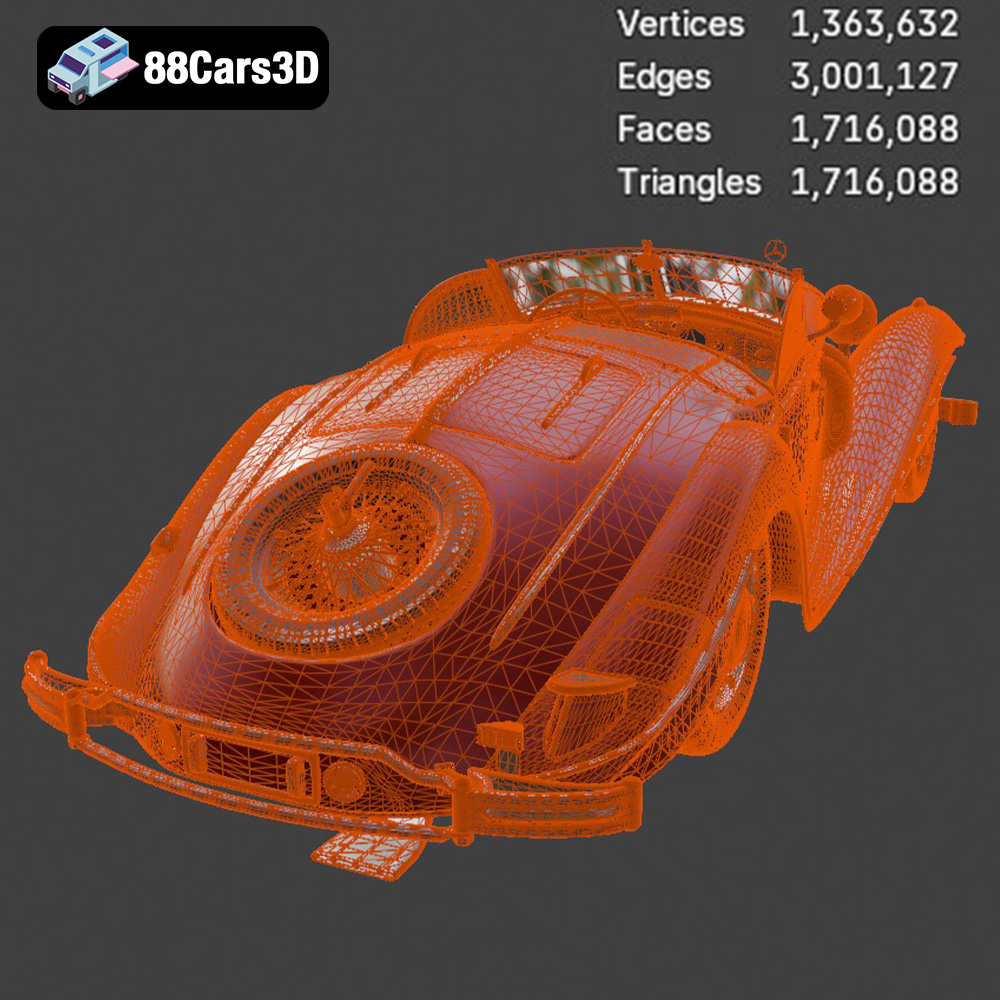
The model boasts 1,716,088 triangles, a polycount that strikes an excellent balance. While considered high-poly for historical game development standards, it’s structured to leverage modern real-time engine capabilities. This polygon count allows for incredible visual realism without crippling performance, especially when utilizing virtualized geometry systems prevalent in engines like Unreal Engine 5. The topology is clean and organized, crucial for smooth deformation during animation and efficient UV mapping. Proper pivot setup for steering, wheel rotation, and suspension travel is a key technical advantage, simplifying the integration of the model into vehicle physics systems in games and simulations.
For game developers, integrating a detailed vehicle like the 540K Roadster into engines like Unreal Engine or Unity is a streamlined process thanks to its optimized structure and included `.fbx` and `.unreal` formats. Developers can import the model, apply PBR (Physically Based Rendering) materials, and set up the vehicle’s blueprint for physics and interaction. Its real-world scale accuracy ensures correct interaction with environmental assets and realistic driving dynamics. The optimized geometry means less processing overhead, allowing for higher frame rates and a more immersive user experience, whether it’s for a historic racing game or an open-world adventure.
The utility of a high-quality 3D car model extends far beyond traditional rendering. Augmented Reality (AR), Virtual Reality (VR), and 3D printing represent increasingly vital applications, each requiring specific technical considerations that the Mercedes-Benz 540K Roadster model is designed to meet.
For AR/VR applications, performance and file size are paramount. The model’s optimized polycount makes it suitable for immersive virtual showrooms, configurators, and mobile AR experiences where real-time rendering on less powerful hardware is crucial. The inclusion of the `.glb` format is a significant advantage here. `.glb` files are highly optimized for web and mobile platforms, enabling rapid deployment in AR apps or browser-based VR environments. Imagine placing a virtual 540K Roadster in your driveway via your smartphone, or stepping into a virtual garage to examine every angle of its luxurious interior in a VR headset – the detailed exterior and cockpit features translate perfectly into these interactive dimensions, offering an unparalleled sense of presence and realism.
The ability to transform a digital model into a physical object via 3D printing adds another layer of versatility. The Mercedes-Benz 540K Roadster model is convertible to the `.stl` format, making it ideal for display-scale hobbyists and model makers. The product description provides specific 3D print settings: recommended scales (1:12, 1:18, 1:24), layer heights (0.04–0.12 mm for resin printing), wall thickness, infill, and crucial advice on supports and print orientation. Printing fine details like exhaust pipes, mirrors, and wire-spoke wheels requires careful support structures. Post-processing, including sanding, priming, and applying authentic factory colors with metallic finishes, allows enthusiasts to create a tangible, museum-quality replica, bringing the digital masterpiece into the physical world.
Professional 3D artists and developers rely on a diverse set of tools to bring their visions to life. A truly versatile 3D asset, such as the Mercedes-Benz 540K Roadster, must integrate seamlessly into various workflows. Let’s explore how this model fits into the pipelines of industry-leading software like 3ds Max, Blender, and Unreal Engine.
For artists leveraging 3ds Max, the included `.max` file format provides immediate access to the complete, editable project. This is ideal for high-end automotive rendering, complex animation sequences, and architectural visualization. In 3ds Max, designers can easily adjust material properties, set up sophisticated lighting rigs using V-Ray or Corona Renderer, and create stunning photorealistic images and cinematics. The model’s separate wheels, suspension, and steering components are crucial for rigging and animating vehicle dynamics, allowing for realistic turns, bumps, and body roll. Its proper pivot setup ensures that these animations are intuitive and accurate, making it a powerful asset for virtual advertising campaigns or film production requiring period-accurate vehicles.
Blender users benefit immensely from the native `.blend` file. This means the model arrives with all its intricate geometry, potentially PBR materials, and any pre-configured setups intact within the Blender environment. This allows for immediate rendering using Cycles or Eevee, further customization of textures and shaders, or integration into a larger Blender-based scene. The open-source nature of Blender, combined with the professional quality of assets from 88cars3d.com, empowers independent creators and small studios to produce world-class visuals without prohibitive software costs. Artists can leverage Blender’s comprehensive toolset for sculpting, texturing, rigging, and animation, ensuring the Mercedes-Benz 540K Roadster can be adapted to any creative vision.
Unreal Engine’s capabilities for real-time rendering, cinematic sequencing (via Sequencer), and interactive experiences make it a powerhouse for automotive visualization, configurators, and games. The included `.fbx` and `.unreal` formats simplify the import process for the Mercedes-Benz 540K Roadster. Once in Unreal, developers can assign advanced PBR materials, set up dynamic lighting with Lumen or Ray Tracing, and implement realistic vehicle physics using Chaos or the Vehicle template. The optimized polycount and real-world scale of the model are critical here, ensuring smooth performance even in complex environments. This allows for the creation of stunning virtual car showrooms, interactive driving simulations, or even cinematic cutscenes rendered in real-time, pushing the boundaries of visual fidelity and interactive engagement.
In today’s fast-paced digital production environment, time is money, and quality is paramount. The decision to purchase a pre-made, high-quality 3D asset versus creating one from scratch can significantly impact project timelines, budgets, and overall output. This is particularly true for complex subjects like a vintage luxury car.
Developing a historically accurate and technically robust 3D model like the Mercedes-Benz 540K Roadster from the ground up can take hundreds, if not thousands, of hours for a skilled 3D artist. This includes research, modeling, UV unwrapping, texturing, optimization, and preparing for various formats. By acquiring a professionally made asset from platforms like 88cars3d.com, studios and individual artists can drastically reduce development time and reallocate resources to other critical aspects of their projects, such as scene composition, animation, or interactive logic. This efficiency translates directly into cost savings and faster project delivery.
Not all 3D models are created equal. A high-quality asset is characterized by accurate topology, real-world scale, clean UVs, robust material setups, and optimization for diverse applications. The Mercedes-Benz 540K Roadster model exemplifies this, with its detailed exterior, intricate interior, and readiness for game engines and 3D printing. Such models are built by experienced professionals who understand the nuances of production pipelines, ensuring that the asset performs reliably and looks exceptional across different software and rendering scenarios. This consistency and high standard of quality elevate the final output of any project it’s used in, from cinematic renders to immersive game environments.
While ready-to-use, professional 3D models also offer extensive customization options. The Mercedes-Benz 540K Roadster model allows for changing body/tank colors to match factory specifications or custom finishes, modifying tire textures, adjusting material finishes (matte, gloss, metallic), and adapting lighting for different environments. This flexibility ensures that the purchased asset can be tailored to specific brand guidelines, artistic visions, or project requirements, providing a solid foundation that can be easily adapted without compromising its core quality.
The digital realm offers unprecedented opportunities to explore, preserve, and reimagine the world’s most iconic creations. In the automotive sphere, this translates into bringing legendary vehicles like the Mercedes-Benz 540K Roadster 1936 back to vibrant, interactive life. As we’ve explored, the journey from physical masterpiece to a versatile 3D asset is a complex interplay of artistic detail and technical prowess.
From understanding the specific advantages of file formats like `.blend`, `.fbx`, and `.glb`, to appreciating the meticulous craftsmanship behind accurate exterior and interior details, every aspect contributes to a model’s utility and impact. Whether destined for high-end automotive rendering in 3ds Max, integration into a cutting-edge game in Unreal Engine, or scaled down for a detailed 3D print, the Mercedes-Benz 540K Roadster 3D model represents the pinnacle of digital asset creation.
For professionals and enthusiasts alike, investing in such high-quality 3D car models from trusted sources like 88cars3d.com is not just acquiring a file; it’s gaining access to a meticulously crafted foundation that saves invaluable time, ensures professional-grade results, and unlocks boundless creative possibilities. It’s the key to digitally preserving history, driving innovation, and captivating audiences with the timeless beauty of automotive legends.
Experience the epitome of pre-war automotive luxury with our Mercedes-Benz 540K Roadster 3D model. A true masterpiece of 1930s engineering and design, the 540K is renowned for its sweeping, majestic fenders, elongated hood housing the legendary supercharged straight-eight engine, and iconic external exhaust pipes. Every signature styling cue, from the prominent chrome radiator grille to the elegant wire-spoke wheels, has been meticulously recreated to capture the majestic presence of this historical classic. Boasting a highly detailed topology with 1,716,088 triangles, this 3D model delivers unparalleled visual fidelity while remaining structured for modern workflows. Designed to leverage the power of advanced real-time engines utilizing virtualized geometry, it serves as a top-tier asset for high-end game development, cinematic animation, immersive AR/VR experiences, and photorealistic automotive visualization. Perfect for historic racing games, virtual classic car museums, cinematic period-piece animations, and high-end luxury configurators.
$81.00
.blend
.fbx
.glb
.max
.obj
.ply
.rendering
.stl
.unreal
540k-roadster
car-3d-model
classic-car
game asset
game-ready
high poly
luxury car
mercedes-benz
optimized
vintage-car
VR/AR