Get 40% OFF All Premium 3D & STL Models!

In the fast-evolving world of digital visualization, automotive design, and interactive media, the demand for high-fidelity 3D car models has never been greater. From photorealistic marketing campaigns and immersive virtual showrooms to adrenaline-pumping racing games and cutting-edge AR/VR experiences, the quality of a 3D asset dictates the success of a project. A truly exceptional model isn’t just about accurate geometry; it’s about a meticulously crafted digital twin that embodies the soul of its real-world counterpart, ready to perform across diverse technical environments.
This quest for digital perfection leads many professionals to dedicated platforms offering curated selections of assets. One such standout is the Volkswagen Polo GTI 2022 3D Model available on 88cars3d.com. This asset isn’t merely a static representation; it’s a dynamic, game-ready, and render-optimized masterpiece designed to seamlessly integrate into the most demanding professional pipelines. Capturing the essence of Volkswagen’s legendary hot hatch – its aggressive styling, distinctive GTI accents, and sporty stance – this 3D model provides an unparalleled foundation for creatives aiming for the highest standards of realism and performance.
In this comprehensive guide, we’ll delve deep into the technical intricacies and professional applications of such premium 3D car models. We’ll explore the critical role of various file formats, dissect the detailed features that make this particular Polo GTI model an industry benchmark, and outline practical workflows for integrating it into leading software like Blender, 3ds Max, and Unreal Engine. Whether you’re an automotive designer, a game developer, an architect visualizing urban scenes, or a marketer creating engaging campaigns, understanding the nuances of high-quality 3D assets is paramount to elevating your projects from good to extraordinary.
The versatility of a premium 3D model is largely defined by the range and quality of its included file formats. Each format serves a specific purpose, offering unique advantages for different stages of a production pipeline, from initial modeling and animation to real-time rendering and physical fabrication. For a complex asset like the Volkswagen Polo GTI 2022 3D Model, having a comprehensive suite of formats is crucial for cross-software compatibility and optimized performance across diverse applications.
The .blend file format is Blender’s native project file. When you acquire a model in this format, you’re gaining access to the complete Blender scene, often including pre-configured materials, lighting, cameras, and potentially even animation setups. This provides unparalleled editability, allowing artists to delve into the original mesh, modify topology, adjust PBR (Physically Based Rendering) material networks, or even re-rig the vehicle. For those working within the Blender ecosystem, a .blend file offers the most flexibility for customization, optimization, and seamless integration into existing Blender projects. It’s ideal for designers who need full control over every aspect of the asset, from minor tweaks to extensive modifications for bespoke rendering or game development needs.
FBX (Filmbox) is arguably the most widely used proprietary file format for 3D data exchange, developed by Autodesk. It’s an ideal choice for transferring 3D models between different software applications, particularly for game development. An .fbx file can encapsulate not just geometry, but also materials, textures, animations, rigging, and even scene hierarchy. This makes it perfect for pipelines involving Unreal Engine, Unity, 3ds Max, Maya, Cinema 4D, and Blender. Its robust nature ensures that complex assets like a detailed car model retain their integrity – pivots, skeletal data, and UVs – when moving between diverse environments. The .fbx format is often the go-to for designers preparing game assets due to its efficient handling of complex data structures and support for real-time engine features.
The .obj (Wavefront OBJ) format is one of the oldest and most universally supported 3D file formats. It primarily stores geometric data – vertices, normals, UV coordinates, and faces – and can reference external material (.mtl) files for basic color and texture information. While it doesn’t support advanced features like animation or rigging, its simplicity and widespread compatibility make it an excellent choice for cross-software static mesh exchange. When precise geometry is the priority, and the target software might have compatibility issues with more complex formats, .obj provides a reliable fallback. It’s particularly useful for archival purposes or when porting models to niche software that might only support a limited range of formats.
GLB (GL Transmission Format Binary) is the binary version of glTF (Graphics Language Transmission Format). It’s an increasingly popular, open-standard format designed for efficient transmission and loading of 3D scenes and models by applications, especially those running on web browsers, AR (Augmented Reality), and VR (Virtual Reality) platforms. A single .glb file can contain geometry, materials, textures, animations, and skeletal data, all in a self-contained, optimized package. Its compact size and ease of integration make it perfect for showcasing 3D car models in interactive web experiences, mobile AR apps, or lightweight VR environments where rapid loading and rendering performance are paramount. The Volkswagen Polo GTI 2022 3D Model in .glb format is tailor-made for these emerging interactive visualization needs.
STL (Stereolithography) is the de facto standard file format for 3D printing. It represents a 3D model as a series of connected triangles, describing only the surface geometry of the object without any color, texture, or material information. When preparing a 3D car model for physical fabrication, converting it to .stl is the essential step. The quality of the printed output directly depends on the mesh density and watertightness of the .stl file. For hobbyists or professionals looking to create a tangible representation of the Volkswagen Polo GTI, the .stl format provided ensures compatibility with slicing software and 3D printers, allowing for accurate physical models.
PLY (Polygon File Format) is a file format for storing 3D data, particularly useful for scanned data, point clouds, and mesh data where precise vertex properties are crucial. It can store information such as color, transparency, surface normals, and range data, making it more comprehensive than .obj for certain applications. While less common for general 3D model exchange compared to .fbx or .obj, it sees use in scientific, CAD, and reverse engineering contexts where detailed mesh analysis or high-precision data representation is required. For the most demanding technical analyses of the Polo GTI’s geometry, the .ply format offers a robust solution.
While not strictly a generic file format in the same vein as .fbx, the inclusion of “.unreal” often implies a pre-optimized asset pack specifically tailored for Unreal Engine. This could mean a .uasset file or a curated folder structure ready for direct import, complete with Material Instances, LODs (Levels of Detail), collision meshes, and proper scaling. These assets are meticulously prepared to leverage Unreal Engine’s features, ensuring optimal performance and visual fidelity straight out of the box. For game developers or real-time visualization artists working with Unreal Engine, an “.unreal” asset dramatically streamlines the integration process, saving countless hours on setup and optimization.
Similar to .blend for Blender, the .max file is the native project format for Autodesk 3ds Max. This format offers full access to the original scene, including complex modifiers, render setups (V-Ray, Corona, Arnold), animation data, and detailed material definitions. For professionals relying on 3ds Max for architectural visualization, high-end automotive rendering, or cinematic animation, the .max file provides the highest level of control and fidelity. It allows for fine-tuning lighting, camera angles, and material properties to achieve breathtaking photorealistic renders of the Volkswagen Polo GTI 2022, leveraging all the robust tools and plugins available within 3ds Max.
The journey from a physical vehicle to a high-fidelity 3D model is one of meticulous observation, precise craftsmanship, and advanced technical execution. The Volkswagen Polo GTI 2022 3D Model exemplifies this process, offering an asset that goes beyond mere aesthetics to deliver a robust and versatile digital tool. Its detailed product description highlights several key technical specifications that underscore its value for professional applications.
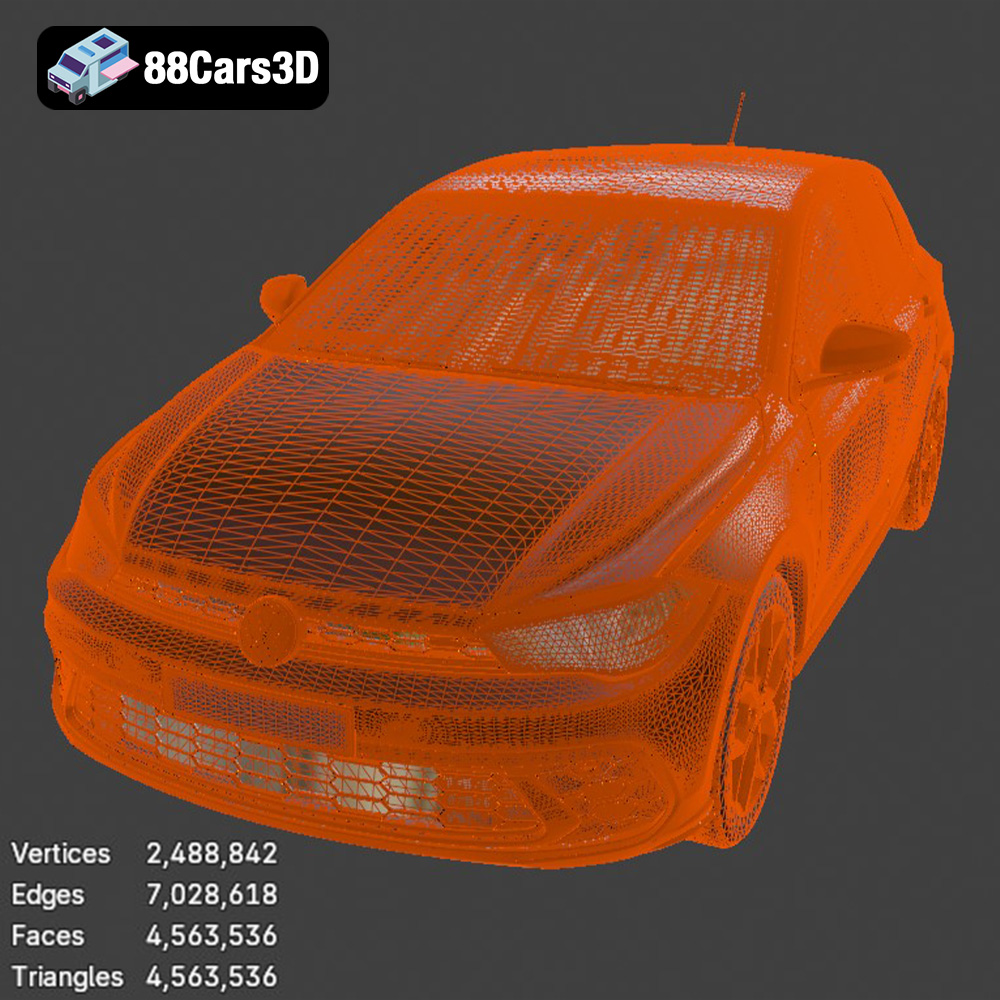
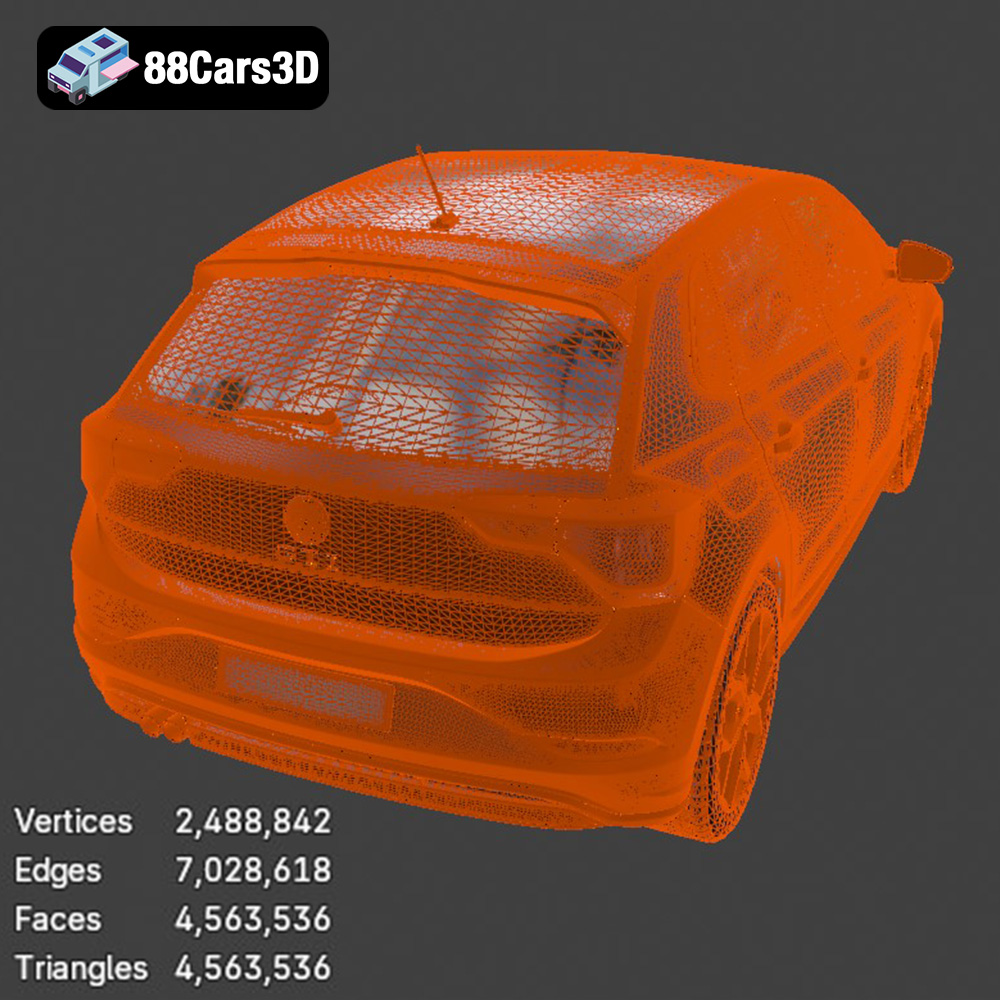
At the heart of this model’s appeal is its impressive 4,563,536 triangle count. This high poly count is not a mere number; it translates directly into exceptional surface detailing and smooth curves, accurately capturing the distinctive body lines, subtle panel gaps, and aerodynamic profile of the Polo GTI. Crucially, this high polygon density is paired with precise topology – the underlying structure of the mesh. Good topology ensures spectacular reflections and shading, preventing artifacts and providing a clean base for subdivision surfaces or displacement mapping, if needed. For automotive rendering, where reflections play a pivotal role in conveying realism, this level of detail is indispensable, making the model ideal for cinematic shots or virtual showrooms.
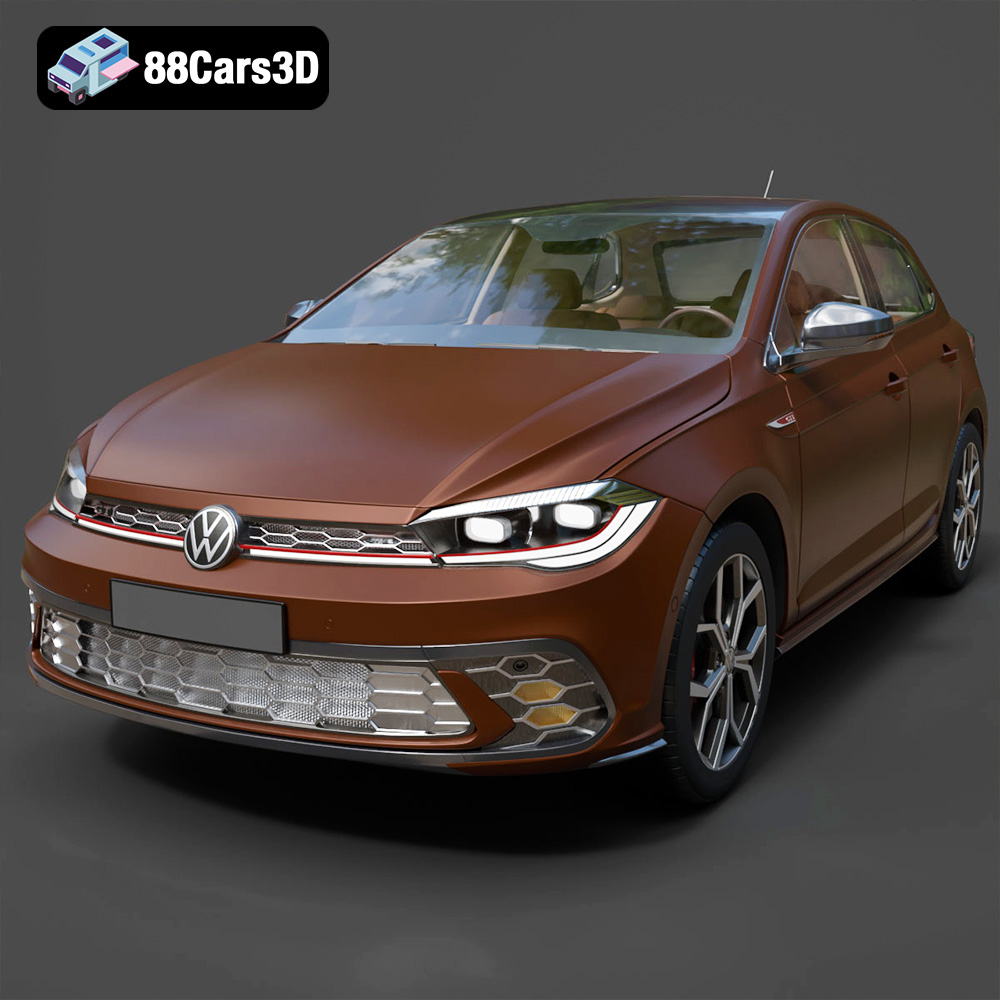
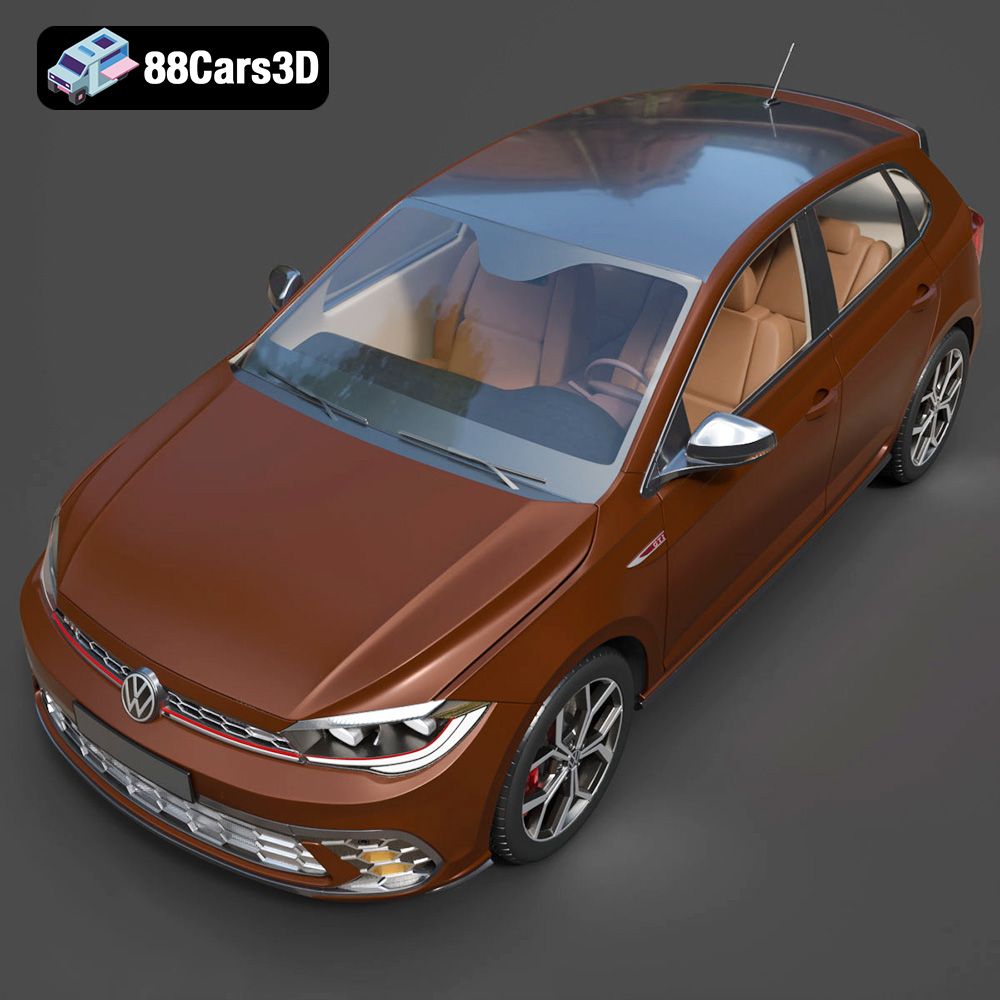
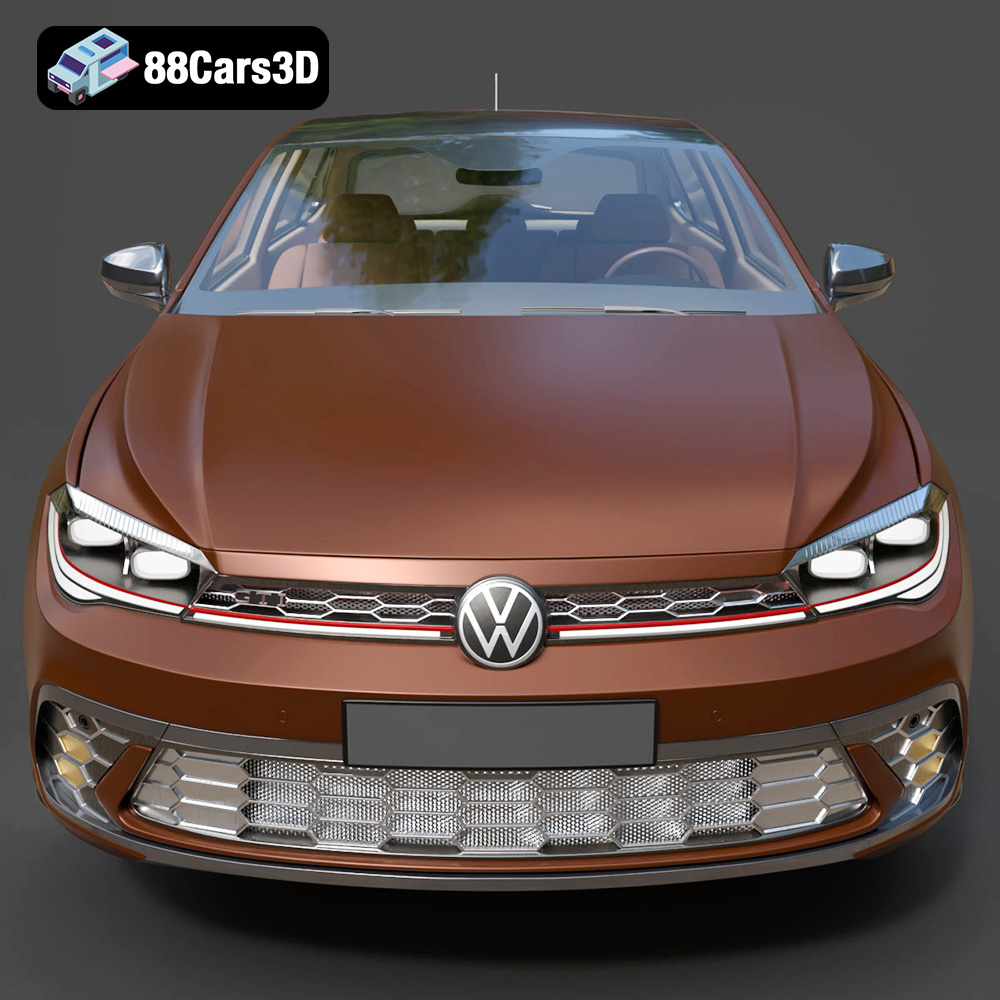
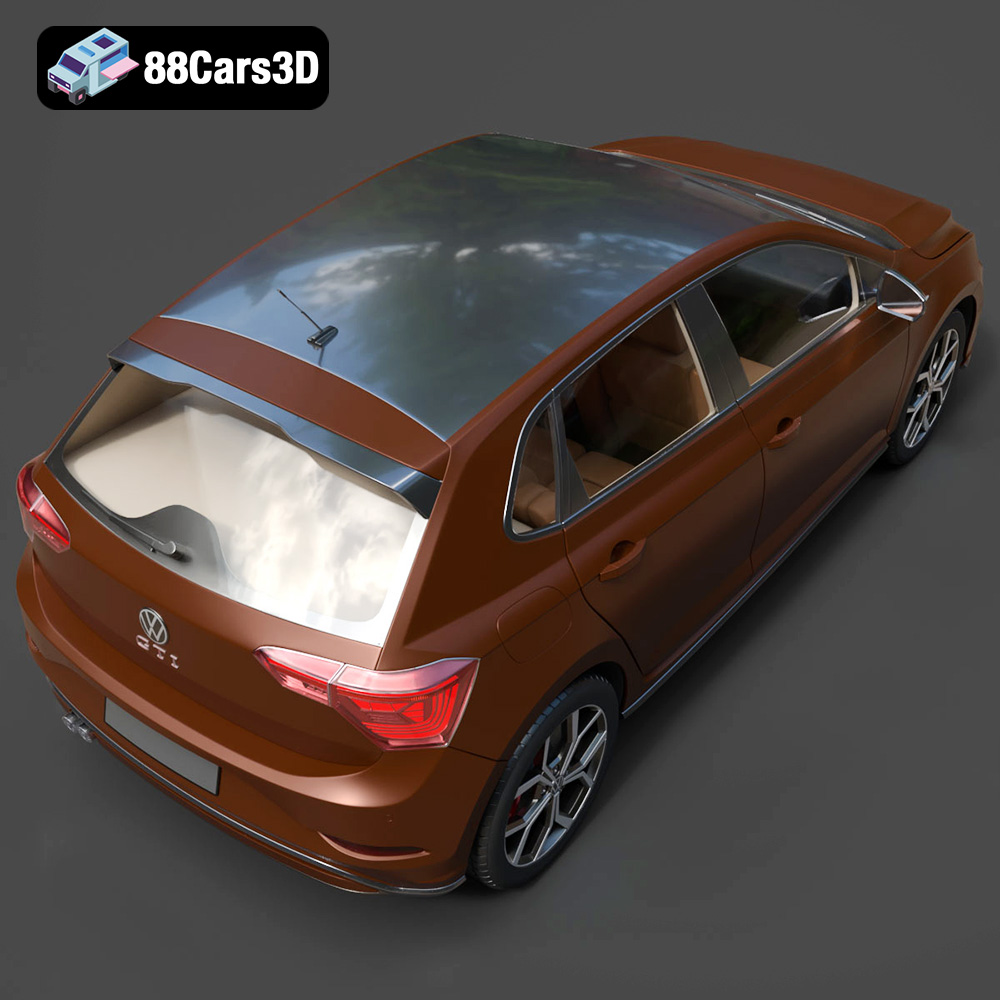
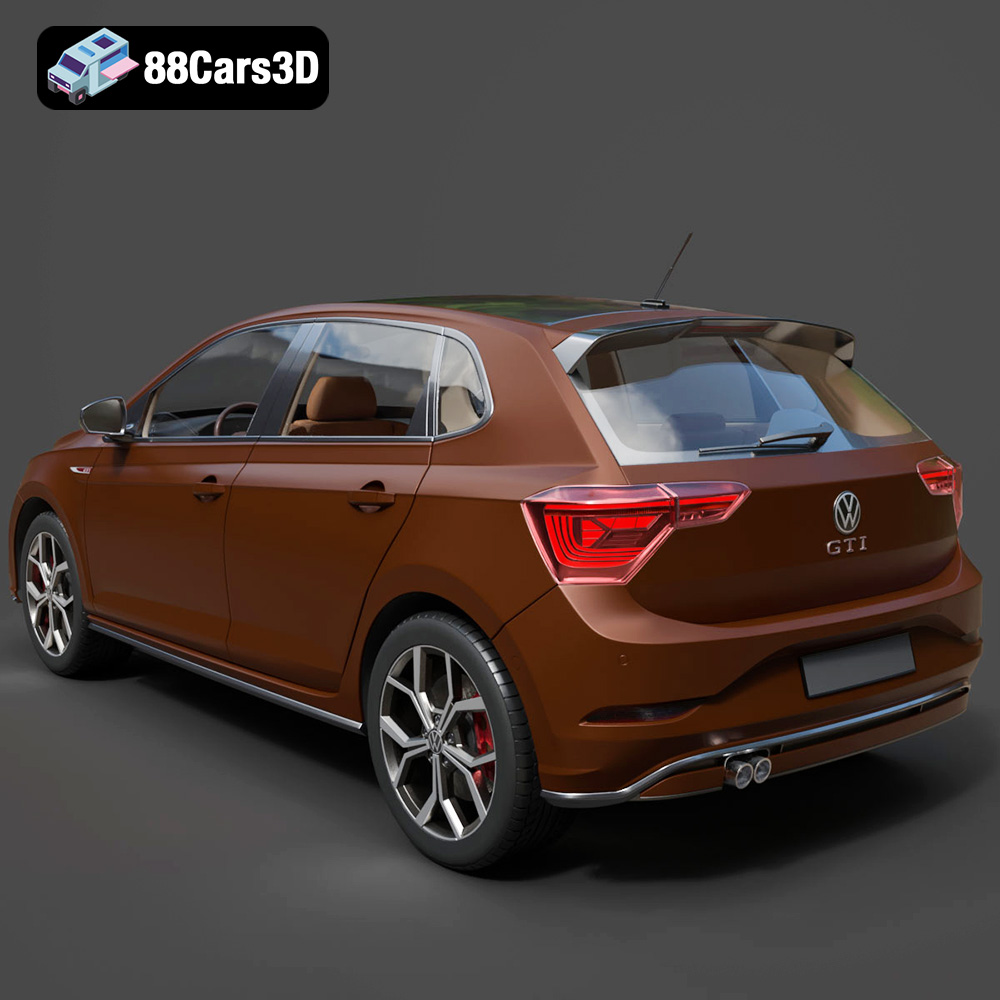
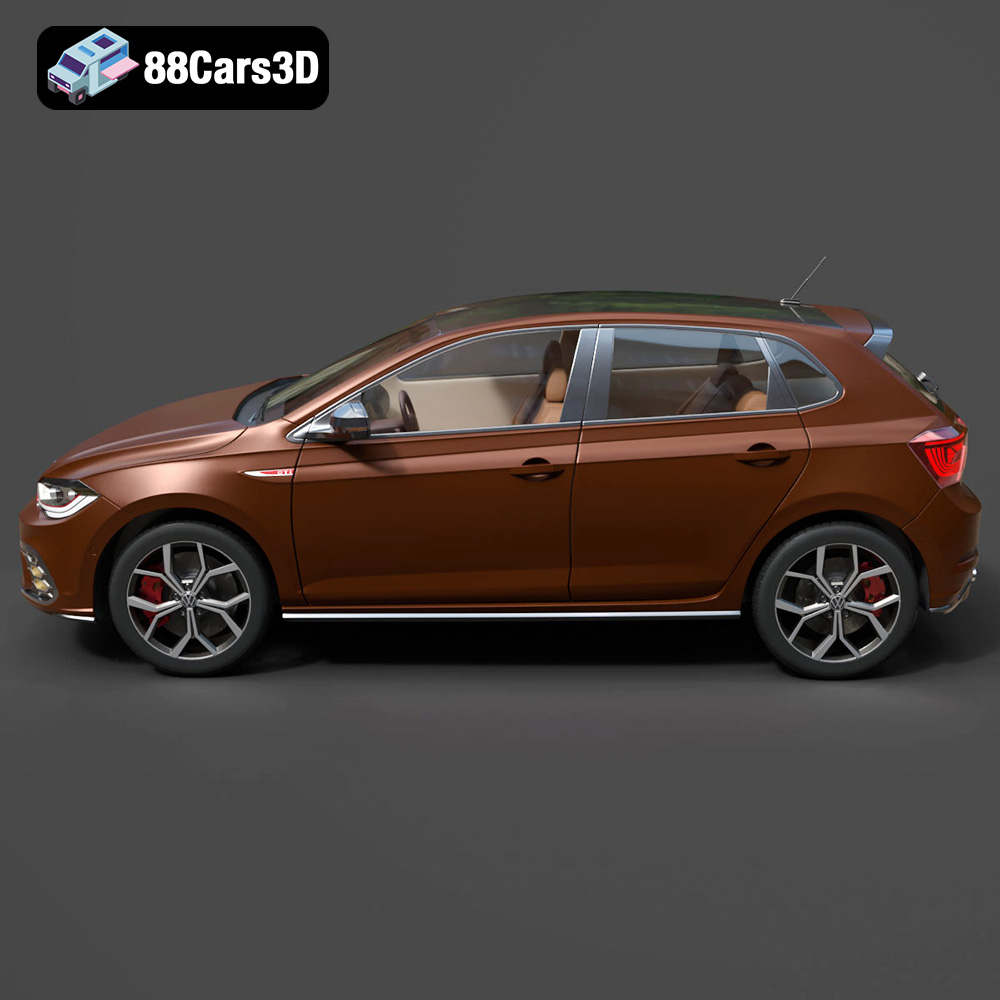
Every aspect of the real-world Volkswagen Polo GTI 2022 has been carefully translated into its digital counterpart. The exterior boasts accurate frame geometry, the aggressive honeycomb grille, and the iconic red GTI accents. Particular attention has been paid to the IQ.LIGHT LED matrix headlights and 3D LED taillight assemblies, which are often complex to replicate accurately but are vital for realism. The distinctive two-tone GTI alloy wheels, complete with high-performance tire treads, are accurately modeled, as is the sport suspension stance and visible brake calipers. For dynamic scenes or game integration, the separate wheels, suspension, and steering components are invaluable, enabling realistic animation and vehicle physics. Inside, the cockpit features iconic GTI sport seats with detailed stitching, a leather-wrapped multi-function sports steering wheel, and a Digital Cockpit Pro instrument cluster, all optimized for first-person POV in gaming or detailed interior renders.
Despite its high fidelity, the Volkswagen Polo GTI 2022 3D Model is also labeled “Game-Ready & Optimized.” The 4.5 million triangle count, while substantial, is balanced for real-time engines like Unreal and Unity, implying that the asset has been structured with performance in mind. This often means clean UV mapping, efficient material setups, and the potential for easy generation of LODs (Levels of Detail) to manage performance across different distances. Furthermore, the model adheres to real-world scale accuracy, based on the actual vehicle chassis. This is critical for seamless integration into existing scenes or game environments where correct proportions are essential. The proper pivot setup for steering, wheel rotation, and suspension travel is another technical advantage, allowing animators and game developers to implement realistic vehicle dynamics without extensive rework.
The true power of a high-quality 3D car model like the Volkswagen Polo GTI 2022 lies in its utility across diverse professional workflows. From creating stunning marketing visuals to developing immersive interactive experiences, the right asset can significantly reduce production time and elevate output quality. Let’s explore how such models are utilized in leading industry applications.
For automotive studios, advertising agencies, and visualization artists, photorealistic rendering is paramount. The Volkswagen Polo GTI 2022 3D Model, with its precise topology and high detail, serves as an exceptional foundation for creating breathtaking images and animations. In software like Autodesk 3ds Max or Blender, artists can import the model (using .max or .blend for native scenes, or .fbx/.obj for general compatibility) and apply sophisticated PBR materials to accurately simulate paint finishes, metallic accents, glass, and tire rubber. Leveraging powerful renderers like V-Ray, Corona, Cycles, or Octane, designers can craft intricate studio lighting setups, place the vehicle in realistic environments, and animate complex camera movements. Case studies show agencies using such models to generate promotional content long before physical cars are available, allowing for early marketing pushes and design reviews with unparalleled realism. The meticulous detailing of features like the IQ.LIGHT LED matrix headlights ensures that even close-up shots hold up to scrutiny, vital for high-resolution print ads or cinema-quality commercials.
The “game-ready” designation of the Volkswagen Polo GTI 2022 3D Model makes it a prime candidate for integration into popular game engines like Unreal Engine and Unity. Its optimized polycount of 4.5 million triangles strikes a balance between visual realism and real-time performance. Game developers would typically import the model via .fbx or directly use the provided “.unreal” assets for maximum compatibility. In the engine, the model can be configured with a physically based material system, collision meshes, and multiple Levels of Detail (LODs). For instance, an artist might generate three LODs: the full 4.5 million poly model for close-up views, a medium-detail version for mid-range, and a low-poly version for distant visibility, ensuring smooth frame rates without sacrificing visual fidelity where it matters. The properly set up pivots for wheels, steering, and suspension enable developers to attach vehicle physics systems, creating a highly realistic driving experience in racing simulators or open-world games. The detailed interior is also optimized for first-person perspectives, adding to player immersion.
Augmented Reality (AR) and Virtual Reality (VR) are transforming how consumers interact with products, particularly in the automotive sector. The Volkswagen Polo GTI 2022 3D Model is perfectly suited for these immersive experiences. The .glb file format, optimized for web and mobile AR/VR, allows for efficient streaming and rendering on various devices. Imagine a potential customer using their smartphone to project a full-scale Polo GTI into their driveway via AR, able to walk around it, change colors, and even peek inside – all powered by a high-quality model. In VR, the model can form the centerpiece of a virtual showroom, allowing users to explore the car’s features, sit in the detailed cockpit, and even “drive” it in a simulated environment. The model’s real-world scale and detailed interior are crucial for these applications, providing an authentic sense of presence and interactivity that generic or low-quality models simply cannot achieve.
Beyond traditional rendering and game development, professional 3D car models extend their utility into specialized fields and offer significant customization potential, ensuring longevity and adaptability for evolving project needs.
The inclusion of an .stl file format for the Volkswagen Polo GTI 2022 3D Model opens up avenues for physical creation through 3D printing. This is particularly valuable for hobbyists, scale model enthusiasts, or even automotive designers who wish to create tangible prototypes or display models. The detailed specifications provided, such as recommended scales (1:12, 1:18, 1:24), layer height (0.04–0.12 mm), wall thickness (1.2–2.0 mm), and infill (20–30%), offer critical guidance for achieving high-quality prints. Resin printing is specifically recommended for its ability to capture the fine details of parts like the exhaust system, mirrors, and intricate body lines. Proper support structures and print orientation are highlighted as essential for structural integrity, especially for the frame and separately printed wheels. Post-processing, involving sanding, priming, and applying authentic factory colors with metallic finishes, allows for a truly professional physical reproduction. This capability transforms a digital asset into a tangible collectible or a valuable design review tool.
A premium 3D model is not a static object but a foundation for creative expression. The Volkswagen Polo GTI 2022 3D Model offers extensive customization options, giving artists the freedom to adapt the asset to specific project requirements. The ability to change body and tank colors, from authentic factory hues to bespoke custom finishes, is fundamental for marketing campaigns or personalized configurators. Modifying tire textures to switch between street variants and more aggressive off-road or track-focused options adds versatility for different virtual environments. Furthermore, adjusting material finishes – matte, gloss, or metallic – allows for fine-tuning the vehicle’s aesthetic to match specific lighting conditions or brand identities. Designers can also adapt lighting setups to simulate various environments, whether it’s a bright outdoor scene, a moody urban night, or a pristine studio backdrop. These customization possibilities ensure the model remains relevant and adaptable across a multitude of projects, maximizing its long-term value.
While the Volkswagen Polo GTI 2022 3D Model already boasts significant optimization (4.5M triangles balanced for real-time), understanding ongoing optimization strategies is key for any professional workflow. This includes techniques like baking high-poly details to low-poly models (if a lower poly version is ever needed), creating efficient texture atlases to reduce draw calls, and implementing advanced material instancing in game engines to minimize memory usage. For very large scenes or VR applications targeting mobile devices, further poly reduction via decimation tools, coupled with normal map baking, can maintain visual quality while drastically improving performance. The careful separation of components like wheels, suspension, and steering in the provided model facilitates targeted optimization without affecting other parts. This strategic approach to asset management ensures that the model performs optimally across a wide spectrum of hardware and platforms, future-proofing its utility for years to come.
The digital automotive landscape demands assets that are not only visually stunning but also technically robust and versatile. The Volkswagen Polo GTI 2022 3D Model exemplifies this requirement, offering a meticulously crafted digital representation of a beloved hot hatch. From its impressive 4.5 million triangle count and precise topology to its game-ready optimization and comprehensive file format support, this model is engineered for professional success.
We’ve explored how a diverse range of file formats – from the native editability of .blend and .max to the universal exchange of .fbx and .obj, the AR/VR readiness of .glb, and the 3D print capability of .stl – provides unparalleled flexibility for any project. We’ve also delved into the specific applications across automotive rendering, game development, AR/VR experiences, and even physical 3D printing, demonstrating how this asset can elevate visual fidelity and streamline production workflows. The inclusion of detailed exterior and interior features, coupled with smart optimization and extensive customization options, ensures that this model from 88cars3d.com is not just a purchase, but an investment in creative potential.
Whether you’re an industry veteran seeking the perfect asset for a demanding client project or an aspiring artist building your portfolio, the quality of your 3D car models will define your output. By choosing premium assets like the Volkswagen Polo GTI 2022 from 88cars3d.com, you are choosing a foundation that empowers you to create immersive, realistic, and truly exceptional digital experiences. Embrace the power of precision and unlock new dimensions of creativity in your next project.
The Volkswagen Polo GTI 2022 represents the pinnacle of compact performance, carrying the legendary GTI heritage into a modern, agile hatchback format. Known for its perfect blend of everyday practicality and thrilling driving dynamics, this hot hatch features signature red GTI accents, an aggressive honeycomb grille, dynamic matrix LED headlights, and a refined aerodynamic profile. Powered in reality by a punchy 2.0L turbocharged engine and paired with a sporty dual exhaust system, its muscular stance is perfectly captured in this high-fidelity 3D model.
This premium 3D model boasts an impressive 4,563,536 triangle count, delivering uncompromising visual fidelity and exceptional surface detailing. With precise topology, the asset ensures spectacular reflections and shading. Designed for seamless integration, it provides an exceptional foundation for advanced real-time rendering engines, high-end visualization projects, game development, AR/VR applications, and photorealistic virtual showrooms.
$90.00
.2022
.blend
.fbx
.glb
.hatchback
.hot-hatch
.max
.obj
.ply
.rendering
.sports car
.stl
.unreal
.volkswagen
car-3d-model
game asset
game-ready
low-poly
optimized
polo-gti
VR/AR