Get 20% OFF All Premium 3D & STL Models!

Few vehicles command the same reverence and adrenaline as the Ford Mustang Shelby GT500KR, the “King of the Road.” A moniker synonymous with raw power, unparalleled performance, and an undeniable aesthetic presence, the 2015 iteration of this legendary muscle car represents a zenith in American automotive engineering. From its aggressive stance and signature racing stripes to the menacing growl of its supercharged V8, the GT500KR is more than just a car; it’s an icon. Translating such a visceral experience into the digital realm requires immense precision, technical expertise, and a deep understanding of 3D modeling principles.
For professionals in automotive rendering, game development, AR/VR experiences, and high-end visualization, access to accurately detailed 3D car models is paramount. This isn’t merely about creating a visually appealing asset; it’s about capturing the essence, the engineering, and the spirit of the vehicle with absolute fidelity. This is precisely where a meticulously crafted asset like the Ford Mustang Shelby GT500KR 2015 3D Model from 88cars3d.com truly shines. It’s an indispensable tool for anyone looking to integrate this automotive legend into their digital projects, ensuring both visual realism and technical versatility across a spectrum of applications.
The journey of a 3D model, from creation to its final application, often involves a complex ecosystem of software and platforms. The choice of file format is not trivial; it dictates compatibility, feature retention, and ultimately, the efficiency and success of your project. For a high-fidelity asset like the Ford Mustang Shelby GT500KR 2015 3D Model, understanding the nuances of each included format is crucial for leveraging its full potential.
The .blend format is Blender’s native file type. It encapsulates an entire Blender scene, including all 3D geometry, materials, textures, lighting setups, animation data, cameras, and even custom scripts. This makes it an ideal choice for users who operate primarily within Blender, offering a fully editable and self-contained project file. For professionals working on automotive renders or animations within Blender, the .blend file provides maximum flexibility for scene adjustments, material tweaks, or even modifying the model’s topology. Its human-readable structure in some aspects also aids in recovery if a file gets corrupted, though it’s primarily a binary format. When downloaded from 88cars3d.com, the .blend file ensures that all intricate details and material definitions for the GT500KR are preserved as intended by the artist.
Developed by Autodesk, .fbx (Filmbox) is arguably the most widely adopted format for exchanging 3D data between different software applications and game engines. It supports geometry, materials (with some limitations), textures, animation, and rigging. The .fbx format is particularly well-suited for real-time pipelines like Unreal Engine and Unity, making it a critical component for game asset development. Its robust support for skeletal animations and blend shapes is invaluable for complex character and vehicle rigging. While it may not always preserve every single detail of a native format like .blend or .max, it provides excellent compatibility and is often the go-to for importing complex models like the Shelby GT500KR into various professional environments while maintaining crucial elements like pivot points and hierarchical structures.
The .obj (Wavefront OBJ) format is a venerable and highly universal text-based format primarily used for exchanging pure geometric data. It supports vertices, faces, normals, and UV coordinates, along with material references (.mtl file). While it doesn’t typically store animation or rigging information, its simplicity and widespread support make it an excellent choice for basic mesh exchange across virtually all 3D software. For the Ford Mustang Shelby GT500KR 3D Model, the .obj version is perfect when you need a clean mesh to start with, especially if you plan to re-materialize or re-texture the model extensively in a new software environment, ensuring broad compatibility without unnecessary complexities.
.glb (GLB Transmission Format) is the binary version of glTF (GL Transmission Format), a relatively newer, royalty-free specification for the efficient transmission and loading of 3D scenes and models by applications. It’s designed to be a “JPEG for 3D,” focusing on being compact and fast to load. .glb files embed all assets (models, textures, animations) into a single binary file, making them highly optimized for AR/VR experiences, web-based 3D viewers, and mobile applications. Its PBR (Physically Based Rendering) material support ensures consistent visual quality across different platforms. For displaying the GT500KR model in an interactive web configurator or an augmented reality app, the .glb format offers superior performance and ease of deployment.
The .stl (stereolithography) format is the de facto standard for 3D printing. It describes only the surface geometry of a 3D object using a collection of triangular facets. It contains no color, texture, or material information, focusing solely on printability. While the Ford Mustang Shelby GT500KR model is a high-fidelity asset, its .stl conversion allows hobbyists and professionals to bring the digital model into the physical world. For 3D printing, careful consideration of scale, layer height, and support structures, as detailed in the product description, is essential to capture the aggressive details of the GT500KR’s frame, engine block, and exhaust system accurately.
The .ply (Polygon File Format or Stanford Triangle Format) is primarily used for storing 3D data from 3D scanners, CAD applications, or for scientific analysis. It supports properties such as color, transparency, surface normals, and texture coordinates, in addition to the standard polygonal mesh data. While less common for general-purpose 3D asset exchange than .fbx or .obj, .ply can be beneficial when extremely precise geometric data and supplementary attributes are required, perhaps for reverse engineering or integrating the GT500KR into engineering simulations.
The .unreal format, or rather, the optimized asset structure for Unreal Engine, typically implies a carefully prepared set of files (often .fbx or .gltf imports) that have been specifically configured and imported into an Unreal Engine project. This means materials are set up using Unreal’s PBR workflow, textures are correctly linked, LODs (Levels of Detail) might be generated, and collision meshes are defined. An “.unreal” offering from 88cars3d.com signifies that the Ford Mustang Shelby GT500KR 2015 3D Model is pre-optimized and configured to drop directly into an Unreal project, minimizing setup time for game developers and real-time visualization artists. This dramatically accelerates development cycles for racing games, simulators, or virtual showrooms.
Similar to .blend for Blender, .max is the native file format for Autodesk 3ds Max. It stores a complete 3ds Max scene, including geometry, modifiers, materials, textures, lights, cameras, and animation data. For professionals entrenched in the 3ds Max ecosystem, the .max file provides the fullest control and fidelity. It allows for advanced rendering with V-Ray or Corona, complex animation setups, and detailed modeling adjustments. Having the GT500KR model in .max format ensures that all the intricate details, from the engine block to the Recaro bucket seats, are fully editable and render-ready within this powerful software.
Each of these formats serves a distinct purpose, and the availability of the Ford Mustang Shelby GT500KR 2015 3D Model in such a comprehensive array ensures that regardless of your software preference or project requirements, you have the right tool for the job. This versatility is a hallmark of high-quality 3D car models found on platforms like 88cars3d.com.
The quest for photorealism in automotive rendering is a continuous pursuit, pushing the boundaries of what’s achievable in digital art. For a car with the visual impact of the Shelby GT500KR, every curve, every reflection, and every material surface must be impeccably rendered. This Ford Mustang Shelby GT500KR 2015 3D Model provides an exceptional foundation for achieving breathtaking visualizations.
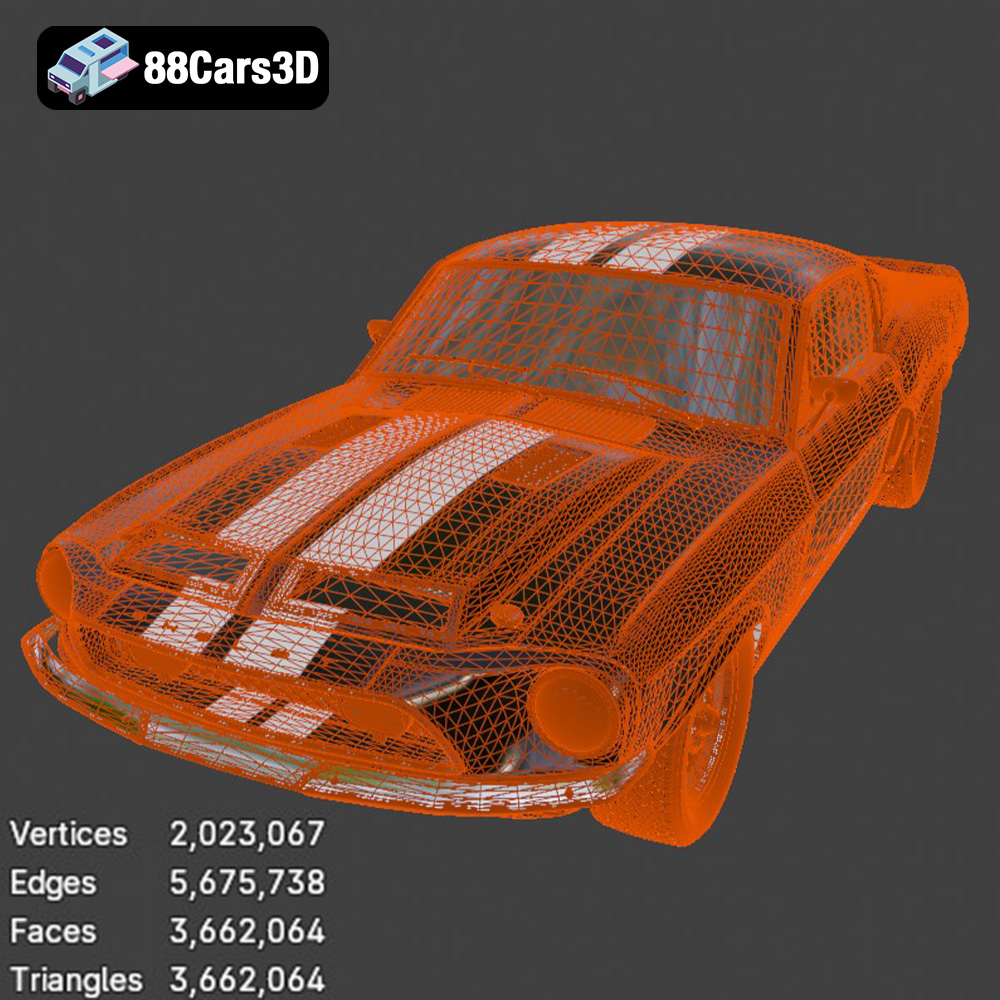
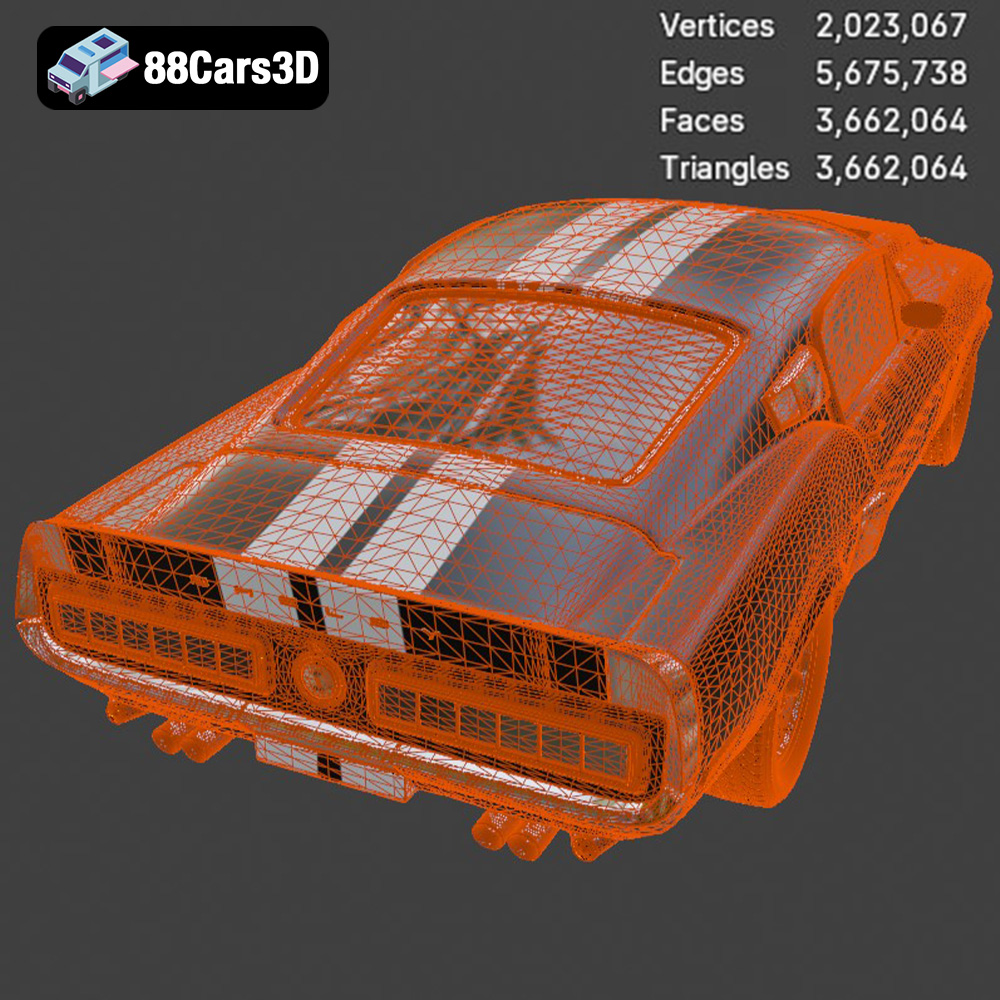
At the core of any realistic render lies robust geometry. With 3,662,064 triangles, this model strikes an impressive balance, offering immense detail without becoming unmanageably heavy for modern rendering engines. This allows for intricate details like the carbon fiber hood vents, the aggressive quad-tip exhaust, and the iconic three-bar sequential taillights to be accurately represented, even in extreme close-ups. The detailed topology also ensures smooth reflections and accurate light bounces, which are crucial for showcasing a car’s metallic paintwork and glass surfaces. Beyond geometry, realistic materials—from the gloss of the paint to the texture of the low-profile track tires and the stitching on the Recaro seats—are essential. The included materials, especially in formats like .blend and .max, are typically set up for Physically Based Rendering (PBR) workflows, ensuring consistency and realism under diverse lighting conditions. This makes the model an outstanding asset for high-end commercial renderings and cinematic sequences.
A great model needs a great stage. Achieving hyper-realistic automotive visualizations often involves meticulous lighting and environment design. Artists frequently use HDRI (High Dynamic Range Image) maps for realistic global illumination, combining them with strategically placed area lights to emphasize specific features of the vehicle. For the GT500KR, a studio lighting setup can highlight its muscular lines and aggressive stance, while a dynamic outdoor environment, perhaps a sunset on a winding road, can evoke its “King of the Road” spirit. The model’s real-world scale accuracy is critical here, ensuring that light interacts with the digital car in the same way it would with a physical one. Its proper pivot setup for separate components further allows for dynamic scene creation, perhaps with a slight steering angle or a subtle suspension compression, adding to the visual storytelling and realism.
The demands of game development and real-time environments are distinct, prioritizing performance and optimization alongside visual quality. The Ford Mustang Shelby GT500KR 2015 3D Model is engineered with these requirements in mind, making it a powerful asset for virtual worlds.
While 3,662,064 triangles might sound substantial, for a hero vehicle in modern AAA game titles, this polycount is often a sweet spot. It provides enough detail for close-up views and high-fidelity racing without crippling frame rates. The description explicitly states “Game-Ready & Optimized,” indicating that the model has been structured for efficient rendering in engines like Unreal and Unity. This optimization typically includes clean topology, efficient UV mapping for texture application, and a well-organized hierarchy of components. The inclusion of an “.unreal” file format further confirms its readiness for direct integration into Epic Games’ powerful engine, saving developers countless hours of setup and optimization work.
The ability to integrate a 3D car model seamlessly into a game engine is crucial. The Ford Mustang Shelby GT500KR model’s separate wheels, suspension, and steering components are not just for visual accuracy; they are essential for creating realistic vehicle physics and animation in racing games or simulators. Proper pivot setup allows developers to easily apply rotation to wheels, simulate suspension travel, and control steering with precision. The .fbx format, as discussed, is the lingua franca for this kind of data exchange, ensuring that all these functional aspects are preserved upon import. For first-person POV experiences, the optimized interior geometry with racing-inspired Recaro seats and detailed instrument cluster ensures an immersive driving experience, critical for simulators and open-world titles where players spend significant time inside the cockpit.
The utility of a high-quality 3D car model extends far beyond traditional screen-based rendering and gaming. Emerging technologies like Augmented Reality (AR) and Virtual Reality (VR), alongside the tangible output of 3D printing, offer exciting new avenues for interaction with digital assets.
AR/VR platforms are transforming how we interact with products, especially in the automotive sector. Imagine potential buyers exploring the Ford Mustang Shelby GT500KR 2015 in a virtual showroom, walking around it, inspecting the detailed engine block, or even sitting virtually inside the cockpit. The model’s optimized geometry and real-world scale make it perfect for such immersive applications. The .glb format, with its focus on efficient loading and PBR material support, is explicitly designed for these scenarios, allowing for smooth, high-quality rendering on mobile AR devices or VR headsets. This opens doors for virtual configurators, training simulations, and engaging marketing campaigns that offer a level of immersion impossible with static images.
For enthusiasts and professional model makers, the ability to 3D print a highly detailed vehicle is incredibly appealing. The Ford Mustang Shelby GT500KR 2015 3D Model includes an .stl format, specifically catering to this demand. While the digital model boasts millions of triangles, the .stl conversion simplifies the geometry for printing, focusing on the external shell. The product description provides crucial 3D print settings: recommended scales (1:12, 1:18, 1:24), layer height (0.04–0.12 mm for fine details), wall thickness, infill, and the necessity of supports for complex parts like exhaust and mirrors. Resin printing is recommended for capturing the finer details of the GT500KR, ensuring that the physical model accurately reflects its digital counterpart. This allows for creating display-scale replicas that capture the aggressive aesthetics and iconic features of the King of the Road.
Professional 3D artists and developers understand that the devil is in the details. The technical specifications of a 3D model are what elevate it from a generic asset to a truly professional-grade tool. This Ford Mustang Shelby GT500KR 2015 3D Model exemplifies this commitment to precision.
The product description highlights several key technical advantages. Beyond the impressive triangle count, the “accurate Ford Mustang Shelby GT500KR 2015 frame geometry and proportions” are foundational for any serious project. This isn’t a stylized interpretation; it’s a faithful digital twin. The “detailed engine block based on the 5.8L supercharged V8 layout” demonstrates a commitment to internal accuracy, essential for cutaway renders or virtual engine bay showcases. Furthermore, the “track-tuned suspension details featuring visible brake calipers and slotted rotors” underscore the model’s suitability for high-detail close-ups, where even the minutiae matter. This level of granular detail allows for dynamic renders that simulate real-world physics and engineering, a critical aspect for automotive engineering visualization and marketing materials.
A professional asset must integrate smoothly into existing pipelines. The model’s “real-world scale accuracy” ensures it fits perfectly into scenes without manual scaling adjustments, a common headache with less professional assets. The “proper pivot setup for steering, wheel rotation, and suspension travel” is a time-saver for animators and game developers, allowing for immediate rigging and animation without tedious re-parenting or pivot corrections. The model’s compatibility with major 3D software platforms and real-time rendering engines, reinforced by the comprehensive list of included file formats from 88cars3d.com, signifies its readiness for diverse professional workflows. Whether you’re a single artist working in Blender or part of a larger studio utilizing 3ds Max and Unreal Engine, this asset is designed to plug and play, accelerating your project timelines.
While the Ford Mustang Shelby GT500KR 2015 is iconic in its standard form, digital assets offer boundless opportunities for customization, allowing artists to tailor the model to specific project needs and creative visions.
The ability to customize a 3D car model is invaluable. The GT500KR model offers clear customization options: changing body colors (e.g., factory colors, custom finishes), modifying tire textures (off-road vs. street variants), and adjusting material finishes (matte, gloss, metallic). This flexibility allows the asset to serve multiple purposes within a single project. Imagine transitioning the model from a pristine showroom display to a grittier street racer by simply adjusting material properties and tire textures. Artists can experiment with different lighting setups to create vastly different moods – from the harsh, contrasting light of a sunset street race to the soft, even illumination of a high-end automotive advertisement. This adaptability ensures the model remains relevant and versatile across a wide array of creative briefs, making it a sustainable investment for professional studios.
Customization isn’t just about aesthetics; it’s about storytelling. A Ford Mustang Shelby GT500KR 2015, customized with specific racing liveries, battle scars, or unique paint schemes, can become a central character in a narrative. For brand campaigns, being able to showcase the vehicle in various lifestyle scenarios, with different lighting and stylistic choices, helps in resonating with diverse audiences. This 3D car model serves as a robust canvas, enabling artists to push creative boundaries and deliver unique, impactful visuals that elevate their projects. The technical foundation of the model ensures that these customizations are not superficial but are deeply integrated, maintaining visual quality and performance.
The Ford Mustang Shelby GT500KR 2015 stands as a testament to American automotive prowess, a legend forged in performance and iconic design. Bringing such a significant vehicle into the digital realm requires more than just artistic skill; it demands a deep technical understanding and access to meticulously crafted 3D car models. The Ford Mustang Shelby GT500KR 2015 3D Model featured on 88cars3d.com rises to this challenge, offering an unparalleled level of detail, optimization, and versatility.
From its intricate topology and game-ready optimization to its comprehensive suite of file formats – .blend, .fbx, .obj, .glb, .stl, .ply, .unreal, and .max – this model is designed to integrate seamlessly into virtually any professional workflow. Whether your goal is to produce breathtaking automotive rendering, develop cutting-edge game assets, create immersive AR/VR experiences, or even produce a tangible 3D print, this asset provides the foundation for success. It empowers artists and developers to capture the very essence of the “King of the Road,” ensuring that every digital rendition is as impactful and authentic as the real thing. For anyone seeking to elevate their digital projects with a truly exceptional muscle car, this 3D model is an indispensable investment, offering both technical excellence and boundless creative potential.
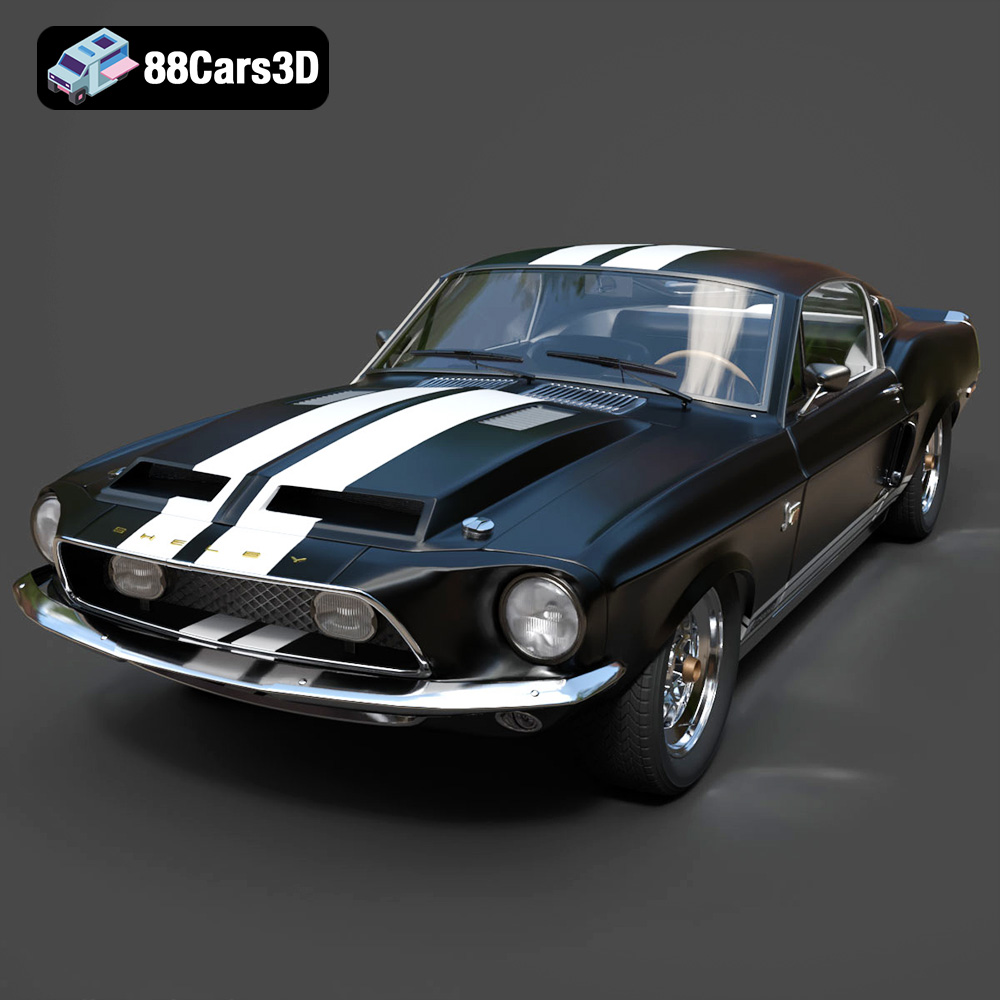
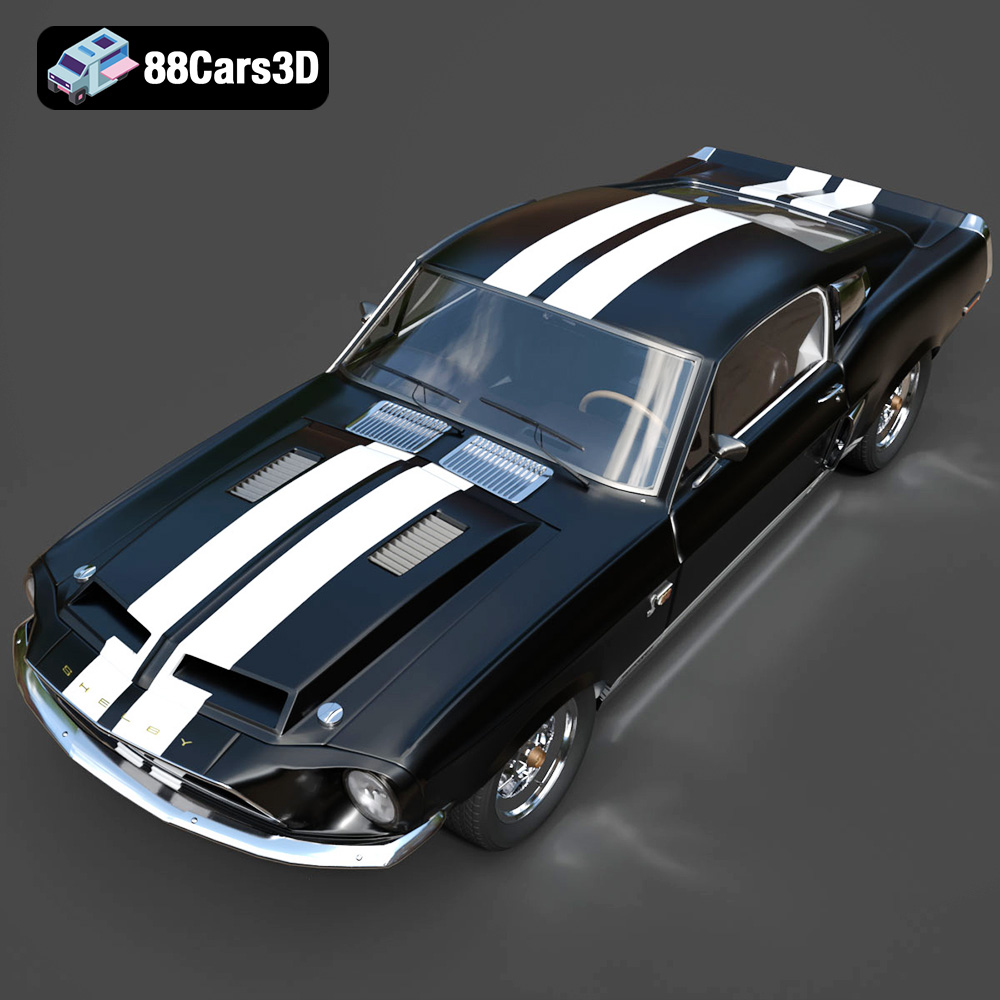
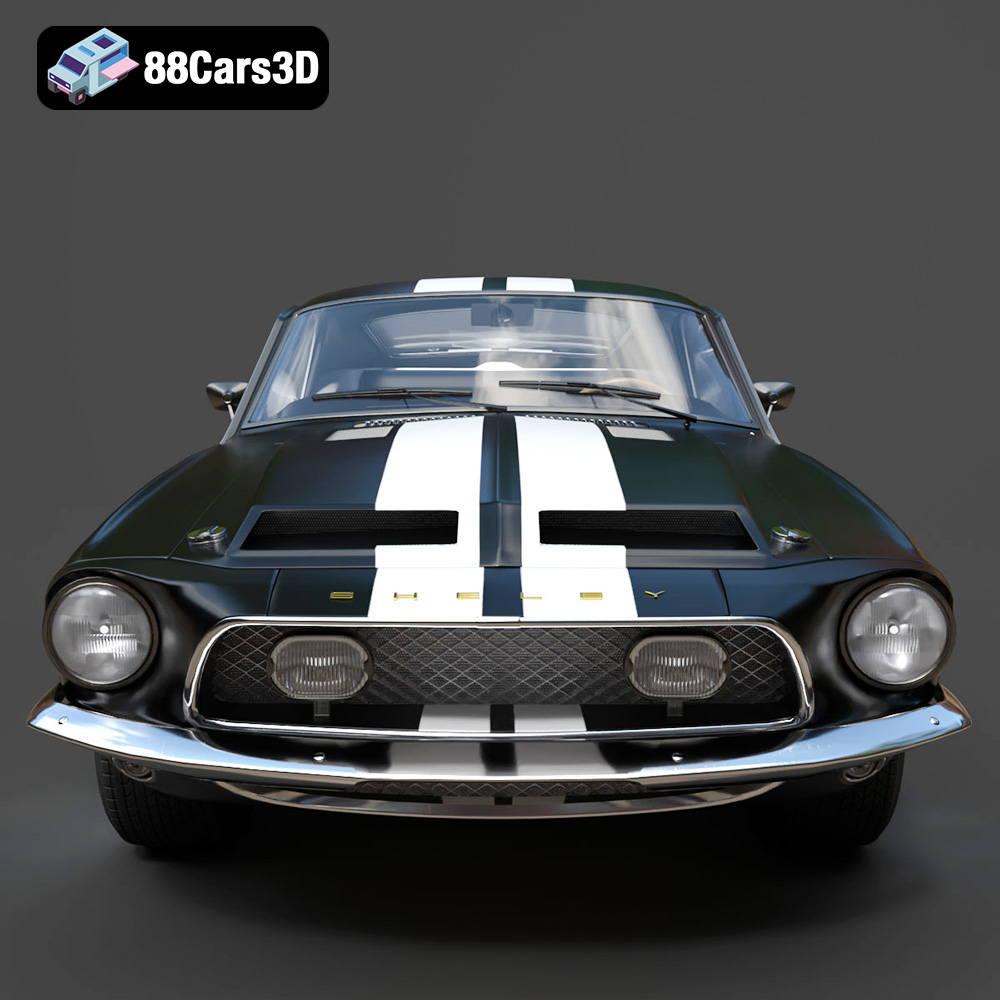
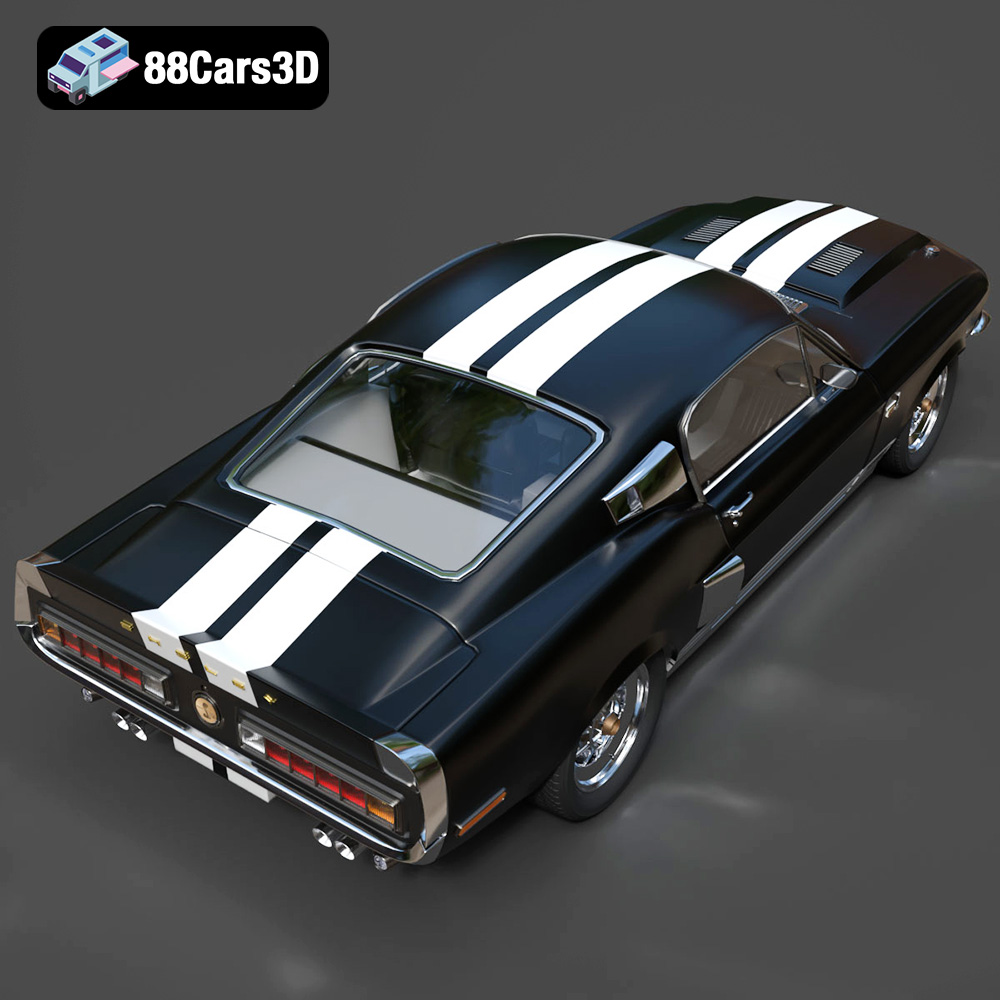
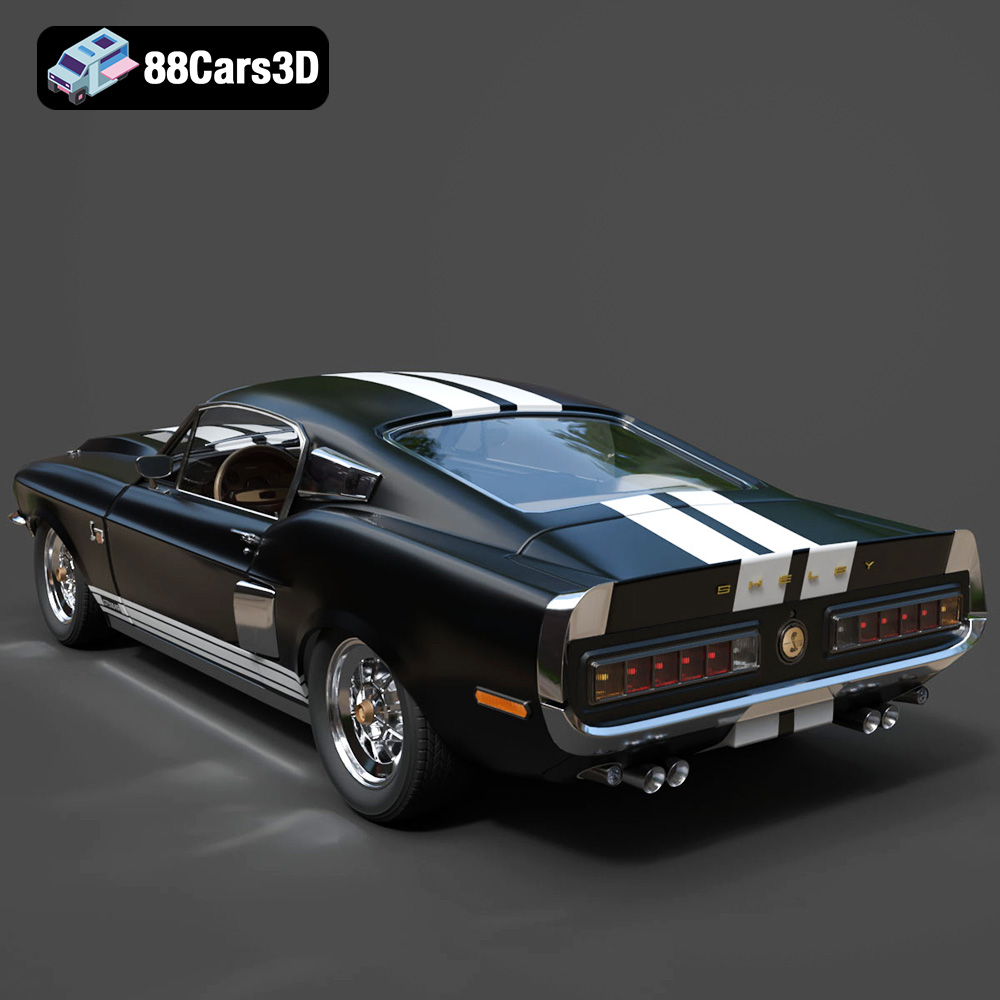
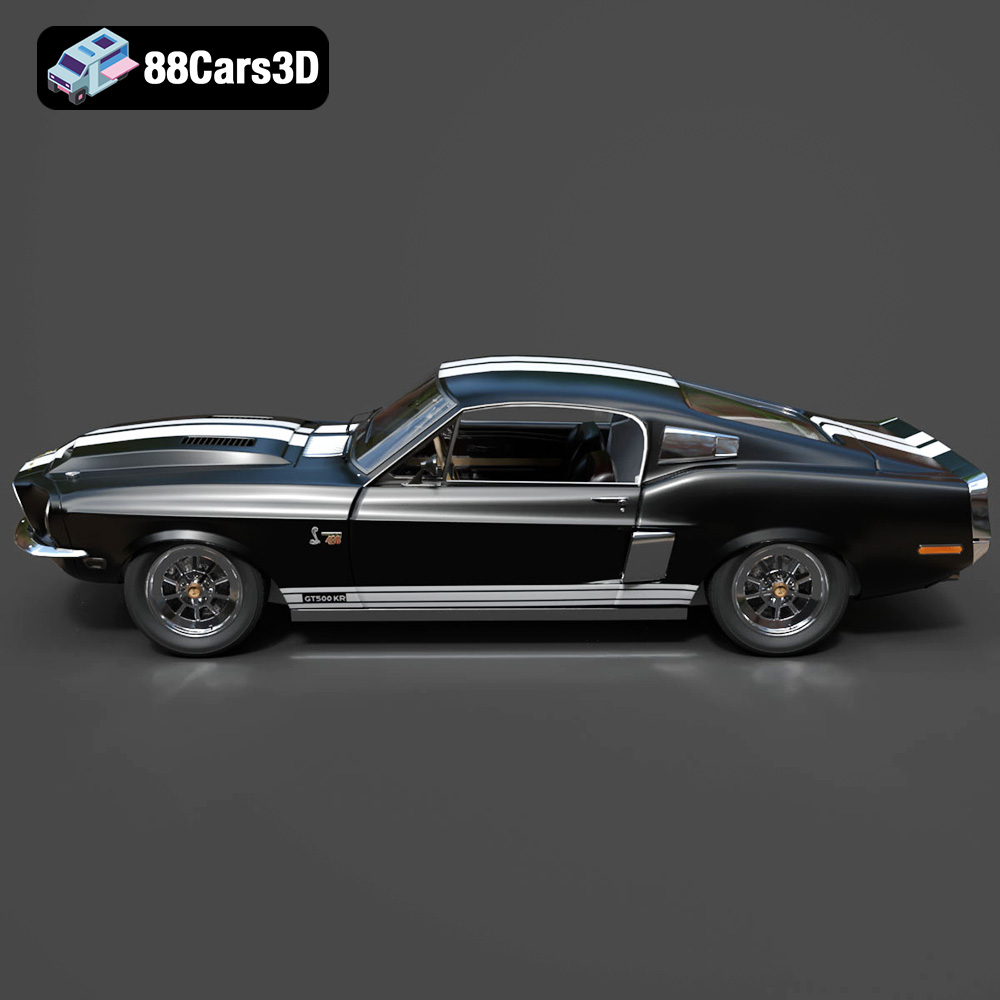
The Ford Mustang Shelby GT500KR 2015 represents the pinnacle of American muscle car performance and heritage. Known as the “King of the Road,” this legendary vehicle commands attention with its aggressive stance, signature dual racing stripes, carbon fiber hood vents, and quad-tip exhaust system. Underneath its muscular exterior lies the spirit of a supercharged V8 powerhouse, boasting aerodynamic enhancements and an iconic front grille that make it an unforgettable visual masterpiece in automotive history.
This meticulously crafted 3D model features a highly detailed topology consisting of 3662064 triangles. Despite its high-fidelity geometry, it maintains exceptional visual realism and structural optimization, providing uncompromised quality for close-up renders and high-end real-time environments. It is engineered for maximum versatility across game development, immersive AR/VR experiences, top-tier CGI animations, and hyper-realistic automotive visualizations.
Perfect for urban racing games, virtual automotive showrooms, high-end commercial renderings, and cinematic street-racing animations.
.blend, .fbx, .obj, .glb, .stl, .ply, .unreal, .max
Tags:
ford, mustang-shelby-gt500kr, 2015, muscle-car, sports-car, game-ready, optimized, car-3d-model, game-asset, rendering, vr-ar, blend, fbx, obj, glb, stl, ply, unreal, max
$90.00
.2015
.blend
.fbx
.ford
.glb
.max
.obj
.ply
.rendering
.sports car
.stl
.unreal
car-3d-model
game asset
game-ready
muscle-car
mustang-shelby-gt500kr
optimized
VR/AR