Get 20% OFF All Premium 3D & STL Models!

In the rapidly evolving landscape of digital visualization, the demand for exceptionally detailed and production-ready 3D car models has never been higher. From breathtaking cinematic sequences and immersive virtual showrooms to high-fidelity game environments and precision-engineered 3D prints, the quality of a 3D asset dictates the success of a project. Automotive design, in particular, requires an unparalleled level of accuracy and aesthetic appeal to capture the essence of iconic vehicles.
Luxury mid-size SUVs stand as a testament to modern automotive engineering, blending commanding presence with refined elegance. Among these, the Mercedes Benz GLE holds a distinguished position, recognized for its aggressive styling, premium comfort, and dominant road presence. Recreating such a vehicle in the digital realm demands meticulous attention to every curve, every reflection, and every intricate detail. This is precisely where a high-quality 3D model, like the Mercedes Benz GLE 3D Model Download STL FBX OBJ GLB Blend available on 88cars3d.com, becomes an invaluable asset for professionals across various industries.
This article will delve into the technical intricacies of automotive 3D models, exploring the vital role they play in professional workflows. We will examine how a meticulously crafted model of the Mercedes Benz GLE can elevate projects in game development, architectural visualization, AR/VR experiences, and even physical prototyping. Furthermore, we’ll provide a comprehensive guide to understanding the diverse file formats that facilitate these applications, ensuring you can harness the full potential of such a powerful digital asset.
Navigating the world of 3D modeling often begins with understanding the various file formats available. Each format serves a specific purpose, offering unique advantages for different stages of a project, from initial design and animation to real-time rendering and 3D printing. The Mercedes Benz GLE 3D Model comes bundled with an impressive array of these formats, ensuring maximum compatibility and utility across diverse professional workflows. Let’s break down each one:
The .blend format is the native file type for Blender, the powerful open-source 3D creation suite. When you receive a .blend file, you’re getting a fully editable Blender scene, complete with materials, textures, lighting, cameras, and potentially even animation data. For the Mercedes Benz GLE model, this means access to the original project file where artists can easily modify shaders, adjust the scene setup, or integrate the model seamlessly into their existing Blender projects. Its flexibility makes it ideal for artists who primarily work within the Blender ecosystem, allowing for deep customization and control over every aspect of the asset.
.fbx (Filmbox) is arguably one of the most widely used proprietary 3D file formats, developed by Autodesk. It excels at transferring 3D data between different software applications while retaining crucial information such as geometry, materials, textures, animations, and even rigging. For real-time pipelines like Unreal Engine and Unity, .fbx is often the go-to format due to its robust support for game engine requirements. The Mercedes Benz GLE in .fbx format is therefore primed for immediate integration into game development, ensuring that its high-fidelity topology and material assignments translate accurately into your game world or interactive experience.
The .obj (Wavefront Object) format is a universal standard for 3D geometry. It’s a highly compatible, text-based format that defines polygon mesh geometry (vertices, normals, texture coordinates, and faces) and can reference external material files (.mtl). While it doesn’t typically store animation or rigging data, its widespread support across virtually all 3D software makes it excellent for cross-software compatibility. If you need to import the Mercedes Benz GLE into a less common application or simply want a clean mesh for sculpting or retopology, the .obj version is incredibly reliable.
.glb (GL Transmission Format Binary) is the binary version of glTF, a royalty-free specification for the efficient transmission and loading of 3D scenes and models by applications. It’s often referred to as the “JPEG of 3D” due to its optimization for web-based applications, AR (Augmented Reality), VR (Virtual Reality), and browser-based display. A .glb version of the Mercedes Benz GLE is perfect for creating interactive 3D viewers on websites, virtual showrooms, or mobile AR apps where performance and file size are critical without sacrificing visual quality. Its single-file nature, embedding textures and other data, makes deployment straightforward.
.stl (STereoLithography) is the most common file format for 3D printing and CAD software. It represents a 3D model as a series of connected triangles, defining only the surface geometry of an object without color, texture, or other CAD attributes. For hobbyists or professionals looking to physically manifest the Mercedes Benz GLE, the .stl file is essential. It’s specifically prepared for additive manufacturing, allowing you to bring the digital model into the tangible world with a 3D printer, ready for post-processing and painting.
The .ply (Polygon File Format or Stanford Triangle Format) is another format for storing 3D data, particularly known for its ability to store information from 3D scanners. It can store various properties beyond just geometry, such as color, transparency, and normal vectors, for each vertex and face. While less common for general-purpose asset exchange than .fbx or .obj, it’s often used in CAD, scientific visualization, and specific engineering applications where precision mesh data with additional attributes is required. The .ply file for the GLE provides an alternative high-fidelity mesh representation that can be valuable for certain specialized analysis or manufacturing workflows.
The .unreal format signifies an asset specifically optimized and often pre-configured for use within Unreal Engine. This might include specific material setups, LOD (Level of Detail) configurations, collision meshes, or even Nanite-ready geometry. While .fbx is the common import path, an .unreal file or package indicates that significant effort has gone into preparing the asset for optimal performance and appearance within the Unreal ecosystem. For developers integrating the Mercedes Benz GLE into a high-fidelity real-time environment, this format provides a significant head start, minimizing setup time and maximizing visual quality.
The .max format is the native file format for Autodesk 3ds Max, a leading software in animation, modeling, simulation, and rendering. Like .blend, this file offers full editability within its native environment. A .max file of the Mercedes Benz GLE allows 3ds Max users to leverage all the features of the software for advanced animation, complex rendering setups (with V-Ray or Corona Renderer), and detailed scene integration. It provides the highest level of control and flexibility for those operating within the 3ds Max professional pipeline.
The inclusion of such a comprehensive suite of file formats with the Mercedes Benz GLE 3D Model from 88cars3d.com underscores its versatility and professional-grade readiness for virtually any project requirement.
Creating a truly exceptional 3D car model is an intricate blend of artistic vision and engineering precision. It’s about more than just replicating a shape; it’s about capturing the soul of the vehicle. The Mercedes Benz GLE 3D Model exemplifies this philosophy, delivering a digital asset that resonates with the real-world luxury SUV.
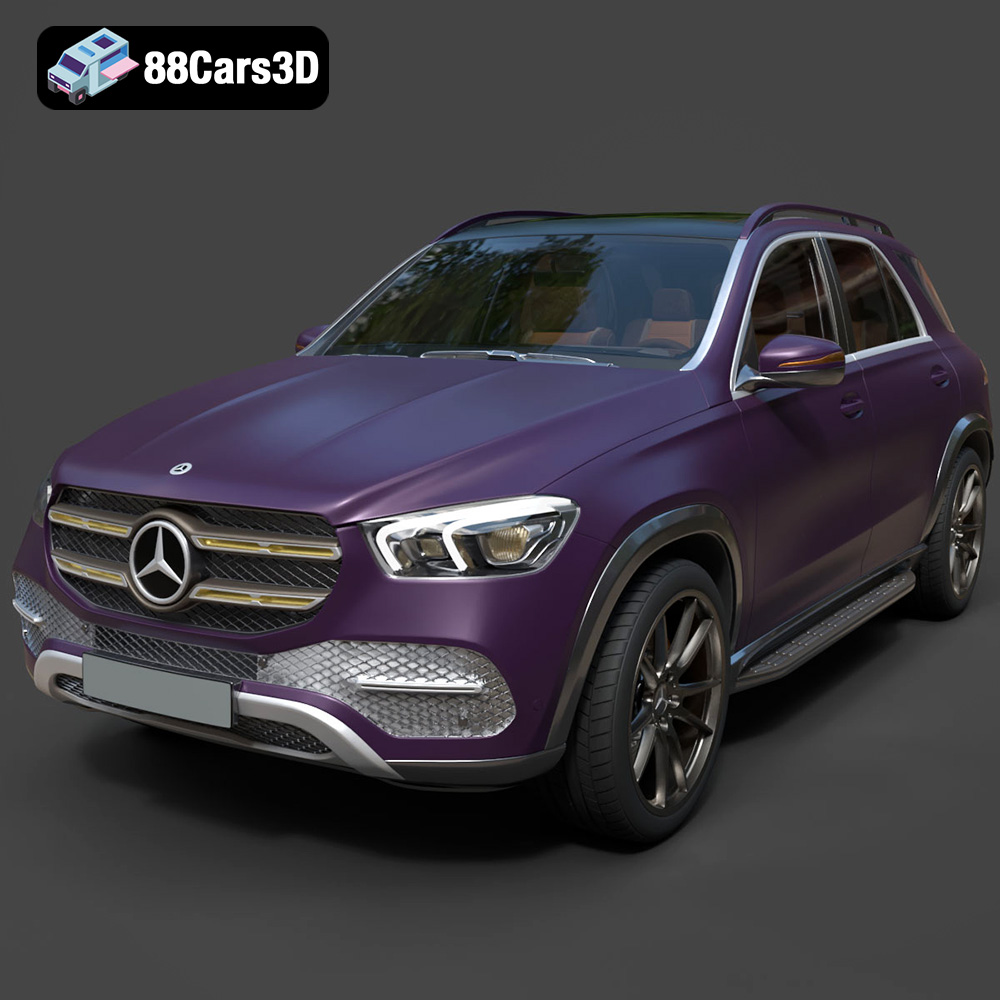
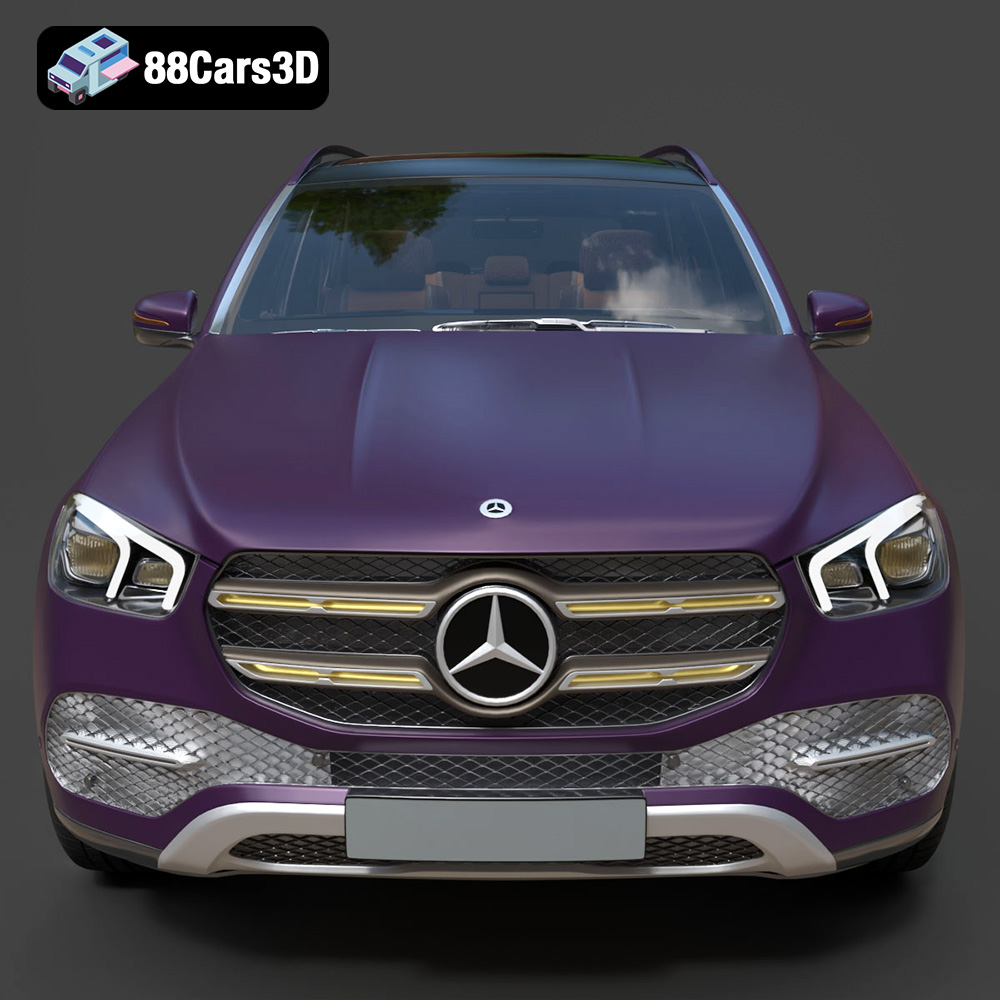
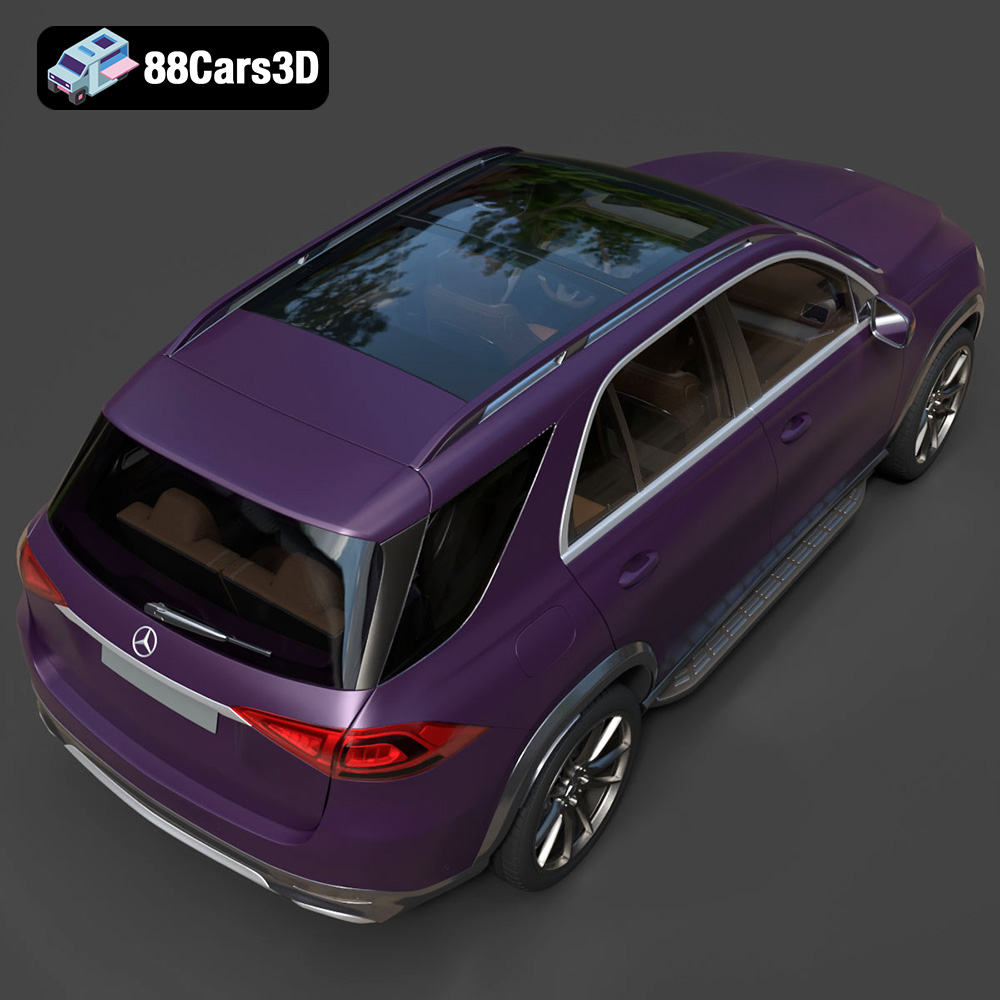
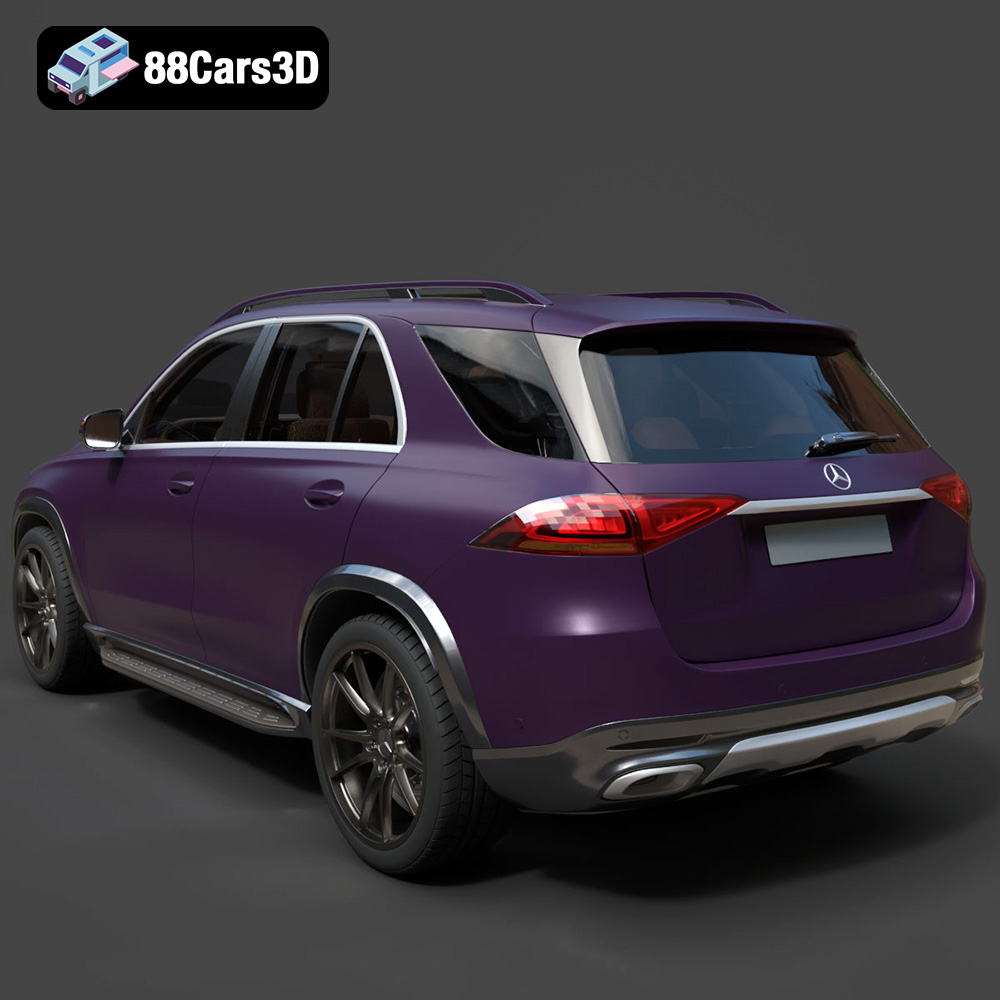
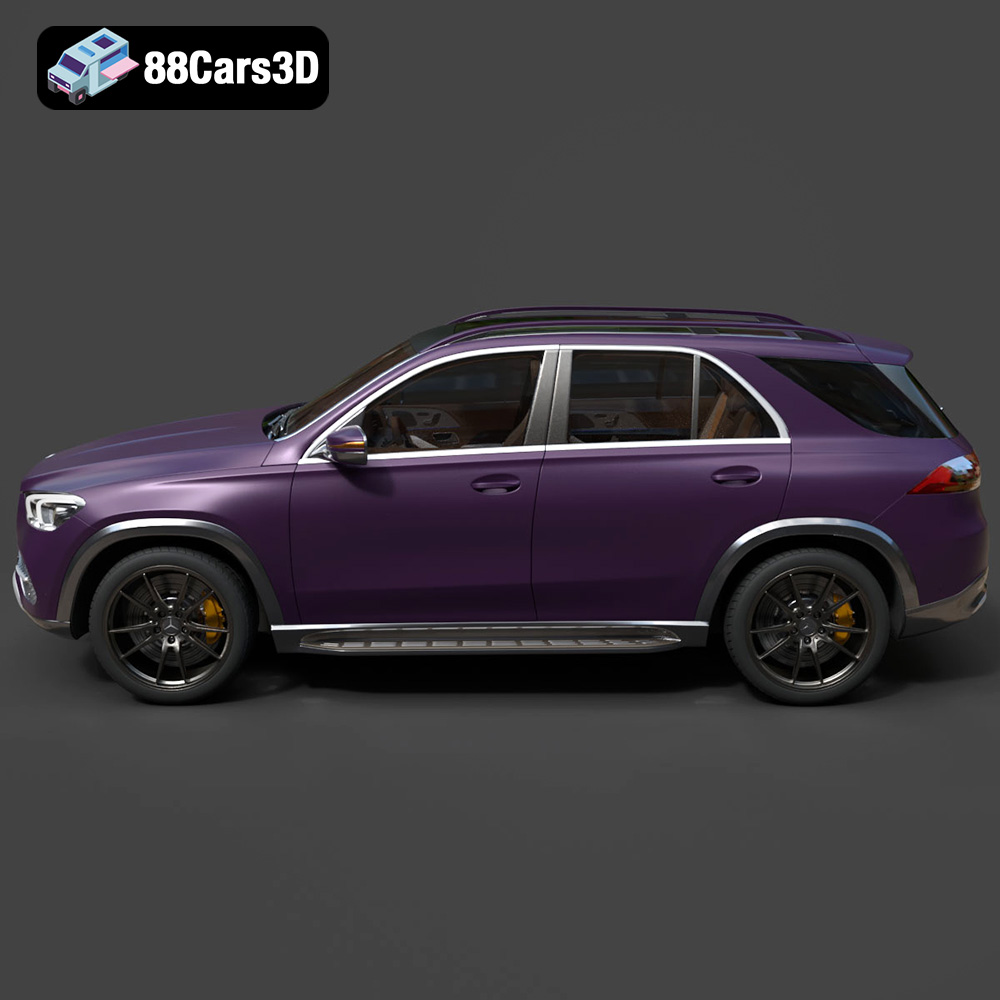
The first impression of any vehicle is its exterior, and the digital GLE flawlessly captures its iconic design language. The model features the imposing signature front grille, a hallmark of Mercedes-Benz design, rendered with stunning accuracy. Aerodynamic sweeping lines flow seamlessly across the body, leading to a muscular stance that conveys both power and elegance. Meticulous craftsmanship is evident in the intricate housing of the dynamic LED headlights and detailed taillight clusters, reflecting light with photo-realistic precision.
Further enhancing its realism are the premium multi-spoke alloy wheels, complete with accurately treaded tires – a subtle but crucial detail for convincing renders and simulations. Beneath the surface, the model doesn’t compromise on mechanical integrity; intricate suspension and brake caliper details are present, adding depth and authenticity. The integrated dual exhaust system with chrome-style tips and the sporty rear diffuser complete the aggressive yet refined aesthetic. Crucially, the model boasts accurate Mercedes Benz GLE frame geometry and exterior proportions, ensuring real-world scale accuracy based on actual vehicle chassis dimensions. Even a detailed engine block, based on the signature V-engine architecture, is modeled for those extreme close-ups or cutaway renders.
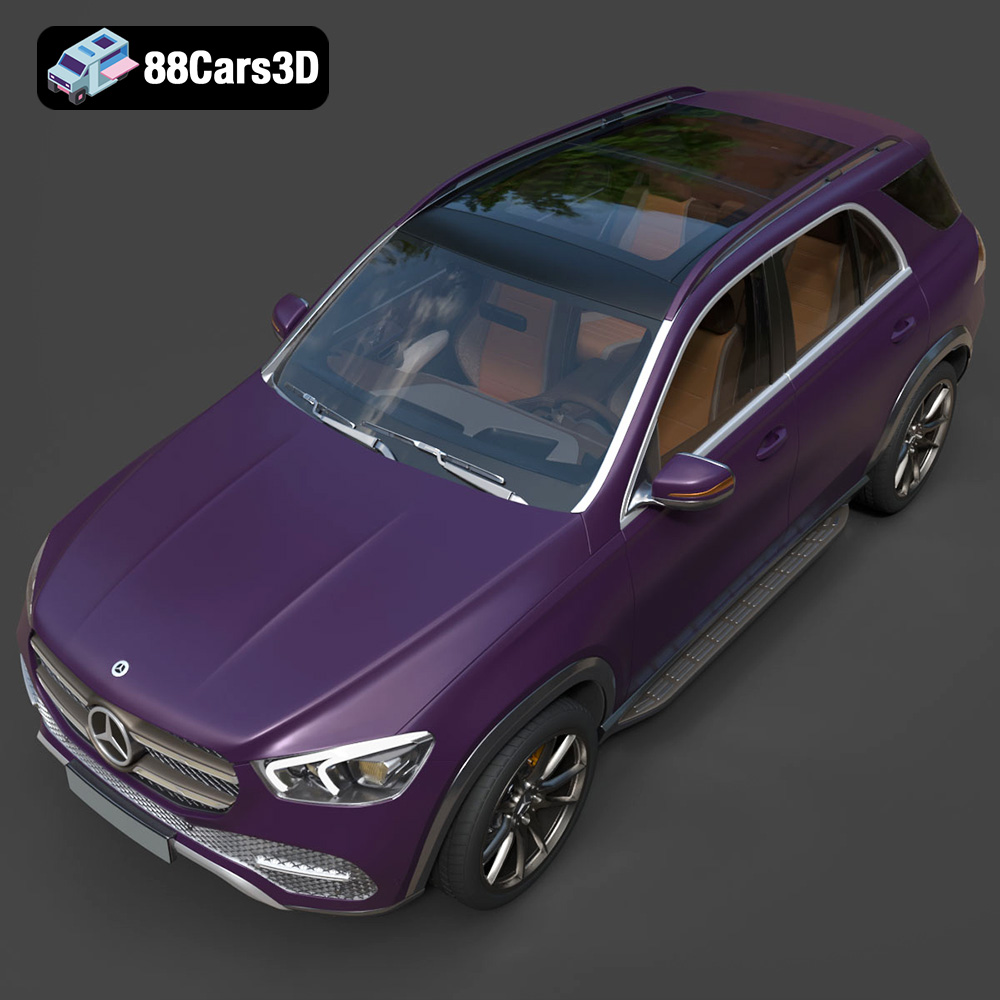
The interior of a luxury SUV is as important as its exterior, offering an experience of comfort and sophisticated technology. The 3D model of the Mercedes Benz GLE extends its high-fidelity detailing into the cockpit. Luxurious contoured seating, complete with highly detailed upholstery stitching, invites the viewer into a world of digital comfort. The multifunction steering wheel, adorned with paddle shifters and controls, mirrors its real-world counterpart precisely.
Attention to detail extends to the digital interfaces, with an accurate dual-screen digital instrument cluster and infotainment system, ensuring that any virtual driver finds themselves in a familiar and responsive environment. The detailed center console, climate controls, pedals, and gear selector are all meticulously modeled. This level of interior fidelity is not just for show; it’s optimized geometry for first-person POV in gaming and virtual test drives, providing a truly immersive experience for users navigating the digital space from behind the wheel.
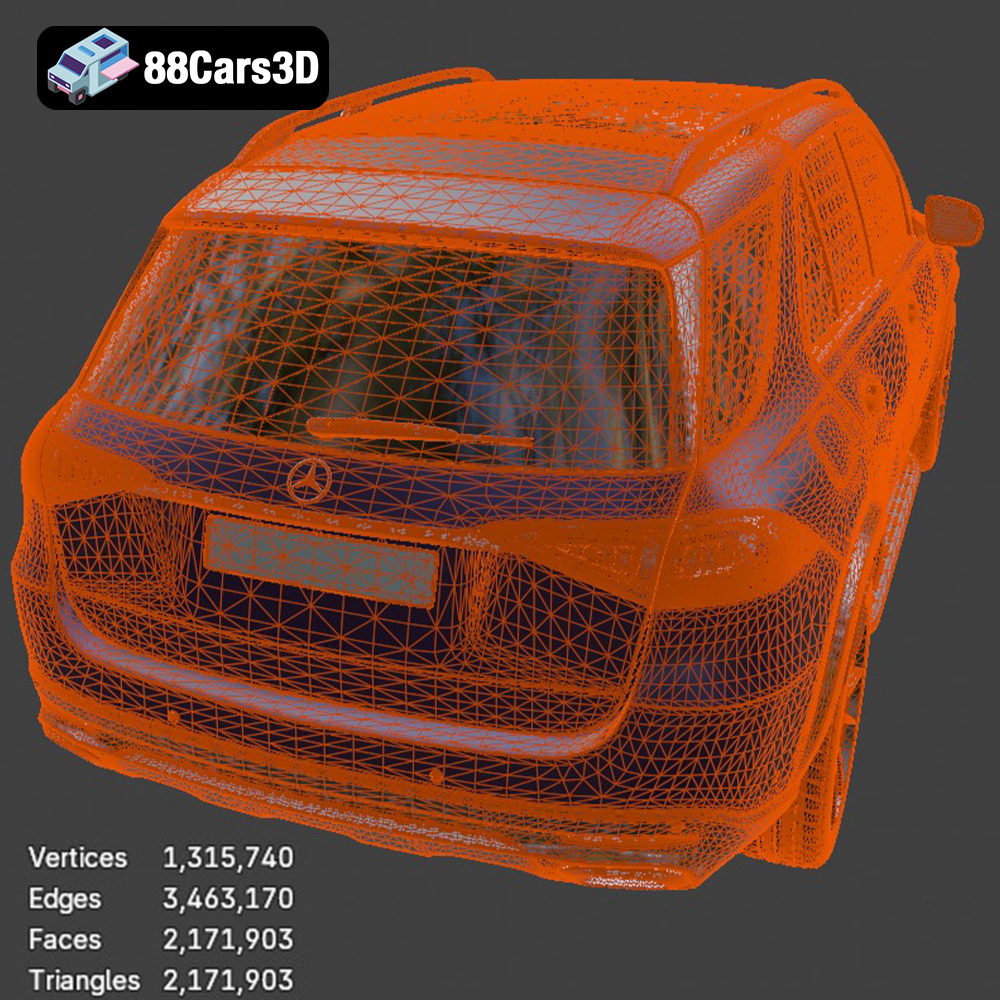
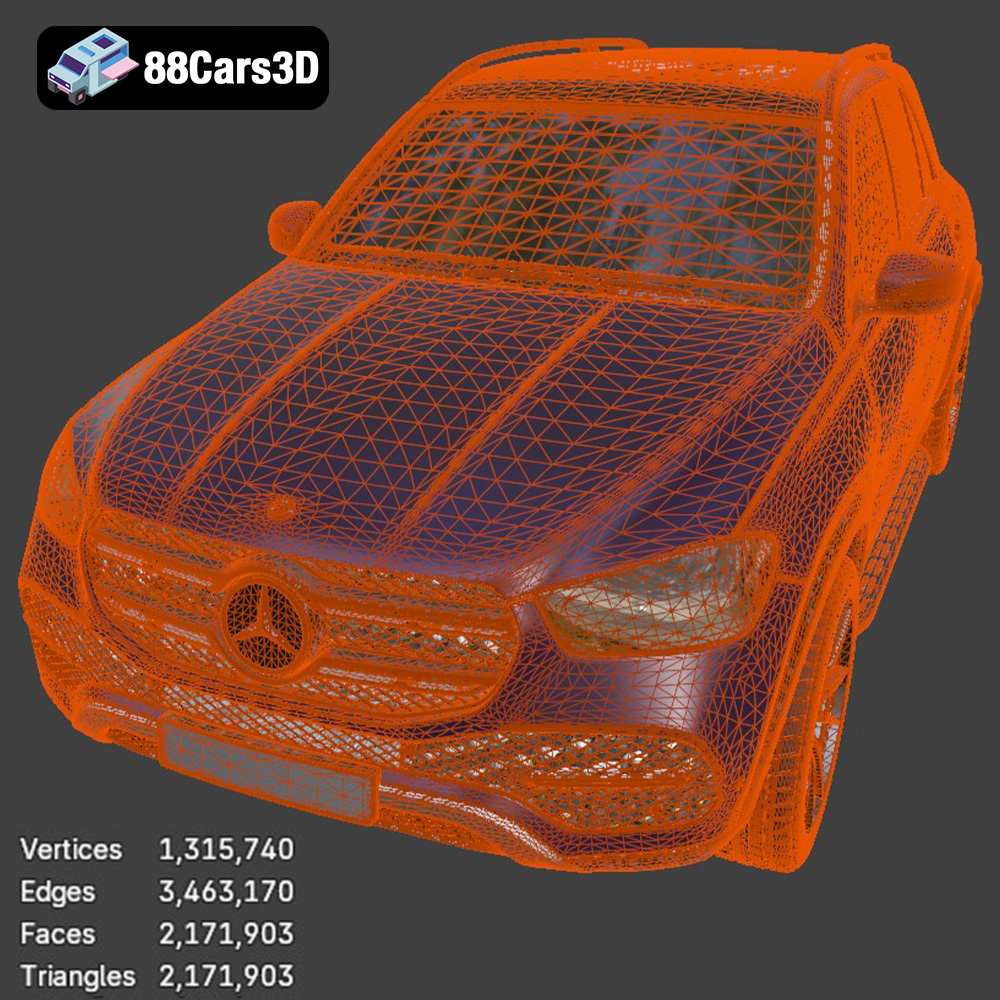
One of the most significant technical specifications of this Mercedes Benz GLE 3D Model is its high-fidelity topology, boasting 2,171,903 triangles. This figure represents a sweet spot, striking a perfect balance for next-gen real-time engines while maintaining high-end visual realism. In the past, such poly counts might have been considered “high-poly” and suitable only for offline rendering. However, with advancements like Unreal Engine’s Nanite virtualized geometry system and Unity’s optimized rendering pipelines, models of this complexity can be rendered in real-time with exceptional performance.
The geometry is intelligently structured, making it game-ready and optimized for applications ranging from high-end cinematic animation to architectural visualization and premium AR/VR configurators. Clean geometry is paramount for subdividing, unwrapping, and maintaining edge flow, and this model delivers. Furthermore, a critical advantage for animation and simulation is the proper pivot setup for steering, wheel rotation, and suspension travel. Separate wheels, suspension, and steering components are provided, allowing for seamless animation and realistic vehicle dynamics within any simulation or game environment.
The technical excellence of the Mercedes Benz GLE 3D Model from 88cars3d.com translates directly into a multitude of professional applications, enabling creators to push the boundaries of digital visualization.
For game developers, the demand for realistic vehicles is constant. This model is ideal for open-world games, racing titles, and simulators where visual fidelity and accurate physics integration are paramount. The detailed topological structure supports advanced game engines, allowing for stunning in-game graphics. With separate components for animation, developers can easily integrate realistic steering, wheel rotation, and suspension articulation, making the driving experience truly immersive. Imagine the GLE navigating a photorealistic urban environment or tearing down a virtual race track, its meticulously modeled surfaces catching the light as it speeds by – all possible with this game-ready asset.
Augmented Reality (AR) and Virtual Reality (VR) are transforming how consumers interact with products, especially in the automotive sector. The Mercedes Benz GLE 3D Model is perfect for immersive virtual showrooms, allowing prospective buyers to explore the vehicle from every angle, inside and out, as if it were right in front of them. It’s also excellent for configurators, enabling real-time customization of colors, wheels, and interior options. With the included .glb format, the model is optimized for mobile AR experiences, allowing users to project the GLE into their own driveways with incredible realism. The high-fidelity model creates an unparalleled sense of presence and realism, blurring the lines between the digital and physical.
Beyond interactive applications, the GLE model shines in pre-rendered content. It’s an excellent asset for brand campaigns, lifestyle scenes, and studio lighting setups, where every detail and reflection must be perfect. Marketing agencies and automotive brands can leverage this model to create breathtaking promotional videos or print advertisements, showcasing the vehicle in various environments and lighting conditions. In architectural visualization, embedding a high-fidelity car model like the GLE adds realism and a sense of scale to renders, helping clients envision how a luxury residence or commercial space integrates with premium lifestyle elements. The meticulously modeled surfaces ensure stunning reflections and accurate light behaviors, essential for achieving photorealistic results in a rendered scene.
The utility of a comprehensive 3D model extends beyond digital screens, venturing into the realm of physical creation through 3D printing. The Mercedes Benz GLE 3D Model is not just for digital projects; it’s also designed to be convertible for physical output, offering a unique avenue for hobbyists and professionals alike.
The inclusion of the .stl format is crucial for 3D printing, as it’s the most widely accepted standard for additive manufacturing. For those looking to hold a miniature version of this luxury SUV, the model is designed to perform exceptionally well. Recommended scales such as 1:12, 1:18, or 1:24 allow for detailed display-scale models. Achieving the best results requires careful consideration of print settings. A layer height of 0.04–0.12 mm is suggested, with resin printing highly recommended for capturing the fine details, intricate housing of the LED headlights, and delicate lines of the bodywork that would be challenging for filament-based printers to reproduce accurately. Recommended wall thickness of 1.2–2.0 mm and an infill of 20–30% ensure a durable yet efficient print.
Successful 3D printing often hinges on proper support structures, especially for models with overhangs and intricate components. For the Mercedes Benz GLE, supports will be required for detailed parts like the mirrors, exhaust tips, and the steering wheel, ensuring these delicate features are accurately formed without distortion. Print orientation is also a strategic consideration; printing the main frame angled can improve structural integrity and reduce visible layer lines. The wheels are best printed separately to capture their detailed spokes and tire treads with optimal clarity.
Post-processing is where the physical model truly comes to life. After printing, careful sanding and the application of a primer prepare the surface for painting. To achieve an authentic look, hobbyists can apply authentic factory colors, often with metallic finishes, to mirror the GLE’s luxurious aesthetic. This entire process transforms a digital file into a tangible, high-quality display piece, showcasing the versatility of professional 3D car models.
A key advantage of a high-quality 3D asset is its adaptability. The Mercedes Benz GLE 3D Model provides extensive customization options, allowing artists and designers to tailor the vehicle to specific project needs, all while seamlessly integrating into established professional workflows.
The customization options for this model are vast, offering creative freedom for various scenarios. Users can easily change body colors, experimenting with authentic factory metallic finishes or more daring custom matte wraps to match a brand’s aesthetic or a specific scene’s mood. Tire textures can be modified, switching between standard street variants for urban scenes or performance treads for a racing simulation. Material finishes across the vehicle can be adjusted, from the gloss of the paint to the matte of interior plastics, the gleam of chrome accents, or the intricate pattern of carbon fiber elements. Furthermore, the model allows for adaptation of lighting, enabling it to fit perfectly into different ambient rendering environments, whether it’s a sun-drenched outdoor scene, a moody studio setup, or the dynamic lighting of a game engine.
The comprehensive file format support ensures that the Mercedes Benz GLE 3D Model integrates effortlessly into virtually any professional 3D pipeline. This flexibility is crucial for maximizing efficiency and creativity.
This broad compatibility saves countless hours in conversion and optimization, allowing creative teams to focus on design and implementation rather than technical hurdles. The Mercedes Benz GLE 3D Model is truly designed as a plug-and-play solution for professional studios.
The journey through the intricacies of the Mercedes Benz GLE 3D Model underscores its profound value as a versatile and high-fidelity digital asset. We’ve explored how its meticulous detailing, from the aggressive exterior lines to the luxurious interior cockpit and the precisely engineered topology, makes it an indispensable tool for a wide array of professional applications.
Whether you are a game developer pushing the boundaries of real-time graphics, an architect envisioning a new development, an AR/VR specialist crafting immersive experiences, or a designer bringing a physical prototype to life, this 3D model offers unparalleled quality and flexibility. The comprehensive suite of file formats – .blend, .fbx, .obj, .glb, .stl, .ply, .unreal, and .max – ensures seamless integration into virtually any professional workflow, accommodating the specific needs of diverse software and platforms.
In a world where digital realism is paramount, investing in a high-quality asset like the Mercedes Benz GLE 3D Model can dramatically elevate the impact and credibility of your projects. It’s more than just a model; it’s a foundation for innovation. Discover this exceptional model and many other premium 3D car models by visiting 88cars3d.com, your premier destination for professional-grade automotive assets.
The Mercedes Benz GLE represents the pinnacle of luxury mid-size SUVs, seamlessly blending aggressive styling, premium comfort, and dominant road presence. This 3D model captures the vehicle’s iconic heritage, featuring its imposing signature front grille, aerodynamic sweeping lines, and muscular stance. Every visual element has been meticulously crafted, from the intricate housing of the dynamic LED headlights to the integrated dual exhaust system and sporty rear diffuser. Boasting a high-fidelity topology with 2,171,903 triangles, this model delivers unparalleled visual realism for high-end rendering and next-generation real-time engines. Its meticulously modeled surfaces ensure stunning reflections and accurate light behaviors. The geometry is intelligently structured for advanced game development, high-end cinematic animation, architectural visualization, and premium AR/VR configurators.
$86.50
.blend
.fbx
.glb
.gle
.luxury suv
.max
.obj
.ply
.rendering
.stl
.unreal
car-3d-model
game asset
game-ready
high poly
mercedes-benz
optimized
SUV
VR/AR