Get 20% OFF All Premium 3D & STL Models!

In the fast-paced world of digital creation, the demand for photorealistic and highly functional 3D assets is ever-growing. From crafting immersive virtual realities to engineering next-generation game environments and producing stunning architectural visualizations, the quality of your foundational models can make or break a project. Automotive design, in particular, requires an unparalleled level of detail and accuracy to truly capture the essence of a vehicle.
Few vehicles embody luxury, performance, and advanced engineering quite like the BMW X7. As the flagship Sports Activity Vehicle, its commanding presence and intricate details make it a challenging yet rewarding subject for 3D artists. This is precisely why a meticulously crafted asset like the BMW X7 40i 3D Model stands out. It’s not just a collection of polygons; it’s a digital masterpiece designed to elevate professional workflows across a multitude of industries. Whether you’re an automotive renderer aiming for magazine-quality visuals, a game developer integrating realistic vehicles into an open-world title, or an AR/VR innovator building interactive experiences, the right 3D car models are indispensable. Let’s delve into how a premium asset like the BMW X7 40i 3D model can transform your projects, exploring its technical prowess and diverse applications, all readily available at reputable marketplaces like 88cars3d.com.
The versatility of a 3D model is often defined by the file formats it supports. Each format is designed with specific use cases and technical considerations in mind, making the choice critical for seamless integration into your preferred software and pipeline. The BMW X7 40i 3D Model comes packaged with a comprehensive array of formats, ensuring maximum compatibility and utility for any project.
The .blend format is the native file type for Blender, a powerful and increasingly popular open-source 3D creation suite. When you download a .blend file, you’re getting a fully editable Blender scene, complete with materials, textures, lighting setups, and any associated animations or rigging. This format is ideal for artists who primarily work within Blender, offering direct access to the model’s construction, modifiers, and node-based materials. It allows for deep customization and serves as an excellent starting point for further artistic development without any loss of data or conversion artifacts.
.fbx (Filmbox) is arguably the most widely adopted proprietary file format for 3D content interchange. Developed by Autodesk, it’s a robust format that can store not only geometry but also animation, cameras, lights, and materials, making it ideal for transferring complex scenes between different 3D software applications. For game development, particularly with engines like Unreal Engine and Unity, .fbx is the go-to choice. Its ability to maintain hierarchy, pivot points, and animation data makes it indispensable for creating dynamic, interactive assets. The BMW X7 40i 3D Model’s .fbx version is perfectly structured for real-time pipelines, ensuring smooth import and minimal setup for immediate use.
The .obj (Wavefront Object) format is a universal standard, known for its simplicity and wide support across virtually all 3D software. While it primarily stores geometric data (vertices, normals, texture coordinates), it can also reference external material files (.mtl) for basic color and texture information. It doesn’t typically support animation, rigging, or advanced material properties, but its ubiquitous nature makes it an excellent choice for static meshes or as a fallback for cross-software compatibility when more complex formats might cause issues. For sharing raw model data or importing into niche applications, .obj remains a reliable option.
.glb (GL Transmission Format Binary) is a modern, highly optimized format designed specifically for efficient transmission and loading of 3D scenes and models in web browsers, augmented reality (AR), and virtual reality (VR) environments. It’s a binary container format that bundles geometry, materials, textures, and animation into a single, compact file. Its small file size and rapid loading capabilities make it perfect for interactive web applications, virtual showrooms, or mobile AR experiences where performance is paramount. The BMW X7 40i 3D Model in .glb ensures that this luxury vehicle can be showcased seamlessly across digital platforms.
The .stl (Stereolithography) format is the standard for 3D printing. It represents a 3D model as a series of connected triangles, describing only the surface geometry without any color, texture, or material information. For hobbyists and professionals looking to bring the BMW X7 40i into the physical world, the .stl file is essential. The model’s inherent detail translates well to high-resolution resin printing, allowing for creation of physical display models at various scales. Proper preparation and orientation are key for successful prints, as detailed in the product specifications.
The .ply (Polygon File Format) is another format for storing 3D data, often used with 3D scanning applications. It can store a wider range of properties than .obj, including color, transparency, normals, texture coordinates, and data confidence values for each vertex or face. While not as universally adopted as .obj or .fbx for general 3D work, it’s valued in fields requiring precise mesh data, such as scientific visualization, CAD, and reverse engineering. It offers a robust way to preserve detailed geometric information for analysis or specific manufacturing processes.
While “.unreal” isn’t a standalone file extension in the traditional sense, its inclusion signifies that the asset has been specifically pre-optimized and packaged for direct import and use within Unreal Engine. This often means the model (likely an FBX) has been correctly scaled, pivot points are set, materials are prepared with PBR textures, and potentially even includes basic collision meshes or LODs (Levels of Detail). This dramatically reduces setup time for developers, allowing them to drop the BMW X7 40i 3D Model directly into their game or simulation environment and begin working immediately with an engine-ready asset, saving countless hours of manual optimization.
The .max format is the native file type for Autodesk 3ds Max, a long-standing industry standard for 3D modeling, animation, and rendering. Similar to .blend for Blender, a .max file provides access to the complete 3ds Max scene, including geometry, modifiers, intricate material setups, lighting, cameras, and animation tracks. This format is invaluable for professionals working within the Autodesk ecosystem, offering the highest level of editability and control over the BMW X7 40i 3D Model for complex animations, high-end rendering projects, or integration into existing 3ds Max pipelines.
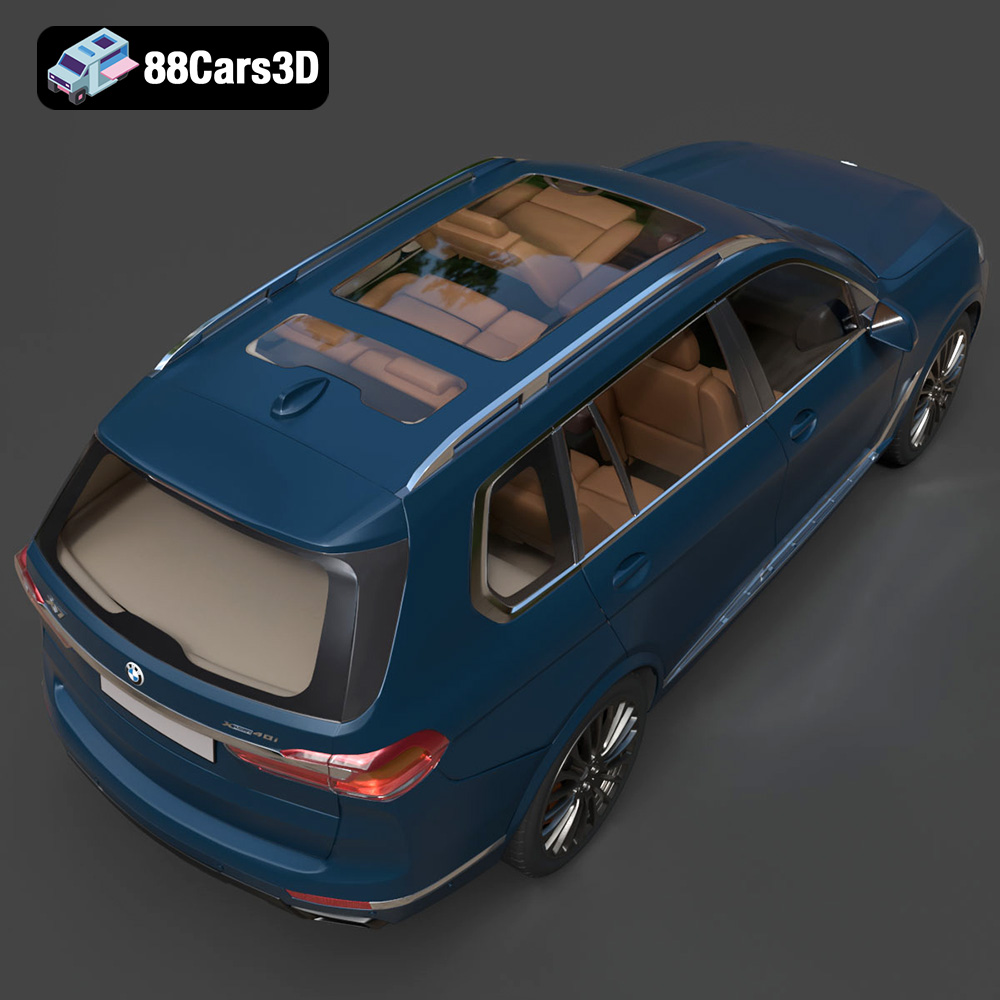
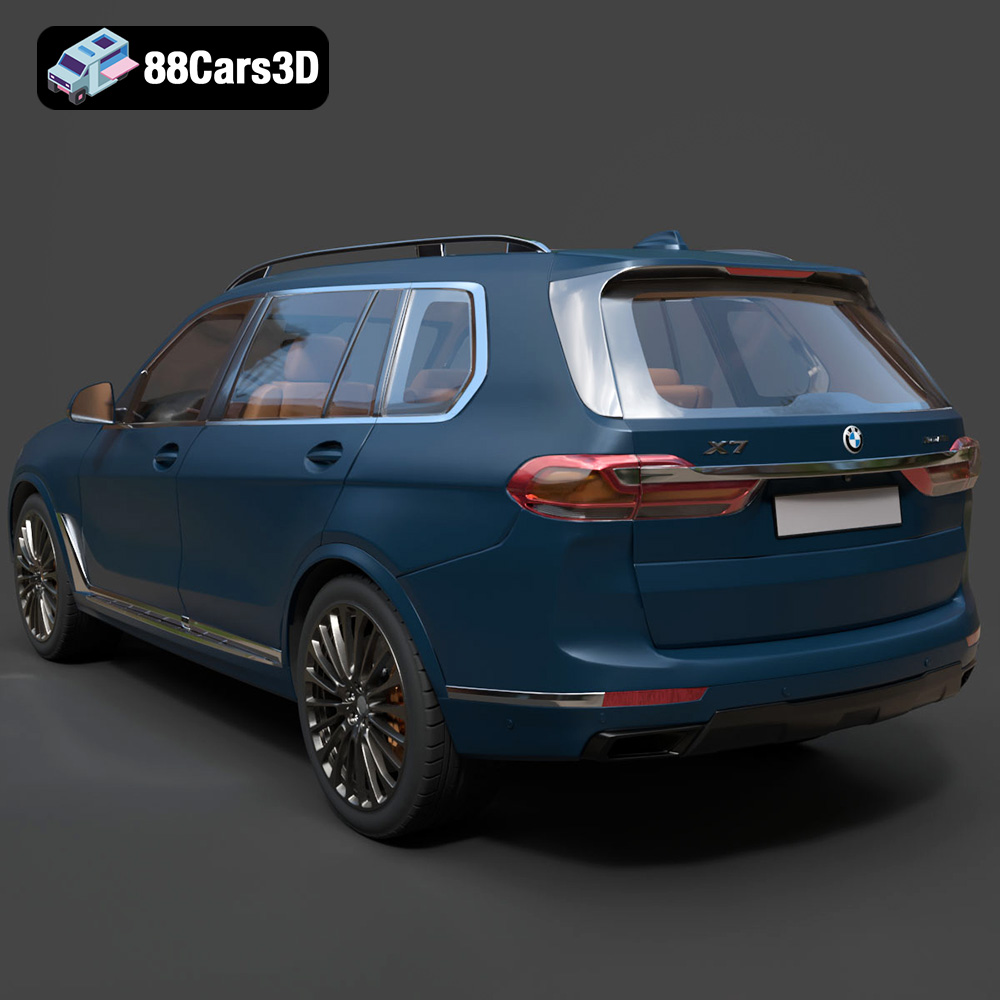
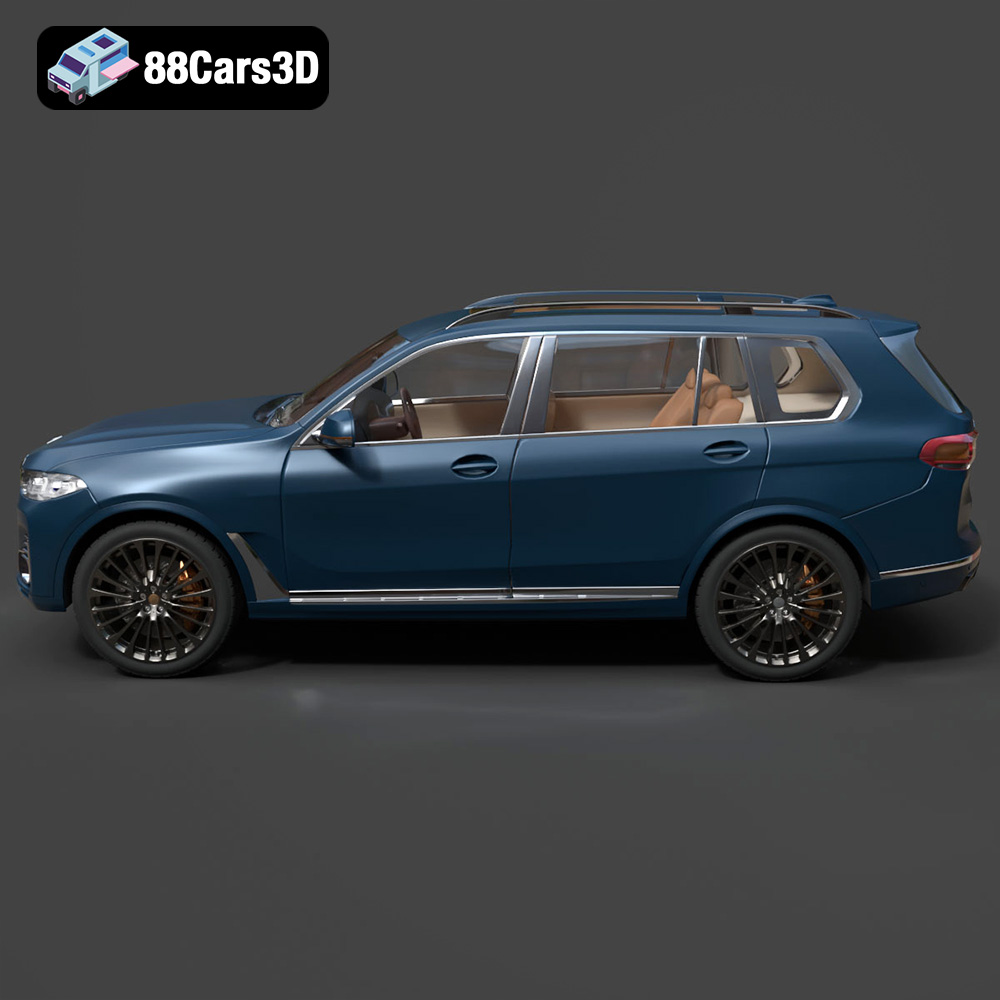
The core value of any premium 3D model lies in its fidelity to the real-world object. The BMW X7 40i 3D Model is an exceptional example of this commitment to detail, meticulously recreating the luxury SUV with stunning accuracy. Every curve, panel gap, and technical component has been thoughtfully modeled, resulting in an asset that truly captures the vehicle’s commanding presence and sophisticated design.
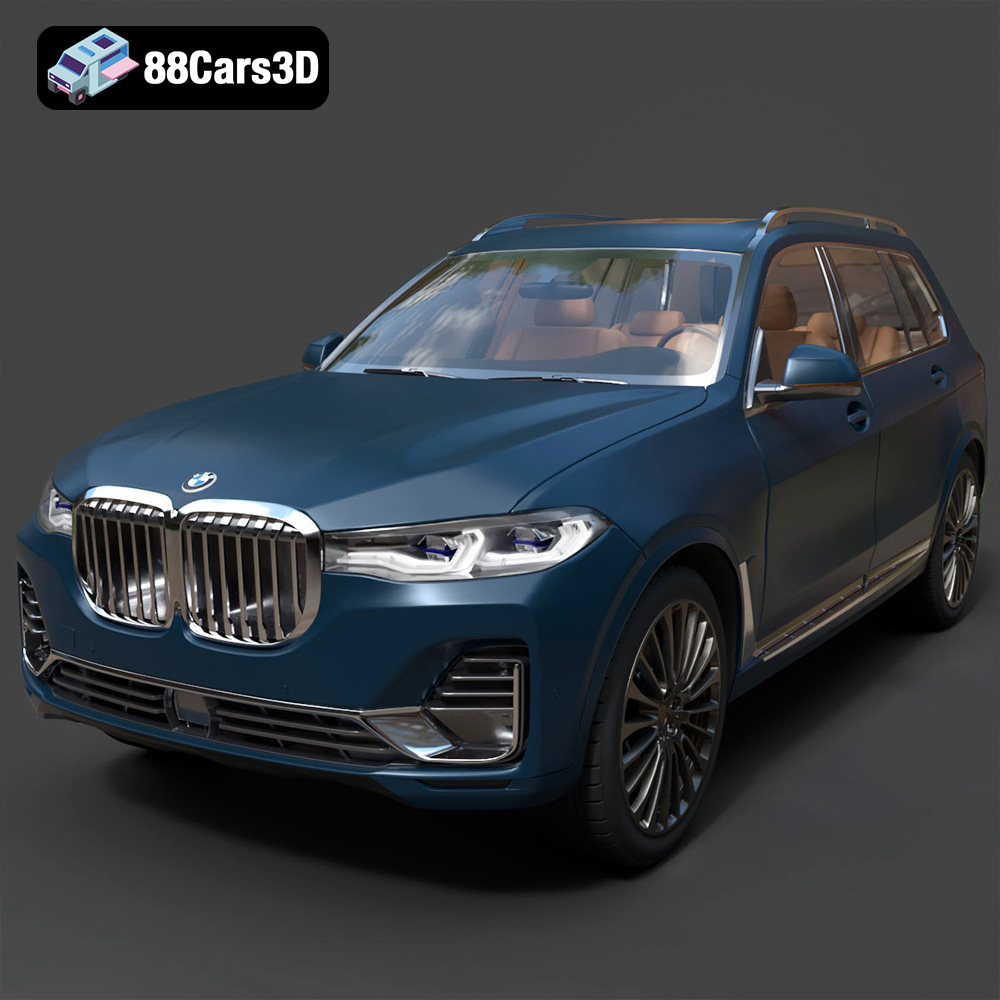
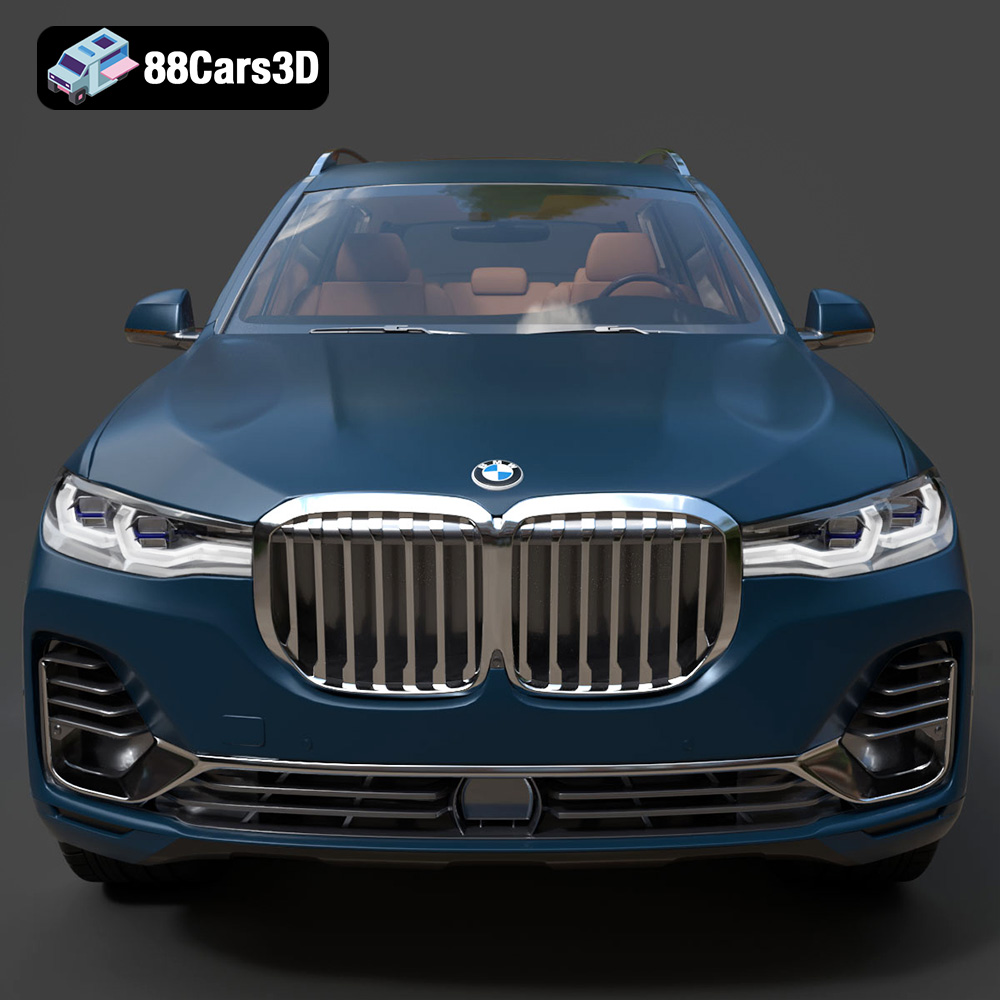
The exterior of the BMW X7 is instantly recognizable, and this 3D model faithfully reproduces its iconic features. The large kidney grille, a signature element of modern BMW design, is intricately modeled, reflecting its complex structure and finishes. The sleek aerodynamic profile, characteristic of a luxury SUV, is precisely replicated, ensuring accurate reflections and light interplay during rendering. Signature details like the split-headlight LED array and the 3D sculpted taillights are crafted with precision, capturing their unique luminescence and form. Moving beneath the body, the model includes an accurate air suspension setup and undercarriage details, a testament to its comprehensive design. The dual trapezoidal exhaust system, complete with chrome finish details, adds another layer of realism. The intricate multi-spoke alloy wheels, paired with realistic tire tread, are separate components, allowing for independent animation of rotation, steering, and suspension travel, critical for dynamic scenes.
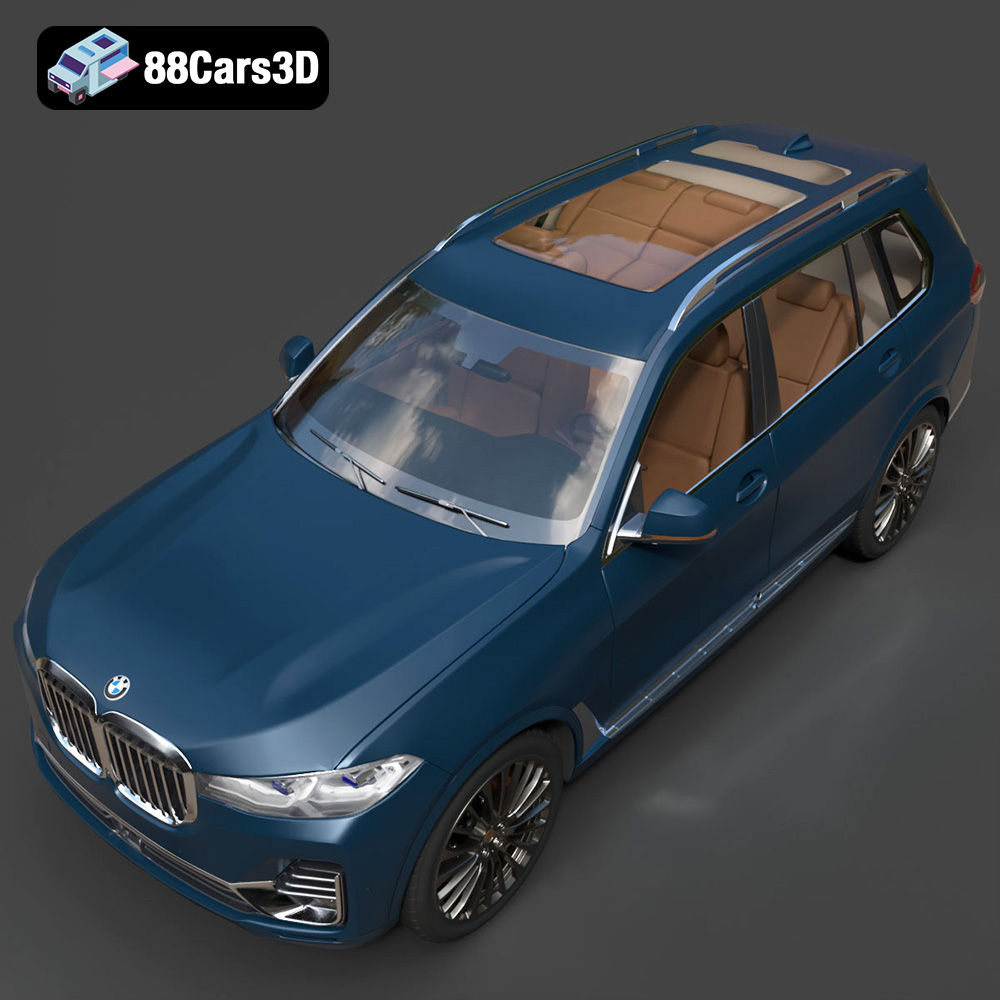
The interior of the BMW X7 40i is where luxury truly takes hold, and the 3D model does not disappoint. It boasts luxurious three-row seating, complete with premium leather textures that would make any automotive enthusiast appreciate the attention to detail. The M-Sport style multi-function steering wheel and column are accurately modeled, providing a realistic feel for first-person perspectives in gaming or virtual configurators. The advanced curved display dual-screen instrument cluster and infotainment setup are also precisely recreated, ready to showcase dynamic UI elements in real-time applications. Even the finely detailed center console, featuring the distinctive glass crystal gear shifter and pedals, has been meticulously modeled. This optimized geometry for first-person POV makes the model perfect for immersive cockpit experiences in virtual reality or interactive simulations.
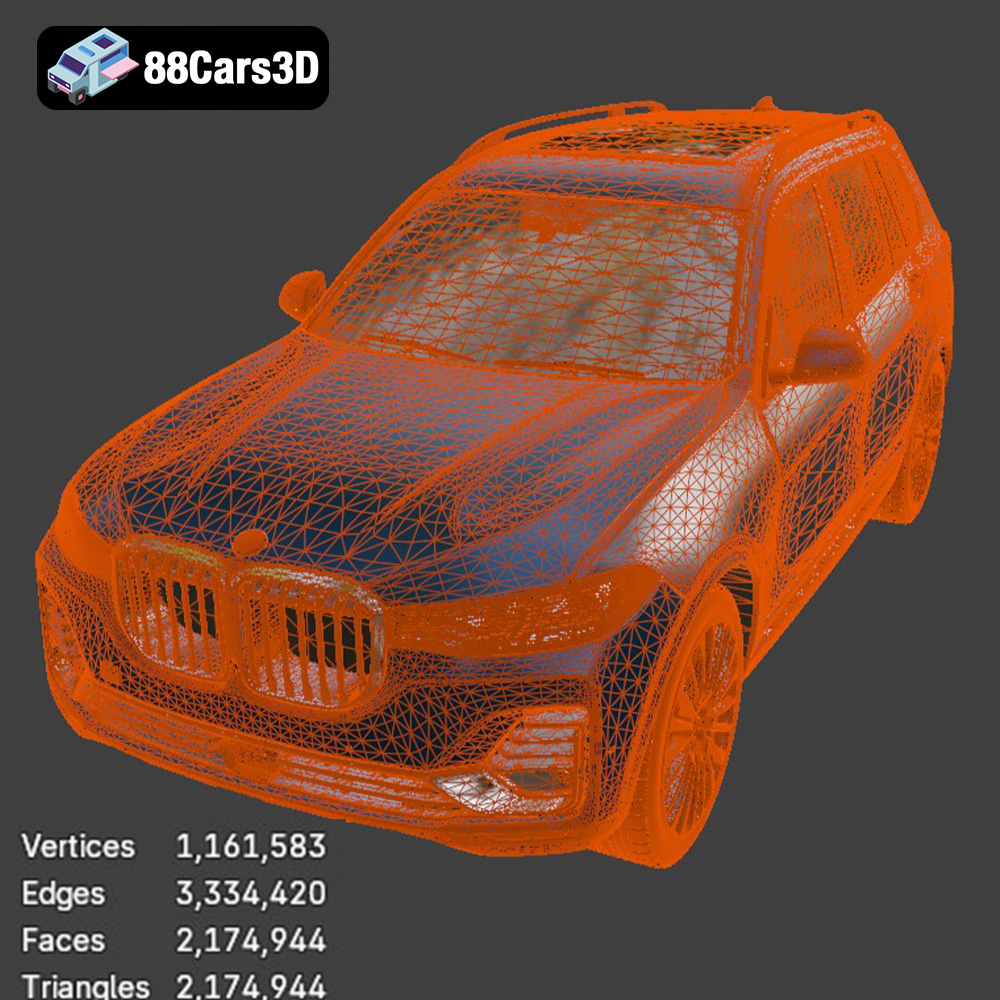
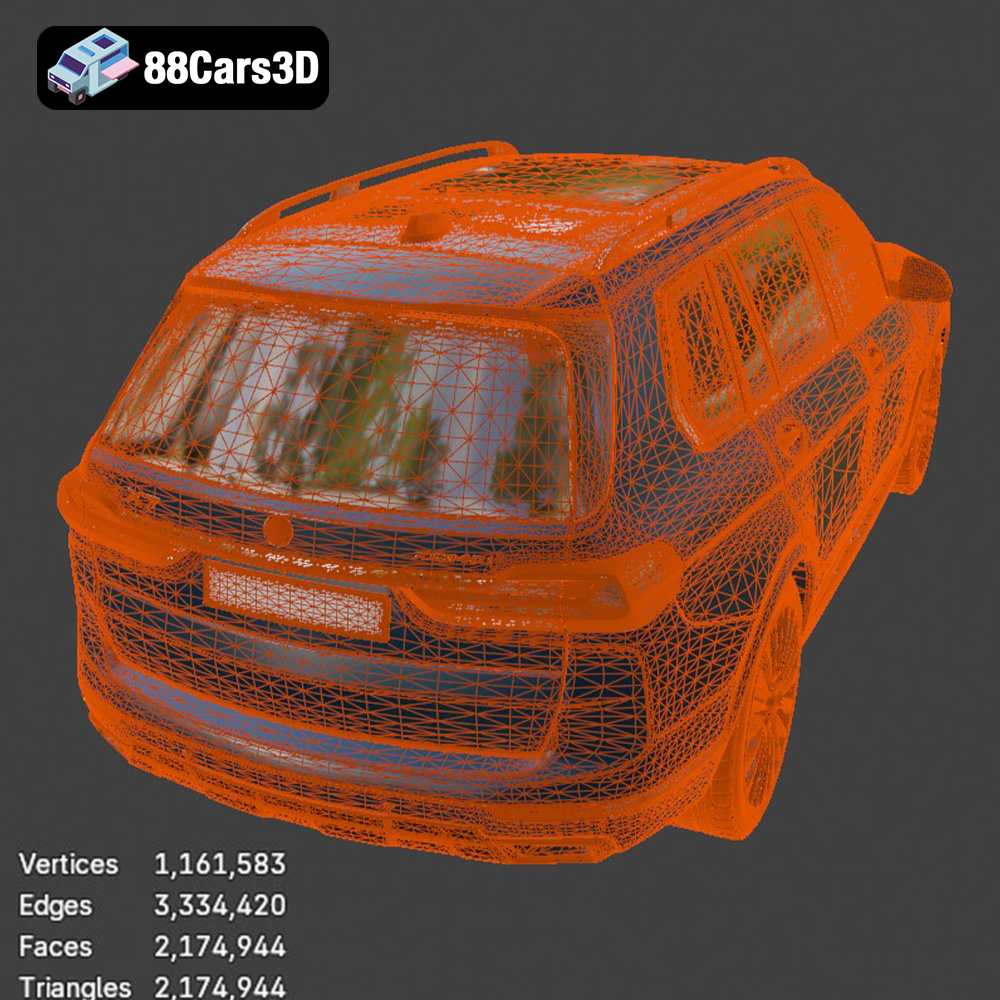
The balance between visual fidelity and performance optimization is a hallmark of truly professional 3D car models. With 2,174,944 triangles, the BMW X7 40i 3D Model strikes an impressive balance. This polycount is high enough to deliver unparalleled high-fidelity visuals required for close-up renders and next-gen cinematic quality, yet it’s carefully structured for efficient use in modern game development engines like Unreal Engine 5, demanding architectural visualization, and immersive VR/AR experiences. The real-world scale accuracy, based on actual vehicle chassis dimensions, ensures that the model integrates seamlessly into any scene without scaling issues. Furthermore, the proper pivot setup for steering, wheel rotation, and suspension travel is a crucial technical advantage, allowing animators and developers to quickly set up realistic vehicle dynamics without tedious adjustments. This attention to technical detail makes the asset robust and ready for immediate deployment in demanding professional pipelines, enhancing projects from simple renders to complex interactive applications.
The true power of a high-quality 3D asset like the BMW X7 40i 3D Model lies in its ability to integrate effortlessly into diverse professional workflows, accelerating production and elevating visual output across industries. Its comprehensive design and format support make it a cornerstone for various digital applications.
In the world of game development, balancing visual realism with real-time performance is a constant challenge. The BMW X7 40i 3D Model, with its optimized polycount of 2,174,944 triangles, is specifically designed as a “game-ready” asset. For modern AAA racing titles or open-world games running on engines like Unreal Engine 5 or Unity, this level of detail is ideal for hero vehicles or close-up shots. While traditional “low-poly” assets might be in the tens of thousands, contemporary game development leverages optimized high-poly models for stunning fidelity, relying on efficient shaders and rendering techniques. The model’s proper pivot setup for steering, wheel rotation, and suspension travel is invaluable, saving developers countless hours on rigging and animation setup. This allows for realistic physics simulations and fluid in-game driving mechanics right out of the box, making it an excellent candidate for racing simulators, vehicular combat games, or as a high-end vehicle in an immersive open-world environment.
High-end architectural visualization demands photorealism, and the inclusion of a luxury vehicle like the BMW X7 40i can dramatically enhance a scene. Imagine an exquisitely rendered modern mansion, with the BMW X7 parked elegantly in the driveway – it adds a touch of aspirational lifestyle and realism that static props cannot. The model’s detailed exterior and interior make it perfect for close-up shots within an architectural context, allowing clients to visualize their future spaces with integrated luxury. For automotive brand marketing, this model is a dream for creating virtual showrooms and interactive product configurators. Its customization options, such as changing body colors, modifying tire textures, or adjusting material finishes (matte, gloss, metallic), enable real-time exploration of vehicle options, providing an engaging and powerful sales tool. Leveraging the .glb format, these configurators can even be deployed directly in a web browser or as a mobile AR experience.
Augmented Reality (AR) and Virtual Reality (VR) are revolutionizing how consumers interact with products, and automotive brands are at the forefront of this innovation. The BMW X7 40i 3D Model is perfectly suited for creating immersive virtual showrooms, allowing potential buyers to explore the vehicle from every angle, step inside, and even customize it in real-time. The optimized geometry ensures smooth performance on VR headsets and AR-enabled mobile devices, delivering a truly compelling experience. Imagine placing a virtual BMW X7 in your actual driveway via AR, or taking a virtual test drive in a VR environment – these are the possibilities unlocked by high-quality, game-ready assets. For educational purposes or training simulations, the model’s detailed engine bay components and accurate suspension setup can also be used for interactive learning about vehicle mechanics, pushing the boundaries of what’s possible in digital interaction.
Beyond its utility in real-time applications, the BMW X7 40i 3D Model truly shines in the realm of high-fidelity automotive rendering and animation. Its intricate details and clean topology provide the perfect canvas for artists aiming for photorealistic cinematic sequences and striking promotional imagery.
Achieving photorealistic results with 3D car models requires a deep understanding of studio lighting and material properties. The BMW X7 40i 3D Model is built to respond beautifully to Physically Based Rendering (PBR) workflows, which are standard in modern rendering engines like V-Ray, Corona Renderer, Arnold, and Cycles (Blender). This means its materials – from the metallic flake of the paint to the chrome accents, the transparent glass, and the rich leather interior – are designed to interact with light in a physically accurate manner. Artists can employ High Dynamic Range Imaging (HDRI) environments to simulate real-world lighting conditions, capturing subtle reflections and refractions that bring the vehicle to life. Mastering techniques such as softbox lighting setups, rim lighting, and global illumination allows the model’s intricate details to pop, showcasing the craftsmanship of both the real vehicle and its digital counterpart. Experimenting with different material finishes (matte, gloss, metallic) can drastically alter the mood and perceived value of the vehicle, offering endless creative possibilities for automotive rendering.
A static render can be stunning, but animation adds another dimension of engagement, making it a powerful tool for marketing and storytelling. The BMW X7 40i 3D Model’s separate wheels, suspension, and steering components, coupled with proper pivot setups, are a dream for animators. This allows for realistic animations such as individual wheel rotation, authentic suspension compression and rebound over bumps, and precise steering articulation. Using software like 3ds Max or Blender, artists can create dynamic camera paths that elegantly follow the vehicle, showcasing its design from multiple angles. Imagine a cinematic sequence where the X7 cruises down a scenic road, its suspension absorbing irregularities, its wheels turning smoothly, and the camera gracefully orbiting to reveal its luxurious interior. Beyond simple movement, animators can integrate effects like dust, motion blur, and sophisticated post-processing to create truly breathtaking automotive commercials or product reveal videos. These detailed animations can dramatically increase viewer engagement and provide a sense of the vehicle’s real-world performance and elegance.
The utility of a high-quality 3D car model extends beyond purely digital realms. With the advent of accessible 3D printing technologies, models like the BMW X7 40i can transcend the screen and become tangible, physical objects, opening doors for hobbyists, collectors, and even professional designers for rapid prototyping.
The inclusion of the .stl format with the BMW X7 40i 3D Model is a significant advantage for those looking to create physical replicas. For hobbyists, converting this digital asset into a tangible display piece is an exciting prospect. The product recommends scales like 1:12, 1:18, or 1:24, which are popular for collectible car models, ensuring a good balance between detail and manageable print size. Technical considerations for printing are crucial: a layer height of 0.04–0.12 mm is recommended, especially for resin printing, which excels at capturing the fine details inherent in the model’s design. Wall thickness between 1.2–2.0 mm provides structural integrity, while an infill of 20–30% balances strength and material usage. Complex parts like the exhaust, mirrors, and interior details will absolutely require support structures during printing. Furthermore, specific print orientations, such as printing the frame angled for structural integrity and wheels separately, are vital for optimal results, minimizing post-processing and maximizing detail retention. This level of detail in the model makes it a fantastic base for intricate scale models.
Once printed, these physical models offer another layer of customization. Post-processing steps like sanding, priming, and painting are essential to bring the model to life. Enthusiasts can apply authentic factory colors, metallic finishes, and detailed weathering effects to create highly realistic miniature versions of the BMW X7 40i. This hands-on process allows for a deeper connection with the design and engineering of the vehicle. For professionals, 3D printed models derived from the digital asset can serve as rapid prototypes for design reviews, ergonomic studies, or even as marketing giveaways. Imagine a potential client receiving a beautifully finished 3D printed model of the car they are configuring – it adds a tangible, memorable dimension to the sales experience. The accuracy of the original 3D car models ensures that the physical print is a true representation, making it a powerful tool for both personal enjoyment and professional application.
In the expansive and ever-evolving landscape of digital design, the quality and versatility of your assets are paramount. The BMW X7 40i 3D Model exemplifies what a premium 3D car model should be: a meticulously detailed, technically robust, and universally compatible asset ready to integrate into virtually any professional pipeline. From the intricate exterior geometry and luxurious interior features to its optimized polycount for real-time engines and comprehensive file format support, this model is designed to empower artists, developers, and designers.
Whether you’re pushing the boundaries of photorealistic automotive rendering, crafting immersive game worlds with stunning vehicular assets, developing cutting-edge AR/VR experiences, or bringing digital designs to life through 3D printing, the BMW X7 40i 3D Model provides an exceptional foundation. It streamlines workflows, reduces development time, and ultimately elevates the visual fidelity of your projects. Investing in such high-quality 3D models from trusted sources like 88cars3d.com is not just about acquiring an asset; it’s about investing in efficiency, realism, and the limitless potential of your creative vision. Explore the possibilities and let the BMW X7 40i 3D Model drive your next project to unparalleled success.
The BMW X7 40i stands as the pinnacle of luxury SUVs, blending commanding presence with refined elegance. This 3D model captures the iconic large kidney grille, sleek aerodynamic profile, and premium exterior aesthetics that define the flagship Bavarian Sports Activity Vehicle. From its muscular proportions to the intricately modeled TwinPower Turbo inline 6-cylinder engine bay components and dual trapezoidal exhaust system, every detail has been faithfully recreated. Boasting a detailed 2,174,944 triangles, this model delivers unparalleled high-fidelity visuals. While highly detailed, the topology is carefully structured for next-gen game development engines like Unreal Engine 5, high-end architectural visualization, and immersive VR/AR experiences, offering premium realism from every angle. Perfect for luxury automotive configurators, high-end architectural visualization scenes, AAA racing titles, and premium brand marketing animations.
$86.50
.blend
.bmw
.fbx
.glb
.luxury suv
.max
.obj
.ply
.rendering
.stl
.unreal
car-3d-model
game asset
game-ready
high poly
optimized
SUV
VR/AR
x7-40i