Get 40% OFF All Premium 3D & STL Models!

The roar of a classic American muscle car is unmistakable, a symphony of power and heritage. Few vehicles embody this spirit more completely than the Ford Mustang GT. Its iconic silhouette, aggressive stance, and raw performance have cemented its place in automotive history. For 3D artists, game developers, visualization specialists, and AR/VR creators, bringing such a legend to life in the digital realm presents both an exciting challenge and a significant opportunity. A high-quality 3D model isn’t just a digital representation; it’s a foundation for immersive experiences, photorealistic renders, and interactive simulations. This article delves into the technical intricacies and creative possibilities offered by premium 3D car models, spotlighting a meticulously crafted asset like the 2008 Ford Mustang GT 3D Model available at 88cars3d.com. We’ll explore how such a detailed model can be integrated into diverse professional pipelines, from game development to advanced visualization, ensuring your projects stand out with unparalleled fidelity.
Navigating the world of 3D assets requires a solid grasp of the various file formats, each tailored for specific workflows and applications. The 2008 Ford Mustang GT 3D model, for instance, comes equipped with a comprehensive suite of formats, ensuring maximum compatibility and utility across different software environments and project requirements. Understanding when and why to use each format is crucial for efficient project development and seamless integration.
The .blend file format is the native file type for Blender, the powerful open-source 3D creation suite. When you download a .blend file, you’re getting a fully editable Blender scene. This includes not just the mesh data, but also materials, textures, lighting setups, cameras, animations, and even physics simulations. For artists primarily working within Blender, this is often the most convenient format, offering direct access to the model’s construction, modifiers, and intricate material nodes. It allows for immediate customization, re-texturing, rigging adjustments, or further subdivision without conversion hassles, making it ideal for those who want to deep-dive into the model’s structure.
The Filmbox (.fbx) format is a proprietary file format developed by Autodesk, widely adopted as the industry standard for exchanging 3D data between various software applications. Its strength lies in its ability to store not just geometry, but also animation data, skeletal rigs, textures, lights, and cameras in a single file. This makes .fbx invaluable for game development pipelines (Unreal Engine, Unity), animation studios, and VFX work where assets need to move seamlessly between different 3D packages like 3ds Max, Maya, and Blender. For real-time applications, an .fbx model like the Mustang GT can be imported directly, often retaining its hierarchical structure and material assignments, making it “game-ready” with minimal setup.
The Wavefront .obj format is one of the oldest and most universally supported 3D file formats. It primarily stores geometric data – vertices, normals, UV coordinates, and faces – and can reference external material files (.mtl) for basic color and texture information. While it doesn’t support animation or rigging, its simplicity and widespread compatibility make it an excellent choice for basic mesh exchange between virtually any 3D software. For the Mustang GT, an .obj export is perfect for users who need a clean mesh to start from, perhaps for sculpting, retopology, or importing into software with limited import options, ensuring broad cross-software compatibility.
The GL Transmission Format Binary (.glb) is a compact, single-file version of the GLTF format, designed for efficient transmission and loading of 3D scenes and models. It encapsulates geometry, materials, textures, and animation into a single binary file, making it incredibly well-suited for web-based 3D applications, augmented reality (AR), virtual reality (VR), and mobile experiences. Its optimization for real-time rendering and smaller file sizes ensures fast loading times and smooth performance on less powerful hardware, making the Mustang GT .glb file ideal for virtual showrooms or interactive web configurators.
The Stereolithography (.stl) format is the de facto standard for 3D printing. It represents a 3D model as a series of connected triangles, describing the surface geometry without any color, texture, or material information. For hobbyists and professionals looking to physically manifest the Mustang GT, the .stl file is the essential starting point. It’s crucial for slicing software to interpret the model’s shape before generating toolpaths for the 3D printer. The product description emphasizes that the Mustang GT model is convertible to .stl, recommending specific print settings and scales for optimal physical reproduction.
The Polygon File Format (.ply) is a versatile format for storing 3D data, particularly known for its ability to save point clouds and mesh data with additional properties like color, transparency, and normal vectors for each vertex or face. It’s often used in scientific visualization, 3D scanning, and CAD applications where precise geometric information and attribute data are paramount. While less common for general asset exchange than .fbx or .obj, its inclusion with the Mustang GT model caters to niche applications requiring robust, detailed mesh data, potentially for engineering analysis or highly detailed reverse engineering.
The .unreal format, or more accurately, assets imported *into* and packaged *within* an Unreal Engine project, signifies an asset specifically optimized and configured for the powerful real-time capabilities of Unreal Engine. While typically not a standalone “file format” in the same sense as .fbx or .obj, its inclusion here denotes that the Mustang GT model is pre-configured and ready for direct import and use within Unreal Engine, potentially with optimized materials, collision meshes, and LODs. This dramatically streamlines the workflow for game developers and real-time visualization artists, minimizing setup time and ensuring performance within Unreal’s demanding environment.
The .max file is the native project file for Autodesk 3ds Max, a powerful 3D modeling, animation, and rendering software widely used in architectural visualization, game development, and film. A .max file contains the complete scene, including all objects, lights, cameras, materials, textures, modifiers, and animation data specific to 3ds Max. For users whose primary 3D environment is 3ds Max, this format offers the highest level of editability and preservation of the original project’s setup, allowing for advanced rendering with V-Ray or Corona, complex animation sequences, or integration into larger 3ds Max projects.
Creating a 3D model of an iconic car like the 2008 Ford Mustang GT is a journey that blends artistic vision with rigorous technical execution. The goal is to capture not just the physical form, but the very essence of the vehicle, ensuring it performs flawlessly across diverse digital applications. The Mustang GT model from 88cars3d.com exemplifies this balance, offering both aesthetic precision and technical robustness.
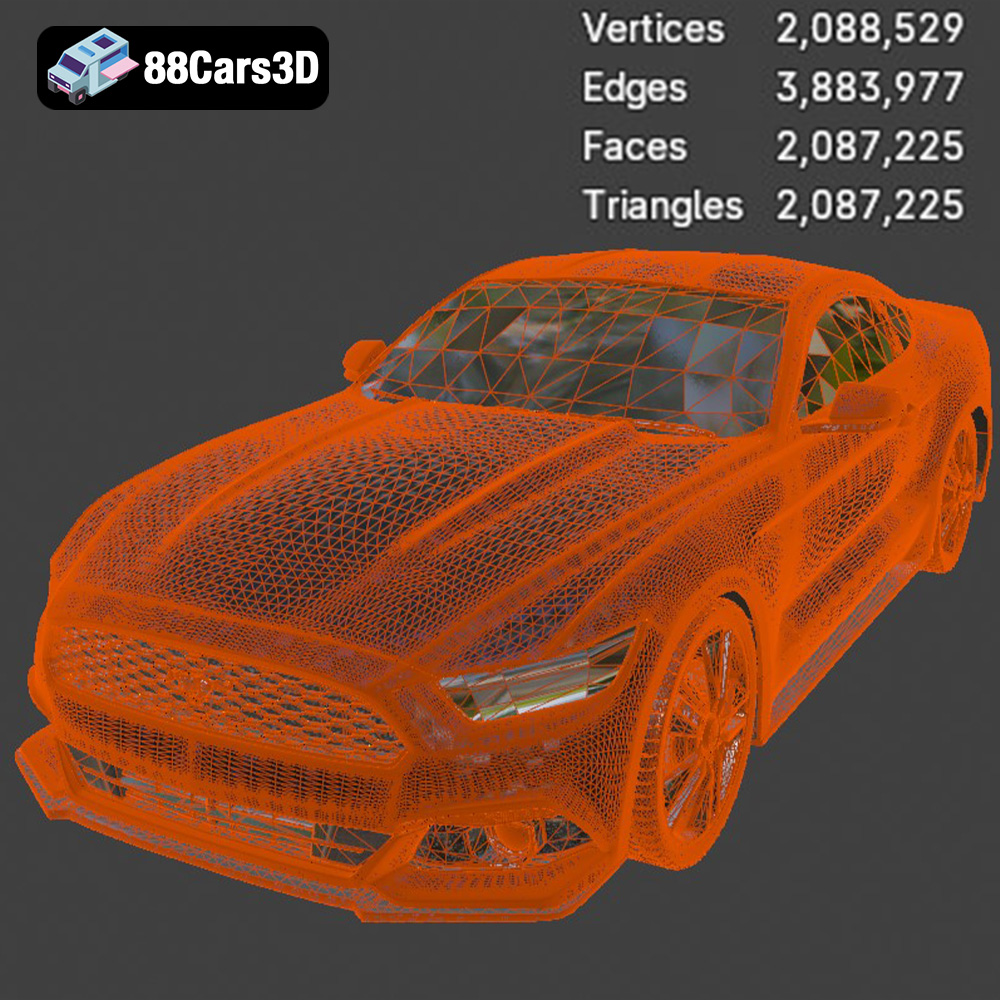
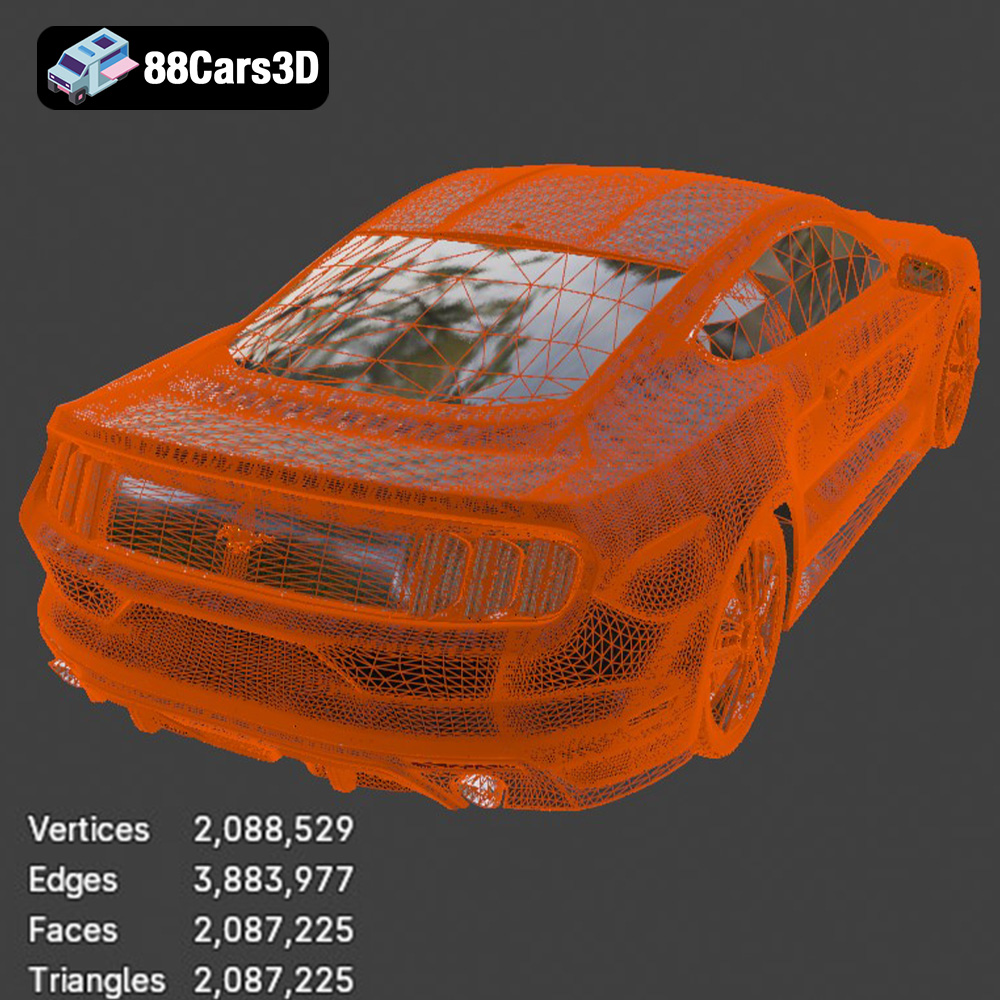
At the core of any high-quality 3D model is its geometry. The 2008 Ford Mustang GT model boasts a comprehensive geometry with a triangle count of 2,087,225. This figure is a critical indicator of detail. For contexts demanding extreme visual fidelity – such as cinematic rendering, high-end product visualization, or virtual showrooms – this poly count allows for the recreation of every subtle curve, sharp edge, and intricate component without resorting to excessive normal mapping or displacement, ensuring true geometric accuracy.
Meticulous topology, mentioned in the product description, refers to the intelligent arrangement of polygons (in this case, triangles) on the model’s surface. Good topology is paramount for several reasons:
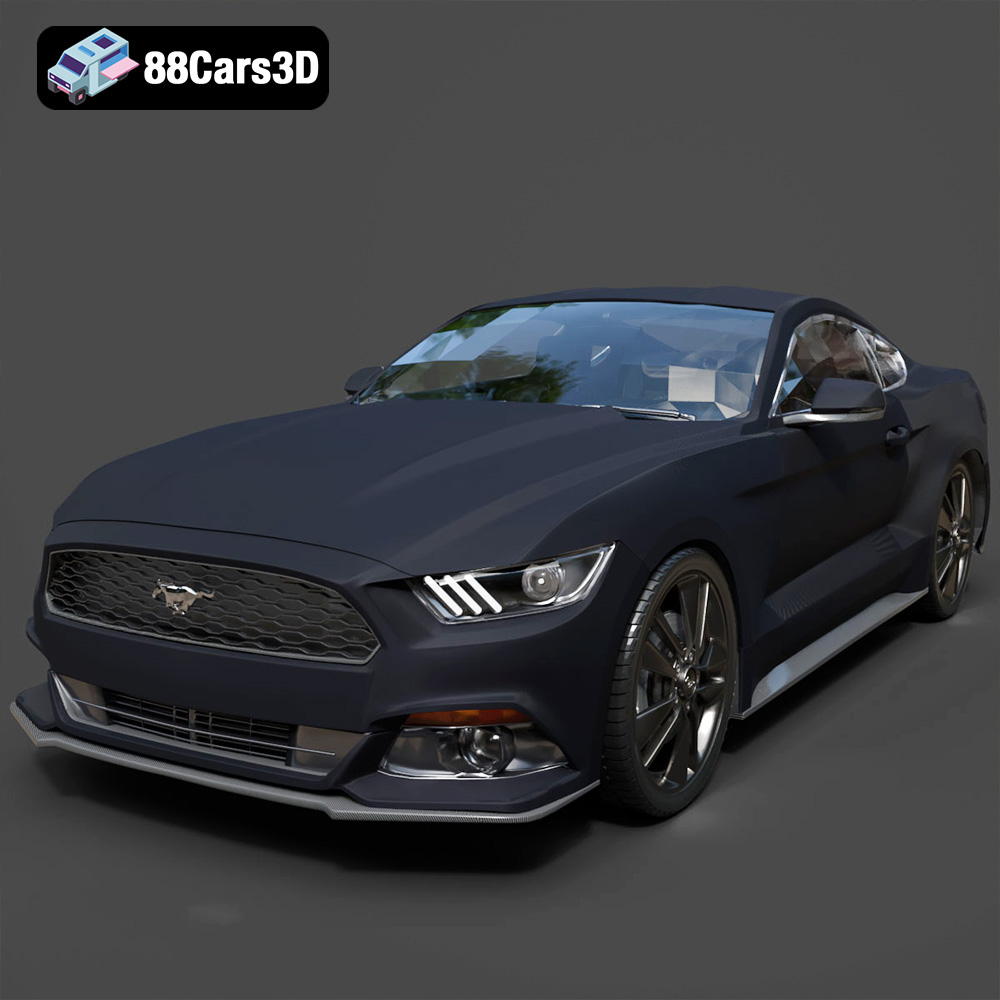
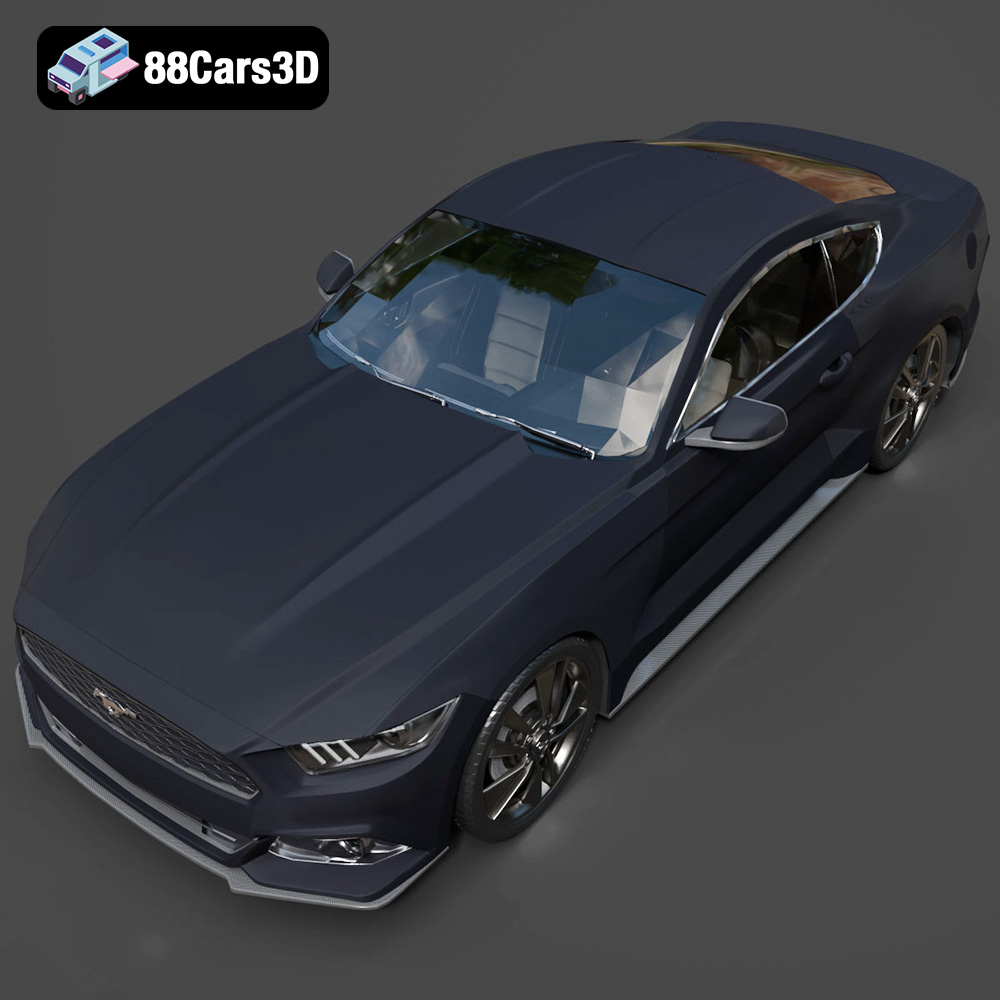
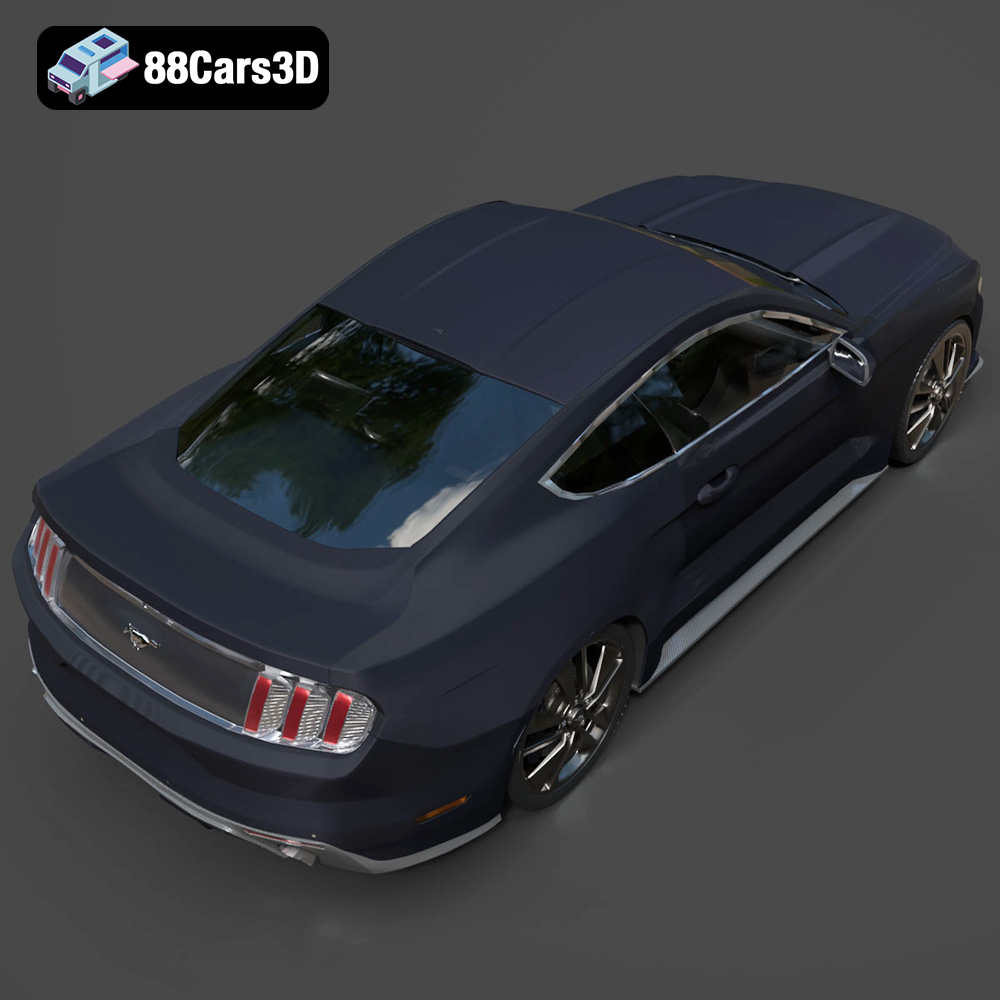
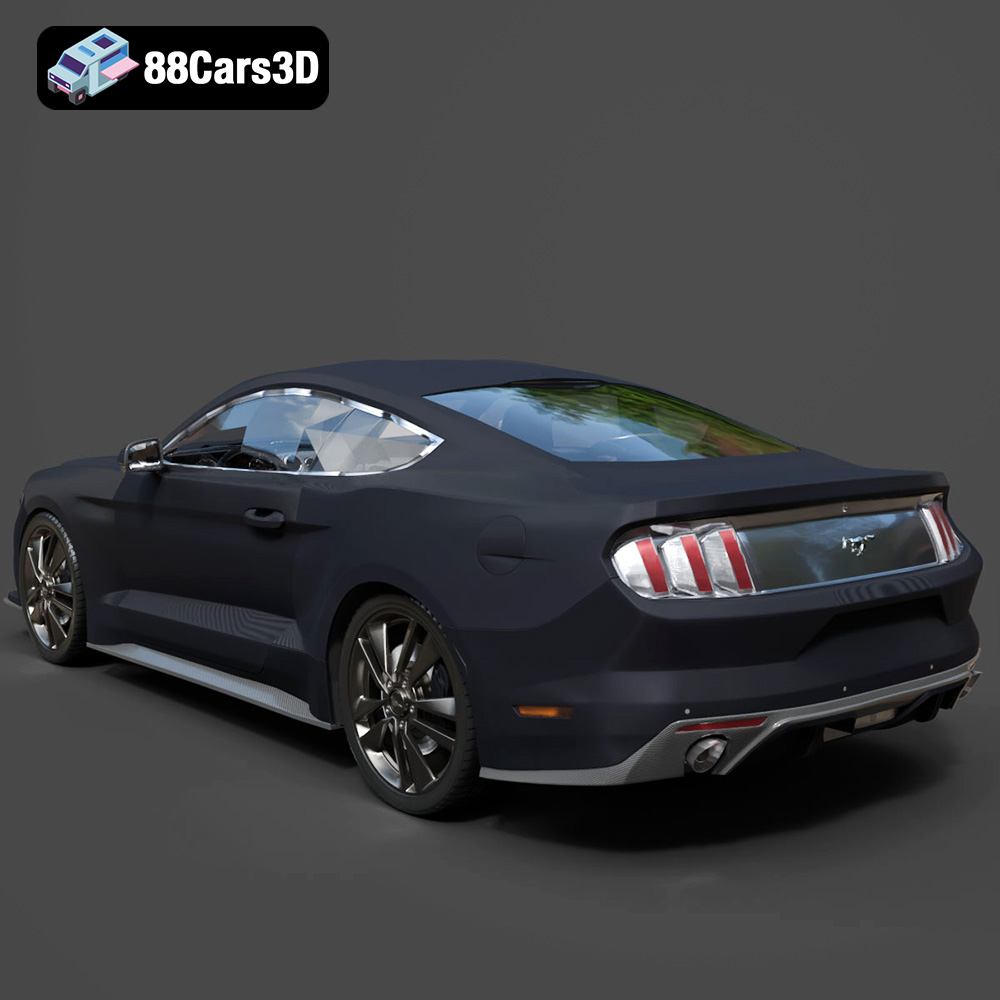
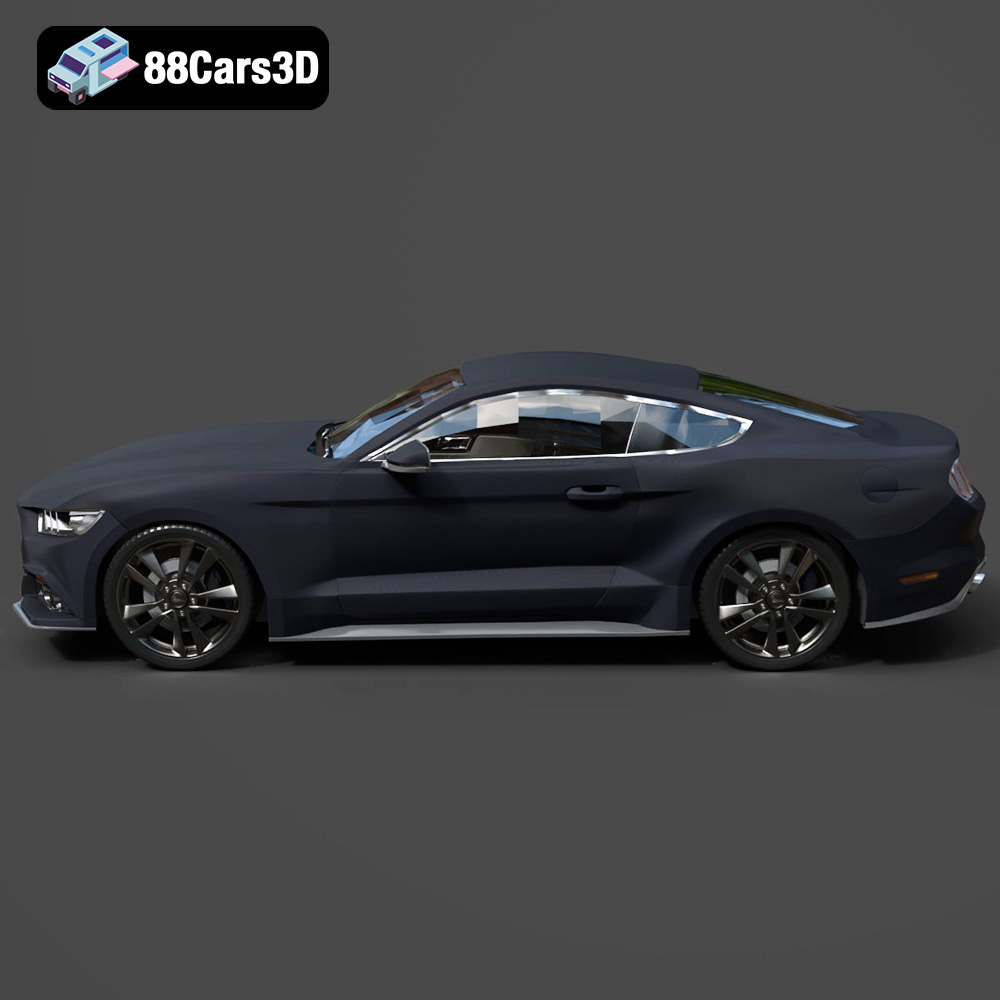
The model’s accurate Ford Mustang GT 2008 body geometry and classic retro proportions ensure that the digital asset is immediately recognizable and aesthetically correct, capturing the aggressive front grille, muscular hood, and sweeping fastback roofline.
The true depth of a high-fidelity model is often found in its secondary and tertiary details. The Mustang GT model doesn’t just focus on the exterior shell; it extends to the intricate components that bring the vehicle to life.
Furthermore, the model adheres to real-world scale accuracy, which is non-negotiable for professional applications. Correct scale ensures that the model integrates seamlessly into scenes with other assets, interacts realistically with physics engines, and appears correctly proportioned in AR/VR environments.
The transition of a highly detailed 3D car model from a static render to a dynamic, interactive game asset demands careful consideration of optimization and engine integration. The Ford Mustang GT 2008 3D Model is described as “Game-Ready & Optimized,” striking a balance between visual fidelity and real-time performance.
A triangle count of 2,087,225 for a game asset might seem high for older engines or mobile titles, but for modern, high-end PC and console games (especially open-world titles or racing simulators like Forza Horizon or Gran Turismo), this level of detail is increasingly common for primary vehicles. The phrase “strikes a perfect balance for real-time engines (Unreal, Unity) while maintaining high-end visual realism” is key.
The inclusion of .fbx and .unreal file formats directly supports game development, providing clean, structured assets ready for import into engines like Unreal Engine and Unity.
The process of integrating the Mustang GT model into a game engine involves several steps, all streamlined by the model’s design:
Whether for an urban street racing environment, an open-world driving simulator, or an automotive configurator within a game, this model provides the necessary foundation for a visually stunning and technically sound game asset.
Beyond traditional game development, high-quality 3D car models are indispensable tools for creating compelling augmented reality (AR), virtual reality (VR), and high-end visualization projects. The 2008 Ford Mustang GT model’s attributes make it particularly well-suited for these cutting-edge applications.
The rise of AR and VR has revolutionized how consumers interact with products, especially high-value items like cars.
Such applications are not just for sales; they are powerful marketing tools for brand campaigns, allowing potential buyers to form a deeper connection with the product before it even leaves the factory floor.
For automotive companies, advertising agencies, and designers, photorealistic rendering is paramount. It allows for showcasing vehicles in ideal conditions, with perfect lighting and without the high costs of physical photography or CGI shoots.
The inclusion of .max and .blend files ensures that artists working in these industry-standard packages have direct access to the model in its most editable and render-ready state, facilitating the creation of truly captivating visuals.
The versatility of a well-crafted 3D model extends beyond the digital screen; it can even cross over into the physical world through 3D printing. The 2008 Ford Mustang GT model, through its convertibility to the .stl format, offers an exciting avenue for hobbyists and collectors to own a tangible replica of this iconic car.
Converting the high-detail Mustang GT model into a physical object requires careful consideration of 3D print settings. The provided recommendations are crucial for achieving a successful and high-quality print:
The journey from a raw 3D print to a display-ready model often involves significant post-processing, especially for achieving an authentic factory finish.
This process allows enthusiasts to create highly personalized, tangible versions of the digital Ford Mustang GT, showcasing its aggressive aesthetic in a new dimension.
A truly versatile 3D model isn’t just about static perfection; it’s about providing a flexible foundation for creative expression and adaptation. The 2008 Ford Mustang GT 3D Model offers substantial opportunities for customization, allowing artists and developers to tailor it precisely to their project’s unique vision.
While the model accurately captures the classic retro proportions and factory styling of the S197 Mustang, its structure allows for easy modification:
A car model rarely exists in isolation; it interacts with its environment, and its presentation heavily depends on lighting and context.
This inherent flexibility ensures that the 2008 Ford Mustang GT 3D Model is not just a finished product, but a robust creative tool ready for any artistic direction, whether it’s a realistic simulation, a stylized animation, or a unique physical print.
The digital realm offers boundless opportunities for creative expression, and a meticulously crafted 3D model like the 2008 Ford Mustang GT stands as a testament to this potential. From its iconic design and comprehensive interior detailing to its game-ready optimization and extensive file format support, this model is engineered to meet the demanding standards of professional 3D artists, developers, and designers. Whether you’re building an immersive open-world game, creating stunning automotive renders for a marketing campaign, designing a virtual showroom experience, or even producing a tangible 3D-printed replica, this asset provides a robust and versatile foundation.
The carefully balanced polycount, detailed engine and interior, animatable components, and adherence to real-world scale ensure that this model isn’t just visually appealing but also technically sound for various pipelines including 3ds Max, Blender, and Unreal Engine. The inclusion of diverse file formats such as .blend, .fbx, .obj, .glb, .stl, .ply, .unreal, and .max, addresses every conceivable professional need, guaranteeing seamless integration and maximum utility. Investing in such a high-quality 3D car model, like those found at 88cars3d.com, is an investment in efficiency, fidelity, and creative freedom, empowering you to bring your automotive visions to life with unparalleled detail and realism.
The 2008 Ford Mustang GT is an iconic American muscle car that perfectly captures the retro-futuristic styling of the legendary S197 generation. This highly detailed 3D model brings the classic pony car aesthetic to life, featuring the aggressive front grille with the signature galloping pony emblem, a muscular hood hinting at the powerful 4.6L V8 engine underneath, and the unmistakable sweeping roofline of the fastback design. Every curve and edge has been modeled to reflect the bold, aggressive stance that made this vehicle a staple of automotive culture. Crafted with precision, this model boasts a comprehensive geometry with a triangle count of 2,087,225, ensuring exceptional visual fidelity while maintaining structural integrity for close-up renders. The model features meticulous topology and high-resolution material setups, making it an outstanding asset for high-end visualization, realistic game development, and immersive VR/AR experiences where detail is paramount. Perfect for open-world driving games, urban street racing environments, automotive configurators, and high-quality cinematic animations.
$85.50
.2008
.blend
.fbx
.ford
.glb
.max
.mustang
.obj
.ply
.rendering
.stl
.unreal
car-3d-model
game asset
game-ready
low-poly
muscle-car
mustang-gt
optimized
pony-car
VR/AR