Get 40% OFF All Premium 3D & STL Models!

In the rapidly evolving landscape of digital design and interactive media, the demand for exceptionally detailed and versatile 3D assets has never been higher. From the breathtaking photorealism of architectural visualizations to the immersive worlds of modern video games, a high-quality 3D model can be the cornerstone of a successful project. Automotive design, in particular, thrives on the precision and fidelity of its digital counterparts, requiring assets that capture every curve, reflection, and mechanical intricacy with stunning accuracy. This pursuit of digital perfection is where expertly crafted 3D car models truly shine, serving as indispensable tools for designers, developers, and artists across numerous industries.
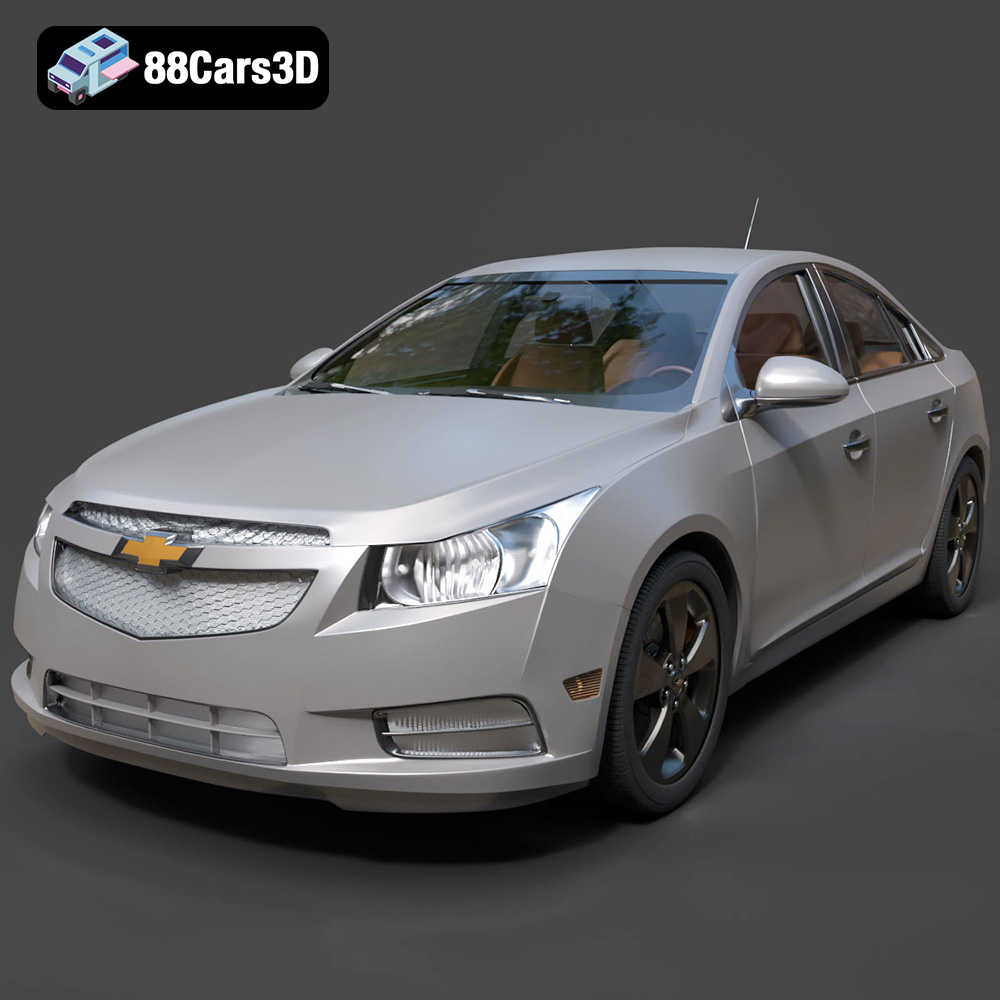
Today, we’re diving deep into the technical brilliance of one such asset: the Chevrolet Cruze 2011 3D Model. This model isn’t just a static representation; it’s a meticulously engineered digital twin, ready to be deployed in everything from high-fidelity renders to real-time interactive experiences. It embodies the blend of artistic vision and technical mastery required to bring a real-world vehicle into the digital realm, offering a robust foundation for a myriad of creative and professional applications. Whether you’re building a new game, designing a virtual showroom, or even preparing for 3D printing, understanding the nuances of such an asset is key to unlocking its full potential.
Creating a truly exceptional 3D car model is a painstaking process that merges artistic skill with rigorous technical understanding. It’s about more than just replicating a shape; it’s about capturing the essence, the engineering, and the visual character of the original vehicle. The Chevrolet Cruze 2011 3D Model exemplifies this synthesis, providing a robust and aesthetically pleasing asset for professional use.
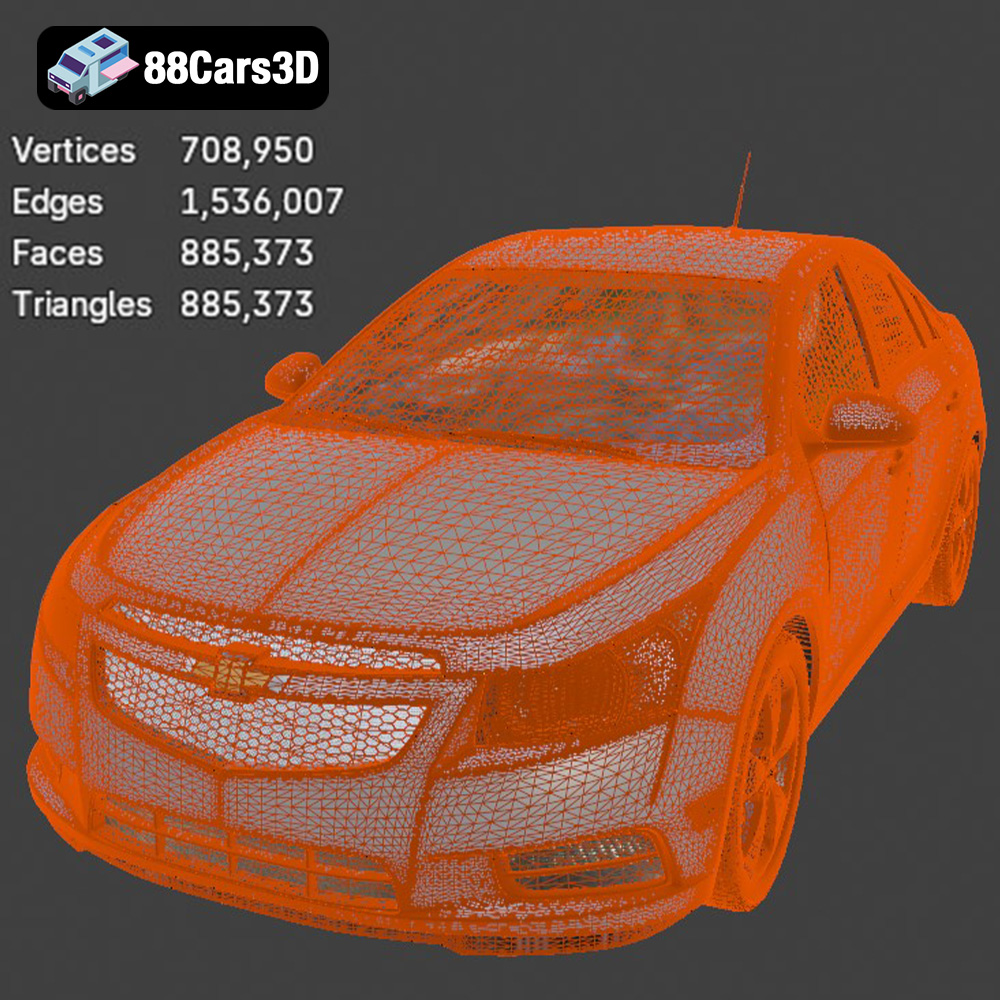
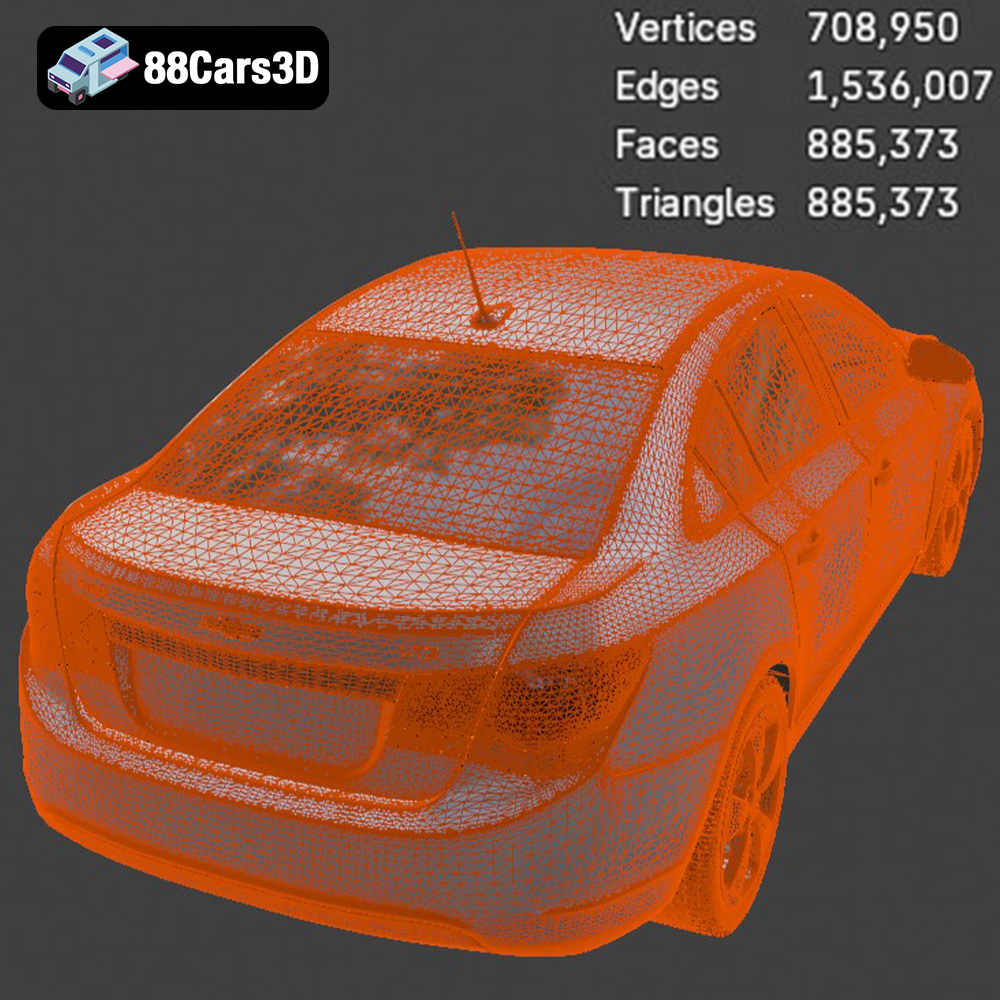
At the heart of any high-quality 3D model is its topology – the arrangement of vertices, edges, and faces that define its surface. For automotive models, precision is paramount. The Chevrolet Cruze 2011 3D Model boasts a finely tuned topology of 885,373 triangles. This poly count strikes an optimal balance, providing enough detail for high-end visual realism without overburdening real-time engines. Critical considerations include clean edge loops, which ensure smooth deformations during animation and prevent artifacts when subdividing or applying smoothing groups. The pristine edge loops and smooth surface reflections of this model are not accidental; they are the result of careful modeling, ensuring it looks breathtaking in both real-time lighting scenarios and demanding offline rendering setups. Furthermore, maintaining real-world scale accuracy is crucial for seamless integration into existing scenes or environments, ensuring the car fits naturally within an architectural visualization or a game world.
Beyond geometry, the realism of a 3D car model largely depends on its materials and textures. Physically Based Rendering (PBR) workflows are standard in professional pipelines, simulating how light interacts with surfaces in the real world. This involves meticulously crafted textures for color (Albedo/Base Color), metallic properties, roughness, normal maps for fine surface detail, and ambient occlusion. For the Chevrolet Cruze 2011, this translates to accurately rendered metallic paint finishes that reflect light correctly, detailed cloth and leather textures for the interior, and realistic tire treads. Proper UV mapping, which unwraps the 3D surface into a 2D texture space, is essential to apply these textures without distortion, ensuring every decal, seam, and panel line appears authentic. The model’s attention to these details contributes significantly to its suitability for virtual car showrooms and cinematic animation, where every visual element is scrutinized.
The Chevrolet Cruze 2011 3D Model showcases an exceptional level of detail, making it a powerful tool for a diverse range of applications. Its exterior features include accurate frame geometry and aerodynamic proportions, reflecting the vehicle’s real-world design. Crucially, it includes a detailed representation of the Ecotec inline-four engine block, realistic exhaust system, and undercarriage details – elements often overlooked in simpler models but vital for high-fidelity renders and close-up shots. The highly detailed lighting assemblies, including swept-back headlights and taillights, contribute significantly to its photorealism. Inside, the twin-cockpit design is meticulously reproduced with cloth and leather textured seats, an accurate multi-function steering wheel, detailed instrument cluster, and intricate center console controls. The separation of wheels, suspension, and steering components provides flexibility for seamless animation, a critical advantage for game development and animated sequences.
The utility of a 3D model is often defined by its file format. Different formats serve distinct purposes, optimizing for compatibility, specific software features, or performance in particular applications. Understanding these formats is crucial for professionals seeking to integrate assets like the Chevrolet Cruze 2011 3D Model into their diverse workflows. At 88cars3d.com, we recognize this necessity, providing a comprehensive suite of formats to ensure maximum flexibility and compatibility.
The .blend format represents a fully editable Blender scene. Blender users will find this invaluable as it contains all the scene data, including materials, textures, lighting setups, and modifiers, exactly as the artist intended. This format is perfect for those who wish to delve into the model’s construction, make extensive modifications, or leverage Blender’s powerful rendering capabilities with Cycles or Eevee. It offers the highest degree of creative control within the Blender ecosystem, making it ideal for custom automotive rendering projects or intricate animations.
For broader compatibility, especially within real-time game engines, the .fbx format is an industry standard. It’s ideal for Unreal Engine, Unity, and other real-time pipelines due to its robust support for mesh data, skeletal animations, blend shapes, and PBR material definitions. FBX acts as an excellent interchange format, capable of preserving complex scene data across different software packages. When importing the Chevrolet Cruze 2011 into Unreal or Unity, the .fbx file ensures that the geometry, UVs, and basic material assignments translate efficiently, forming a solid foundation for further engine-specific optimization and material setup.
The .obj format, or Wavefront OBJ, stands as a universal format for cross-software compatibility. It’s a simple, widely supported format primarily used for transferring geometric data (vertices, normals, UVs) between various 3D applications. While it doesn’t typically store advanced material properties or animations as comprehensively as FBX, its ubiquity makes it an excellent fallback for ensuring that the core mesh data of the Chevrolet Cruze 2011 can be opened and worked with in virtually any 3D software. Artists often use .obj for sculpting, retopology, or when the goal is purely geometric manipulation.
.glb, or GL Transmission Format (binary), is specifically optimized for AR, VR, and browser-based display. It’s a compact, single-file format that includes geometry, materials, textures, and animations, making it incredibly efficient for web-based viewers and mobile applications. Its “transmission-ready” nature means it loads quickly and performs well in immersive experiences. For presenting the Chevrolet Cruze 2011 in an interactive web configurator or an AR experience on a smartphone, the .glb format is the superior choice, providing a lightweight yet visually rich asset.
When the digital world meets the physical, the .stl format takes center stage. This stereolithography format is the go-to for 3D printing output. It represents a 3D model as a series of connected triangles, defining only the surface geometry. While it lacks color or texture information, its simplicity makes it universally compatible with 3D printers and slicing software. The Chevrolet Cruze 2011, when converted to .stl, becomes a blueprint for a physical model, enabling hobbyists and professionals to produce tangible replicas.
The .ply format (Polygon File Format or Stanford Triangle Format) is another precision mesh format often used in scientific or CAD applications for storing 3D data from scanners or complex computational models. It can store more complex properties than .obj, such as color per vertex, normal information, and various surface properties. While less common for general animation, it’s invaluable for precise mesh analysis, reverse engineering, or when the exact geometric properties of the Chevrolet Cruze 2011 are critical for CAD integration or detailed inspection.
The .unreal format, typically referencing a Uasset or a package containing an asset specifically prepared for Unreal Engine, signifies an engine-ready asset. This often means the model has been imported, materials set up using Unreal’s robust material editor, collisions defined, LODs (Levels of Detail) generated, and potentially even blueprint scripts integrated. While not a direct file extension like .fbx, it denotes a state where the Chevrolet Cruze 2011 is primed for immediate use within the Unreal Engine environment, saving developers significant setup time and ensuring optimal performance within the engine.
Finally, the .max format is the native file type for Autodesk 3ds Max. This means it contains the complete 3ds Max project, including all scene objects, lights, cameras, modifiers, materials, and animation data. For users of 3ds Max, this format offers full editability and access to the original modeling setup, making it ideal for animation, advanced rendering with V-Ray or Corona, and extensive scene integration. Having the Chevrolet Cruze 2011 in its native .max format ensures that professionals using 3ds Max can leverage every aspect of the software to customize and render the model to their exact specifications.
In the fiercely competitive world of game development, the quality and optimization of 3D assets are paramount. A truly “game-ready” asset like the Chevrolet Cruze 2011 3D Model can dramatically reduce development cycles and elevate the visual fidelity of a project.
Optimization is the cornerstone of successful game development. The Chevrolet Cruze 2011, with its 885,373 triangle count, strikes an excellent balance for real-time engines. While this might seem high for some older pipelines, modern engines like Unreal and Unity can handle such detail, especially when accompanied by proper optimization strategies. This includes efficient UV mapping, which reduces draw calls by packing textures intelligently, and the potential for Levels of Detail (LODs). Although not explicitly listed for this model, a professional workflow often involves creating lower-polygon versions of the model that automatically swap in at greater distances from the camera, preserving performance without sacrificing visual quality up close. The “game-ready” label implies that the model’s geometry and materials are structured to perform efficiently within these real-time environments, minimizing rendering overhead.
Integrating a 3D car model into game engines like Unreal Engine and Unity is a streamlined process with the right assets. Using the .fbx or .unreal formats from 88cars3d.com, developers can import the Chevrolet Cruze 2011 directly. In Unreal Engine, the import process allows for automatic material creation, skeleton import, and collision generation. Developers can then refine materials using Unreal’s node-based editor, creating realistic car paint, glass, and tire shaders. For physics, components like wheels, suspension, and steering, which are separated in the Cruze model, are critical. This separation allows for the creation of sophisticated vehicle physics blueprints in Unreal or custom scripts in Unity, enabling realistic wheel rotation, steering input, and suspension travel. The accurate pivot setup in the model further aids in correctly simulating these mechanical movements, providing a foundation for an authentic driving experience.
The applications for a game-ready 3D car model are vast. For racing titles, the Chevrolet Cruze 2011 can serve as a highly detailed vehicle, offering a compelling visual experience. In open-world games, it can populate bustling cityscapes, adding realism and depth to the environment. Its optimized polycount makes it ideal for traffic simulators, where numerous vehicles need to be rendered simultaneously without crippling performance. Imagine a virtual cityscape filled with diverse, lifelike vehicles, all seamlessly integrated. The attention to interior detail, optimized geometry tailored for first-person POV, also makes it perfect for immersive VR driving experiences, giving players a truly authentic cockpit view. This versatility underscores why investing in high-quality game assets like this one is crucial for developing captivating and visually rich interactive entertainment.
While game development offers immense possibilities, the realm of offline rendering and visualization demands an even higher degree of fidelity and artistic control. High-quality 3D car models are the bedrock for breathtaking cinematic animations, realistic product showcases, and immersive architectural visualizations.
For professional automotive rendering, software like Autodesk 3ds Max and Blender are industry powerhouses. The Chevrolet Cruze 2011 3D Model, provided in .max and .blend formats, offers artists complete creative freedom. In 3ds Max, users can leverage advanced rendering engines like V-Ray or Corona to achieve photorealistic results. This involves setting up complex studio lighting scenarios, often using High Dynamic Range Images (HDRIs) to capture realistic environmental lighting and reflections. Materials can be intricately layered to simulate metallic flake paint, clear coats, and subtle imperfections on glass or chrome. Similarly, Blender users can utilize Cycles or Eevee, adjusting shaders and lighting to produce stunning images. The model’s pristine edge loops and smooth surface reflections are particularly critical here, as every nuance of light interaction is scrutinized in high-resolution renders, making it perfect for brand campaigns and lifestyle scenes that demand visual perfection.
The capabilities of the Chevrolet Cruze 2011 3D Model extend beyond traditional screen-based rendering into the frontier of Augmented Reality (AR) and Virtual Reality (VR), as well as Architectural Visualization. For AR/VR projects, especially those for mobile devices or web browsers, the .glb format is invaluable due to its optimized and compact nature. This allows for immersive virtual showrooms where clients can interact with the vehicle in a realistic 3D space, exploring its features and customizing options in real time. For dedicated VR applications, the .fbx format offers the necessary data for integration into engines like Unreal or Unity, providing highly detailed experiences. In Archviz, placing a realistic car model like the Cruze into a scene can breathe life into a building render, adding context, scale, and a touch of modern lifestyle. Imagine a beautifully rendered house with the Chevrolet Cruze 2011 parked in the driveway – it instantly elevates the realism and storytelling of the architectural visualization.
A significant advantage of acquiring a versatile 3D asset is the inherent capacity for customization. The Chevrolet Cruze 2011 3D Model is designed with flexibility in mind, allowing artists to tailor its appearance to specific project needs. Users can easily change body colors, applying various factory shades or custom finishes to match a brand identity or artistic vision. Modifying tire textures, from standard street variants to all-weather options, can adapt the vehicle to different environmental settings. Adjusting material finishes (matte, gloss, metallic, clear coat) offers granular control over how light interacts with the car’s surface, creating diverse aesthetic moods. Furthermore, adapting the lighting for different day or night environments, or even specific weather conditions, allows the model to be dynamically integrated into any scene, ensuring it always looks its best. This level of customization ensures that the model remains relevant and adaptable across a multitude of creative endeavors.
The journey of a 3D model doesn’t always end on a screen. For enthusiasts, designers, and engineers, the ability to transition a digital asset into a physical object via 3D printing offers an exciting dimension of utility. The Chevrolet Cruze 2011 3D Model is not only for pixels but also for plastic (or resin), offering a pathway to tangible replicas.
Converting a high-detail rendering model into a 3D printable file requires specific considerations. The .stl format is the industry standard for 3D printing, representing the model’s surface as a collection of triangles. For successful printing, the mesh must be “manifold,” meaning it has no holes, self-intersecting geometry, or non-uniform normals, ensuring a watertight volume that a slicer can process. Key technical aspects include ensuring an appropriate wall thickness; the Chevrolet Cruze 2011 model recommends 1.2–2.0 mm, which is robust enough for most desktop printers. The .ply format, while less common for direct printing, can also be converted to .stl and used for more complex, precision-oriented printing tasks, especially if the original data was derived from a scan or CAD analysis.
The product description for the Chevrolet Cruze 2011 3D Model provides excellent guidance for 3D printing enthusiasts. Recommended scales such as 1:12, 1:18, or 1:24 allow for various display sizes, catering to different preferences and printer capabilities. For achieving fine details, a low layer height of 0.04–0.12 mm is suggested, with resin printing (SLA/DLP) being highly recommended over FDM for its superior resolution and surface finish, particularly for intricate parts like the engine block or interior elements. Infill of 20–30% provides structural integrity without excessive material usage. Supports are crucial for detailed parts such as the exhaust system, mirrors, and door handles, preventing overhangs from collapsing during printing. Recommended print orientation, such as printing the frame angled for structural integrity and wheels separately, ensures optimal print quality and ease of assembly. Finally, post-processing steps like sanding, priming, and applying authentic factory colors with metallic finishes can elevate the printed model to a highly realistic miniature replica, making it a perfect display piece for hobbyists and collectors.
The journey from concept to final product in the digital realm is paved with powerful tools and meticulously crafted assets. High-quality 3D car models, such as the Chevrolet Cruze 2011 3D Model, stand as testament to the fusion of artistic vision and technical precision, offering unparalleled versatility across a spectrum of professional applications. From enhancing the immersive realism of game environments and captivating audiences with cinematic automotive rendering, to facilitating innovative AR/VR experiences and bringing digital designs to life through 3D printing, these assets are indispensable.
The Chevrolet Cruze 2011 3D Model, with its detailed geometry, game-ready optimization, wide array of file formats, and meticulous attention to both exterior and interior features, exemplifies what a premium digital automotive asset should be. It provides professionals with the flexibility and quality needed to meet demanding project requirements and push the boundaries of their creative endeavors. Whether you’re a game developer, a visualization artist, or a product designer, embracing such a comprehensive 3D model ensures that your projects are built on a foundation of excellence. Explore the possibilities and elevate your next project with this exceptional asset, available now on 88cars3d.com.
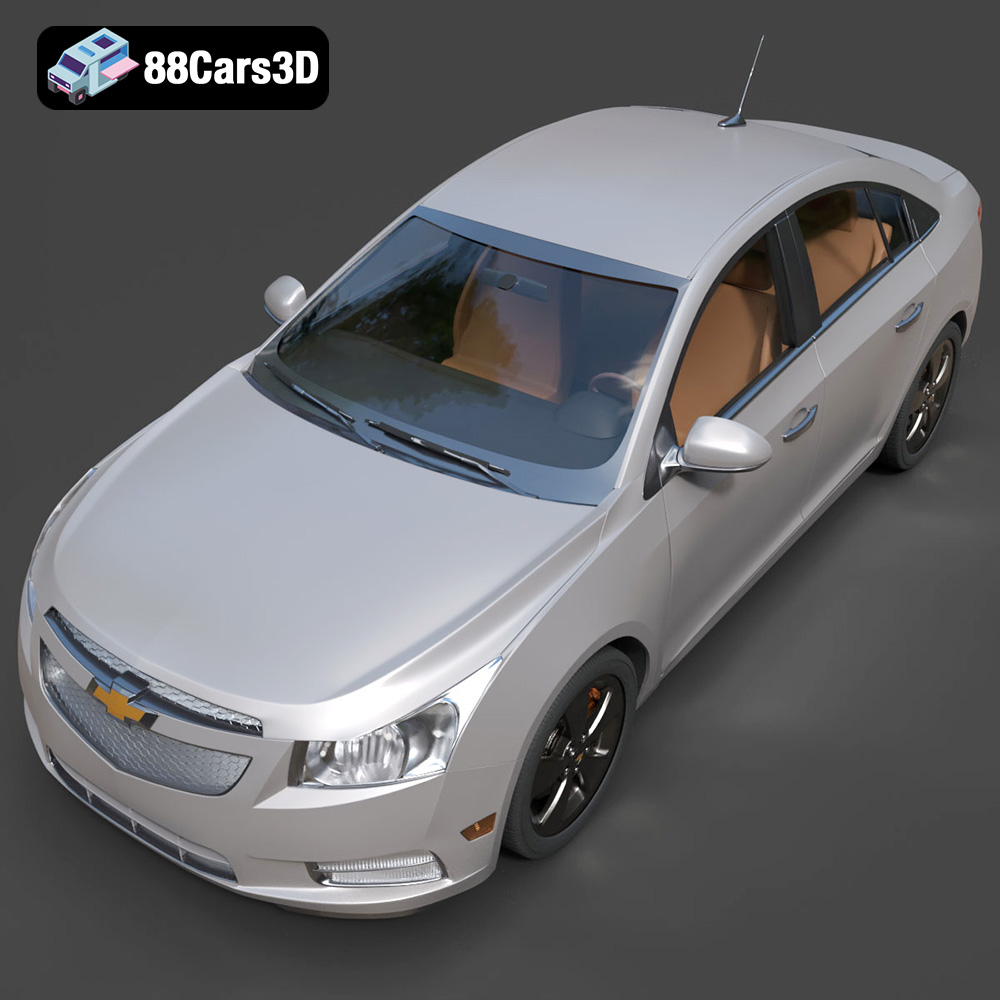
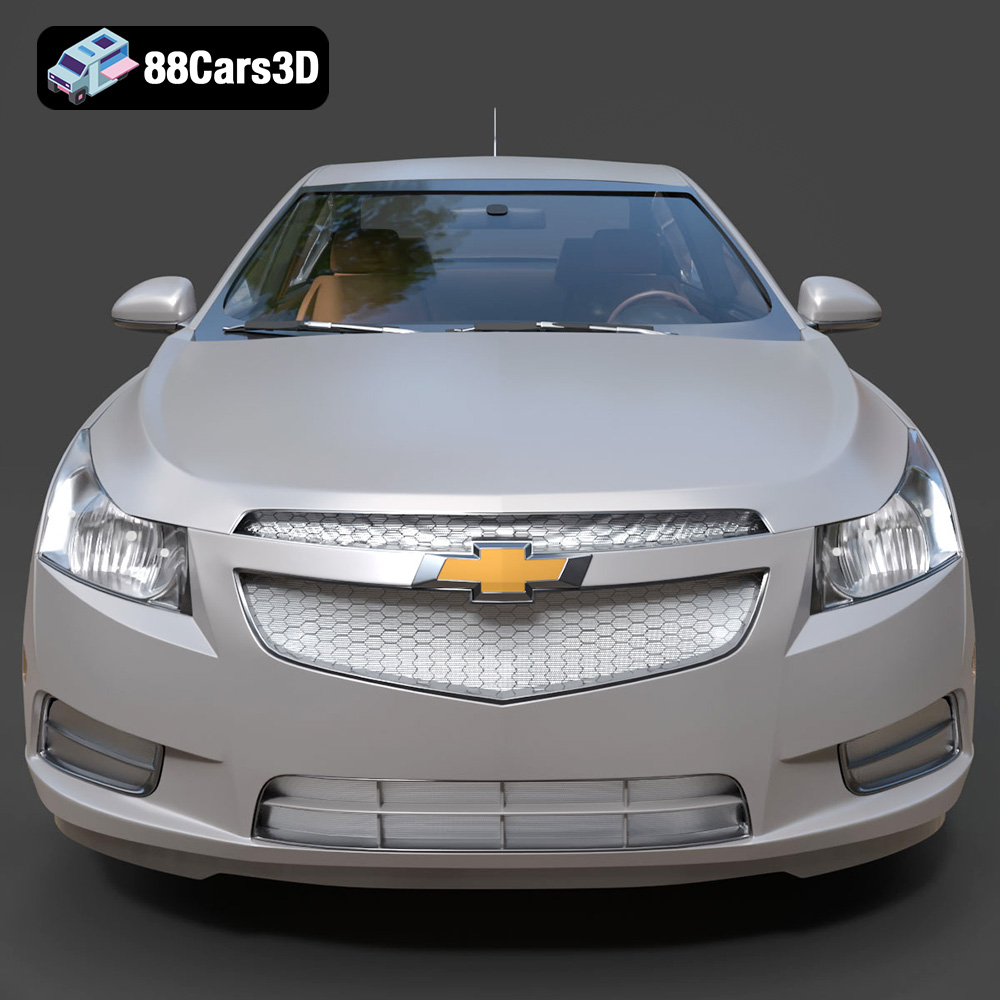
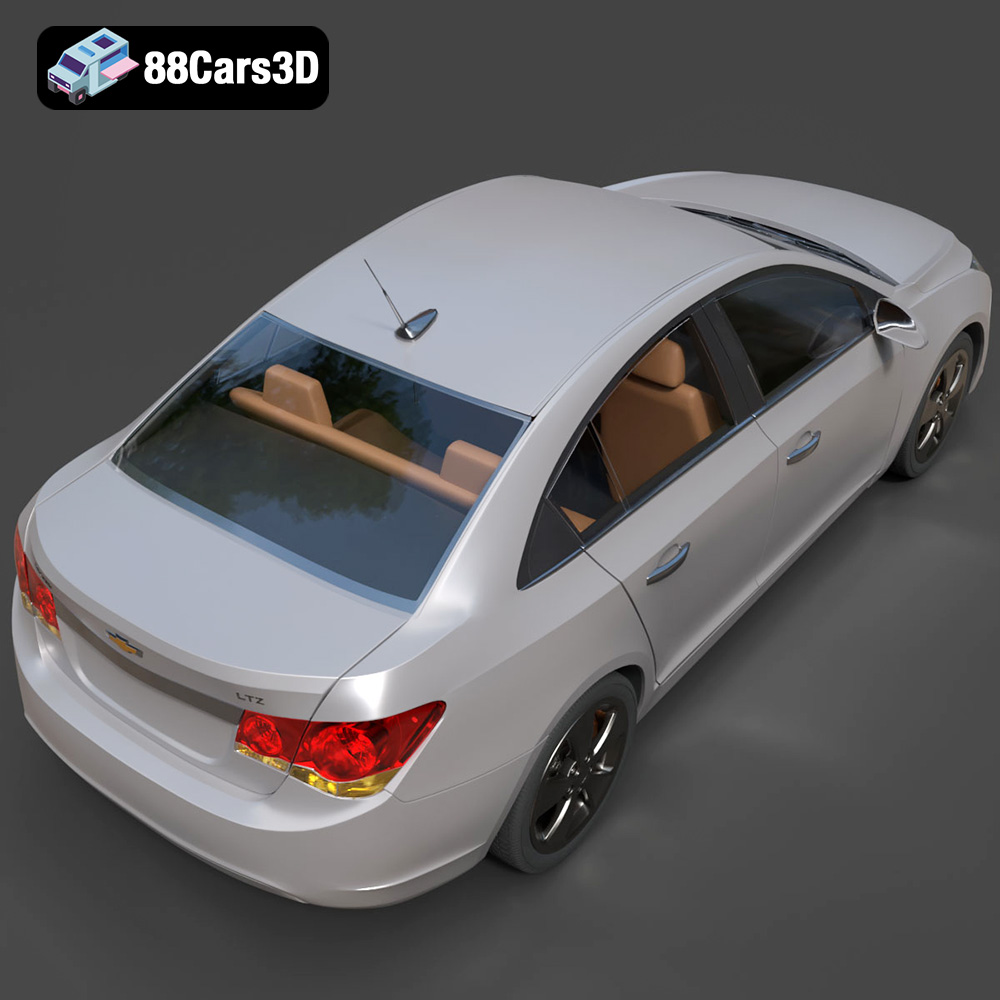
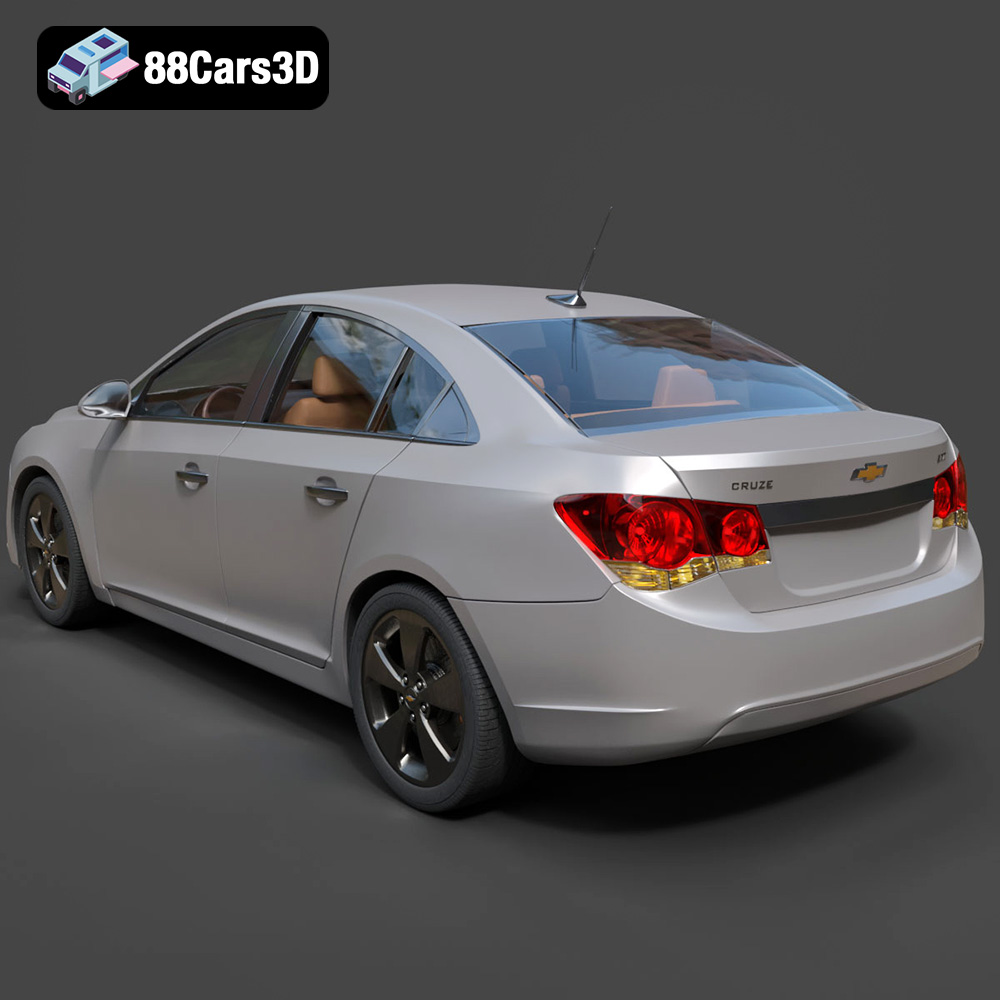
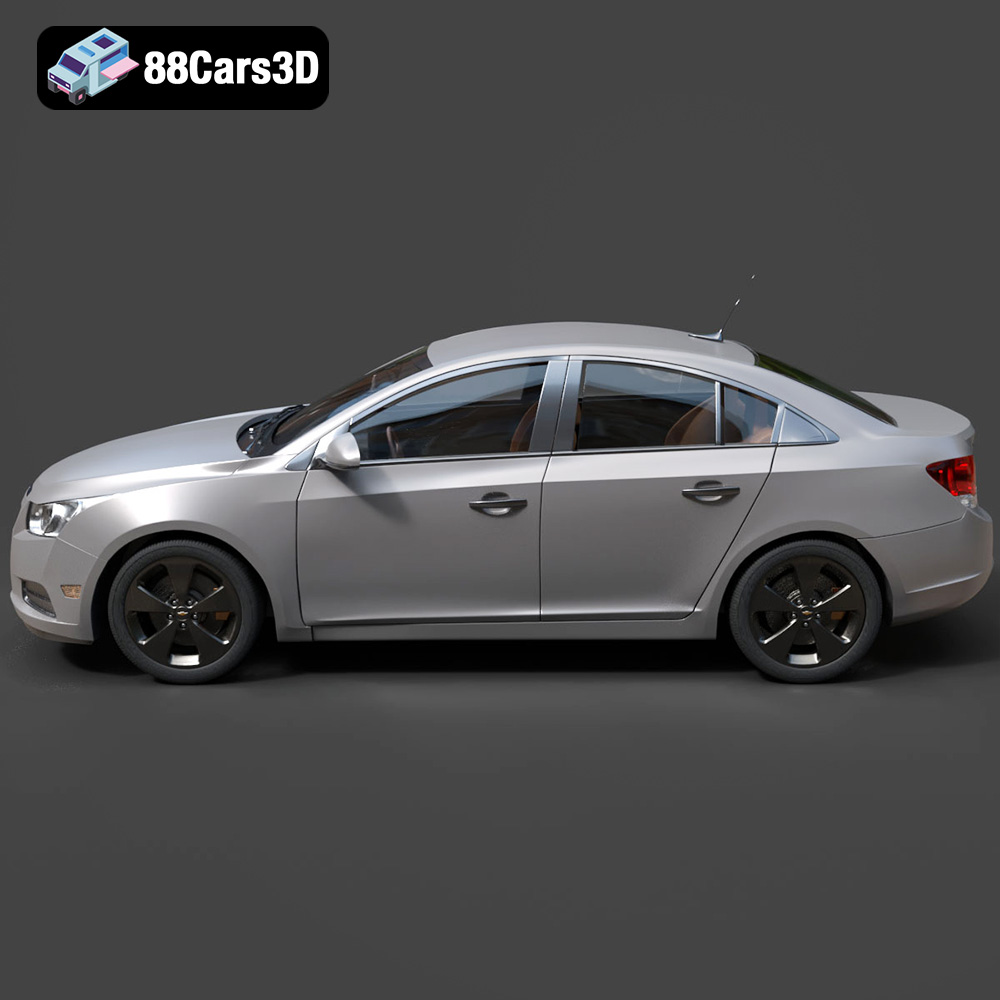
The Chevrolet Cruze 2011 represents a pivotal shift in the compact sedan market, boasting sharp styling, solid build quality, and a well-appointed interior. Key visual elements include the signature Chevrolet dual-port front grille, sweeping halogen headlights, an aerodynamic roofline, and well-proportioned rear styling that gives it an assertive, planted stance. This 3D model features exceptional quality with a finely tuned topology of 885,373 triangles. It is meticulously optimized for game engines while preserving high visual fidelity. The pristine edge loops and smooth surface reflections ensure the model looks breathtaking in real-time lighting scenarios and offline rendering setups alike. It is the perfect digital asset for game development, AR/VR projects, cinematic animation, and architectural visualization.
$58.50
.2011
.blend
.chevrolet
.cruze
.fbx
.glb
.max
.obj
.ply
.rendering
.sedan
.stl
.unreal
car-3d-model
compact-car
game asset
game-ready
low-poly
optimized
VR/AR