Get 40% OFF All Premium 3D & STL Models!

In the dynamic world of 3D visualization, game development, and automotive design, the quest for realism and efficiency is relentless. Professionals across these industries constantly seek high-fidelity assets that can elevate their projects, saving invaluable time and resources while delivering breathtaking visual experiences. This pursuit often leads to the specialized realm of 3D car models – assets that are far more than simple geometry; they are intricate digital sculptures, engineered for specific purposes from cinematic renders to real-time simulations.
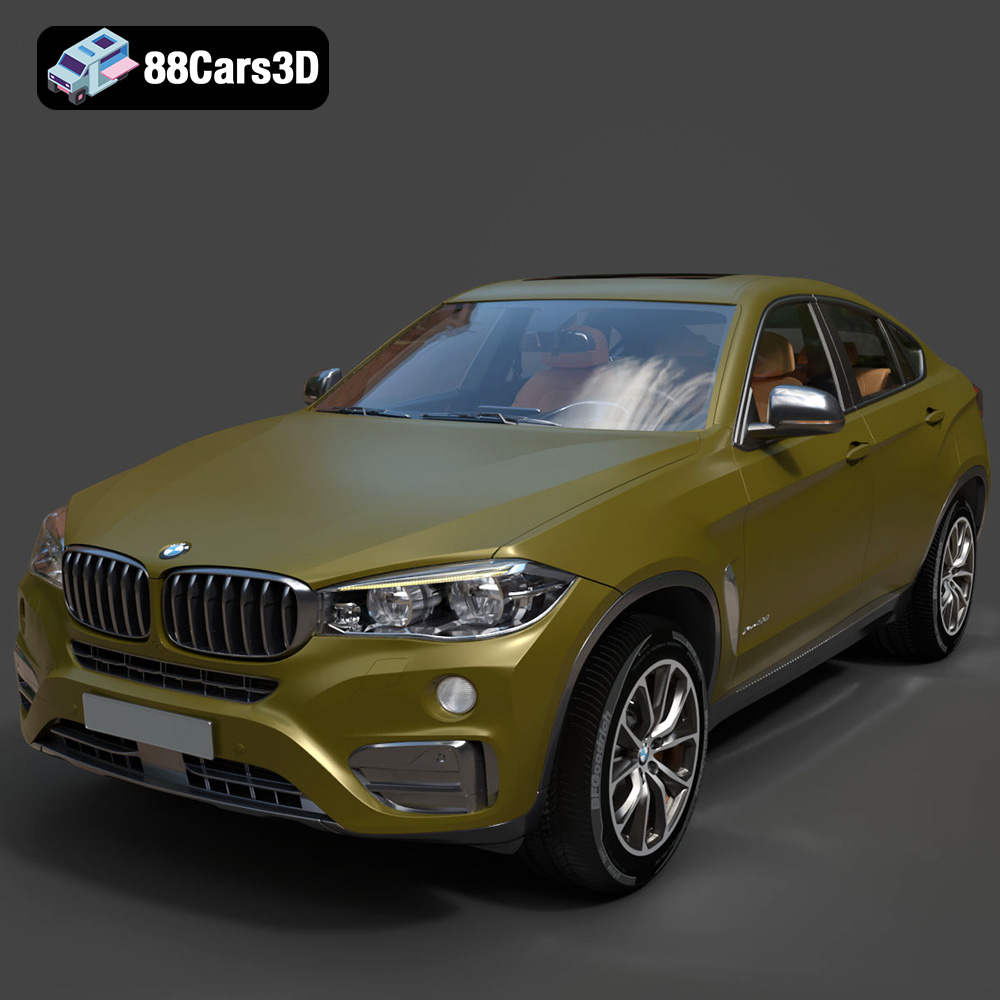
Today, we delve into the profound impact of meticulously crafted 3D car models, using the groundbreaking BMW X6 xDrive50i 2008 3D Model available on 88cars3d.com as our prime example. This particular model embodies the blend of high detail and optimized design necessary for success in demanding professional environments. From its origins as the pioneer of the Sports Activity Coupe segment to its digital representation, this vehicle demands attention. Its digital counterpart captures every nuance, from the iconic dual kidney grilles and aggressive front fascia to the muscular rear wheel arches and detailed interior. Such models aren’t just aesthetic; they are foundational tools that enable artists and developers to push the boundaries of their craft.
Choosing the correct file format for your 3D car model is paramount to a successful workflow. Each format serves a distinct purpose, offering specific advantages for different software, engines, and applications. A premium asset like the BMW X6 xDrive50i 2008 3D Model comes packaged with a comprehensive array of formats, ensuring maximum compatibility and utility across diverse pipelines. Understanding these formats is crucial for optimizing your project and avoiding costly compatibility issues.
The .blend format is the native file type for Blender, the powerful open-source 3D creation suite. When you receive a .blend file, you’re getting a fully editable Blender scene. This means all the original geometry, materials, textures, lighting, camera setups, and even animation rigs are preserved. For artists working primarily in Blender, this is the most convenient format, allowing for direct modification, rendering, and scene integration without any import/export conversions that could potentially alter data. It’s ideal for deep customization and leveraging Blender’s extensive toolset.
.fbx (Filmbox) is arguably the most widely adopted 3D interchange format, particularly prevalent in game development. Developed by Autodesk, FBX is designed to store not just geometry, but also materials, textures, animations, and skeletal data in a way that’s largely compatible across different 3D applications like 3ds Max, Maya, Blender, and game engines such as Unreal Engine and Unity. Its strength lies in its ability to transfer complex scene data efficiently, making it the go-to choice for moving assets between various stages of a production pipeline. The BMW X6 xDrive50i 2008 as an .fbx is perfectly primed for integration into real-time environments.
The .obj (Wavefront OBJ) format is a simple, universal 3D data format that is supported by nearly every 3D application. It primarily stores geometric data – vertices, normals, UV coordinates, and faces – and can reference external material (.mtl) files for basic shading information. While .obj doesn’t typically carry animation or rigging data, its widespread compatibility makes it an excellent choice for straightforward mesh transfer between software or as a fallback option when more complex formats fail. It’s robust for static mesh visualization and architectural scenes.
.glb (GL Transmission Format Binary) is an increasingly important format, especially for modern interactive applications. It’s a binary version of the glTF (GL Transmission Format) format, designed for efficient transmission and loading of 3D scenes and models by applications. GLB bundles the model, textures, and animations into a single file, making it incredibly easy to integrate into web-based 3D viewers, AR/VR experiences, and mobile applications. Its compact size and optimized structure are perfect for real-time display and the emerging metaverse, making the BMW X6 xDrive50i 2008 3D Model accessible for virtual showrooms and configurators.
.stl (STereoLithography) is the de facto standard file format for 3D printing. It represents a 3D model as a series of connected triangles (a tessellated surface) without color, texture, or other CAD attributes. Its simplicity makes it universally compatible with 3D printers and slicing software. When preparing a model like the BMW X6 xDrive50i 2008 for physical fabrication, converting it to .stl is the first step, allowing hobbyists and professionals to bring digital designs into the physical world.
The .ply (Polygon File Format) is another popular format for storing 3D data, particularly suited for representing scanned data, point clouds, and mesh data with additional attributes. It can store not only XYZ coordinates but also color, transparency, normals, texture coordinates, and other properties for each vertex or face. While less common for general 3D model distribution, PLY is invaluable in scientific visualization, reverse engineering, and applications requiring precise geometric analysis or detailed data capture.
The .unreal format, or more accurately, assets packaged for Unreal Engine, typically refers to files that have been specifically prepared and sometimes already imported into an Unreal Engine project. This often means meshes, materials, textures, and potentially even Blueprints are set up according to Unreal’s specifications, allowing for a direct drag-and-drop into a project without extensive configuration. This provides a significant head start for game developers and real-time visualization artists, ensuring the BMW X6 xDrive50i 2008 looks and performs optimally within Unreal Engine from the outset.
The .max format is the native file type for Autodesk 3ds Max, a leading software for 3D modeling, animation, and rendering. Similar to .blend files, .max files contain the complete scene data, including geometry, modifiers, materials, lights, cameras, animations, and plugins specific to 3ds Max. For users dedicated to the 3ds Max ecosystem, this format offers the highest fidelity and control over the asset, enabling advanced rendering setups with V-Ray or Corona, detailed animation, and complex scene assembly. The inclusion of a .max file for the BMW X6 xDrive50i 2008 ensures that 3ds Max professionals can fully leverage their preferred environment for high-end automotive rendering.
The success of any high-end visualization or interactive experience hinges on the quality of its assets. A truly premium 3D car model, such as the BMW X6 xDrive50i 2008 available on 88cars3d.com, is a masterpiece of digital craftsmanship. Its fidelity isn’t just about surface detail; it’s about accurate geometry, intelligent topology, and a meticulous recreation of every component.
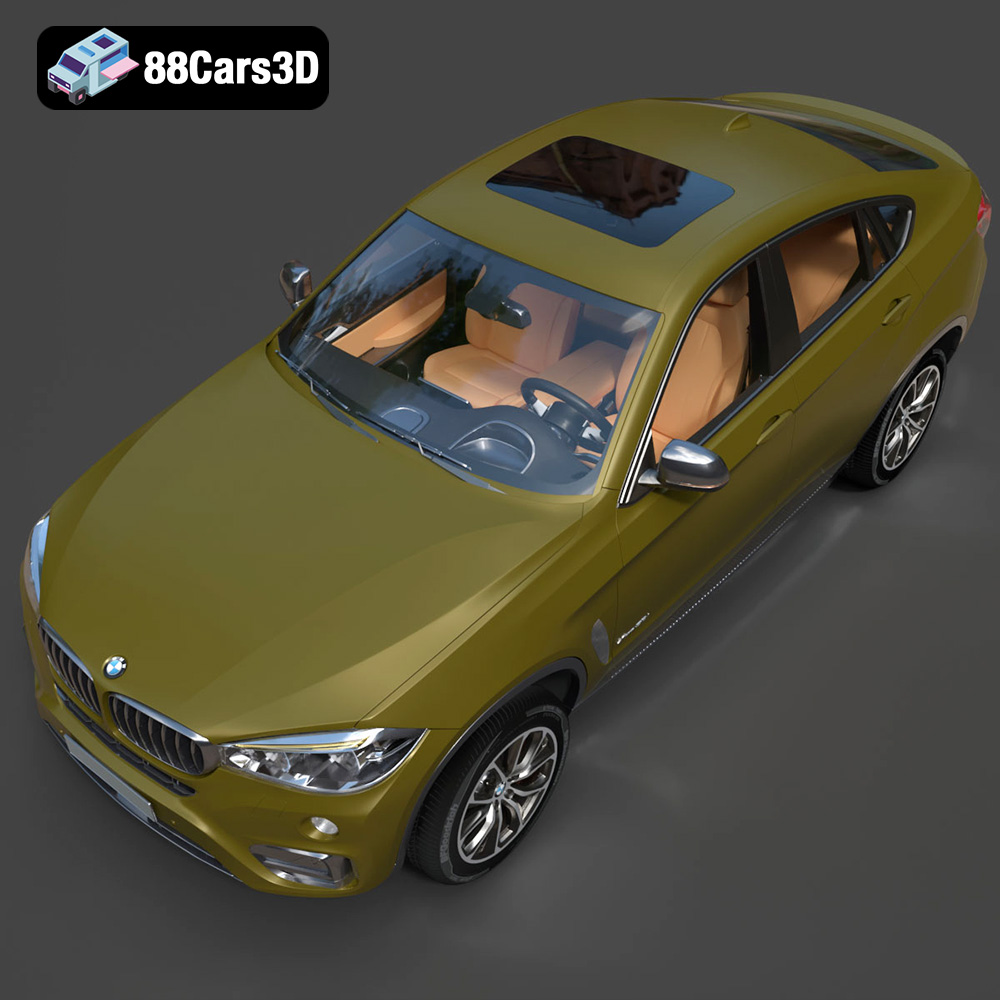
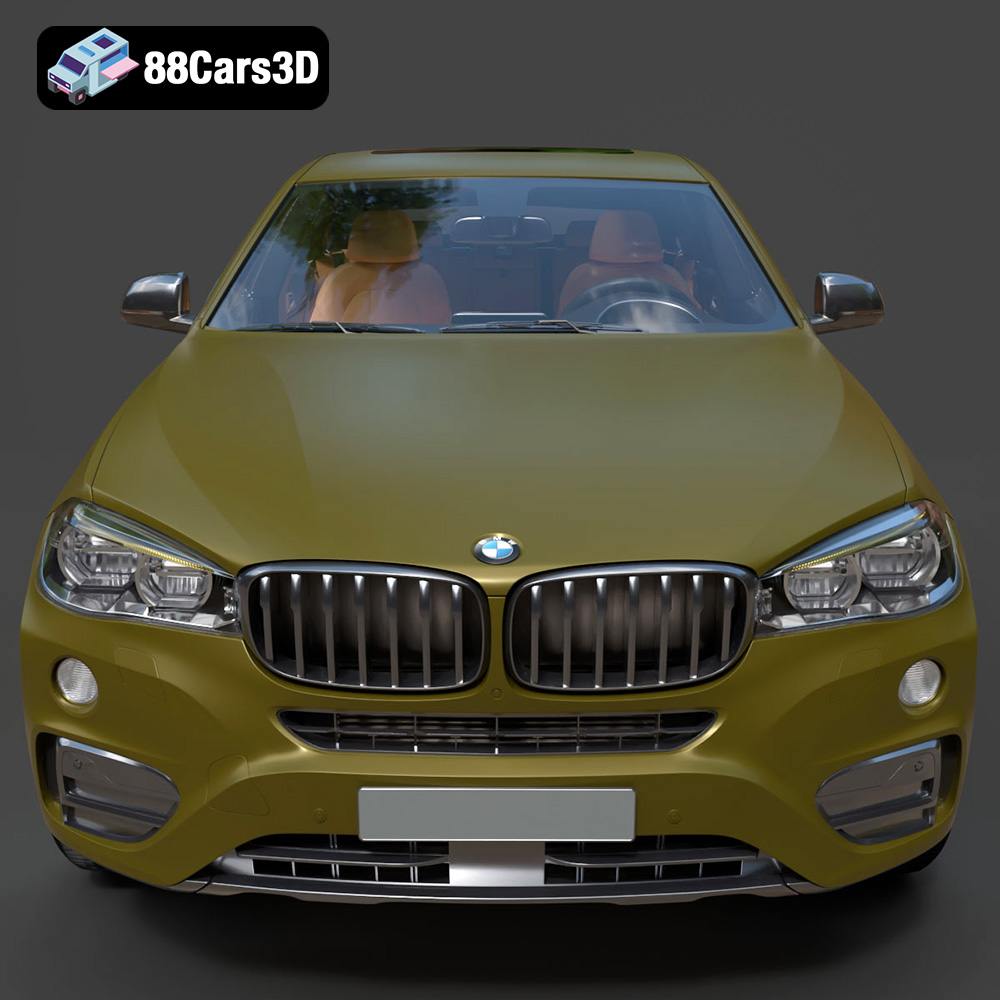
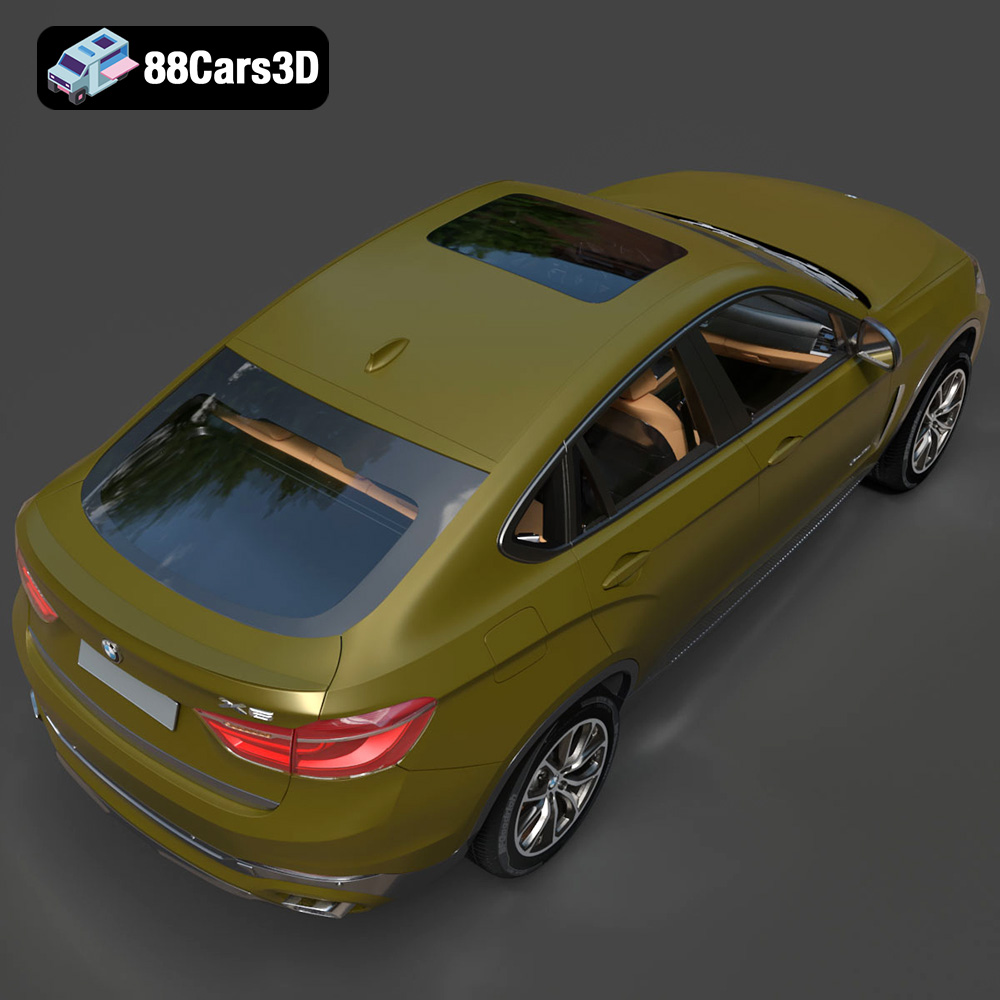
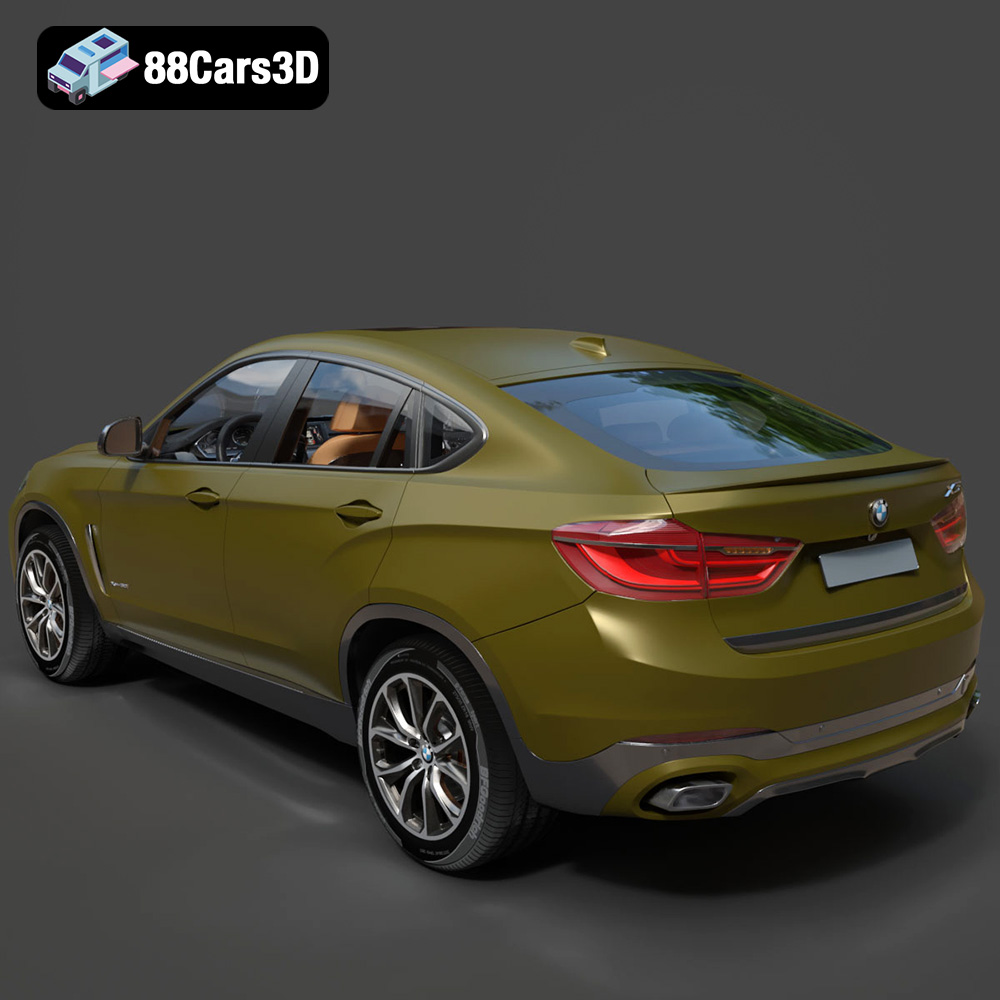
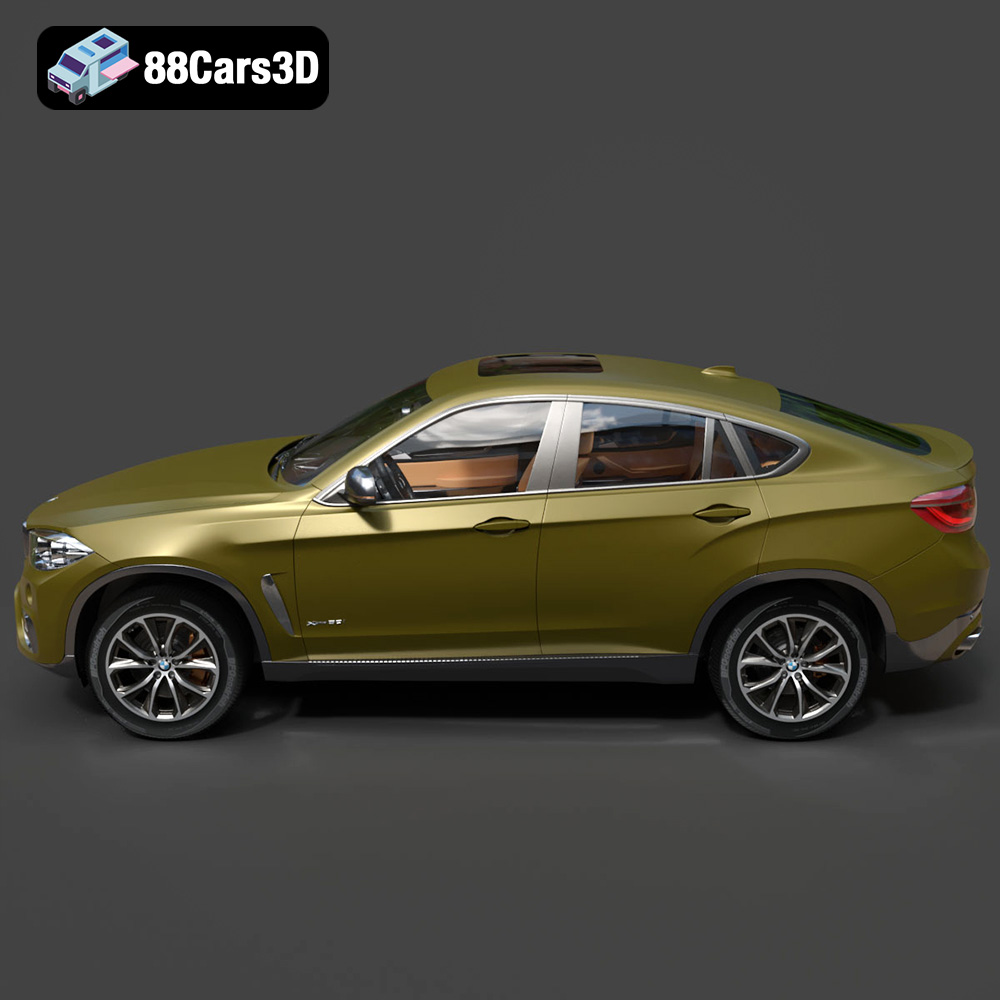
The first impression of any car model comes from its exterior. The BMW X6 xDrive50i 2008 model faithfully recreates the vehicle’s signature coupe-like SUV proportions, a design language that was revolutionary at its debut. This includes the precise curvature of its roofline, the aggressive stance, and the distinctive character lines that define its form. Beyond the overall shape, the model boasts a highly detailed representation of the engine block, hinting at the formidable 4.4L Twin-Turbo V8 that powered the real-world vehicle. Crucial details like the signature dual rectangular exhaust system, precision-modeled angel-eye headlights, and L-shaped LED taillights are not overlooked, ensuring authenticity from every angle. Even the high-resolution alloy wheels, complete with detailed brake calipers and premium tire treads, contribute to an unparalleled sense of realism. The accurate xDrive all-wheel-drive suspension geometry details further enhance its technical credibility, making it suitable for close-up shots and animated sequences.
The interior of a 3D car model is often the true test of its quality, especially for applications like virtual showrooms, AR/VR experiences, or first-person gaming. The BMW X6 xDrive50i 2008 3D model excels here, offering a meticulously recreated cockpit. Plush leather-textured seating with accurate stitching details immediately conveys a sense of luxury. The detailed multi-function sport steering wheel, complete with paddle shifters, the accurate dual-dial instrument cluster, and the iDrive infotainment display are all rendered with high fidelity. Every button on the high-fidelity control center, including pedals and the shift lever, is carefully modeled. This optimized geometry is critical for providing an immersive first-person point of view, making the user truly feel like they are inside the vehicle, whether in a game or a virtual reality tour.
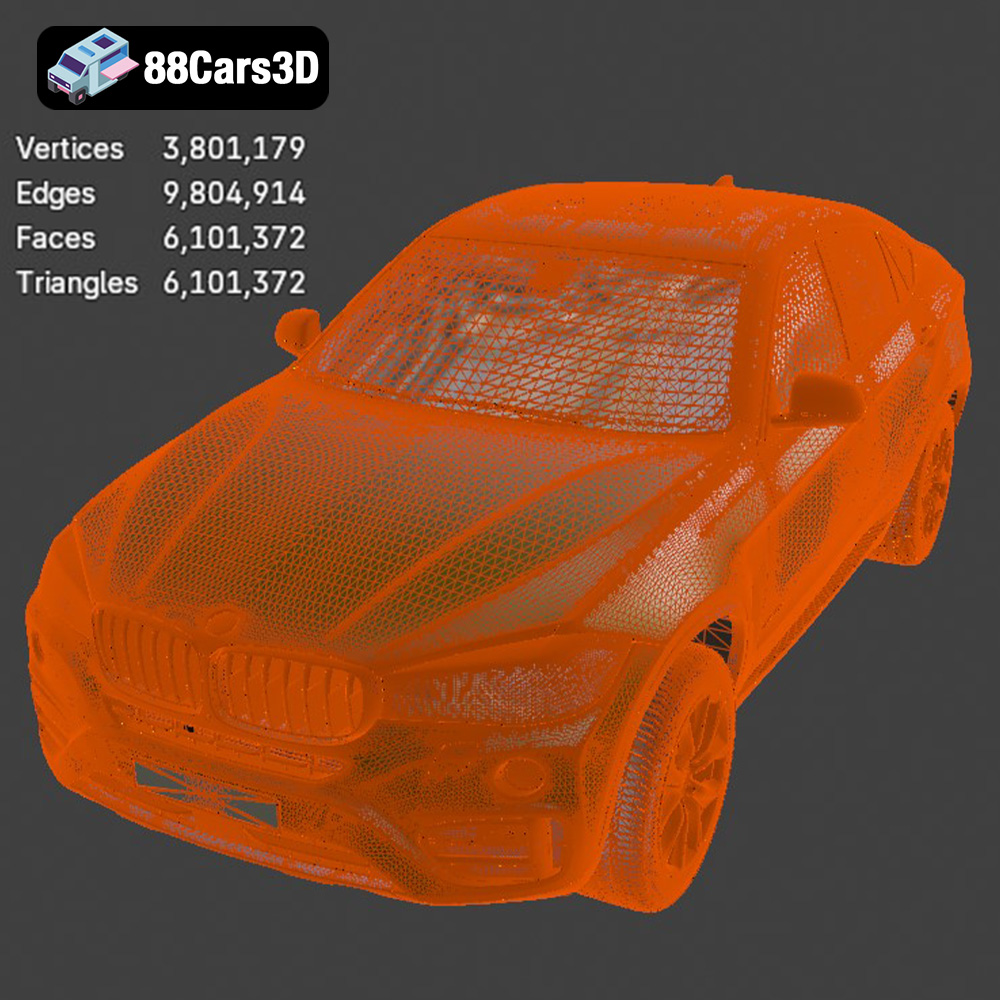
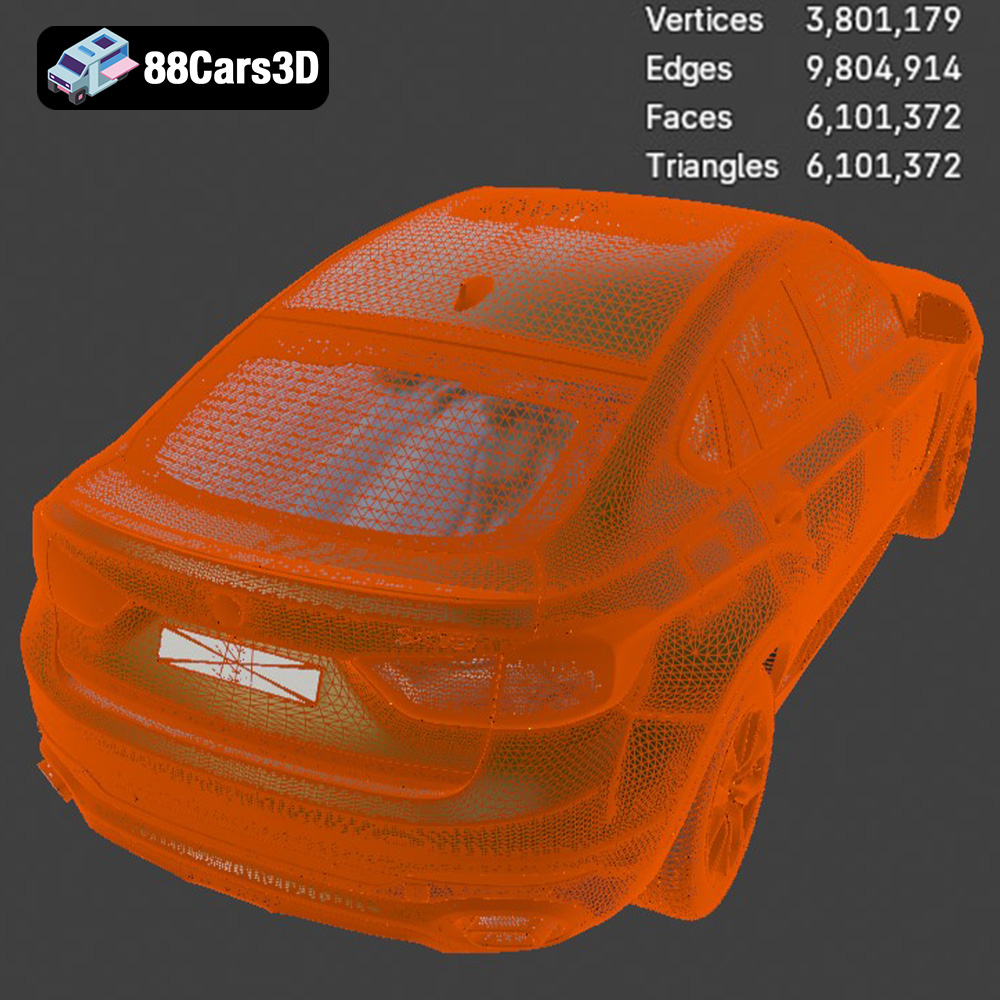
Behind the visual splendor are the technical specifications that enable its versatility. With a highly detailed 6,101,372 triangle count, the model strikes a balance between visual richness for high-end rendering and optimized topology for real-time applications. This high poly count allows for incredible detail, but its “optimized topology” implies careful mesh construction, potentially with retopology work or clean edge flow, which is crucial for smooth deformation and efficient rendering. The model is built to real-world scale accuracy, based on the actual vehicle chassis, ensuring correct proportions and interaction within any scene. Furthermore, proper pivot setup for steering, wheel rotation, and suspension travel is implemented, making the model animation-ready right out of the box. These technical advantages ensure compatibility and exceptional realism across major 3D software platforms and real-time rendering engines.
The true value of a high-quality 3D car model is realized through its seamless integration into diverse professional pipelines. From cinematic advertisements to interactive gaming, the journey of a digital asset involves multiple stages and specialized software. The BMW X6 xDrive50i 2008 3D Model, with its comprehensive file formats and optimized structure, is designed to navigate these workflows with ease.
For high-fidelity automotive rendering, 3ds Max and Blender are industry powerhouses. When working with the included .max or .blend files for the BMW X6, artists have direct access to the model’s native environment. In 3ds Max, professionals can leverage advanced rendering engines like V-Ray or Corona Renderer to create photorealistic images and animations. This involves setting up complex material shaders to accurately represent paint, glass, chrome, and leather, utilizing physically based rendering (PBR) principles. Environment lighting, HDRI (High Dynamic Range Image) setups, and intricate camera animation sequences can transform the static model into a captivating narrative. Similarly, Blender users can utilize Cycles or Eevee renderers, applying node-based materials, setting up studio lighting, and animating camera paths around the BMW X6 xDrive50i 2008 to produce stunning visuals for marketing campaigns, virtual showrooms, or concept presentations. The model’s separate components (wheels, suspension, steering) are crucial here, allowing for realistic driving animations and suspension compression effects.
The “game-ready” optimization of the BMW X6 xDrive50i 2008 3D model makes it an ideal asset for game development. In Unreal Engine, the included .unreal or .fbx formats streamline the import process. Developers can drag-and-drop the asset, and thanks to its optimized topology and real-world scale, it integrates smoothly. Setting up vehicle physics (using Unreal’s Chaos Vehicle system), collision meshes, and interactive elements (like working doors or lights) becomes a focused task rather than a foundational one. The detailed interior is perfect for first-person driving or cinematic cutscenes. For Unity developers, importing the .fbx file allows for quick setup of prefabs, materials, and physics. LODs (Levels of Detail) can be generated or fine-tuned to ensure optimal performance across different platforms and viewing distances, allowing the high triangle count to scale effectively from close-up detail to distant background elements. This optimization is critical for open-world games, racing titles, and vehicle simulators.
Augmented Reality (AR) and Virtual Reality (VR) represent exciting frontiers for 3D car models. The .glb format, optimized for web and real-time display, makes the BMW X6 xDrive50i 2008 perfectly suited for these immersive applications. Imagine a virtual showroom where potential buyers can walk around the BMW X6, open its doors, and even sit inside using a VR headset. Companies can develop AR apps that project the car into a real-world environment via a smartphone camera, allowing users to visualize it in their driveway. For automotive configurators, the customization options provided with the model (change body panels, modify tire textures, adjust material finishes) become interactive features, enabling users to personalize their dream car in real-time. The balance of high detail and optimized geometry is essential here, as AR/VR experiences demand both visual fidelity and smooth frame rates to prevent motion sickness and ensure immersion.
The versatility of a high-quality 3D car model extends far beyond static renders. Its utility spans interactive entertainment, immersive technology, and even physical fabrication, transforming a digital asset into a multi-faceted tool.
In game development, 3D car models are not just static props; they are often central to the gameplay experience. For racing games, a model like the BMW X6 xDrive50i 2008 needs accurate physics, deformable meshes for damage systems, and highly detailed interiors for cockpit views. Its “game-ready & optimized” status, despite a high triangle count, implies careful mesh construction and UV mapping crucial for performance. The separate wheels, suspension, and steering components are invaluable for creating realistic vehicle dynamics and animations, allowing for authentic drifting, cornering, and terrain interaction. Even in open-world games, where cars serve as background elements or drivable vehicles, the model’s realism adds significant depth to the game world, enhancing immersion for players.
The rapid advancement of AR/VR technology has opened new avenues for 3D car models. Virtual showrooms, powered by models like the BMW X6, allow potential customers to explore a vehicle’s features and aesthetics in an interactive 3D space, regardless of their physical location. This can include changing colors, inspecting interior details, and even “test-driving” the vehicle virtually. Beyond sales, these models are critical for training simulators. Automotive technicians can use VR simulations to practice maintenance procedures on a highly accurate digital twin of the BMW X6, reducing risks and costs associated with real-world training. The model’s real-world scale accuracy and detailed components are essential for these practical applications, providing an authentic learning environment.
For hobbyists, collectors, and prototyping purposes, 3D printing offers a tangible connection to digital assets. The inclusion of the .stl format for the BMW X6 xDrive50i 2008 model enables its transformation from pixels to plastic. While a high-poly model requires careful preparation for printing, the provided guidelines for scale (1:12 / 1:18 / 1:24), layer height, wall thickness, infill, and supports are invaluable. Resin printing is often recommended for such detailed automotive models to capture fine elements like exhaust tips, mirrors, and intricate headlight housings. The ability to print separate components like the frame and wheels allows for better structural integrity and simplifies post-processing, such as sanding, priming, and applying authentic factory colors. This application showcases how a single digital asset can serve both virtual and physical worlds, appealing to a broad spectrum of users.
Achieving a perfect balance between visual fidelity and optimal performance is a constant challenge in 3D production. A truly professional 3D car model addresses this through intelligent design and adherence to technical best practices.
The BMW X6 xDrive50i 2008 3D model boasts a significant 6,101,372 triangle count. This level of detail is exceptional for high-end cinematic rendering where visual perfection is paramount. However, for real-time applications like games or AR/VR, this raw count would typically be too high for a single asset without optimization. The key phrase “optimized topology” is critical here. It implies that while the model is detailed, its mesh structure is clean, with efficient edge loops and proper quad/triangle distribution, facilitating easier retopology or the generation of lower-polygon LODs. This means the high-fidelity version can serve as a master asset from which lower-poly variants are derived for performance-critical scenarios, allowing the same base model to be used across diverse applications effectively.
Beyond raw geometry, the quality of materials and UV mapping significantly impacts the realism of a 3D model. A professional asset will come with properly unwrapped UVs, ensuring that textures can be applied without distortion. PBR (Physically Based Rendering) workflows are standard, utilizing maps for albedo (color), roughness, metallic, normal, and ambient occlusion to accurately simulate how light interacts with different surfaces. For a car model, this includes complex shaders for metallic paint with clear coats, reflective glass, rubber tires, and various interior materials like leather, plastic, and chrome. The ability to modify these material finishes (matte, gloss, metallic) and change body panel colors offers immense flexibility for customization and adaptation to specific scene requirements, crucial for automotive rendering.
The “proper pivot setup for steering, wheel rotation, and suspension travel” is a seemingly small detail that has a massive impact on animators and game developers. Without correctly positioned pivots, animating a car’s movement becomes a frustrating and time-consuming process. Similarly, separate components for wheels, suspension, and steering allow for individual manipulation and animation, enabling realistic vehicle dynamics. A well-organized 3D asset will also feature logically named objects, grouped components, and clean scene hierarchy, making it intuitive for new users to navigate and integrate into their projects. This attention to detail dramatically reduces the post-purchase workload and enhances productivity.
Investing in a premium 3D car model is more than acquiring a single asset; it’s about gaining a versatile tool that can adapt to future project needs and creative visions. The BMW X6 xDrive50i 2008 3D Model exemplifies this flexibility.
The listed customization options are essential for any professional artist or studio. The ability to easily change body panels and trim colors means the vehicle can be re-skinned to match specific branding, client requests, or aesthetic preferences. From authentic factory colors to custom finishes, this flexibility is invaluable for marketing and visualization projects. Modifying tire textures (e.g., from street variants to off-road) or adjusting material finishes (matte, gloss, metallic) allows the car to fit diverse environments and narratives. Imagine the same BMW X6 styled for an urban luxury scene versus a rugged adventure visualization. Furthermore, adapting lighting for different environments is a fundamental aspect of rendering, and a well-built model responds accurately to varying light sources, whether it’s a sunny outdoor scene, a moody studio setup, or an atmospheric night render. These options ensure that the asset remains relevant and adaptable across countless projects.
A truly future-proof 3D car model is one that maintains its value over time, remaining compatible with evolving software and technologies. The comprehensive list of included file formats (.blend, .fbx, .obj, .glb, .stl, .ply, .unreal, .max) for the BMW X6 xDrive50i 2008 model is a testament to its long-term utility. This multi-format approach ensures that regardless of whether you migrate to a new rendering engine, switch your primary 3D software, or delve into emerging platforms like advanced AR/VR ecosystems, the core asset remains accessible and usable. This broad compatibility protects your investment and provides peace of mind that your digital library will continue to serve your professional needs for years to come. Such a versatile asset is not just a purchase; it’s a strategic addition to any professional’s toolkit, available on platforms like 88cars3d.com.
The journey from a real-world automotive icon to a versatile digital asset is complex, demanding immense skill and technical expertise. A premium 3D car model, such as the BMW X6 xDrive50i 2008 3D Model, encapsulates this journey, delivering unparalleled fidelity and functionality to professionals across various industries. We’ve explored how its meticulous exterior and interior details, coupled with intelligent technical specifications like its optimized triangle count and proper pivot setups, make it an indispensable tool.
The diverse file formats – from the native editability of .blend and .max to the universal compatibility of .fbx and .obj, the AR/VR readiness of .glb, the 3D printability of .stl, and the engine-specific optimization of .unreal – ensure that this asset can integrate seamlessly into virtually any professional workflow. Whether you’re an automotive renderer aiming for photorealistic visuals, a game developer crafting immersive open worlds, an AR/VR innovator building interactive experiences, or a hobbyist bringing digital designs to life through 3D printing, the value is undeniable.
Investing in such a high-quality 3D car model from a reputable source like 88cars3d.com is not merely acquiring a digital file; it’s empowering your creative process, streamlining your production pipeline, and ultimately elevating the quality of your final output. In an increasingly competitive digital landscape, assets like the BMW X6 xDrive50i 2008 3D Model provide the technical foundation and creative freedom needed to stand out and deliver truly exceptional results.
Experience the bold and innovative styling of the BMW X6 xDrive50i 2008, the vehicle that pioneered the Sports Activity Coupe segment. Combining the robust stance of an SUV with the sleek, sloping roofline of a coupe, this luxury powerhouse is defined by its iconic dual kidney grilles, aggressive front fascia, and muscular rear wheel arches. Powered in the real world by a formidable twin-turbo V8, this model captures every detail, down to the signature dual exhaust outlets and intricate headlight housings. Boasting a highly detailed 6,101,372 triangle count, this model offers unmatched visual fidelity and precision. While heavily detailed for high-end rendering and visualization, its optimized topology ensures smooth integration into advanced real-time engines and production pipelines. Whether utilized in game development, immersive AR/VR experiences, high-fidelity animation, or architectural visualization, this 3D asset delivers exceptional realism. Perfect for high-end virtual showrooms, cinematic automotive animations, urban environment renders, and luxury lifestyle visualization scenes.
$90.00
.2008
.blend
.bmw
.fbx
.glb
.max
.obj
.ply
.rendering
.stl
.unreal
car-3d-model
coupe-suv
game asset
game-ready
low-poly
optimized
sports-activity-coupe
SUV
VR/AR
x6-xdrive50i