Get 20% OFF All Premium 3D & STL Models!

In the dynamic world of 3D visualization, game development, and cinematic production, the demand for highly detailed and accurate 3D models continues to escalate. Whether crafting an immersive military simulation, designing a breathtaking action sequence, or creating realistic visualizations for defense industries, the quality of your 3D assets is paramount. It’s the difference between an engaging experience and one that breaks immersion.
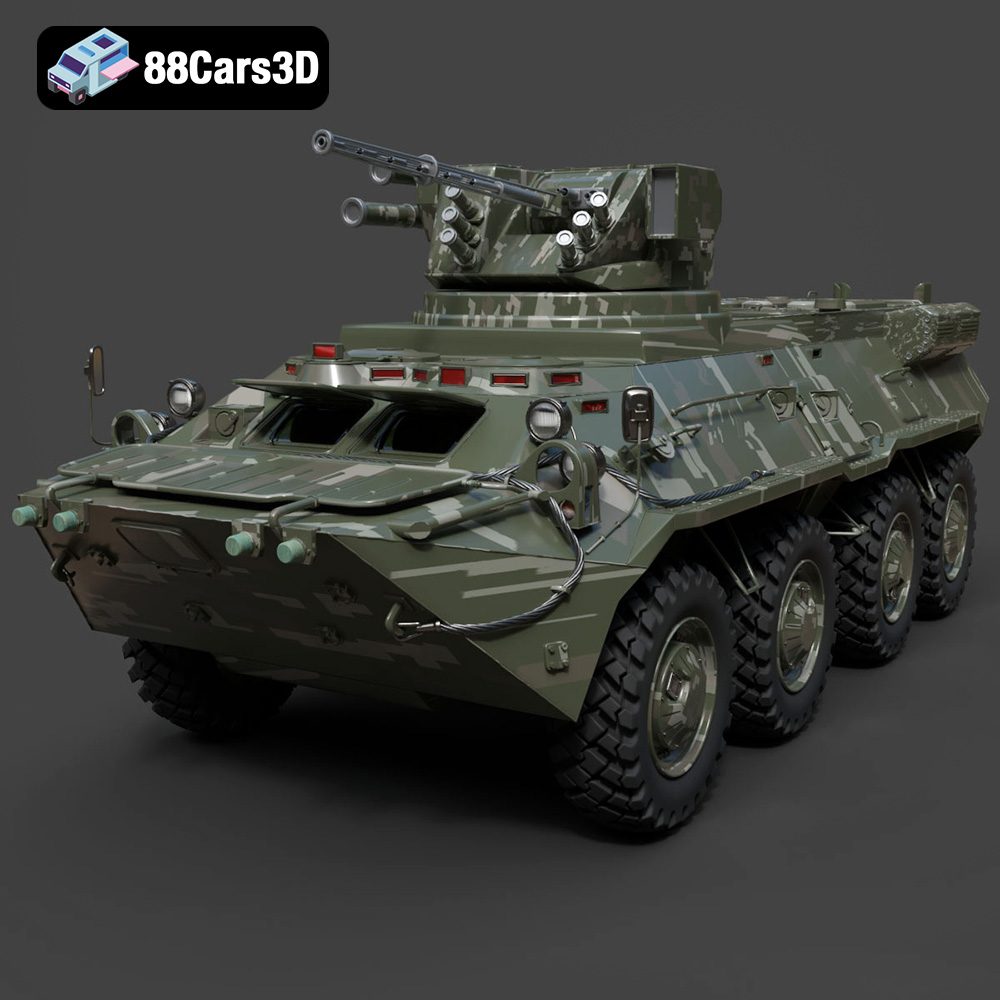
Today, we delve into the intricate world of military vehicle modeling, focusing on an exceptional example that stands out for its meticulous detail and versatility: the BTR 3E 2002 3D Model. This formidable 8×8 armored personnel carrier (APC) is a testament to precision modeling, offering unparalleled visual fidelity and robust functionality across a myriad of professional applications. Its comprehensive design and diverse file format support make it a critical asset for any serious 3D artist or developer aiming for the pinnacle of realism.
The pursuit of realism drives many sectors of the 3D industry. From architectural visualizations that must convince clients of future structures to game environments that immerse players completely, detail is not just a luxury; it’s a necessity. High-fidelity 3D assets, like the BTR 3E 2002, are the building blocks of these compelling experiences, providing the visual depth and authenticity that users and audiences demand.
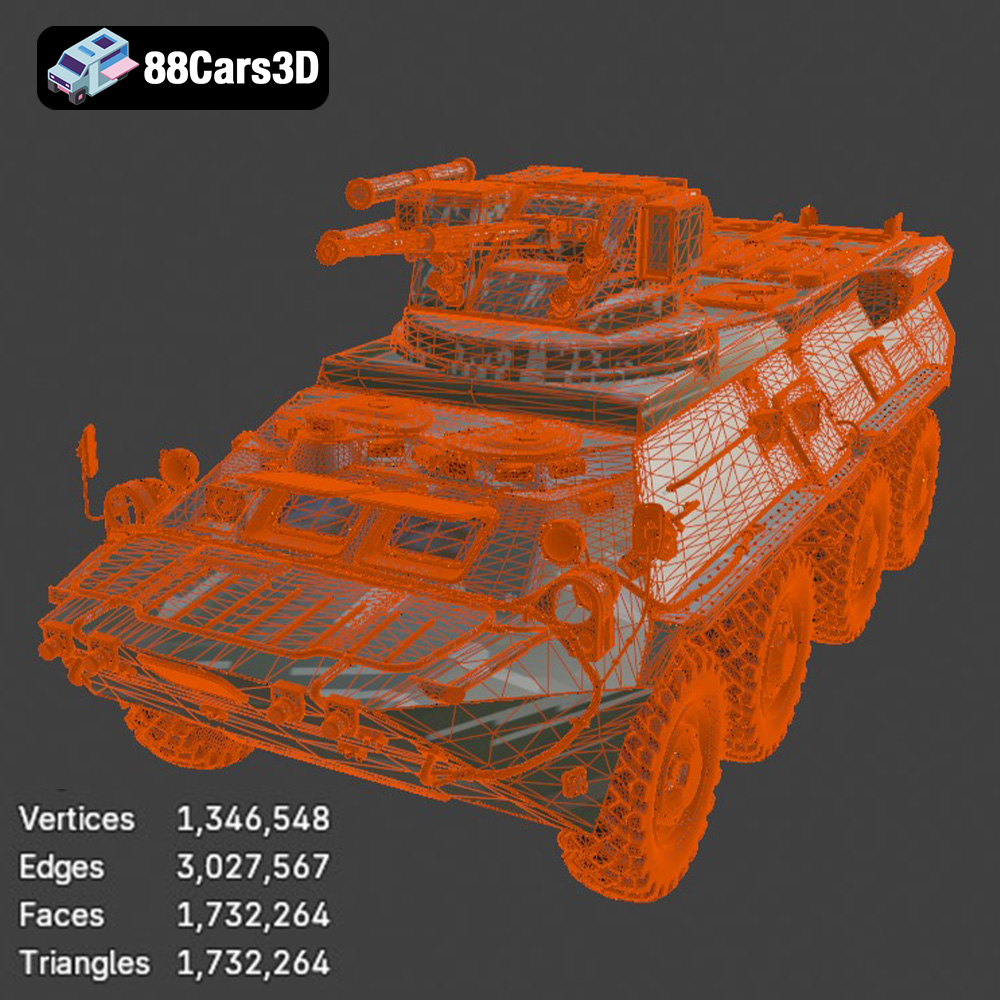
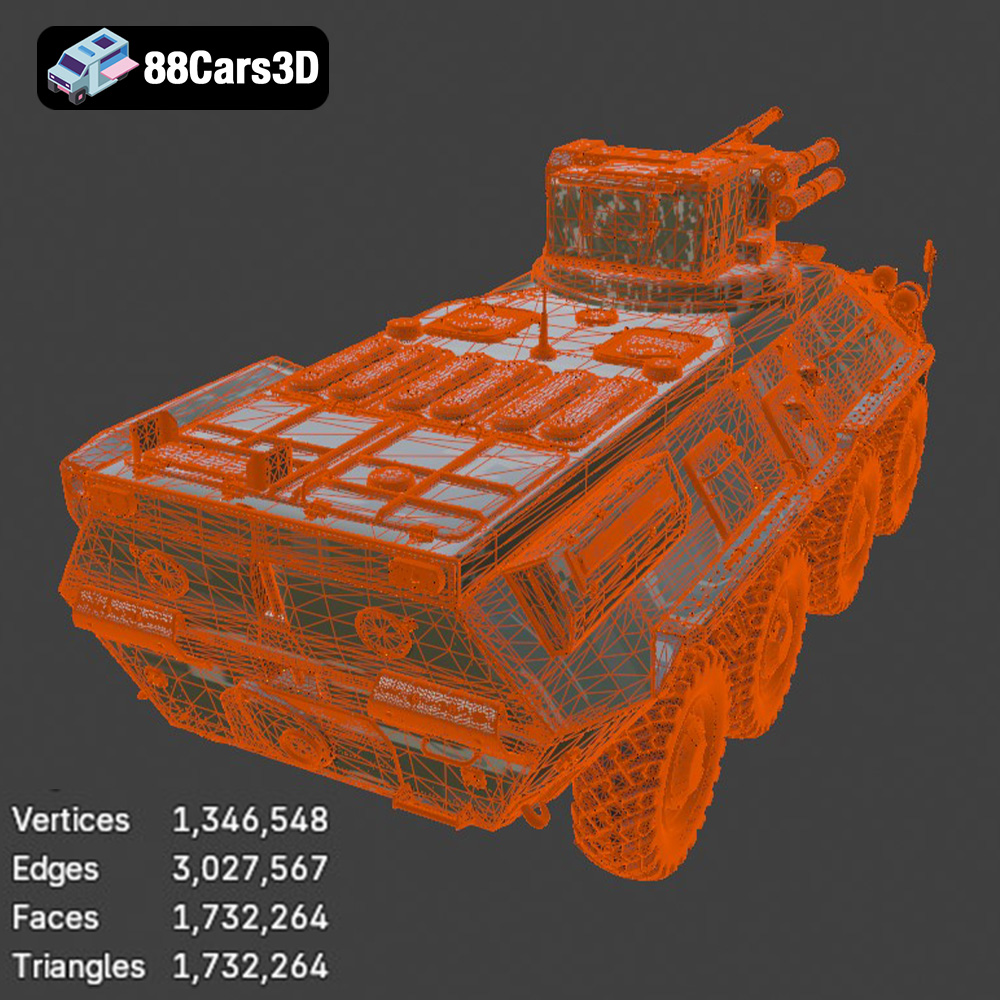
Achieving realism often comes with a trade-off in performance, especially in real-time applications. However, modern modeling techniques and advanced engine optimizations allow assets like the BTR 3E 2002 to bridge this gap. With an impressive 1,932,264 triangles, this model offers exceptional detail for close-up shots and cinematic rendering, yet its clean topology is designed for efficient Level of Detail (LOD) generation. This means developers can dynamically adjust the model’s complexity based on its distance from the camera, ensuring smooth performance without sacrificing visual quality where it matters most. For game assets, this balance is crucial, enabling the creation of visually stunning environments that run flawlessly.
Developing a complex 3D model from scratch, especially one as intricate as a military APC, requires an immense investment of time, skill, and resources. Artists must meticulously research blueprints, gather reference images, and then spend hundreds of hours modeling, texturing, and rigging. Sourcing pre-built, premium 3D models from reputable marketplaces like 88cars3d.com offers a significant strategic advantage. It allows studios and individual artists to bypass the initial development phase, saving valuable time and budget, and immediately integrate production-ready assets into their projects. This accelerates development cycles, allows teams to focus on other critical aspects of their projects, and ensures a consistent standard of quality across all assets.
One of the critical aspects of working with 3D models is understanding the various file formats available and when to use each one. The BTR 3E 2002 3D Model comes packaged with a comprehensive selection of formats, ensuring maximum compatibility and utility across diverse professional workflows. This versatility is a hallmark of truly professional 3D car models and game assets, allowing seamless integration into any pipeline.
The .blend format is native to Blender, a powerful open-source 3D creation suite. When you receive a .blend file, you’re getting a fully editable Blender scene, complete with materials, textures, lighting, and any rigging or animation data. For Blender users, this is the most flexible format, allowing for direct manipulation, customization, and scene integration without any data loss or conversion issues. It’s ideal for artists who want to delve deep into the model’s structure, modify its components, or use Blender’s extensive toolset for rendering and animation.
.fbx (Filmbox) is arguably the most widely adopted interchange format in the 3D industry. Developed by Autodesk, it’s a proprietary format designed to store a comprehensive range of 3D data, including geometry, materials, textures, animation, and rigging. Its broad support across major 3D software (like 3ds Max, Maya, Blender, Cinema 4D) and real-time engines (Unreal Engine, Unity) makes it ideal for pipelines where assets need to move between different applications. For the BTR 3E 2002, the .fbx version is perfectly suited for importing into game engines or for further processing in other DCC (Digital Content Creation) tools, ensuring all critical data like pivot points and hierarchical structures are preserved.
The .obj (Wavefront Object) format is one of the oldest and most universally supported 3D file formats. It’s a simpler format compared to .fbx, primarily storing geometry (vertices, faces, UVs) and material references (.mtl file). While it doesn’t typically embed animation or rigging, its widespread compatibility makes it excellent for cross-software transfers where only the mesh data is required. For basic imports into almost any 3D application or for archival purposes, .obj remains a reliable choice. It’s often used as a fallback or for simple mesh exchange, proving its worth for the BTR 3E 2002 when core geometry is the focus.
.glb (GL Transmission Format Binary) is an increasingly important format, especially for web-based 3D applications, augmented reality (AR), and virtual reality (VR) experiences. It’s the binary version of .gltf, designed to be compact and efficient, packaging all necessary data (geometry, materials, textures, animations) into a single file. This “one-file-for-all” approach makes .glb incredibly efficient for streaming and displaying 3D models directly in browsers or AR/VR viewers, minimizing loading times and simplifying deployment. The BTR 3E 2002 in .glb format is optimized for these cutting-edge interactive applications, allowing quick integration into web scenes or mobile AR apps.
.stl (Stereolithography) is the de facto standard for 3D printing. It represents a 3D model as a collection of triangular facets, defining only the surface geometry without color, texture, or other attributes. For anyone looking to bring the BTR 3E 2002 from the digital realm into a physical scale model, the .stl version is essential. The detailed product description even provides specific 3D print settings, highlighting its readiness for fabrication. Similarly, .ply (Polygon File Format) is another format for storing 3D data, often used for scanned data, CAD, and scientific analysis. It can store more complex information than .stl, including color, transparency, and sometimes even normal data, making it suitable for high-precision manufacturing or detailed analytical workflows.
The inclusion of a dedicated .unreal file indicates an asset that is pre-packaged or specifically prepared for direct import into Unreal Engine, a leading real-time 3D creation tool. This often means optimized materials, collision meshes, and proper asset hierarchy for immediate use within the engine, significantly streamlining the workflow for game developers. Lastly, .max is the native file format for Autodesk 3ds Max, a powerhouse in the world of 3D modeling, animation, and rendering. For artists working within 3ds Max, having the BTR 3E 2002 in its native .max format ensures complete access to the original scene, modifier stacks, materials, and any setup specific to Max, making it perfect for high-end rendering and animation projects.
The BTR 3E 2002 is more than just a 3D model; it’s a meticulously crafted digital replica. Every aspect of this armored personnel carrier has been observed and translated into a high-fidelity asset, making it an indispensable tool for projects demanding extreme accuracy and visual impact. This level of detail elevates it beyond generic 3D car models, positioning it as a specialized asset for demanding applications.
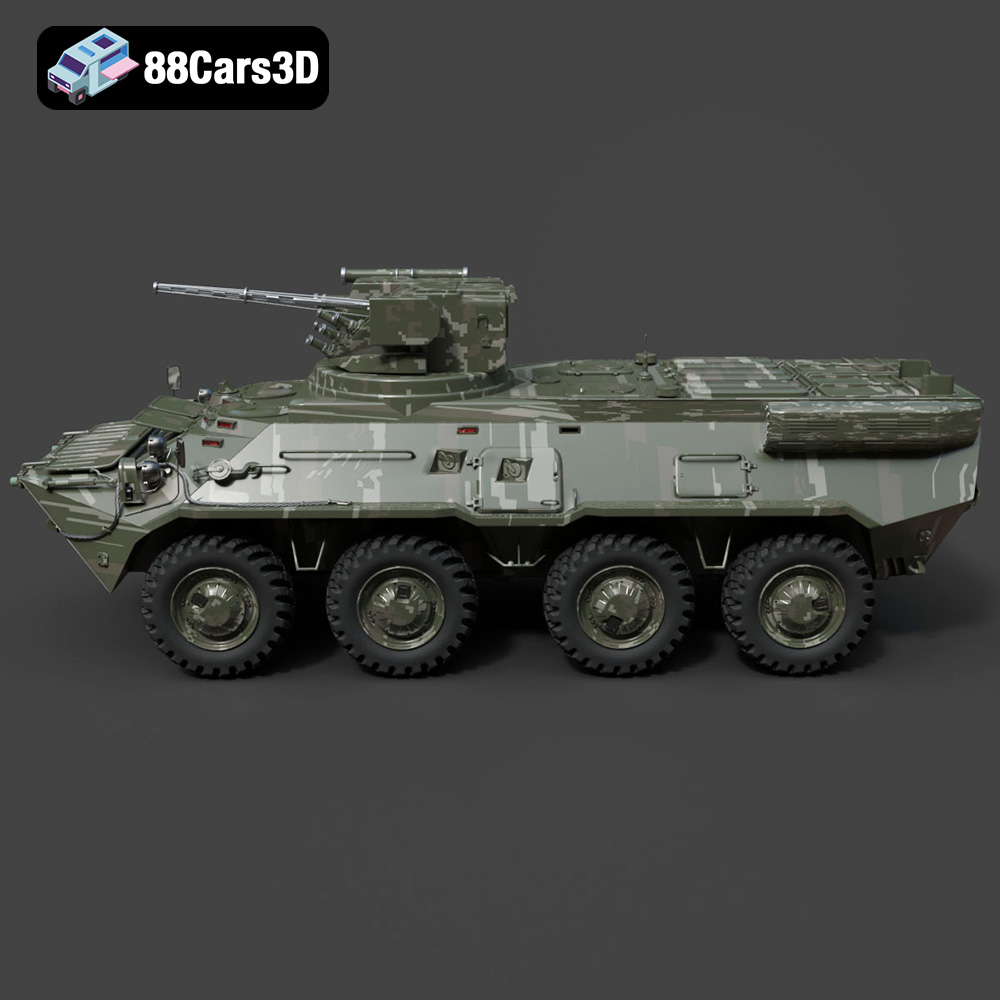
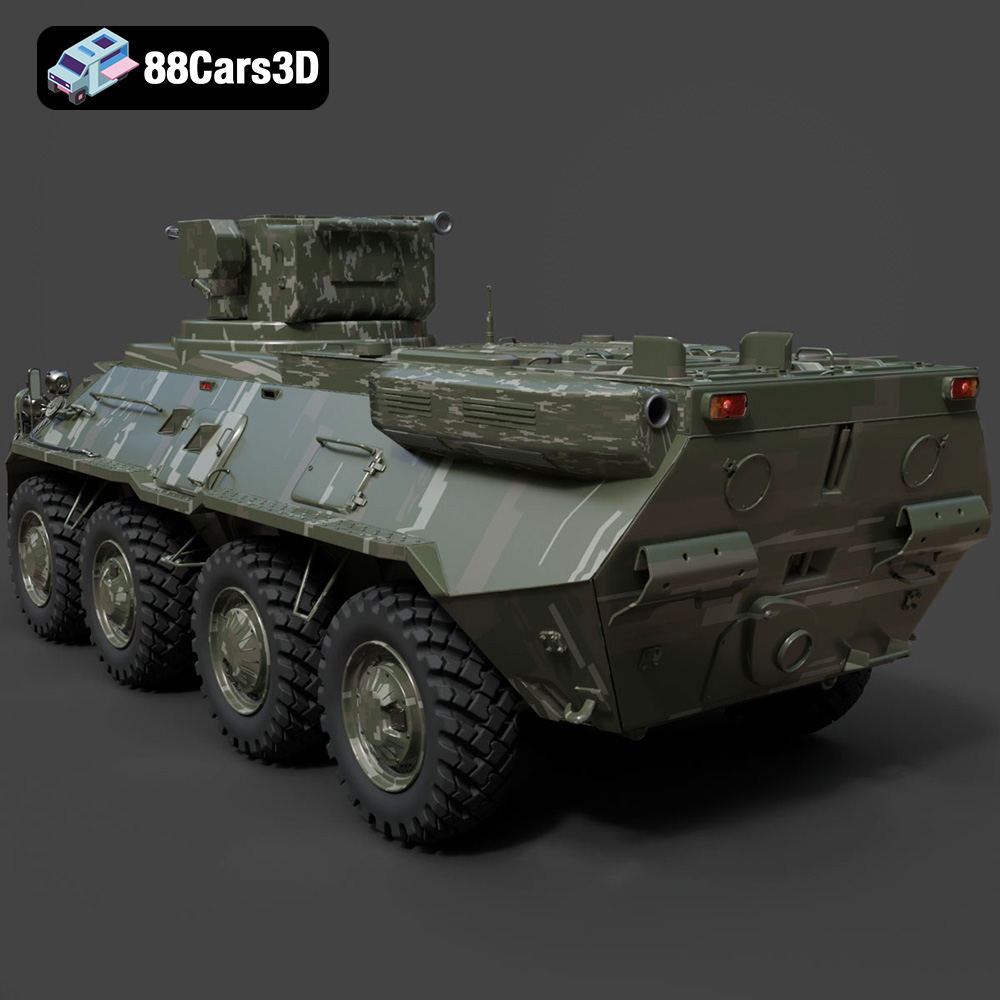
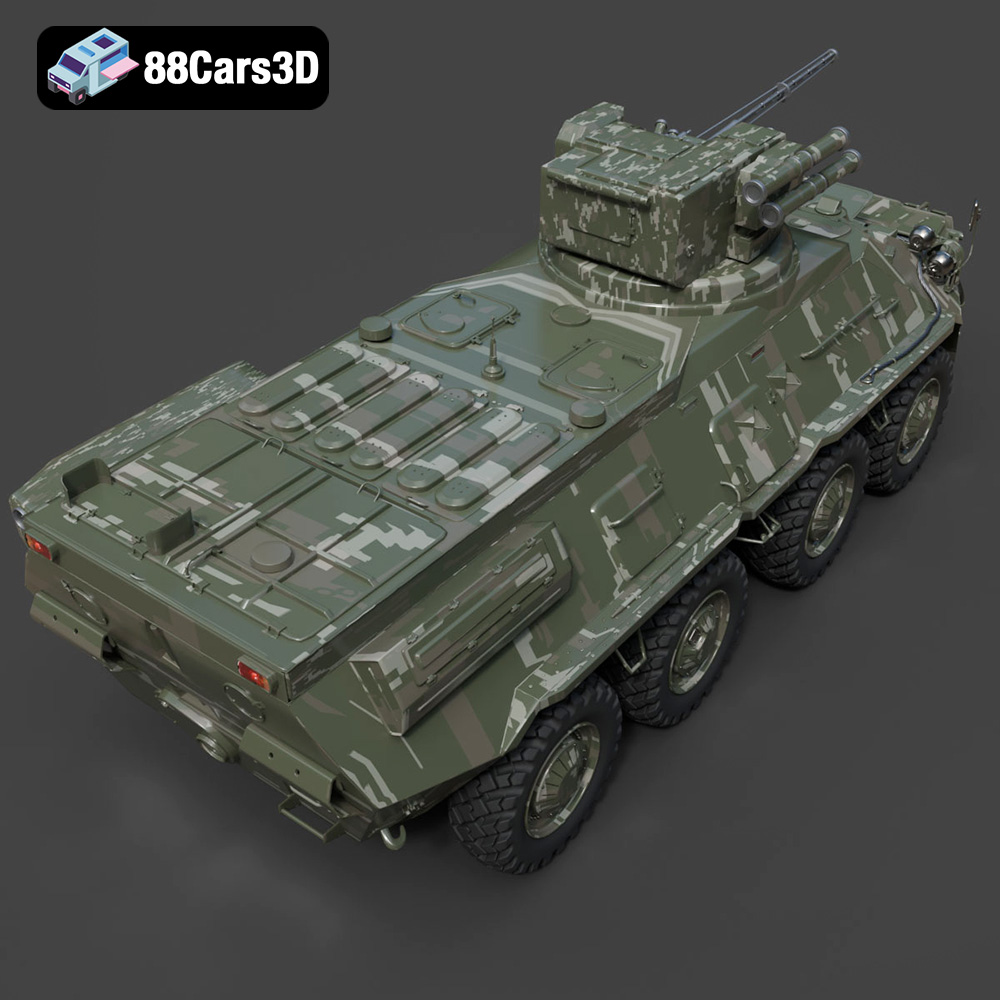
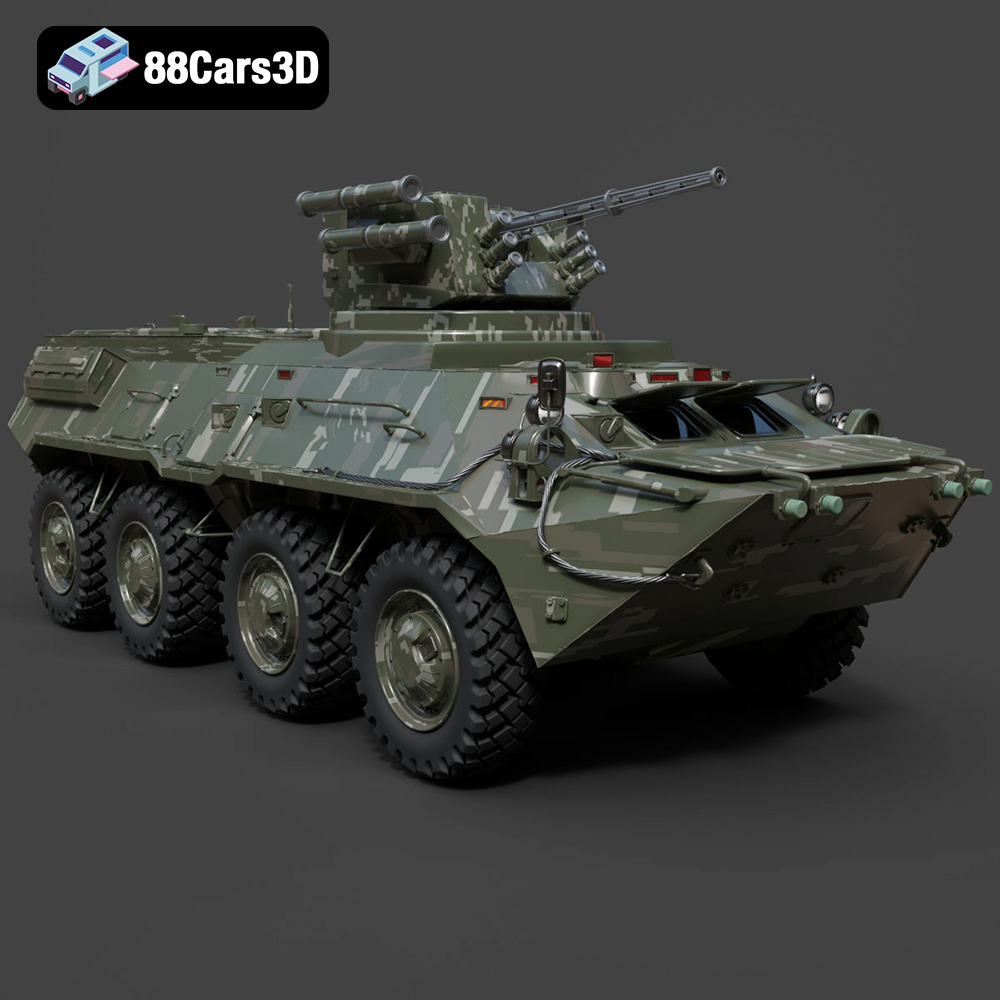
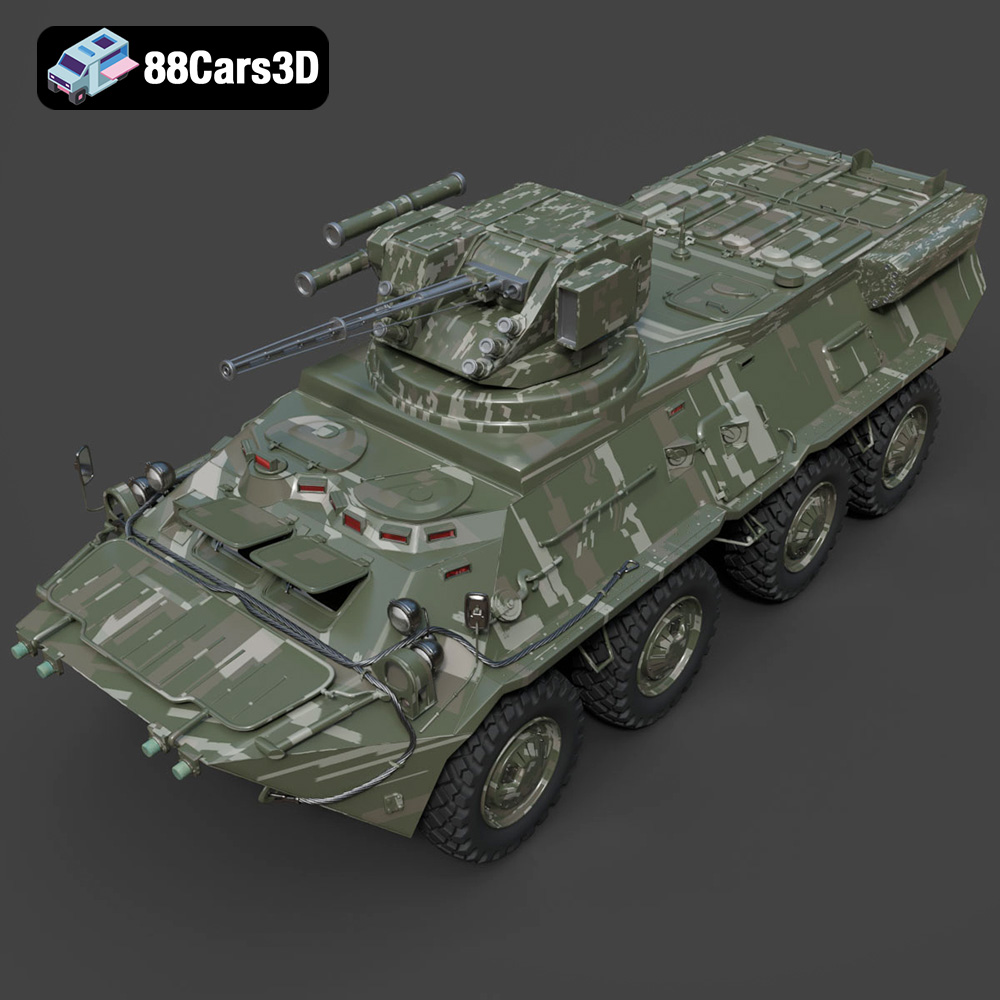
The exterior of the BTR 3E 2002 model is a testament to precision. It features accurate armored hull geometry, complete with sloped plating and weld seams that convey the vehicle’s rugged, combat-ready nature. The top-mounted combat module is intricately designed, showcasing an auto-cannon and anti-tank missile launch tubes with all their associated details. The 8×8 drivetrain is not merely implied but fully realized with independent suspension linkages and drive shafts, allowing for realistic deformation and movement. Even the amphibious water jet propulsors at the rear and the rugged military-grade tires with deep off-road tread patterns are precisely modeled. Crucially, components like the turret, hatches, wheels, and suspension are separated, enabling complex animations and interactive elements crucial for realistic simulations.
Beyond the formidable exterior, the BTR 3E 2002 also offers a detailed interior, a feature often overlooked in lesser models. The driver and commander stations are accurately depicted with authentic seating positions, heavy-duty steering yokes, and driving controls. Instrument clusters, tactical displays, and viewing periscopes are present, contributing to an immersive first-person perspective, particularly vital for military simulators. The rear troop compartment, with its bench seating and deployment hatches, adds another layer of realism, making the model suitable for scenes involving troop transport or interior views.
Underneath its detailed facade, the BTR 3E 2002 is engineered for performance. Its 1,932,264 triangle count strikes an optimal balance, providing ultimate realism for hero-asset rendering while maintaining clean topology for efficient engine integration. Real-world scale accuracy, based on actual APC chassis dimensions, ensures that the model fits seamlessly into scenes without needing scale adjustments. Furthermore, proper pivot setups for turret rotation, gun elevation, 8-wheel steering, and suspension travel are already configured, saving countless hours of rigging and animation work. This ‘game-ready’ status makes it a powerhouse for development.
The versatility of the BTR 3E 2002 3D Model makes it a valuable asset across numerous professional pipelines. Its design caters to the specific demands of each industry, from interactive simulations to static renders.
For game developers, the BTR 3E 2002 is an ideal candidate for military shooters, tactical simulators, and strategy games. Its “game-ready” optimization means it can serve as a hero asset in cinematic sequences or a fully drivable vehicle within gameplay. When integrated into engines like Unreal Engine or Unity, its clean topology facilitates the creation of LODs, collision meshes, and destruction states. The separated components for animation allow for realistic gun recoil, turret traverse, and individual wheel suspension, creating an incredibly immersive player experience. Imagine a squad-based tactical shooter where players command this vehicle, experiencing every bump and turn with authentic physics and visuals.
For high-end CGI and VFX pipelines, the BTR 3E 2002 provides the necessary detail for photorealistic rendering. Its intricate design holds up under extreme close-ups, making it perfect for combat environment scenes, historical documentaries, or even concept art for film productions. Artists working in 3ds Max or Blender can leverage the native file formats to set up complex lighting, material shaders, and camera angles, producing breathtaking stills or animated sequences. The ability to control individual parts for animation, coupled with its high poly count, allows for dynamic effects like battle damage, mud splattering, or environmental interactions, truly bringing the scene to life.
The defense industry increasingly relies on AR/VR for advanced training simulations and virtual showrooms. The BTR 3E 2002 is perfectly suited for these applications. In a VR training scenario, soldiers could interact with the vehicle’s controls, practice maintenance procedures, or simulate combat situations in a safe, controlled environment. The detailed interior, with its instrument clusters and viewing periscopes, is crucial for first-person immersive experiences. For AR, the .glb format allows for quick deployment of the model into real-world environments via mobile devices, providing interactive visualizations for defense contractors or educational purposes.
The utility of 3D models extends beyond digital screens. The inclusion of an .stl format for the BTR 3E 2002 opens up exciting possibilities for physical creation, catering to hobbyists, model makers, and diorama creators who appreciate tangible representations of military hardware.
To successfully 3D print the BTR 3E 2002, careful preparation is key. The product description recommends standard military modeling scales (1:35, 1:48, 1:72), allowing creators to match existing collections. Resin printing is highly recommended for capturing the fine details, especially on the combat module and smaller components. Slicing software will be used to prepare the .stl file, determining optimal layer height (e.g., 0.04–0.12 mm for fine detail), wall thickness, and infill. Critically, supports will be required for overhangs and delicate parts like axles and grab handles, ensuring structural integrity during the printing process. Proper print orientation, with the hull printed flat or slightly angled, also contributes to a cleaner final product.
Once printed, the physical BTR 3E 2002 model enters the realm of traditional model making. Post-processing often involves removing supports, sanding to achieve smooth surfaces, and applying a primer. This stage is where creative customization truly shines. Modelers can apply various military camouflage patterns—woodland, desert, urban, or winter—using airbrushing and hand-painting techniques. Weathering effects, such as rust, dust, and battle damage, can be meticulously added to create a battle-hardened appearance. The ability to modify tire textures digitally, for instance, translates into applying physical mud or snow effects on the printed tires, enhancing the realism of a diorama scene.
Even with a high-quality, pre-built model like the BTR 3E 2002, the ability to optimize and customize is crucial for fitting it into specific project requirements and achieving unique visual styles.
While the BTR 3E 2002 boasts a high poly count for hero shots, professional pipelines often require varying levels of detail for different distances or platforms. Leveraging the clean topology of the model, artists can generate multiple LODs (Level of Detail) to optimize performance in real-time engines. This means creating simplified versions of the model that automatically swap in when the vehicle is further away from the camera, reducing the computational load without noticeable visual degradation. For mobile AR/VR applications, further poly-reduction might be necessary, and the BTR 3E 2002’s well-structured mesh makes this process efficient and less prone to errors.
The included file formats for the BTR 3E 2002 typically come with standard material setups, but true customization lies in adapting these to specific project needs. Artists can apply a vast array of military camouflage patterns, from traditional woodland to modern digital schemes, by swapping out or painting new textures. Modifying tire textures to reflect different terrain types—mud, snow, or sand—adds another layer of realism. Adjusting material finishes to include heavy weathering, rust, or battle damage can transform a pristine vehicle into a battle-worn machine. Tactical lighting can also be adapted for night-time operations or specific combat scenarios, ensuring the vehicle seamlessly integrates into any visual narrative. The flexibility offered by premium 3D models from 88cars3d.com empowers artists to create bespoke visual experiences.
In a fast-paced industry, efficiency and quality are paramount. Sourcing premium 3D models like the BTR 3E 2002 from specialized marketplaces provides a distinct competitive edge.
The most immediate benefit of purchasing ready-to-use 3D assets is the significant reduction in project timelines. Instead of allocating hundreds of hours to model, UV, and texture a complex vehicle from scratch, teams can download a fully realized asset and integrate it into their project within hours. This efficiency is critical for meeting tight deadlines, particularly in game development or rapid prototyping for defense visualizations. The comprehensive range of included file formats for the BTR 3E 2002 further minimizes integration hurdles, allowing for immediate deployment in diverse software environments.
When you acquire a model like the BTR 3E 2002 from a trusted source such as 88cars3d.com, you are investing in quality. These assets are developed by experienced 3D artists who adhere to industry-standard practices for topology, material setup, and optimization. This ensures that the models are not only visually impressive but also technically sound and easy to work with. Such professional-grade 3D car models and game assets eliminate the guesswork and potential pitfalls of using lower-quality, unoptimized models, ensuring a smooth production pipeline and superior final output.
The journey through the intricate details and vast applications of the BTR 3E 2002 3D Model underscores the profound impact high-fidelity assets have on modern digital content creation. From its meticulously crafted exterior and interior to its robust technical specifications and comprehensive file format support, this model is a shining example of what professional 3D car models and game assets should be.
Whether you’re developing an AAA military simulation, producing stunning cinematic renders, designing immersive AR/VR training experiences, or even fabricating a detailed physical scale model, the BTR 3E 2002 offers the versatility and quality required to elevate your projects. It’s an investment in realism, efficiency, and creative potential. Explore the vast possibilities and discover how premium assets can transform your work by visiting 88cars3d.com.
The BTR 3E 2002 is a formidable 8×8 armored personnel carrier (APC) recognized for its robust combat capabilities, amphibious nature, and distinctive heavy-duty silhouette. This model faithfully captures the menacing aesthetic of modern military hardware, featuring a highly detailed armored hull, a complex multi-axle suspension system, and an intricately designed overhead combat module complete with primary and secondary armament details. Built with exacting attention to detail, this premium 3D model boasts an impressive 1,932,264 triangles, ensuring unparalleled visual fidelity for extreme close-up shots and cinematic rendering. While exceptionally detailed, the topology is cleanly structured, allowing for straightforward LOD (Level of Detail) generation and seamless integration into modern real-time engines like Unreal Engine and Unity, as well as high-end CGI and VFX pipelines. Perfect for AAA military simulations, action-oriented game development, defense industry visualizations, and high-fidelity cinematic animations.
$83.50
.apc
.blend
.btr
.fbx
.glb
.max
.obj
.ply
.rendering
.stl
.unreal
2002
8×8
armored-personnel-carrier
btr-3e
detailed
game asset
game-ready
high poly
military-3d-model
military-vehicle
VR/AR