The Enduring Allure of Automotive Icons in 3D: Capturing the Shelby Cobra 427
In the dynamic world of 3D visualization, automotive design, and game development, the demand for highly detailed and technically accurate 3D car models is ever-present. These digital assets are the cornerstone for everything from photorealistic renders that define brand aesthetics to interactive experiences that push the boundaries of immersion. At the heart of this digital craftsmanship lies the ability to perfectly translate the essence of an iconic vehicle into a manipulable, high-fidelity model.
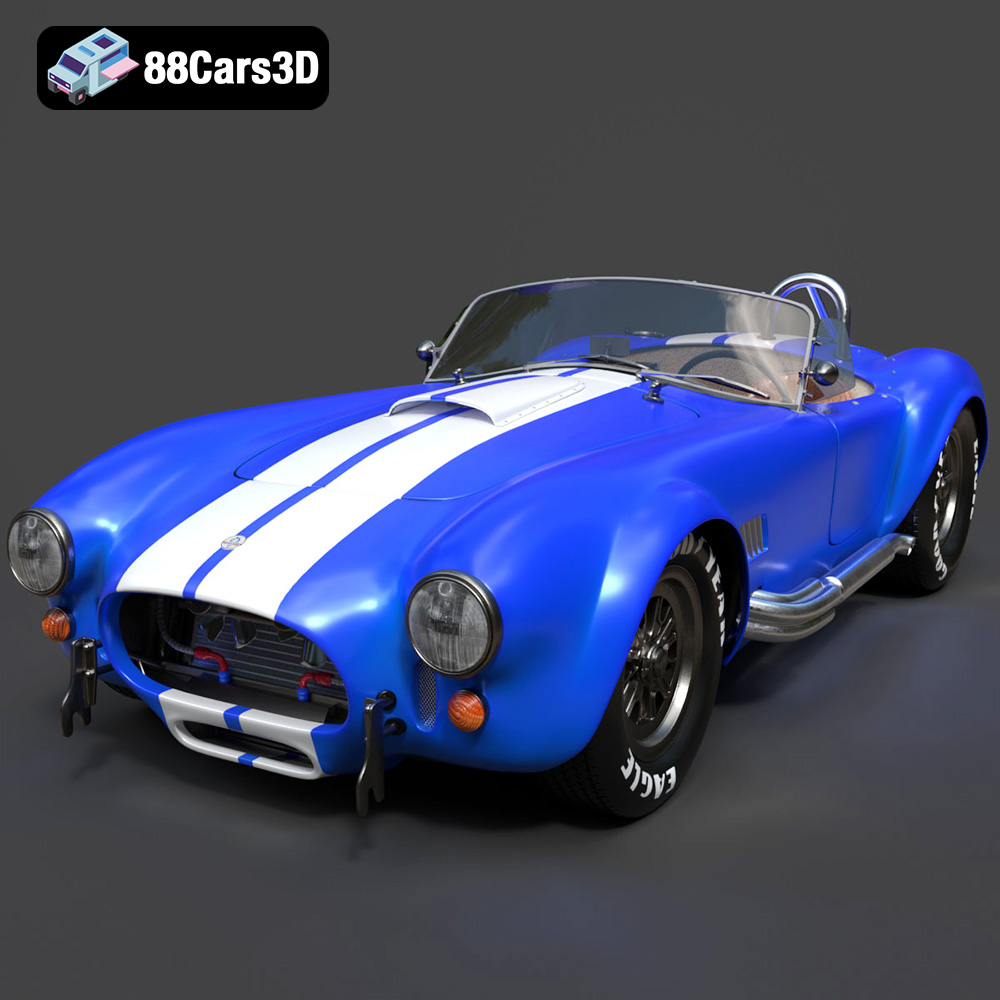
Few vehicles command as much respect and admiration as the Shelby Cobra 427. A true American legend, its aggressive stance, sweeping curves, and raw power have cemented its place in automotive history. For 3D artists, game developers, and visualization specialists, recreating such an icon is not merely a task; it’s a tribute. It requires a meticulous approach to detail, accurate proportions, and optimized topology to ensure it performs flawlessly across diverse platforms.
Today, we delve deep into the technical intricacies of bringing such a masterpiece to life in the digital realm, using a premium asset like the Shelby Cobra 427 2013 3D Model. This particular model, available at 88cars3d.com, is a testament to blending classic heritage with modern precision, designed to meet the rigorous demands of professional workflows.
From Concept to Digital Masterpiece
The journey of a classic car from a physical object to a versatile 3D asset begins with extensive research and reference gathering. This involves studying blueprints, high-resolution photographs, and even real-world measurements to ensure anatomical correctness. For a vehicle as distinct as the Shelby Cobra 427, capturing its unique spirit means translating its muscular form, the precise angle of its iconic side-pipe exhaust, and the intricate details of its legendary V8 engine block into a digital mesh.
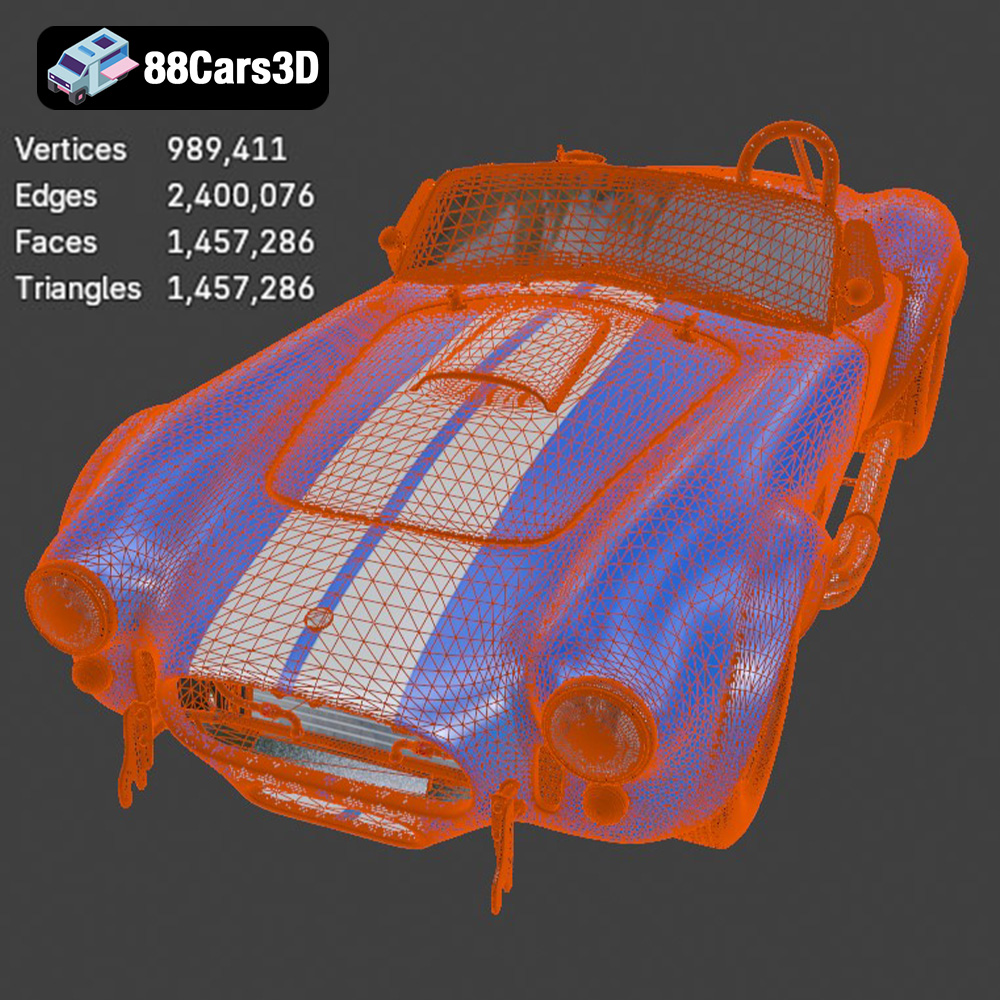
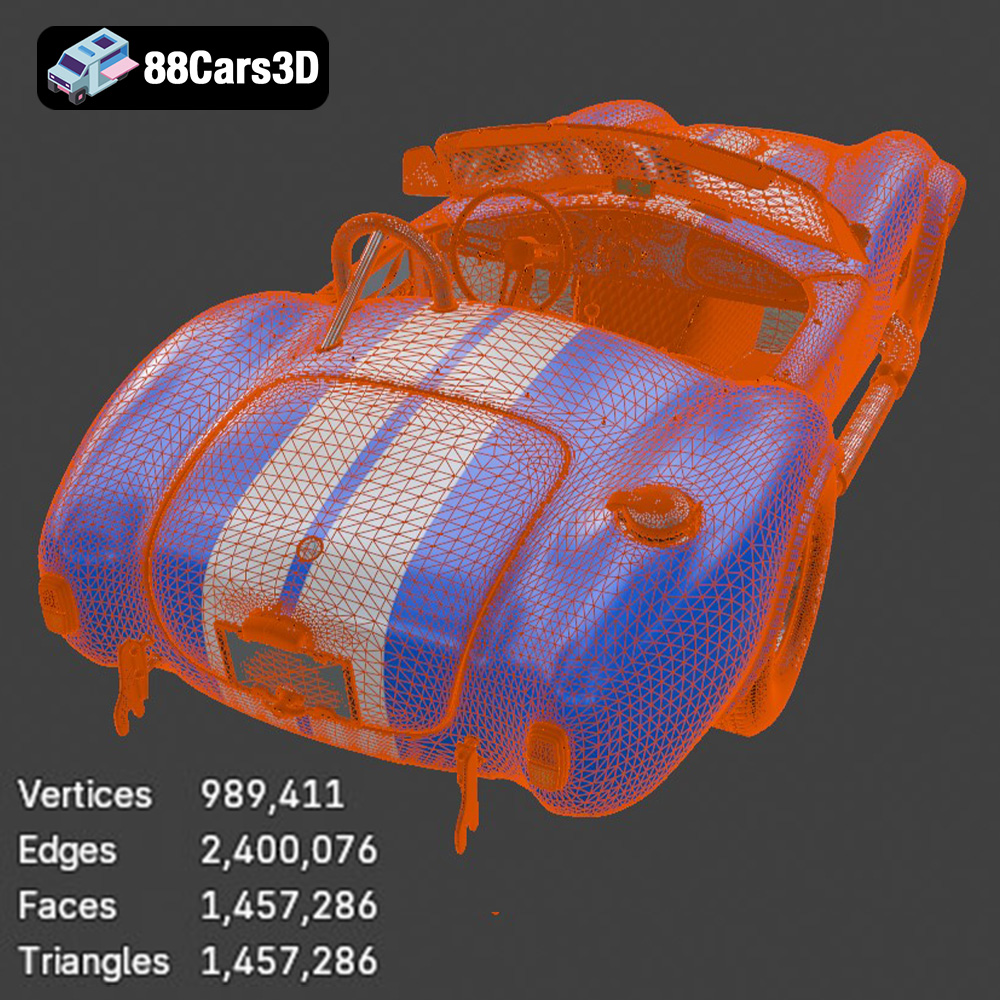
The core challenge lies in balancing visual fidelity with performance. A model destined for high-end cinematic rendering will have different polygon and texture requirements than one optimized for a real-time game engine. The featured Shelby Cobra 427 3D model tackles this by offering an impressive 1,457,286 triangle count. This substantial polycount ensures exceptional visual richness for close-up shots and high-resolution renders, yet its topology is carefully constructed to remain versatile enough for integration into modern game engines, AR/VR experiences, and professional visualization pipelines.
The Shelby Cobra 427: A Legacy Reimagined
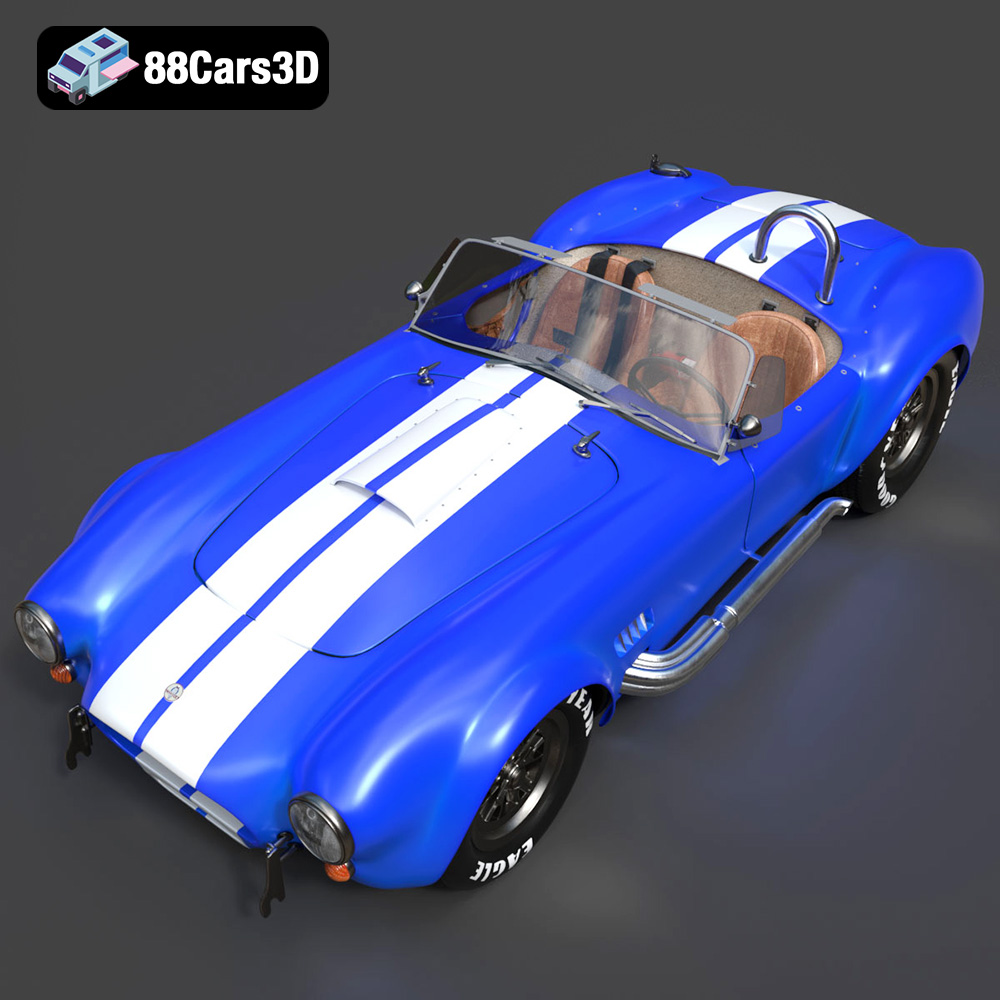
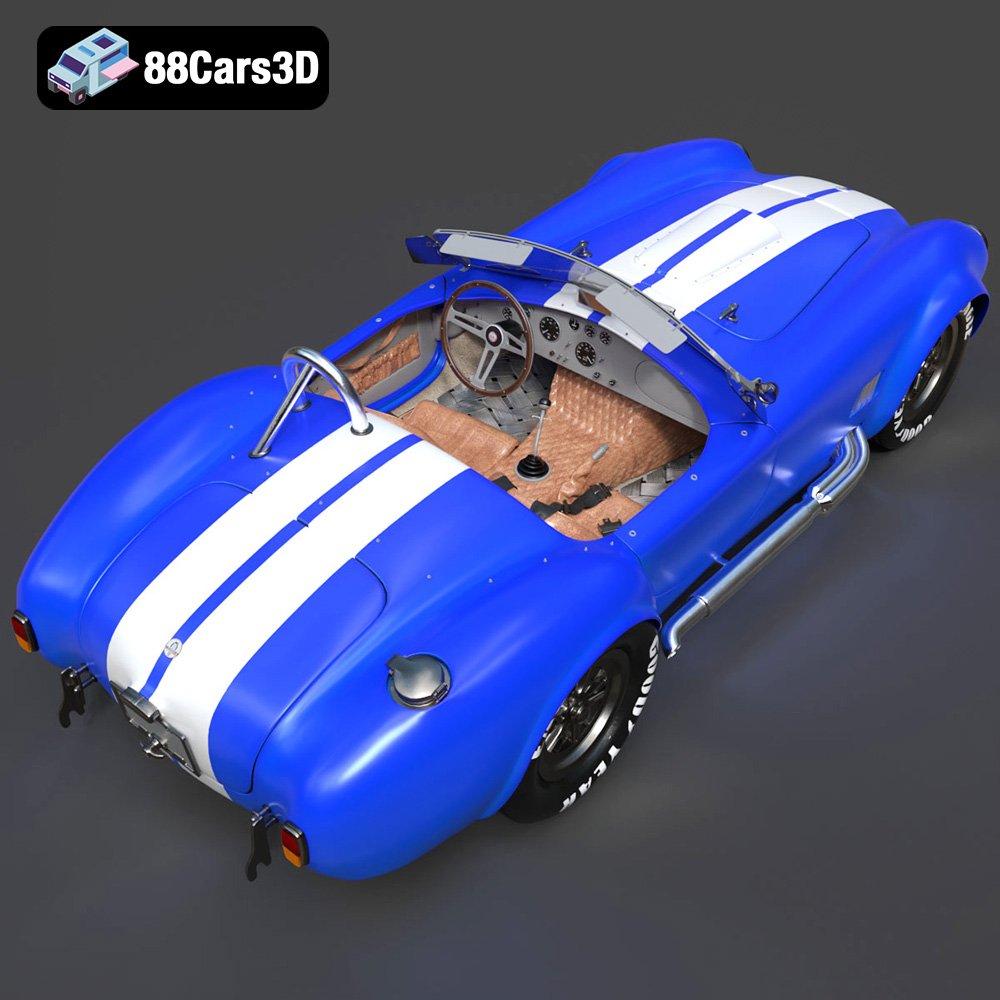
The Shelby Cobra 427 2013 continuation model is a powerful representation of engineering excellence. Its digital counterpart must reflect this. Key exterior features like the accurate frame geometry, classic roadster proportions, and the deep-dish Halibrand-style wheels are critical. Inside, the model pays homage to the original with classic leather-wrapped bucket seats, an authentic wood-rimmed steering wheel, and vintage-style Smith instrument cluster gauges. Such attention to detail is what elevates a generic 3D model to a premium asset, capable of conveying the very soul of the vehicle.
Understanding 3D Model File Formats: The Foundation of Digital Automotive Assets
When working with 3D car models, especially those as detailed as the Shelby Cobra 427, understanding the various file formats is paramount. Each format serves a specific purpose, excelling in different stages of the 3D pipeline—from initial modeling to final deployment in games, renders, or physical prints. The Shelby Cobra 427 2013 3D model, offered through 88cars3d.com, includes a comprehensive suite of formats, ensuring maximum compatibility and utility for diverse professional applications.
Versatility for Every Workflow: From DCC to Real-time
- .blend (Blender): This is the native file format for Blender, a powerful open-source 3D creation suite. A .blend file typically contains the full scene setup, including mesh data, materials, textures, lighting, cameras, and even animation. For artists primarily working in Blender, this format offers the most flexibility for editing, customization, and further development of the Shelby Cobra model. It’s fully editable, allowing for deep modifications to geometry, UVs, and material nodes without data loss.
- .max (3ds Max): Similar to .blend, .max is the native file format for Autodesk 3ds Max, a leading software in architectural visualization, game development, and cinematic rendering. An .max file provides an editable 3ds Max project, retaining all scene information, modifiers, and rendering setups. This is ideal for users integrated into the Autodesk ecosystem, offering seamless integration for animation, advanced rendering, and complex scene assembly. The Shelby Cobra 427 in .max format ensures that all its detailed components and pivot setups are preserved for professional animation workflows.
- .fbx (Filmbox): Developed by Autodesk, FBX is widely regarded as the industry standard for 3D data exchange between different software applications. It supports geometry, materials, textures, animations, and skeletal data. For the Shelby Cobra 427, .fbx is indispensable for transferring the model into real-time game engines like Unreal Engine and Unity, or other DCC applications such as Maya or Cinema 4D. Its robust support for hierarchies and animation makes it ideal for game-ready assets that require complex rigging and movement.
- .obj (Wavefront OBJ): This is one of the oldest and most universally compatible 3D file formats. An .obj file primarily stores geometry data (vertices, normals, texture coordinates, and faces) and can reference external material files (.mtl) for basic material properties. While it doesn’t support animation or rigging, its simplicity and wide support make it an excellent choice for static mesh exchange across virtually any 3D software. For the Shelby Cobra 427, the .obj format serves as a reliable fallback for cross-software compatibility, ensuring the core mesh data is accessible everywhere.
- .unreal (Unreal Engine Asset): This format signifies that the asset is specifically packaged and optimized for direct import into Unreal Engine projects. It means the model has likely undergone specific processing to ensure it meets Unreal’s performance and rendering requirements, potentially including collision meshes, LODs (Levels of Detail), and properly configured materials ready for PBR (Physically Based Rendering). For the Shelby Cobra 427, the .unreal format streamlines its integration into high-fidelity real-time environments, ready for game development or interactive experiences.
Specialized Formats for Niche Applications
- .glb (GL Transmission Format Binary): GLB is a binary version of glTF, a royalty-free specification for the efficient transmission and loading of 3D scenes and models by applications. It’s optimized for web-based 3D applications, AR (Augmented Reality), and VR (Virtual Reality). GLB files bundle models, textures, and animations into a single file, making them highly efficient for browser-based display and mobile AR experiences. For the Shelby Cobra 427, the .glb format is perfect for showcasing the model in virtual showrooms or integrating it into mobile AR apps where performance and quick loading are critical.
- .stl (Stereolithography): STL is the standard file format for 3D printing. It represents a 3D model as a series of connected triangles (a triangulated surface). While it does not store color or texture information, it accurately defines the surface geometry necessary for additive manufacturing processes. The Shelby Cobra 427 3D model, convertible to .stl, allows hobbyists and professionals to 3D print physical replicas. As detailed in its description, careful print settings are recommended to capture its intricate details.
- .ply (Polygon File Format): PLY is a polygon file format primarily used for storing 3D data from 3D scanners. It can store various properties, including color, transparency, surface normals, and range data, making it useful for capturing and representing complex scan data. While less common for direct artistic creation, its precision mesh capabilities make it valuable for scientific applications, CAD, or situations requiring highly accurate geometric representation of the Shelby Cobra 427.
The availability of these diverse formats for the Shelby Cobra 427 2013 3D Model underscores its versatility, ensuring it can be a valuable asset across virtually any professional 3D pipeline.
Building a High-Fidelity Asset: Detailing the Shelby Cobra 427 for Professional Use
The creation of a premium 3D car model like the Shelby Cobra 427 involves several critical stages, each demanding technical precision and artistic vision. From the underlying geometry to the readiness for animation, every element contributes to the model’s professional utility.
Geometry and Topology: The Art of Detail and Performance
The impressive 1,457,286 triangle count of the Shelby Cobra 427 3D model is not just a number; it represents a commitment to high-end visual fidelity. This level of detail allows for smooth, accurate curves and intricate surface features that are essential for photorealistic rendering. However, high poly counts must be managed with intelligent topology. The model’s description emphasizes its “carefully structured topology,” which is crucial for:
- Clean Deformation: Ensuring that if the model were animated (e.g., suspension compression, steering), the mesh would deform predictably without pinching or stretching unnaturally.
- Efficient UV Mapping: A clean topology simplifies the process of unwrapping UV coordinates, which are vital for applying textures accurately and without distortion. Proper UVs are non-negotiable for high-quality PBR (Physically Based Rendering) materials.
- LOD (Level of Detail) Generation: Even with a high base polycount, professional assets often require lower-poly versions for distant shots in games or real-time applications. Good topology makes the automated or manual creation of these LODs more effective.
The model’s real-world scale accuracy, based on actual vehicle chassis, further enhances its utility. This ensures that when imported into any scene or engine, it will fit seamlessly without requiring manual resizing, which can introduce inconsistencies.
Interior and Exterior Precision: Beyond the Surface
A true premium 3D model goes beyond just a good exterior. The Shelby Cobra 427 model excels here with its comprehensive detailing:
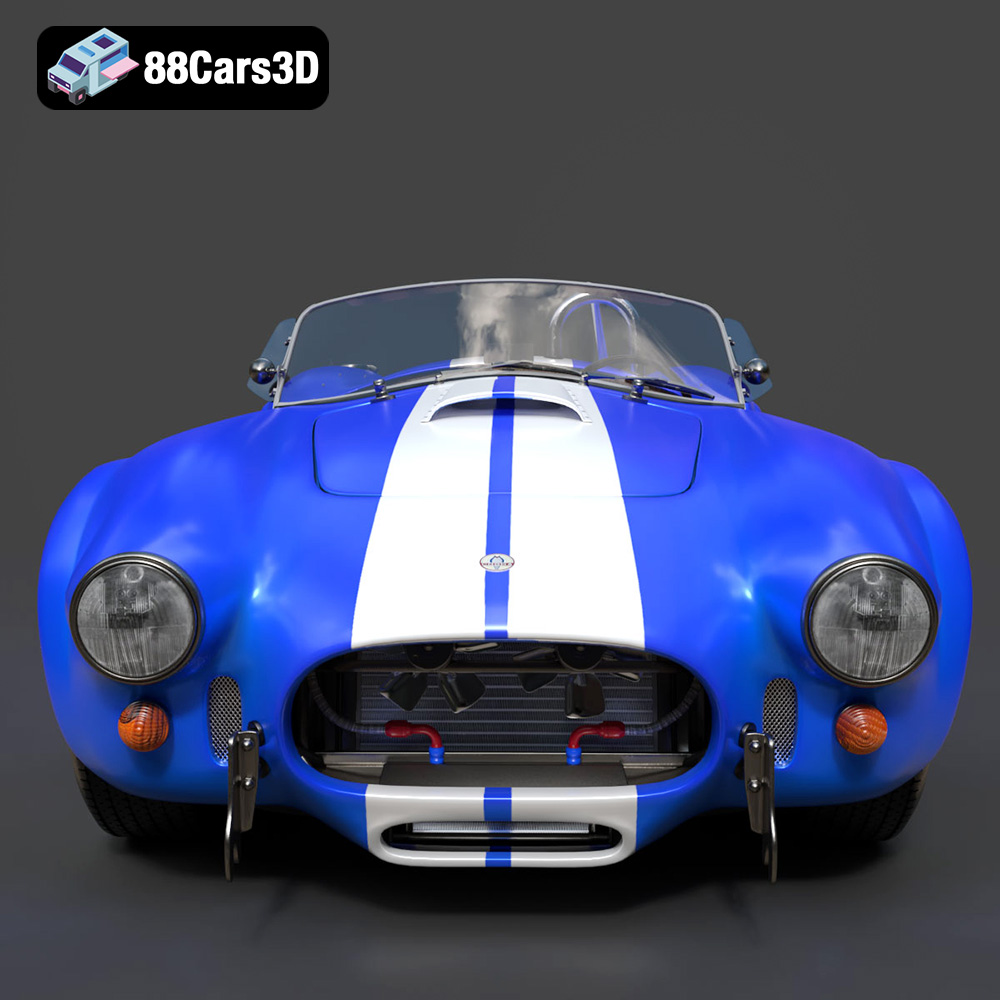
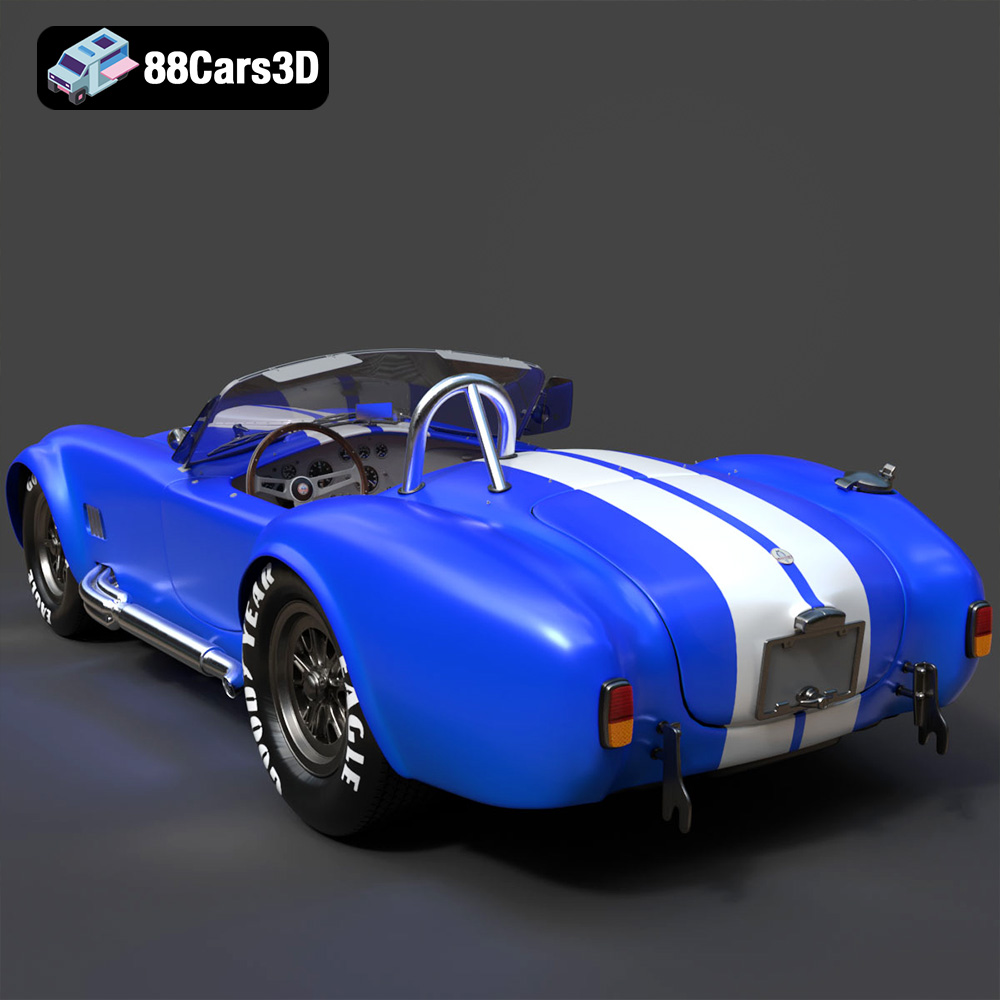
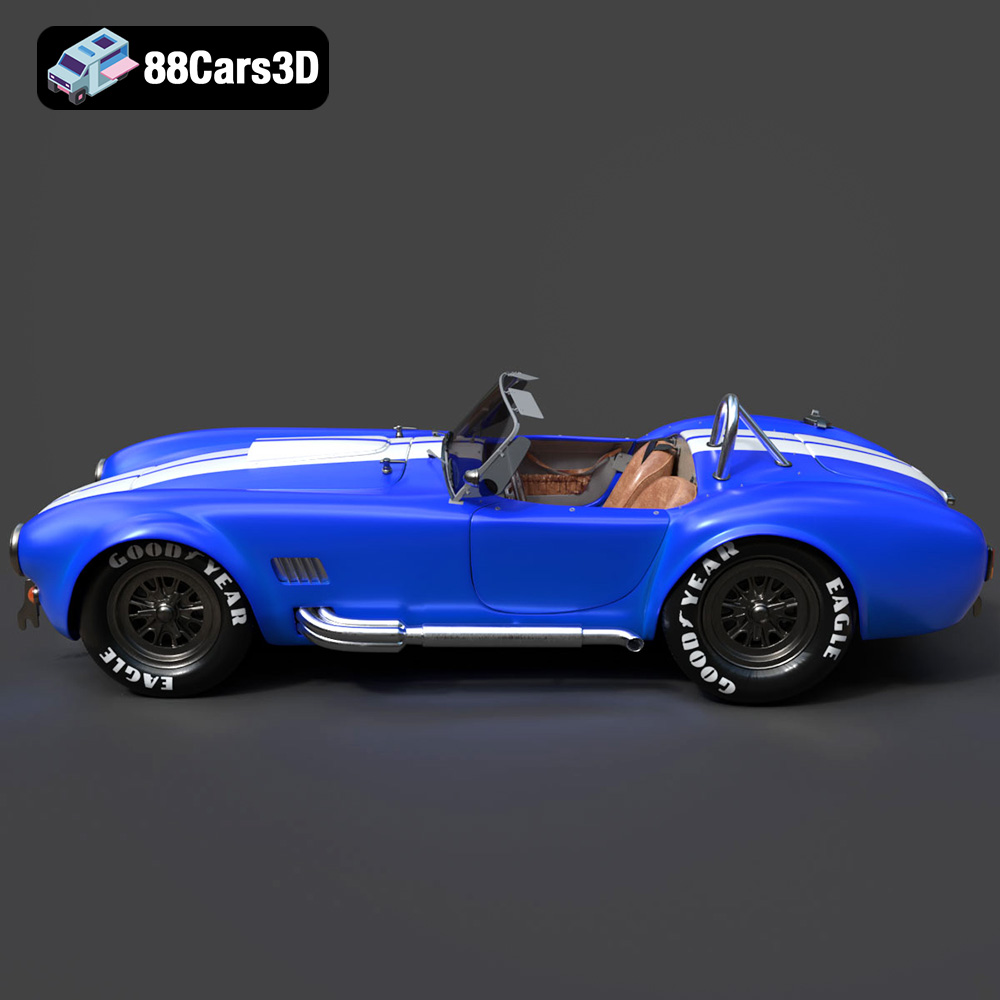
- Exterior Features: Beyond the body shape, details like the V8 engine block with intricate piping and carburetors, iconic dual side-exit exhaust system, classic round headlights with chrome bezels, and distinctive taillights are all meticulously modeled. Even the independent suspension setup is detailed, adding a layer of realism visible in close-ups or when the vehicle is posed.
- Cockpit & Interior Features: The interior often receives less attention in general 3D models, but it’s crucial for immersive experiences. The Shelby Cobra’s classic leather-wrapped bucket seats, authentic wood-rimmed steering wheel, vintage-style Smith instrument cluster, and period-correct manual shifter and pedals provide a complete experience. The “optimized geometry for first-person POV in gaming” is a key advantage, meaning the interior is ready for racing simulators or open-world games where the player occupies the driver’s seat.
Rigging and Animation Readiness
For any vehicle in a dynamic environment, animation readiness is paramount. The Shelby Cobra 427 3D model is specifically designed with this in mind:
- Separate Components: Crucially, the wheels, suspension, and steering components are separated. This allows independent manipulation, enabling realistic animation of steering, wheel rotation, and suspension travel without complex masking or object separation.
- Proper Pivot Setup: The model includes a “proper pivot setup for steering, wheel rotation, and suspension travel.” Correct pivot points are fundamental for any animated object. If pivots are off-center, rotations will look unnatural. This pre-configured setup saves countless hours for animators and riggers, allowing immediate integration into animation pipelines within software like 3ds Max or Blender.
This level of preparation makes the Shelby Cobra 427 2013 3D model an excellent foundation for creating compelling automotive animations, dynamic game cinematics, or interactive configurators.
Integrating 3D Car Models into Game Development and Real-Time Experiences
The realm of game development and real-time visualization places unique demands on 3D assets. Performance, fidelity, and seamless integration are critical. The Shelby Cobra 427 3D model from 88cars3d.com is engineered to meet these challenges head-on, providing a robust foundation for immersive experiences.
Optimizing for Game Engines: Unreal and Unity Workflows
Game engines like Unreal Engine and Unity are at the forefront of real-time rendering. Integrating a high-fidelity 3D car model effectively requires adherence to specific best practices:
- Polycount Management: While 1.4 million triangles might seem high for a game asset, for modern high-end titles on powerful hardware, it strikes a “perfect balance for real-time engines while maintaining high-end visual realism.” This means the model can serve as a hero asset for close-up views and primary gameplay. For less critical distant views, developers might implement Level of Detail (LOD) systems, creating automatically or manually generated lower-poly versions of the Shelby Cobra 427 to swap in based on camera distance, thus optimizing performance without visible loss of detail.
- Material Setup (PBR): Game engines extensively utilize Physically Based Rendering (PBR) workflows. This means the model’s materials would ideally come with textures for albedo (base color), metallic, roughness, normal, and ambient occlusion maps. A properly configured PBR material ensures the classic muscle car’s paint, chrome, leather, and rubber look realistic under various lighting conditions, enhancing the automotive rendering quality.
- Collision Meshes: For interactive environments, collision detection is vital. Game-ready assets often include simplified collision meshes that represent the physical bounds of the vehicle without the computational overhead of the high-poly visual mesh. While not explicitly stated, professional game-ready assets typically account for this.
- Import and Configuration: The inclusion of the .unreal file format indicates that the Shelby Cobra 427 model is prepared for direct import into Unreal Engine, potentially with pre-configured materials, pivots, and perhaps even basic skeletal meshes for physics-based vehicle dynamics. Similarly, the .fbx format ensures smooth integration into Unity, where developers can easily set up materials, add component scripts for vehicle physics, and define interactions.
Crafting Immersive AR/VR Experiences
Augmented Reality (AR) and Virtual Reality (VR) represent new frontiers for showcasing 3D car models. The requirements here often overlap with game development but add specific considerations for mobile performance and user interaction:
- GLB Format Optimization: The .glb file format is specifically highlighted for AR/VR applications. Its efficiency and single-file structure make it ideal for quick loading in mobile AR apps or web-based VR configurators. This ensures that users can instantly interact with a high-quality representation of the Shelby Cobra 427 in a virtual showroom or even superimposed into their real-world environment.
- Interactive Elements: In AR/VR, users expect to interact with the vehicle. This could mean opening doors, changing paint colors (as mentioned in customization options), or examining engine details up close. The separate components (wheels, suspension, steering) and proper pivot setups facilitate the implementation of these interactive features seamlessly.
- Performance on Mobile: AR on mobile devices demands highly optimized assets. While the base Shelby Cobra model is high-poly, proper LODs and efficient material instances are crucial for maintaining smooth frame rates on less powerful hardware, ensuring an enjoyable and responsive AR experience.
Performance Considerations for Interactive Applications
Regardless of the platform, performance is always a balancing act. For high-performance vehicles like the Shelby Cobra 427, developers need to ensure:
- Draw Calls: Minimizing the number of separate objects and materials helps reduce draw calls, improving rendering performance. While the Cobra model has detailed separate parts, intelligent instancing and material sharing can mitigate this in-engine.
- Texture Resolution: High-resolution textures are necessary for fidelity but can consume significant memory. Optimizing texture sizes and formats (e.g., using DXT compression) for specific platforms is key.
- Shader Complexity: Complex material shaders can be computationally expensive. PBR workflows often simplify this by using standardized shader models, ensuring consistent results while being efficient.
By leveraging the technical advantages of the Shelby Cobra 427 2013 3D Model, developers can create truly captivating and performant automotive experiences.
The Power of Automotive Rendering: Visualizing the Shelby Cobra 427
Beyond interactive applications, high-end automotive rendering remains a critical discipline for marketing, advertising, and artistic expression. A premium 3D car model like the Shelby Cobra 427 2013 serves as the ultimate canvas for creating breathtaking visual narratives.
Cinematic Quality in Studio and Environmental Renders
Photorealistic rendering demands not only a high-fidelity model but also expert control over lighting, materials, and environment. The Shelby Cobra 427, with its 1.4 million triangles and accurate geometry, provides the detail necessary for stunning close-ups and dramatic wide shots. Whether placed in a sleek, minimalist studio setting or a dynamic outdoor environment, the model’s inherent quality shines through:
- Studio Lighting: In a controlled studio environment, render artists can emphasize the iconic lines and muscular curves of the Cobra using softbox lighting, accent lights, and reflection planes. The detailed body geometry ensures that specular highlights and reflections behave realistically, defining the vehicle’s form.
- Environmental Integration: Placing the Shelby Cobra 427 into a real-world or digital environment (e.g., a winding race track, a vintage garage, or a scenic overlook) requires seamless integration. The model’s real-world scale and accurate proportions ensure it sits naturally within any scene, interacting correctly with environmental lighting and shadows. HDR (High Dynamic Range) imaging is often used to capture realistic outdoor lighting, which then beautifully illuminates the detailed surfaces of the 3D car model.
- Motion Blur and Depth of Field: For cinematic renders, effects like motion blur (for action shots) and depth of field (to draw attention to specific details) further enhance realism. The individual components of the Shelby Cobra model, such as separate wheels, allow for accurate motion blur on rotating parts.
Customization and Material Fidelity
The ability to customize a 3D model is invaluable for creative projects and client presentations. The Shelby Cobra 427 model provides several avenues for this:
- Color and Finish Modification: The description highlights the ability to “change body/stripe colors” and “adjust material finishes (matte, gloss, metallic).” This is achieved through well-structured material setups, allowing artists to easily swap out texture maps or adjust shader parameters. For a classic car like the Cobra, presenting it in its authentic factory colors or a custom metallic finish can drastically alter its perceived character.
- Tire Texture Variants: The option to “modify tire textures (racing vs. street variants)” adds another layer of realism and context. Racing slicks would suggest track performance, while street tires imply a cruising aesthetic, catering to different narrative requirements.
- PBR Workflow: A well-constructed 3D car model for rendering will leverage a Physically Based Rendering (PBR) workflow. This ensures that materials like paint, chrome, glass, and leather react accurately to light, producing believable reflections, refractions, and diffuse properties regardless of the rendering engine (e.g., V-Ray, Corona, Arnold, Cycles, or Redshift) or lighting setup.
Lighting and Composition for Impact
Effective lighting and compelling composition are what elevate a good render to an exceptional one. For the Shelby Cobra 427, the artistic choices can emphasize its raw power or its elegant form:
- Dramatic Lighting: Using harsh directional lights can highlight the aggressive contours, while soft, diffused lighting can bring out the luxurious textures of the interior.
- Reflections: Leveraging reflection planes and HDRI environments allows artists to craft dynamic reflections on the highly reflective surfaces of the Cobra, adding visual interest and depth.
- Compositional Techniques: Applying principles like the rule of thirds, leading lines, or framing can direct the viewer’s eye to specific details, such as the V8 engine block or the distinctive side pipes.
For studios and artists seeking to produce high-impact visuals, premium 3D car models like the Shelby Cobra 427 2013 from 88cars3d.com are indispensable tools.
Beyond the Screen: Leveraging 3D Models for Physical Production and Prototyping
The utility of high-fidelity 3D car models extends beyond digital screens. With the advancement of 3D printing technology, these digital assets can now bridge the gap between virtual and tangible, allowing for physical replicas and prototypes. The Shelby Cobra 427 3D model, with its included .stl format, perfectly exemplifies this versatility.
The Nuances of 3D Printing for Automotive Models
Converting a complex 3D car model for 3D printing requires an understanding of both the digital asset’s structure and the physical limitations of the printing process. The .stl format is the industry standard for 3D printing, representing the model’s surface geometry as a series of triangles. However, simply converting an .obj or .fbx to .stl isn’t always enough; optimization is often required:
- Manifold Geometry: For successful 3D printing, the mesh must be “manifold,” meaning it has no holes, self-intersections, or disconnected edges. The Shelby Cobra 427 model, designed for professional use, is likely built with robust, watertight geometry suitable for conversion.
- Scale and Resolution: The recommended scales (1:12, 1:18, 1:24) indicate common model car sizes. The “Layer height: 0.04–0.12 mm (Resin printing recommended for fine details)” is a critical specification. Resin printers (SLA/DLP/LCD) offer far greater detail and smoother surfaces compared to filament-based FDM printers, making them ideal for capturing the fine details of the Cobra’s engine, interior, and bodywork.
- Wall Thickness and Infill: “Wall thickness: 1.2–2.0 mm” and “Infill: 20–30%” are practical guidelines to ensure the printed model is structurally sound without being overly heavy or consuming excessive material. These parameters are crucial for durability and cost-effectiveness.
From Digital to Tangible: The Shelby Cobra in Miniature
The detailed specifications for 3D printing the Shelby Cobra 427 highlight the intricate considerations involved:
- Support Structures: Complex geometries, especially overhangs and intricate components like the exhaust, mirrors, and steering wheel, will “Required for detailed parts like exhaust, mirrors, steering wheel.” Proper support placement is vital to prevent print failures and preserve detail.
- Print Orientation: “Print orientation: Frame printed angled for structural integrity; wheels printed separately” is a professional tip. Printing the main body at an angle can reduce visible layer lines and improve strength, while printing smaller, cylindrical parts like wheels separately often yields better quality and reduces support material for the main body.
- Post-Processing: After printing, models almost always require post-processing. “Sanding, primer, and authentic factory colors with metallic finishes” are essential steps to achieve a professional, display-ready miniature. This transforms a raw print into a museum-quality replica, echoing the meticulous care given to the full-scale classic.
Leveraging 3D models like the Shelby Cobra 427 for 3D printing opens up exciting avenues for collectors, hobbyists, and even automotive designers for rapid prototyping of scale models, creating physical representations of their digital visions.
Conclusion: Drive Your Projects Forward with Premium 3D Car Models
The journey through the technical landscape of 3D car models reveals the profound depth and versatility required in modern digital content creation. From the initial conceptualization of an iconic vehicle to its meticulous execution across various file formats, and its deployment in diverse applications like high-end rendering, immersive game development, AR/VR experiences, and even physical 3D printing, the standards for quality and performance are exceptionally high.
The Shelby Cobra 427 2013 3D Model stands as a prime example of a premium asset engineered to meet these rigorous demands. Its impressive polycount balanced with optimized topology, comprehensive interior and exterior detailing, and readiness for animation across multiple software environments make it an invaluable tool. The availability in a wide array of formats—including .blend, .fbx, .obj, .glb, .stl, .ply, .unreal, and .max—ensures that professionals across the entire 3D spectrum can integrate this legendary muscle car into their specific workflows with ease.
Whether you’re crafting cinematic automotive renders, building the next generation of racing games, designing virtual showrooms, or bringing a tangible piece of automotive history to life through 3D printing, investing in high-quality 3D car models is a strategic decision. It saves precious development time, ensures unparalleled visual fidelity, and elevates the professionalism of any project. The Shelby Cobra 427 2013 3D Model offers not just a car, but a fully realized digital asset ready to accelerate your creative endeavors. Explore this and many other exceptional 3D car models at 88cars3d.com and give your projects the powerful assets they deserve.
Featured 3D Model
Shelby Cobra 427 2013 3D Model Download STL FBX OBJ GLB Blend
Detailed Product Description:
The Shelby Cobra 427 2013 continuation model is a masterful tribute to one of the most iconic American muscle cars ever produced, blending classic 1960s heritage with modern precision. This legendary roadster is celebrated for its muscular, sweeping curves, wide rear fenders, and aggressive side-pipe exhaust system. Known for its raw power and unmistakable V8 engine roar, the Cobra 427 stands as a timeless symbol of performance and automotive styling.
This premium 3D model boasts an impressive 1,457,286 triangle count, offering exceptional visual fidelity and intricate detailing suitable for high-end rendering and close-up shots. Despite its high polygon count, the topology is carefully structured to integrate into modern game engines and professional visualization pipelines, making it a versatile asset for game development, AR/VR experiences, and cinematic animation.
Perfect for classic car configurators, high-octane racing games, realistic garage scenes, and automotive brand visualizations.
Exterior Features:
- Accurate Shelby Cobra 427 2013 frame geometry and classic roadster proportions
- Detailed V8 engine block with intricate piping and carburetors
- Iconic dual side-exit exhaust system
- Classic round headlights, chrome bezels, and distinctive taillights
- Deep-dish Halibrand-style wheels with performance tires
- Detailed independent suspension setup
- Separate wheels, suspension, and steering components for animation
Cockpit & Interior Features:
- Classic leather-wrapped bucket seats
- Authentic wood-rimmed steering wheel with chrome spokes
- Vintage-style Smith instrument cluster and gauges
- Period-correct manual shifter, pedals, and dash switches
- Optimized geometry for first-person POV in gaming
Technical Specifications & Advantages:
- Game-Ready & Optimized: 1,457,286 triangles strikes perfect balance for real-time engines (Unreal, Unity) while maintaining high-end visual realism
- Real-world scale accuracy based on actual vehicle chassis
- Proper pivot setup for steering, wheel rotation, and suspension travel
- Compatible with major 3D software platforms and real-time rendering engines
Applications:
- Game Development: Ideal for open-world games, racing titles, and simulators due to optimized polycount
- AR/VR: Perfect for immersive virtual showrooms, configurators, and mobile AR experiences
- Rendering & Visualization: Excellent for brand campaigns, lifestyle scenes, and studio lighting setups
- 3D Printing: Convertible to .stl format for display-scale hobbyists
3D Print Settings:
- Recommended scale: 1:12 / 1:18 / 1:24
- Layer height: 0.04–0.12 mm (Resin printing recommended for fine details)
- Wall thickness: 1.2–2.0 mm
- Infill: 20–30%
- Supports: Required for detailed parts like exhaust, mirrors, steering wheel
- Print orientation: Frame printed angled for structural integrity; wheels printed separately
- Post-processing: Sanding, primer, and authentic factory colors with metallic finishes
Customization Options:
- Change body/stripe colors (e.g., factory colors, custom finishes)
- Modify tire textures (racing vs. street variants)
- Adjust material finishes (matte, gloss, metallic)
- Adapt lighting for different environments
Included File Formats:
.blend, .fbx, .obj, .glb, .stl, .ply, .unreal, .max
Tags:
shelby, cobra-427, classic-car, muscle-car, roadster, sports-car, game-ready, low-poly, optimized, car-3d-model, game-asset, rendering, vr-ar, blend, fbx, obj, glb, stl, ply, unreal, max
$73.00
View This Model
Related Tags
.blend
.fbx
.glb
.max
.obj
.ply
.rendering
.roadster
.shelby
.sports car
.stl
.unreal
car-3d-model
classic-car
cobra-427
game asset
game-ready
low-poly
muscle-car
optimized
VR/AR