Get 20% OFF All Premium 3D & STL Models!

In the dynamic realm of digital design, where realism and performance converge, the demand for meticulously crafted 3D assets is at an all-time high. From blockbuster video games to cutting-edge architectural visualizations and immersive AR/VR experiences, high-quality 3D car models form the backbone of compelling visual narratives. Automotive rendering, in particular, requires an unparalleled level of detail and accuracy to truly capture the essence of a vehicle. This comprehensive guide delves into the intricate world of 3D car modeling, showcasing how a premium asset like the Kia K5 3D Model empowers professionals across various industries. We will explore the technical specifications, diverse applications, and critical workflow considerations that make such models indispensable, ultimately highlighting the exceptional offerings available at 88cars3d.com.
The choice of file format for a 3D model is a critical decision, dictating compatibility, feature retention, and overall utility across different software and platforms. A versatile asset, like the Kia K5 3D Model, typically comes equipped with a range of formats to ensure seamless integration into any professional workflow. Understanding these formats is paramount for optimizing performance and achieving desired outcomes in automotive rendering and game asset development.
The .blend format is native to Blender, a powerful open-source 3D creation suite. When a model is provided in .blend format, it means the entire scene, including mesh data, materials, textures, lighting, cameras, and even animations, is encapsulated within a single file. This offers unparalleled flexibility for artists working in Blender, allowing for full editing and customization of every aspect of the Kia K5 3D Model. It’s ideal for those who wish to delve deep into the model’s construction, modify its topology, tweak materials, or prepare it for complex animations within the Blender ecosystem.
As Autodesk’s FilmBox format, .fbx has become an industry standard for data exchange between various 3D applications, especially prominent in game development. It efficiently stores 3D model data, including geometry, UV information, materials, textures, rigging, and animations. The .fbx format is particularly favored for real-time engines like Unreal Engine and Unity due to its robust support for skeletal animations and hierarchical structures, making it perfect for integrating game assets like the Kia K5 into interactive environments with proper pivot setups and component separation.
The .obj (Wavefront OBJ) format is one of the most widely supported and universal 3D file formats. It’s a simple, text-based format that primarily stores geometric data (vertices, faces, normals, UV coordinates) and can reference external material files (.mtl). While it doesn’t typically store advanced features like animation or rigging, its widespread compatibility makes it an excellent choice for basic model exchange between almost any 3D software. For the Kia K5, an .obj file ensures that designers can access the core mesh data regardless of their primary software.
.glb (GL Transmission Format Binary) is the binary version of the glTF format, designed for efficient transmission and loading of 3D scenes and models by applications. It packages the entire 3D model, including textures and animations, into a single, compact file. This optimization makes .glb an ideal format for web-based 3D viewers, AR/VR applications, and mobile experiences where fast loading times and minimal file sizes are crucial. The Kia K5 3D Model in .glb format is perfectly suited for virtual showrooms or mobile augmented reality.
The .stl (STereoLithography) format is the de facto standard for 3D printing. It represents a 3D model as a collection of unconnected triangular facets, defining only the surface geometry without color, texture, or other CAD attributes. While it can result in larger file sizes for complex models, its simplicity ensures near-universal acceptance by 3D slicing software. The Kia K5 3D Model in .stl format allows enthusiasts and professionals to bring the digital model into the physical world through 3D printing, enabling the creation of tangible prototypes or display models.
.ply (Polygon File Format) is another format for storing 3D data, particularly known for its ability to store properties beyond just geometry, such as color, transparency, and confidence values associated with each vertex or face. It’s often used in applications involving 3D scanning, point cloud data, and scientific analysis, where precision and additional data attributes are important. For specialized CAD or detailed mesh analysis of the Kia K5’s intricate surface, the .ply format can be highly beneficial.
While not a direct file format in the traditional sense, an .unreal asset typically refers to a model specifically prepared and optimized for direct import and use within Unreal Engine. This often implies that the .fbx file has been meticulously structured, pivots correctly set, materials assigned to be easily translated into Unreal’s PBR workflow, and potentially even includes pre-configured blueprints or static mesh assets. This level of preparation significantly accelerates the workflow for developers utilizing the Kia K5 3D Model in Unreal Engine.
The .max format is the native file format for Autodesk 3ds Max, a leading software for 3D modeling, animation, rendering, and visualization. Similar to .blend, a .max file contains the complete scene data, including geometry, modifiers, materials, textures, lighting, cameras, and animation tracks. For professionals whose primary pipeline revolves around 3ds Max, having the Kia K5 3D Model in .max format provides the ultimate control and flexibility for high-end automotive rendering, creating complex animations, or integrating it into large-scale visualization projects.
Creating a truly exceptional 3D car model is a delicate balance between artistic vision and technical precision. It demands an understanding of automotive design, engineering principles, and advanced 3D modeling techniques. The Kia K5 3D Model stands as a testament to this intricate process, offering a meticulously crafted asset that excels in both visual fidelity and performance optimization.
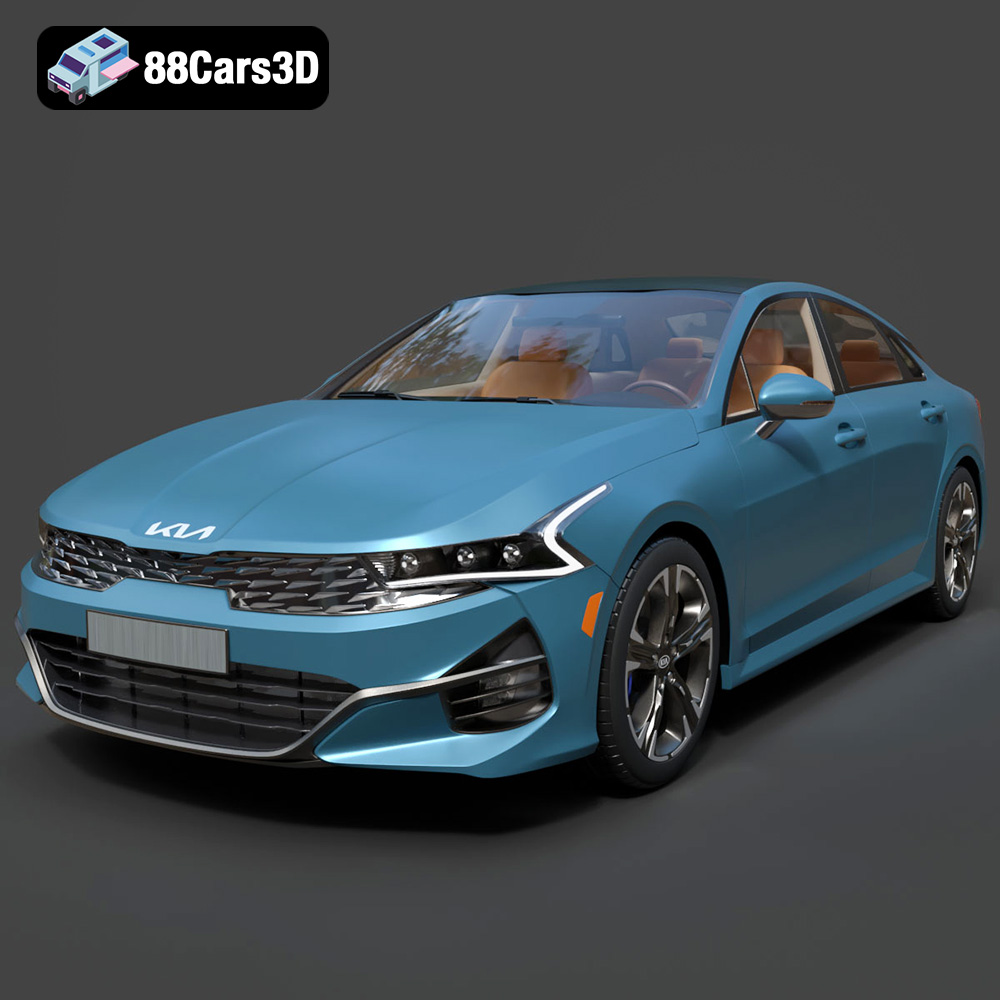
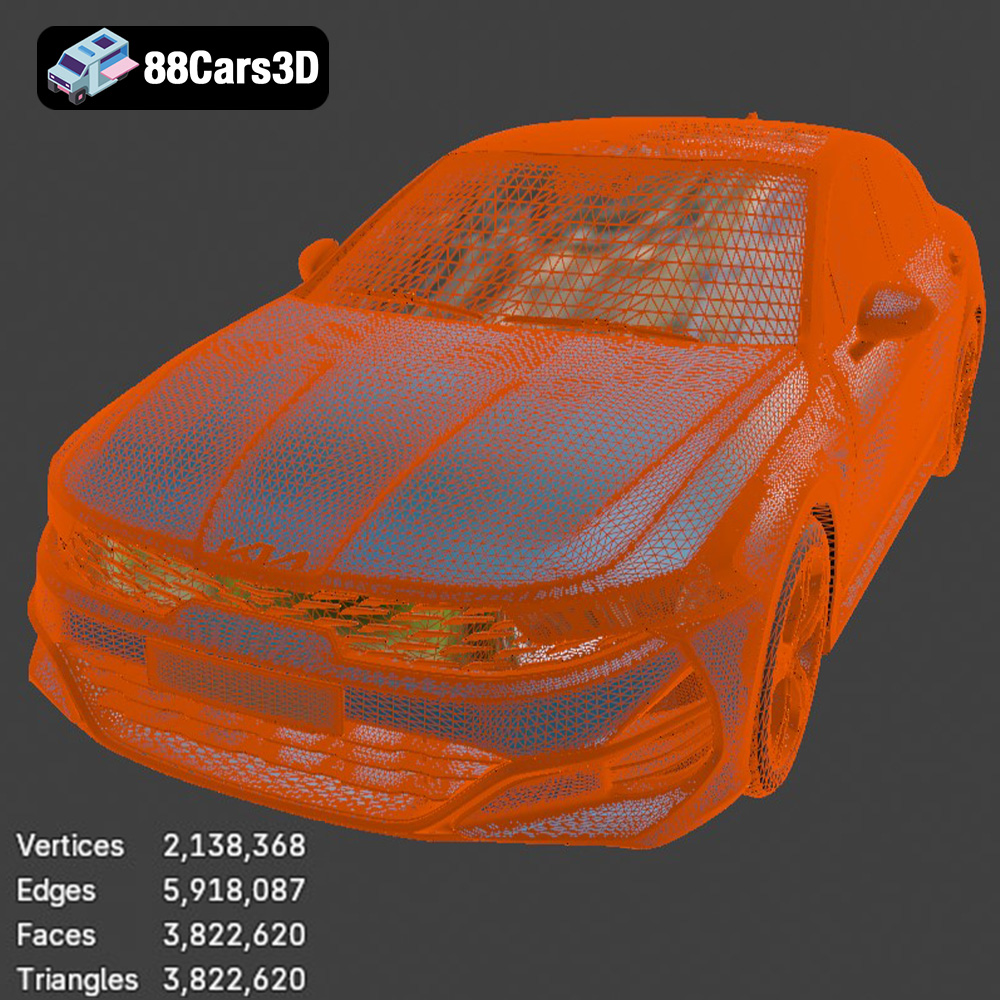
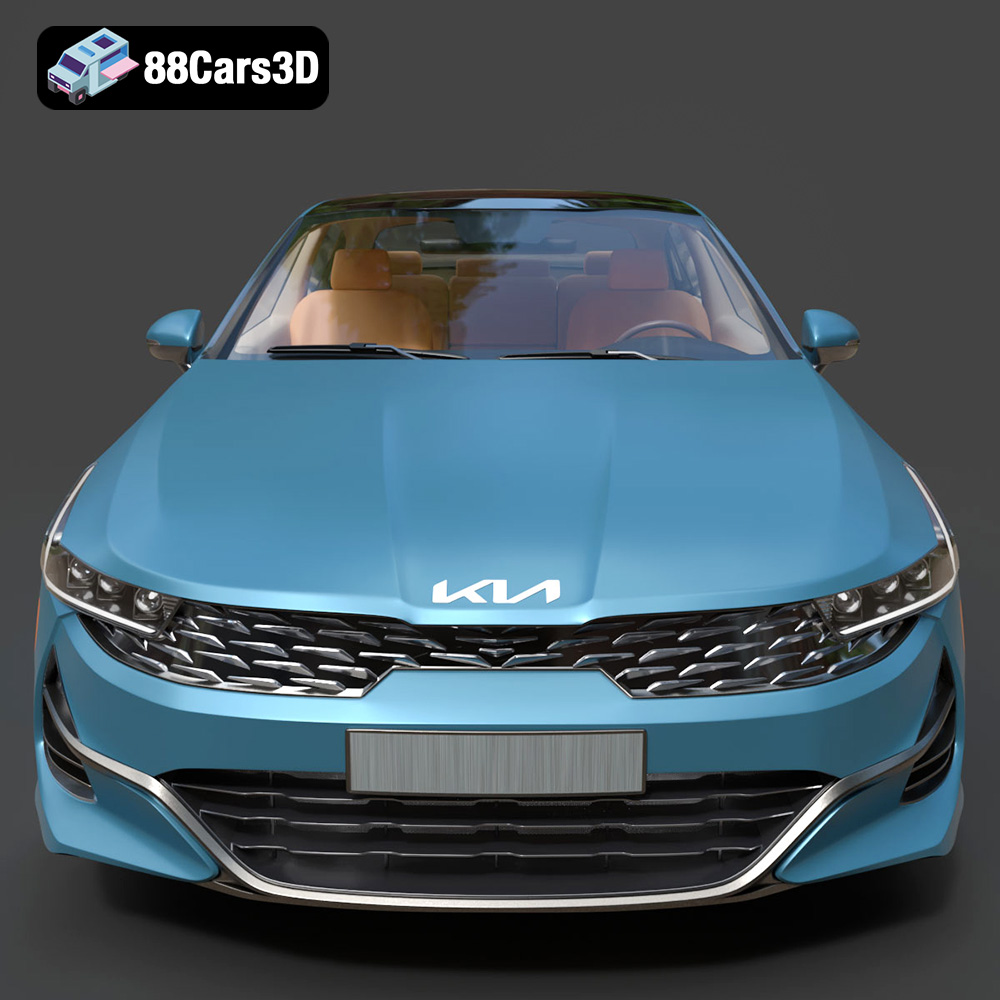
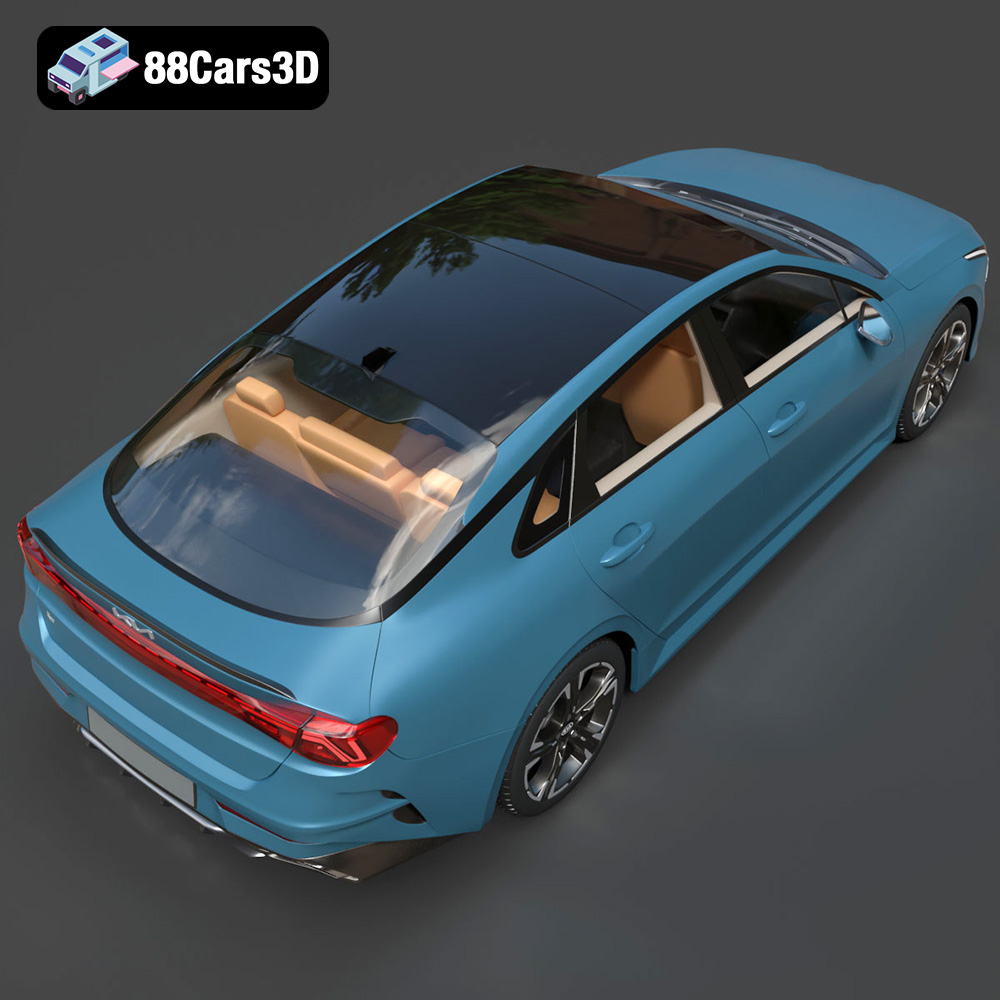
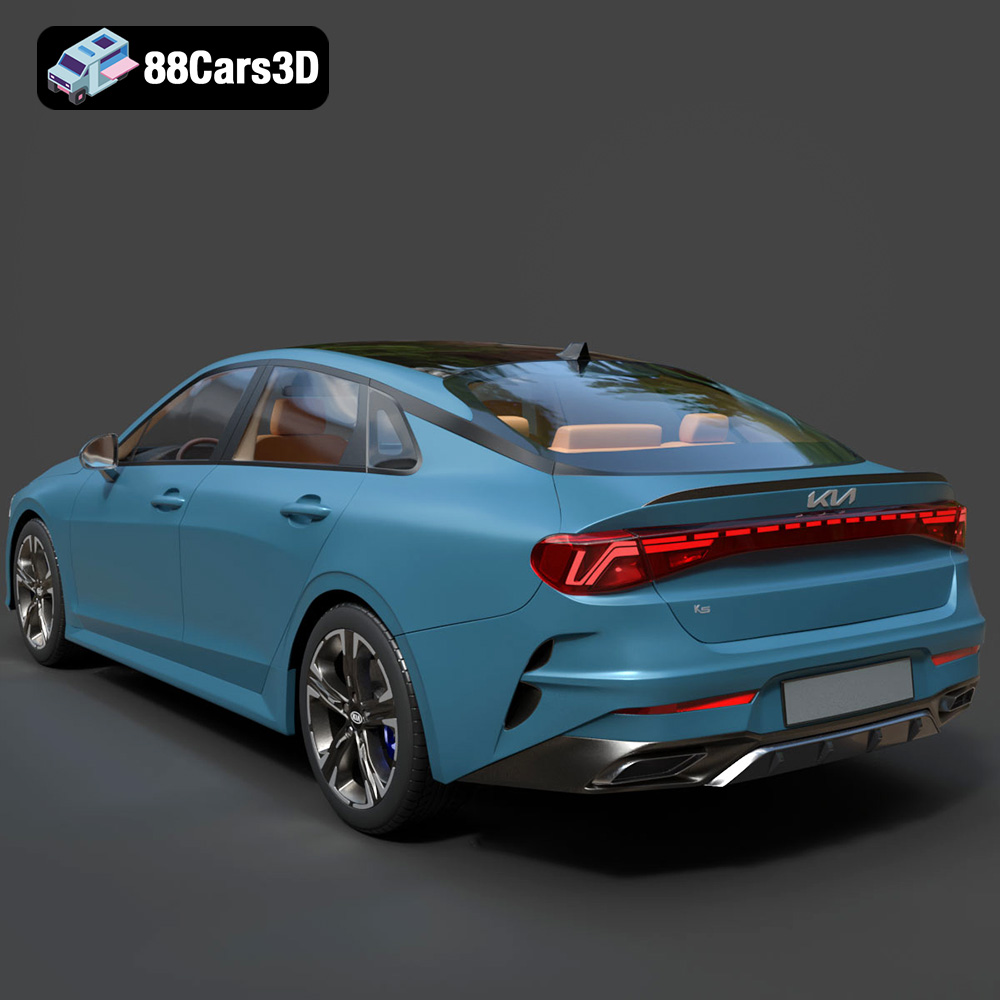
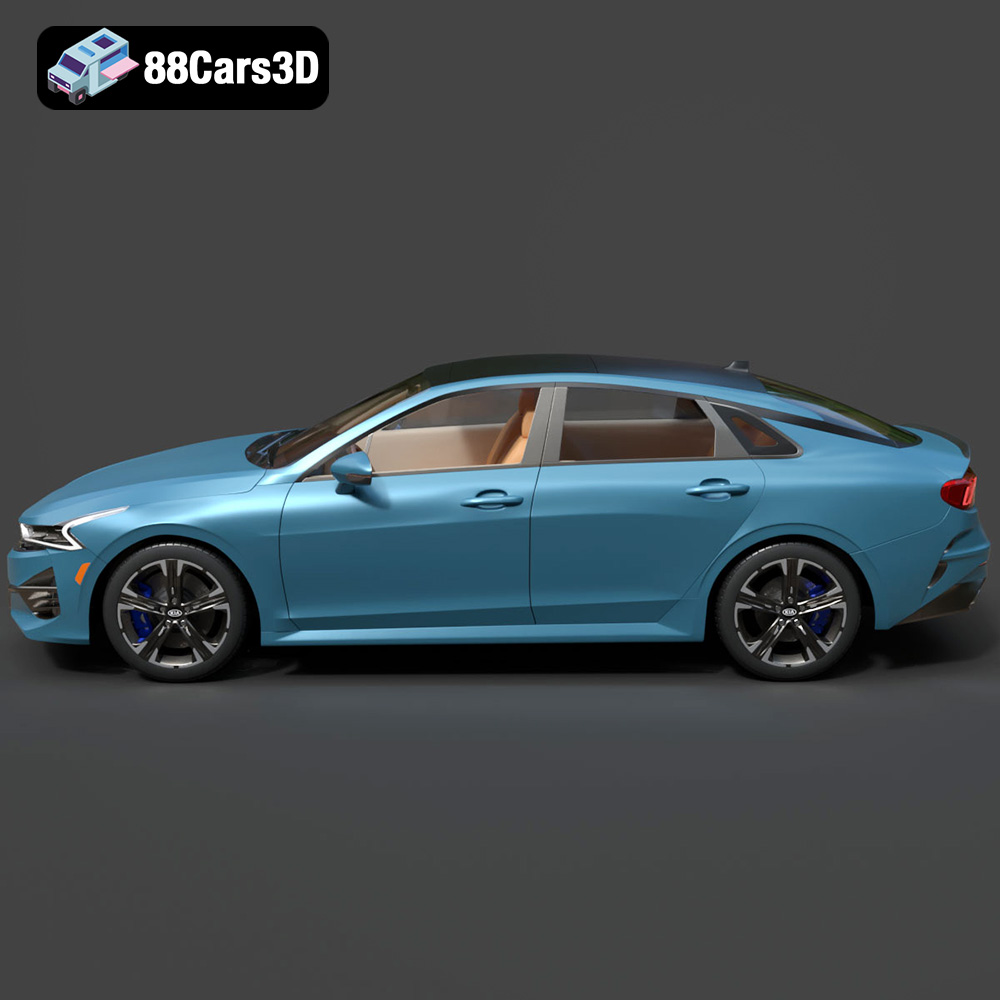
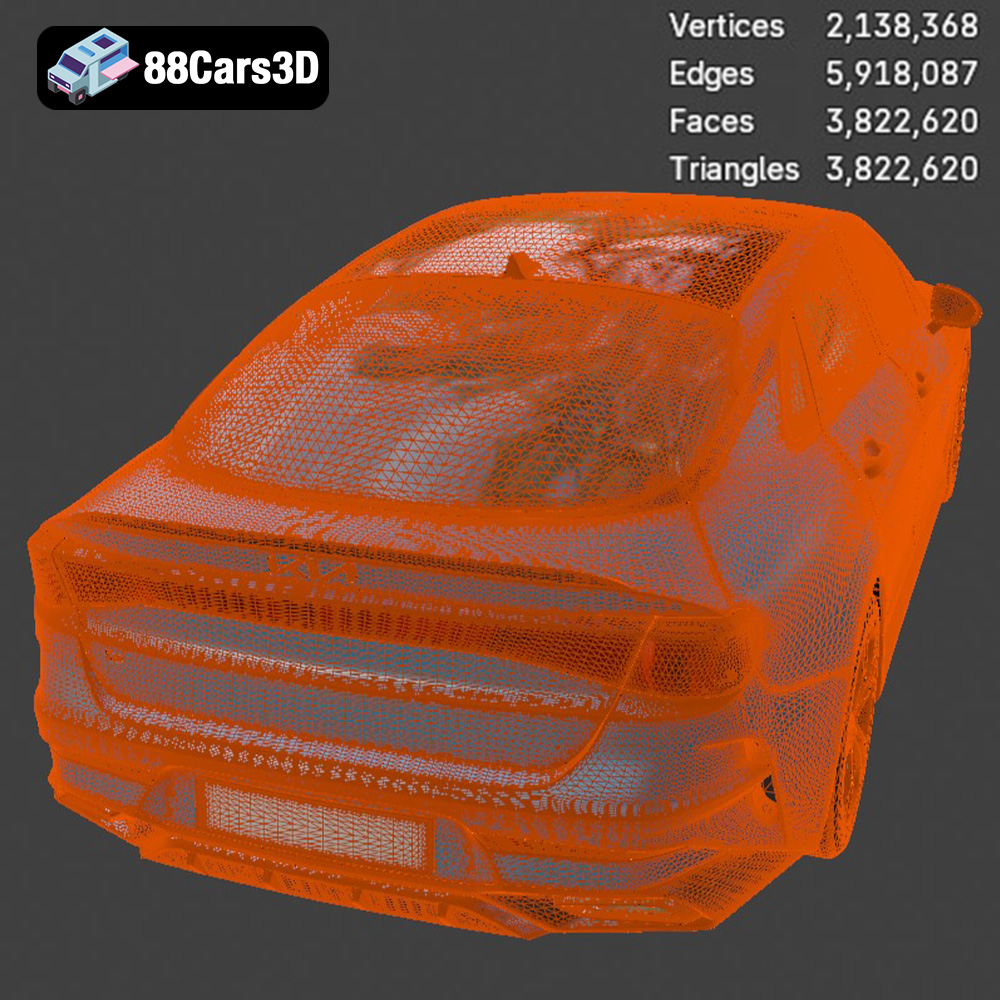
The first impression of any 3D car model hinges on its exterior accuracy. The Kia K5, known for its sleek, dynamic mid-size sedan profile, aggressive front fascia, distinctive signature grille, and sloping fastback roofline, presents a formidable challenge for 3D artists. This Kia K5 3D Model meticulously captures every curve and aerodynamic feature. With an exceptional high-fidelity topology featuring 3,822,620 triangles, it achieves an unmatched level of visual realism. Details like the dual-tipped sporty exhaust system, signature LED headlights, and full-width taillights are faithfully recreated. Even the high-resolution multi-spoke alloy wheels and realistic tire treads contribute to the overall authenticity, ensuring that the digital representation is indistinguishable from its real-world counterpart in high-end automotive rendering scenarios.
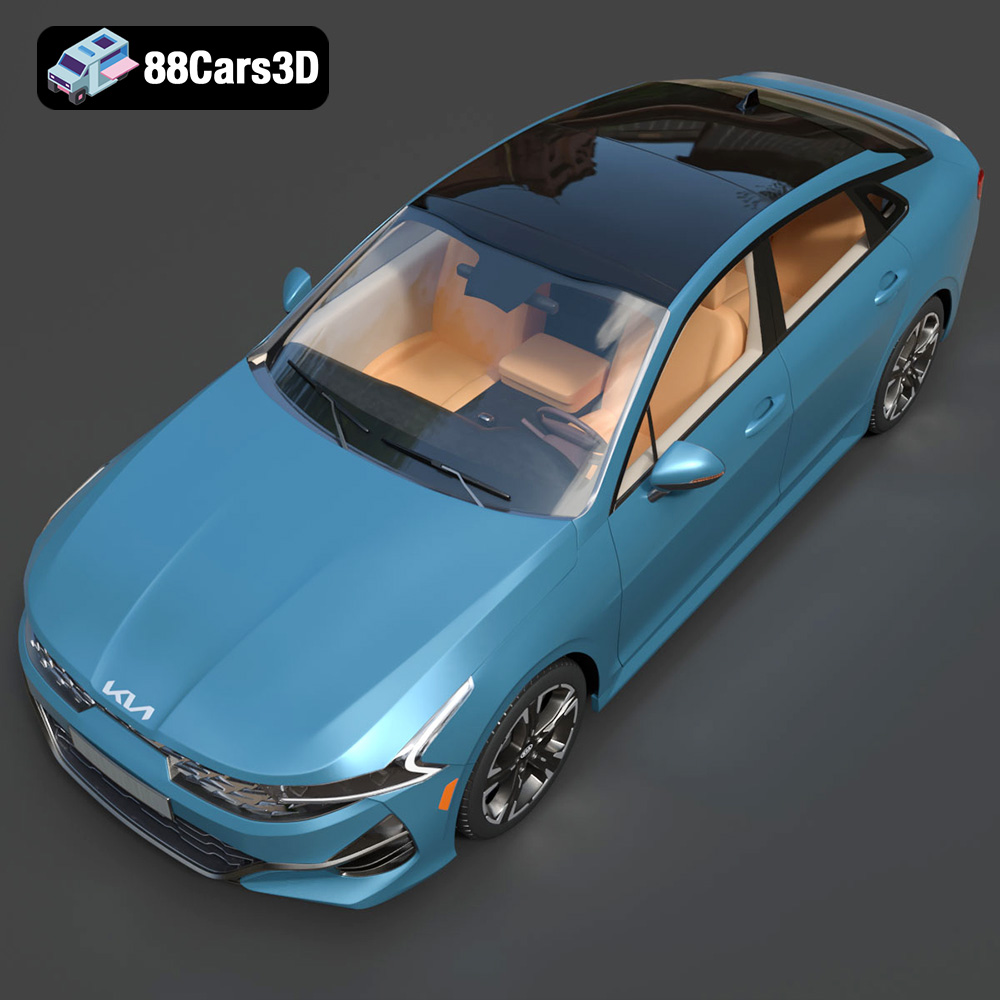
Beyond the gleaming exterior, the interior of a car model is crucial for immersive experiences, especially in game development and AR/VR applications. The Kia K5 3D Model doesn’t compromise on internal details. The cockpit features detailed sport-contoured seating with realistic material textures, an accurate steering wheel design, and a precise steering column. The digital instrument cluster and wide infotainment screen details are carefully modeled, alongside essential control elements like pedals, levers, and the center console shifter. This granular attention to detail is critical for creating a believable first-person perspective in gaming scenarios and enriching virtual automotive showrooms. Furthermore, separate wheels, suspension, and steering components are designed for animation, offering full functional fidelity for realistic simulations and interactive environments.
The gaming industry constantly pushes the boundaries of visual realism, and high-quality 3D car models are central to achieving this. The Kia K5 3D Model is specifically structured for game-ready optimization, striking a perfect balance between visual fidelity and real-time performance, making it an invaluable asset for developers.
For game developers, integrating 3D car models into engines like Unreal Engine requires careful preparation. The Kia K5 3D Model, provided in formats like .fbx and .unreal, simplifies this process. An .fbx file, correctly exported with embedded textures and materials, can be directly imported into Unreal Engine. Developers can then apply Unreal’s powerful PBR (Physically Based Rendering) materials, ensuring realistic surface reactions to light. Crucially, the model boasts proper pivot setup for steering, wheel rotation, and suspension travel. This means animators and programmers can easily rig the vehicle for realistic physics and driving mechanics without extensive rework, accelerating the development of open-world games, racing titles, and detailed simulators. The separation of components such as wheels and suspension allows for complex interactions and visual feedback during gameplay.
Achieving stunning visuals without sacrificing frame rates is the perpetual challenge in game development. The Kia K5 3D Model addresses this with its optimized geometry. With 3,822,620 triangles, it maintains a high level of detail crucial for close-up shots and high-resolution environments, while still being manageable for real-time rendering. This polycount is a testament to careful optimization, ensuring the model can be deployed effectively in various game scenarios. For even more demanding real-time applications, game engines can implement Level of Detail (LOD) systems, dynamically swapping out simpler versions of the model at a distance to maintain performance. The clean topology of this Kia K5 model provides an excellent foundation for such optimizations, ensuring a smooth visual experience across different gaming platforms.
Beyond interactive applications, the Kia K5 3D Model excels in static and animated automotive rendering, crucial for marketing, advertising, and product visualization. Its detailed construction allows for the creation of breathtaking, photorealistic images and animations.
For high-end automotive rendering, professionals often turn to software like Autodesk 3ds Max, paired with rendering engines such as V-Ray or Corona Renderer. The Kia K5 3D Model, available in the native .max format, offers maximum compatibility and flexibility for these workflows. Artists can import the model, leverage its detailed geometry, and apply complex material shaders to achieve photorealistic results. The high-resolution textures and accurate material definitions (e.g., car paint, glass, chrome, leather) ensure that reflections, refractions, and surface properties behave authentically under various lighting conditions. This allows for the creation of stunning studio shots, environmental renders, and promotional imagery that accurately showcase the Kia K5’s aesthetic appeal.
The detailed construction of the Kia K5 3D Model extends its utility beyond static renders to dynamic animations and interactive visualizations. With separate components for wheels, suspension, and steering, animators can precisely control each element to create realistic driving sequences, suspension compression, and steering movements. This capability is invaluable for automotive commercials, virtual product tours, and engineering simulations. Furthermore, for architectural visualization, integrating a high-quality 3D car model like the Kia K5 into a scene instantly adds realism, scale, and a sense of lifestyle, making exterior and interior renders more engaging and believable. The meticulous detailing, down to the MacPherson strut front and multi-link rear suspension, ensures that every aspect holds up to close scrutiny in animated presentations.
The utility of a premium 3D car model extends far beyond traditional rendering and game development, opening doors to innovative applications in augmented reality, virtual reality, and even physical fabrication through 3D printing. The Kia K5 3D Model from 88cars3d.com is designed with this versatility in mind.
The immersive potential of the Kia K5 3D Model for AR/VR applications is significant. Optimized formats like .glb are perfect for creating virtual showrooms where potential buyers can explore the vehicle in a 3D environment, rotate it, change colors, and even inspect the interior. For augmented reality experiences, the .glb format allows users to place a virtual Kia K5 in their real-world environment using a smartphone or tablet, envisioning how it might look in their driveway or office. These applications provide engaging and interactive ways for consumers to experience a product before purchase, revolutionizing automotive marketing. The model’s optimized geometry and realistic textures ensure a smooth, high-quality experience even on mobile AR devices.
For enthusiasts, designers, or educators, the ability to physically hold a miniature version of a digital model is captivating. The Kia K5 3D Model’s availability in .stl format makes it perfectly suitable for 3D printing. This allows users to create physical scale models, prototypes, or collectibles. Recommended print settings, such as a layer height of 0.04–0.12 mm and resin printing for fine details, ensure that intricate features like the exhaust system, mirrors, and delicate aero parts are accurately replicated. Printing recommendations for supports, print orientation (frame angled for structural integrity, wheels separately), and post-processing steps (sanding, primer, authentic factory colors) guide users to achieve high-quality physical replicas. This bridge from digital asset to tangible object showcases the incredible flexibility of well-prepared 3D car models.
A truly professional 3D asset is not just about its visual quality; it’s also about how seamlessly it integrates into existing workflows and the creative freedom it offers for customization. The Kia K5 3D Model excels in both these aspects.
The developers at 88cars3d.com understand that professional studios utilize a diverse array of software and engines. By providing the Kia K5 3D Model in a comprehensive suite of formats – .blend, .fbx, .obj, .glb, .stl, .ply, .unreal, and .max – they ensure maximum compatibility. This multi-format approach eliminates conversion headaches and allows artists and developers to pick the format best suited for their specific task. Whether a project requires high-polygon detail for a cinematic render, optimized geometry for real-time game assets, or a lightweight version for web AR, this model is designed to fit effortlessly into virtually any major 3D software platform and real-time rendering engine. The real-world scale accuracy further streamlines integration, removing the need for scale adjustments and ensuring consistent proportions across projects.
Beyond its out-of-the-box excellence, the Kia K5 3D Model offers extensive customization options, empowering designers to adapt it to specific project requirements. Users can easily change body colors, experimenting with factory colors, custom finishes, or unique paint schemes. The ability to modify tire textures allows for variations like off-road or street variants, broadening the model’s application range. Material finishes can be adjusted between matte, gloss, and metallic to achieve desired aesthetic effects. Furthermore, adapting lighting for different environments dramatically alters the mood and visual impact of the vehicle, from a sun-drenched street scene to a dramatic studio shoot. This flexibility makes the Kia K5 an adaptable and future-proof asset, capable of evolving with a project’s creative direction.
The world of 3D modeling is continually evolving, driven by the relentless pursuit of realism and efficiency across diverse digital applications. High-quality 3D car models are at the forefront of this evolution, serving as indispensable assets for game development, automotive rendering, AR/VR experiences, and visualization projects. The Kia K5 3D Model exemplifies this pinnacle of digital craftsmanship, offering a meticulously detailed, game-ready, and highly versatile asset that meets the rigorous demands of professional pipelines. Its exceptional high-fidelity topology, comprehensive file format support, and extensive customization options empower artists and developers to bring their creative visions to life with unparalleled realism and performance.
Whether you’re crafting an immersive racing game, producing a breathtaking automotive commercial, designing a virtual showroom, or even creating a physical prototype, this Kia K5 model provides the foundation for success. For those seeking premium 3D car models that combine technical excellence with artistic fidelity, exploring the curated selection at 88cars3d.com is a decisive step towards elevating your projects. Discover the difference that truly professional assets can make to your digital creations today.
The Kia K5 stands out as a sleek, dynamic mid-size sedan that redefines modern automotive design. Known for its aggressive front fascia, distinctive signature grille, and sloping fastback roofline, this vehicle perfectly balances sporty performance with elegant styling. This 3D model meticulously captures every curve and aerodynamic feature, including the detailed engine bay, twin exhaust system, and signature LED lighting cues.
Featuring an exceptional high-fidelity topology with 3,822,620 triangles, this model offers unmatched visual fidelity while being carefully structured for game-ready optimization and high-end rendering. Whether deployed in cutting-edge game development, immersive AR/VR applications, or photorealistic architectural and visualization projects, the model delivers uncompromising quality.
Perfect for urban racing games, virtual automotive showrooms, high-end commercial rendering, and interactive mobile AR experiences.
$90.00
.blend
.fbx
.glb
.k5
.kia
.max
.obj
.ply
.rendering
.sedan
.stl
.unreal
car-3d-model
game asset
game-ready
low-poly
mid-size-car
optimized
VR/AR