Get 20% OFF All Premium 3D & STL Models!

In the world of 3D modeling, few subjects ignite passion and demand precision quite like automotive design. Whether it’s for breathtaking cinematic renders, immersive game environments, or cutting-edge AR/VR applications, the digital representation of vehicles must capture every curve, every reflection, and every nuanced detail of its real-world counterpart. This pursuit of digital authenticity is particularly challenging with iconic machines that carry a legacy, such as the legendary Ducati Monster. Since its inception, the Monster series has redefined the “naked bike” segment, combining raw power with unmistakable Italian flair. The Ducati Monster 696, in particular, introduced a new era of aggressive streetfighter aesthetics and exhilarating riding dynamics, becoming a beloved icon for enthusiasts worldwide.
Bringing such a distinct and revered motorcycle into the digital realm requires more than just a passing familiarity with its design; it demands a deep understanding of its engineering and visual essence. This is precisely where a meticulously crafted asset like the Ducati Monster 696 2008 3D model excels. It’s not merely a static representation but a comprehensive digital twin, engineered for versatility across a multitude of professional applications. From high-fidelity visualizations that make viewers do a double-take, to optimized game assets that deliver seamless performance in real-time environments, this model is a testament to the power of detailed 3D artistry and technical optimization.
The choice of a 3D model file format is often as critical as the model itself. It dictates compatibility, workflow efficiency, and the ultimate utility of the asset across different software and platforms. For a versatile product like the Ducati Monster 696 2008 3D model, understanding the nuances of its included formats is paramount for any professional pipeline. This model comes equipped with a comprehensive suite of file types, ensuring maximum flexibility for diverse projects, from intricate rendering to interactive real-time experiences.
The .blend format is the native file type for Blender, the powerful open-source 3D creation suite. When you receive a .blend file, you’re not just getting the geometry; you’re getting a fully editable Blender scene. This includes all materials, textures, lighting setups, cameras, and even animation data if present. For the Ducati Monster 696 model, having the native .blend file means artists can dive directly into the scene, modify shaders, adjust UV maps, tweak topology, or even rig and animate components with full access to the original project hierarchy and settings. It’s ideal for those who prefer to work within Blender for rendering, modeling adjustments, or exporting to other formats with specific settings.
.fbx (Filmbox) is arguably the most widely adopted interchange format in the 3D industry, especially prevalent in game development and animation pipelines. Developed by Autodesk, FBX supports geometry, materials, textures, animations, skinning, and even camera and light data. Its strength lies in its ability to transfer complex scene data between different proprietary software packages like 3ds Max, Maya, Blender, Unity, and Unreal Engine, while largely preserving the integrity of the data. The Ducati Monster 696 in FBX format is perfect for real-time applications due to its efficient handling of meshes and PBR materials, making it a go-to for game artists and VR/AR developers seeking robust cross-software compatibility.
.obj (Wavefront OBJ) is a universal geometry definition file format that has been around for decades. It’s revered for its simplicity and near-universal compatibility across virtually all 3D software. An OBJ file primarily stores geometry (vertices, normals, texture coordinates, and faces) and can reference external .mtl (material) files for basic material properties. While it doesn’t support animation or rigging data, its strength lies in its reliability for transferring static mesh data. For the Ducati Monster 696, the .obj version serves as a foundational asset, ensuring that even if other formats encounter issues, the core mesh data remains accessible and usable in any 3D environment.
.glb (GL Transmission Format Binary) is quickly becoming the standard for 3D models on the web, in AR (Augmented Reality), and VR (Virtual Reality) applications. It’s a binary version of the glTF format, which bundles all assets (geometry, materials, textures, animations) into a single, efficient file. GLB is optimized for quick loading and rendering, making it ideal for interactive browser-based viewers, mobile AR experiences (like those on iOS or Android), and lightweight VR scenes. Having the Ducati Monster 696 as a .glb file means it’s ready to be dropped into a web configurator or an AR app, providing a seamless and high-performance user experience.
.stl (Stereolithography) is the most common file format for 3D printing. It represents a 3D model as a series of connected triangles, forming the surface geometry. STL files do not contain color or texture information, focusing purely on shape. For hobbyists and professionals looking to physically manifest the Ducati Monster 696, the .stl version is essential. It provides the necessary data for slicing software to prepare the model for additive manufacturing, allowing you to create a tangible replica of this iconic motorcycle. The detailed product description even offers specific print settings to achieve optimal results.
.ply (Polygon File Format or Stanford Triangle Format) is another format for storing 3D data, often used in applications requiring precise mesh information, such as 3D scanning, CAD, or scientific visualization. Like OBJ, it supports geometry and color (per vertex or face) but can also store additional properties like normals, texture coordinates, and even arbitrary properties for specific points or faces. While less common for general rendering than FBX or OBJ, the inclusion of .ply for the Ducati Monster 696 ensures its suitability for more niche, analytical, or specialized manufacturing workflows where mesh integrity and additional data are critical.
The .unreal file type indicates an asset specifically prepared or packaged for direct integration into Unreal Engine. While Unreal Engine primarily imports FBX, an “.unreal” designation often implies that the asset has already gone through a specific export pipeline or has associated Unreal-specific data (like collision meshes, LODs, material instances) bundled with it, streamlining the import process and ensuring optimal performance within the engine. For game developers and cinematic artists working with Unreal Engine, this format for the Ducati Monster 696 model signifies a truly “game-ready” asset, reducing setup time and potential conversion issues.
Finally, the .max format is the native scene file for Autodesk 3ds Max, a leading software for 3D modeling, animation, rendering, and visualization. Similar to .blend, a .max file contains the complete scene, including all objects, materials, lights, cameras, modifiers, and animation data. For professionals whose primary workflow is within 3ds Max, having the native .max file for the Ducati Monster 696 offers the highest degree of flexibility and control. It allows direct manipulation of the original model’s hierarchy, modifiers, and materials within the native environment, making it ideal for high-end rendering projects, architectural visualization integrations, or complex animation sequences.
The true value of a premium 3D model lies in its meticulous attention to detail and its technical integrity. The Ducati Monster 696 2008 3D model from 88cars3d.com exemplifies this, offering a digital recreation that not only looks stunning but is also engineered for performance across various professional applications. This is not just a model; it’s a foundation for creating truly immersive and believable automotive scenes.
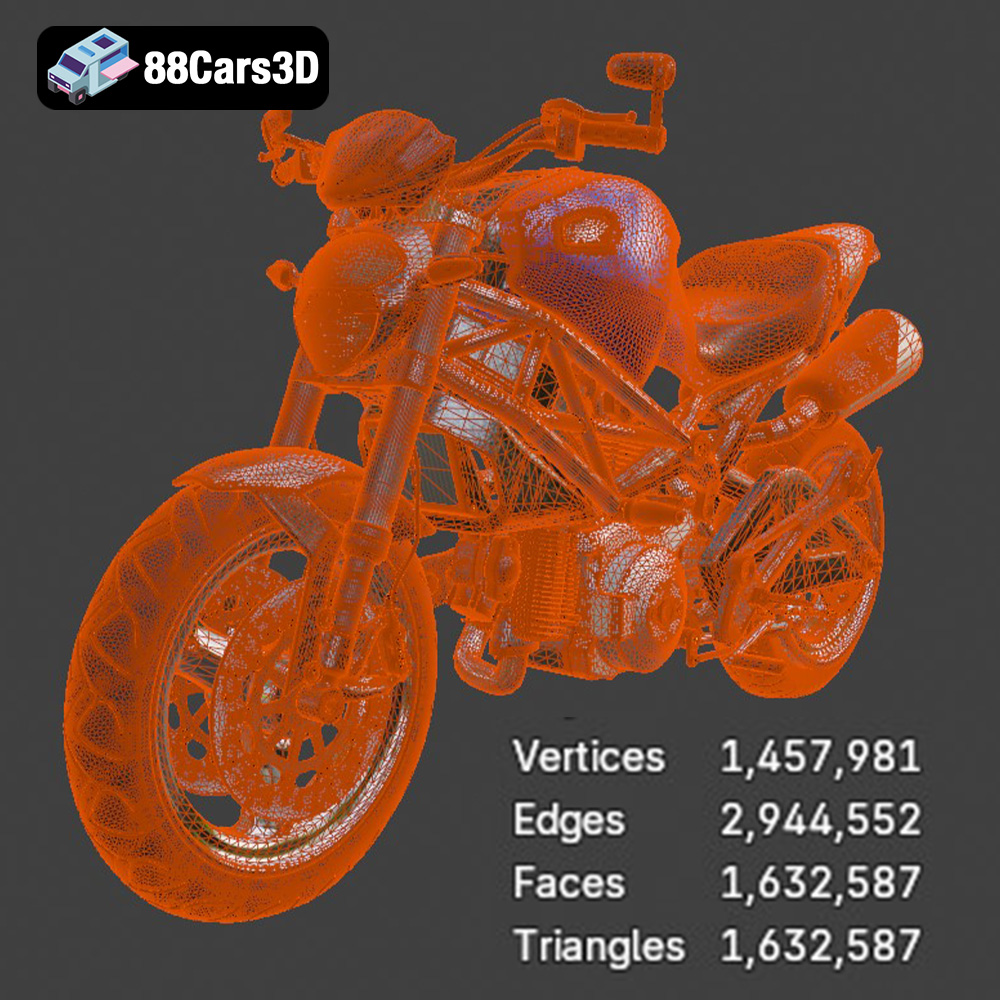
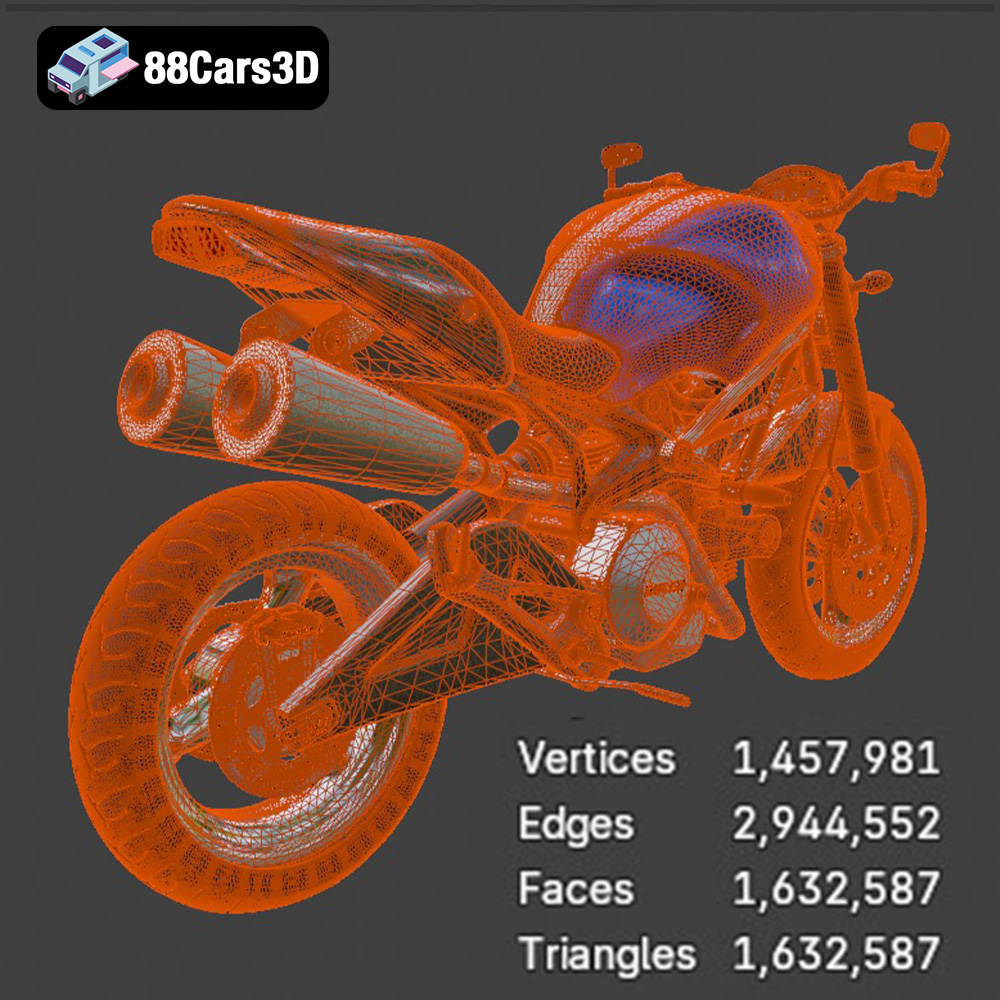
At the core of this 3D model’s appeal is its impressive visual fidelity, boasting 1,632,587 triangles. This high poly count allows for hyper-realistic detailing, ensuring that even in extreme close-up renders, every curve and component appears accurate and convincing. However, a high poly count alone isn’t enough; the true skill lies in its intelligent optimization. The topology is thoughtfully structured, balancing visual richness with efficiency, making it suitable for both cinematic pre-renders and the demanding environments of modern game engines, VR/AR applications, and high-end animations. This “game-ready” optimization is crucial, allowing for smooth performance without sacrificing the detailed aesthetic necessary for premium projects.
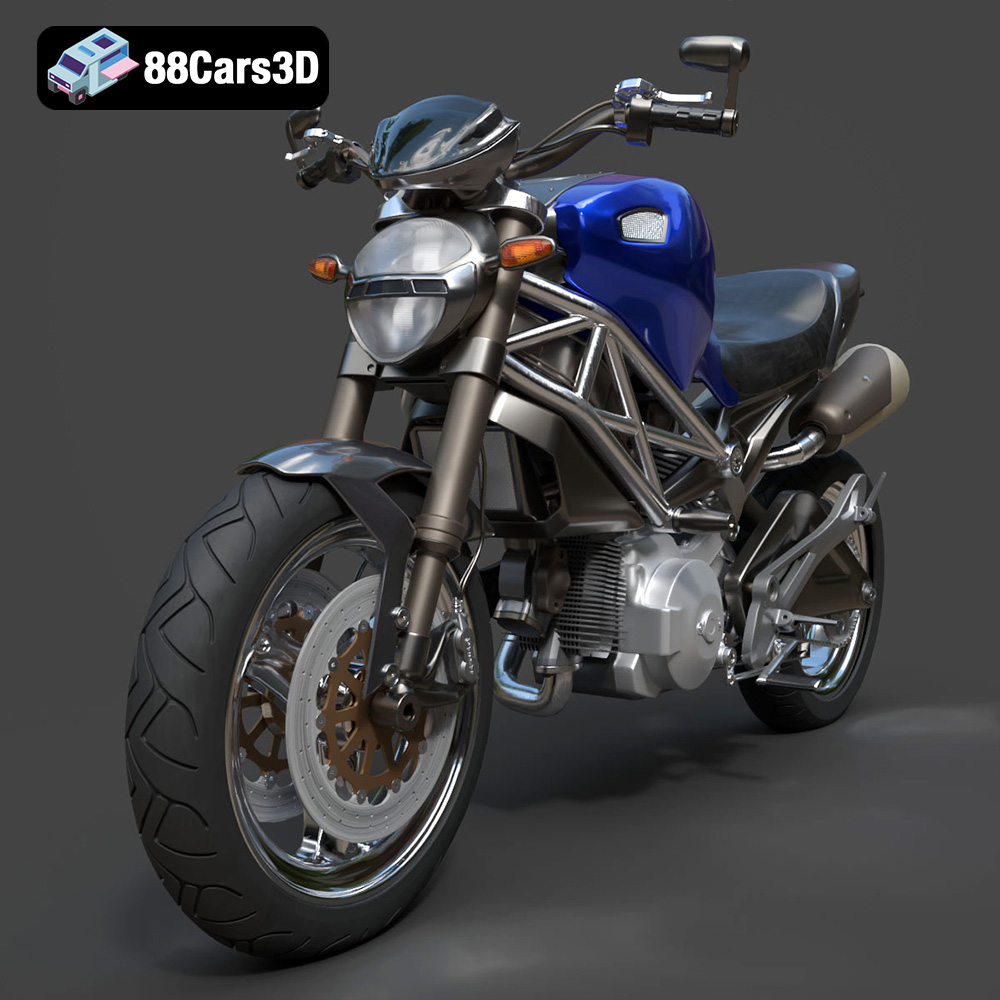
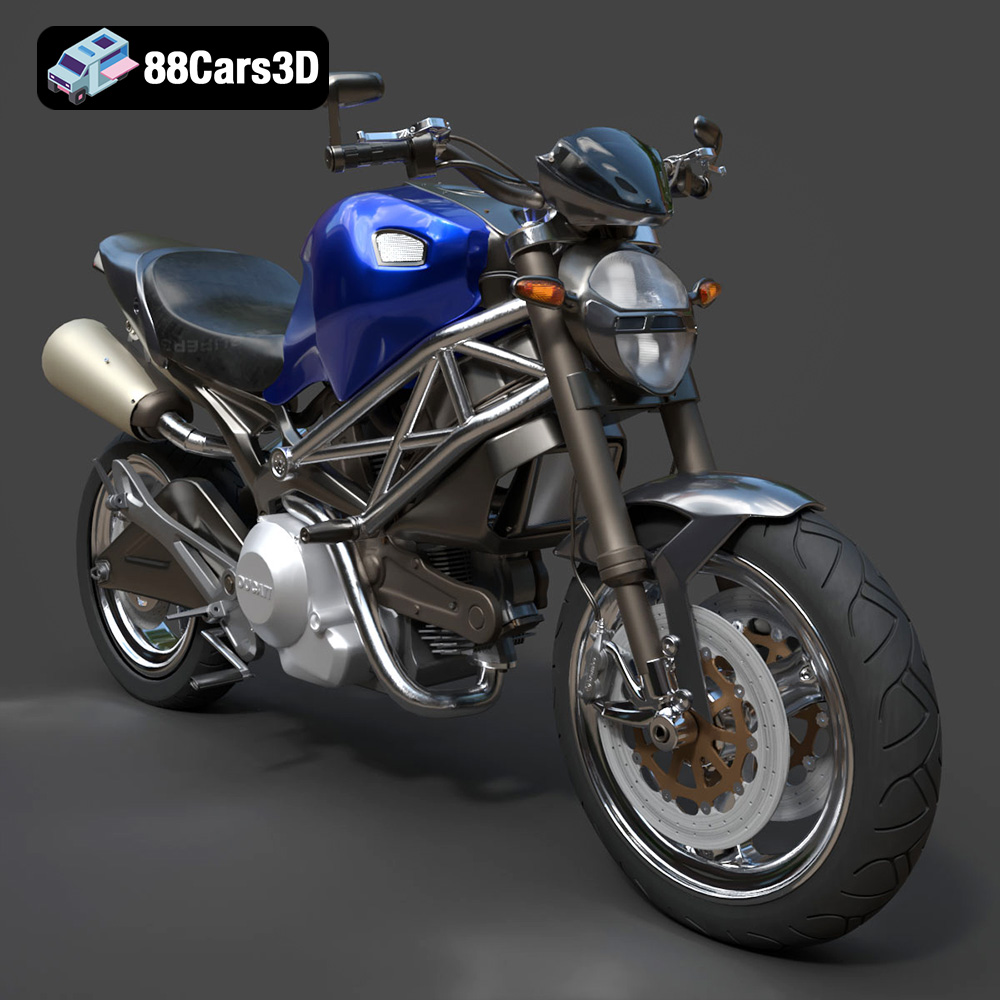
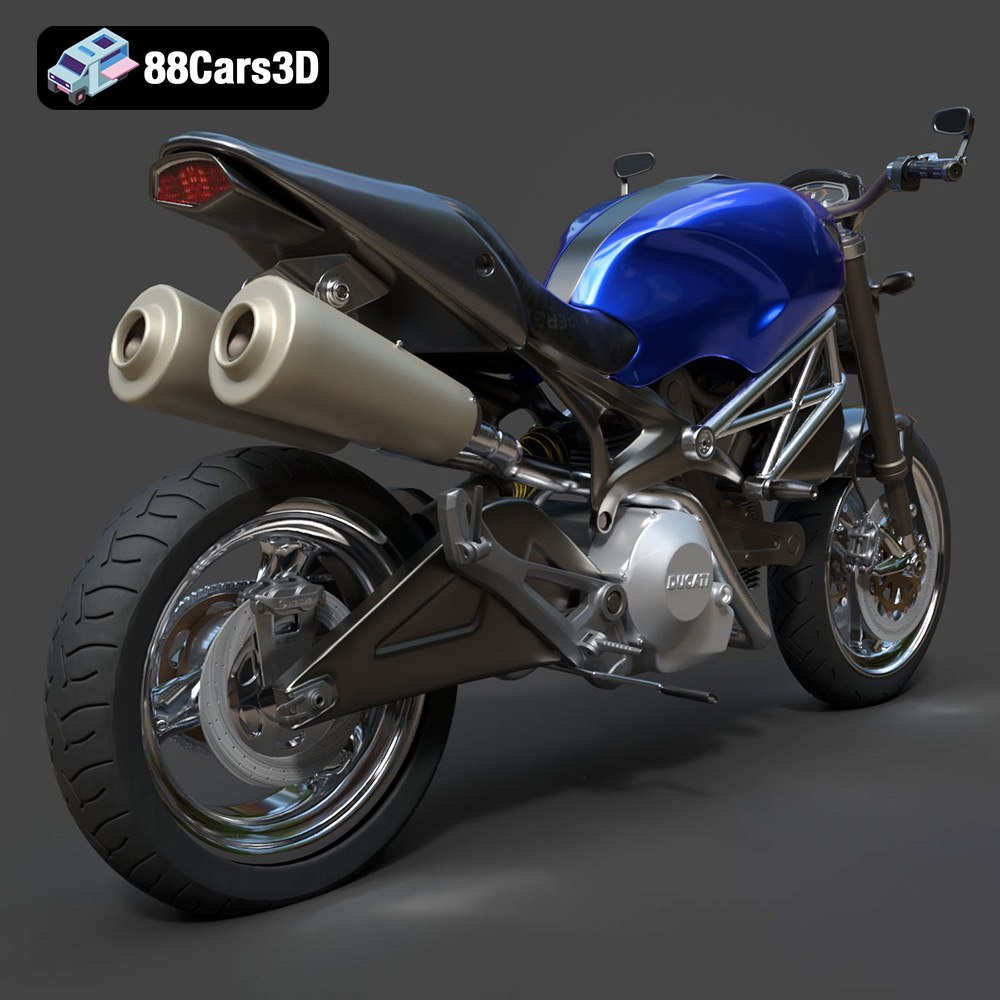
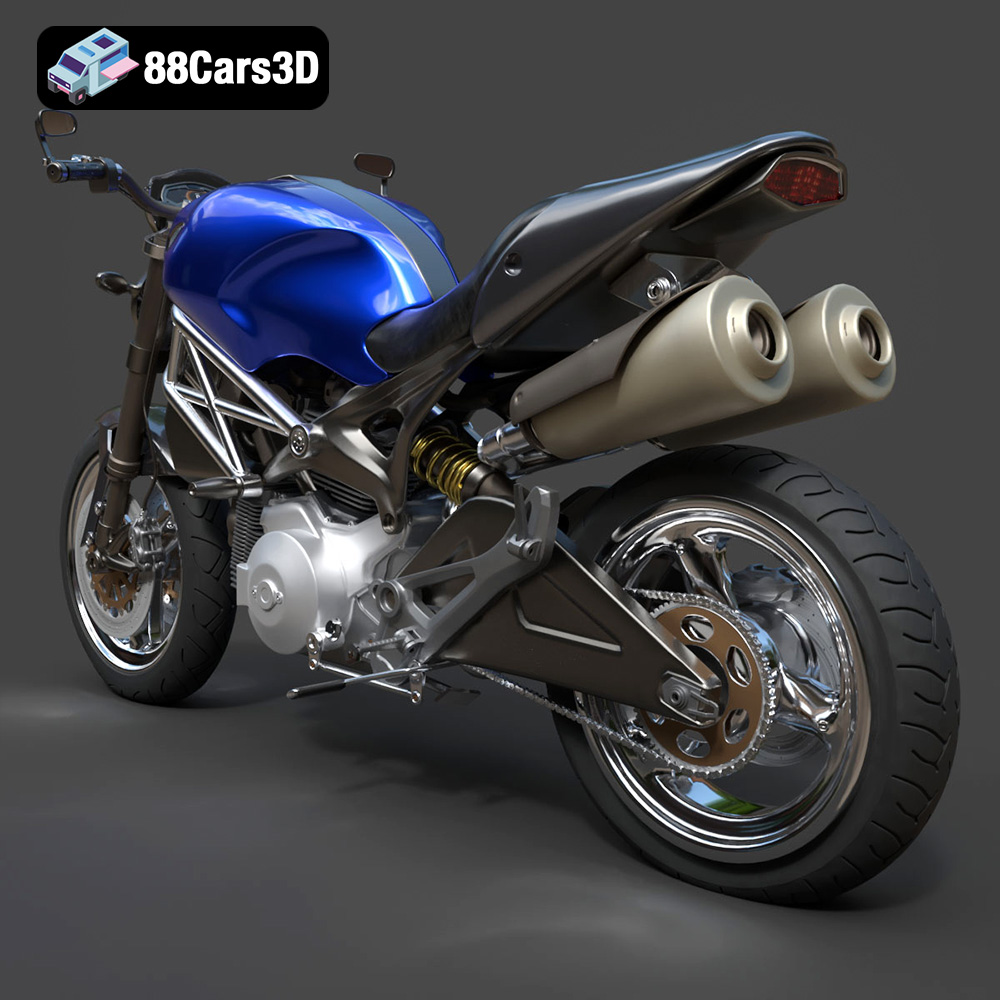
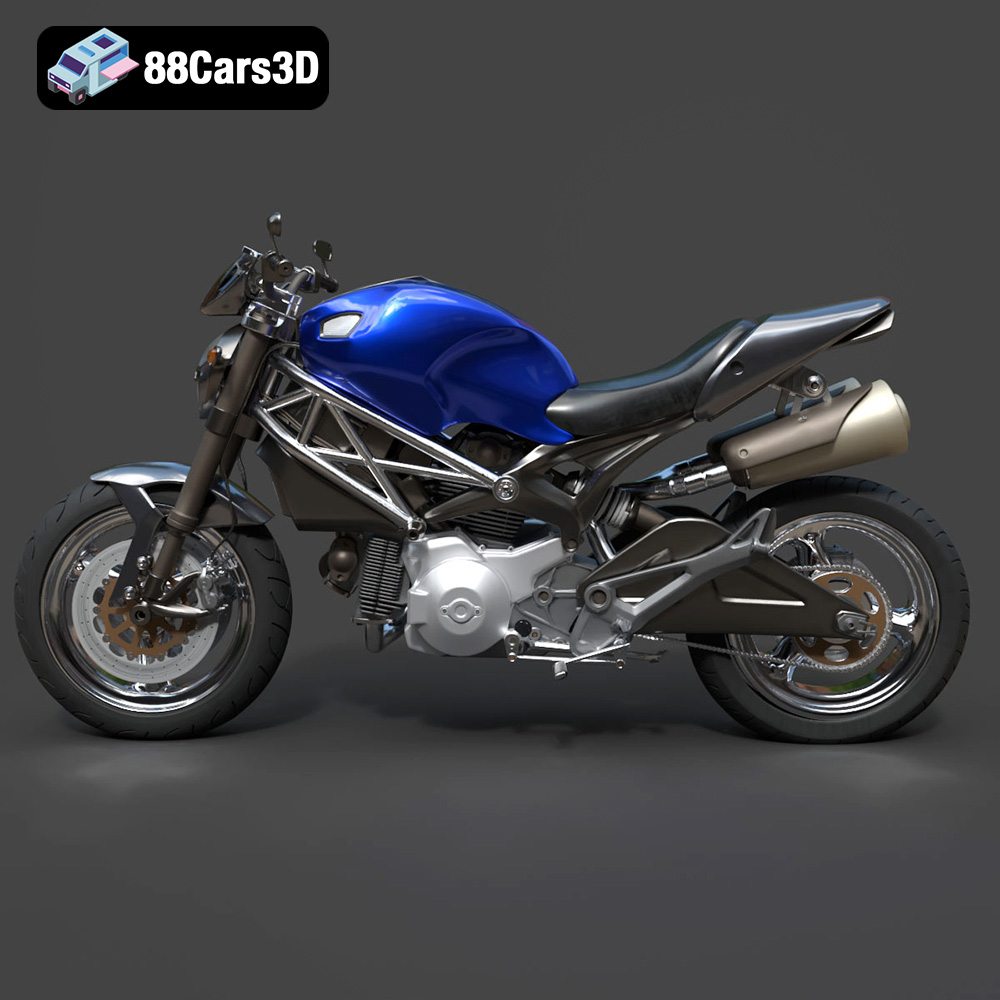
Every aspect of the Ducati Monster 696’s iconic exterior has been replicated with incredible precision. The model features an accurate tubular steel trellis frame, faithfully capturing the motorcycle’s signature exposed structure and geometry. The heart of the beast, the 696cc L-twin Desmodromic engine block, is intricately modeled with distinct cooling fins and casings, showcasing the engineering marvel of the real machine. Beyond the core, details extend to the signature twin aluminum under-seat exhaust system, the distinctive round triple-parabola headlight, and sleek LED taillight assembly. Even the three-spoke alloy wheels are intricately modeled with realistic high-performance street tires, and separate components for the front inverted forks, rear progressive Sachs monoshock suspension, and steering ensure full animation potential.
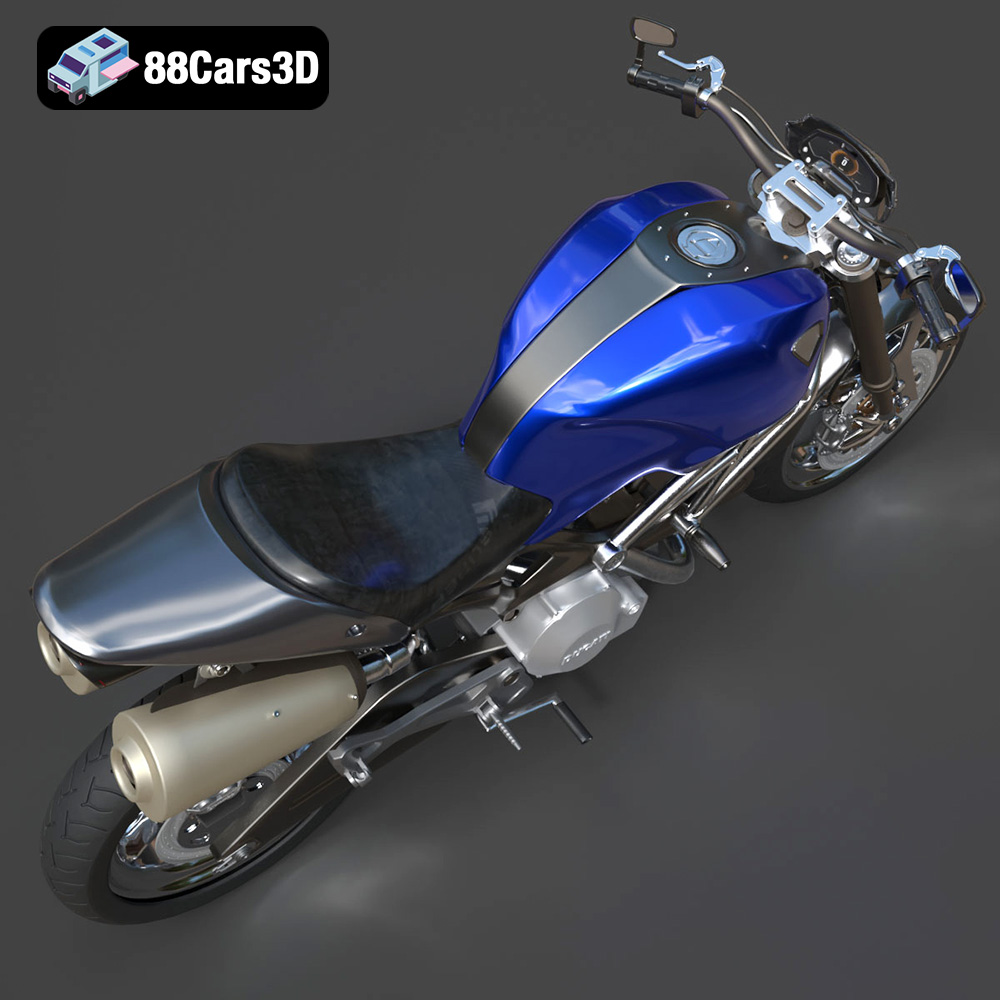
The attention to detail extends seamlessly into the cockpit, crucial for first-person perspective in games or interactive experiences. The ergonomically contoured two-up sport saddle features realistic stitch detailing, while the wide aluminum handlebars are equipped with detailed grips, mirrors, and switchgear. An accurate fully digital LCD instrument cluster setup adds to the authenticity, alongside precisely modeled foot pegs, brake/clutch levers, and shifter linkage. What truly sets this model apart is its inherent animation readiness. With proper pivot setup for steering, wheel rotation, and suspension travel, artists can effortlessly animate the motorcycle, bringing it to life with dynamic movement. This makes it an invaluable asset for racing simulations, cinematic sequences, or virtual showrooms where interaction is key.
A high-quality 3D model is only as good as its utility in professional production pipelines. The Ducati Monster 696 2008 3D model from 88cars3d.com is designed with this principle in mind, offering unparalleled flexibility for integration into various specialized workflows. Its extensive range of file formats and optimized structure ensures that whether you’re a veteran automotive renderer, a game developer, or an AR/VR innovator, this model fits seamlessly into your toolkit.
For artists focused on photorealistic automotive rendering, the native .max and .blend files are goldmines. In 3ds Max, professionals can leverage its robust rendering engines like V-Ray or Corona to produce stunning, studio-quality images. The model’s detailed geometry, accurate scale, and distinct components mean that setting up sophisticated lighting rigs, applying advanced material shaders, and composing dynamic camera angles will yield breathtaking results. Imagine the Monster 696 parked in a sleek, modern garage, its metallic paint reflecting intricate environment maps. Similarly, Blender users can utilize Cycles or Eevee to achieve exceptional realism. The editable nature of the .blend file allows for deep customization of materials, procedural textures, and even the addition of intricate dust or grime layers to tell a richer story. Both platforms benefit from the model’s clean topology, which ensures smooth subdivisions and accurate surface reflections.
Game development demands a delicate balance between visual quality and performance. The Ducati Monster 696 3D model, with its 1,632,587 triangles, strikes this balance perfectly. The inclusion of the .fbx and .unreal formats makes it a prime candidate for next-generation game engines like Unreal Engine and Unity. The optimized polycount ensures that the model renders efficiently in real-time without causing significant frame rate drops, which is critical for racing titles, open-world adventures, or motorcycle simulators. Game developers will appreciate the proper pivot setup for wheels, steering, and suspension, significantly reducing the time spent on rigging and animation setup. This allows for immediate integration into vehicle physics systems, enabling realistic handling and dynamic interactions within the game world. Furthermore, the model’s clean UV mapping facilitates straightforward texture application and material instancing, crucial for quick iteration and performance tweaking within the engine.
Augmented Reality (AR) and Virtual Reality (VR) are increasingly becoming powerful platforms for visualization, training, and interactive marketing. The Ducati Monster 696 3D model is exceptionally well-suited for these emerging technologies, particularly with the inclusion of the .glb format. GLB files are highly optimized for web and mobile performance, making them ideal for virtual showrooms where users can explore the motorcycle from every angle, or for AR applications that place the digital Monster directly into the real world via a smartphone or tablet. Imagine a customer configuring their dream Ducati in a VR garage, customizing colors and components in real-time. The model’s detailed yet optimized geometry ensures a smooth, immersive experience without lag, while its real-world scale accuracy enhances the sense of presence in virtual environments. From interactive configurators to educational simulations, this model provides the visual fidelity needed to truly engage users in AR/VR.
A premium 3D asset like the Ducati Monster 696 2008 3D model isn’t just for creating beautiful static images; it’s a dynamic tool designed to be integrated into interactive and evolving projects. Its inherent flexibility and detailed construction lend themselves to a wide array of applications, pushing the boundaries of digital content creation.
The “game-ready” designation of this Ducati Monster model is a significant advantage for projects demanding real-time performance. In environments like Unreal Engine, the inclusion of the .unreal file type signals an asset ready for immediate deployment. Artists and developers can leverage Unreal’s powerful rendering capabilities, dynamic lighting, and advanced material systems to bring the Monster 696 to life with unparalleled realism. Imagine cinematic sequences rendered entirely within the engine, or interactive racing simulations where every detail of the bike is visible at high frame rates. The optimized polycount and clean topology mean that developers can implement advanced features like dynamic damage systems, real-time reflections, and complex particle effects without bogging down performance. Furthermore, the proper pivot points for steering, wheels, and suspension facilitate easy integration with vehicle blueprints and physics, allowing for true-to-life handling and animation directly within the engine.
One of the greatest benefits of working with a high-quality 3D model is the ability to customize it to fit specific project needs. The Ducati Monster 696 model offers extensive customization options, allowing artists to truly make it their own. Changing body and tank colors to match factory specifications or entirely custom finishes is straightforward, thanks to clean material ID mapping and efficient texture sets. Modifying tire textures to switch between different street variants or even off-road styles can dramatically alter the motorcycle’s character. Adjusting material finishes—from matte to gloss to metallic—allows for precise control over how light interacts with the bike’s surfaces, crucial for achieving specific moods or brand aesthetics in renders. Whether it’s adapting the lighting to simulate different environments, adding bespoke decals, or even integrating aftermarket parts, the model’s structured nature provides a robust foundation for endless creative possibilities. This adaptability ensures that the model remains relevant across multiple projects, fulfilling diverse artistic visions.
While the Ducati Monster 696 3D model boasts a rich 1.6 million triangles, its thoughtful optimization means it strikes a perfect balance for real-time engines. However, in extremely performance-critical scenarios, further optimization might be desired. This could involve creating multiple Levels of Detail (LODs) for the model, where lower-polygon versions are swapped in when the bike is further from the camera, significantly improving rendering efficiency. Techniques like baking normal maps from the high-poly model to a lower-poly mesh can maintain visual detail while drastically reducing vertex count. For highly specific applications like mobile VR, additional mesh reduction or texture compression might be employed. The clean base topology of the 88cars3d.com model makes these further optimization steps much more manageable and effective, allowing developers to scale the asset’s performance to match the demands of any target platform.
Beyond the screens of computers and virtual reality headsets, the world of 3D modeling extends into the tangible realm through 3D printing. The Ducati Monster 696 2008 3D model offers an exciting opportunity for enthusiasts and hobbyists to transform this digital masterpiece into a physical collectible or display piece. The inclusion of the .stl format specifically caters to this application, bridging the gap between virtual fidelity and real-world craftsmanship.
Converting a high-detail rendering model into a print-ready file requires careful consideration of physical constraints. While the .stl file is provided, users might need to make minor adjustments depending on their specific 3D printer and desired scale. The model is recommended for scales like 1:12, 1:18, or 1:24, which offer a good balance between manageable print time and retaining fine details. Before printing, the model will typically be imported into slicing software (e.g., Cura, PrusaSlicer, Chitubox for resin printers). Here, crucial parameters are set, such as layer height, infill density, and support structures. For a complex model like the Ducati Monster 696, careful orientation of parts is key to minimizing supports and maximizing structural integrity. For instance, the product description suggests printing the frame angled and wheels separately, strategies that leverage the strengths of 3D printing technology.
Achieving a high-quality physical replica hinges on appropriate print settings. For the Ducati Monster 696, a layer height between 0.04–0.12 mm is recommended, especially for resin printing, which excels at capturing the model’s intricate details like the engine fins, exhaust system, and cockpit elements. Resin (SLA/DLP) printers are generally superior for fine details compared to FDM (filament) printers, though FDM can be used for larger scales with thicker walls (1.2–2.0 mm) and sufficient infill (20–30%) for structural stability. Supports are undoubtedly required for delicate parts such as the mirrors, handlebars, and the under-seat exhaust, preventing sagging during the printing process. After printing, the real magic begins with post-processing. This typically involves removing supports, sanding to smooth out layer lines or support marks, and applying a primer. For a truly authentic finish, painting with authentic factory colors and metallic finishes will elevate the printed model from a mere replica to a miniature work of art, a testament to the original Ducati’s design and the digital model’s fidelity.
There’s a unique satisfaction in holding a physical object that originated as a digital file. For Ducati enthusiasts, the ability to 3D print a highly detailed replica of the Monster 696 offers a tangible connection to their passion. It’s a fantastic project for model makers, automotive collectors, or anyone who appreciates the blend of digital craftsmanship and traditional modeling. From assembling the separately printed parts to the meticulous painting process, creating a physical Ducati Monster 696 from this 3D model is a rewarding endeavor that extends the utility of the digital asset far beyond the screen. It showcases the model’s robust design and attention to detail, proving its worth both in the virtual and physical realms.
The journey from a legendary motorcycle like the Ducati Monster 696 to a meticulously crafted 3D model demands an exceptional blend of artistic vision and technical prowess. The Ducati Monster 696 2008 3D model stands as a prime example of this synergy, offering an unparalleled asset for professionals across diverse creative industries. Its comprehensive detailing, from the iconic trellis frame to the L-twin engine, ensures breathtaking visual fidelity for high-end automotive rendering and cinematic sequences. Simultaneously, its optimized topology and game-ready structure make it an invaluable asset for real-time applications, facilitating seamless integration into demanding game engines, interactive AR/VR experiences, and virtual showrooms.
The extensive suite of included file formats—ranging from native editable scenes like .blend and .max, to industry-standard interchange formats like .fbx and .obj, and specialized formats for web/AR (.glb), 3D printing (.stl), and engine-specific use (.unreal)—underscores its versatility and commitment to professional workflows. This ensures that regardless of your software preference or project requirements, this model provides a solid, adaptable foundation. Whether you are an artist striving for hyper-realism in automotive rendering, a game developer building an immersive racing title, an AR/VR creator crafting interactive experiences, or a hobbyist bringing a digital design to life through 3D printing, the Ducati Monster 696 2008 3D model is engineered to exceed expectations.
With its robust technical specifications, animation-ready features, and extensive customization potential, this model is more than just a digital object; it’s an investment in quality and efficiency for any serious 3D project. Discover this exceptional asset and many more high-quality 3D car models and game assets by visiting 88cars3d.com, your premier source for professional-grade automotive 3D content.
The Ducati Monster 696 2008 revolutionized the naked bike segment with its aggressive streetfighter stance, unmistakable Italian styling, and pure riding dynamics. Born from a legendary lineage, this motorcycle strips away the unnecessary, showcasing its iconic exposed tubular steel trellis frame, sculpted muscular fuel tank, and signature L-twin Desmodromic engine. The dual under-seat exhausts and minimalist triple-parabola headlight assembly add to its brutal yet elegant visual appeal, making it a true masterpiece of two-wheeled engineering.
This premium 3D model boasts an impressive 1,632,587 triangles, delivering uncompromising visual fidelity and hyper-realistic detailing perfect for close-up rendering. Despite the rich detail, the topology is thoughtfully structured and optimized for next-generation modern game engines, VR/AR applications, and high-end animations. From the intricate engine block cooling fins to the aggressive street posture, every component has been modeled to match the real-world motorcycle with incredible precision.
Perfect for next-gen motorcycle racing games, high-end visualization projects, interactive VR garage simulators, and cinematic lifestyle animations.
.blend, .fbx, .obj, .glb, .stl, .ply, .unreal, .max
Tags:
ducati, monster-696, 2008, naked-bike, streetfighter, motorcycle-3d-model, game-ready, optimized, game-asset, rendering, vr-ar, blend, fbx, obj, glb, stl, ply, unreal, max
$80.00
.2008
.blend
.ducati
.fbx
.glb
.max
.obj
.ply
.rendering
.stl
.streetfighter
.unreal
game asset
game-ready
monster-696
motorcycle-3d-model
naked-bike
optimized
VR/AR