Get 20% OFF All Premium 3D & STL Models!

In the dynamic realms of automotive design, game development, cinematic rendering, and immersive AR/VR experiences, the quality of a 3D asset dictates the success of a project. More than just a visual element, a meticulously crafted 3D car model is a cornerstone for creating truly believable and engaging digital worlds. Professionals across these industries demand assets that not only look stunning but are also technically sound, optimized for performance, and versatile enough to integrate into diverse workflows.
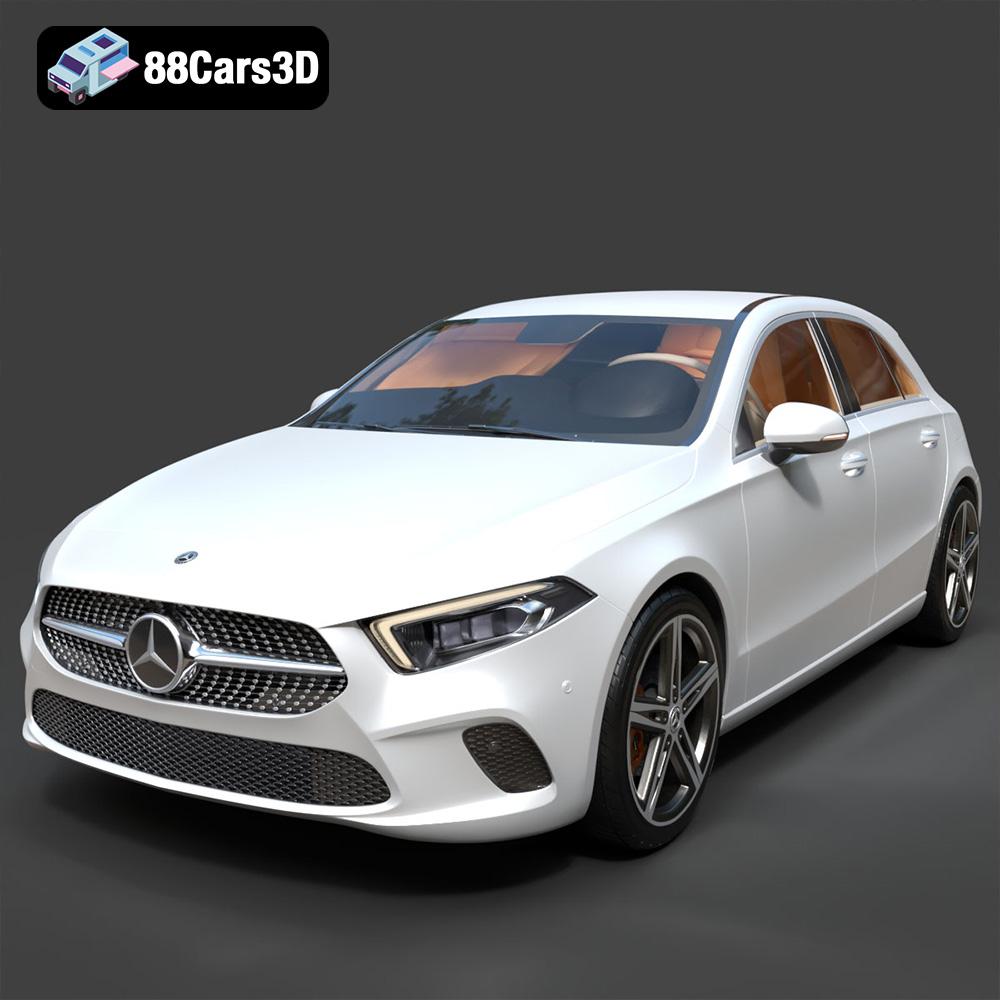
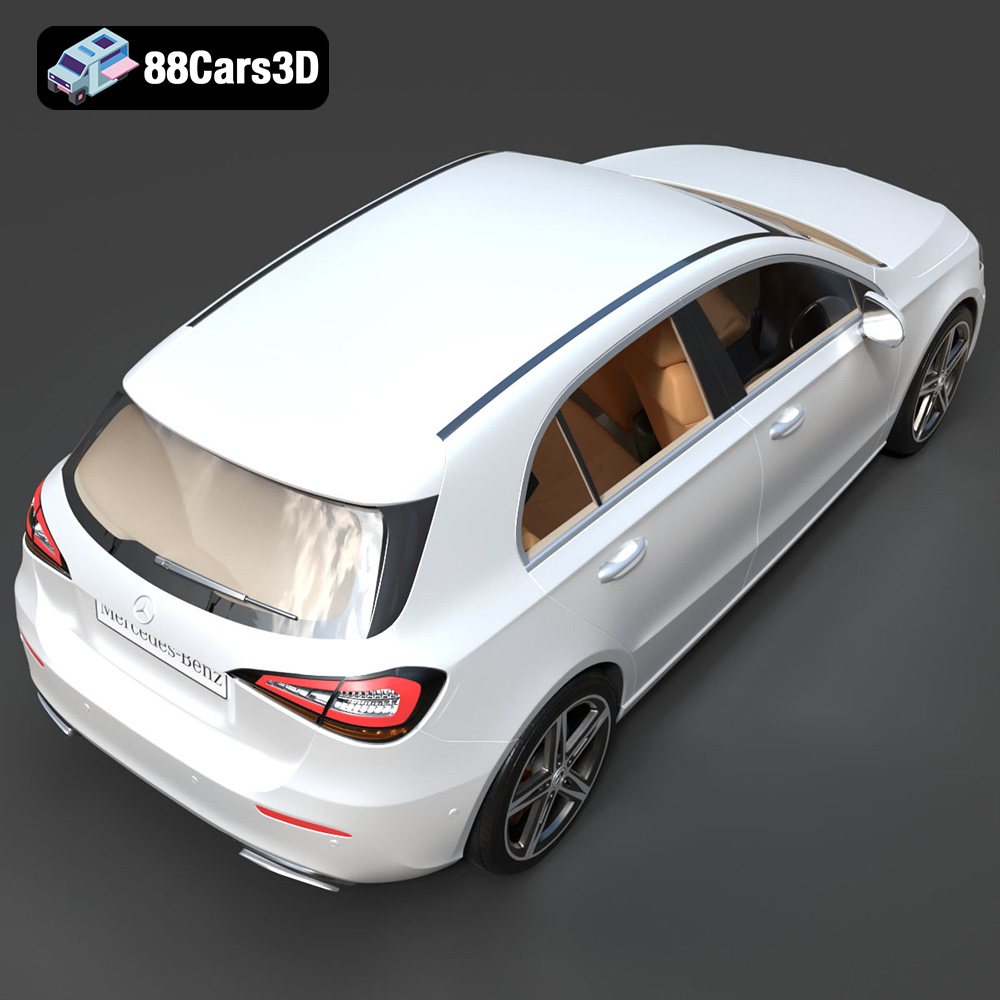
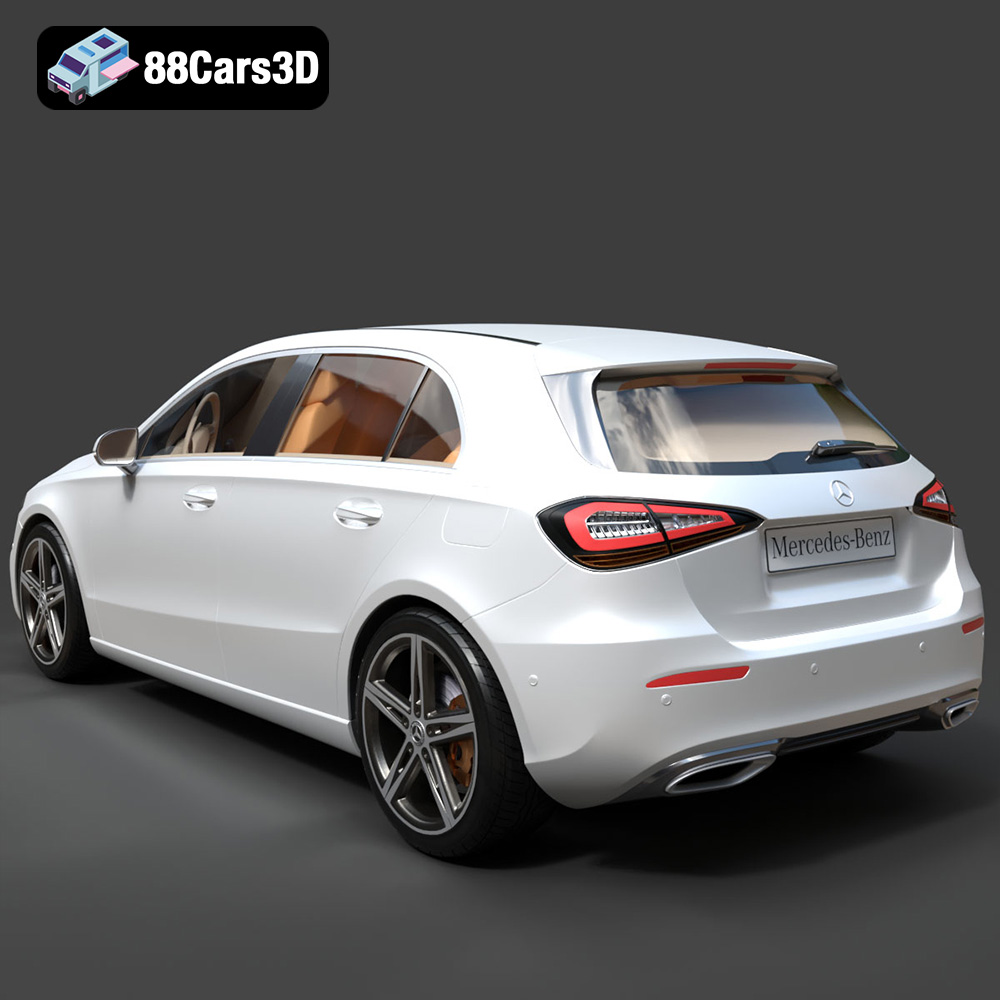
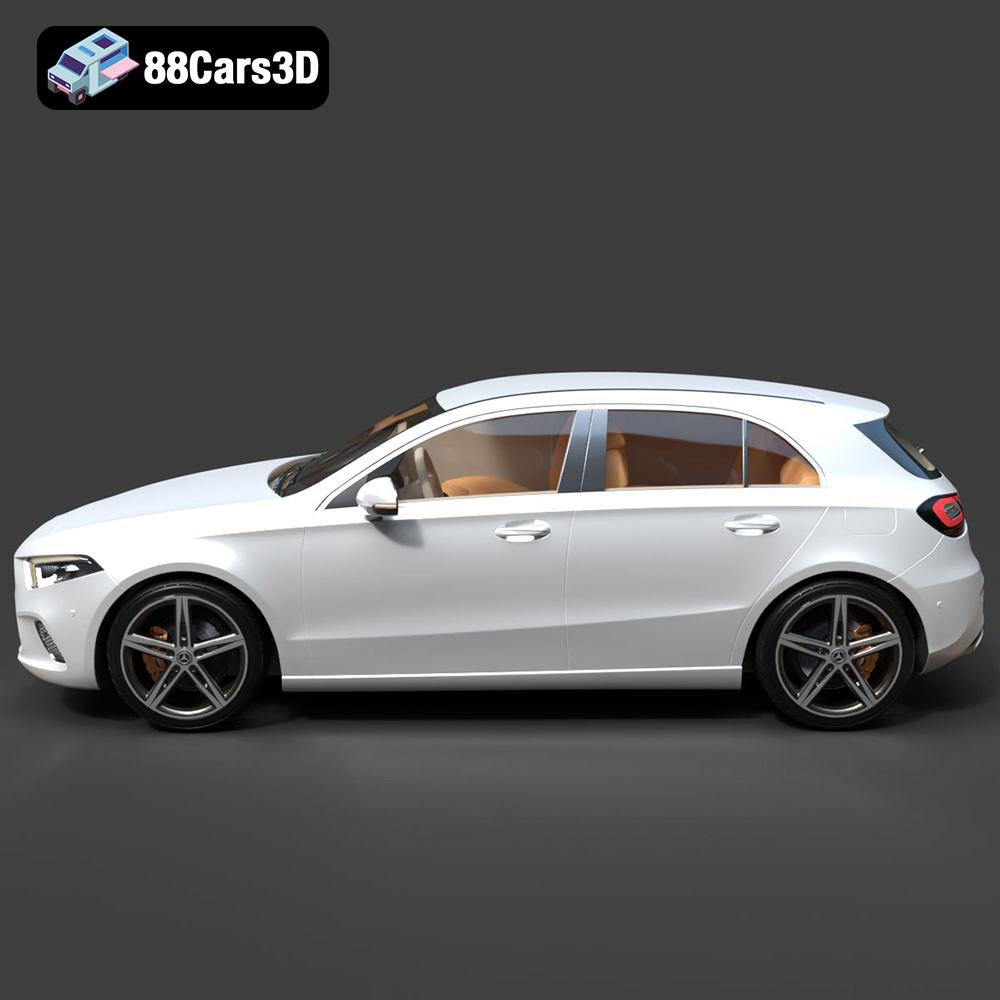
Today, we’re taking a deep dive into an exemplary asset that meets these stringent criteria: the Mercedes Benz A H-08 3D Model. This particular model, available through platforms like 88cars3d.com, is a testament to the blend of artistic detail and technical precision required in modern 3D production. It encapsulates the compact luxury and sophisticated design of its real-world counterpart, offering a powerful foundation for a myriad of high-end applications, from photorealistic marketing renders to next-generation gaming environments.
The journey from concept to final render or in-game asset is complex, requiring a deep understanding of 3D modeling principles, software ecosystems, and optimization techniques. A premium model like the Mercedes Benz A H-08 significantly streamlines this process, providing artists and developers with a ready-to-use, high-fidelity foundation, allowing them to focus on creativity and innovation rather than foundational modeling tasks.
The versatility of a 3D model often hinges on the file formats it supports. Each format is designed with specific use cases in mind, offering different levels of compatibility, data retention, and optimization for various software and pipelines. The Mercedes Benz A H-08 3D model, with its extensive array of included formats, showcases a developer’s commitment to broad utility. Understanding these formats is crucial for selecting the right tool for the job and ensuring a smooth workflow.
The .blend format is the native file type for Blender, the popular open-source 3D creation suite. When you download a .blend file, you’re getting a complete Blender scene, often including the model’s geometry, materials, textures, lighting, cameras, and even animation data. For users working within Blender, this is often the most convenient format as it preserves all aspects of the original setup. It allows for full editability, making it ideal for customization, material tweaks, animation rigging, or incorporating the model into a larger Blender project. Its primary use case is for artists who intend to extensively modify or integrate the model directly into a Blender-centric pipeline for rendering or game asset preparation.
The .fbx (Filmbox) format is arguably the most widely adopted interchange format in the 3D industry, particularly for real-time applications like Unreal Engine and Unity. Developed by Autodesk, FBX excels at storing not just geometry, but also materials, textures (though often referenced externally), animation, skeletal data, and even camera and light information. Its strength lies in its ability to transfer complex scene data between different software packages while maintaining a high degree of fidelity. For game developers and VFX artists, .fbx is often the go-to for importing assets like the Mercedes Benz A H-08 into engine environments, providing a robust and reliable pipeline for real-time rendering and interactive experiences.
The .obj (Wavefront Object) format is a simpler, yet highly universal, file type primarily used for transferring 3D geometry and UV mapping information. While it doesn’t typically carry animation, rigging, or advanced material setups, its widespread support across virtually all 3D software makes it invaluable for cross-software compatibility. If you need to import the Mercedes Benz A H-08 model into a less common 3D application or simply require the raw mesh data, .obj is an excellent choice. Textures and material properties are usually provided separately via an accompanying .mtl (material library) file or applied manually in the target software.
The .glb (GL Transmission Format Binary) is an increasingly important format, especially for web-based 3D, augmented reality (AR), and virtual reality (VR) applications. It’s a binary version of the glTF format, designed for efficient transmission and loading. A .glb file packages geometry, materials, textures, animations, and even PBR (Physically Based Rendering) data into a single, compact file. This “all-in-one” characteristic makes it perfect for embedding the Mercedes Benz A H-08 into virtual showrooms, AR configurators on mobile devices, or interactive web experiences, as it minimizes load times and simplifies deployment.
The .stl (Stereolithography) format is the de facto standard for 3D printing. It represents a 3D model as a series of connected triangles, describing only the surface geometry without color, texture, or material information. When a model like the Mercedes Benz A H-08 is converted to .stl, it’s prepared for physical manufacturing. While not ideal for visual rendering, it is essential for hobbyists and professionals looking to create physical prototypes or display models. The product description highlights its suitability for various scales, emphasizing the careful preparation for accurate physical reproduction.
The .ply (Polygon File Format or Stanford Triangle Format) is another format for storing 3D data, often used in scientific and engineering fields, as well as for 3D scanning. Like .obj, it primarily describes geometry, but it can also include properties like color, transparency, and normal vectors for each vertex or face. While less common in general rendering pipelines, it provides a precise mesh representation that can be valuable for CAD software, measurement, or specialized analysis of the Mercedes Benz A H-08’s design, ensuring high fidelity for technical reviews.
The .unreal format signifies an asset specifically optimized and prepared for direct integration into Unreal Engine. This often means the model has already undergone a pipeline process, potentially including Nanite optimization (as mentioned for the Mercedes Benz A H-08), proper material setup, collision geometry generation, and sometimes even blueprint configurations. For developers working primarily with Unreal Engine, this format offers the most streamlined pathway, minimizing setup time and maximizing engine-specific performance benefits right out of the box.
Finally, the .max format is the native file type for Autodesk 3ds Max, a leading software for 3D modeling, animation, and rendering. Similar to .blend, a .max file contains the entire scene data, including geometry, modifiers, materials (often V-Ray or Corona specific), lighting, cameras, and animation. For professionals using 3ds Max, having the model in its native format provides maximum flexibility for detailed adjustments, complex rigging, or integrating it into sophisticated architectural visualization or product rendering projects. The editable nature of the .max file for the Mercedes Benz A H-08 allows for in-depth customization for high-end rendering requirements.
The availability of these diverse formats for the Mercedes Benz A H-08 model underscores its adaptability, ensuring that regardless of your preferred software or final application, you have an appropriate, high-quality starting point. This broad compatibility is a hallmark of truly professional 3D car models.
The true value of a premium 3D car model lies in its ability to convincingly replicate reality. This isn’t just about surface aesthetics; it’s about the intricate interplay of accurate geometry, optimized topology, and meticulous detailing. The Mercedes Benz A H-08 3D model excels in these areas, making it a powerful asset for any project demanding photorealism.
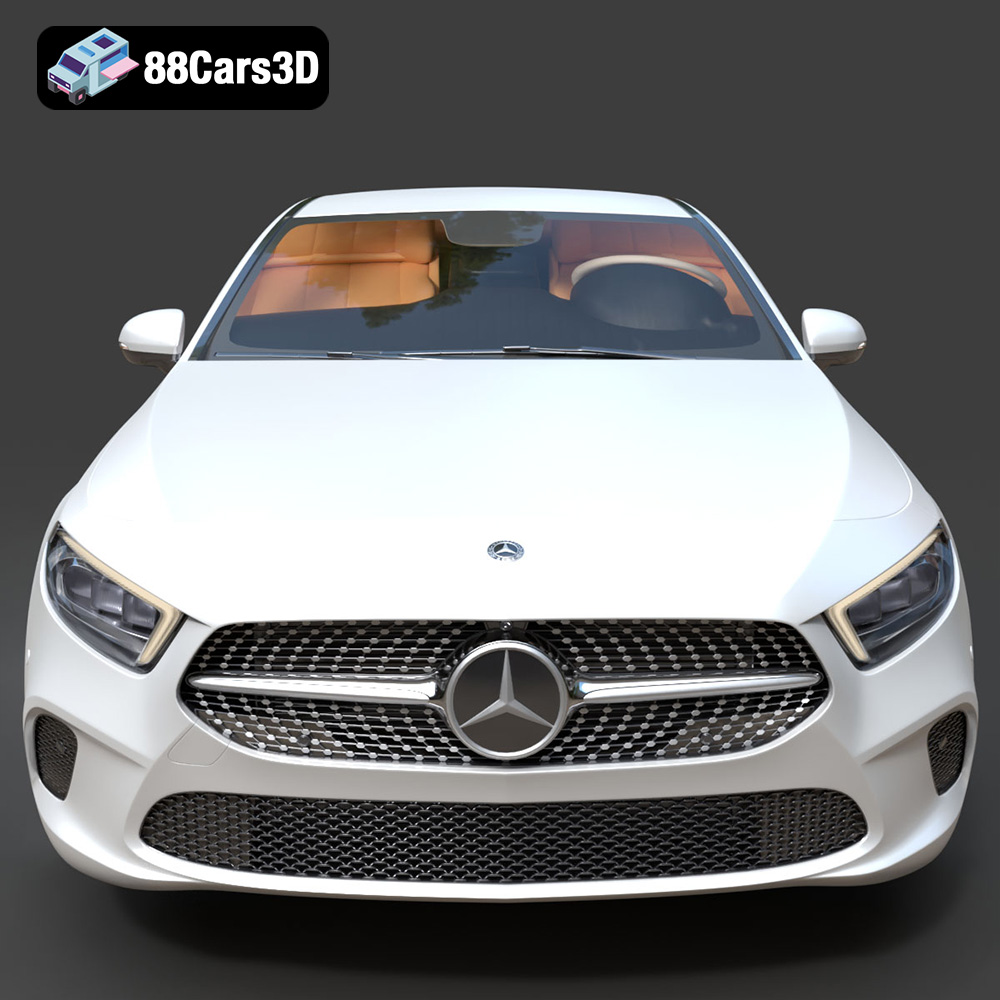
The Mercedes Benz A H-08 model boasts accurate chassis geometry and proportions. This isn’t a mere approximation; it reflects careful study and measurement of the real vehicle. For automotive rendering and visualization, this foundational accuracy is paramount. Without it, even the most sophisticated lighting and texturing cannot overcome inherent design flaws. The aerodynamic silhouette, prominent front grille, and sophisticated styling cues are meticulously replicated, ensuring that the digital model instantly communicates the vehicle’s premium identity.
Beyond the primary body, the model features detailed engine compartment and underlying structural elements. While not always visible, these details add an extra layer of authenticity, especially for close-up shots, animated reveals, or VR experiences where users might “look under the hood.” This attention extends to the authentic exhaust system with realistic tailpipe details, and high-fidelity lighting assemblies including distinct headlights and taillights – critical components that define a car’s character and are often the focus of dramatic renders. Furthermore, the precisely modeled alloy wheels and high-performance tires, coupled with realistic suspension components and brake calipers, provide the visual richness needed to ground the model in a believable physical world. The inclusion of separate wheels, suspension, and steering components is a technical advantage, enabling realistic animation of vehicle dynamics.
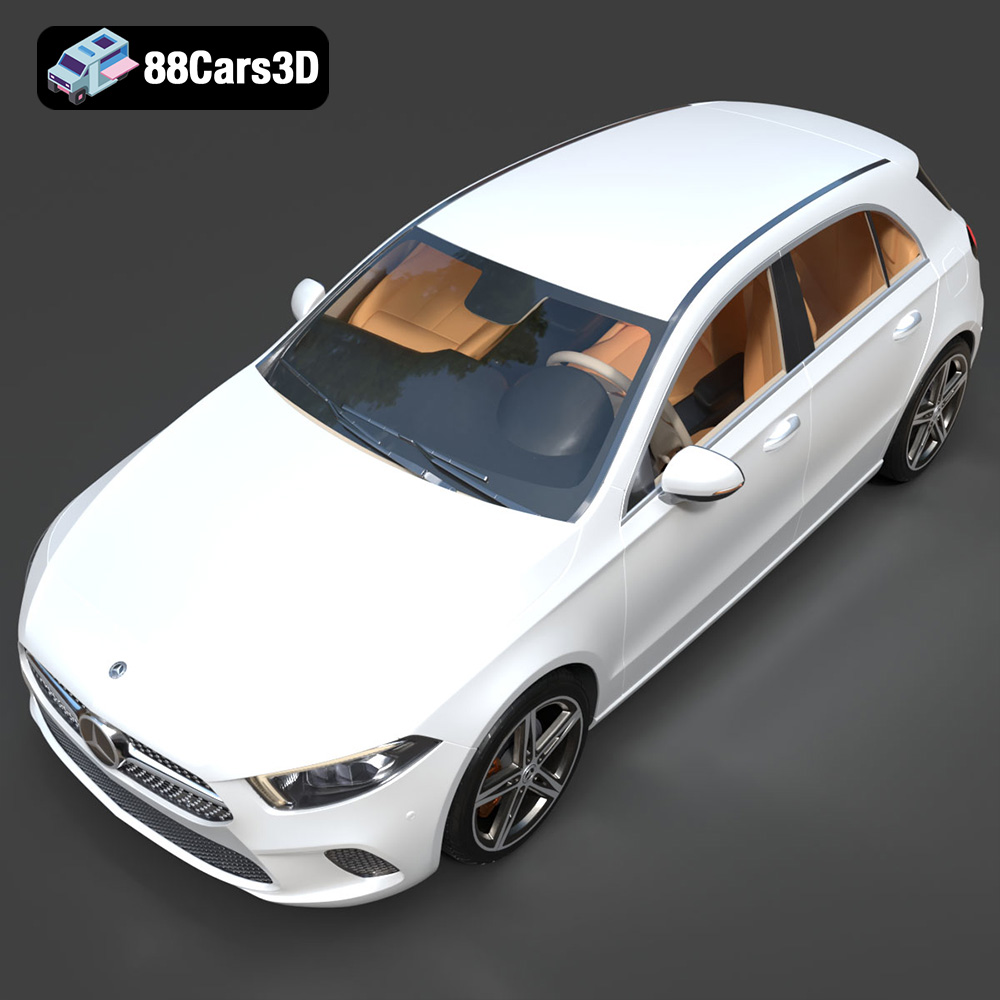
The interior of a vehicle is just as crucial as its exterior, especially for game development and AR/VR applications where first-person perspectives are common. The Mercedes Benz A H-08 model offers a meticulously crafted cabin, featuring premium sculpted seats with detailed upholstery, an accurate steering wheel with multi-function controls, and a modern digital instrument cluster and infotainment screens. These details are vital for creating a sense of immersion. In a racing game, a player will spend hours looking at the dashboard; in a VR showroom, a potential buyer will explore every button. The detailed center console, shifter, and foot pedals further enhance this realism. Crucially, the interior geometry is optimized for first-person POV in gaming and VR, meaning it strikes a balance between visual quality and performance, preventing unnecessary polycount where it’s not needed, while maintaining crisp detail where it matters most.
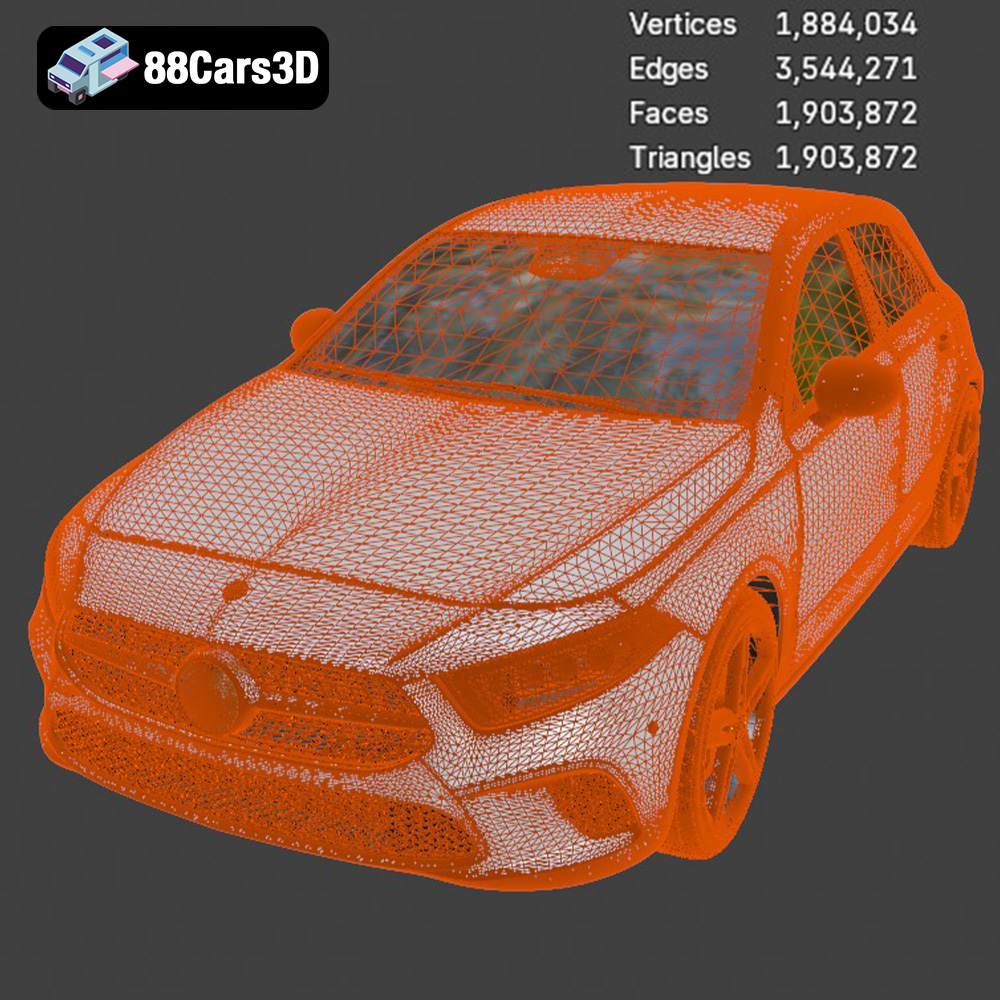
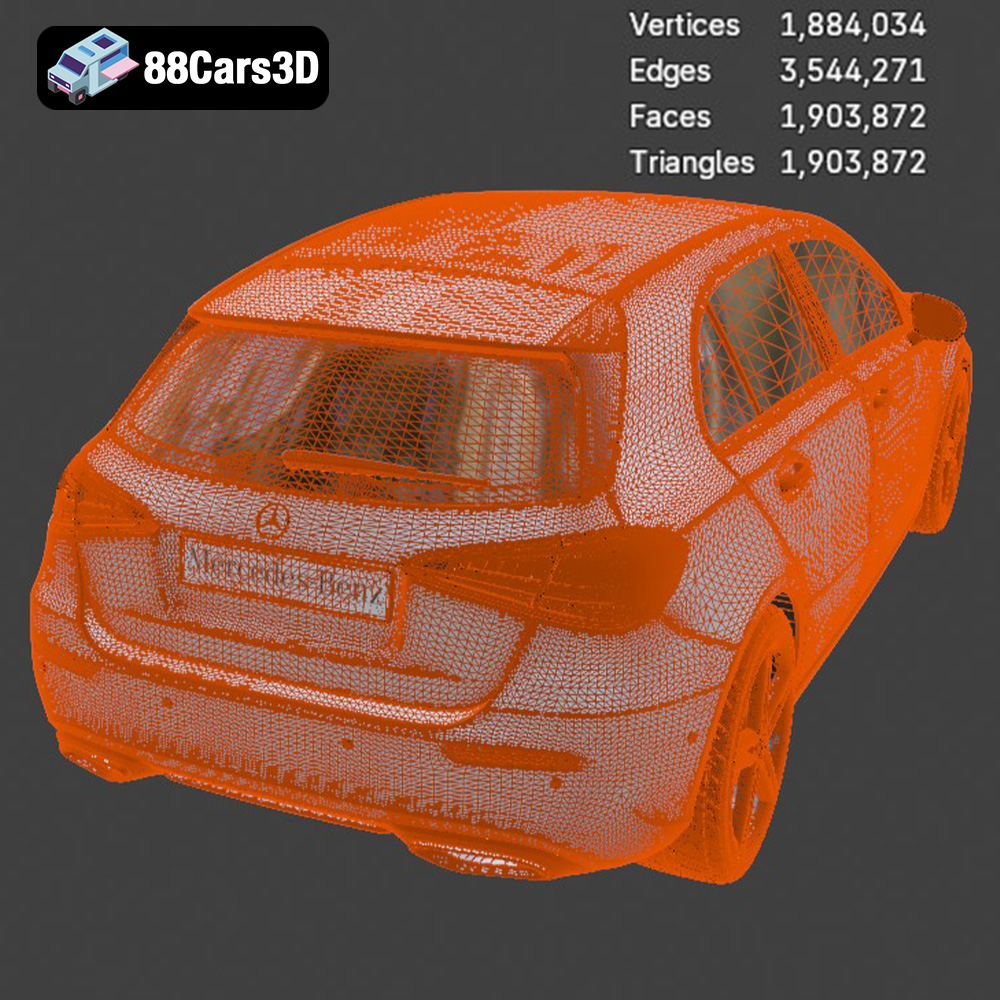
The backbone of this realism is its technical specification. With 1,903,872 triangles, this model achieves a “game-ready” optimization that also supports high-end rendering. This polycount is dense enough to capture intricate curves and sharp edges without sacrificing performance in modern real-time engines like Unreal and Unity, especially when leveraging features like Unreal Engine 5’s Nanite virtualized geometry system. The model adheres to real-world scale accuracy, which is fundamental for seamless integration into existing scenes or environments. Lastly, the proper pivot setup for steering, wheel rotation, and suspension travel is a non-negotiable feature for any animated or interactive vehicle, significantly reducing the rigging and animation workload for developers.
High-quality 3D car models like the Mercedes Benz A H-08 are indispensable for professional automotive rendering. Whether it’s for advertising campaigns, product visualizations, or cinematic sequences, the process demands precision, control, and photorealistic output. The versatility of this model’s file formats, particularly .max and .blend, makes it an ideal candidate for integration into industry-standard rendering workflows.
For many automotive visualization studios, Autodesk 3ds Max remains a dominant force. When importing the Mercedes Benz A H-08 3D model via its native .max file, artists gain immediate access to the full scene setup, often including materials optimized for renderers like V-Ray or Corona. The workflow typically begins by assessing the included materials and textures. High-resolution PBR (Physically Based Rendering) textures for body paint, glass, tires, and interior fabrics are crucial for achieving realism. Artists can then customize these materials, perhaps adjusting the metallic flake in the paint or the roughness of the leather seats, to match specific brand guidelines or creative visions.
Lighting is another critical step. Studio lighting setups, often using HDRIs (High Dynamic Range Images) for realistic environmental reflections and a combination of photometric lights for key, fill, and rim illumination, are meticulously crafted to highlight the car’s sculpted forms and reflective surfaces. The accuracy of the model’s geometry, like the sleek body panels and distinctive LED lighting elements, directly benefits from sophisticated lighting, allowing highlights and reflections to fall precisely where they would on a real vehicle. Finally, camera angles are carefully chosen to emphasize design features, and depth of field is used to draw the viewer’s eye. The ability to animate separate components like wheels and suspension in 3ds Max allows for dynamic turntable renders or cinematic sequences, showcasing the car in motion.
Blender, with its powerful Cycles and Eevee render engines, provides an equally robust environment for photorealistic rendering of the Mercedes Benz A H-08. Importing the .blend file ensures that all original materials, textures, and possibly even lighting setups are readily available. Blender artists can quickly begin iterating on different looks. For the exterior, nodal material setups in Cycles allow for incredibly detailed paint shaders, mimicking multi-coat finishes with clear coats, metallic flakes, and subtle orange peel effects. Realistic glass, chrome, and rubber materials are essential for conveying physical accuracy. The interior’s detailed upholstery and screens can be enhanced with emissive materials for backlit elements, adding to the realism.
Blender’s robust rigging tools, combined with the model’s pre-configured pivot points, make it straightforward to animate the car for motion graphics or product animations. Environmental lighting, often driven by an HDRI plugged into the world background, creates believable reflections and ambient illumination. Leveraging Blender’s compositor, artists can add post-processing effects like lens flares, chromatic aberration, and color grading to achieve a polished, professional look. The high polycount of the Mercedes Benz A H-08 works exceptionally well in Cycles, producing incredibly detailed and smooth surfaces without needing subdivision modifiers, directly contributing to stunning visual realism perfect for brand campaigns or lifestyle scenes.
The demands of game development and real-time visualization are unique, requiring a delicate balance between visual fidelity and performance. The Mercedes Benz A H-08 3D model, described as “game-ready” and optimized, is specifically engineered to thrive in these demanding environments, particularly within Unreal Engine and Unity.
For developers utilizing Unreal Engine 5, the Mercedes Benz A H-08 3D model is a formidable asset. The mention of its optimization for Unreal Engine 5 Nanite is a significant advantage. Nanite, Unreal’s virtualized geometry system, intelligently streams and processes geometric detail, allowing for incredibly high polycounts – like the model’s 1.9 million triangles – to be rendered efficiently without significant performance bottlenecks. This means developers can achieve cinematic-quality detail in real-time. Importing the dedicated .unreal or .fbx file streamlines the process, often bringing in pre-configured materials that just need texture assignments and shader adjustments.
Once imported, the model’s proper pivot setup for steering, wheel rotation, and suspension travel becomes invaluable. This allows developers to easily integrate the vehicle into an existing physics system or create custom vehicle blueprints. Components like the separate wheels, suspension, and steering can be rigged and animated independently using Unreal’s robust animation tools, enabling realistic vehicle dynamics for racing titles or open-world games. Developers can also leverage Unreal’s material editor to create advanced car paint shaders with dynamic dirt, damage, or customizable color options. For immersive virtual showrooms or configurators, the model’s detailed interior geometry is perfectly suited for first-person exploration, making it an exceptional asset for next-generation game development and interactive experiences.
While Unreal Engine is specifically mentioned, the Mercedes Benz A H-08 model’s game-ready optimization and .fbx format make it equally suitable for Unity and other real-time platforms. The 1,903,872 triangles strike a perfect balance, providing high visual fidelity without being overly complex for Unity’s rendering pipeline. Developers can import the .fbx, which carries the mesh, UVs, and basic material assignments, then set up PBR materials within Unity’s Shader Graph or using standard shaders. The real-world scale accuracy ensures the vehicle fits seamlessly into Unity scenes alongside other assets.
For interactive applications in Unity, the separate components allow for easy rigging and scripting. Developers can attach wheel colliders for physics, implement custom steering and suspension logic, and animate interior elements like the steering wheel or dashboard displays. The model is perfect for creating high-end racing games, urban environment simulations, or mobile AR experiences. For mobile AR, the .glb format provides an optimized, single-file solution that loads quickly and efficiently on mobile devices, enabling immersive virtual showrooms or product configurators that leverage the Mercedes Benz A H-08’s sophisticated design in real-world environments.
The utility of a high-quality 3D model like the Mercedes Benz A H-08 extends far beyond traditional rendering and game development. Its robust technical foundation and diverse file format support open doors to innovative applications, alongside providing extensive customization options to meet specific project needs.
Augmented Reality (AR) and Virtual Reality (VR) are transforming how we interact with products, especially in the automotive sector. The Mercedes Benz A H-08 is an ideal asset for creating highly immersive virtual showrooms, configurators, and mobile AR experiences. Using the .glb format, which is optimized for efficient transmission and loading, developers can deploy the model quickly to web-based AR/VR platforms or mobile applications. Imagine a potential buyer exploring the car’s exterior in their driveway via AR, or stepping inside a fully interactive VR environment to examine the detailed cockpit and premium sculpted seats.
The model’s optimized geometry for first-person POV is particularly crucial here, ensuring smooth performance and visual clarity when users are virtually “inside” the vehicle. The ability to dynamically change body colors, material finishes (matte, gloss, metallic), and even tire textures (off-road vs. street variants) through scripting provides a rich configurator experience. This level of interactivity and visual fidelity allows businesses to offer compelling virtual product demonstrations, bridging the gap between digital visualization and real-world purchasing decisions. Such high-quality 3D car models are vital for making these AR/VR experiences truly impactful.
The world of 3D printing offers a unique way to bridge the digital and physical. The Mercedes Benz A H-08 3D model, convertible to the .stl format, provides an excellent foundation for creating physical prototypes or display-scale models. While 3D printing requires specific considerations, the provided technical specifications for print settings – such as recommended scale (1:12 / 1:18 / 1:24), layer height, wall thickness, infill, and support requirements – guide users toward successful physical reproduction. Resin printing is specifically recommended for its ability to capture fine details, essential for replicating the car’s sleek body panels, integrated exhaust system, and intricate alloy wheels.
The advice on print orientation and post-processing (sanding, primer, authentic factory colors with metallic finishes) demonstrates a deep understanding of the 3D printing workflow, ensuring that even hobbyists can achieve professional-looking results. This versatility extends the model’s value, allowing artists and enthusiasts to not only visualize the car digitally but also hold a tangible representation in their hands.
A truly professional 3D asset offers room for creative freedom. The Mercedes Benz A H-08 model’s inherent design allows for extensive customization. Users can effortlessly change body/tank colors, experimenting with factory colors or custom finishes to match project themes. The ability to modify tire textures to represent different road conditions or performance levels adds another layer of realism and narrative potential. Furthermore, adjusting material finishes between matte, gloss, or metallic can dramatically alter the car’s perception and mood within a scene. Finally, adapting lighting for different environments is crucial for conveying various atmospheres, from a sun-drenched cityscape to a moody night drive. These customization options ensure that the model remains relevant and versatile across a wide array of projects, fulfilling diverse creative and technical requirements.
The landscape of 3D visualization is constantly evolving, with increasing demands for realism, performance, and versatility. High-quality 3D car models are not just commodities; they are strategic investments that empower creators across industries to produce stunning, immersive, and interactive experiences. The Mercedes Benz A H-08 3D model exemplifies this ethos, standing out as a meticulously crafted asset designed for a multitude of professional applications.
From its stunningly accurate exterior and detailed interior to its game-ready optimization and comprehensive file format support, this model provides an unparalleled foundation for success. Whether you are an automotive renderer striving for photorealistic advertising visuals, a game developer building a next-generation racing title, an AR/VR innovator creating immersive virtual showrooms, or a hobbyist bringing digital designs to life through 3D printing, the Mercedes Benz A H-08 offers the technical fidelity and artistic detail required.
The availability of formats like .blend, .fbx, .obj, .glb, .stl, .ply, .unreal, and .max ensures seamless integration into virtually any professional workflow. This commitment to interoperability and technical excellence underscores the value of sourcing premium assets from trusted marketplaces. For those seeking to elevate their projects with top-tier 3D car models, exploring resources like 88cars3d.com provides access to a curated selection of assets that truly make a difference in the competitive world of 3D production. The Mercedes Benz A H-08 is more than just a model; it’s a testament to the power of precision in digital automotive design.
The Mercedes Benz A H-08 represents a blend of compact luxury and modern automotive design. Characterized by its aerodynamic silhouette, prominent front grille, and sophisticated styling cues, this 3D model captures the essence of premium urban mobility. Attention has been given to the sleek body panels, integrated exhaust system, and distinctive LED lighting elements that define its contemporary aesthetic.Boasting a dense topology with 1,903,872 triangles, this high-fidelity 3D model is optimized for high-end rendering, Unreal Engine 5 Nanite, and advanced visualizations. It delivers photorealistic visual fidelity, making it an exceptional asset for next-generation game development, AR/VR configurators, high-quality animation, and architectural visualization.Perfect for luxury automotive renders, immersive virtual showrooms, high-end racing games, and urban environment simulations.
$83.50
.blend
.fbx
.glb
.max
.obj
.ply
.rendering
.stl
.unreal
a-h-08
car-3d-model
compact-car
game asset
game-ready
high poly
luxury car
mercedes-benz
optimized
VR/AR