Get 20% OFF All Premium 3D & STL Models!

The automotive landscape is in constant flux, pushing the boundaries of design, engineering, and digital representation. From groundbreaking electric vehicles to advanced autonomous systems, the pace of innovation demands equally sophisticated tools and assets for visualization and development. For 3D artists, game developers, product designers, and visualization specialists, access to high-fidelity, meticulously crafted 3D car models is not just a convenience, but a critical necessity.
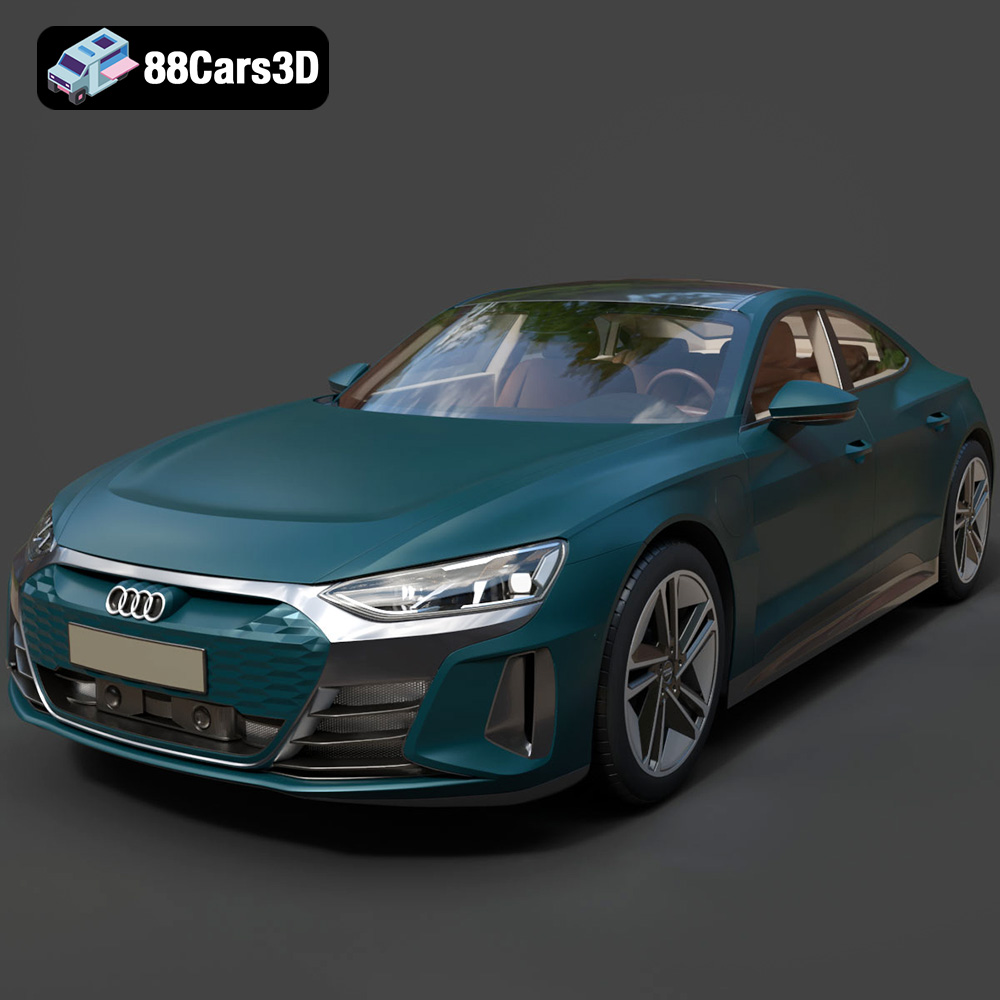
At the forefront of this digital evolution stands the Audi RS E-Tron GT, a vehicle that epitomizes the future of high-performance electric motoring. Its aggressive lines, futuristic profile, and blend of luxury with raw power make it a perfect subject for demanding digital projects. Capturing this essence requires an exceptional 3D model, one that translates every sculpted fender and intricate detail into a versatile, production-ready asset. Whether you’re aiming for breathtaking automotive rendering or seeking compelling game assets, the quality of your base model dictates the success of your final output.
This comprehensive guide delves into the world of professional 3D car models, exploring the technical nuances, workflow considerations, and diverse applications that define excellence in the field. We’ll examine how a premium asset, such as the Audi RS E-Tron GT 3D Model available at 88cars3d.com, empowers creators to achieve unparalleled realism and efficiency across various industries, from cinematic visualization to immersive real-time experiences.
In the realm of 3D modeling, selecting the correct file format is paramount for seamless workflow integration, optimal performance, and preserving data integrity. Different formats are engineered for specific purposes, ranging from broad compatibility to specialized real-time or manufacturing applications. The Audi RS E-Tron GT 3D model, offered through 88cars3d.com, is a prime example of versatility, providing an extensive array of formats to cater to virtually any professional pipeline. Understanding these formats is crucial for maximizing your project’s potential.
The .blend format is the native file type for Blender, an open-source 3D creation suite renowned for its powerful modeling, sculpting, animation, and rendering capabilities. A .blend file typically encapsulates the entire scene, including mesh geometry, materials, textures, lighting setups, cameras, animations, and even modifiers. For artists primarily working in Blender, this format offers the most flexibility, allowing for full editability, quick material adjustments, and direct access to all scene components as they were originally set up by the modeler. This makes it an ideal starting point for deep customization or integrating the model into a Blender-centric pipeline.
.fbx (Filmbox) stands as one of the most widely adopted proprietary file formats for 3D data exchange, particularly favored in the game development and animation industries. Developed by Autodesk, FBX supports geometry, materials, textures, animations, skinning, and camera data. Its strength lies in its robust compatibility with major 3D software like 3ds Max, Maya, Cinema 4D, and critically, game engines such as Unreal Engine and Unity. When importing an FBX, users can expect a largely intact representation of the original model, making it ideal for transferring complex animated characters or detailed vehicle assets like the Audi RS E-Tron GT into a real-time environment.
The .obj (Wavefront OBJ) format is a simple, universal 3D data format that is highly compatible across virtually all 3D software applications. It primarily stores geometric data (vertices, faces, normals, UV coordinates) and can reference external material (.mtl) and texture files. While it doesn’t support animation or rigging directly, its widespread adoption makes it an excellent choice for basic mesh exchange when full scene data isn’t required. It’s a reliable fallback for ensuring cross-software compatibility, especially when dealing with static models or needing a clean mesh to start a new project in an unfamiliar application.
.glb (GL Transmission Format Binary) is an increasingly important format, especially for modern interactive experiences. It’s the binary version of glTF, designed for efficient transmission and loading of 3D scenes and models in web browsers, augmented reality (AR), and virtual reality (VR) applications. A .glb file packages all necessary assets—geometry, materials, textures, animations—into a single, compact file. This optimization makes it perfect for quick integration into AR/VR showcases, online configurators, or low-latency mobile applications where performance and file size are critical, such as demonstrating the Audi RS E-Tron GT in a virtual showroom.
.stl (STereoLithography) is the de facto standard file format for 3D printing. It represents a 3D model as a collection of unconnected triangles, defining only the surface geometry without color or texture information. While simple, its ubiquity ensures compatibility with almost every slicing software and 3D printer on the market. For hobbyists or professionals looking to physically manifest their digital designs, converting a detailed 3D car model like the Audi RS E-Tron GT into an .stl is the crucial step before bringing it to life on a print bed, allowing for creation of display-scale replicas.
The .ply (Polygon File Format, or Stanford Triangle Format) is another format used to store 3D data, particularly useful for scanned data, CAD applications, and scientific analysis. It can store a wider range of properties than .obj, including color, transparency, normals, texture coordinates, and even scalar properties at each vertex or face. While less common for general animation or game development than .fbx, .ply offers a robust solution for precision mesh data, making it valuable for engineering or detailed surface analysis of the Audi RS E-Tron GT’s aerodynamic form.
While not a standalone file format in the same way as .fbx or .obj, providing a model as .unreal implies it is specifically prepared and optimized for direct import and use within Unreal Engine. This often means the asset has appropriate scaling, material setups, LODs (Levels of Detail), and potentially even collision meshes pre-configured for Unreal’s ecosystem. Such assets significantly accelerate development workflows, as they reduce the need for extensive post-import tweaking, making the Audi RS E-Tron GT immediately game-ready for high-fidelity interactive experiences.
The .max format is the proprietary file type for Autodesk 3ds Max, a leading software for 3D modeling, animation, rendering, and visualization. Similar to .blend, a .max file contains the complete scene information, including geometry, materials, lights, cameras, animations, and scene settings. For 3ds Max users, this format offers the highest level of control and editability, allowing full access to the original scene construction and parameters. It is indispensable for detailed rendering projects, architectural visualizations, and complex animations where 3ds Max is the primary DCC application.
High-end automotive rendering is an art form that demands extreme precision and an unwavering eye for detail. Whether for marketing campaigns, design reviews, or cinematic sequences, the goal is always photorealism. A premium 3D car model like the Audi RS E-Tron GT is the cornerstone of achieving such results, providing the intricate geometry and material separation necessary to bring a digital vehicle to life.
In a professional rendering pipeline, particularly with software like 3ds Max, the raw geometry is just the beginning. The magic truly happens in the material and lighting stages. The Audi RS E-Tron GT model, with its separated components for body panels, glass, wheels, and interior elements, allows for the application of physically accurate materials. Imagine crafting a custom paint shader with metallic flakes and a clear coat layer, or designing realistic tire rubber with subtle imperfections. Utilizing advanced renderers such as V-Ray or Corona, artists can simulate global illumination, caustics, and reflections with stunning accuracy. Precise lighting setups—mimicking studio strobes, dynamic HDRIs, or natural sunlight—are crucial to highlight the car’s sculpted lines, accentuate reflections, and create a sense of depth and volume. The model’s intricate details, like the matrix LED headlights, can be illuminated with specific light sources and emissive materials to replicate their real-world appearance.
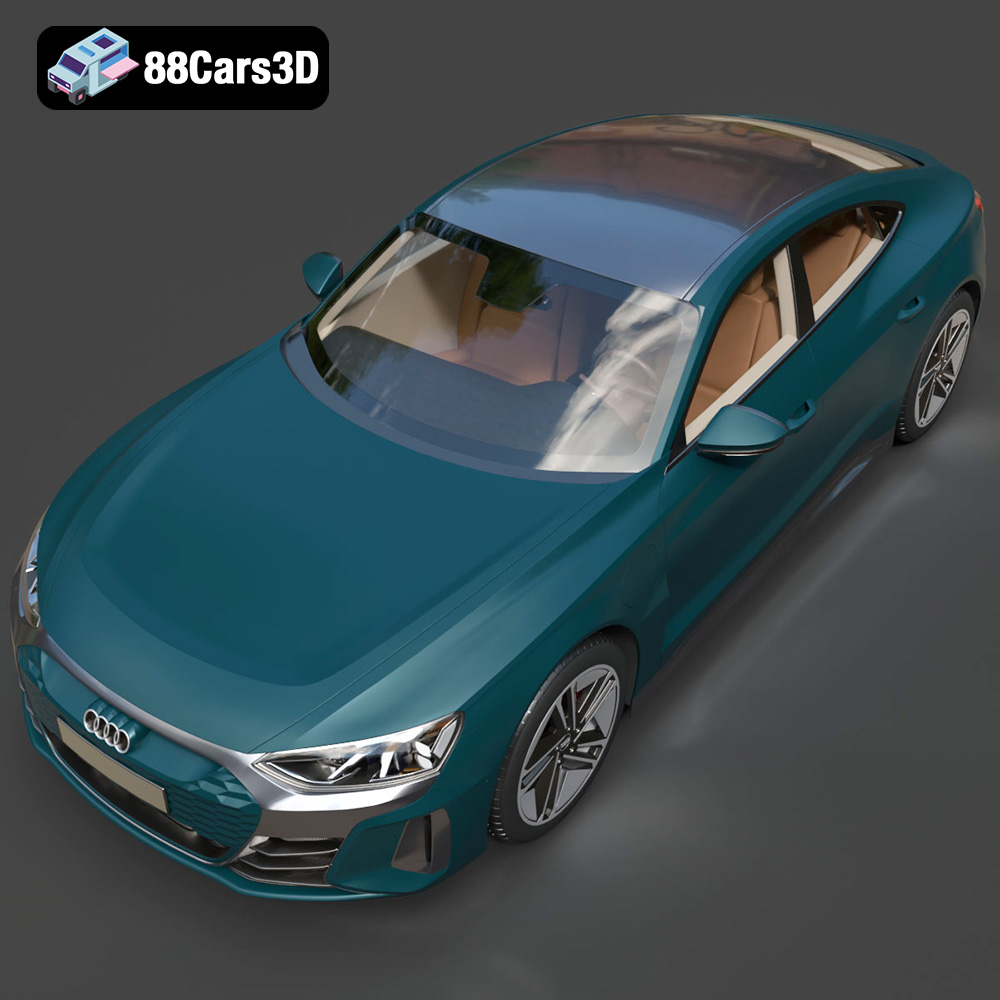
A compelling automotive render goes beyond just the car; it tells a story. The environment and composition play pivotal roles. Placing the Audi RS E-Tron GT model within a meticulously crafted digital scene—be it an urban cityscape, a winding coastal road, or a futuristic charging station—enhances its visual impact. Artists carefully select camera angles to emphasize the car’s aggressive stance, its luxurious interior, or its aerodynamic silhouette. Depth of field, motion blur, and cinematic aspect ratios are employed to create a dramatic and engaging visual narrative. This model’s detailed interior, featuring the Audi Virtual Cockpit and Alcantara-wrapped steering wheel, offers fantastic opportunities for close-up shots that highlight the luxury and technological sophistication.
Consider a hypothetical marketing campaign for the Audi RS E-Tron GT. A team of visualization artists receives the high-fidelity 3D model. In 3ds Max, they would begin by integrating the .max file. The exterior is textured with Audi’s signature factory colors, rendered with a deep metallic finish. The detailed undercarriage and battery pack housing are revealed in a stylized “cutaway” render, emphasizing the EV technology. For an interior shot, the artists focus on the luxurious sport seats and digital displays, creating soft, ambient lighting to showcase the sophisticated cockpit. Through careful camera placement and post-processing, they generate a series of stunning still images and animated sequences for advertising, website content, and social media, all leveraging the exceptional detail and animatable components of the model to tell a powerful story of performance and innovation.
For game developers, the challenge lies in balancing visual fidelity with real-time performance. Modern game engines like Unreal Engine demand highly optimized game assets without sacrificing the immersive quality players expect. The Audi RS E-Tron GT 3D model is specifically designed to meet these rigorous demands, boasting an optimized polycount and real-world scale.
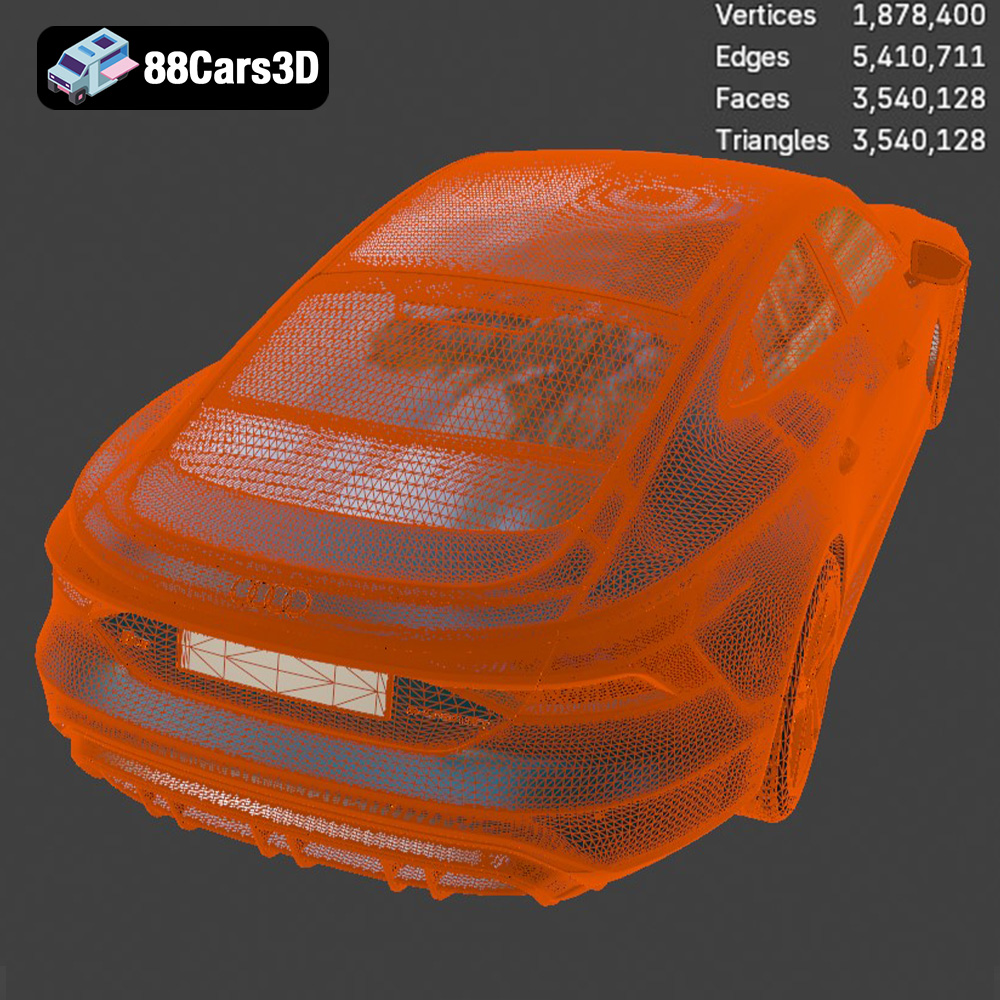
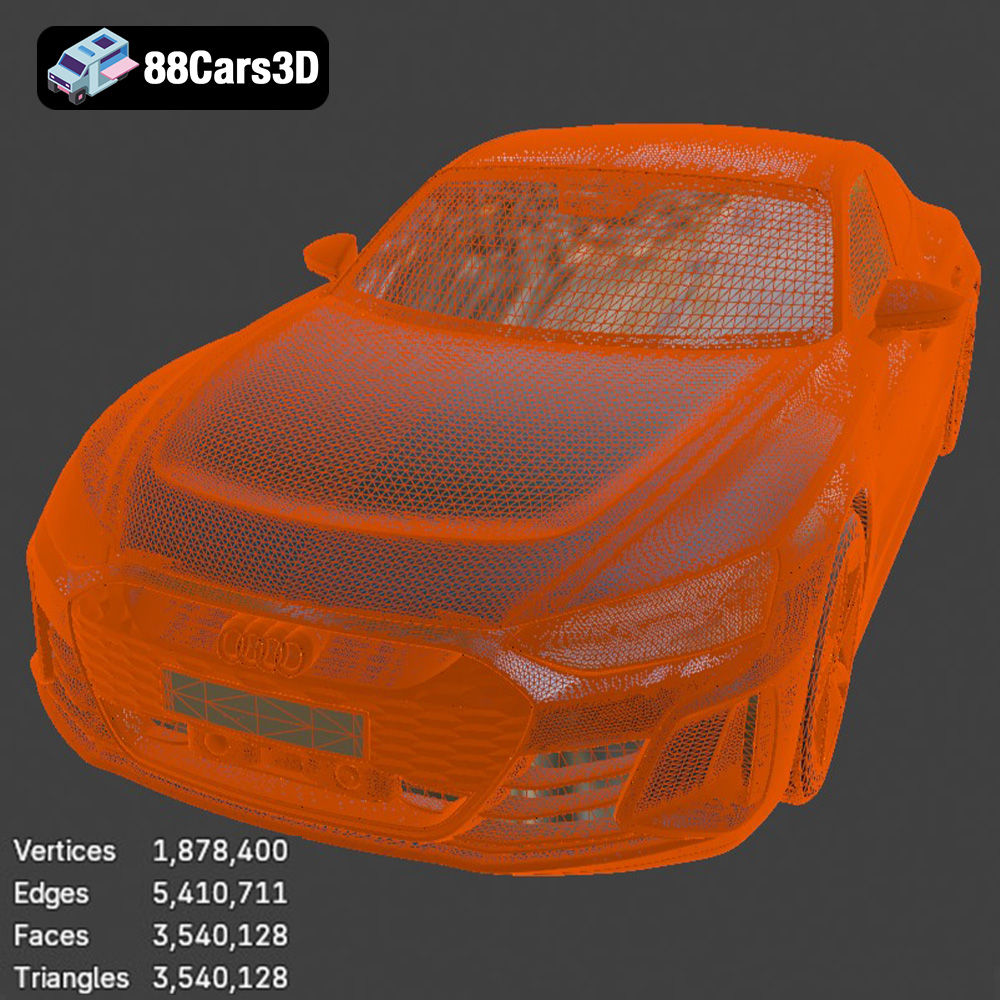
While the Audi RS E-Tron GT model features an impressive 3,540,128 triangles for high-resolution detail, efficient integration into game engines requires strategic optimization. For open-world games or racing titles, developers often implement Levels of Detail (LODs). This involves creating lower-polygon versions of the model that automatically swap in when the car is further away from the camera, significantly reducing rendering overhead without a noticeable loss in quality. Textures are also optimized, often packed into atlases and using PBR (Physically Based Rendering) workflows for realistic material representation. The model’s “game-ready” status implies that these considerations have already been taken into account during its creation, saving developers invaluable time and resources.
A static model, no matter how beautiful, is insufficient for a dynamic game environment. The Audi RS E-Tron GT model excels here with its separate wheels, suspension, and steering components, along with a proper pivot setup. This allows for realistic animation of vehicle dynamics: wheels turning, suspension compressing over bumps, and steering responding accurately to player input. In Unreal Engine, developers can build blueprints and physics assets to simulate the car’s weight, traction, and acceleration, integrating the model into a full-fledged drivable vehicle. The detailed electric vehicle undercarriage and active aerodynamic elements can even be animated to respond to in-game speed and conditions, adding another layer of realism and visual spectacle.
Imagine the Audi RS E-Tron GT tearing through a futuristic city in a racing simulator, or serving as a high-end personal vehicle in an open-world RPG. Its optimized polycount of 3,540,128 triangles strikes an excellent balance, providing enough detail for close-up cockpit views while remaining manageable for real-time rendering. The detailed interior, including the digital instrument cluster and MMI touch response display, is optimized for first-person POV, offering an immersive driving experience. With included formats like .fbx and .unreal, integrating this model into a project is streamlined, allowing game designers to focus on gameplay and world-building rather than extensive asset preparation. This level of readiness makes it an invaluable asset for any serious game development studio looking to deliver cutting-edge visuals.
The utility of high-quality 3D car models extends far beyond traditional rendering and gaming. Emerging technologies like Augmented Reality (AR), Virtual Reality (VR), and 3D printing are opening up new frontiers for interaction and creation, and models like the Audi RS E-Tron GT are perfectly positioned to capitalize on these innovations.
AR and VR offer unparalleled opportunities for immersive product visualization. Imagine a potential customer exploring the Audi RS E-Tron GT in a virtual showroom, able to walk around it, open doors, and even sit inside using a VR headset. Or, using AR on a smartphone, project the car onto their driveway at real-world scale. The .glb format, optimized for web and mobile performance, is ideal for these applications. The model’s high visual fidelity ensures that even in an immersive environment, details like the precise stitching on the sport seats and the intricate aero-optimized alloy wheels are clearly visible. This interactive experience significantly enhances customer engagement and provides a powerful tool for marketing and sales, offering a “try before you buy” sensation in a virtual space.
For enthusiasts and collectors, the ability to transform a digital model into a physical object is incredibly exciting. The Audi RS E-Tron GT 3D model is designed with 3D printing in mind, convertible to the .stl format. This allows for the creation of stunning display-scale replicas. The product description provides excellent guidance for print settings: recommending resin printing for fine details, specific layer heights, wall thicknesses, and infill percentages. The advice on print orientation (angled frame, separate wheels) demonstrates a deep understanding of successful 3D printing practices, ensuring structural integrity and optimal detail capture for parts like the aggressive rear diffuser and intricate brake calipers. Post-processing with sanding, primer, and authentic factory colors can result in a museum-quality miniature.
Beyond its core automotive applications, a detailed 3D car model can elevate architectural visualization and lifestyle renderings. Placing the Audi RS E-Tron GT within a modern architectural scene, parked outside a minimalist villa or displayed in a high-tech garage, instantly adds a touch of luxury, modernity, and aspirational lifestyle. Its sleek design complements contemporary building aesthetics, enhancing the realism and appeal of the overall scene. Artists can use the model to populate scenes in real estate marketing, urban planning visualizations, or even animated commercials, demonstrating its versatility as more than just a car but a symbol of progressive living. This integration helps tell a broader story about the environment and the people who inhabit it.
In the world of 3D modeling, mere visual appeal is insufficient; technical prowess is what truly sets professional-grade assets apart. The Audi RS E-Tron GT 3D model is a testament to this, combining high detail with crucial optimizations that empower artists and developers across the spectrum of digital creation.
The listed 3,540,128 triangles for the Audi RS E-Tron GT model might seem high for some applications, but it represents a carefully chosen balance between visual fidelity and performance. For high-end cinematic rendering or close-up shots in virtual showrooms, this polycount is essential for capturing every subtle curve and sharp edge of the vehicle’s aggressive aerodynamic body geometry and proportions. It allows for smooth surfaces, intricate details on parts like the matrix LED headlights and the specific texture of the flat-bottomed Alcantara-wrapped steering wheel, preventing a “blocky” or low-resolution appearance. For real-time applications like games, this high-resolution mesh serves as the foundation from which optimized LODs can be generated, ensuring that the visual quality remains exceptional even when performance is paramount. This strategic polycount means you’re investing in a model that can scale to meet the most demanding visual requirements.
Beyond raw polygon count, the quality of the geometry itself and the precision of its technical setup are critical. The Audi RS E-Tron GT model boasts real-world scale accuracy, ensuring it fits seamlessly into any scene without needing extensive scaling adjustments. Crucially, it features a proper pivot setup for steering, wheel rotation, and suspension travel. This seemingly small detail is an enormous time-saver for animators and game developers. Without correctly positioned pivots, animating a car’s movement becomes a frustrating and imprecise task, often leading to unrealistic rotations or complex workarounds. The pre-configured pivots mean that the wheels will rotate around their true centers, the steering will articulate correctly, and the suspension components will behave as expected, allowing for immediate integration into animation rigs and game physics systems.
A truly professional 3D asset offers significant flexibility for customization. The Audi RS E-Tron GT model provides extensive customization options, allowing users to modify body colors, adjust material finishes (matte, gloss, metallic), and even change tire textures to suit different environments (off-road vs. street variants). This adaptability means the model isn’t a static asset but a dynamic base that can be tailored to various creative visions and brand requirements. Whether you need the car to be in a vibrant factory red for a hero shot, a stealthy matte black for a game, or a specific metallic finish to match an architectural interior, the model supports these changes with ease. This level of detailed control ensures that the asset remains relevant and valuable across a wide array of projects, from high-stakes advertising to indie game development. 88cars3d.com understands that flexibility is key to creative freedom.
The journey from concept to a compelling visual experience in the digital realm is paved with meticulous detail, technical expertise, and the right assets. For anyone working with 3D car models, especially in the demanding fields of automotive rendering and game assets, the quality of your foundation determines the height of your achievements.
The Audi RS E-Tron GT 3D model stands as a prime example of what a premium asset should embody: exquisite detail, precise technical specifications, and unparalleled versatility across a multitude of applications. From its accurately modeled aerodynamic body and luxurious interior to its optimized geometry and extensive file format support, it is engineered to meet the rigorous demands of professional pipelines.
Whether you’re bringing the future of electric performance to a hyper-realistic render in 3ds Max, integrating a responsive vehicle into an Unreal Engine game, crafting an immersive AR/VR experience, or even producing a tangible 3D-printed replica, this model provides the necessary fidelity and flexibility. It streamlines workflows, enhances visual impact, and ultimately empowers creators to realize their most ambitious visions. To explore this exceptional model and discover a vast array of other high-quality 3D car models, visit 88cars3d.com – your gateway to digital automotive excellence.
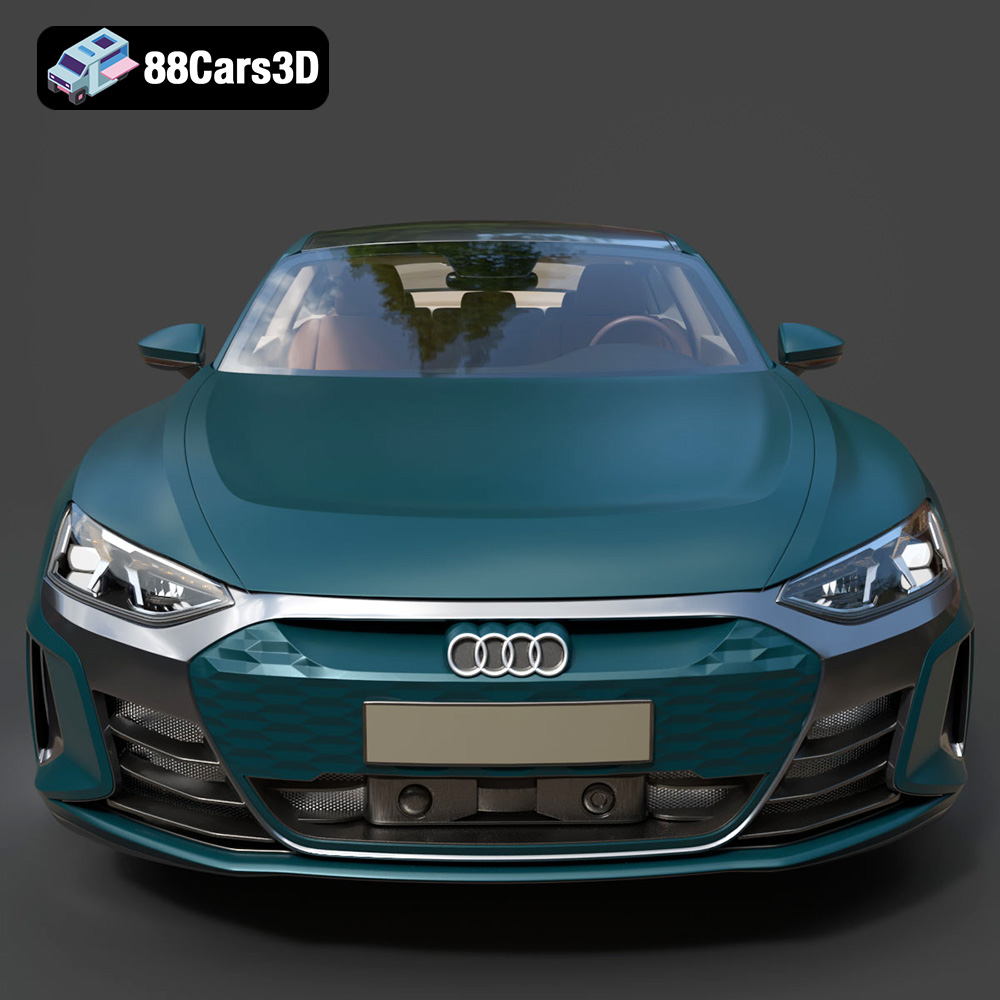
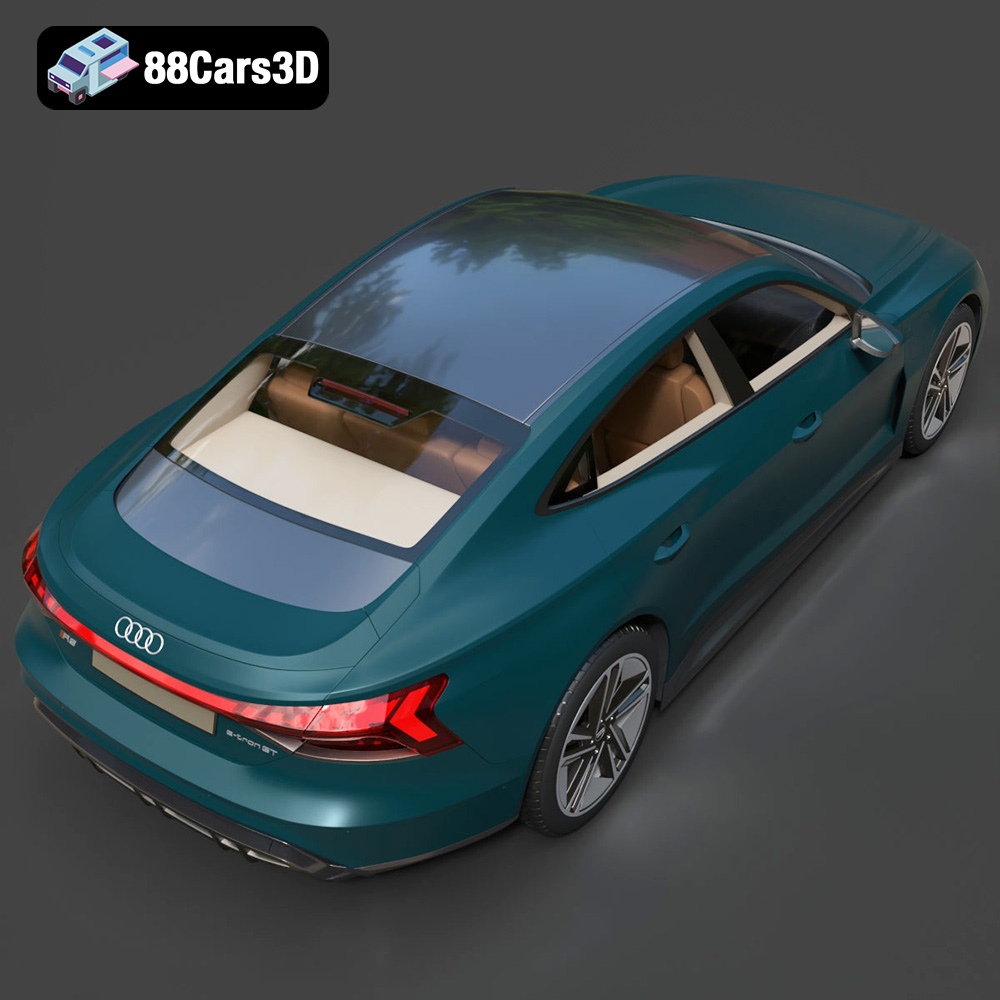
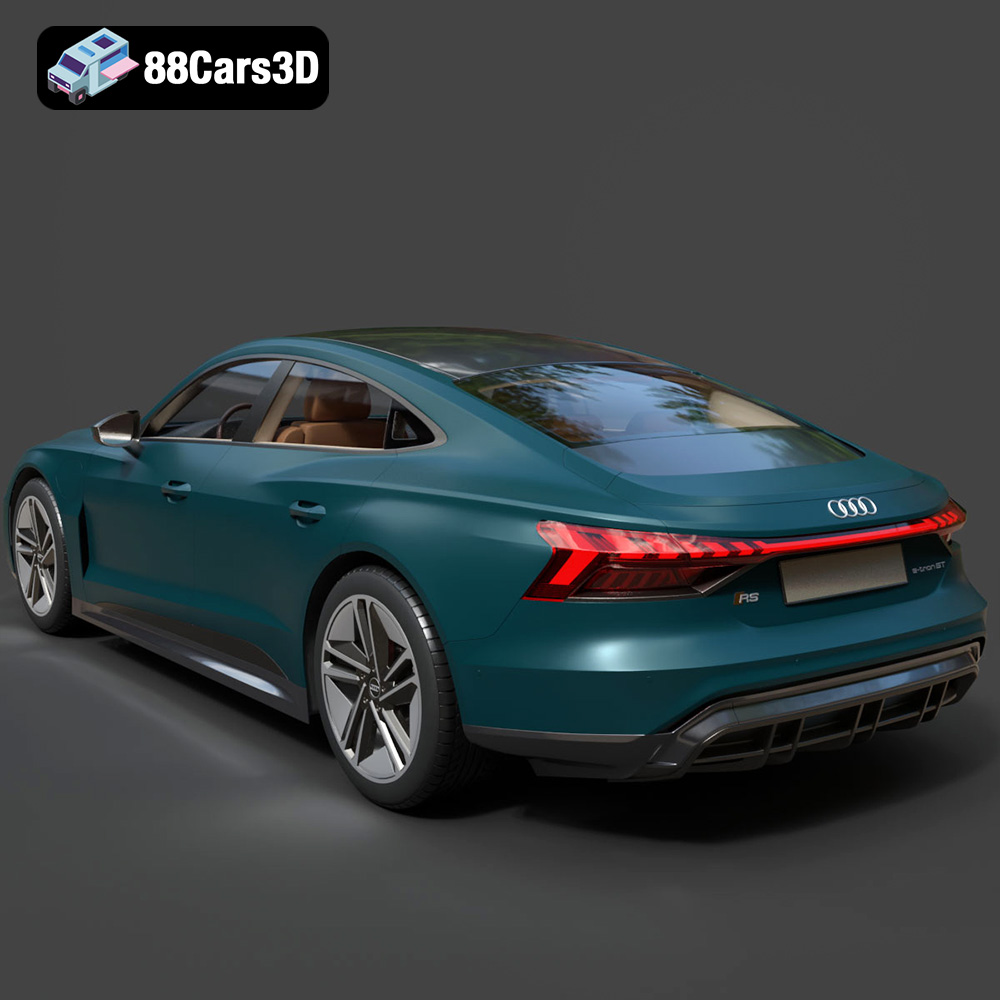
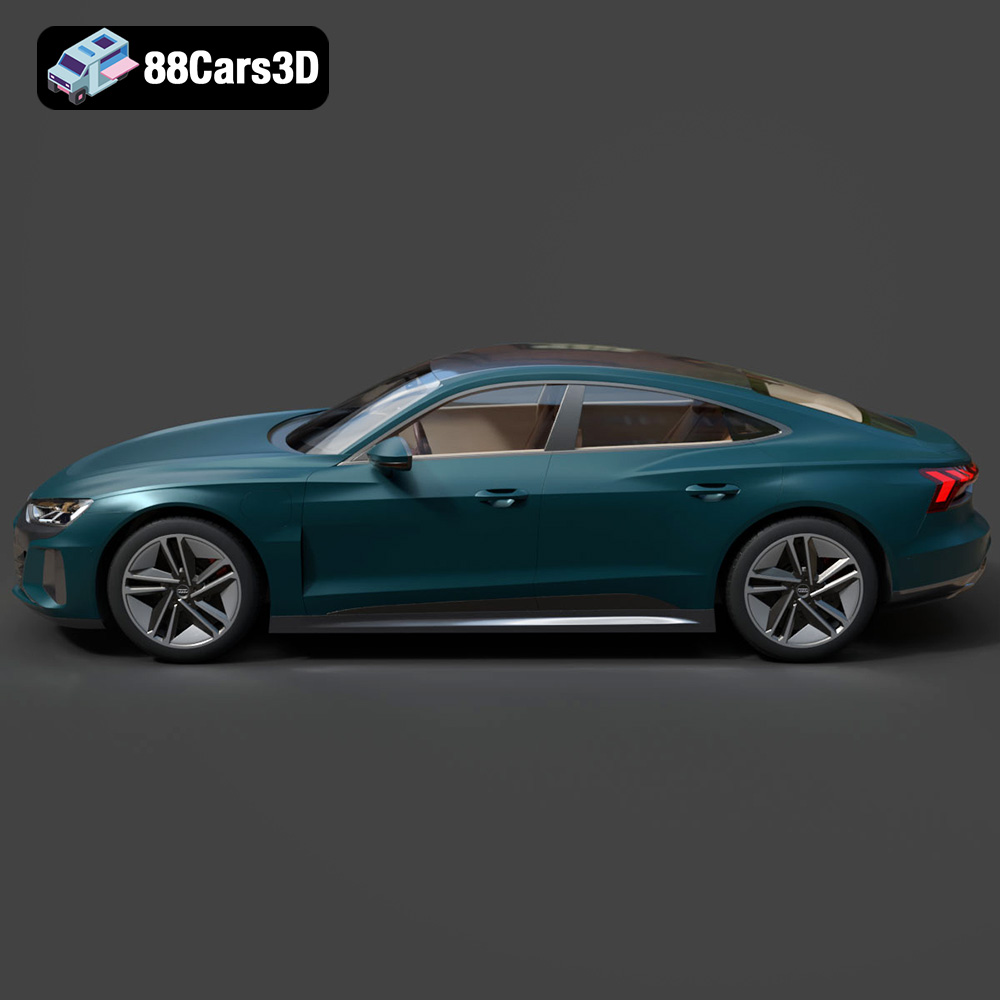
Experience the future of high-performance driving with this incredibly detailed 3D model of the Audi RS E-Tron GT. This all-electric grand tourer masterfully blends Audi’s legendary Quattro heritage with cutting-edge EV technology. Our model captures its aggressive, aerodynamic stance, characterized by the striking inverted Singleframe grille, sculpted blistered fenders, and the signature continuous LED taillight strip that defines its futuristic rear profile. Engineered for maximum visual fidelity, this model features an impressive 3,540,128 triangle count, delivering breathtaking high-resolution details perfect for close-up shots while maintaining structural integrity for optimization. Whether you are building next-generation racing games, crafting high-end cinematic animations, or developing immersive virtual configurators, this model offers unmatched realism. Perfect for urban racing environments, high-end automotive visualizations, virtual reality showrooms, and architectural lifestyle renderings.
$90.00
.audi
.blend
.ev
.fbx
.glb
.max
.obj
.ply
.rendering
.sports car
.stl
.unreal
car-3d-model
electric-car
game asset
game-ready
grand-tourer
optimized
rs-e-tron-gt
VR/AR