Get 20% OFF All Premium 3D & STL Models!

In the dynamic world of digital visualization, the demand for realistic and technically precise 3D car models has never been higher. From cinematic automotive advertisements that captivate audiences to immersive gaming experiences that blur the line between virtual and reality, and even practical applications like virtual configurators and architectural integration, a high-quality 3D vehicle asset is the cornerstone of success. It’s not just about aesthetics; it’s about the intricate balance of polygon count, material fidelity, accurate scale, and seamless integration into diverse professional workflows.
Today, we’re delving into the technical intricacies and creative potential unlocked by meticulously crafted 3D car models, using the formidable Lexus LX600 3D Model as our prime example. This isn’t merely a static representation; it’s a versatile digital asset designed to elevate projects across various industries, providing a solid foundation for artists, developers, and designers seeking unparalleled realism and performance.
The journey of a 3D model, from its creation to its final application, often involves navigating a complex ecosystem of file formats. Each format serves specific purposes, offering unique advantages in terms of compatibility, data retention, and optimization for particular use cases. Understanding these formats is crucial for any professional working with 3D assets, ensuring smooth workflow transitions and optimal performance.
The Lexus LX600 3D Model, like many premium assets available on 88cars3d.com, is often provided in its native .blend format. This file type is a complete Blender scene, preserving all aspects of the original project: meshes, materials, textures, lighting, cameras, animations, modifiers, and even custom scripts. It offers the most flexibility for artists working within Blender, allowing for full editability and deep customization. For the LX600, this means direct access to its meticulously structured geometry, PBR materials, and any setup for rigging or animation, making it ideal for high-end rendering with Cycles or Eevee, and a perfect starting point for personalized modifications.
.fbx (Filmbox) is arguably the most widely adopted proprietary file format for 3D data exchange, especially within the game development and animation industries. Developed by Autodesk, it’s designed to carry a comprehensive array of 3D data, including geometry, materials (with some limitations), textures, animations, skinning information, and camera data. Its strength lies in its ability to facilitate seamless transfers between different 3D software applications like 3ds Max, Maya, Blender, and real-time engines such as Unreal Engine and Unity. For the LX600 model, an .fbx export ensures that its sophisticated mesh, UVs, and basic material assignments are preserved when moving into game engine pipelines or other DCC applications, making it an excellent choice for real-time environments where performance and visual fidelity are critical.
.obj (Wavefront Object) is one of the oldest and most universally supported 3D file formats. It’s an excellent choice for exchanging pure polygonal geometry between virtually any 3D software. While it handles vertex data, UV coordinates, normals, and material references (via an accompanying .mtl file) efficiently, it typically does not store animation, rigging, or complex material node setups. The .obj version of the LX600 model is perfect for users who need a clean mesh to import into a variety of programs for custom texturing and rendering, ensuring maximum compatibility across different software ecosystems without the baggage of application-specific features.
.glb (GLB/glTF Binary) is a relatively newer format gaining significant traction, especially for web-based 3D, augmented reality (AR), and virtual reality (VR) applications. It’s a binary container format for the glTF (GL Transmission Format) specification, designed to be compact, efficient, and easily loadable by modern 3D viewers and engines. A .glb file encapsulates all necessary data—geometry, materials, textures, and animation—into a single, self-contained file. For the Lexus LX600 3D Model, the .glb format is indispensable for virtual showrooms, online configurators, and mobile AR experiences, providing a streamlined, high-performance asset that loads quickly in browsers and mobile devices.
.stl (Stereolithography) is the de facto standard file format for 3D printing. It represents a 3D model as a series of connected triangles, defining only the surface geometry without color, texture, or other CAD attributes. While simple, its ubiquity in manufacturing makes it essential. The .stl version of the LX600 is designed for hobbyists and professionals looking to bring the digital model into the physical world. With recommended scales and print settings, users can accurately reproduce the intricate details of the luxury SUV, suitable for desktop displays or prototyping.
.ply (Polygon File Format) is another format for storing 3D data, particularly known for its ability to handle data from 3D scanners and point cloud data. It can store not only geometry (vertices, faces) but also properties like color, transparency, normals, texture coordinates, and confidence values. While less common for general artistic exchange than .fbx or .obj, its precision and capacity for additional vertex attributes make it valuable in scientific visualization, CAD, and specific analysis workflows where detailed data integrity is paramount.
The inclusion of a dedicated .unreal asset signifies a model specifically prepared for direct import into Unreal Engine. This often implies pre-configured assets with optimized materials, collision meshes, LODs (Levels of Detail), and proper pivot setups, streamlining the integration process for game developers and real-time artists. For the Lexus LX600, this means minimizing setup time and maximizing performance within Unreal Engine, allowing developers to immediately incorporate it into open-world environments, racing simulations, or cinematic sequences with confidence.
Similar to .blend for Blender, .max is the native file format for Autodesk 3ds Max, a leading software for 3D modeling, animation, and rendering in professional visualization. A .max file retains all scene information, including complex material setups (e.g., V-Ray, Corona), lighting, animation keyframes, and modifiers specific to 3ds Max. The .max version of the LX600 offers 3ds Max users the full original project, enabling complete control over every aspect of the model for advanced rendering, intricate animation sequences, and integration into existing 3ds Max projects.
The comprehensive range of formats offered for the Lexus LX600 3D Model underscores its versatility and the commitment of platforms like 88cars3d.com to provide assets that seamlessly fit into any professional pipeline.
Crafting a 3D model like the Lexus LX600 that meets professional standards requires meticulous attention to detail, balancing aesthetic fidelity with technical efficiency. This model exemplifies what a top-tier automotive 3D asset should be.
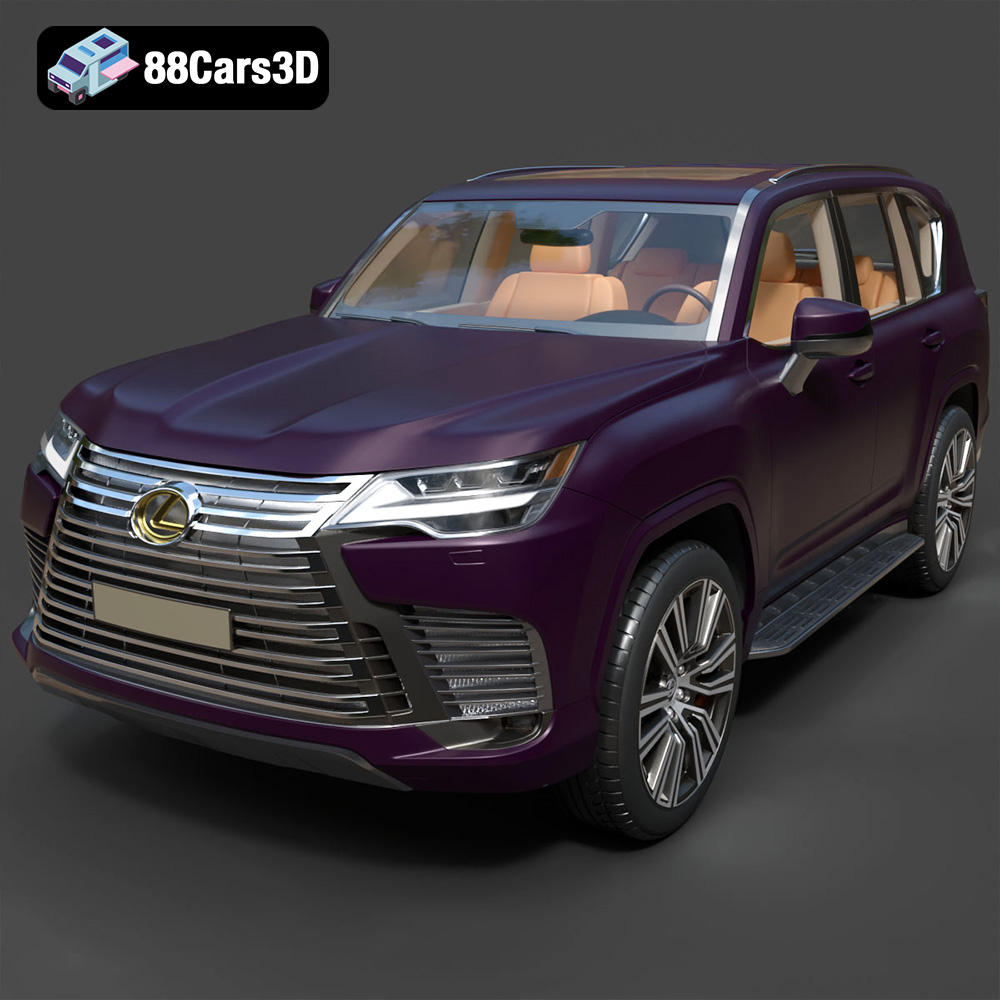
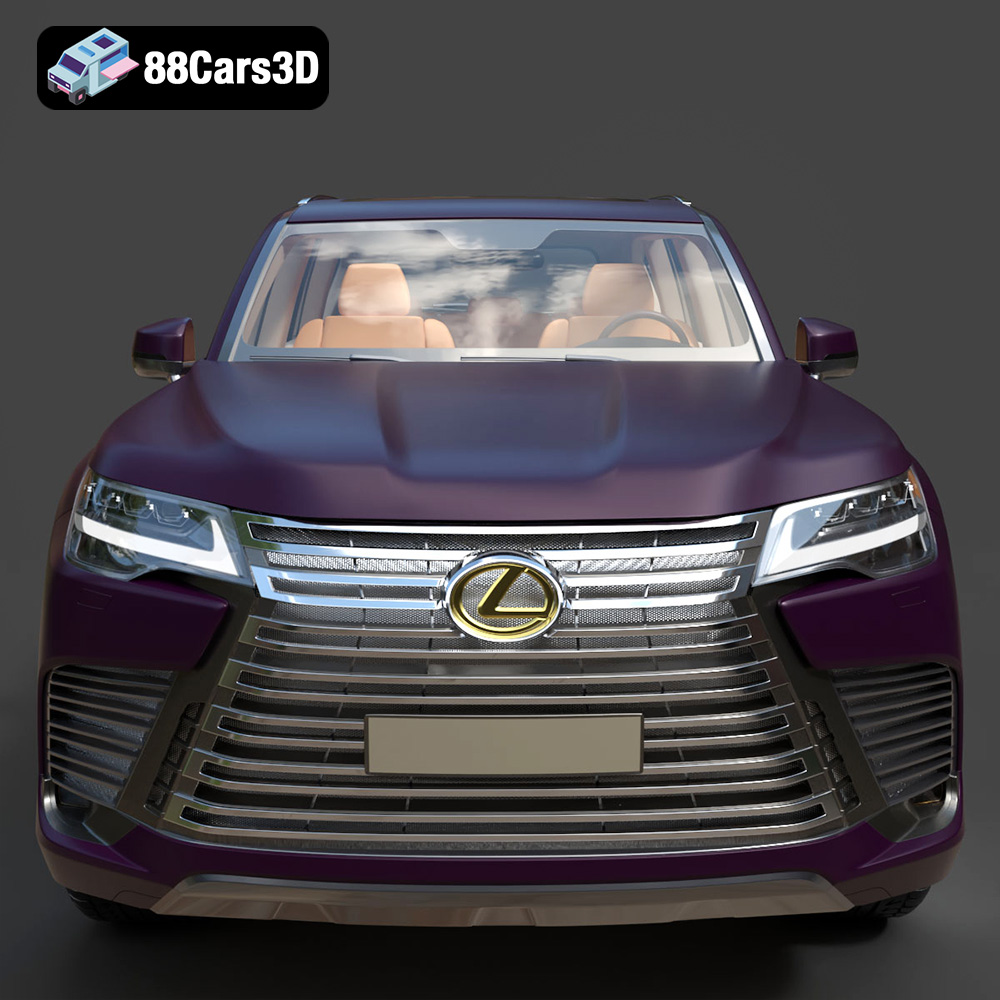
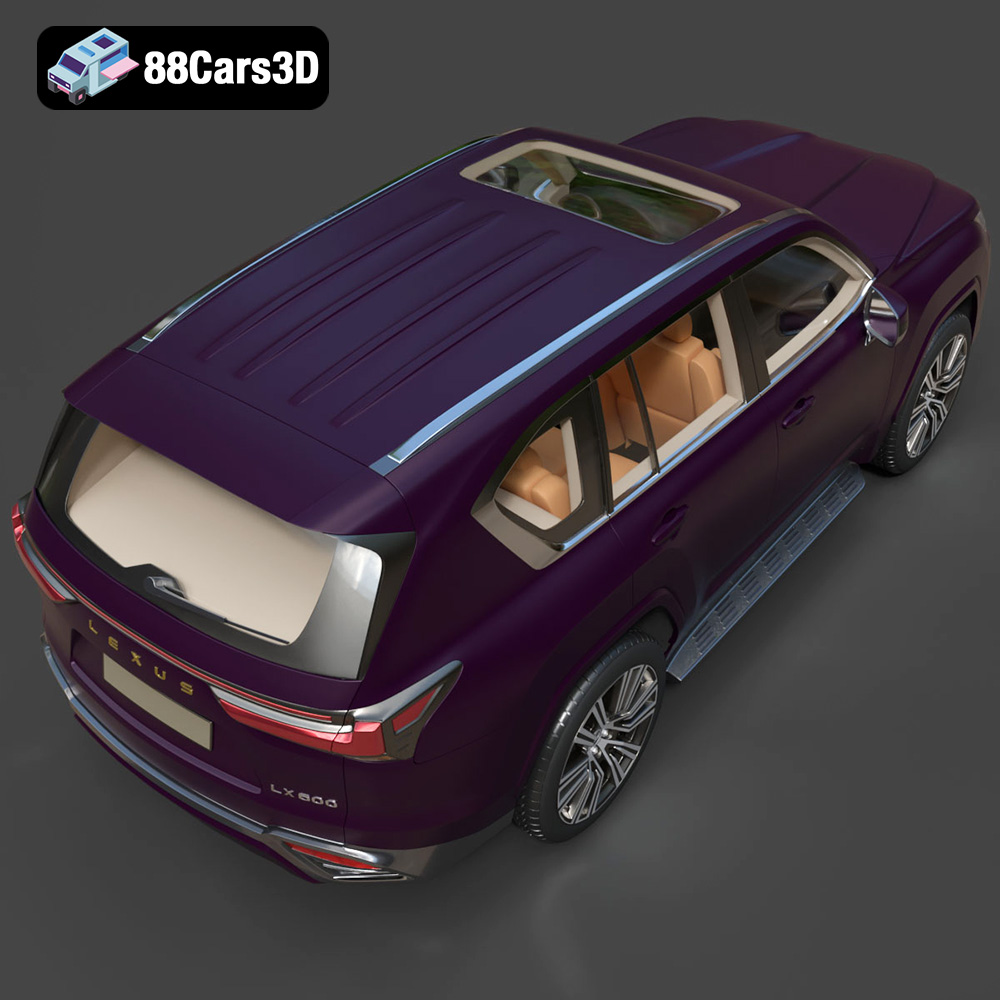
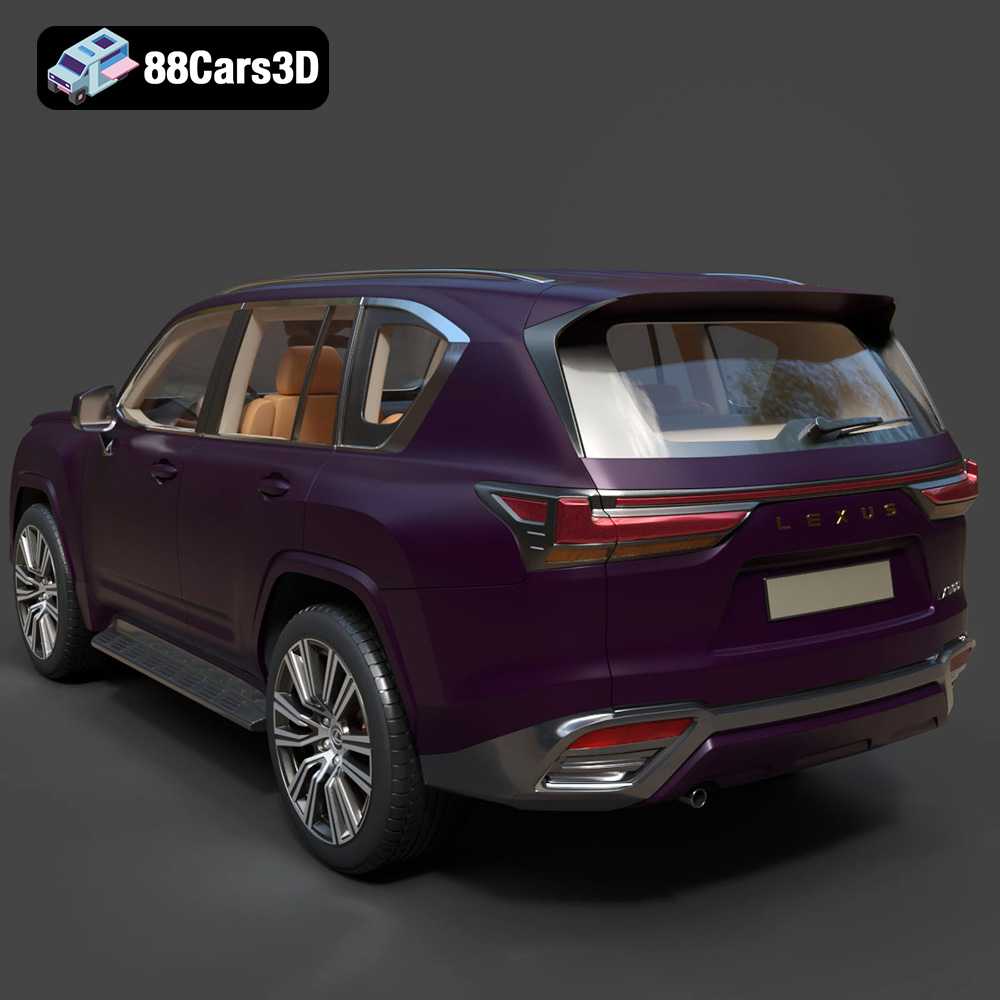
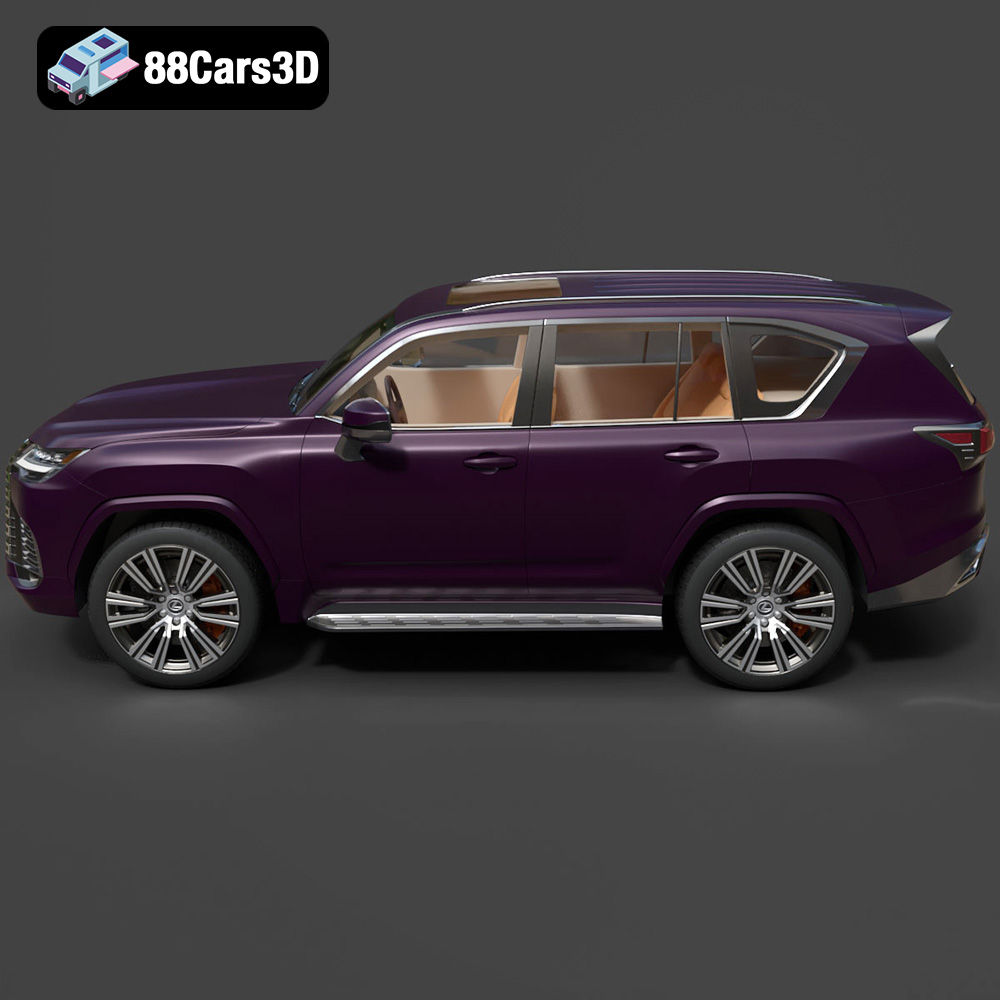
The Lexus LX600 is a vehicle defined by its imposing presence and sophisticated design, and this 3D model captures every nuance. The accurate frame geometry and majestic SUV proportions are foundational, ensuring the vehicle looks correct from every angle. Key elements like the iconic massive spindle grille, muscular wheel arches, and sophisticated bodywork are precisely modeled. Even under the hood, a representation of its formidable twin-turbo V6 engine block compartment is included, a detail crucial for close-up renders or virtual engine bay showcases. The integrated dual exhaust system with premium chrome-finished tips, signature L-shaped LED matrix headlights, and the full-width rear light bar are all replicated with high detail, essential for realistic lighting and reflections. The large-diameter alloy wheels and realistic premium all-terrain tires are not just aesthetic; they are technically sound, with proper pivot setups for animation and a topology that allows for realistic deformation and interaction with terrains. Furthermore, the adaptive variable suspension detailing represents its off-road pedigree and is prepared for animated suspension travel.
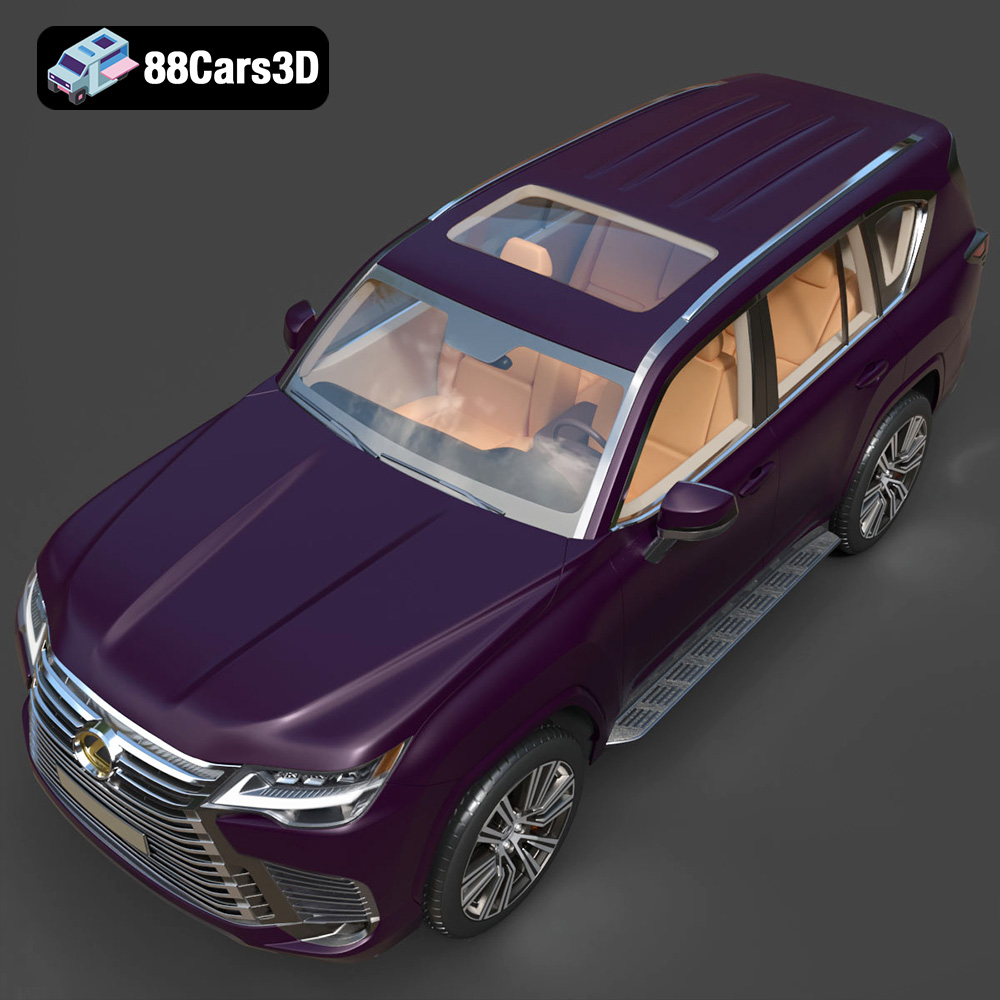
A true premium 3D model doesn’t stop at the exterior. The interior of the Lexus LX600 is where luxury truly shines, and the model extends this philosophy to its cockpit. Sumptuous multi-contour leather seating details with precise stitching are modeled to convey opulence. The detailed heated, wood-trimmed steering wheel, dual-screen infotainment cluster, and digital driver display are all faithfully recreated, including intricate control details such as pedals, the gear shifter, and drive mode selector dials. This level of interior detail is not merely for show; it’s optimized geometry designed for first-person POV in gaming and VR experiences, ensuring that users can step inside the virtual LX600 and feel fully immersed.
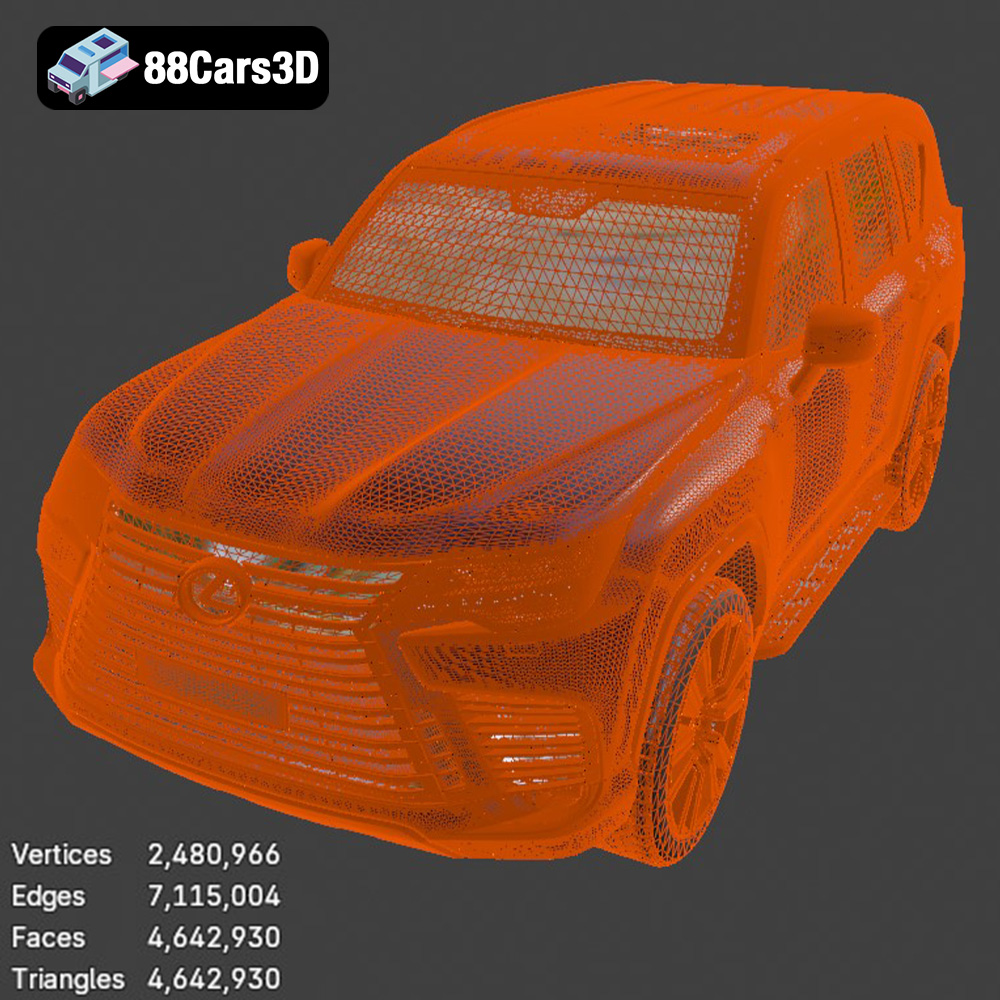
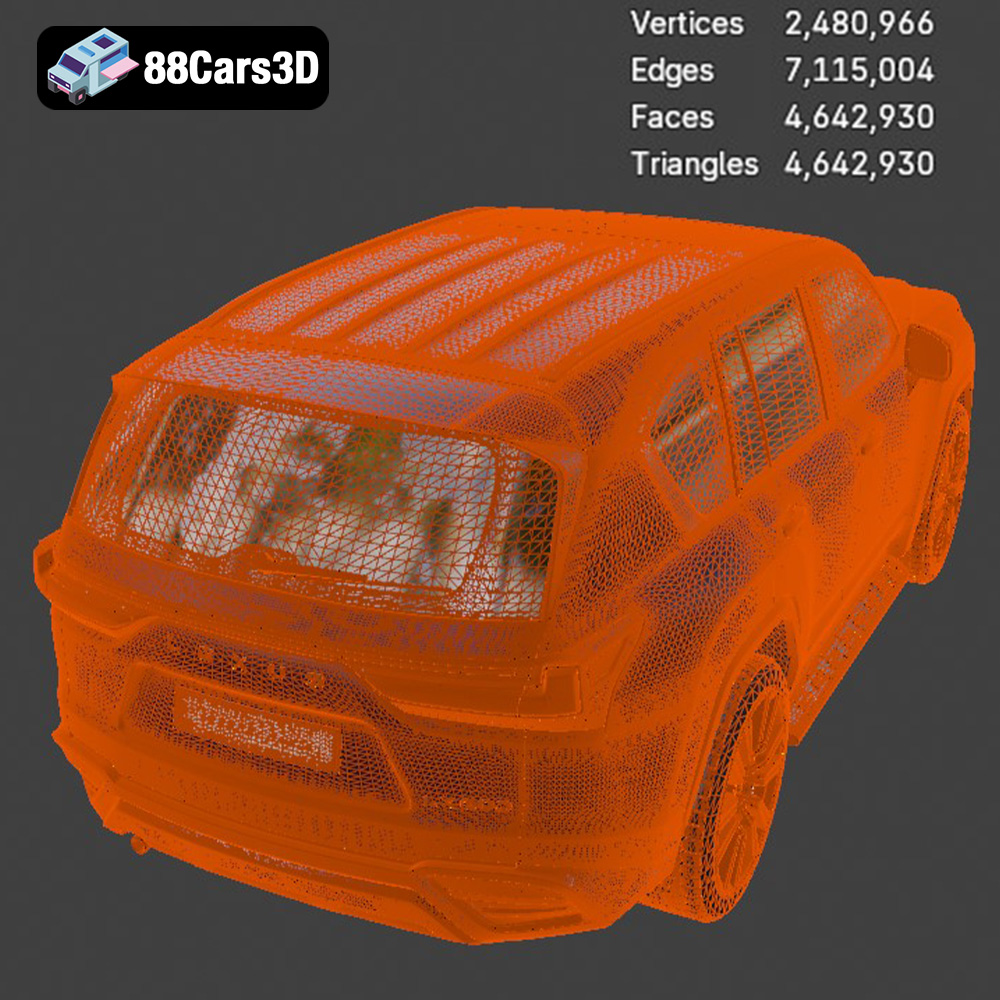
Beneath the detailed surfaces, the Lexus LX600 3D Model boasts robust technical specifications. With 4,642,930 triangles, it strikes a near-perfect balance, offering high-end visual realism suitable for cinematic rendering while being structured for optimization to meet the demands of real-time engines like Unreal and Unity. This high-poly count means fewer compromises on curved surfaces and intricate details, but its clean topology allows for efficient LOD generation. The model adheres to real-world scale accuracy, a non-negotiable for professional visualization, and features proper pivot setups for critical animated components like steering, wheel rotation, and suspension travel. This attention to technical detail makes it compatible with major 3D software platforms and real-time rendering engines straight out of the box.
The true value of a high-quality 3D asset lies in its seamless integration into diverse professional workflows. The Lexus LX600 3D Model is engineered to be a powerful tool across multiple industries.
For cinematic quality renders and photorealistic visualizations, artists often turn to powerful rendering suites within software like 3ds Max or Blender. The LX600 model, especially in its .max or .blend formats, provides an exceptional foundation. In 3ds Max, artists can leverage advanced rendering engines like V-Ray or Corona Renderer to achieve stunning photorealism. This involves meticulous lighting setups, using HDRIs (High Dynamic Range Images) for realistic reflections and physically accurate light sources. Material creation becomes an art form, precisely dialing in car paint shaders with clear coats, metallic flakes, realistic chrome, glass, and textured leather for the interior. The model’s separated components (wheels, suspension, steering) facilitate complex animation sequences, from driving shots to detailed suspension articulation or door openings, perfect for high-impact marketing campaigns or virtual showrooms.
The journey from a high-poly model to a game-ready asset for engines like Unreal Engine or Unity is a specialized process. The Lexus LX600 3D Model is described as “Game-Ready & Optimized,” a crucial attribute for developers. While its initial 4.6 million triangles are high for raw real-time performance, the geometry is structured to allow for optimization. This means artists can efficiently generate LODs (Levels of Detail) – lower-polygon versions of the model that swap in as the vehicle moves further from the camera, significantly improving frame rates. Collision meshes are essential for realistic physics interactions, and proper material instance setup allows for quick customization of colors and finishes within the engine without creating new textures. This makes the LX600 an ideal candidate for open-world games, racing titles demanding high fidelity, or sophisticated simulators where realistic vehicle dynamics are key. The .unreal format further streamlines this process, offering an asset pre-configured for Unreal Engine’s pipeline.
The applications extend beyond traditional rendering and gaming. For immersive AR/VR experiences, the .glb format of the Lexus LX600 is paramount. Its optimized structure ensures quick loading and smooth performance in virtual showrooms, allowing potential buyers to explore the vehicle’s interior and exterior in a fully interactive 3D space. Mobile AR experiences can place the virtual LX600 directly into a user’s real-world environment through their smartphone, offering a powerful visualization tool for product marketing. Moreover, the .stl format opens the door to the physical realm through 3D printing. Hobbyists and designers can create tangible models, with recommended scales (1:12, 1:18, 1:24) and detailed print settings (layer height, infill, supports) provided. This enables the creation of high-detail physical replicas, perfect for display or even as prototypes in the design process.
A great 3D model offers more than just fidelity; it provides a flexible foundation for creative adaptation. The Lexus LX600 3D Model is designed with customization in mind, allowing artists to tailor it to their specific project needs.
The ability to modify body and interior colors is fundamental. Users can easily change the vehicle’s exterior to factory colors, apply custom finishes like matte or metallic, or experiment with entirely unique palettes. This is often achieved through material nodes in Blender or 3ds Max, or material instances within game engines, leveraging PBR (Physically Based Rendering) workflows for consistent and realistic results across different lighting conditions. Furthermore, modifying tire textures to switch between off-road and street variants significantly alters the vehicle’s character, broadening its application from rugged adventures to urban elegance. Adjusting the gloss or reflectivity of materials, from chrome accents to interior wood trims, allows for fine-tuning the visual presentation to match specific branding or artistic visions.
The environment in which a 3D car model is placed profoundly impacts its appearance. The LX600 model is built to adapt seamlessly to diverse lighting scenarios. Artists can configure studio lighting setups for pristine product shots, integrate it into a realistic outdoor scene with natural sunlight, or showcase it in a dramatic night setting with intricate car lights and environmental reflections. For architectural visualization, the model can be placed within a virtual driveway or urban street scene, enhancing the realism and aspirational quality of a rendered building. Its detailed geometry and clean UVs ensure that light interacts correctly with all surfaces, from the reflection of the sky on its paintwork to the subtle shadows cast by its complex grille.
In the competitive landscape of 3D visualization, sourcing high-quality assets is paramount. 88cars3d.com distinguishes itself as an online marketplace committed to providing meticulously crafted 3D car models that meet the rigorous demands of professionals. The Lexus LX600 3D Model is a prime example of the kind of quality and versatility available. Every asset is carefully prepared, with attention to technical specifications like poly counts, UV mapping, real-world scale, and pivot setups, ensuring that artists and developers can focus on their creative work rather than spending valuable time fixing asset issues.
Whether you’re an automotive designer, a game developer, an architect, or a marketing professional, having access to such a diverse range of optimized file formats and highly detailed models drastically streamlines your workflow and elevates the final output. The convenience of finding game-ready assets, rendering-optimized models, and 3D-printable files all in one place makes 88cars3d.com an invaluable resource for anyone seeking to bring their digital automotive visions to life with unparalleled realism and efficiency.
The world of 3D modeling and visualization is constantly evolving, driven by the pursuit of greater realism and immersive experiences. High-fidelity 3D car models are at the forefront of this evolution, serving as indispensable tools across a multitude of industries. From the meticulous detail of its exterior and interior to its robust technical specifications and versatile file formats, the Lexus LX600 3D Model stands as a testament to the power of expertly crafted digital assets.
This model’s ability to transition seamlessly from cinematic renders in 3ds Max or Blender to real-time game engines like Unreal, or even into augmented reality and physical 3D prints, highlights its comprehensive design. It empowers artists and developers with a foundation that is both technically sound and creatively flexible, enabling them to achieve stunning results. As the digital landscape continues to expand, investing in professional-grade assets like those found on 88cars3d.com will remain a critical strategy for anyone looking to push the boundaries of automotive visualization and interactive experiences.
The Lexus LX600 stands as the pinnacle of luxury SUVs, combining legendary off-road capability with uncompromising flagship refinement. This meticulously crafted 3D model captures the vehicle’s imposing presence, featuring its iconic massive spindle grille, muscular wheel arches, and sophisticated bodywork. Under the hood lies the representation of its formidable twin-turbo V6 engine, while the bold exterior styling is complemented by an elegant exhaust system and intricate aerodynamic details. With an incredibly detailed topology of 4,642,930 triangles, this model delivers unparalleled visual fidelity designed for cinematic rendering and high-end automotive visualization. Despite the high polygon count, the geometry is structured to allow for optimization, making it highly versatile. It stands ready for demanding use cases such as next-gen game development, immersive AR/VR configurations, high-end animation, and architectural visual integration.
$90.00
.blend
.fbx
.glb
.lexus
.luxury suv
.lx600
.max
.obj
.ply
.rendering
.stl
.unreal
car-3d-model
game asset
game-ready
high poly
optimized
SUV
VR/AR