Get 20% OFF All Premium 3D & STL Models!

In the world of two-wheeled legends, few names evoke as much passion and design prowess as Ducati. The Monster 696 2008 stands as a testament to this legacy, a streetfighter that redefined the naked bike segment with its aggressive stance, minimalist design, and an engine note that stirs the soul. For designers, game developers, architects, and visualization artists, capturing the essence of such an iconic machine in a digital realm presents a unique challenge and opportunity.
Enter the premium 3D model of the Ducati Monster 696 2008. This meticulously crafted asset brings the motorcycle’s legendary form and function to life in stunning detail, offering a versatile foundation for an array of digital projects. Whether you’re aiming to populate a next-generation racing game, create breathtaking automotive renders, develop an immersive AR/VR experience, or even 3D print a display model, this asset provides the fidelity and flexibility required by discerning professionals. It’s more than just a model; it’s a gateway to integrating a piece of motorcycling history into your creative vision, available now at 88cars3d.com, a premier destination for high-quality 3D car models and more.
The versatility of a high-quality 3D model, such as the Ducati Monster 696 2008, is significantly enhanced by the array of file formats it supports. Each format is designed with specific strengths and ideal use cases, catering to different software environments and project requirements. Understanding these distinctions is crucial for seamless integration into your professional workflow, ensuring optimal performance and fidelity. The Ducati Monster 696 2008 3D model download comes equipped with a comprehensive suite of formats, offering maximum compatibility.
The .blend format is Blender’s native file type, offering a complete and editable scene. When you download the Ducati Monster 696 in .blend, you receive not just the mesh data, but also the entire scene setup, including materials, textures, lighting, cameras, and even animation data if present. This format is ideal for artists who primarily work within Blender, providing full access to modifiers, node-based materials, and custom properties, allowing for extensive customization and iterative design directly within the application.
FBX (Filmbox) is arguably one of the most widely supported 3D file formats, developed by Autodesk. It excels at transferring data between different 3D software applications and is the go-to format for game engines like Unreal Engine and Unity. An .fbx file for the Ducati Monster 696 will typically contain mesh geometry, materials, textures, animations, and rigging information. Its binary nature makes it efficient for real-time applications, ensuring that complex models with intricate hierarchies and animations can be imported and utilized effectively without significant data loss or conversion issues. For game developers creating game assets, .fbx is often the first choice due to its robust support for skeletal animations and blend shapes.
OBJ (or .obj) is a venerable and widely supported geometry definition file format. While it doesn’t typically store advanced scene data like animations or rigging, it is excellent for transferring pure polygonal mesh data, UV coordinates, and material references (via an accompanying .mtl file). The .obj format is highly compatible across virtually all 3D software, making it a “safe” choice for cross-software collaboration. For the Ducati Monster 696, an .obj file ensures that the core geometry and UV layout are preserved, allowing artists to apply their own materials and lighting in their preferred software.
GLB (GL Transmission Format Binary) is a modern, efficient, and compact format optimized for web-based 3D applications, augmented reality (AR), and virtual reality (VR). It bundles 3D models, textures, animations, and other scene information into a single file, making it incredibly easy to share and load. When using the Ducati Monster 696 .glb, you’re getting a fully textured and shaded model ready for immediate deployment in a web browser, AR app (like Apple’s AR Quick Look), or VR experience without complex setup, perfect for immersive virtual showrooms or configurators.
STL (Stereolithography) is the de facto standard file format for 3D printing. It represents a 3D model as a series of connected triangles, defining only the surface geometry of an object without color, texture, or other CAD attributes. For hobbyists and professionals looking to physically manifest the Ducati Monster 696, the .stl format is essential. It provides the clean, watertight mesh data required by 3D slicers, enabling the creation of physical replicas at various scales.
PLY (Polygon File Format) is another format used to store 3D data, particularly useful for high-resolution scanned data and in scientific or engineering applications. It can store not only geometry but also properties like color, transparency, and even normal vectors for each vertex, making it a robust choice for precision modeling or situations where specific mesh attributes are critical. For the Ducati, a .ply version could be valuable for detailed mesh analysis or specific CAD workflows.
The inclusion of an .unreal format implies a highly optimized asset specifically prepared for Unreal Engine. This often means the model has undergone specific preparation steps within Unreal, such as optimized LODs (Levels of Detail), collision meshes, material instances, and possibly Blueprints, ensuring it’s ready to be dropped directly into an Unreal project with minimal additional setup. This dramatically accelerates development for game studios leveraging Epic’s powerful engine, making the Ducati Monster 696 a true plug-and-play asset for real-time environments.
Similar to .blend for Blender, the .max format is the native file for Autodesk 3ds Max. This format retains all scene information, including complex modifiers, render settings, lights, and animation tracks specific to 3ds Max. For professionals working in architectural visualization, automotive design, or high-end animation using 3ds Max, the .max file provides the most comprehensive and editable version of the Ducati Monster 696, allowing for full artistic control and integration into existing Max pipelines.
Achieving hyper-realism in a 3D model demands meticulous attention to detail, from the overall proportions down to the smallest bolt. The Ducati Monster 696 2008 3D model epitomizes this commitment, offering an unparalleled level of visual fidelity that makes it an indispensable asset for any professional project requiring top-tier automotive representation.
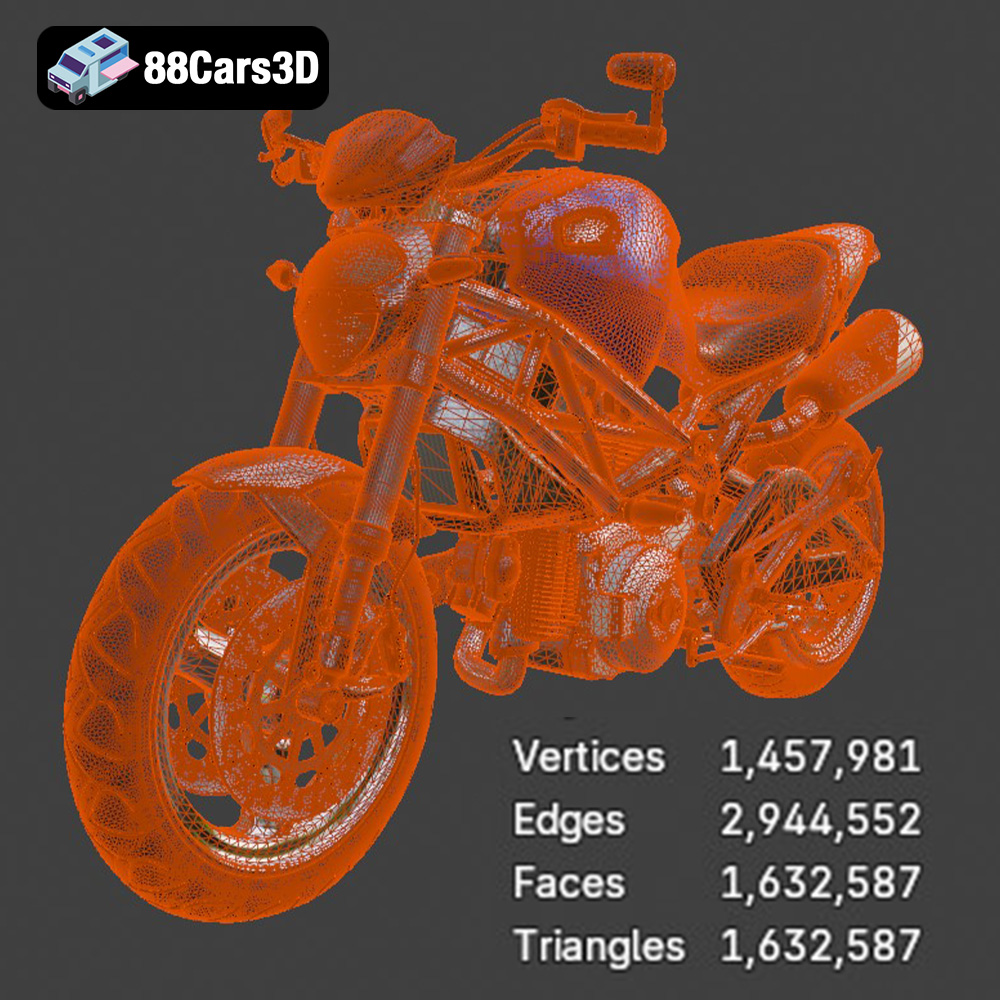
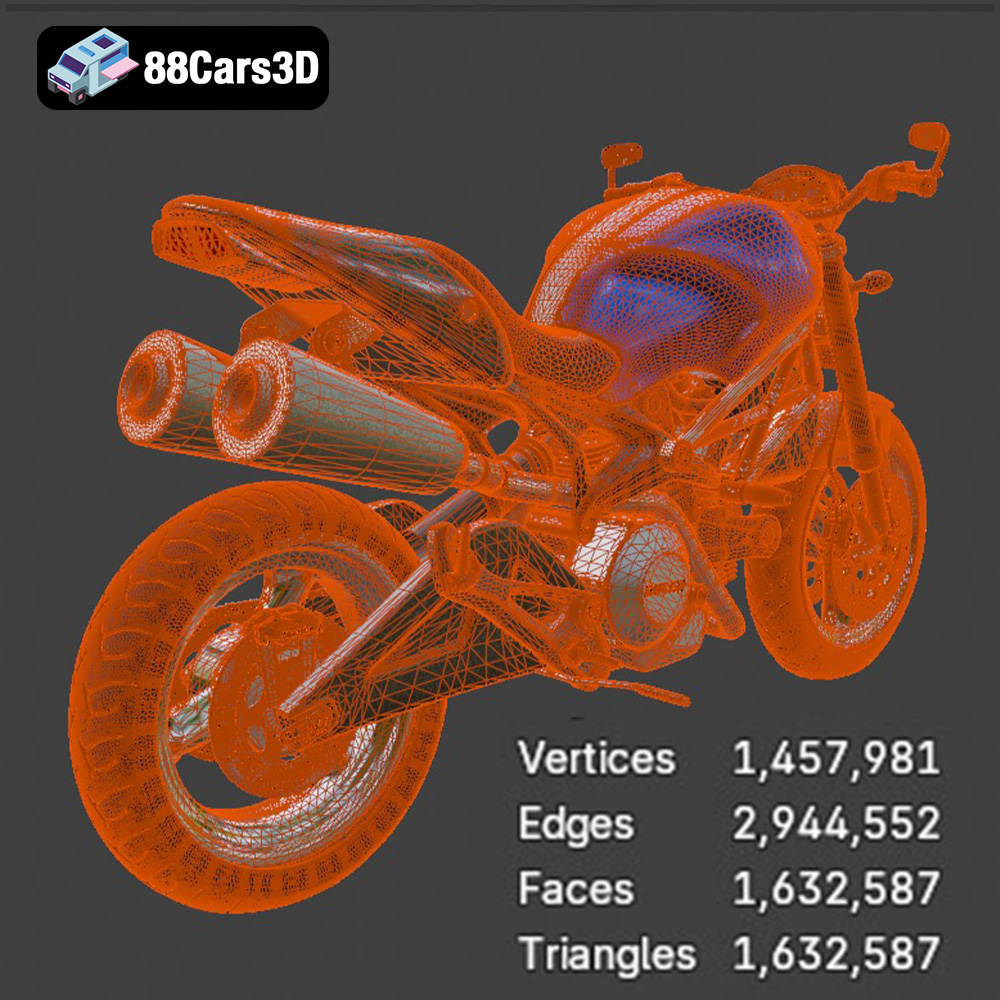
The foundation of this model’s realism lies in its impressive 1,632,587 triangles. This high poly count is not merely about density; it reflects the precision with which every curve, edge, and component has been digitally sculpted. From the subtle contours of the muscular fuel tank to the intricate casting marks on the engine block, this model doesn’t shy away from detail. Despite this richness, the underlying topology is thoughtfully structured and optimized, ensuring clean deformations and efficient rendering. Proper UV mapping is inherently part of such a premium asset, allowing for the application of high-resolution PBR (Physically Based Rendering) textures that capture reflections, refractions, and surface imperfections with photographic accuracy, crucial for stunning automotive rendering.
The model adheres to real-world scale accuracy, a critical factor for seamless integration into existing scenes or for use in simulations where precise dimensions are paramount. Furthermore, proper pivot setups for steering, wheel rotation, and suspension travel are implemented, making the model animation-ready right out of the box. This attention to mechanical accuracy simplifies rigging and animation workflows, saving invaluable time for animators and game developers.
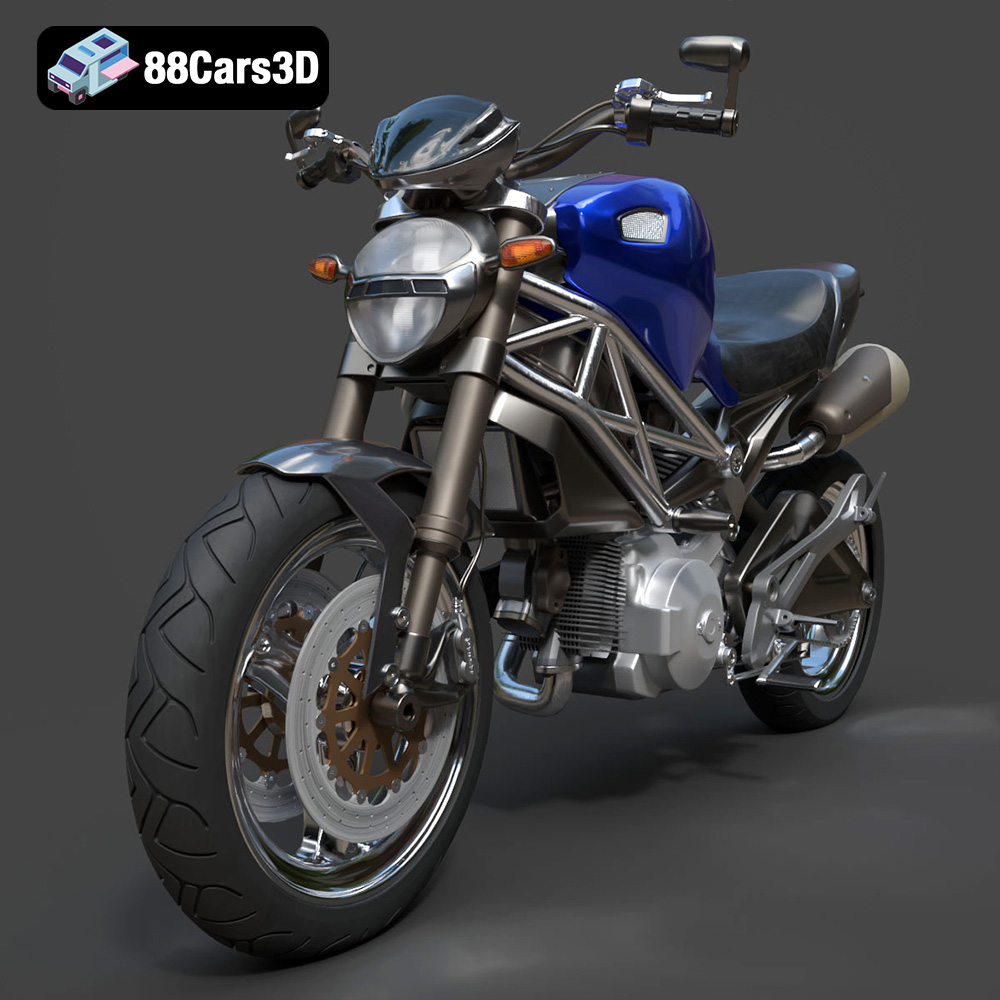
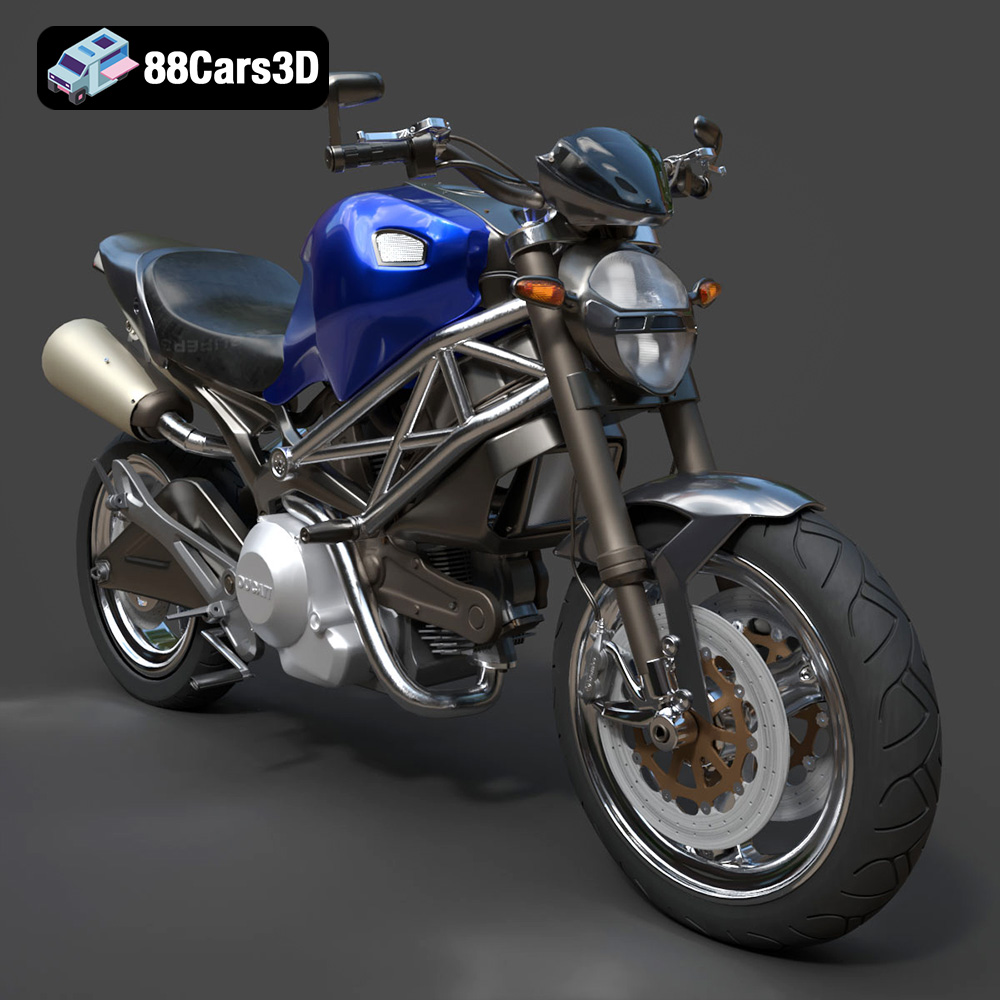
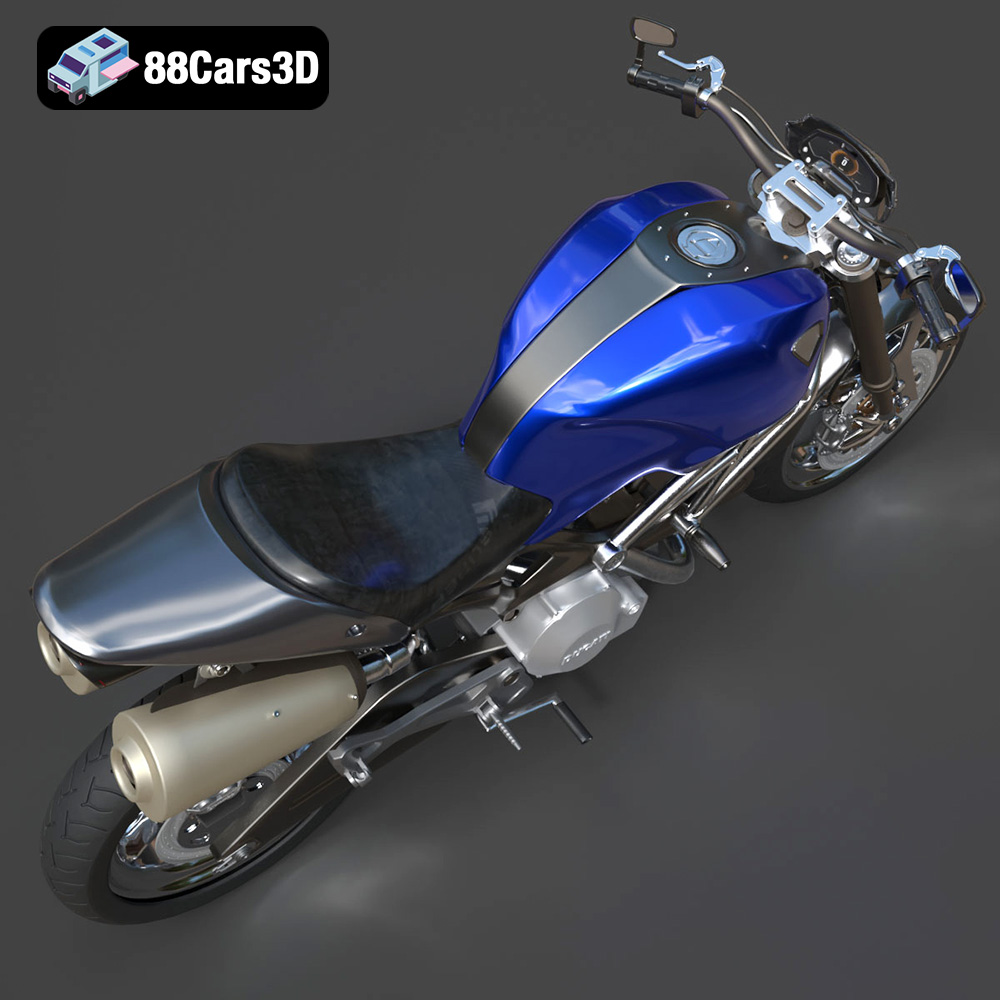
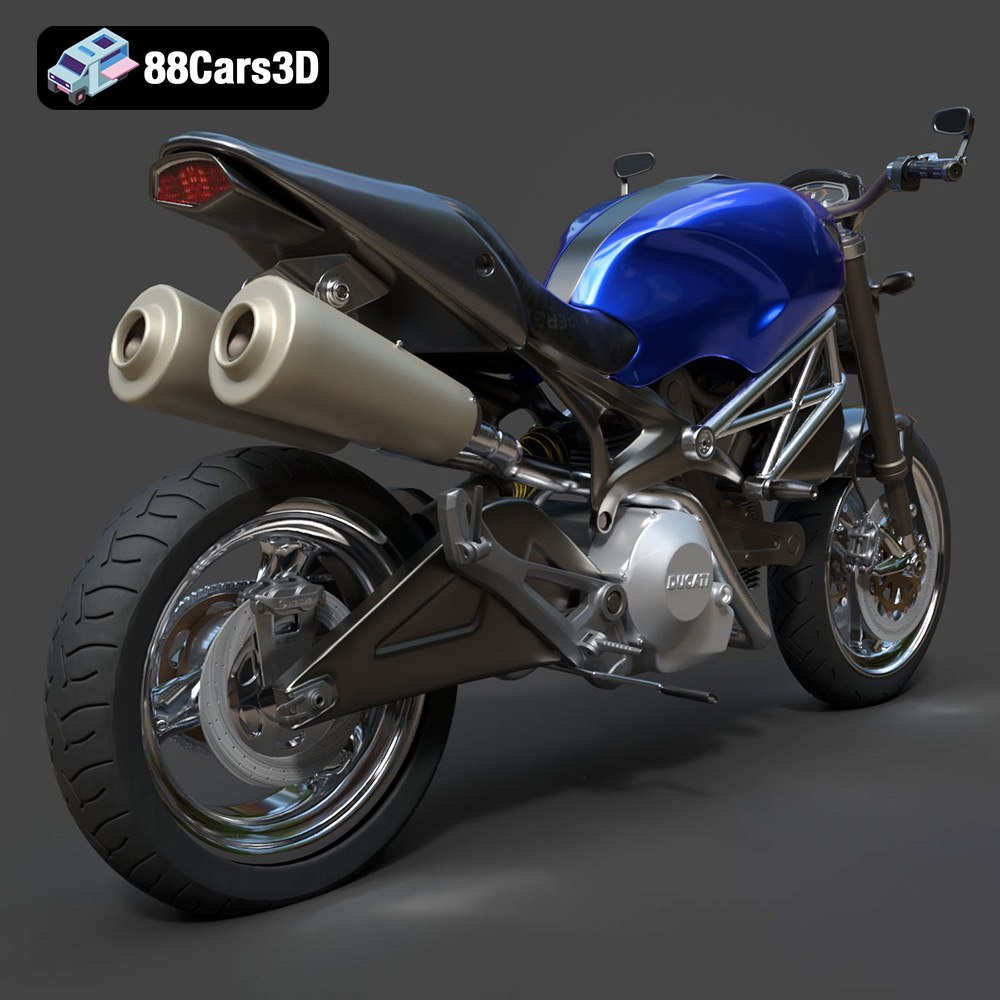
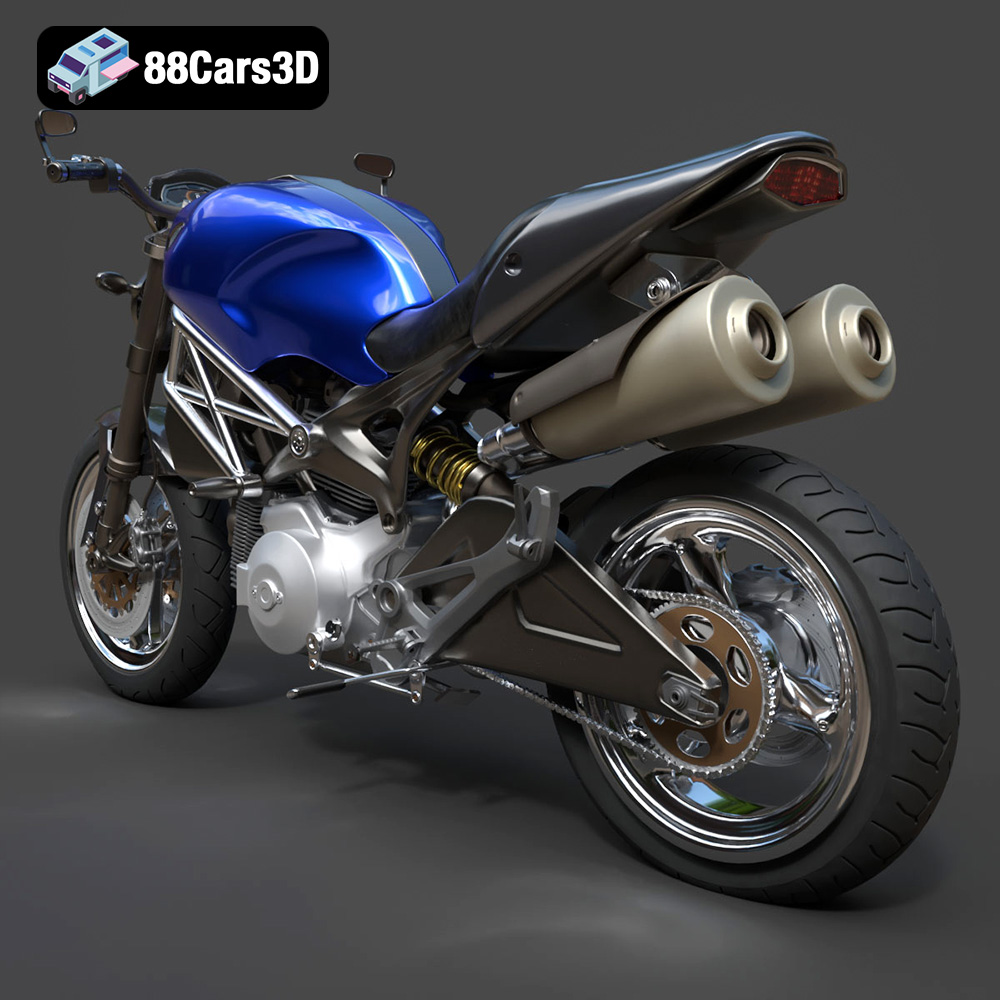
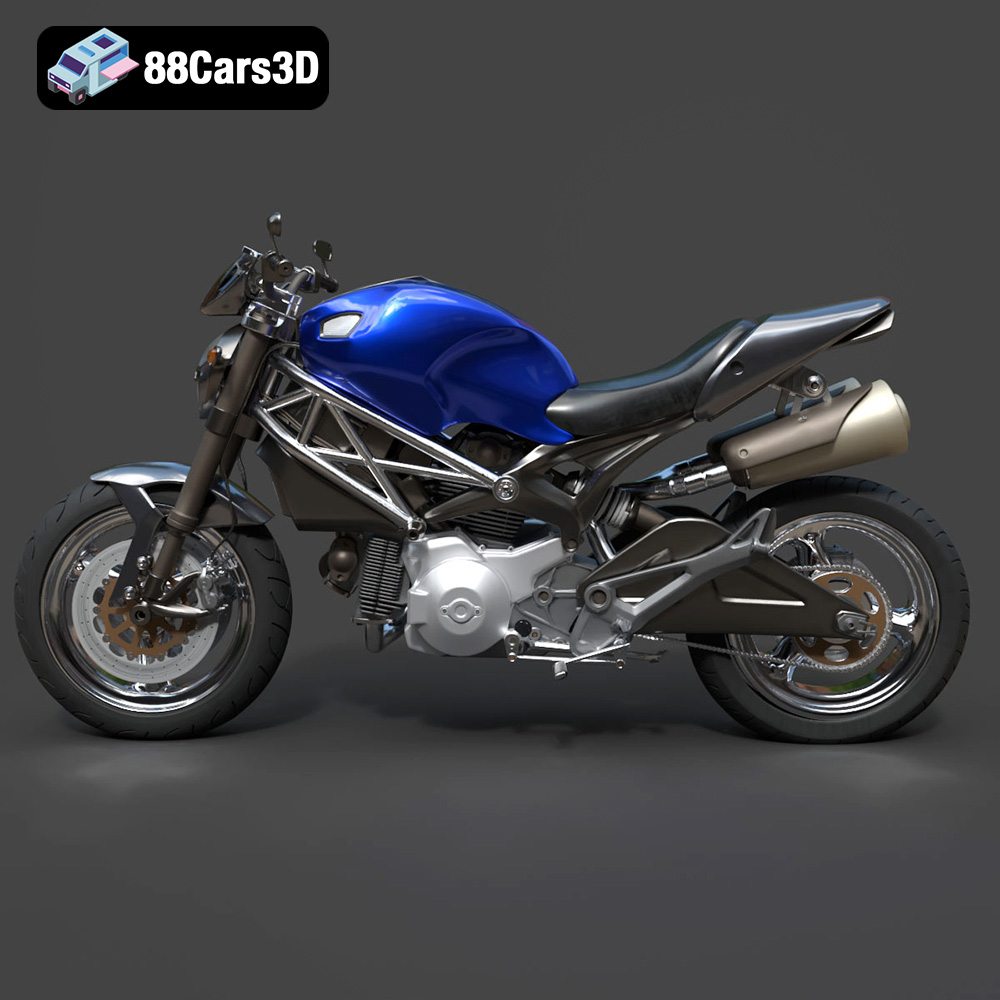
The true character of the Ducati Monster 696 lies in its exposed mechanicals, and the 3D model faithfully reproduces these iconic elements. The tubular steel trellis frame, a Ducati hallmark, is accurately modeled with precise geometry and proportions, serving as the skeletal centerpiece. The heart of the beast, the 696cc L-twin Desmodromic engine block, is a marvel in itself, featuring distinct cooling fins and casings that replicate the real-world engine’s complexity. Even the signature twin aluminum under-seat exhaust system, a key visual and auditory component, is meticulously rendered.
Beyond the core structure, critical exterior features like the distinctive round triple-parabola headlight and sleek LED taillight assembly are replicated with care. The intricately modeled three-spoke alloy wheels are paired with realistic high-performance street tires, complete with tread patterns and sidewall details. The detailed front inverted forks and rear progressive Sachs monoshock suspension are separate components, allowing for realistic independent movement and animation, crucial for authentic motorcycle behavior in simulations or cinematic sequences.
Inside the cockpit, the model continues its fidelity. The ergonomically contoured two-up sport saddle features realistic stitch detailing, while the wide aluminum handlebars come equipped with detailed grips, mirrors, and switchgear. The accurate fully digital LCD instrument cluster setup is ready for custom displays, and even the foot pegs, brake/clutch levers, and precise shifter linkage are present. This comprehensive detailing extends to an optimized geometry for first-person POV in gaming, making the Ducati Monster 696 3D model an exceptional asset for immersive virtual experiences.
The true value of a premium 3D model like the Ducati Monster 696 2008 lies not just in its detail, but in its ability to integrate effortlessly into various professional workflows. Designed with versatility in mind, this model is a robust asset for diverse applications, from high-octane game development to photorealistic visualization.
For game developers, finding optimized yet visually stunning game assets is paramount. The Ducati Monster 696 3D model is explicitly designed as a game-ready asset, striking a perfect balance between high-end visual realism and performance efficiency. With 1,632,587 triangles, it’s suitable for next-generation racing titles, open-world environments, or even dedicated motorcycle simulators. Its inclusion of .fbx and .unreal formats significantly streamlines integration into popular game engines like Unreal Engine and Unity.
High-end visualization projects demand impeccable detail and realistic materials. The Ducati Monster 696 model excels in scenarios requiring cinematic-quality renders, whether for product showcases, marketing campaigns, or even as an exquisite prop in architectural visualization scenes. Its high triangle count and accurate geometry mean that close-up shots will hold up to scrutiny, displaying the fine details of the engine, frame, and cockpit.
The burgeoning fields of Augmented Reality (AR) and Virtual Reality (VR) thrive on high-quality, optimized 3D assets. The Ducati Monster 696 3D model, especially in .glb format, is perfectly suited for creating immersive, interactive experiences.
While the digital realm offers limitless possibilities, there’s a unique satisfaction in holding a physical representation of a meticulously crafted 3D model. The Ducati Monster 696 2008 3D model is not just for screens; it’s also designed to be printable, allowing enthusiasts and collectors to bring this iconic motorcycle into the physical world.
The inclusion of the .stl format is critical for 3D printing. This format simplifies the geometry into a mesh of triangles, which 3D printers understand. To ensure a successful print of the Ducati Monster 696, several factors need careful consideration:
Once printed, the physical Ducati Monster 696 becomes a canvas for further customization. Post-processing is key to achieving a professional finish:
The true power of a meticulously engineered 3D model, such as the Ducati Monster 696 2008, lies in its ability to adapt and perform across a spectrum of demanding digital applications. This isn’t just a static render asset; it’s a dynamic tool designed for adaptability.
One of the persistent challenges in 3D production is finding the sweet spot between visual fidelity and computational efficiency. The Ducati Monster 696 3D model addresses this head-on with its optimized geometry. While boasting a high triangle count (1,632,587), this detail is strategically implemented. The model’s topology is clean and well-structured, which is crucial for maintaining stable performance in real-time engines like Unreal and Unity. This careful optimization ensures that developers can achieve stunning visual realism in their games and AR/VR applications without bogging down frame rates.
For high-end rendering and visualization, the rich detail truly shines, providing enough resolution for extreme close-ups and cinematic sequences. The real-world scale accuracy and proper pivot setups mean less time is spent on correctional work and more on creative exploration. This balance makes the Ducati Monster 696 a valuable asset that can seamlessly transition from a performance-critical game environment to a visually demanding marketing campaign, proving its worth as a versatile component of any professional’s toolkit.
Customization is a cornerstone of creative projects, and this 3D model offers extensive flexibility to match any artistic vision or client brief. The ability to modify key aesthetic elements allows for endless iterations and personalized touches.
This comprehensive approach to customization ensures that the Ducati Monster 696 2008 3D model is not just a high-quality asset, but a dynamic and adaptable tool that empowers creators to realize their unique visions.
The Ducati Monster 696 2008 represents an enduring icon of motorcycle design and performance. Its translation into a premium 3D model offers an unparalleled resource for professionals across various digital disciplines. From its meticulously crafted 1.6 million triangles and real-world scale accuracy to its optimized topology and animation-ready components, this model is built to exceed expectations.
Whether you are developing the next hit racing game, aiming for photorealistic automotive rendering, building immersive AR/VR experiences, or even envisioning a detailed 3D printed display, the versatility offered by its comprehensive file formats (.blend, .fbx, .obj, .glb, .stl, .ply, .unreal, .max) ensures seamless integration into any workflow. The ability to customize colors, materials, and lighting further enhances its utility, allowing you to tailor this digital masterpiece to your precise creative vision.
For those who demand excellence in their 3D car models and game assets, the Ducati Monster 696 2008 3D model from 88cars3d.com is an investment in quality, performance, and creative freedom. Elevate your projects with this exceptional piece of digital engineering, and let the legacy of the Monster 696 inspire your next masterpiece.
The Ducati Monster 696 2008 revolutionized the naked bike segment with its aggressive streetfighter stance, unmistakable Italian styling, and pure riding dynamics. Born from a legendary lineage, this motorcycle strips away the unnecessary, showcasing its iconic exposed tubular steel trellis frame, sculpted muscular fuel tank, and signature L-twin Desmodromic engine. The dual under-seat exhausts and minimalist triple-parabola headlight assembly add to its brutal yet elegant visual appeal, making it a true masterpiece of two-wheeled engineering.
This premium 3D model boasts an impressive 1,632,587 triangles, delivering uncompromising visual fidelity and hyper-realistic detailing perfect for close-up rendering. Despite the rich detail, the topology is thoughtfully structured and optimized for next-generation modern game engines, VR/AR applications, and high-end animations. From the intricate engine block cooling fins to the aggressive street posture, every component has been modeled to match the real-world motorcycle with incredible precision.
Perfect for next-gen motorcycle racing games, high-end visualization projects, interactive VR garage simulators, and cinematic lifestyle animations.
.blend, .fbx, .obj, .glb, .stl, .ply, .unreal, .max
Tags:
ducati, monster-696, 2008, naked-bike, streetfighter, motorcycle-3d-model, game-ready, optimized, game-asset, rendering, vr-ar, blend, fbx, obj, glb, stl, ply, unreal, max
$80.00
.2008
.blend
.ducati
.fbx
.glb
.max
.obj
.ply
.rendering
.stl
.streetfighter
.unreal
game asset
game-ready
monster-696
motorcycle-3d-model
naked-bike
optimized
VR/AR