Get 20% OFF All Premium 3D & STL Models!

The world of 3D modeling has transformed how we visualize, interact with, and even physically produce complex designs. In the automotive sector, this transformation is particularly profound, enabling designers, game developers, advertisers, and enthusiasts to bring their visions to life with unprecedented realism and flexibility. Whether you’re crafting a high-octane racing game, an immersive virtual showroom, or a stunning cinematic advertisement, the foundation of any successful project lies in the quality and versatility of its 3D assets.
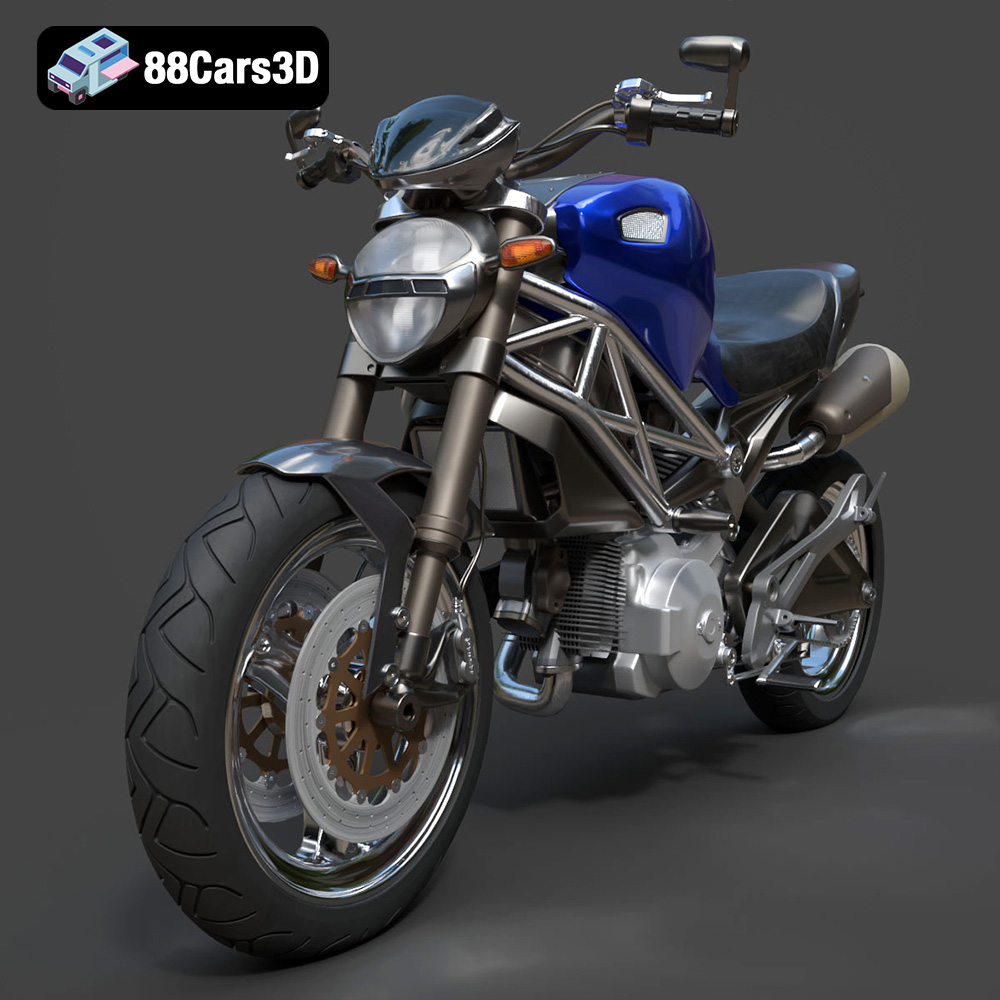
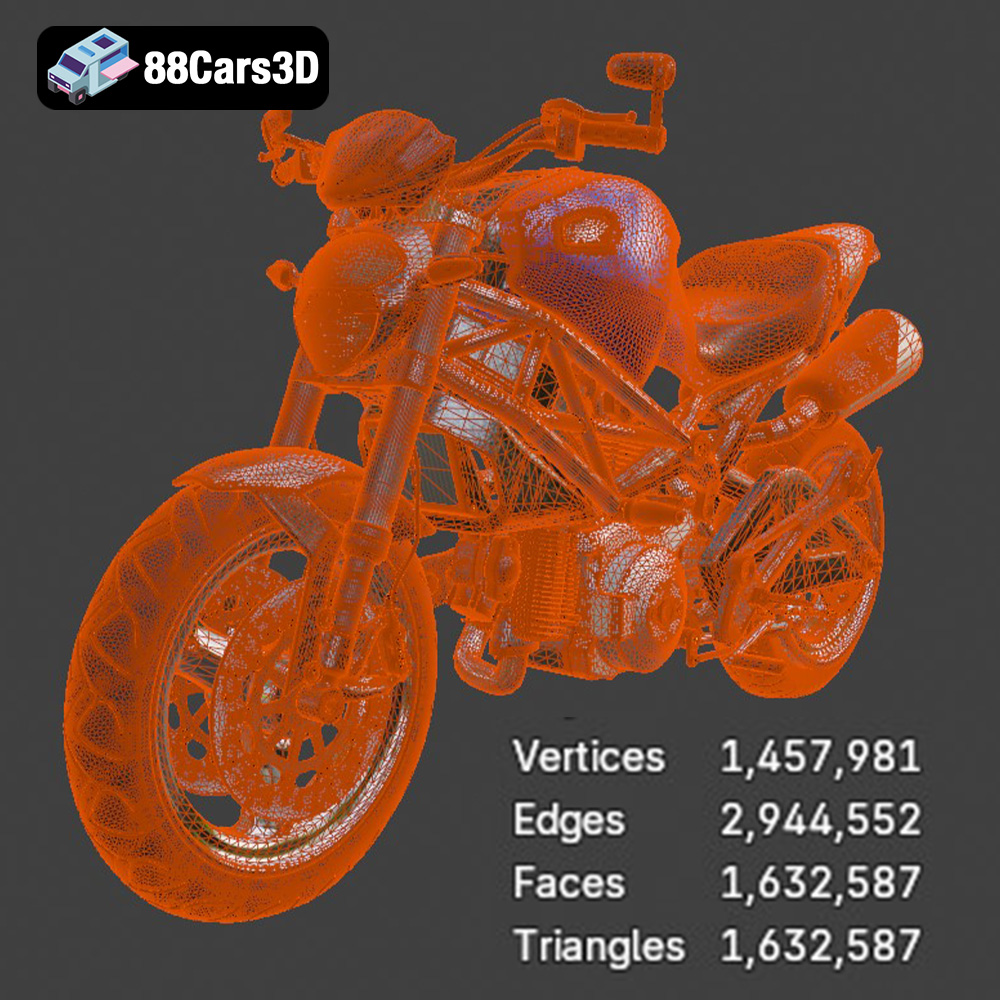
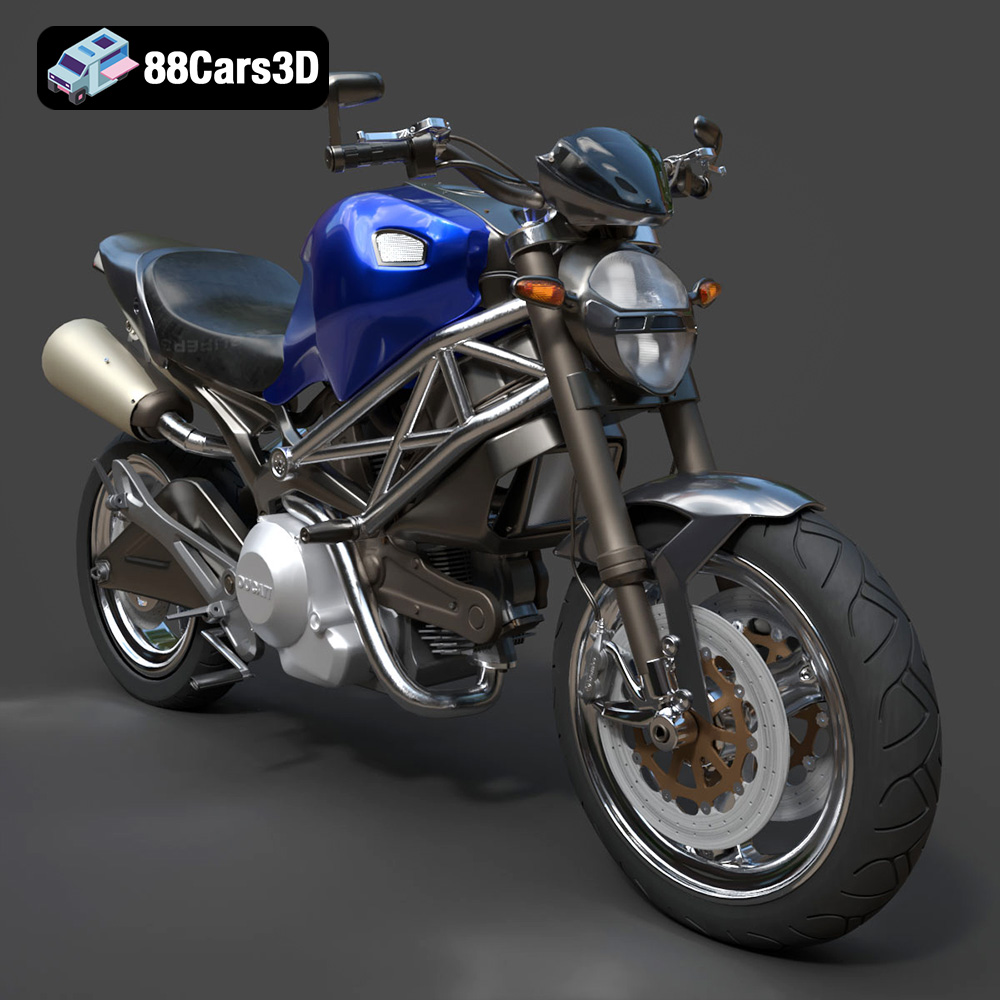
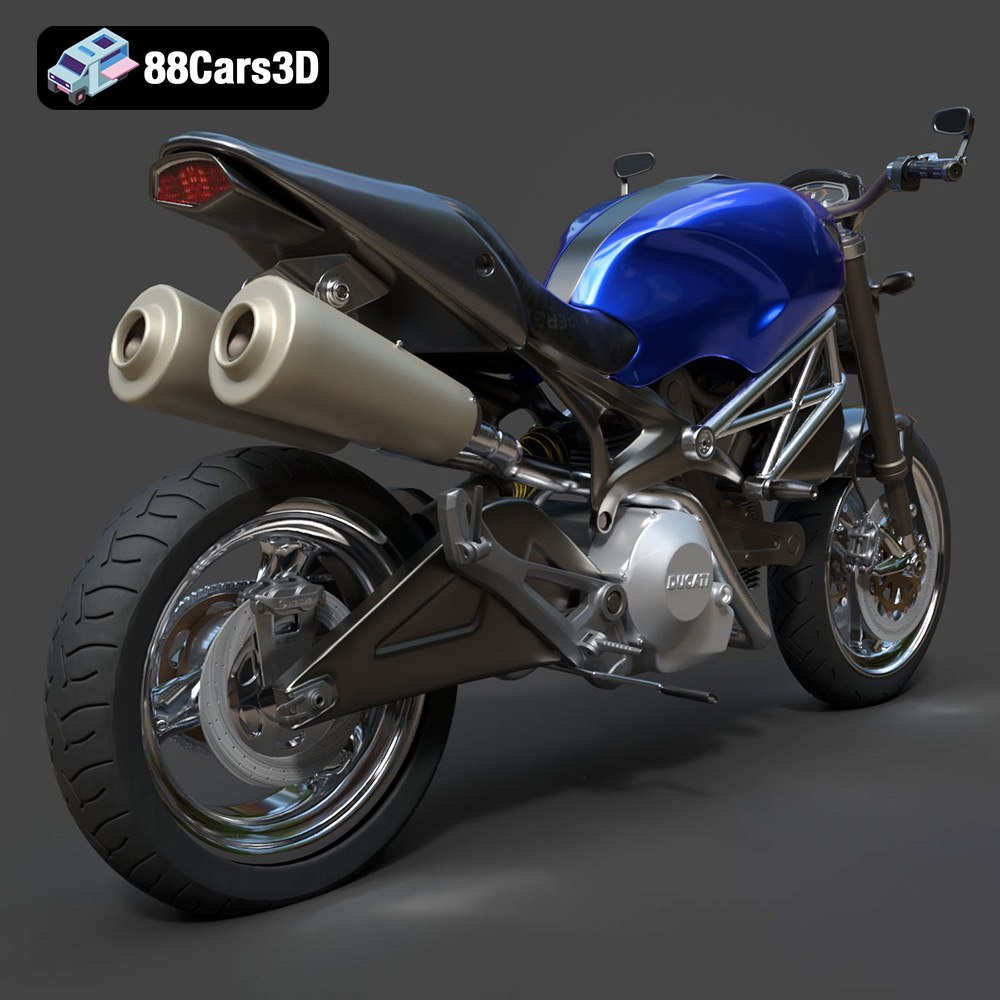
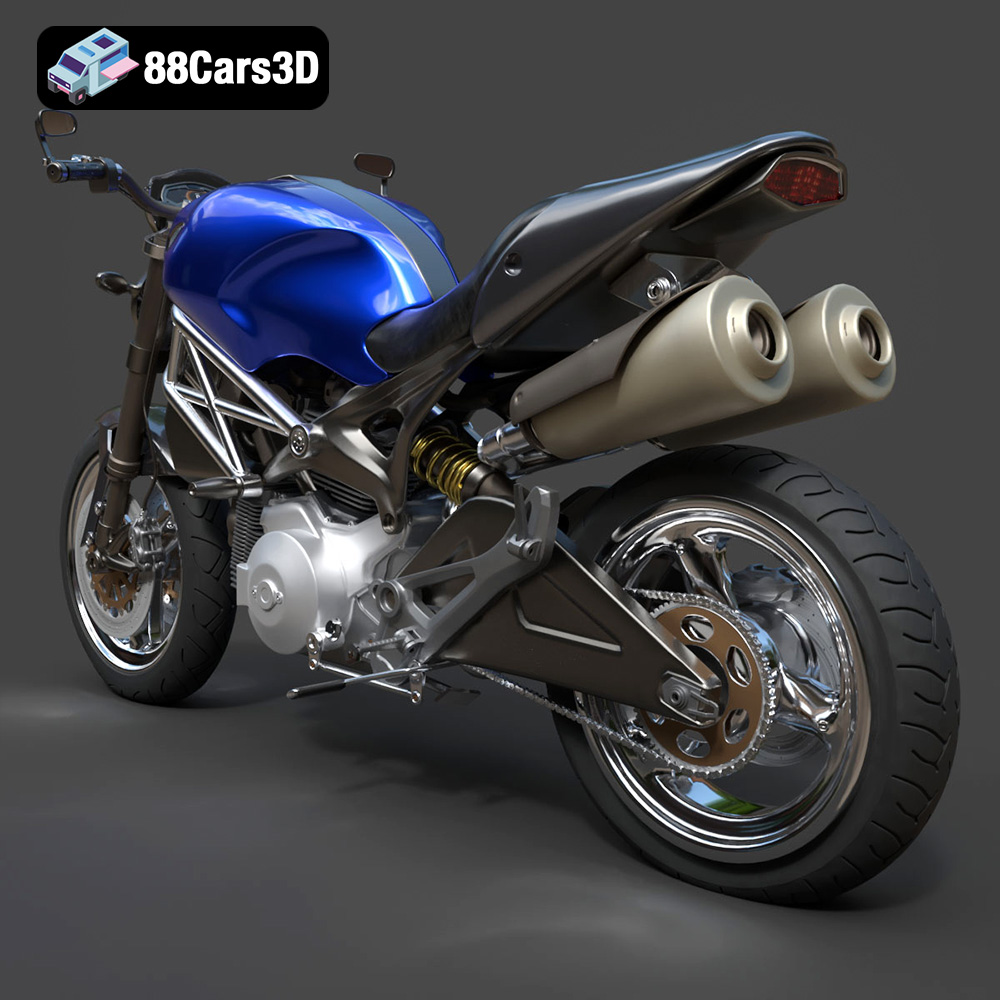
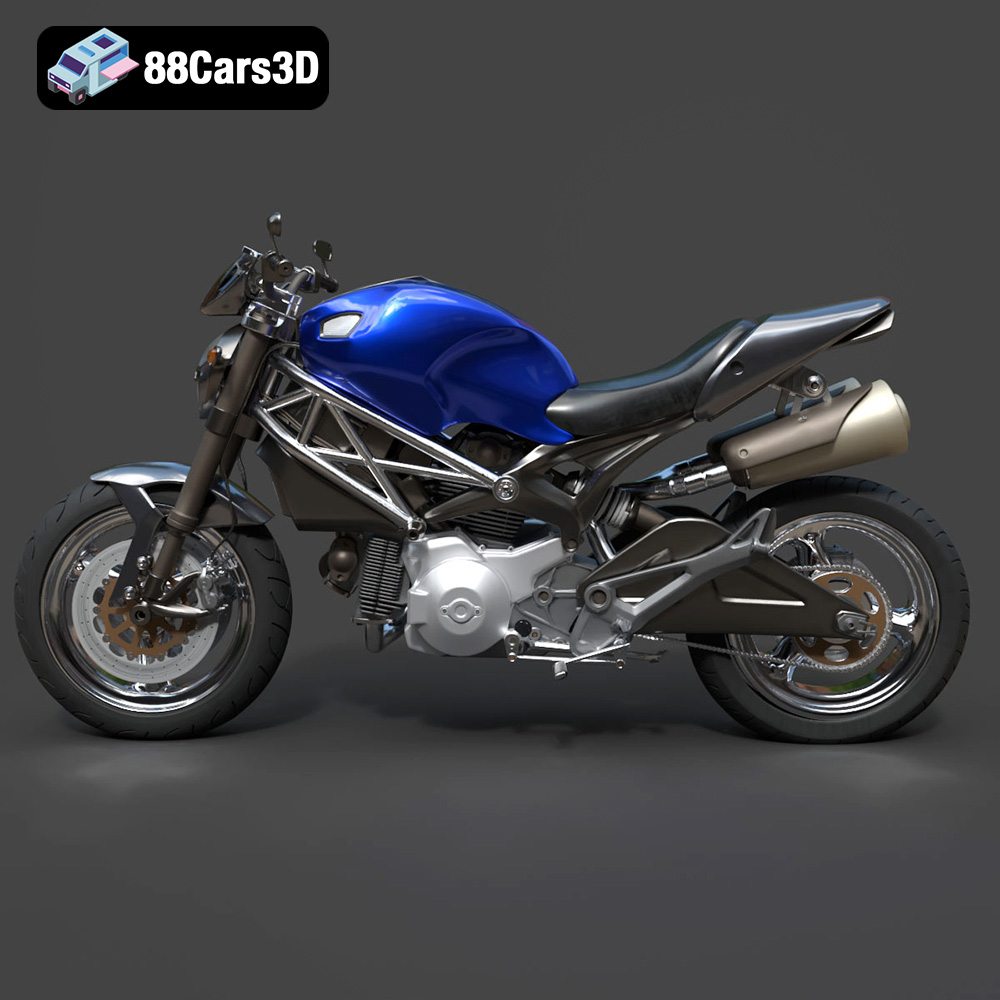
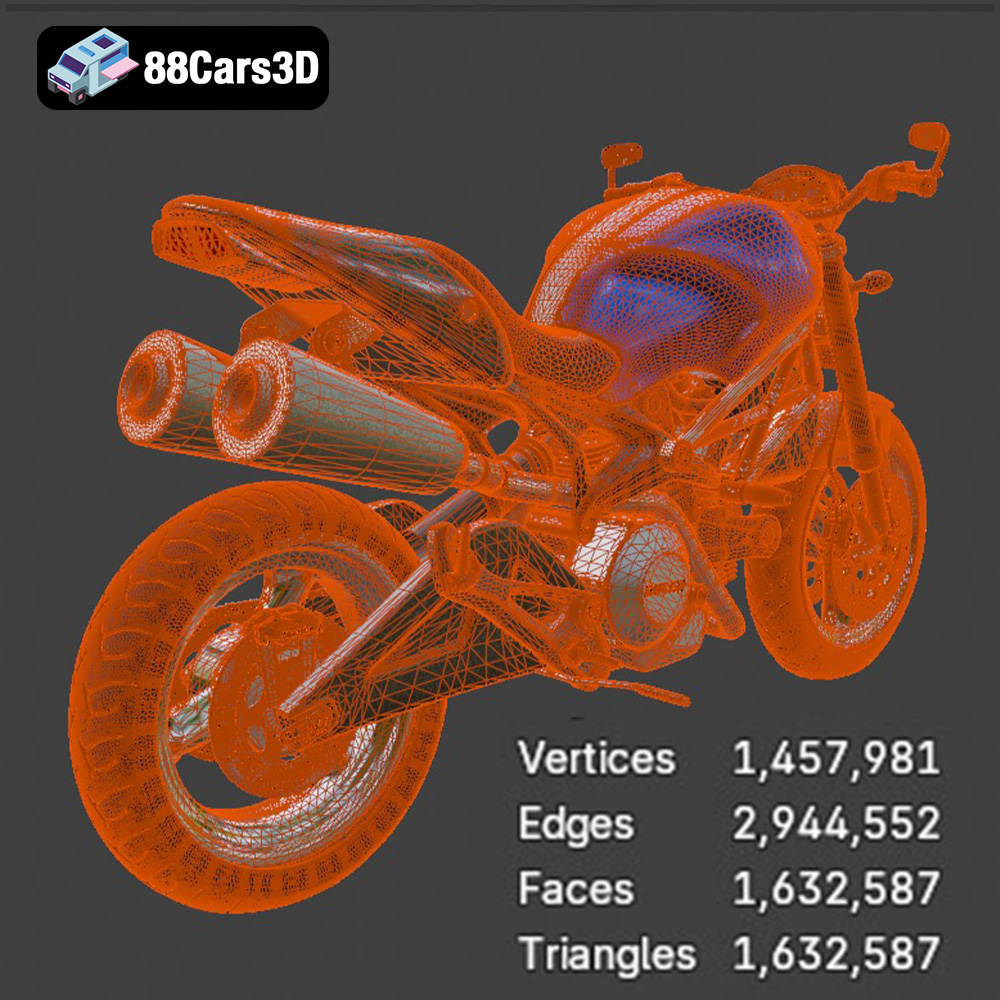
Among the pantheon of iconic motorcycles, the Ducati Monster 696 2008 stands out as a true legend. With its aggressive streetfighter stance, exposed tubular trellis frame, and signature L-twin engine, it’s a masterpiece of Italian engineering and design. Capturing such intricate detail in a digital form requires meticulous craftsmanship and technical expertise. This is precisely what a premium 3D model, such as the Ducati Monster 696 2008 3D Model available at 88cars3d.com, delivers. Boasting an impressive 1,632,587 triangles, it provides uncompromising visual fidelity for close-up rendering while maintaining optimized topology for next-generation game engines, AR/VR applications, and high-end animations. This article delves into the technical facets of leveraging such high-quality 3D car models, exploring workflows, applications, and the essential considerations that underpin professional 3D content creation.
The choice of file format is often as critical as the model itself, dictating compatibility, feature retention, and the intended use case. High-quality 3D assets, like the Ducati Monster 696 2008 3D Model, are typically offered in multiple formats to cater to diverse professional workflows. Understanding each format’s strengths and limitations is key to a seamless production pipeline.
The `.blend` format is native to Blender, a powerful open-source 3D creation suite. When you download a `.blend` file, you receive the complete Blender scene, including the model’s geometry, materials, textures, lighting, camera setups, and even animation data. This format is ideal for users working entirely within the Blender ecosystem, providing full editability and access to all parameters used during the model’s creation. For artists looking to dissect the Ducati Monster 696 3D model, modify its components, or create custom animations, the `.blend` file offers the most comprehensive starting point. It’s excellent for further detailing, re-texturing, or integrating into larger Blender-based projects.
`.fbx` (Filmbox) is arguably the most widely adopted proprietary 3D interchange format developed by Autodesk. It excels at transferring 3D data between different software applications like 3ds Max, Maya, Cinema 4D, Blender, Unreal Engine, and Unity. `.fbx` supports geometry, materials, textures (often embedded or referenced), animations, skeletons, and blend shapes. Its robust support for animation and scene data makes it the go-to format for real-time pipelines, game development, and complex animated sequences. For integrating the Ducati Monster 696 into a game engine, `.fbx` is typically the preferred choice due to its reliable handling of hierarchies, pivots, and animation data, ensuring that separate wheels, suspension, and steering components retain their proper pivot setups.
The `.obj` (Wavefront Object) format is a universal standard, known for its simplicity and wide compatibility across almost all 3D software. It primarily stores geometry (vertices, normals, texture coordinates, and faces) and can reference external `.mtl` (material library) files for basic material properties and texture paths. While `.obj` doesn’t typically support animation or complex scene hierarchies as robustly as `.fbx`, its lightweight nature and ubiquitous support make it excellent for static model transfers and archival purposes. If you need to import the Ducati Monster 696 into a niche software or require a clean mesh for sculpting or re-topology, `.obj` is a reliable choice.
`.glb` (GL Transmission Format Binary) is a relatively newer format, optimized for efficient loading and rendering of 3D scenes and models on the web and in XR (Augmented Reality/Virtual Reality) applications. It’s a self-contained binary file that includes geometry, materials, textures, and animation, making it incredibly portable. `.glb` is becoming the standard for virtual showrooms, AR configurators, and mobile AR experiences, allowing users to interact with high-quality models like the Ducati Monster 696 directly in their web browsers or on their mobile devices without complex plugins.
`.stl` (STereoLithography) is the most common file format for 3D printing. It represents a 3D model as a series of connected triangles, describing only the surface geometry of an object without color, texture, or other CAD attributes. While simple, its universality makes it the standard for transferring models to 3D printers. The Ducati Monster 696, with its intricate details, can be converted to `.stl` for hobbyists looking to 3D print scale models, requiring careful consideration of scale, layer height, and support structures, especially for delicate parts like handlebars and exhaust pipes.
`.ply` (Polygon File Format or Stanford Triangle Format) is a file format for storing 3D data, particularly from 3D scanners. It can store a wider range of properties than `.obj` or `.stl`, including color, transparency, and sometimes even a confidence measure for each point or polygon. `.ply` is often used in scientific, engineering, and reverse engineering contexts where precision and a richer dataset are important. While less common for general asset distribution, its inclusion for the Ducati Monster 696 suggests a high-fidelity scan or construction, suitable for detailed analysis or specific CAD workflows.
The `.unreal` format, often referring to an asset package or a specific import pipeline within Unreal Engine, signifies an asset specifically prepared or exported for direct use within the Unreal Engine ecosystem. This might involve optimized materials, collision meshes, LODs (Levels of Detail), and blueprint setups pre-configured for real-time environments. For game developers, having a Ducati Monster 696 model pre-packaged for Unreal Engine can drastically reduce integration time and ensure optimal performance and visual quality straight out of the box.
`.max` is the native file format for Autodesk 3ds Max, a powerful software widely used for architectural visualization, game development, and animation. Similar to `.blend`, a `.max` file contains the complete scene data, including geometry, modifiers, materials, lighting, cameras, and animation. Professionals working with 3ds Max will find this format invaluable for detailed editing, applying complex rigging, or leveraging 3ds Max’s robust rendering capabilities. The availability of the Ducati Monster 696 in `.max` format means artists can immediately dive into advanced rendering setups or fine-tune specific components using the software’s extensive toolset.
Automotive rendering is a specialized discipline that combines technical precision with artistic vision to create hyper-realistic images and animations of vehicles. For a model as iconic as the Ducati Monster 696, the goal is often to evoke the emotion and power of the real motorcycle.
Achieving photorealism starts with the model itself – its accurate geometry, proportions, and detailed components are paramount. The Ducati Monster 696 3D Model, with its “accurate Ducati Monster 696 tubular steel trellis frame geometry and proportions” and “detailed 696cc L-twin Desmodromic engine block,” provides an exceptional foundation. However, realism truly shines through in the materials and lighting. Physically Based Rendering (PBR) materials, which simulate how light interacts with surfaces in the real world, are crucial. This involves carefully crafted textures for paint (gloss, metallic flakes), rubber (tires, grips), chrome, carbon fiber, leather (saddle), and glass (headlight). Each material needs precise roughness, metallic, normal, and displacement maps. Lighting environments, such as High Dynamic Range Images (HDRIs) or meticulously placed virtual studio lights, are used to simulate real-world conditions, accentuating curves, reflections, and shadows, giving the Ducati a tangible presence.
For artists utilizing 3ds Max, the workflow for rendering the Ducati Monster 696 would typically involve importing the `.max` file. The next steps would be to verify the model’s scale and pivot points (which are “real-world scale accuracy” and “proper pivot setup” in this model), then proceed to material assignment. Using rendering engines like V-Ray or Corona Renderer, artists would create PBR materials for the various parts: a multi-layered shader for the tank paint, realistic rubber for the tires, brushed metal for the frame, and a complex engine material to capture the cooling fins and casings. Lighting would involve a combination of an HDRI for global illumination and a few targeted area lights to highlight specific details, such as the engine block or the iconic headlight. Post-production in software like Adobe Photoshop or After Effects is then used to add final touches like color grading, depth of field, and lens effects, pushing the image towards photographic perfection.
Imagine a marketing campaign for a luxury motorcycle brand. Instead of expensive physical photoshoots, a premium 3D model of the Ducati Monster 696 could be used to generate a series of stunning lifestyle visualizations. The bike could be placed in various virtual environments – a sleek urban street, a winding mountain road, or even a futuristic garage – all without ever leaving the studio. Different color schemes (“Change body/tank colors”) or material finishes (“Adjust material finishes”) could be easily swapped and rendered, providing a wide array of marketing assets efficiently. This flexibility significantly reduces production costs and timelines, making high-quality 3D car models invaluable for advertising and branding, as highlighted by the “Excellent for brand campaigns, lifestyle scenes, and studio lighting setups” application.
In game development, the challenge lies in delivering breathtaking visuals while maintaining smooth, high-frame-rate performance. High-quality game assets like the Ducati Monster 696 3D Model are specifically engineered to meet this demanding balance.
A truly “game-ready” asset is one that looks fantastic without crippling performance. The Ducati Monster 696 3D Model strikes this balance expertly, with “1,632,587 triangles” – a high polycount for visual fidelity, yet “thoughtfully structured and optimized for next-generation modern game engines.” This optimization often involves clean topology, efficient UV mapping (essential for texture application), and a strategic use of Normal maps to simulate fine details without adding excessive geometry. Proper LODs (Levels of Detail) would also be implemented, allowing the engine to swap lower-polygon versions of the model when it’s further from the camera, further enhancing performance. Additionally, accurate collision meshes are crucial for realistic physics and player interaction within the game world.
For game developers, integrating such a detailed asset into engines like Unreal Engine or Unity is a streamlined process thanks to formats like `.fbx` and the specialized `.unreal` format. After importing the `.fbx` file, developers would set up materials using PBR workflows native to the engine, connecting the various texture maps (albedo, normal, roughness, metallic, ambient occlusion). Collision volumes would be generated or assigned, and the “proper pivot setup for steering, wheel rotation, and suspension travel” would be leveraged to implement realistic vehicle physics. For a motorcycle racing game, the separate wheels, suspension, and steering components are critical for animating turns, jumps, and leaning dynamics accurately. The “optimized geometry for first-person POV in gaming” further ensures an immersive player experience.
Imagine the Ducati Monster 696 3D Model roaring through a meticulously crafted virtual environment. Its “intricately modeled three-spoke alloy wheels with realistic high-performance street tires” and “distinctive round triple-parabola headlight” would be instantly recognizable. In a next-gen motorcycle racing game, players could customize “body/tank colors,” apply different “tire textures,” and experience the thrill of riding this iconic machine. The optimized polycount ensures that multiple motorcycles can populate a scene without significant performance drops, making it ideal for competitive multiplayer experiences or AI-driven traffic. Furthermore, its detail allows for close-up inspection in virtual garages or replay cameras, truly showcasing the artistry of the model.
Augmented Reality (AR) and Virtual Reality (VR) are revolutionizing how consumers interact with products, offering highly immersive and interactive experiences. High-fidelity 3D car models are at the heart of these innovations.
VR technology allows for the creation of virtual showrooms where potential buyers can explore a vehicle in exquisite detail from any angle. The Ducati Monster 696 3D Model is “perfect for immersive virtual showrooms” thanks to its hyper-realistic detailing. Users can walk around the motorcycle, zoom in on the “detailed 696cc L-twin Desmodromic engine block,” and even sit on the “ergonomically contoured two-up sport saddle.” Interactive configurators, leveraging the model’s “customization options” like changing colors or adjusting material finishes, allow users to personalize the bike in real-time. This level of interaction enhances engagement and provides a powerful pre-purchase experience, blurring the lines between digital and physical.
The `.glb` file format is a game-changer for web-based AR/VR experiences. It allows for the seamless display of 3D models directly in web browsers or embedded within websites, without the need for specialized applications. Imagine visiting 88cars3d.com and being able to instantly view the Ducati Monster 696 3D model in 3D directly on the product page, or even project it into your living room using a smartphone’s AR capabilities. This accessibility democratizes high-quality 3D content, making it easy for brands to showcase products globally. For the Ducati Monster 696, its availability in `.glb` ensures it’s ready for next-generation web platforms and mobile AR experiences, reaching a broader audience.
Mobile AR applications, using smartphone cameras, can overlay 3D models onto the real world. A customer could virtually park the Ducati Monster 696 in their driveway, compare its size, or simply admire its design in a real-world context. This creates a highly engaging and personalized brand interaction. Developers can use the optimized Ducati Monster 696 3D Model to build mobile apps where users can tap on different parts of the motorcycle to reveal specifications, hear engine sounds, or even cycle through animations, fostering a deeper connection with the product before a physical purchase.
3D printing offers a tangible connection to digital assets, allowing enthusiasts and professionals to bring virtual models into the physical realm. The Ducati Monster 696 3D Model provides an excellent foundation for this.
While a high-fidelity rendering model often has millions of polygons, a model destined for 3D printing, especially in `.stl` format, needs to be watertight (no holes or gaps in the mesh) and manifold (every edge connected to exactly two faces). The high detail of the Ducati Monster 696 means that for 3D printing, careful consideration of scale is necessary. The recommended scales of “1:12 / 1:18 / 1:24” are common for hobbyists, providing a good balance between size and printable detail. It’s crucial to ensure that fine details, like the “intricate engine block cooling fins” or the “separate wheels, suspension, and steering components,” are robust enough to be physically printed without breaking.
For 3D printing the Ducati Monster 696, the choice between FDM (Fused Deposition Modeling) and resin (SLA/DLP) printing is significant. Resin printing is “recommended for fine details” due to its ability to achieve much thinner layers (“0.04–0.12 mm layer height”) and produce smoother surfaces, perfectly capturing the curves of the “sculpted muscular fuel tank” and the intricate details of the engine. FDM, while more accessible, might struggle with the smallest elements. Both methods require “supports” for overhangs, especially for delicate parts like “exhaust, mirrors, handlebars.” “Print orientation” is also key: printing the frame at an angle improves structural integrity, while wheels are best printed separately for cleaner results.
Once printed, the physical Ducati Monster 696 model enters the post-processing phase. This involves removing supports, sanding to smooth out layer lines, and applying primer to create an even surface for painting. For a truly authentic replica, hobbyists would meticulously paint the model using “authentic factory colors with metallic finishes” for the bodywork, matte blacks for the frame, and chrome or silver for engine components and exhaust pipes. This hands-on process allows enthusiasts to connect with the digital asset on a deeper, tactile level, culminating in a beautiful physical representation of the iconic motorcycle.
From captivating cinematic renderings to immersive real-time game experiences and tangible 3D prints, high-quality 3D car models serve as the indispensable backbone of modern digital content creation. The journey of transforming raw geometric data into a vibrant, interactive, or physical representation is a complex yet rewarding one, demanding technical acumen, artistic vision, and the right tools.
The Ducati Monster 696 2008 3D Model exemplifies the pinnacle of this craftsmanship. Its meticulous detail, optimized topology, and versatile file format support (.blend, .fbx, .obj, .glb, .stl, .ply, .unreal, .max) make it an invaluable asset for professionals across various industries. Whether you’re a game developer crafting the next big racing title, an automotive renderer creating stunning visualizations, an AR/VR designer building immersive configurators, or a hobbyist bringing your favorite motorcycle to life via 3D printing, this model provides an exceptional foundation. Investing in such a premium 3D model from a trusted source like 88cars3d.com ensures that your projects begin with quality, allowing you to focus on innovation and creativity.
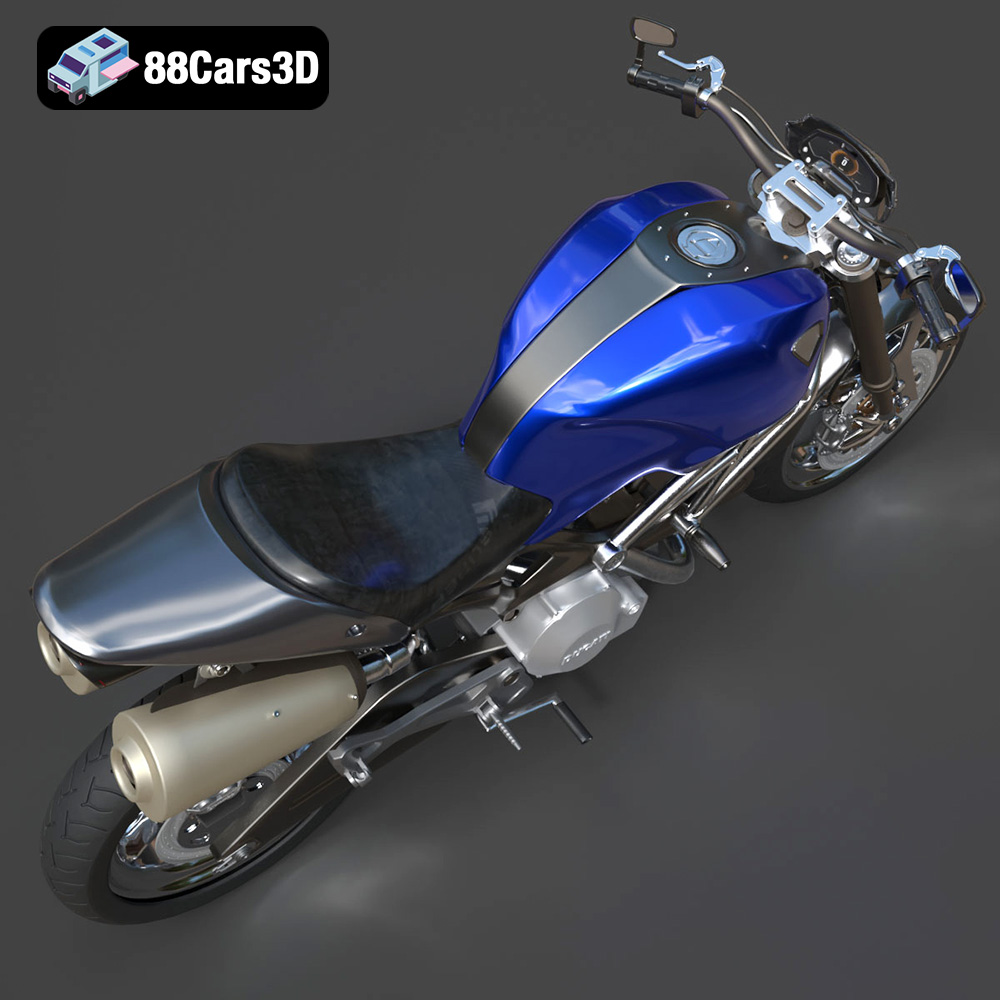
The Ducati Monster 696 2008 revolutionized the naked bike segment with its aggressive streetfighter stance, unmistakable Italian styling, and pure riding dynamics. Born from a legendary lineage, this motorcycle strips away the unnecessary, showcasing its iconic exposed tubular steel trellis frame, sculpted muscular fuel tank, and signature L-twin Desmodromic engine. The dual under-seat exhausts and minimalist triple-parabola headlight assembly add to its brutal yet elegant visual appeal, making it a true masterpiece of two-wheeled engineering. This premium 3D model boasts an impressive 1,632,587 triangles, delivering uncompromising visual fidelity and hyper-realistic detailing perfect for close-up rendering. Despite the rich detail, the topology is thoughtfully structured and optimized for next-generation modern game engines, VR/AR applications, and high-end animations. From the intricate engine block cooling fins to the aggressive street posture, every component has been modeled to match the real-world motorcycle with incredible precision. Perfect for next-gen motorcycle racing games, high-end visualization projects, interactive VR garage simulators, and cinematic lifestyle animations.
$80.00
.2008
.blend
.ducati
.fbx
.glb
.max
.obj
.ply
.rendering
.stl
.streetfighter
.unreal
game asset
game-ready
monster-696
motorcycle-3d-model
naked-bike
optimized
VR/AR