Get 20% OFF All Premium 3D & STL Models!

The world of 3D visualization is a dynamic realm where creativity meets technical precision. From breathtaking automotive marketing campaigns to immersive next-generation video games, high-quality 3D car models are the bedrock of realistic and engaging digital experiences. These assets are more than just virtual representations; they are intricate digital sculptures, meticulously crafted to replicate every curve, reflection, and mechanical detail of their real-world counterparts. The demand for increasingly photorealistic and performant 3D car models continues to grow, pushing artists and developers to seek out assets that can truly elevate their projects.
At the forefront of this digital evolution stands models like the Mercedes-Benz AMG CLA 35 Shooting Brake 3D Model, a prime example of engineering and design excellence translated into a versatile digital asset. This particular model captures the aggressive AMG styling and practical elegance of the actual vehicle, making it an invaluable tool for a wide array of professional applications. Whether you’re an automotive designer visualizing a new concept, a game developer crafting an open-world racing title, or an architect integrating vehicles into a realistic street scene, the quality of your 3D car models directly impacts the final output. The digital landscape is always evolving, and having access to expertly crafted assets can significantly streamline workflows and unlock new creative possibilities.
When working with 3D models, especially complex automotive designs, understanding the various file formats available is crucial. Each format serves a specific purpose, offering unique advantages in terms of compatibility, data preservation, and application suitability. Choosing the correct format ensures smooth integration into your workflow and optimizes the model for its intended use, whether that’s rendering, real-time game engines, or even 3D printing. The Mercedes-Benz AMG CLA 35 Shooting Brake 3D Model from 88cars3d.com, for instance, comes in a comprehensive suite of formats, catering to virtually any professional pipeline.
The `.blend` format is the native file type for Blender, a powerful and increasingly popular open-source 3D creation suite. A `.blend` file is far more than just a mesh; it’s a complete scene package. It encapsulates not only the geometric data but also materials, textures, lighting setups, camera positions, animations, physics simulations, and even custom scripts. This makes it an ideal choice for artists who primarily work within Blender, providing full editability and control over every aspect of the model. For the Mercedes-Benz AMG CLA 35 Shooting Brake 3D Model, the `.blend` file offers unparalleled flexibility for customization, allowing users to easily modify colors, materials, and even geometry within a familiar environment. It’s perfect for detailed renders or preparing assets for export to other platforms with all modifications preserved.
`.fbx` (Filmbox) is arguably the most widely adopted proprietary 3D interchange format, developed by Autodesk. Its strength lies in its robust support for virtually all types of 3D data, including geometry, materials, textures, animations (skeletal and blend shapes), cameras, and lights. This makes `.fbx` indispensable for pipelines involving multiple software packages, such as transferring models between 3ds Max, Maya, Blender, ZBrush, and real-time engines like Unreal Engine and Unity. For game development, `.fbx` is the de facto standard due to its excellent support for animation and skeletal rigs, crucial for interactive vehicle physics and movement. The Mercedes-Benz AMG CLA 35 Shooting Brake 3D Model in `.fbx` format is perfectly primed for integration into any modern game development or animation pipeline, ensuring all its intricate details and animation-ready components transfer seamlessly.
The `.obj` (Wavefront OBJ) format is a widely supported, simple, and universal 3D data format. It primarily stores geometric data (vertices, faces, normals, UV coordinates) and can reference external `.mtl` (material template library) files for material properties. While it lacks support for animation or advanced scene data, its simplicity and widespread compatibility make it an excellent choice for basic mesh transfer between almost any 3D software. When you need a clean mesh with UVs, without the overhead of scene data, `.obj` is a reliable workhorse. It’s often used as a fallback or for models intended purely for static rendering or foundational sculpting.
`.glb` is the binary version of the glTF (Graphics Language Transmission Format) format, which is rapidly gaining traction as the “JPEG for 3D.” It’s designed for efficient transmission and loading of 3D scenes and models in real-time applications, particularly within web browsers, augmented reality (AR), and virtual reality (VR) environments. A `.glb` file bundles all assets (geometry, materials, textures, animations) into a single, self-contained file, minimizing HTTP requests and optimizing performance. For showcasing the Mercedes-Benz AMG CLA 35 Shooting Brake in an interactive web configurator or an AR experience, the `.glb` format is the superior choice, delivering high visual quality with exceptional loading speed.
`.stl` (stereolithography) is the most common file format used for 3D printing. It represents a 3D object as a series of connected triangles, describing only the surface geometry without any color, texture, or material information. The key requirement for an `.stl` model is that it must be “manifold,” meaning it has a perfectly enclosed volume suitable for manufacturing. The Mercedes-Benz AMG CLA 35 Shooting Brake 3D Model, convertible to `.stl`, is ready for hobbyists or professionals looking to bring the digital car into the physical world through 3D printing, enabling the creation of detailed display models or prototypes.
`.ply` (Polygon File Format, or Stanford Triangle Format) is another format used to store 3D data, often originating from 3D scanners. It can store a wider range of properties than `.obj` or `.stl`, including color, transparency, normals, texture coordinates, and reliability information for each vertex and face. It’s particularly useful for high-precision models, scientific visualization, or CAD/CAM applications where data integrity and detailed vertex attributes are paramount.
While not a standard interchangeable file format in the same vein as `.fbx` or `.obj`, `.unreal` (or more accurately, Unreal Engine-specific asset structure) refers to assets that have been pre-optimized, configured, and packaged for direct import and use within Unreal Engine. This might involve `.fbx` files processed with specific material setups, collision meshes, LODs (Levels of Detail), and blueprints. The Mercedes-Benz AMG CLA 35 Shooting Brake 3D Model being available as “engine-ready” for Unreal implies that it arrives with much of the heavy lifting for real-time integration already done, significantly accelerating development for game artists and visualization specialists.
The `.max` format is the native file format for Autodesk 3ds Max, one of the leading software packages for 3D modeling, animation, and rendering in the design visualization and entertainment industries. Like `.blend` files, `.max` files save the entire scene, including geometry, modifiers, materials, textures, lighting, cameras, animation data, and renderer-specific settings (e.g., V-Ray or Corona configurations). This provides maximum control and editability for users working within the 3ds Max ecosystem, allowing for complex scene setups, advanced rigging, and high-end cinematic rendering of models like the AMG CLA 35 Shooting Brake.
The Mercedes-Benz AMG CLA 35 Shooting Brake is a vehicle that commands attention, and its digital counterpart must live up to that standard. The 3D model available on 88cars3d.com is engineered to exceed expectations, providing an unparalleled level of detail and fidelity that is critical for professional projects. This isn’t just a basic shell; it’s a comprehensive digital twin designed for versatility and realism.
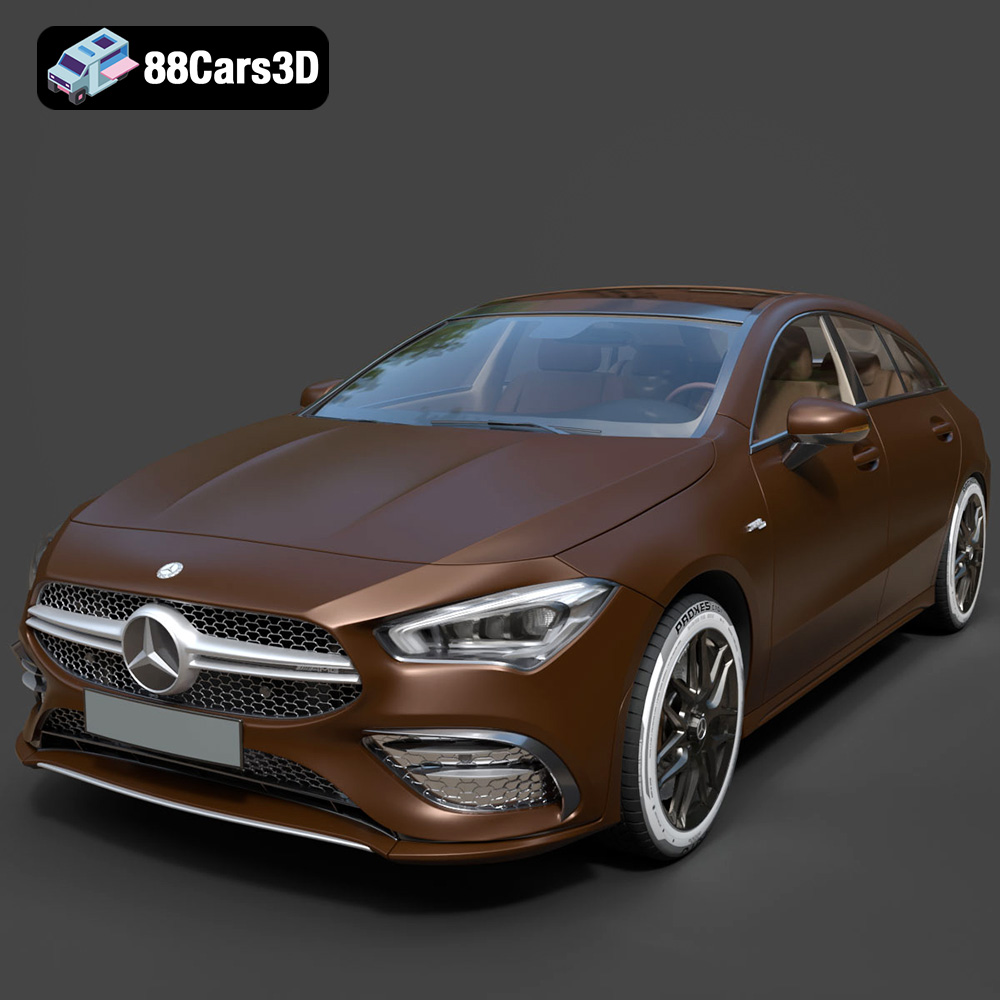
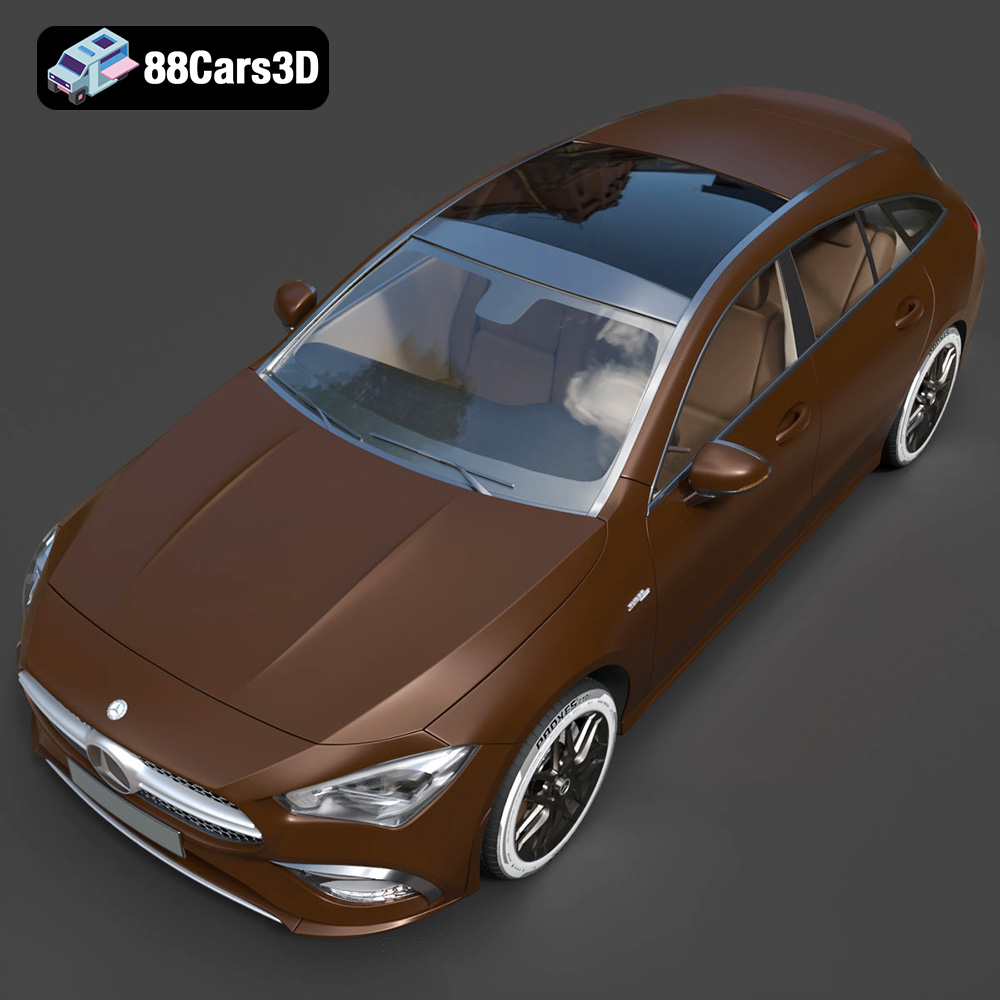
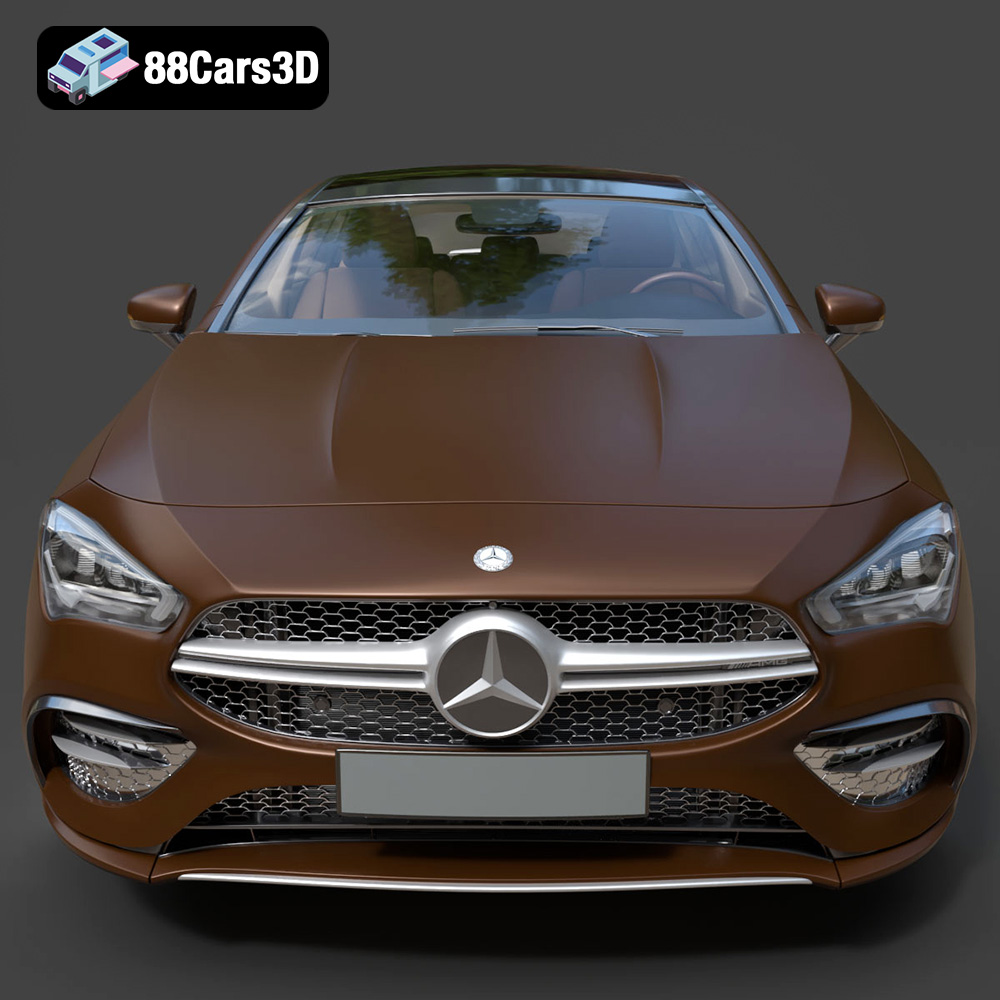
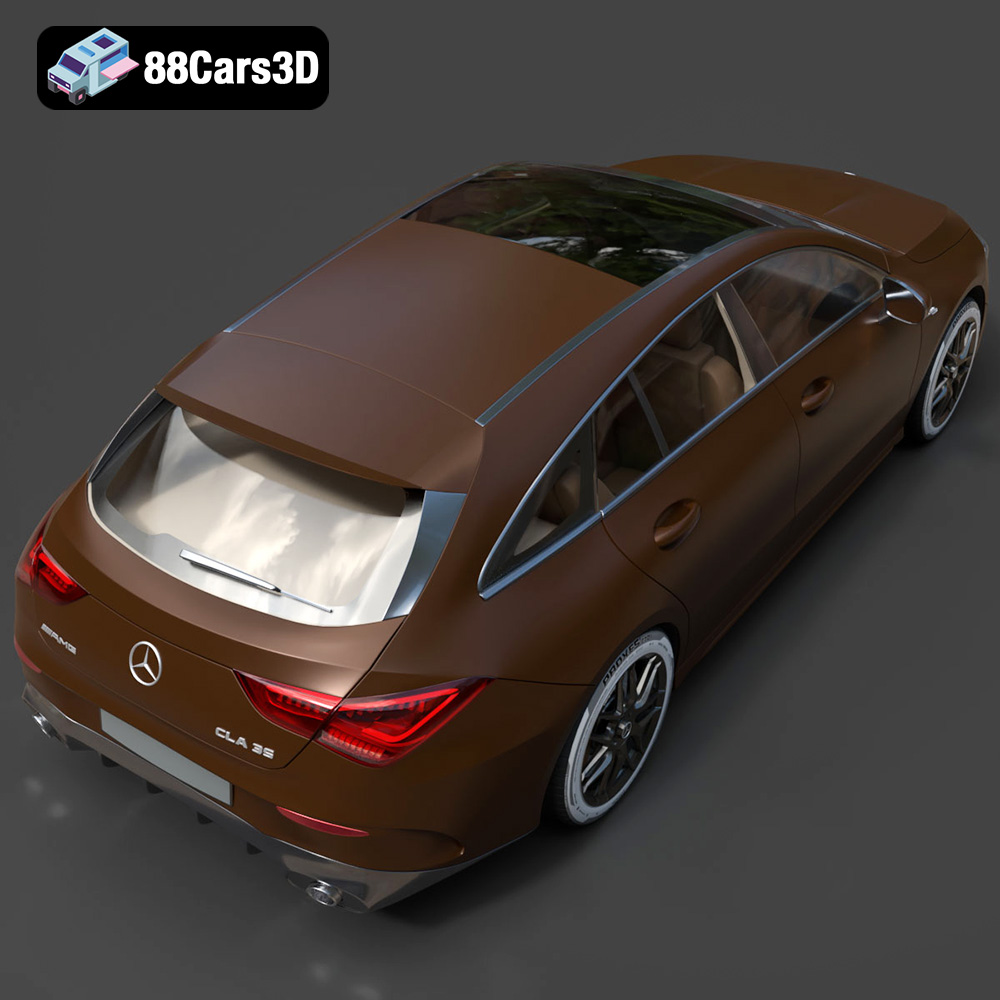
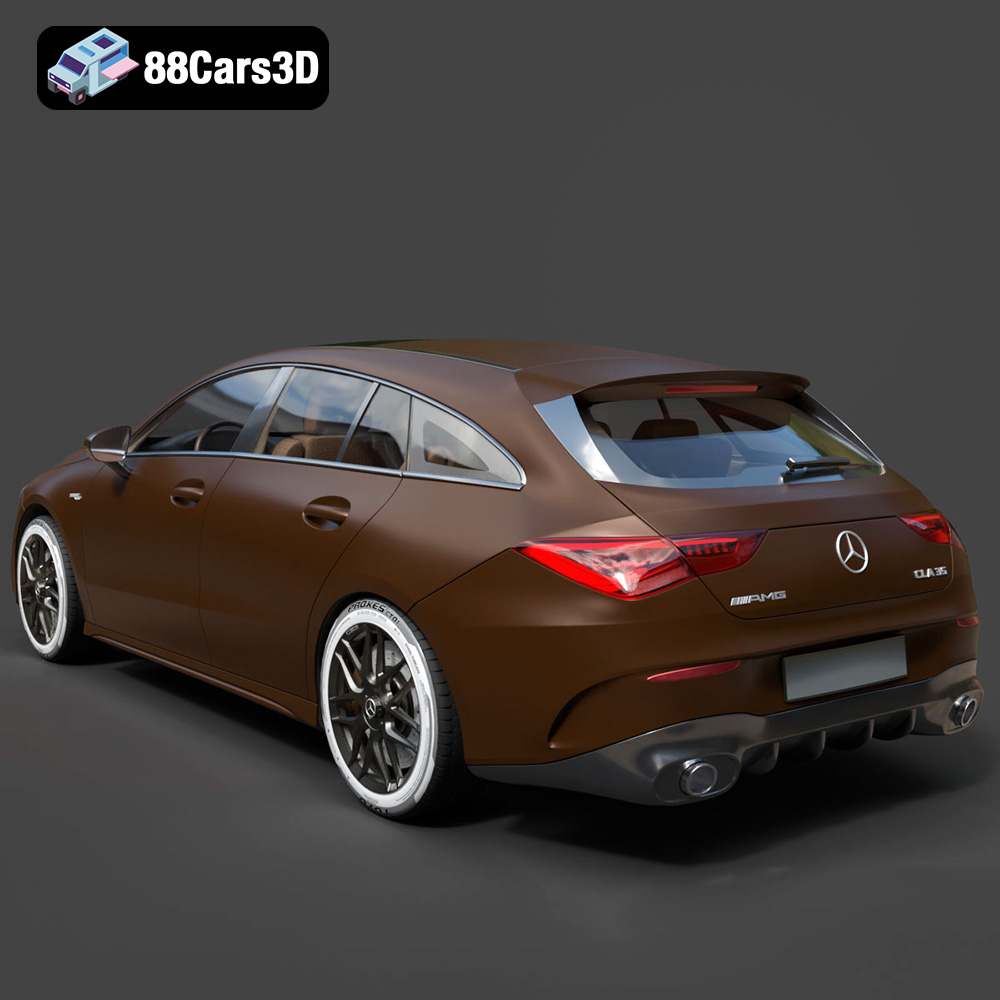
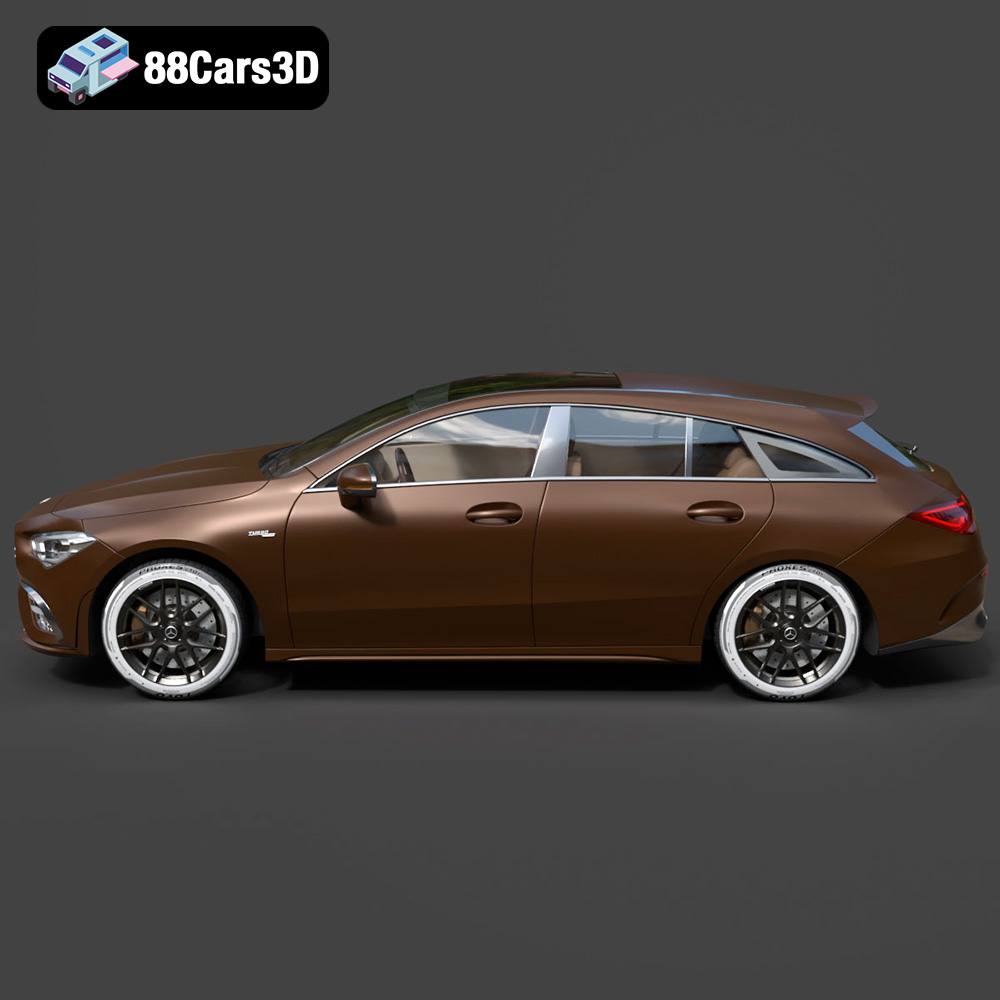
Every angle of this Mercedes-Benz AMG CLA 35 Shooting Brake 3D model speaks to meticulous craftsmanship. The signature AMG Panamericana-style grille, a hallmark of performance Mercedes-Benz vehicles, is accurately represented with its distinct vertical slats. The sporty front splitter and aggressive body lines flow seamlessly into the sweeping roofline, capturing the unique estate proportions of the Shooting Brake. High-fidelity LED High Performance headlamps and the distinct taillight signatures are precisely modeled, ready to glow realistically in any render. Crucially, the model includes multi-spoke AMG light-alloy wheels paired with realistic low-profile tires, alongside detailed sport suspension components and AMG-branded brake calipers – details often overlooked but essential for true authenticity. The dual round AMG exhaust system and muscular rear diffuser further complete the aggressive aesthetic, making this an ideal asset for close-up shots or dynamic action sequences in automotive rendering.
The interior of a car model is just as vital as the exterior, especially for first-person perspectives in games or virtual reality experiences. This model delivers an exceptionally detailed cockpit, starting with the sport-contoured AMG Performance seats, complete with intricate stitching details that reflect the luxury and sportiness of the real vehicle. The flat-bottomed Nappa leather AMG steering wheel, paddle shifters, and sport pedals are all accurately modeled, inviting the user to step inside. The highly detailed MBUX dual-screen digital instrument cluster and infotainment system are ready for texturing and lighting, offering a fully immersive experience. All interior controls, from switches to center console touchpads, are present, ensuring an optimized geometry for a truly convincing first-person POV in gaming or VR simulations.
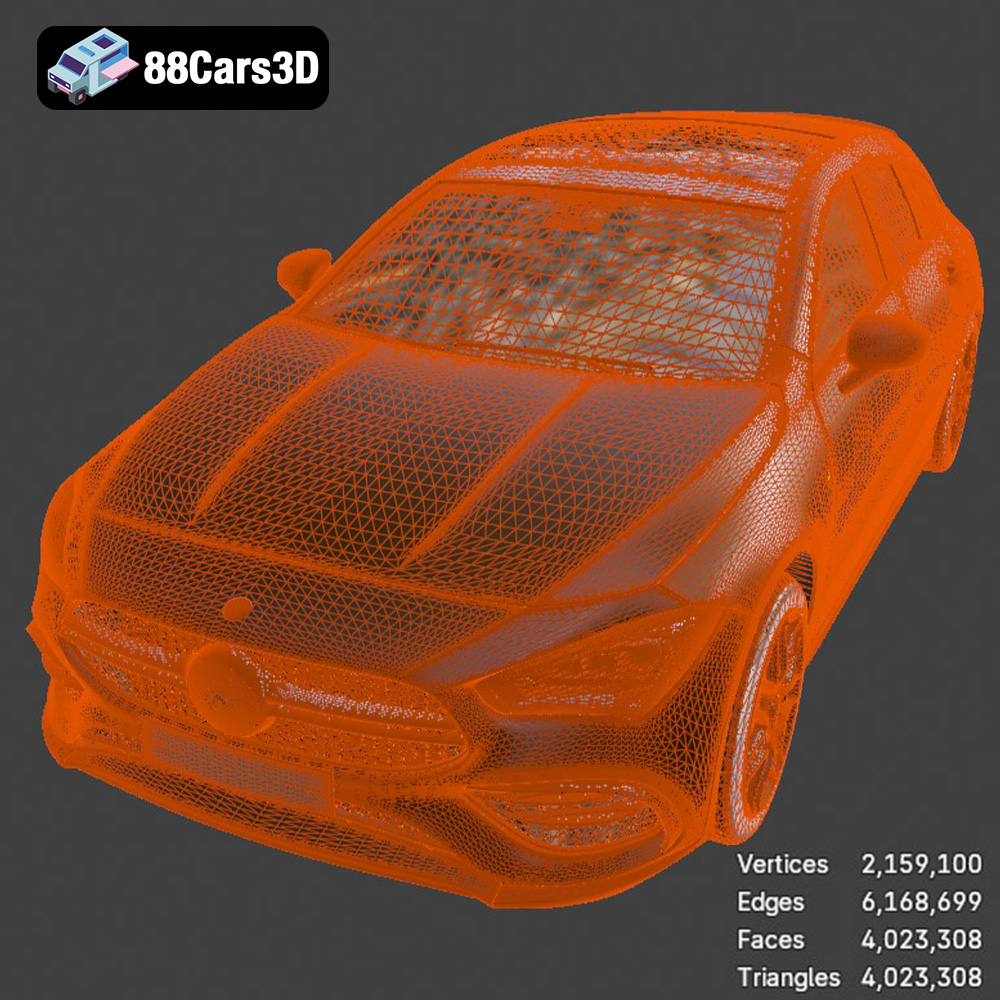
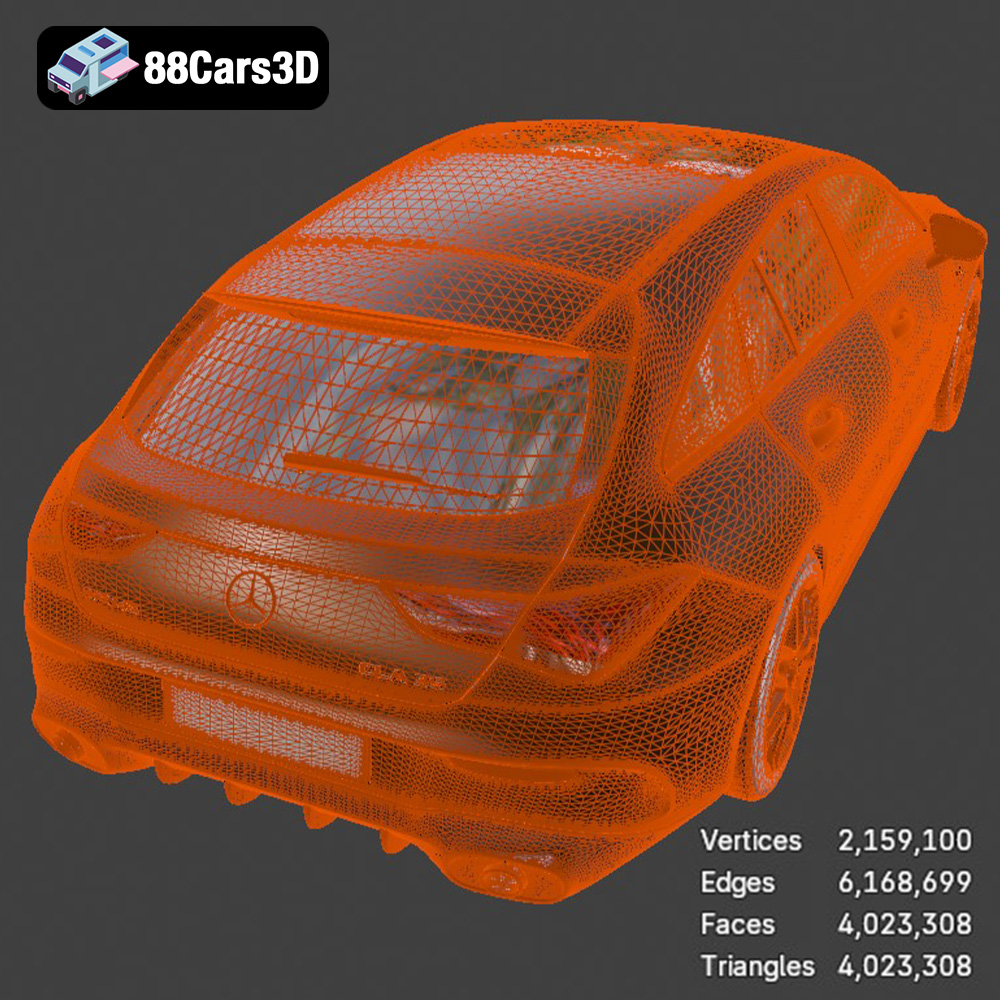
At the heart of this model’s versatility is its technical foundation. With a topology boasting 4,023,308 triangles, the Mercedes-Benz AMG CLA 35 Shooting Brake 3D Model achieves an unprecedented level of visual realism. While this count is high, it is strategically optimized to deliver maximum fidelity for high-end cinematic rendering while remaining scalable for modern real-time engines like Unreal and Unity. Real-world scale accuracy, based on the actual vehicle chassis, ensures that the model fits seamlessly into architectural visualizations or simulations without requiring tedious adjustments. Furthermore, the proper pivot setup for steering, wheel rotation, and suspension travel is a critical advantage, making the model game-ready for dynamic animations and interactive physics without extensive pre-rigging. This attention to technical detail significantly reduces development time and enhances the overall quality of any project.
Integrating a sophisticated 3D car model like the Mercedes-Benz AMG CLA 35 Shooting Brake into a professional workflow requires a nuanced understanding of various software packages and rendering methodologies. Whether your goal is photorealistic marketing visuals, an immersive game environment, or an interactive VR experience, this model is built to facilitate seamless integration.
For top-tier automotive rendering, 3ds Max remains an industry benchmark, especially when paired with powerful renderers like V-Ray or Corona. Importing the `.max` or `.fbx` version of the Mercedes-Benz AMG CLA 35 Shooting Brake into 3ds Max is the first step. The next involves setting up physically based rendering (PBR) materials. This means configuring diffuse, roughness, metallic, normal, and sometimes displacement maps for paint, glass, tires, and interior elements. Lighting is crucial; studio HDRIs (High Dynamic Range Images), backplates, and targeted area lights are used to mimic professional photography setups, bringing out the vehicle’s curves and reflections. Animation, from simple wheel spins to complex camera paths and suspension dynamics, is easily achievable thanks to the model’s pre-set pivot points. The result is stunning, broadcast-quality automotive rendering for advertisements or visualizations.
Blender’s EEVEE real-time renderer and Cycles path tracer offer powerful options for working with 3D car models. Importing the `.blend` file of the AMG CLA 35 Shooting Brake allows immediate access to the entire scene setup. For real-time applications, EEVEE can deliver impressive visuals rapidly, making it suitable for quick previews or interactive presentations. For photorealistic stills or animations, Cycles provides unparalleled quality. Blender’s robust modeling and animation tools can be used to further customize the model, rig it for advanced movements, or prepare it for export to game engines. Its versatility makes it a favorite for indie developers and large studios alike who value its comprehensive toolset and vibrant community support for creating high-quality game assets and renderings.
Unreal Engine is synonymous with cutting-edge real-time graphics and interactive experiences, from AAA games to architectural walkthroughs. Importing the `.fbx` or the specific `.unreal` package of the Mercedes-Benz AMG CLA 35 Shooting Brake 3D Model is straightforward. Once in the engine, setting up physically based materials using Unreal’s material editor is key to achieving photorealism. This involves creating complex shaders for car paint (metallic flake, clear coat), tire rubber, glass, and interior fabrics. Blueprints can then be used to add interactive elements, such as opening doors, turning on lights, or even a drivable physics setup. For cinematic sequences, Unreal Engine’s Sequencer allows artists to create stunning animated shots with dynamic lighting and camera movements, making the model perfect for virtual production and high-impact game cutscenes.
The utility of a high-quality 3D car model extends far beyond static images or pre-rendered animations. The Mercedes-Benz AMG CLA 35 Shooting Brake 3D Model is designed to be a versatile asset, ready for integration into interactive real-time environments and even physical fabrication.
In modern game development, vehicle assets are central to creating believable and engaging worlds. The Mercedes-Benz AMG CLA 35 Shooting Brake 3D Model, with its 4,023,308 triangle count, is perfectly suited for game development, particularly for current-generation consoles and PC titles where visual fidelity is paramount. While this polycount is high, it can be optimized using Levels of Detail (LODs) – lower-poly versions automatically swapping in at greater distances – ensuring excellent performance without sacrificing detail up close. Proper pivot setups make it ideal for integration with vehicle physics systems, allowing for realistic driving mechanics, suspension compression, and steering. This model serves as an excellent foundation for open-world games, racing simulators, and action-adventure titles, providing game developers with high-fidelity automotive assets that truly stand out.
The `.glb` format included with this 3D car model positions it perfectly for immersive AR/VR experiences. Imagine a virtual showroom where potential buyers can explore the Mercedes-Benz AMG CLA 35 Shooting Brake from any angle, customize its color, and even “sit” inside through a VR headset. Or an augmented reality application where users can place the car in their driveway via their smartphone, visualizing its size and presence in a real-world environment. The optimized nature of `.glb` ensures quick loading times and smooth interaction, essential for these cutting-edge applications. This capability allows brands to engage with customers in innovative ways, providing highly interactive product experiences that were once only possible in physical dealerships.
For enthusiasts, designers, or engineers, the ability to physically hold a 3D model of a vehicle can be incredibly rewarding. The Mercedes-Benz AMG CLA 35 Shooting Brake 3D Model is convertible to the `.stl` format, making it suitable for 3D printing. The product description even provides detailed print settings: recommended scales (1:12, 1:18, 1:24), layer height (0.04–0.12 mm, with resin printing recommended for fine details), wall thickness, infill, and specific support requirements. These guidelines ensure that the digital model translates into a high-quality physical replica, perfect for display, prototyping, or educational purposes. Post-processing steps like sanding, priming, and painting with authentic factory colors can further enhance the realism of the printed model.
Achieving a balance between stunning visual fidelity and optimal performance is a constant challenge in 3D content creation. For a detailed 3D car model like the Mercedes-Benz AMG CLA 35 Shooting Brake, this balance is key to its versatility across different applications.
The 4 million triangle count of the Mercedes-Benz AMG CLA 35 Shooting Brake 3D Model might seem high for real-time applications, but its “optimized structure” means it’s designed to be flexible. This isn’t just raw polycount; it’s intelligently distributed geometry. For ultra-high-resolution cinematic renders, every triangle contributes to breathtaking realism. For real-time engines, the model can be scaled through techniques like efficient instancing, texture atlasing, and the aforementioned LODs. Even without explicit LODs provided, a well-structured high-poly model can be easily decimated and simplified in 3D software for specific game engine requirements, offering a scalable solution from AAA quality to mobile AR experiences. The critical advantage is starting with a source of immense detail, rather than having to artificially add it later.
The photorealistic results promised by this model are heavily reliant on a sophisticated material and texture workflow. This involves PBR (Physically Based Rendering) principles, where materials accurately simulate how light interacts with surfaces in the real world. Expect the model to utilize comprehensive texture sets, including albedo/base color, roughness, metallic, normal, and ambient occlusion maps. These maps are meticulously painted or generated to capture the nuances of car paint (metallic flakes, clear coat reflection), tire rubber, glass refraction, and interior fabrics. High-resolution UV unwrapping ensures that these textures are applied without distortion, contributing significantly to the visual integrity and realism of the Mercedes-Benz AMG CLA 35 Shooting Brake.
A truly professional 3D asset offers room for customization, allowing it to fit diverse project needs. The Mercedes-Benz AMG CLA 35 Shooting Brake 3D Model provides extensive customization options. Users can easily change body colors to any factory shade or even custom finishes, modify tire textures for off-road or street variants, and adjust material finishes between matte, gloss, or metallic looks. Adapting lighting for different environments – from a sunny outdoor scene to a dramatic studio setup or a moody night render – further allows artists to tailor the model’s appearance to their specific vision. This flexibility ensures the model is not a static asset but a dynamic tool that can be integrated into a multitude of creative scenarios.
The success of any 3D visualization, game, or interactive experience often hinges on the quality of its foundational assets. When it comes to 3D car models, making the right choice is paramount.
When evaluating 3D car models, quality is non-negotiable. This encompasses accurate geometry, meticulous detailing on both exterior and interior, proper UV mapping, and clean, optimized topology. Versatility, defined by the range of included file formats and ease of customization, also plays a crucial role. Models like the Mercedes-Benz AMG CLA 35 Shooting Brake 3D Model from 88cars3d.com stand out because they excel in both these areas. They offer the necessary detail for high-end rendering while also providing the optimized structure and multiple file formats required for real-time applications and even 3D printing. This means you’re investing in an asset that can serve multiple purposes across a single project or various future endeavors.
Time is a valuable commodity in any professional pipeline. Creating a highly detailed, accurate 3D car model from scratch can take hundreds of hours of expert labor. Purchasing pre-made, professional-grade 3D car models is an investment that significantly reduces development time and costs. It ensures consistency in quality across projects and allows artists and developers to focus their efforts on creative direction, scene composition, and advanced interactivity rather than foundational modeling. This strategic decision translates into faster project completion, higher quality outputs, and ultimately, a more competitive edge in the market.
For those seeking an extensive library of high-quality 3D car models, 88cars3d.com offers a curated selection that meets the rigorous demands of modern professional workflows. The marketplace understands the need for assets that are not only visually stunning but also technically robust and adaptable. From classic cars to the latest luxury vehicles and performance machines like the Mercedes-Benz AMG CLA 35 Shooting Brake, 88cars3d.com provides ready-to-use models optimized for rendering, game development, AR/VR, and 3D printing. By offering a diverse range of formats and ensuring meticulous detail, 88cars3d.com empowers creators to realize their visions with unparalleled efficiency and realism.
In the rapidly evolving landscape of 3D visualization and interactive media, the demand for exceptionally detailed and versatile 3D car models is at an all-time high. The Mercedes-Benz AMG CLA 35 Shooting Brake 3D Model exemplifies the pinnacle of digital automotive craftsmanship. Its blend of aggressive AMG styling, intricate interior details, and robust technical specifications—including a formidable 4 million triangle count and support for various professional formats like .blend, .fbx, .obj, .glb, .stl, .ply, .unreal, and .max—makes it an indispensable asset for a diverse range of applications.
From creating breathtaking cinematic renders in 3ds Max, to developing immersive racing games in Unreal Engine, to crafting interactive AR/VR experiences, or even fabricating physical models through 3D printing, this model provides the foundation for success. Its meticulous attention to real-world accuracy, proper pivot setups for animation, and comprehensive customization options ensure it seamlessly integrates into any professional pipeline, saving valuable time and elevating the visual quality of your projects. Investing in such high-quality 3D car models is not just about acquiring assets; it’s about empowering creativity and achieving unparalleled realism. For professionals seeking to bring their automotive visions to life with precision and efficiency, exploring the exceptional offerings at 88cars3d.com, including this remarkable Mercedes-Benz AMG CLA 35 Shooting Brake, is an essential step.
The Mercedes-Benz AMG CLA 35 Shooting Brake is a striking blend of sports car performance and practical estate versatility. With its aggressive AMG styling, sweeping roofline, and dynamic stance, this vehicle stands out in the compact luxury segment. Key visual elements include the signature AMG Panamericana-style grille, a sporty front splitter, dual round exhaust tailpipes, and a muscular rear diffuser. Under the hood lies the spirit of a 2.0-liter turbocharged inline-4 engine, making it a masterclass in modern European automotive design. This 3D model boasts an exceptional level of detail with a topology of 4,023,308 triangles, ensuring maximum visual fidelity for high-end rendering while maintaining an optimized structure that can be scaled for real-time engines. It is meticulously crafted to deliver photorealistic results, making it highly versatile for various professional applications including AAA game development, immersive AR/VR experiences, cinematic animation, and high-resolution automotive visualization. Perfect for architectural visualization, urban racing games, high-end automotive configurators, and lifestyle rendering scenes.
$90.00
.blend
.fbx
.glb
.max
.obj
.ply
.rendering
.sports car
.stl
.unreal
amg-cla-35
car-3d-model
estate-car
game asset
game-ready
highly-detailed
luxury car
mercedes-benz
optimized
shooting-brake
station-wagon
VR/AR