Get 20% OFF All Premium 3D & STL Models!

In the dynamic world of digital content creation, the demand for hyper-realistic and performance-optimized 3D assets continues to escalate. From blockbuster video games and immersive virtual reality experiences to high-impact marketing campaigns and architectural visualizations, compelling 3D models are the bedrock of cutting-edge projects. Automotive design, in particular, thrives on precision and authenticity, requiring digital assets that not only look stunning but are also technically robust and versatile. Achieving this level of quality often demands immense time, skill, and resources from 3D artists and studios.
Imagine being able to integrate a masterfully crafted digital representation of an iconic vehicle into your project with minimal fuss, knowing it meets the highest standards for topology, scale, and material definition. This is precisely where meticulously developed assets, such as the BMW R18 3D Model, become indispensable. This particular model captures the magnificent essence of BMW’s heritage cruiser, transforming its classic lines and powerful boxer engine into a digital masterpiece. It’s more than just a model; it’s a gateway to accelerating your creative workflow, enabling artists and developers to focus on storytelling, interaction, and scene composition rather than the laborious process of vehicle modeling from scratch. Whether your goal is a photorealistic render, an engaging game asset, or a precise prototype for 3D printing, the right 3D asset lays the groundwork for unparalleled success.
The versatility of a 3D model often hinges on the array of file formats it supports. Each format is designed with specific applications and software ecosystems in mind, offering unique advantages for different stages of a production pipeline. The BMW R18 3D Model download, for instance, provides a comprehensive suite of formats, ensuring seamless integration into virtually any professional workflow. Understanding these formats is crucial for optimizing your projects and leveraging the full potential of your 3D assets.
The .blend format is the native file type for Blender, the powerful open-source 3D creation suite. When you receive a .blend file, you’re getting a fully editable Blender scene, complete with the model’s geometry, materials, textures, lighting, cameras, and even animation data. For artists working primarily in Blender, this is often the preferred format, offering direct access to the model’s construction, modifiers, and intricate shader setups. It allows for deep customization, from adjusting mesh details to tweaking material properties with Blender’s Cycles or Eevee render engines. The BMW R18 model in .blend format means artists can immediately dive in and tailor every aspect to their project’s unique vision without any import-export translation issues.
.fbx (Filmbox) stands as one of the most widely adopted proprietary file formats for 3D data exchange, especially favored in the game development and animation industries. Developed by Autodesk, FBX excels at storing not just geometry, but also animation, cameras, lights, and skeletal deformation data. This makes it an ideal format for transferring animated 3D assets between different software packages like 3ds Max, Maya, Blender, and directly into game engines such as Unreal Engine and Unity. Its robust support for hierarchies, pivots, and basic material information ensures that assets like the BMW R18 3D Model can be easily imported into real-time pipelines while retaining crucial structural integrity and animation readiness.
The .obj (Wavefront OBJ) format is a venerable and highly compatible format, often considered the “universal” choice for simple geometry transfer. It stores vertex positions, UV coordinates, normals, and face information, making it excellent for cross-software compatibility. While .obj files generally don’t carry animation, rigging, or advanced material node setups, they are incredibly reliable for exchanging static mesh data between almost any 3D software. For the BMW R18, the .obj version is perfect when you need the pure, clean mesh for sculpting, retopology, or when importing into applications that might struggle with more complex formats, providing a foundational mesh that can then be enhanced in your chosen software.
.glb (GL Transmission Format Binary) is the binary version of the glTF format, specifically designed for efficient transmission and loading of 3D scenes and models by engines and applications. It’s rapidly becoming the standard for 3D content in AR (Augmented Reality), VR (Virtual Reality), and browser-based applications due to its compact size and comprehensive data encapsulation (geometry, materials, textures, animations). The BMW R18 3D Model in .glb format is perfectly optimized for immediate deployment in interactive web experiences, social media filters, or mobile AR apps, providing high visual quality with minimal loading times.
.stl (Stereolithography) is perhaps the most recognized file format for 3D printing. It represents a 3D model as a series of connected triangles (a tessellation of the surface), defining the geometry of an object without color, texture, or other CAD attributes. While it lacks rich data, its simplicity makes it universally accepted by 3D printers and slicing software. The BMW R18 3D Model, when converted to .stl, becomes a tangible blueprint for physical realization, allowing hobbyists and professionals to print scaled replicas of the iconic cruiser. This format facilitates the bridge from digital design to physical object, opening up possibilities for prototyping, collectibles, and educational models.
.ply (Polygon File Format or Stanford Triangle Format) is a versatile format for storing 3D data from 3D scanners, CAD software, and other mesh processing applications. It can store a variety of properties including color, transparency, surface normals, texture coordinates, and scalar values. Often used in scientific and engineering fields, .ply provides a robust way to represent complex geometry with attribute data. While less common for general game assets, its inclusion for the BMW R18 3D Model suggests its suitability for precise analysis, reverse engineering workflows, or integration into specialized CAD or point cloud software.
The .unreal format represents an asset specifically prepared or packaged for direct import and optimal performance within Unreal Engine. This often implies that the mesh, materials, textures, and pivot points are already configured according to Unreal Engine’s best practices, potentially including LODs (Levels of Detail), collision meshes, and proper scaling. For developers leveraging Unreal Engine for games, simulations, or cinematic renders, the .unreal file for the BMW R18 3D Model offers a significant head start, saving considerable time on import, setup, and optimization, ensuring the model is truly “game-ready” out of the box.
The .max format is the native file type for Autodesk 3ds Max, a leading software for 3D modeling, animation, rendering, and visualization. A .max file contains the complete scene data, including geometry, materials, textures, lighting, cameras, animation, modifiers, and plugins used within the 3ds Max environment. For professionals utilizing 3ds Max for high-end automotive rendering or complex animation sequences, having the BMW R18 3D Model in its native .max format means full access to its construction, allowing for advanced scene setup, material customization using V-Ray or Corona Renderer, and integration into existing 3ds Max pipelines. It offers the highest degree of flexibility and fidelity within the 3ds Max ecosystem, making it invaluable for advanced visualization projects.
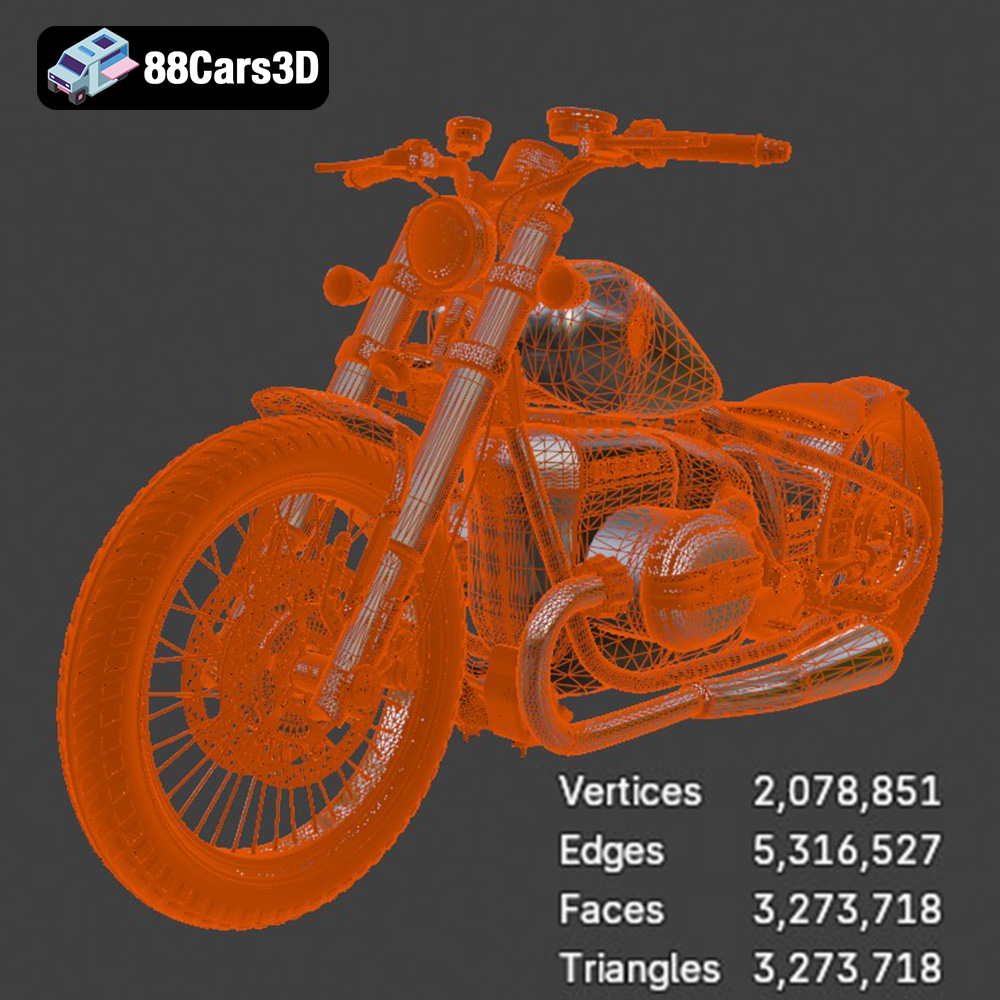
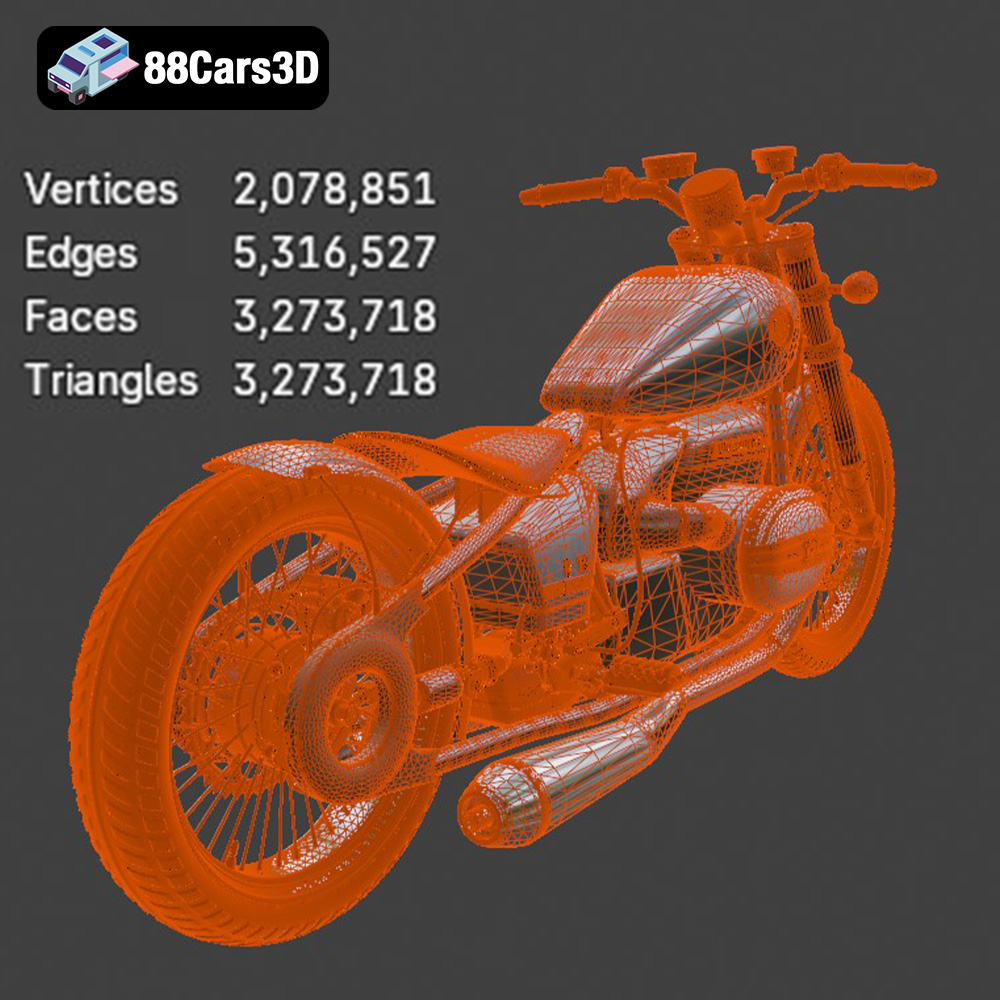
The allure of the BMW R18 lies not just in its powerful presence, but in the meticulous craftsmanship of its design. Translating this physical artistry into a digital format requires an equally rigorous approach. The BMW R18 3D Model embodies this principle, offering an asset that is both visually stunning and technically sound. With a staggering 3,273,718 triangles, this model achieves an unparalleled level of visual fidelity, making it suitable for even the most demanding ultra-realistic rendering scenarios.
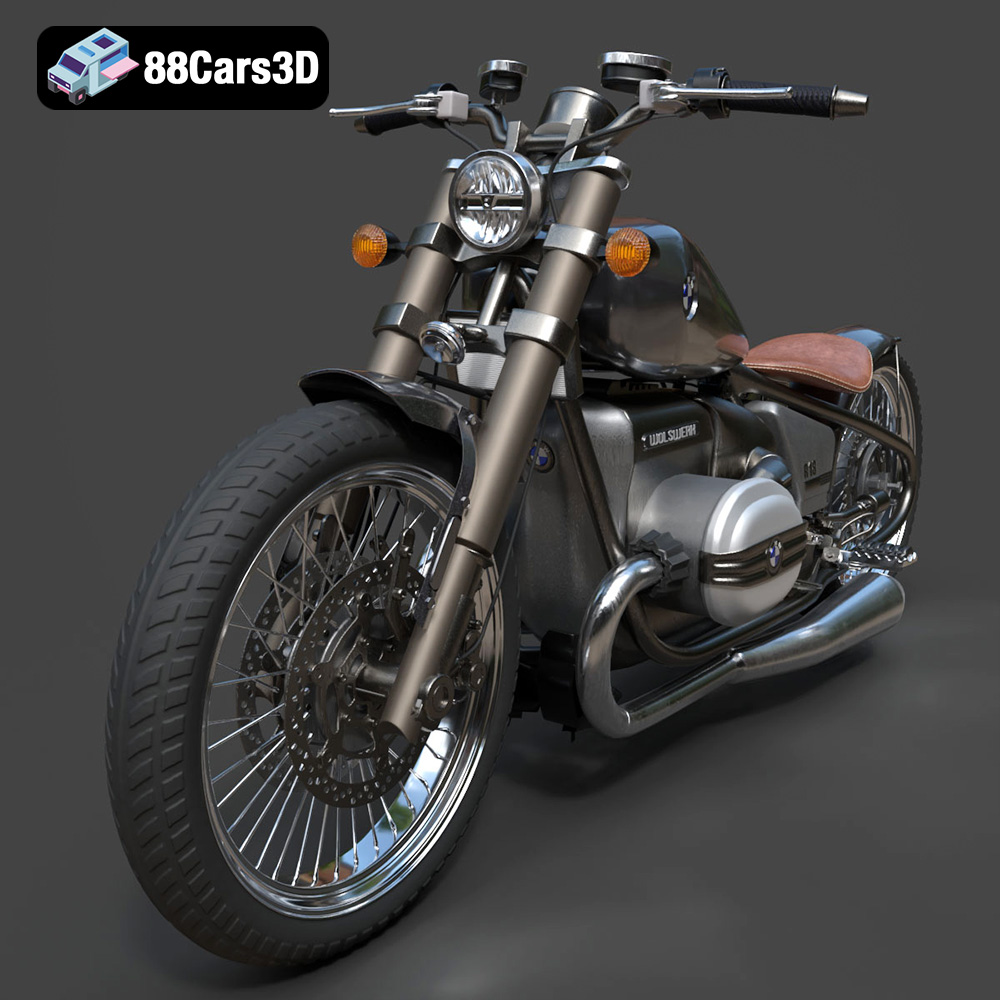
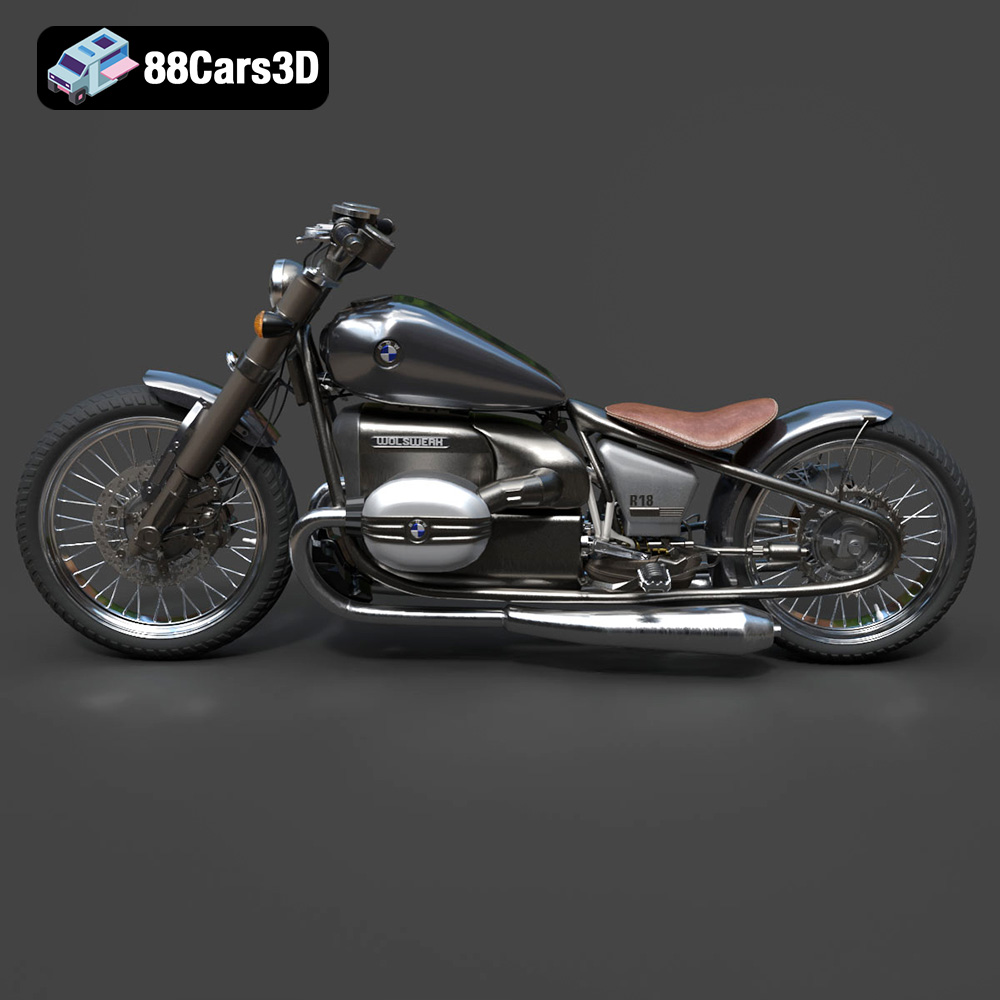
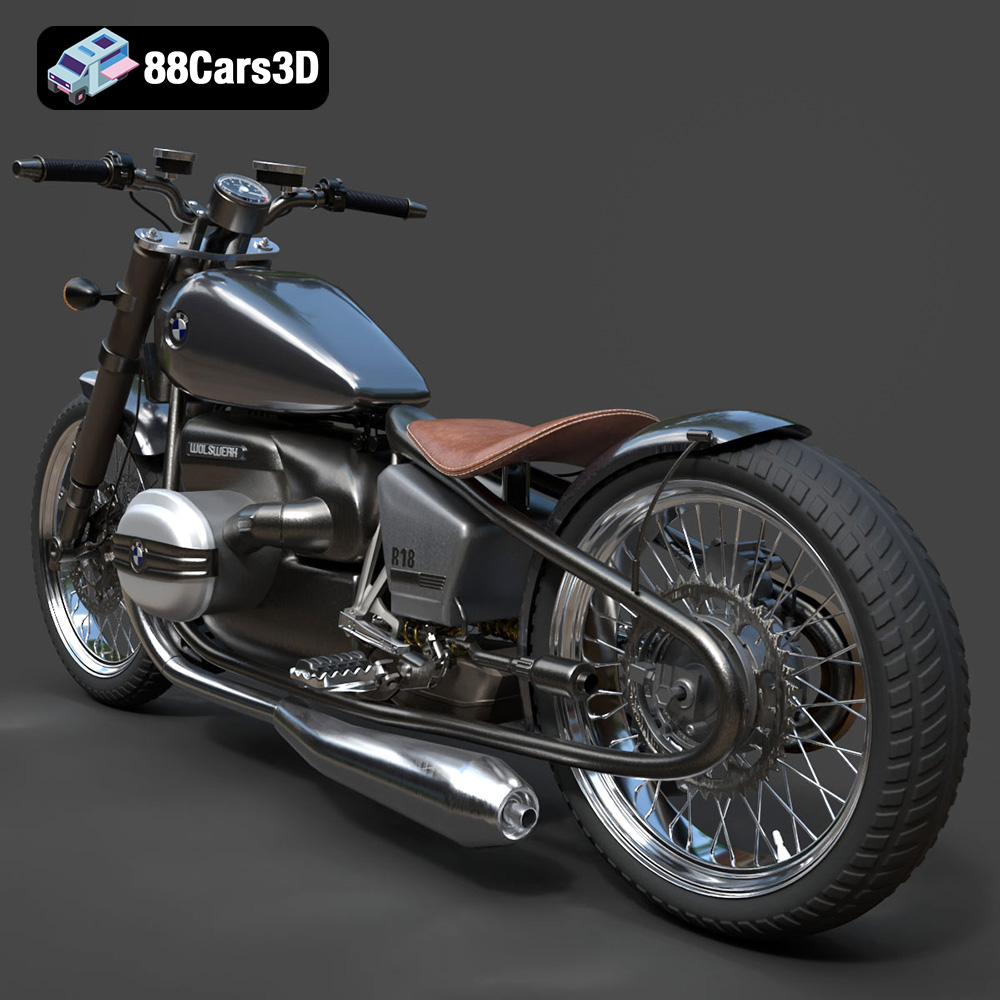
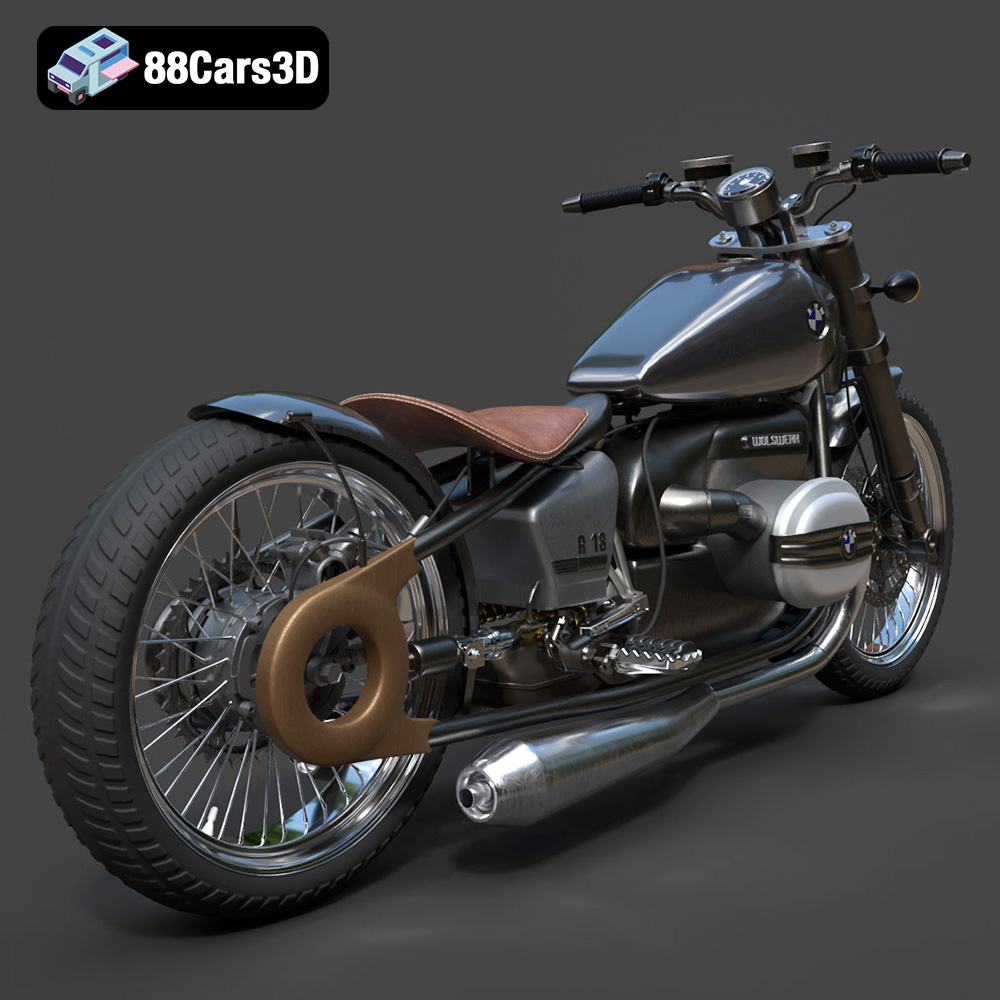
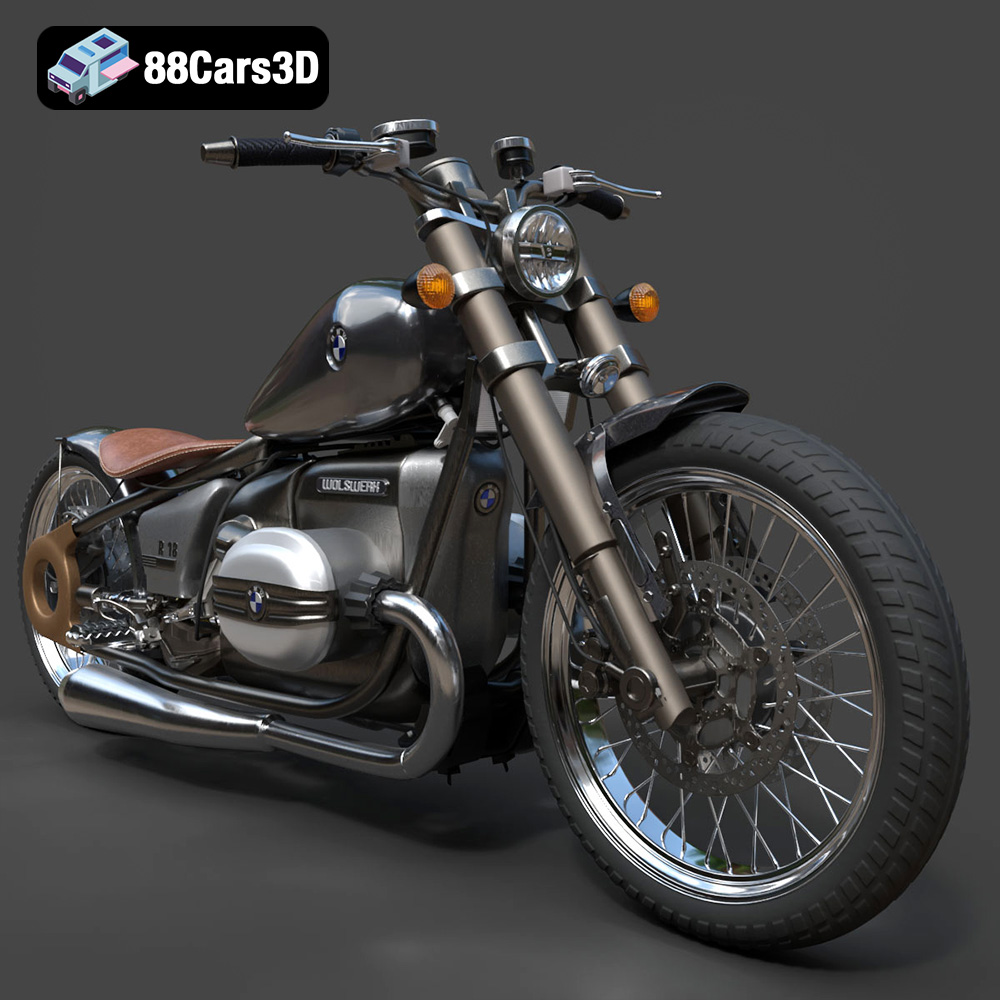
Every curve and component of the BMW R18 has been faithfully replicated. The model boasts accurate classic double-cradle steel frame geometry and proportions, ensuring that its digital silhouette perfectly matches the real-world counterpart. At its heart, the massive 1802cc Big Boxer engine block is rendered with exquisite detail, showcasing the prominent pushrod tubes that are a signature of the R18’s design. The fishtail dual exhaust system gleams with high-shine chrome detailing, ready to catch and reflect light realistically in any render setup. From the classic round LED headlight and sleek integrated taillights to the intricately wire-spoke wheels with authentically modeled tires, no detail has been overlooked. Even the exposed telescopic fork and hidden central suspension strut are accurately represented, contributing to the model’s structural integrity and visual authenticity.
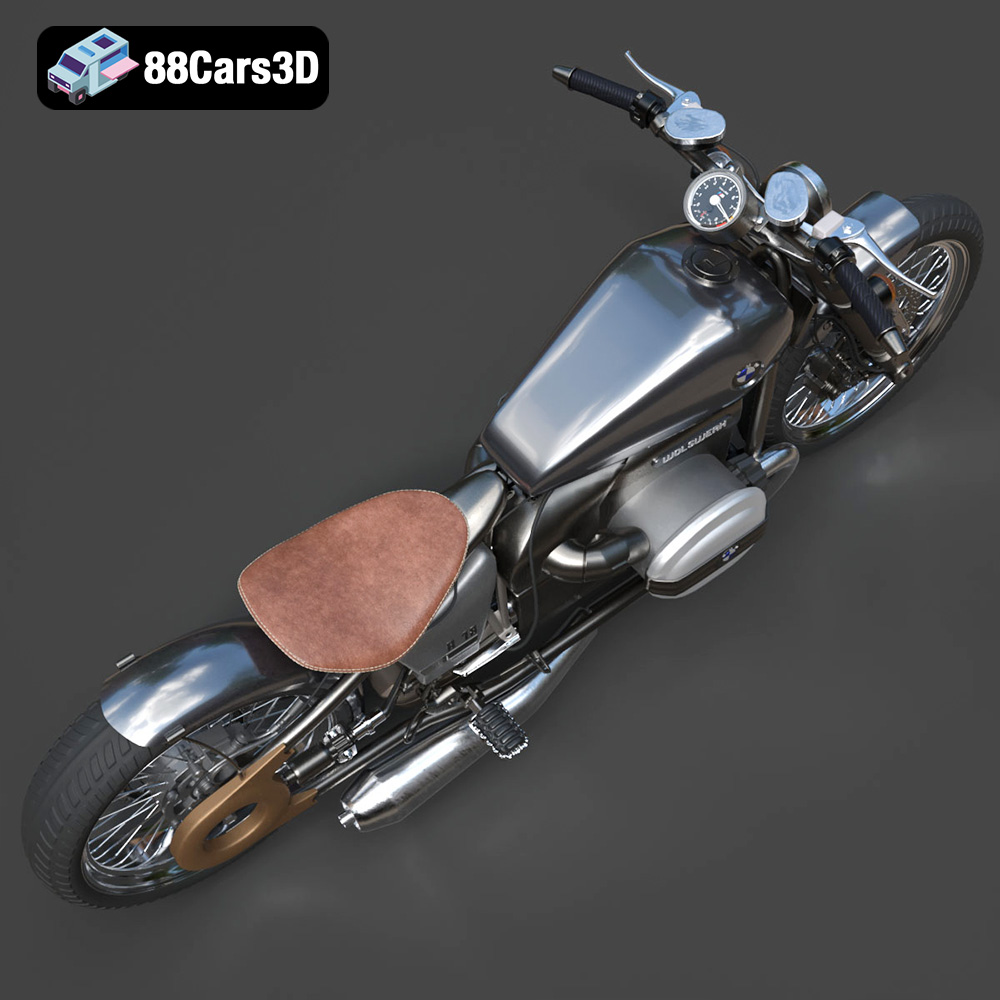
The attention to detail extends seamlessly into the cockpit and functional components of the motorcycle. The sculpted solo saddle seat features authentic leather texturing, inviting closer inspection. The wide cruiser handlebars, precision-modeled grips, and mirrors provide a fully immersive experience, especially critical for first-person perspectives in gaming or virtual reality. The classic circular instrument cluster, complete with an integrated digital display, is clearly legible and true to life. Further enhancing its utility, detailed footpegs, gear shifter, and brake levers are all present and accounted for. Crucially for animators and game developers, the model is built with separate wheels, suspension, and steering components, each with proper pivot setups. This thoughtful engineering allows for realistic steering, wheel rotation, and suspension travel, enabling dynamic animations and interactive controls that bring the virtual R18 to life.
The modern digital landscape, particularly in game development and interactive experiences, demands 3D car models that strike a delicate balance between visual fidelity and performance. The BMW R18 3D Model from 88cars3d.com is engineered precisely for these challenges, providing an asset that is both game-ready and optimized for real-time engines without compromising on realism.
With its meticulously crafted topology and a triangle count of 3,273,718, the BMW R18 model achieves a perfect balance for real-time engines like Unreal Engine and Unity. This polycount is sufficient to maintain high-end visual realism, ensuring that the R18 looks stunning even in close-up shots, while remaining optimized enough for integration into vast open-world environments or demanding racing titles. Developers can utilize this model to populate virtual cities, create compelling cutscenes, or serve as a hero vehicle in high-octane simulators. The real-world scale accuracy and proper pivot setup for steering, wheel rotation, and suspension travel are critical for realistic physics and player interaction, making it a truly valuable game asset. Its compatibility with major 3D software platforms and real-time rendering engines ensures a smooth transition from asset acquisition to in-engine implementation.
Beyond traditional gaming, the BMW R18 3D Model shines in augmented reality (AR) and virtual reality (VR) applications. Its high level of detail makes it perfect for immersive virtual showrooms, where customers can explore the R18 in a truly interactive and realistic manner. Imagine a configurator where users can change body colors, modify tire textures, or adjust material finishes (matte, gloss, metallic) in real-time, all within an AR/VR environment. The model’s optimized geometry and inclusion of the .glb format are specifically advantageous here, allowing for seamless integration into mobile AR experiences or complex VR simulations without significant performance overhead. This capability empowers brands to create compelling, engaging, and hyper-realistic interactive experiences that truly resonate with their audience, pushing the boundaries of digital product visualization.
While optimized for real-time applications, the BMW R18 3D Model also excels in traditional high-end rendering and visualization pipelines. Its detailed structure and versatile file formats open doors for a multitude of professional uses, from captivating marketing imagery to tangible physical replicas.
For brand campaigns, lifestyle scenes, and studio lighting setups, photorealism is paramount. The BMW R18 model’s meticulous topology ensures flawless light reflections and precise shadows, critical for achieving that coveted photographic quality. Artists can leverage the .max or .blend formats to integrate the model into advanced rendering engines like V-Ray, Corona, or Cycles. Customization options are extensive: change body/tank colors to match factory specifications or explore custom finishes, modify tire textures for off-road or street variants, and adjust material properties to achieve the perfect matte, gloss, or metallic sheen. The ability to adapt lighting for different environments further enhances its utility, allowing artists to craft breathtaking visuals for advertisements, brochures, or cinematic sequences. This model stands as a premium foundation for any automotive rendering project demanding exceptional visual fidelity.
One of the most exciting applications of this versatile asset is its suitability for 3D printing. The inclusion of the .stl format specifically caters to hobbyists and professionals looking to bring the BMW R18 into the physical world. While the digital model boasts millions of triangles for visual fidelity, conversion to .stl simplifies the mesh into printable geometry. Recommended print settings are provided to ensure successful output: scales of 1:12, 1:18, or 1:24 are ideal for display-scale replicas. For the finest details, resin printing is recommended, with layer heights between 0.04–0.12 mm. Specific guidance on wall thickness (1.2–2.0 mm), infill (20–30%), and the necessity of supports for intricate parts like the exhaust, mirrors, and handlebars ensures a robust print. Post-processing, including sanding, priming, and applying authentic factory colors with metallic finishes, allows for a truly stunning physical model that mirrors its digital counterpart, demonstrating the incredible versatility of a well-engineered 3D asset.
In a competitive creative industry, time is often the most valuable commodity. Developing high-quality 3D car models from scratch is an incredibly time-consuming and labor-intensive process, demanding expertise in modeling, texturing, rigging, and optimization. This is where investing in pre-made, professionally crafted 3D assets becomes a game-changer, significantly accelerating production pipelines for studios and individual artists alike. The BMW R18 3D Model available on 88cars3d.com exemplifies the strategic advantage of leveraging premium digital content.
For advertising agencies, architectural visualization firms, and product design studios, project deadlines are often tight, and the demand for high-quality visuals is constant. Rather than dedicating weeks or even months to model an iconic motorcycle like the BMW R18, a pre-optimized, ready-to-use asset allows teams to bypass the initial modeling phase entirely. This freed-up time can then be allocated to more creative tasks: perfecting scene composition, experimenting with lighting, developing engaging narratives, or refining interactive elements. The immediate availability of a detailed, accurate, and multi-format model means agencies can rapidly prototype ideas, respond to client feedback with greater agility, and deliver polished results faster, thereby enhancing their competitive edge and profitability. This strategic investment in high-quality game assets and automotive rendering models directly translates into efficient project delivery and superior output.
The true power of a versatile 3D model lies in its ability to integrate seamlessly across various software ecosystems. The BMW R18 3D Model’s availability in multiple industry-standard formats (.blend, .fbx, .obj, .glb, .stl, .ply, .unreal, .max) eliminates common compatibility hurdles. Whether your team relies on Blender for its robust sculpting tools, 3ds Max for complex rendering, Unreal Engine for real-time interactivity, or a combination of these, there’s a format tailored to your specific needs. This flexibility ensures that the asset can flow smoothly from one stage of production to the next, minimizing conversion errors and maintaining data integrity. It empowers artists to work in their preferred environment while ensuring consistent quality across all deliverables, from animated sequences to interactive virtual showrooms. This broad compatibility makes the model an invaluable tool for any professional seeking efficiency and excellence in their 3D car model workflows.
In the expansive and ever-evolving landscape of 3D content creation, the difference between a good project and an outstanding one often comes down to the quality of its foundational assets. The BMW R18 3D Model stands as a testament to this principle, offering an unparalleled blend of intricate detail, technical optimization, and broad versatility. From its meticulously recreated exterior and immersive cockpit to its game-ready topology and extensive file format support, this model is engineered to meet the rigorous demands of modern digital production.
Whether you are a game developer crafting expansive open worlds, an architect visualizing a lifestyle scene, an AR/VR designer building immersive experiences, or a hobbyist eager to 3D print a stunning replica, this asset provides the precision and flexibility you need. It accelerates workflows, eliminates the complexities of modeling from scratch, and ensures that your projects shine with photorealistic quality and robust performance. By choosing premium 3D car models from trusted marketplaces like 88cars3d.com, you’re not just acquiring a digital file; you’re investing in efficiency, quality, and the power to bring your most ambitious creative visions to life. Embrace the future of automotive rendering and game asset development with assets that truly elevate your craft.
The BMW R18 is a masterclass in heritage design, blending classic cruiser styling with modern engineering. This highly detailed 3D model perfectly captures the essence of the iconic motorcycle, highlighting its massive 1802cc boxer engine, teardrop tank, and striking sweeping exhaust system. With its commanding presence and timeless aesthetic, the R18 pays homage to the legendary BMW R5 while establishing a bold new era for heavyweight cruisers.Boasting a meticulous topology with 3,273,718 triangles, this model delivers unparalleled visual fidelity suitable for ultra-realistic rendering while remaining structurally organized. Designed with professional use in mind, the geometry ensures flawless light reflections and precise shadows, making it an exceptional asset for high-end visualization, interactive applications, and advanced gaming environments.Perfect for open-world game environments, virtual showrooms, high-end commercial rendering, and immersive VR experiences.
$90.00
.blend
.bmw
.cruiser
.fbx
.glb
.max
.obj
.ply
.r18
.rendering
.stl
.unreal
game asset
game-ready
motorcycle-3d-model
optimized
VR/AR