Get 20% OFF All Premium 3D & STL Models!

In the dynamic realms of automotive design, game development, cinematic rendering, and immersive AR/VR experiences, the quality of a 3D model can make or break a project. Beyond mere aesthetics, a truly professional-grade 3D car model is a complex amalgamation of precise geometry, meticulously crafted textures, and intelligent optimization. It serves as the digital DNA for countless creative endeavors, demanding accuracy, versatility, and performance.
Imagine recreating the iconic silhouette of a legendary off-roader, not just as a static image, but as a fully interactive, customizable asset that can be driven in a virtual world, rendered in a high-res advertisement, or even brought to life on a 3D printer. This is where the power of expertly crafted 3D car models shines. Today, we delve into the intricate world of digital automotive assets, using a prime example of excellence: the Land Rover Defender 3D model available on 88cars3d.com. This model encapsulates the rugged elegance and unparalleled capability of its real-world counterpart, offering a robust foundation for a myriad of professional applications.
The choice of a 3D model file format is far more critical than often perceived. Each format is designed with specific use cases, compatibility, and technical advantages in mind. Understanding these nuances is essential for any professional working with 3D car models, ensuring seamless integration into diverse pipelines, from high-fidelity rendering to real-time game engines and even physical 3D printing. The Land Rover Defender 3D model is thoughtfully provided in a comprehensive suite of formats, empowering artists and developers with maximum flexibility.
The .blend format is native to Blender, the powerful open-source 3D creation suite. When you download a .blend file, you’re not just getting the mesh; you’re often getting a complete Blender scene, including materials, textures, lighting setups, animation data, and even modifiers. This makes it incredibly valuable for artists who use Blender as their primary DCC (Digital Content Creation) tool, allowing for full editability and exploration of the original artist’s workflow. For the Land Rover Defender, a .blend file would enable direct manipulation of every component, from adjusting the suspension rig to tweaking shader networks, all within Blender’s versatile environment.
The .fbx (Filmbox) format, developed by Autodesk, is arguably the most widely adopted interchange format in the 3D industry. Its strength lies in its ability to encapsulate a wide range of data, including geometry, materials, textures, animations, skinning, and camera information, all within a single file. This makes .fbx ideal for transferring assets between different software packages like Maya, 3ds Max, Blender, Cinema 4D, and crucially, real-time engines such as Unreal Engine and Unity. For a complex asset like the Land Rover Defender 3D model, the .fbx ensures that all animation pivots for wheels, suspension, and steering, along with PBR materials, are correctly exported and imported, making it “game-ready” for immediate use.
The .obj (Wavefront OBJ) format is one of the oldest and most universally supported 3D file formats. It’s excellent for exchanging purely geometric data, including vertices, faces, normals, and UV coordinates. While it can reference external material (.mtl) files for basic color and texture maps, it doesn’t support advanced material properties, animation, or rigging. The .obj format is perfect for scenarios where you need a clean mesh to start from, perhaps for sculpting, retopology, or importing into software that has limited support for newer formats. It provides a reliable baseline for the Land Rover Defender’s high-fidelity geometry.
The .glb (GL Transmission Format Binary) format is a relatively newer contender, specifically designed for efficient transmission and loading of 3D scenes and models on the web and in AR/VR applications. It’s a binary container format that embeds all necessary assets—geometry, materials, textures, and animation—into a single file, making it incredibly easy to share and integrate into web-based viewers, mobile AR apps, and immersive VR experiences. For showcasing the Land Rover Defender in an online configurator or a mobile AR showroom, .glb is the format of choice due to its optimization for performance and file size.
The .stl (Stereolithography) format is the de facto standard for 3D printing. It represents a 3D model as a series of connected triangles, essentially describing only the surface geometry without color, texture, or material information. While this simplifies the data, it’s precisely what 3D printers need to interpret the shape to be manufactured. When preparing the Land Rover Defender for 3D printing, the .stl file will serve as the direct input for slicing software, allowing hobbyists and professionals to create a physical replica of the digital model.
The .ply (Polygon File Format, or Stanford Triangle Format) is often used for storing 3D data from 3D scanners, CAD applications, and scientific simulations. Like .obj and .stl, it primarily focuses on geometric data but can also include properties such as color, transparency, normals, texture coordinates, and even reliability information for each vertex and face. It’s a more versatile format for meshes than .stl, making it suitable for applications requiring higher precision or analysis, such as reverse engineering the Land Rover Defender’s components or using it in specific engineering visualization tools.
While not a universal file extension in the same vein as .fbx or .obj, “unreal” typically refers to an asset that has been specifically prepared and optimized for direct import into Unreal Engine. This often means the .fbx has been meticulously cleaned, UVs are properly laid out, materials are set up for Unreal’s PBR workflow, and any rigging or animations are compatible with the engine’s requirements. An “.unreal” file (or a well-prepared .fbx designated for Unreal) for the Land Rover Defender 3D model implies a direct, streamlined import process, often with pre-configured materials, collision meshes, and LODs (Levels of Detail) to ensure optimal performance within the engine.
The .max format is the native file type for Autodesk 3ds Max, a leading software for 3D modeling, animation, and rendering. Similar to .blend for Blender, a .max file contains the complete scene data, including geometry, modifiers, materials, lighting, cameras, animation, and scene settings specific to 3ds Max. For professionals working within the Autodesk ecosystem, having the Land Rover Defender in .max format provides the ultimate level of control and editability, allowing for complex rigging, advanced V-Ray or Corona renders, and integration into existing 3ds Max projects without any translation issues.
A truly premium 3D car model goes far beyond a recognizable shape. It’s a testament to meticulous craftsmanship, blending artistic interpretation with technical precision. The Land Rover Defender 3D model available on 88cars3d.com exemplifies this philosophy, designed to meet the rigorous demands of professional production pipelines.
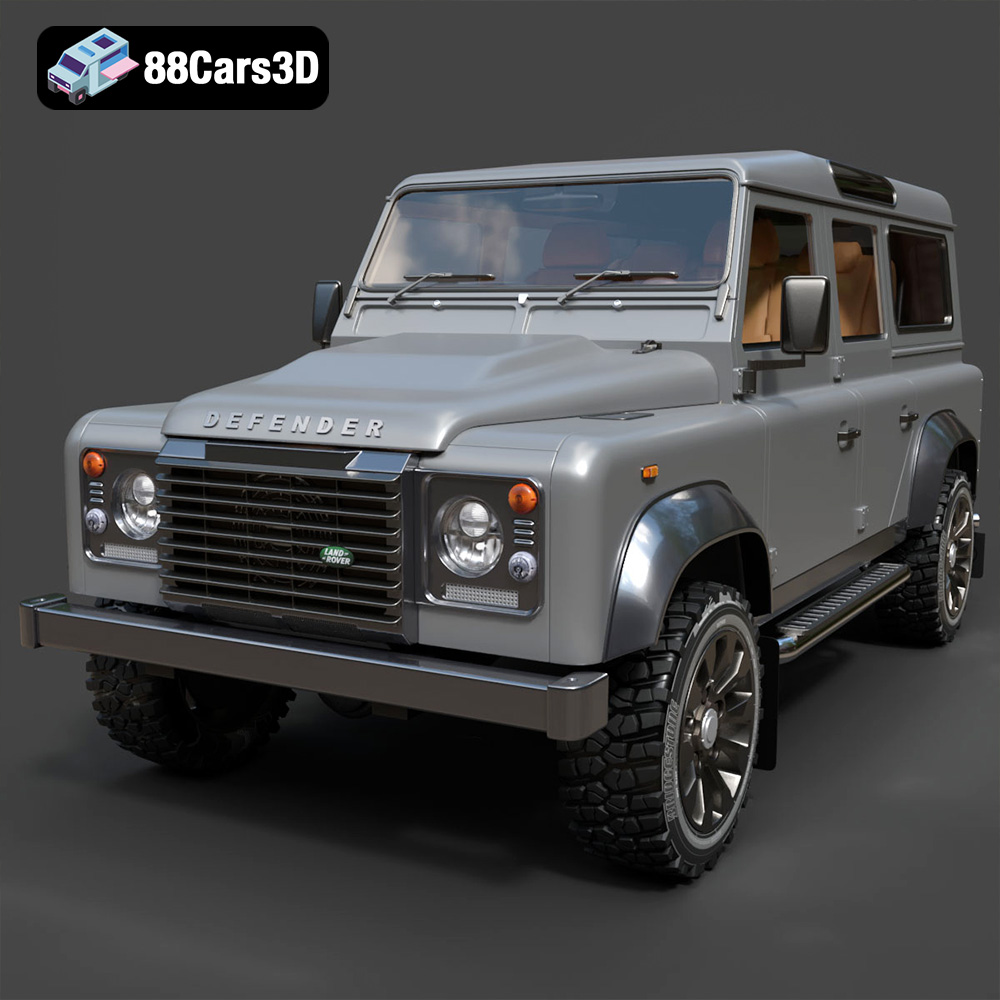
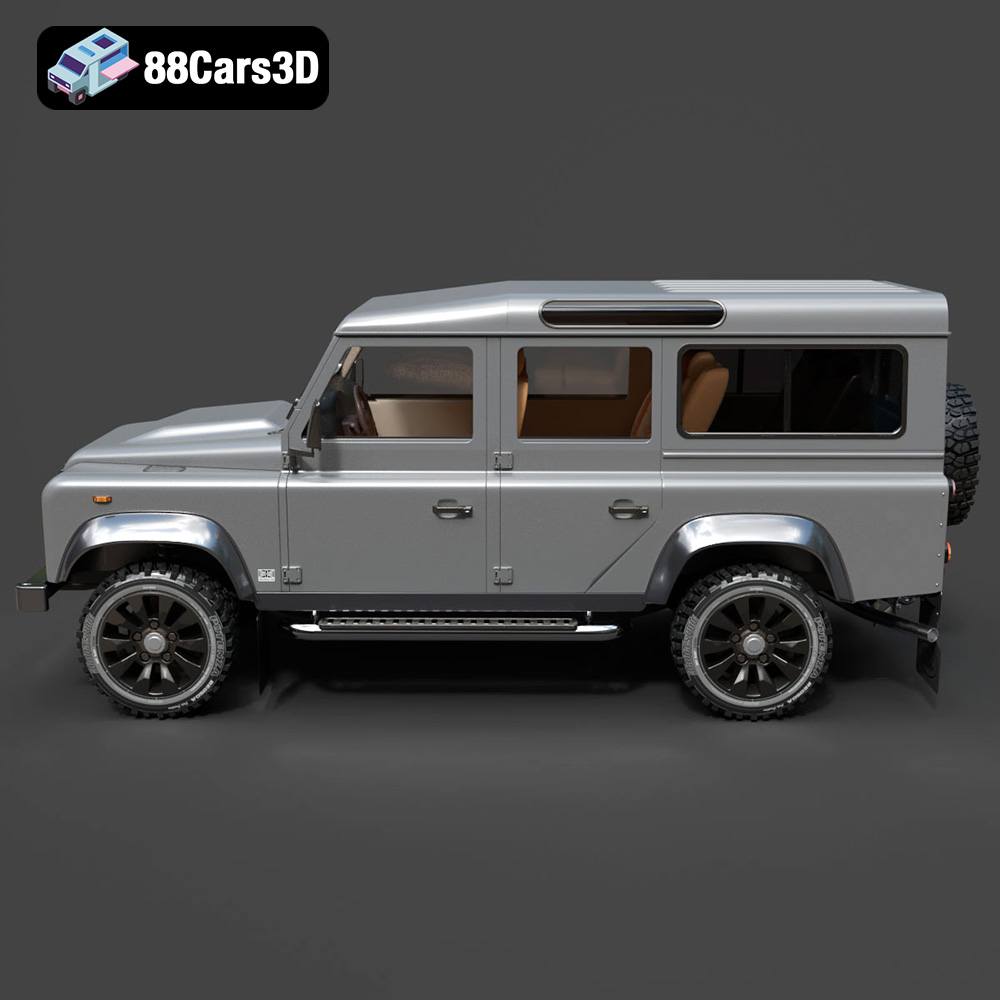
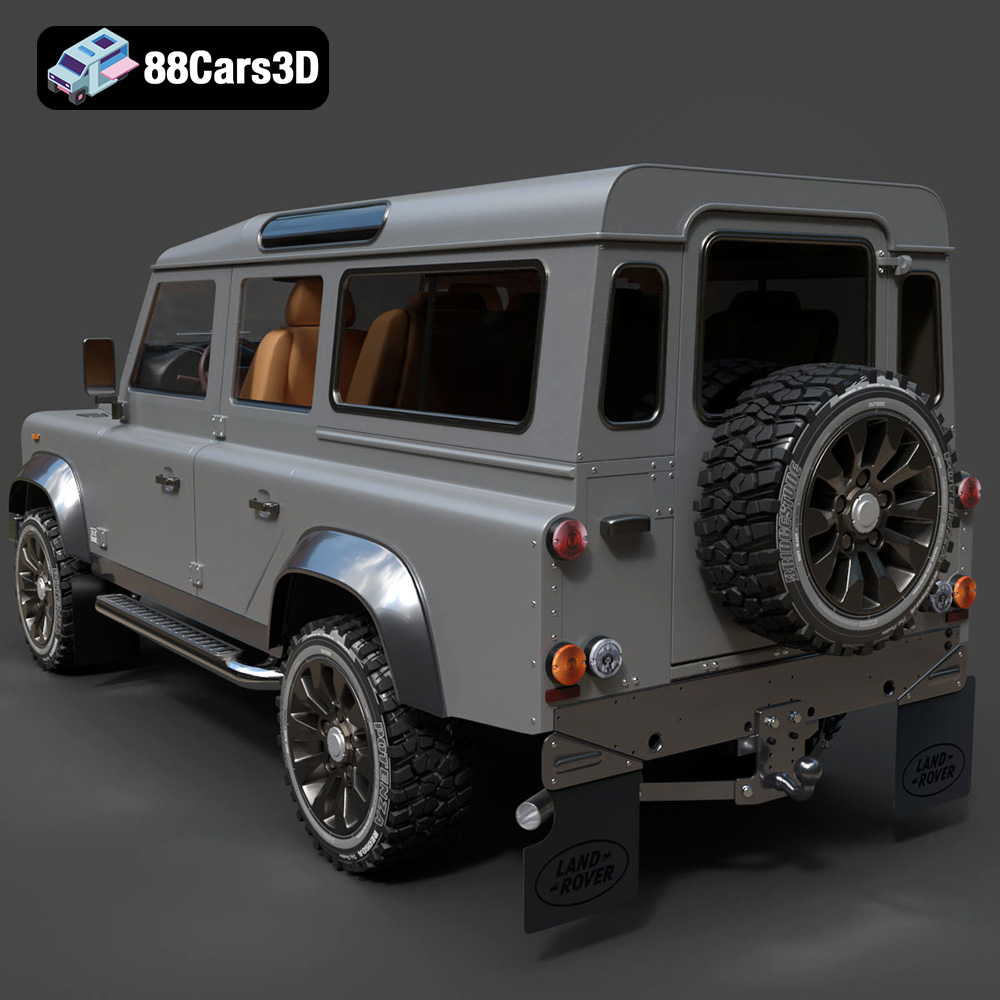
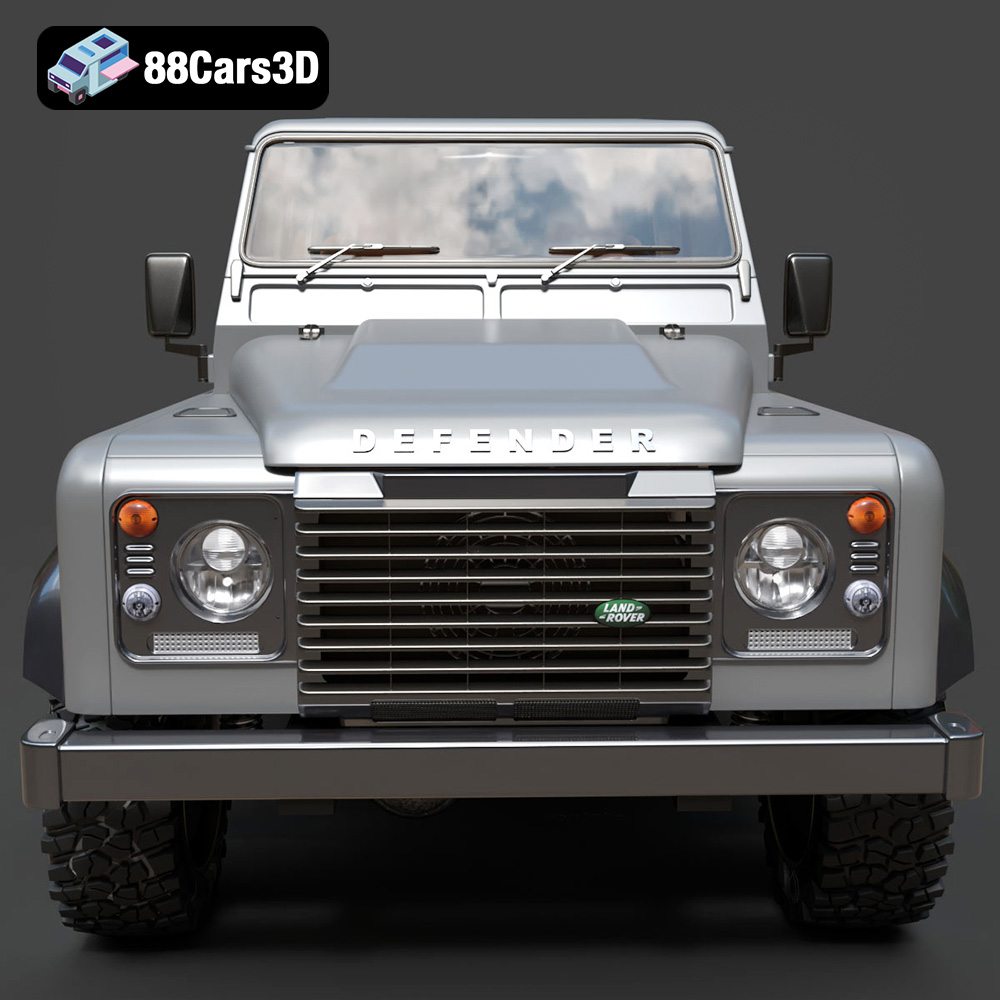
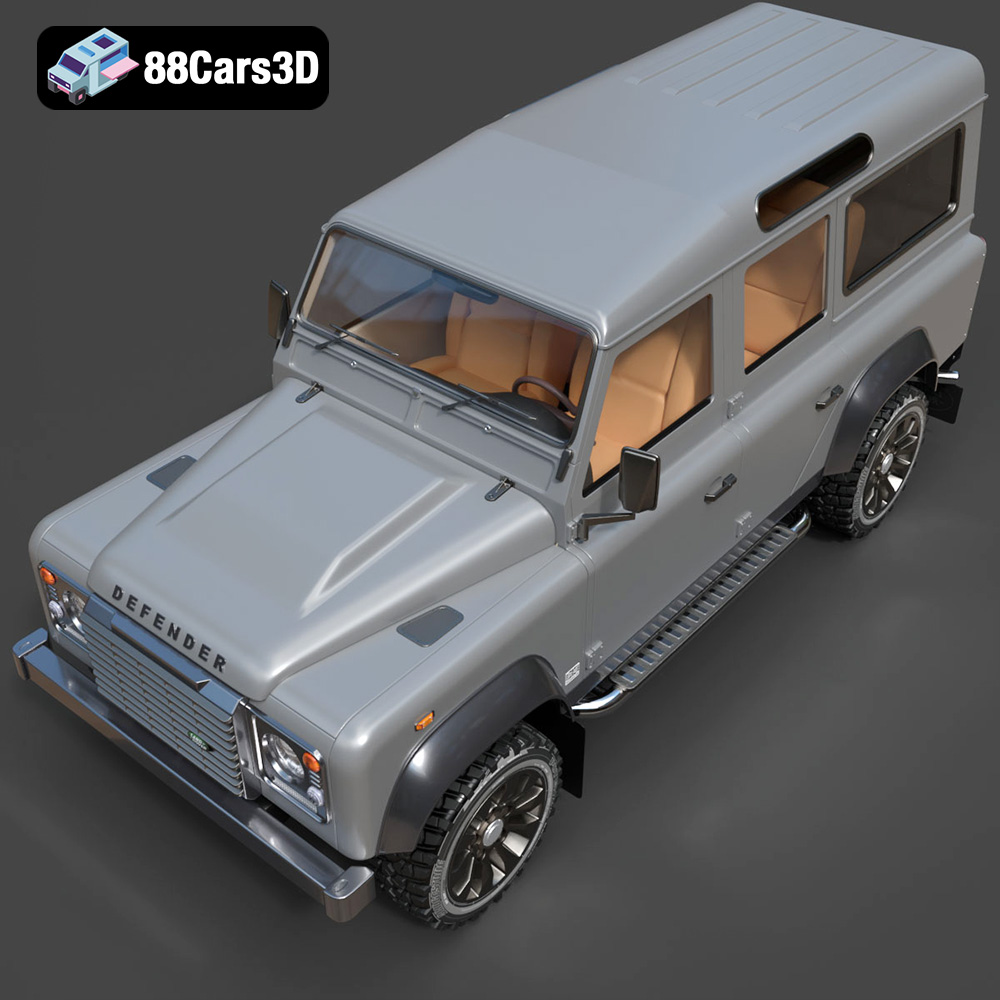
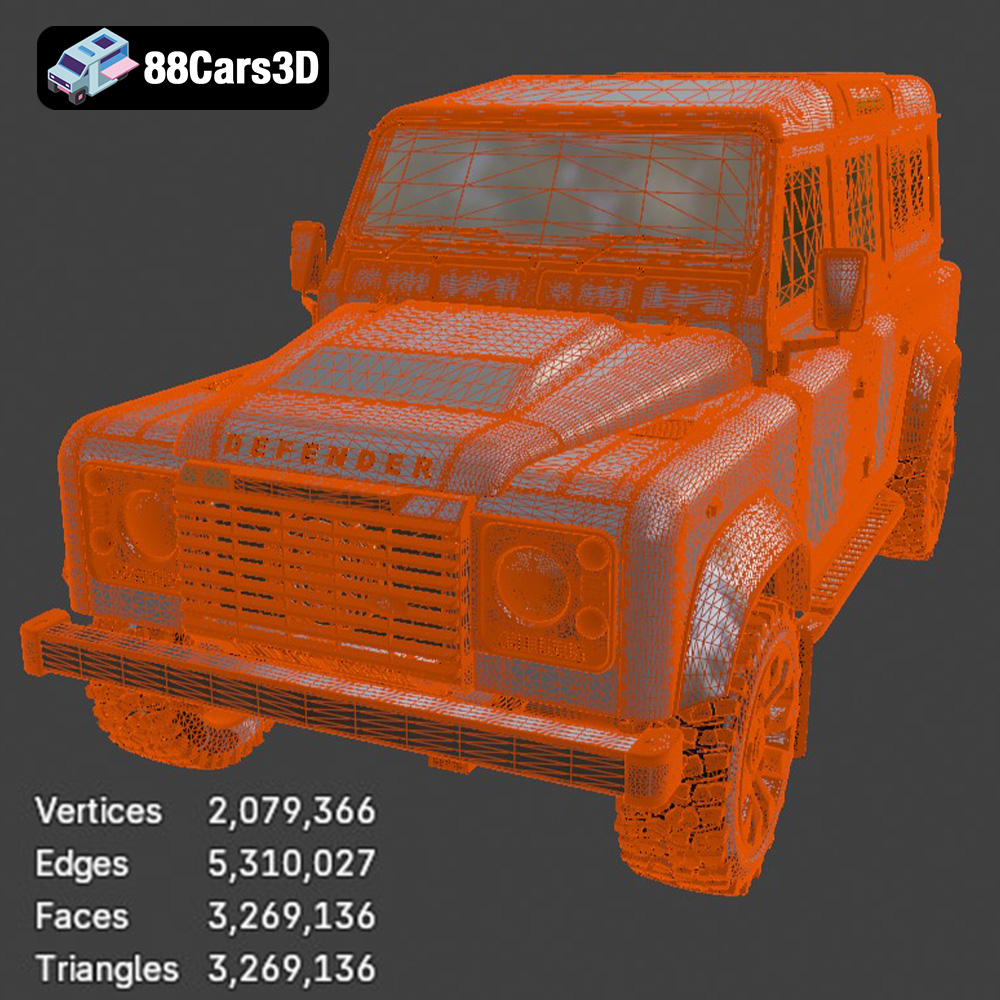
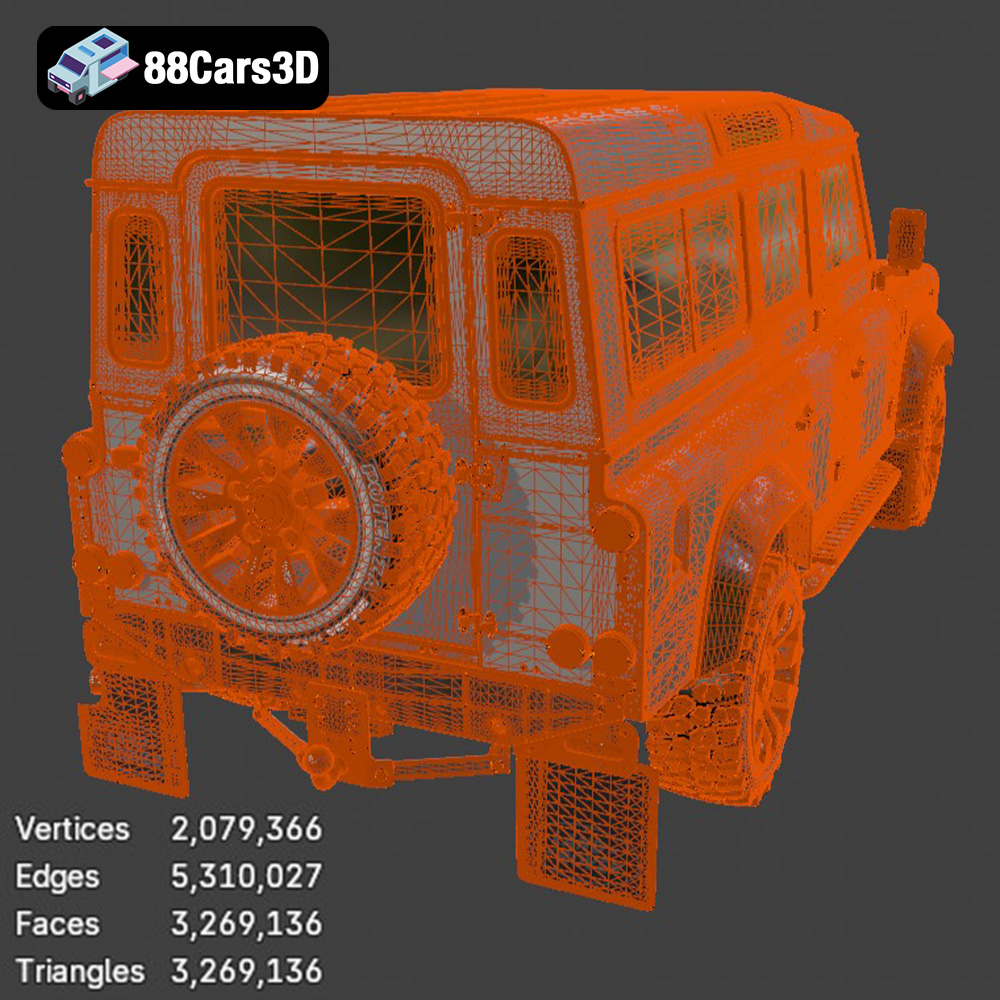
The external features of this Land Rover Defender model are where its high-fidelity geometry truly shines. With an impressive 3,269,136 triangles, the model achieves unparalleled visual realism while remaining optimized for performance, a crucial balance for both real-time applications and high-end rendering. Every aspect, from the commanding front grille and distinctive round LED headlights to the robust wheel arches and the classic rear-mounted spare tire, is accurately captured. More than just static detail, the model features articulated independent off-road suspension components, separate wheels, and steering mechanisms, all properly pivoted for seamless animation. This foresight allows animators to simulate realistic driving dynamics, off-road articulation, and complex cinematic sequences with ease, directly within software like 3ds Max or Blender.
The immersion factor in any digital experience is significantly boosted by a detailed interior. The Land Rover Defender model doesn’t disappoint, offering an authentic cockpit that blends utilitarian design with luxurious touches. This includes accurately modeled seating, a detailed steering wheel with precise grips and badging, high-resolution instrument clusters, and modern infotainment display screens. Critical control details like pedals, levers, and the iconic terrain response shifters are all present. For game developers, this level of interior detail is invaluable, providing an optimized geometry that is perfect for first-person perspective (POV) gameplay, virtual showrooms, or training simulators where interior interaction is key.
The technical specifications are the backbone of this model’s versatility. The 3,269,136 triangles represent a “game-ready” optimization, striking an ideal balance between visual realism for close-up shots and performance for real-time engines like Unreal and Unity. Real-world scale accuracy, based on actual vehicle chassis dimensions, ensures that the model integrates seamlessly into existing scenes without scale adjustments. Furthermore, the proper pivot setup for steering, wheel rotation, and suspension travel is a critical advantage, eliminating tedious rigging work and enabling immediate animation or physics simulation. These technical underpinnings demonstrate a deep understanding of professional workflows and the requirements of various industries.
The value of a high-quality 3D car model is realized through its seamless integration into diverse professional workflows. The Land Rover Defender 3D model is designed to be a plug-and-play solution for multiple creative pipelines.
For automotive visualization studios, the .max and .blend formats offer complete flexibility. Artists can import the Land Rover Defender model into 3ds Max or Blender, set up complex studio lighting, and apply advanced material shaders for photorealistic renders. The accurate geometry and detailed components, including the engine block and under-hood details, allow for stunning product showcases, marketing campaigns, and lifestyle scenes. Imagine a hyper-realistic advertisement featuring the Defender conquering a digital mountain, or a luxury automotive configurator allowing potential buyers to explore every detail. The model’s clean mesh and optimized UVs (implied for professional assets) facilitate seamless texture application and PBR workflow adherence, whether using V-Ray, Corona, Cycles, or Eevee.
The “game-ready & optimized” nature of this model, coupled with the inclusion of an “.unreal” compatible format (typically a finely tuned .fbx), makes it a powerhouse for game development. In Unreal Engine, developers can import the Land Rover Defender, leveraging its proper pivot setup for immediate integration into vehicle physics systems. The optimized polycount ensures smooth framerates even in open-world environments or racing titles. Developers can implement custom destruction meshes, integrate advanced AI for autonomous vehicles, or use it as a hero vehicle in off-road simulators, providing players with an incredibly realistic driving experience. The separate components allow for dynamic suspension and steering animations, crucial for believable in-game vehicle mechanics.
The Land Rover Defender 3D model is exceptionally well-suited for augmented reality (AR) and virtual reality (VR) applications. With the .glb format, the model can be effortlessly deployed on web-based AR experiences or mobile VR apps. Imagine a virtual showroom where customers can walk around the Defender, customize its colors and features in real-time, or even place it in their driveway using AR on their smartphone. The optimized geometry ensures a smooth, high-frame-rate experience, critical for preventing motion sickness in VR and maintaining interactivity in AR. This opens up new possibilities for virtual product configurators, interactive training modules, and immersive marketing tools that push the boundaries of digital engagement.
The digital realm often extends into the physical, and the Land Rover Defender 3D model is designed to make that leap seamlessly through 3D printing. The inclusion of the .stl format is a direct gateway to bringing this iconic vehicle to life on your desk or workshop.
Converting a high-fidelity rendering model into a print-ready .stl requires careful consideration, and this model’s design already takes this into account. The .stl format simplifies the geometry into a tessellated surface, which 3D slicers use to generate toolpaths for printing. For the Land Rover Defender, recommended scales like 1:12, 1:18, or 1:24 offer a good balance between detail and printability. Crucially, complex areas like the exhaust system, mirrors, and independent suspension components will require careful support generation within your slicing software to ensure a successful print. The distinction between solid parts and separate components in the original model also simplifies the printing process, allowing for optimal orientation of each piece.
To capture the fine details of the Land Rover Defender, resin printing (SLA/DLP) is highly recommended, especially for smaller scales, allowing for layer heights as low as 0.04–0.12 mm. For FDM printers, slightly thicker walls (1.2–2.0 mm) and an infill of 20–30% will ensure structural integrity. Printing the frame at an angle can enhance strength, while wheels are best printed separately to preserve their intricate tread patterns. Post-processing is where the model truly comes alive. Sanding, priming, and applying authentic factory colors, perhaps with metallic finishes, will transform the raw print into a museum-quality replica. This hands-on process connects the digital artistry with tangible craftsmanship, creating a unique display piece or a custom collectible.
A static 3D model, no matter how detailed, has limited utility. The true power of a professional asset like the Land Rover Defender 3D model lies in its inherent customizability, enabling artists and designers to adapt it to their specific vision and project requirements.
The Land Rover Defender 3D model is built with material and texture adaptability at its core. Artists can easily modify body and tank colors to match authentic factory shades, explore custom finishes like matte wraps, or apply advanced metallic and pearlescent paints for a luxurious sheen. Tire textures can be swapped between aggressive off-road variants and smoother street-oriented designs to suit different scene contexts. This flexibility extends to interior materials as well, allowing for changes in leather upholstery, dashboard finishes, and trim accents, all contributing to a bespoke look tailored to the project’s aesthetic demands.
Beyond surface properties, the model’s clean topology and accurate PBR material setups (inherent in a professional asset) ensure it responds realistically to diverse lighting conditions. Whether placed under dramatic studio lights for a close-up render, bathed in the golden hour sun of an outdoor scene, or illuminated by the artificial glow of a virtual showroom, the Defender will always look its best. Adapting lighting for different environments and moods becomes a straightforward process, allowing artists to create impactful visuals that convey specific emotions or brand messages. This level of adaptability makes the Land Rover Defender an invaluable asset for any creative professional seeking to produce stunning visual content.
The journey through the intricate world of high-fidelity 3D car models reveals a profound blend of technical mastery and artistic vision. From the foundational understanding of file formats to the detailed anatomy of a premium asset and its integration into diverse professional workflows, it’s clear that such models are more than just digital objects; they are catalysts for innovation.
The Land Rover Defender 3D model stands as a stellar example of what a top-tier asset can offer. Its impressive polygon count, meticulous detailing from exterior to interior, animation-ready components, and comprehensive file format support ensure it is perfectly equipped for game development, automotive rendering, AR/VR experiences, and even precision 3D printing. This model provides a robust, flexible, and high-performance solution, empowering creators to bring their most ambitious projects to life with unparalleled realism.
For professionals seeking to elevate their projects with truly exceptional 3D car models, exploring the curated selection on 88cars3d.com is an essential step. The quality and versatility offered by assets like this Land Rover Defender are designed to streamline your workflow and unlock new creative possibilities, solidifying your reputation for excellence in the digital realm.
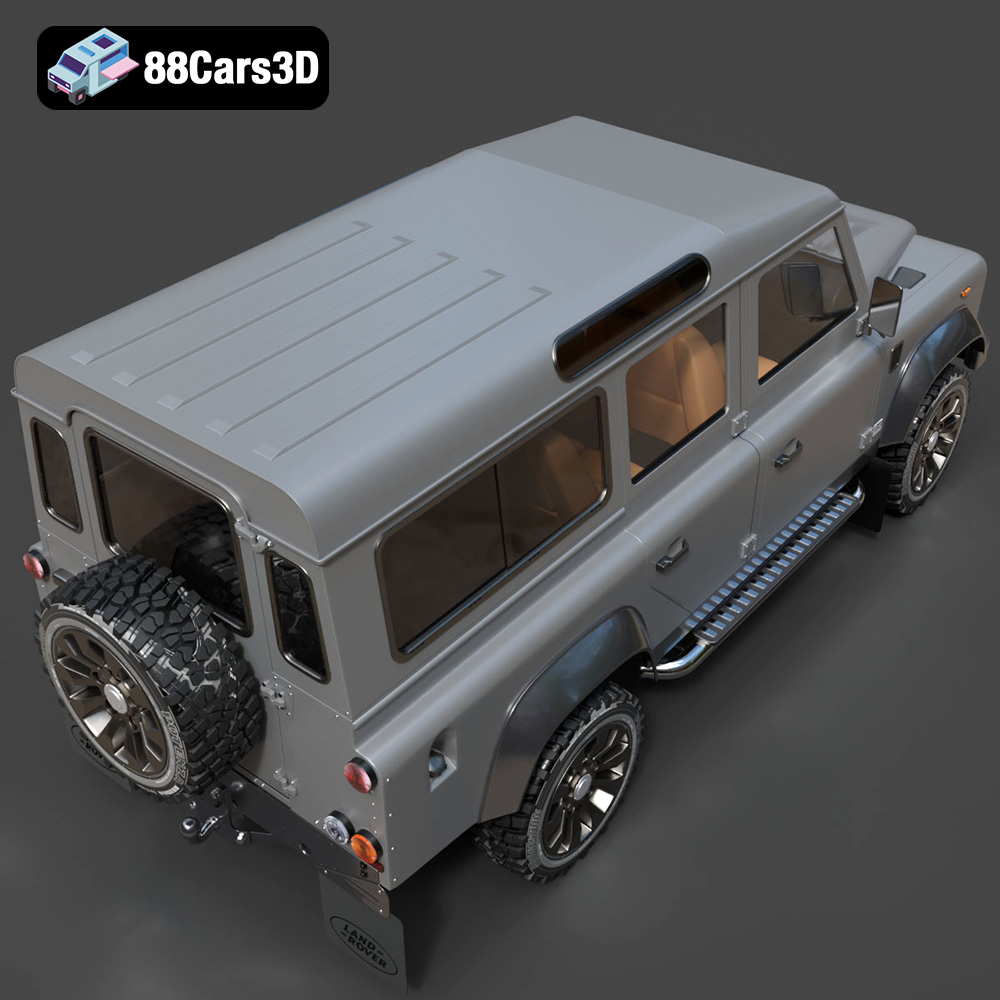
The Land Rover Defender stands as an undisputed icon of off-road capability and British automotive heritage. Renowned for its unmistakable boxy silhouette and uncompromising ruggedness, this legendary 4×4 combines utilitarian function with modern luxury. Key visual elements captured in this model include its commanding front grille, distinctive round headlights, robust wheel arches, and the classic rear-mounted spare tire that defines its adventurous spirit. This premium 3D model boasts an impressive 3,269,136 triangles, offering unparalleled high-fidelity geometry while retaining optimized structuring for advanced rendering and visualization. Expertly crafted for maximum visual fidelity, it serves as an exceptional asset for high-end game development, cinematic animation, immersive AR/VR experiences, and professional automotive visualization. Perfect for off-road driving simulators, rugged natural environment renders, luxury automotive configurators, and virtual showrooms.
$90.00
.4×4
.blend
.defender
.fbx
.glb
.land-rover
.max
.obj
.ply
.rendering
.stl
.unreal
car-3d-model
game asset
game-ready
low-poly
off-road
optimized
SUV
VR/AR