Get 20% OFF All Premium 3D & STL Models!

In the fast-evolving landscape of digital visualization, the demand for hyper-realistic and functionally robust 3D assets has never been higher. From blockbuster game titles and cinematic animations to immersive AR/VR experiences and precision automotive design reviews, the quality of your 3D models dictates the perceived value and authenticity of your entire project. Automotive visualization, in particular, requires an unparalleled level of detail and accuracy to truly capture the essence of a vehicle.
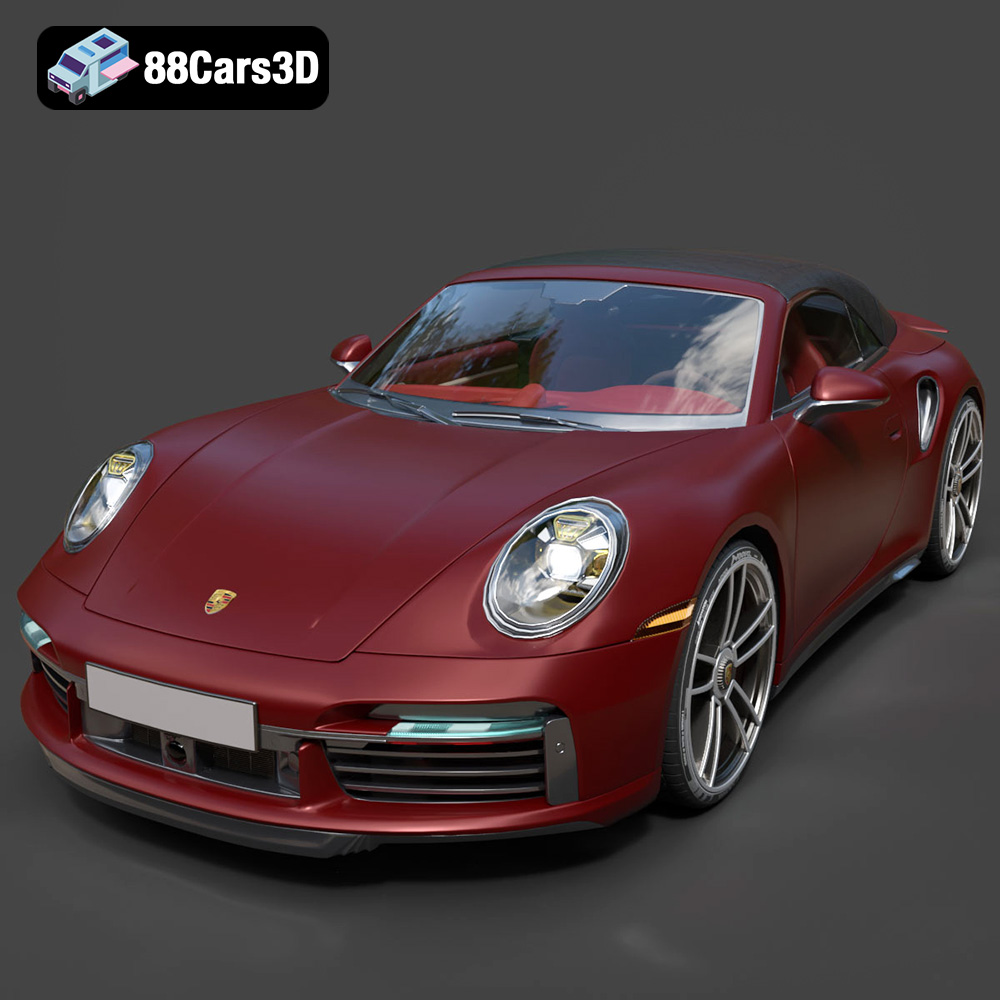
At 88cars3d.com, we understand this critical need, offering a curated selection of high-fidelity 3D car models designed to integrate seamlessly into diverse professional pipelines. Our models provide the foundation for stunning visuals, efficient development, and compelling interactive experiences. One such exemplary asset is the Porsche 911 Turbo S Cabriolet 2021 3D Model, a digital masterpiece that embodies the pinnacle of open-top performance with breathtaking twin-turbocharged power. This meticulously crafted model is not merely a static representation; it’s a versatile tool ready to accelerate your creative vision, providing a detailed and optimized foundation for any project demanding automotive excellence.
The choice of file format for your 3D model is far more than a technicality; it’s a strategic decision that impacts compatibility, performance, and workflow efficiency across various software and platforms. Understanding the strengths and weaknesses of each format is crucial for anyone working with 3D car models, especially when integrating assets like the Porsche 911 Turbo S Cabriolet 2021 into diverse projects.
The .blend format is Blender’s native file type, encapsulating an entire scene with all its components: meshes, materials, textures, lighting, cameras, animations, and even physics simulations. Its primary advantage lies in its comprehensive nature and the non-destructive workflow it enables within Blender. For artists whose primary DCC (Digital Content Creation) tool is Blender, the .blend file provides a fully editable, robust starting point. It’s perfect for detailed adjustments, scene assembly, advanced rigging, and high-quality rendering using Cycles or Eevee. The Porsche 911 Turbo S Cabriolet 2021 model provided in .blend format means artists can immediately dive into customizing materials, adjusting lighting, or even modifying geometry if needed, leveraging Blender’s powerful toolset.
Autodesk’s .fbx (Filmbox) format stands as an industry-standard exchange format, celebrated for its robust support for mesh geometry, materials, textures, animations, and rigs. It’s the go-to choice for transferring assets between different DCC applications (like 3ds Max, Maya, Blender) and real-time game engines (Unreal Engine, Unity). .fbx files are highly optimized for game development, ensuring efficient import and relatively low overhead in engine. The Porsche 911 Turbo S Cabriolet 2021 model in .fbx format is specifically tailored for this interoperability, making it ideal for immediate integration into real-time pipelines where performance and visual fidelity are paramount.
The .obj (Wavefront Object) format is one of the oldest and most widely supported 3D file formats. While it primarily stores geometric data (vertices, normals, texture coordinates, and faces), it also references external .mtl (Material Template Library) files for basic material properties. Its universality is its greatest strength, ensuring near-perfect compatibility across virtually all 3D software. However, .obj lacks support for advanced features like animation, rigging, or complex PBR materials directly within the file. It’s an excellent choice for static mesh exchange and serves as a reliable fallback when other formats encounter compatibility issues. For the Porsche model, the .obj version offers a clean mesh for foundational work or cross-software geometric analysis.
.glb (GL Transmission Format Binary) is the binary version of glTF, specifically designed for efficient transmission and loading of 3D scenes and models on the web and in AR/VR applications. It packages all asset data (geometry, materials, textures, animations) into a single, compact file, making it ideal for fast loading and rendering in browser-based viewers, mobile AR, and lightweight VR experiences. Its PBR (Physically Based Rendering) material support ensures consistent visual quality across platforms. The Porsche 911 Turbo S Cabriolet 2021 in .glb format is perfectly optimized for these immersive environments, offering stunning visuals with minimal performance impact.
The .stl (Stereolithography) format is the de facto standard for 3D printing. It represents a 3D model as a series of connected triangles, describing only the surface geometry without color, texture, or other properties. While simple, this format is universally understood by 3D printers and slicing software. When preparing the Porsche 911 Turbo S Cabriolet 2021 for physical manifestation, the .stl file becomes essential. It requires careful consideration of scale, mesh integrity, and potential support structures, as detailed in the product specifications, ensuring a successful print from this highly detailed digital asset.
The .ply (Polygon File Format or Stanford Triangle Format) is often used for storing 3D data from 3D scanners, CAD software, and scientific applications. It supports both triangular and polygonal meshes, along with a wide range of properties like color, transparency, surface normals, and even confidence values. While less common in artistic workflows than .fbx or .obj, .ply is invaluable for precision measurement, engineering analysis, or when working with data-rich models where every vertex property matters. For specialized applications requiring a highly accurate mesh, the .ply version of the Porsche model offers robust data integrity.
The .unreal format, often referring to a package that directly integrates into the Unreal Engine, represents assets that have been pre-optimized or specifically prepared for Unreal’s ecosystem. This might involve optimized material setups, LOD (Level of Detail) configurations, collision meshes, and proper scaling, all configured to leverage Unreal’s powerful rendering capabilities. While typically derived from an .fbx import, having a dedicated “.unreal” file or package means significantly faster setup times and assurance of compatibility within the engine. The Porsche 911 Turbo S Cabriolet 2021 model, being “game-ready & optimized,” offers this streamlined integration, allowing developers to drop it into their projects with minimal post-processing.
The .max format is Autodesk 3ds Max’s native scene file. Similar to .blend for Blender, it saves an entire 3ds Max project, including geometry, materials, textures, lighting, cameras, animation, and scene settings. For professionals operating within a 3ds Max-centric workflow, the .max file provides the most flexibility for editing, rigging, animating, and rendering with powerful renderers like V-Ray or Corona. The Porsche 911 Turbo S Cabriolet 2021 available as a .max file offers an immediate, fully editable scene for high-end automotive rendering and animation projects, leveraging the deep feature set of 3ds Max.
Creating a truly convincing 3D car model is a fusion of artistic skill and technical precision. It’s about more than just replicating shapes; it’s about understanding the engineering, the reflections, and the subtleties that give a vehicle its character. The Porsche 911 Turbo S Cabriolet 2021 3D model exemplifies this delicate balance.
The journey from a physical vehicle to a high-fidelity 3D model begins with meticulous data acquisition, often involving CAD data, blueprints, and extensive photographic references. Artists then translate this information into 3D geometry, focusing on maintaining real-world scale accuracy and true proportions. Every curve, panel gap, and aerodynamic element of the Porsche 911 Turbo S Cabriolet has been painstakingly recreated to ensure it functions as a perfect digital twin. This foundational accuracy is what allows for believable renders and simulations, where every reflection and highlight interacts correctly with the environment.
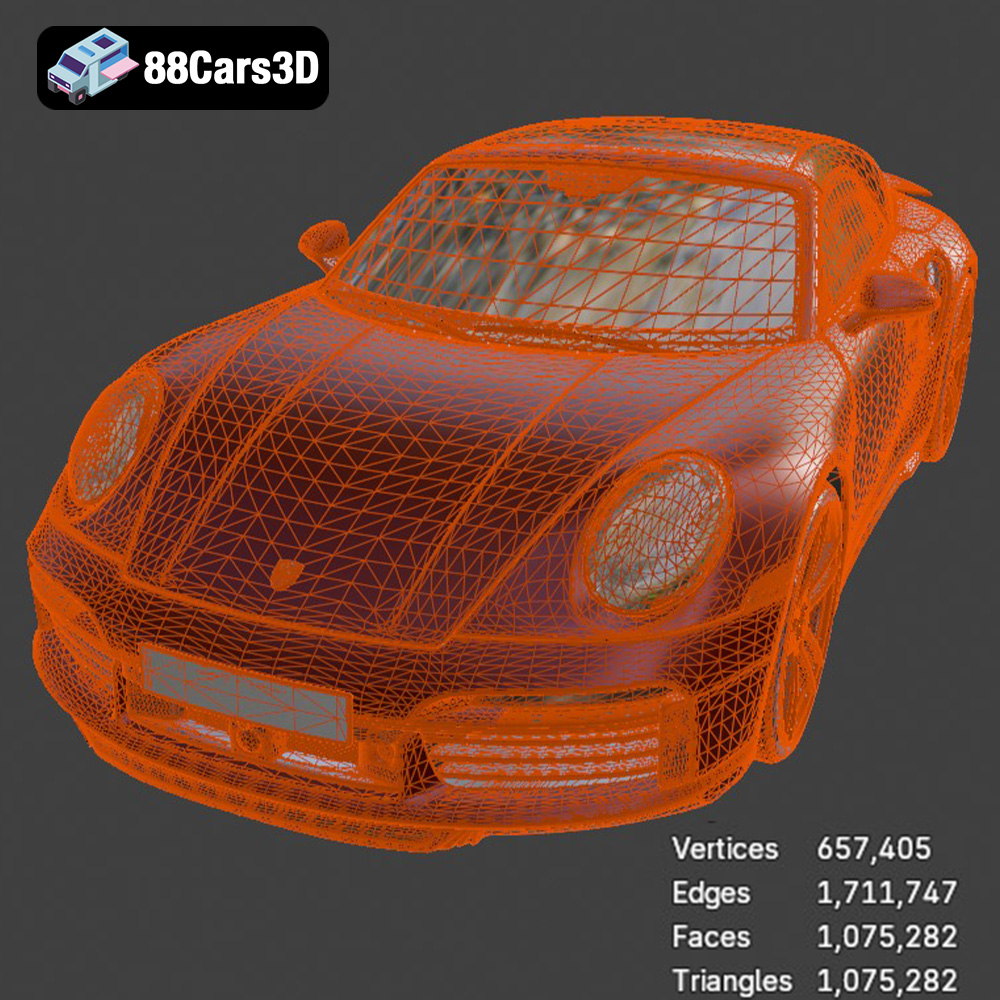
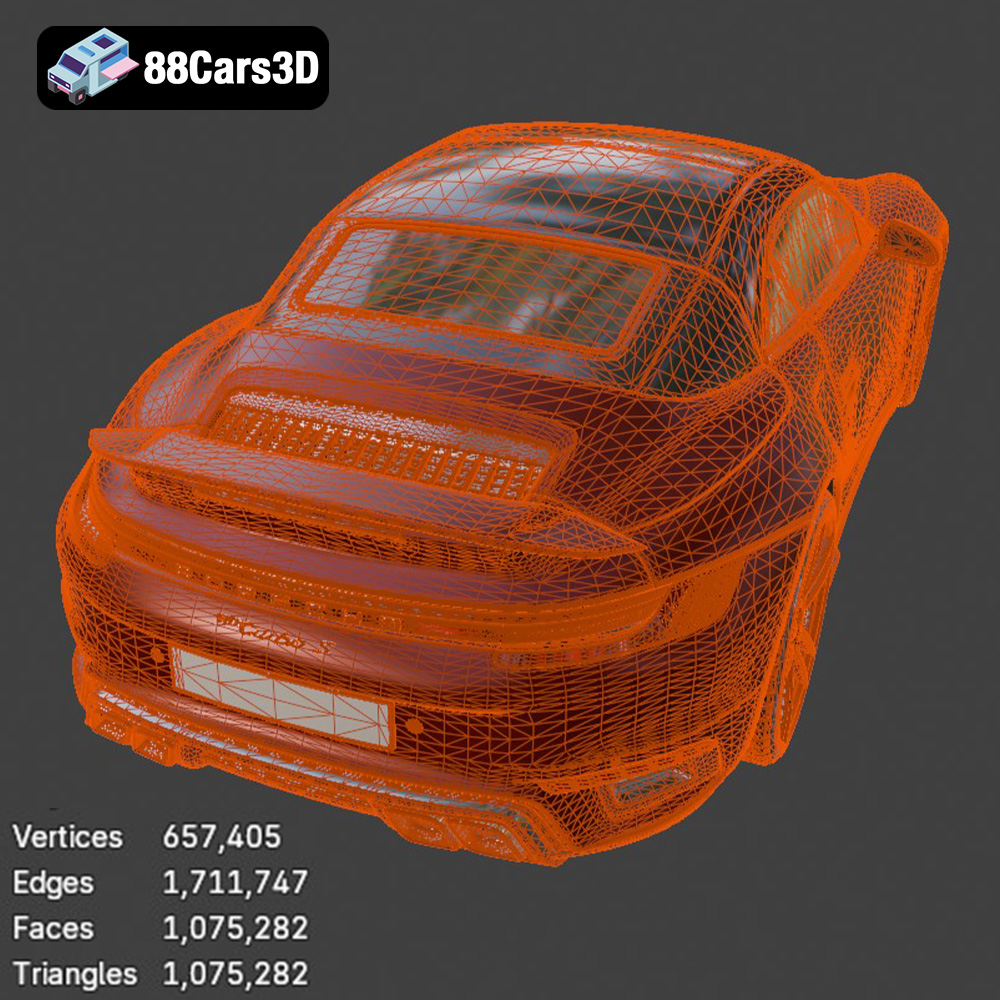
One of the perennial challenges in 3D modeling is striking the right balance between visual detail and computational performance. A model that is too dense can cripple real-time applications, while one that is too sparse will lack realism in high-end renders. The Porsche 911 Turbo S Cabriolet 2021 model showcases intelligent optimization, featuring an impressive 1,075,282 triangles. This polycount is sufficiently high to capture intricate details like the LED matrix headlights, carbon-ceramic rotors, and interior stitching, making it perfect for close-up automotive visualizations. Yet, it remains “game-ready & optimized,” meaning its topology is clean and efficient enough for real-time engines like Unreal and Unity without excessive overhead, providing a crucial advantage for game developers and AR/VR creators.
Beyond geometry, the magic of photorealism truly comes alive with advanced texturing and shading. Modern workflows heavily rely on Physically Based Rendering (PBR) materials, which accurately simulate how light interacts with surfaces in the real world. This involves creating various texture maps (albedo, roughness, metallic, normal, ambient occlusion) that define a material’s properties. For the Porsche model, this means authentically replicating the metallic sheen of the paint, the reflectivity of the glass, the subtle texture of leather interior, and the intricate patterns of the tire treads. The proper application of these PBR materials, often included in the provided file formats, is what elevates the model from a mere mesh to a stunningly realistic digital asset, ready for studio lighting setups and complex environmental interactions.
The true value of a premium 3D car model, such as the Porsche 911 Turbo S Cabriolet 2021 from 88cars3d.com, lies in its versatility across professional applications. Its optimized structure and comprehensive file format support ensure seamless integration into various pipelines.
For cinematic quality renders and static visualizations, 3ds Max and Blender offer robust environments. Leveraging the .max or .blend file, artists can access the model’s full hierarchy, apply advanced V-Ray, Corona, Cycles, or Octane materials, and craft sophisticated lighting setups. The Porsche 911 Turbo S Cabriolet 2021’s detailed engine block, intricate interior, and separate components (wheels, suspension, steering) allow for dynamic camera angles and detailed close-ups. Automotive advertisers and design studios can create stunning marketing materials, showcase new color options, or visualize the vehicle in various lifestyle scenes with unparalleled realism. The real-world scale accuracy ensures that environmental elements and human figures integrate seamlessly, enhancing believability.
Game developers constantly seek high-quality assets that perform efficiently within engine constraints. The Porsche 911 Turbo S Cabriolet 2021’s “game-ready” optimization and .fbx/.unreal file formats make it an ideal candidate for racing titles, open-world adventures, and driving simulators. Its 1,075,282 triangles strike a perfect balance, providing visual richness without overburdening the render pipeline. Developers can import the model, apply PBR materials, set up physics assets for realistic vehicle dynamics, and even animate components like steering, wheel rotation, and suspension travel, thanks to its proper pivot setup. This level of detail and optimization directly translates into more immersive and visually impressive gameplay experiences.
The burgeoning fields of Augmented Reality (AR) and Virtual Reality (VR) demand highly optimized yet visually stunning assets. Virtual showrooms, car configurators, and mobile AR experiences benefit immensely from models like the Porsche 911 Turbo S Cabriolet 2021. The .glb format is particularly beneficial here, offering a compact and efficient package for fast loading and rendering across various AR/VR platforms. Imagine a customer exploring the luxurious interior or viewing the car parked realistically on their driveway via their smartphone. The model’s optimized geometry and detailed cockpit features ensure an engaging first-person perspective, crucial for true immersion in virtual dealership environments or interactive product showcases.
The Porsche 911 Turbo S Cabriolet 2021 3D Model is a testament to precision modeling, capturing every nuance of this iconic supercar. Its design is not just aesthetically pleasing but also technically robust, making it suitable for a multitude of professional applications.
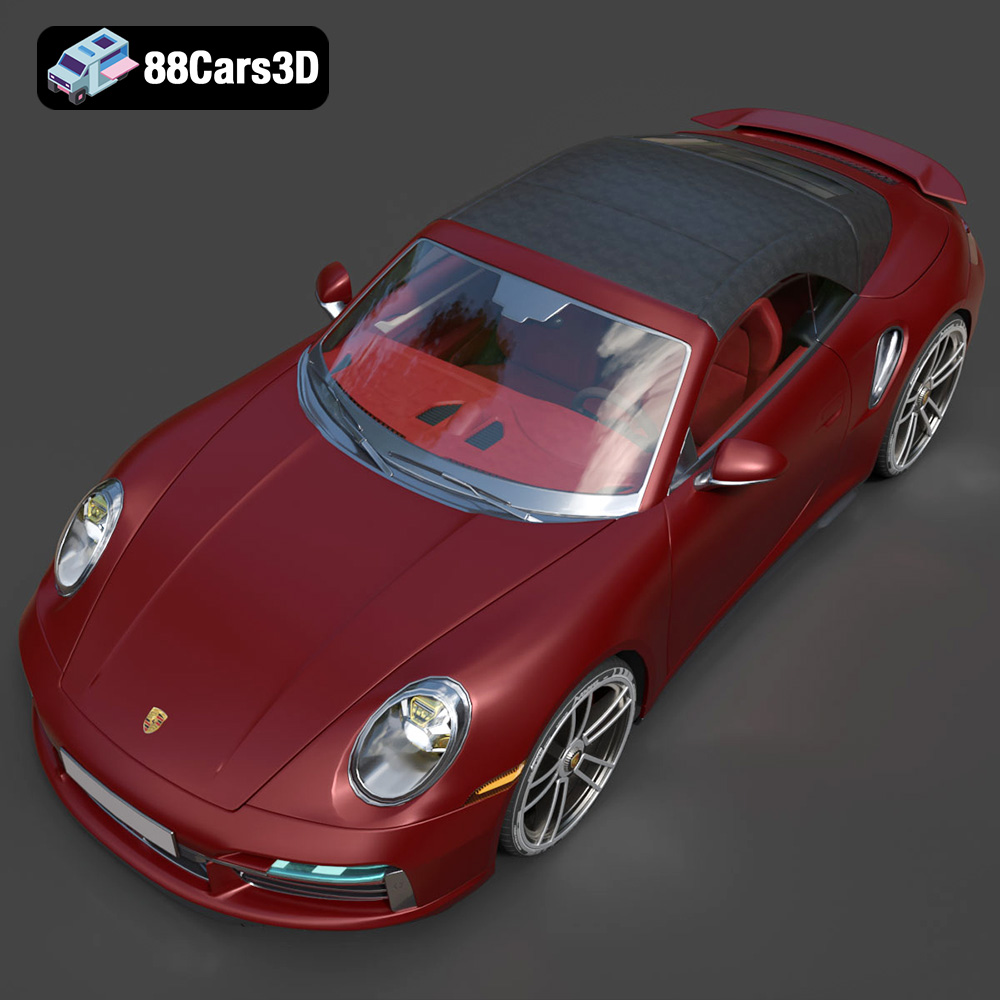
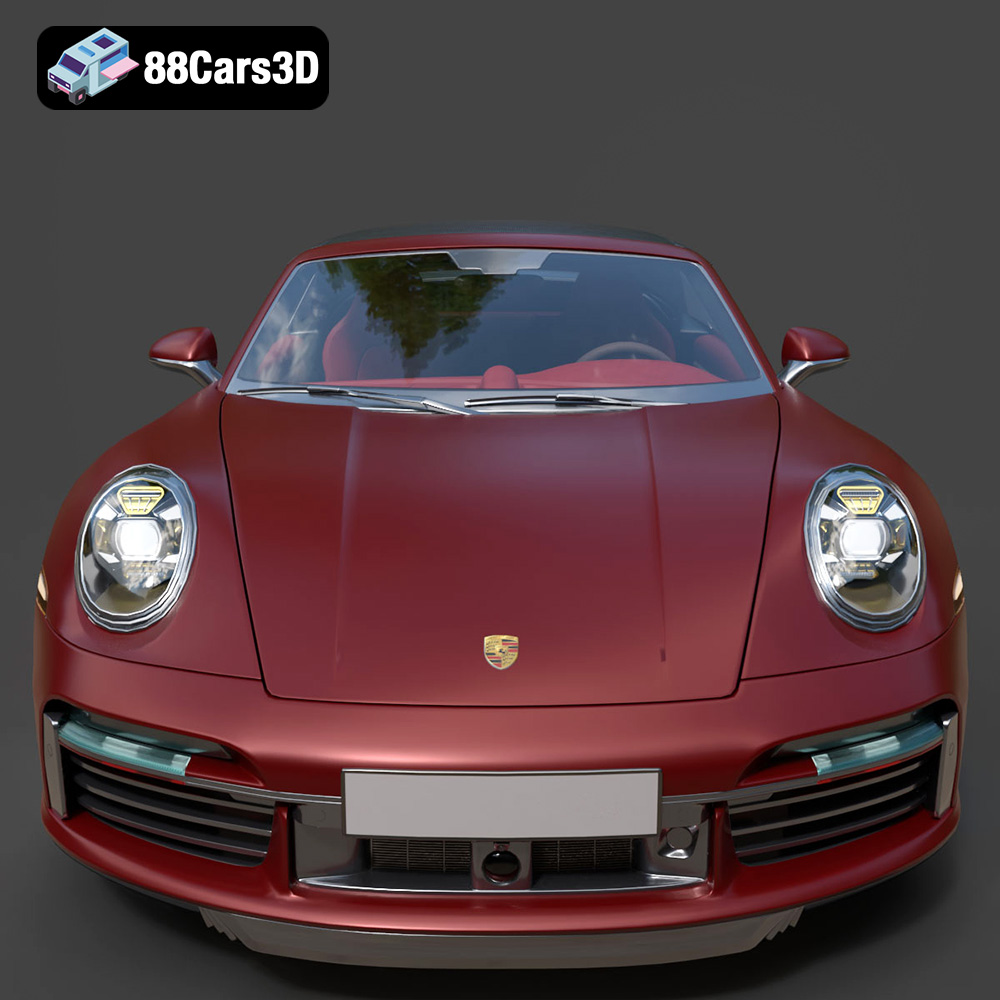
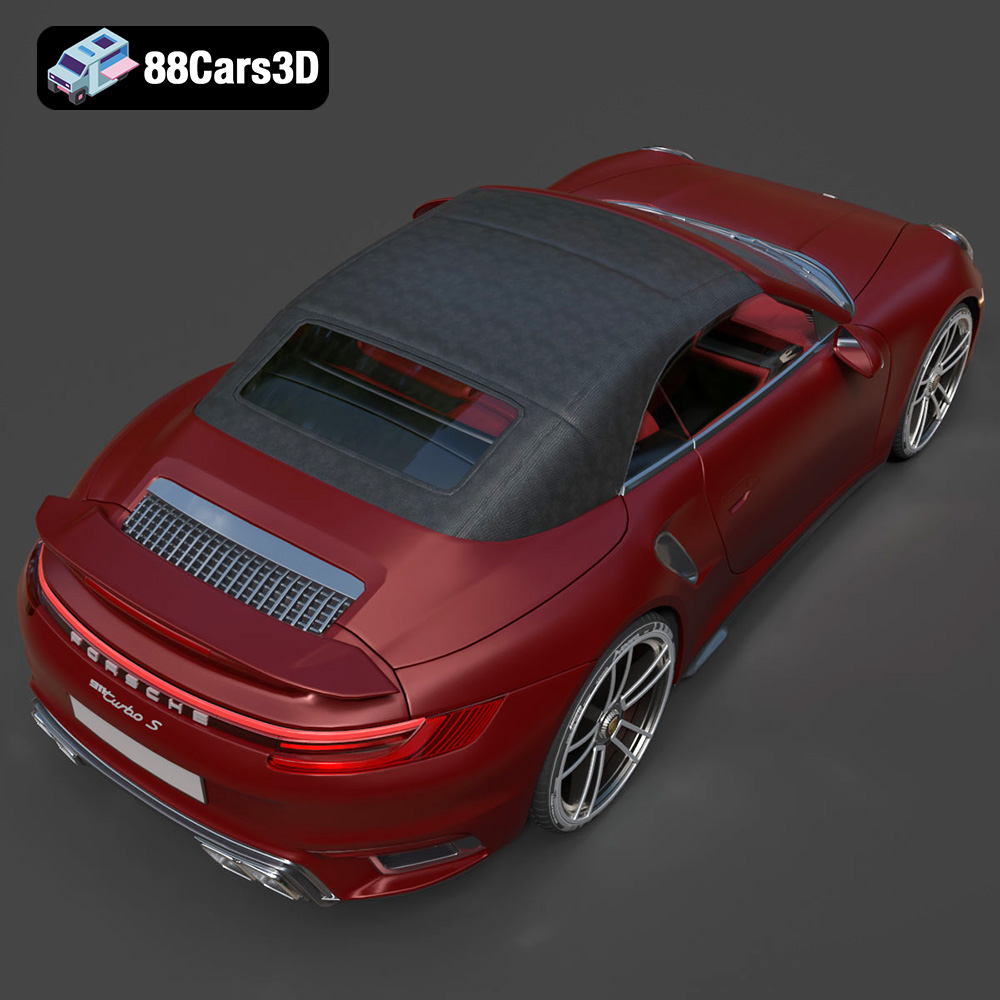
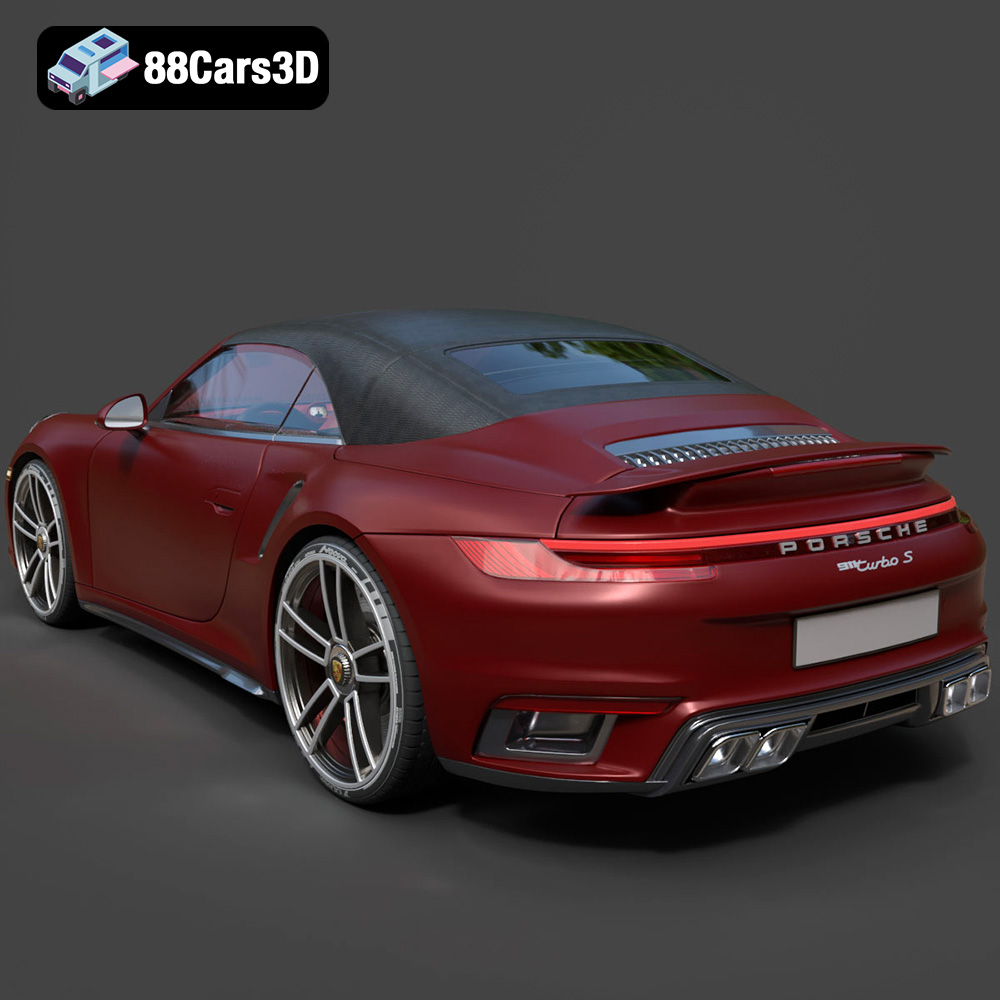
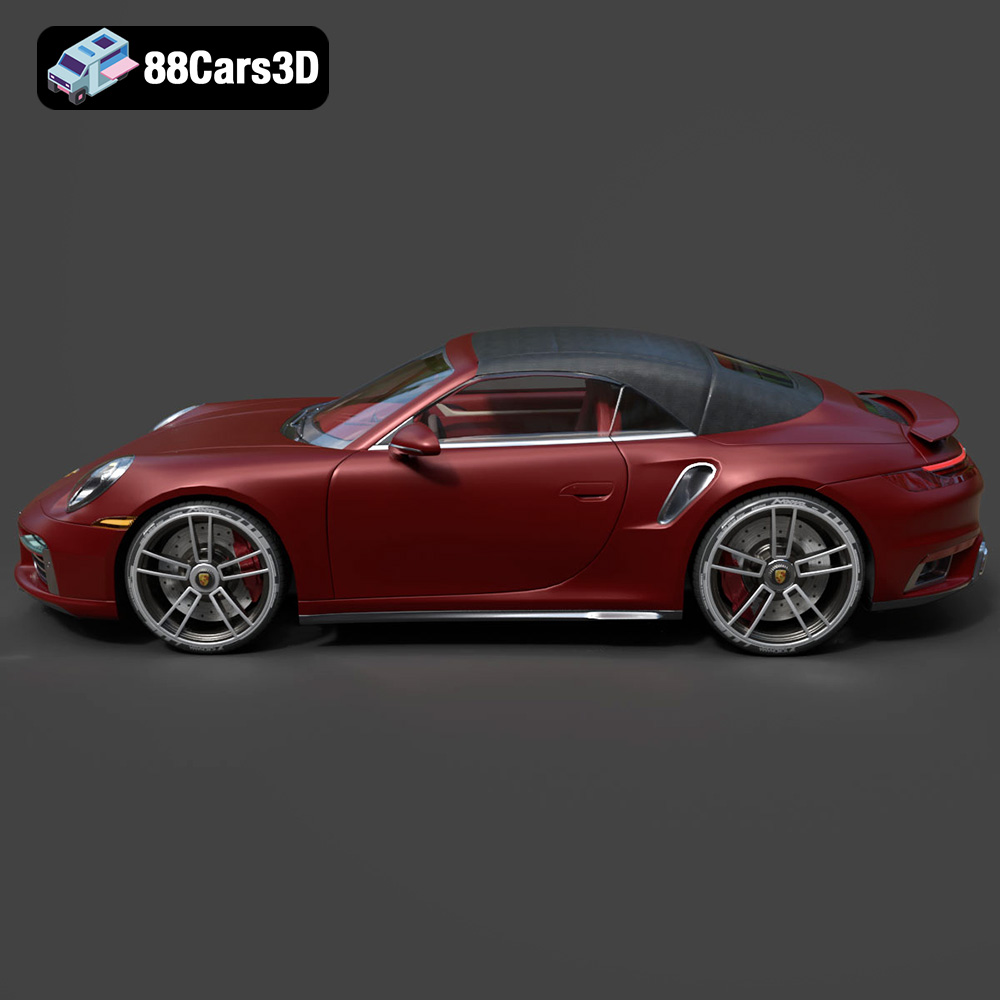
The model meticulously replicates the aggressive wide-body stance and sleek aerodynamic curves that define the 911 Turbo S Cabriolet. Key exterior features are accurately represented: the distinctive rear wing, the signature quad-tailpipe sport exhaust system, and the intricate LED matrix headlights that transition into a continuous rear light strip. Precision center-lock alloy wheels, complete with high-performance tires, and a detailed braking system featuring carbon-ceramic rotors and calipers, add another layer of authenticity. Crucially, the model includes separate components for wheels, suspension, and steering, enabling realistic animation and dynamic simulations. This granular detail ensures that whether it’s a static hero shot or a high-speed chase in a game, the visual integrity remains uncompromised.
The attention to detail extends seamlessly into the cockpit. The exquisitely detailed 18-way adaptive sport seats, the authentic GT sport steering wheel with its mode switch, and the highly detailed instrument cluster with an analog tachometer and digital displays all contribute to an immersive interior experience. The accurate center console layout, complete with the gear selector and climate controls, provides a true sense of being inside the vehicle. For game developers, this level of interior fidelity is optimized for first-person POV, making it perfect for racing simulations where players spend significant time behind the wheel. The model ensures that even the most discerning virtual drivers will find the environment believable and engaging.
Beyond its visual appeal, the Porsche 911 Turbo S Cabriolet 2021 3D model boasts significant technical advantages. Its “game-ready & optimized” status, achieved with 1,075,282 triangles, provides an excellent balance for both real-time engines and high-end rendering. Real-world scale accuracy, based on the actual vehicle chassis, guarantees correct proportions and interaction with other scene elements. Furthermore, the proper pivot setup for steering, wheel rotation, and suspension travel simplifies animation workflows, saving countless hours for animators and riggers. This robust technical foundation makes the model incredibly versatile, suitable for brand campaigns, luxury car configurators, high-fidelity racing simulations, and virtual dealership environments alike.
The utility of a premium 3D car model extends beyond purely digital realms. With the advancement of 3D printing technology, these digital assets can cross into the physical world, offering tangible representations for enthusiasts, designers, and collectors. Coupled with extensive customization options, the value proposition of such a model is significantly enhanced.
The inclusion of the .stl file format for the Porsche 911 Turbo S Cabriolet 2021 3D model opens up exciting possibilities for 3D printing. This format is the cornerstone for additive manufacturing, translating the digital mesh into instructions for a physical printer. For hobbyists and designers, converting this high-fidelity model into a physical display piece is a rewarding endeavor. The product description provides crucial print settings, recommending scales like 1:12, 1:18, or 1:24 for optimal detail. It advises a layer height of 0.04–0.12 mm, with resin printing highly recommended for capturing the fine details of the exhaust, mirrors, and interior. Furthermore, guidance on wall thickness (1.2–2.0 mm), infill (20–30%), and the necessity of supports for intricate parts ensures a successful print. Recommendations for print orientation and post-processing, such as sanding, primer, and authentic factory colors with metallic finishes, provide a comprehensive roadmap for transforming the digital into a stunning physical replica.
While the Porsche 911 Turbo S Cabriolet 2021 3D model is delivered with exceptional detail, its true potential is realized through customization. The ability to modify various aspects allows artists and developers to tailor the model precisely to their project’s unique requirements. Users can easily change body and fabric roof colors, experimenting with authentic factory hues or entirely custom finishes to match a brand’s aesthetic or a personal preference. Tire textures can be swapped between street and track variants, adding realism to different scenarios. Furthermore, adjusting material finishes—from matte to gloss, metallic, or carbon fiber—provides endless possibilities for aesthetic variation and showcasing premium details. Adapting lighting for different environments, whether it’s a sun-drenched coastal drive or a dramatic studio shot, further enhances the visual impact. This flexibility ensures that the model remains a relevant and powerful asset across numerous projects, offering creative freedom to push boundaries and achieve desired visual outcomes.
In the demanding world of 3D visualization, the quality and versatility of your assets are paramount. The Porsche 911 Turbo S Cabriolet 2021 3D model exemplifies the apex of digital automotive craftsmanship, offering a high-fidelity, optimized, and incredibly versatile asset for a wide range of applications. From cinematic automotive rendering and immersive AR/VR experiences to next-generation game development and even detailed 3D printing projects, this model provides the precision and performance that professionals require.
Its meticulous attention to both exterior and interior detail, combined with intelligent optimization and comprehensive file format support (including .blend, .fbx, .obj, .glb, .stl, .ply, .unreal, and .max), ensures it integrates effortlessly into virtually any workflow. The strategic decision to invest in a premium 3D car model like this not only saves valuable development time but also elevates the overall quality and impact of your final product. For those seeking to push the boundaries of realism and efficiency in their digital creations, 88cars3d.com provides access to this and many other exceptional 3D car models, empowering artists and developers to bring their most ambitious visions to life.
The 2021 Porsche 911 Turbo S Cabriolet represents the pinnacle of open-top performance, blending iconic 911 heritage with breathtaking twin-turbocharged power. This 3D model meticulously captures the aggressive wide-body stance, distinctive rear wing, quad exhaust system, and sleek aerodynamic curves that make this convertible a true supercar legend. Crafted with an impressive 1,075,282 triangles, this high-fidelity 3D model offers unparalleled visual realism while maintaining excellent topology. It is perfectly suited for high-end rendering, close-up automotive visualizations, VR/AR experiences, and next-gen game development where detail is paramount. Perfect for luxury car configurators, high-fidelity racing simulations, cinematic animations, and virtual dealership environments.
$63.50
.2021
.blend
.cabriolet
.convertible
.fbx
.glb
.max
.obj
.ply
.porsche
.rendering
.sports car
.stl
.supercar
.unreal
911-turbo-s
car-3d-model
game asset
game-ready
high poly
optimized
VR/AR