Get 20% OFF All Premium 3D & STL Models!

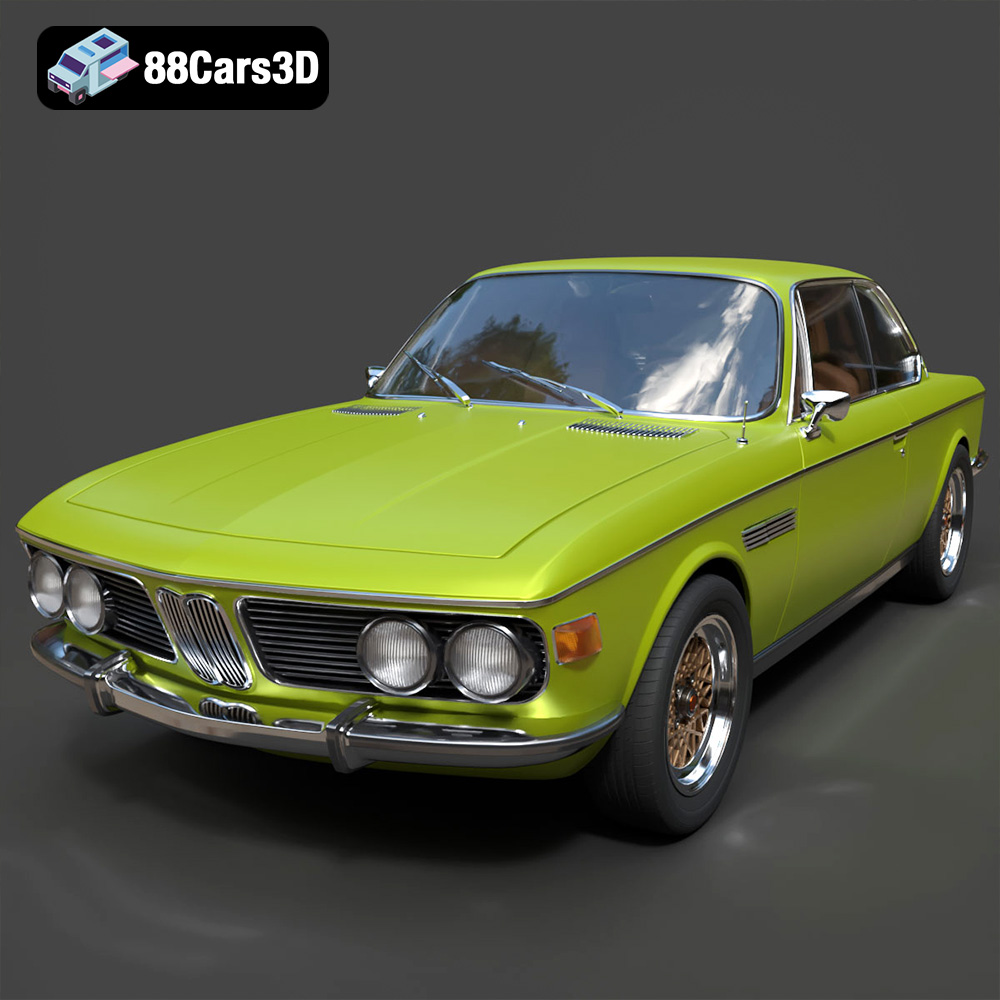
The automotive world is replete with legends, but few command the timeless admiration of a classic grand tourer. Among these icons, the BMW E9 series, particularly the 1968 model, stands out as a masterpiece of design and engineering. Its distinctive shark-nose front fascia, elegant pillarless coupe silhouette, and signature kidney grilles evoke an era of unparalleled automotive artistry. For designers, game developers, visual artists, and enthusiasts, recreating such a classic in the digital realm presents both a challenge and an opportunity to capture its essence with stunning fidelity.
Enter the world of high-quality 3D car models, where precision and realism are paramount. When working with a vehicle as revered as the BMW E9 1968, the foundation of any successful project lies in an exceptionally crafted 3D asset. This is precisely what the BMW E9 1968 3D Model Download STL FBX OBJ GLB Blend offers – a meticulously detailed digital representation ready for everything from photorealistic renders to immersive game environments. This article delves into the technical intricacies of leveraging such a sophisticated model, exploring its applications, workflows, and the diverse file formats that make it a truly versatile asset for any professional digital creation.
The versatility of a 3D asset often hinges on the breadth of file formats it supports. Each format serves a specific purpose, offering different levels of data retention, compatibility, and optimization for various workflows. The BMW E9 1968 3D model is supplied in a comprehensive range of formats, making it adaptable to almost any professional pipeline. Understanding these formats is crucial for maximizing efficiency and achieving desired outcomes.
The .blend format is Blender’s native project file. When you download the BMW E9 model in .blend, you’re getting a fully editable Blender scene. This means not just the mesh data, but also the material setup, textures, lighting, camera configurations, and even potential animation rigs if included, are preserved exactly as they were created. For artists primarily working within Blender, this offers the most flexibility for customization, material tweaks, scene composition, and rendering with Cycles or Eevee. It’s the ideal starting point for deep modifications or integrating the car into a Blender-centric project.
.fbx (Filmbox) is arguably the most widely used interchange format in 3D production, especially for real-time applications. Its strength lies in its ability to store not only geometry and UVs but also materials (though often simplified), textures, animations, skinning information, and camera data. For game development with engines like Unreal Engine and Unity, .fbx is the go-to. It ensures a relatively seamless transfer of hierarchical data, making it straightforward to import the BMW E9 into an engine with its separate wheels, suspension, and steering components intact for animation. While it can carry material information, a common workflow involves re-creating or refining materials within the target engine for optimal performance and visual quality.
The .obj (Wavefront Object) format is a venerable and universally compatible format for exchanging 3D geometry. It primarily stores vertex positions, UV coordinates, vertex normals, and basic material references via an associated .mtl file. While it’s excellent for mesh data, .obj does not support animations, rigging, or complex material networks. It’s perfect for situations where you need to import the raw geometry into almost any 3D software for modeling, sculpting, or re-texturing from scratch. For the BMW E9, it provides a clean, unencumbered mesh foundation for highly customized rendering setups or retopology work.
.glb is the binary version of glTF (GL Transmission Format), a modern, royalty-free specification for 3D scenes and models. It’s specifically designed for efficient transmission and loading of 3D content in web browsers, AR (Augmented Reality), and VR (Virtual Reality) applications. A .glb file packages all necessary data—geometry, materials, textures, animations—into a single, self-contained binary file, optimizing it for smaller file sizes and faster parsing. For showcasing the BMW E9 in a web-based configurator, an AR app on a smartphone, or an immersive VR showroom, .glb is the most efficient and performant choice.
The .stl (Stereolithography) format is the industry standard for 3D printing. It represents a 3D model as a series of connected triangles, defining only the surface geometry without color, texture, or material information. While lacking visual flair, its simplicity makes it ideal for direct manufacturing. The BMW E9 3D model, convertible to .stl, allows enthusiasts and professionals to physically manifest this classic car. The product description even provides specific 3D print settings, such as recommended scales (1:12, 1:18, 1:24), layer height, wall thickness, and support requirements, ensuring a successful print from this highly detailed digital asset.
.ply (Polygon File Format) is a versatile format for storing 3D data, particularly known for its ability to save properties beyond just geometry, such as color, transparency, and sometimes even normal vectors per vertex or face. While not as common for general asset exchange as .fbx or .obj, it’s frequently used in scientific applications, 3D scanning, and CAD for its precision and comprehensive data storage capabilities. For highly technical analyses or specialized manufacturing processes, the .ply version of the BMW E9 offers a robust dataset.
While often used generically, an “.unreal” file typically refers to an asset or project package specifically prepared for Unreal Engine. This could be an .fbx imported and optimized within an Unreal project, or a native Unreal asset pack. When you acquire the BMW E9 model in this format, it implies that it comes with materials (often physically based rendering – PBR materials) already set up, collision meshes potentially generated, and optimizations applied for direct use within the Unreal Editor. This significantly streamlines the workflow for game developers and real-time visualization artists, reducing the setup time required to get the vehicle looking and performing correctly in a virtual environment.
Similar to .blend for Blender, .max is the native scene file for Autodesk 3ds Max. This format retains all the intricate details of a 3ds Max project, including geometry, modifiers, complex material setups (V-Ray, Corona, Arnold), lighting, cameras, and animation data. For users deeply integrated into the Autodesk ecosystem, the .max version of the BMW E9 provides the ultimate flexibility for professional rendering, architectural visualization integration, and advanced animation tasks within 3ds Max, allowing for direct manipulation of the original scene components and render settings.
The availability of the BMW E9 1968 3D model in such a wide array of formats from 88cars3d.com underscores its adaptability and value as a professional-grade asset, catering to the specific technical demands of diverse creative industries.
Achieving photorealistic quality in automotive rendering and game development hinges on meticulous attention to detail. The BMW E9 1968 3D Model exemplifies this principle, offering an asset that goes far beyond a mere shell. Its technical specifications and design philosophy are geared towards delivering unparalleled visual fidelity and performance across various applications.
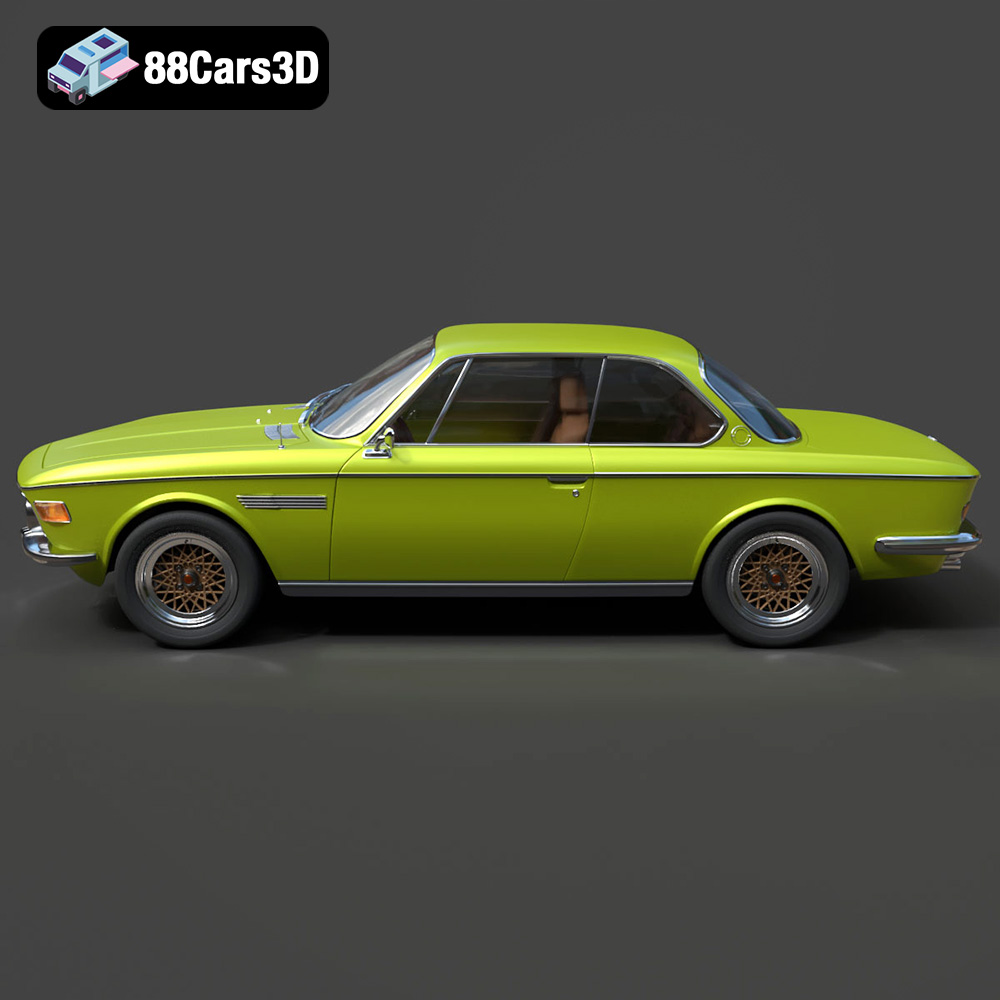
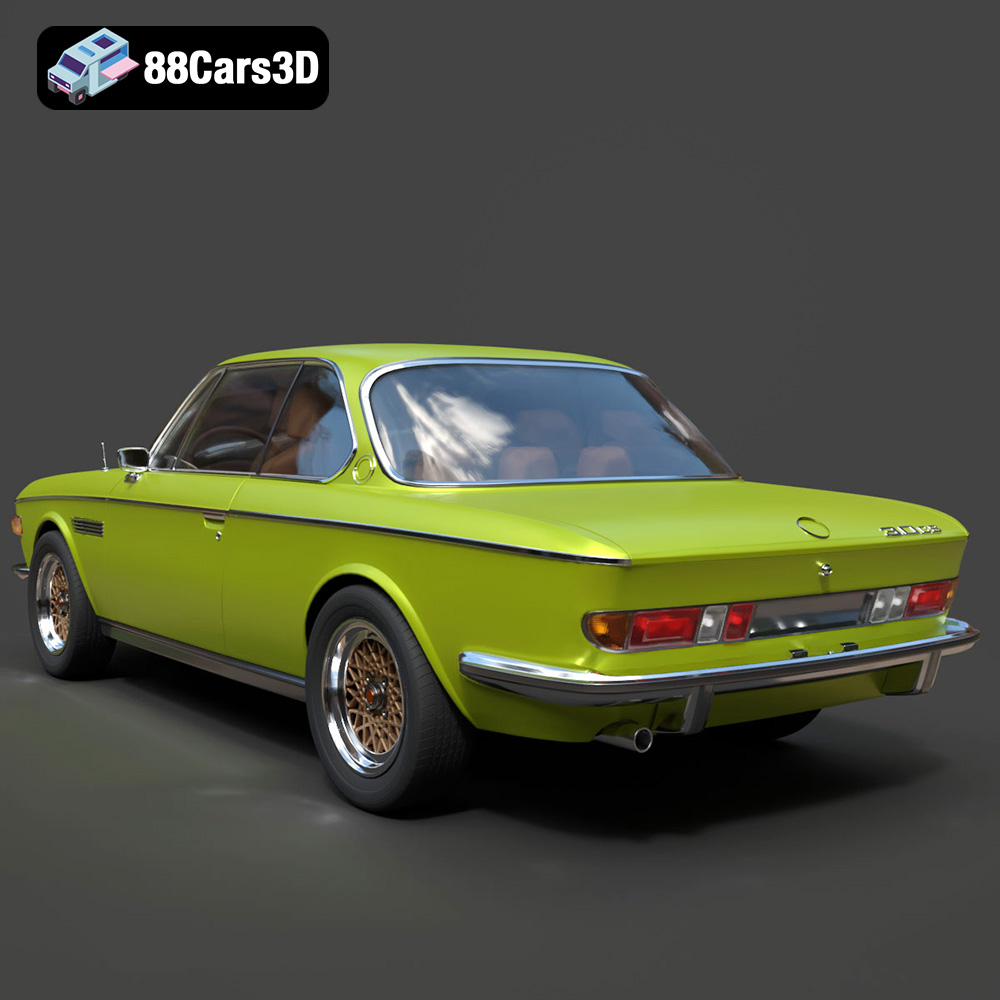
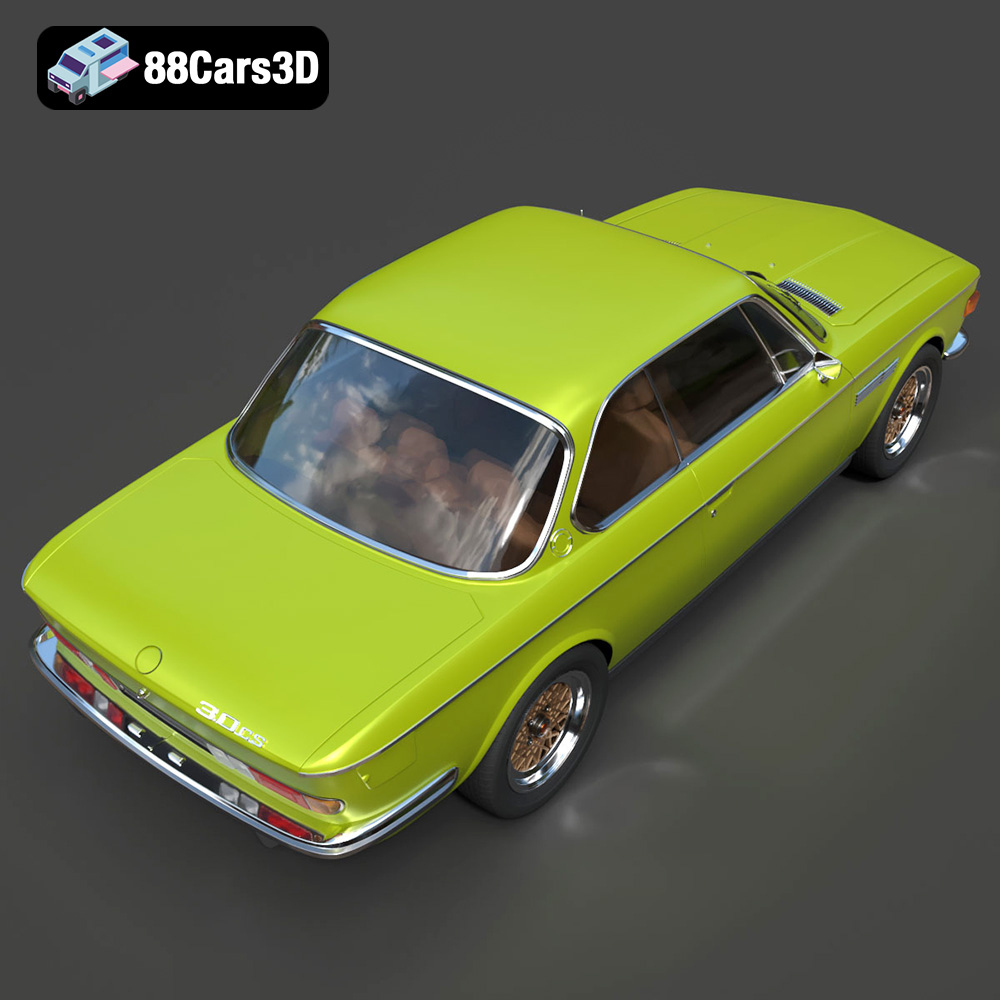
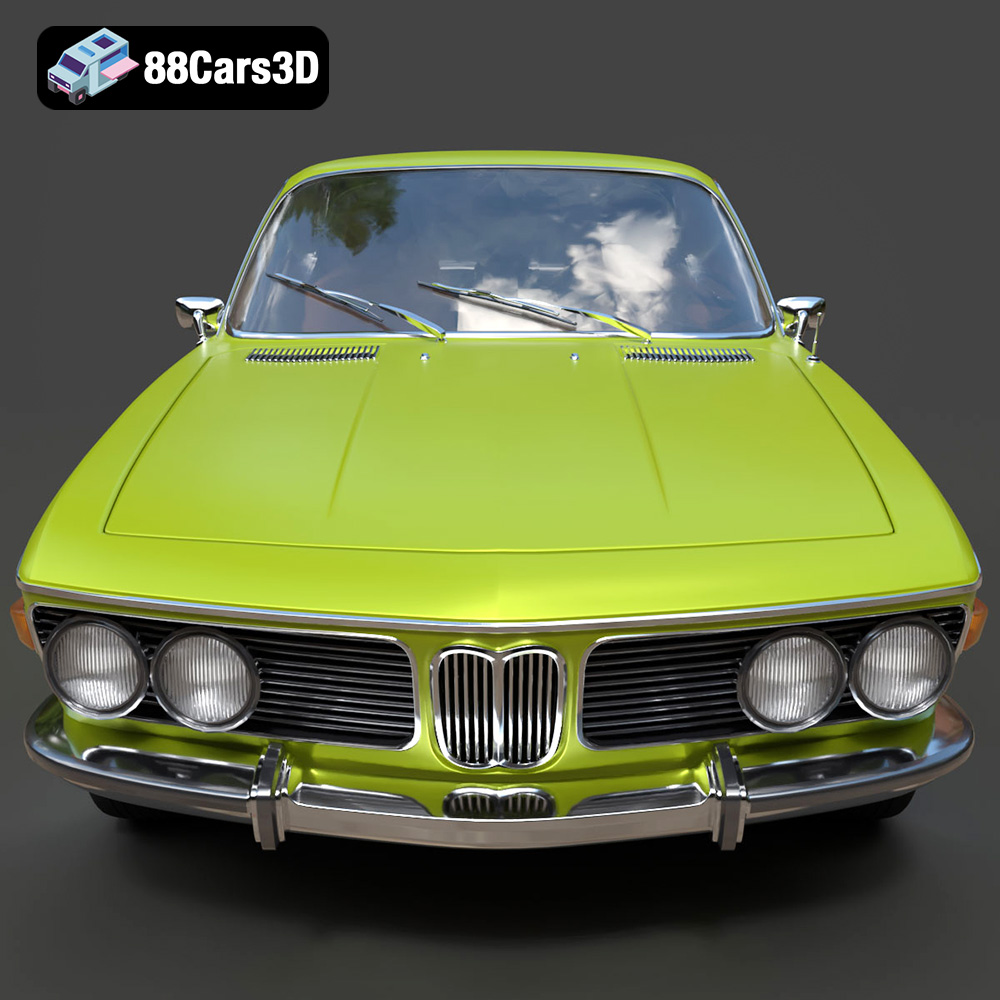
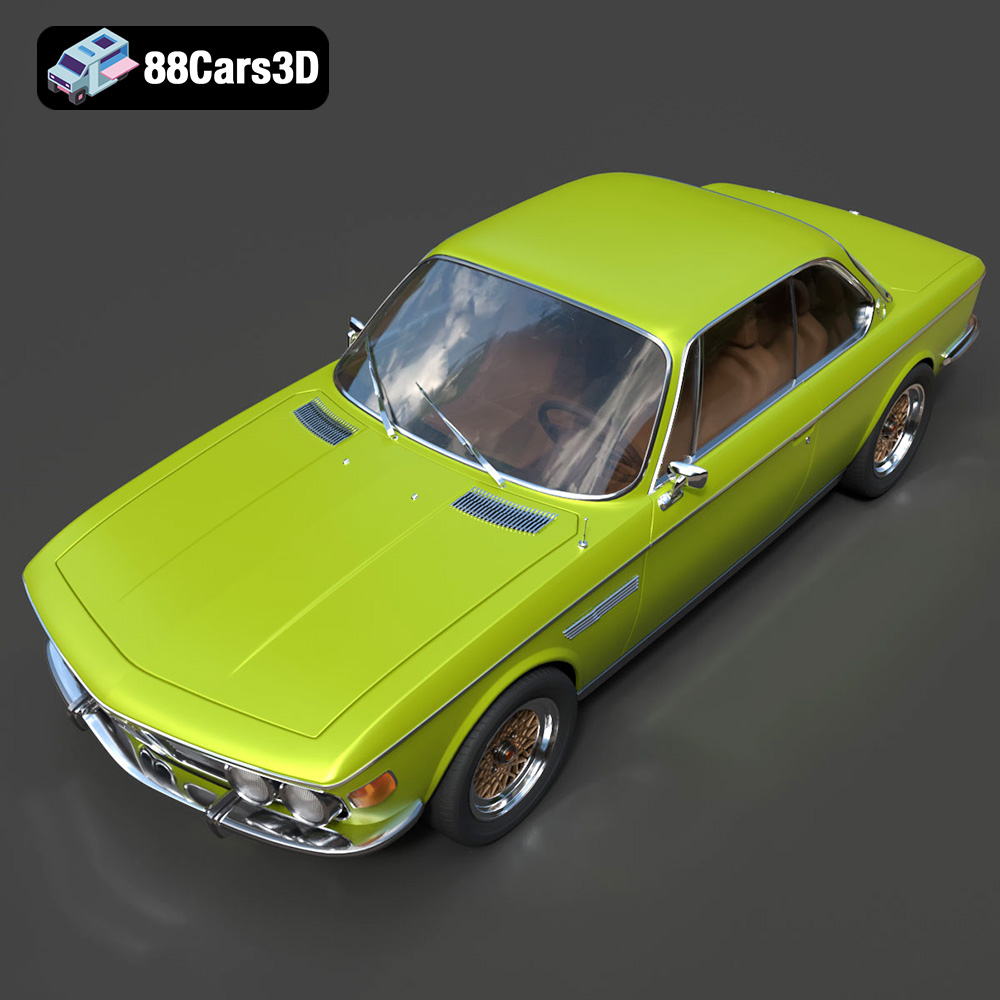
The BMW E9’s exterior is its most recognizable feature, and this 3D model captures every nuance with exquisite precision. The accurate frame geometry and elegant pillarless coupe proportions are faithfully reproduced, ensuring the vehicle’s characteristic stance and aerodynamics are correct. Key design elements like the quad headlights, signature kidney grilles, and distinct taillight assemblies are not just textures but carefully modeled components, contributing to the model’s high-resolution appeal. The classic vintage alloy wheels with period-correct tire tread patterns further enhance realism, grounding the vehicle in its historical context. Even the undercarriage details and dual exhaust system are present, a critical feature for high-fidelity renders where the car might be viewed from multiple angles or elevated in a showroom setting. For game developers, the inclusion of separate wheels, suspension, and steering components is invaluable, allowing for realistic physics simulation and animation without the need for additional modeling or rigging efforts.
The interior of the BMW E9 was a statement of luxury, and the 3D model reflects this with impressive depth. The luxurious period-correct leather bucket seats and detailed upholstery are modeled to convey texture and comfort. The classic thin-rimmed steering wheel, complete with an accurate emblem, adds to the authenticity. A rich wood-trim dashboard houses a vintage analog instrument cluster, where each gauge and dial is clearly defined, not just mapped. The detailed manual shifter, authentic pedals, and center console controls further enhance the sense of realism. For game development, particularly for first-person POV in racing simulators or open-world games, this level of interior detail is crucial for player immersion. It allows camera angles to penetrate the cockpit without revealing low-resolution shortcuts, maintaining consistency and realism throughout the virtual experience.
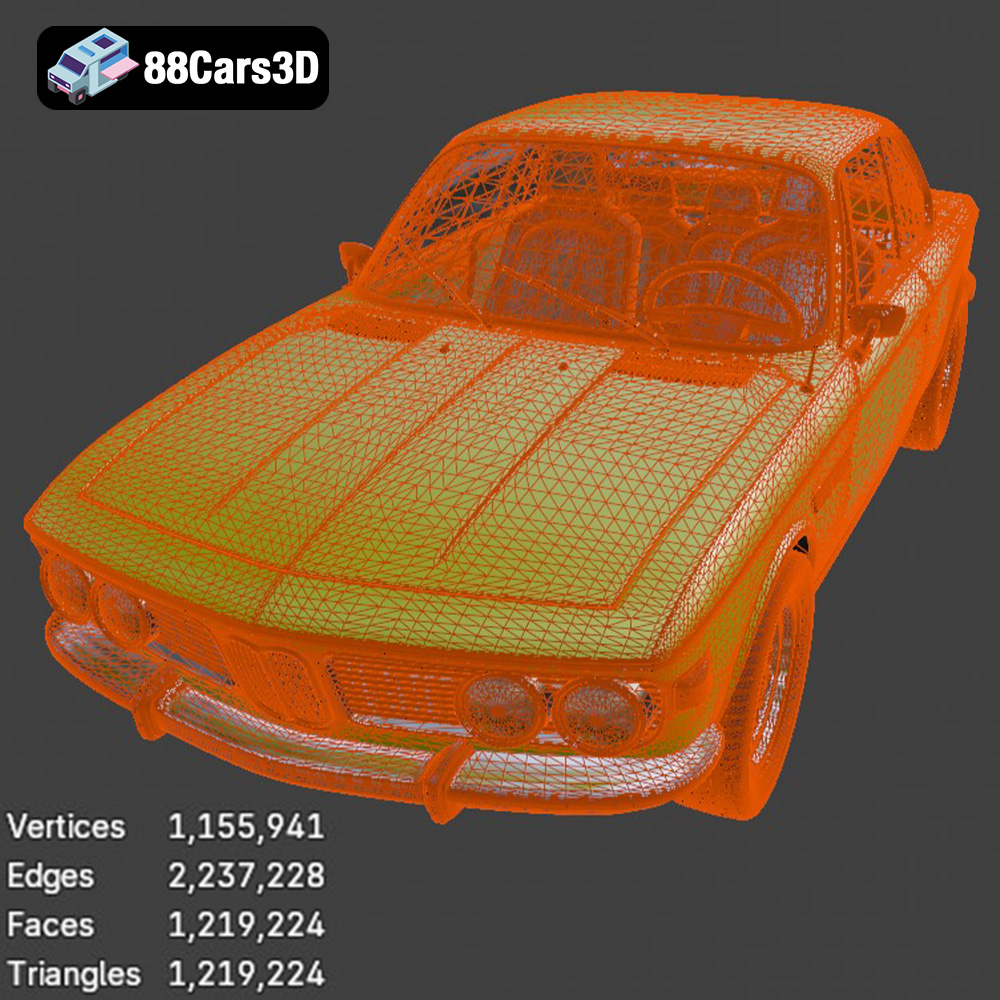
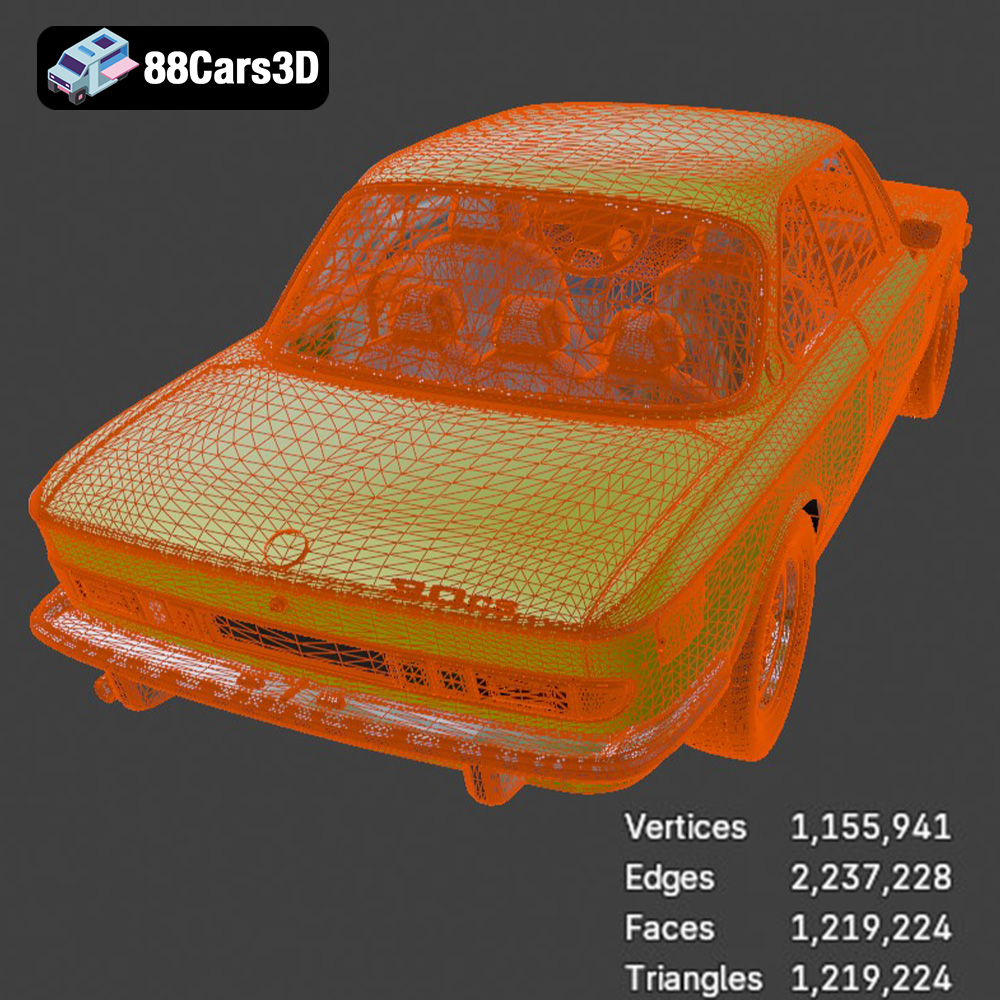
With 1,219,224 triangles, this model strikes an optimal balance for modern production pipelines. This polycount is sufficiently high to deliver stunning detail for close-up renders and cinematics, capturing subtle curves and sharp edges without aliasing artifacts. At the same time, it is optimized for modern real-time engines like Unreal and Unity, which are increasingly capable of handling high-polygon assets efficiently. This “game-ready” optimization ensures that while visual fidelity is high, performance remains acceptable for interactive experiences. The real-world scale accuracy, based on actual vehicle chassis dimensions, guarantees that the BMW E9 will integrate seamlessly into scenes with other real-world scaled assets, maintaining consistent proportions. Furthermore, the proper pivot setup for steering, wheel rotation, and suspension travel is a significant technical advantage, drastically reducing the setup time for animators and riggers who would otherwise have to manually configure these critical transformation points.
A truly versatile 3D car model is one that can be easily integrated into diverse professional workflows. The BMW E9 1968 model, with its comprehensive file format support and optimized geometry, is designed for seamless use across industry-standard software and engines. Let’s explore how professionals can leverage this asset in 3ds Max, Blender, and Unreal Engine.
For architectural visualization (arch-viz) and professional automotive rendering, Autodesk 3ds Max remains a powerhouse, especially when paired with renderers like V-Ray or Corona. The .max file format provides a native starting point.
Workflow:
Case Study: An advertising agency needs to create a photorealistic CGI commercial for a classic car insurer. Using the BMW E9 model in 3ds Max, they can quickly place it into a virtual environment, render it with stunning fidelity, and animate it with precision, saving weeks of modeling time and achieving a high-quality result that resonates with classic car enthusiasts.
Blender has emerged as a formidable tool for 3D artists, offering immense creative freedom and a powerful rendering engine with Cycles and Eevee. The .blend file is the native choice for Blender users.
Workflow:
Case Study: An independent game developer, building a vintage car collection for an upcoming indie title, leverages the .blend file of the BMW E9. They can easily adjust the polycount further if needed, bake custom normal maps from the high-poly detail, and integrate it into their game engine after setting up an optimized material within Blender.
Unreal Engine is the industry standard for real-time graphics, game assets, and interactive experiences. The .fbx and .unreal file formats are crucial here.
Workflow:
Case Study: A leading automotive configurator company uses the .unreal file of the BMW E9 to quickly integrate the vehicle into their next-gen virtual showroom. With PBR materials pre-set and basic physics already configured, they can focus on developing advanced interactivity like real-time color changes, interior tours, and performance simulations, delivering a cutting-edge AR/VR experience for potential buyers.
The utility of a high-quality 3D car model extends far beyond traditional rendering and game development. The BMW E9 1968 3D model is exceptionally well-suited for a variety of emerging and established applications, from immersive experiences to tangible physical replicas.
Augmented Reality (AR) and Virtual Reality (VR) are transforming how we interact with digital content. For automotive enthusiasts and businesses, AR/VR offers unparalleled opportunities to experience vehicles in new ways. The BMW E9 model, especially in its .glb format, is primed for these applications.
The focus on optimized geometry and efficient file formats ensures that the E9 model performs well in resource-intensive AR/VR environments, delivering smooth frame rates and high visual fidelity.
One of the most exciting aspects of a meticulously crafted 3D model is the ability to transform it into a physical object. The BMW E9 1968 model, with its .stl format and clear 3D print settings, opens up this possibility for hobbyists and professionals alike.
The ability to transition from a digital asset on 88cars3d.com to a tangible item underscores the versatility and quality of this particular 3D car model.
For artists and marketing professionals, high-resolution rendering is crucial for creating stunning visuals that captivate audiences. The BMW E9 model excels in this domain, providing a rich foundation for various visualization needs.
The model’s impressive 1,219,224 triangles mean that even extreme close-ups and high-resolution outputs will maintain their fidelity, free from pixelation or unsightly faceting, making it an invaluable asset for any visual artist.
In the realm of modern interactive experiences, the challenge is to deliver breathtaking visual fidelity without compromising real-time performance. This delicate balance is where the BMW E9 1968 3D model truly shines as a prime game asset. Its design considerations are clearly geared towards professional game development and high-performance real-time rendering environments.
The term “game-ready” implies a model that is not only visually appealing but also optimized for the stringent demands of game engines. The BMW E9 model’s polycount of 1,219,224 triangles (or approximately 600,000 polygons) is a critical specification. While this might seem high compared to older game assets, modern engines like Unreal Engine 5 and Unity are increasingly capable of handling such detail, especially for hero vehicles or close-up objects. This polycount ensures that the E9 retains its intricate details – the subtle curves of the body, the sharpness of the chrome, the depth of the interior – even in real-time without the need for extensive normal mapping from an even higher poly source. For racing games, open-world titles where the player spends significant time with the vehicle, or even VR experiences where fidelity is paramount, this level of detail is essential for immersion.
The model’s inclusion of .fbx and .unreal formats is a direct testament to its compatibility with the leading real-time engines.
The “Game-Ready” status implies that the model has undergone crucial steps like ensuring proper scale, correct normal orientations, and a manageable polygon count for interactive environments, saving development teams significant time and resources in asset preparation.
Beyond static representation, the BMW E9 1968 model is designed with animation and interactivity in mind.
Ultimately, this premium 3D car model from 88cars3d.com provides a robust and flexible foundation for creating compelling and performance-optimized automotive experiences across various real-time platforms, making it an invaluable asset for any serious developer.
The BMW E9 1968 remains an undisputed automotive icon, a testament to timeless design and engineering prowess. In the digital realm, capturing such a legacy demands a 3D car model that is not just aesthetically accurate but also technically robust and versatile. The BMW E9 1968 3D Model Download STL FBX OBJ GLB Blend delivers precisely that, offering an unparalleled foundation for a myriad of digital projects.
From its impressively detailed exterior and sophisticated interior to its optimized geometry and game-ready features, every aspect of this model is crafted for professional application. We’ve explored how its 1,219,224 triangles strike the perfect balance between high visual fidelity and real-time performance, making it suitable for everything from photorealistic architectural visualizations in 3ds Max and artistic renders in Blender to immersive interactive experiences in Unreal Engine. The comprehensive array of included file formats—.blend, .fbx, .obj, .glb, .stl, .ply, .unreal, and .max—ensures seamless integration into virtually any professional pipeline, providing flexibility that is essential in today’s diverse creative landscape.
Whether your goal is to create stunning automotive rendering for a marketing campaign, develop engaging game assets for a vintage racing simulator, build an immersive AR/VR experience, or even bring the digital design to life through 3D printing, this BMW E9 model stands as a premium asset. It streamlines workflows, reduces development time, and guarantees a level of detail that will elevate any project. For creators seeking to infuse their work with the elegance and power of a classic, this 3D model from 88cars3d.com is an investment in digital excellence, offering a piece of automotive history ready to be reimagined and showcased in the modern world.
The BMW E9 1968 stands as one of the most beautiful and iconic grand tourers in automotive history. Renowned for its distinctive shark-nose front fascia, elegant pillarless coupe silhouette, and signature kidney grilles, this classic German masterpiece defined luxury performance in the late 1960s. Featuring beautifully crafted chrome bumpers, quad headlights, and an aerodynamic profile housing a legendary inline-six engine, the E9 remains a highly sought-after vintage icon. This premium 3D model boasts an impressive 1,219,224 triangles, delivering unparalleled visual fidelity and pristine topology. Perfectly optimized for high-end rendering and modern real-time engines supporting high-polygon assets, this model offers breathtaking realism. It is expertly crafted for game development, AR/VR experiences, high-resolution animation, and photorealistic visualization. Perfect for classic car virtual showrooms, vintage racing simulators, high-end architectural visualizations, and cinematic automotive animations.
$67.00
.1968
.blend
.bmw
.coupe
.fbx
.glb
.max
.obj
.ply
.rendering
.stl
.unreal
bmw-e9
car-3d-model
classic-car
game asset
game-ready
grand-tourer
high poly
optimized
VR/AR