Get 20% OFF All Premium 3D & STL Models!

The Mercedes Benz 300 SL Coupe is more than just a car; it’s a legend, an icon that commands respect and admiration from automotive enthusiasts and design connoisseurs worldwide. With its unmistakable gullwing doors, sleek aerodynamic profile, and race-bred heritage, it represents a pinnacle of 1950s engineering and aesthetics. In the modern digital age, the desire to experience, visualize, and interact with such a masterpiece extends beyond physical ownership. This is where high-quality 3D car models become indispensable tools for a myriad of applications, from game development and cinematic rendering to virtual reality and 3D printing.
At 88cars3d.com, we understand the profound impact a meticulously crafted 3D asset can have on a project. That’s why we’re excited to delve into the intricacies of our Mercedes Benz 300 SL Coupe 3D Model, a digital twin that not only captures the soul of the original but also offers unparalleled versatility and technical precision for a wide array of professional workflows. This model isn’t just a static object; it’s a dynamic foundation designed to elevate your creative endeavors, ensuring your projects stand out with authenticity and visual brilliance.
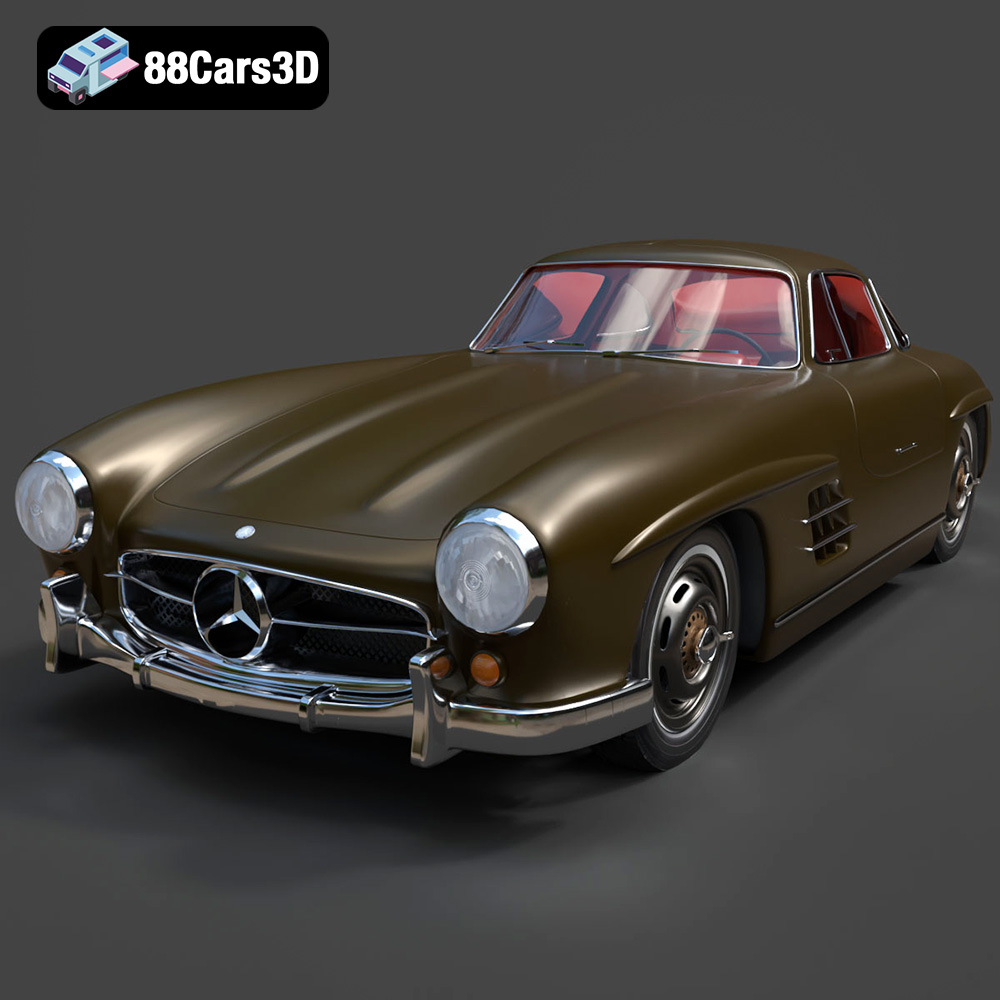
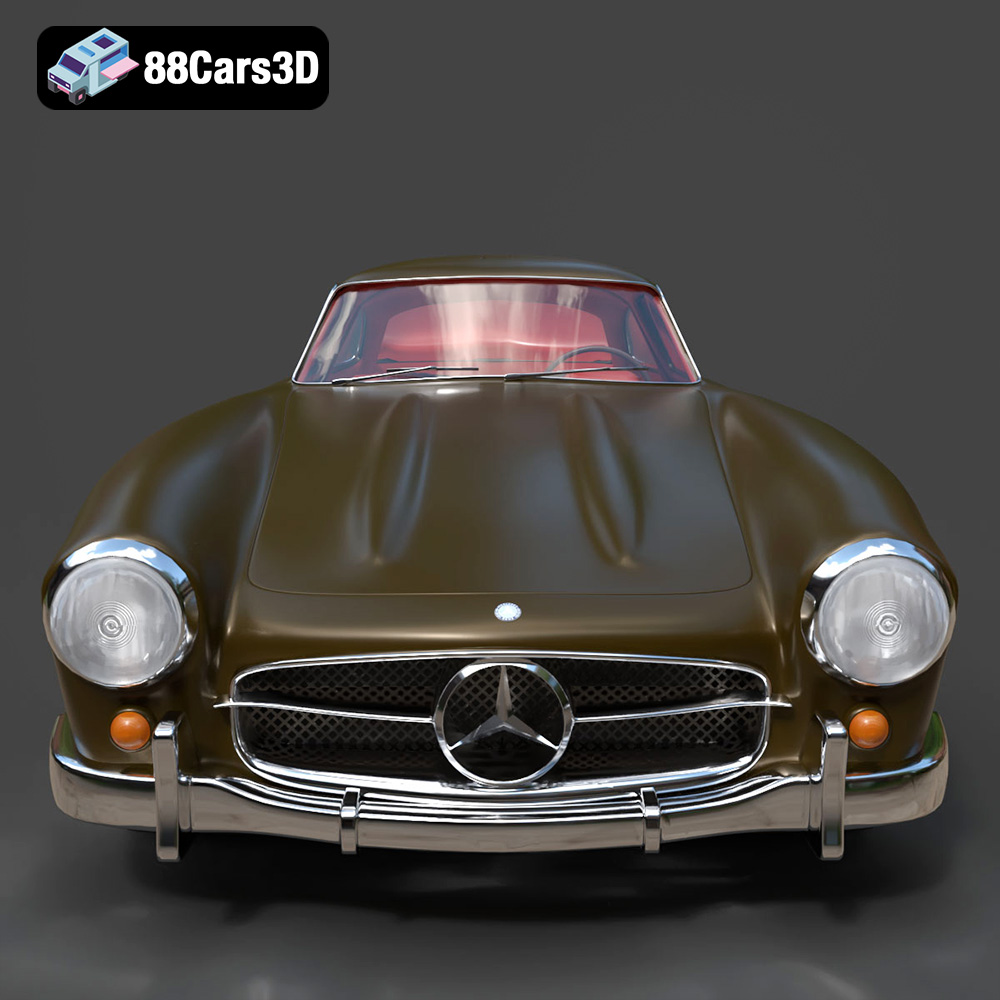
The Mercedes Benz 300 SL Coupe burst onto the scene in 1954, immediately distinguishing itself with its pioneering direct fuel-injected 3.0-liter straight-six engine and, of course, those iconic gullwing doors. Originally conceived as a racing car, its road-going version quickly became a symbol of luxury, performance, and groundbreaking design. Its distinct front grille, elegant curves, and attention to detail have ensured its place in history as one of the most beautiful cars ever made.
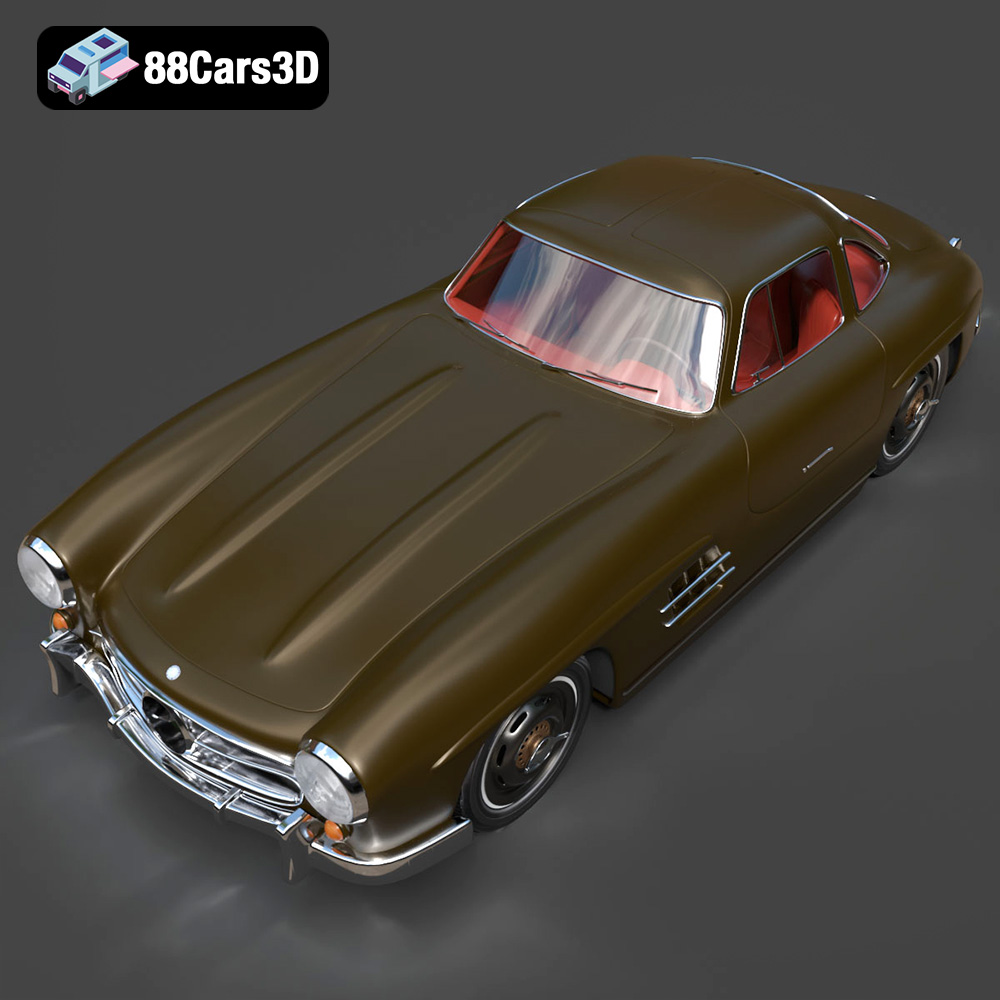
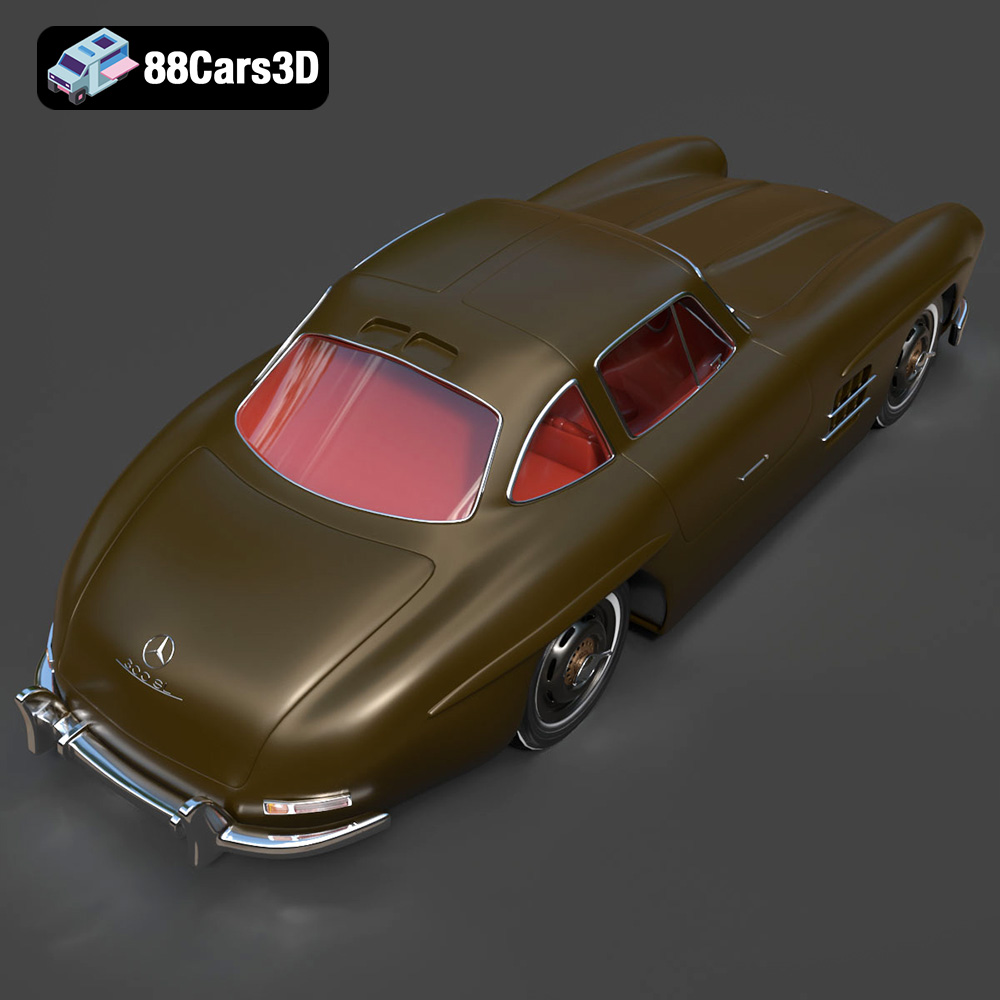
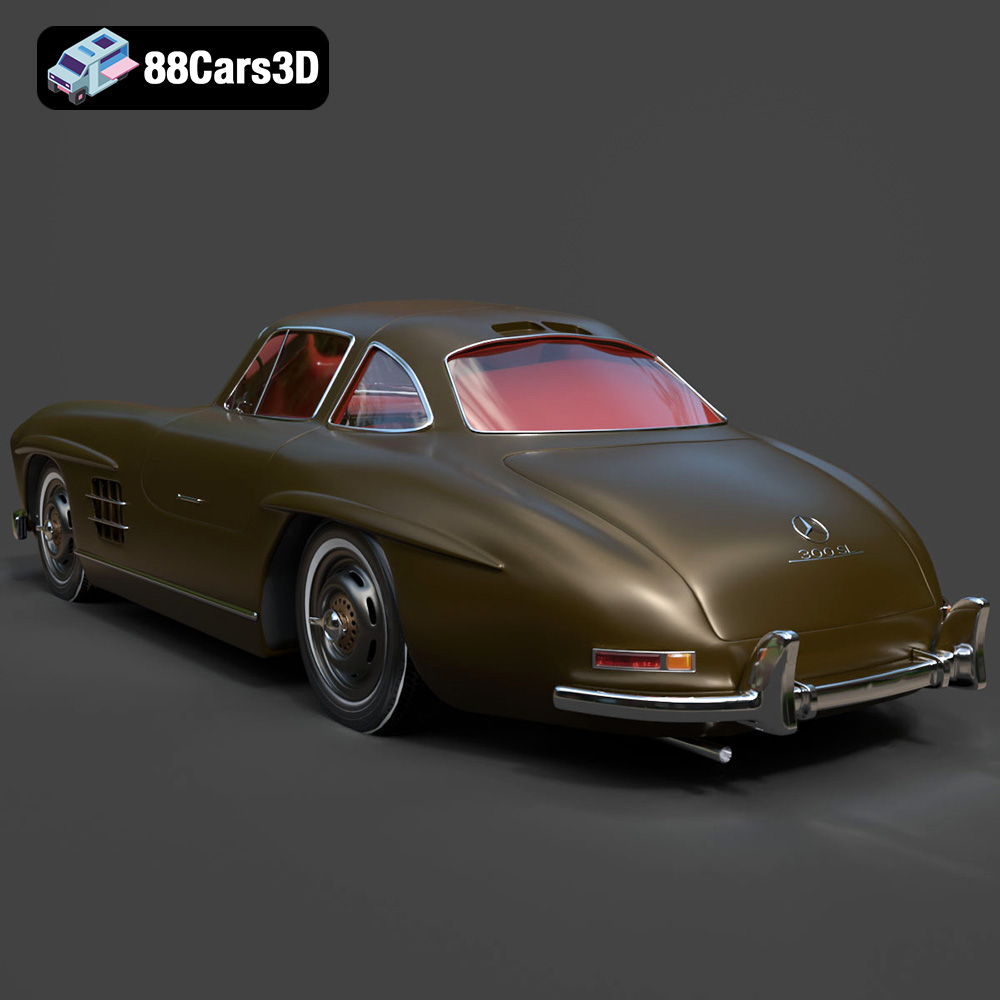
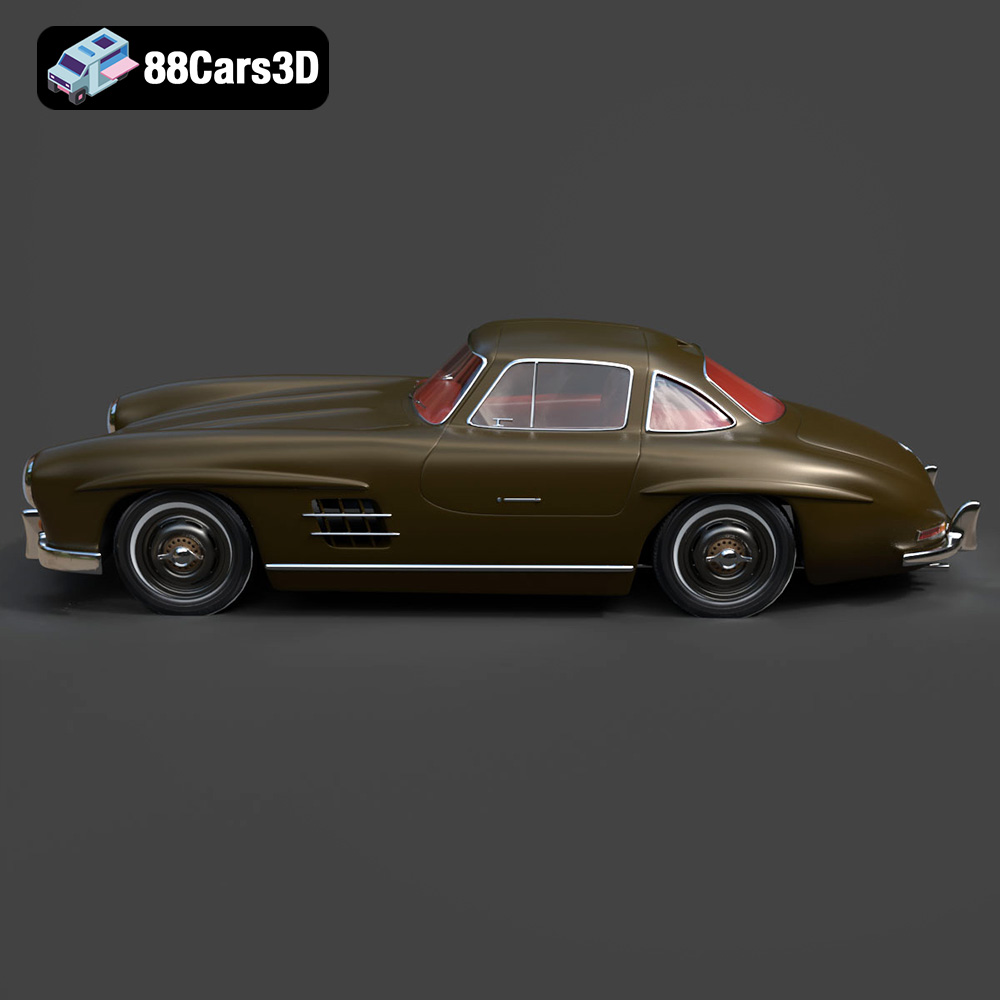
Recreating such a revered vehicle in 3D demands an extraordinary level of detail and accuracy. Our Mercedes Benz 300 SL Coupe 3D Model achieves this by meticulously translating every curve, vent, and panel into a digital format. From the authentic circular headlights and classic taillights to the vintage wire-spoke wheels and period-correct tire treads, no element has been overlooked. The model even includes a detailed 3.0-liter straight-six engine block, a feature often overlooked in more generalized models, but crucial for true enthusiasts and professional visualization. This dedication ensures that whether viewed up close in an architectural visualization or speeding by in a game, the model’s authenticity shines through.
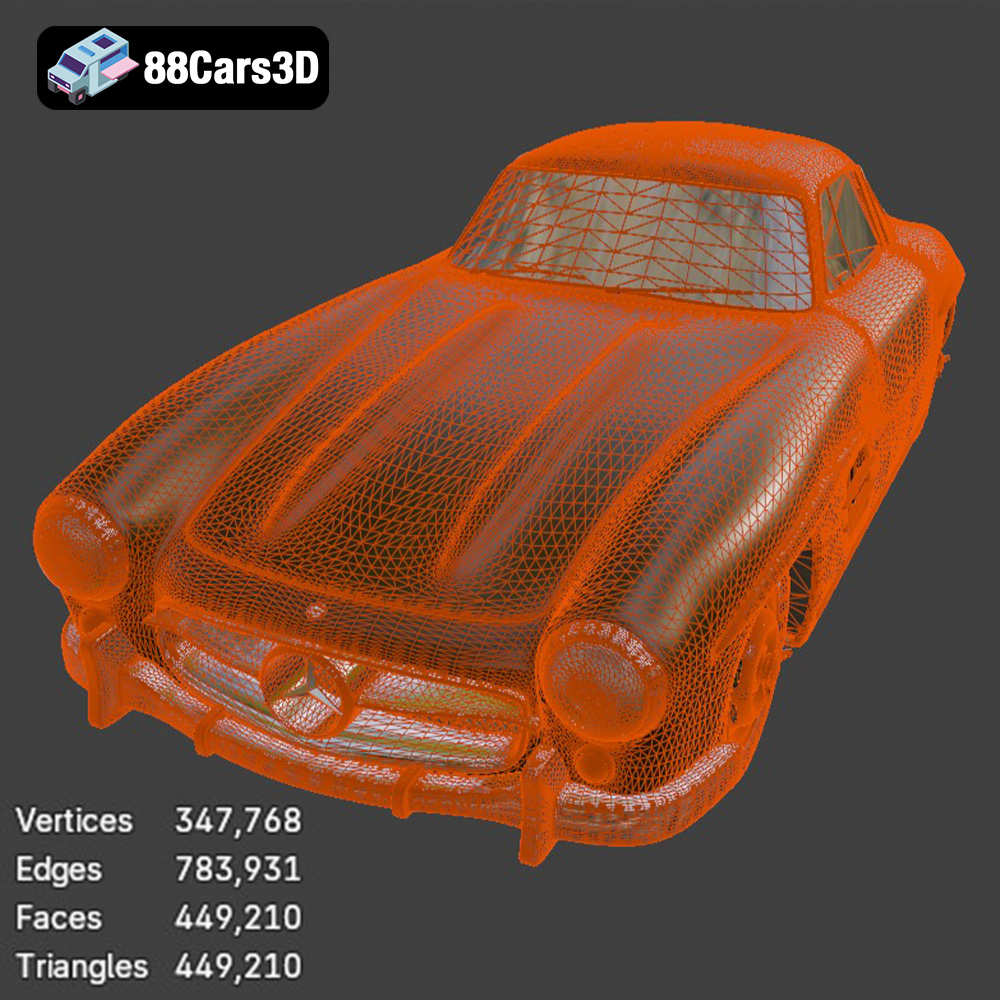
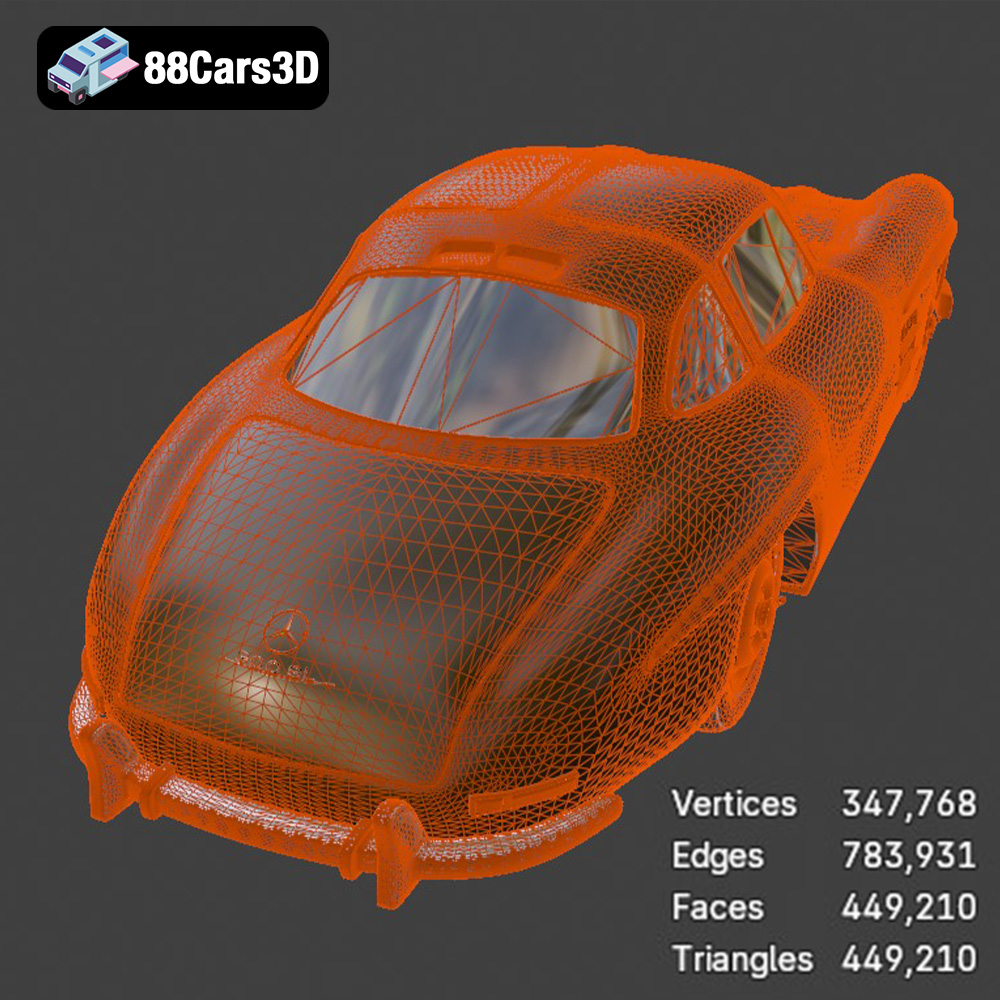
The beauty of a high-quality 3D model lies in its ability to bring historical objects into contemporary digital narratives. Imagine the Mercedes Benz 300 SL Coupe gracing the lobby of a futuristic building in an architectural render, or serving as a prized possession in a vintage-themed game. This model provides the perfect bridge, allowing designers, developers, and artists to integrate a piece of automotive history seamlessly into cutting-edge applications. Its well-balanced topology, with approximately 449,210 triangles, offers an exceptional blend of visual fidelity and optimization, making it suitable for both high-end rendering and real-time environments.
In the world of 3D modeling, the choice of file format is as crucial as the model itself. Each format is designed with specific use cases in mind, offering unique advantages for different stages of a project or target platforms. Understanding these formats is key to maximizing efficiency and ensuring compatibility. The Mercedes Benz 300 SL Coupe 3D model from 88cars3d.com provides a comprehensive suite of formats, ensuring it’s ready for any professional pipeline.
The `.blend` file format is native to Blender, the popular open-source 3D creation suite. When you receive a `.blend` file, you’re getting the complete Blender scene, including all geometry, materials, textures, lighting, cameras, and even animations. This format is ideal for users who primarily work in Blender, offering full editability and access to the original project structure. For the Mercedes Benz 300 SL, this means the ability to dissect the model, adjust its material nodes, modify its mesh, or integrate it into an existing Blender scene with utmost flexibility. It’s perfect for detailed customization, rendering with Cycles or Eevee, and complex scene assembly.
The `.fbx` (Filmbox) format, owned by Autodesk, has become a de facto standard for exchanging 3D data between different software applications. Its strength lies in its ability to store not just geometry, but also materials, textures, animations, and even rigging information in a single file. This makes `.fbx` an indispensable format for game development, particularly for engines like Unreal Engine and Unity. When importing the Mercedes Benz 300 SL as an `.fbx`, developers can expect a well-structured asset that translates cleanly, with proper hierarchy for individual components like wheels and gullwing doors, ready for animation and physics integration.
The `.obj` (Wavefront Object) format is one of the oldest and most widely supported 3D file formats. While it primarily stores geometry (vertices, normals, UVs, and faces), it can also reference external `.mtl` (Material Template Library) files for basic material properties. The `.obj` format is excellent for cross-software compatibility, serving as a reliable backbone for transferring mesh data between virtually any 3D application. For the 300 SL, the `.obj` ensures that the core mesh data is universally accessible, making it a safe choice for starting a project in an unfamiliar software or for simple model viewing across different platforms.
The `.glb` (GLB File Format) is the binary version of the glTF (GL Transmission Format), designed for efficient transmission and loading of 3D scenes and models by engines and applications. It’s often referred to as the “JPEG of 3D” due to its optimization for web-based, AR (Augmented Reality), and VR (Virtual Reality) experiences. A `.glb` file embeds all textures and data directly within a single file, making it incredibly easy to share and integrate into browser-based viewers, mobile AR apps, and immersive VR environments. The Mercedes Benz 300 SL in `.glb` format is perfect for virtual showrooms, car configurators, or integrating into a social media AR filter.
The `.stl` (Stereolithography) format is the standard file type for 3D printing. It represents a 3D model as a series of connected triangles (a triangulated surface mesh) without any color, texture, or material information. Its simplicity makes it universally compatible with 3D printers and slicing software. While the 300 SL model is highly detailed, its `.stl` output is optimized for physical production. The product description even provides specific 3D print settings, such as recommended scale, layer height, and support requirements, ensuring hobbyists can successfully bring this digital masterpiece into the physical world.
The `.ply` (Polygon File Format) is another format for storing 3D data, particularly useful for scanned data, point clouds, and precision meshes. It can store not only geometry but also color, transparency, and even properties like surface normals. While less common for general asset exchange than `.fbx` or `.obj`, `.ply` files are frequently used in scientific applications, CAD, and situations requiring very accurate mesh representation. For a classic car like the 300 SL, a `.ply` export could be valuable for precise engineering analysis or for integrating into specialized industrial design software.
The `.unreal` format explicitly refers to an asset that is pre-prepared and optimized for direct integration into Unreal Engine projects. While usually, `.fbx` is imported into Unreal, an `.unreal` asset implies that the model has already gone through the necessary steps within Unreal Engine – such as proper material setup, collision generation, LODs (Levels of Detail), and potentially even blueprint functionality for a driveable car. This format significantly speeds up workflow for Unreal developers, offering a plug-and-play solution that bypasses common import hurdles and allows immediate use in real-time environments.
The `.max` file format is the native format for Autodesk 3ds Max, a powerful 3D modeling, animation, and rendering software widely used in architectural visualization, game development, and film. Like `.blend` for Blender, a `.max` file contains the complete 3ds Max scene, including all objects, modifiers, materials, lights, cameras, and animations. Receiving the Mercedes Benz 300 SL in `.max` format gives 3ds Max users full control over every aspect of the model, enabling them to leverage the software’s extensive toolset for advanced rendering with V-Ray or Corona, complex rigging, or integrating into large-scale architectural scenes.
The versatility of the Mercedes Benz 300 SL Coupe 3D model truly shines when integrated into professional 3D workflows. Whether your expertise lies in cinematic rendering or real-time game development, this asset provides a robust foundation for achieving stunning results. Its meticulous design caters to a broad spectrum of requirements, ensuring seamless integration and high-quality output across various platforms.
For artists focused on photorealistic rendering, the Mercedes Benz 300 SL model offers immense potential within industry-standard software like 3ds Max and Blender.
When working in 3ds Max with render engines like V-Ray or Corona Renderer, the `.max` file provides the complete scene, allowing for direct manipulation of materials, lighting, and camera setups. Artists can easily adjust the body color to the factory classic silver, a rich red, or a custom finish, experimenting with metallic flakes, gloss levels, and reflections to perfectly match a desired aesthetic. The detailed separate components like the gullwing doors, steering, and suspension can be animated with precision, allowing for dynamic camera movements and compelling storytelling. Imagine a virtual showroom animation where the doors gracefully open, revealing the meticulously detailed cockpit, with light playing across the vintage leather-trimmed bucket seats and chrome accents.
Similarly, in Blender, utilizing the `.blend` file, artists can harness the power of Cycles or Eevee. The optimized mesh ensures smooth subdivision without excessive performance overhead, allowing for extremely close-up renders that showcase every intricate detail, from the wire-spoke wheels to the delicate instrument cluster gauges. Adjusting material nodes for the paint, chrome, and glass can yield incredibly realistic results, whether portraying the car under a dramatic studio light setup or basking in natural sunlight. The accurate pivot setup for individual parts means that complex sequences, such as the car driving, turning, and encountering rough terrain (with suspension travel), can be animated with ease.
For game developers and those building real-time interactive experiences, the Mercedes Benz 300 SL Coupe 3D model is specifically designed for optimal performance. The provided `.fbx` and `.unreal` formats are crucial here.
Importing the `.fbx` into Unreal Engine provides a clean, well-structured asset. Developers can then efficiently set up materials using Unreal’s powerful PBR (Physically Based Rendering) system, ensuring realistic surface responses to various lighting conditions. Collision meshes can be generated automatically or custom-tailored for precise physics interactions, essential for racing games or simulators. The model’s game-ready optimization, boasting 449,210 triangles, strikes an excellent balance, providing high visual fidelity without crippling real-time performance. This polycount is perfectly suited for modern game engines, allowing for multiple instances of the vehicle or integration into larger open-world environments.
Furthermore, the separate wheels, doors, suspension, and steering components, along with proper pivot setups, are vital for creating functional game mechanics. Developers can easily implement blueprint scripts to control the gullwing doors, simulate realistic wheel rotation and steering, and even create dynamic suspension systems that react to the terrain. This makes the 300 SL an ideal candidate for classic racing titles, sophisticated vehicle configurators, or interactive virtual museums within the Unreal ecosystem. The inclusion of an `.unreal` format further streamlines this process, potentially offering an even more direct, engine-ready asset with pre-configured settings.
The difference between a generic 3D model and a professional-grade asset lies in its technical underpinning. The Mercedes Benz 300 SL Coupe 3D model exemplifies this distinction, built with meticulous attention to detail and optimization that caters to demanding production environments. Its specifications aren’t just numbers; they represent thoughtful design choices that empower artists and developers.
A primary technical advantage of this 300 SL model is its optimized topology. With approximately 449,210 triangles, it achieves a critical balance. This polycount is substantial enough to capture the complex curves and intricate details of the iconic gullwing design, the delicate chrome trim, and the interior cockpit without resorting to excessive subdivision that would hinder real-time performance. For game developers, this means the model can be integrated into high-fidelity titles without being an immediate performance bottleneck. For render artists, it provides a clean mesh that holds up beautifully under subdivision surfaces, resulting in smooth, production-ready visuals. The model’s real-world scale accuracy, based on the actual vehicle chassis, is equally important. This ensures it seamlessly integrates into scenes with other real-world assets or architectural designs without requiring tedious scaling adjustments, saving valuable production time and maintaining visual integrity.
Beyond just a static mesh, the Mercedes Benz 300 SL model is engineered for dynamic interaction. Key components such as the wheels, doors (specifically the gullwing setup), suspension, and steering components are all separate entities. This modularity is not just a convenience; it’s a necessity for professional applications. Each of these parts features a proper pivot setup, which is critical for animation and interactivity. For instance, the gullwing doors can be animated to open and close realistically from their hinge points. The wheels can rotate correctly around their central axis, and the steering wheel can turn in sync with wheel direction. Furthermore, the authentic classic suspension setup, combined with its independent components, allows for the creation of convincing suspension travel animations, crucial for realistic driving simulations or dynamic scene sequences where the car interacts with uneven terrain. This thoughtful separation and pivot placement drastically reduce the time and effort required for rigging and animating, directly enhancing workflow efficiency.
The power of a versatile 3D model like the Mercedes Benz 300 SL Coupe extends far beyond a single use case. Its design and technical specifications make it a valuable asset for a multitude of industries, fueling creativity and innovation in diverse fields.
The demand for immersive content is rapidly growing, and high-quality 3D assets are at its core. The Mercedes Benz 300 SL Coupe 3D model is perfectly suited for AR/VR experiences. Its optimized polycount and the inclusion of the `.glb` format make it ideal for deployment in virtual showrooms, interactive configurators, and mobile AR applications. Imagine a user wearing a VR headset, walking around this legendary car in a pristine virtual garage, opening its gullwing doors, and examining its detailed interior from a first-person perspective. Or perhaps, an AR app that allows a potential collector to place a life-sized virtual 300 SL in their driveway, examining its curves and colors as if it were truly there. These experiences are not only engaging but also powerful marketing and sales tools, and the technical readiness of this model enables their creation with ease.
The journey from digital asset to tangible object is a fascinating one, and the Mercedes Benz 300 SL model is designed to make this transition seamless for hobbyists and professionals alike. The `.stl` format, specifically tailored for 3D printing, allows enthusiasts to recreate a physical replica of this automotive icon. The provided 3D print settings are invaluable, guiding users on recommended scales (1:12, 1:18, 1:24), optimal layer heights for resin printing (0.04–0.12 mm), and crucial details like wall thickness, infill, and support requirements. The advice to print the frame angled for structural integrity and wheels separately demonstrates a practical understanding of the 3D printing process. Post-processing suggestions, including sanding, priming, and applying authentic factory colors, empower users to create stunning, display-scale models that truly honor the original vehicle’s aesthetic. The inclusion of the `.ply` format further allows for precision in certain analytical or CAD-based 3D printing workflows if needed.
A truly professional 3D model isn’t just about faithful recreation; it’s also about the flexibility it offers for customization. The Mercedes Benz 300 SL Coupe 3D model provides ample opportunities to tailor its appearance to perfectly fit any creative vision or project requirement, ensuring visual fidelity is never compromised.
The beauty of a high-quality 3D asset lies in its adaptability. While the Mercedes Benz 300 SL is iconic in its classic silver, the digital model allows for limitless aesthetic modifications. Artists can easily change the body color, experimenting with a spectrum of factory classic colors, vibrant custom finishes, or even experimental designs. Imagine a matte black 300 SL for a modern, edgy advertisement, or a vintage racing green for a historical documentary segment. Similarly, tire textures can be modified, allowing for variations from period-correct street treads to more aggressive racing slicks, adapting the vehicle’s personality to different scenarios. The ability to adjust material finishes – from a high-gloss metallic sheen to a subtle matte, or even heavy chrome accents – provides granular control over the car’s visual impact, ensuring it perfectly matches the desired mood and style of the project.
Achieving photorealism in automotive rendering is an art form, demanding precise control over every visual element. The 300 SL model’s clean topology and detailed features provide an excellent foundation for this. Beyond color and finish, the model allows artists to adapt lighting for different environments. Whether the goal is to render the car in a sun-drenched Californian landscape, under the moody lights of a futuristic city, or within a controlled studio setup, the model reacts realistically to diverse lighting conditions. The meticulously crafted details, such as the authentic circular headlights with detailed bezels and the classic taillights, become critical elements in conveying realism, especially when caught by reflections and highlights. This level of customization and control over visual parameters ensures that whether the model is destined for a glossy print advertisement or a dynamic film sequence, it can be rendered with breathtaking photorealism, capturing every nuance of this legendary vehicle.
The Mercedes Benz 300 SL Coupe stands as a monumental achievement in automotive design, a car that continues to inspire awe decades after its inception. In the digital age, the ability to harness its iconic presence within various creative and technical domains is invaluable. Our Mercedes Benz 300 SL Coupe 3D Model is not merely a digital representation; it is a meticulously engineered asset designed to empower professionals across game development, architectural visualization, AR/VR, and 3D printing.
From its game-ready optimized topology and real-world scale to its comprehensive suite of file formats – including .blend, .fbx, .obj, .glb, .stl, .ply, .unreal, and .max – this model is built for versatility and precision. It offers the foundational elements for compelling animations, stunning photorealistic renders, and immersive interactive experiences, ensuring that your projects always carry the hallmark of quality and authenticity. The detailed exterior, cockpit, and interior features, coupled with the modular design for dynamic interaction, make it an indispensable tool for anyone looking to integrate a truly legendary vehicle into their work.
Whether you’re crafting the next big racing title, visualizing an opulent car collection, or bringing a piece of history to life through 3D printing, the Mercedes Benz 300 SL Coupe 3D model from 88cars3d.com provides the robust, high-quality asset you need to succeed. Invest in excellence and drive your creative visions forward with this timeless automotive icon.
The Mercedes Benz 300 SL Coupe is one of the most iconic classic sports cars in automotive history, famously known for its striking gullwing doors and sleek aerodynamic styling. Introduced in the 1950s, this legendary vehicle boasts a distinctive front grille, elegant curves, and the pioneering 3.0-liter straight-six engine with direct fuel injection. The 300 SL represents the pinnacle of vintage luxury and performance, blending timeless elegance with aggressive race-bred heritage. This high-quality 3D model features a well-balanced topology with approximately 449,210 triangles, offering an exceptional blend of visual fidelity and game-ready optimization. The mesh captures every detail from the intricate front fascia to the classic rounded tail, making it highly versatile for game development, AR/VR experiences, high-end animation, and architectural visualization.
$39.00
.blend
.fbx
.glb
.gullwing
.max
.obj
.ply
.rendering
.sports car
.stl
.unreal
.vintage
300-sl-coupe
car-3d-model
classic-car
game asset
game-ready
low-poly
mercedes-benz
optimized
VR/AR