Get 20% OFF All Premium 3D & STL Models!

In the demanding world of 3D visualization, the stakes are often high. Whether you’re crafting an immersive video game, a critical training simulation, or a cinematic masterpiece, the accuracy and detail of your assets can make or break the project. This is especially true for emergency vehicles, which are not only symbols of civic duty but also complex machines packed with intricate mechanical and aesthetic details.
Recreating these real-world giants in a digital environment requires a deep understanding of modeling, texturing, and optimization. Imagine the challenge of capturing the robust chassis, the sophisticated pump panels, the array of specialized rescue equipment, and the signature high-visibility lighting of a modern fire truck. It’s a task that demands precision and technical expertise.
Today, we’re taking an in-depth look at a premier example of such a meticulously crafted asset: the Fire Truck 3D Model available at 88cars3d.com. This asset is not just a model; it’s a versatile tool designed to elevate your projects, offering unparalleled realism and technical advantages for a wide range of applications, from game development and AR/VR to cinematic rendering and even 3D printing.
The journey of any 3D model, especially a complex one like a fire truck, often involves moving between different software environments and platforms. This is where understanding file formats becomes paramount. A truly professional-grade 3D asset, such as the Fire Truck 3D Model, provides a comprehensive suite of formats to ensure maximum compatibility and utility. Each format serves a specific purpose, offering unique advantages for different stages of a project or final deployment.
The provision of such a comprehensive array of formats for the Fire Truck 3D Model ensures that users can confidently integrate this asset into virtually any professional workflow, regardless of their preferred software or target platform.
Creating a 3D model as intricate and iconic as a modern fire truck is an endeavor that balances artistic vision with engineering precision. The Fire Truck 3D Model from 88cars3d.com exemplifies this balance, meticulously capturing every detail that defines these heroic machines.
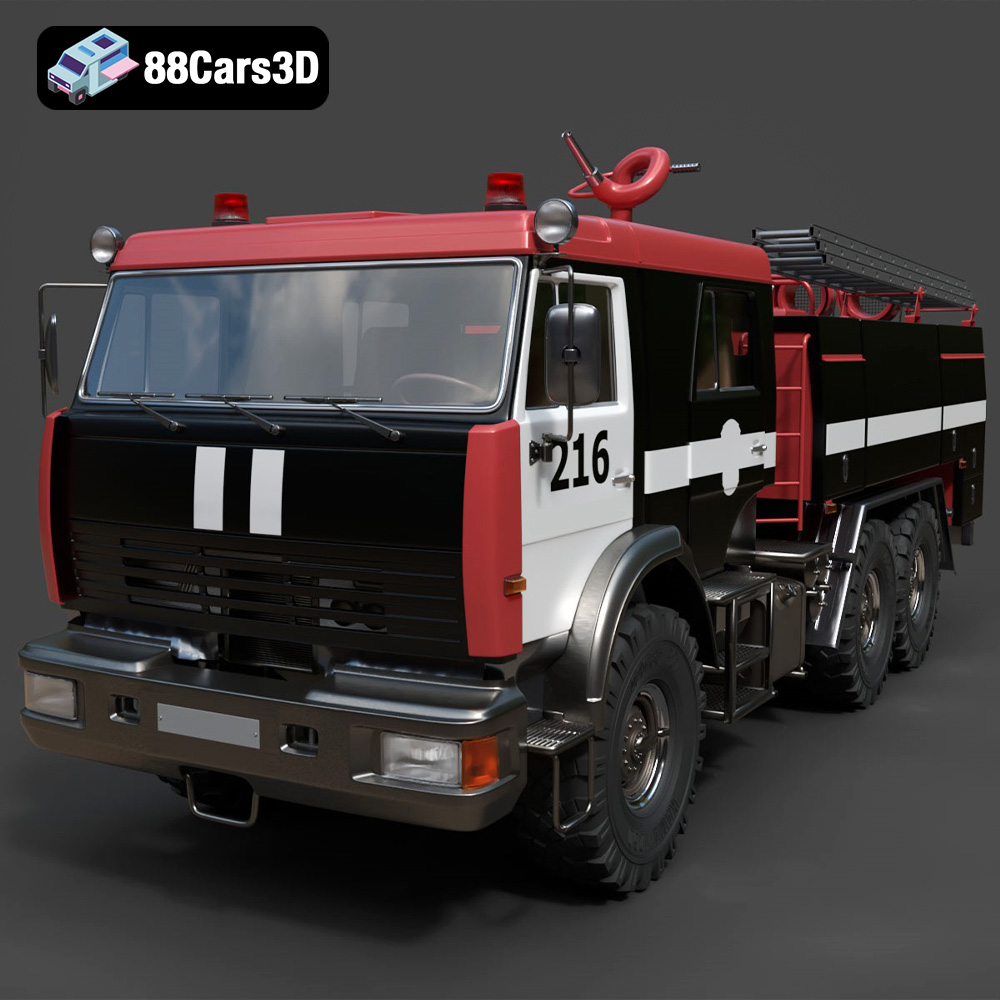
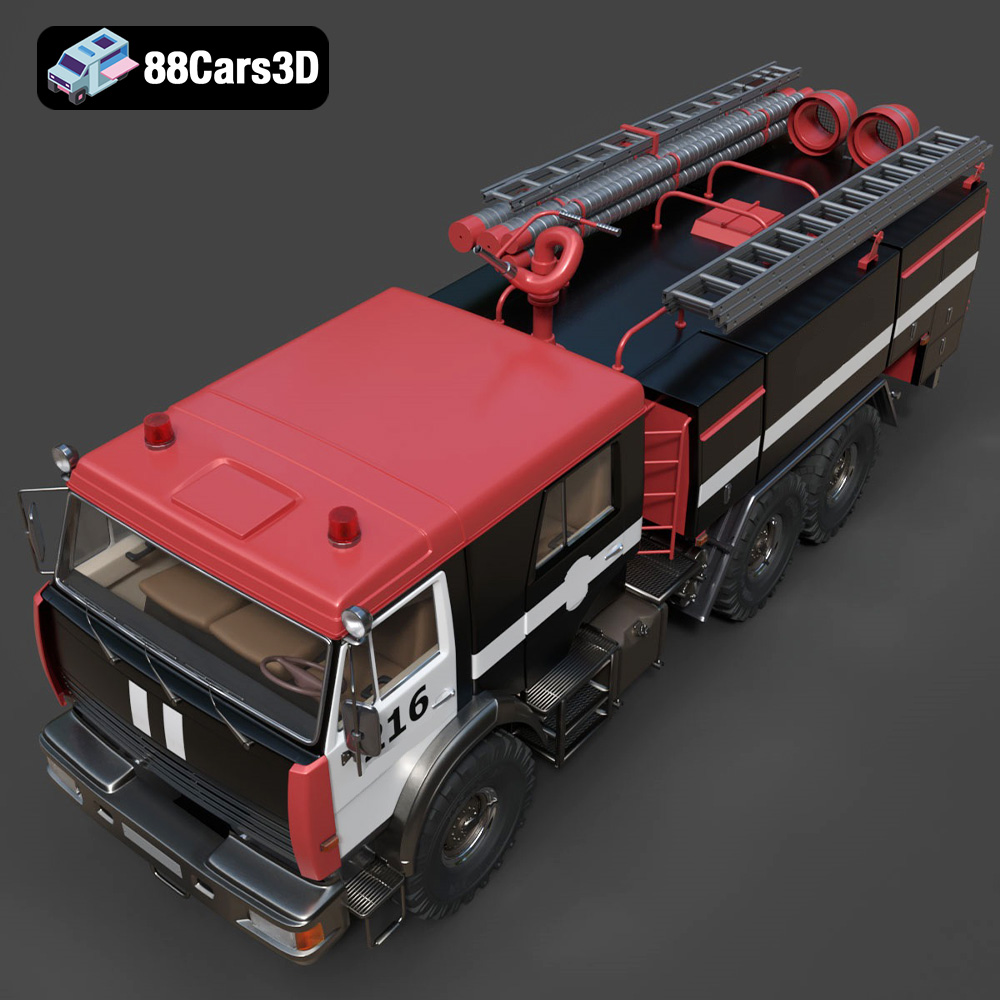
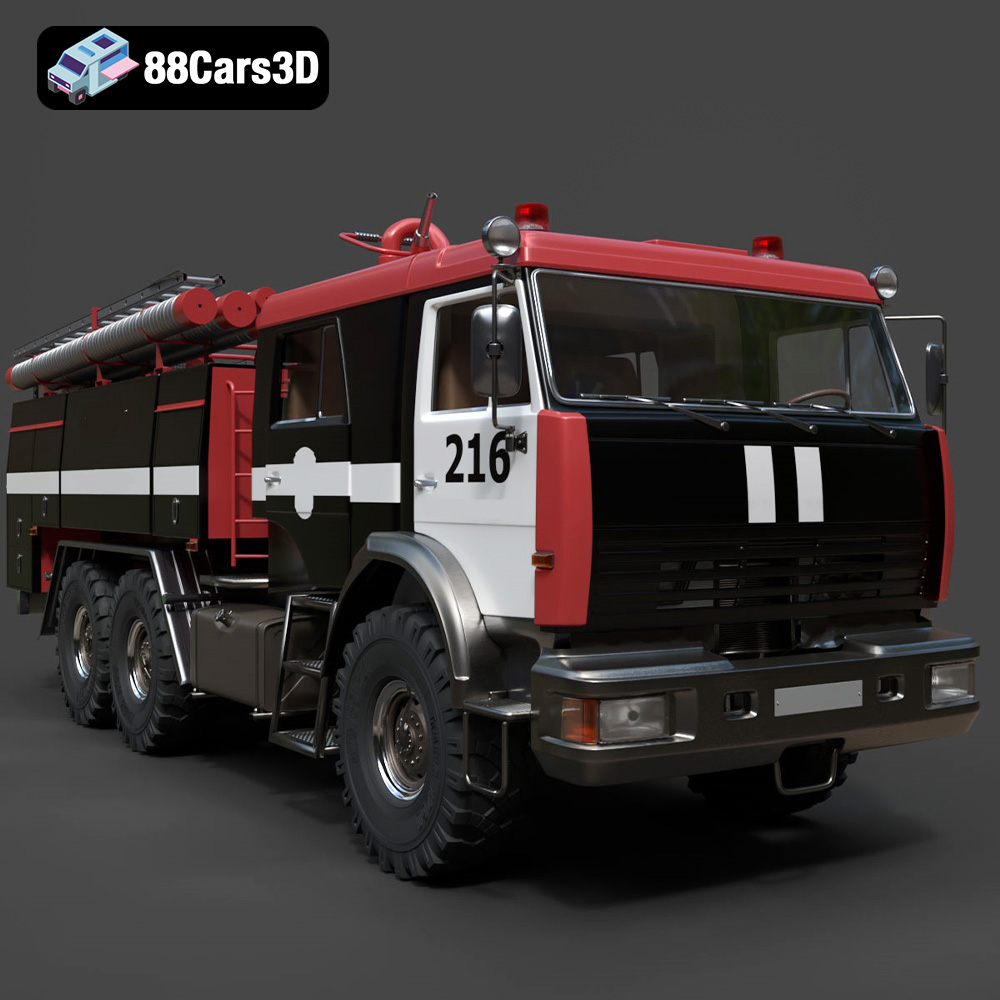
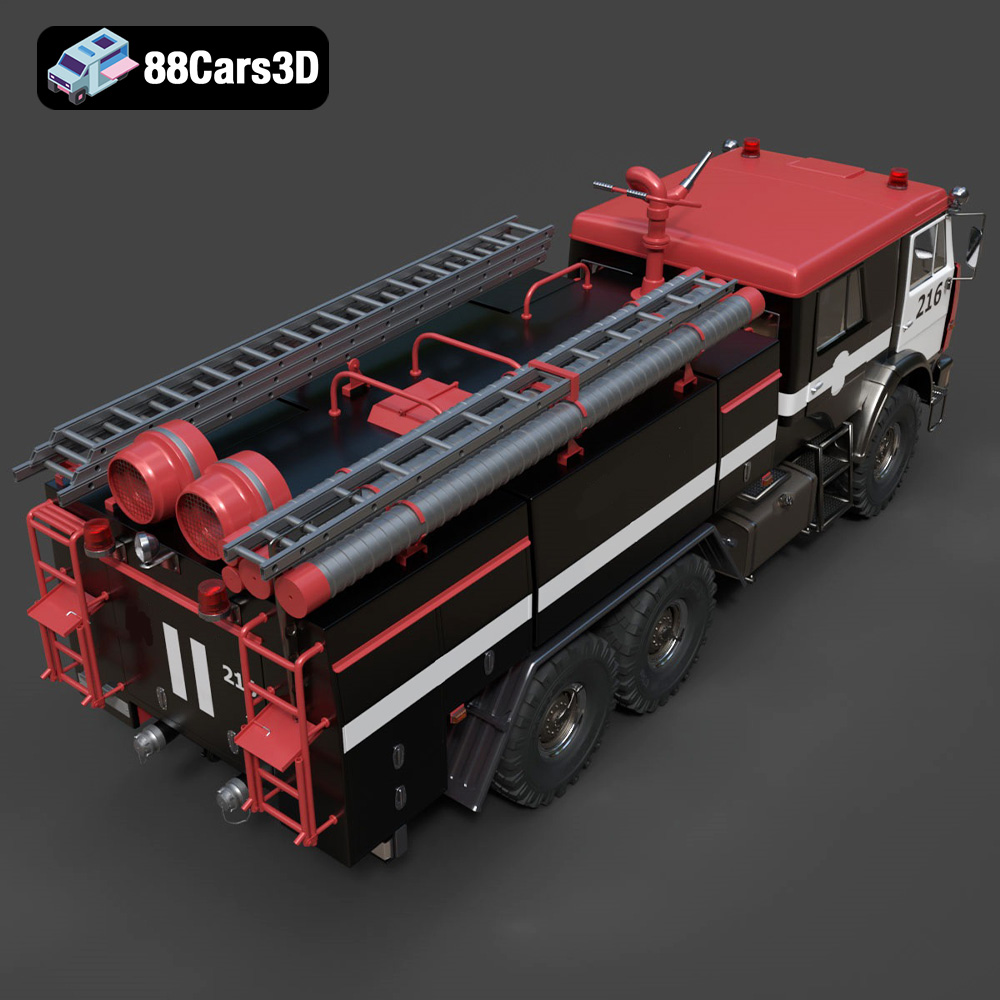
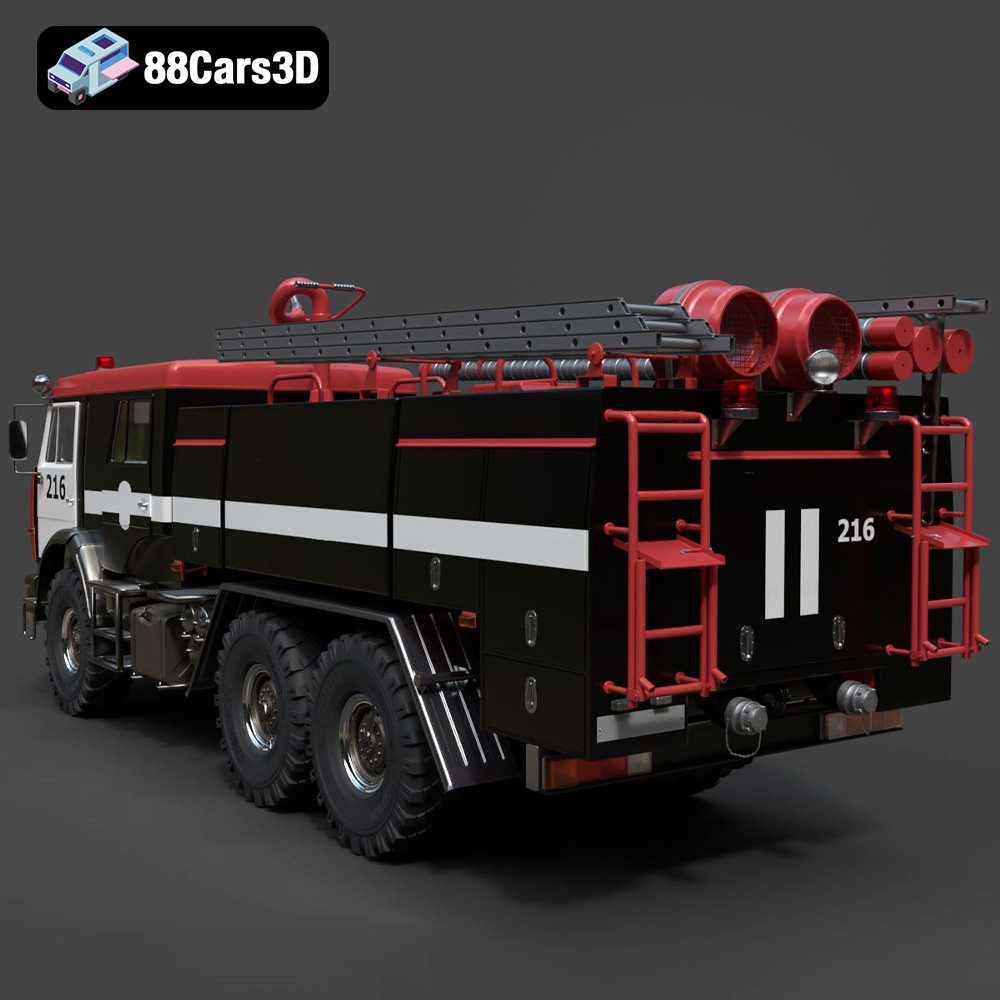
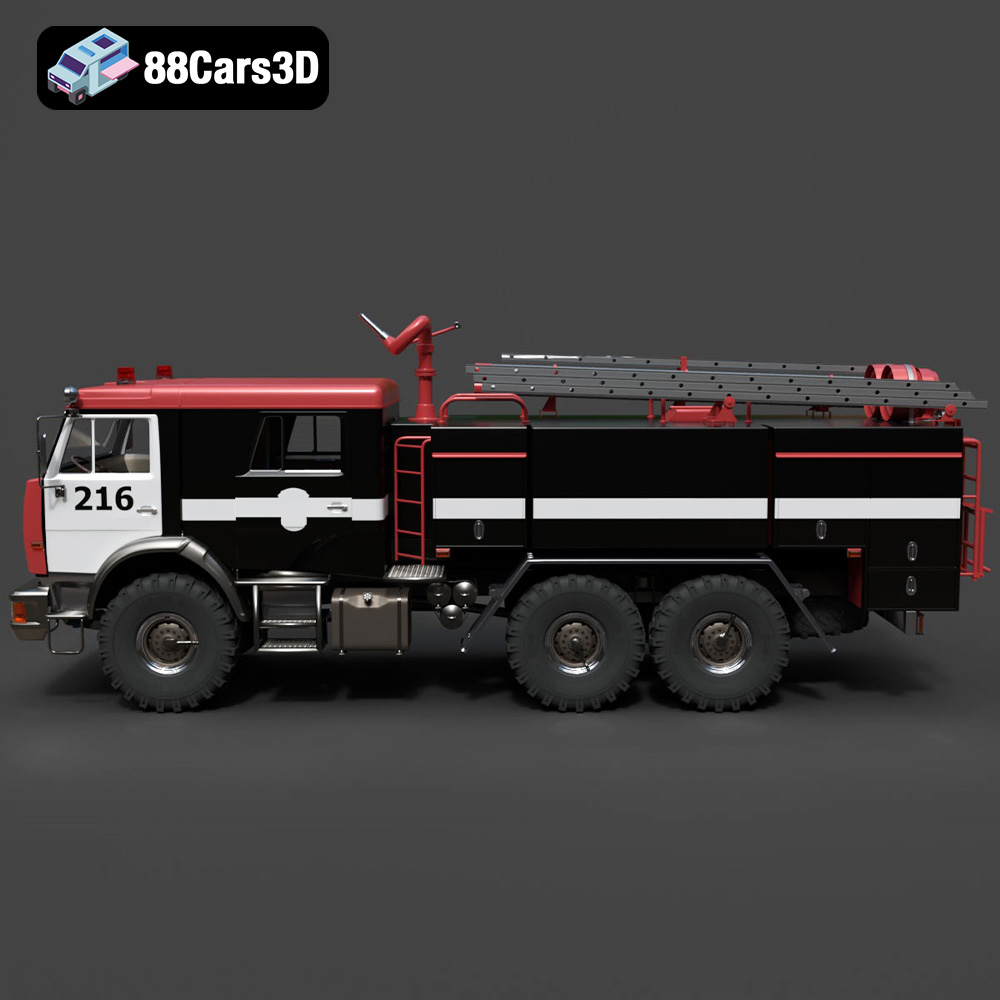
The exterior of any vehicle tells a story of its purpose, and for a fire truck, that story is one of strength, utility, and immediate response. This model meticulously recreates the heavy-duty Fire Truck frame geometry, ensuring accurate dual-cab proportions that mirror real-world specifications. Every element, from the robust chassis to the sophisticated pump panels, is rendered with exceptional fidelity. You’ll find detailed gauges and high-pressure hose connections, essential for any emergency scene visualization. The comprehensive emergency lighting system, including roof lightbars, strobes, and floodlights, is designed for authenticity, ready to be animated to convey the urgency of a rescue. Furthermore, the authentic heavy-duty commercial wheels and all-terrain tires add a layer of realism, while complex ladder racks and exterior storage compartment details complete the picture of a fully equipped apparatus. Even the heavy-duty leaf spring and air suspension detailing are included, providing a foundation for realistic animation and physics in game engines.
The interior of a fire truck, though often overlooked in exterior shots, is crucial for immersive experiences, especially in simulations or first-person game views. The Fire Truck 3D Model delivers a rugged multi-passenger crew cabin, complete with utilitarian seating and SCBA (Self-Contained Breathing Apparatus) mounts. The driver’s dashboard is detailed, featuring a heavy-duty steering wheel and integrated emergency communication panels and siren control units. Authentic commercial vehicle control details, such as air brake valves and heavy-duty pedals, are all present. This meticulous attention to the cockpit ensures an optimized geometry for first-person POV, making it ideal for gaming and simulator training scenarios where crew interaction and detailed environments are key.
Beyond its visual appeal, the Fire Truck 3D Model from 88cars3d.com is engineered for performance and versatility, meeting the rigorous demands of professional 3D production pipelines.
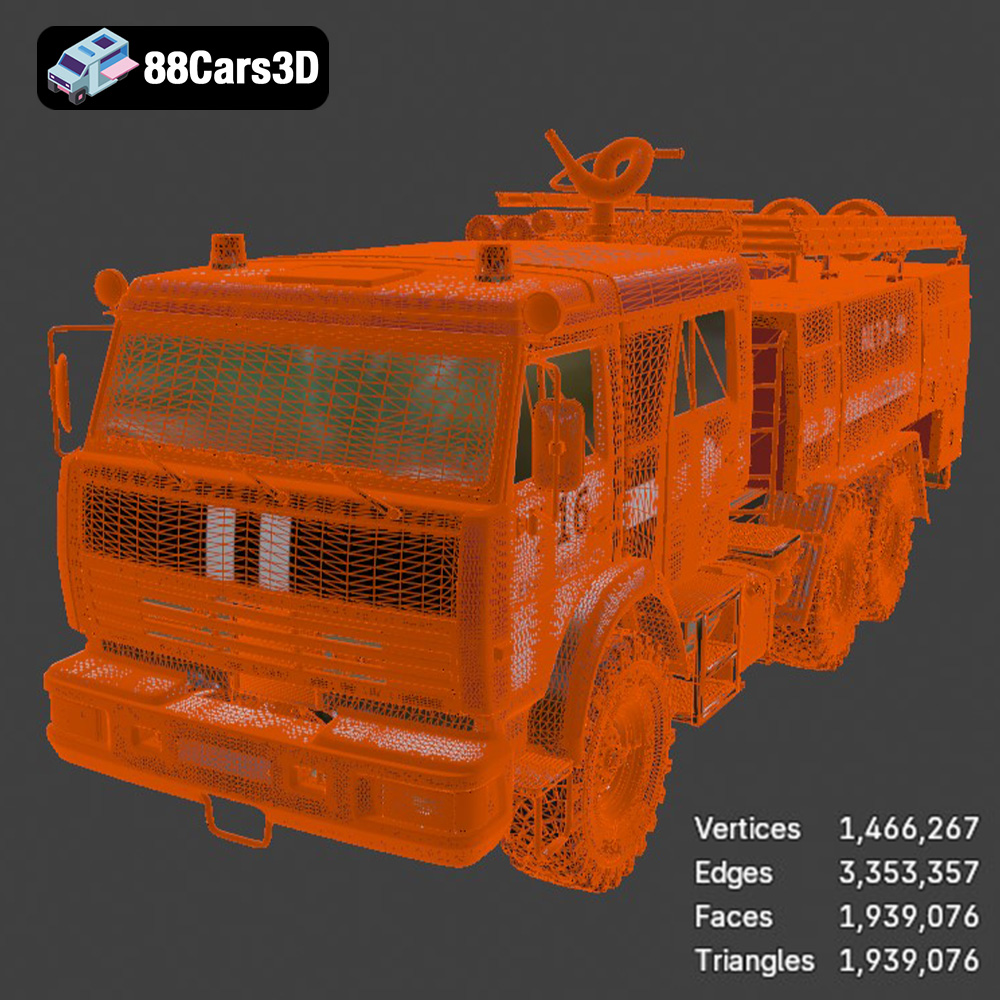
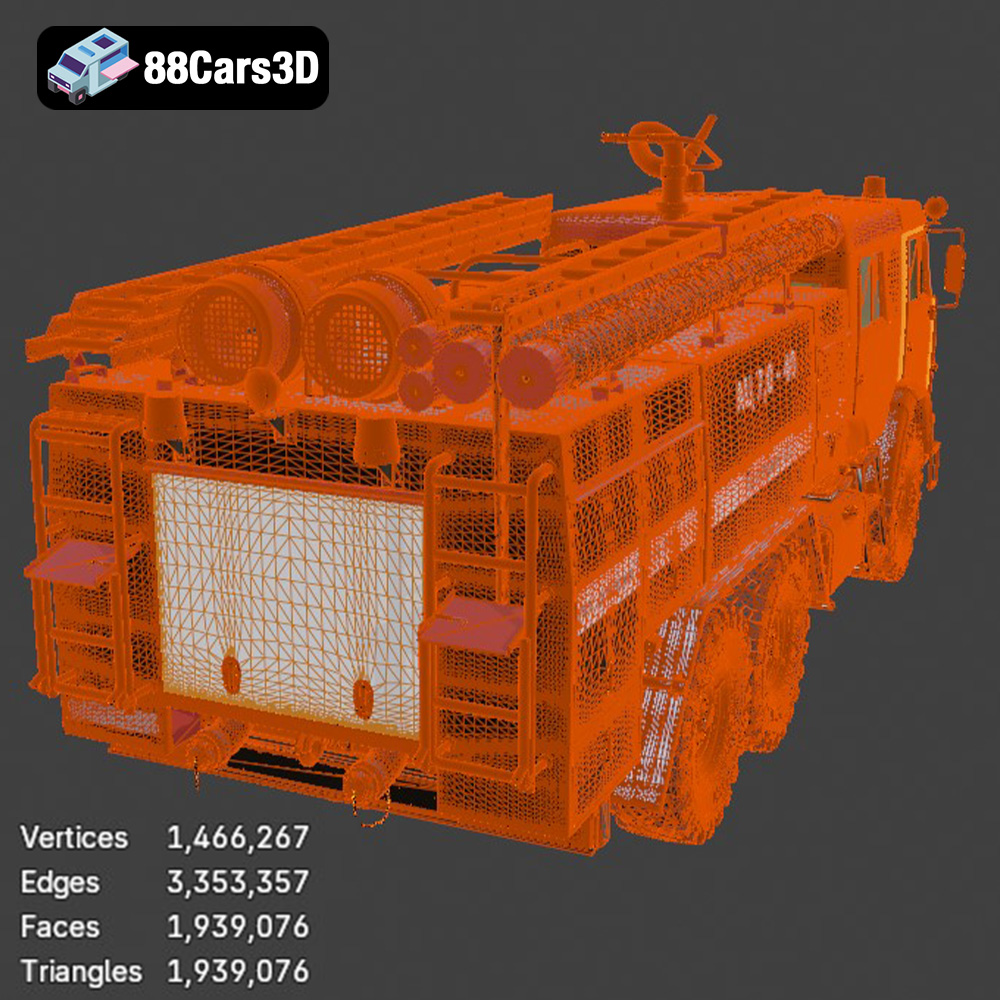
A critical consideration for any modern 3D asset, particularly for interactive applications, is its “game-ready” status. This Fire Truck model, with its 1,929,076 triangles, strikes a perfect balance. It delivers exceptional visual fidelity necessary for high-end rendering and close-up shots, yet remains optimized for real-time engines like Unreal Engine and Unity. This careful poly count ensures that the model can be integrated into complex game worlds or VR training simulations without excessively taxing system resources, maintaining smooth frame rates and responsive interactions. Furthermore, the model boasts real-world scale accuracy, based on actual commercial firefighting vehicle chassis, which is indispensable for realistic simulations and architectural visualizations. Proper pivot setups for steering, wheel rotation, and suspension travel are pre-configured, drastically simplifying the animation process for developers and animators.
The inherent flexibility of this Fire Truck 3D Model makes it a valuable asset across a spectrum of industries:
The true power of a versatile 3D asset lies in its seamless integration into various professional software pipelines. The Fire Truck 3D Model is designed with this in mind, offering multiple formats that cater to different industry-standard tools.
For artists and studios relying on traditional 3D software for high-end rendering and animation, the included .max and .blend files are invaluable. In 3ds Max, users can open the native project file to access the full hierarchy, modify materials using advanced rendering engines like V-Ray or Corona, and set up intricate lighting scenarios for cinematic shots. Animators can leverage the pre-set pivot points for wheels, steering, and suspension to create realistic movement sequences, essential for dynamic automotive rendering. The robust modeling environment of 3ds Max allows for further customization, such as adding specific decals or modifying vehicle damage for a narrative. Similarly, Blender users benefit from the native .blend file, which allows for full scene manipulation. Artists can utilize Blender’s powerful Eevee or Cycles renderers, create custom shader networks, and integrate the fire truck into complex environments with ease. The editable nature of these files empowers artists to push the boundaries of visual fidelity, crafting bespoke renders that perfectly fit their project’s aesthetic.
When it comes to real-time applications, especially video games and interactive simulations, Unreal Engine stands as a powerhouse. The Fire Truck 3D Model’s .fbx and .unreal formats are specifically tailored for this environment. Importing the .fbx into Unreal Engine is a straightforward process, allowing developers to bring in the mesh, skeletal data (if applicable), and basic material assignments. The optimization (1,929,076 triangles) ensures efficient performance within the engine. From there, artists can leverage Unreal’s advanced material editor to create PBR (Physically Based Rendering) materials that react realistically to light, applying intricate textures for paint, glass, rubber, and metallic components. Collision meshes can be generated to ensure proper interaction with the environment, and the model’s pre-configured pivot points simplify setting up vehicle physics and control blueprints. For an even faster setup, the .unreal package, when provided, can offer a pre-integrated asset ready to drop into a scene, potentially saving hours of setup time and ensuring consistency.
The versatility of the Fire Truck 3D Model extends beyond digital screens, offering the exciting possibility of physical creation through 3D printing. The inclusion of the .stl format is a testament to its comprehensive utility, allowing hobbyists and professionals alike to bring this iconic vehicle into the tangible world.
Before hitting print, several factors must be considered to ensure a successful outcome for your 3D printed fire truck. The recommended scales (1:12 / 1:18 / 1:24) offer a good balance between manageable size and detail retention, crucial for capturing the intricate exterior features. For optimal detail, particularly for fine elements like pump panels, lightbars, and ladders, resin printing (SLA/DLP) is highly recommended over FDM. Resin printers can achieve much finer layer heights (0.04–0.12 mm), preventing visible layer lines and preserving minute details. Wall thickness (1.2–2.0 mm) is critical for structural integrity, ensuring parts don’t become too brittle. An infill of 20-30% provides a good balance between strength and material consumption. Due to the model’s complex geometry, supports will be required for detailed parts. Strategic print orientation is also key; printing the frame at an angle can enhance structural integrity, while printing wheels separately allows for better surface quality and easier post-processing.
Once printed, the real artistry begins. Post-processing is essential for achieving a polished, realistic finish. This typically involves removing supports, sanding down any rough spots or layer lines (especially for FDM prints), and applying a primer to create a smooth, uniform surface for painting. For an authentic high-visibility look, consider traditional fire engine red, high-visibility yellow, or lime green, often with metallic finishes for diamond plate aluminum parts. The model’s inherent design also allows for extensive customization. You can easily modify body colors, add specific department decals, unit numbers, and side graphics to personalize your model to any fire service. Material finishes can be adapted from the digital model – think high-gloss paint, realistic diamond plate aluminum textures, or matte plastics for interior components. Even lighting can be adapted, allowing for the creation of static display models or dynamic dioramas with active emergency strobes.
The digital landscape for 3D artists and developers is constantly evolving, demanding assets that are not only visually stunning but also technically robust and highly adaptable. The Fire Truck 3D Model featured today stands as an exemplary product in this regard. From its meticulously crafted exterior and interior details to its exceptional optimization for real-time environments, it represents a benchmark in high-fidelity 3D car models.
Whether your project involves creating an immersive open-world game, a critical AR/VR training simulation, a breathtaking cinematic rendering, or even a tangible 3D-printed replica, this fire truck asset provides the foundation for success. Its comprehensive suite of file formats – including .blend, .fbx, .obj, .glb, .stl, .ply, .unreal, and .max – ensures unparalleled compatibility across all major software and platforms. This versatility, combined with its game-ready optimization and real-world scale accuracy, makes it an indispensable tool for any professional.
By leveraging such high-quality 3D car models, creators can save invaluable development time, achieve superior visual results, and deliver truly impactful experiences across various media. Elevate your next project with assets that blend artistic excellence with engineering precision. For this Fire Truck 3D Model and other premium assets, explore the extensive collection at 88cars3d.com.
The quintessential modern Fire Truck, an absolute icon of emergency response, civic duty, and heavy-duty engineering. This highly detailed model captures the robust, utilitarian design of contemporary firefighting apparatus. It features complex visual elements including a heavy-duty chassis, intricate pump panels, specialized rescue equipment racks, and the signature high-visibility emergency lighting setups that define real-world rescue vehicles. With an exact topology of 1,929,076 triangles, this 3D model delivers exceptional visual fidelity while maintaining structural optimization. It offers unparalleled realism for close-up shots and immersive environments, making it highly suited for advanced game development, virtual reality training simulations, and cinematic visualizations. Perfect for urban emergency scenes, high-stakes rescue missions, emergency simulator games, and architectural city visualizations.
$83.50
.blend
.fbx
.glb
.max
.obj
.ply
.rendering
.stl
.unreal
commercial-vehicle
emergency-vehicle
fire-truck
game asset
game-ready
high poly
optimized
rescue-truck
truck-3d-model
VR/AR