Get 20% OFF All Premium 3D & STL Models!

In the world of two-wheeled legends, the Ducati Monster 696 2008 stands as an icon. Its aggressive streetfighter stance, exposed tubular steel trellis frame, and the raw power of its L-twin Desmodromic engine redefined what a naked bike could be. For designers, game developers, architects, and visualization artists, capturing the essence of such a machine in a digital format is paramount. The challenge lies in translating its brutal elegance and intricate engineering into a 3D model that maintains both visual fidelity and performance efficiency.
Enter the realm of high-fidelity 3D car models, where every curve, every weld, and every component is meticulously crafted. The Ducati Monster 696 2008 3D Model available on 88cars3d.com is a testament to this pursuit of digital perfection. This isn’t just a model; it’s a meticulously engineered digital asset designed to revolutionize rendering pipelines, elevate game development, and provide unparalleled realism for AR/VR applications. Whether you’re aiming for a photorealistic cinematic, an immersive virtual reality experience, or a next-generation racing game, understanding the technical depth and versatility of such a model is crucial for any professional workflow.
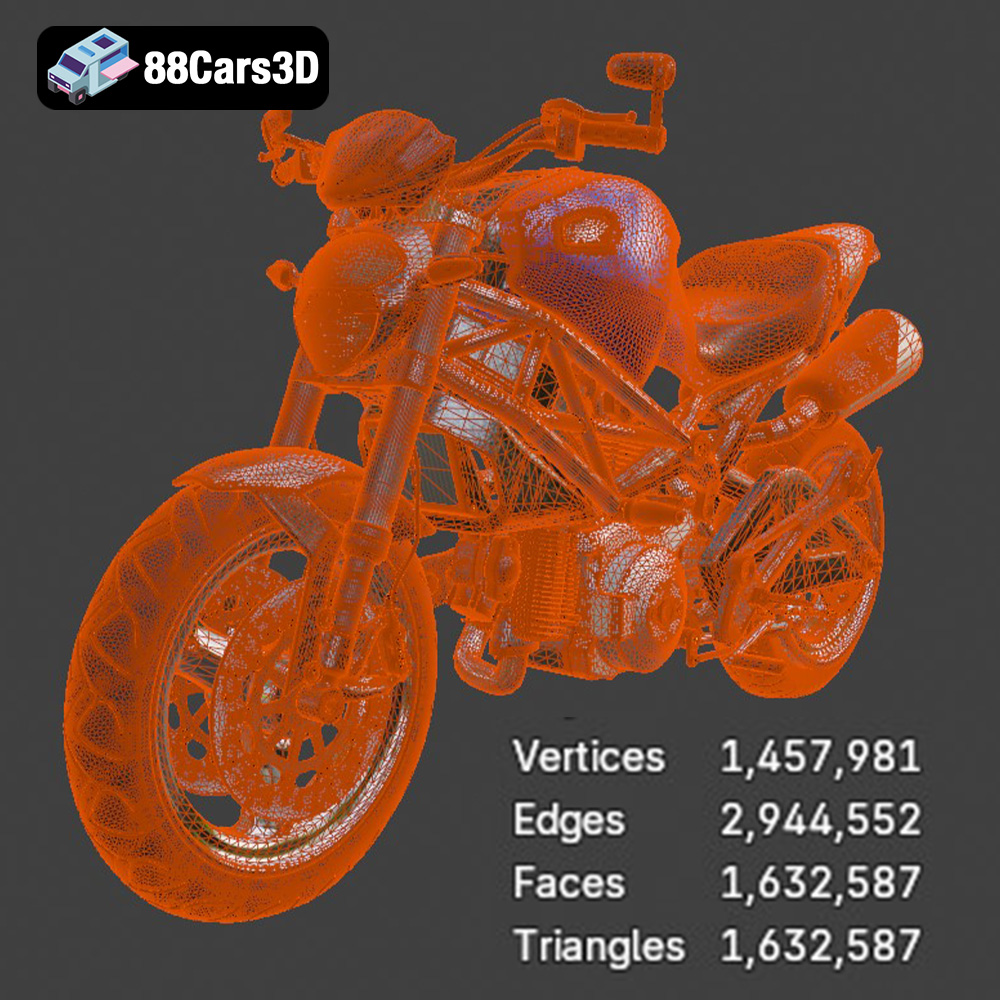
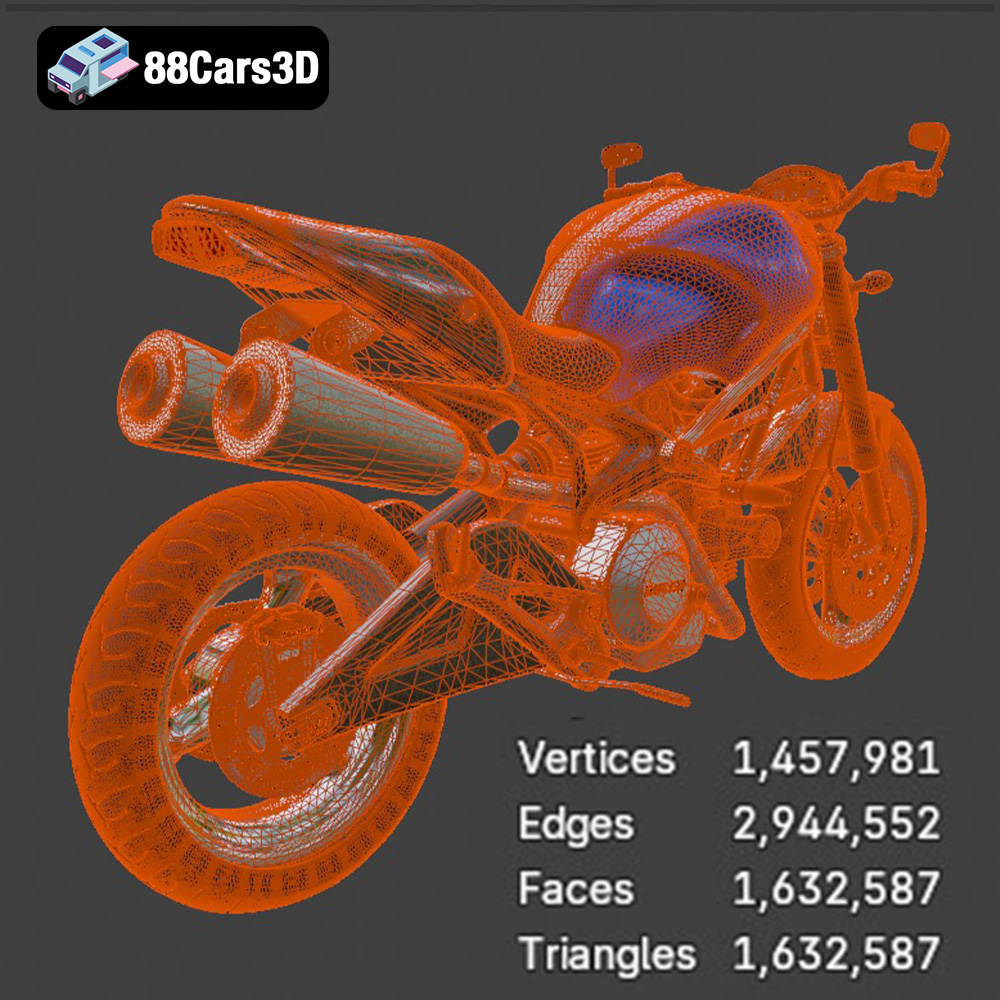
The essence of any high-quality 3D asset lies in its meticulous attention to detail and its optimized structure. The Ducati Monster 696 2008 3D model excels in both these aspects, offering an impressive 1,632,587 triangles. This polycount strikes a critical balance, providing uncompromising visual fidelity for close-up rendering while maintaining a topology thoughtful enough for next-generation modern game engines and VR/AR applications.
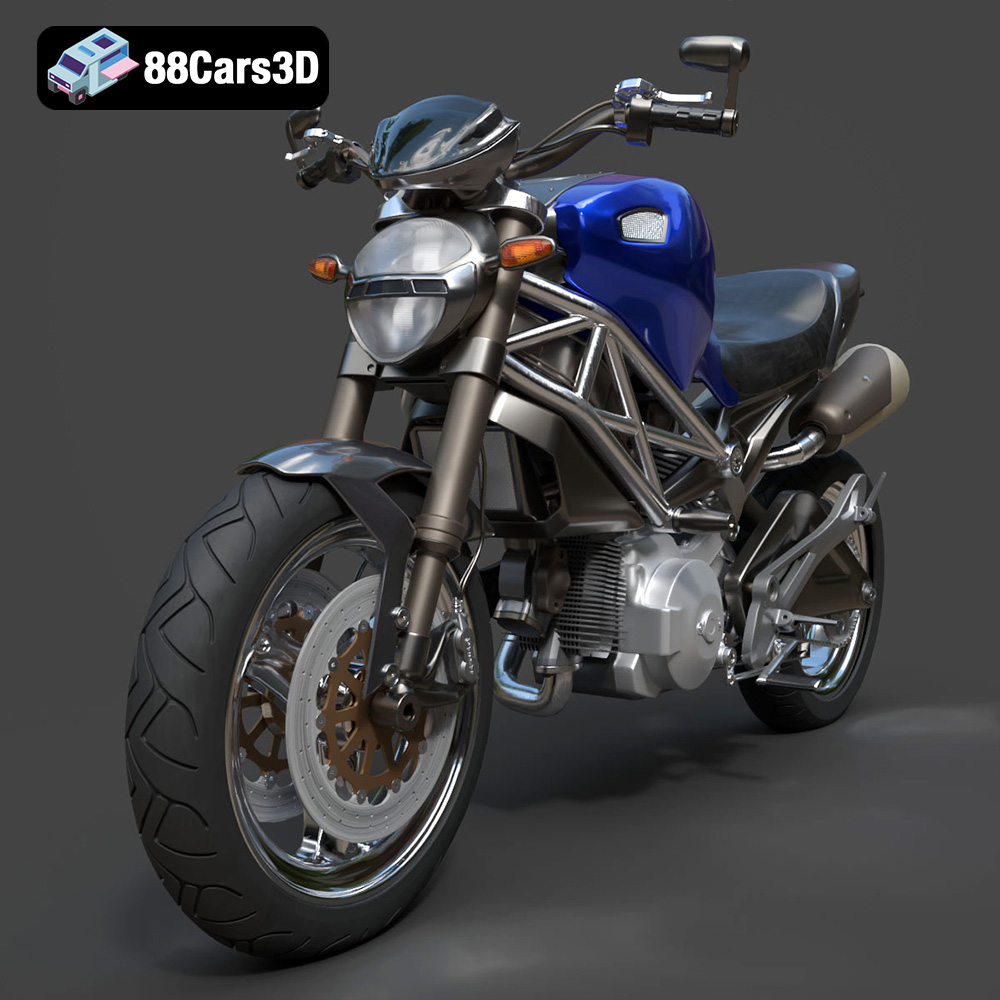
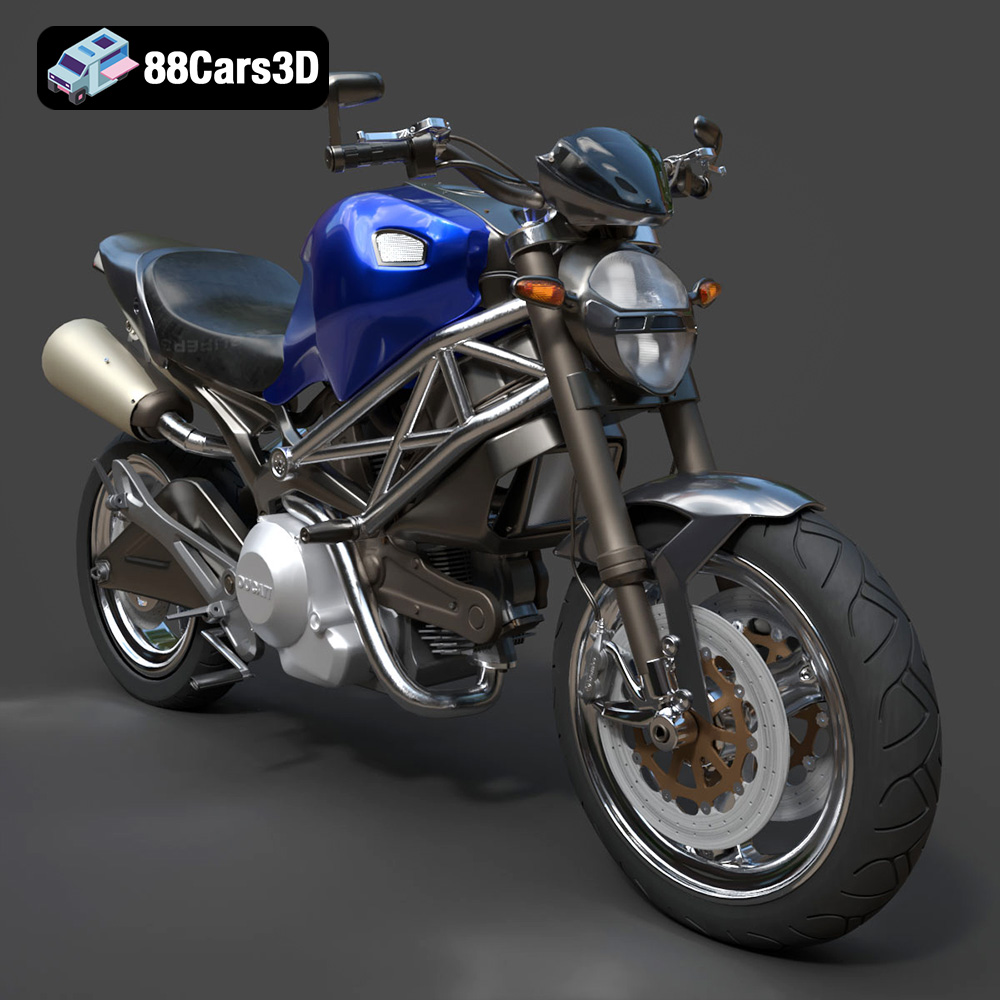
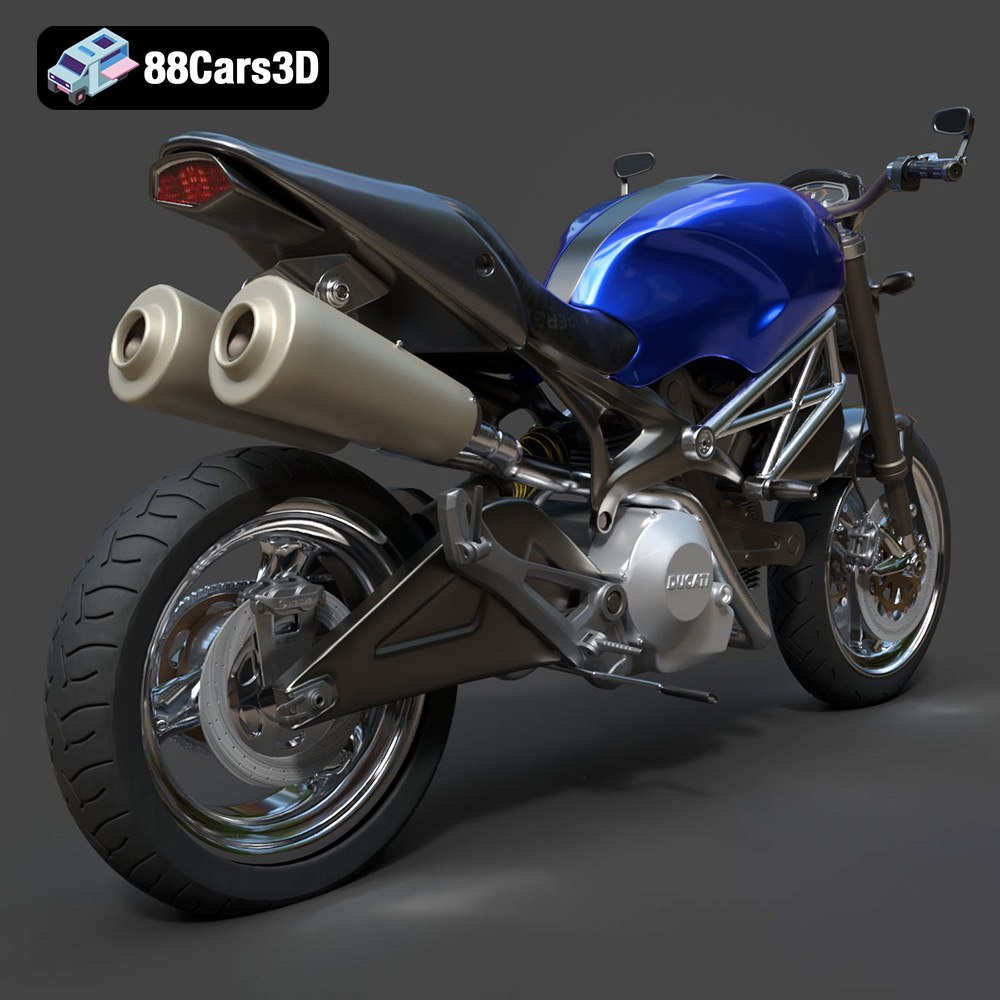
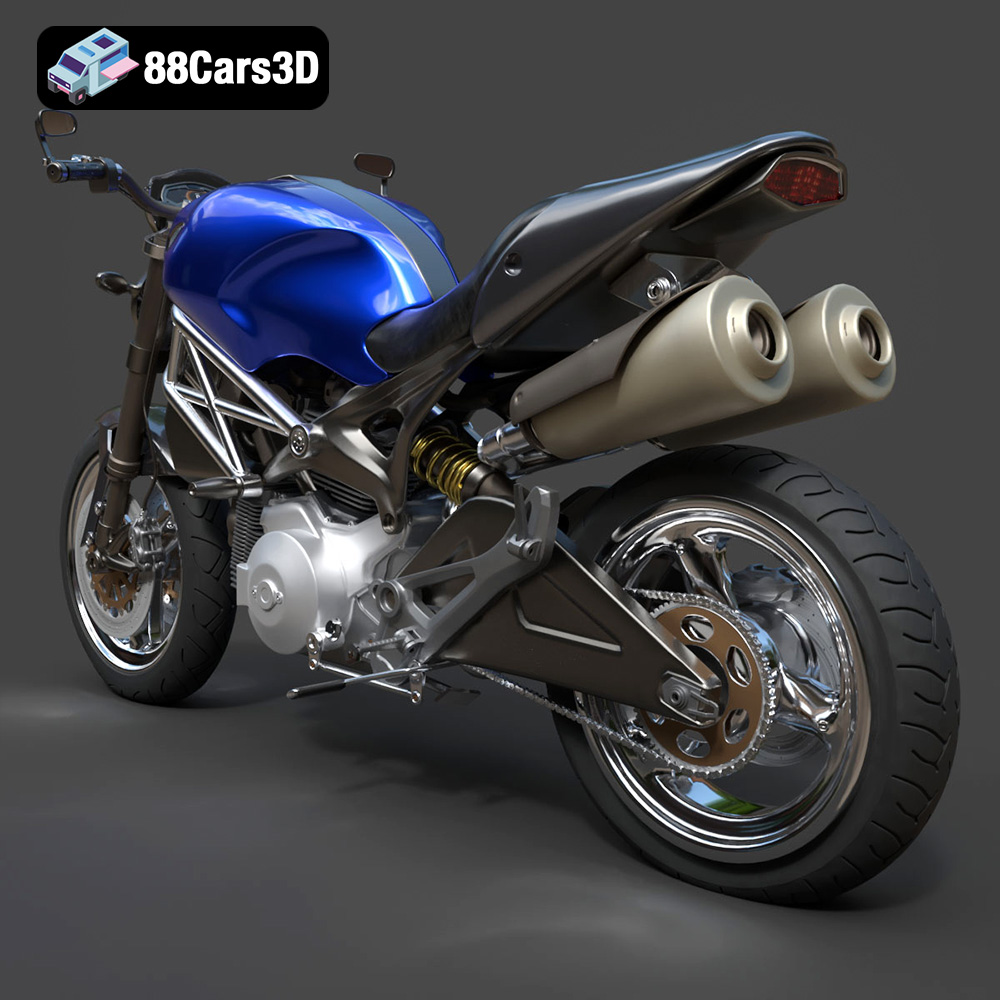
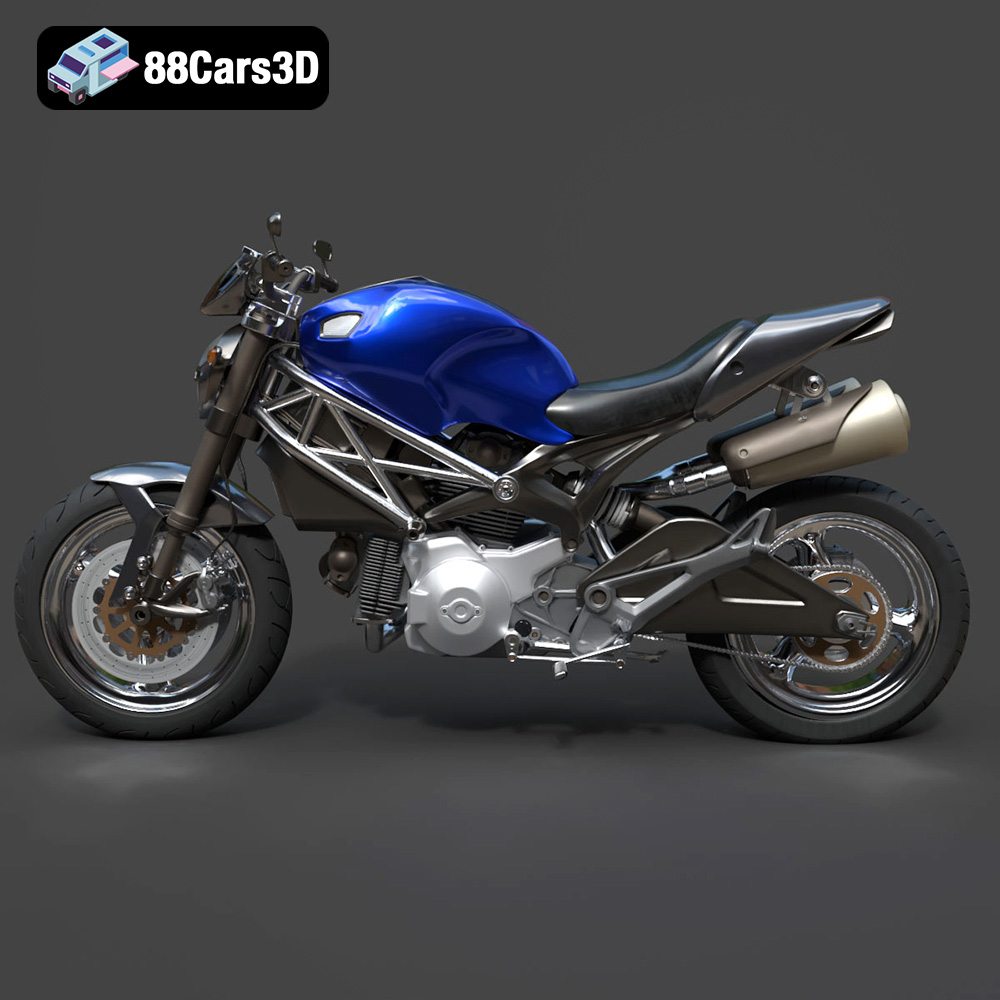
From the moment you inspect this model, the commitment to real-world accuracy is evident. The iconic tubular steel trellis frame, a hallmark of Ducati design, is precisely replicated, capturing its unique geometry and proportions. Every detail of the 696cc L-twin Desmodromic engine block, including its distinct cooling fins and casings, is modeled with precision, vital for realistic renders where the engine often takes center stage. The signature twin aluminum under-seat exhaust system, a design choice that defined the Monster’s rear profile, is also intricately detailed. Furthermore, the distinctive round triple-parabola headlight and sleek LED taillight assembly, along with the intricately modeled three-spoke alloy wheels wrapped in realistic high-performance street tires, complete the aggressive yet elegant visual appeal. The inclusion of separate wheels, suspension, and steering components is a significant advantage, allowing for advanced animation setups.
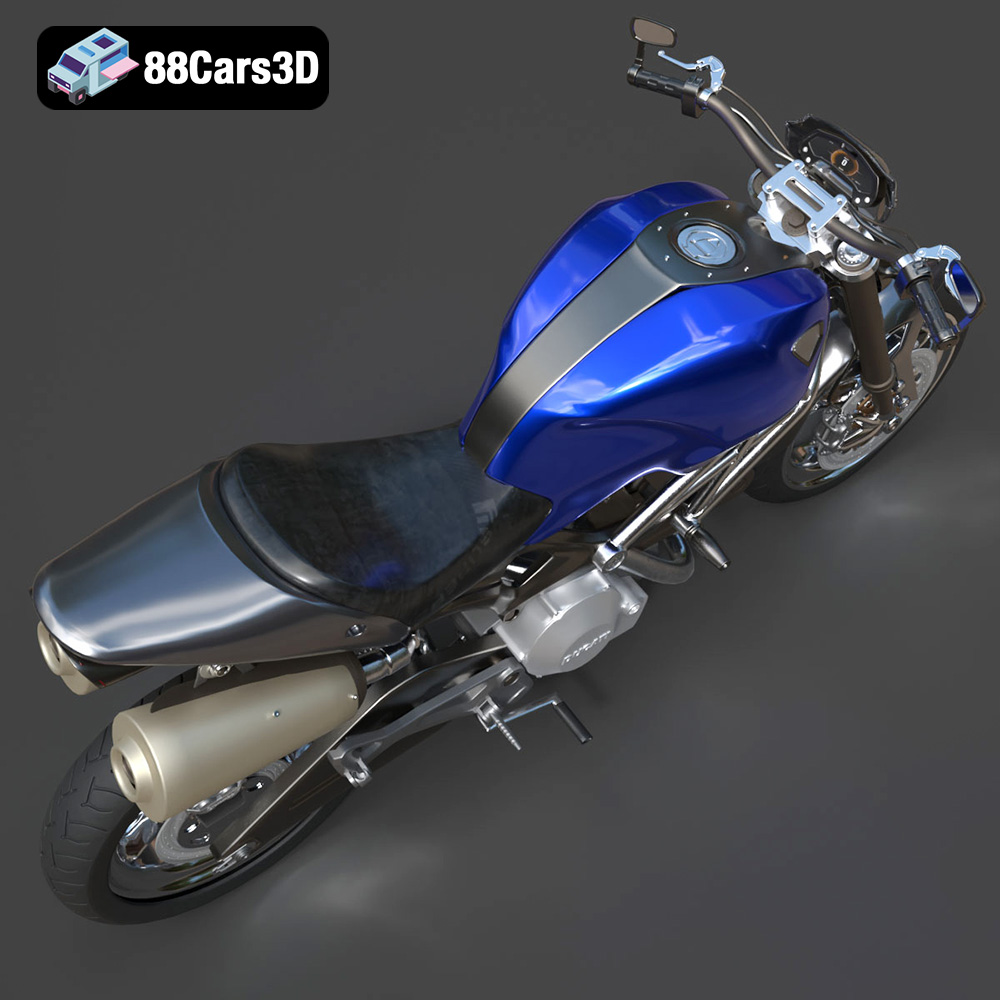
Beyond the exterior, the model extends its detail into the rider’s domain. The ergonomically contoured two-up sport saddle features realistic stitch detailing, adding to the authenticity. The wide aluminum handlebars are equipped with detailed grips, mirrors, and switchgear, crucial for first-person perspectives in gaming or interactive VR experiences. An accurate fully digital LCD instrument cluster setup and precisely modeled foot pegs, brake/clutch levers, and shifter linkage further enhance the sense of realism, ensuring that even the closest inspection reveals no compromise in quality. This optimized geometry makes it ideal for first-person POV in gaming, truly immersing the player in the ride.
The technical underpinning of this Ducati Monster 696 3D model highlights its versatility. It’s truly “Game-Ready & Optimized,” with its polycount balancing high visual realism with the demands of real-time engines like Unreal and Unity. Real-world scale accuracy, based on the actual vehicle chassis, ensures seamless integration into environments where precise dimensions are critical. Crucially, the proper pivot setup for steering, wheel rotation, and suspension travel simplifies the animation process, saving countless hours for animators. Its compatibility with major 3D software platforms and real-time rendering engines ensures it can be integrated into virtually any professional pipeline, providing immediate value for a wide array of projects, from open-world racing games to cinematic lifestyle animations and interactive VR garage simulators.
The choice of file format is a critical decision in any 3D workflow, dictating compatibility, feature support, and overall efficiency. The Ducati Monster 696 2008 3D Model comes in a comprehensive array of formats, each serving specific purposes and catering to different professional needs. Understanding these distinctions is key to leveraging the model’s full potential.
The .blend format is Blender’s native file type, offering a complete and fully editable Blender scene. This is invaluable for users working within the Blender ecosystem, as it preserves all aspects of the project: meshes, materials (including PBR setups), textures, lighting, cameras, animations, and even modifiers. For the Ducati Monster 696, receiving it as a .blend file means artists can immediately dive into customization, tweak materials using Cycles or Eevee, re-rig components, or integrate it into existing Blender projects without any loss of data fidelity that might occur during format conversions.
FBX (Filmbox) is arguably the most widely adopted interchange format, particularly for game development and real-time pipelines like Unreal Engine and Unity. Developed by Autodesk, it excels at preserving critical data such as geometry, materials (often simplified but with texture references), animations, skeletal data, and even camera and light information. The .fbx version of the Ducati Monster 696 is ideal for direct import into game engines, ensuring that the model’s structure, pivots, and basic material assignments are retained, making it a “game-ready” asset with minimal preparation.
OBJ (or Wavefront OBJ) is a universal format renowned for its simplicity and wide cross-software compatibility. It primarily stores geometry (vertices, normals, texture coordinates, and faces) and references external material files (.mtl) for basic color and texture information. While it doesn’t support animations or advanced material properties, its universality makes it an excellent choice for general 3D model exchange between disparate software packages, ensuring that the core mesh of the Ducati Monster 696 can be accessed and manipulated by virtually any 3D application.
GLB (GL Transmission Format Binary) is the binary version of glTF, a royalty-free specification for the efficient transmission and loading of 3D scenes and models by applications. It’s highly optimized for AR, VR, and browser-based display due to its compact size and efficiency. A .glb file embeds all assets (geometry, textures, animations) into a single file, making the Ducati Monster 696 easily shareable and viewable in web browsers, mobile AR apps, and immersive VR experiences with fast loading times.
STL (STereoLithography) is the de facto standard format for 3D printing. It represents a 3D model as a series of connected triangles, describing only the surface geometry of the object without color, texture, or material information. The .stl version of the Ducati Monster 696 is specifically prepared for manufacturing, enabling hobbyists and professionals to bring the digital model into physical reality. While fine details might require careful scaling and printing settings, this format is essential for producing tangible replicas.
PLY (Polygon File Format or Stanford Triangle Format) is another format used to store 3D data, particularly from 3D scanners, and is often favored for precision meshes, CAD applications, or scientific analysis. It supports properties such as color, transparency, surface normals, and range data, and can store either triangular or polygonal meshes. For the Ducati Monster 696, the .ply format offers an alternative for precise geometric data exchange, especially for those involved in engineering, reverse engineering, or detailed manufacturing design.
The “.unreal” format isn’t a single file type but often refers to a collection of assets or a specific pipeline optimized for Unreal Engine. This typically means an .fbx file that has been imported, processed, and configured within Unreal Engine, complete with PBR materials, LODs (Levels of Detail), collision meshes, and potentially blueprints or animations. The availability of the Ducati Monster 696 in an “unreal” package signifies that it’s already structured for optimal performance and integration into Unreal Engine projects, saving developers significant setup time and ensuring consistency.
The .max format is Autodesk 3ds Max’s native scene file. Like .blend, it contains the complete scene data, including geometry, materials, lighting, cameras, animations, and render settings specific to 3ds Max. For professionals relying on 3ds Max for architectural visualization, product design, or high-end rendering with V-Ray or Corona, the .max version of the Ducati Monster 696 provides maximum flexibility for customization, animation, and integration into complex rendering pipelines.
High-quality 3D car models are more than just static objects; they are foundational assets that power diverse professional workflows. The Ducati Monster 696 2008 3D model’s comprehensive file format support and optimized structure make it a versatile tool across various industries.
For cinematic quality automotive rendering, 3ds Max and Blender are industry powerhouses. Artists can import the .max or .blend file respectively, taking advantage of the native scene data, including materials and optimized topology. In 3ds Max, this might involve setting up a V-Ray or Corona render scene, adding studio-quality lighting, and applying advanced PBR (Physically Based Rendering) materials to achieve photorealistic results of the Ducati Monster 696. Similarly, Blender users can leverage Cycles or Eevee, modifying the provided materials or creating custom ones to achieve stunning visuals, perhaps for a product launch campaign or a digital showroom. The accurate geometry and detailed components allow for extreme close-ups, highlighting the intricate engine block or the precise stitching on the saddle.
The “Game-Ready & Optimized” nature of this 3D model makes it invaluable for game developers. The .fbx and .unreal formats are perfectly suited for direct integration into Unreal Engine and Unity. Developers can import the model, which already features proper pivot setups for steering and wheel rotation, simplifying the rigging and animation process. In Unreal Engine, artists can quickly apply and adjust PBR materials, set up collision meshes, and even implement LODs (Levels of Detail) to ensure optimal performance across different viewing distances. This makes the Ducati Monster 696 3D model an ideal game asset for racing titles, open-world environments, or even interactive VR garage simulators, where performance and visual fidelity are paramount.
The .glb format, along with the optimized topology, positions the Ducati Monster 696 for cutting-edge AR/VR applications. Imagine a virtual showroom where prospective buyers can walk around, inspect, and even customize the bike in real-time. Or an augmented reality experience where the Ducati Monster 696 appears in your driveway through your smartphone. The model’s efficiency ensures smooth frame rates and quick loading times, essential for immersive and responsive interactive experiences. Its game-ready optimization means it can be readily integrated into platforms like Unity or Unreal Engine for building rich AR/VR content.
The transition from a high-poly sculpt to a game-ready asset requires a keen understanding of optimization techniques without sacrificing visual quality. The Ducati Monster 696 2008 3D Model exemplifies this balance, delivering both high fidelity and performance efficiency crucial for modern game development and real-time visualization.
With 1,632,587 triangles, the Ducati Monster 696 model strikes a thoughtful balance. While this might seem high for older game engines, it’s increasingly viable for next-generation titles and provides exceptional detail for close-up shots. The key is in its thoughtful structure and optimized topology. Instead of relying solely on raw polycount, the model’s geometry is likely distributed efficiently, placing detail where it matters most (e.g., engine fins, brake calipers) and simplifying less visible areas. This smart allocation prevents unnecessary vertices, ensuring that even with a significant polygon count, the model remains manageable for real-time rendering pipelines.
For truly optimized game assets, Levels of Detail (LODs) are indispensable. While the base model provides high fidelity, a professional workflow would involve generating lower poly versions of the Ducati Monster 696 for different viewing distances. An artist would use the high-fidelity model as a base to create LOD1, LOD2, and so forth, drastically reducing the triangle count for distant objects. This ensures that only the necessary detail is rendered, boosting performance. Additionally, accurate collision meshes (often simplified proxy geometry) are crucial for player interaction and physics calculations within game engines, preventing unnecessary complex calculations on the detailed visual mesh.
Real-time rendering heavily relies on efficient material and texture pipelines, typically utilizing PBR (Physically Based Rendering) workflows. The Ducati Monster 696 3D model would come with a comprehensive PBR material setup, including albedo (base color), roughness, metallic, normal, and ambient occlusion maps. Optimizing these textures involves using appropriate resolutions, efficient compression formats (like BC7 or ASTC), and judicious use of texture packing (combining multiple maps into one texture) to minimize draw calls and VRAM usage. The ability to customize tire textures, body colors, and material finishes (matte, gloss, metallic) directly within game engines adds another layer of versatility for game developers and configurator applications.
Beyond interactive applications, high-quality 3D car models are instrumental in creating stunning static renders, immersive AR/VR experiences, and dynamic cinematic sequences. The Ducati Monster 696 3D model from 88cars3d.com offers the precision needed for these demanding visualization tasks.
For automotive manufacturers, advertising agencies, or product designers, photorealistic renderings are a cost-effective alternative to physical photography. The Ducati Monster 696 model’s impressive detail and accurate PBR materials allow artists to create studio-quality shots, dynamic lifestyle renders, or even highly detailed exploded views of its components. Imagine showcasing the intricate L-twin engine in a virtual studio, complete with realistic reflections and global illumination. These renders are perfect for brand campaigns, brochures, online configurators, and press materials, allowing for endless creative freedom without the logistical challenges of real-world photoshoots.
The next frontier in automotive sales and experience is immersive technology. With the Ducati Monster 696 model, companies can develop virtual showrooms where customers can explore the bike in 1:1 scale using VR headsets. They can walk around it, open virtual compartments, and even “sit” on the saddle. Furthermore, AR configurators allow users to project the Ducati Monster onto their real-world environment, changing colors, rims, and accessories in real-time. The optimized geometry and clean topology ensure these experiences are fluid and visually compelling, providing a truly interactive product demonstration that transcends traditional online viewing.
The separate, animatable components (wheels, suspension, steering) of the Ducati Monster 696 3D model are a boon for cinematic projects. Animators can create realistic ride sequences, dynamic camera movements, or impressive product reveals. Whether it’s a high-octane chase scene in a film, a smooth panning shot for a commercial, or an instructional animation demonstrating suspension travel, the model’s robust rigging potential ensures professional-grade results. The ability to adapt lighting for different environments further enhances the cinematic appeal, allowing artists to set the mood from a gritty street scene to a pristine studio backdrop.
The utility of a detailed 3D model extends beyond digital screens. For enthusiasts, collectors, or even professional designers, the ability to physically manifest a digital creation through 3D printing is a powerful application. The Ducati Monster 696 2008 3D model, specifically provided in .stl format, bridges this gap between the virtual and the tangible.
The .stl format, while standard for 3D printing, represents the model’s surface as a tessellated mesh. For the Ducati Monster 696, this means converting its high-fidelity geometry into a printable form. The recommended scales (1:12, 1:18, 1:24) are crucial for balancing detail retention with printability. Smaller scales will inevitably lose some of the finer nuances, while larger scales demand more material and print time but showcase greater precision. The specified wall thickness (1.2–2.0 mm) is vital to ensure the structural integrity of the printed model, preventing fragile parts from breaking during printing or post-processing.
3D printing a complex object like a motorcycle requires careful consideration of print settings. Resin printing is strongly recommended for the Ducati Monster 696 due to its ability to achieve layer heights as fine as 0.04–0.12 mm, which is essential for capturing intricate details like the engine cooling fins, the tubular trellis frame, and the delicate switchgear. FDM (Fused Deposition Modeling) printers might struggle with such fine elements without significant layer lines. Supports are undeniably required for detailed parts, particularly the exhaust system, mirrors, handlebars, and any complex overhangs. Proper print orientation, such as printing the frame angled for structural integrity and the wheels separately, further optimizes the success rate and quality of the final physical model.
After the physical print, post-processing is where the model truly comes to life. This often involves sanding to remove support marks and layer lines, followed by priming to create a smooth, uniform surface for painting. For a replica as iconic as the Ducati Monster 696, authentic factory colors, perhaps with metallic finishes, will elevate the printed model to a true display piece. Beyond standard colors, hobbyists can experiment with custom paint jobs, weathering effects, or even add miniature decals to create personalized representations. The ability to download a high-quality 3D car model from 88cars3d.com and then produce a tangible replica underscores the immense versatility and value these digital assets provide.
The digital realm has opened unprecedented opportunities for creation and visualization, and high-quality 3D car models are at the forefront of this revolution. The Ducati Monster 696 2008 3D Model is a prime example of a meticulously crafted asset that empowers professionals across various industries, from game development and automotive rendering to AR/VR experiences and physical 3D printing. Its impressive triangle count, hyper-realistic detailing, and optimized topology ensure it meets the rigorous demands of modern pipelines.
By offering an extensive range of file formats—including .blend, .fbx, .obj, .glb, .stl, .ply, .unreal, and .max—this model provides unparalleled compatibility and flexibility, making it a truly versatile tool for any project. Whether you are building the next generation of racing games, producing stunning visual campaigns, or creating immersive interactive experiences, the precision and performance of this Ducati Monster 696 model streamline your workflow and elevate your final output. Explore this exceptional asset and many more at 88cars3d.com, your premier destination for high-fidelity 3D car models that push the boundaries of digital realism.
The Ducati Monster 696 2008 3D model offers unparalleled realism for rendering and is meticulously optimized for next-gen game engines and VR/AR. Boasting 1.6 million triangles and an accurate recreation of the iconic naked bike, from its L-twin engine to the trellis frame, it’s perfect for high-end visualization, interactive experiences, and even 3D printing across multiple versatile formats.
$80.00
.2008
.blend
.ducati
.fbx
.glb
.max
.obj
.ply
.rendering
.stl
.streetfighter
.unreal
game asset
game-ready
monster-696
motorcycle-3d-model
naked-bike
optimized
VR/AR