Get 20% OFF All Premium 3D & STL Models!

In the dynamic world of digital content creation, from cinematic visualizations to immersive game environments, the demand for truly exceptional 3D assets continues to soar. Automotive design, in particular, holds a special place, blending engineering marvel with aesthetic appeal. Whether you’re a professional renderer, a game developer, an AR/VR experience designer, or a hobbyist bringing virtual worlds to life, the quality of your 3D car models can make or break a project. It’s not just about having a vehicle; it’s about capturing the soul, the history, and the intricate details that transform a simple mesh into a compelling digital sculpture.
Today, we delve into the technical brilliance and artistic fidelity required to achieve this, using a prime example from the extensive collection at 88cars3d.com: the Hispano Suiza H6B 3D Model. This isn’t just any classic car; it’s an emblem of 1920s luxury and engineering prowess, meticulously recreated to deliver unparalleled visual fidelity and functionality across a spectrum of professional applications. We’ll explore how such a detailed asset can enhance your projects, the critical technical considerations, and the versatile formats that make it an indispensable tool for creators.
Classic cars possess a timeless charm, a testament to eras when craftsmanship and distinctive styling were paramount. Recreating these machines in 3D is more than just modeling shapes; it’s about preserving history and evoking emotion. For digital artists, game developers, and visualization specialists, access to high-fidelity classic 3D car models opens up a world of creative possibilities, allowing them to weave rich narratives and create authentic historical backdrops.
Vintage automobiles like the Hispano Suiza H6B are iconic for a reason. Their designs tell stories of innovation, luxury, and cultural shifts. In digital art, these vehicles serve as powerful narrative devices, instantly grounding a scene in a particular era or conveying a sense of elegance and prestige. From a technical standpoint, the intricate curves, spoked wheels, and unique mechanical components of classic cars present a fascinating challenge and opportunity for 3D artists to demonstrate their skills in precision modeling and texturing. A well-executed vintage car model becomes a focal point, drawing viewers into the scene with its historical accuracy and intricate details.
The beauty of modern 3D technology lies in its ability to bring historical artifacts to life with unprecedented realism. The Hispano Suiza H6B 3D Model exemplifies this fusion. It merges the elegant design of the roaring twenties with cutting-edge digital craftsmanship. By meticulously capturing features like its aviation-inspired 6.6-liter inline-six engine and the iconic flying stork mascot, the model bridges the gap between historical documentation and interactive digital experiences. This level of detail is crucial for projects aiming for historical accuracy, whether for educational purposes, period film productions, or sophisticated virtual reality tours.
Choosing the correct file format for your 3D assets is a critical decision that impacts workflow, compatibility, and the ultimate quality of your project. Different formats excel in various scenarios, from native editing environments to real-time engine integration and physical printing. Understanding their specific strengths is essential for maximizing efficiency and ensuring seamless asset transfer. The Hispano Suiza H6B 3D Model is offered in a comprehensive range of formats, making it incredibly versatile for diverse professional needs.
The .blend format is Blender’s native file type, offering a complete scene package. It stores not only mesh data but also materials, textures, animations, lighting, cameras, and even editor-specific settings. This makes .blend files ideal for artists working primarily within Blender, as they retain full editability and preserve all aspects of the scene as created by the artist. For the Hispano Suiza H6B, having a .blend file means you get the original artist’s setup, allowing for easy modification, re-rendering, or integration into existing Blender projects without losing any nuances of the original design or material configuration. It’s the most flexible option for deep customization within Blender.
.fbx (Filmbox) is arguably the most widely adopted proprietary 3D exchange format, developed by Autodesk. It excels at transferring entire scenes or complex animated models between different 3D software applications (like Maya, 3ds Max, Blender) and game engines (Unreal Engine, Unity). FBX supports geometry, materials, textures, animations, skeletal rigging, and even camera data. Its robust nature makes it the go-to format for game development and real-time pipelines due to its efficient handling of animation and hierarchical data. For the Hispano Suiza H6B, an .fbx file ensures that all separate components (wheels, doors, suspension) and any pivot setups are correctly preserved for animation, making it immediately game-ready.
The .obj (Wavefront OBJ) format is a simple, universal 3D data format that is highly compatible across virtually all 3D software. It primarily stores geometry (vertices, normals, texture coordinates, and faces) and can reference external .mtl (material) files for basic material definitions. While .obj does not support animation or rigging, its widespread compatibility makes it excellent for static model interchange and archival purposes when you need a clean mesh. For the Hispano Suiza H6B, the .obj file is perfect for those who need a fundamental, unadulterated mesh to import into any software for custom material and animation setups.
.glb (GL Transmission Format Binary) is the binary version of glTF, an open-standard 3D file format designed for efficient transmission and loading of 3D scenes and models by applications. It packages all assets (geometry, materials, textures, animations) into a single, self-contained file, making it incredibly popular for web-based AR, VR, and browser-based 3D viewers. Its compact size and ease of integration make it ideal for quickly showcasing 3D models online. For the Hispano Suiza H6B, the .glb format would be perfect for virtual showrooms, online configurators, or integrating into mobile AR experiences, allowing users to interact with the classic car directly in their browser or on their device.
.stl (STereoLithography) is the standard file format for 3D printing. It represents 3D objects as a collection of unconnected triangular facets, making it suitable for manufacturing processes. While it contains no color or material information, its simplicity and ubiquity in the 3D printing world are unmatched. The Hispano Suiza H6B, when provided in .stl, can be brought into the physical world, allowing hobbyists or designers to create physical scale models. The product description even provides specific print settings, such as recommended scale, layer height, and support requirements, ensuring a successful print outcome for this detailed classic car.
The .ply (Polygon File Format, or Stanford Triangle Format) is another format primarily used for storing 3D scanner data, point clouds, and mesh geometry. It can store a wider range of properties than .obj, including color, transparency, and range data, per vertex or per face. While less common for general 3D model distribution, it is valuable in scientific, CAD, and precise engineering applications where detailed geometric information is paramount. For the Hispano Suiza H6B, the .ply format could be used for advanced mesh analysis or integration into specialized design software that requires this level of geometric precision.
The .unreal format refers to assets specifically prepared and packaged for direct import into the Unreal Engine. This typically means the model is already optimized, has correct material setups leveraging Unreal’s PBR system, and is configured with appropriate collision meshes, LODs (Levels of Detail), and pivot points for interactive use. A native Unreal asset streamlines the development process significantly, eliminating many of the common import issues and setup times. For the Hispano Suiza H6B, having an .unreal file means it’s practically plug-and-play for Unreal Engine projects, making it a powerful asset for game developers and real-time visualization artists.
The .max format is the native file type for Autodesk 3ds Max, a leading software in architectural visualization, design visualization, and animation. Similar to .blend for Blender, a .max file preserves the entire scene, including complex hierarchies, modifiers, materials, lighting, and animation setups specific to 3ds Max. This format offers full editability within 3ds Max, making it ideal for professionals who use this software for high-end rendering, animation, or further modification of the model. For the Hispano Suiza H6B, the .max file provides the complete project file for deep integration and customization within a 3ds Max pipeline, ensuring all artistic choices are preserved.
The true value of a premium 3D asset lies in its meticulous attention to detail and its technical optimization. The Hispano Suiza H6B 3D Model from 88cars3d.com exemplifies this philosophy, offering an asset that is both visually stunning and functionally robust for professional applications.
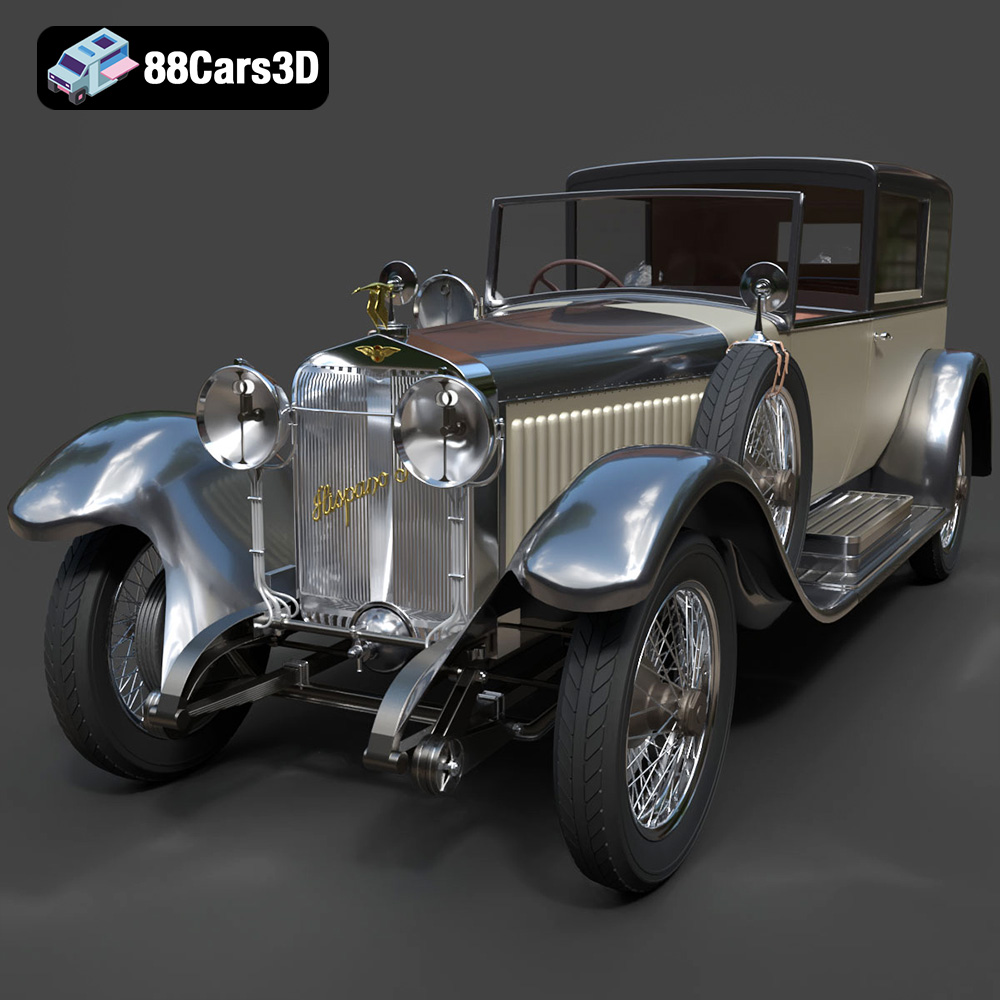
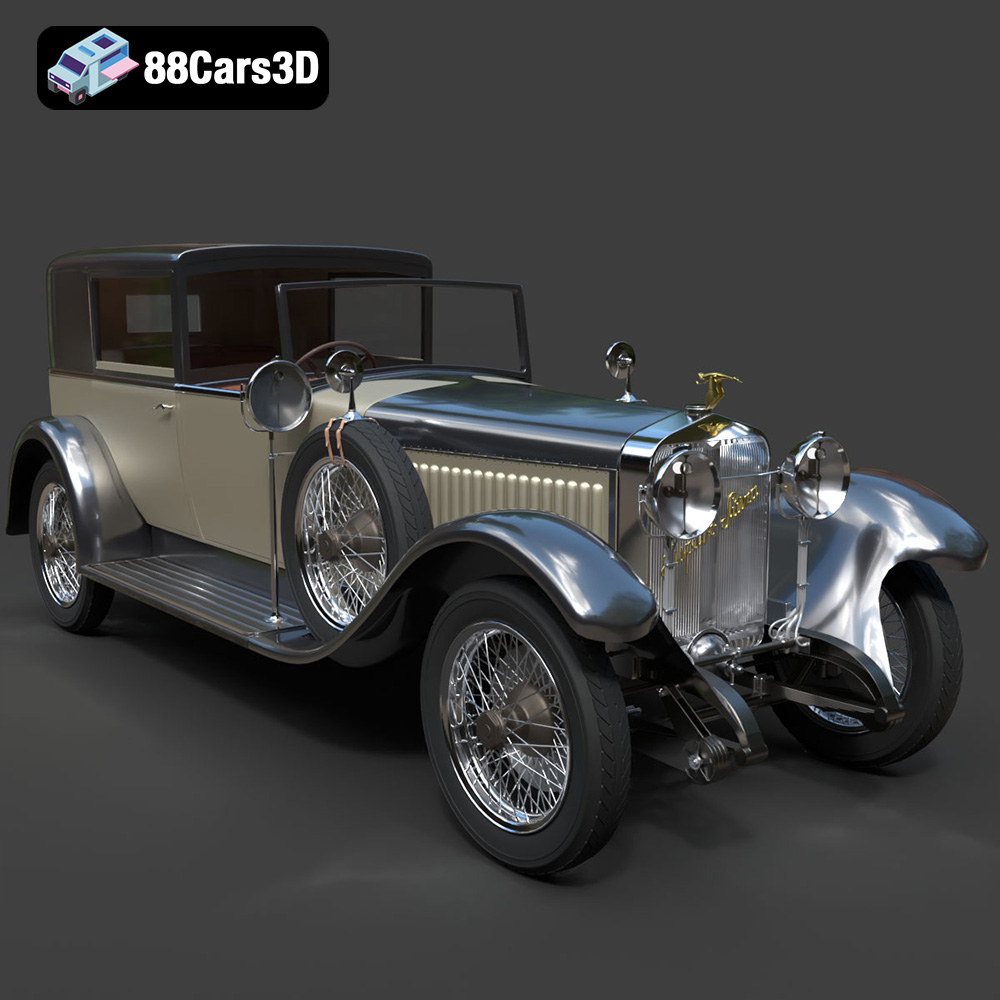
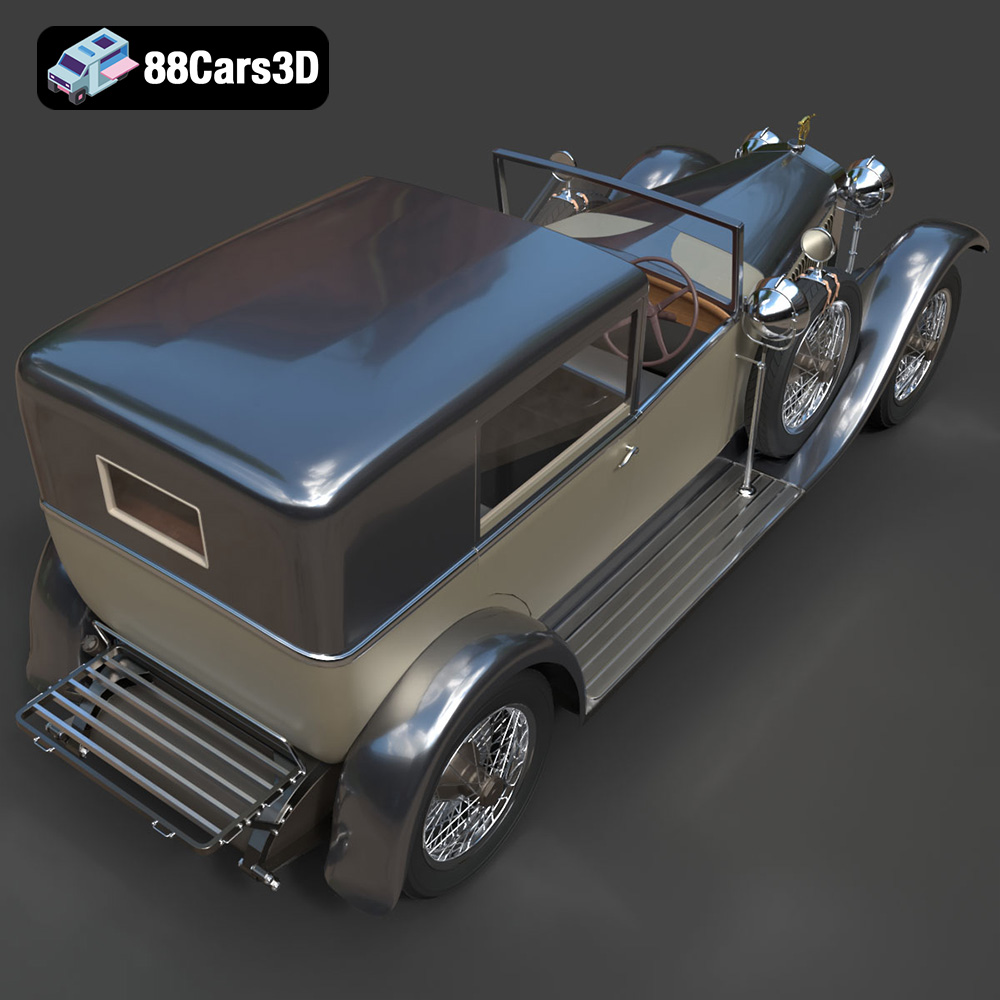
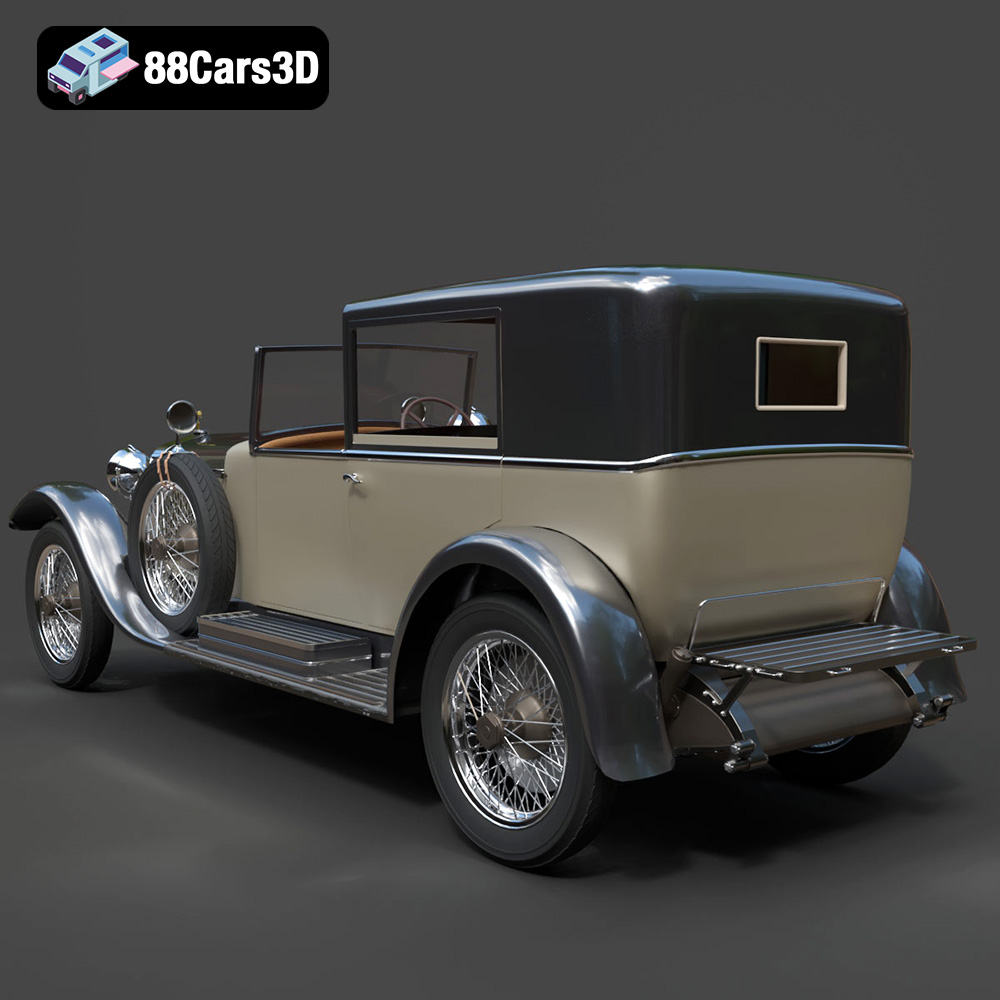
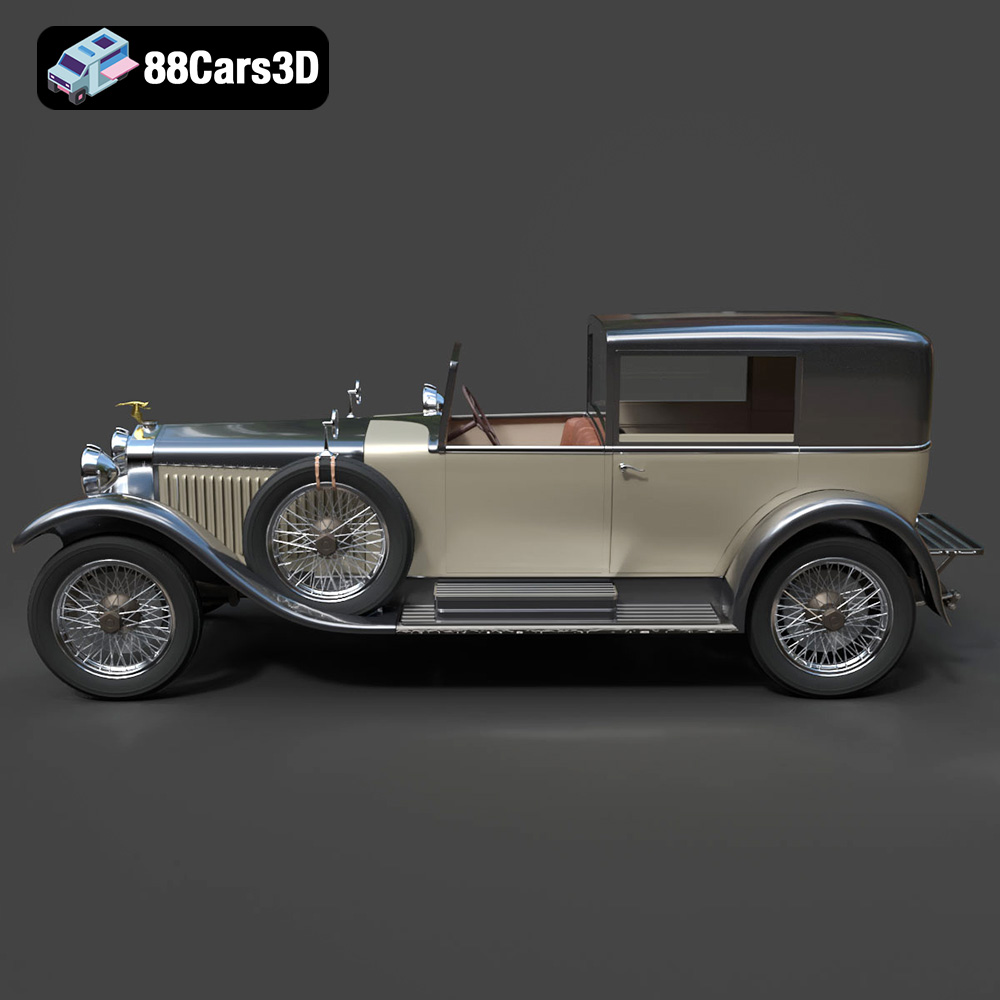
The exterior of the Hispano Suiza H6B is a symphony of sweeping fenders, a majestic radiator grille, and the iconic flying stork mascot. This 3D model meticulously recreates every curve and line, ensuring historical accuracy. Beyond the visible coachwork, the model includes a detailed 6.6-liter inline-six aviation-inspired engine block, authentic dual exhaust piping, and a period-correct undercarriage. Such granular detail is critical for close-up renders, cinematic sequences, or highly interactive virtual experiences where every component must withstand intense scrutiny. The intricate spoked wheels and era-appropriate pneumatic tires further contribute to the model’s authenticity, making it suitable for even the most demanding automotive rendering projects.
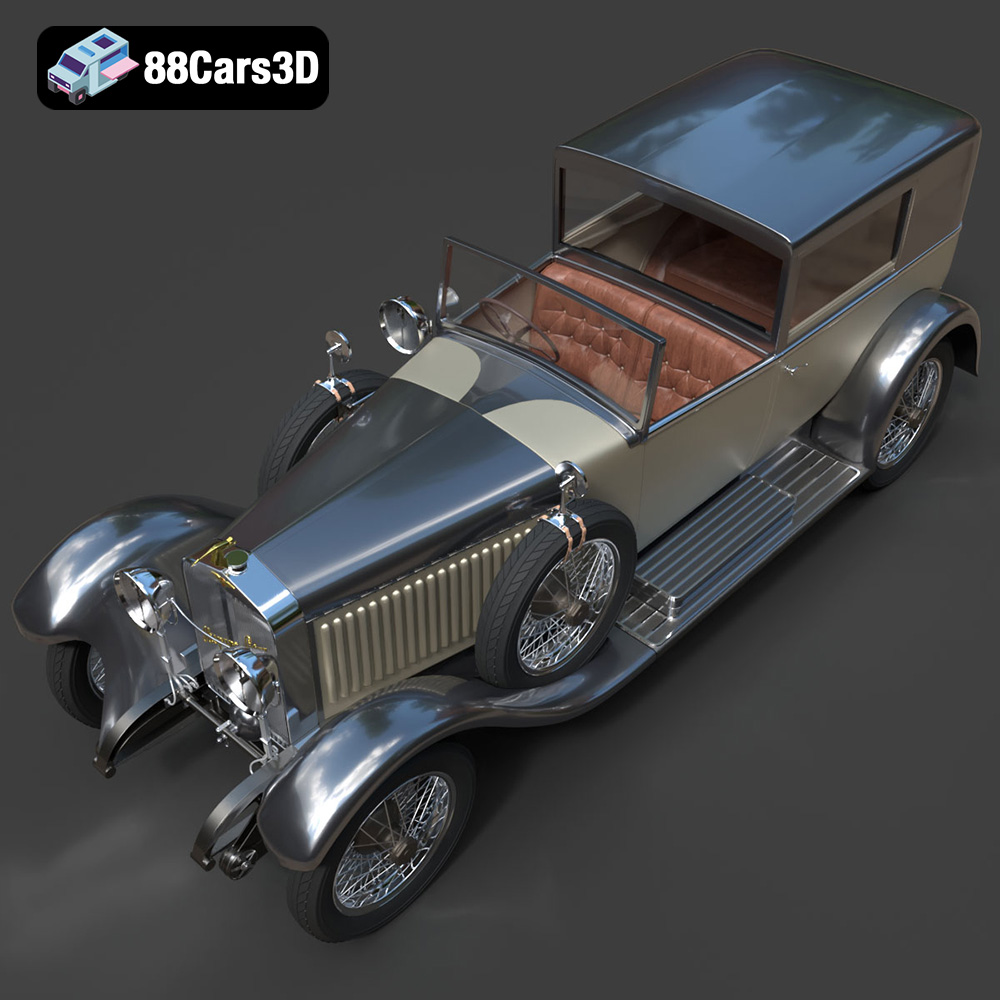
A truly complete 3D car model doesn’t stop at the exterior. The interior of the Hispano Suiza H6B model is just as painstakingly detailed, offering a luxurious vintage leather-style seat upholstery, a highly detailed wooden steering wheel, and an era-accurate instrument cluster with legible gauges. Control details, including brass-accented pedals, a long-throw gear shifter, and a handbrake, are all present. This level of interior fidelity is paramount for first-person perspective applications like gaming, VR experiences, and virtual showrooms, where users expect to explore every nook and cranny. Optimized geometry for these scenarios ensures smooth performance without sacrificing visual richness.
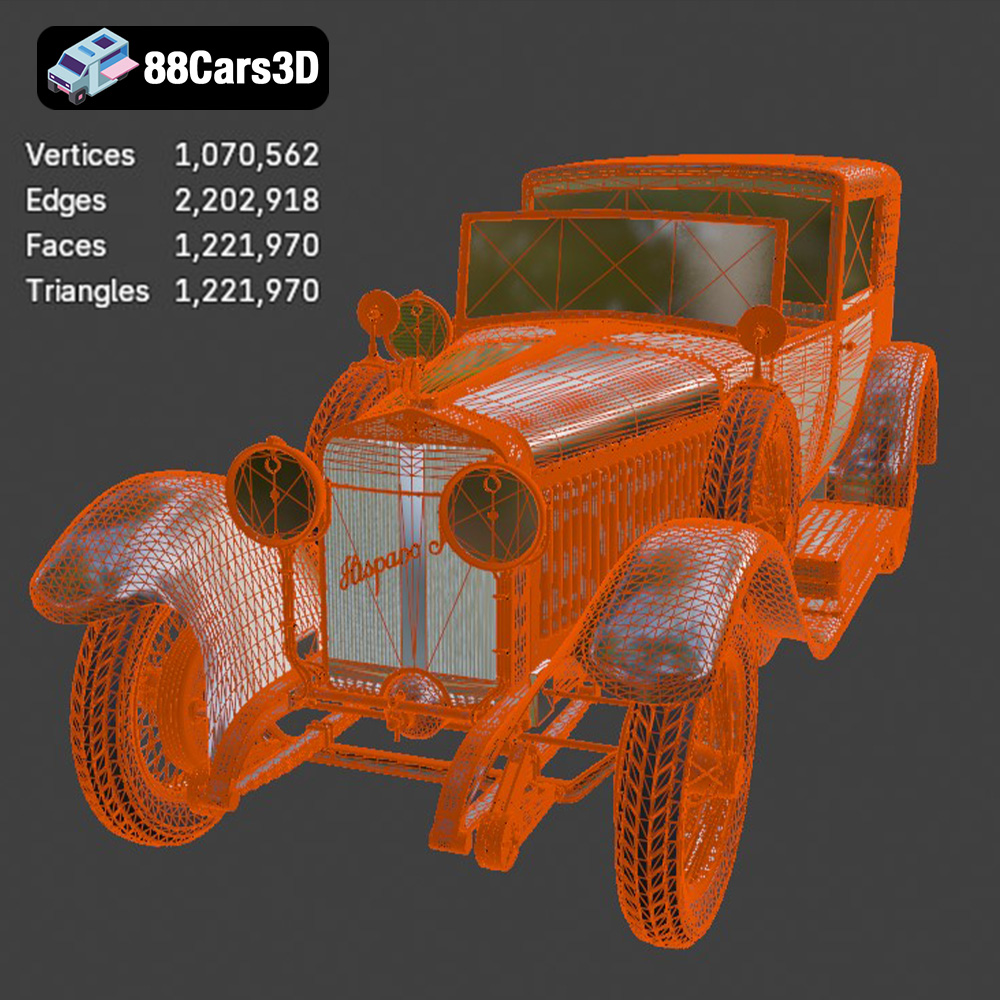
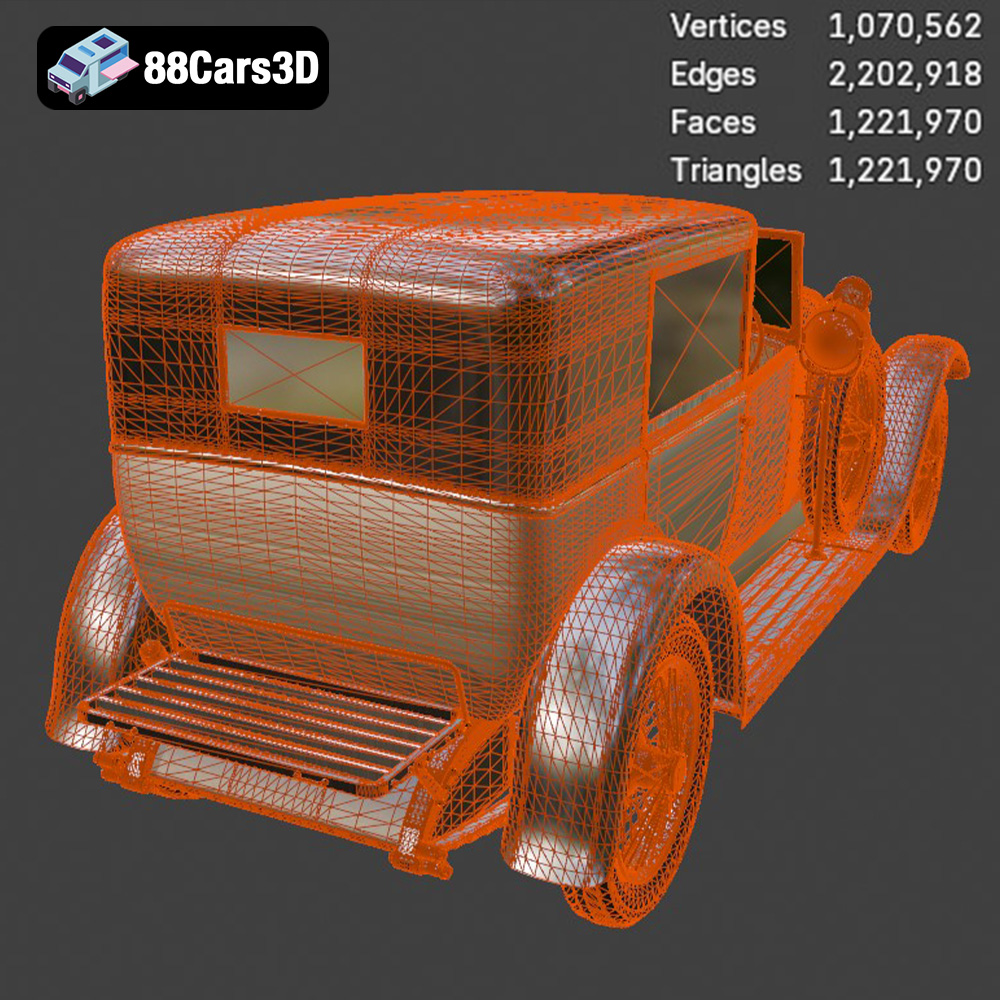
High-quality 3D car models must balance visual complexity with performance efficiency. The Hispano Suiza H6B model achieves this with a meticulously optimized 1,221,970 triangle count. This polycount strikes a perfect balance, providing exceptional visual realism for high-end rendering while remaining highly performant for real-time engines like Unreal and Unity. Furthermore, the model is built to real-world scale accuracy, ensuring correct proportions when integrated into any scene. Crucially for animation, it features a proper pivot setup for steering, wheel rotation, and suspension travel, allowing for dynamic and realistic vehicle movements directly out of the box.
The versatility of a premium 3D model is measured by its seamless integration into various professional workflows. The Hispano Suiza H6B 3D Model is designed to be a cornerstone asset for multiple creative disciplines, from cinematic production to interactive experiences.
For artists focused on photorealistic automotive rendering, the Hispano Suiza H6B model provides an excellent foundation. Using software like 3ds Max or Blender, artists can leverage the detailed geometry and robust material definitions to create stunning visualizations.
These workflows enable creators to produce marketing visuals, product showcases, or historical recreations with unparalleled fidelity.
The game-ready nature and optimized polycount of the Hispano Suiza H6B 3D model make it an invaluable asset for real-time applications.
This model is perfectly suited for creating immersive period-accurate games or luxurious virtual showrooms.
Beyond digital realms, the Hispano Suiza H6B model extends into the physical world through 3D printing. The inclusion of the .stl format is specifically for this purpose.
A truly valuable 3D asset provides a strong foundation but also allows for extensive customization, enabling artists to adapt it to their unique creative vision and project requirements.
The Hispano Suiza H6B 3D model, with its well-defined geometry and material zones, offers broad customization potential. Artists can easily adjust various aspects of its appearance to fit different aesthetic requirements:
This flexibility ensures the model can seamlessly integrate into diverse visual styles, from gritty realism to stylized renders.
The Hispano Suiza H6B 3D model is not just a standalone object; it’s a powerful tool for environmental storytelling. Its historical context allows it to instantly elevate the narrative of any scene. Imagine this classic car:
The model’s ability to seamlessly adapt to various lighting conditions and integrate into different environmental setups makes it an invaluable asset for creators aiming for compelling visual narratives.
In the complex landscape of 3D content creation, the difference between good and great often lies in the quality and versatility of your assets. The Hispano Suiza H6B 3D Model from 88cars3d.com stands as a testament to what’s achievable when meticulous craftsmanship meets technical optimization. From its stunning exterior and richly detailed interior to its game-ready polycount and comprehensive file format support, it’s designed to empower artists and developers across all disciplines.
Whether you’re striving for breathtaking automotive rendering, building immersive game assets, crafting engaging AR/VR experiences, or even bringing a classic car to life through 3D printing, this model provides the foundational quality and flexibility you need. It represents a smart investment for any professional seeking to elevate their projects with truly exceptional 3D car models. Explore this masterpiece and many other premium 3D assets at 88cars3d.com, your trusted source for high-quality digital automotive content.
The Hispano Suiza H6B is an undisputed masterpiece of automotive engineering and luxury from the roaring 1920s. Known for its aviation-inspired 6.6-liter inline-six engine and exceptional build quality, the H6B was the vehicle of choice for European royalty and elites. This highly detailed 3D model captures the elegance of its sweeping fenders, signature radiator grille adorned with the iconic flying stork mascot, and magnificent classic coachwork styling. Boasting a meticulously modeled 1,221,970 triangle count, this 3D asset delivers exceptional visual fidelity suited for high-end rendering and close-up shots while remaining optimized for modern high-performance engines. Whether you are developing an immersive period-accurate game, creating historical VR experiences, or rendering stunning automotive visualizations, this model provides uncompromising detail and historical accuracy. Perfect for classic car showcases, historical film animations, luxury virtual showrooms, and high-fidelity driving simulations.
$67.00
.blend
.fbx
.glb
.max
.obj
.ply
.rendering
.stl
.unreal
car-3d-model
classic-car
game asset
game-ready
h6b
high poly
hispano-suiza
luxury car
optimized
vintage-car
VR/AR