Get 20% OFF All Premium 3D & STL Models!

The automotive industry has always been at the forefront of design and engineering, constantly pushing boundaries in aesthetics, performance, and technological integration. In today’s digital age, this pursuit of excellence extends far beyond the physical vehicle, deeply permeating the realms of visualization, game development, and interactive experiences. At the heart of this digital transformation are high-fidelity 3D car models – assets that serve as the foundation for everything from breathtaking marketing campaigns to immersive virtual reality showrooms and hyper-realistic racing simulations.
Creating such intricate digital counterparts demands not only artistic skill but also a profound understanding of technical specifications, optimization strategies, and compatibility across diverse software ecosystems. It’s about meticulously recreating every curve, panel gap, and interior detail while ensuring the model is efficient enough for real-time applications. This delicate balance is precisely what professionals seek, and it’s exemplified beautifully by products like the Mercedes-Benz A-Class S-08 3D Model. This particular asset represents the pinnacle of modern 3D automotive design, offering a versatile foundation for a multitude of professional projects, from cutting-edge game development to precision 3D printing.
The journey of a car from concept to consumer once relied heavily on physical prototypes and traditional photography. While these methods remain vital, digital visualization has revolutionized the process, offering unparalleled flexibility and cost-efficiency. Initial designs, often born in CAD software, are now transformed into highly detailed 3D models, capable of being rendered in photorealistic environments before a single physical component is manufactured. This allows designers to iterate rapidly, visualize changes instantly, and present concepts with stunning realism. High-quality 3D car models are indispensable tools for design reviews, marketing materials, and stakeholder presentations, allowing brands to showcase their vehicles in compelling virtual scenarios.
Beyond static images, the demand for dynamic and interactive automotive experiences has exploded. Video games, particularly racing titles and open-world adventures, rely on incredibly detailed game assets to deliver immersion. Virtual reality (VR) and augmented reality (AR) are transforming how we experience car showrooms, allowing potential buyers to explore vehicles from every angle, customize options, and even take virtual test drives from the comfort of their homes. For these applications, a 3D model must not only look phenomenal but also be meticulously optimized for performance, ensuring smooth frame rates and responsive interactions. The Mercedes-Benz A-Class S-08 3D model, with its balanced topology and real-world accuracy, perfectly meets these stringent demands, making it an invaluable asset for developers and visualizers alike.
In the world of 3D modeling, the choice of file format is as critical as the model’s design itself. Each format is engineered for specific purposes, offering unique advantages in terms of compatibility, data retention, and optimization for various pipelines. Understanding these distinctions is paramount for anyone working with 3D car models, whether for game development, automotive rendering, or AR/VR applications. The Mercedes-Benz A-Class S-08 3D model, available on 88cars3d.com, exemplifies this versatility by offering a comprehensive suite of formats, ensuring seamless integration into virtually any professional workflow.
The .blend format is Blender’s native file type, storing an entire Blender scene with all its components: mesh data, materials, textures, lighting, cameras, animations, rigging, and even physics simulations. For artists and studios primarily working within the Blender ecosystem, a .blend file offers maximum flexibility. It’s fully editable, allowing for quick modifications to geometry, material properties, or animation sequences without any loss of data that might occur during conversion. For the A-Class S-08 model, the .blend file provides a complete, production-ready scene, ready for customization, rendering with Cycles or Eevee, or further optimization for game engines straight from Blender.
Developed by Autodesk, .fbx (Filmbox) is arguably the most widely used interchange format in the 3D industry, particularly for game development and animation. It excels at transferring 3D model data, including meshes, materials, textures (via embedded or linked paths), animations, and bone information, between different software applications like 3ds Max, Maya, Blender, Unity, and Unreal Engine. Its robust nature and widespread support make it ideal for real-time pipelines where consistent data transfer is crucial. For the A-Class S-08, the .fbx format ensures that the optimized mesh, proper pivots for wheels and suspension, and basic material setups are preserved when imported into game engines or other DCC tools, minimizing setup time and potential conversion errors.
The .obj (Wavefront OBJ) format is a venerable and widely supported open standard. It primarily stores geometric data (vertices, normals, texture coordinates, and faces) and can link to an accompanying .mtl (material library) file for material properties. While it doesn’t support animation or rigging, its simplicity and near-universal compatibility make it an excellent choice for basic mesh transfer between almost any 3D software. For the A-Class S-08 model, the .obj provides a clean, raw mesh that can be imported into virtually any 3D application, serving as a reliable foundation for users who prefer to build their materials and scene elements from scratch or are working with niche software.
.glb (GLB, a binary version of glTF – Graphics Library Transmission Format) is an increasingly vital format, specifically optimized for efficient transmission and loading of 3D scenes and models in web browsers, augmented reality (AR), and virtual reality (VR) applications. It packs all necessary data – geometry, materials, textures, animations – into a single, self-contained file, making it incredibly easy to share and integrate into real-time environments. Its compact size and PBR (Physically Based Rendering) material support make it perfect for interactive web viewers, mobile AR experiences, and virtual showrooms. The A-Class S-08 in .glb format is therefore ready-made for immersive online experiences, virtual dealerships, and mobile applications, showcasing the vehicle in a highly interactive and performant manner.
The .stl (STereoLithography) format is the industry standard for 3D printing. It represents a 3D model as a series of connected triangles (a triangular mesh), effectively describing the surface geometry without any color, texture, or material information. Its primary purpose is to define the external surface of a physical object for additive manufacturing. While not suitable for rendering or animation, the .stl version of the A-Class S-08 model is essential for hobbyists and professionals looking to create physical scale models. The detailed product description explicitly provides recommended print settings, ensuring successful physical replication of this complex automotive design.
.ply (Polygon File Format, or Stanford Triangle Format) is another format for storing 3D data, particularly useful for scanned data and models with complex attributes. Like .obj, it defines geometry, but it can also store additional properties such as color, transparency, normals, and even confidence values for each vertex or face. While less common for general asset exchange than .fbx, it offers a more robust data structure for precision mesh transfers, especially in scientific, CAD, or reverse-engineering contexts. For the A-Class S-08, the .ply format offers an alternative for highly precise geometric data transfer, which can be beneficial in certain specialized workflows requiring detailed mesh analysis or conversion for manufacturing processes.
While not a traditional open file format like .fbx or .obj, “unreal” typically refers to an asset package specifically prepared for Unreal Engine. This could be an exported Unreal asset file (.uasset) or a highly optimized .fbx file pre-configured for direct import and immediate use within Unreal Engine. This often includes correct scaling, collision meshes, material setups, and sometimes even LOD (Level of Detail) configurations. For the A-Class S-08, providing an “unreal” version signifies that the model has been tailored for the engine’s requirements, reducing the development time for game developers and real-time visualizers by offering a ready-to-use, high-performance asset optimized for the engine’s rendering pipeline.
The .max format is the native file type for Autodesk 3ds Max, one of the most powerful and widely used 3D modeling, animation, and rendering software packages in the industry. A .max file contains the entire scene, including geometry, materials (with complex node networks), textures, lighting setups, cameras, animations, and render settings. For professionals operating within 3ds Max, the .max file for the A-Class S-08 offers complete editability, allowing for advanced rendering with V-Ray or Corona, sophisticated animation sequences, and intricate scene compositions. It provides the highest level of control and detail for those who leverage the full power of 3ds Max for automotive rendering and visualization projects.
The Mercedes-Benz A-Class S-08 3D model stands out as a testament to meticulous craftsmanship and technical optimization. This asset isn’t just a digital representation; it’s a meticulously engineered tool designed for demanding professional applications. From its luxurious aesthetics to its performance-optimized topology, every aspect has been considered to deliver unparalleled value to artists, developers, and designers.
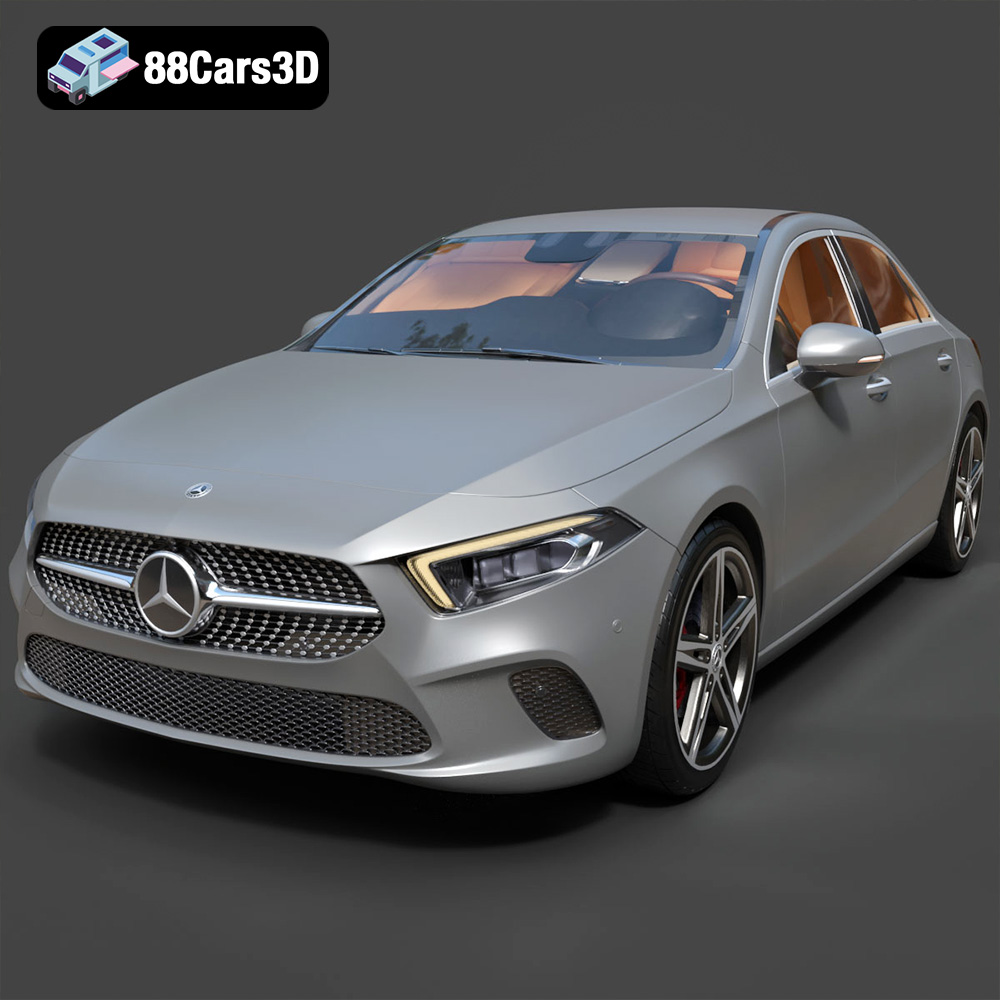
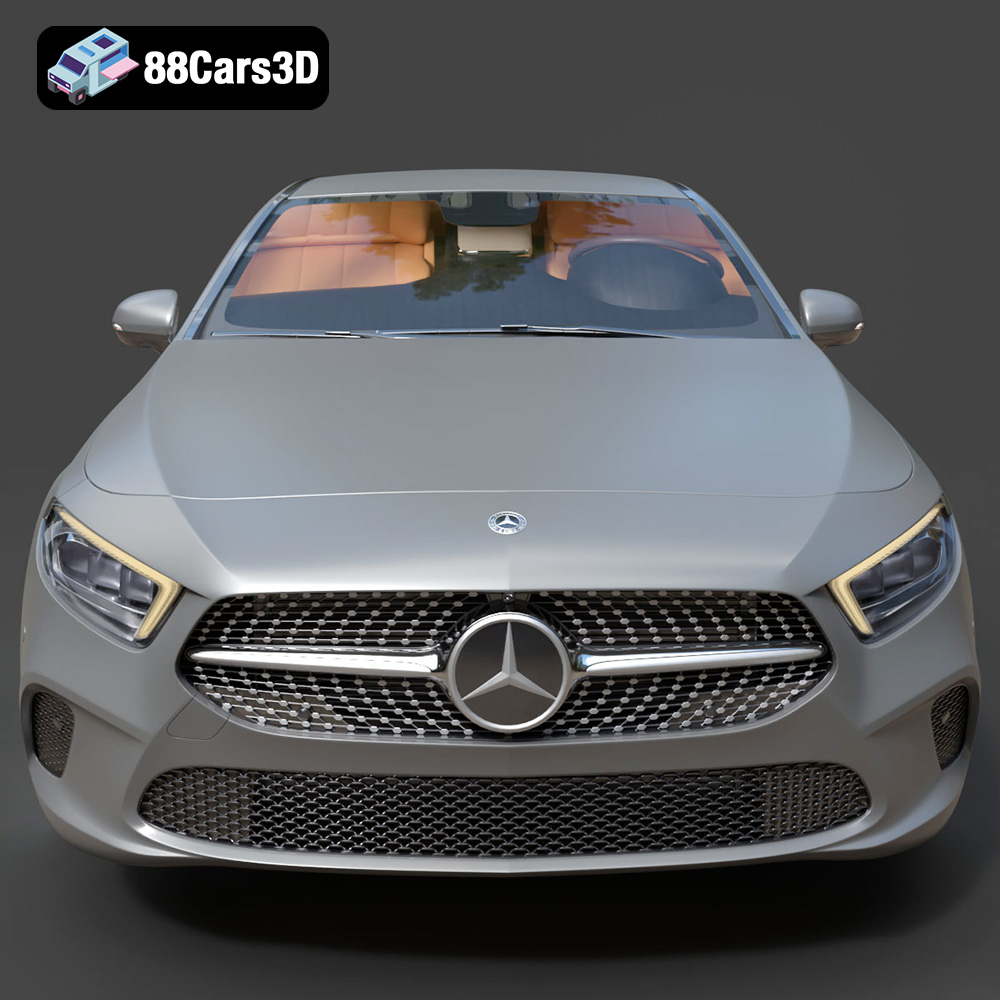
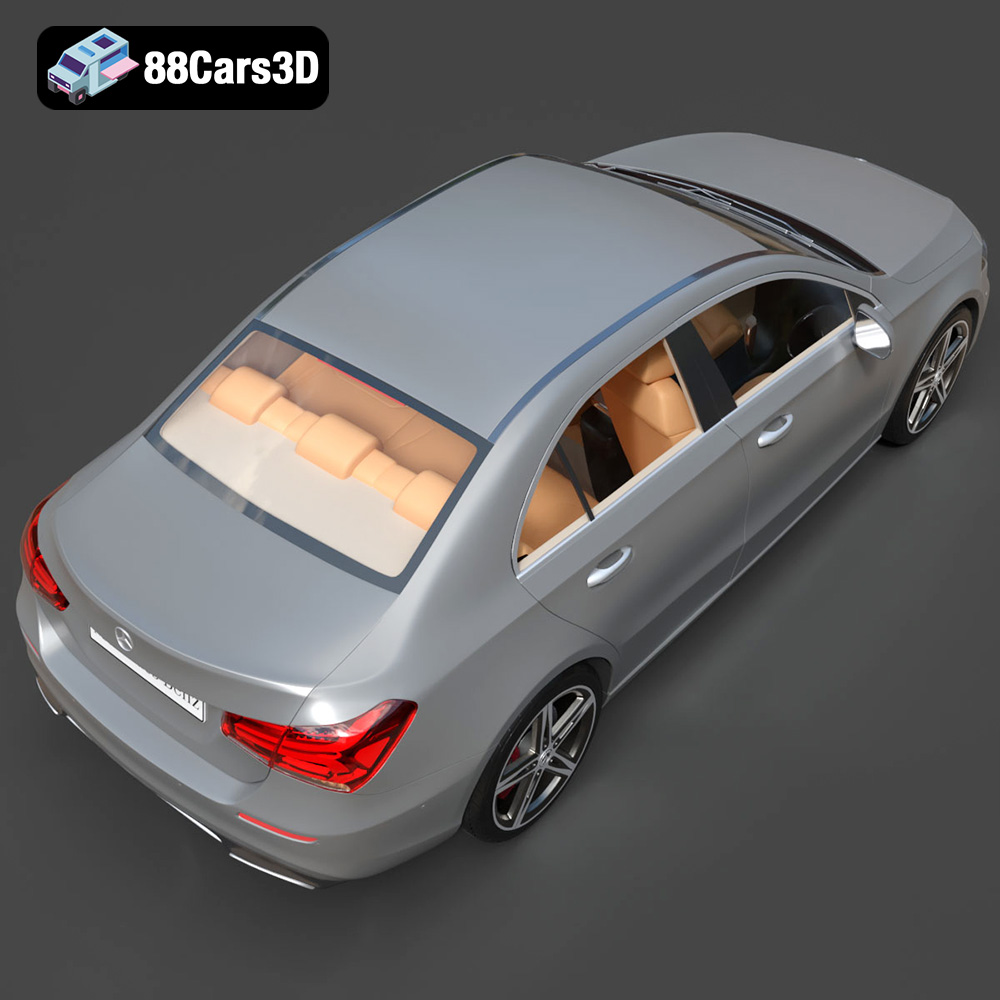
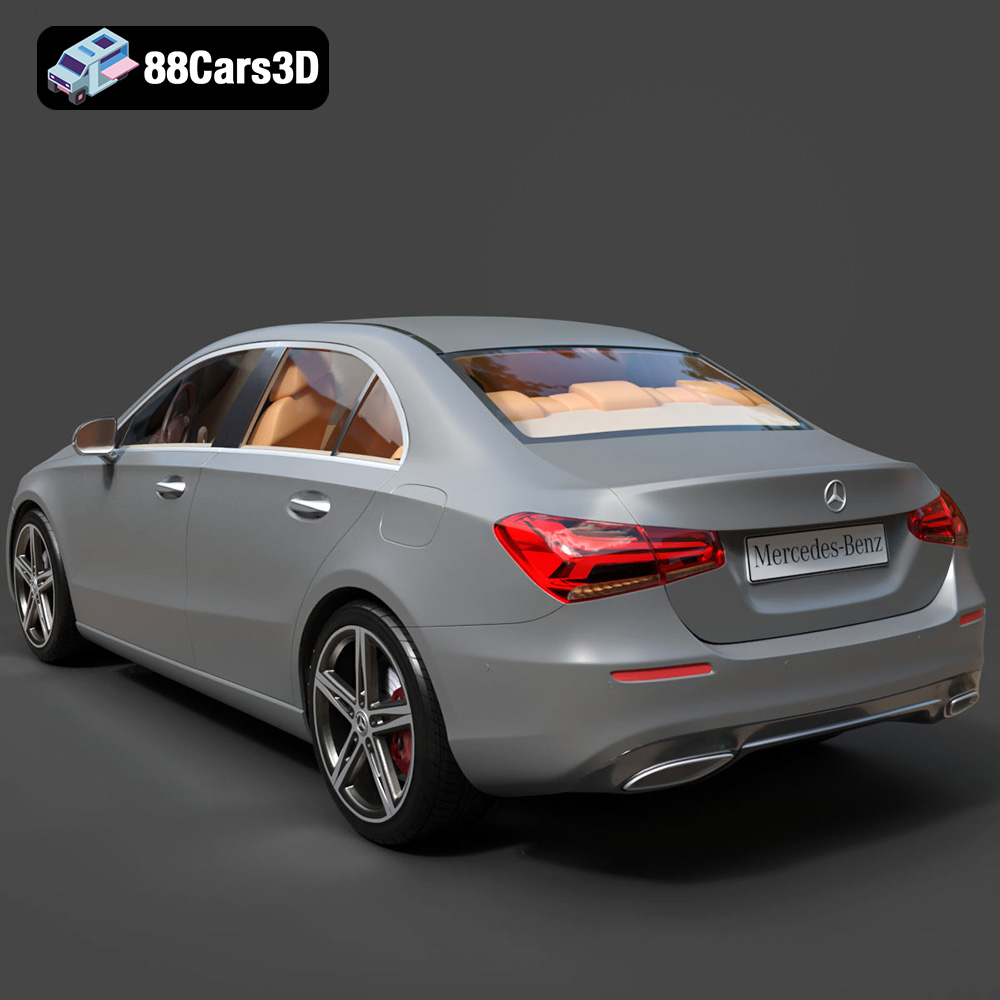
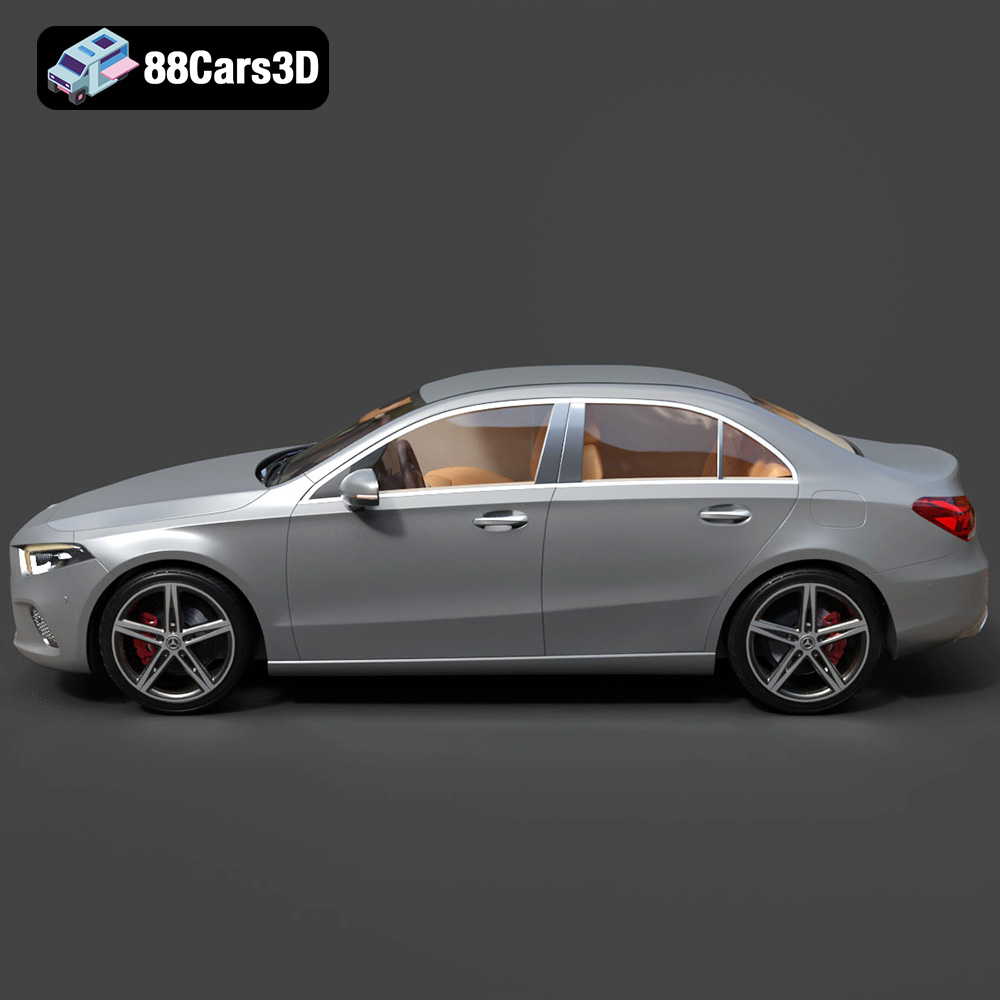
The exterior of the Mercedes-Benz A-Class S-08 is renowned for its sleek, aerodynamic profile and progressive design language. This 3D model faithfully recreates these characteristics, from the aggressive shark-nose front fascia and signature diamond-block grille to the elegantly sloping roofline and integrated twin-tailpipe trim. Every striking visual cue has been precisely modeled, ensuring authenticity. The high-resolution LED High Performance headlamps and distinctive multi-piece taillights are accurately detailed, capable of casting realistic light and shadows in renders. Furthermore, the aerodynamic multi-spoke alloy wheels are wrapped in realistic low-profile tires, complemented by intricate suspension details, visible brake discs, and branded calipers. Crucially, separate components for the wheels, suspension, and steering allow for dynamic animation, making it ideal for interactive simulations and cinematic sequences.
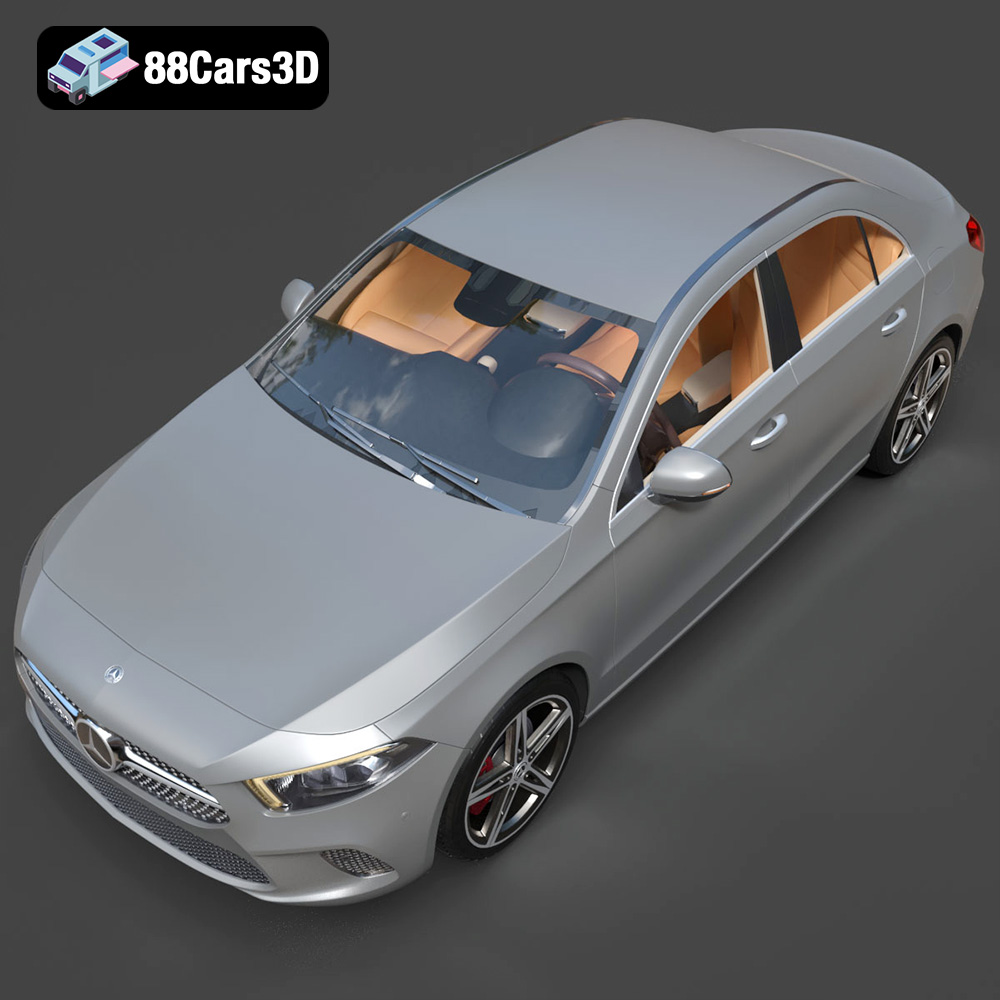
Stepping into the virtual cockpit of the A-Class S-08 reveals an equally impressive level of detail. The model features premium contoured sport seats with precise stitching, a multifunction sport steering wheel with authentic touch-control buttons, and the iconic widescreen MBUX digital instrument cluster and central touchscreen display. Even the turbine-style climate control air vents are meticulously modeled. This high level of interior fidelity is particularly important for applications like VR showrooms and first-person perspective (POV) in gaming, where users will experience the vehicle from within. The optimized geometry ensures that even with such detail, the model remains performant for real-time environments, offering a truly immersive experience.
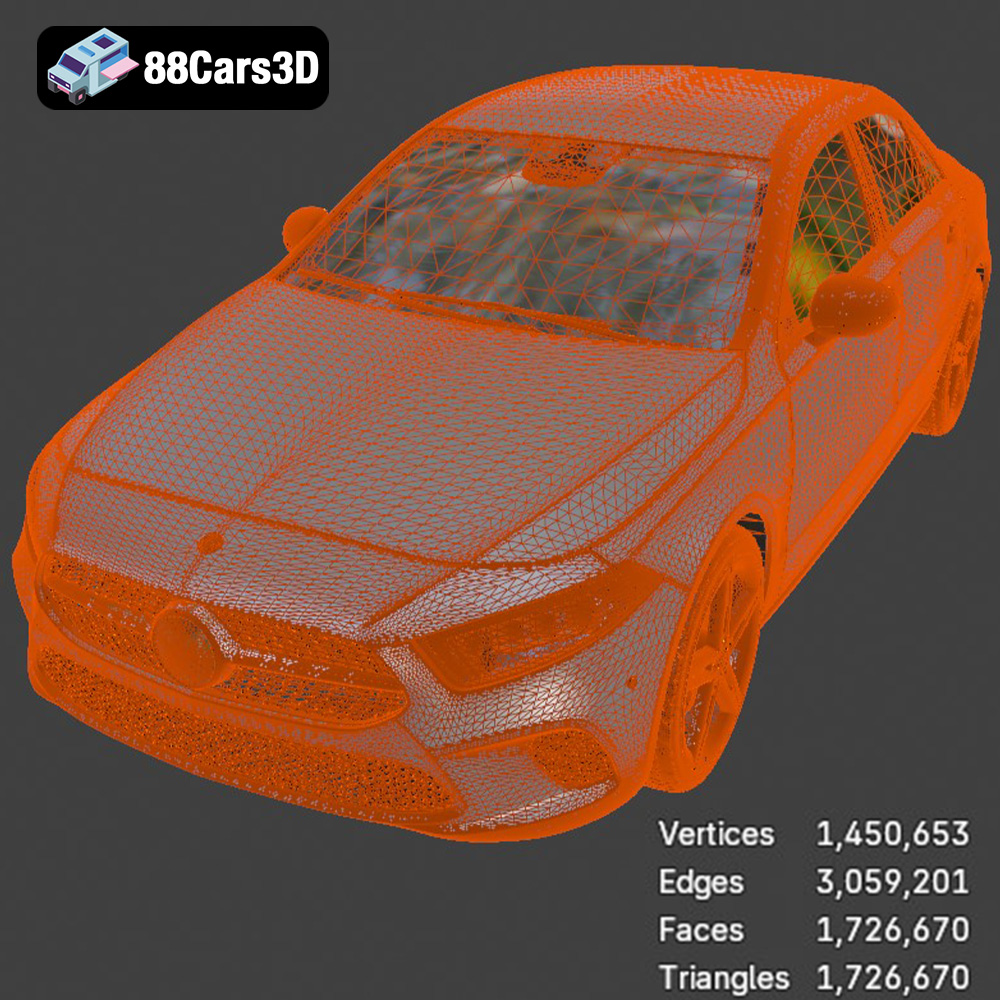
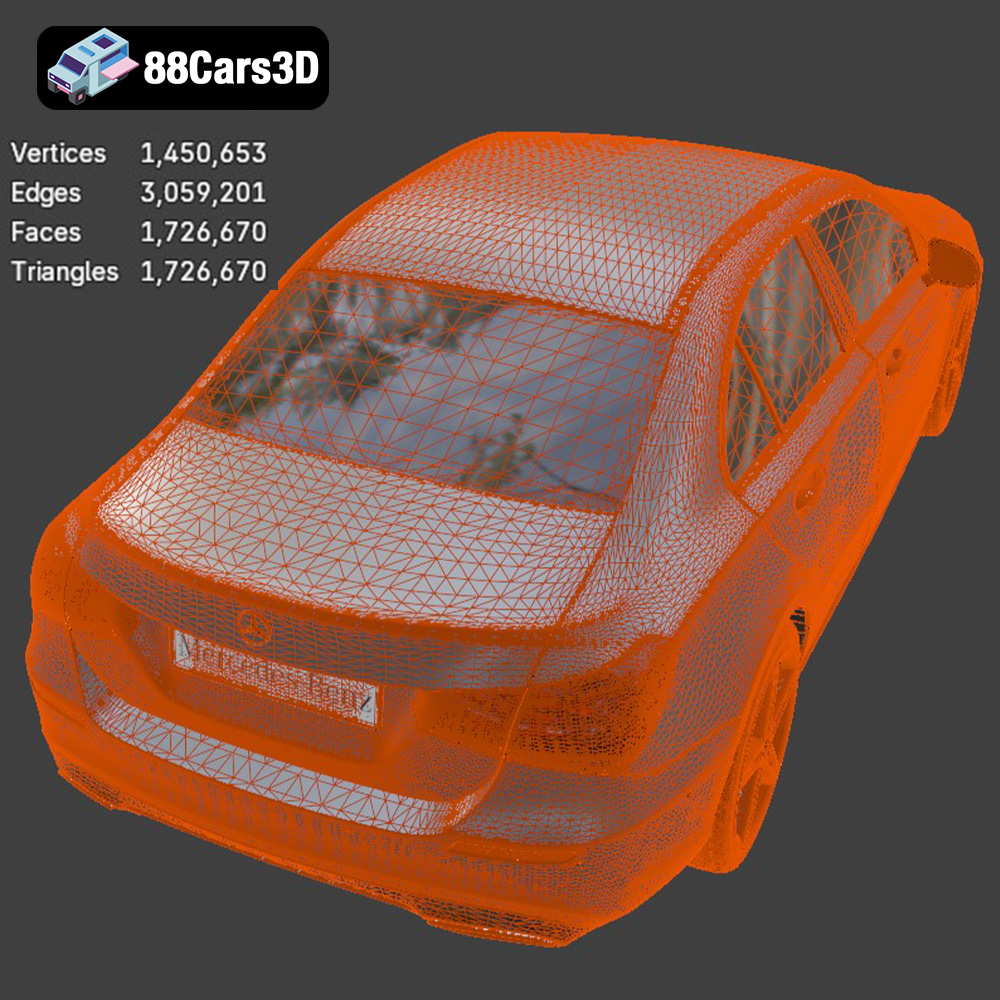
One of the standout advantages of this model is its technical foundation. Boasting a high-fidelity topology of 1,726,670 triangles, the model strikes an exceptional balance between visual realism and optimization for modern production pipelines. This “Game-Ready & Optimized” polycount ensures that it can deliver stunning visuals in high-end renders while remaining suitable for real-time engines like Unreal and Unity. Adherence to real-world scale accuracy, based on actual vehicle chassis dimensions, guarantees correct proportions and spatial relationships. Furthermore, the proper pivot setup for steering, wheel rotation, and suspension travel is a critical technical detail for animators and game developers, allowing for accurate and convincing vehicle dynamics right out of the box. This attention to detail significantly reduces setup time and enhances the professional workflow.
The versatility of the Mercedes-Benz A-Class S-08 3D model makes it a cornerstone asset for various professional applications. Its availability in multiple formats and its balanced technical specifications ensure seamless integration into diverse pipelines, from high-stakes game development to intricate automotive rendering projects.
For game developers, especially those working with Unreal Engine or Unity, the A-Class S-08 model is a significant time-saver. Its optimized polycount of 1,726,670 triangles is perfectly balanced for modern real-time engines, allowing for stunning visual fidelity without crippling performance. The “unreal” format and the well-structured .fbx file make importing and setting up the model a streamlined process. Developers can leverage the accurate real-world scale for realistic physics, and the properly set pivots for steering and suspension greatly simplify the integration of vehicle dynamics. This model is ideal for creating realistic racing titles, populating open-world game environments, or developing immersive vehicle configurators within games. Artists can quickly set up PBR materials, add collision meshes, and implement LODs (Level of Detail) to ensure optimal performance across various platforms and viewing distances, making the A-Class S-08 a truly game-ready asset.
For those focused on photorealistic automotive rendering, the Mercedes-Benz A-Class S-08 model, particularly in its .max or .blend formats, offers an exquisite foundation. In 3ds Max, artists can utilize advanced rendering engines like V-Ray or Corona to produce breathtaking marketing visuals, lifestyle scenes, and studio-quality renders. The detailed geometry, including visible engine components, intricate suspension, and precise interior elements, holds up even under extreme close-ups. Similarly, Blender users can harness the power of Cycles or Eevee to achieve stunning results. Artists can customize material finishes (matte, gloss, metallic), fine-tune lighting with HDRI environments, and animate camera paths to showcase the vehicle’s dynamic proportions. The model’s inherent detail and accurate topology make it a premium asset for high-resolution stills and cinematic animations for automotive brands or advertising campaigns.
The future of automotive retail and experience lies in immersive technologies like AR and VR. The A-Class S-08 3D model is perfectly suited for these applications, especially given its availability in the .glb format, which is optimized for web, AR, and VR performance. Imagine a virtual showroom where potential customers can walk around the A-Class, open its doors, explore the interior in first-person, and even change body colors or wheel designs in real-time. Mobile AR experiences could allow users to project the car into their driveway, providing a scale-accurate preview. The model’s optimized geometry ensures that these experiences run smoothly on various devices, offering a truly interactive and engaging customer journey. Its precise detailing allows for rich visual fidelity, making virtual interactions as close to real life as possible.
While the digital applications of the Mercedes-Benz A-Class S-08 3D model are extensive, its utility extends into the physical world through 3D printing. For enthusiasts, collectors, or designers who require a tangible representation, the .stl format of this model opens up a world of possibilities for creating high-quality scale models.
Transforming a digital 3D model into a physical object requires careful preparation. The .stl file, being the standard for additive manufacturing, provides the necessary geometric data. However, the success of the print depends heavily on proper slicing software settings. The product description for the A-Class S-08 provides excellent guidelines: recommended scales (1:12, 1:18, 1:24) ensure manageable print sizes while retaining detail. For optimal quality, especially for fine details like the grille, headlights, and interior, resin printing (SLA/DLP) is highly recommended over FDM, allowing for layer heights as fine as 0.04–0.12 mm. Crucially, supports will be required for intricate and overhanging parts such as the exhaust, mirrors, and even sections of the frame. The recommended print orientation, with the frame angled, maximizes structural integrity and minimizes visible layer lines, while wheels are best printed separately for cleaner results and easier assembly.
Once printed, the journey to a display-worthy model isn’t complete. Post-processing is essential to achieve a professional finish. This typically involves removing supports, sanding down any rough spots or layer lines, and applying a primer. The primer not only smooths the surface further but also creates a uniform base for painting. For an authentic look, applying factory colors with metallic finishes will bring the model to life. The ability to modify tire textures and material finishes in the digital realm can also inform the physical painting process, allowing for highly customized and realistic scale models. This blend of digital precision and physical craftsmanship makes the 3D printable A-Class S-08 a truly versatile asset for both virtual and tangible creations.
A truly professional 3D asset offers more than just fidelity; it provides a canvas for creative expression. The Mercedes-Benz A-Class S-08 3D model is designed with customization in mind, empowering artists and developers to adapt it to their specific project requirements.
The product’s description explicitly highlights the ability to change body and tank colors, modify tire textures, and adjust material finishes. This level of control is fundamental for creating diverse visual scenarios. Artists can experiment with various factory colors, apply custom finishes like matte wraps or chrome accents, and even simulate different environmental wear and tear. For game development, this means easily implementing vehicle customization options, allowing players to personalize their ride. For rendering, it translates into endless possibilities for portraying the A-Class in different lighting conditions, moods, and brand aesthetics, from a showroom-pristine look to a rugged, off-road variant. The well-organized UVs and material IDs, inherent in a high-quality model, facilitate this process seamlessly.
Beyond static representations, the A-Class S-08 model is structured to facilitate dynamic animations. The separate components for wheels, suspension, and steering, combined with proper pivot setups, are crucial for creating realistic motion. Imagine a racing game where the suspension accurately compresses over bumps, or a cinematic animation showcasing the precise steering of the A-Class through a tight turn. These pre-configured elements significantly reduce the rigging and animation workload, allowing artists to focus on choreography and storytelling rather than foundational setup. Whether for a game, an interactive configurator, or a stunning visual effects sequence, the model provides the structural integrity and component separation necessary for compelling automotive animation.
The digital frontier of automotive design and visualization is constantly expanding, driven by the need for increasingly realistic and interactive experiences. At the core of this evolution are high-quality 3D car models that combine aesthetic fidelity with technical optimization. The Mercedes-Benz A-Class S-08 3D model is a prime example of such an asset, meticulously crafted to serve a diverse range of professional applications.
From powering immersive game environments and generating breathtaking cinematic renders to facilitating virtual reality showrooms and even enabling precision 3D printing, its versatility is unmatched. The availability of multiple industry-standard file formats – from .blend and .max for complete scene editing to .fbx for universal exchange and .glb for web/AR/VR, alongside .stl for physical fabrication – ensures that this model can integrate effortlessly into any creative pipeline. Its balanced polycount, accurate real-world scale, and detailed components, both exterior and interior, make it a robust and reliable choice for professionals who demand excellence.
Whether you’re a game developer seeking realistic game assets, an automotive designer envisioning future concepts, or an animator crafting compelling visuals, the Mercedes-Benz A-Class S-08 3D model offers the foundation you need to elevate your projects. Discover this and other premium 3D car models at 88cars3d.com, your destination for high-quality digital automotive assets that truly drive innovation.
Experience the perfect blend of compact luxury and athletic performance with the Mercedes-Benz A-Class S-08. Known for its sleek, aerodynamic silhouette and progressive design language, this model captures the essence of modern executive commuting. From the aggressive shark-nose front fascia and signature diamond-block grille to the elegantly sloping roofline and integrated twin-tailpipe trim, every striking visual cue of this premium sedan has been meticulously recreated. Boasting a high-fidelity topology of 1,726,670 triangles, this 3D model delivers exceptional visual realism while maintaining strong optimization for modern production pipelines. Whether you are developing a next-generation racing game, constructing an immersive AR/VR virtual dealership, or rendering photorealistic automotive animations, this asset provides unparalleled detail without compromising on performance. Perfect for urban racing games, luxury lifestyle visualizations, virtual reality showrooms, and high-end automotive configurators.
$81.50
.blend
.fbx
.glb
.max
.obj
.ply
.rendering
.sedan
.stl
.unreal
a-class
car-3d-model
game asset
game-ready
luxury-sedan
mercedes-benz
optimized
s-08
VR/AR