Get 20% OFF All Premium 3D & STL Models!

In the dynamic worlds of automotive rendering, game development, and professional visualization, the demand for highly detailed and accurate 3D models is constantly escalating. From showcasing futuristic concept cars to populating immersive virtual environments with essential infrastructure, the quality of a 3D asset can make or break a project’s visual impact and technical performance. This is especially true for industrial vehicles, which require an exceptional level of authenticity to convey their real-world ruggedness and functionality.
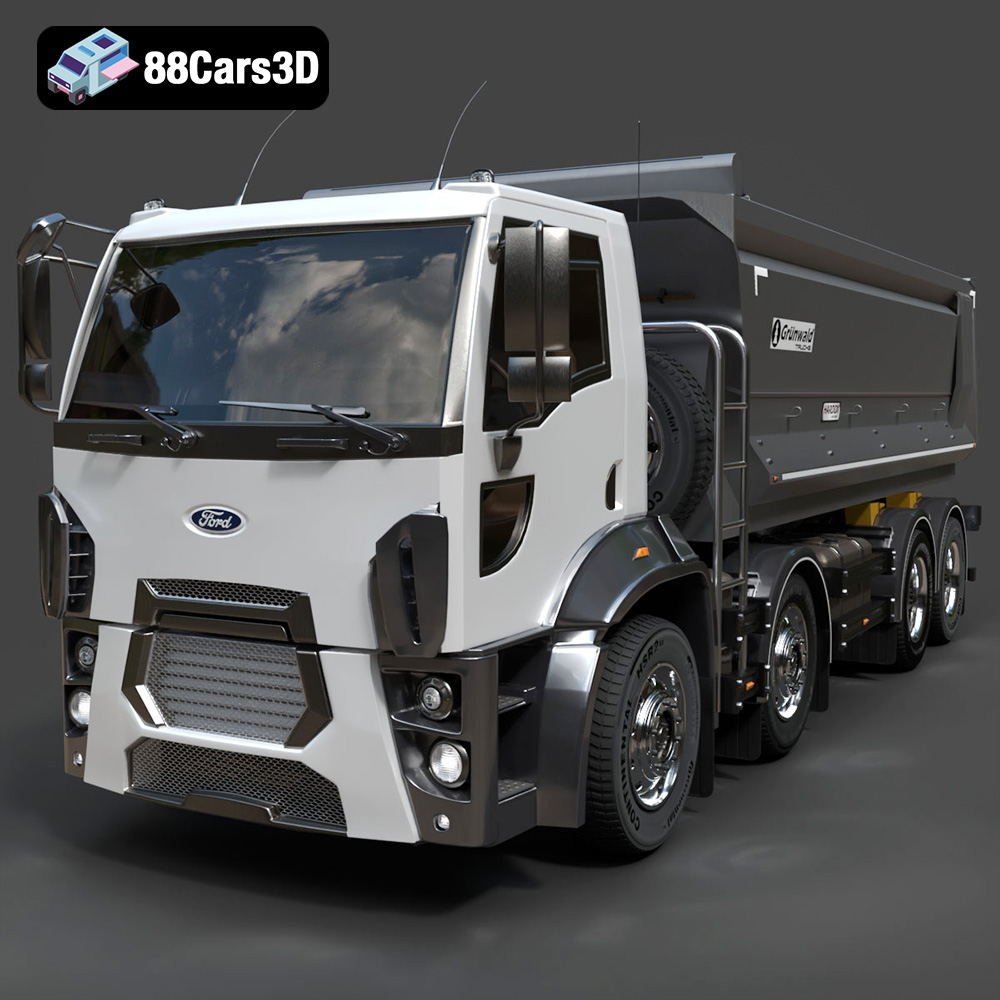
Today, we delve into the intricate details and broad applications of such models, specifically focusing on a prime example of industrial asset excellence: the Ford Trucks 4142D DC Dump Truck 3D model, available on 88cars3d.com. This heavy-duty vehicle is a cornerstone of construction and mining operations globally, and its digital twin demands precision. We’ll explore how expertly crafted 3D car models like this serve as vital components in everything from high-fidelity simulators to cinematic animations, offering unparalleled realism and versatility across various digital platforms.
When working with 3D car models, understanding the various file formats is paramount. Each format is designed with specific use cases, compatibilities, and technical advantages in mind. Selecting the correct format can drastically impact workflow efficiency, model fidelity, and ultimately, project success. The Ford Trucks 4142D DC Dump Truck model, for instance, comes in a comprehensive suite of formats, ensuring maximum adaptability for any professional pipeline.
The .blend format is Blender’s native file type, offering a complete and fully editable scene. When you receive a .blend file, you’re not just getting the mesh; you’re getting the entire Blender project. This includes materials, textures, lighting setups, cameras, animation data, and even modifiers or rigging information. For artists who use Blender as their primary 3D software, this format provides the most flexibility for customization, allowing them to dissect the model, understand its construction, and integrate it seamlessly into larger Blender projects without any loss of data or conversion artifacts. It’s the ideal choice for deep customization and learning from expert modeling practices.
.fbx (Filmbox) is arguably the most widely adopted proprietary file format for 3D content interchange, especially prevalent in game development and animation pipelines. Its robust support for geometry, materials, textures, animations, and rigs makes it the ideal choice for transferring assets between different 3D software packages like Maya, 3ds Max, Blender, and real-time engines such as Unreal Engine and Unity. The Ford Trucks 4142D DC Dump Truck, when provided as .fbx, is optimized for these environments, ensuring that its separate wheels, dump bed, hydraulic rams, and steering components retain their animation-ready pivot points, allowing for immediate integration into interactive simulations or game levels.
The .obj (Wavefront OBJ) format is a universal standard, known for its widespread compatibility across almost every 3D application. While it primarily stores geometric data (vertices, normals, UV coordinates, and faces), it can also reference external material libraries (.mtl files) for basic color and texture information. Its simplicity makes it incredibly reliable for basic mesh transfer when complex animation or rigging data isn’t required. For the Ford Trucks model, .obj offers a stable foundation for importing into diverse software for rendering, architectural visualization, or as a starting point for further modeling, ensuring a clean mesh without proprietary software dependencies.
.glb (GLB, the binary form of glTF) is an increasingly popular format optimized for efficient transmission and loading of 3D scenes and models in web browsers, augmented reality (AR), and virtual reality (VR) applications. It bundles all necessary data—geometry, textures, animations, and shaders—into a single file, making it incredibly easy to share and display. For an industrial asset like the dump truck, .glb is perfect for virtual heavy-equipment showrooms, enterprise VR training, or embedding interactive 3D views directly on a website, offering a lightweight yet visually rich experience without requiring specialized software.
The .stl (STereoLithography) format is the de-facto standard for 3D printing. It represents a 3D model as a series of connected triangles (a tessellation of the surface), describing only the surface geometry of an object without color, texture, or other CAD attributes. For hobbyists or professionals looking to physically manifest the Ford Trucks 4142D DC Dump Truck, the .stl format is essential. It directly translates the digital mesh into a printable object, compatible with virtually all 3D printers, enabling the creation of display-scale models or prototypes of heavy machinery.
The .ply (Polygon File Format) is another popular format for storing 3D data, particularly useful for scanned data, point clouds, and more complex mesh properties. While similar to .obj in storing geometry, .ply can also include additional properties like color per vertex, normal vectors, transparency, and sometimes even custom data. It’s often used in scientific computing, 3D scanning, and CAD applications where precise mesh information and additional attributes are critical. For detailed analysis or specialized engineering visualizations of the dump truck’s complex geometry, .ply can offer a more comprehensive data set.
The .unreal format signifies an asset specifically prepared and often packaged for direct import or use within Unreal Engine. This often means textures are properly packed, materials are set up with Unreal’s Physically Based Rendering (PBR) system, and the mesh is optimized according to Unreal’s best practices for real-time performance. For a heavy-duty asset like the Ford Trucks 4142D DC Dump Truck, an .unreal file ensures that the model can be dropped directly into an Unreal project with minimal setup, maximizing efficiency for game developers and simulation engineers.
Similar to .blend for Blender, the .max format is the native file type for Autodesk 3ds Max. It contains all the scene data, including geometry, materials, textures, lighting, cameras, animation, and any specific 3ds Max modifiers or setups. For professionals working within the 3ds Max ecosystem, the .max file provides complete creative control, allowing for detailed rendering setups, complex animations, and full integration into architectural visualization or high-end cinematic projects. It’s the optimal choice for those needing to deeply modify or animate the dump truck within a 3ds Max-centric workflow.
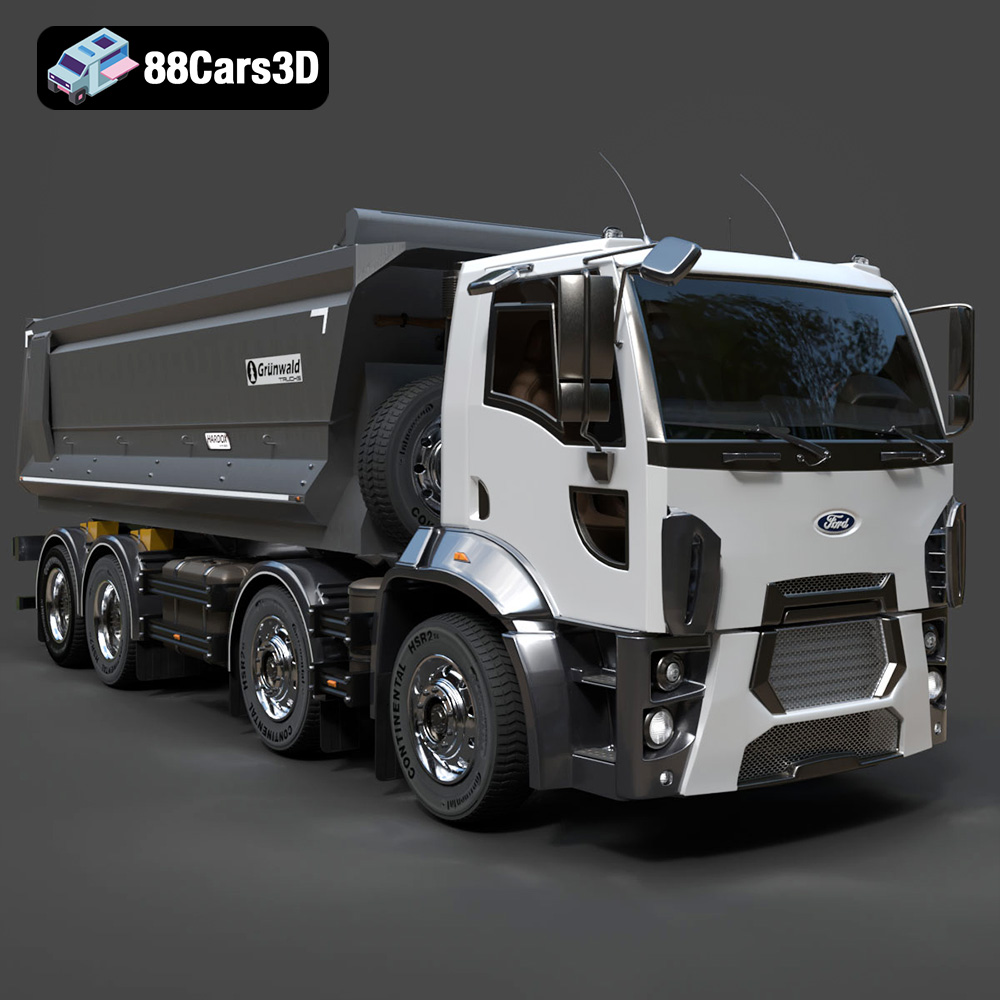
The true value of a premium 3D model lies in its meticulous attention to detail and its fidelity to the real-world counterpart. The Ford Trucks 4142D DC Dump Truck 3D model stands as a testament to this principle, delivering a level of realism that supports the most demanding professional applications. This isn’t just a generic truck; it’s a specific, highly recognizable piece of heavy machinery, expertly translated into the digital realm.
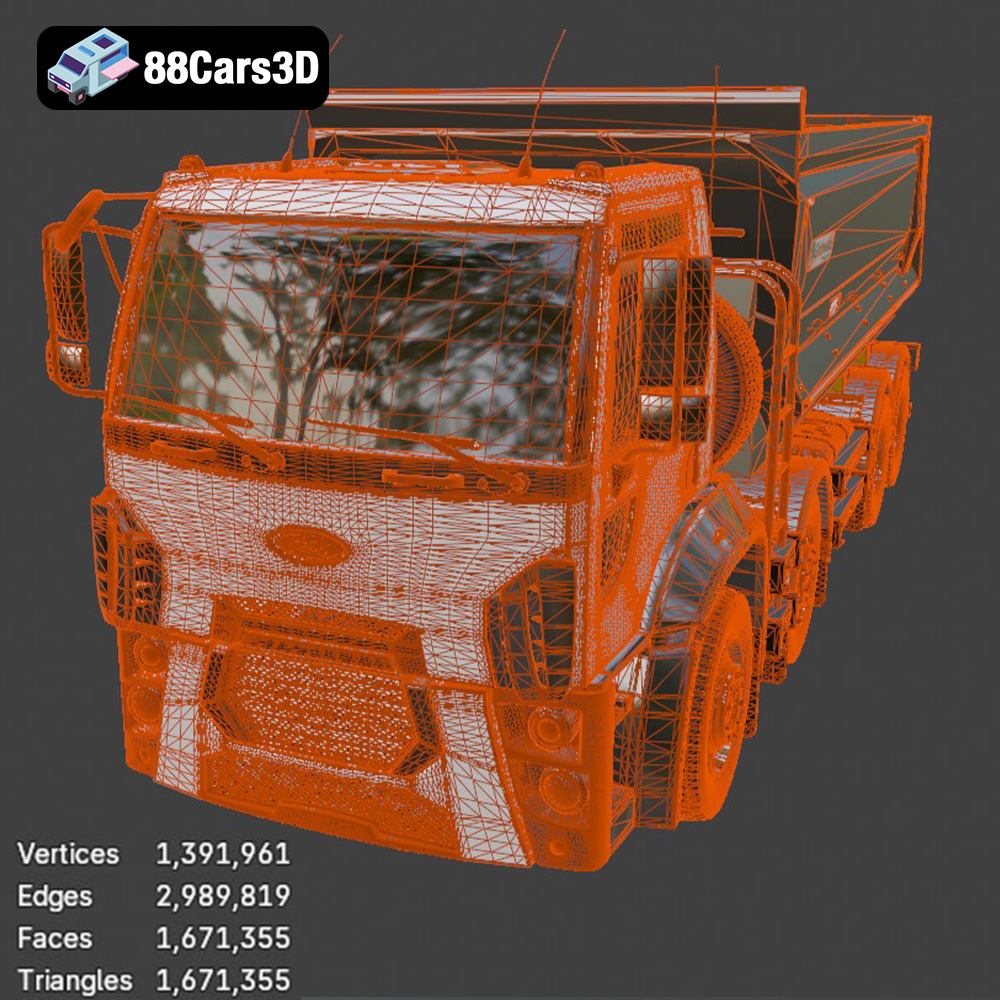
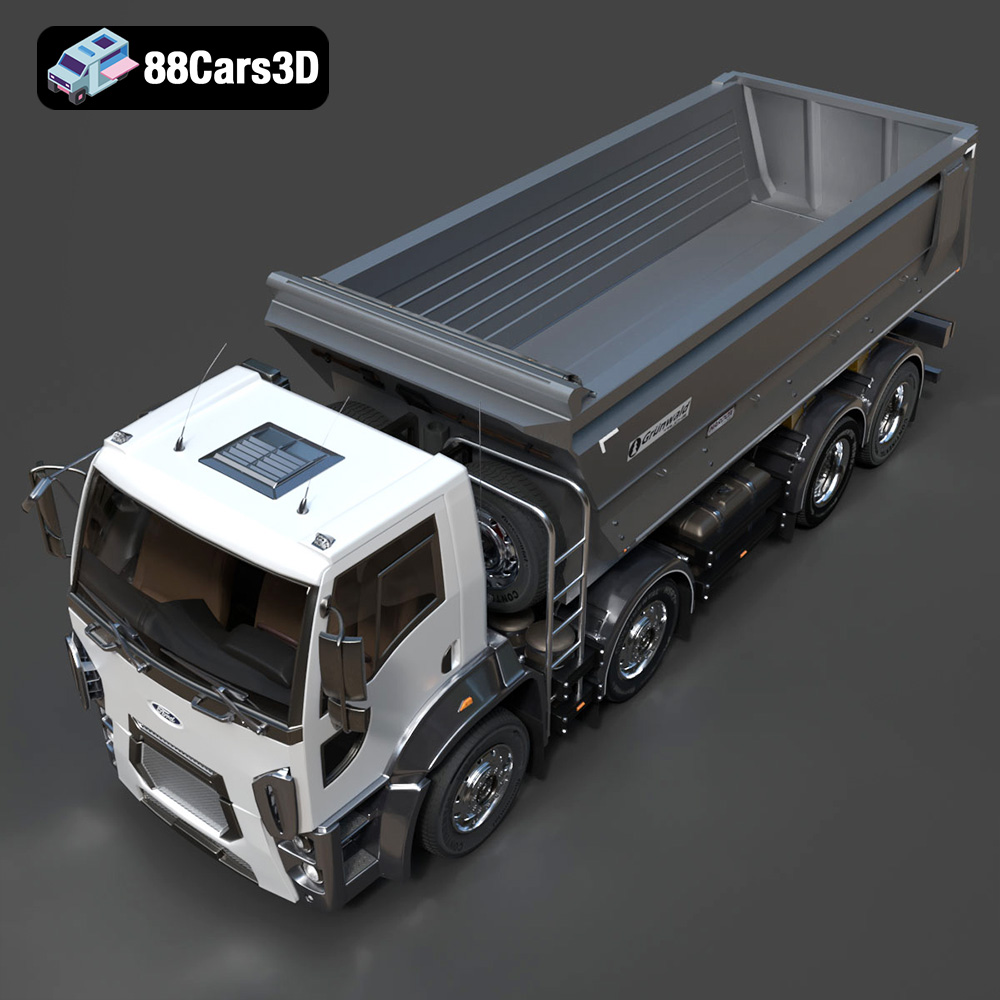
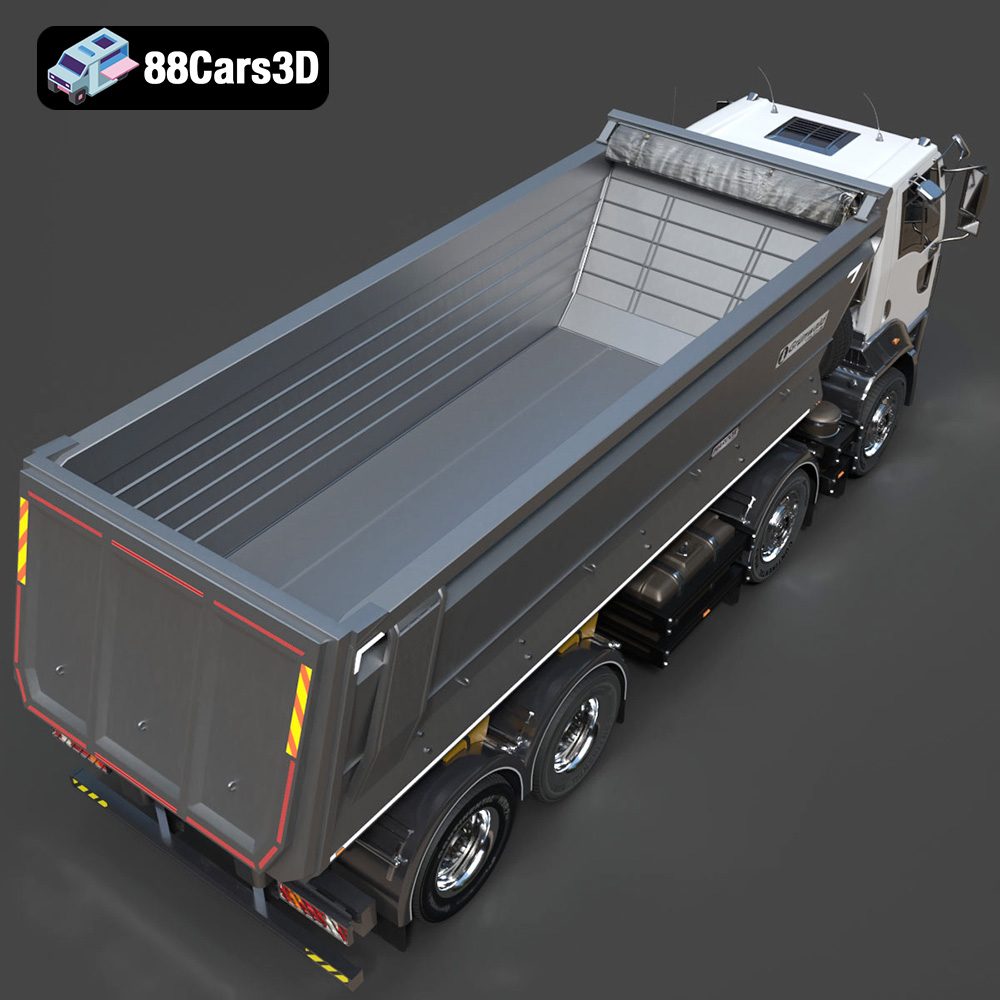
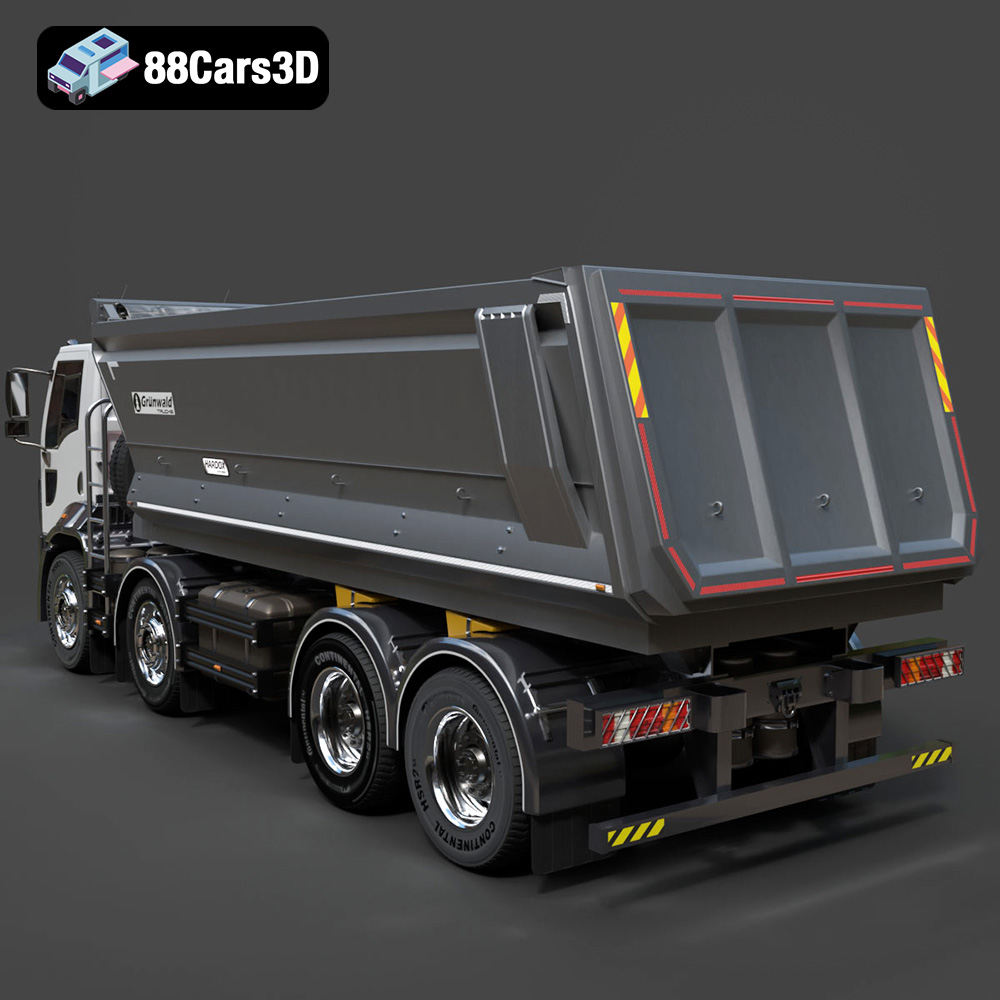
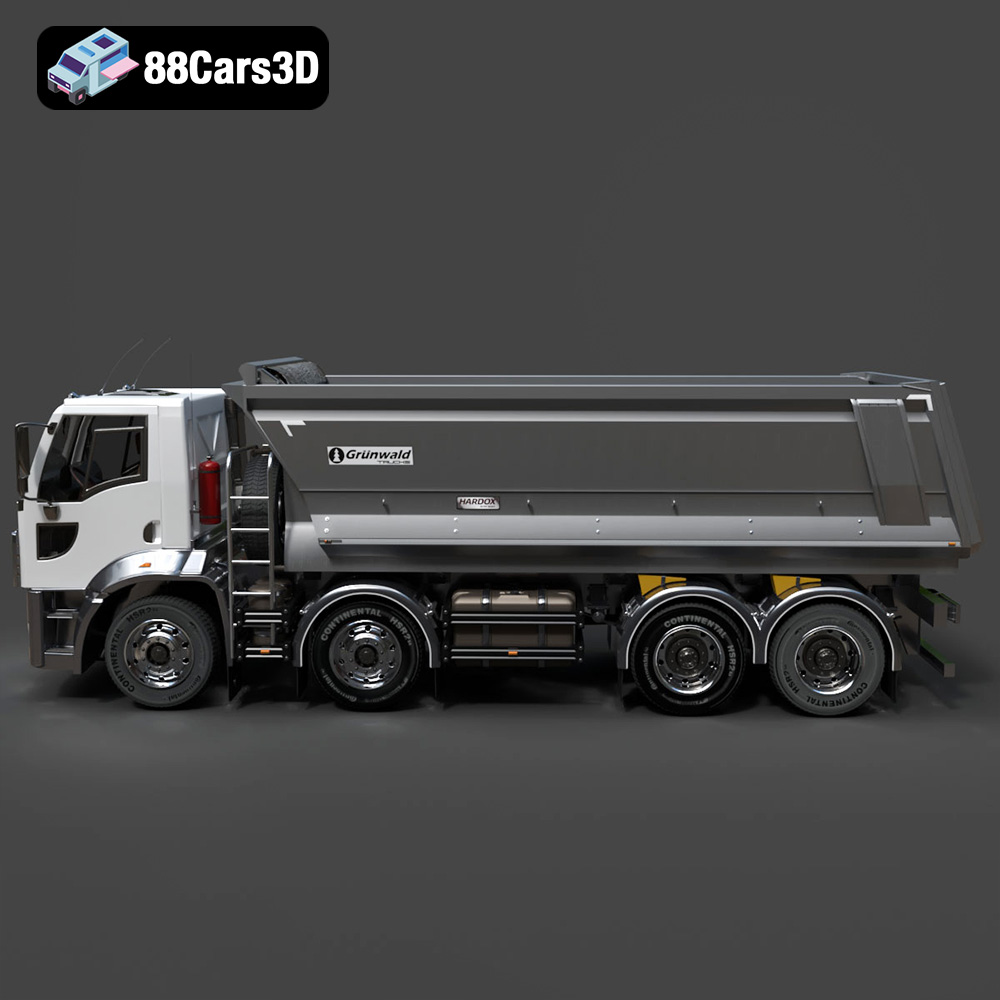
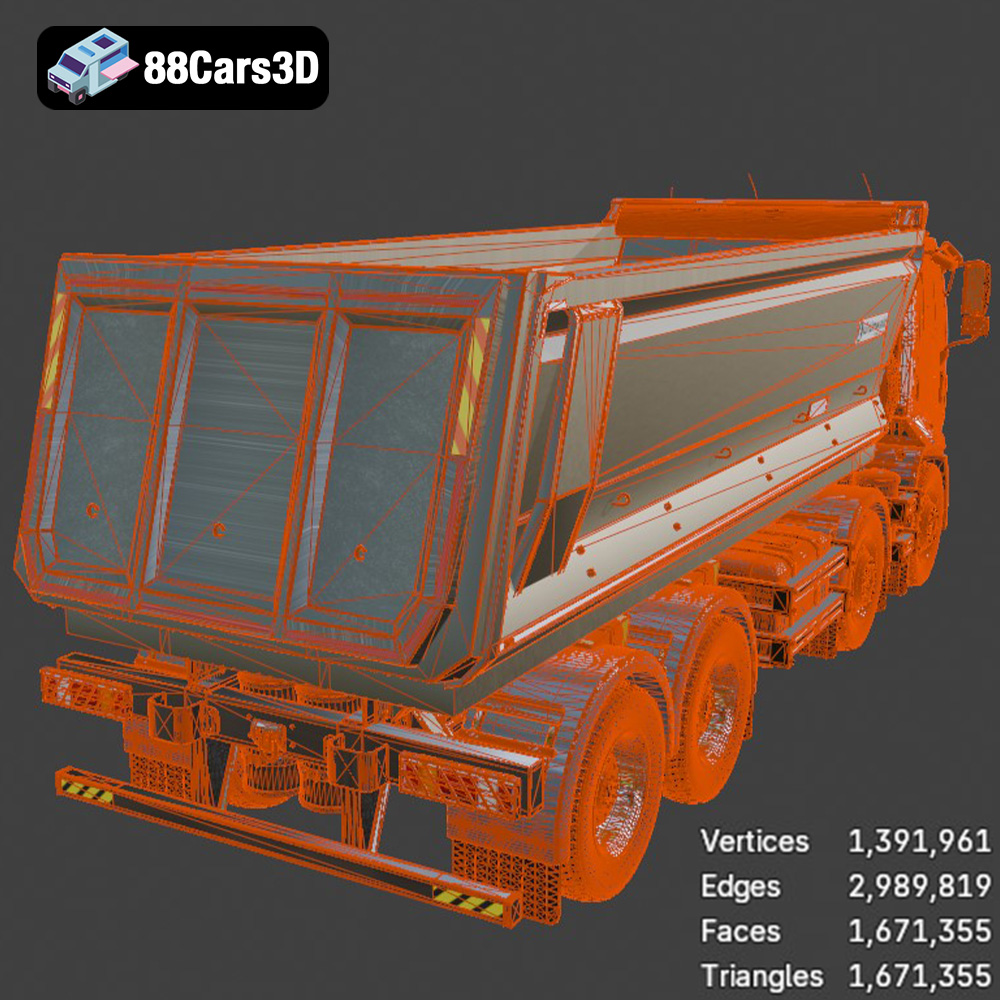
From the imposing front fascia with its signature Ford Trucks grille to the rugged off-road commercial wheels and deep-tread tires, every external feature of the 4142D DC has been carefully recreated. The model boasts an impressive 1,671,355 triangles. This poly count is a critical technical specification, striking a precise balance: it’s high enough to capture every bolt, hydraulic ram, and intricate suspension component with incredible realism, yet optimized to perform efficiently in high-end real-time engines like Unreal and Unity. Details extend to the undercarriage, the fully modeled hydraulic tipper mechanism, authentic commercial vehicle lighting (including roof beacons), and the detailed exhaust stack and utility side-tanks. Such granularity is essential for automotive rendering, where even the smallest imperfections or missing details can detract from overall authenticity.
Realism isn’t confined to the exterior. The interior of the Ford Trucks 4142D DC Dump Truck model offers a detailed ergonomic driver seating, a passenger bench, an accurate heavy-duty steering wheel, and a high-fidelity instrument cluster. Modeled gear shifter, pedals, and hydraulic control levers provide a fully immersive experience. This level of internal detail is crucial for applications such as heavy machinery simulators, where first-person POV realism is paramount for effective training or gameplay. Furthermore, the model’s structure includes separate components for animation, such as wheels, the dump bed, hydraulic rams, and steering. This intelligent segmentation, coupled with proper pivot setups, makes the asset inherently animation-ready, a key advantage for cinematic sequences, interactive game assets, or realistic operational simulations.
The utility of a high-quality 3D model like the Ford Trucks 4142D DC Dump Truck extends far beyond static renders. Its robust design and game-ready optimization make it a powerful asset for interactive and dynamic environments, particularly in game development and industrial simulation. Leveraging its various file formats and technical specifications, developers can integrate this model into complex scenes with relative ease.
For game developers using Unreal Engine or Unity, the .fbx and .unreal formats are invaluable. The process typically involves importing the chosen format, ensuring materials are correctly assigned (often requiring PBR texture maps such as Albedo, Normal, Roughness, Metallic, and Ambient Occlusion), and setting up collision meshes. Given the model’s proper pivot setup for steering, dual-axle wheel rotation, and dump bed hydraulic extension, animation blueprints can be quickly configured. For a construction simulator, the dump truck could be integrated into a physics-based driving system, allowing players to accurately operate its tipper mechanism to transport virtual aggregate. In an industrial safety training VR application, the detailed interior allows for realistic interaction with controls, immersing trainees in a lifelike environment without the risks of real machinery.
For high-fidelity cinematic rendering or detailed architectural visualizations, the .max or .blend files offer the ultimate control. In 3ds Max, artists can leverage advanced rendering engines like V-Ray or Corona to create photorealistic images and animations. The dump truck model, with its intricate geometry, provides a perfect foundation. Imagine integrating this truck into a large-scale construction site scene, complete with realistic dust, weather effects, and other heavy equipment. Artists can adjust materials to show wear and tear, mud-caked tires, or glistening, freshly painted surfaces for marketing collateral. Blender users benefit from the native .blend file’s full editability, allowing them to refine materials with Eevee or Cycles, set up complex lighting scenarios, and integrate the truck into larger environmental scenes with the full power of Blender’s animation and sculpting toolset.
The versatility of a well-designed 3D model is not limited to traditional screen-based rendering or interactive games. Emerging technologies like Augmented Reality (AR), Virtual Reality (VR), and 3D printing open up entirely new dimensions for how industrial assets like the Ford Trucks 4142D DC Dump Truck can be utilized.
With the rise of AR/VR, the demand for optimized yet highly detailed 3D models has soared. The .glb format is particularly well-suited for these applications due to its single-file, optimized nature. Imagine a construction company utilizing an AR app to overlay a virtual Ford Trucks 4142D DC Dump Truck onto a real-world job site, allowing engineers to visualize how the vehicle fits within the terrain before it arrives. For VR, immersive safety training modules can place operators directly into the highly detailed cockpit, allowing them to practice complex maneuvers and understand critical safety protocols in a completely risk-free virtual environment. The game-ready optimization of the model ensures smooth performance, which is paramount for preventing motion sickness and maintaining immersion in AR/VR experiences.
The inclusion of the .stl format broadens the model’s appeal to hobbyists, educators, and even engineers looking for physical prototypes. The ability to 3D print the Ford Trucks 4142D DC Dump Truck allows for the creation of display-scale models or educational tools. The product description provides excellent guidance for 3D printing, recommending scales (1:24, 1:32, 1:50), layer heights for resin printing (0.04–0.12 mm for fine details), and structural considerations like wall thickness and infill. The suggestion to print the chassis flat for structural integrity and to print the cab and dump bed separately demonstrates a deep understanding of practical 3D printing workflows. Post-processing steps like sanding, priming, and painting can transform the printed model into a realistic miniature, perfect for collectors or as a tangible representation of a complex industrial machine.
Achieving a balance between breathtaking visual realism and optimal performance is a constant challenge in 3D content creation. The Ford Trucks 4142D DC Dump Truck 3D model excels in this regard, thanks to its intelligent design and technical specifications. This balance is especially critical for game assets and real-time simulations where frame rates are paramount.
A polygon count of 1,671,355 triangles for a detailed industrial vehicle is a sweet spot for high-end applications. While seemingly high for real-time, it allows for incredible detail without excessive overhead if managed correctly. For broader usage, especially in scenarios where the truck might be viewed from a distance, implementing Level of Detail (LOD) systems becomes crucial. Developers can create lower-polygon versions of the model that automatically swap in at further distances, drastically reducing the rendering burden. The current model serves as an excellent base for generating these LODs, ensuring scalability across different platforms and performance requirements. This strategic optimization makes it a truly versatile asset for any professional pipeline.
The adherence to real-world scale accuracy, based on the actual Ford construction chassis, is a non-negotiable for professional models. This ensures that when the dump truck is imported into any scene, it fits naturally with other assets and environments, avoiding disproportionate scaling issues that can break immersion. Equally important are the properly configured pivot points for steering, dual-axle wheel rotation, and dump bed hydraulic extension. These pivots are fundamental for animation; without them, complex rigging and animation would be significantly more time-consuming and prone to errors. This “game-ready” advantage means less setup time for animators and developers, translating directly into faster project turnaround and cost savings.
A great 3D model provides a solid foundation, but its true power lies in its adaptability and the possibilities it offers for customization. The Ford Trucks 4142D DC Dump Truck model offers a wealth of options to tailor its appearance and functionality to fit diverse project needs, from marketing campaigns to highly specific simulations.
The ability to customize cabin and dump bed colors allows for seamless integration into various corporate fleet branding. Imagine a vibrant yellow for a general construction company, a muted grey for a mining operation, or even a high-visibility orange for roadside maintenance. Modifying tire textures from clean street variants to mud-caked off-road versions can instantly tell a story about the vehicle’s recent activity or the harsh environment it operates in. Adjusting material finishes—from matte plastics to glossy paint or even rusted and weathered metals—adds another layer of narrative and realism. These customization options enable artists to create highly specific scenes, whether for a pristine marketing render or a grimy, work-worn scene in a game.
Consider a heavy equipment manufacturer looking to launch a new marketing campaign for their construction fleet. High-quality automotive rendering of the Ford Trucks 4142D DC Dump Truck, customized with their brand colors and operating in a photorealistic virtual environment, can generate stunning visuals that surpass traditional photography. For civil engineering firms, the model can be integrated into pre-visualization simulations of new road construction projects, allowing them to assess logistical challenges and optimal vehicle movement paths before groundbreaking. Furthermore, educational institutions can use this 3D car model as a teaching tool for mechanical engineering students, allowing them to virtually disassemble and study the complex hydraulic and suspension systems of a real-world dump truck. The possibilities are truly extensive when starting with a detailed and flexible asset from 88cars3d.com.
The journey through the intricate world of high-fidelity 3D car models reveals a landscape where precision, versatility, and technical prowess converge. Industrial assets like the Ford Trucks 4142D DC Dump Truck are not mere digital sculptures; they are sophisticated tools that power the cutting edge of automotive rendering, game development, simulation, AR/VR, and even 3D printing. We’ve seen how a meticulous approach to detail, from exterior hydraulics to interior ergonomics, coupled with comprehensive file format support, makes such models indispensable.
The Ford Trucks 4142D DC Dump Truck 3D model exemplifies what a premium asset should be: optimized for performance, bursting with authentic detail, and adaptable to virtually any professional pipeline. Whether you’re building the next great construction simulator, crafting photorealistic architectural visualizations, or developing immersive safety training modules, an investment in quality 3D car models like this is an investment in your project’s success and realism. Explore this exceptional model and a wide range of other high-quality assets at 88cars3d.com, where you’ll find the digital tools to bring your most ambitious visions to life.
The Ford Trucks 4142D DC Dump Truck is a heavy-duty powerhouse, captured as a premium 3D model with 1,671,355 triangles. Meticulously crafted for unparalleled visual fidelity and structural optimization, it’s ideal for high-fidelity industrial simulators, cinematic animations, detailed architectural visualizations, and game development. Features include accurate exterior geometry, a fully modeled hydraulic tipper, and a detailed interior, all game-ready and built to real-world scale.
$80.50
.blend
.fbx
.glb
.max
.obj
.ply
.rendering
.stl
.unreal
4142d-dc
construction-vehicle
dump-truck
ford-trucks
game asset
game-ready
heavy-duty
high poly
optimized
truck-3d-model
VR/AR