Get 20% OFF All Premium 3D & STL Models!

In the dynamic realms of game development, cinematic visualization, and defense simulations, the demand for hyper-realistic and technically robust 3D models is constantly escalating. Creators are no longer content with simple approximations; they require assets that not only look authentic but also perform flawlessly across diverse digital pipelines. This pursuit of unparalleled fidelity is particularly critical when it comes to military hardware, where every rivet, every weld seam, and every mechanical component contributes to an immersive and believable experience.
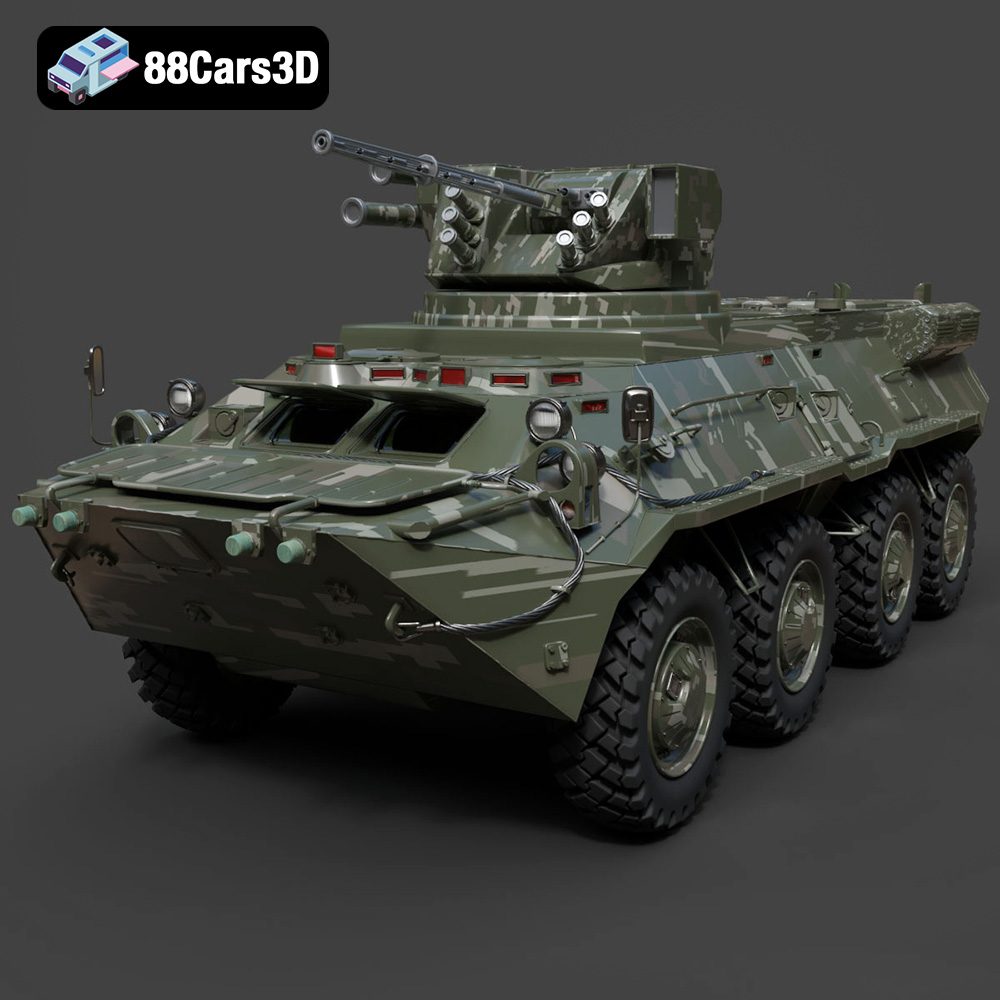
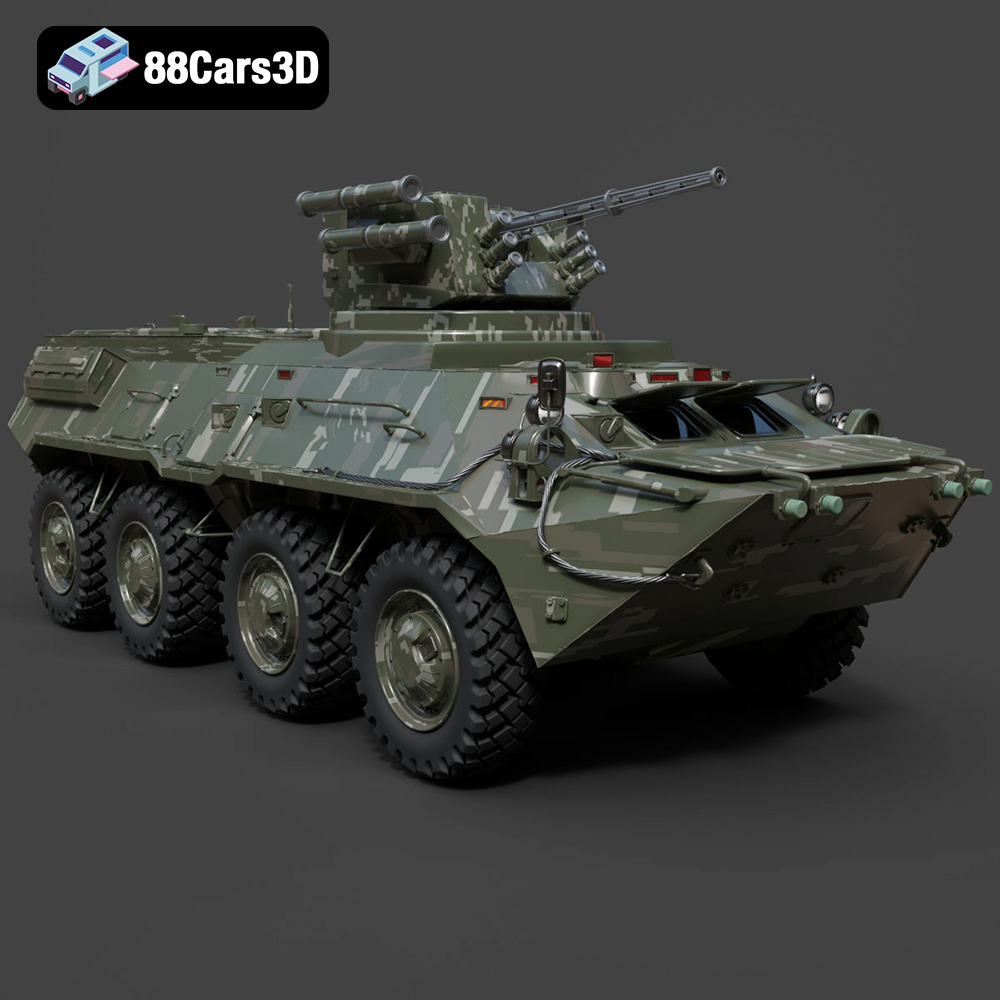
It is within this high-stakes environment that premium 3D models truly shine. Consider the formidable BTR 3E 2002 armored personnel carrier, a staple of modern military fleets, known for its rugged design and versatile combat capabilities. Replicating such a complex machine in the digital domain is a monumental task, demanding meticulous attention to detail from concept to final mesh. A high-quality BTR 3E 2002 3D model doesn’t just represent a vehicle; it embodies a commitment to realism that elevates any project it becomes a part of. This deep dive will explore the intricacies of creating and utilizing such a sophisticated asset, demonstrating how a model like the BTR 3E 2002 from 88cars3d.com serves as a cornerstone for advanced digital productions.
The journey of any 3D model, especially one as intricate as the BTR 3E 2002, often begins and extends through a variety of file formats, each tailored for specific purposes, software compatibility, and pipeline stages. Understanding these formats is crucial for any professional working with 3D assets, as selecting the correct one can significantly impact workflow efficiency, performance, and final output quality. The comprehensive offering of formats for the BTR 3E 2002 3D model ensures maximum versatility.
The .blend file format is native to Blender, the popular open-source 3D creation suite. When you download a .blend file for the BTR 3E 2002, you receive a fully editable Blender scene. This includes not just the mesh data, but also materials, textures, lighting setups, cameras, animation rigs, and even physics simulations, all packaged within a single file. This format is ideal for users who primarily work in Blender and require full access to the model’s construction, allowing for extensive modifications, re-texturing, or the integration of custom animations directly within the Blender ecosystem. It provides the highest level of flexibility for artists familiar with Blender’s powerful toolset.
FBX (Filmbox) is a proprietary file format developed by Autodesk, renowned for its excellent interoperability across various 3D applications, game engines, and rendering software. It’s particularly favored for animation, as it can store not only mesh data (geometry, UVs, normals) but also skeletal animations, blend shapes, lights, and cameras. For a complex vehicle like the BTR 3E 2002, .fbx is often the go-to choice for importing into Unreal Engine, Unity, or other real-time pipelines. Its robust support for hierarchies and transformations makes it perfect for transferring rigged and animated models while preserving their pivot points and parent-child relationships, which are essential for components like the turret, wheels, and suspension.
OBJ (Wavefront Object) is one of the oldest and most universally supported 3D file formats. It’s a simple, text-based format that primarily stores geometric data: vertices, UV coordinates, vertex normals, and faces. While it doesn’t typically store animations or advanced material properties directly, it’s an excellent choice for basic mesh transfer between different 3D software applications when fidelity of geometry is paramount. The BTR 3E 2002 as an .obj offers a clean mesh that can be easily imported into almost any 3D program for texturing and rendering from scratch, making it a highly reliable backup or starting point for various pipelines.
GLB (GL Transmission Format Binary) is a relatively newer format, gaining significant traction due to its efficiency and suitability for web-based 3D, augmented reality (AR), and virtual reality (VR) applications. It’s a binary format that packs all necessary 3D data—geometry, materials, textures, and even animations—into a single, self-contained file. This makes it incredibly easy to load and display 3D content in web browsers (using WebGL), mobile AR apps, and VR experiences, offering fast loading times and optimized performance. For showcasing the BTR 3E 2002 in an interactive web viewer or a mobile AR experience, the .glb format is indispensable.
STL (STereoLithography) is the de facto standard file format for 3D printing. It represents a 3D model as a series of connected triangles, essentially describing only the surface geometry of an object without color, texture, or other CAD attributes. While it lacks visual fidelity on screen, its simplicity makes it perfect for additive manufacturing. The BTR 3E 2002 in .stl format provides a clean, watertight mesh ready for slicing and printing, allowing hobbyists and professionals to bring the digital model into the physical world as a highly detailed scale model, as detailed in the product description’s 3D print settings.
PLY (Polygon File Format) is another format primarily used for storing 3D data, particularly from 3D scanners or for CAD applications. Like .obj, it stores geometric data, but it can also include properties like color, transparency, and normal vectors for each vertex or face. It’s often used in scientific, engineering, and architectural fields for precise mesh representation and analysis. For users requiring a highly accurate geometric representation of the BTR 3E 2002 for technical inspection or reverse engineering, the .ply format offers robust data integrity.
While not a standard file extension in the same way as .fbx or .obj, a file designated as “.unreal” typically implies an asset that has been specifically prepared, optimized, and potentially packaged for direct import or use within the Unreal Engine. This could mean an FBX file with specific naming conventions, pre-configured materials, or even an exported Unreal asset package that includes static meshes, textures, and possibly even basic material instances ready for drag-and-drop integration. For the BTR 3E 2002, an “.unreal” offering signifies a streamlined path to deployment in Unreal Engine projects, minimizing setup time and maximizing engine compatibility.
The .max file format is native to Autodesk 3ds Max, a leading software for 3D modeling, animation, and rendering in architectural visualization, product design, and cinematic production. Similar to .blend, a .max file contains the complete scene data, including all geometry, modifiers, materials, textures, lighting, cameras, and animation keyframes. This format offers maximum control and editability for artists working within the 3ds Max environment, allowing them to leverage the software’s powerful rendering capabilities (like V-Ray or Corona) for high-end cinematic sequences or to further customize the BTR 3E 2002 model with advanced rigging or simulations.
This diverse array of formats ensures that the BTR 3E 2002 3D model from 88cars3d.com is not just a single asset, but a versatile toolkit capable of meeting the demands of virtually any professional 3D workflow.
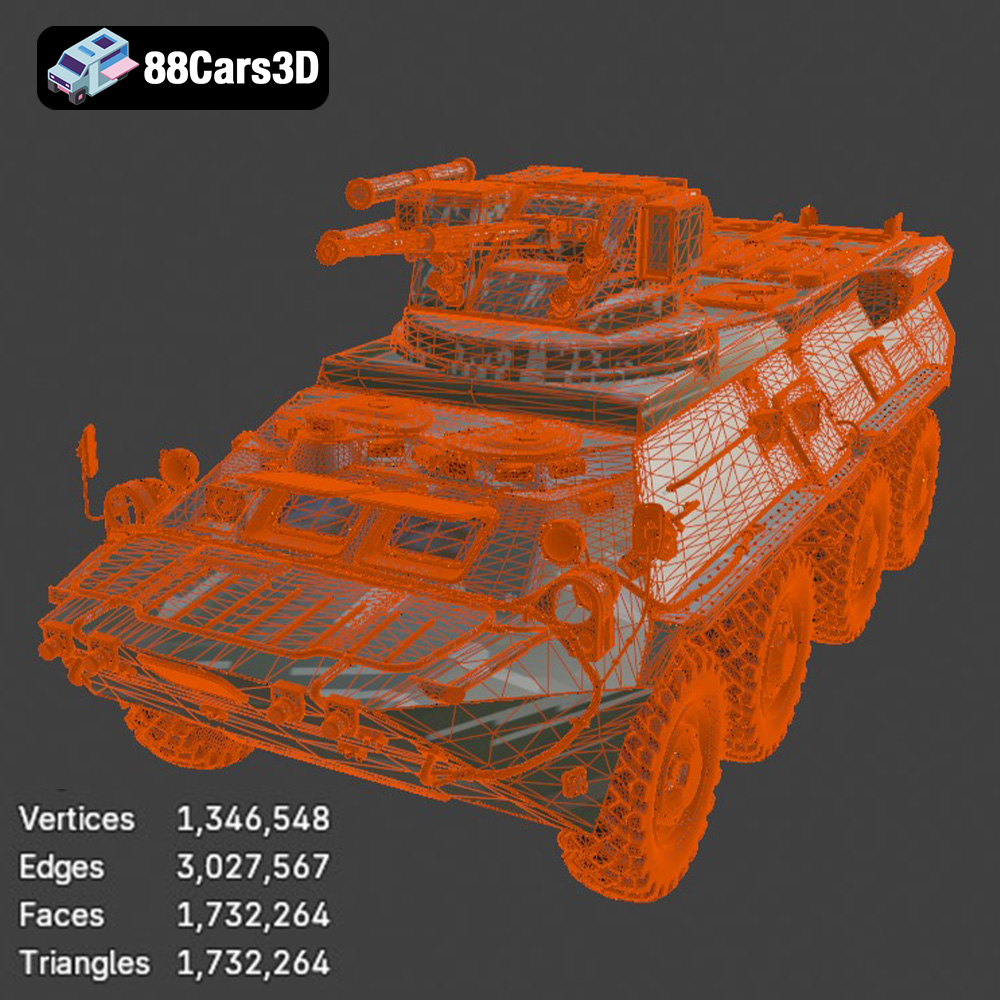
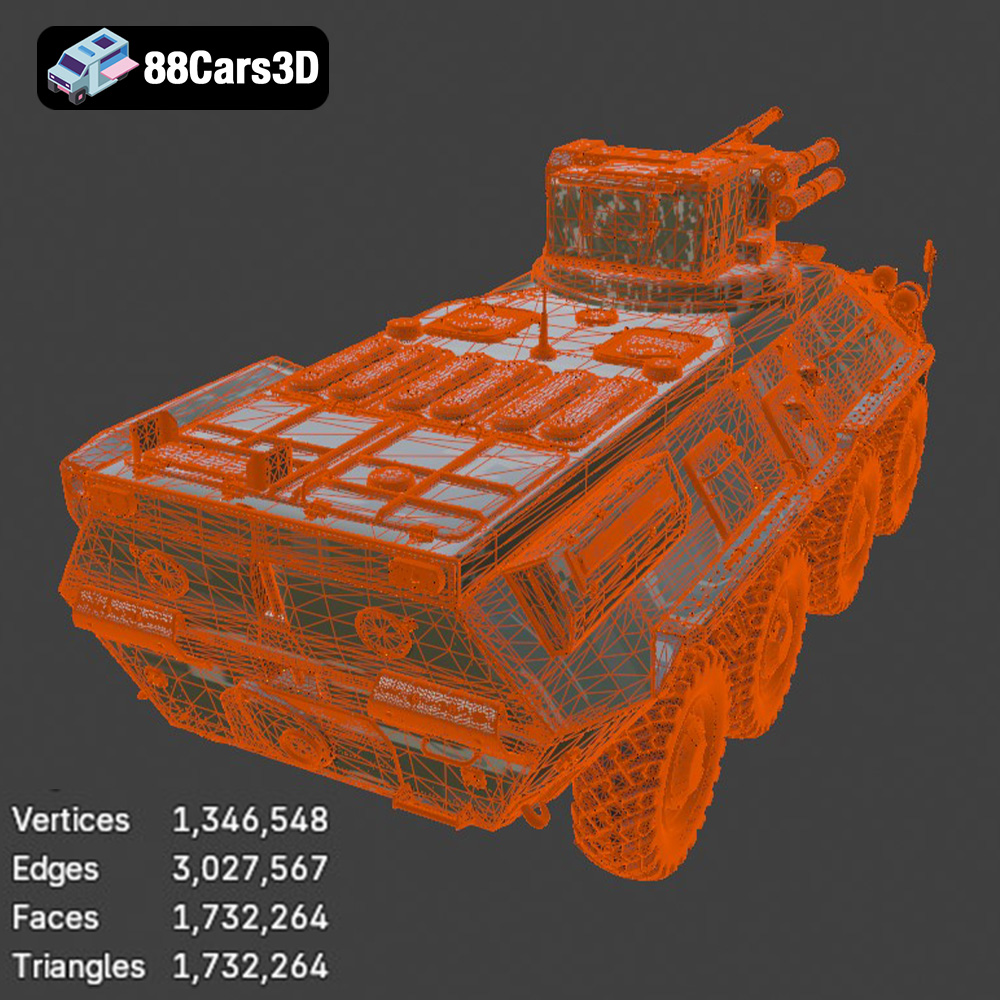
Creating a 3D model as complex and authentic as the BTR 3E 2002 demands a blend of artistic skill and technical precision. It’s not merely about replicating shapes, but about capturing the essence and functionality of a real-world machine. The product description highlights an impressive 1,932,264 triangles, a testament to its commitment to visual fidelity.
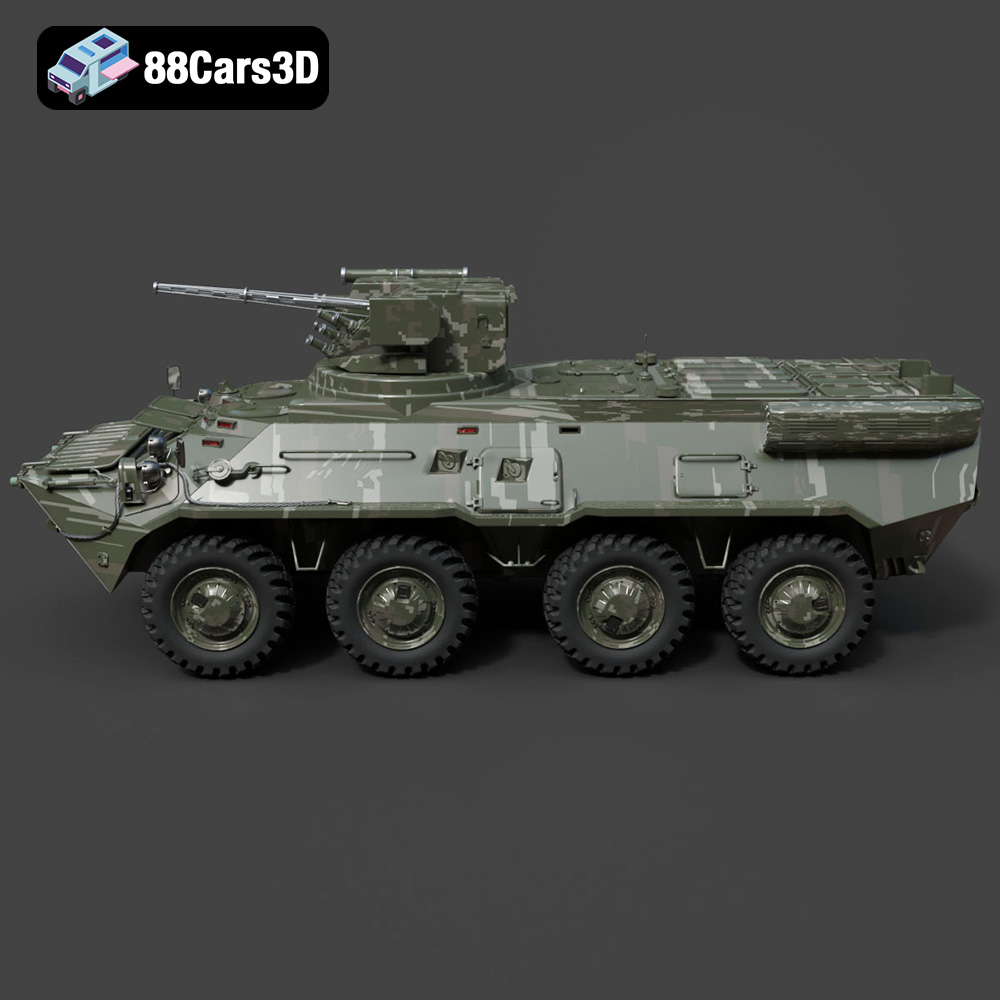
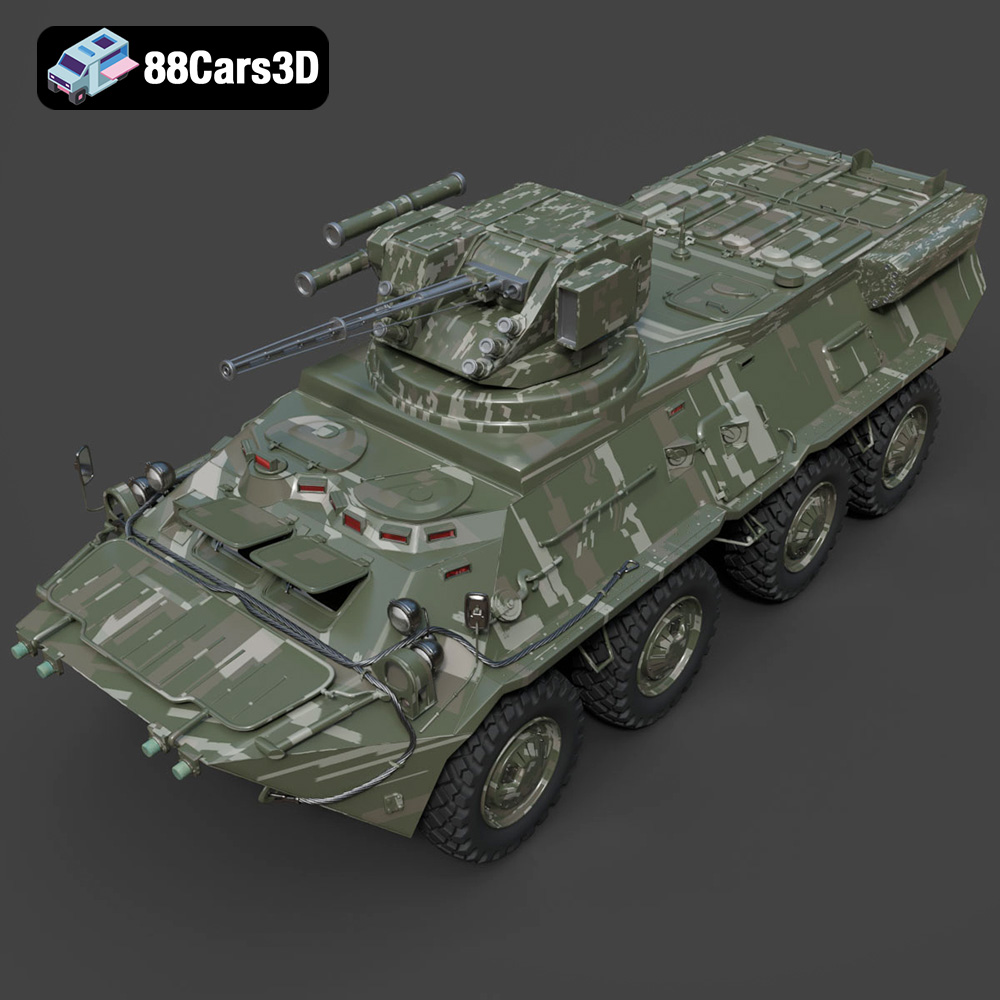
The core of a high-fidelity model lies in its meticulous detailing. For the BTR 3E 2002, this means accurately translating every component of its “formidable 8×8 armored personnel carrier (APC)” structure. This includes:
* Accurate Hull Geometry: The sloped plating, the robust armor, and even the subtle weld seams that tell a story of fabrication and resilience are crucial. These details contribute to the menacing aesthetic and provide realistic light interaction.
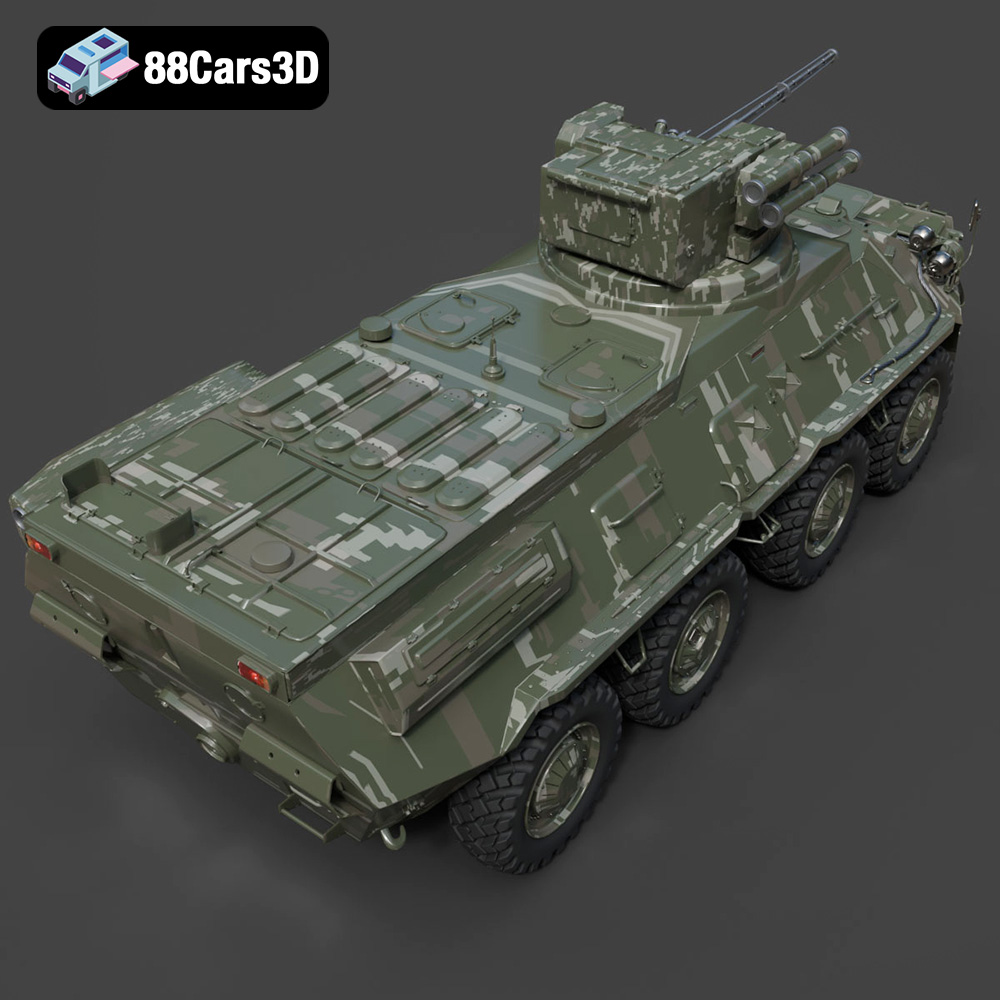
* Complex Combat Module: The overhead combat module is a focal point, featuring an auto-cannon and anti-tank missile launch tubes. Each of these elements must be modeled with precision, including their mounts, optics, and ammunition feeds, to ensure functional believability and visual accuracy for close-up shots.
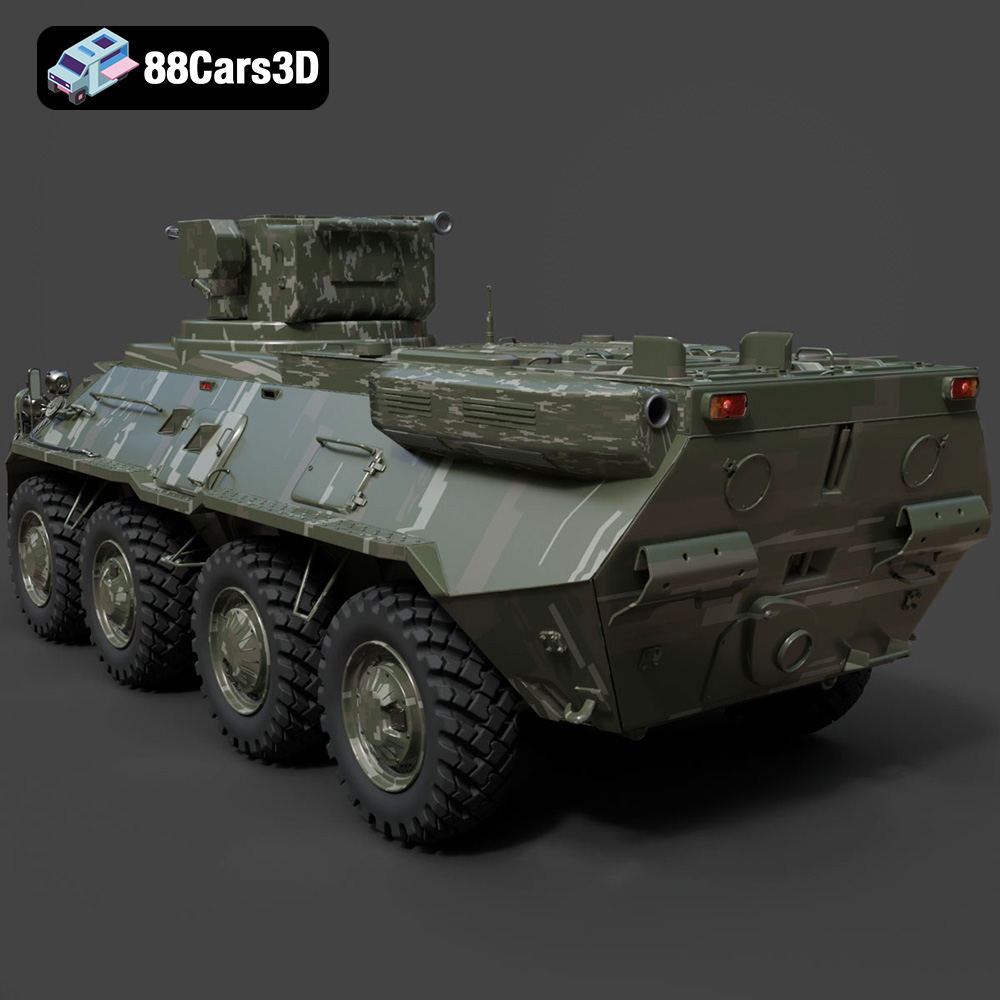
* Intricate Drivetrain and Suspension: An 8×8 vehicle’s drivetrain is inherently complex. The model captures the independent suspension linkages, drive shafts, and the detailed amphibious water jet propulsors at the rear. These are not just aesthetic additions but are often separate components with proper pivot setups, critical for realistic animation of movement and terrain interaction.
* Rugged Military-Grade Tires: The tires are more than just cylinders; they feature deep off-road tread patterns that communicate the vehicle’s capability to traverse harsh environments. These details are essential for both visual realism and, in simulations, for conveying appropriate traction.
While the exterior commands immediate attention, the interior is equally important, especially for military simulations and first-person game experiences. The BTR 3E 2002 model excels here, offering a “detailed driver and commander stations with authentic seating positions.”
* Cockpit Controls: An accurate heavy-duty steering yoke, driving controls, instrument clusters, tactical displays, and viewing periscopes immerse the user. These elements are often interactive in game development, requiring careful modeling and texturing for legibility and functional feedback.
* Rear Troop Compartment: Details extend to the rear troop compartment, including bench seating and deployment hatches. This level of detail supports scenarios where troops are deployed, adding another layer of realism to tactical simulations. The “optimized geometry for immersive first-person POV” ensures that these interior elements hold up under scrutiny.
A highly detailed 3D model like the BTR 3E 2002 is only as valuable as its ability to be integrated smoothly into various digital production pipelines. Whether it’s destined for a AAA game, a cinematic rendering, or an AR/VR experience, the model’s design must facilitate efficient setup and deployment.
Unreal Engine is a powerhouse for real-time visualization, and the BTR 3E 2002 is described as “game-ready” and optimized for such environments. The .fbx and .unreal formats are particularly suited for this.
* Import and Material Setup: The process typically involves importing the FBX file into Unreal Engine. Due to its clean topology and likely robust UV mapping (implied by high-fidelity rendering), setting up PBR (Physically Based Rendering) materials becomes straightforward. Textures for albedo, normal, roughness, metallic, and ambient occlusion would be applied to create realistic surface properties, from the sheen of painted metal to the worn texture of tires.
* LOD Generation and Performance: With 1,932,264 triangles, the BTR 3E 2002 is a hero asset. For optimal performance in a game environment, especially over varying distances, Level of Detail (LOD) generation is crucial. Its “cleanly structured topology” simplifies this process, allowing for automated or manual creation of lower-polygon versions that swap in as the vehicle moves further from the camera, significantly optimizing render performance without noticeable visual degradation.
* Blueprint and Animation Integration: The “separate turret, hatches, wheels, and suspension components” with “proper pivot setup” are invaluable for creating a drivable vehicle blueprint. Each component can be rigged and animated independently within Unreal Engine, allowing for realistic turret rotation, gun elevation, individual wheel rotation, and suspension travel that dynamically reacts to terrain, essential for military simulations.
For high-end CGI and VFX pipelines, as well as captivating marketing renders, software like Blender and 3ds Max are frequently employed. The .blend and .max formats offer native flexibility.
* Scene Setup and Lighting: Importing the BTR 3E 2002 into Blender or 3ds Max (using the respective native files or FBX/OBJ) allows artists to leverage advanced rendering engines like Cycles (Blender) or V-Ray/Corona (3ds Max). Artists can craft elaborate lighting scenarios – from dramatic sunset combat scenes to realistic studio presentations – to showcase the model’s intricate details, accentuating its sloped plating and heavy-duty silhouette.
* Advanced Material Work: While game engines focus on real-time efficiency, offline renderers allow for even more nuanced material work. This includes complex procedural textures, intricate layering of dirt, grime, and battle damage, and realistic displacement maps to enhance surface imperfections, fulfilling the “customization options” for weathering and battle damage.
* Animation and Camera Work: With separate components and proper pivots, animators can create dynamic sequences: a BTR traversing rough terrain, its suspension compressing and expanding; the combat module tracking a target; or hatches opening for troop deployment. Cinematic camera angles and movements can further enhance the storytelling potential of this powerful vehicle.
The versatility of a well-crafted 3D model extends far beyond traditional screen-based applications. The BTR 3E 2002 offers compelling avenues in physical production through 3D printing and immersive experiences like AR/VR.
The inclusion of the .stl format and detailed 3D print settings is a significant advantage for model enthusiasts and defense industry professionals alike.
* Scale Model Hobbyists: For military modeling hobbyists, the ability to 3D print a highly detailed BTR 3E 2002 model is a game-changer. Following the recommended scales (1:35 / 1:48 / 1:72) and print settings (e.g., 0.04–0.12 mm layer height for resin printing), users can produce exceptionally accurate physical replicas. This allows for personalized painting, weathering, and diorama creation, transforming a digital asset into a tangible, collectible piece. The requirement for supports on “detailed parts like the combat module, axles, and grab handles” speaks to the intricate geometry that translates well to physical form.
* Defense Industry Prototyping and Education: Beyond hobbyists, 3D printing provides a rapid prototyping solution. Defense contractors or educators could print scaled versions of the BTR 3E 2002 for conceptual design reviews, ergonomic studies, or as educational tools to demonstrate vehicle mechanics and layouts. This tactile interaction offers a different perspective than purely digital visualization.
The .glb format, specifically optimized for AR/VR, opens up new dimensions for engaging with the BTR 3E 2002.
* Defense Training Simulations: In AR/VR, the BTR 3E 2002 can be deployed for highly immersive training scenarios. Virtual reality allows soldiers to conduct simulated driving exercises, maintenance procedures, or tactical engagements within a digital BTR interior or alongside its exterior. Augmented reality could overlay virtual vehicle components onto physical training environments, enhancing understanding without needing actual hardware. This provides a cost-effective and safe training platform.
* Virtual Military Showrooms: For defense manufacturers, the model can power interactive virtual showrooms. Potential clients can explore the BTR 3E 2002 in 3D, inspecting its features from every angle, interacting with different components, and even viewing it in various camouflage patterns or configurations. This provides a dynamic and engaging sales tool that transcends geographical limitations.
* Educational and Public Engagement: Museums or educational institutions could use AR/VR to allow visitors to interact with a virtual BTR 3E 2002, understanding its history, capabilities, and technological advancements in a captivating manner.
Achieving both visual realism and optimal performance is a delicate balance in 3D asset creation. The BTR 3E 2002 3D model strikes this balance by being “game-ready & optimized” while boasting a high triangle count.
The 1,932,264 triangle count is indeed “impressive” and ensures “unparalleled visual fidelity for extreme close-up shots and cinematic rendering.” This level of detail is typically reserved for “hero assets” – key objects in a scene that demand the highest scrutiny.
* Micro-Detailing: A high polygon count allows for true geometric detail rather than relying solely on normal maps. This means authentic bevels, sharp edges, and detailed protrusions are baked directly into the mesh, leading to more realistic light scattering and shadows, crucial for showcasing sloped plating, complex weapon systems, and intricate suspension linkages.
* Smooth Curvatures: For organic shapes or even the subtly curved armor plates of the BTR 3E, a higher polygon count enables smoother surface transitions, eliminating visible facets that can detract from realism in close-up renders.
* Ready for Ray Tracing: With the advent of real-time ray tracing in game engines, high-poly models benefit immensely. Geometric details directly influence ray tracing calculations, resulting in more accurate reflections, refractions, and global illumination, further enhancing the visual impact of the BTR 3E 2002.
Beyond just the number of polygons, the *quality* of the mesh topology is paramount. The description emphasizes “cleanly structured topology,” which is a cornerstone of professional 3D models.
* Efficient LOD Generation: Clean topology (quads or well-formed triangles without unnecessary poles or stretched faces) is essential for efficient Level of Detail (LOD) generation. It allows algorithms to simplify the mesh gracefully, producing lower-poly versions that retain the primary silhouette and overall form of the BTR 3E 2002, which is vital for game performance.
* Animation and Deformation: A clean mesh ensures smooth deformation during animation. For a vehicle with complex suspension, steering, and rotating components, proper edge flow prevents tearing or unnatural stretching of the mesh. The “proper pivot setup for turret rotation, gun elevation, 8-wheel steering, and suspension travel” leverages this clean topology for realistic movement.
* Real-World Accuracy: “Real-world scale accuracy based on actual APC chassis dimensions” is a non-negotiable for military simulations and visualizations. This ensures that the vehicle fits realistically into environments, interacts correctly with physics systems, and provides accurate scale references for other assets. It prevents the uncanny valley effect often associated with incorrectly scaled objects.
A premium 3D model like the BTR 3E 2002 isn’t a static asset; it’s a foundation for boundless creative exploration and adaptation. The customization options provided in the product description highlight its flexibility for diverse project requirements.
The ability to modify visual attributes allows artists to craft compelling narratives and adapt the model to specific scenarios.
* Camouflage and Environment Adaptation: “Apply various military camouflage patterns (e.g., woodland, desert, urban, winter)” directly impacts the vehicle’s context. A woodland camo BTR 3E tells a different story than one in desert livery. This is crucial for matching the vehicle to specific game maps, historical periods, or mission settings. Similarly, modifying “tire textures for different terrain types (mud, snow, sand)” adds another layer of environmental authenticity, impacting visual feedback and immersion in simulations.
* Weathering and Battle Damage: The option to “adjust material finishes to include heavy weathering, rust, or battle damage” is essential for realism in combat-oriented scenarios. A pristine APC looks out of place on a battle-scarred landscape. Implementing scuffs, scratches, faded paint, and even bullet impacts dramatically enhances the narrative and visual believability of a combat scene. This transformation can be achieved through texture overlays, material blending, or even minor geometry modifications.
* Tactical Lighting and Functionality: “Adapt tactical lighting for night-time or combat-ready environments” offers practical and aesthetic advantages. Enabling or changing the intensity and color of headlights, spotlights, or emergency beacons can dramatically alter the mood and functionality of the vehicle within a scene, making it suitable for stealth operations or high-intensity combat.
As technology advances, so do the potential applications for high-quality 3D models. The BTR 3E 2002, provided by 88cars3d.com, is built with longevity in mind.
* Photorealism and Ray Tracing: As real-time ray tracing becomes more sophisticated and widely adopted, the BTR 3E 2002’s high-poly detail and clean topology will continue to deliver stunning, photorealistic results directly within game engines and real-time renderers. Its robust construction ensures it will scale well with future rendering advancements.
* Next-Generation Simulations: For advanced military simulations, the model’s detailed interior and proper pivot setups make it ideal for integration with complex physics engines, crew interaction systems, and virtual reality interfaces, pushing the boundaries of realism in training and analysis.
* Metaverse and Digital Twins: The potential for the BTR 3E 2002 to exist as a “digital twin” in emerging metaverse platforms is significant. Its comprehensive detail and multiple file formats (especially .glb) make it perfectly suited for interactive, persistent virtual worlds where users can explore, interact, and even operate virtual versions of real-world military vehicles.
By providing such a versatile and technically sound base, the BTR 3E 2002 3D model from 88cars3d.com empowers creators to not only meet current project demands but also to innovate and explore new frontiers in digital visualization and simulation.
The creation and utilization of high-fidelity 3D models are fundamental to pushing the boundaries of realism and immersion across various industries. The BTR 3E 2002 3D model exemplifies this commitment, offering an unparalleled level of detail, technical precision, and versatility. From its meticulously crafted exterior features like the armored hull and combat module, to its immersive interior cockpit and troop compartment, every aspect is designed for authenticity.
This model’s strength lies not just in its impressive 1,932,264 triangle count, but in its robust engineering: clean topology for seamless LOD generation, real-world scale accuracy, and proper pivot setups for advanced animation. These technical advantages ensure its seamless integration into demanding pipelines, whether for AAA military simulations in Unreal Engine, high-end cinematic rendering in 3ds Max or Blender, or innovative AR/VR defense visualizations. Furthermore, the inclusion of diverse file formats like .blend, .fbx, .obj, .glb, .stl, .ply, .unreal, and .max makes it a truly universal asset, catering to every professional’s specific needs, even extending its utility to detailed 3D printing for model hobbyists and prototyping.
Ultimately, the BTR 3E 2002 3D model is more than just a digital asset; it’s a powerful tool for storytelling, simulation, and innovation. It represents the pinnacle of what professional 3D car models and vehicle assets should be: highly detailed, technically robust, and endlessly adaptable. For anyone seeking to elevate their projects with a truly formidable and production-ready military vehicle, this model from 88cars3d.com stands as a definitive choice, ready to deploy into any digital battleground or visualization project.
The BTR 3E 2002 is a formidable 8×8 armored personnel carrier (APC) recognized for its robust combat capabilities, amphibious nature, and distinctive heavy-duty silhouette. This model faithfully captures the menacing aesthetic of modern military hardware, featuring a highly detailed armored hull, a complex multi-axle suspension system, and an intricately designed overhead combat module complete with primary and secondary armament details. Built with exacting attention to detail, this premium 3D model boasts an impressive 1,932,264 triangles, ensuring unparalleled visual fidelity for extreme close-up shots and cinematic rendering. While exceptionally detailed, the topology is cleanly structured, allowing for straightforward LOD (Level of Detail) generation and seamless integration into modern real-time engines like Unreal Engine and Unity, as well as high-end CGI and VFX pipelines. Perfect for AAA military simulations, action-oriented game development, defense industry visualizations, and high-fidelity cinematic animations.
$83.50
.apc
.blend
.btr
.fbx
.glb
.max
.obj
.ply
.rendering
.stl
.unreal
2002
8×8
armored-personnel-carrier
btr-3e
detailed
game asset
game-ready
high poly
military-3d-model
military-vehicle
VR/AR