Get 20% OFF All Premium 3D & STL Models!

In the competitive landscape of digital design and visualization, the demand for high-fidelity 3D assets that truly capture the essence of their real-world counterparts is ever-increasing. From blockbuster game titles to breathtaking architectural visualizations and immersive virtual experiences, the quality of a 3D model can make or break a project’s impact. Automotive models, in particular, require an exceptional level of detail and technical precision to convey the craftsmanship, power, and luxury inherent in their design.
Today, we’re taking an in-depth look at a truly remarkable asset: the Brabus G 800 3D Model. This isn’t just any vehicle model; it’s a meticulously crafted digital representation of an automotive icon, built for professionals seeking unparalleled realism and versatility. Whether your goal is photorealistic automotive rendering, integrating a powerful vehicle into a next-generation game, or creating an interactive AR/VR showroom, this Brabus G 800 model provides an exceptional foundation. Its robust design and comprehensive file format support, available at 88cars3d.com, position it as a premier choice for any serious digital artist or developer.
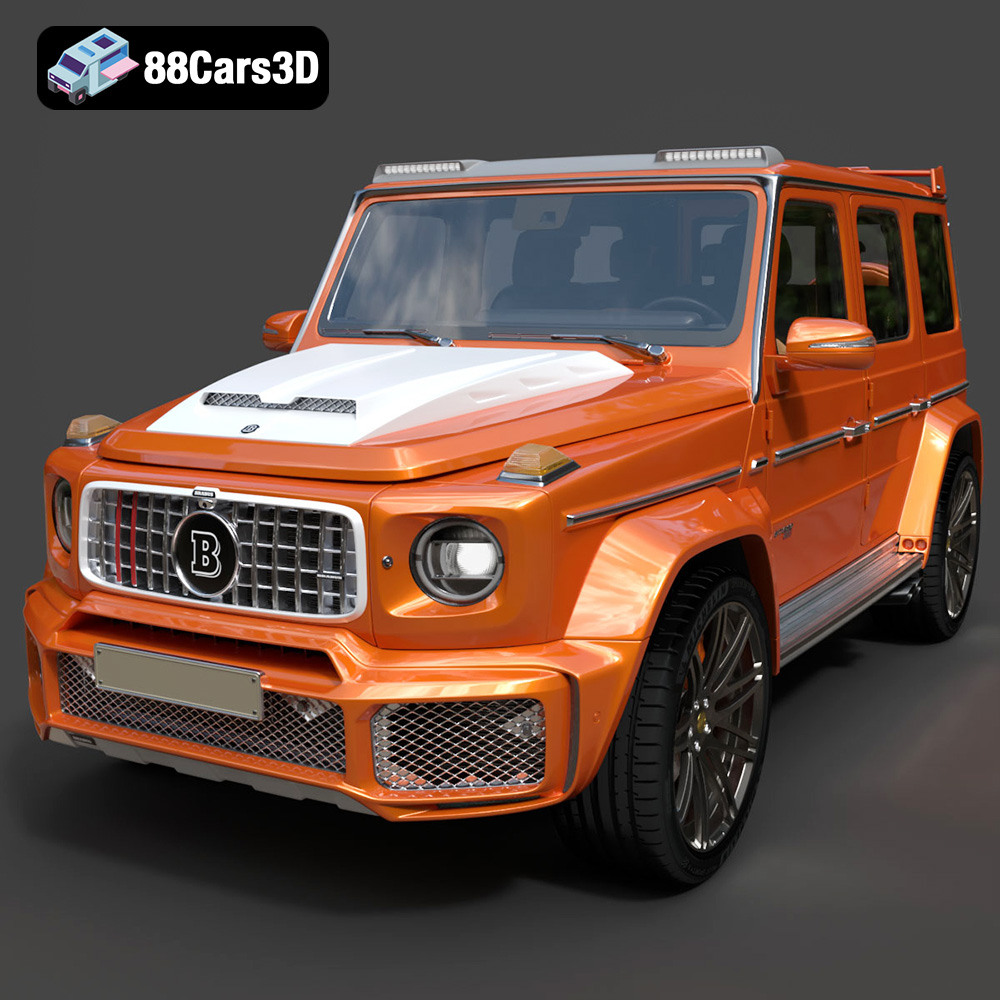
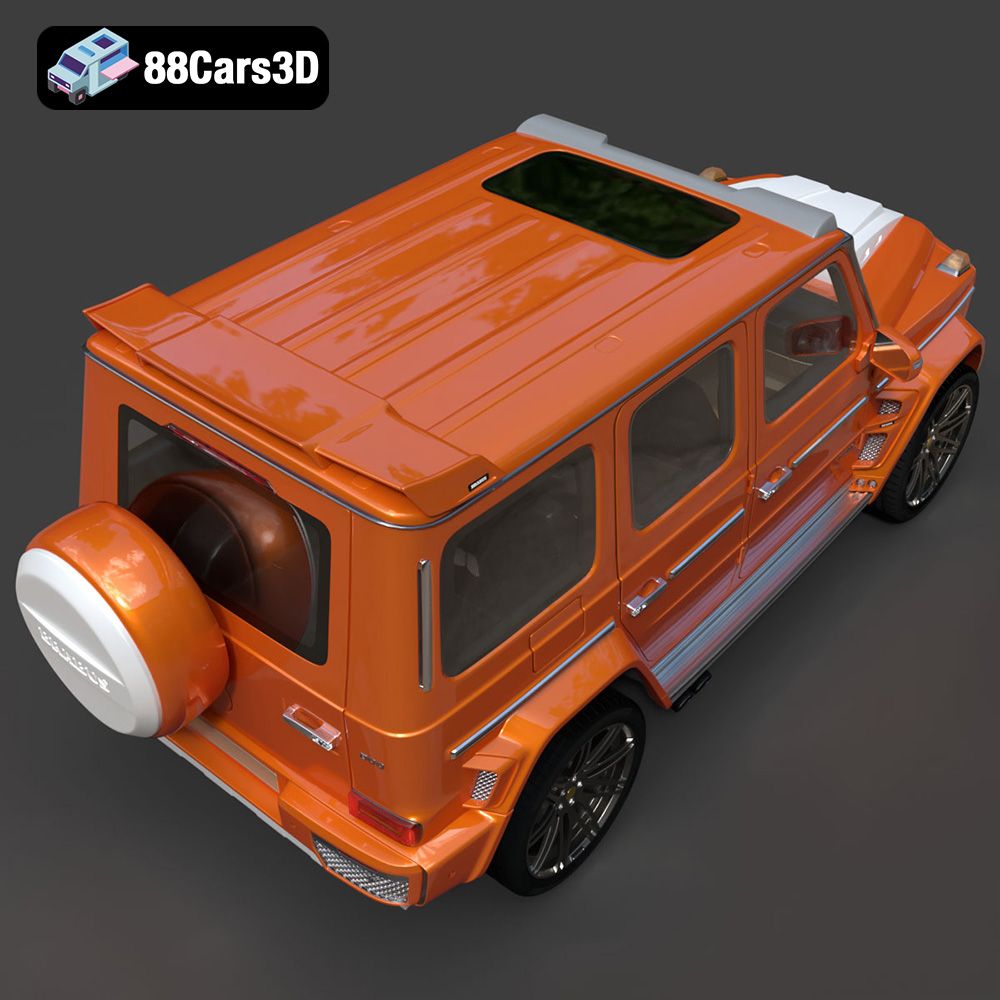
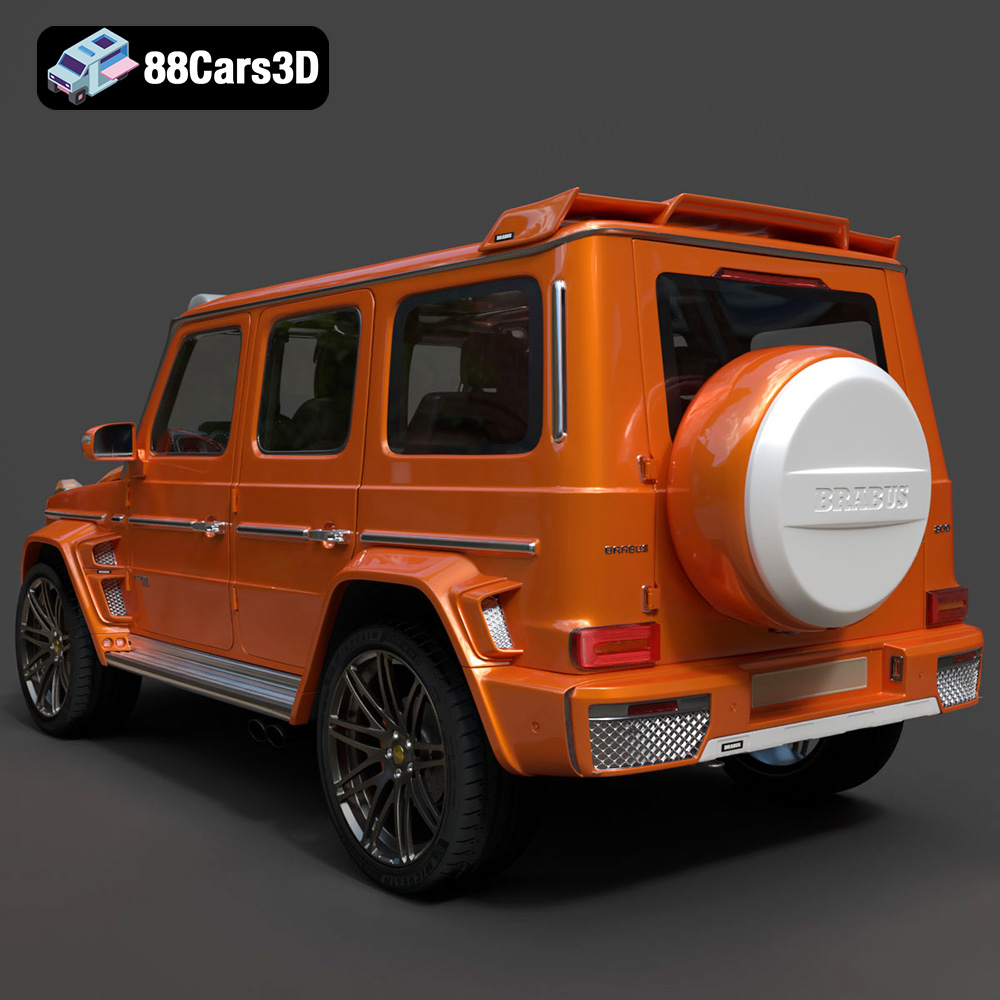
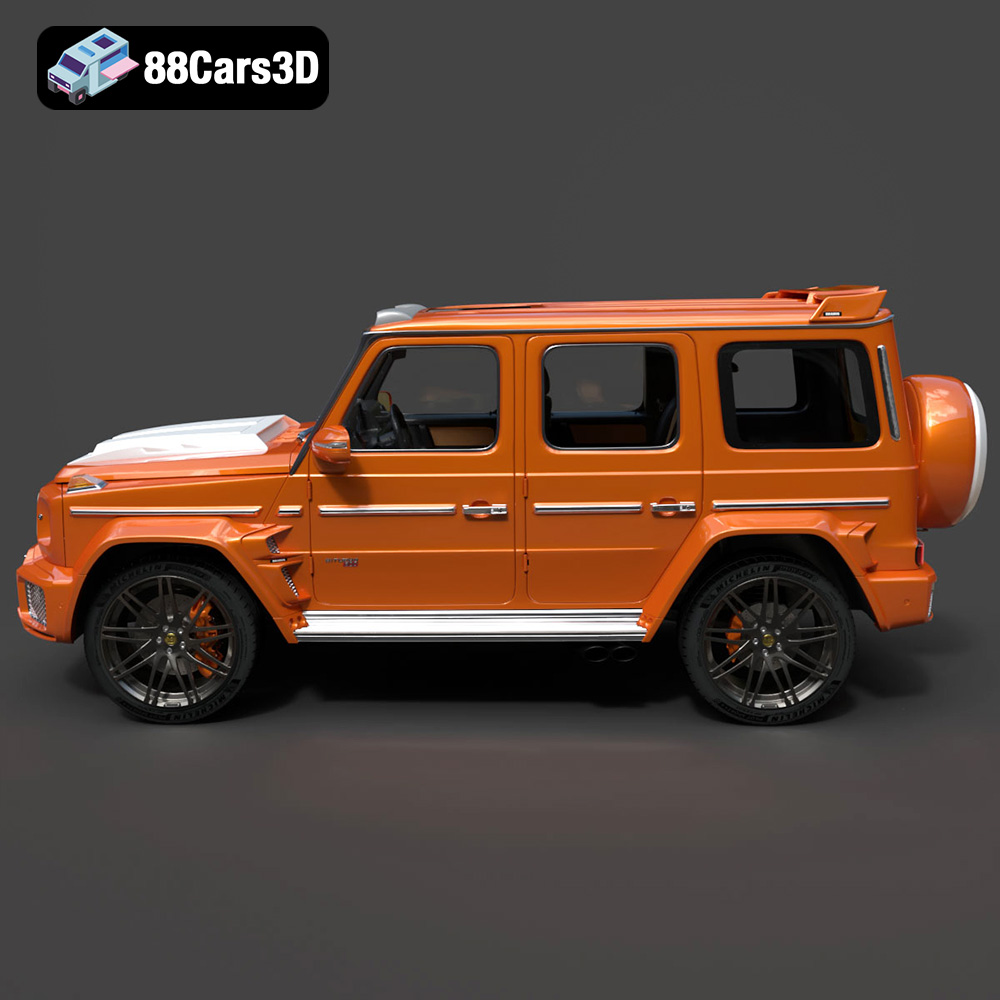
The Brabus G 800 is not merely a car; it’s a statement. Based on the venerable Mercedes-Benz G-Class, Brabus transforms it into a machine of unparalleled luxury and raw power. This 3D model meticulously recreates that presence, translating its aggressive widebody stance and signature details into the digital realm with astonishing fidelity.
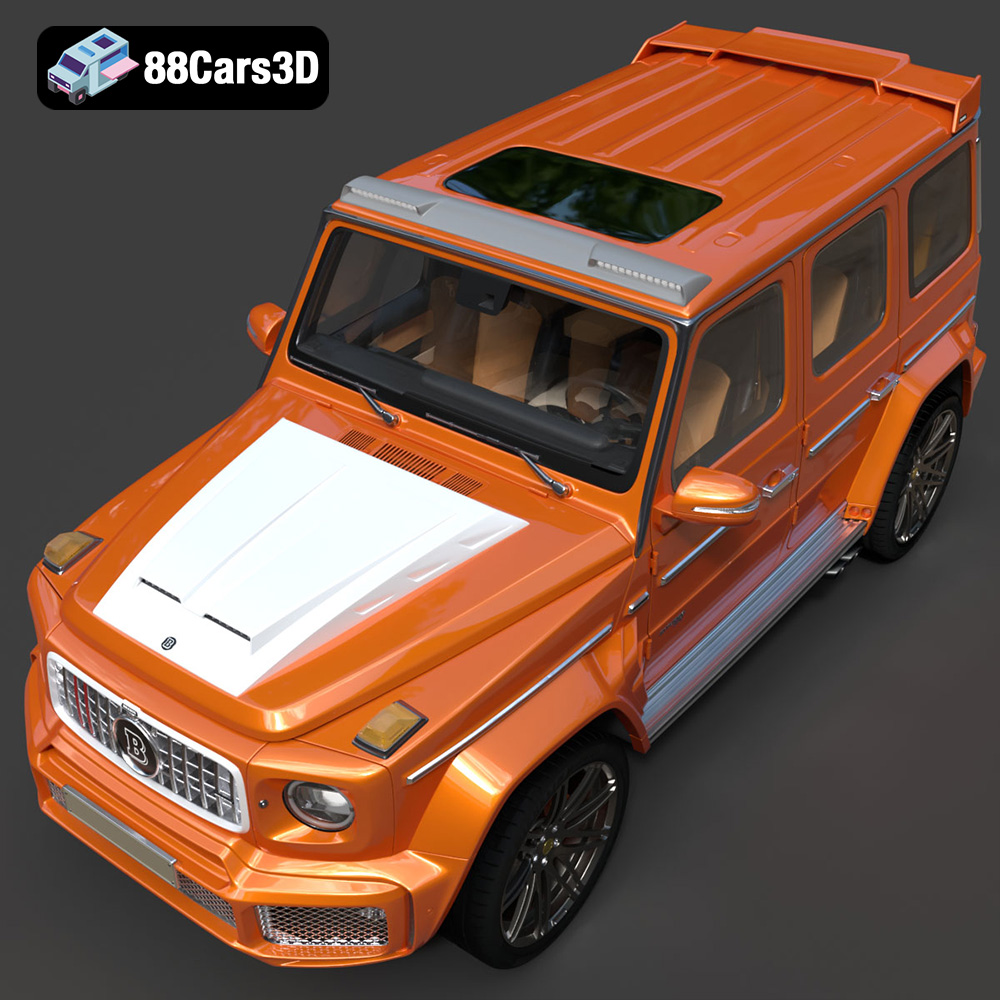
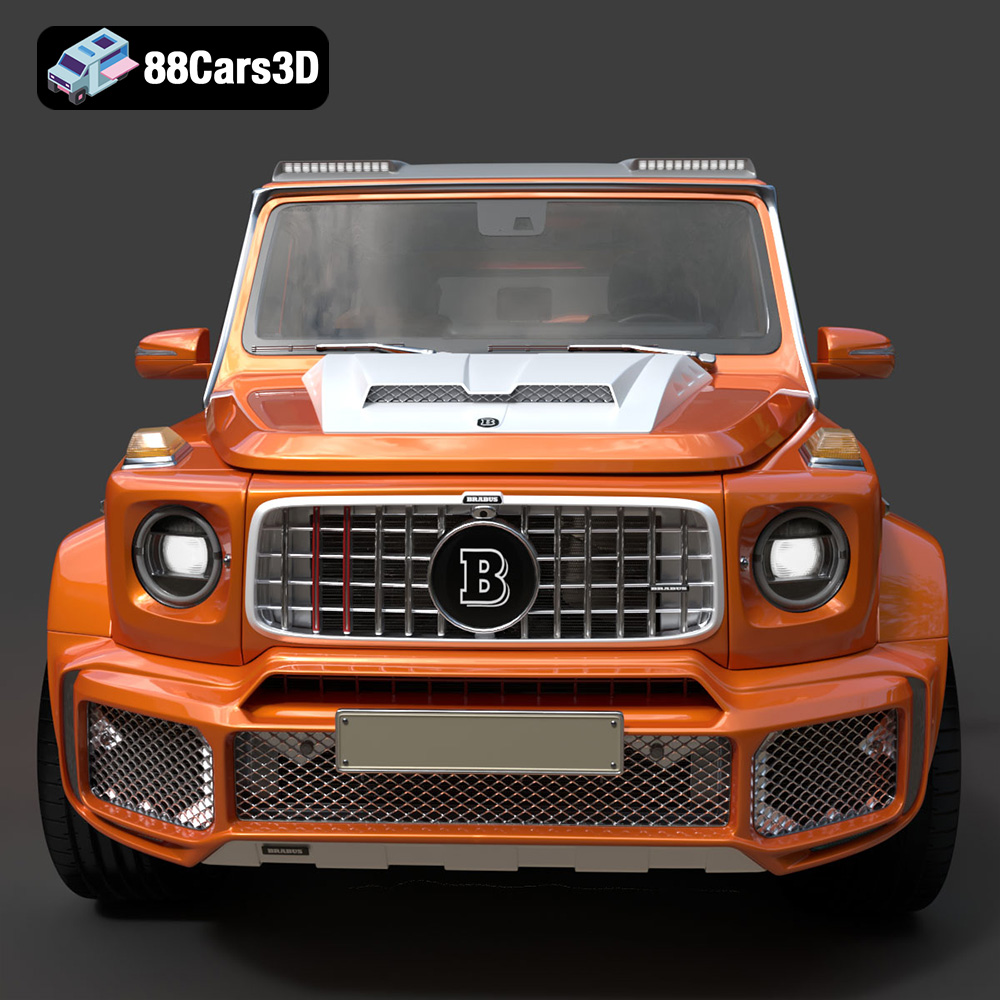
The first thing that strikes you about the Brabus G 800 is its commanding visual presence, and this 3D model captures it perfectly. The accurate widebody frame geometry and muscular proportions are faithfully reproduced, giving the digital asset the same imposing appearance as the real vehicle. From the distinctive LED daytime running lights and sharp headlights to the smoked taillights, every lighting element is designed for realism. The massive Brabus Monoblock wheels, wrapped in high-performance tires, are not just generic placeholders but detailed components that contribute significantly to the model’s authentic visual weight and performance aesthetic. The integration of carbon fiber aerodynamic elements, a hallmark of Brabus’s design philosophy, adds a layer of sophisticated aggression that designers will appreciate in close-up renders.
While often hidden in final renders, the underlying mechanics are crucial for creating a believable and robust 3D model. This Brabus G 800 3D model doesn’t shy away from these details. It includes a meticulously detailed twin-turbo V8 engine block and bay components, providing a rich asset for scenarios where the hood might be open or for educational visualizations. Furthermore, the signature side-exit sports exhaust system is accurately modeled, not just as a visual cue but as a significant geometric feature. Underneath, upgraded suspension components and a detailed undercarriage add another layer of realism, essential for any animator or simulation developer. The fact that the wheels, suspension, and steering components are separate entities with proper pivot setups makes this model animation-ready right out of the box, facilitating realistic wheel rotation, steering, and suspension travel.
A luxury vehicle’s interior is as important as its exterior, defining the user experience. The digital Brabus G 800 doesn’t disappoint here. The model features luxurious quilted leather seats with intricate stitching, bringing a tactile sense of high-end craftsmanship into the digital space. A custom performance steering wheel with carbon fiber accents, a high-resolution digital dual-screen instrument cluster, and a detailed center console complete the cockpit. Every element, from pedals to paddle shifters and air vents, is rendered with attention to detail, making it ideal for first-person POV in gaming or immersive VR experiences where the user can “sit” inside the vehicle and explore its opulent confines. This level of interior fidelity is a significant advantage for projects requiring a fully realized interactive experience.
The true versatility of a professional 3D asset lies not only in its visual quality but also in its compatibility and optimization for various workflows. The Brabus G 800 3D model, available at 88cars3d.com, offers an extensive suite of file formats, each serving distinct purposes and catering to specific industry standards. Understanding these formats is crucial for selecting the right tool for your project.
The .blend format represents a fully editable Blender scene. For users of Blender, this is often the most desirable format as it retains all scene data, including materials, textures, lighting, cameras, animations, modifiers, and rig setups. This provides maximum flexibility for artists to dive deep into the model’s construction, make extensive modifications, and seamlessly integrate it into existing Blender projects. It’s perfect for those who want to leverage Blender’s powerful rendering capabilities (Cycles, Eevee) and comprehensive modeling toolset for custom automotive renders or animation sequences.
.fbx (Filmbox) is an industry-standard format widely used for exchanging 3D data between different software applications, particularly in game development and animation. It supports geometry, materials, textures, animations, and skeletal rigs. Its robustness makes it ideal for pipelines involving Unreal Engine, Unity, 3ds Max, Maya, and Cinema 4D, ensuring reliable asset transfer for real-time applications and cinematic sequences. The Brabus G 800 .fbx file is optimized to ensure a smooth import into these demanding environments.
The .obj (Wavefront OBJ) format is a universal standard known for its simplicity and wide compatibility. It primarily stores geometry (vertices, faces, normals, UVs) and can reference external material definition files (.mtl). While it doesn’t support animation or rigging, its widespread support across virtually all 3D software makes it an excellent choice for basic model exchange, archival, or when you need a clean mesh to start a new project in an unfamiliar application. For the Brabus G 800, the .obj provides a solid foundation for any software.
The .ply (Polygon File Format, Stanford Triangle Format) is often used for storing 3D scanner data and meshes that require high precision, often found in CAD or scientific analysis. It supports geometry, colors per vertex, and other properties. While less common for general animation or rendering, it’s valuable when extreme accuracy of the mesh data is paramount, offering a clean, robust representation of the Brabus G 800’s complex geometry for specialized applications.
.glb (GLB/glTF Binary) is a relatively newer format, rapidly gaining traction for web-based 3D, AR, and VR applications. It’s a self-contained, compact format that bundles geometry, materials, textures, and animation into a single file, optimized for fast loading and efficient rendering on platforms like Sketchfab, Babylon.js, Three.js, and mobile AR/VR viewers. The Brabus G 800 .glb variant is perfect for creating interactive web configurators or lightweight mobile AR experiences, leveraging its balance of detail and performance.
The .unreal format signifies an engine-ready asset specifically prepared for Unreal Engine. This implies optimized mesh data, PBR (Physically Based Rendering) materials set up within the engine, LODs (Levels of Detail) if applicable, and potentially even collision meshes. This format drastically reduces setup time for Unreal Engine developers, allowing for immediate integration of the Brabus G 800 into game levels, virtual production scenes, or interactive architectural visualizations.
Finally, the .stl (Stereolithography) format is the de facto standard for 3D printing. It represents a 3D model as a series of connected triangles, defining its surface geometry without color or texture information. For hobbyists and professionals looking to physically manifest the Brabus G 800, the .stl file provides a direct path to production. The model’s optimized geometry ensures it can be converted reliably for various scales, from desktop collectibles to larger display pieces.
The inclusion of such a comprehensive array of formats with the Brabus G 800 3D model underlines its value as a truly universal and adaptable asset for any digital project.
The true measure of a high-quality 3D asset lies in its seamless integration into professional pipelines. The Brabus G 800 3D model is engineered to be a cornerstone asset, compatible with major 3D software and real-time engines, facilitating a wide range of applications from stunning cinematic renders to highly interactive experiences.
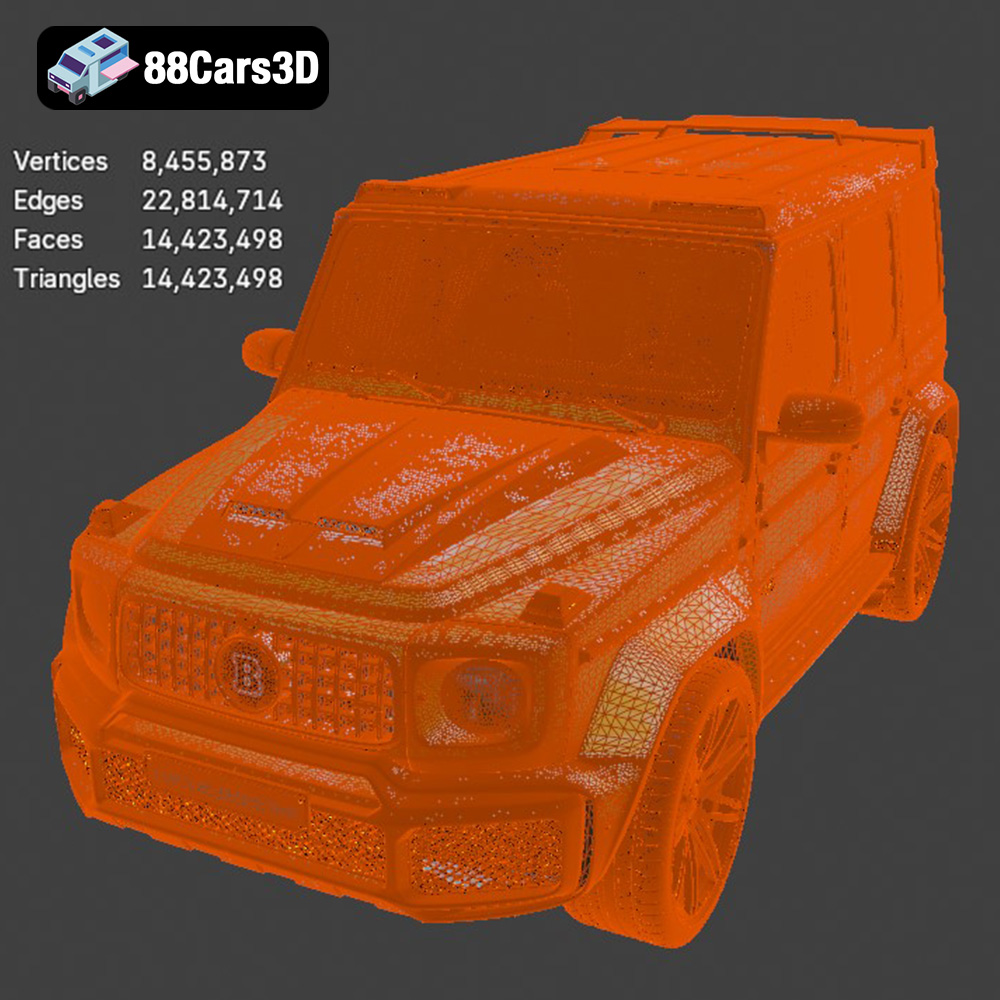
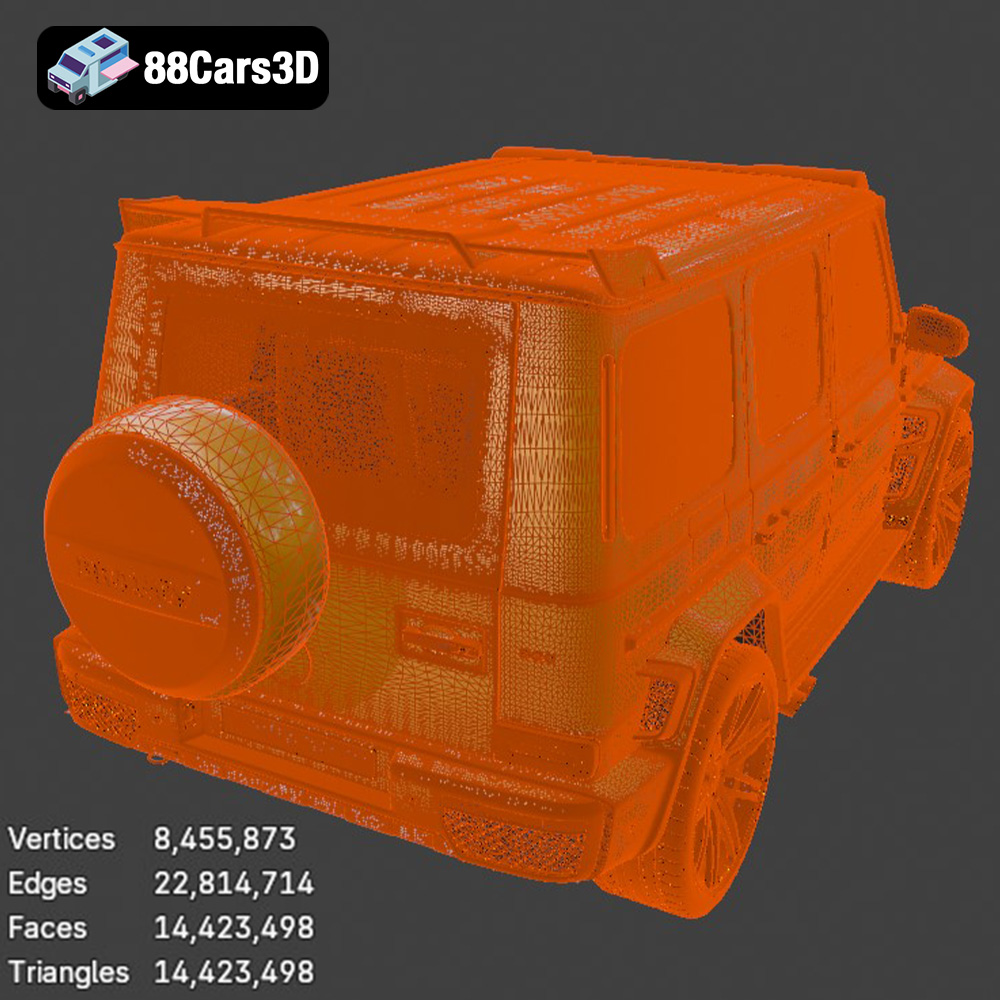
For architectural visualization studios, advertising agencies, or automotive design firms, 3ds Max remains a dominant force for producing photorealistic imagery. The included .max file for the Brabus G 800 means users can directly open a fully editable project within 3ds Max. This isn’t just a basic mesh; it’s a meticulously structured scene designed for high-end rendering. With 14,423,498 triangles, the model provides an incredible level of geometric detail, allowing for crisp reflections, sharp edges, and intricate surface variations crucial for realistic output. Artists can easily apply advanced materials using renderers like V-Ray or Corona, fine-tune lighting setups, and integrate the vehicle into complex scenes with other assets. The accurate real-world scale ensures that the vehicle behaves correctly within physical camera and lighting simulations, leading to truly convincing automotive rendering results.
The gaming industry demands both visual fidelity and performance optimization. The Brabus G 800 3D model is explicitly designed to meet these rigorous requirements. Its “Game-Ready & Optimized” status, coupled with the inclusion of .fbx and .unreal formats, makes it ideal for integration into leading game engines like Unreal Engine and Unity. While 14 million triangles is a high poly count, the geometry is structured efficiently, allowing developers to implement LODs (Levels of Detail) to manage performance across different distances. For close-up cinematics or hero shots, the full detail can be utilized, while lower-poly versions are swapped in for distant views. Proper pivot setups for steering, wheel rotation, and suspension travel mean that vehicle physics and animation can be implemented quickly and realistically, making it perfect for open-world games, racing titles, or even realistic driving simulators.
The rise of AR/VR technologies has opened new avenues for product visualization, especially in the luxury automotive sector. Imagine potential buyers exploring the Brabus G 800 in a virtual showroom, customizing its colors, opening doors, and examining the interior in a truly immersive environment. The .glb and .fbx formats included with this model are perfectly suited for such applications. The optimized geometry and clean topology ensure smooth real-time performance on VR headsets and AR-enabled mobile devices. Developers can leverage the detailed interior to create compelling first-person experiences, allowing users to “sit” inside the vehicle and appreciate its luxurious cabin, making the model an invaluable asset for interactive configurators and virtual sales tools. The ability to modify colors and materials also extends to these interactive experiences, empowering dynamic customization.
In 3D modeling, raw polygon count isn’t the sole indicator of quality. It’s the intelligent use of polygons, clean topology, and meticulous optimization that truly distinguish a professional-grade asset. The Brabus G 800 3D model exemplifies this philosophy, striking a balance between hyper-realism and practical performance.
With a topology boasting 14,423,498 triangles, this Brabus G 800 model delivers unparalleled visual fidelity. This high polygon count is not arbitrary; it’s strategically distributed to capture every nuanced curve, sharp edge, and intricate component of the Brabus G 800. This level of detail is critical for high-end rendering where microscopic surface imperfections, crisp reflections, and accurate light interaction are paramount. While such a high count might seem daunting for real-time applications, the crucial advantage lies in its “meticulously structured” geometry. This means that despite the polygon density, the mesh is clean, well-optimized, and free from common issues like non-manifold geometry or unnecessary vertices. This careful construction allows for efficient LOD creation for game engines and ensures stable subdivision for film-quality renders. The result is a model that looks incredible up close while remaining manageable within complex digital environments.
Accuracy is paramount in professional 3D visualization. The Brabus G 800 3D model is built to real-world scale, based on the actual vehicle chassis. This is not just an aesthetic choice; it’s a technical necessity for correct physical simulations, realistic camera perspectives, and seamless integration into architectural or urban scenes. Furthermore, the model comes with proper pivot setups for key articulated parts: steering, wheel rotation, and suspension travel. This pre-rigged functionality is a huge time-saver for animators. Instead of painstakingly setting up pivots and hierarchies, artists can immediately begin animating realistic vehicle movements, adding a layer of authenticity to any animation or simulation project. This attention to functional detail elevates the model from a static prop to a dynamic, interactive asset.
While the product description doesn’t explicitly detail PBR textures, a model of this caliber implies an underlying PBR (Physically Based Rendering) workflow. This means the model’s surfaces are designed to react to light in a physically accurate manner, mimicking real-world materials. High-resolution textures for elements like carbon fiber weaves, metallic paints, and quilted leather interiors would typically accompany such a detailed mesh. The ability to modify material finishes (matte, gloss, metallic) and tire textures (off-road vs. street variants) directly speaks to a robust material system that allows artists to fine-tune the appearance for specific scenes. This PBR readiness ensures that when integrated into modern renderers or game engines, the Brabus G 800 will achieve photorealistic results that are indistinguishable from reality, critical for brand campaigns and high-impact visualizations.
The versatility of a premium 3D model extends beyond digital screens. For enthusiasts, collectors, or even designers needing a physical prototype, the ability to 3D print an asset is a significant advantage. The Brabus G 800 3D model is prepared for this transition, offering an .stl format suitable for fabrication.
Converting a high-detail rendering model into a successful 3D print requires specific considerations. The provided .stl format is the standard for 3D printing and ensures that the geometric data is correctly interpreted by slicing software. The model’s clean topology, which benefits digital rendering, also translates well to 3D printing, minimizing errors and facilitating a smoother printing process. Before printing, users will typically import the .stl into their slicer software (e.g., Cura, PrusaSlicer, Chitubox) to prepare the model, ensuring it’s manifold (water-tight) and correctly scaled. The recommendation for “frame printed angled for structural integrity” is a valuable insight, demonstrating a thoughtful approach to printability inherent in the model’s design or documentation, ensuring the physical outcome is as robust as its digital counterpart.
To achieve optimal results when 3D printing the Brabus G 800, adhering to recommended settings is crucial. The suggested scales of 1:12, 1:18, or 1:24 are ideal for display models, balancing size with retained detail. A layer height of 0.04–0.12 mm, particularly with resin printing, is recommended for capturing the fine details, such as the intricate grille, interior stitching, and Brabus badging. Resin (SLA/DLP) printers excel at producing high-resolution prints with smooth surfaces, making them the preferred choice for this level of automotive detail. Wall thickness of 1.2–2.0 mm and an infill of 20–30% ensure structural integrity without excessive material usage. Supports are explicitly stated as “Required for detailed parts like exhaust, mirrors, handlebars,” which is a common requirement for complex, overhanging geometries in 3D printing. Printing wheels separately is also a standard practice for better detail and finish.
The journey from a raw 3D print to a finished model often involves meticulous post-processing. The recommendations for “Sanding, primer, and authentic factory colors with metallic finishes” highlight the steps needed to transform a printed object into a true miniature replica. Sanding removes layer lines and imperfections, primer provides a smooth, uniform surface for paint adhesion, and careful application of automotive-grade paints can recreate the Brabus G 800’s iconic look. Metallic finishes, in particular, demand a smooth base and precise application to achieve the desired luster. This comprehensive guidance ensures that hobbyists and model makers can achieve professional-level results, bringing the stunning digital asset into the physical world as a tangible piece of automotive art.
A truly professional 3D model offers more than just fidelity; it provides a flexible foundation for boundless creativity. The Brabus G 800 3D model is designed with customization in mind, empowering artists and developers to tailor it precisely to their project’s unique requirements.
The ability to easily modify key visual attributes is a cornerstone of a versatile 3D asset. With this Brabus G 800 model, changing the body and tank colors is straightforward, allowing artists to explore everything from authentic factory colors to bold, custom finishes that align with specific brand guidelines or artistic visions. This level of control extends to material finishes, enabling seamless transitions between matte, gloss, and metallic looks, each dramatically altering the vehicle’s perceived luxury and aggressiveness. Furthermore, the option to modify tire textures from high-performance street variants to rugged off-road types opens up a world of narrative possibilities. Imagine the same vehicle depicted tackling urban jungles or conquering challenging terrains – this flexibility ensures the model can serve diverse storytelling needs without requiring extensive re-modeling, making it an incredibly efficient asset for any production pipeline.
The impact of a 3D model is profoundly influenced by its surrounding environment and lighting. This Brabus G 800 asset is designed to be highly adaptable to different lighting scenarios, from sun-drenched outdoor scenes to dramatic studio setups and moody night renders. Its robust material system ensures that it reacts realistically to various light sources, bounce light, and global illumination. Artists can place the vehicle in an architectural visualization, a vast open-world game, or an intimate product showcase, confident that its surfaces will respond accurately to the scene’s illumination. This adaptability is critical for achieving photorealistic results and seamlessly integrating the vehicle into any digital backdrop, making the creative process more fluid and the final output more impactful.
Beyond simple aesthetic changes, the comprehensive and well-structured nature of this Brabus G 800 3D model means it serves as an excellent foundation for more extensive modifications. Digital sculptors could use it as a base for creating entirely new custom body kits, while animators can fully exploit its articulated components for complex vehicle stunts or realistic driving simulations. Game developers might integrate it into a modular system for in-game vehicle customization, offering players a vast array of personalization options. The quality and organization of this asset minimize the need to start from scratch, allowing professionals to focus their efforts on innovation and creative expression rather than foundational modeling tasks. This inherent expandability ensures that the investment in such a premium 3D model continues to yield value across multiple projects and evolving creative demands.
In the dynamic realm of digital automotive design, the Brabus G 800 3D Model stands out as a truly exceptional asset. Its incredible visual fidelity, boasting a topology of 14,423,498 triangles, captures every aggressive curve and luxurious detail of the real-world icon. Coupled with meticulous optimization for both high-end rendering and real-time game development, this model offers a rare blend of aesthetic excellence and technical pragmatism.
From seamless integration into professional workflows using industry-standard formats like .max, .blend, .fbx, and .unreal, to its readiness for immersive AR/VR experiences and even physical manifestation via 3D printing in .stl, its versatility is unmatched. The thoughtful inclusion of separated, animatable components and the potential for extensive customization further elevate its utility for artists, animators, and developers across various disciplines. Whether your project demands breathtaking automotive rendering, a high-impact game asset, or an interactive virtual showroom, the Brabus G 800 3D Model provides a robust, flexible, and technically sound foundation.
For those seeking to elevate their digital automotive projects with an asset that combines unparalleled detail with broad utility, look no further. This premium model is available for download, offering immediate access to a world-class digital vehicle. Explore its features and add this powerhouse to your asset library today at 88cars3d.com.
Experience the ultimate expression of luxury and raw power with the Brabus G 800. Based on the legendary G-Class, this masterpiece of automotive engineering features an aggressive widebody kit, signature carbon fiber aerodynamic elements, and iconic side-exit sports exhausts. Known for its imposing boxy stance and twin-turbo V8 powerplant, the G 800 blends off-road heritage with hypercar-level performance aesthetics. This premium 3D model boasts an incredibly detailed topology of 14,423,498 triangles, delivering unparalleled visual fidelity. Despite its high polygon count, the geometry is meticulously structured for high-end rendering, AAA game development, architectural visualization, and immersive AR/VR experiences. Every curve, carbon weave, and interior stitch has been faithfully recreated.
$90.00
.blend
.brabus
.fbx
.glb
.luxury suv
.max
.obj
.ply
.rendering
.stl
.unreal
car-3d-model
g-800
g-class
game asset
game-ready
off-road
SUV
VR/AR