Get 20% OFF All Premium 3D & STL Models!

The digital realm of 3D modeling has transformed industries from entertainment to engineering, with high-quality assets being the bedrock of immersive experiences and realistic visualizations. For automotive enthusiasts, game developers, architects, and product designers, the demand for authentic and meticulously crafted 3D car models is ever-growing. These aren’t just decorative elements; they are complex digital tools, integral to simulating reality, developing interactive games, and creating compelling visual narratives. The quest for realism and performance often leads professionals to seek out assets that strike a perfect balance between fidelity and optimization.
In this comprehensive guide, we’ll delve into the intricate world of automotive 3D modeling, exploring the technical considerations, workflow advantages, and diverse applications of professional-grade vehicle assets. We’ll specifically examine how a meticulously crafted asset, such as the Ford Taurus Police Interceptor 2008 3D Model available at 88cars3d.com, serves as a prime example of an asset that excels across various demanding scenarios. From understanding crucial file formats to integrating models into real-time engines, this exploration will equip you with insights into leveraging 3D car models for maximum impact.
In today’s competitive landscape, the visual quality of 3D assets can make or break a project. Whether it’s a AAA game, a photorealistic architectural visualization, or an interactive AR experience, the vehicles within these environments must meet stringent standards of realism, detail, and performance. Generic, low-quality models simply won’t suffice when aiming for immersion and believability.
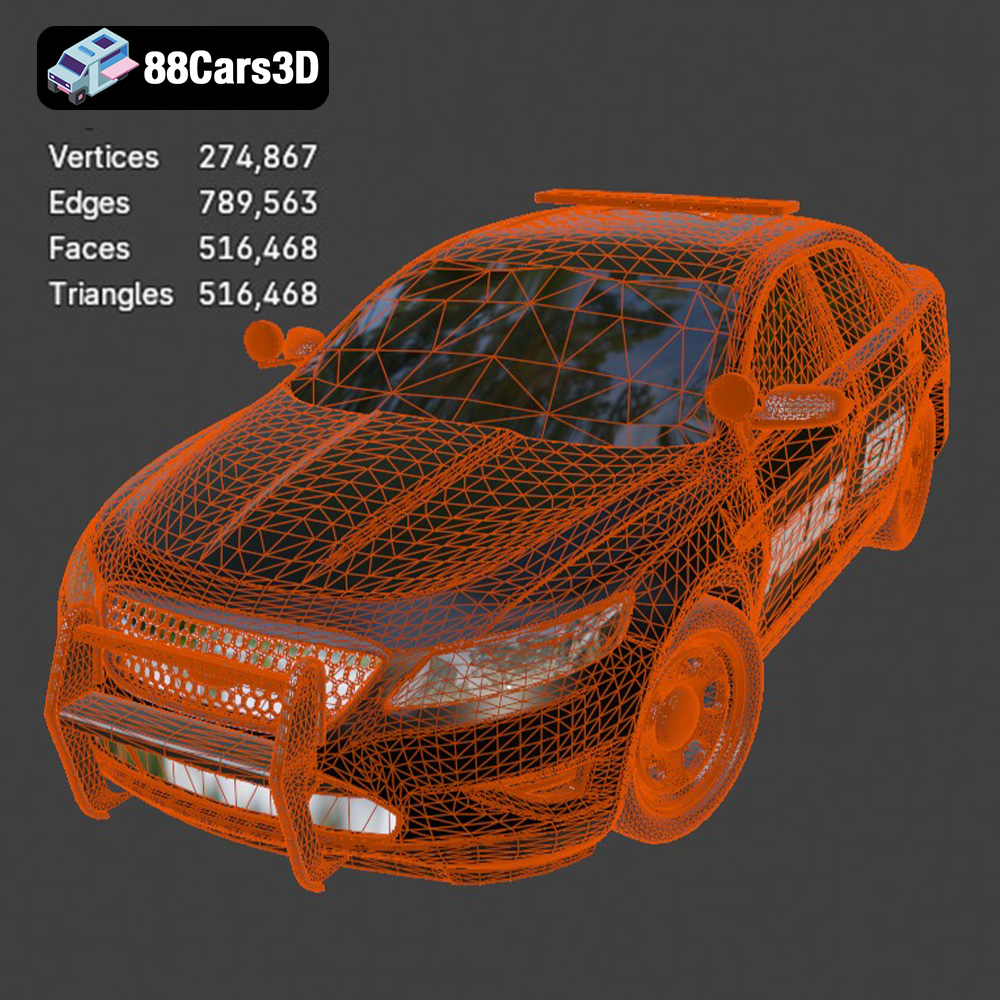
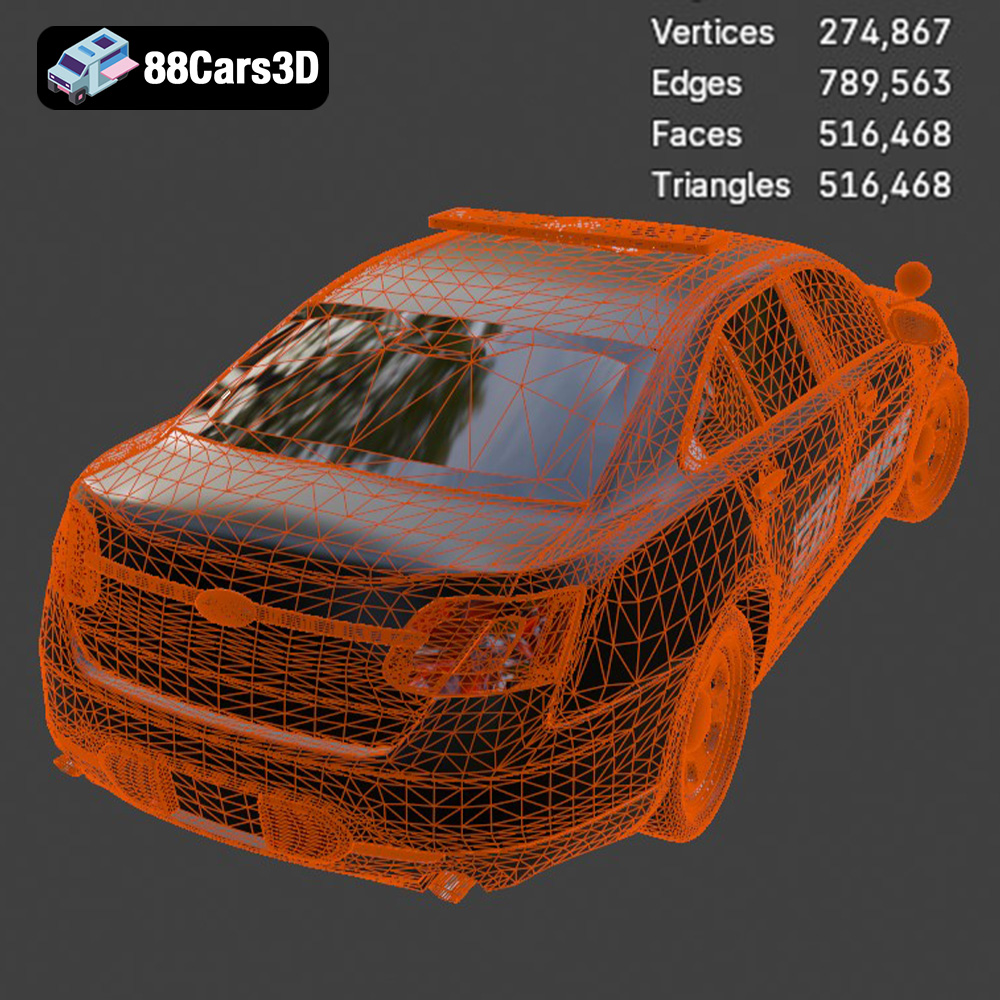
A truly exceptional 3D car model is more than just a visually appealing mesh; it’s a masterclass in balancing aesthetic detail with technical efficiency. This means high polygon counts for intricate details where necessary, like the detailed V6 engine block styling or the complex police communication radio geometry, but also intelligent optimization for real-time environments. Developers face the constant challenge of rendering complex scenes at high frame rates, and vehicle assets must contribute to this goal, not detract from it. The Ford Taurus Police Interceptor 2008 3D Model, for instance, boasts a detailed 516,468 triangle count. This figure represents a sweet spot, providing exceptional visual realism for close-up renders and cinematic shots, while remaining optimized enough for smooth integration into demanding game engines like Unreal or Unity.
Developing a high-fidelity 3D car model from scratch is an incredibly time-consuming and resource-intensive endeavor. It requires expert modelers, texture artists, and riggers, often spanning weeks or months of dedicated work. For studios and individual artists, purchasing pre-built, professional-grade 3D car models like those offered on 88cars3d.com provides a significant advantage. It allows them to bypass the initial modeling phase, freeing up valuable time and budget to focus on other critical aspects of their project, such as scene composition, lighting, animation, or gameplay mechanics. This strategic acquisition of assets dramatically accelerates production pipelines, ensuring projects can meet tight deadlines without compromising on quality.
Navigating the diverse world of 3D applications and engines necessitates a solid understanding of file formats. Each format is designed with specific use cases and technical considerations in mind, influencing compatibility, data retention, and performance. Knowing which format to choose for your project is paramount for a smooth workflow and optimal results, especially when working with complex assets like the Ford Taurus Police Interceptor 2008 3D Model, which offers a wide array of formats.
The .blend format is native to Blender, the popular open-source 3D creation suite. When you download a .blend file, you’re getting a fully editable Blender scene, complete with materials, textures, lighting, cameras, animations, and modifiers intact. This format is ideal for users who primarily work in Blender and require maximum flexibility for customization. For an asset like the Ford Taurus Police Interceptor, the .blend file allows artists to easily adjust its custom dual exhaust system, modify tire textures, or tweak the robust dashboard layout directly within their preferred environment, leveraging Blender’s powerful tools for rendering with Cycles or Eevee.
.fbx (Filmbox) is arguably the most widely adopted proprietary file format for 3D data exchange, developed by Autodesk. It’s a robust choice for transferring models, animations, and scenes between various 3D software and game engines, making it ideal for Unreal, Unity, and real-time pipelines. An FBX file typically retains mesh data, materials (often as basic properties or references), textures, skeletal animations, and blend shapes. For game developers incorporating the Ford Taurus Police Interceptor into their titles, the .fbx variant ensures that the optimized polycount, proper pivot setup for steering and wheel rotation, and material assignments translate effectively into their engine, maintaining the asset’s game-ready integrity.
The .obj (Wavefront OBJ) format is a simple, universal 3D data format that is supported by almost every 3D application. It’s excellent for geometry transfer, representing polygonal meshes (vertices, faces, normals, UVs). While it doesn’t typically store advanced scene data like animation or complex material nodes, it’s highly reliable for cross-software compatibility. When you need to bring the Ford Taurus Police Interceptor’s accurate frame geometry into an application that might not support more complex formats, .obj is a dependable choice for ensuring the core mesh structure, including its reinforced heavy-duty suspension system and push bumper geometry, is preserved.
.glb (GL Transmission Format Binary) is the binary version of glTF, a royalty-free specification for 3D scenes and models. It’s quickly becoming the standard for 3D on the web, AR, and VR due to its efficiency and ability to embed all assets (geometry, textures, animations) into a single, optimized file. For immersive virtual showrooms or mobile AR experiences featuring the Ford Taurus Police Interceptor, the .glb format ensures fast loading times and efficient rendering, making it perfect for displaying the detailed heavy-duty steering wheel or high-resolution instrument cluster in a browser-based configurator or a smartphone AR app.
.stl (STereoLithography) is the de facto standard file format for 3D printing. It represents a 3D model as a series of connected triangles (a tessellation of the surface geometry). It typically does not contain color, texture, or material information, focusing purely on geometric shape. When converting the Ford Taurus Police Interceptor 2008 3D Model to .stl, hobbyists can transform the digital asset into a tangible display-scale model. This requires careful preparation to ensure manifold geometry and appropriate scaling for successful physical output, enabling enthusiasts to hold a replica of the imposing police pursuit vehicle.
The .ply (Polygon File Format) is primarily used to store 3D data from 3D scanners, CAD applications, or scientific simulations. It can store not only the geometry but also properties like color, transparency, normals, texture coordinates, and even reliability information for each vertex or face. While less common for general 3D model distribution than FBX or OBJ, it’s a precision mesh format valuable for detailed analysis or specific engineering pipelines. For those needing to integrate the Ford Taurus Interceptor’s accurate proportions into a technical analysis workflow, .ply offers a robust data structure.
The .unreal format refers to assets specifically packaged or configured for Unreal Engine. While typically not a standalone file format you’d download directly in the same way as .fbx or .obj, an asset provided in an “.unreal” format usually implies it’s been pre-imported, textured, and configured within an Unreal project structure, ready for direct integration. This means materials are set up with Unreal’s shader graph, collision meshes might be included, and LODs (Levels of Detail) could be pre-generated. For the Ford Taurus Police Interceptor, an .unreal package would mean a truly engine-ready asset, optimizing the workflow for developers creating cinematic animations or law enforcement simulations within Unreal Engine.
The .max format is the native file format for Autodesk 3ds Max, a leading software for 3D modeling, animation, and rendering. Like .blend, a .max file contains the entire scene, including geometry, materials, lighting, cameras, modifiers, and animations. It’s the ultimate format for 3ds Max users who need full control over every aspect of the model, from adjusting the highly detailed lighting system to fine-tuning the separate wheels, suspension, and steering components for animation. This format provides the most comprehensive editing capabilities for professional rendering and animation workflows.
The value of a professional 3D model lies in its meticulous construction and adherence to technical best practices. The Ford Taurus Police Interceptor 2008 3D Model exemplifies this, offering a robust foundation for diverse projects. It’s not merely a visual representation but a carefully engineered digital asset.
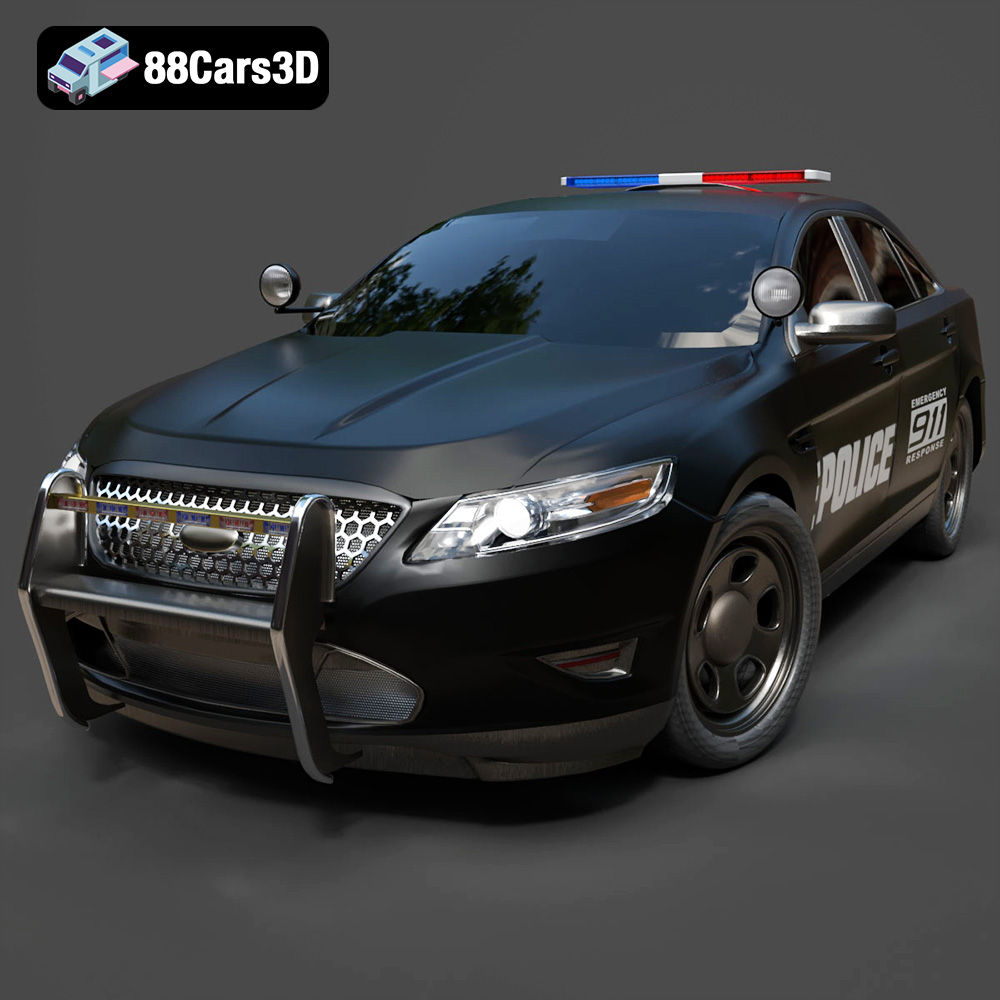
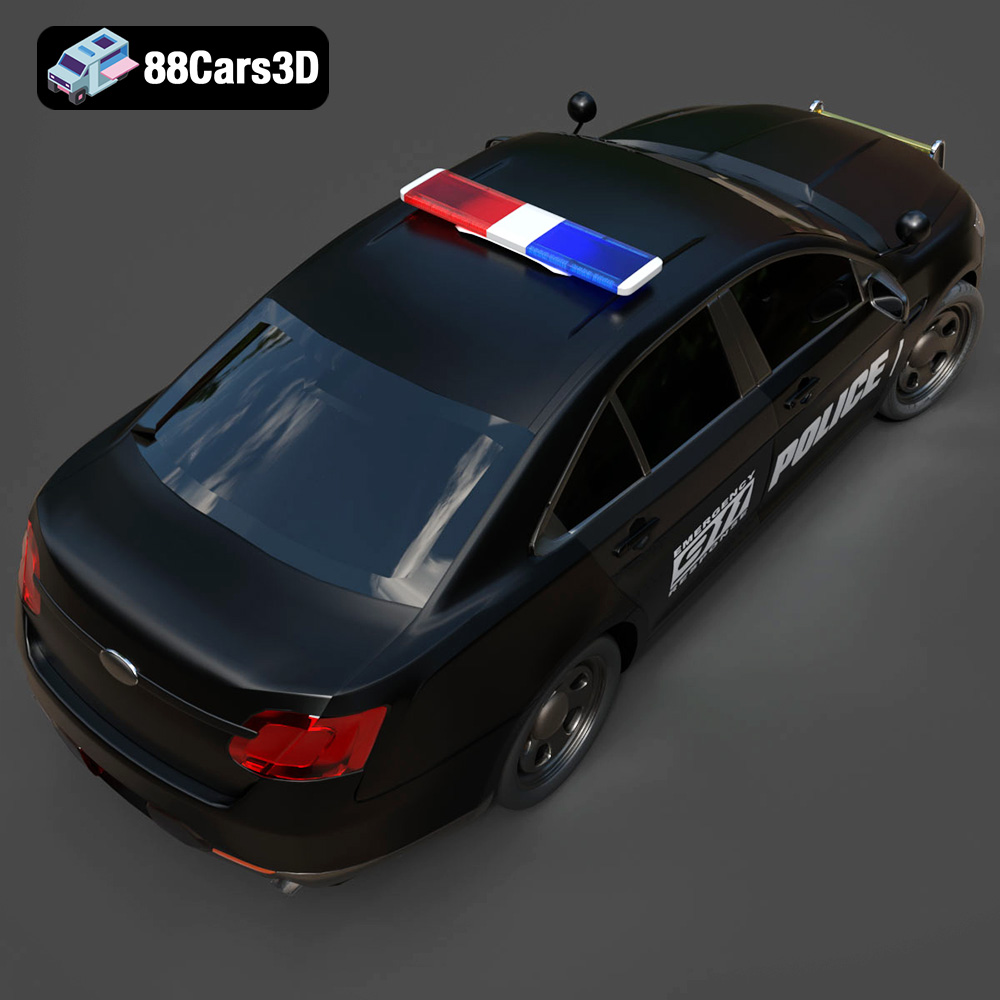
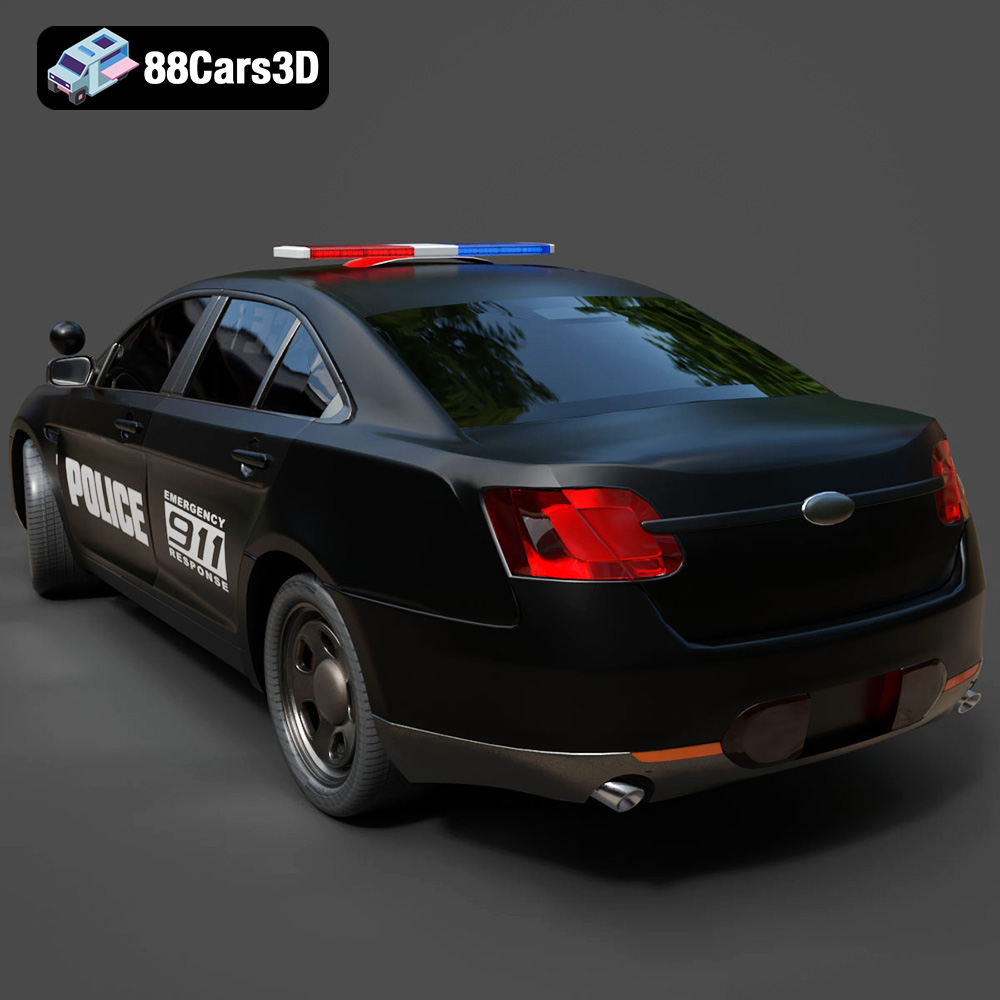
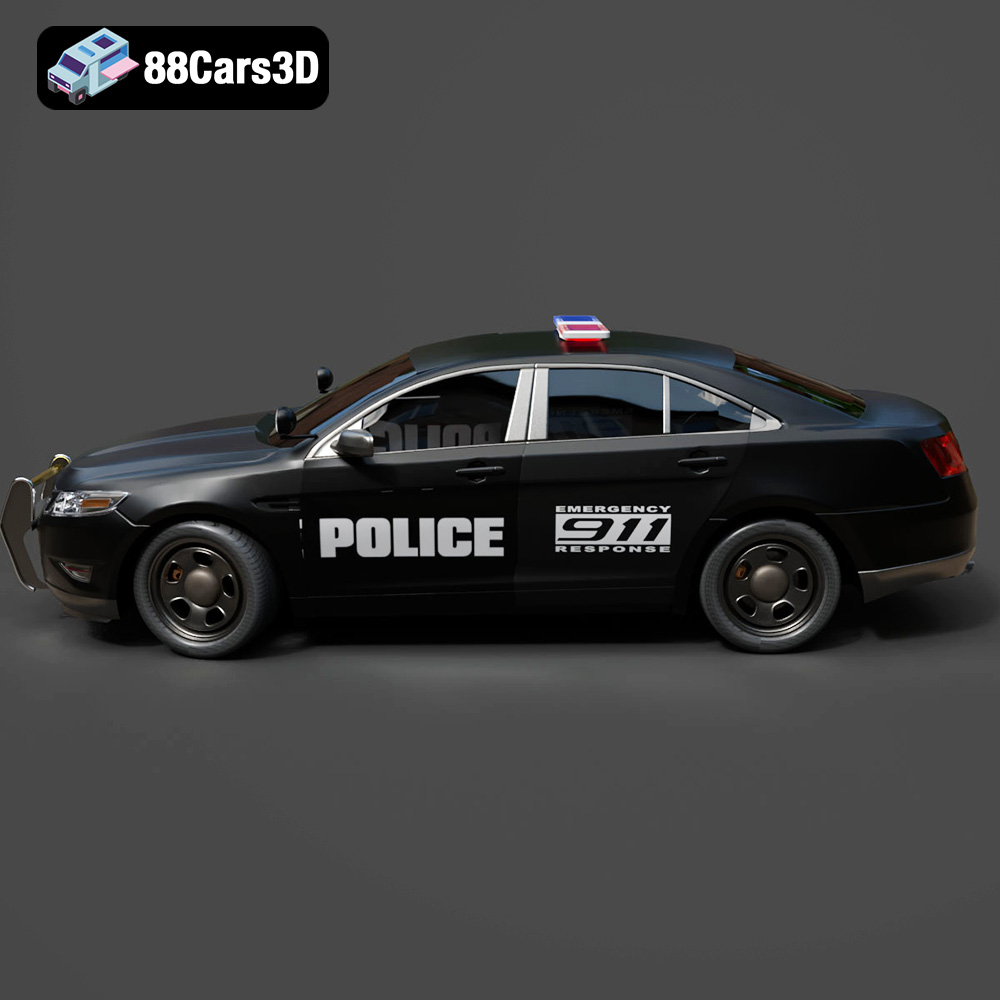
The description highlights a 516,468 triangle count, a critical specification for balancing visual fidelity with performance. This “game-ready & optimized” polycount ensures that the model looks incredibly detailed when rendered at high resolutions for cinematics or visualizations, yet remains manageable within a real-time game engine. The geometry is described as “optimized,” suggesting clean topology, minimal non-manifold edges, and efficient use of polygons, preventing performance bottlenecks. This level of detail allows for accurate representations of the reinforced push bumper, roof-mounted lightbar, and heavy-duty steel wheels without bogging down the rendering pipeline.
Beyond raw polygon counts, the model’s fidelity is evident in its anatomical accuracy. The “accurate Ford Taurus Police Interceptor frame geometry and rugged proportions” ensure the vehicle looks authentic from every angle. Exterior features extend to a “detailed V6 engine block styling and under-hood components,” a “custom dual exhaust system,” and a “highly detailed lighting system.” This means that even in close-up shots, the vehicle holds up to scrutiny. The interior is equally impressive, featuring “accurate police utility seats,” a “detailed heavy-duty steering wheel,” a “high-resolution instrument cluster,” and a “specialized police center console” with “law enforcement communication radio geometry.” The “optimized geometry for first-person POV in gaming and simulator environments” is a crucial detail, indicating careful consideration for the player’s perspective, ensuring that the cockpit feels immersive and realistic.
For any automotive model, animation capabilities are paramount. The Ford Taurus Police Interceptor 2008 3D Model is designed with animation in mind, featuring “separate wheels, suspension, and steering components.” This modularity allows animators to create realistic vehicle dynamics, from turning wheels to responsive suspension travel. Furthermore, “proper pivot setup for steering, wheel rotation, and suspension travel” is a technical advantage that saves considerable setup time. Correct pivots ensure that transformations behave as expected, enabling smoother rigging and more believable motion, whether the vehicle is navigating a city street in a game or performing a high-speed pursuit in a cinematic.
The versatility of a well-designed 3D car model is immense, extending its utility across a wide spectrum of creative and technical fields. The Ford Taurus Police Interceptor 2008 3D Model is no exception, serving as a powerful asset for various applications.
For game developers, this model is an ideal asset. Its “game-ready & optimized” nature with a 516,468 triangle count makes it perfectly suited for integration into open-world environments where multiple vehicles are rendered simultaneously. Imagine high-octane police pursuit games where the Interceptor’s aggressive styling and detailed modifications, including its reinforced push bumper and roof-mounted lightbar, come alive. The separate, animatable components for wheels, suspension, and steering allow for dynamic, physics-driven vehicle control, essential for realistic racing titles and driving simulators. The interior’s “optimized geometry for first-person POV” also provides a truly immersive experience for players who step into the role of a virtual police officer.
In architectural visualization, cars serve as crucial scene dressing, adding scale, realism, and a sense of life to static buildings. The Ford Taurus Police Interceptor, with its imposing presence, can be strategically placed in urban architectural visualizations to ground a scene in reality and enhance its narrative. For cinematic animations, the model’s high fidelity means it can withstand close-up shots and dramatic lighting setups. Its detailed V6 engine block styling and robust interior would be perfect for sequences depicting a vehicle inspection or an intense pre-pursuit briefing. Artists can easily customize body colors, material finishes, and adapt lighting for different environments to match their visual storytelling needs, creating compelling brand campaigns or lifestyle scenes.
The rising demand for augmented and virtual reality experiences finds a perfect fit in high-quality 3D car models. For AR/VR training simulators, particularly in law enforcement, the Ford Taurus Police Interceptor 2008 provides a highly realistic, interactive element. Trainees can practice scenarios involving vehicle approach, interior inspection, or even simulated high-speed pursuits in a safe, virtual environment. The model’s optimized geometry ensures smooth performance in these demanding real-time VR applications. Beyond training, the .glb format makes it perfect for immersive virtual showrooms or mobile AR experiences, allowing potential buyers or enthusiasts to interact with the vehicle in a highly realistic, scalable digital format, examining its heavy-duty steel wheels or its specialized police center console up close.
The bridge between the digital and physical world is increasingly crossed through 3D printing. For enthusiasts, collectors, or even designers needing a physical prototype, converting a detailed 3D car model into a tangible object offers immense satisfaction and practical benefits. The Ford Taurus Police Interceptor 2008 3D Model is designed to be convertible to .stl format, opening up a world of physical creation.
Converting a complex model like the Ford Taurus Police Interceptor for 3D printing requires careful consideration of several factors. The product description provides excellent guidance, recommending scales like 1:12, 1:18, or 1:24. Choosing the right scale is crucial for balancing detail retention with print size and material cost. Print settings are also vital: a layer height of 0.04–0.12 mm is suggested, with resin printing recommended for achieving the finest details on components like the roof-mounted lightbar or intricate grille. Wall thickness (1.2–2.0 mm) and infill (20–30%) are critical for structural integrity, ensuring the printed model is robust enough without being excessively heavy or using too much material. Furthermore, supports are required for overhangs and delicate parts like the exhaust, mirrors, push bumper, and lightbars. Careful print orientation, such as printing the frame angled for structural integrity and wheels separately, ensures optimal print quality and minimizes the need for extensive post-processing.
Once printed, the journey to a professional-looking physical model isn’t over. Post-processing is key to transforming a raw print into a display-worthy replica. This typically involves removing supports, sanding to smooth out layer lines, and applying primer to create an even surface for painting. For a vehicle like the Ford Taurus Police Interceptor, the final touches would involve applying authentic factory colors or custom police livery finishes, often with metallic paints to replicate the vehicle’s real-world appearance. This attention to detail in the post-processing stage ensures that the physical 3D print stands as a testament to the quality of the original digital asset.
A professional 3D car model isn’t a static, unchangeable object; it’s a foundation for creativity and adaptation. The Ford Taurus Police Interceptor 2008 3D Model offers extensive customization options, allowing artists and developers to tailor it precisely to their project’s unique requirements. Its compatibility across major software platforms further enhances its utility.
The ability to customize materials and textures is fundamental for achieving specific visual styles or integrating the vehicle seamlessly into diverse environments. The Ford Taurus Interceptor model allows users to “change body/tank colors,” offering options for factory colors or custom police livery finishes to match specific law enforcement departments or stylistic preferences. Furthermore, modifying “tire textures (off-road vs. street variants)” can dramatically alter the vehicle’s character and suitability for different terrains within a game or visualization. Adjusting “material finishes (matte, gloss, metallic)” allows for fine-tuning the vehicle’s reflectivity and overall visual presence, from a stealthy matte black patrol car to a highly reflective pursuit vehicle. Adapting lighting for different environments, either within the model’s materials or the rendering scene, ensures it looks its best under any conditions, from bright daylight to a dramatic nighttime chase.
The inclusion of multiple file formats, specifically .max for 3ds Max, .blend for Blender, and .unreal for native engine integration, underscores the model’s readiness for diverse professional workflows. In 3ds Max, artists can leverage the .max file to animate the separate suspension and steering components with precision, set up complex V-Ray or Corona renders for high-quality cinematics, and fully customize every material parameter. Blender users gain the full flexibility of the .blend file, enabling them to modify the topology, create new UVs, or integrate the model into a larger Blender-based scene with ease, using Cycles or Eevee for rendering. For real-time applications, the .fbx and especially the .unreal formats streamline the integration into Unreal Engine. This means materials are often pre-configured, pivots are correct, and the mesh is optimized for the engine’s rendering pipeline. This “plug-and-play” capability significantly reduces setup time, allowing developers to focus on gameplay, AI, and environmental design rather than wrestling with asset conversion or optimization.
The landscape of 3D content creation is constantly evolving, with a persistent demand for high-quality, versatile, and technically sound assets. As we’ve explored, a meticulously crafted 3D car model like the Ford Taurus Police Interceptor 2008 is more than just a digital object; it’s a strategic investment that empowers artists and developers across game development, architectural visualization, AR/VR, and even 3D printing. Understanding the nuances of file formats, appreciating optimized geometry, and leveraging built-in customization options are crucial for maximizing the potential of such assets.
Whether you’re creating an immersive open-world game, a photorealistic urban render, a critical VR training simulation, or a physical replica, the right 3D car model can significantly enhance your project’s impact and efficiency. The Ford Taurus Police Interceptor 2008 3D Model from 88cars3d.com stands as a testament to what professional-grade 3D assets can achieve, offering exceptional detail, game-ready optimization, and broad compatibility. Elevate your next project with assets that deliver both visual excellence and technical performance.
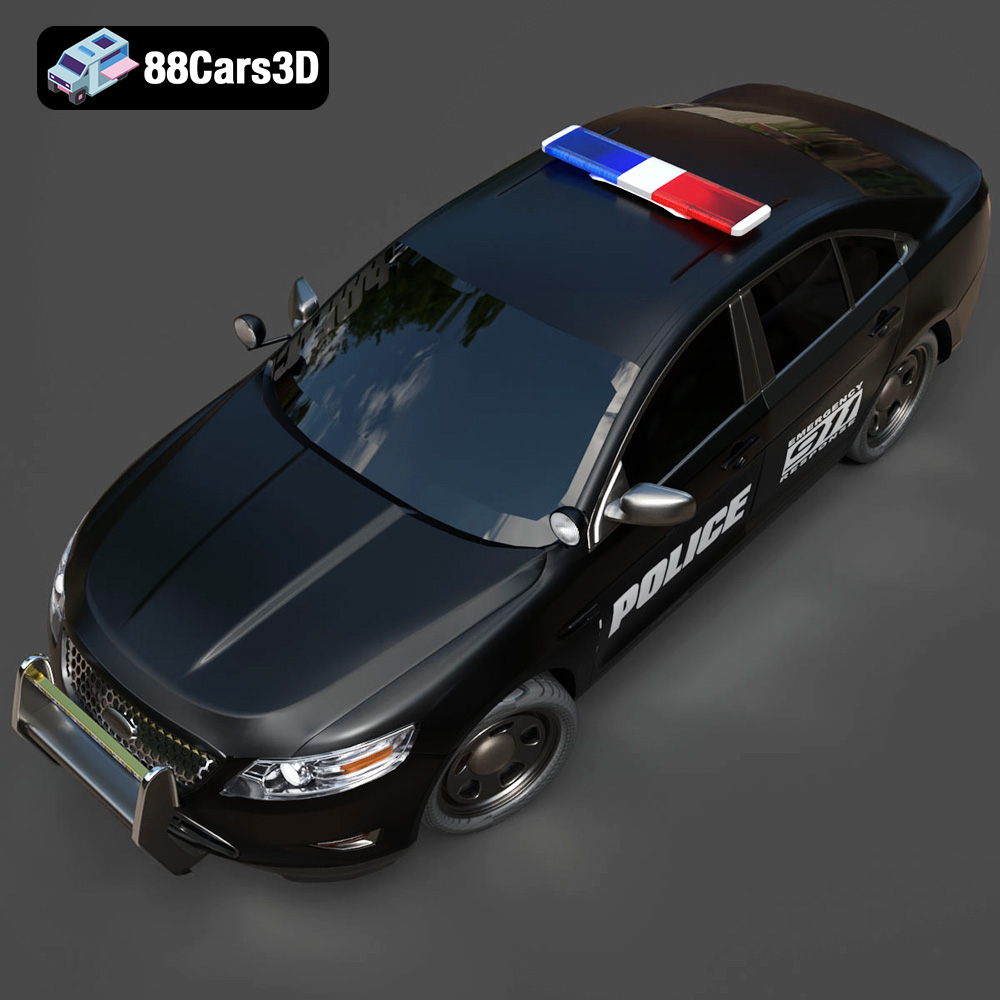
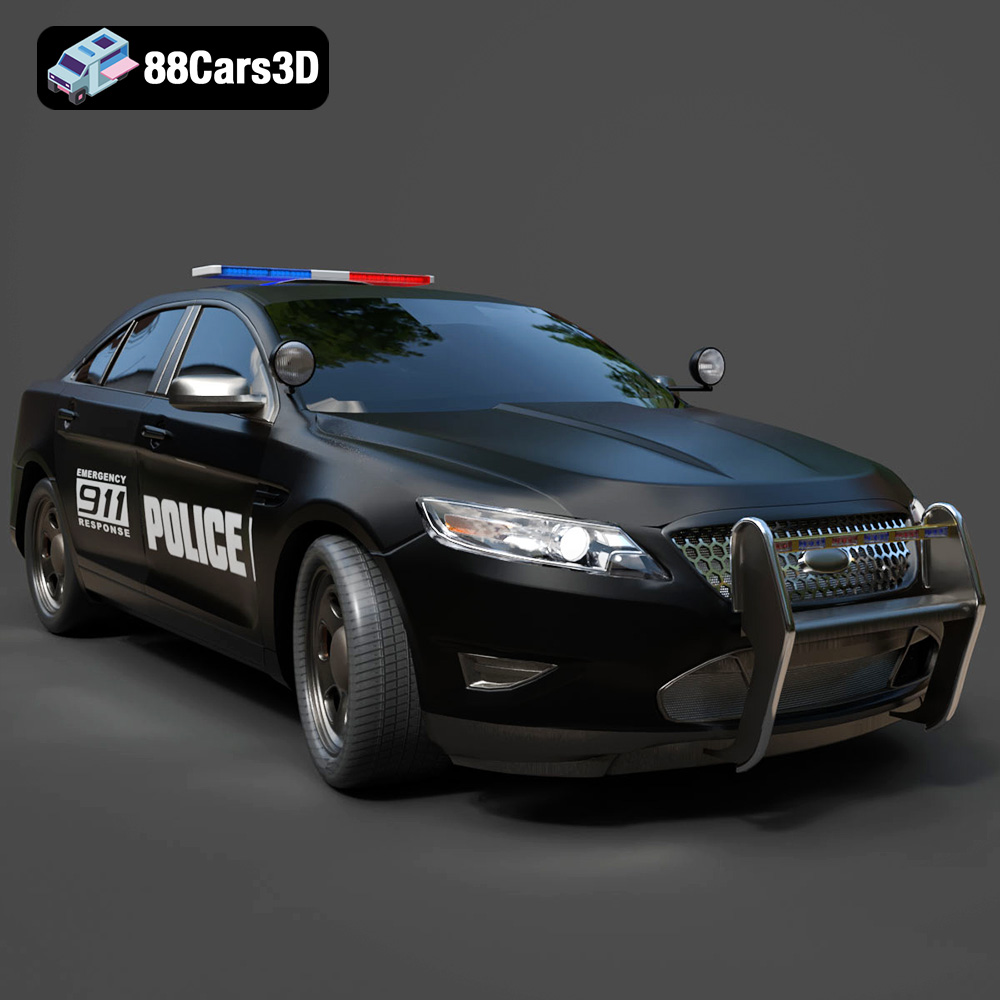
The Ford Taurus Police Interceptor is a cornerstone of modern law enforcement, succeeding the legendary Crown Victoria with superior all-wheel-drive performance, advanced safety features, and aggressive styling. This 3D model captures the imposing presence of the ultimate pursuit vehicle, complete with signature police modifications including a reinforced push bumper, roof-mounted lightbar, and heavy-duty steel wheels designed to withstand rigorous high-speed pursuits. Boasting a detailed 516,468 triangle count, this high-fidelity 3D model delivers exceptional visual realism while maintaining optimal topology for game engines and rendering software. The vehicle is meticulously crafted with accurate proportions and optimized geometry, making it the perfect asset for high-end virtual environments, cinematic animations, and interactive law enforcement simulations. Perfect for open-world police pursuit games, urban architectural visualizations, high-speed cinematic animations, and virtual reality training simulators.
$41.50
.blend
.fbx
.ford
.glb
.max
.obj
.ply
.rendering
.stl
.unreal
car-3d-model
game asset
game-ready
high poly
law-enforcement
optimized
police-car
taurus-police-interceptor
VR/AR