Get 20% OFF All Premium 3D & STL Models!

In the vibrant tapestry of automotive history, few vehicles command attention quite like the American muscle cars of the 1970s. They represent an era of bold design, unadulterated power, and a distinctly American spirit. Among these legends, the 1973 AMC AMX SST stands out as a true icon, embodying the aggressive styling and raw V8 prowess that defined its generation. For 3D artists, game developers, and visualization specialists, recreating such a classic is an endeavor that demands precision, authenticity, and an understanding of nuanced digital craftsmanship. This is where high-fidelity 3D car models become indispensable assets.
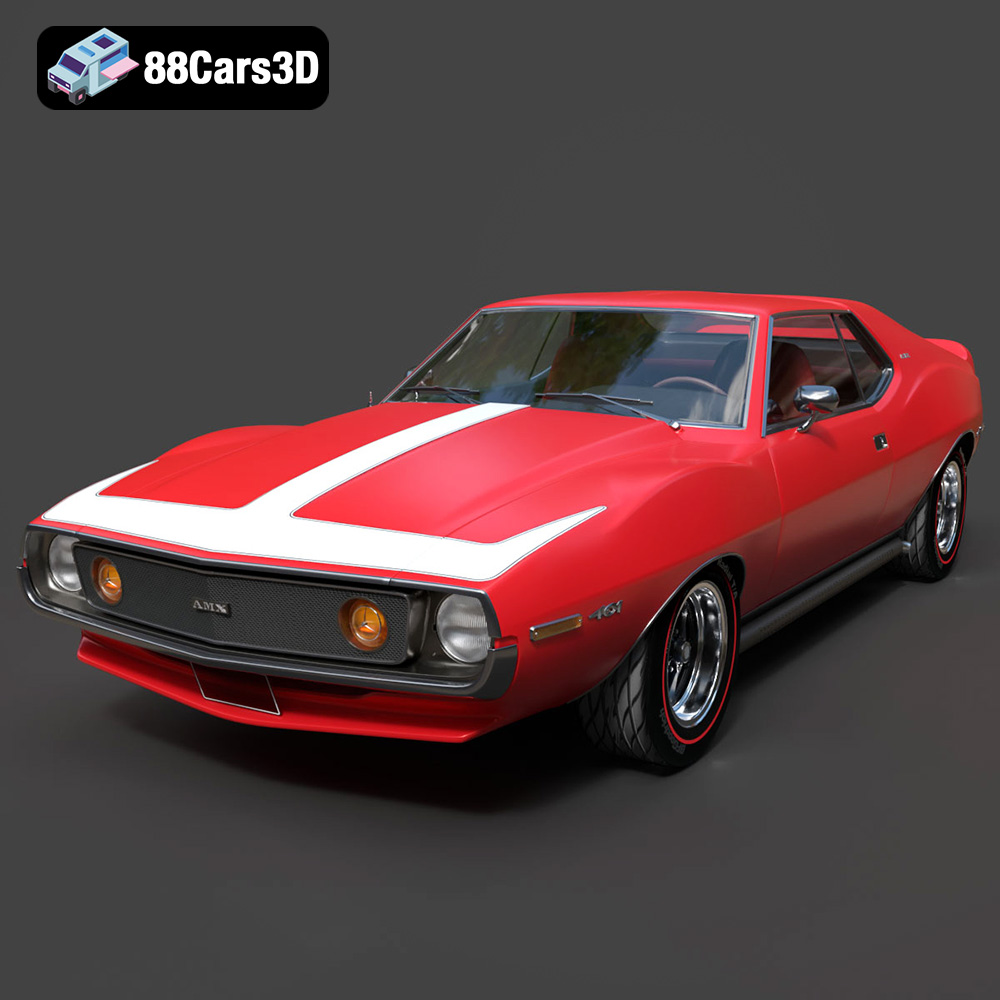
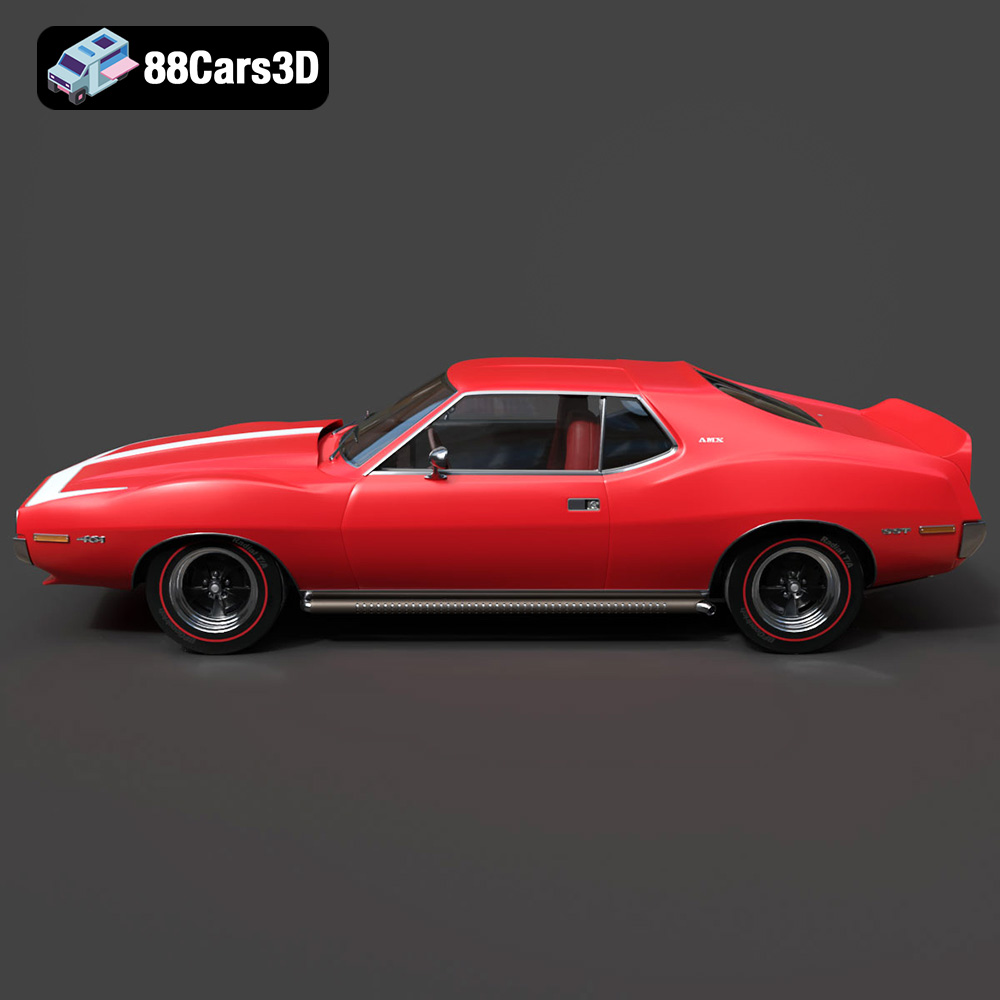
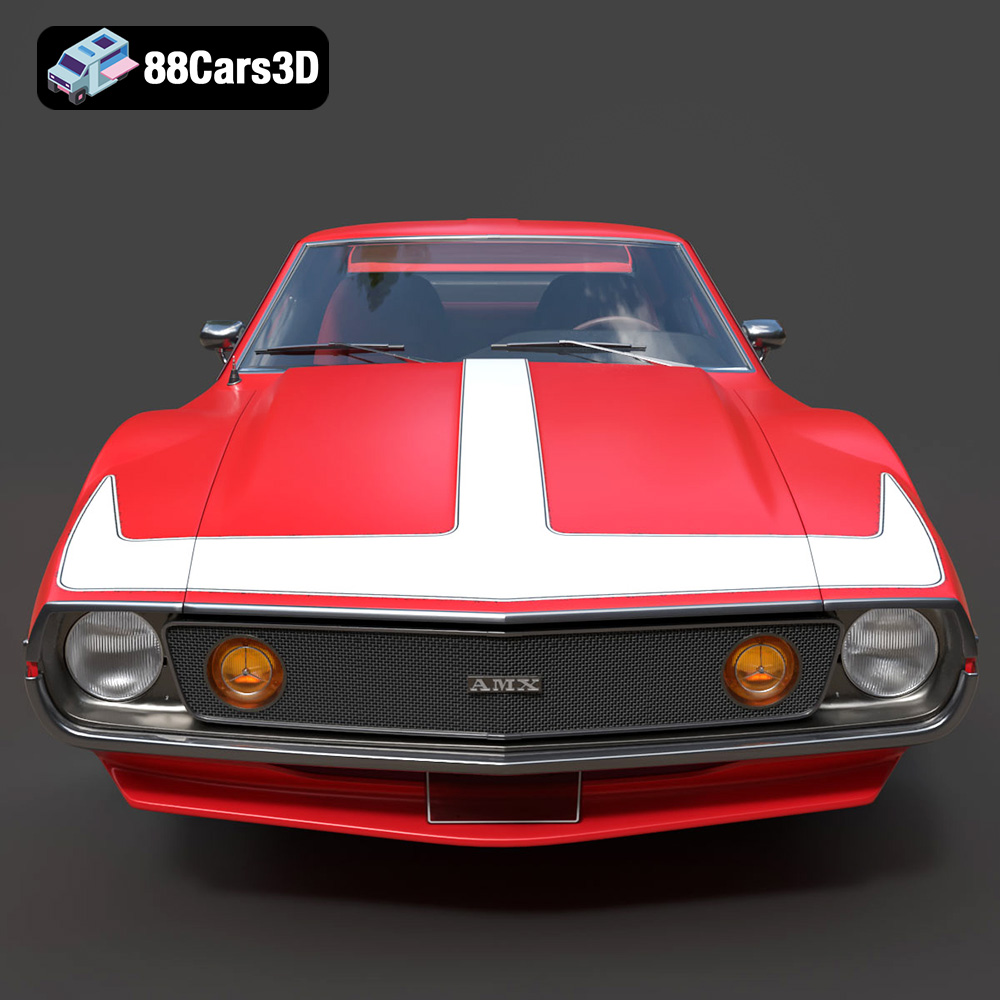
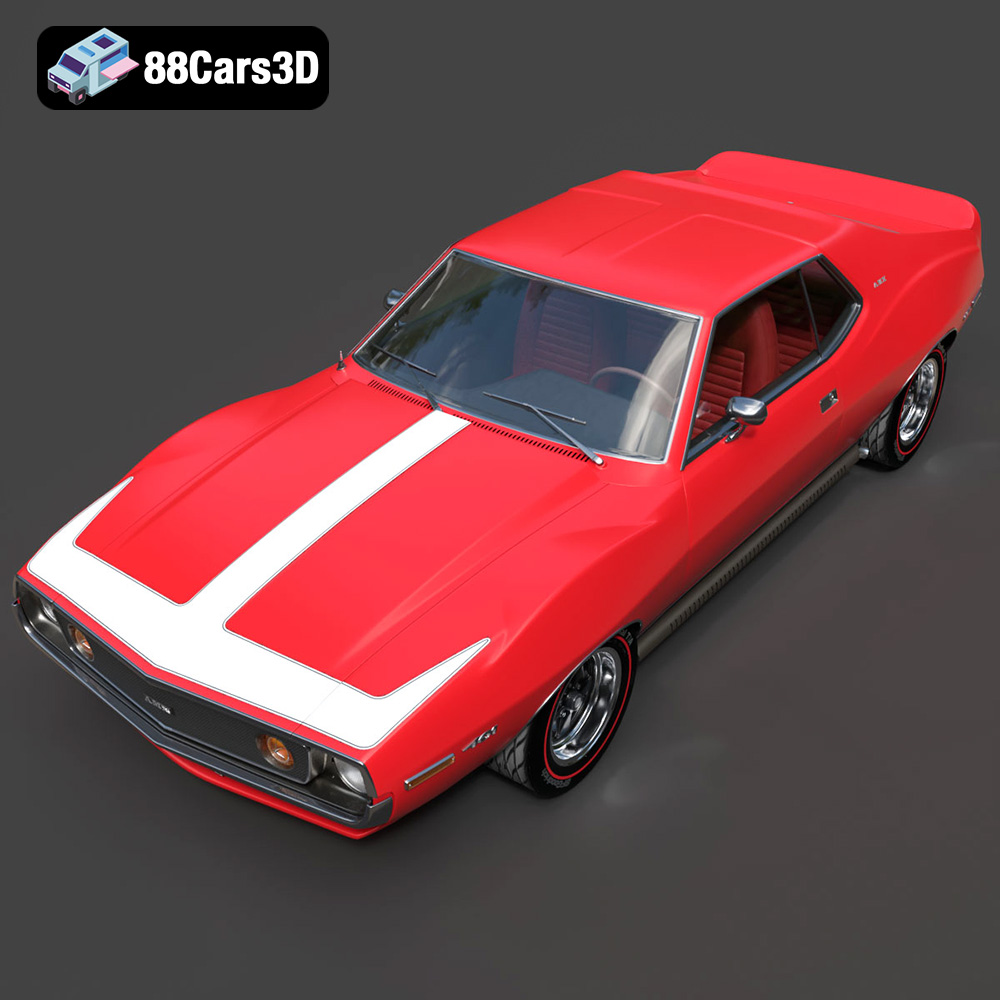
The challenge lies in translating the physical charisma of a vintage machine into a digital form that maintains both visual integrity and technical performance across diverse applications. Whether it’s for game assets, automotive rendering, immersive AR/VR experiences, or even detailed 3D printing, the foundational 3D model must be robust and versatile. Today, we delve into the intricacies of acquiring and utilizing premium 3D car models, with a special focus on a meticulously crafted digital replica of the 1973 AMC AMX SST, available at 88cars3d.com. This model perfectly captures the prominent hood, distinctive front grille, sloping fastback roofline, and muscular wide stance that make the AMC AMX a true collector’s dream, ready to be integrated into your next groundbreaking project.
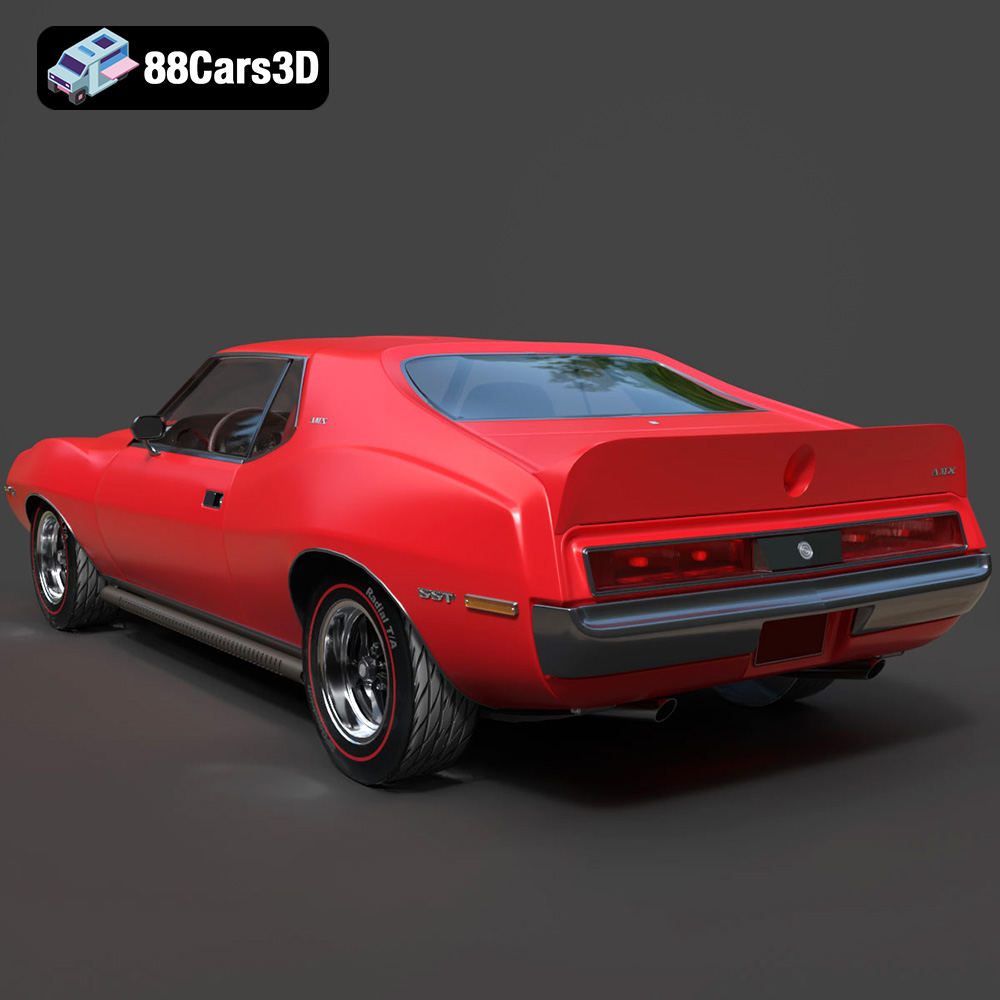
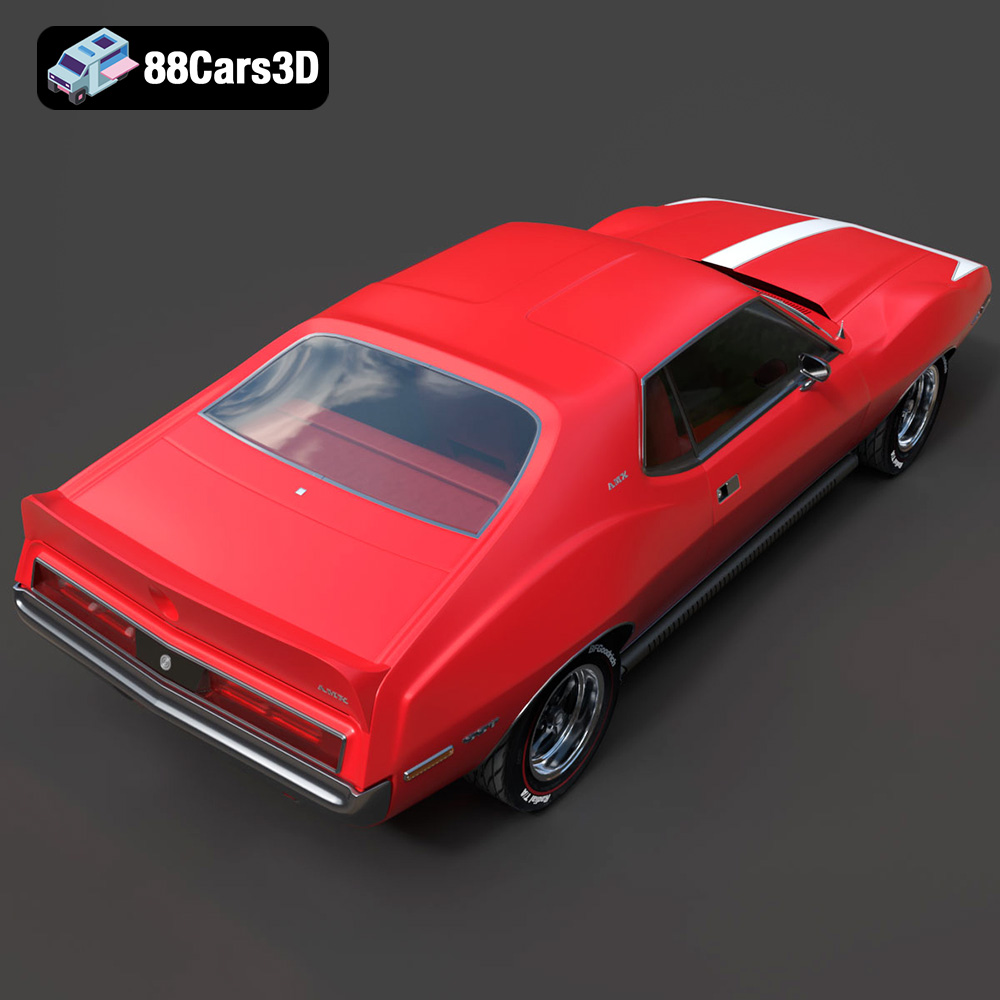
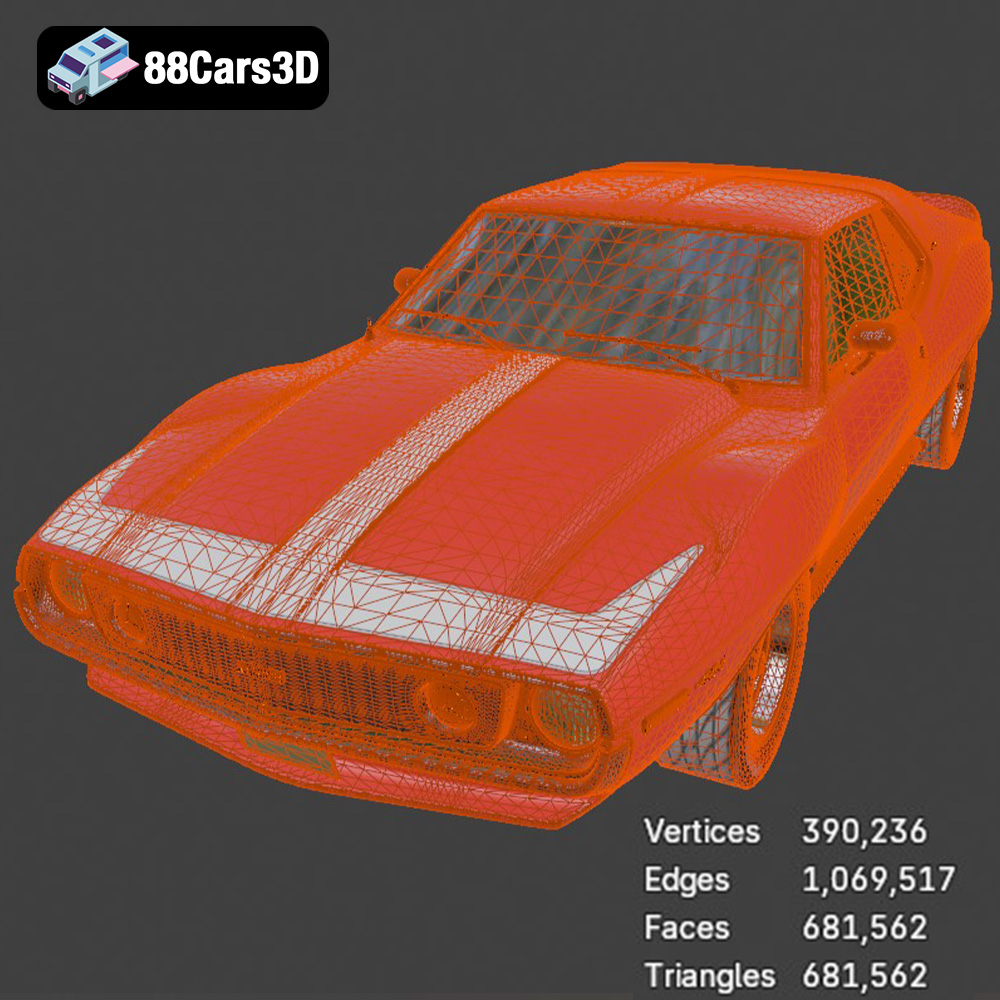
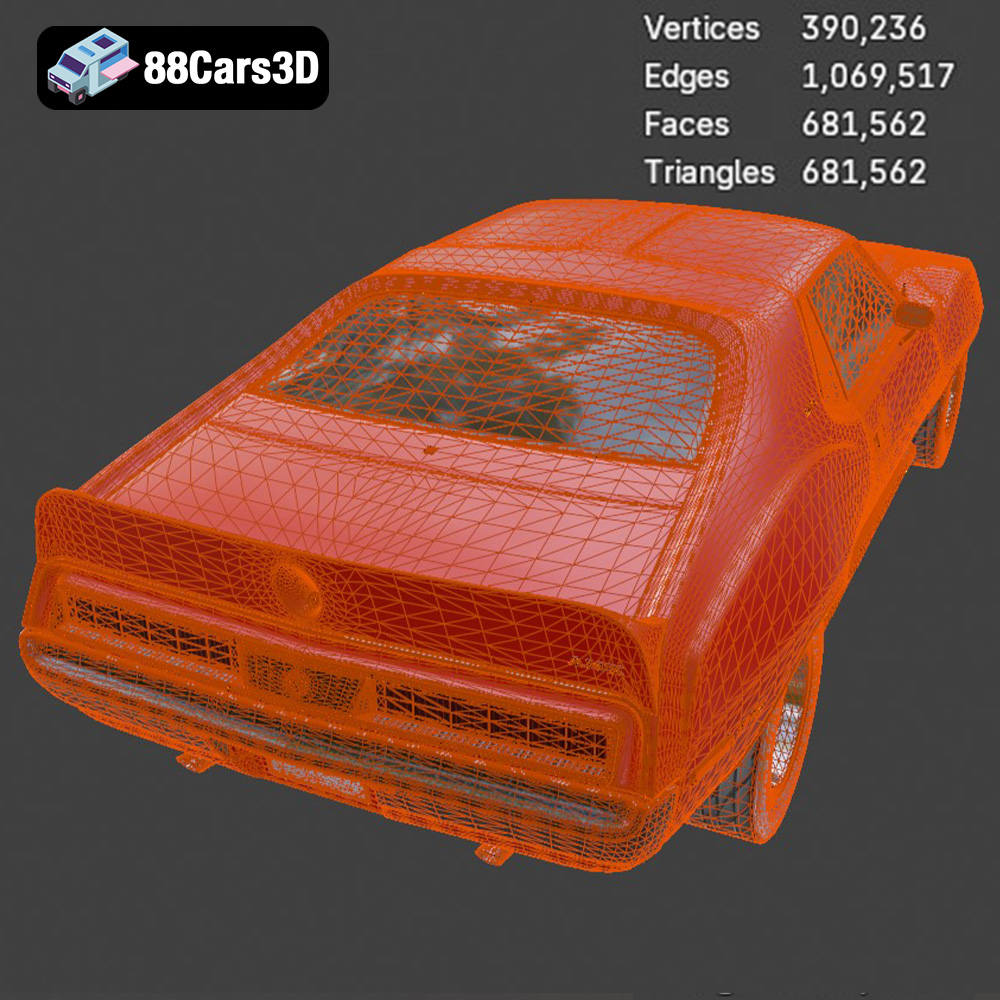
The 1973 AMC AMX SST wasn’t just a car; it was a statement. Its design reflected the shifting aesthetics of the early 70s, blending classic muscle car tropes with unique AMC flair. The fastback silhouette, often associated with performance, gave the car an aerodynamic and powerful stance. Details like the dual exhaust system, rally wheels, and chrome accents were not merely decorative but functional elements contributing to the car’s identity. Recreating these elements in a 3D model requires a deep appreciation for the original design, ensuring that every curve, every vent, and every piece of trim contributes to the overall authenticity. This particular AMC AMX SST 3D model from 88cars3d.com boasts an impressive topology with 681,562 triangles, a testament to its detailed recreation without sacrificing performance.
For any professional working with 3D automotive assets, authenticity is paramount. A model that accurately reflects real-world scale and intricate design details elevates a project from generic to exceptional. When examining the 1973 AMC AMX SST 3D model, its fidelity extends from the accurate frame geometry and body panels to the precision-modeled headlights, taillights, and even the detailed V8 engine block visible under the hood. The interior, often overlooked in less premium models, features authentic high-back bucket seats with period-accurate stitching, a classic three-spoke sport steering wheel, and a detailed driver-centric instrument cluster. This level of detail is crucial for projects demanding historical accuracy, such as period-specific games, documentary visualizations, or virtual museums.
The versatility of a 3D car model is often defined by the range of file formats it supports. Each format serves a specific purpose, optimized for different software, engines, or end-use applications. Understanding these formats is critical for anyone working with 3D car models, as choosing the right one can significantly impact workflow efficiency, compatibility, and final output quality. The 1973 AMC AMX SST 3D model, for instance, comes with a comprehensive suite of formats, ensuring maximum utility across virtually any professional pipeline.
.blend: This is Blender’s native file format, offering a complete, editable scene. When you download a .blend file, you’re not just getting the mesh; you’re getting the entire Blender project. This includes materials, textures, lighting, cameras, animation data, and any modifiers or procedural elements applied to the model. For users who primarily work in Blender, this is the most convenient and powerful format, allowing for deep customization and seamless integration into existing Blender projects. It’s ideal for those who want to tweak the model’s topology, modify its materials, or build upon the existing scene setup.
.max: Similar to .blend for Blender, .max is the native file format for Autodesk 3ds Max. It contains all the scene information, including geometry, materials, lighting, animation, and any scene-specific settings. For professionals in architectural visualization, product design, or traditional animation who rely on 3ds Max, the .max file provides an fully editable project that can be seamlessly incorporated into their established workflows. It’s particularly useful for high-end offline rendering where 3ds Max’s robust toolset for scene management and rendering is often preferred.
.fbx: Developed by Autodesk, FBX (Filmbox) has become an industry standard for interchanging 3D data between different software applications. It’s highly versatile, capable of storing not only geometry but also materials, textures, animations, and skeletal data. The .fbx format is widely supported by game engines like Unreal Engine and Unity, making it ideal for real-time pipelines. Its ability to preserve complex scene data while maintaining broad compatibility makes it a go-to choice for collaborative projects and for exporting assets to multiple platforms.
.obj: The OBJ (or Wavefront OBJ) format is one of the oldest and most universally supported 3D file formats. It primarily stores geometry information (vertices, faces, normals, UV coordinates) and can reference external material (.mtl) and texture files. While it doesn’t typically store animation or rigging data, its simplicity and widespread compatibility make it an excellent choice for basic mesh exchange between almost any 3D software. It’s a reliable “lowest common denominator” when you need a clean mesh that can be imported almost anywhere, often used as a fallback or for models where animation isn’t a primary concern.
.ply: PLY (Polygon File Format) is designed for storing 3D data from 3D scanners, CAD applications, or precise analytical tools. It’s known for its ability to store various properties beyond just geometry, such as color, transparency, surface normals, and texture coordinates, per vertex or per face. While not as universally used as FBX or OBJ for general 3D asset exchange, it’s particularly valuable in fields requiring high-precision mesh data, like scientific visualization, engineering, or when working with detailed scan data.
.glb: GLB is the binary version of glTF (GL Transmission Format), a relatively new open standard designed for the efficient transmission and loading of 3D scenes and models by engines and applications. It’s optimized for web-based 3D, AR, and VR experiences, making it the ideal choice for displaying models directly in browsers or on mobile devices. A single .glb file packages geometry, materials, textures, and animations into a compact, self-contained unit, simplifying deployment and ensuring fast loading times for interactive 3D content.
.unreal: While not a standalone file extension in the traditional sense, “Unreal” typically refers to an asset specifically prepared or exported for direct use within Unreal Engine. This might involve an FBX file optimized for Unreal’s import settings, or even a pre-packaged Unreal Asset (often ending in .uasset) that includes materials, textures, and blueprints configured for the engine. This “engine-ready” designation means the asset has undergone specific optimizations—like correct pivot points, collision meshes, LODs (Levels of Detail), and shader setups—to perform optimally within Unreal’s real-time environment. For game development, these engine-ready assets significantly accelerate workflow.
.stl: STL (STereoLithography) is the most common file format for 3D printing. It represents a 3D model as a series of connected triangles (a triangulated surface mesh), describing only the surface geometry of a 3D object without any color, texture, or material information. Its simplicity makes it universally compatible with 3D printers and slicing software. When preparing the 1973 AMC AMX SST for 3D printing, the .stl format is essential for creating physical prototypes, scale models, or custom parts, allowing hobbyists and professionals to bring the digital car into the tangible world.
Automotive rendering is an art form that blends technical proficiency with a keen eye for aesthetics. The goal is to produce images or animations so lifelike that they are indistinguishable from photographs. This demanding field relies heavily on the quality of the 3D car models used. A model like the 1973 AMC AMX SST, with its meticulous detailing and optimized geometry, provides the perfect foundation for stunning automotive rendering projects, from advertising campaigns to engineering visualizations.
The journey from a raw 3D model to a photorealistic render involves several critical steps. It begins with the geometry itself, ensuring a clean edge flow and proper topology. For a model like the AMC AMX SST, this means accurately recreating every body panel, the V8 engine block, and intricate interior details. Next comes material setup: physically based rendering (PBR) materials are essential for realistically simulating how light interacts with surfaces. This involves carefully crafting textures for paint (metallic flakes, clear coat), chrome, glass, rubber, and interior fabrics, ensuring they react appropriately to different lighting conditions. Finally, lighting and camera work complete the illusion. Strategic placement of virtual lights, combined with realistic camera settings (depth of field, exposure, lens distortion), is crucial for achieving that “shot on location” look. The 1973 AMC AMX SST model’s clean material separation is a significant advantage here, allowing artists to easily adjust and fine-tune finishes.
Imagine a scenario where a marketing agency needs a series of high-resolution studio shots of the 1973 AMC AMX SST for a vintage car exhibition. Using the .max or .blend file, an artist can import the model into their preferred rendering software (like V-Ray, Corona, or Cycles). The model’s real-world scale accuracy ensures correct proportions from the outset. The detailed exterior features—from the authentic dual exhaust to the period-correct rally wheels—can be showcased with carefully positioned studio lights. Reflections on the car’s body panels would highlight the clean edge flow and paint finish, perhaps a classic 70s factory color. For close-ups, the detailed V8 engine block and authentic cockpit with its retro gauges would provide captivating visual points. The optimized geometry ensures efficient rendering times, allowing for quicker iterations and superior final output.
Beyond still renders, the 1973 AMC AMX SST 3D model is exceptionally well-suited for cinematic automotive animations. The separate wheels, suspension, and steering components are configured for seamless animation, allowing animators to accurately simulate driving dynamics. Imagine a digital recreation of a classic car commercial, with the AMX SST cruising down a scenic route, or a detailed breakdown animation showcasing its engineering. The proper pivot setup for steering, wheel rotation, and suspension travel simplifies the rigging process, saving countless hours for animators. The high-fidelity details mean that even in slow-motion, close-up shots, the model maintains its stunning showroom quality, making it perfect for high-end brand visualizations and short films.
The demand for realistic and immersive virtual experiences continues to grow, particularly in game development, AR, and VR. Integrating high-quality 3D car models into these real-time environments presents a unique set of challenges, primarily balancing visual fidelity with performance optimization. The 1973 AMC AMX SST 3D model is explicitly designed with these considerations in mind, making it an ideal asset for game developers and immersive experience creators.
For real-time engines like Unreal Engine and Unity, an optimized polycount is paramount. The 1973 AMC AMX SST model’s 681,562 triangle count strikes a masterful balance, offering exceptional visual realism without crippling performance. This “game-ready” optimization means the model can be smoothly rendered in dynamic environments, maintaining high frame rates crucial for an enjoyable user experience. The clean edge flow and meticulous material separation ensure that the model looks stunning under varying lighting conditions, from bright daylight racing scenarios to moody night drives. Its real-world scale accuracy is also vital for realistic physics and collision detection within game engines, contributing to believable vehicle handling and interaction.
Bringing a car to life in a game engine involves more than just importing the model. The 1973 AMC AMX SST’s proper pivot setup for steering, wheel rotation, and suspension travel is a significant advantage for developers. These pre-configured pivots drastically simplify the rigging and animation process, allowing for the quick implementation of vehicle physics systems. Developers can connect the model’s components to Unreal Engine’s Chaos Vehicles or other custom physics setups, achieving realistic suspension compression, wheel spin, and steering responses. The optimized interior geometry is also ideal for first-person POV in gaming and VR simulations, offering players an authentic cockpit experience without a heavy performance cost.
The .glb file format, included with the AMC AMX SST 3D model, is a game-changer for AR/VR applications. Its optimization for web and mobile devices means the model can be easily integrated into immersive virtual showrooms, configurators, and mobile AR experiences. Imagine a virtual reality museum where users can walk around, examine, and even “sit inside” the meticulously detailed 1973 AMC AMX SST. Or an augmented reality app that projects the car onto a real-world surface, allowing potential buyers or enthusiasts to customize body colors, tire textures, and material finishes in real-time. The ability to modify these customization options within such environments further enhances user engagement and interaction.
While digital rendering and game development occupy much of the 3D world, the realm of physical creation through 3D printing offers another exciting application for high-quality 3D car models. The 1973 AMC AMX SST 3D model, with its .stl format inclusion, is perfectly suited for bringing this digital icon into tangible form, allowing hobbyists and professionals to create stunning display models or prototypes.
Converting a high-detail rendering model into a printable object requires specific preparation. The .stl format provided is the standard for 3D printing, representing the model’s surface geometry as a triangulated mesh. For the AMC AMX SST, the recommended scales (1:12, 1:18, 1:24) are ideal for balancing detail retention with manageable print times and material usage. Consideration must be given to wall thickness (1.2–2.0 mm recommended) to ensure structural integrity, especially for delicate parts. Supports are crucial for intricate features like the dual exhaust, mirrors, and the steering wheel, preventing sagging during the printing process. Printing orientation, such as angling the frame for structural integrity and printing wheels separately, also plays a vital role in achieving a successful print.
The journey doesn’t end when the print bed clears. Achieving a museum-quality replica from a 3D print involves meticulous post-processing. Resin printing is often recommended for finer details, minimizing visible layer lines. This is followed by sanding to smooth surfaces, applying primer to prepare for paint, and then carefully applying authentic factory colors with metallic finishes to truly capture the essence of the 1973 AMC AMX SST. The ability to break down the model into its constituent parts (body, interior, wheels, engine) before printing can allow for easier painting and assembly, resulting in a more refined and realistic final physical model. This hands-on process allows enthusiasts to connect with the vehicle’s design on a deeper, tactile level.
In the fast-paced world of 3D production, time is a valuable commodity. Building highly detailed and optimized 3D car models from scratch is an incredibly labor-intensive process, demanding expert modeling, texturing, and optimization skills. For studios, freelancers, and hobbyists alike, investing in premium, pre-built 3D car models from a reputable source like 88cars3d.com offers significant advantages, streamlining workflows and elevating project quality.
The 1973 AMC AMX SST 3D model exemplifies the benefits of choosing a professional asset. With its 681,562 triangle count expertly optimized for game-ready integration, developers can immediately drop it into their engines without extensive re-topology or clean-up. Artists focused on automotive rendering can leverage the clean edge flow and meticulous material separation to quickly achieve stunning visuals. This saves hundreds, if not thousands, of hours of modeling, UV unwrapping, texturing, and optimization work that would otherwise be required, allowing creative teams to focus on core project development rather than foundational asset creation.
A key advantage of assets from 88cars3d.com, particularly the AMC AMX SST model, is the inclusion of multiple file formats: .blend, .fbx, .obj, .glb, .stl, .ply, .unreal, and .max. This comprehensive offering ensures unparalleled compatibility across various software and platforms. Whether your project demands high-fidelity rendering in 3ds Max, real-time performance in Unreal Engine, web-based AR/VR deployment with GLB, or physical prototyping via STL, this model has you covered. This versatility future-proofs your investment, providing a single asset that can be adapted to evolving project needs and diverse creative pipelines without the hassle of conversions or compatibility issues.
The digital realm offers unprecedented opportunities to explore, recreate, and innovate with iconic vehicles. The 1973 AMC AMX SST, a true embodiment of American muscle, serves as a powerful testament to this potential when brought to life through a meticulously crafted 3D model. From its game-ready optimization to its exceptional visual realism, this asset provides a robust foundation for an array of professional applications.
Whether you’re crafting an open-world racing simulator, designing a cutting-edge AR/VR showroom, rendering cinematic automotive animations, or even 3D printing a display-scale replica, the technical advantages and versatility of this 3D model are undeniable. It represents a significant investment in quality and efficiency for any creative endeavor. By offering a wide array of file formats and an unwavering commitment to detail, the AMC AMX SST 3D model from 88cars3d.com stands ready to accelerate your projects, enabling you to bring the raw power and timeless design of this classic muscle car to audiences worldwide. Explore the possibilities and ignite your creative engines today.
The 1973 AMC AMX SST is an undisputed icon of American muscle, perfectly capturing the bold, aggressive styling and raw V8 power of the 1970s. This meticulously crafted 3D model showcases the vehicle’s unique heritage, featuring its prominent hood, distinctive front grille, sloping fastback roofline, and muscular wide stance. Every visual element has been faithfully recreated, from the rumbling dual exhaust system to the classic rally wheels and era-defining chrome accents that make the AMC AMX a true collector’s dream. Boasting an impressive topology with 681,562 triangles, this high-fidelity 3D model delivers exceptional visual realism without compromising performance. The geometry is expertly optimized for game-ready integration, making it incredibly versatile for both real-time engines and offline rendering. The clean edge flow and meticulous material separation ensure that the model maintains its stunning showroom quality under any lighting condition, whether in dynamic gaming environments or static high-end visualizer setups. Perfect for open-world racing simulators, vintage car showroom configurators, cinematic automotive animations, and high-end brand visualizations.
$47.50
.amc
.blend
.fbx
.glb
.max
.obj
.ply
.rendering
.stl
.unreal
.vintage
1973
amx-sst
car-3d-model
classic-car
game asset
game-ready
muscle-car
optimized
pony-car
VR/AR