Get 20% OFF All Premium 3D & STL Models!

In the high-stakes world of automotive design, visualization, and interactive entertainment, the demand for unparalleled fidelity in 3D models is constant. Whether you’re a game developer pushing the boundaries of realism, an architect creating immersive virtual tours, or a marketing professional crafting a compelling brand campaign, the quality of your digital assets can make all the difference. Luxury vehicles, with their intricate designs and aspirational appeal, present a unique challenge and opportunity for 3D artists. Recreating their essence in a digital space requires meticulous attention to detail, technical prowess, and a deep understanding of optimized workflows.
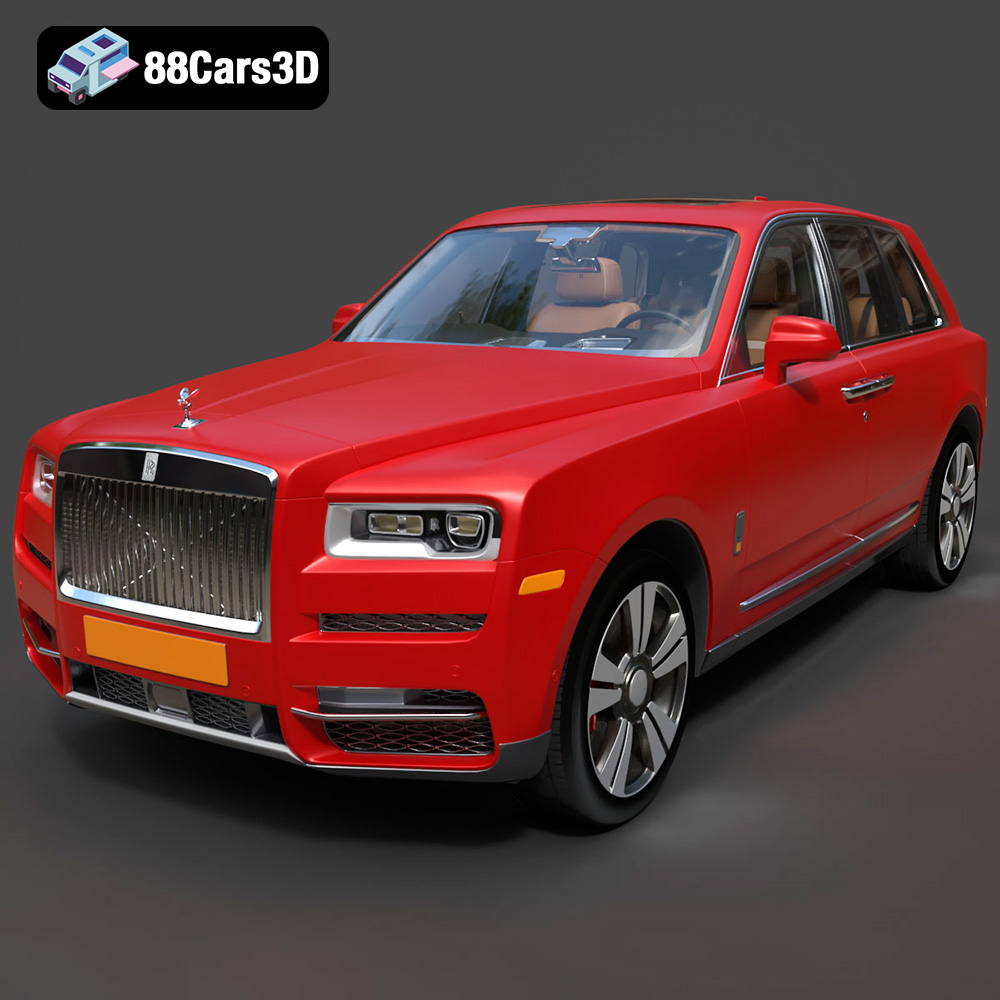
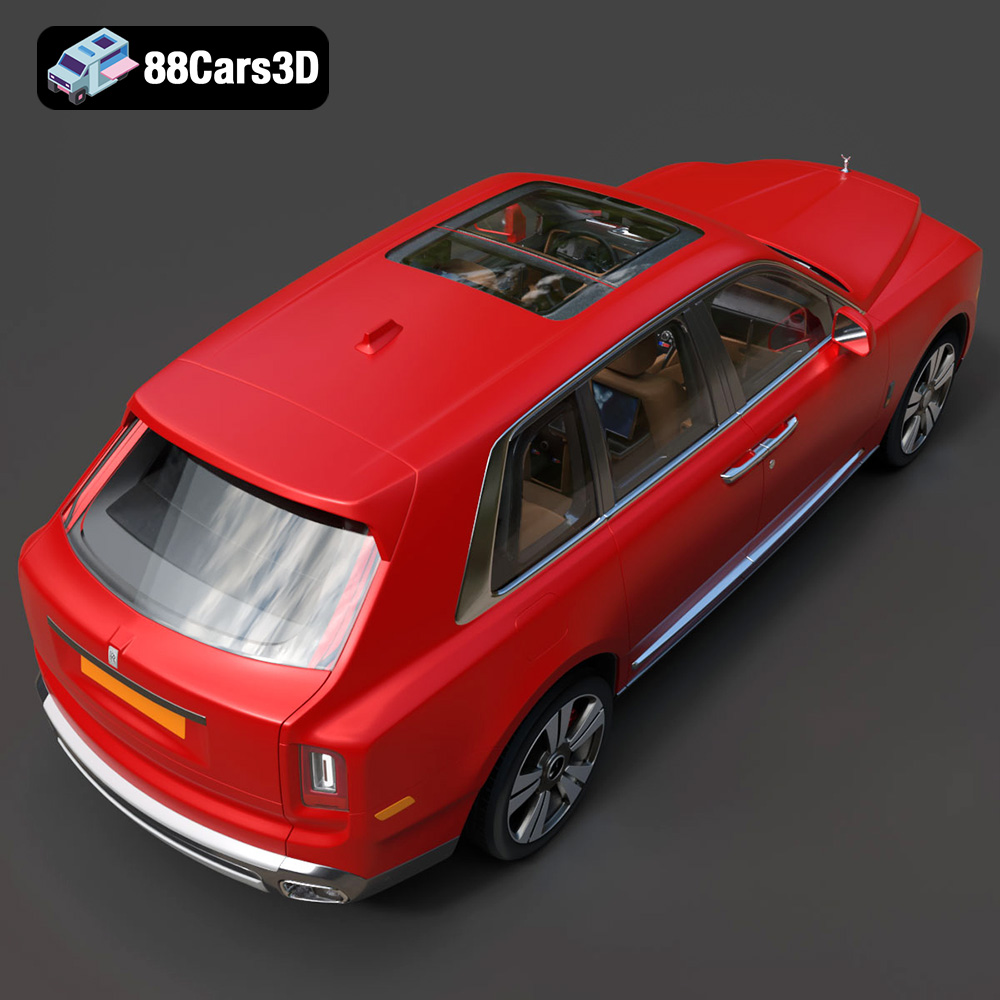
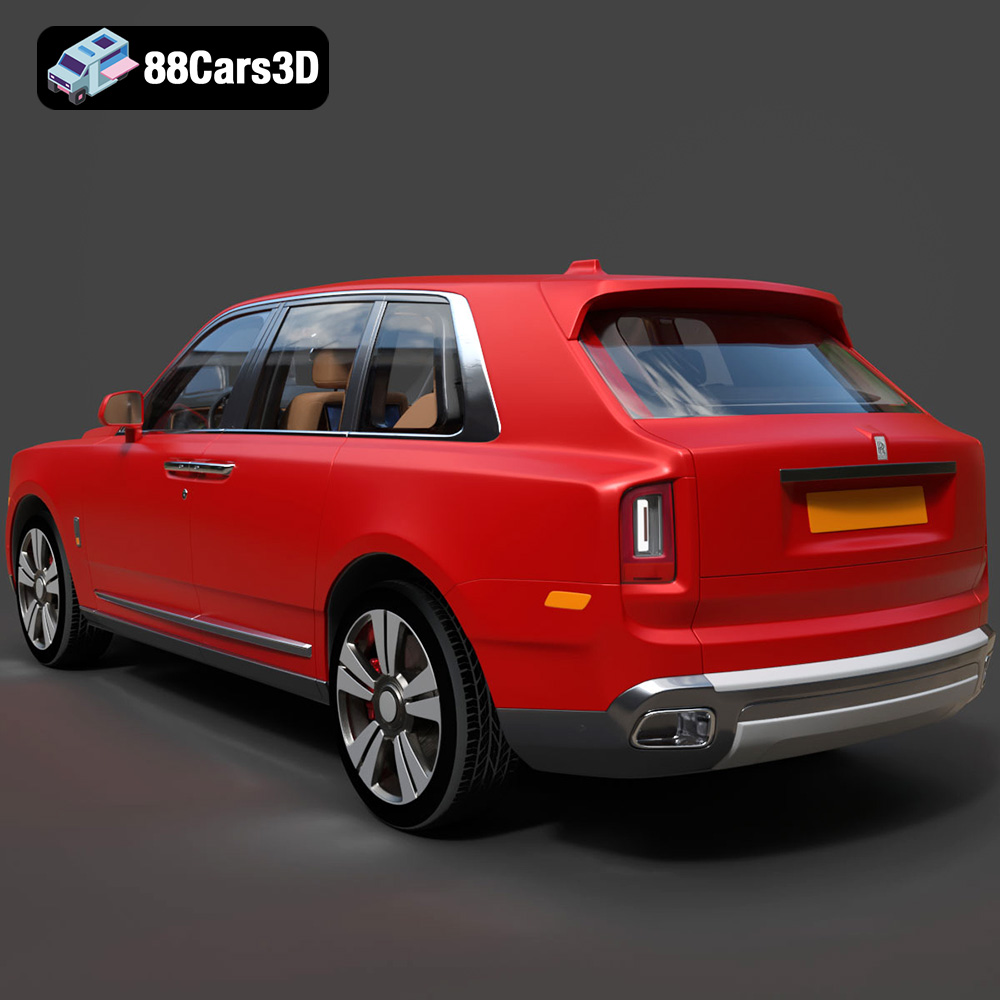
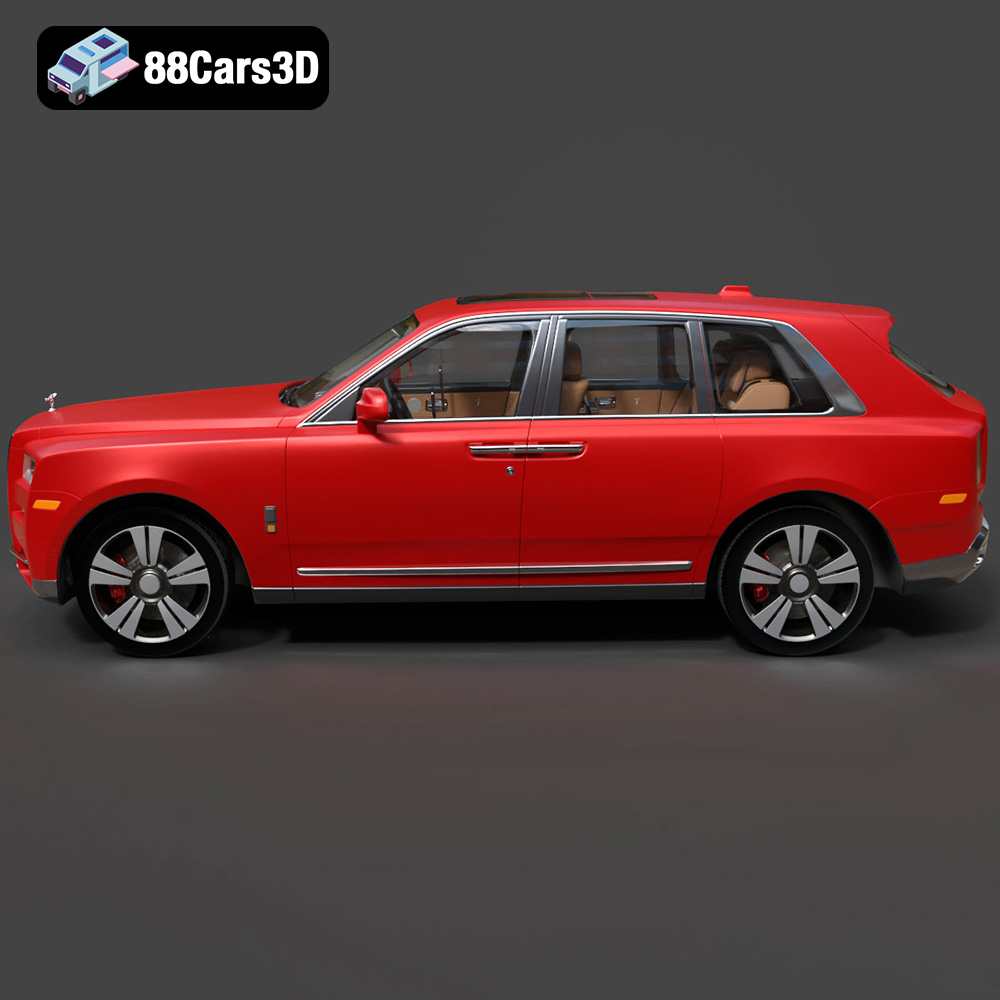
Today, we delve into the art and science of bringing such automotive icons to life in 3D, exploring the technical considerations that elevate a good model to an exceptional one. Our journey will focus on a prime example of digital opulence: the Rolls-Royce Cullinan 2019 3D model. This exquisite asset, available at 88cars3d.com, encapsulates the pinnacle of luxury SUV design, offering a versatile foundation for a multitude of professional applications, from high-fidelity rendering to real-time game environments and even physical 3D prints.
The Rolls-Royce Cullinan, the marque’s first-ever SUV, is a symbol of commanding presence and redefined opulence. Its signature Pantheon grille, iconic Spirit of Ecstasy, and imposing silhouette are instantly recognizable. Powered by a formidable 6.75-liter twin-turbocharged V12 engine, its real-world design seamlessly blends aristocratic elegance with rugged off-road capability. Translating this grandeur into a 3D model requires more than just accurate geometry; it demands an understanding of material science, lighting, and performance optimization. This blog post will guide you through the technical landscape of leveraging such a sophisticated 3D car model within various professional pipelines, ensuring you achieve stunning results every time.
Navigating the diverse landscape of 3D software and engines often begins with understanding the myriad of file formats available. Each format serves a specific purpose, offering unique advantages for different stages of the 3D pipeline, from initial modeling to final deployment. The Rolls-Royce Cullinan 2019 3D model, for instance, comes in a comprehensive array of formats, ensuring maximum compatibility and utility across various professional applications.
The .blend format is Blender’s native file type and is a powerhouse for artists working within this popular open-source 3D suite. When you receive a .blend file, you’re getting a complete Blender scene, often including not just the mesh, but also materials, textures, lighting setups, camera positions, animations, rigging, modifiers, and even scene properties. This makes it an ideal starting point for anyone intending to further edit, customize, or render the model directly within Blender. For the Rolls-Royce Cullinan model, the .blend file provides a fully editable environment, allowing artists to tweak every aspect, from paint finishes to interior upholstery, with the full power of Blender’s toolset.
Autodesk’s .fbx (Filmbox) format has long been considered an industry standard for exchanging 3D data between different software applications. Its strength lies in its ability to store a wide range of 3D data, including geometry (meshes), materials, textures, animations, skinning (rigging), cameras, and lights, all in one package. This makes the .fbx format invaluable for seamless integration into game engines like Unreal Engine and Unity, as well as other DCC (Digital Content Creation) tools such as Maya, 3ds Max, and Cinema 4D. For game developers using the Cullinan model, .fbx is often the go-to choice for importing the vehicle with all its animated components (like wheels and suspension) directly into their real-time environments.
The .obj (Wavefront OBJ) format is one of the oldest and most widely supported 3D file formats. It’s a universal format known for its simplicity and excellent cross-software compatibility. An .obj file primarily stores geometric data: vertices, faces, UV coordinates, and normals. It typically references external .mtl (Material Template Library) files for basic material properties like color and texture maps. While .obj does not support animations, rigging, or scene information, its widespread support makes it a reliable choice for transferring raw mesh data between almost any 3D software. For modelers needing to import the Rolls-Royce Cullinan into a niche application or simply requiring a clean mesh for sculpting or retopology, .obj remains an indispensable option.
The .glb (GL Transmission Format Binary) is a modern, efficient format specifically designed for the web, augmented reality (AR), and virtual reality (VR) applications. It’s a binary version of the .gltf format, which means all assets—geometry, materials, textures, animations—are embedded into a single, compact file. This “all-in-one” nature makes .glb incredibly efficient for streaming and displaying 3D models directly in web browsers or AR/VR viewers without requiring multiple file requests. When deploying the Rolls-Royce Cullinan 3D model for an immersive virtual showroom or a mobile AR experience, the .glb format offers optimal performance and ease of integration, ensuring a smooth, high-quality user experience.
The .stl (Stereolithography) format is the undisputed standard for 3D printing. Unlike other formats that store complex mesh data, .stl exclusively represents the surface geometry of a 3D object using a collection of interconnected triangles. It does not carry information about color, texture, or material properties. While simple, its ubiquity in the 3D printing world is absolute. If your project involves bringing the Rolls-Royce Cullinan to life as a physical scale model, the .stl format is essential. The provided Cullinan model is designed to be convertible to .stl, making it suitable for hobbyists and professionals looking to create display-scale replicas with recommended settings for resin printing to capture fine details.
The .ply (Polygon File Format) is another format primarily used for storing 3D data, often originating from 3D scanners or scientific applications. It can store various properties for each vertex and face, including color, normals, texture coordinates, and transparency. While less common in general 3D art workflows than .fbx or .obj, .ply is excellent for precision mesh data and applications where per-vertex information is critical, such as CAD, engineering analysis, or historical preservation. For highly technical visualization or conversion to CAD systems, the .ply version of the Rolls-Royce Cullinan model can provide granular data fidelity.
The “.unreal” format isn’t a single, universally recognized file extension in the same way as .fbx or .obj. Instead, when a model is listed as “.unreal” ready, it typically signifies an asset package or a specific configuration (like an .uasset file or an entire project folder structure ready for migration) that has been meticulously prepared and optimized for direct import and use within Unreal Engine. This often means textures are properly packed, materials are set up with Unreal’s Physically Based Rendering (PBR) pipeline in mind, collision meshes might be included, and LODs (Levels of Detail) are pre-configured. For the Rolls-Royce Cullinan 3D model, its .unreal designation means a streamlined workflow for developers, minimizing the need for extensive re-setup within the engine and allowing for immediate integration into demanding real-time projects.
The .max format is the native file type for Autodesk 3ds Max, one of the leading software packages for 3D modeling, animation, and rendering in architectural visualization, product design, and cinematic production. Similar to .blend, a .max file contains a complete 3ds Max scene, including geometry, materials, textures, lights, cameras, animations, and scene settings. This format is crucial for professionals who use 3ds Max as their primary DCC application, offering full editability and access to all of Max’s powerful tools. For artists requiring to integrate the Cullinan into complex architectural visualizations or create custom animations, the .max file provides the most flexible starting point.
Creating a high-quality 3D car model, especially one as iconic as the Rolls-Royce Cullinan 2019, is a blend of artistic vision and technical precision. It goes far beyond simply replicating shapes; it involves capturing the essence, the materials, and the subtle nuances that define the vehicle.
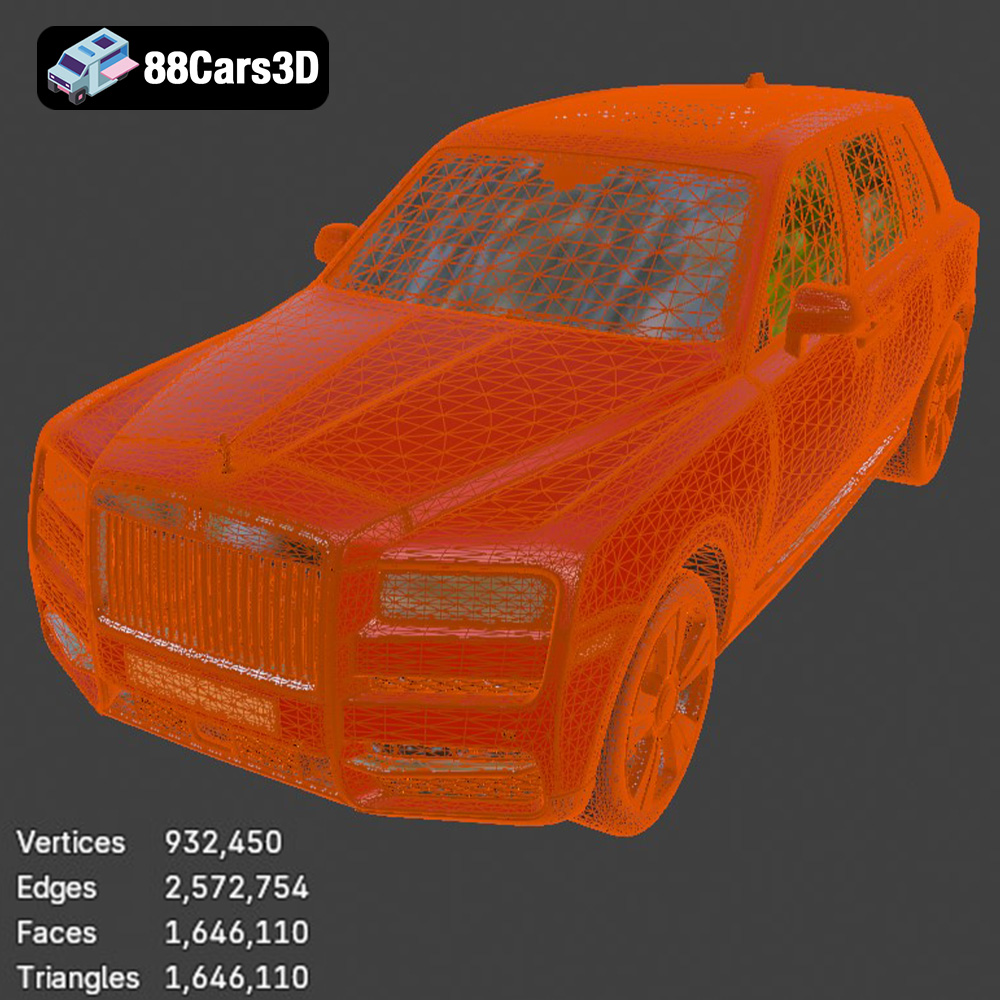
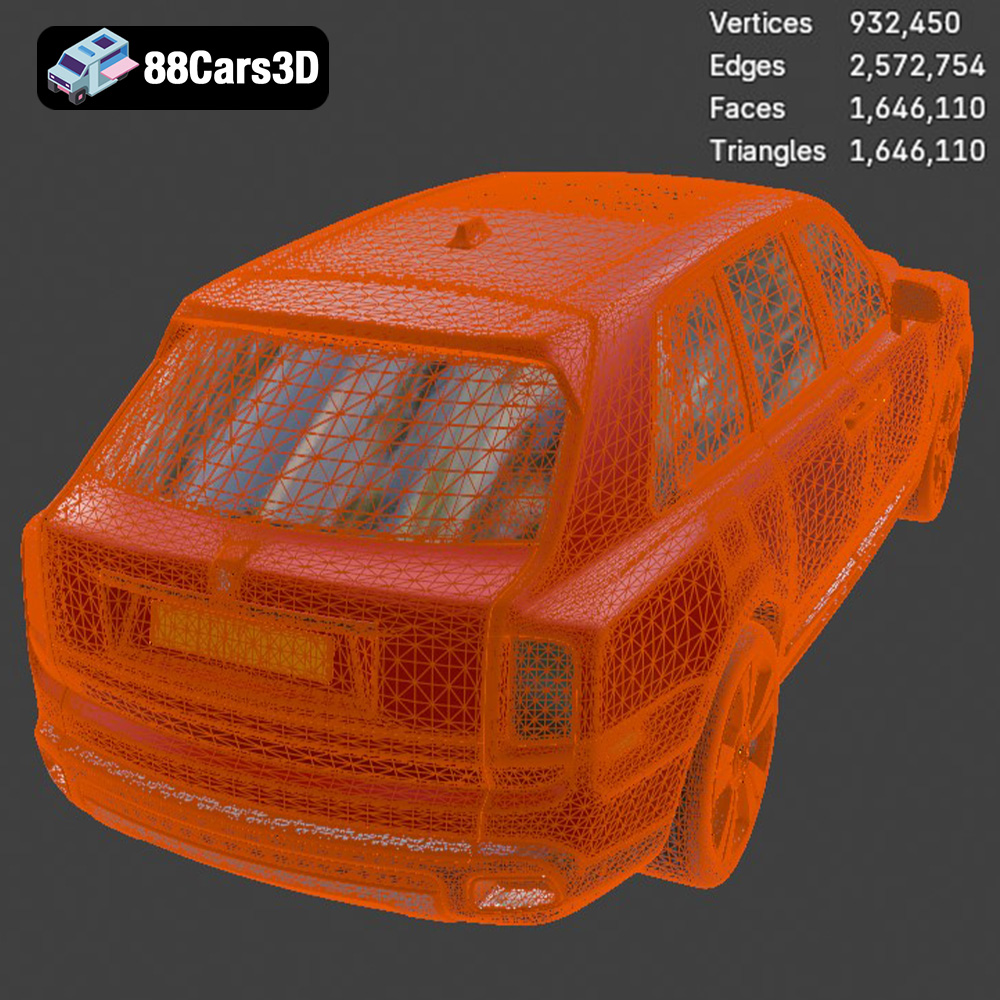
The foundation of any exceptional 3D car model is its geometry. Accurate Rolls-Royce Cullinan 2019 frame geometry and proportions are paramount. This involves meticulously matching real-world dimensions and curvatures, often using blueprints, reference images, and even CAD data. For the Rolls-Royce Cullinan model from 88cars3d.com, this translates to an impressive 1,646,110 triangles, striking a perfect balance between high-end visual realism and performance. This poly count is high enough to convey exquisite detail without becoming unmanageable for real-time applications, demonstrating thoughtful optimization. Every panel, curve, and aerodynamic element is carefully constructed to ensure the digital model is an authentic representation of its physical counterpart.
Luxury vehicles are defined by their details. For an exterior, this means faithfully reproducing signature LED headlights, classic taillight assemblies, and intricate multi-spoke alloy wheels with precise tire tread patterns. The Cullinan model goes further, including a detailed 6.75L V12 engine bay and components, integrated dual exhaust system, and undercarriage details. Accurate air suspension details and chassis underpinnings are also crucial for realism, especially for animations. Inside, the cockpit and interior features demand equal attention: luxurious bespoke leather seating, an accurate classic-meets-modern steering wheel, a high-fidelity instrument cluster, detailed center console, pedals, and climate controls. These elements aren’t just for show; they enhance the immersive experience in visualizations and games, particularly for first-person POV scenarios.
Professional pipelines demand versatility. A high-quality 3D car model must be readily usable across different software environments. The Rolls-Royce Cullinan 2019 3D model, with its array of file formats, ensures this compatibility, streamlining workflows for artists and developers.
Whether you begin in 3ds Max using the native .max file or in Blender with the .blend file, the initial steps involve setting up the scene. For both, the model provides an excellent starting point with pre-configured materials. In 3ds Max, artists can easily load the .max file, which will contain all the established geometry, pivot points, and initial material assignments. From there, V-Ray or Corona renderers can be applied for photorealistic output, adjusting PBR (Physically Based Rendering) materials like metallic car paint, leather, and glass to react accurately to lighting. Similarly, in Blender, loading the .blend file provides a ready-to-render scene. Artists can leverage Blender’s Cycles or Eevee renderers, fine-tuning textures for the luxurious bespoke leather seating, shiny chrome accents, and distinct tire tread patterns. The separate wheels, suspension, and steering components facilitate easy rigging and animation setups in both platforms.
For game development and real-time visualization, Unreal Engine is a powerhouse. The .fbx or the dedicated .unreal asset from 88cars3d.com is your gateway here. Importing the .fbx file allows Unreal to recognize the mesh, skeletal structure (for animations like wheel rotation), and materials. The “game-ready & optimized” nature of the Cullinan model (1,646,110 triangles) is crucial for maintaining high frame rates. Once imported, artists will typically configure Unreal’s material instances, ensuring textures are correctly assigned to the PBR shader setup. This includes metallic body paints, rough tire rubber, glossy interior wood trim, and the reflective properties of glass. Proper pivot setup for steering, wheel rotation, and suspension travel is pre-engineered, significantly reducing setup time for vehicle physics and animations, making it ideal for open-world games and simulators.
The strength of any premium 3D asset lies in its fidelity to the original. The Rolls-Royce Cullinan 2019 3D model doesn’t just look like the luxury SUV; it embodies its essence through meticulous digital craftsmanship.
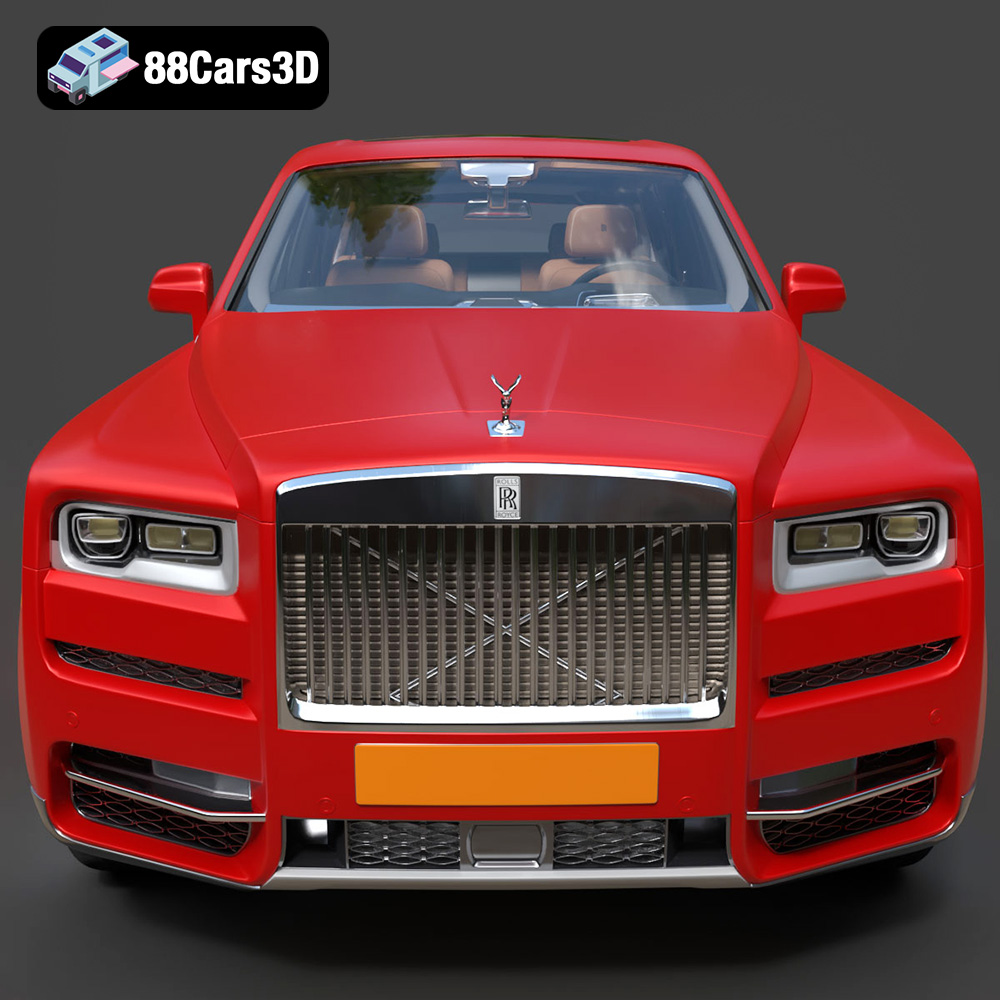
The exterior of the digital Cullinan meticulously reproduces every curve and crease of the real vehicle. From the precise geometry of the iconic Pantheon grille to the intricate detailing of the Spirit of Ecstasy ornament, no stone is left unturned. The model features accurate Rolls-Royce Cullinan 2019 frame geometry and proportions, ensuring it looks correct from every angle. Crucially, components like wheels, suspension, and steering are separated. This is not merely an aesthetic choice but a technical one, enabling artists to animate these parts independently. Imagine a virtual showroom where a user can interactively turn the steering wheel, watch the wheels rotate, or see the air suspension adjust in real-time. This level of preparation elevates the model from a static object to a dynamic, interactive asset.
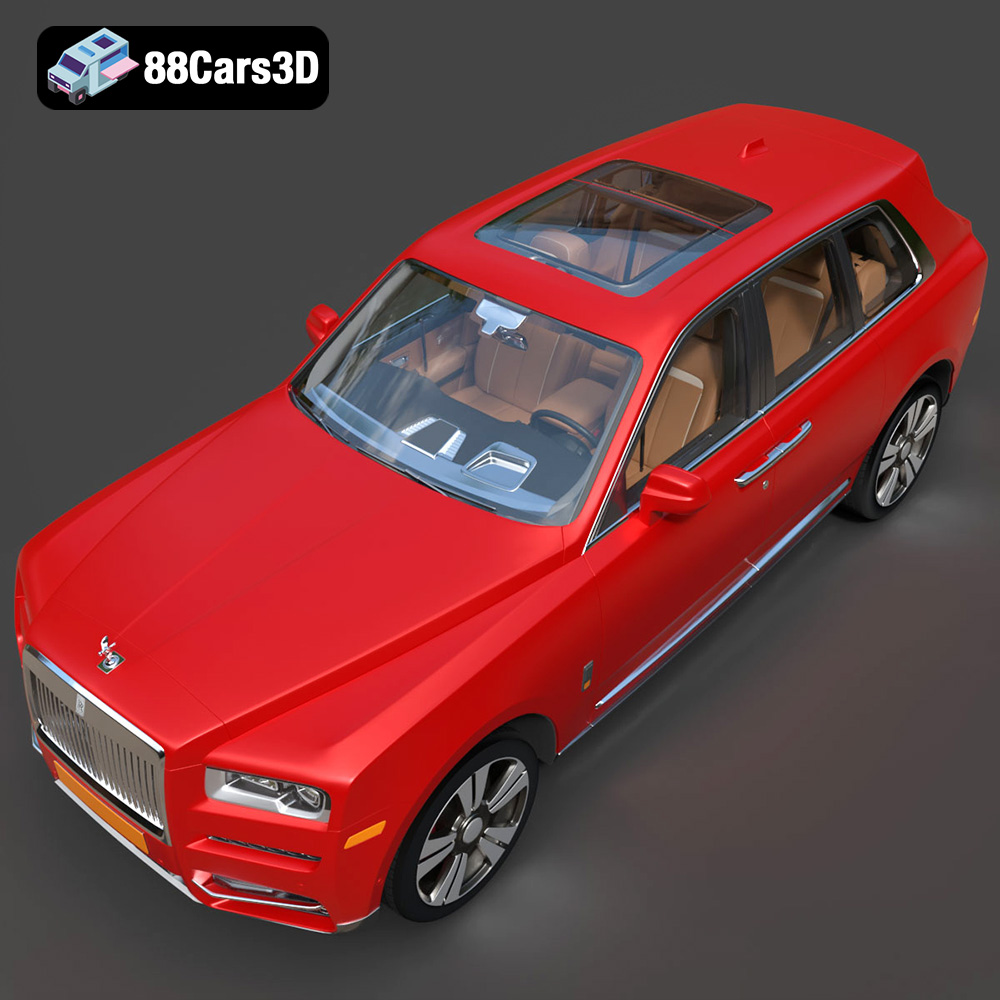
The interior of a Rolls-Royce is a sanctuary of luxury, and its 3D counterpart reflects this. The model boasts luxurious bespoke leather seating and upholstery detailing, high-fidelity digital and analog instrument clusters, and a meticulously crafted center console. Every button, knob, and stitch is considered. For game developers, the interior is optimized geometry for first-person POV, ensuring that players driving the Cullinan in a virtual world experience the same sense of grandeur and detail as they would in real life, without sacrificing game performance. The balance of detail and optimization for the 1,646,110 triangles is key here; it’s detailed enough for close-up shots but efficient enough for a real-time environment.
The versatility of a high-quality 3D car model like the Rolls-Royce Cullinan 2019 extends across a broad spectrum of industries, proving its value in diverse applications.
For game developers, the Rolls-Royce Cullinan 2019 3D model is a dream asset. Its “game-ready & optimized” status with a poly count of 1,646,110 triangles strikes an ideal balance, allowing for stunning visual realism without unduly burdening real-time engines like Unreal or Unity. This makes it perfect for open-world games where players can drive iconic vehicles, racing titles demanding authentic car models, and simulators requiring realistic vehicle dynamics. The accurate real-world scale and proper pivot setup for steering, wheel rotation, and suspension travel are critical for implementing realistic physics and player control. Imagine creating a driving simulator where users can experience the nuanced handling of a Cullinan, or an open-world RPG where this luxury SUV becomes a status symbol for player characters.
The immersive nature of AR/VR experiences demands highly detailed yet optimized 3D assets. The Cullinan model is perfect for virtual showrooms where potential buyers can explore the vehicle in 3D, change colors, and even “sit inside” the luxurious interior from their own homes. This level of interaction is invaluable for automotive configurators and marketing campaigns. For architectural visualization, integrating such a premium vehicle into a scene instantly elevates its prestige and realism, whether for still renders or animated fly-throughs. The .glb format, included with the model from 88cars3d.com, is particularly suited for lightweight, web-based AR/VR applications, ensuring smooth performance on various devices.
Beyond digital displays, the Rolls-Royce Cullinan 2019 3D model offers the unique capability of physical manifestation through 3D printing. Convertible to .stl format, it caters to hobbyists and professionals alike who wish to create display-scale replicas. Recommended scales of 1:12, 1:18, or 1:24 allow for various levels of detail, with resin printing highly recommended for capturing the fine nuances of the model, such as the intricate multi-spoke alloy wheels or the delicate Spirit of Ecstasy. Detailed 3D print settings, including layer height, wall thickness, infill, and support requirements, ensure successful prints. Post-processing with sanding, primer, and authentic factory colors with metallic finishes can yield a stunning physical model that rivals professional display pieces.
Achieving both visual brilliance and optimal performance is the holy grail of 3D asset creation. The Rolls-Royce Cullinan 2019 3D model exemplifies this balance, offering features specifically tailored for diverse technical requirements.
The model’s impressive 1,646,110 triangles are a testament to careful optimization. This polycount is high enough to convey the intricate details of a luxury vehicle – from the sophisticated geometry of the grille to the detailed interior elements – yet managed to remain “game-ready.” This means it avoids excessive polygon counts that would cripple real-time performance while still providing enough density for high-quality renders. Adherence to real-world scale accuracy, based on actual vehicle chassis dimensions, is also fundamental. This isn’t just for realism; it’s critical for accurate physics simulations in games, ensuring a vehicle’s interactions with its environment (e.g., suspension travel, ground clearance) behave as expected. Maintaining accurate proportions also simplifies integration into existing scenes and environments, whether for architectural visualization or open-world game maps.
To achieve photorealism, sophisticated material and lighting setups are essential. For the Rolls-Royce Cullinan, this involves PBR workflows, where material properties like metallicness, roughness, and normal maps accurately simulate how light interacts with various surfaces. The bespoke leather seating, glossy wood trims, reflective chrome, and multi-layered car paint all require precise material definitions. In rendering software like 3ds Max with V-Ray or Blender with Cycles, artists can leverage HDRIs (High Dynamic Range Images) for realistic environmental lighting, combined with targeted area lights to highlight specific features, such as the gleam of the grille or the intricate stitching of the interior. For real-time engines, setting up Lumen or other global illumination solutions can further enhance the realism, ensuring that light bounces and reflects off the vehicle’s surfaces in a physically accurate manner, crucial for immersive AR/VR experiences and cinematic game sequences.
A truly valuable 3D asset offers longevity and adaptability. The Rolls-Royce Cullinan 2019 3D model provides extensive customization options, allowing artists and developers to tailor it to their specific project needs and ensure its relevance for years to come.
The ability to customize a 3D model significantly extends its utility. The Cullinan model offers several key customization avenues. Changing body and tank colors, for instance, is a fundamental requirement for automotive configurators or for matching branding in a commercial visualization. Artists can apply authentic factory colors or experiment with custom finishes, from matte to gloss to metallic, leveraging the PBR material setup. Modifying tire textures is another crucial feature, allowing for variations like off-road vs. street variants, which dramatically alter the vehicle’s aesthetic and suitability for different virtual environments. Adapting lighting for different environments, whether it’s a sunny outdoor scene or a moody night render, allows the vehicle to shine in diverse contexts. This flexibility ensures that the model can serve multiple projects without needing to acquire entirely new assets.
Investing in a high-quality, well-structured 3D car model is an investment in future projects. The Rolls-Royce Cullinan 2019 3D model, with its clean geometry, proper pivot setup, and wide range of included file formats, is inherently future-proof. As software evolves, having access to editable native files (.blend, .max) and widely compatible interchange formats (.fbx, .obj) ensures that the model can be easily updated or re-integrated into newer pipelines. The inclusion of optimized formats like .glb for web/AR/VR and .stl for 3D printing means the asset is ready for emerging technologies and diverse output needs. This comprehensive approach minimizes the need for costly rework or asset replacement down the line, providing a reliable and adaptable foundation for any professional endeavor. When choosing 3D car models, always consider the long-term value and versatility offered by meticulously crafted assets like those found at 88cars3d.com.
The journey from a real-world automotive marvel like the Rolls-Royce Cullinan to a pixel-perfect 3D representation is complex, demanding technical precision, artistic vision, and an understanding of diverse digital ecosystems. We’ve explored how a premium 3D car model, rich in detail and optimized for performance, can be seamlessly integrated into professional workflows across 3ds Max, Blender, and Unreal Engine. We’ve delved into the critical importance of various file formats, each serving a unique purpose, from raw geometry transfer to web-optimized display and even physical production via 3D printing.
The Rolls-Royce Cullinan 2019 3D model stands as an exemplary asset, offering exceptional visual fidelity with its 1,646,110 triangles, meticulously recreated exterior and interior features, and game-ready optimization. Its versatility supports high-end rendering, immersive AR/VR experiences, compelling game development, and tangible 3D prints. By understanding the technical specifications and leveraging the comprehensive file formats available, artists and developers can unlock the full potential of such a sophisticated asset. For those seeking to elevate their automotive visualizations or interactive projects, investing in meticulously crafted 3D models like the Rolls-Royce Cullinan from 88cars3d.com is a clear path to achieving stunning, professional-grade results.
Experience the ultimate expression of luxury with the Rolls-Royce Cullinan 2019. As the marque’s first-ever SUV, the Cullinan redefines opulence with its commanding presence, signature Pantheon grille, iconic Spirit of Ecstasy hood ornament, and imposing silhouette. Powered by a formidable 6.75-liter twin-turbocharged V12 engine, its design seamlessly blends aristocratic elegance with rugged off-road capability.
This premium 3D model boasts an impressive 1646110 triangles, delivering exceptional visual fidelity and uncompromising detail. Expertly modeled with game-ready optimization in mind, it provides the perfect balance between high-end aesthetic appeal and performance for diverse applications, including game development, high-end AR/VR experiences, architectural visualization, and cinematic animations.
Perfect for luxury lifestyle renderings, automotive configurators, open-world video games, and VIP virtual environments.
.blend, .fbx, .obj, .glb, .stl, .ply, .unreal, .max
Tags:
rolls-royce, cullinan, 2019, luxury-suv, suv, game-ready, low-poly, optimized, car-3d-model, game-asset, rendering, vr-ar, blend, fbx, obj, glb, stl, ply, unreal, max
$80.50
.2019
.blend
.cullinan
.fbx
.glb
.luxury suv
.max
.obj
.ply
.rendering
.stl
.unreal
car-3d-model
game asset
game-ready
low-poly
optimized
rolls-royce
SUV
VR/AR