Get 20% OFF All Premium 3D & STL Models!

The world of 3D modeling has revolutionized how we interact with and visualize complex designs, none more captivating than the automotive industry. From high-octane racing games to immersive virtual showrooms and breathtaking cinematic renders, high-quality 3D car models are the bedrock of digital automotive experiences. They bridge the gap between imagination and reality, offering designers, developers, and artists unparalleled control over form, function, and aesthetics.
In this dynamic landscape, the demand for meticulously crafted and technically robust assets is ever-present. Enthusiasts and professionals alike seek models that not only capture the essence of iconic vehicles but are also optimized for demanding digital pipelines. This pursuit of digital perfection brings us to an exceptional example: the BMW X6 M 2008 3D model, a prime offering found on platforms like 88cars3d.com. This model encapsulates the raw power and distinctive design of a vehicle that pioneered the high-performance Sports Activity Coupe segment, bringing its commanding presence to your digital projects with stunning fidelity and technical precision.
Whether you’re a game developer striving for realistic vehicular physics, an architectural visualizer adding a touch of luxury to a scene, or an AR/VR creator building interactive experiences, the underlying quality of your 3D assets dictates the success of your project. This article delves deep into the technical intricacies, professional workflows, and diverse applications of premium 3D car models, with a specific focus on how an asset like the BMW X6 M 2008 model empowers creators across various industries.
Choosing the correct 3D model file format is a critical decision that impacts compatibility, workflow efficiency, and the final output quality of any project involving 3D assets. Different formats are optimized for specific purposes, software environments, and performance requirements. The BMW X6 M 2008 3D model, for instance, comes in a comprehensive suite of formats, ensuring maximum versatility for its users. Understanding these distinctions is fundamental for any serious 3D artist or developer.
The .blend format is the native file type for Blender, the powerful open-source 3D creation suite. A .blend file is a complete scene package, containing not just the mesh data, but also materials, textures, lighting, cameras, animations, rigging, and even Grease Pencil data. This makes it incredibly valuable for artists who primarily work within Blender, as it allows for full editability and seamless integration with all of Blender’s robust features. For the BMW X6 M 2008 model, a .blend file offers a fully set up scene, ready for immediate modification, rendering, or export to other formats while retaining all the intricate details and material definitions.
.fbx (Filmbox) is a proprietary file format owned by Autodesk and is widely considered an industry-standard for 3D asset exchange, particularly in game development and animation. Its strength lies in its ability to store not only geometry but also animation, rigging, skinning, lights, cameras, and material properties. This makes .fbx ideal for transferring complex animated models between different 3D software applications (like 3ds Max, Maya, Blender, Cinema 4D) and real-time engines such as Unreal Engine and Unity. When using the BMW X6 M 2008 in .fbx format, users can expect a robust, game-ready asset that maintains its hierarchical structure and animation capabilities, crucial for dynamic scenes.
The .obj (Wavefront OBJ) format is one of the oldest and most universally supported 3D file formats. It is excellent for transferring pure geometric data (vertices, normals, texture coordinates, faces) between almost any 3D software. While it doesn’t typically store animation or rigging, it is highly reliable for static mesh exchange and serves as a robust fallback for cross-software compatibility. The .obj version of the BMW X6 M 2008 model ensures that virtually any 3D application can open and utilize its precise geometry, making it a foundational choice for many projects.
.glb (GL Transmission Format Binary) is the binary version of the glTF format, designed for efficient transmission and loading of 3D scenes and models by engines and applications. It is particularly optimized for AR (Augmented Reality), VR (Virtual Reality), and browser-based 3D applications, as it bundles all necessary data (geometry, materials, textures) into a single, self-contained file. This makes the .glb variant of the BMW X6 M 2008 ideal for immersive web configurators, mobile AR experiences, or light VR showrooms where quick loading times and broad compatibility are paramount.
.stl (Stereolithography) is the de facto standard file format for 3D printing. It represents 3D surfaces as a series of connected triangles, without color or texture information. While simple, its ubiquity in the additive manufacturing world makes it indispensable. The inclusion of an .stl format for the BMW X6 M 2008 allows hobbyists and professionals to physically manifest the digital model, whether for detailed display models at recommended scales like 1:12, 1:18, or 1:24, or for rapid prototyping.
The .ply (Polygon File Format or Stanford Triangle Format) is another format used to store 3D data, particularly from 3D scanners. It supports vertex properties like color, transparency, and normals, and can store a wider range of elements than .obj, including more complex topological information. While less common for general asset exchange, it is often favored in scientific and CAD applications where precision and detailed mesh analysis are required. For certain visualization or engineering contexts, the .ply format of the BMW X6 M 2008 could be valuable.
The .unreal format refers to assets specifically configured for Unreal Engine. While often derived from .fbx imports, a dedicated .unreal asset implies a finely tuned import with materials, collision, and LODs (Levels of Detail) already optimized and set up within the engine’s ecosystem. This dramatically reduces setup time, offering a truly “plug-and-play” solution for game developers. The BMW X6 M 2008 in this format provides an immediate, high-performance asset for real-time projects in Unreal Engine.
Finally, the .max format is the native file type for Autodesk 3ds Max, a powerful 3D modeling, animation, rendering, and compositing software. Similar to .blend, a .max file contains the entire scene data, including all objects, materials, lights, cameras, and animation curves. For those whose primary workflow revolves around 3ds Max, this format offers full editability, allowing for comprehensive customization, complex rigging, and high-fidelity rendering using advanced renderers like V-Ray or Corona. The .max file for the BMW X6 M 2008 provides a complete project file, ready for professional-grade animation and visualization.
The availability of such a diverse array of formats for the BMW X6 M 2008 3D model underscores its versatility and the commitment of 88cars3d.com to provide assets that meet the technical demands of any professional workflow.
Bringing a real-world vehicle like the BMW X6 M 2008 into the digital realm with authenticity requires a meticulous blend of artistic skill and technical precision. The goal is not just to replicate its appearance but to capture its very essence, from its aggressive stance to the intricate details of its engineering. This 3D model stands as a testament to that pursuit, offering a premium asset that balances visual fidelity with performance efficiency.
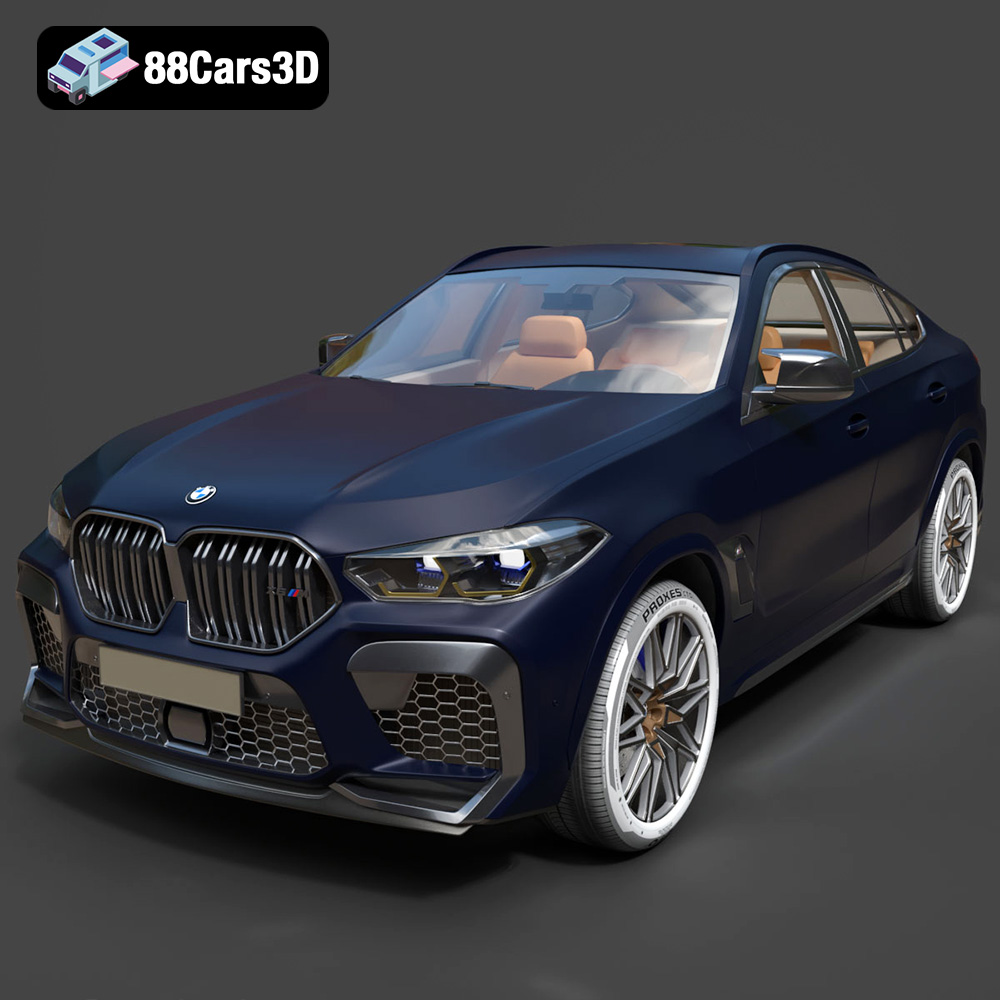
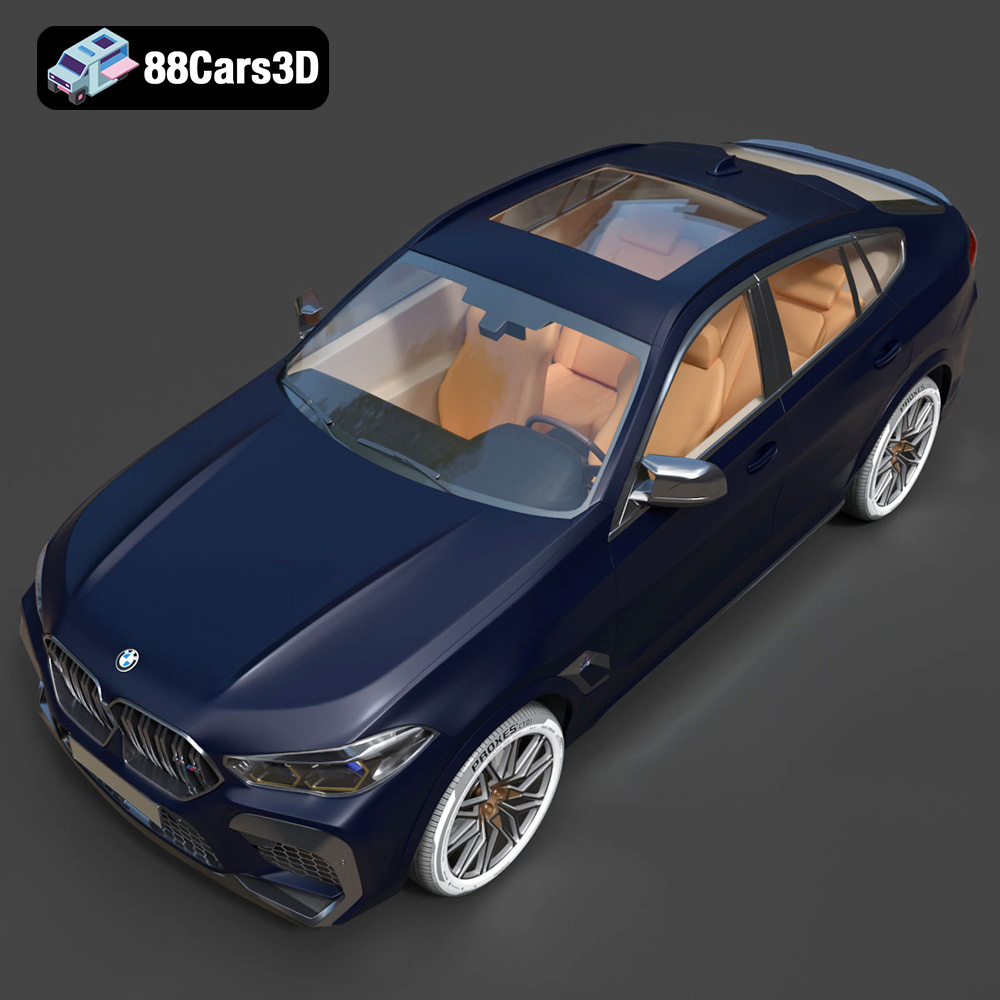
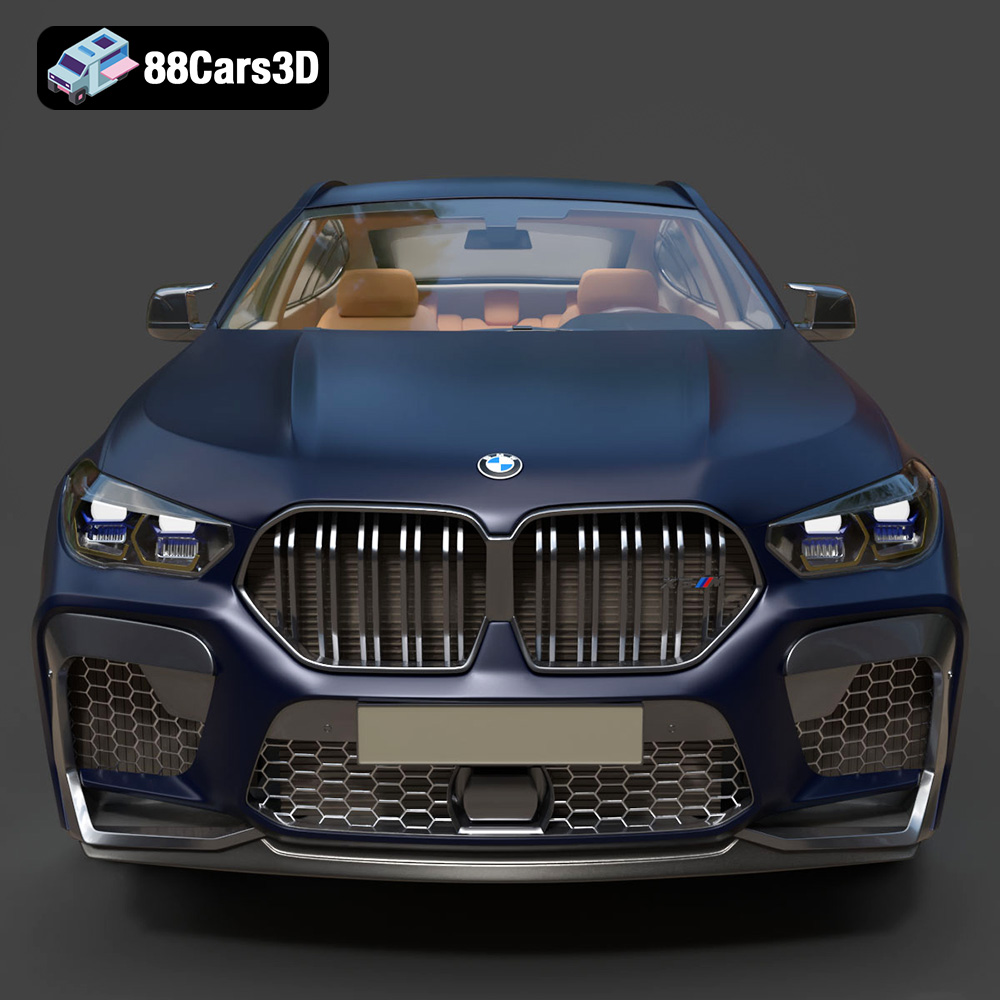
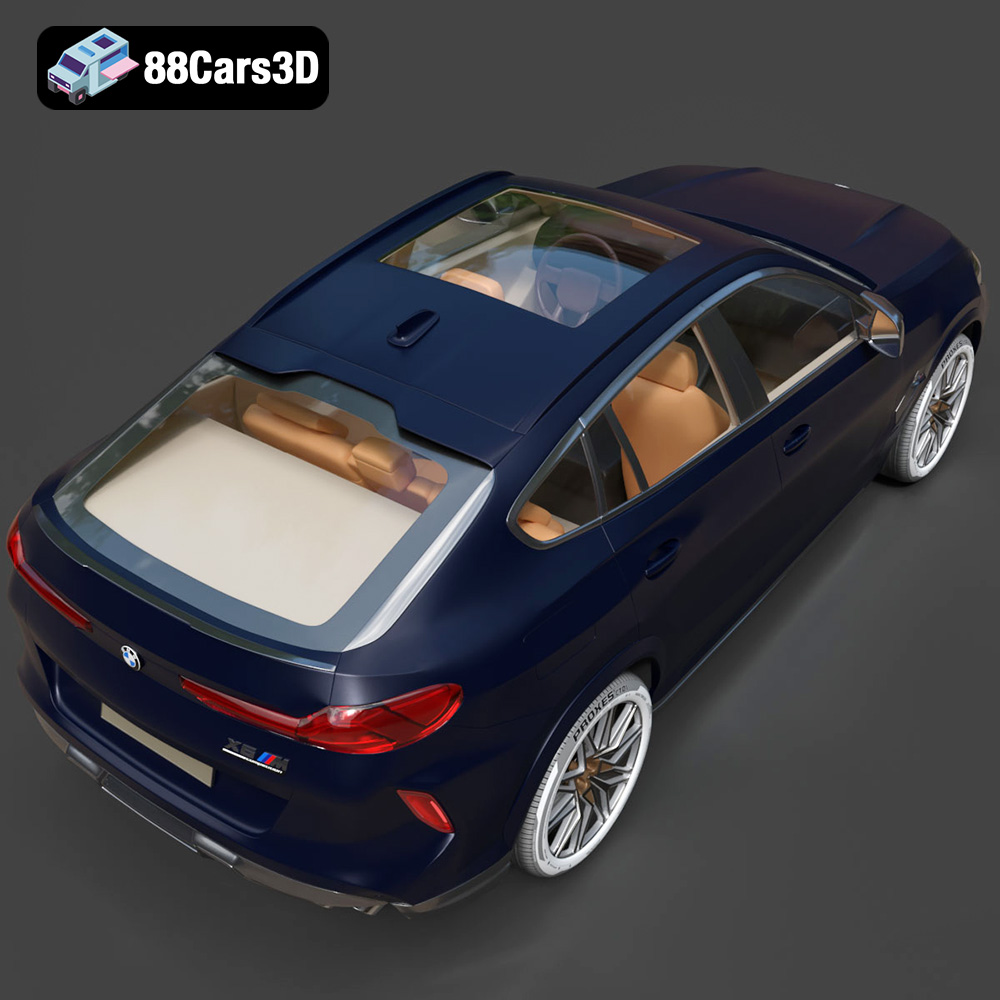
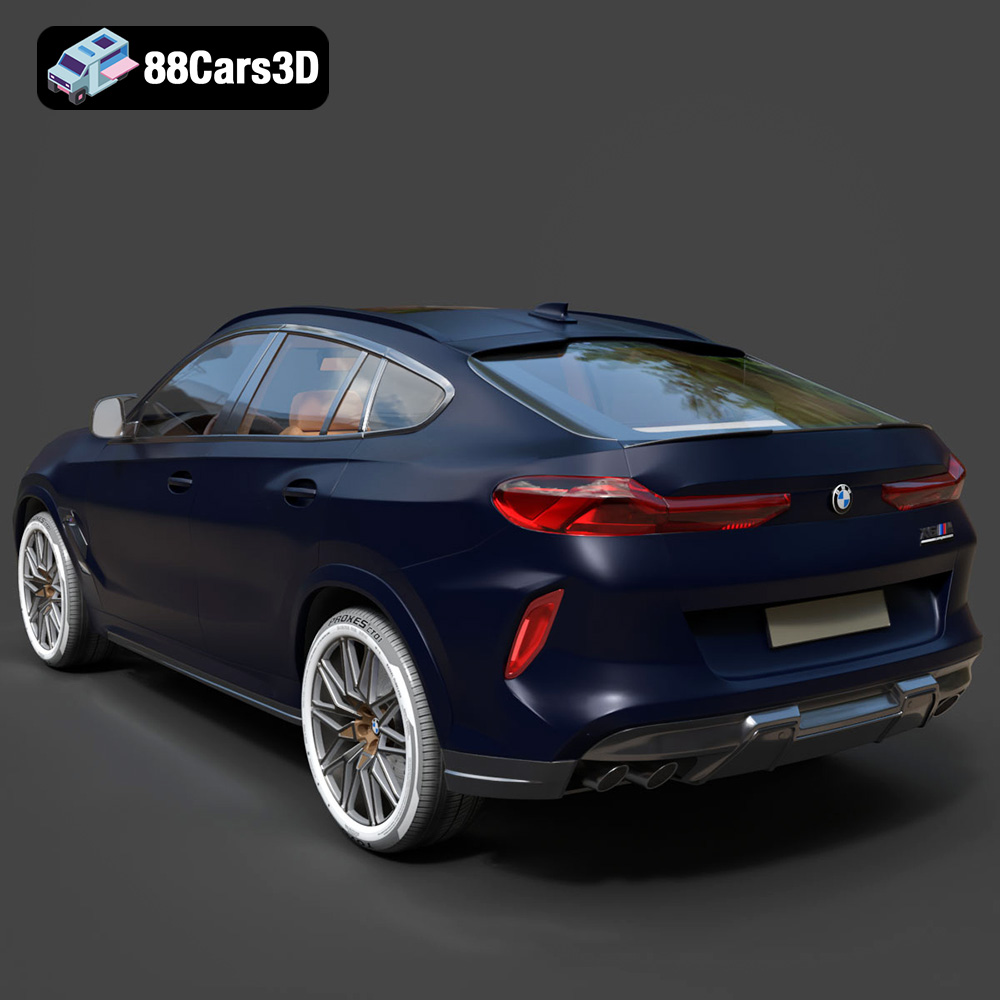
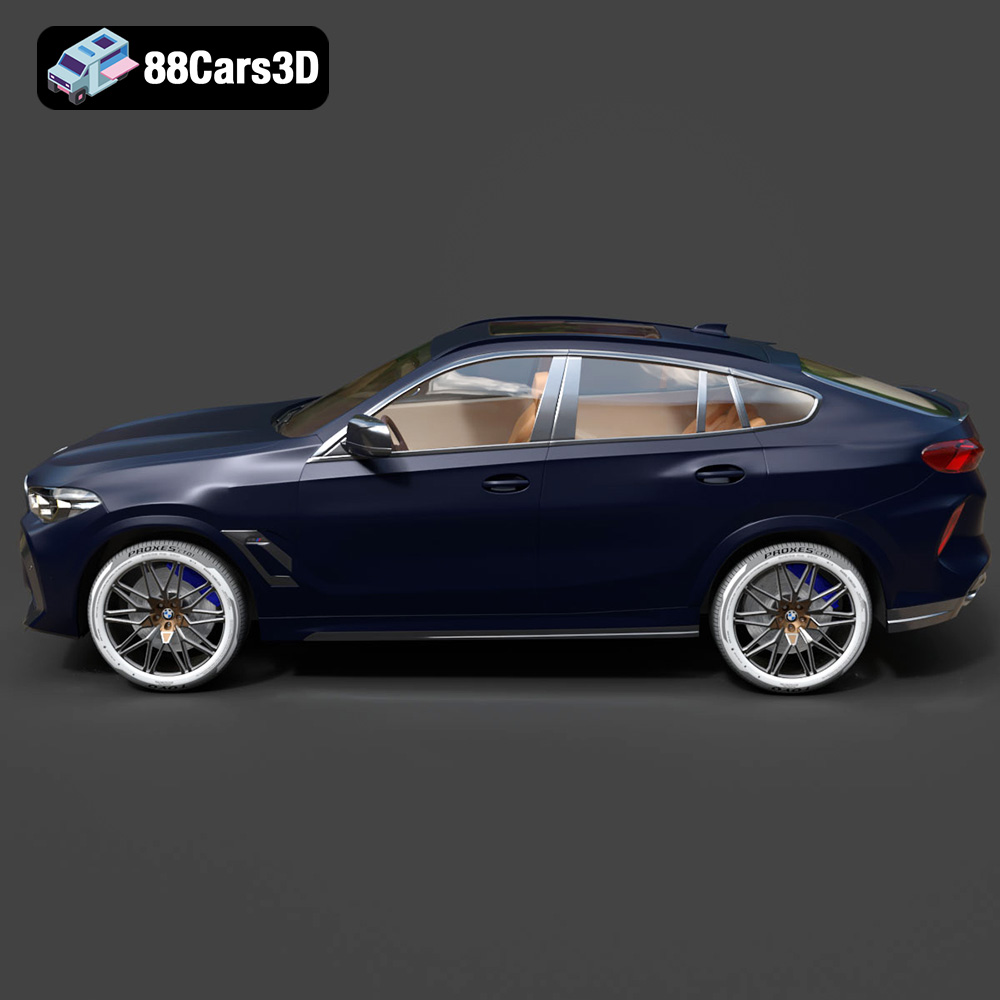
The BMW X6 M 2008 is an icon, known for blending the ruggedness of an SUV with the performance of an M-series sports car. The 3D model meticulously recreates this duality. Its exterior geometry accurately reflects the vehicle’s frame and proportions, from the commanding front fascia with its iconic kidney grilles to the sweeping roofline and the signature quad-pipe M exhaust system. Details such as the intricately modeled headlights and distinct LED taillights are not merely surface textures but actual geometric components, allowing for realistic lighting effects. Even the M-sport alloy wheels and high-performance tire treads are crafted with attention to detail, crucial for close-up renders and dynamic driving simulations. The inclusion of separate wheels, suspension, and steering components ensures that the model is prepared for complex animation and realistic physics simulations.
While the exterior captures immediate attention, the interior is where immersion truly takes hold, especially for first-person perspectives in games or virtual reality experiences. The BMW X6 M 2008 model features a highly detailed cockpit, essential for creating believable interactive environments. Premium M-sport bucket seats with accurate stitching details, a sport steering wheel complete with paddle shifters and M branding, and a high-fidelity instrument cluster with a central infotainment display are all meticulously modeled. The center console, gear selector, pedals, and door panels are also faithfully recreated, ensuring that every angle, whether from a cinematic close-up or a driver’s POV, exudes authenticity. This level of interior detail is crucial for developing immersive AR/VR showrooms or compelling in-game experiences.
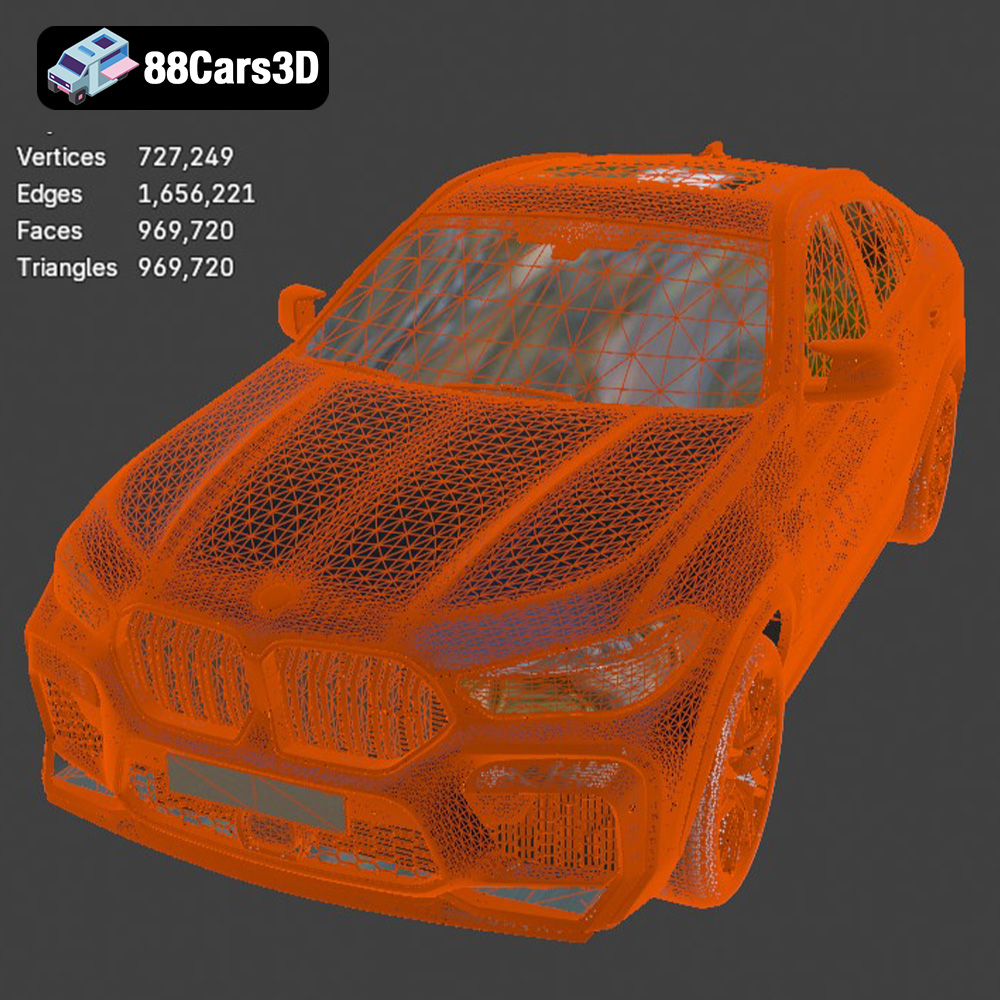
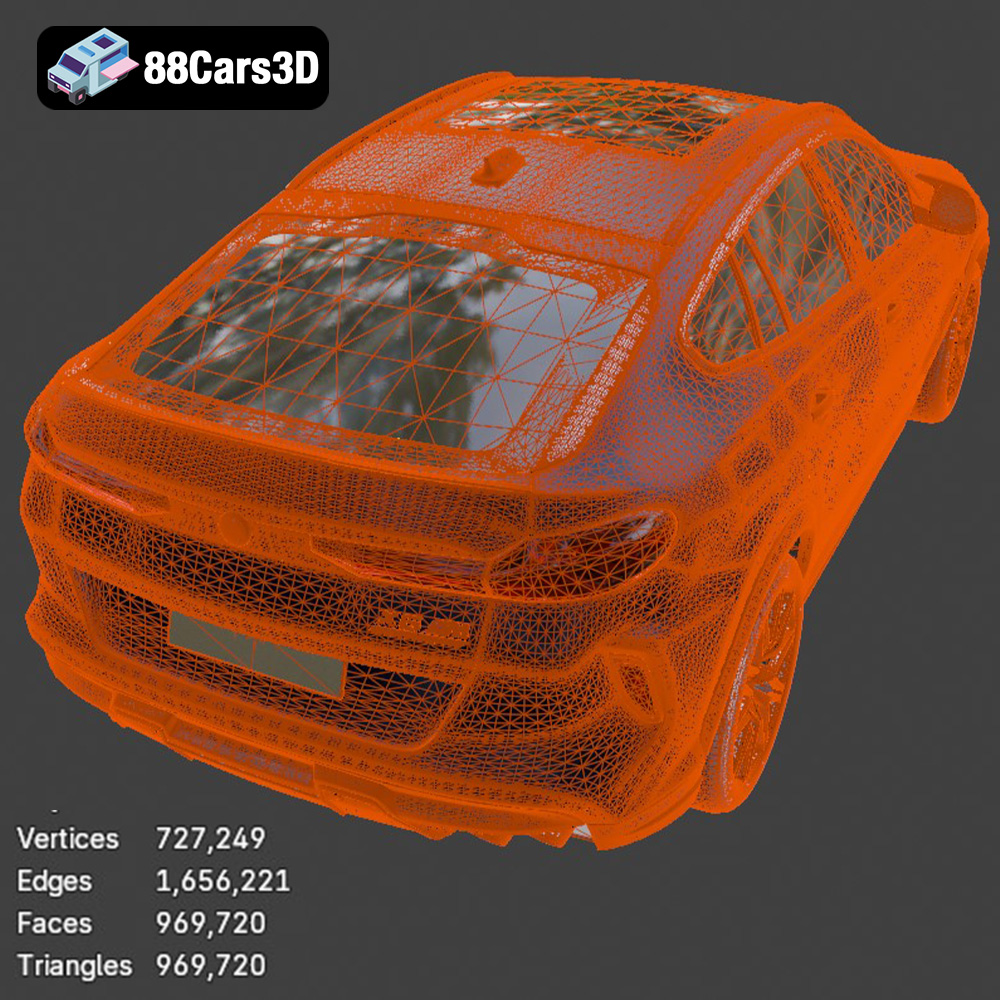
One of the most significant technical achievements of this model is its optimized geometry, boasting 969,720 triangles. This specific poly count represents a critical balance: it’s high enough to convey breathtaking visual fidelity and intricate detail, yet structured for optimal use in demanding digital environments, particularly real-time engines. For game developers, this means a “game-ready” asset that can be integrated without extensive optimization, performing smoothly in open-world racing games or detailed simulators. For rendering and visualization artists, this poly count provides enough detail to hold up to extreme close-ups and high-resolution output without the excessive overhead of unnecessarily dense meshes. The model also adheres to real-world scale accuracy, based on actual vehicle chassis dimensions, further enhancing its suitability for professional visualization and simulation projects. Proper pivot setups for steering, wheel rotation, and suspension travel are also integrated, enabling seamless animation and physics integration.
The journey of a 3D car model from a digital file to a prominent element in a professional project involves various software environments and specialized workflows. The comprehensive format support of the BMW X6 M 2008 3D model ensures it can be seamlessly integrated into diverse pipelines, catering to the specific strengths of industry-standard tools.
For many professionals in architectural visualization, product rendering, and animation studios, Autodesk 3ds Max remains a cornerstone. The inclusion of a dedicated .max file for the BMW X6 M 2008 is invaluable here. Artists can open the full project scene, gaining access to all the original modeling data, material setups, and scene hierarchy. This allows for deep customization, such as modifying topology, fine-tuning materials with advanced PBR (Physically Based Rendering) shaders for V-Ray or Corona Renderer, or setting up complex camera animations. The separate components for wheels, suspension, and steering are particularly useful for creating realistic car animations, from simple drives to dynamic drifts or crashes. 3ds Max users can quickly integrate this high-fidelity asset into their scenes, whether it’s parked outside a photorealistic architectural render or speeding through a meticulously crafted animation sequence.
Blender, with its growing ecosystem and powerful features, is another formidable platform for 3D artists. The .blend file for the BMW X6 M 2008 provides a complete, editable scene optimized for Blender users. This means all materials, textures, and object hierarchies are correctly configured within Blender’s native environment. Artists can leverage Blender’s Cycles or Eevee renderers for stunning automotive rendering, apply advanced modifiers, or even use its extensive sculpting tools for further customization if needed. The open-source nature of Blender, combined with the comprehensive .blend asset, offers a cost-effective yet incredibly powerful solution for creating high-quality automotive visualizations, game assets, and animations.
Game developers and real-time visualization specialists heavily rely on engines like Unreal Engine and Unity. The .fbx and dedicated .unreal formats are critical for these environments. The .fbx format ensures that the BMW X6 M 2008 model, with its optimized 969,720 triangle count, skeletal hierarchy, and UV mapping, can be imported directly into either engine with minimal fuss. For Unreal Engine, the .unreal file goes a step further, providing an engine-ready asset where materials, collision meshes, and potentially LODs are pre-configured, significantly accelerating the integration process. Developers can instantly drop the BMW X6 M into open-world racing games, implement realistic physics, create custom material instances for dynamic paint finishes, or build immersive AR/VR experiences. The “game-ready” nature and optimized poly count are crucial for maintaining high frame rates and visual quality in demanding real-time scenarios, making this model from 88cars3d.com an excellent choice for modern game development.
The versatility of a premium 3D car model like the BMW X6 M 2008 extends across a multitude of industries, driving innovation and enhancing user experiences in ways that were once unimaginable. Its comprehensive technical specifications and diverse file format support open doors to a wide range of professional applications.
For game developers, the BMW X6 M 2008 3D model is a powerful asset for creating immersive and believable vehicular experiences. Its optimized 969,720 triangle count is ideal for integration into open-world games, racing titles, and realistic simulators. The detailed exterior and interior, combined with properly set up pivots for animation (steering, wheel rotation, suspension travel), allow for the creation of authentic driving dynamics and visually stunning gameplay. Imagine this iconic SUV tearing through a digitally recreated urban environment or navigating a challenging off-road course in a high-fidelity racing simulator. The game-ready nature of the asset significantly reduces development time, allowing studios to focus on gameplay mechanics and creative storytelling rather than extensive asset optimization. The availability of .fbx and .unreal formats ensures seamless integration into popular game engines, providing developers with a robust foundation for their automotive game assets.
Augmented Reality (AR) and Virtual Reality (VR) are transforming how consumers interact with products, especially in the luxury automotive sector. The BMW X6 M 2008 3D model is perfect for creating immersive virtual showrooms, interactive car configurators, and mobile AR experiences. With its high detail and optimized geometry, it can be rendered smoothly in real-time AR/VR environments, allowing potential buyers to explore the vehicle’s intricate details from any angle, virtually sit inside the cockpit, or even “park” it in their driveway using AR. The .glb format is particularly beneficial here, offering a lightweight and efficient solution for web-based AR/VR applications, ensuring quick loading times and broad device compatibility. This capability allows dealerships and automotive brands to offer engaging digital experiences that transcend traditional sales methods.
Architectural visualization benefits immensely from high-quality 3D car models. Placing a meticulously rendered BMW X6 M 2008 in front of a modern home or within an urban street scene instantly adds realism, scale, and a touch of luxury. The model’s real-world scale accuracy and detailed exterior make it an ideal prop for creating photorealistic renders that evoke a sense of lifestyle and aspiration. Artists can use the .max or .blend files to integrate the car into complex architectural scenes, customizing materials and lighting to match the environment perfectly. Furthermore, the inclusion of the .stl format opens up possibilities for physical manifestations. Hobbyists and product designers can 3D print the BMW X6 M 2008 at various scales (e.g., 1:12, 1:18, 1:24), creating highly detailed display models. The product description provides specific print settings and post-processing recommendations, emphasizing the model’s suitability for resin printing to capture fine details like the exhaust system and mirrors. This dual functionality highlights the model’s versatility from digital rendering to tangible creation.
A truly professional 3D car model is not just about raw polygon count; it’s about the intelligent distribution of detail and the careful consideration of performance across different platforms. The BMW X6 M 2008 3D model excels in this regard, offering a perfect blend of high-end visual realism and practical optimization.
The 969,720 triangle count is a deliberate choice. It’s high enough to capture the complex curves and sharp lines of the X6 M, including detailed engine block elements and precise suspension components, without overburdening real-time engines. This level of detail allows for superb close-up renders and in-game camera perspectives. Crucially, the model would also feature clean, non-overlapping UV mapping, which is fundamental for applying high-resolution textures without distortion. Proper UVs ensure that details like the M-sport badge, headlight textures, or tire sidewall text are crisp and accurate, regardless of the camera’s distance. This attention to underlying mesh and UV structure is what truly makes an asset “game-ready” and suitable for PBR texturing workflows.
The included files for the BMW X6 M 2008 model are designed for easy customization. This isn’t just about changing a color; it’s about having a well-structured material system that allows for various finishes. Users can easily adapt body and tank colors to match factory specifications or explore custom metallic, matte, or gloss finishes. Tire textures can be swapped between off-road and street variants to suit different environments or game scenarios. The ability to adjust material finishes means artists can achieve stunning photorealistic results in rendering engines and dynamic, responsive materials in real-time environments. Furthermore, lighting can be adapted for different environments – from a brightly lit studio showroom to a moody, rain-slicked city street – allowing the car to look its best in any setting.
In the rapidly evolving landscape of 3D content creation, the demand for high-quality, technically sound, and versatile 3D car models is paramount. The BMW X6 M 2008 3D model from 88cars3d.com stands out as an exceptional example of an asset that meets these stringent professional requirements. It’s a testament to meticulous craftsmanship, capturing the aggressive stance, luxurious interior, and iconic design of the original vehicle with stunning fidelity.
From its optimized 969,720 triangle count that strikes a perfect balance between visual realism and real-time performance, to its comprehensive suite of file formats – including .blend, .fbx, .obj, .glb, .stl, .ply, .unreal, and .max – this model is engineered for maximum compatibility and workflow efficiency. Whether you are developing the next generation of racing games, crafting immersive AR/VR experiences, producing photorealistic architectural visualizations, or even bringing your digital designs to life through 3D printing, the BMW X6 M 2008 model provides an unparalleled foundation.
Its detailed exterior and interior features, coupled with accurate real-world scaling and animation-ready components, ensure that it will elevate any project it’s integrated into. The flexibility for customization, from paint finishes to material properties, further extends its value, allowing creators to tailor the asset to their specific artistic visions. For professionals seeking premium 3D car models that deliver on both aesthetic excellence and technical robustness, the BMW X6 M 2008 is an intelligent investment. Explore this and many other high-quality 3D car models designed to empower your creative endeavors at 88cars3d.com.
Experience the sheer power and athletic presence of the BMW X6 M 2008, a pioneer in the high-performance Sports Activity Coupe segment. Blending the aggressive stance of an M-series sports car with the versatility of a luxury SUV, this premium 3D model delivers exceptional quality with a refined 969,720 triangle count, offering breathtaking visual fidelity while remaining structured for optimal use in demanding digital environments. Perfect for high-end racing games, immersive AR/VR showrooms, and photorealistic animations.
$60.99
.2008
.blend
.bmw
.fbx
.glb
.max
.obj
.ply
.rendering
.sports car
.stl
.unreal
car-3d-model
coupe-suv
game asset
game-ready
low-poly
luxury car
optimized
SUV
VR/AR
x6-m