Get 20% OFF All Premium 3D & STL Models!

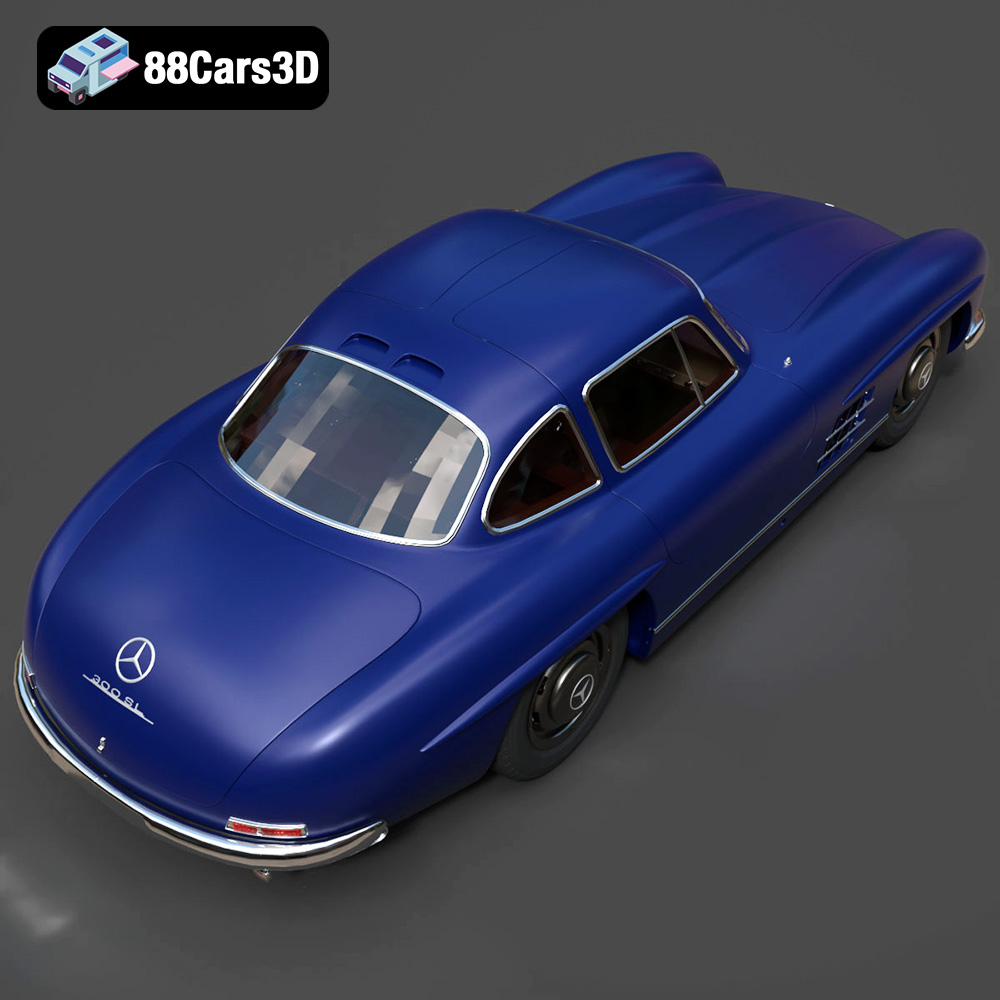
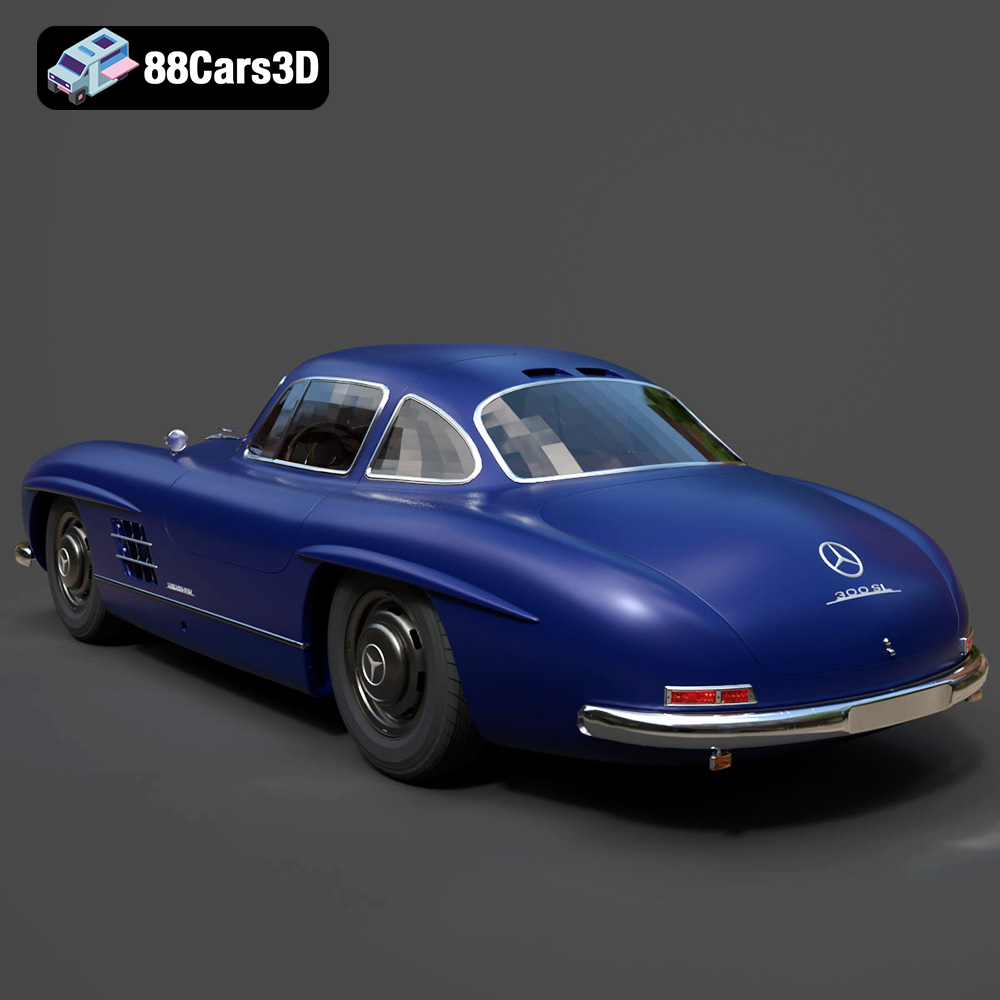
The allure of automotive design transcends mere transportation; it embodies engineering marvel, artistic expression, and cultural significance. For enthusiasts and professionals alike, the ability to interact with these masterpieces in a digital realm opens up unparalleled possibilities. Whether it’s the sleek lines of a modern supercar or the timeless elegance of a vintage icon, 3D models allow us to explore, customize, and integrate these vehicles into a myriad of digital experiences. This pursuit of digital perfection is particularly evident when bringing legendary cars to life, such as the Mercedes Benz 300 SL, a vehicle that commands respect and admiration from every angle.
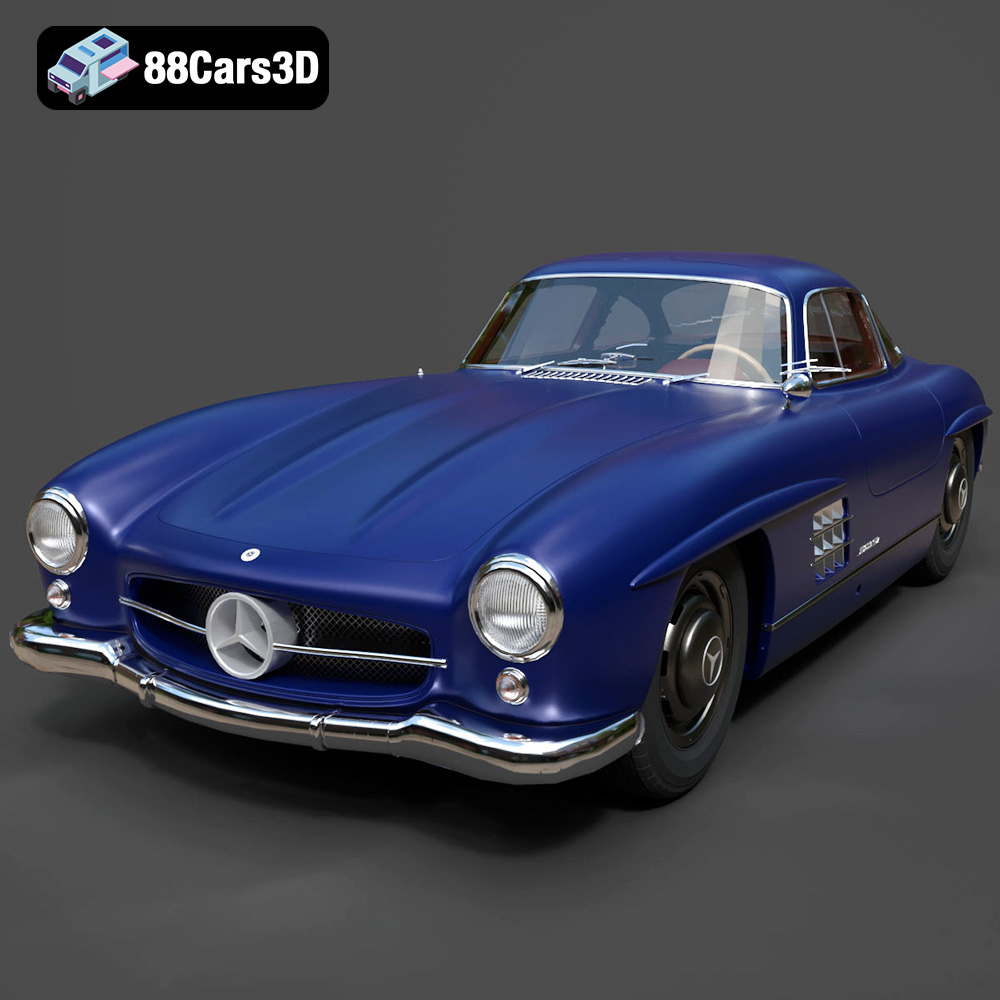
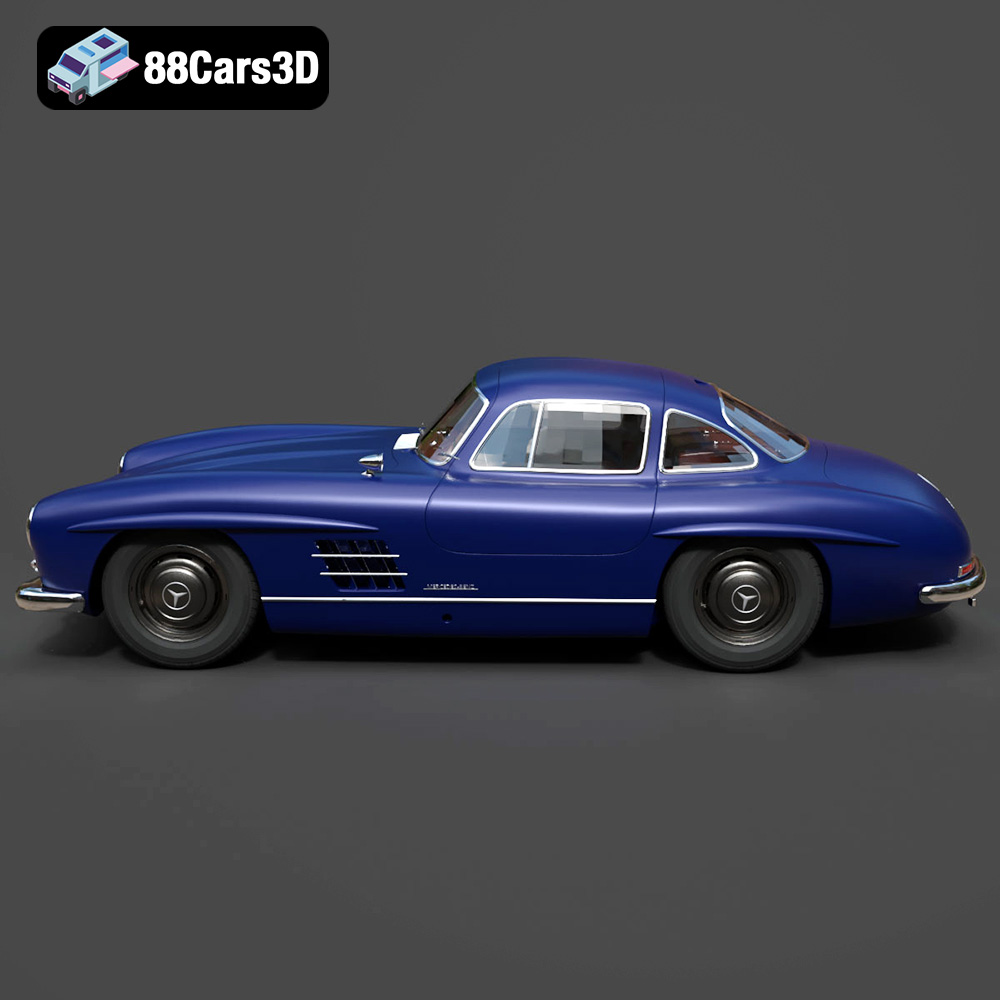
Imagine harnessing the breathtaking gullwing doors, the elongated hood, and the elegant aerodynamic curves of this 1950s legend within your own projects. High-quality 3D car models are the bedrock for photorealistic rendering, immersive game development, groundbreaking AR/VR experiences, and detailed architectural visualizations. They serve as essential assets for designers, game developers, filmmakers, and marketing professionals striving for visual excellence and authenticity. As we delve into the intricate world of automotive 3D modeling, we’ll explore the technical nuances, professional workflows, and diverse applications, showcasing how a meticulously crafted asset like the Mercedes Benz 300 SL 3D Model can elevate your creative endeavors. Sourced from expert platforms like 88cars3d.com, such models provide an invaluable head start, offering unparalleled detail and optimization right out of the box.
Navigating the landscape of 3D modeling often requires a deep understanding of file formats. Each format serves a specific purpose, optimized for different software, engines, or applications. Choosing the right format is critical for ensuring compatibility, preserving data, and streamlining workflows.
The .blend format is native to Blender, the popular open-source 3D creation suite. A .blend file is a complete scene package, containing not just the mesh data but also materials, textures, lighting, cameras, animations, physics simulations, and even scripts. This makes it an incredibly powerful format for Blender users, as it preserves all aspects of the original project. It’s fully editable, allowing for easy modifications to topology, UVs, and material properties. For collaborative projects where all team members use Blender, or when you need the most flexibility for customization, the .blend file is often the preferred choice. For instance, the Mercedes Benz 300 SL 3D Model includes a .blend file, offering Blender users full access to its meticulously set up geometry and materials.
Autodesk’s .fbx (Filmbox) format has become an industry standard for data interchange between various 3D applications and game engines. It supports geometry, materials, textures, animations, rigging, and even blend shapes, making it incredibly versatile. Its strength lies in its robust capability to transfer complex scene data across different software like 3ds Max, Maya, Unity, and Unreal Engine. When you need to move a 3D car model from one software to another for animation or integrate it into a real-time pipeline, .fbx is generally the go-to format due to its widespread compatibility and ability to maintain data integrity. The Mercedes Benz 300 SL 3D Model, provided in .fbx, is therefore ideal for immediate integration into your preferred game development or rendering pipeline.
The .obj (Wavefront Object) format is one of the oldest and most universally supported 3D formats. It’s a simple text-based format that primarily stores geometry (vertices, normals, texture coordinates) and references to external material (MTL) files for basic surface properties. While it doesn’t support animation, rigging, or advanced material setups, its simplicity ensures near-perfect cross-software compatibility. It’s excellent for static mesh exchange and is widely used for archiving models or when you need a clean mesh to start a new project in a different software without any legacy data. For a foundational mesh like the 300 SL, the .obj version provides a clean base for any 3D environment.
.glb (GLB/glTF Binary) is the binary version of the glTF (Graphics Library Transmission Format) format, which is rapidly gaining traction as the “JPEG of 3D.” Designed for efficient transmission and loading of 3D scenes and models, .glb packages all necessary data (geometry, materials, textures, animations) into a single, compact file. It’s specifically optimized for web-based 3D, AR (Augmented Reality), and VR (Virtual Reality) applications due to its small file size and quick loading times. If you’re building a web configurator for a car, an AR showcase on a mobile device, or a lightweight VR experience, .glb is the most suitable format. The 300 SL in .glb format would be perfect for an immersive virtual showroom.
The .stl (STereoLithography) format is the de facto standard for 3D printing. It represents a 3D model as a series of connected triangles, essentially describing the surface geometry without any color, texture, or material information. While it lacks visual data, its universality in 3D printing software makes it indispensable for physical fabrication. To prepare a 3D car model like the Mercedes Benz 300 SL for 3D printing, it must be converted to .stl, ensuring it has a manifold (watertight) mesh and is scaled correctly for the desired print size. The inclusion of an .stl file for the 300 SL model from 88cars3d.com allows hobbyists and professionals to bring this digital classic into the physical world.
The .ply (Polygon File Format) is often used for storing 3D data from 3D scanners, CAD applications, or scientific analysis. It can store a wider range of properties than .obj, including color, transparency, surface normals, and even data from multiple scans. While less common in general animation or game development pipelines, its ability to store precise point cloud and polygon mesh data makes it valuable for reverse engineering, quality control, or highly detailed industrial visualizations. For specific technical applications involving the Mercedes Benz 300 SL, the .ply format offers enhanced data fidelity.
The .unreal format refers to assets specifically configured and optimized for use within the Unreal Engine ecosystem. While often derived from .fbx imports, an asset described as “.unreal” usually implies it has undergone the necessary setup within Unreal Engine itself. This includes proper material instancing, collision meshes, LOD (Level of Detail) generation, and potentially blueprint integration for interactive elements. Such files are truly “engine-ready,” minimizing the setup time for game developers or virtual production artists. The provision of the 300 SL in an .unreal format means it’s been prepped for optimal performance and visual fidelity within Unreal Engine, saving countless hours of manual optimization.
Similar to .blend for Blender, .max is the native project file format for Autodesk 3ds Max. It encapsulates an entire 3ds Max scene, including geometry, materials, textures, lighting, cameras, animation, and scene settings. It offers the most comprehensive editing capabilities for users working within the 3ds Max environment. For artists who rely on 3ds Max for high-end rendering, architectural visualization, or complex animation, the .max file provides full flexibility for customization and advanced scene setup. The inclusion of a .max file for the Mercedes Benz 300 SL 3D Model allows 3ds Max artists complete control over the asset.
Creating a truly premium automotive 3D model is a meticulous blend of artistic skill and technical precision. It goes far beyond simply tracing blueprints; it involves capturing the very soul of the vehicle, ensuring every curve, every reflection, and every detail resonates with authenticity.
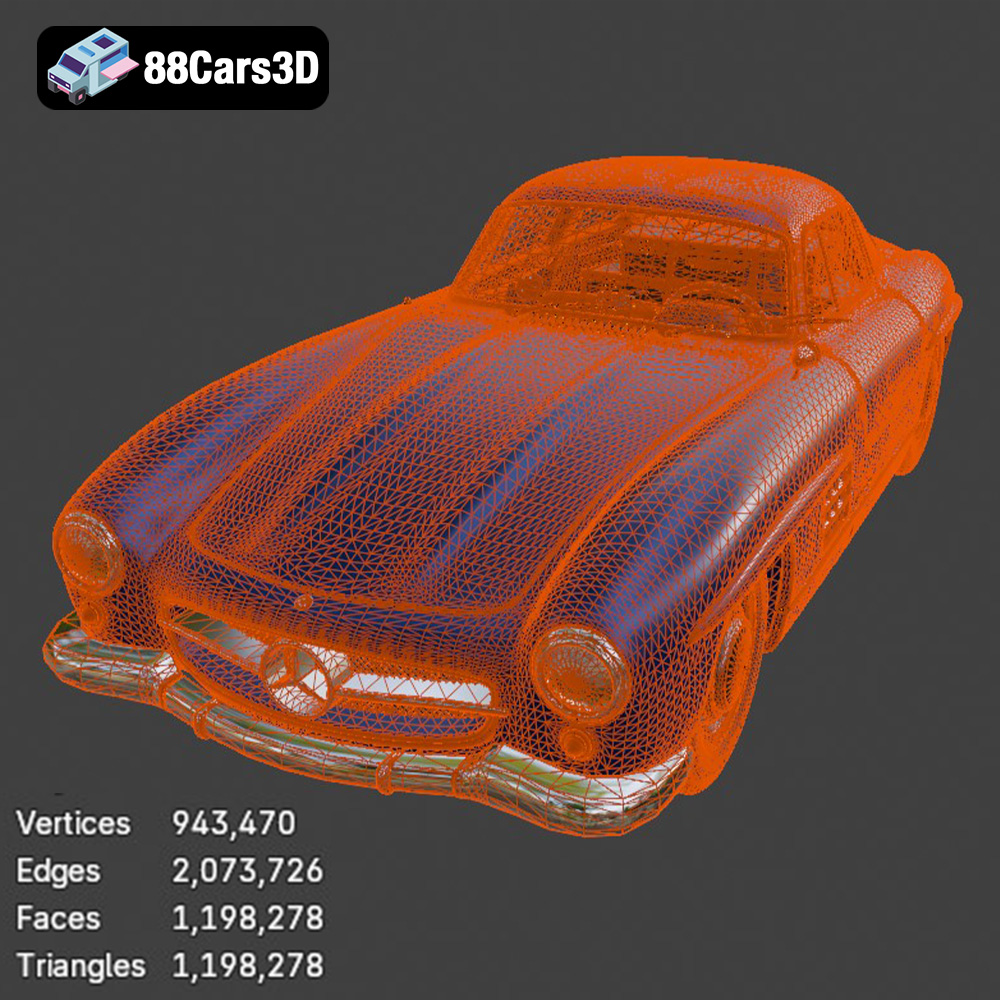
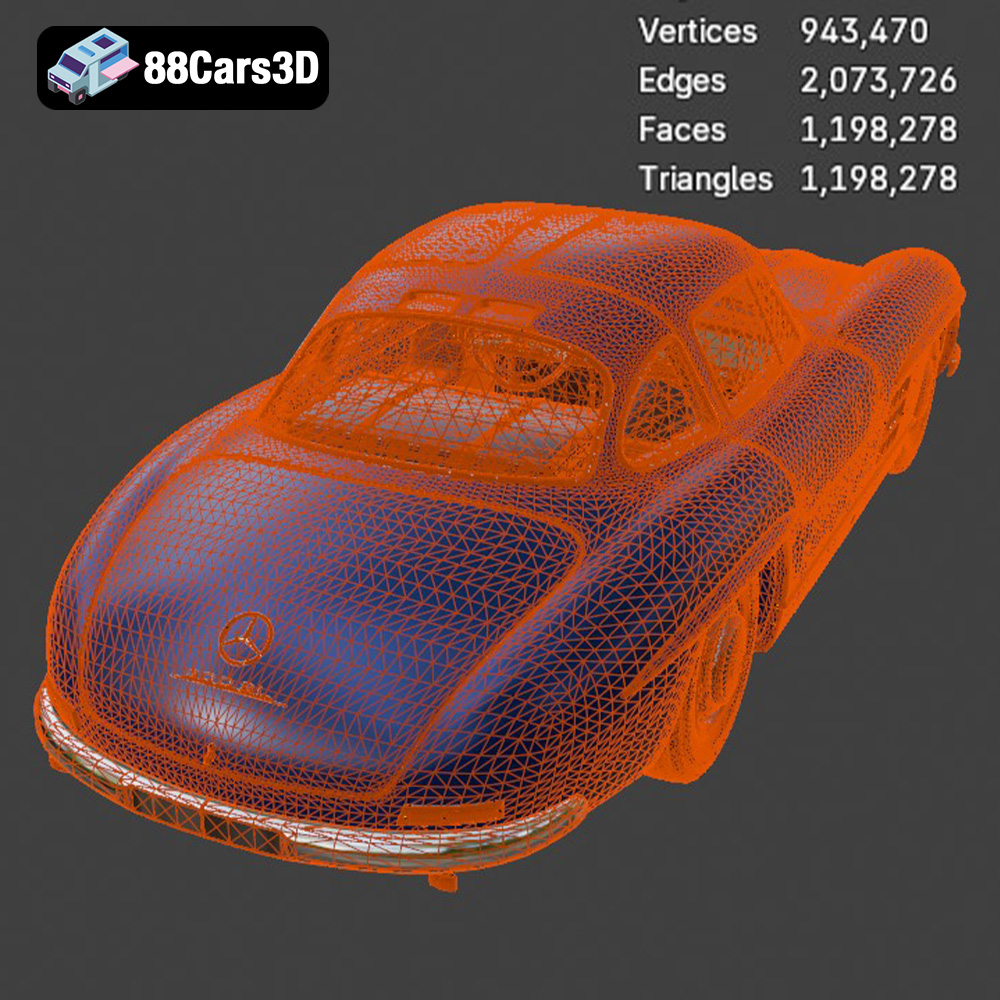
At the core of any exceptional 3D model lies its topology. For a classic like the Mercedes Benz 300 SL, achieving “high-fidelity topology” means creating a mesh that accurately reflects the vehicle’s real-world geometry while maintaining clean, efficient quad-based polygons. This ensures smooth surface deformation during animation and prevents rendering artifacts. The model’s “real-world scale accuracy” is equally crucial, ensuring it fits seamlessly into environments and interacts correctly with other assets. Every dimension, from the wheelbase to the height of the iconic gullwing doors, must be meticulously translated into the digital realm. This precise detailing allows for realistic physics in simulations and accurate proportions in architectural visualizations.
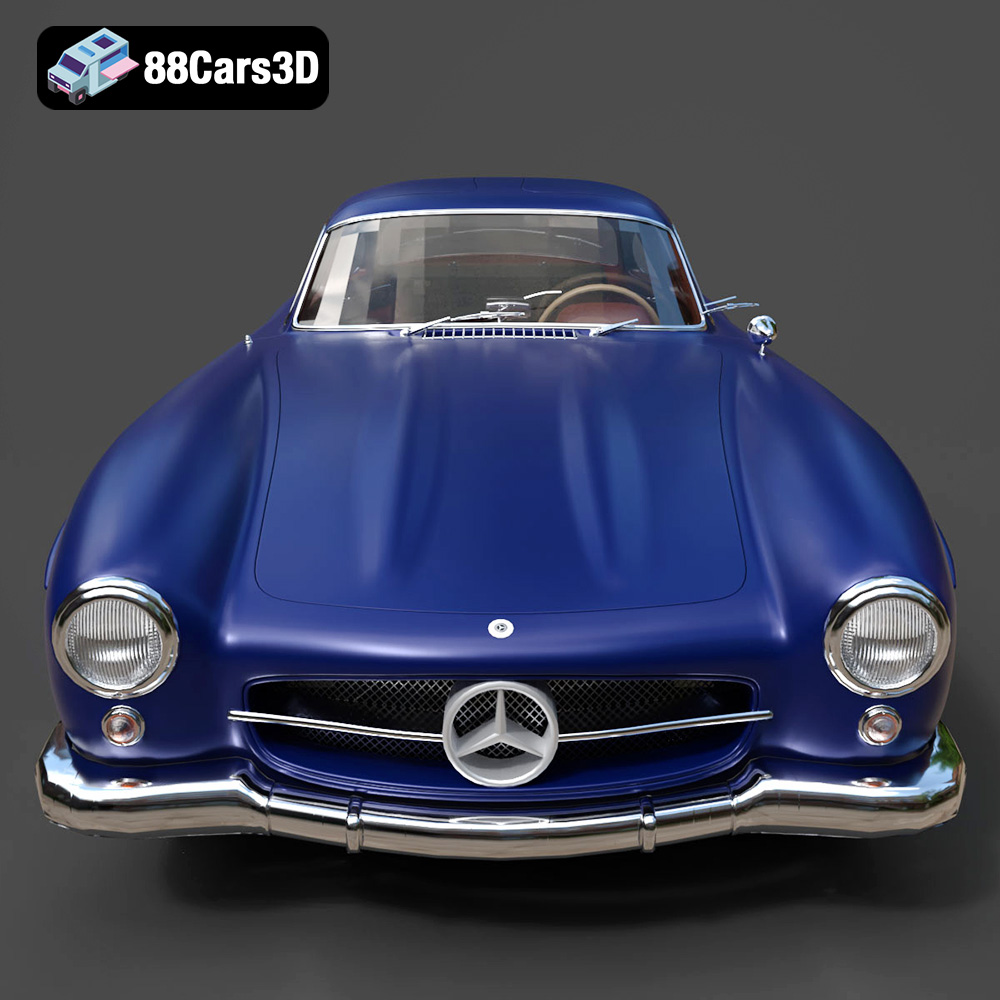
While the iconic bodywork of the 300 SL is its most striking feature, a premium model delves much deeper. Details like the signature front grille with the prominent Mercedes star, the authentic chrome-tipped rear exhaust system, and the classic round headlights with precise chrome bezels are essential for visual realism. Furthermore, the inclusion of “vintage multi-spoke wheels with high-profile classic tire treads” and “intricately modeled front and rear suspension details” elevates the model’s authenticity. These elements aren’t just aesthetic; “separate wheels, suspension, and steering components for animation” highlight a foresight in design, allowing for dynamic real-time simulations and cinematic sequences that accurately depict vehicle movement.
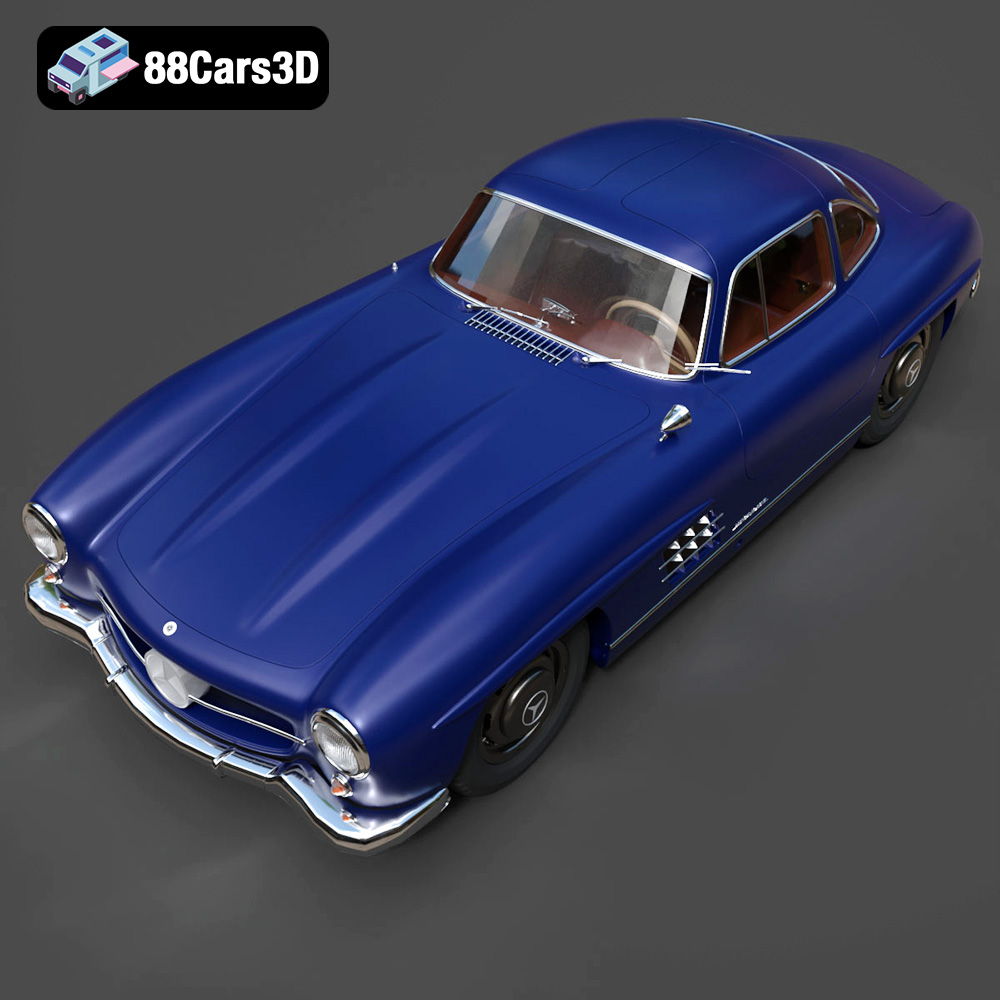
The interior of a classic car is often as important as its exterior, telling a story of craftsmanship and era-specific design. A truly comprehensive 3D model, like the Mercedes Benz 300 SL available on 88cars3d.com, meticulously recreates the cockpit. This includes “exquisitely detailed vintage bucket seats in classic upholstery patterns,” an “iconic thin-rimmed classic steering wheel with pivoting column,” and a “highly accurate retro instrument cluster with detailed analog dials.” These details are vital for first-person perspectives in games or VR experiences, where the user will be directly interacting with the interior. “Finely crafted gear shifter, pedals, and interior chrome trim” further enhance the sense of realism, allowing for immersive experiences that transport the user directly into the driver’s seat of this legendary vehicle.
The true value of a high-quality 3D car model is realized when it seamlessly integrates into various professional pipelines, serving diverse creative and technical needs.
In game development, the challenge is always to strike a delicate balance between visual fidelity and real-time performance. A “game-ready & optimized” asset like the Mercedes Benz 300 SL 3D Model, with its 1,198,278 triangles, exemplifies this balance. This polycount is high enough to deliver “high-end visual realism” yet optimized for “real-time engines (Unreal, Unity).” Game developers use these models for everything from player vehicles in open-world games to AI-controlled traffic or static scene dressing in racing titles and simulators. The “proper pivot setup for steering, wheel rotation, and suspension travel” is particularly crucial, enabling animators and programmers to implement realistic vehicle physics and animations without extensive rework. This level of optimization significantly reduces development time and ensures a smooth player experience.
Augmented Reality (AR) and Virtual Reality (VR) are revolutionizing how consumers interact with products, especially in the automotive sector. High-fidelity 3D car models are the cornerstone of “immersive virtual showrooms” where potential buyers can explore a car from every angle, open doors, and even sit inside. VR configurators allow for real-time customization of colors, wheels, and interior trims. For mobile AR experiences, optimized models ensure smooth performance on a variety of devices. The Mercedes Benz 300 SL 3D Model, with its detailed interior and multiple file formats (including .glb), is perfectly suited for creating these engaging and interactive experiences, allowing users to “experience” the classic car in a whole new dimension.
For advertising, film, and architectural visualization, photorealistic rendering is paramount. Professional artists leverage 3D car models for “brand campaigns, lifestyle scenes, and studio lighting setups.” The detailed exterior and interior features of the 300 SL model, from its accurate frame geometry to its detailed engine block representation, provide the perfect foundation for creating stunning, cinematic visuals. Artists use software like 3ds Max, Blender, Maya, or Cinema 4D, combined with rendering engines like V-Ray, Corona, Octane, or Cycles, to meticulously set up lighting, materials, and camera angles. They can “change body/tank colors,” “modify tire textures,” and “adjust material finishes” to achieve specific visual aesthetics, making the Mercedes Benz 300 SL a versatile asset for any high-end visualization project.
Achieving both visual realism and optimal performance in 3D automotive models requires a deep understanding of several technical aspects.
The “triangle count of 1,198,278” for the Mercedes Benz 300 SL 3D Model represents a strategic choice. It’s high enough to capture the intricate details and smooth curves of the classic car without being excessively heavy for modern real-time engines. For game development and AR/VR, managing polycount is critical. This often involves implementing Level of Detail (LOD) strategies. LODs are simplified versions of the model that automatically swap in at greater distances from the camera, reducing the computational load. While the base model is detailed, a professional asset typically includes or is ready for LOD generation, ensuring that the car looks great up close but doesn’t bog down the engine when viewed from afar. This thoughtful optimization is a hallmark of high-quality 3D car models.
Clean and efficient UV mapping is just as important as good topology. UVs (texture coordinates) dictate how 2D textures are wrapped around the 3D model. Well-laid-out UVs prevent stretching or distortion of textures and simplify the texturing process. The Mercedes Benz 300 SL model would feature carefully unwrapped UVs, allowing for the application of high-resolution textures for paint, chrome, glass, and interior fabrics. Furthermore, the material setup is crucial. Modern physically-based rendering (PBR) materials, often configured with albedo, metallic, roughness, normal, and ambient occlusion maps, are essential for achieving photorealistic results. These material properties accurately simulate how light interacts with different surfaces, bringing the metallic sheen of the paint, the reflectivity of the chrome, and the subtle imperfections of the interior upholstery to life.
While the product description highlights “separate wheels, suspension, and steering components for animation” and “proper pivot setup,” rigging takes this a step further. Rigging involves creating a hierarchical system of bones or joints that control the deformation and movement of the mesh. For a car model, this typically includes a skeletal rig for the wheels (rotation, steering, suspension travel), doors (gullwing mechanism), hood, trunk, and potentially interior elements like the gear shifter and pedals. A well-rigged model allows animators to quickly and realistically animate vehicle actions, from driving sequences to detailed interactive elements, making it an incredibly versatile asset for cinematic productions or interactive applications. The 300 SL’s optimized geometry and separate parts streamline this rigging process, readying it for dynamic action.
The Mercedes Benz 300 SL, with its rich history and iconic design, is a perfect candidate for diverse digital applications that demand both aesthetic appeal and technical robustness. The 3D model available from 88cars3d.com offers precisely this combination.
Imagine a global car manufacturer launching a special edition classic car. A virtual showroom built with a high-fidelity 3D model like the 300 SL allows potential clients worldwide to explore the vehicle in stunning detail. From zooming in on the “detailed engine block representing the historic 3.0L inline-six” to examining the “exquisitely detailed vintage bucket seats,” every nuance can be showcased. Companies use these models for interactive web experiences, high-resolution imagery for brochures, and compelling video advertisements. The ability to “change body/tank colors” and “adjust material finishes” provides immense flexibility for marketing teams to present various configurations without the need for physical prototypes or expensive photoshoots.
For racing game developers, authenticity is paramount. The Mercedes Benz 300 SL 3D Model’s “game-ready & optimized” nature, coupled with its “real-world scale accuracy,” makes it an ideal asset for integrating into realistic racing simulators. Players can experience the thrill of driving this legend with accurate handling, realistic damage models (if implemented), and a true-to-life visual experience. The “optimized geometry for first-person POV in gaming” ensures that the cockpit, with its “highly accurate retro instrument cluster,” feels immersive and responsive. This level of detail elevates the player’s experience, making the digital classic feel tangible and exhilarating.
Beyond commercial applications, highly accurate 3D models of classic cars serve critical roles in historical preservation, digital restoration, and education. Museums can create interactive exhibits, allowing visitors to virtually dismantle and inspect components of the 300 SL, understanding its engineering without touching the physical artifact. Restoration experts might use the model to analyze original designs or plan complex repairs. Educational institutions can utilize these models to teach automotive design principles, historical context, or even reverse engineering. The “high-fidelity topology” and detailed components of the 300 SL make it an invaluable tool for understanding and appreciating automotive heritage.
The journey of a 3D car model doesn’t always end on a screen. For many enthusiasts and professionals, bringing a digital model into the physical world through 3D printing offers a unique and tangible connection to the subject.
The Mercedes Benz 300 SL 3D Model, provided in a convertible .stl format, is ready for this transformation. However, preparing a digital model for 3D printing involves specific considerations. The “recommended scale: 1:12 / 1:18 / 1:24” ensures a manageable and detailed physical print. For intricate models like cars, “resin printing is recommended for fine details” due to its ability to capture small features with high precision, superior to FDM (Fused Deposition Modeling) printers. Specifications like “layer height: 0.04–0.12 mm” are critical for print quality, directly impacting the smoothness of surfaces and the visibility of print lines.
Key technical aspects for a successful print include “wall thickness: 1.2–2.0 mm” to ensure the model isn’t too fragile, and “infill: 20–30%” for structural stability without excessive material usage. The need for “supports” is almost always a given for complex automotive shapes, especially for “detailed parts like exhaust, mirrors, steering wheel.” Proper “print orientation” is also vital; printing the “frame printed angled for structural integrity” and “wheels printed separately” minimizes support structures and improves the final quality. After printing, extensive “post-processing” is often required, including “sanding, primer, and authentic factory colors with metallic finishes,” to achieve a display-ready model that truly honors the classic 300 SL.
The world of automotive 3D modeling is a dynamic intersection of art, engineering, and technology. From crafting the meticulously detailed surfaces of a classic car to optimizing its geometry for real-time game engines or preparing it for physical 3D printing, every step requires precision and expertise. A high-quality 3D car model is more than just a digital asset; it’s a gateway to endless creative and professional possibilities.
The Mercedes Benz 300 SL 3D Model exemplifies this excellence, offering a product that is not only visually stunning but also technically robust and versatile across multiple platforms and applications. Its high-fidelity topology, game-ready optimization, and comprehensive detail, from the iconic gullwing doors to the intricate cockpit, make it an indispensable resource for professionals in game development, AR/VR, architectural visualization, and even product design. The availability of diverse file formats—from .blend for full editability to .unreal for engine-ready integration and .stl for 3D printing—ensures maximum compatibility and flexibility for any project.
Whether you’re developing the next big racing title, designing an immersive virtual showroom, or simply want to render a photorealistic scene of this legendary vehicle, sourcing premium 3D models from trusted marketplaces like 88cars3d.com provides the foundation for success. Embrace the power of expertly crafted 3D car models to bring your automotive visions to life, pushing the boundaries of realism and immersion in every project.
The Mercedes Benz 300 SL is arguably one of the most iconic classic sports cars in automotive history, renowned for its breathtaking gullwing doors, elongated hood, and elegant aerodynamic curves. This model perfectly captures the essence of the 1950s legend, featuring meticulously modeled bodywork, signature front grille with the prominent Mercedes star, a beautifully sculpted inline-six engine bay representation, and authentic rear exhaust detailing. Boasting a high-fidelity topology with a triangle count of 1198278, this 3D model delivers exceptional visual realism while retaining clean, optimized geometry suitable for high-end rendering and advanced real-time engines. It is a premium asset tailored for next-generation game development, virtual reality (AR/VR) showrooms, and high-quality cinematic automotive animations. Perfect for classic car virtual museums, high-end racing simulators, photorealistic architectural visualizations, and automotive lifestyle rendering scenes.
$66.99
.blend
.fbx
.glb
.gullwing
.max
.obj
.ply
.rendering
.sports car
.stl
.unreal
300-sl
car-3d-model
classic-car
game asset
game-ready
low-poly
mercedes-benz
optimized
VR/AR