Mastering the Digital Road: Why High-Fidelity 3D Car Models Drive Innovation
In the rapidly evolving world of digital visualization, automotive design, and interactive media, the demand for exceptionally detailed and versatile 3D car models has never been higher. From breathtaking cinematic renders to hyper-realistic game environments and immersive AR/VR experiences, the quality of a 3D vehicle asset can make or break a project’s visual integrity and overall impact. Professionals across industries are constantly seeking models that not only capture the essence of a vehicle but also offer technical precision for seamless integration into complex workflows.
Imagine being able to place the epitome of luxury and robust design, a BMW X7 40i, into any virtual scene with absolute fidelity. This is precisely the kind of capability that premium 3D car models bring to the table. These aren’t just static representations; they are meticulously crafted digital sculptures, ready to be animated, customized, and rendered under any light. The pursuit of realism and technical excellence defines the cutting edge of 3D automotive modeling, empowering creators to push boundaries in everything from product configurators to AAA game titles.
Understanding 3D Model File Formats: The Backbone of Digital Assets
The versatility of a 3D model often hinges on the range and quality of its supported file formats. Each format serves a specific purpose, optimized for different software, engines, or end-use scenarios. Understanding these distinctions is crucial for anyone working with 3D car models, ensuring compatibility and maximizing efficiency. The BMW X7 40i 3D model, for instance, comes equipped with a comprehensive suite of formats, catering to virtually every professional need.
.blend – The Native Blender Ecosystem
The .blend file format is the native format for Blender, the powerful open-source 3D creation suite. When you receive a .blend file, you’re getting a fully editable Blender scene, complete with all its intricacies: mesh data, materials, textures, lighting, camera setups, animation data, and even modifiers. This format is ideal for users deeply integrated into the Blender ecosystem, allowing for direct manipulation, further detailing, or repurposing within a familiar environment. Artists can easily adjust shaders (Cycles or Eevee), modify topology, or extract specific components for other projects. Its comprehensive nature makes it a fantastic starting point for any significant customization or artistic embellishment within Blender.
.fbx – The Industry Standard for Interoperability
Autodesk’s .fbx (Filmbox) format is arguably the most widely adopted interchange format in 3D production. It’s incredibly robust, capable of storing not just mesh and material data, but also animation, rigging, camera, and lighting information. This makes it ideal for transferring animated 3D car models between different software applications like 3ds Max, Maya, Blender, and directly into real-time engines such as Unreal Engine and Unity. Its widespread support ensures smooth asset pipelines, making it the go-to choice for game development, virtual production, and any workflow requiring complex animated scenes. When integrating a model like the BMW X7 40i into a game engine, .fbx is often the preferred choice due to its reliable handling of complex hierarchies and animation curves.
.obj – The Universal Exchange Format
The .obj (Wavefront OBJ) format is a universal standard for storing 3D geometry data. It’s a simpler format compared to .fbx, primarily focusing on mesh data (vertices, normals, texture coordinates, and faces) and material references (via an accompanying .mtl file). Its simplicity makes it highly compatible across virtually all 3D software packages, offering a reliable fallback for cross-software compatibility when other formats might present issues. While it doesn’t typically carry animation or rigging data, .obj is excellent for static models, architectural visualization, or as a clean base for sculpting and retopology. For a detailed static render of the BMW X7 40i, an .obj file provides a clean, universally readable mesh.
.glb – Optimized for AR, VR, and Web
The .glb (GL Transmission Format Binary) is an increasingly important format, especially for AR, VR, and web-based 3D applications. It’s the binary version of glTF, designed to be a compact, efficient, and runtime-ready format for the delivery of 3D scenes and models. A .glb file packages all necessary data—geometry, materials, textures, animations—into a single file, making it incredibly easy to load and display in browsers, mobile apps, and other real-time environments. Its optimization for lightweight delivery and modern GPU pipelines makes it perfect for interactive product configurators, virtual showrooms, or displaying the BMW X7 40i directly on a webpage with minimal load times.
.stl – The Standard for 3D Printing
.stl (Stereolithography) is the de facto standard format for 3D printing. It represents a 3D model as a series of connected triangles, defining only the surface geometry without color, texture, or material information. While not suitable for rendering or animation, its simplicity and widespread support by 3D printing software and hardware make it indispensable for physical fabrication. Converting a high-fidelity 3D car model like the BMW X7 40i into .stl allows hobbyists and professionals to create physical prototypes or display models, requiring careful consideration of scale, wall thickness, and support structures.
.ply – Precision Mesh for CAD or Analysis
The .ply (Polygon File Format, or Stanford Triangle Format) is a versatile format often used for storing 3D data from 3D scanners, CAD software, and scientific applications. It can store a wider range of data than .obj or .stl, including color per vertex, normal information, and even material properties. While less common in general animation pipelines, its precision and ability to handle point clouds and complex mesh structures make it valuable for specific engineering, reverse engineering, or detailed analysis tasks, particularly when working with highly accurate real-world data or for specialized manufacturing processes.
.unreal – Engine-Ready Asset for Real-Time Environments
The .unreal format, or more specifically, an Unreal Engine project asset, signifies a model specifically prepared and optimized for integration into Unreal Engine. While typically assets are imported via .fbx, providing an .unreal project asset means that the model has potentially already undergone specific engine-side optimizations. This might include pre-configured materials using Unreal’s PBR workflow, LODs (Levels of Detail), collision meshes, and even basic Blueprints for interactive elements. This format vastly accelerates the workflow for game developers and architectural visualization artists using Unreal Engine, minimizing setup time and ensuring optimal performance for assets like the BMW X7 40i.
.max – The Native 3ds Max Project
Similar to .blend for Blender, .max is the native file format for Autodesk 3ds Max. This format retains all aspects of a 3ds Max scene, including geometry, modifiers, materials (V-Ray, Corona, Arnold), lights, cameras, animation, and scene organization. For professionals using 3ds Max for architectural visualization, product rendering, or animation, a .max file offers the ultimate flexibility for editing, rendering, and integrating the BMW X7 40i into existing scenes. It allows for advanced material adjustments, complex lighting setups, and precise animation controls within a powerful industry-standard environment.
By offering this comprehensive range of file formats, including .blend, .fbx, .obj, .glb, .stl, .ply, .unreal, and .max, platforms like 88cars3d.com ensure that the BMW X7 40i 3D model is not just a high-quality asset but a highly adaptable and future-proof investment for any digital project.
Deep Dive into the BMW X7 40i 3D Model: Precision and Performance
The BMW X7 40i 3D model available on 88cars3d.com isn’t merely a digital representation; it’s a testament to meticulous craftsmanship and technical optimization. Designed for a diverse range of professional applications, this model strikes a critical balance between visual fidelity and technical efficiency, making it an invaluable asset for any creative endeavor.
Exterior Features: Capturing the Iconic Presence
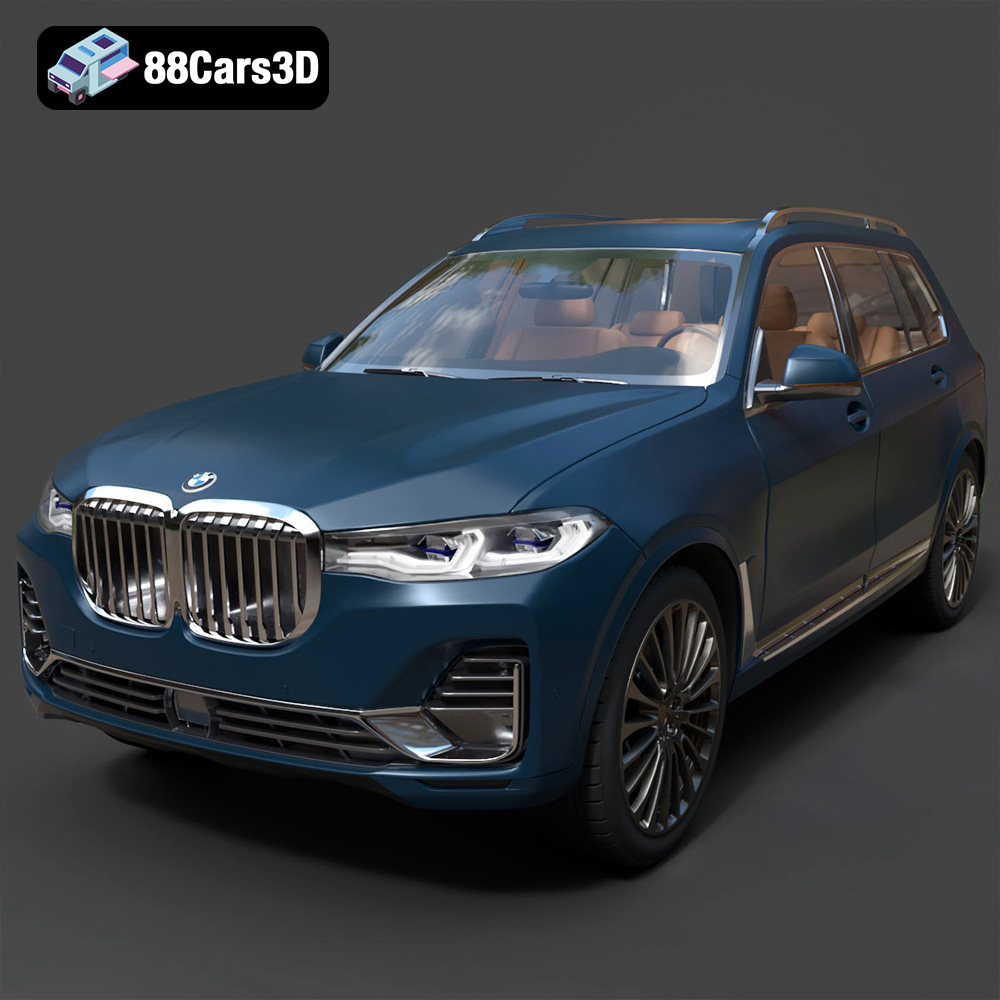
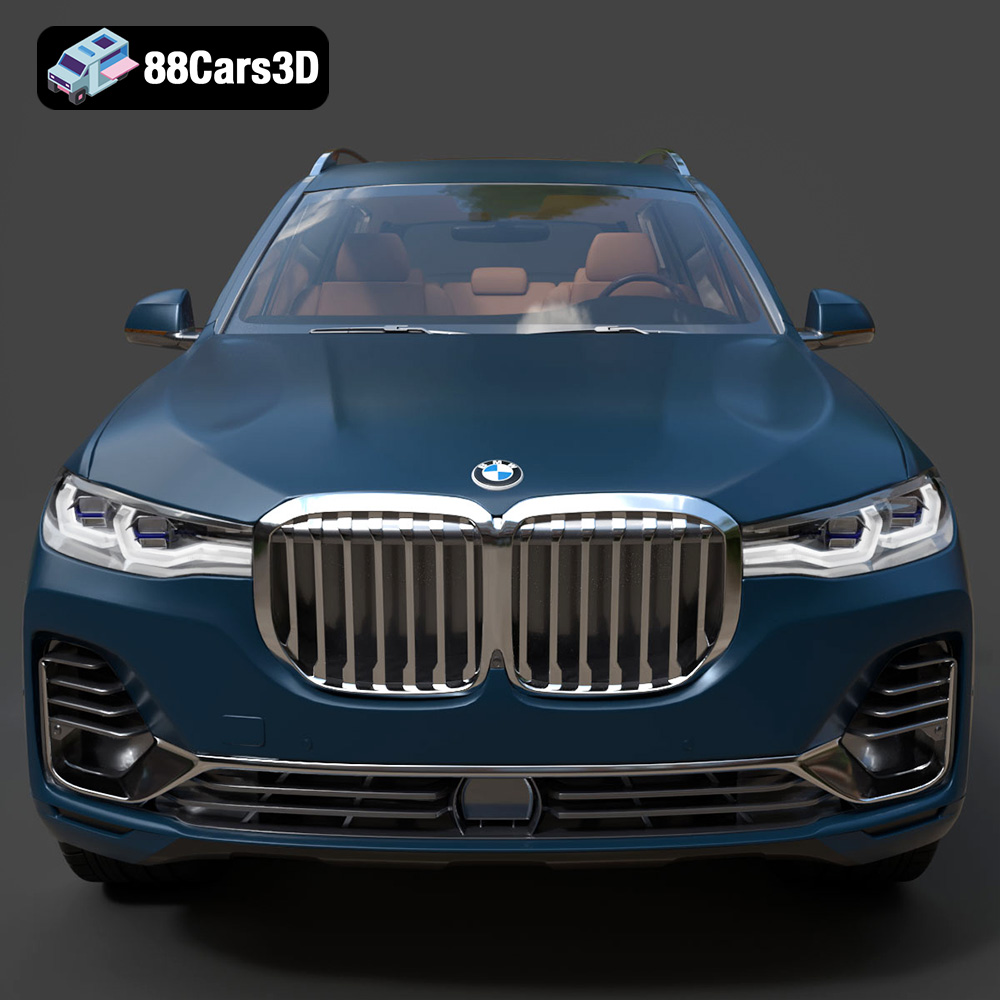
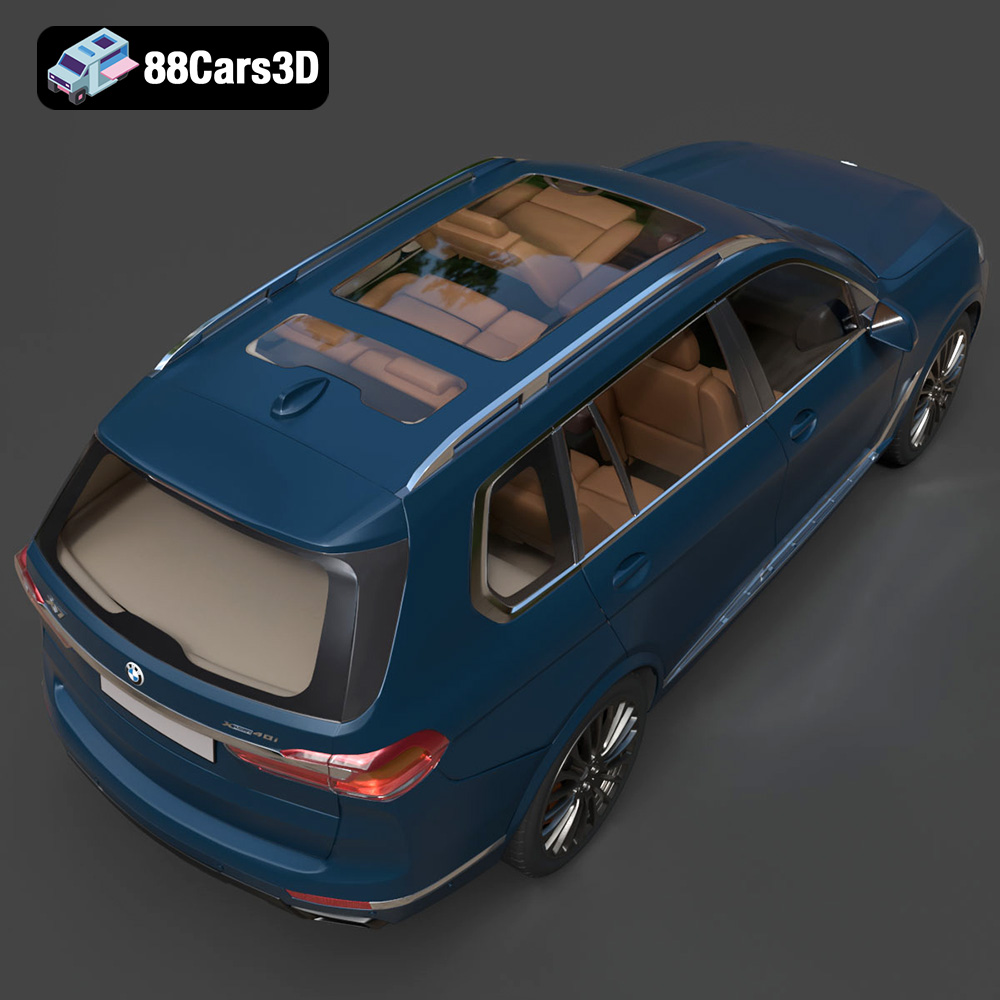
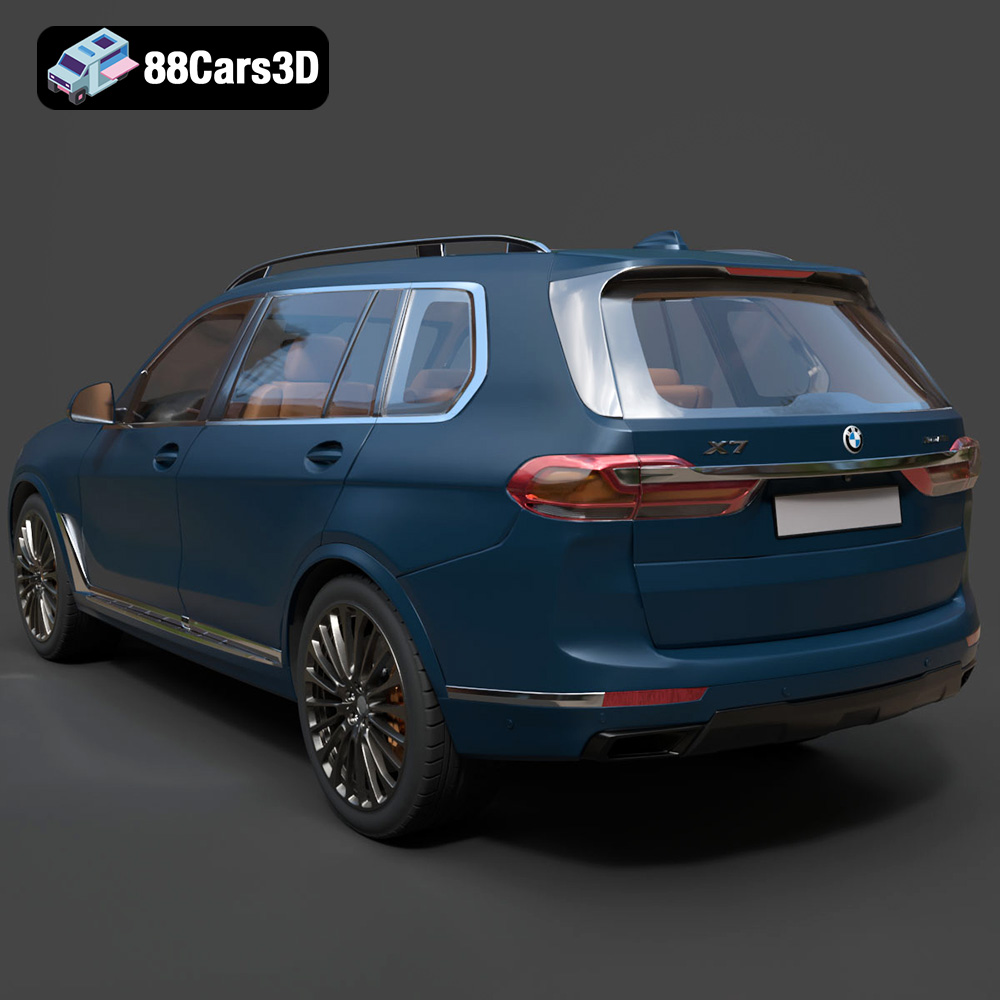
The exterior of the BMW X7 is instantly recognizable, and this 3D model captures every commanding detail. The iconic large kidney grille, a signature element of modern BMWs, is accurately modeled, reflecting its dominant presence. The sleek aerodynamic profile, from the subtle curves of the hood to the sophisticated lines flowing along the body, has been faithfully recreated. Special attention has been paid to the TwinPower Turbo inline 6-cylinder engine bay components, offering a glimpse into the Bavarian engineering prowess, even if only for detailed close-ups or cutaway renders. The dual trapezoidal exhaust system, complete with chrome finish details, adds to the model’s high-end aesthetic.
- Lighting Fidelity: Signature split-headlight LED arrays and 3D sculpted taillights are precisely modeled, allowing for realistic light diffusion and reflections crucial for stunning automotive rendering.
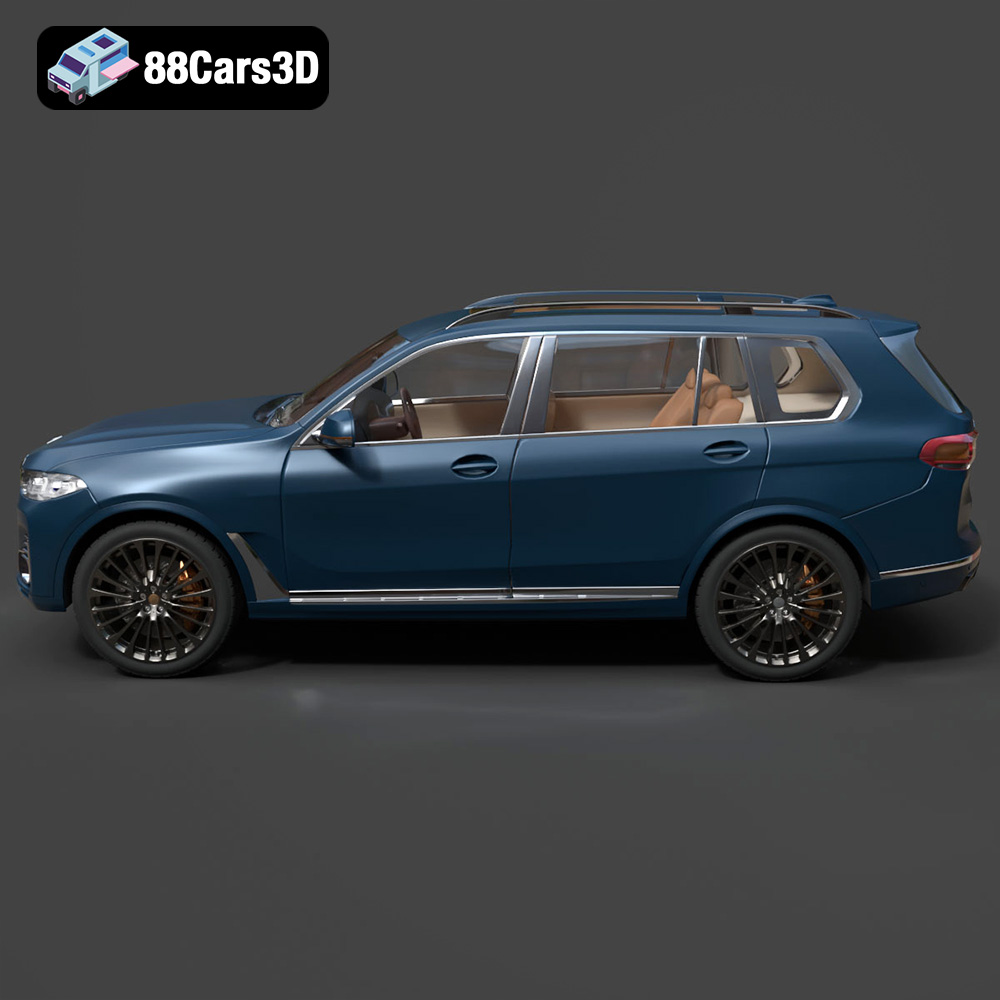
- Wheels and Undercarriage: Intricate multi-spoke alloy wheels with realistic tire tread textures are included, along with an accurate air suspension setup and undercarriage details. Crucially, the wheels, suspension, and steering components are separated, enabling dynamic animation for realistic driving sequences or interactive configurators.
- Proportional Accuracy: The model boasts accurate BMW X7 40i frame geometry and proportions, ensuring that renders and game implementations maintain true-to-life scale and appearance.
Cockpit & Interior Features: Immersive Luxury
The interior of a luxury SUV like the BMW X7 is as critical as its exterior, and this model does not disappoint. The cockpit and passenger cabin are designed for immersive experiences, whether for first-person POV in gaming or high-end architectural visualization walkthroughs.
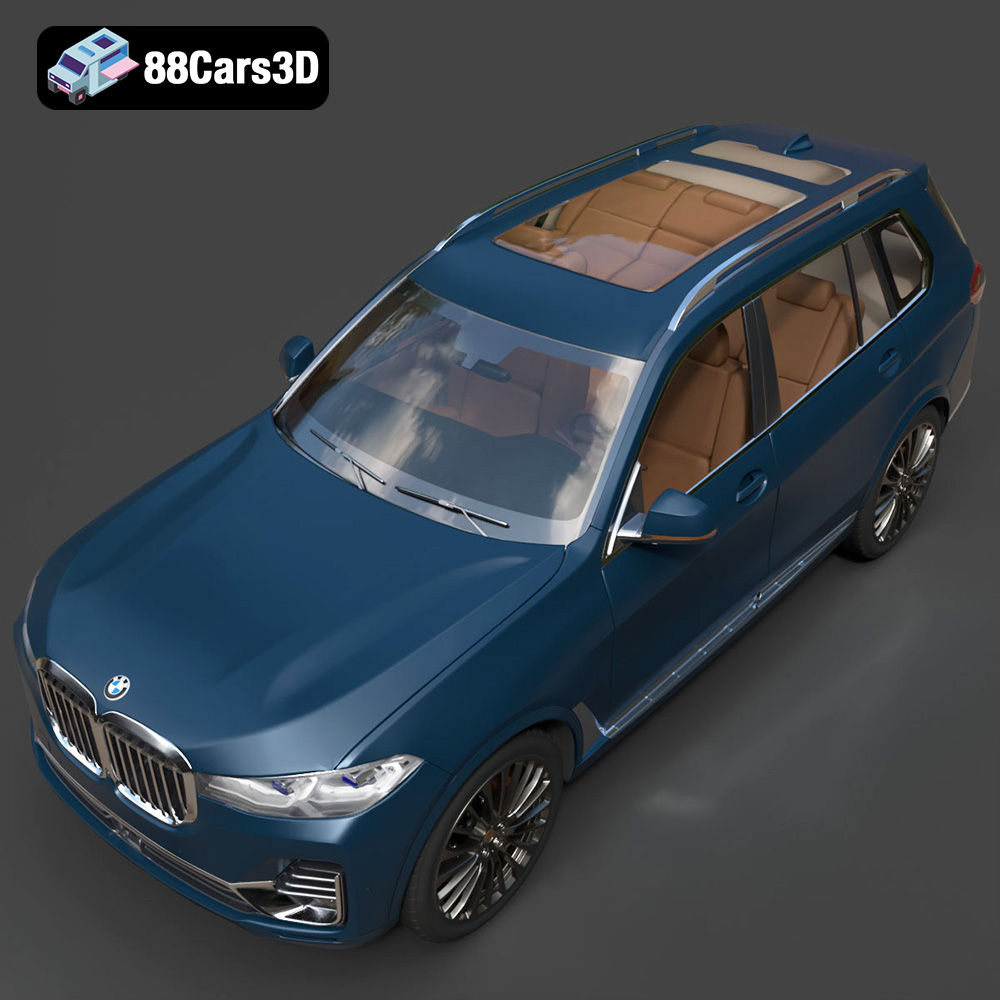
- Seating and Textures: Luxurious three-row seating is meticulously modeled, complete with premium leather textures that react realistically to lighting.
- Driver’s Command Center: The M-Sport style multi-function steering wheel and column are accurately rendered, alongside the modern curved display dual-screen instrument cluster and infotainment setup. These digital elements provide crucial focal points for interior shots and interactive simulations.
- Fine Details: A precisely modeled center console featuring the distinctive glass crystal gear shifter and detailed pedals further enhances the sense of realism and luxury. The geometry is optimized to look superb even in close-up, first-person views.
Technical Specifications & Advantages: Game-Ready Performance
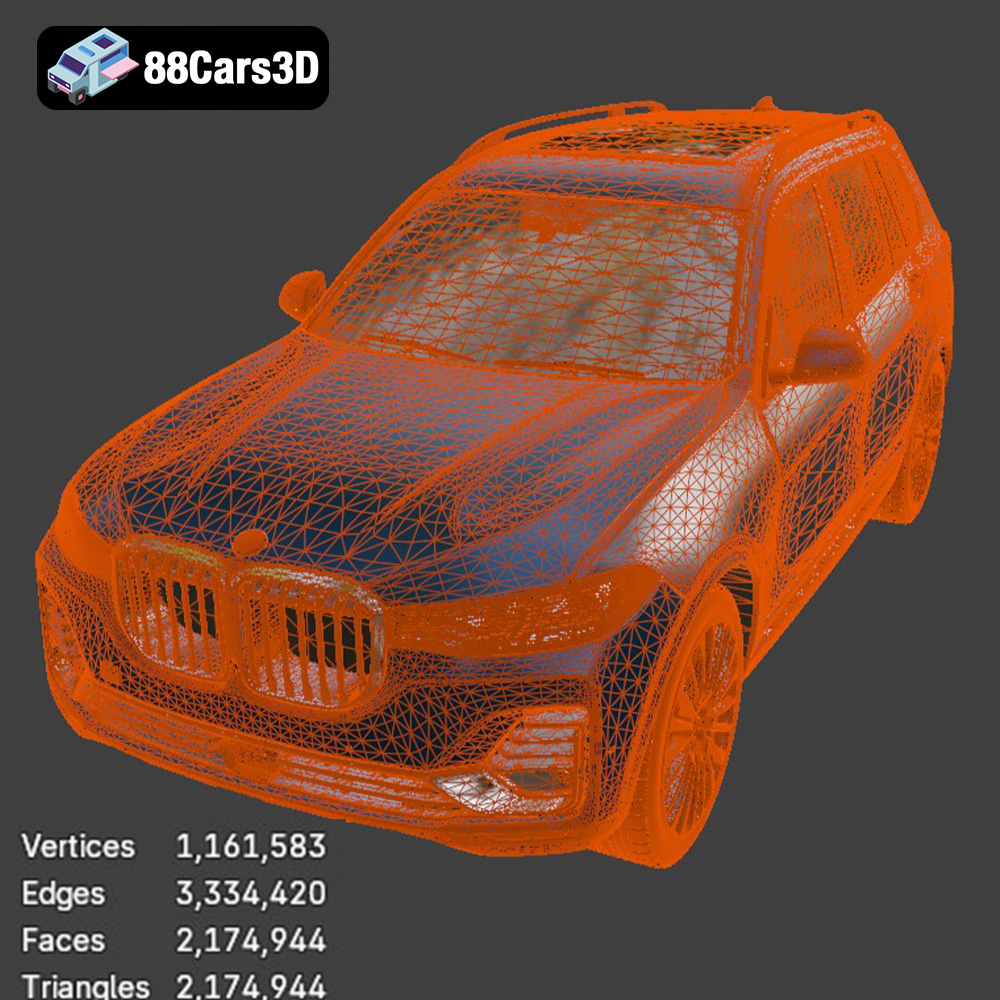
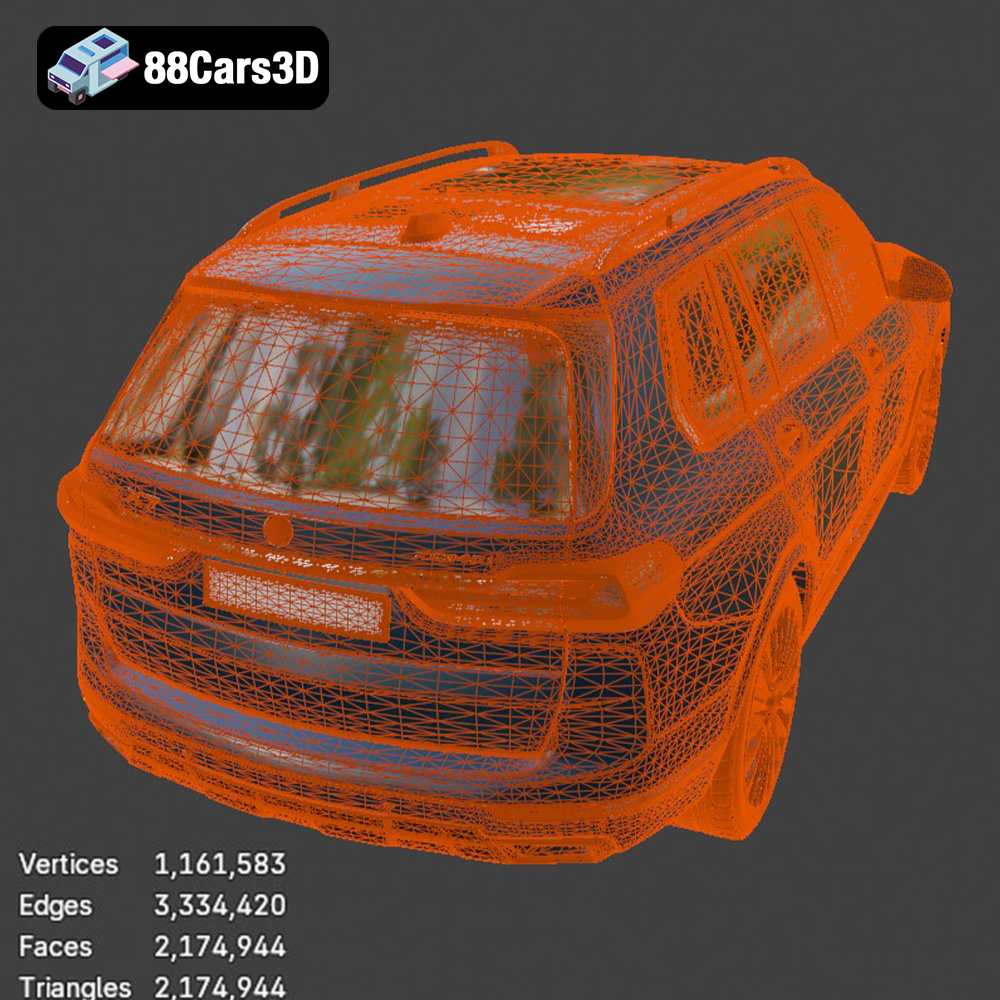
Beyond aesthetics, the technical specifications underpin the model’s utility across various demanding applications. This BMW X7 40i 3D model boasts 2,174,944 triangles, a polycount that strikes a perfect balance. It’s rich enough for high-end visual realism in renders and cinematics, yet carefully optimized for real-time engines like Unreal Engine and Unity, ensuring smooth performance without sacrificing detail. This “game-ready” attribute is a significant advantage, reducing the need for costly and time-consuming manual optimization.
- Real-World Scale: Built with real-world scale accuracy based on actual vehicle chassis data, the model integrates seamlessly into any scene without requiring scale adjustments.
- Animation-Ready Pivots: Proper pivot setups for steering, wheel rotation, and suspension travel are pre-configured, making the model immediately usable for complex animations, vehicle physics simulations, and interactive driving experiences.
- Wide Software Compatibility: Its compatibility with major 3D software platforms and real-time rendering engines, as evidenced by the array of included file formats, underscores its professional-grade versatility.
Unleashing Creativity: Applications Across Industries
The versatility and technical prowess of a premium 3D car model like the BMW X7 40i extend its utility across a broad spectrum of industries, enabling professionals to achieve unprecedented levels of realism and interactivity.
Game Development: Crafting Immersive Driving Experiences
For game developers, finding the right balance between visual fidelity and performance is paramount. The BMW X7 40i 3D model, with its optimized polycount of 2,174,944 triangles and game-ready topology, is an ideal asset for various game genres.
- Open-World & Racing Titles: Its high-end visual realism makes it perfect for AAA racing simulations where every detail counts, or for populating expansive open-world environments where players expect photorealistic vehicles. The separate wheels, suspension, and steering components are crucial for implementing realistic vehicle physics and animation within game engines.
- Simulators: Beyond racing, the model excels in driving simulators, providing an accurate visual representation for training or entertainment. Its proper pivot setup streamlines the integration of realistic car controls and feedback.
- Performance Optimization: While highly detailed, the model’s careful topology ensures it can be integrated efficiently, potentially with LODs (Levels of Detail) generated within the game engine, to maintain high frame rates even in demanding scenes.
AR/VR: Engaging Virtual Showrooms and Experiences
Augmented Reality (AR) and Virtual Reality (VR) are transforming how consumers interact with products, particularly in the automotive sector. High-quality 3D car models are the bedrock of these immersive experiences.
- Virtual Showrooms & Configurator: Imagine a customer exploring the BMW X7 40i in a virtual showroom, able to walk around it, open doors, and even customize paint colors or interior trims in real-time. This model is perfectly suited for such applications, offering the visual fidelity required for realistic product configurators and immersive virtual sales experiences.
- Mobile AR: Leveraging the optimized .glb format, the X7 model can be deployed in mobile AR apps, allowing users to place a virtual X7 in their driveway or living room, viewing it from every angle before making a purchase decision.
Rendering & Visualization: Breathtaking Marketing and Architectural Scenes
For marketing agencies, automotive designers, and architectural visualization artists, the ability to produce stunning, photorealistic renders is non-negotiable. This 3D car model is a powerful tool for high-impact visual content.
- Brand Campaigns & Studio Shots: The X7 model’s detailed exterior and interior, combined with high-quality materials and textures, enable the creation of breathtaking studio renders for advertising, brochures, or website content. Its accuracy ensures brand consistency and premium aesthetics.
- Lifestyle & Architectural Integration: Seamlessly integrate the BMW X7 40i into architectural visualization scenes, showcasing a luxury home with a prestigious vehicle parked in the driveway, or animating it driving through a meticulously rendered cityscape. Its real-world scale and realistic appearance add authenticity to any scene.
3D Printing: Bringing Digital Designs to Life
Beyond the digital realm, the BMW X7 40i 3D model can transcend the screen and become a tangible object. Its availability in .stl format makes it suitable for 3D printing enthusiasts and professionals.
- Display Models & Prototypes: Hobbyists can print scaled-down models (recommended scales: 1:12, 1:18, 1:24) to create intricate display pieces. Designers can use it for rapid prototyping or concept visualization, holding a physical representation of the vehicle.
- Technical Considerations: The product description provides specific 3D print settings, recommending resin printing for fine details, along with advice on layer height, wall thickness, infill, and supports. This guidance ensures a successful print, capturing the intricate details of the exhaust system, mirrors, and body lines.
Optimizing Your Workflow: Integration and Customization
Acquiring a high-quality 3D car model is just the first step. The true power lies in its seamless integration into existing pipelines and the flexibility it offers for customization. The BMW X7 40i 3D model is designed with professional workflows in mind, offering extensive options for artists and developers.
Integration with Major 3D Software
The array of included file formats ensures broad compatibility with industry-standard software. For users of Autodesk 3ds Max, the native .max file provides a complete scene, ready for immediate rendering with engines like V-Ray or Corona. Blender artists can leverage the .blend file, tapping into Cycles or Eevee for photorealistic results or real-time previews. Similarly, the .fbx and .obj formats act as versatile bridges, allowing easy import into Maya, Cinema 4D, or Houdini, where artists can apply their preferred materials, lighting setups, and animation techniques.
- Material Setup: While materials are often pre-configured, integrating the model means adjusting shaders to match your render engine’s specific PBR (Physically Based Rendering) workflow. This involves connecting albedo, roughness, metallic, normal, and displacement maps to achieve realistic surface properties.
- Scene Integration: Importing the BMW X7 40i into an architectural scene or a studio lighting setup is straightforward due to its real-world scale. This saves valuable time that would otherwise be spent scaling and aligning assets.
Real-Time Engine Implementation (Unreal & Unity)
For game development and real-time visualization, integrating the BMW X7 40i model into Unreal Engine or Unity is a streamlined process. The .fbx format is a workhorse for this, reliably importing mesh, materials, and animation data. For Unreal Engine users, the dedicated .unreal asset provides an even more optimized starting point.
- PBR Materials: Setting up materials in game engines involves ensuring textures are correctly connected to the engine’s PBR shader nodes, often adjusting parameters for metallic, roughness, and normal maps to achieve the desired visual response under different lighting conditions.
- Collision Meshes & LODs: For optimal game performance, dedicated collision meshes should be generated within the engine, and Levels of Detail (LODs) can be created to swap out higher-poly versions of the car for simpler ones as the camera moves further away. This ensures smooth gameplay without visual compromises.
- Interactive Elements: With separate components for wheels, steering, and suspension, developers can easily create interactive blueprints or scripts for driving mechanics, door openings, or customizable car features within the engine.
Extensive Customization Options
The premium nature of this 3D car model also lies in its adaptability. It offers extensive customization options to tailor the vehicle to specific project requirements.
- Color & Finish Modification: Change body colors to match authentic factory options or apply custom finishes like matte, gloss, or various metallic hues. This is crucial for product configurators and diverse marketing campaigns.
- Texture Adaptation: Modify tire textures for different scenarios, swapping between off-road variants for rugged scenes or street variants for urban environments.
- Lighting & Environment: Adapt the model’s materials and reflections to respond accurately to various lighting environments, from bright outdoor sunlight to dramatic studio setups or moody nighttime scenes.
This level of flexibility ensures that the BMW X7 40i 3D model is not a static asset, but a dynamic tool that can be continuously adapted and integrated into evolving projects, saving countless hours of modeling and optimization.
Why Choose High-Fidelity 3D Car Models from 88cars3d.com?
In a competitive digital landscape, the choice of 3D assets can significantly impact project timelines, budgets, and overall quality. Opting for a meticulously crafted 3D car model from a specialized marketplace like 88cars3d.com offers distinct advantages that streamline production and elevate visual output.
- Uncompromised Quality: 88cars3d.com is dedicated to providing high-quality 3D car models. This means assets like the BMW X7 40i are not just visually appealing but also technically sound, featuring clean topology, accurate geometry, and optimized performance for various applications. This ensures that artists and developers receive professional-grade models that meet stringent industry standards.
- Time and Cost Efficiency: Creating a vehicle model of this complexity and detail from scratch can take hundreds of hours of expert labor. By purchasing a pre-made, high-fidelity asset, studios and freelancers can dramatically cut down on development time and costs, reallocating resources to other critical aspects of their projects.
- Versatility Across Pipelines: The extensive range of included file formats (.blend, .fbx, .obj, .glb, .stl, .ply, .unreal, .max) ensures that the model can be seamlessly integrated into virtually any 3D software or real-time engine. This eliminates compatibility headaches and provides flexibility regardless of your preferred workflow.
- Specific Optimization: Models on 88cars3d.com often come with specific optimizations, such as “game-ready” polycounts, proper pivot setups for animation, and accurate real-world scaling, which are crucial for real-time applications and complex simulations.
- Focus on Core Strengths: By sourcing premium 3D car models, designers can focus on their core strengths—lighting, animation, scene composition, and interactive development—rather than spending valuable time on foundational modeling tasks.
Investing in a high-fidelity 3D car model like the BMW X7 40i from 88cars3d.com is an investment in efficiency, quality, and the ability to produce truly stunning and immersive digital experiences.
Conclusion: Driving Innovation with Exceptional 3D Car Models
The demand for high-fidelity 3D car models continues to accelerate, driven by the expanding frontiers of game development, immersive AR/VR experiences, and photorealistic rendering. Assets like the BMW X7 40i 3D model exemplify the pinnacle of digital automotive craftsmanship, offering a powerful blend of visual accuracy, technical optimization, and versatile compatibility. From its intricately modeled exterior and luxurious interior to its game-ready polycount and wide range of file formats, this model provides an unparalleled foundation for any project requiring premium automotive visualization.
Whether you’re an indie game developer crafting the next big racing title, an architectural visualizer bringing a luxury scene to life, or a marketing professional creating a captivating brand campaign, the BMW X7 40i 3D model offers the precision and flexibility you need. Its comprehensive file format support, including .blend, .fbx, .obj, .glb, .stl, .ply, .unreal, and .max, ensures seamless integration into virtually any professional workflow, empowering you to focus on creativity rather than compatibility issues.
Embrace the future of digital automotive design and elevate your projects with exceptional 3D car models. Explore the possibilities and discover this premium asset and many others at 88cars3d.com, your destination for high-quality, professional 3D car models that truly drive innovation.
Featured 3D Model
BMW X7 40i 3D Model Download STL FBX OBJ GLB Blend
Detailed Product Description:
The BMW X7 40i stands as the pinnacle of luxury SUVs, blending commanding presence with refined elegance. This 3D model captures the iconic large kidney grille, sleek aerodynamic profile, and premium exterior aesthetics that define the flagship Bavarian Sports Activity Vehicle. From its muscular proportions to the intricately modeled TwinPower Turbo inline 6-cylinder engine bay components and dual trapezoidal exhaust system, every detail has been faithfully recreated.
Boasting a detailed 2,174,944 triangles, this model delivers unparalleled high-fidelity visuals. While highly detailed, the topology is carefully structured for next-gen game development engines like Unreal Engine 5, high-end architectural visualization, and immersive VR/AR experiences, offering premium realism from every angle.
Perfect for luxury automotive configurators, high-end architectural visualization scenes, AAA racing titles, and premium brand marketing animations.
Exterior Features:
- Accurate BMW X7 40i frame geometry and proportions
- Detailed engine block representing the TwinPower Turbo inline-6
- Dual trapezoidal exhaust system with chrome finish details
- Signature split-headlight LED array and 3D sculpted taillights
- Intricate multi-spoke alloy wheels with realistic tire tread
- Accurate air suspension setup and undercarriage details
- Separate wheels, suspension, and steering components for animation
Cockpit & Interior Features:
- Luxurious three-row seating and premium leather textures
- M-Sport style multi-function steering wheel and column
- Curved display dual-screen instrument cluster and infotainment setup
- Precisely modeled center console with glass crystal gear shifter and pedals
- Optimized geometry for first-person POV in gaming
Technical Specifications & Advantages:
- Game-Ready & Optimized: 2,174,944 triangles strikes perfect balance for real-time engines (Unreal, Unity) while maintaining high-end visual realism
- Real-world scale accuracy based on actual vehicle chassis
- Proper pivot setup for steering, wheel rotation, and suspension travel
- Compatible with major 3D software platforms and real-time rendering engines
Applications:
- Game Development: Ideal for open-world games, racing titles, and simulators due to optimized polycount
- AR/VR: Perfect for immersive virtual showrooms, configurators, and mobile AR experiences
- Rendering & Visualization: Excellent for brand campaigns, lifestyle scenes, and studio lighting setups
- 3D Printing: Convertible to .stl format for display-scale hobbyists
3D Print Settings:
- Recommended scale: 1:12 / 1:18 / 1:24
- Layer height: 0.04–0.12 mm (Resin printing recommended for fine details)
- Wall thickness: 1.2–2.0 mm
- Infill: 20–30%
- Supports: Required for detailed parts like exhaust, mirrors, handlebars
- Print orientation: Frame printed angled for structural integrity; wheels printed separately
- Post-processing: Sanding, primer, and authentic factory colors with metallic finishes
Customization Options:
- Change body/tank colors (e.g., factory colors, custom finishes)
- Modify tire textures (off-road vs. street variants)
- Adjust material finishes (matte, gloss, metallic)
- Adapt lighting for different environments
Included File Formats:
.blend, .fbx, .obj, .glb, .stl, .ply, .unreal, .max
Tags:
bmw, x7-40i, suv, luxury-suv, game-ready, high-poly, optimized, car-3d-model, game-asset, rendering, vr-ar, blend, fbx, obj, glb, stl, ply, unreal, max
$86.50
View This Model
Related Tags
.blend
.bmw
.fbx
.glb
.luxury suv
.max
.obj
.ply
.rendering
.stl
.unreal
car-3d-model
game asset
game-ready
high poly
optimized
SUV
VR/AR
x7-40i