Get 20% OFF All Premium 3D & STL Models!

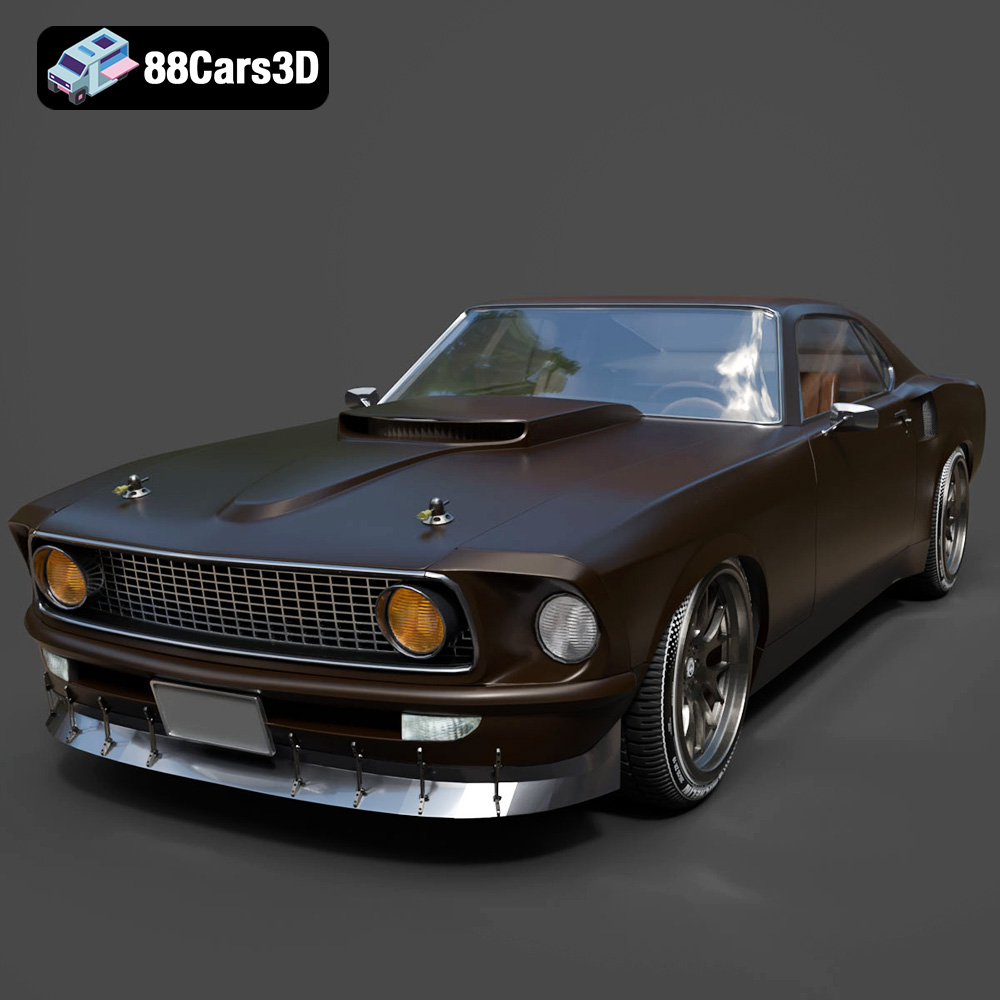
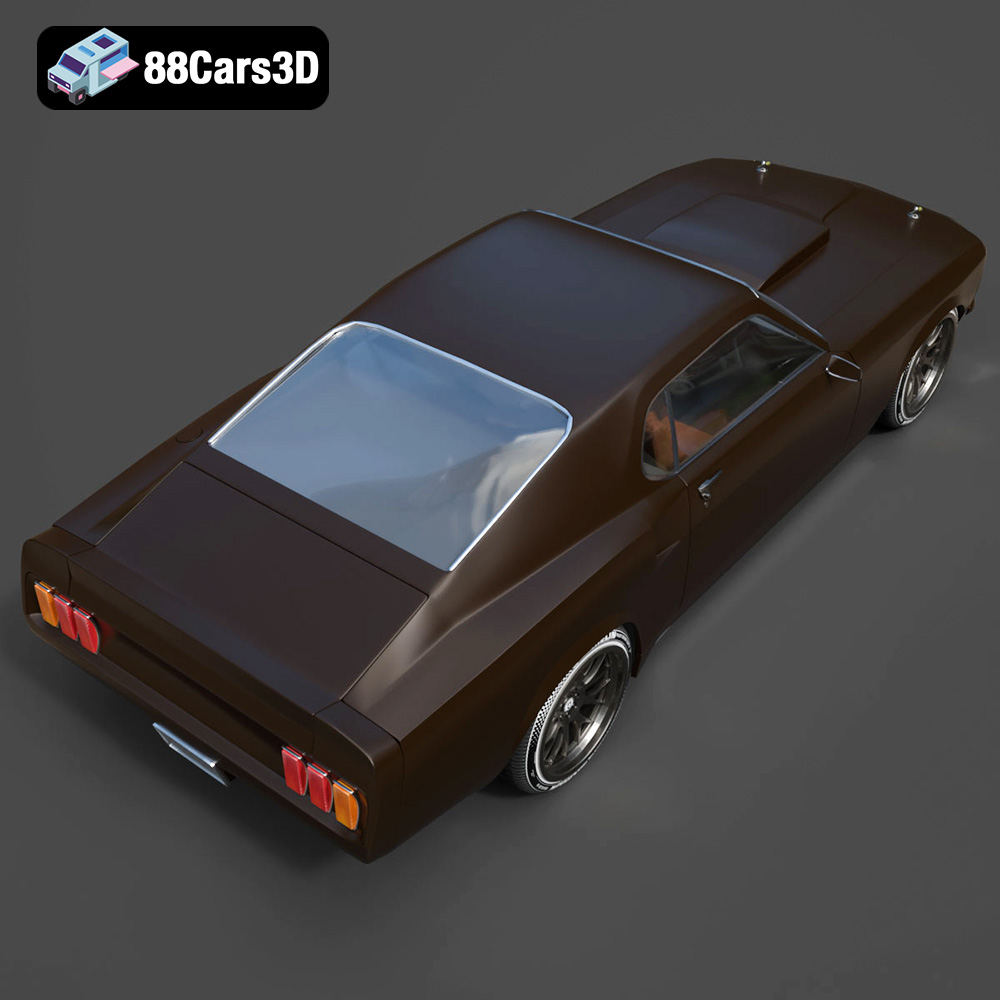
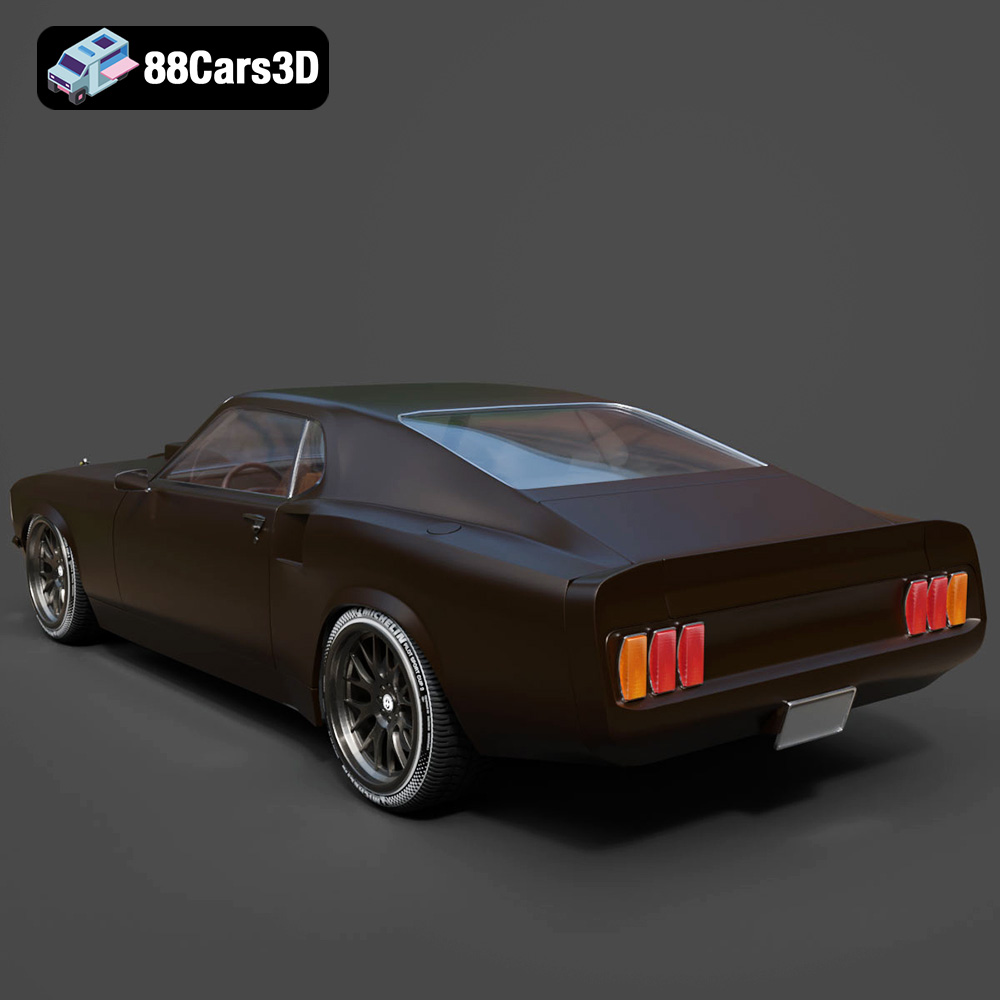
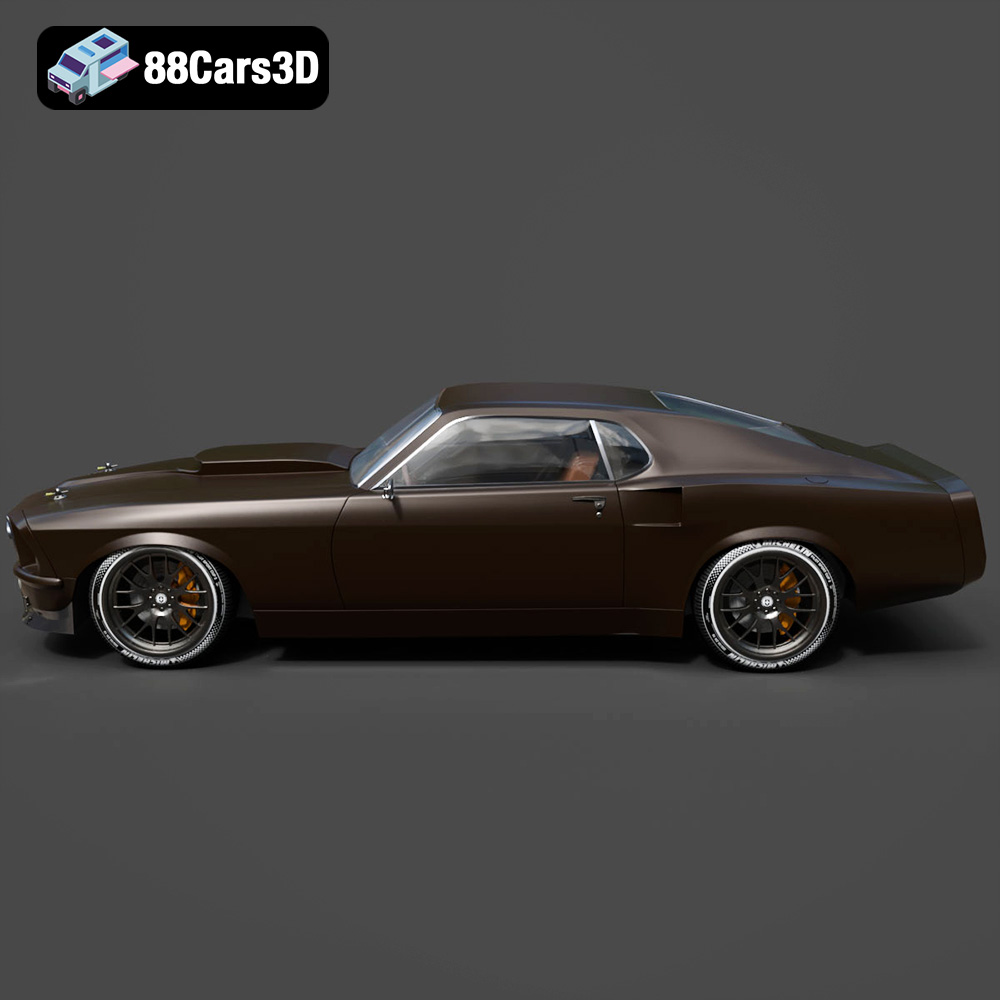
Few vehicles embody the raw power and distinctive style of American muscle quite like the 1969 Ford Mustang Mach 1. With its aggressive fastback silhouette, signature sportsroof, and a roaring V8 under the hood, this car isn’t just a piece of automotive history; it’s a cultural phenomenon. For designers, game developers, filmmakers, and digital artists, the allure of recreating such an icon in the virtual realm is irresistible. The challenge, however, lies in capturing its essence with uncompromising fidelity, ensuring that every curve, every chrome glint, and every engine detail translates perfectly from steel to pixels.
Enter the world of high-quality 3D car models, where meticulous craftsmanship meets cutting-edge technology. Whether you’re building an immersive open-world game, developing a photorealistic automotive advertisement, or creating a virtual showroom, the foundation of your project hinges on the quality of your digital assets. This is precisely where a premium model, such as the Ford Mustang Mach 1 1969 3D Model available on 88cars3d.com, becomes an invaluable resource. This comprehensive asset doesn’t just provide a visual representation; it offers a versatile, technically robust foundation for a myriad of professional applications, ensuring that the legendary Mach 1 continues to captivate audiences, both real and virtual.
When working with 3D car models, understanding the various file formats is paramount. Each format serves a specific purpose, offering unique advantages for different stages of the production pipeline, from initial design and animation to real-time rendering and physical fabrication. The Ford Mustang Mach 1 1969 3D Model, for instance, comes bundled with an impressive array of formats, providing unparalleled flexibility for professionals across various industries. Let’s delve into the technical nuances of these essential file types:
The .blend file format is the native format for Blender, a powerful and widely used open-source 3D creation suite. When you download a .blend file, you’re getting a fully editable Blender scene. This includes the complete mesh geometry, all materials and textures (often set up with PBR workflows), lighting rigs, camera setups, and any existing animation data. For artists who use Blender for automotive rendering, game asset creation, or animation, the .blend file provides the most comprehensive and flexible starting point. You can directly open, modify, and render the model within Blender’s intuitive environment, leveraging its robust sculpting, texturing, and rendering capabilities with cycles or Eevee.
.fbx (Filmbox) is arguably the most common and versatile file format for exchanging 3D data between different software applications. Developed by Autodesk, FBX excels at preserving essential scene information, including mesh data, materials, textures, animations, rigging, and even camera and light data. It’s the go-to format for transferring animated 3D car models into real-time game engines like Unreal Engine and Unity, as well as digital content creation tools such as 3ds Max, Maya, and Cinema 4D. Its widespread adoption makes it an ideal choice for collaborative workflows and ensures that complex automotive assets, complete with pivot points for wheels and steering, transfer seamlessly.
The .obj (Wavefront Object) format is one of the oldest and most universally supported 3D file formats. It primarily stores geometry data, including vertices, UV coordinates, normals, and material references (via an accompanying .mtl file). While it doesn’t support animation or advanced scene data like FBX, its simplicity and widespread compatibility make it an excellent choice for straightforward mesh exchange. For users who need to import a static Ford Mustang Mach 1 model into almost any 3D software for further texturing, sculpting, or rendering, .obj is a reliable and hassle-free option.
.glb (GL Transmission Format Binary) is the binary version of glTF, a modern, open-standard format specifically designed for efficient transmission and loading of 3D scenes and models in web and AR/VR applications. A .glb file packages all necessary data – geometry, materials, textures, and animations – into a single, self-contained binary file, making it incredibly easy to integrate into web browsers (via WebGL), AR platforms (like Apple ARKit or Google ARCore), and VR experiences. For showcasing the Ford Mustang Mach 1 in a virtual showroom on a website or in an augmented reality app, .glb offers optimal performance and portability.
.stl (STereoLithography) is the de facto standard file format for 3D printing. It describes only the surface geometry of a 3D object using a collection of interconnected triangles. While it contains no color or texture information, it’s precisely what 3D printers need to understand the physical form of an object. The inclusion of an .stl file for the Ford Mustang Mach 1 allows hobbyists and professionals to transform the digital model into a tangible collectible, perfect for display-scale replicas. The product description specifically highlights recommended settings for successful printing, a crucial detail for anyone looking to bring this classic muscle car into the physical world.
The .ply (Polygon File Format, or Stanford Triangle Format) is primarily used for storing 3D data from 3D scanners, CAD systems, and other applications that require precise mesh information. It can store various properties for each vertex (such as color, normals, transparency) and face (such as color), making it suitable for more complex data sets than .obj. For technical analysis, reverse engineering, or integrating the Mustang Mach 1 model into engineering software, .ply offers a robust and detailed representation of the mesh.
The .unreal format, though not a generic file extension, typically refers to an asset package specifically prepared for Unreal Engine. This often means the model (likely an FBX imported and processed) has been optimized, had its materials converted to Unreal’s PBR system, LODs (Levels of Detail) generated, and collision meshes created, all within the Unreal Engine environment. For game developers leveraging the power of Unreal Engine, an “unreal” specific asset provides a ready-to-use solution, minimizing setup time and maximizing performance for real-time environments. It implies that the asset is not just compatible, but *optimized* for the engine.
Similar to .blend for Blender, the .max file is the native project format for Autodesk 3ds Max, a leading software for 3D modeling, animation, rendering, and visualization. A .max file contains all scene data, including geometry, materials, textures, lighting, cameras, animations, and any modifiers or plug-in specific data. For professionals using 3ds Max for high-end automotive rendering or detailed animations, the .max file provides full access to the original project setup, allowing for extensive modifications and leveraging 3ds Max’s powerful rendering engines like V-Ray or Corona.
The availability of these diverse formats ensures that the Ford Mustang Mach 1 1969 3D Model is not just a high-quality asset, but a highly adaptable one, ready for integration into virtually any professional 3D workflow.
The mark of a truly professional 3D car model lies in its meticulous attention to detail and its technical optimization. The Ford Mustang Mach 1 1969 3D Model from 88cars3d.com exemplifies this, providing a digital rendition that is both visually stunning and functionally robust for demanding applications. This isn’t merely a pretty mesh; it’s a precisely engineered digital asset designed for peak performance.
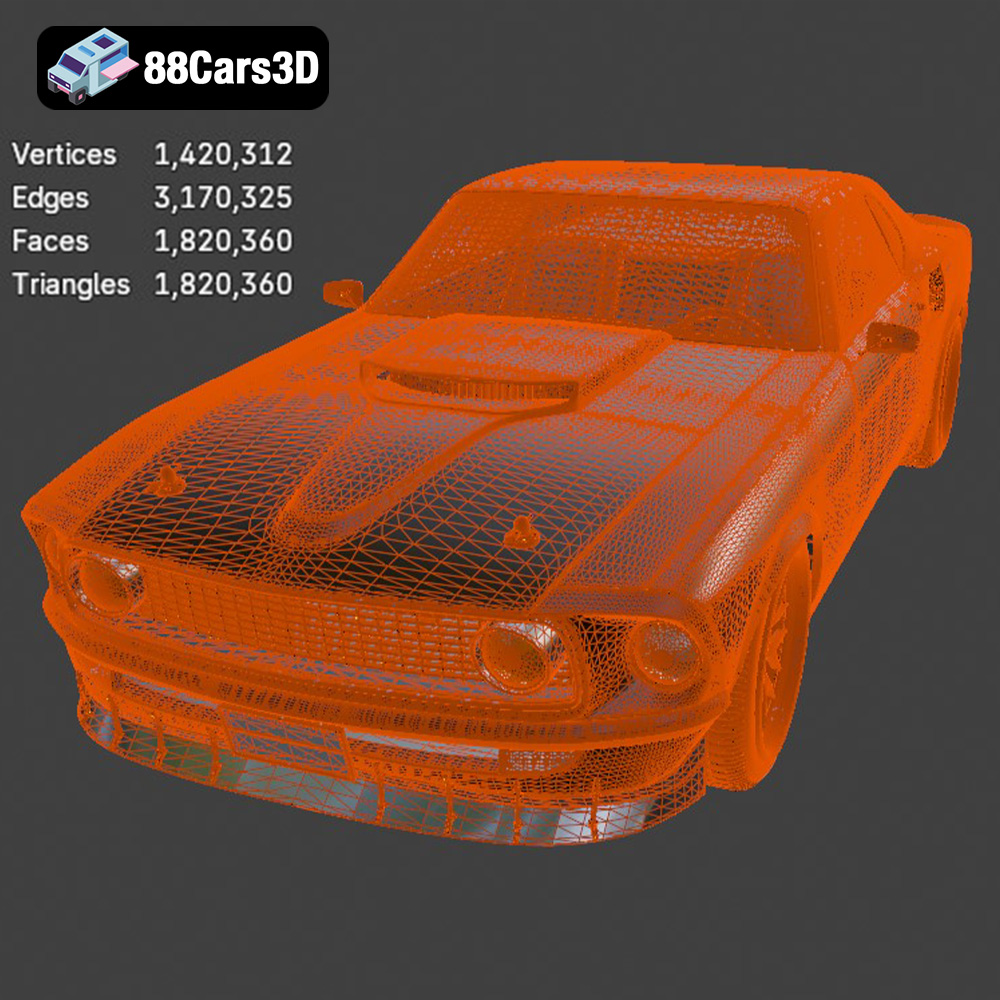
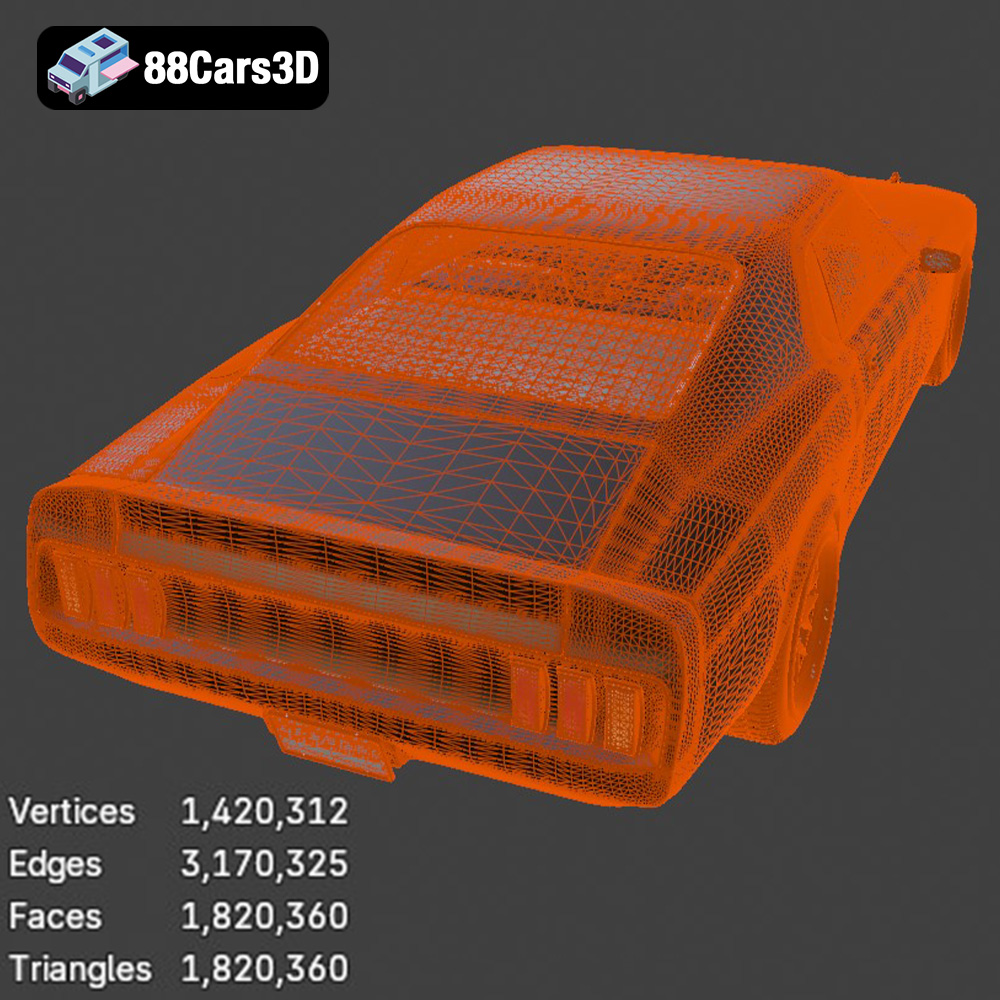
At the heart of its realism is a highly detailed topology boasting 1,820,360 triangles. This polycount strikes a critical balance: it’s rich enough to capture the nuanced curves and intricate details of the Mach 1, from the aggressive lines of its fastback body to the subtle contours of its hood scoop and the complex geometry of its engine bay. Yet, it remains optimized for efficient rendering, making it suitable for both high-end cinematic sequences and real-time game engines. The geometry is clean, ensuring smooth subdivision and believable reflections under various lighting conditions, crucial for automotive rendering.
The model adheres to real-world scale accuracy, based on the actual vehicle chassis. This precision is vital for integration into architectural visualization scenes, accurate simulators, or augmented reality experiences where context and proportional correctness are paramount. Imagine placing this Mach 1 into a virtual driveway or historical street scene – its accurate dimensions ensure it blends seamlessly with its environment.
The excellence of this 3D model extends far beyond the exterior shell. The product description highlights a wealth of internal and mechanical details:
Furthermore, the model features separate wheels, suspension, and steering components. This is a game-changer for animators and game developers, as it allows for realistic suspension travel, steering articulation, and individual wheel rotation without complex rigging setups. The proper pivot setup for these elements drastically reduces development time and enhances the realism of any dynamic scene.
The versatility of the Ford Mustang Mach 1 1969 3D Model is demonstrated through its seamless integration into various professional workflows, catering to the specific needs of different creative industries. Whether you’re aiming for a high-fidelity static render or a fully interactive real-time experience, this asset is engineered to deliver.
For studios focused on automotive rendering, advertising, or architectural visualization, the Mach 1 model provides an ideal foundation. Using software like 3ds Max (with the included .max file) or Blender (with the .blend file), artists can achieve breathtaking photorealism.
Upon importing the .max or .blend file, artists can leverage the included PBR (Physically Based Rendering) materials. In 3ds Max, this would involve fine-tuning V-Ray or Corona Renderer materials, adjusting roughness, metallic, and normal maps to accurately simulate the car’s paint, chrome, glass, and interior textures. Blender users can utilize Cycles or Eevee, adjusting node setups to achieve the desired look. Strategic lighting setups, ranging from studio HDRIs to complex environment lighting, can then be applied to highlight the Mach 1’s iconic silhouette and show off its intricate details. Case in point: a marketing agency working on a campaign for a vintage car show could use this model to create stunning promotional imagery, complete with dramatic lighting and reflections, without the expense and logistics of a physical car shoot.
With separate components for wheels, suspension, and steering, animating the Mach 1 becomes intuitive. Artists can easily set up turntable animations for product showcases, simulate realistic driving sequences, or even create elaborate cinematic scenes. Imagine a digital recreation of a classic street race, or a virtual car commercial showcasing the Mach 1’s legendary prowess – the model’s structure facilitates these dynamic scenarios, reducing the need for extensive rigging from scratch.
The “Game-Ready & Optimized” nature of this 3D model makes it a standout choice for developers working with real-time engines like Unreal Engine and Unity. The 1,820,360 triangles offer a perfect balance, providing visual richness without bogging down real-time performance.
The included .fbx file is the primary conduit for transferring the model into these engines. In Unreal Engine, developers can import the FBX, which typically brings in geometry, basic materials, and skeletal animation data (if present). The next step involves converting the imported materials to Unreal’s native PBR material system, often by creating instances and linking texture maps (Albedo, Normal, Roughness, Metallic, Ambient Occlusion). For game-specific optimization, developers can generate LODs (Levels of Detail) to ensure efficient rendering at varying distances, and create custom collision meshes for accurate physics interactions within the game world. The .unreal file hints at this level of pre-optimization, saving significant development time.
Similarly, in Unity, the FBX can be imported, materials configured (using Unity’s Standard PBR shader), and components added for vehicle physics. The separate wheel and suspension pivots are crucial here, allowing for easy integration with vehicle controller systems, providing realistic handling and visual feedback for racing titles or open-world adventures. A studio developing a classic car racing simulator would find this Mach 1 model a plug-and-play solution, significantly accelerating their asset pipeline.
The model’s optimized polycount ensures smooth framerates even in demanding scenes with multiple vehicles. The real-world scale and accurate pivot setups mean that physics simulations and driving mechanics will behave realistically from the outset. For first-person POV in VR racing games or immersive driving experiences, the detailed cockpit and interior are invaluable, drawing players deeper into the simulation.
The utility of a high-quality 3D car model like the Ford Mustang Mach 1 1969 extends beyond traditional rendering and game development, venturing into cutting-edge immersive technologies and tangible physical replicas. Its diverse file formats open doors to exciting new applications.
Augmented Reality (AR) and Virtual Reality (VR) are transforming how we interact with digital content, offering immersive experiences that blur the lines between the real and virtual. The Mach 1 model is perfectly poised for these applications.
Using the .glb format, developers can easily integrate the Ford Mustang Mach 1 into web-based virtual showrooms or dedicated AR/VR applications. Imagine a customer exploring the Mach 1 in full 3D from their living room via an AR app on their phone, or stepping into a VR showroom to walk around the car, examine its interior, and even “sit” in the driver’s seat. The model’s optimized geometry and PBR materials ensure that it looks fantastic on mobile devices and VR headsets, delivering a premium, interactive experience. Automotive brands can utilize this for virtual product launches or highly engaging online configurators, allowing users to customize paint colors and finishes in real-time, leveraging the model’s customization options.
Beyond marketing, the Mach 1 model can be used for educational VR experiences, allowing automotive enthusiasts or mechanics to virtually dismantle and study the car’s components. Historians could use it to create interactive digital archives, preserving the legacy of this iconic vehicle in an accessible, engaging format. The detailed engine bay and undercarriage components become invaluable for these learning applications.
For hobbyists, collectors, or even professional designers who want a physical representation, the inclusion of the .stl format is a significant advantage. The Ford Mustang Mach 1 1969 3D Model can be transformed from a digital asset into a tangible display piece.
The .stl file provides the necessary triangular mesh data for any 3D printer to interpret and fabricate the model. The product description provides specific, expert-level 3D print settings, which are crucial for a successful print:
This level of detail in the printing recommendations demonstrates a thorough understanding of physical production, ensuring that users can confidently turn their digital Mach 1 into a stunning physical replica. It means enthusiasts can collect a piece of automotive history, customized to their liking, without scouring vintage markets.
A truly valuable 3D model offers more than just an accurate representation; it provides a canvas for creative expression. The Ford Mustang Mach 1 1969 3D Model excels in this regard, giving artists and developers extensive customization options to tailor the vehicle to their specific project needs.
The foundational PBR materials included with the model are designed for flexibility. This allows for straightforward modifications to critical visual attributes:
These material customizations are not just aesthetic; they are essential storytelling tools, allowing the Mach 1 to fit seamlessly into any narrative or visual style a project demands.
Beyond the car itself, the model’s adaptability extends to its interaction with lighting and environments:
The combination of internal details, external fidelity, and extensive customization options empowers creators to use this Mach 1 model not just as an off-the-shelf asset, but as a fully integrated, adaptable component of their unique vision.
In the fast-paced world of 3D content creation, time is a precious commodity. Sourcing high-quality, pre-made 3D car models significantly streamlines production, allowing artists and developers to focus on the creative aspects of their projects rather than spending countless hours on modeling from scratch. The Ford Mustang Mach 1 1969 3D Model exemplifies the value of such an asset.
The comprehensive nature of this model – from its meticulously detailed exterior and interior to its optimized topology and a broad range of included file formats – makes it an intelligent investment for any professional. Whether your goal is to populate a virtual city, craft an unforgettable advertising campaign, develop an engaging racing game, or even print a collectible replica, this asset provides the foundation for success. Its game-ready optimization ensures performance in real-time applications, while its high visual fidelity guarantees stunning results in cinematic renders.
For studios, freelancers, and enthusiasts seeking to elevate their projects with iconic automotive assets, platforms like 88cars3d.com offer a curated selection of premium 3D car models. The Ford Mustang Mach 1 1969 3D Model stands as a testament to the blend of technical precision and artistic passion that defines top-tier digital assets. By choosing such a robust and versatile model, creators not only save development time but also ensure their final output resonates with authenticity and visual excellence, keeping the legend of the Mach 1 alive and thriving in the digital domain.
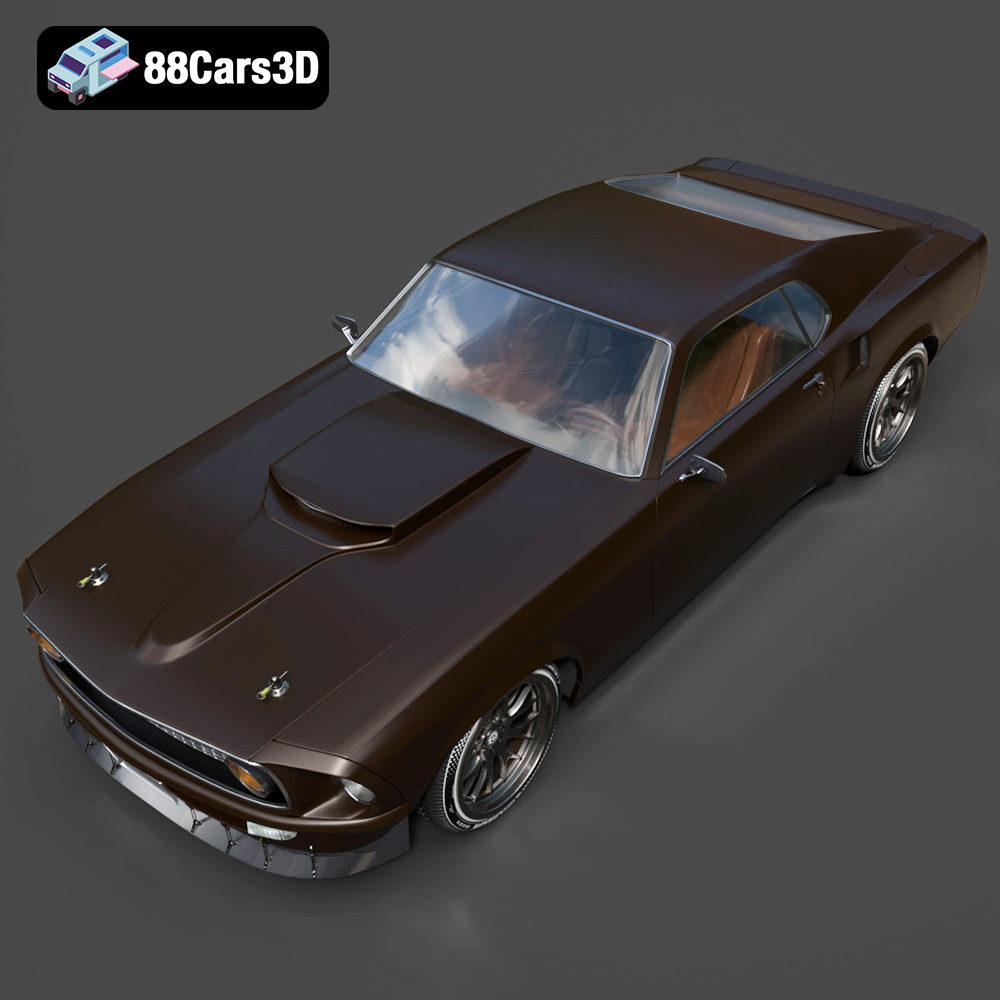
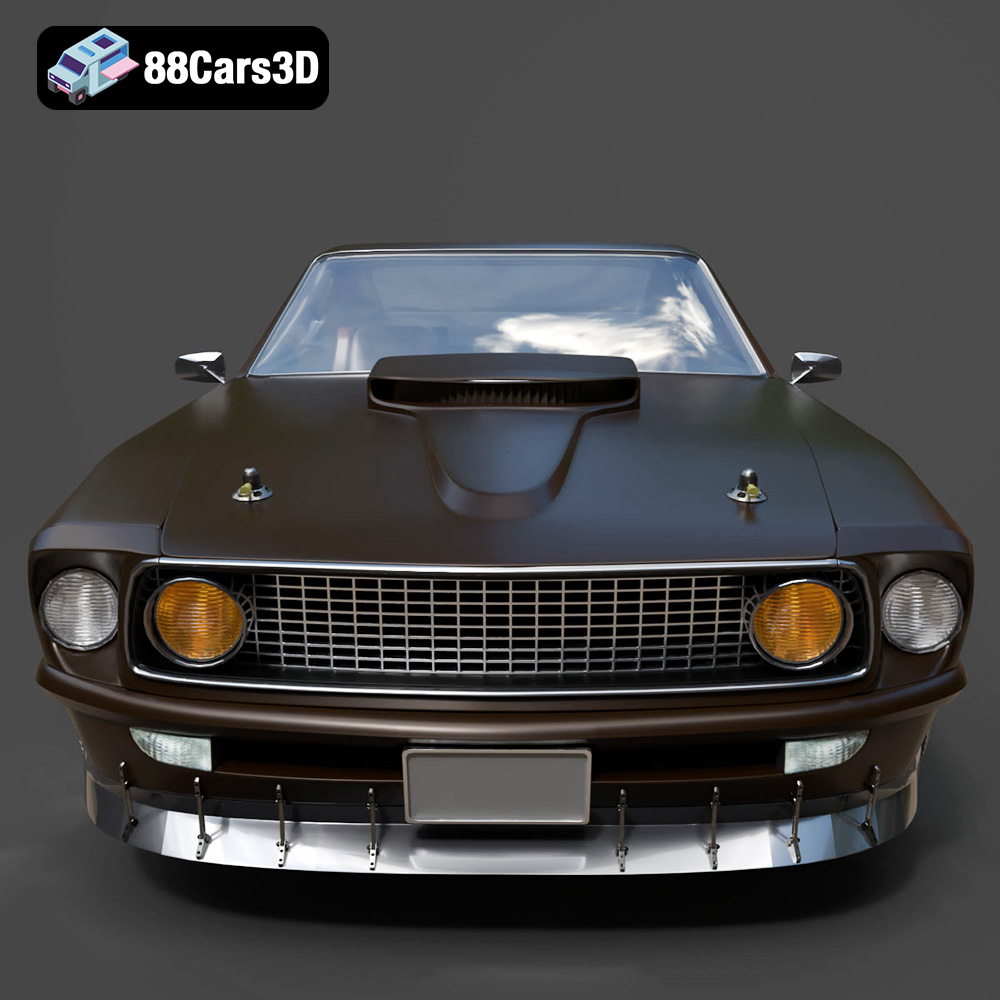
The 1969 Ford Mustang Mach 1 stands as a defining pillar of American muscle car heritage. This legendary fastback is celebrated for its aggressive stance, signature sportsroof styling, and high-performance V8 pedigree. Our 3D model meticulously captures its iconic visual elements, from the menacing front grille and quad headlights to the muscular rear haunches, distinctive hood scoop, and classic dual exhaust system. Boasting a highly detailed topology of 1,820,360 triangles, this 3D model is crafted for maximum visual fidelity while maintaining optimized structures for modern rendering engines. It is designed to deliver photorealistic results for high-end rendering, game development, cinematic animation, and interactive AR/VR applications.
$82.50
.1969
.blend
.fbx
.ford
.glb
.max
.obj
.ply
.rendering
.stl
.unreal
car-3d-model
classic-car
game asset
game-ready
muscle-car
mustang-mach-1
optimized
VR/AR