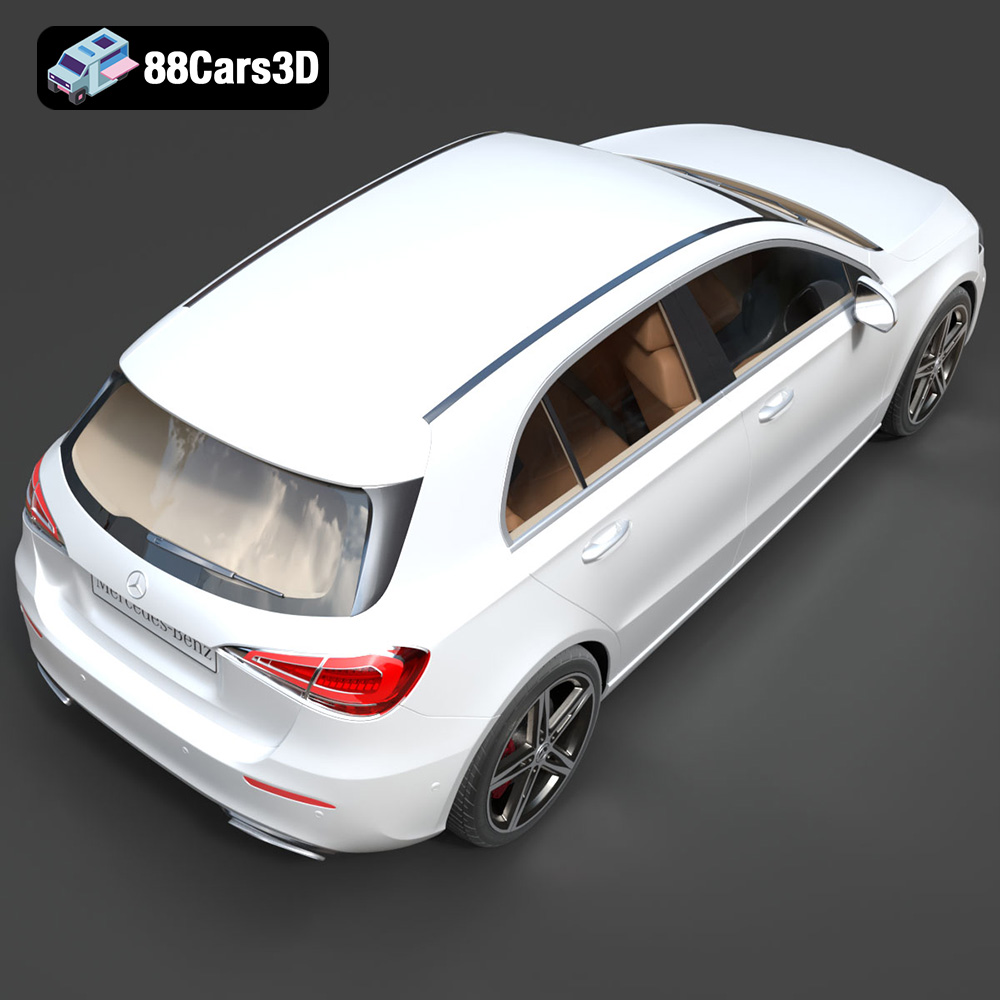
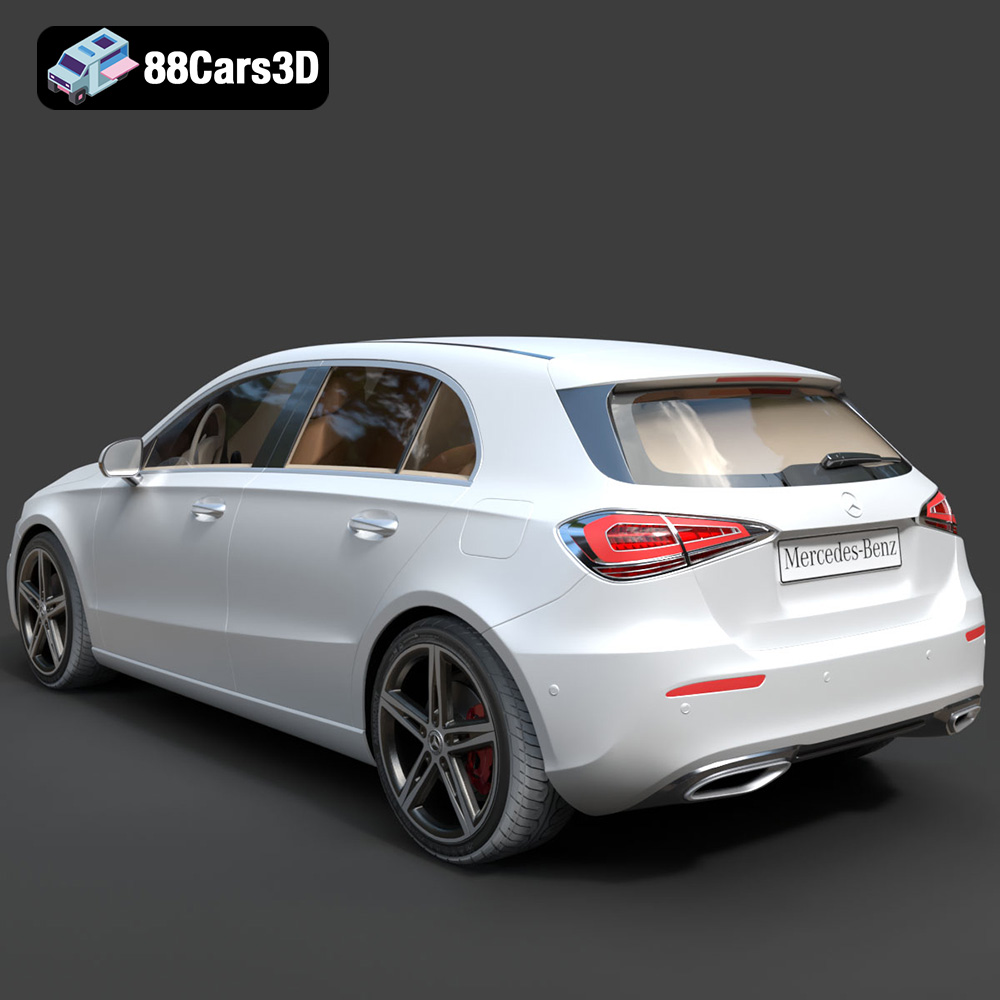
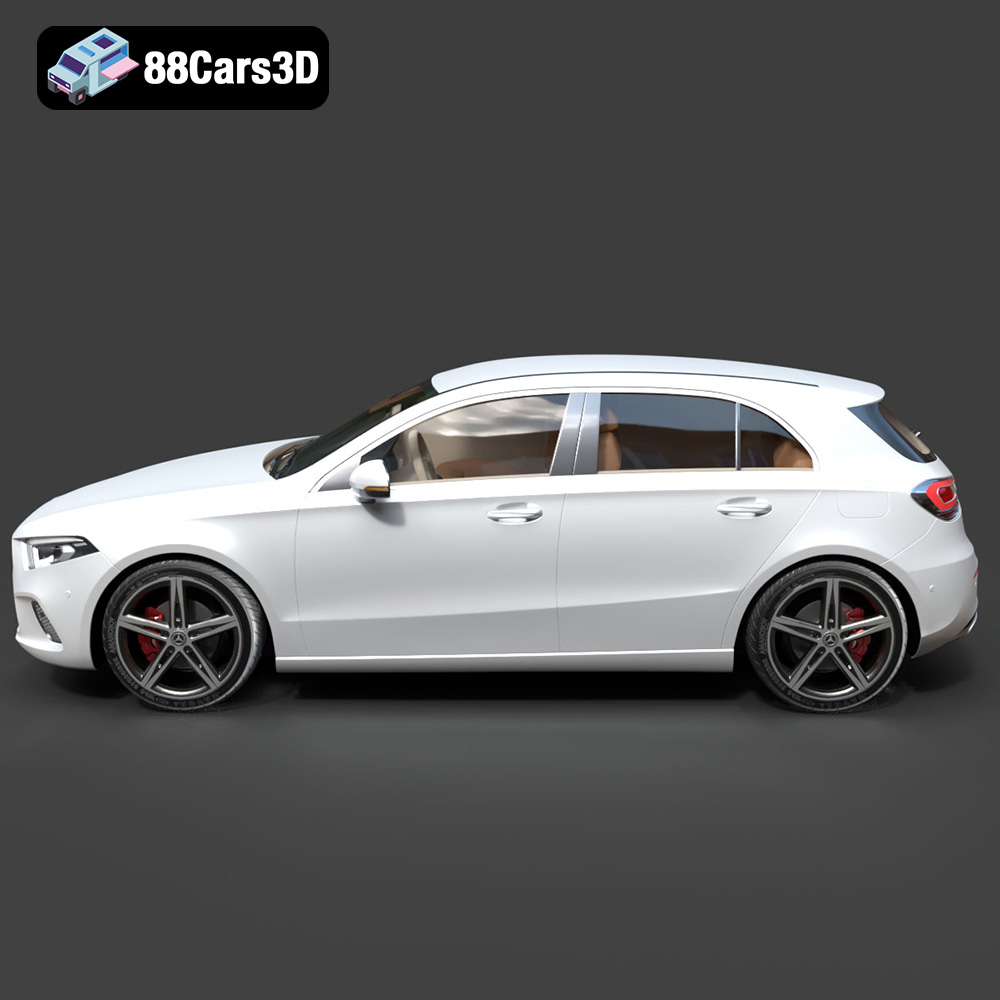
Get 20% OFF All Premium 3D & STL Models!

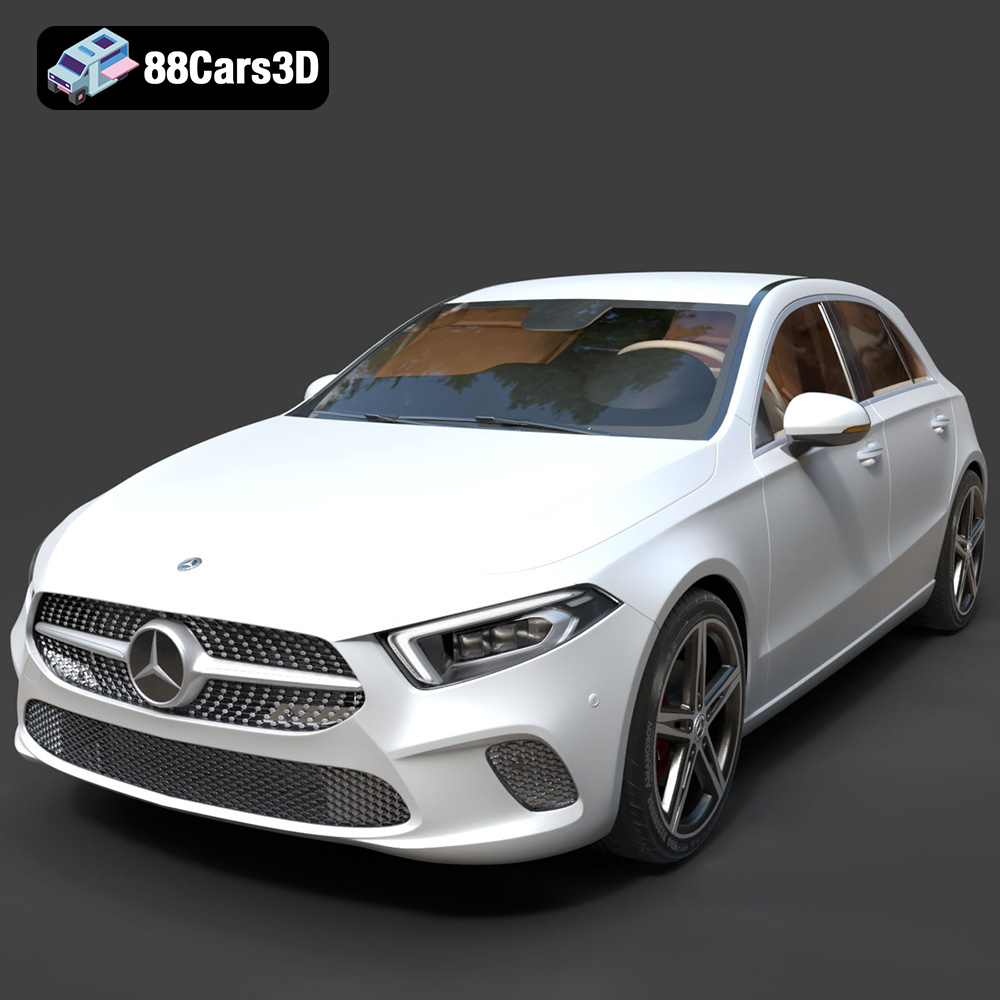
In the dynamic world of digital content creation, the need for hyper-realistic and functionally robust 3D assets has never been greater. From cinematic automotive renders that define luxury brands to the intricate vehicle physics powering next-generation racing simulators, the quality of a 3D car model is paramount. It’s not just about aesthetics; it’s about topological integrity, technical precision, and seamless integration into diverse professional workflows. Today, we’re diving deep into what makes a truly exceptional 3D car model, using a prime example from the curated collection at 88cars3d.com: the meticulously crafted Mercedes Benz A H-08 3D Model. This asset stands as a testament to the blend of artistic vision and technical mastery required to bring iconic vehicles to life in the digital realm, serving as a versatile foundation for everything from immersive AR/VR experiences to precise 3D printing.
Choosing the right 3D model file format is a critical decision that impacts workflow, compatibility, and the ultimate use of your digital asset. Each format is designed with specific applications in mind, offering unique advantages for different stages of the production pipeline. The Mercedes Benz A H-08 3D Model, available at 88cars3d.com, is a prime example of a versatile asset, providing a comprehensive suite of file types to cater to virtually any professional need. Let’s explore these essential formats in detail.
The .blend format is native to Blender, the popular open-source 3D creation suite. When you download a .blend file, you’re not just getting the raw mesh; you’re receiving a complete, self-contained Blender project. This includes the model’s geometry, materials with their intricate node setups (often PBR-ready), textures, lighting, cameras, and even animation data if present. For artists and studios heavily invested in Blender, this format offers the highest degree of editability and flexibility. You can tweak shaders, modify geometry, or re-rig components with ease, making it ideal for customization and developing bespoke scenes around the core asset. The .blend file for the Mercedes Benz A H-08, for instance, would allow an artist to immediately jump into modifying body colors, interior upholstery, or even fine-tuning the procedural elements of the tire treads.
The .fbx (Filmbox) format is an industry-standard proprietary file format developed by Autodesk, primarily used for interoperability between different 3D software and game engines. It’s a robust format capable of storing complex scene data, including geometry (meshes, polygons), materials (with basic properties and texture assignments), skeletal animations, and even camera and light information. Its widespread adoption makes it the go-to choice for transferring assets into real-time environments like Unreal Engine and Unity. For a game-ready asset like the Mercedes Benz A H-08, the .fbx file ensures that the optimized mesh, proper pivot setups for steering and suspension, and any included animation data are cleanly imported, ready for immediate integration into a game project or a virtual reality experience.
The .obj (Wavefront OBJ) format is one of the oldest and most universally supported 3D file types. It’s a simple, text-based format primarily used to store 3D geometry (vertices, normals, texture coordinates, and faces). While it doesn’t typically store advanced scene data like animation or complex material node setups, it’s excellent for mesh data transfer between almost any 3D application. It often comes paired with an .mtl (material) file that defines basic material properties and references texture maps. The .obj format for the Mercedes Benz A H-08 serves as a reliable fallback, guaranteeing that the core geometry can be accessed and utilized even in highly specialized or legacy software, or as a starting point for re-texturing and re-shading in a new environment.
The .glb (GLB, GL Transmission Format Binary) is the binary version of the glTF format, designed for efficient transmission and loading of 3D scenes and models by applications. It’s particularly optimized for web-based 3D, augmented reality (AR), virtual reality (VR), and other real-time applications where file size and quick loading are crucial. A single .glb file typically embeds all the necessary data—geometry, materials, textures, and animations—into one self-contained package. For showing off the Mercedes Benz A H-08 in an online configurator or an AR app on a mobile device, the .glb format is indispensable, ensuring smooth performance and visual integrity without requiring complex parsing of multiple files.
The .stl (Stereolithography) format is the standard file type for 3D printing. It represents a 3D model as a series of connected triangles, defining only the surface geometry of an object without color, texture, or other CAD attributes. While the Mercedes Benz A H-08 is a high-fidelity rendering asset, its provision in .stl format means it can be directly prepared for physical manifestation. Hobbyists and professionals alike can convert this digital marvel into a tangible display model, benefiting from the precision geometry for accurate physical scale reproductions. The product description for the Mercedes A H-08 even provides recommended print settings, highlighting its readiness for this application.
The .ply (Polygon File Format) is another popular format for storing 3D data, particularly known for its ability to store various properties for each vertex, face, or edge, such as color, normal vectors, and confidence values. It’s often used in scientific applications, 3D scanning, and CAD/CAM systems where precise geometric data and additional attributes are important. While less common for general animation or rendering workflows than FBX or OBJ, its inclusion for the Mercedes Benz A H-08 speaks to its versatility, allowing for in-depth analysis or integration into specialized engineering pipelines where precision mesh data is critical.
The .unreal format, or more accurately, the inclusion of “Unreal Engine-ready” assets, often implies a pre-packaged asset designed for direct import and optimal performance within the Unreal Engine ecosystem. This might involve specifically configured FBX files with proper scaling and collision meshes, pre-made material instances, and even blueprint setups. For the Mercedes Benz A H-08, this means an asset that has been tested and optimized to seamlessly integrate into Unreal Engine projects, making it a powerful choice for game developers and real-time visualization artists seeking maximum efficiency and performance without extensive setup time. This saves countless hours of optimization and material creation within the engine itself, streamlining the development process.
The .max format is the native file type for Autodesk 3ds Max, one of the leading software packages for 3D modeling, animation, and rendering. Similar to the .blend file for Blender users, the .max file provides a complete 3ds Max scene. This allows users to access all layers, modifiers, materials, lighting setups, and any animation keyframes precisely as they were configured by the original artist. For those working in architectural visualization, broadcast animation, or high-end product rendering, the .max file for the Mercedes Benz A H-08 is invaluable. It offers unparalleled control over every aspect of the scene, enabling complex animations of steering, suspension, and doors, or sophisticated V-Ray/Corona renders with bespoke lighting environments.
Crafting a high-fidelity 3D car model like the Mercedes Benz A H-08 is an intricate process that blends artistic observation with rigorous technical execution. It demands an understanding of industrial design, fluid surface sculpting, and intricate mechanical engineering, all translated into polygons and textures. The goal is not just to replicate the vehicle’s appearance but to capture its essence, its “feel,” and its functional attributes in a digital form.
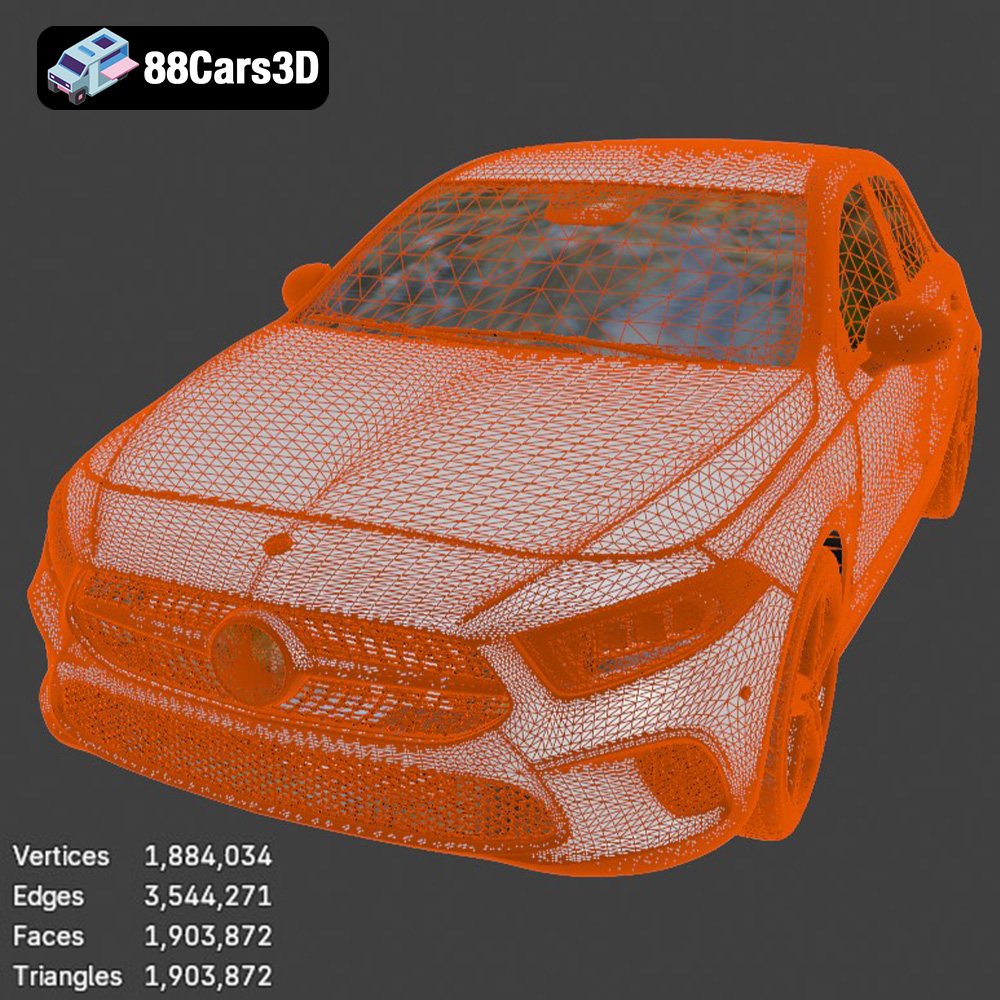
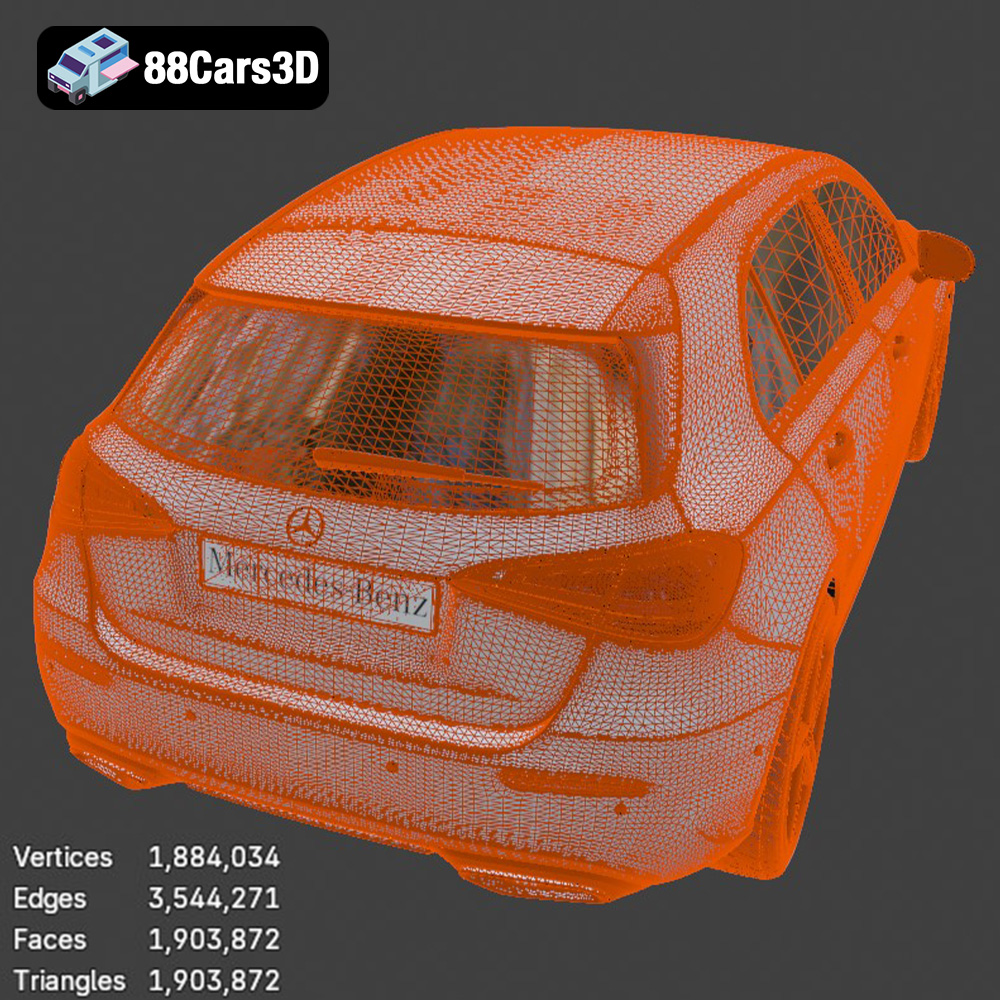
The foundation of any photorealistic 3D car model is its geometry. For the Mercedes Benz A H-08, this means accurately modeling every curve, panel gap, and aerodynamic line to match the real-world vehicle. Artists typically rely on extensive reference materials—blueprints, CAD data, and high-resolution photographs—to ensure that the digital model adheres to real-world scale and proportions. The model’s 1,903,872 triangle count for the Mercedes A H-08 is a testament to this level of detail, providing enough polygonal density to capture subtle surface variations without being overly cumbersome for rendering or real-time applications. This precision extends to components like the detailed engine bay elements, the dual exhaust system, and the complex LED headlight assemblies, all of which require meticulous attention to individual form and fit.
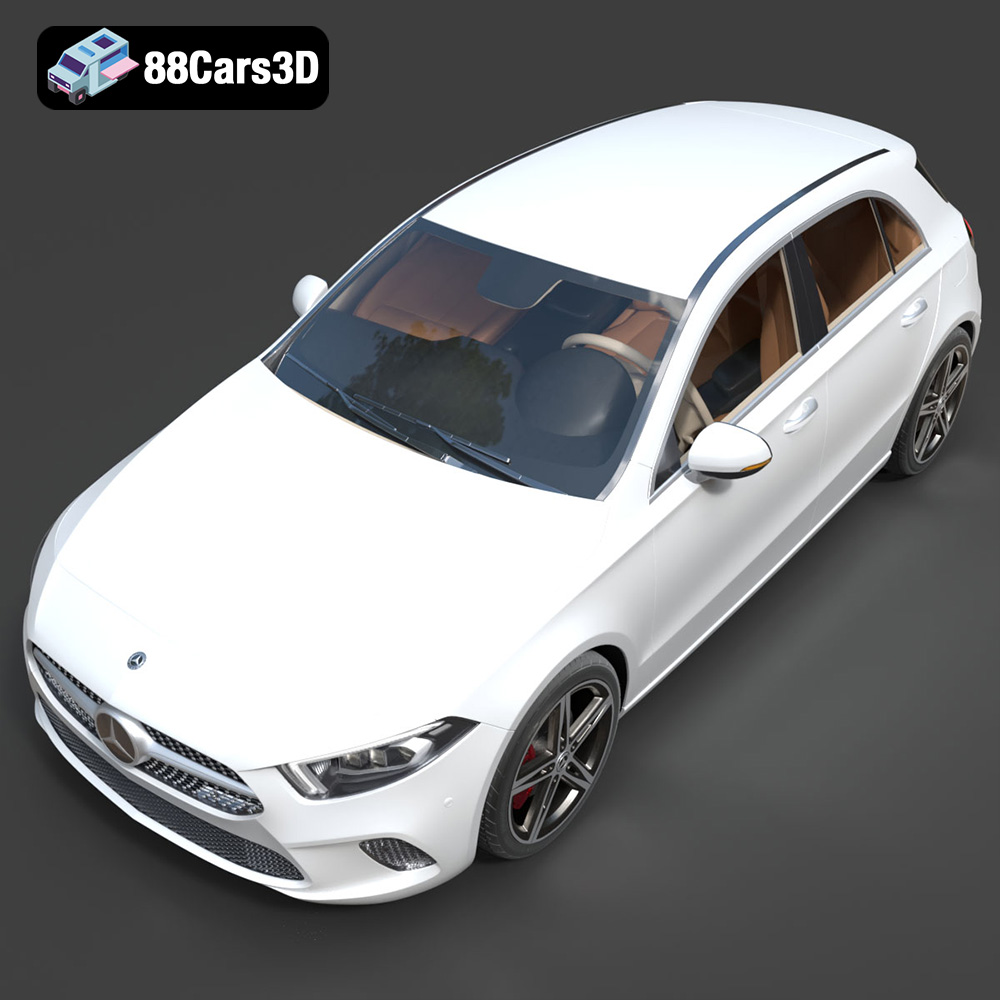
Beyond the impressive exterior, a truly high-quality automotive 3D model extends its fidelity to the interior. The Mercedes Benz A H-08 boasts a luxurious cockpit with ergonomic seating, a multifunction steering wheel, and a high-tech dual-screen digital instrument cluster. Each of these elements requires dedicated modeling and careful texture application to evoke the sense of luxury and technological sophistication of the actual car. From the stitching on the seats to the subtle reflections on the infotainment panel, these interior details are crucial for immersive experiences, especially in VR walkthroughs or first-person gaming perspectives where the user will directly interact with the digital environment. Furthermore, exterior details such as authentic multi-spoke alloy wheels with high-resolution tire tread patterns and accurately modeled suspension components elevate the overall realism, making the model suitable for close-up renders and dynamic animations.
While detail is crucial, it must be balanced with performance, especially for game development and real-time applications. The “polycount paradox” refers to the challenge of achieving visual fidelity while maintaining an optimized mesh that runs smoothly on various hardware. The Mercedes Benz A H-08 model strikes this balance masterfully with its 1,903,872 triangle count. This is a “game-ready” optimization that allows for photorealistic visual realism without bogging down a game engine or VR experience. Clean topology, achieved through careful mesh construction, ensures that the model deforms correctly during animation, renders efficiently, and can even be further optimized for specific platforms through techniques like LOD (Level of Detail) generation without sacrificing its core integrity. The proper pivot setup for steering, wheel rotation, and suspension travel is a critical part of this optimization, allowing animators and developers to quickly implement realistic vehicle dynamics.
The versatility of a well-crafted 3D car model extends its utility far beyond simple rendering. Premium assets, like the Mercedes Benz A H-08 available at 88cars3d.com, become indispensable tools across a spectrum of industries, driving innovation in design, entertainment, and interactive experiences.
In the realm of video games, a high-quality 3D car model is the heart of any driving experience. The Mercedes Benz A H-08, with its optimized polycount and meticulous detailing, is perfectly suited for next-generation racing titles, urban driving simulators, and expansive open-world games. Game developers leverage its accurate geometry and properly set up pivots for wheels, steering, and suspension to create believable physics and fluid animations. The inclusion of separate components for animation simplifies the rigging process, allowing for realistic vehicle damage, dynamic suspension travel over varied terrain, and responsive steering. Its “game-ready” status means less time spent on optimization and more time focusing on gameplay mechanics and environmental integration, accelerating development cycles for studios aiming for photorealistic in-game visuals.
For architectural visualization (arch-viz) and product rendering, the context surrounding a design is as important as the design itself. Placing a high-fidelity 3D car model like the Mercedes Benz A H-08 into an architectural scene instantly elevates its realism and provides a sense of scale, luxury, and lifestyle. Imagine a sleek rendering of a modern home with the Mercedes A H-08 parked in the driveway, or a bustling urban street scene populated with meticulously detailed vehicles. These renders are crucial for marketing, design presentations, and sales, allowing clients to visualize themselves within the proposed environment. The model’s premium quality, with its authentic alloy wheels, LED lighting, and detailed exterior, ensures that it holds up to close-up shots and sophisticated studio lighting setups, making it an excellent choice for brand campaigns and luxury lifestyle scenes.
Augmented Reality (AR) and Virtual Reality (VR) are transforming how consumers interact with products, and automotive 3D models are at the forefront of this revolution. The Mercedes Benz A H-08 is ideally suited for immersive virtual showrooms, configurators, and mobile AR experiences. With the ability to dynamically change body colors, adjust material finishes, and explore the interior in full 360-degree immersion, potential buyers can “experience” the car before it even exists physically. Its optimized geometry and inclusion of formats like .glb are crucial for smooth performance in these demanding real-time environments, ensuring that users encounter a fluid and responsive interaction. From showcasing customization options to providing detailed interior tours, this model empowers automotive brands and retailers to create engaging, cutting-edge sales and marketing tools.
The true power of a versatile 3D asset like the Mercedes Benz A H-08 3D Model lies in its seamless compatibility with industry-standard professional software. Whether you’re a seasoned professional using 3ds Max, an independent artist favoring Blender, or a game developer building in Unreal Engine, this model integrates effortlessly, allowing artists to unleash their creativity without technical roadblocks.
For artists focused on animation and high-end rendering, the native .max and .blend formats included with the Mercedes Benz A H-08 are invaluable. In 3ds Max, users can load the complete scene, taking advantage of pre-configured materials and potentially even animation rigs. This allows for quick setup of sophisticated rendering scenes using engines like V-Ray or Corona. Artists can easily create dynamic animations showcasing the vehicle’s features, from opening doors to articulated suspension, leveraging the model’s separate components (wheels, suspension, steering) and proper pivot points. Similarly, Blender users receive a fully editable scene, enabling them to dive directly into Cycles or Eevee rendering. The ability to modify tire textures, change body colors, or adjust material finishes (matte, gloss, metallic, carbon fiber) allows for endless creative exploration. The clean topology of the Mercedes A H-08 ensures smooth subdivision and displacement, crucial for achieving truly photorealistic results in close-up renders.
For those building interactive experiences and games, the .fbx and “Unreal Engine-ready” assets are essential. Importing the Mercedes Benz A H-08 into Unreal Engine is a streamlined process. The .fbx format ensures that the optimized mesh, UV maps, and material slots are imported correctly. The “Unreal Engine-ready” designation implies that the model has likely been pre-tested and possibly configured with basic material setups or collision meshes, significantly reducing setup time. Developers can then apply advanced PBR (Physically Based Rendering) materials, leverage Unreal’s powerful lighting systems (Ray Tracing, Lumen, Nanite), and integrate the car into game logic via blueprints. The model’s careful optimization and proper pivot points are critical here, enabling smooth performance, realistic physics simulations, and responsive driver controls within the game world. This makes the Mercedes A H-08 an ideal asset for rapid prototyping and final production in demanding real-time environments.
A high-quality 3D model isn’t just a static object; it’s a flexible foundation for creative expression. The Mercedes Benz A H-08 offers extensive customization options, critical for any professional workflow. Artists can easily change body colors to match factory palettes or create bespoke finishes, modify tire textures for different seasonal variants, and adjust material properties to achieve desired looks (matte, gloss, metallic, carbon fiber). These customizations are typically achieved through PBR (Physically Based Rendering) workflows, where texture maps for albedo, metallic, roughness, normal, and ambient occlusion accurately simulate how light interacts with surfaces. The included formats, especially .blend and .max, provide access to these material setups, allowing artists to fine-tune every visual aspect and adapt the lighting for various environments, ensuring the car always looks its best, whether in a studio render or an outdoor scene.
While typically used for digital visualization and interactive media, the capabilities of a highly detailed 3D model extend into the physical world through 3D printing. The Mercedes Benz A H-08 3D Model’s availability in .stl format opens up exciting possibilities for designers, hobbyists, and educators to create tangible representations of this digital asset.
The .stl format, specifically designed for additive manufacturing, converts the model’s complex polygonal mesh into a series of interconnected triangles that define its surface. This “watertight” mesh is then sliced by specialized software into hundreds or thousands of thin layers, which the 3D printer uses to build the object layer by layer. For the Mercedes Benz A H-08, preparing for 3D printing involves considering scaling, internal structure, and support requirements. The recommended scales (1:12, 1:18, 1:24) provide a good balance between detail retention and manageable print size. Due to the model’s intricate details, resin printing (SLA/DLP) is highly recommended for achieving the finest resolution and smooth surfaces, especially for components like the detailed engine bay, LED clusters, and multi-spoke wheels. Even though it’s designed for digital, the underlying precise geometry makes it a robust candidate for physical output.
Successful 3D printing of a detailed automotive model like the Mercedes A H-08 requires adherence to specific best practices. Layer height is crucial for detail; a finer layer height (0.04–0.12 mm) for resin printers will capture subtle curves and panel lines more accurately. Wall thickness (1.2–2.0 mm) ensures the physical model is robust enough without being overly heavy or wasting material. Infill (20–30%) provides structural integrity. Most importantly, supports are essential for overhangs and intricate features like the exhaust system, mirrors, and the steering wheel, preventing sagging during the printing process. Print orientation also plays a significant role; printing the frame angled can enhance structural integrity, while printing wheels separately allows for cleaner finishes and potentially different material choices. Post-processing, including sanding, priming, and applying authentic factory colors with metallic finishes, will transform a raw print into a display-worthy replica, truly bringing the digital Mercedes Benz A H-08 into the real world.
In the fast-evolving landscape of digital design and interactive media, the demand for high-quality, versatile 3D car models is unwavering. Assets like the Mercedes Benz A H-08 3D Model exemplify the pinnacle of digital craftsmanship, offering an intricate blend of aesthetic fidelity and technical optimization. From its meticulously recreated exterior and luxurious interior to its “game-ready” polycount and extensive file format support, this model empowers professionals across diverse industries.
Whether you’re developing a cutting-edge racing game, rendering a photorealistic architectural visualization, crafting an immersive AR/VR experience, or even producing a detailed 3D printed replica, the Mercedes Benz A H-08 stands as a robust and reliable foundation. Its compatibility with major software like 3ds Max, Blender, and Unreal Engine, coupled with its flexible customization options, ensures that it integrates seamlessly into any creative workflow.
Investing in premium 3D car models from reputable sources like 88cars3d.com is not just about acquiring a digital asset; it’s about gaining a competitive edge, saving valuable development time, and elevating the quality of your projects. The Mercedes Benz A H-08 is more than just a model; it’s a testament to precision engineering and artistic detail, ready to drive your next creative endeavor forward.
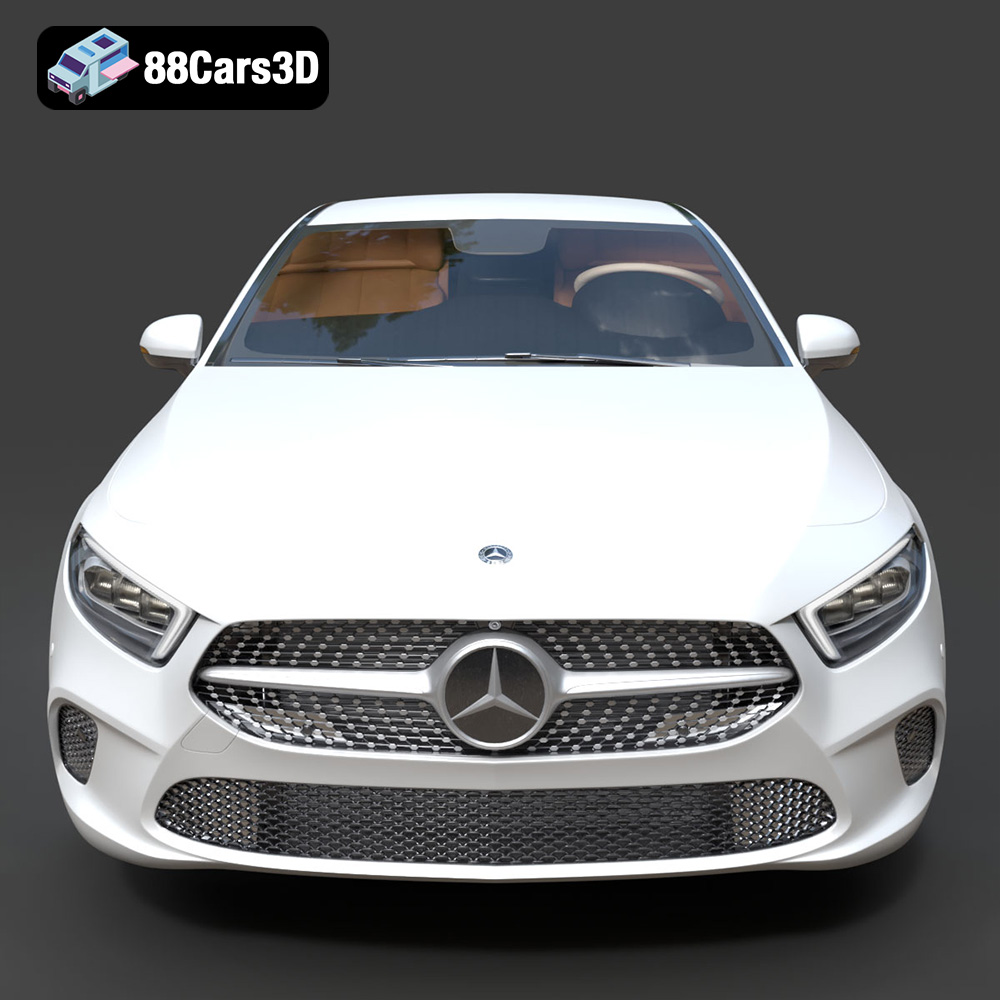
Experience the precision and modern luxury of the Mercedes Benz A H-08 with this exceptionally detailed 3D model. Capturing the iconic heritage and sleek aerodynamics of the renowned German marque, this model faithfully recreates the aggressive front fascia, prominent grille, and dynamic styling cues that make this class a standout. From its meticulously crafted exterior bodywork to the finely detailed lighting clusters, every curve and contour reflects the premium quality expected from Mercedes-Benz. Featuring a comprehensive high-fidelity mesh with 1,903,872 triangles, this 3D model delivers unparalleled visual fidelity. Designed with clean topology and optimization for next-generation engines, it stands as the perfect asset for high-end automotive visualization, cutting-edge game development, and immersive AR/VR applications.
$83.50
.blend
.fbx
.glb
.hatchback
.max
.obj
.ply
.rendering
.stl
.unreal
a-class
car-3d-model
game asset
game-ready
high poly
luxury car
mercedes-benz
mercedes-benz-a
optimized
VR/AR