Get 20% OFF All Premium 3D & STL Models!

The Land Rover Defender stands as more than just a vehicle; it’s a legend, an icon of rugged capability, adventurous spirit, and quintessential British design. From traversing untamed landscapes to gracing urban avenues, its distinctive boxy silhouette and uncompromising functionality have cemented its place in automotive history. For artists, game developers, architects, and visualization specialists, capturing the essence of such a vehicle in digital form is paramount.
Enter the realm of high-fidelity 3D modeling, where every curve, every rivet, and every material is meticulously recreated. The Land Rover Defender 3D model available on 88cars3d.com is a prime example of this digital craftsmanship, offering a robust and highly detailed asset ready to be deployed across a multitude of professional applications. Whether you’re aiming for breathtaking automotive rendering, creating immersive game assets, or designing compelling AR/VR experiences, this model provides the foundational quality and technical flexibility required to bring your vision to life.
The versatility of a 3D model often hinges on its compatibility with various software and platforms, which is largely dictated by the file formats it supports. For the Land Rover Defender 3D model, a comprehensive suite of formats is provided, ensuring seamless integration into virtually any professional workflow. Understanding the nuances of each is crucial for maximizing efficiency and achieving desired outcomes.
The .blend format is native to Blender, the powerful open-source 3D creation suite. When you download the Land Rover Defender in .blend format, you receive a fully editable Blender scene. This means not only the mesh data but also the materials, textures, lighting setups, and even animation rigs (if present) are preserved. It’s ideal for artists who primarily work in Blender, offering the greatest flexibility for further modifications, custom animations, or integrating the model into existing Blender projects without any data loss or conversion artifacts. For those seeking deep customization of the Defender model, this format is the most comprehensive starting point.
.fbx (Filmbox) is arguably the most widely used proprietary 3D exchange format, developed by Autodesk. Its strength lies in its ability to store a vast array of 3D data, including geometry, materials, textures, animations, and even skeletal deformation information, in a single file. This makes it an ideal choice for transferring the Land Rover Defender 3D model between different 3D software packages like 3ds Max, Maya, Blender, Cinema 4D, and most critically, into real-time game engines like Unreal Engine and Unity. For game development and real-time visualization, .fbx offers a robust and well-supported pipeline, preserving essential data crucial for `game assets` like the Defender.
The .obj (Wavefront Object) format is a universal standard, known for its simplicity and broad compatibility. While it primarily stores geometric data (vertices, normals, texture coordinates), it often references external material (.mtl) and texture files. This widespread support makes it an excellent choice for cross-software compatibility when the primary concern is the mesh itself. If you need a clean mesh of the Land Rover Defender that can be opened in almost any 3D application for modeling, sculpting, or even basic `3D printing` preparations, .obj is a reliable format.
.glb (GL Transmission Format Binary) is an increasingly popular format, especially for web-based 3D, augmented reality (AR), and virtual reality (VR) applications. It’s a binary version of glTF, designed to be compact and efficient for quick loading and rendering. A .glb file packages all necessary assets – model, materials, textures, animations – into a single, self-contained file. This optimization makes the Land Rover Defender 3D model in .glb format perfect for embedding into websites, displaying in AR viewers on mobile devices, or integrating into lightweight VR experiences, offering excellent performance without compromising visual quality.
The .stl (Stereolithography) format is the de facto standard for `3D printing`. It represents 3D surfaces as a collection of unconnected triangles, focusing solely on the geometry of the object. While it doesn’t contain color or texture information, its simplicity makes it universally compatible with 3D printers and slicing software. When preparing the Land Rover Defender for physical creation, the .stl file is what you’ll use, allowing you to bring the digital model into the tangible world for prototyping, display, or model-making.
.ply (Polygon File Format) is a versatile format for storing 3D data from scanners and CAD applications. It can handle a wider range of data types than .obj, including color per vertex, normal information, and even material properties. While less common for everyday artistic exchange, it’s valuable for applications requiring precise mesh data or when working with scanned models. For highly analytical or specific engineering workflows involving the Defender’s geometry, .ply can be a useful option.
The .unreal format signifies an asset specifically optimized and packaged for direct import into Unreal Engine projects. This often means pre-configured materials, textures, and even collision meshes are included, streamlining the integration process for `game assets`. Utilizing this format for the Land Rover Defender dramatically reduces setup time within Unreal Engine, allowing developers to quickly drop the vehicle into their virtual worlds and focus on gameplay or scene composition rather often than complex material setup.
The .max format is the native file format for Autodesk 3ds Max, a leading software for 3D modeling, animation, and rendering. Similar to .blend for Blender, a .max file contains the complete scene, including geometry, materials, textures, lighting, cameras, and animation data. It offers full editability within 3ds Max, making it the preferred choice for professionals who use this software for `automotive rendering`, visualization, or further design iterations on the Land Rover Defender model.
Achieving true realism in 3D automotive models requires meticulous attention to detail, from the overall proportions to the subtlest surface imperfections. The Land Rover Defender 3D model delivers on this front, providing a foundation for stunning visualizations and engaging interactive experiences.
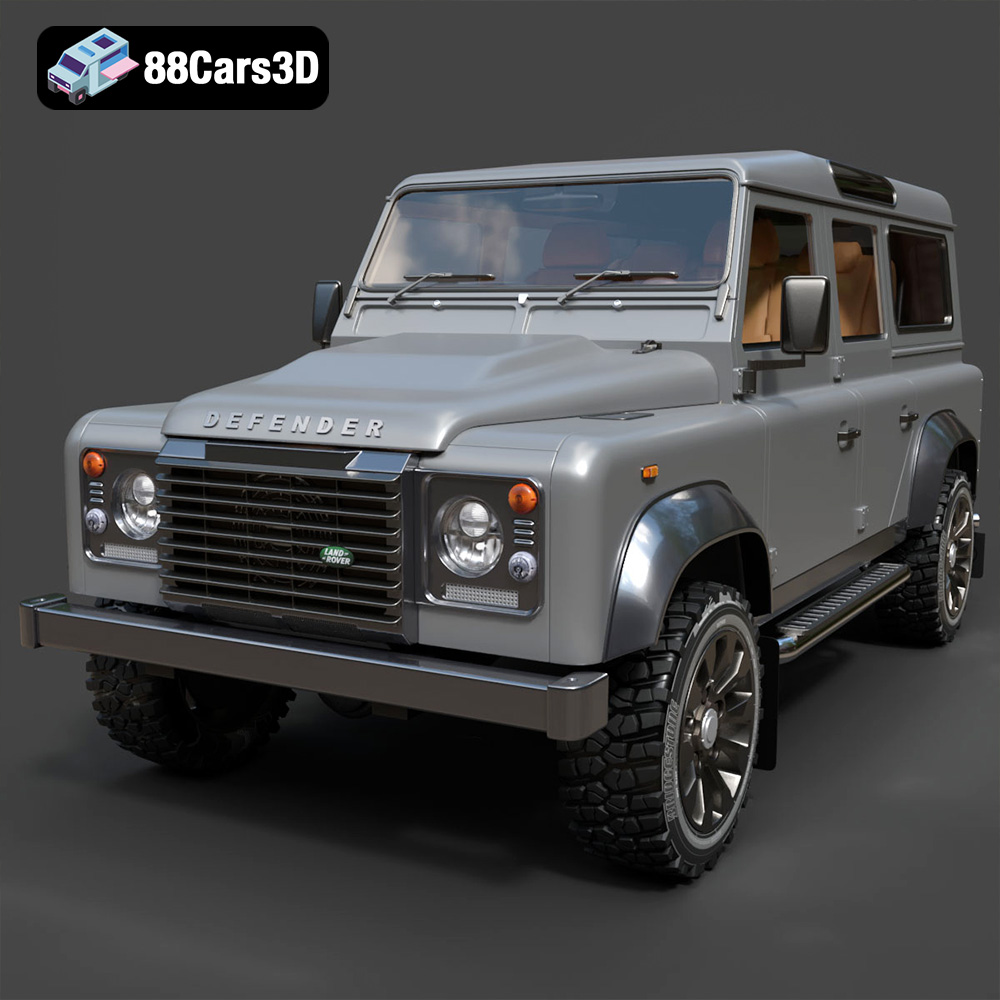
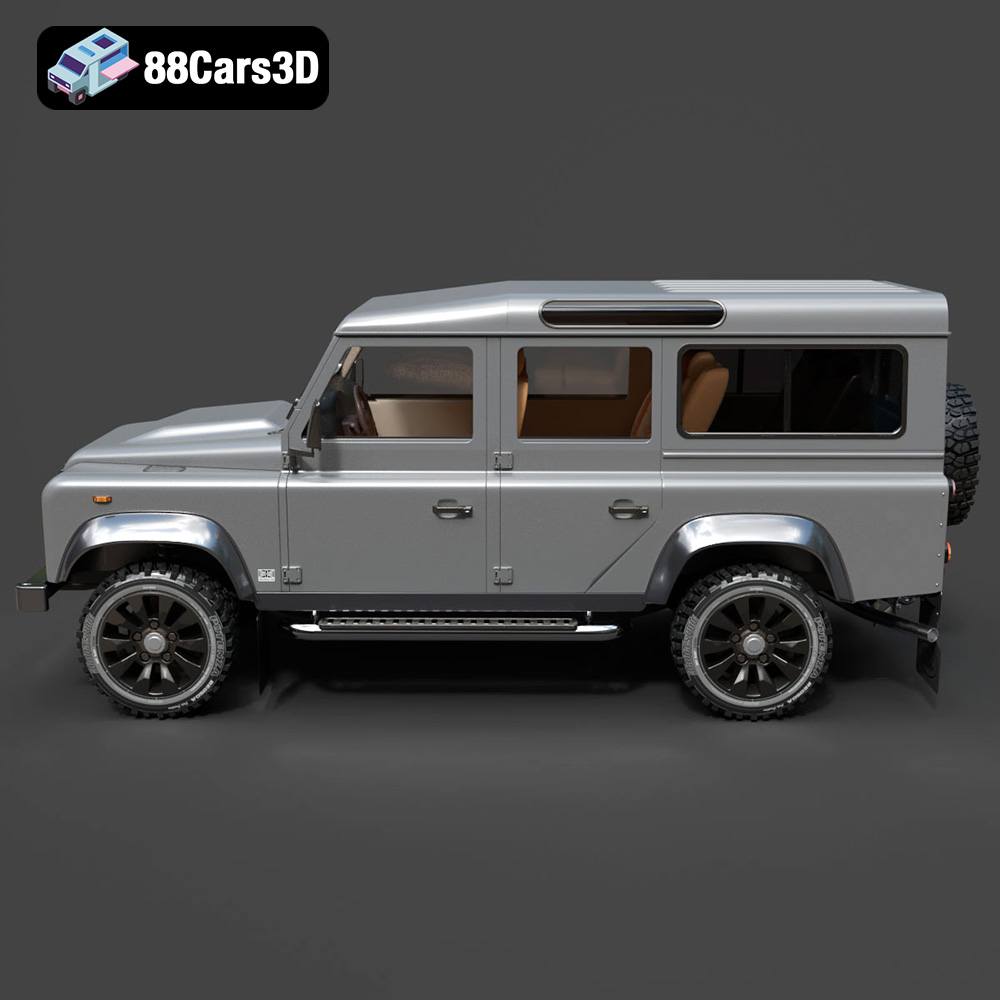
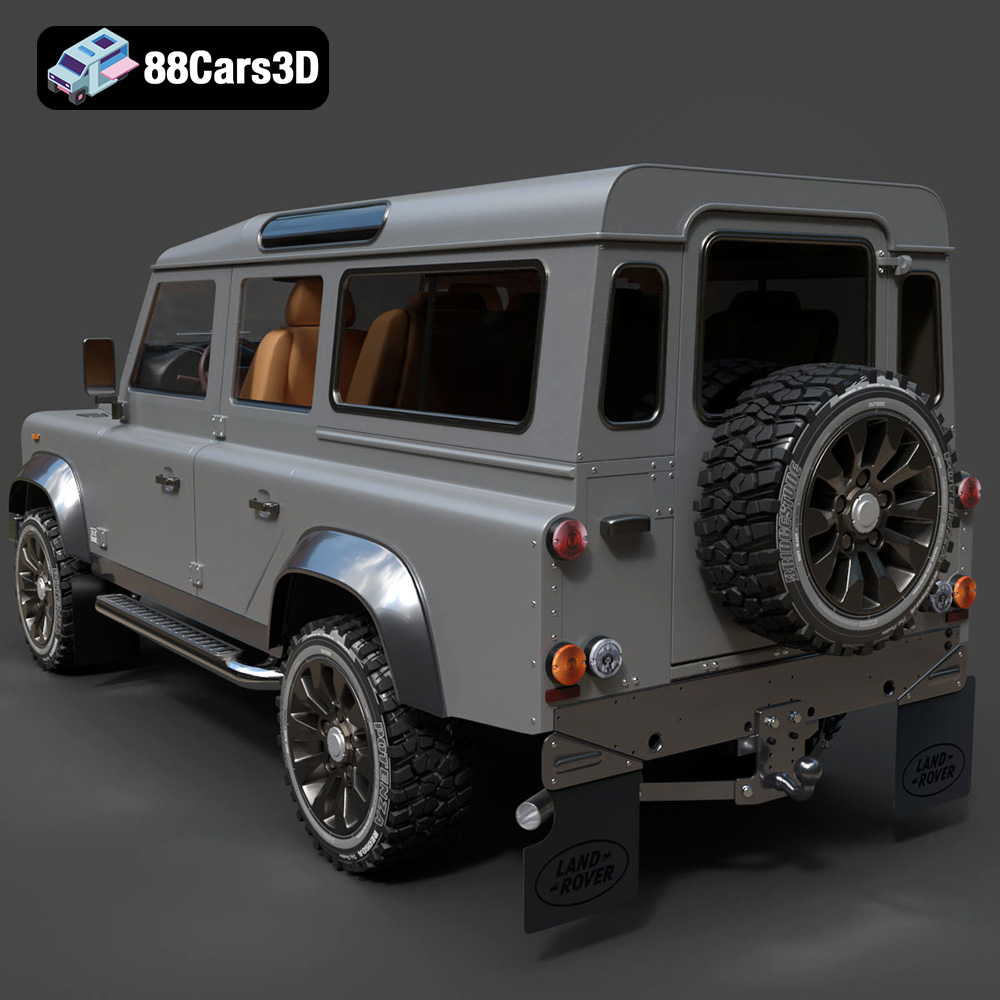
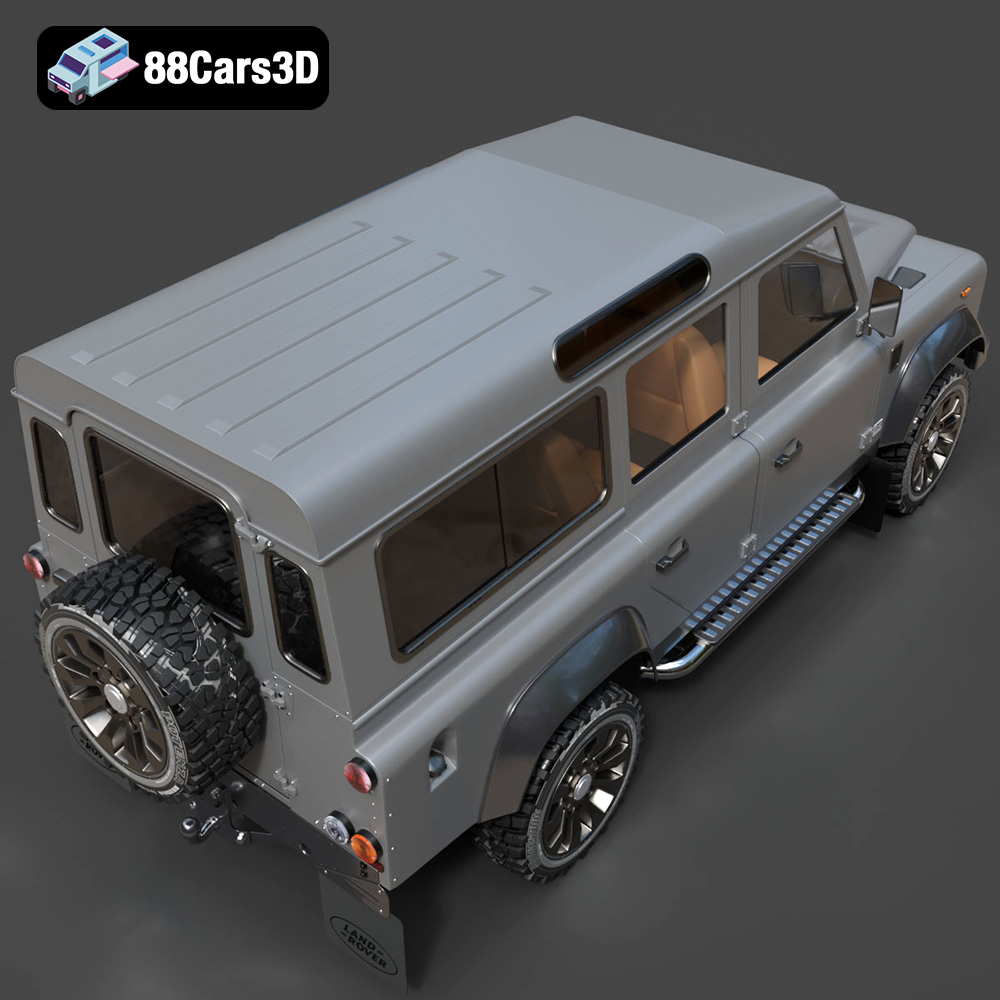
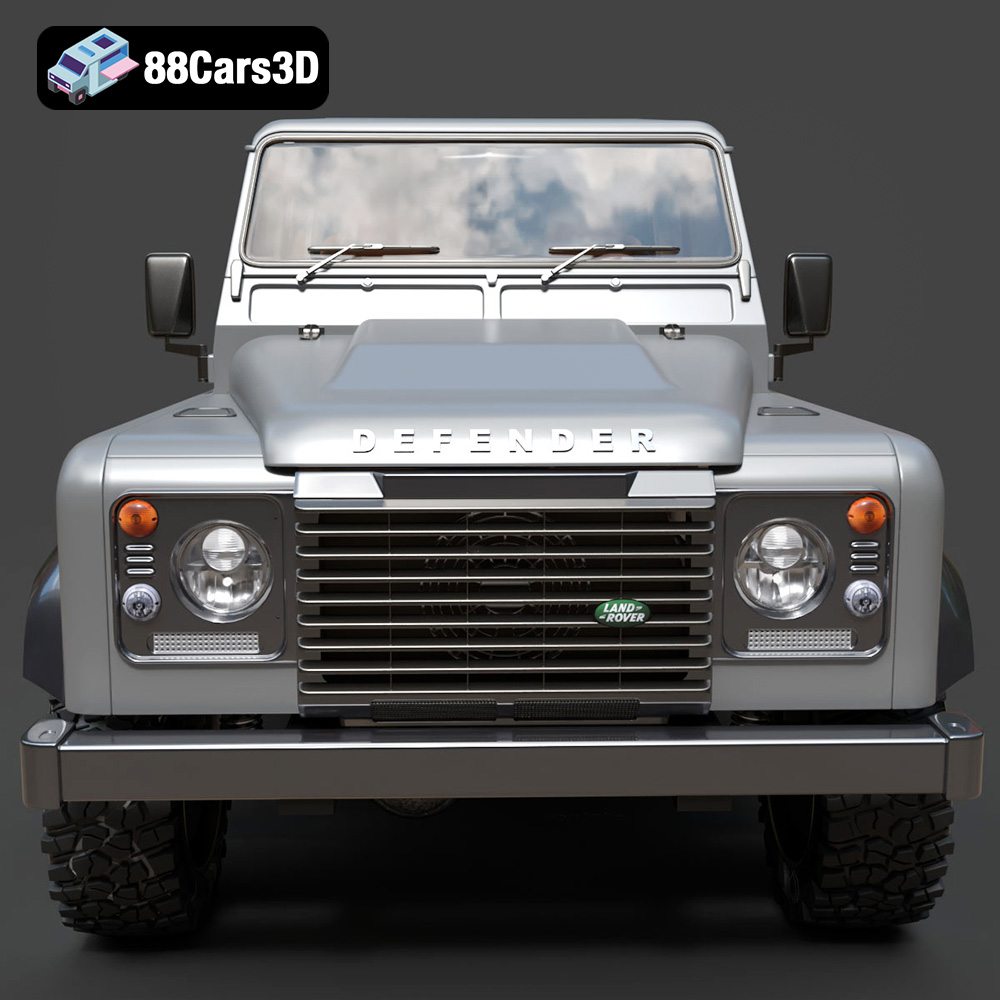
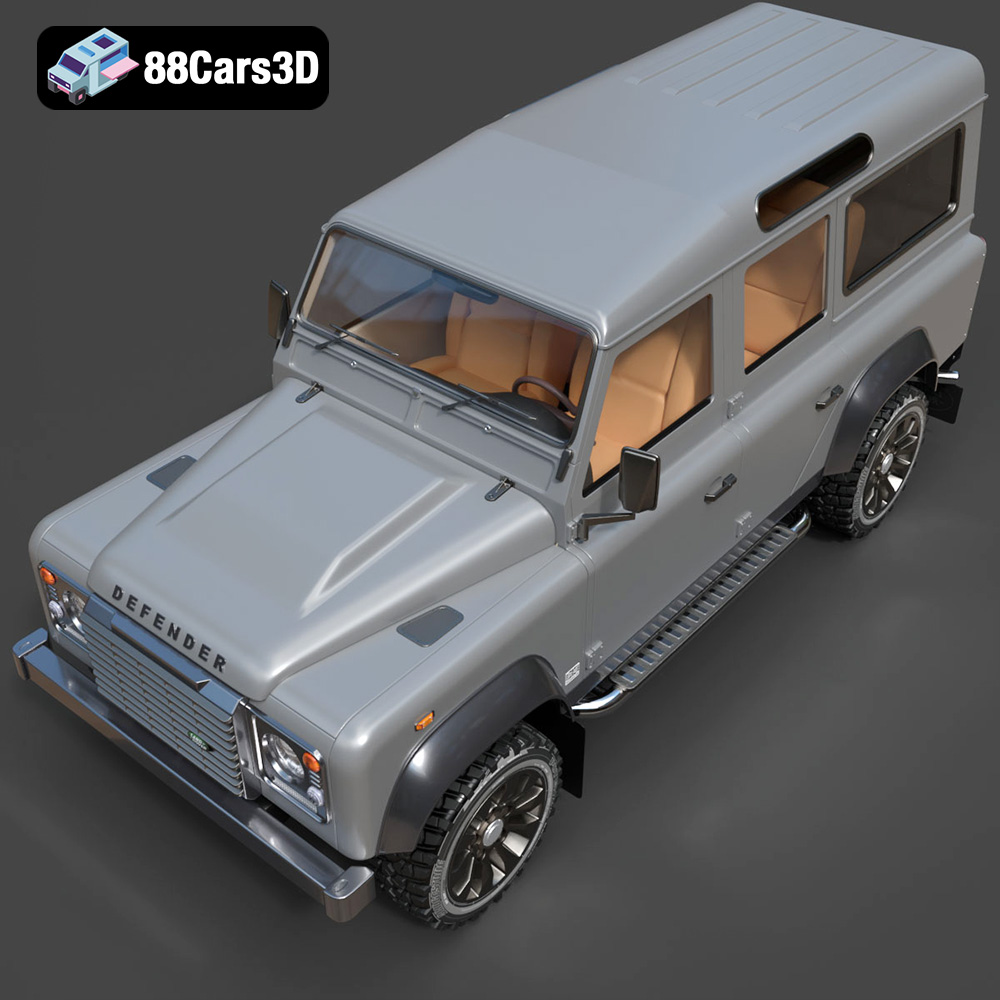
The distinct character of the Land Rover Defender is immediately recognizable through its exterior. This 3D model meticulously captures its commanding front grille, the signature round LED headlights, and the classic blocky taillights that define its robust aesthetic. The robust wheel arches house heavy-duty all-terrain wheels with intricate tread patterns, complete with the iconic rear-mounted spare tire. Beyond aesthetics, the model delves into engineering realism, featuring accurate frame geometry, detailed engine block and under-hood components, and a robust dual exhaust system. Crucially, separate components for wheels, suspension, and steering ensure it’s ready for complex animations, making it an excellent base for high-quality `automotive rendering` and simulations.
Stepping inside the virtual Land Rover Defender reveals an equally impressive level of detail. The cockpit combines utilitarian functionality with subtle touches of modern luxury. Authentic seating details, an accurately modeled steering wheel with detailed grips and badging, and high-resolution instrument clusters with modern infotainment display screens create a believable environment. Precision control details, including pedals, levers, and terrain response shifters, enhance the realism. This meticulous interior design is particularly valuable for `game assets` where first-person perspectives are crucial, allowing players to fully immerse themselves in the driving experience.
In the world of 3D, raw polycount isn’t the sole measure of quality; it’s the intelligent optimization that allows for both visual fidelity and real-time performance. This Land Rover Defender 3D model excels in striking this delicate balance.
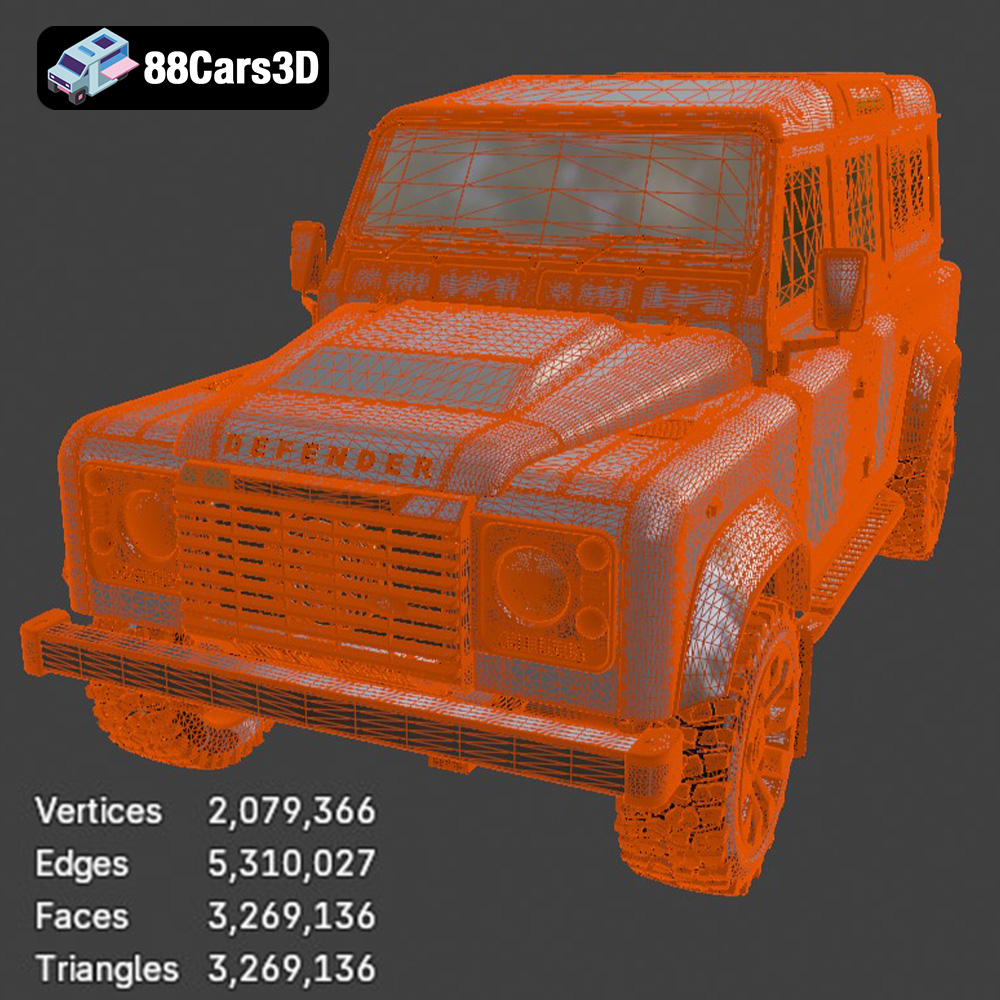
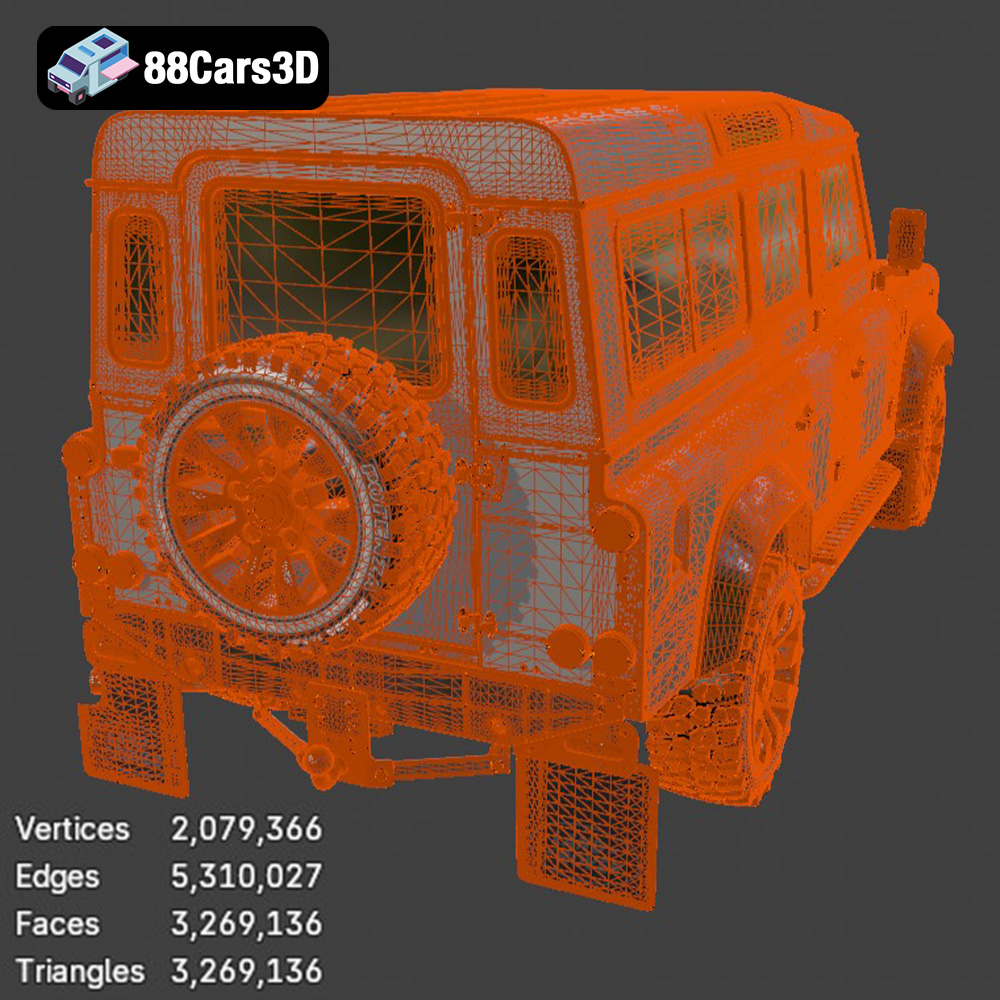
With an impressive 3,269,136 triangles, this Land Rover Defender model offers unparalleled high-fidelity geometry. This substantial polycount ensures that even under close scrutiny in high-resolution renders or cinematic sequences, the model holds up, showcasing smooth curves and intricate details. However, this level of detail is also expertly optimized, making it “game-ready.” The geometry is structured efficiently, allowing real-time engines like Unreal Engine and Unity to process it effectively without sacrificing performance. This means the model can be used in demanding open-world games or interactive configurators where both visual quality and smooth frame rates are paramount.
Beyond static beauty, the true potential of a `3D car model` often lies in its ability to be animated realistically. This Land Rover Defender model boasts real-world scale accuracy, which is fundamental for believable physics and interaction within virtual environments. Furthermore, it features proper pivot setups for crucial components: steering, wheel rotation, and suspension travel. These pre-configured pivots significantly streamline the animation process, allowing animators and game developers to quickly implement realistic driving mechanics, complex suspension articulation, and dynamic steering without extensive rigging work. This makes it an ideal asset for driving simulators, cinematic sequences featuring vehicle movement, and interactive vehicle demonstrations.
The demand for high-quality `3D car models` spans a diverse range of industries. The Land Rover Defender 3D model is engineered to be a versatile asset, serving various professional needs with equal prowess.
For game developers, finding `game assets` that are both visually stunning and optimized for real-time performance is a continuous challenge. This Land Rover Defender model, with its balanced polycount and game-ready attributes, is perfectly suited for a multitude of game genres. It can be the hero vehicle in an open-world adventure game, a rugged contender in a racing title, or a highly detailed component of an off-road driving simulator. Its compatibility with major engines like Unreal and Unity, particularly with the inclusion of an .unreal file format, means less time on conversion and setup, and more time on creating compelling gameplay experiences.
The burgeoning fields of Augmented Reality (AR) and Virtual Reality (VR) demand highly optimized yet visually rich 3D content. The Land Rover Defender model is an ideal candidate for immersive experiences. Its fidelity makes it perfect for virtual showrooms, allowing prospective buyers to explore the vehicle in a highly interactive and engaging manner. For automotive configurators, users can customize colors, wheels, and interior options in real-time. The inclusion of the .glb format is particularly beneficial here, facilitating seamless integration into web-based AR/VR applications and mobile experiences, pushing the boundaries of interactive product visualization.
Beyond interactive mediums, the model excels in traditional `automotive rendering` and visualization. Advertising agencies can leverage its detail for brand campaigns, creating stunning lifestyle scenes that highlight the Defender’s capabilities. Architectural visualization projects can integrate the vehicle to add realism and context to exterior renders. Furthermore, for hobbyists, collectors, or even educational purposes, the model is convertible to .stl format, making it suitable for high-quality `3D printing`. This allows for the creation of physical scale models, offering a tangible connection to the digital asset. Recommendations for print settings, such as scale (1:12 / 1:18 / 1:24), layer height, infill, and supports, are provided to ensure successful output, particularly emphasizing resin printing for fine details.
A professional 3D model is not just a static object; it’s a flexible asset that integrates smoothly into existing workflows and allows for extensive customization to fit specific project requirements.
For artists working in Blender or 3ds Max, the inclusion of native .blend and .max files offers unparalleled artistic freedom. Users can open the Land Rover Defender model directly in their preferred software, gaining access to the original scene setup, material nodes, and object hierarchy. This allows for advanced material modifications, adding custom decals, adjusting lighting scenarios, or even integrating the vehicle into complex animations with other scene elements. The ability to delve into the model’s core structure ensures maximum flexibility for unique project needs, from highly stylized renders to physically accurate simulations.
Integrating a high-quality `3D car model` like the Defender into Unreal Engine is a streamlined process with the provided .fbx and .unreal files. Artists and developers can import the model, and given its optimized geometry and pre-configured pivots, quickly set up physically based rendering (PBR) materials, dynamic lighting, and even basic vehicle physics. The separate components for wheels, suspension, and steering mean that implementing realistic vehicle blueprints and animations within Unreal Engine is straightforward, making it an invaluable asset for creating interactive `game assets` and real-time configurators.
The Land Rover Defender 3D model isn’t just a fixed asset; it’s a canvas for customization. Users have the flexibility to change body colors, applying anything from authentic factory shades to unique custom finishes. Tire textures can be swapped to reflect off-road, street, or even worn variants. Material finishes can be adjusted between matte, gloss, or metallic looks, allowing for precise control over realism and mood. Furthermore, adapting the lighting for different environments – be it a sunny desert, a rainy city street, or a dramatic studio setup – further enhances the model’s versatility for any `automotive rendering` scenario.
The Land Rover Defender holds a unique place in automotive design, and its digital representation as a high-fidelity 3D model is an indispensable tool for professionals across various industries. From its meticulously crafted exterior and immersive interior to its optimized geometry and versatile file format support, this model is designed to meet the rigorous demands of modern 3D production.
Whether your project demands stunning `automotive rendering`, compelling `game assets` for a new title, immersive AR/VR experiences, or precision `3D printing` output, this Land Rover Defender 3D model offers the quality, flexibility, and technical specifications to elevate your work. It’s a testament to digital craftsmanship, providing a powerful resource for bringing one of the world’s most iconic vehicles to life in the virtual realm. Explore this exceptional model and many other high-quality `3D car models` at 88cars3d.com, your trusted source for premium digital automotive assets.
The Land Rover Defender stands as an undisputed icon of off-road capability and British automotive heritage. Renowned for its unmistakable boxy silhouette and uncompromising ruggedness, this legendary 4×4 combines utilitarian function with modern luxury. Key visual elements captured in this model include its commanding front grille, distinctive round headlights, robust wheel arches, and the classic rear-mounted spare tire that defines its adventurous spirit. This premium 3D model boasts an impressive 3,269,136 triangles, offering unparalleled high-fidelity geometry while retaining optimized structuring for advanced rendering and visualization. Expertly crafted for maximum visual fidelity, it serves as an exceptional asset for high-end game development, cinematic animation, immersive AR/VR experiences, and professional automotive visualization. Perfect for off-road driving simulators, rugged natural environment renders, luxury automotive configurators, and virtual showrooms.
$90.00
.4×4
.blend
.defender
.fbx
.glb
.land-rover
.max
.obj
.ply
.rendering
.stl
.unreal
car-3d-model
game asset
game-ready
low-poly
off-road
optimized
SUV
VR/AR