Get 20% OFF All Premium 3D & STL Models!

In the dynamic world of 3D visualization, game development, and immersive experiences, the quality of a digital asset can make or break a project. Automotive design, in particular, demands an exceptional level of detail and realism to truly capture the essence of luxury, performance, and cutting-edge engineering. From the sleek lines of a concept car to the intricate mechanics of its powertrain, every curve and component must be meticulously crafted to achieve photorealism and functional accuracy.
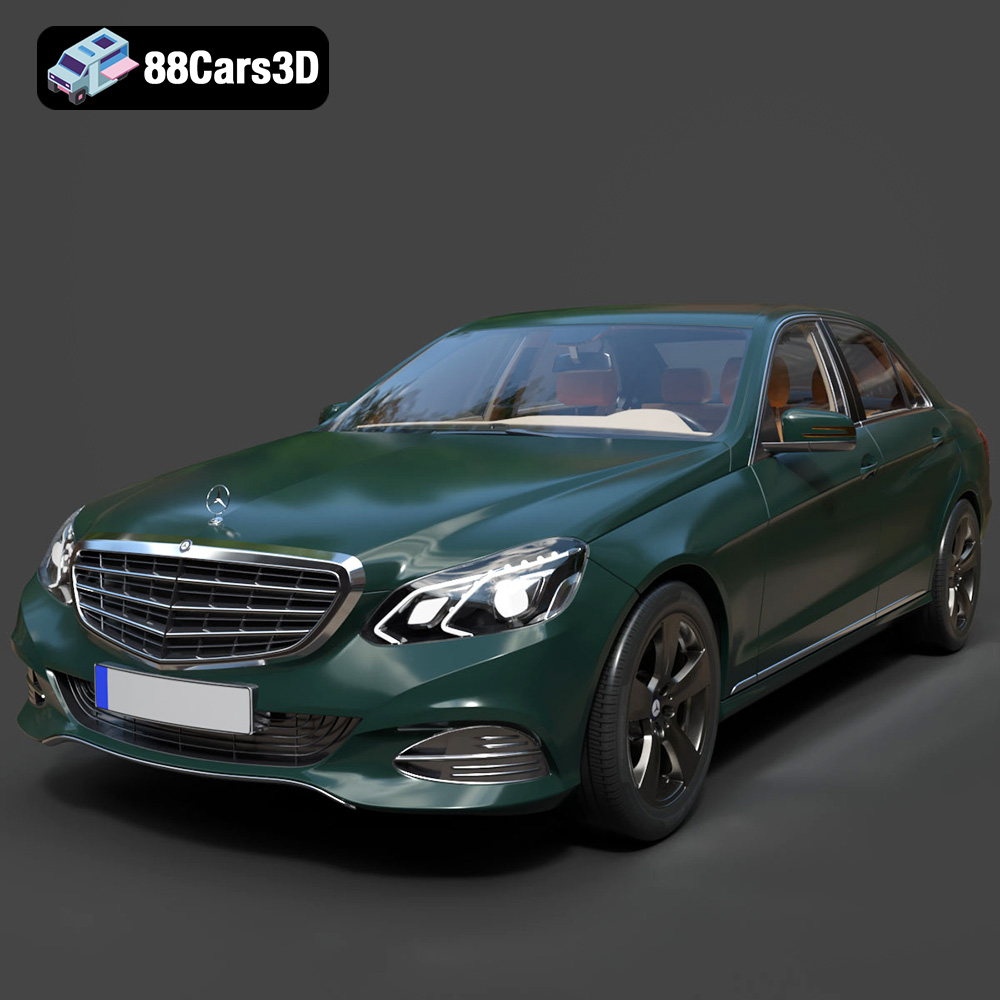
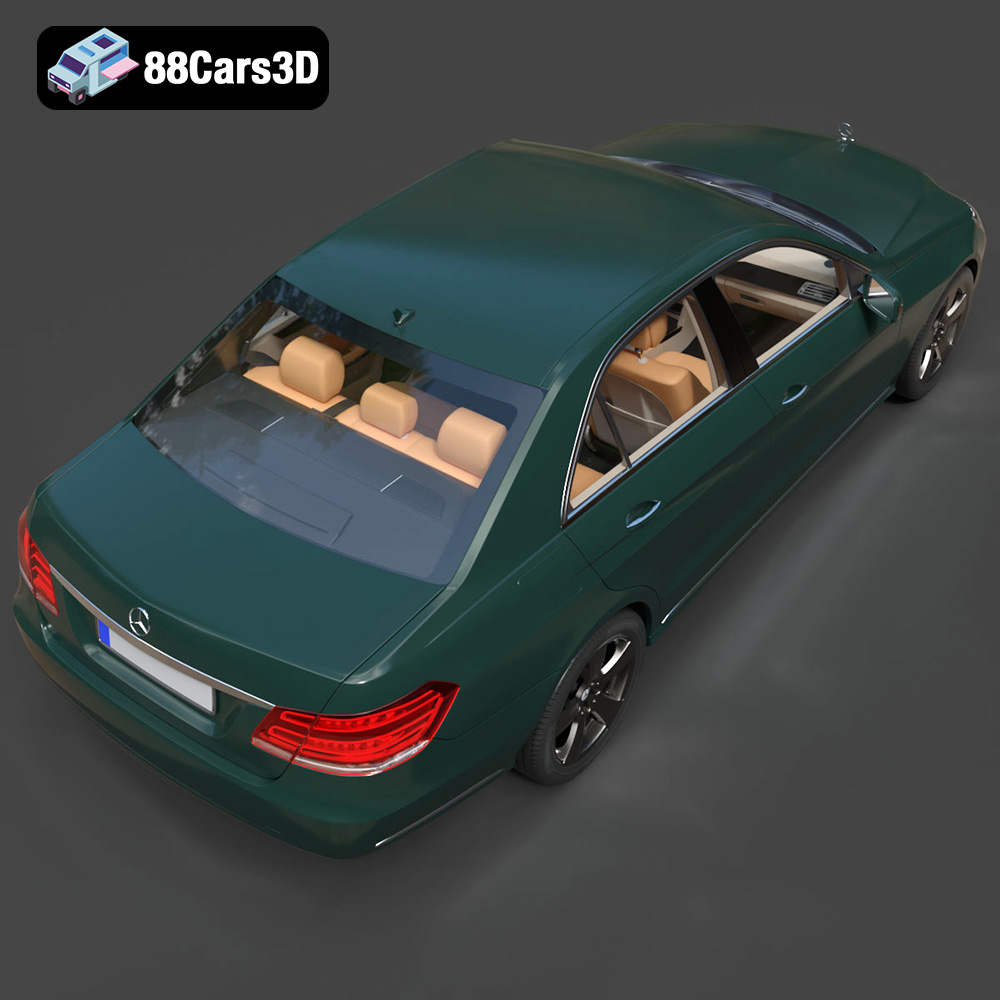
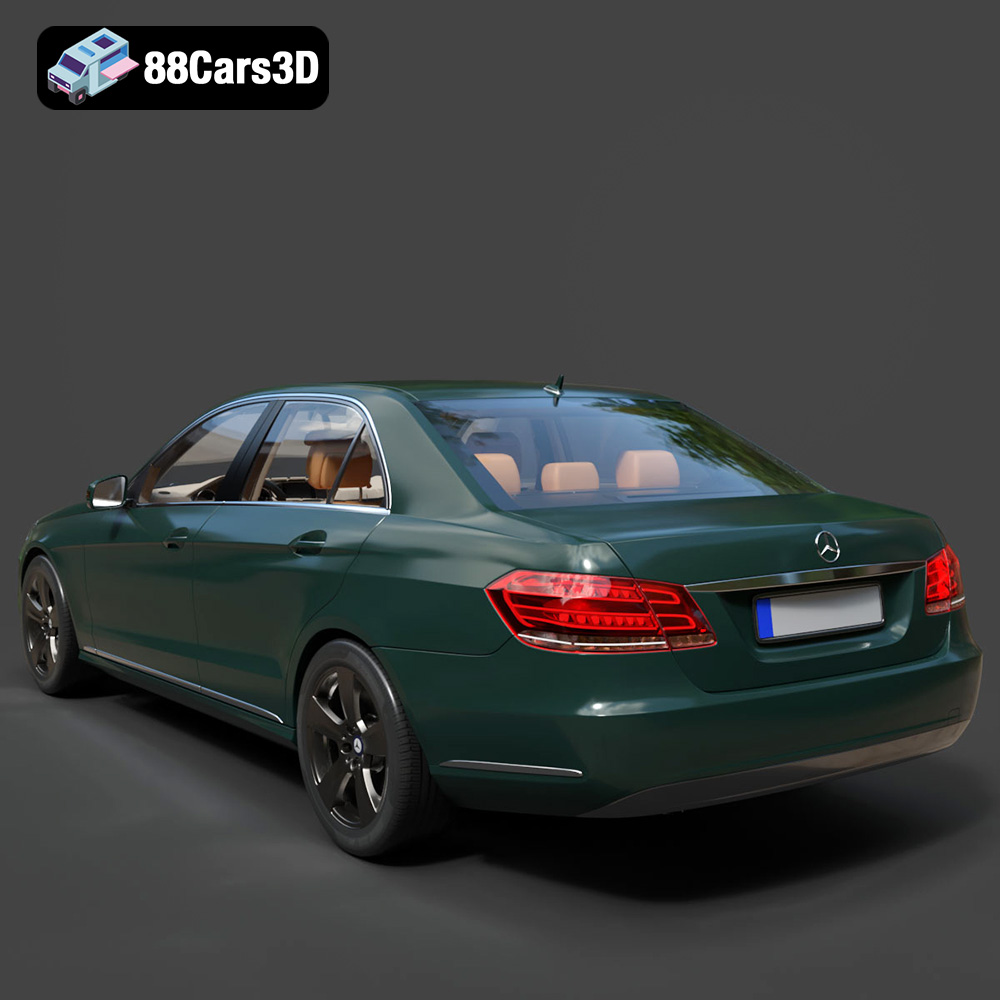
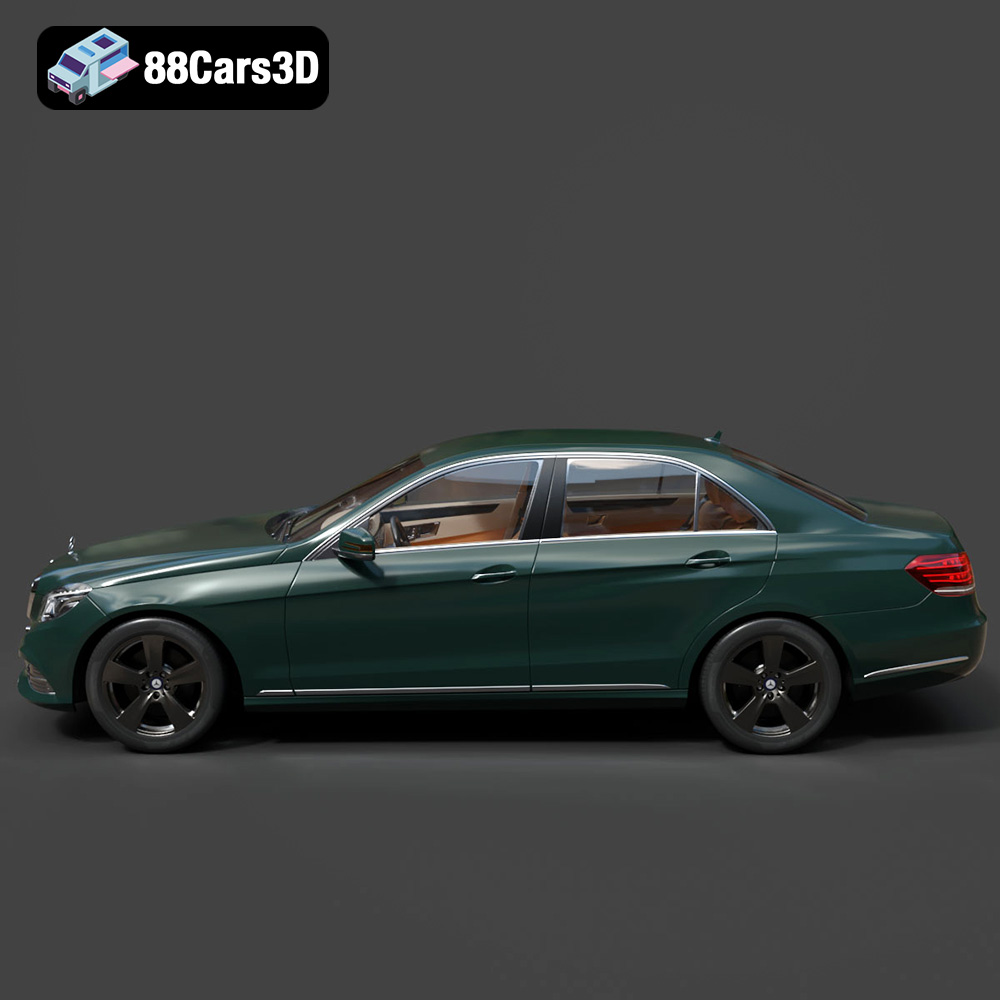
For professionals striving for unparalleled visual fidelity, a premium 3D car model is not just an asset; it’s a foundation. It empowers artists, developers, and designers to create breathtaking renders, immersive simulations, and interactive experiences that captivate audiences. We often encounter projects that require the perfect blend of iconic heritage and forward-thinking design, and this is where a model like the Mercedes-Benz E13-08 3D Model truly shines. It represents the pinnacle of modern concept vehicle design, meticulously recreated to deliver stunning realism across a multitude of applications. Available on 88cars3d.com, this model is a testament to the power of precision in 3D modeling, offering a comprehensive solution for even the most demanding professional workflows.
One of the most critical aspects of working with 3D assets, especially high-fidelity models like the Mercedes-Benz E13-08, is understanding the various file formats available. Each format serves a specific purpose, offering unique advantages for different stages of the production pipeline, from initial modeling to final rendering, game integration, or 3D printing. Choosing the right format ensures compatibility, preserves data integrity, and optimizes workflow efficiency.
The .blend format is Blender’s native file type, offering a fully editable scene with all associated data. This includes mesh geometry, materials, textures, lighting setups, cameras, animations, and even physics simulations. For artists and studios primarily using Blender, the .blend file provides the most comprehensive and flexible starting point for customization. With the Mercedes-Benz E13-08 available in .blend, users gain complete control over every aspect of the model, making it ideal for in-depth modifications, rigging, and animation within the Blender ecosystem.
Autodesk’s .fbx (Filmbox) format has become an industry staple for exchanging 3D data between various software applications and game engines. It is particularly revered for its robust support for complex scene data, including geometry, materials, textures, animations (skeletal and blend shapes), cameras, and lights. For projects destined for Unreal Engine, Unity, or other real-time pipelines, .fbx is often the go-to format due to its reliability and widespread adoption. The E13-08’s .fbx variant ensures seamless integration into these environments, ready for PBR material setups and real-time rendering, preserving all critical animation pivots and hierarchies.
The .obj (Wavefront OBJ) format is one of the oldest and most universally compatible 3D file types. It’s excellent for exchanging static mesh geometry across virtually any 3D software. While it primarily stores vertex positions, UV coordinates, normals, and face information, it can also reference external .mtl (material library) files for basic material properties. For simple transfers or when maximum compatibility is required, the .obj version of the Mercedes-Benz E13-08 serves as a robust foundation, ensuring that the core geometry is accessible in almost any 3D application.
.glb (GL Transmission Format Binary) is the binary version of glTF, a royalty-free specification for the efficient transmission and loading of 3D scenes and models by applications. It packages all necessary data—geometry, materials, textures, animations—into a single, compact file. This optimization makes .glb an ideal format for web-based 3D viewers, augmented reality (AR), and virtual reality (VR) applications, where file size and loading performance are paramount. The E13-08 in .glb is perfectly suited for creating immersive virtual showrooms or interactive web experiences, allowing rapid deployment without compromising visual quality.
The .stl (Stereolithography) format is the de facto standard for 3D printing. It represents a 3D model as a series of connected triangles, describing only the surface geometry of an object without color, texture, or other CAD attributes. While it lacks sophisticated data, its simplicity makes it universally understood by 3D printers and slicing software. The Mercedes-Benz E13-08 model’s availability in .stl means it’s ready to be brought into the physical world, enabling hobbyists and professionals to create tangible prototypes or display models of this stunning concept vehicle, following the recommended print settings for optimal results.
The .ply (Polygon File Format) is another mesh format often used for storing 3D scanner data. It can store a variety of properties including color, transparency, surface normals, and range data, making it useful for scientific, CAD, and analytical applications where precision and additional per-vertex or per-face data are critical. While less common for general animation, its inclusion for the E13-08 offers flexibility for specialized workflows that require detailed mesh analysis or high-fidelity capture data integration.
When a product is listed as .unreal, it typically signifies a pre-packaged asset designed specifically for direct import and optimal performance within Unreal Engine. This often means the model has already been set up with appropriate materials, LODs (Levels of Detail), collision meshes, and sometimes even Blueprints for interactive functionality. For game developers and real-time visualization artists, the .unreal version of the Mercedes-Benz E13-08 is a significant time-saver, providing an engine-ready asset that minimizes setup time and maximizes immediate usability for creating cutting-edge games, simulations, and virtual productions.
The .max format is the native file type for Autodesk 3ds Max, a powerful 3D modeling, animation, and rendering software widely used in architectural visualization, product design, and cinematic productions. A .max file contains the entire scene, including geometry, modifiers, materials, textures, lights, cameras, and animation data. For users of 3ds Max, the E13-08 in .max offers the most comprehensive and editable version of the model, allowing for advanced rendering setups with V-Ray or Corona, complex animation sequences, and deep customization within a familiar professional environment.
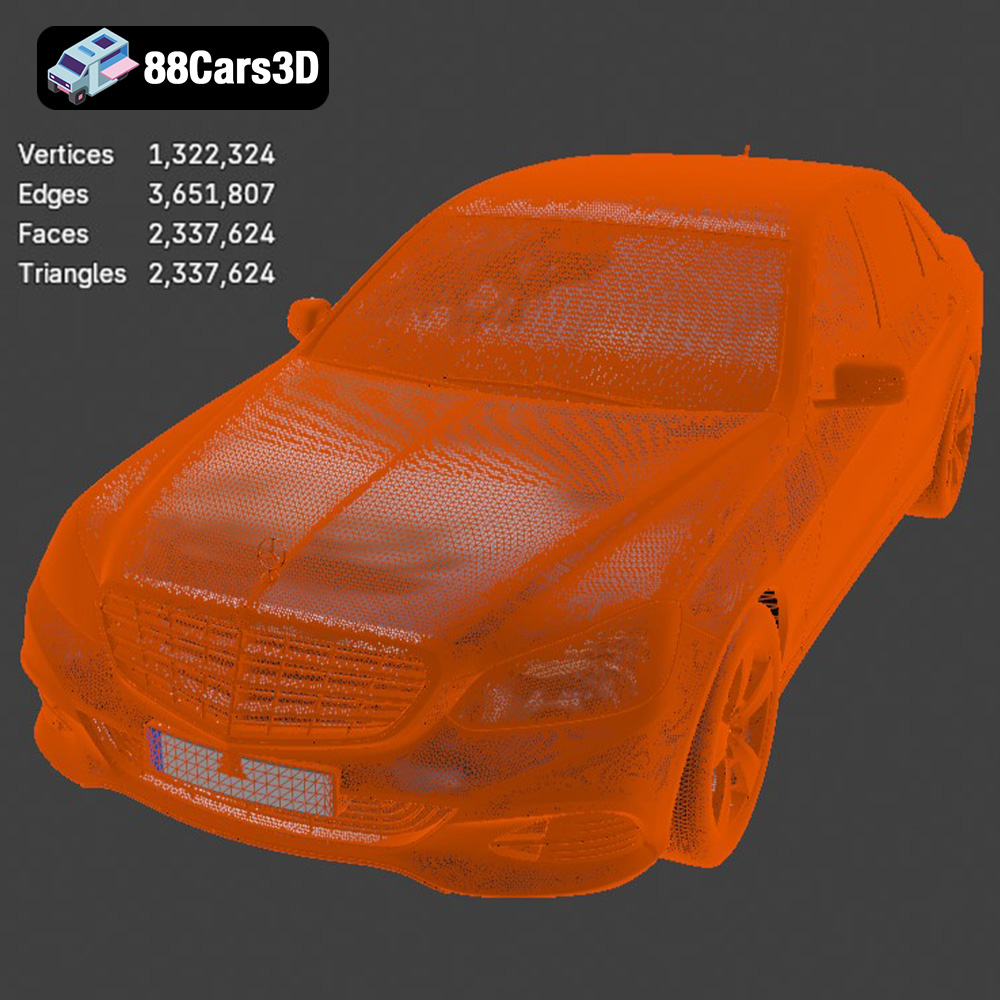
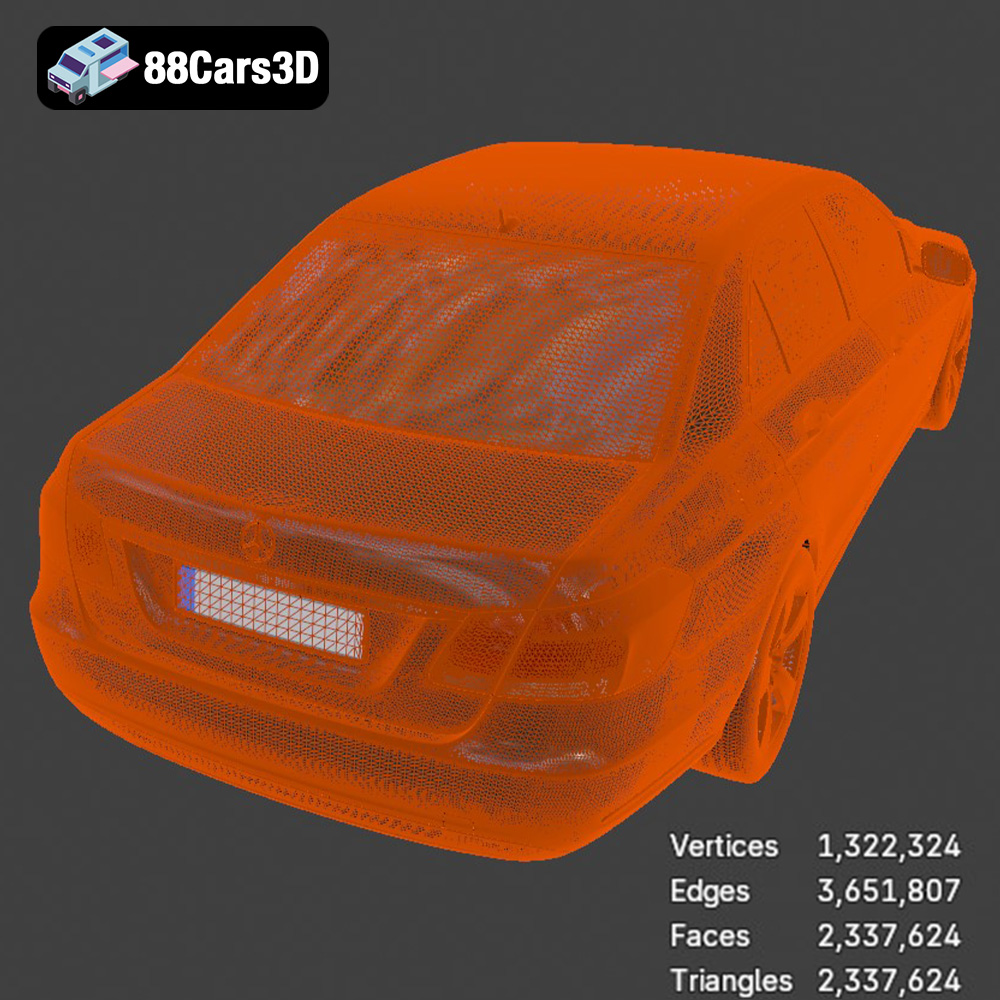
Automotive rendering stands as a specialized discipline within 3D visualization, demanding an exquisite balance of artistic vision and technical prowess. Recreating the nuanced reflections of a car’s paintwork or the subtle refractions through its glass requires more than just a good model; it demands an understanding of light, materials, and composition. The Mercedes-Benz E13-08 3D Model, with its comprehensive topology of 2,337,624 triangles, provides an exceptional canvas for achieving breathtaking visual fidelity.
The foundation of photorealistic automotive rendering lies in a robust Physically Based Rendering (PBR) workflow. This involves creating materials that accurately mimic real-world properties, such as metallic flake paints, clear coat finishes, rubber textures for tires, and optically correct glass. For the E13-08, this means crafting materials that allow light to interact realistically with its sleek aerodynamic frame. The high polygon count ensures that reflections are smooth and accurate, free from undesirable faceting, even in extreme close-ups. Detailed elements like the multi-spoke alloy wheels and realistic tire treads come to life through carefully calibrated PBR textures for roughness, metallic, and normal maps, delivering a tangible sense of quality and craftsmanship.
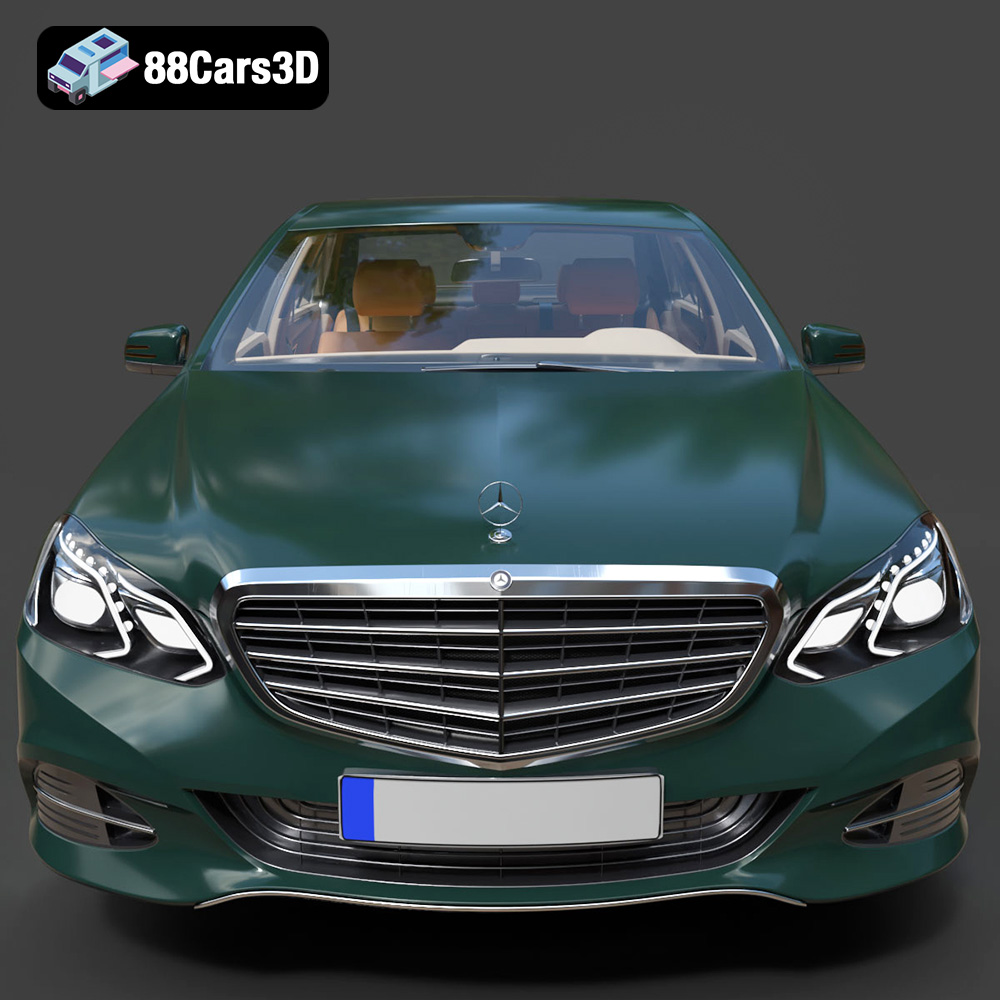
Beyond materials, lighting is paramount in defining the mood and realism of an automotive render. Whether it’s showcasing the vehicle in a pristine studio environment, under the dramatic glow of a sunset, or amidst the urban sprawl, the lighting setup dictates how the E13-08 is perceived. High Dynamic Range Imagery (HDRI) environments are frequently employed to provide realistic global illumination and reflections, while carefully placed studio lights can accentuate specific design features. With a model like the E13-08, which boasts detailed LED lighting systems and intricate exterior features, artists can leverage modern rendering techniques, including real-time ray tracing, to create stunning light interactions that highlight its futuristic design and luxurious aesthetic.
Static renders are powerful, but cinematic animations truly bring a 3D car model to life. The Mercedes-Benz E13-08 is designed with animation in mind, featuring separate components for its wheels, suspension, and steering. This allows animators to accurately simulate wheel rotation, realistic suspension travel over uneven terrain, and precise steering movements. Combined with dynamic camera work – dolly shots, tracking shots, and sweeping pans – these elements can create compelling narratives for advertising, film, or product showcases. The model’s optimized geometry and proper pivot setup ensure that these animations are not only visually impressive but also technically sound, making it a professional-grade asset for any animation pipeline.
The demands of real-time environments, such as video games, augmented reality (AR), and virtual reality (VR) applications, present a unique set of challenges for 3D car models. Performance, optimization, and interactivity are just as important as visual fidelity. The Mercedes-Benz E13-08 3D Model is engineered to meet these rigorous requirements, offering a game-ready solution without compromising on detail.
Modern game engines like Unreal Engine 5 and Unity have revolutionized real-time graphics, pushing the boundaries of what’s possible. The E13-08 boasts a high-fidelity 2,337,624 triangle count, striking a delicate balance between visual richness and performance. For Unreal Engine 5, this model is a perfect candidate for Nanite, Epic Games’ virtualized micropolygon geometry system, which handles extremely high polygon counts with unprecedented efficiency, allowing developers to render cinematic-quality assets in real time. In Unity, careful LODs (Levels of Detail) and optimized material setups ensure that the model performs smoothly across various hardware configurations, making it ideal for next-gen racing titles, open-world games, and simulators.
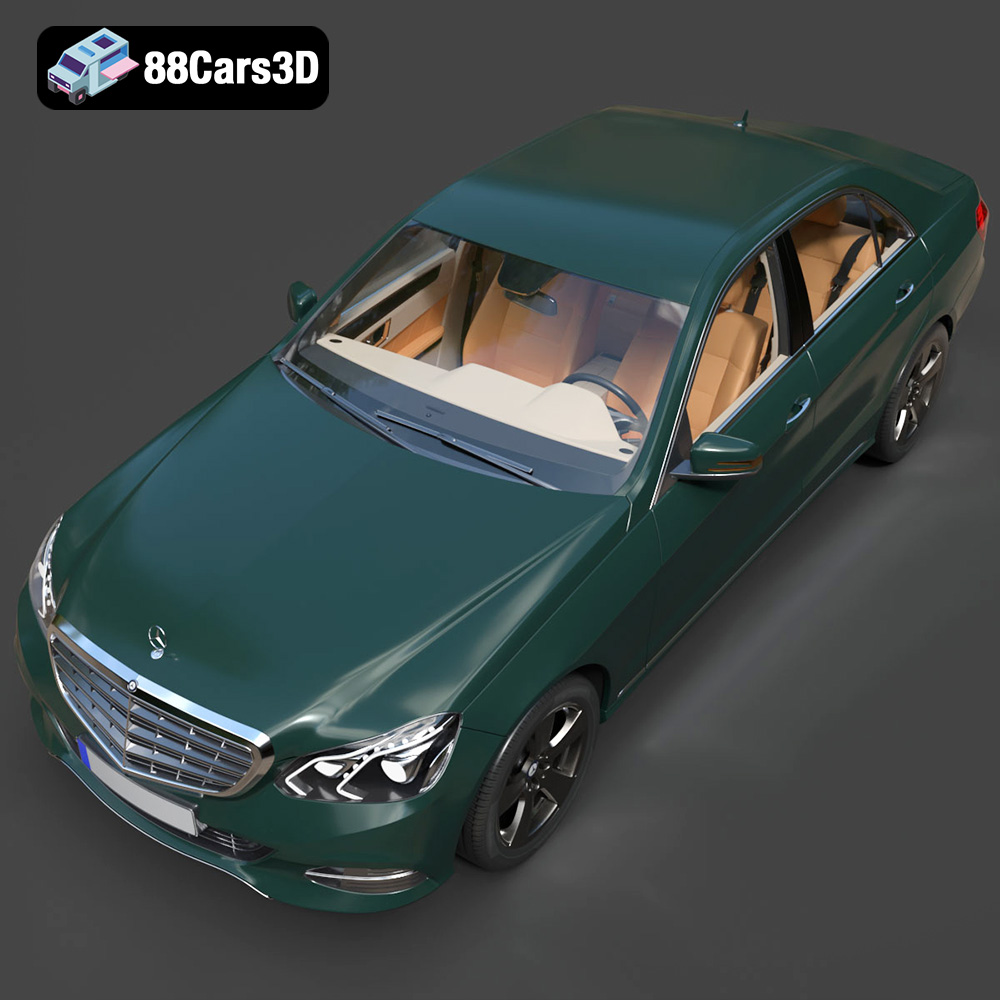
The immersive nature of VR and AR experiences makes them ideal for showcasing automotive designs. Virtual showrooms and interactive configurators allow potential customers or enthusiasts to explore a vehicle like the E13-08 in a highly engaging manner. The model’s optimized geometry for first-person POV in gaming and VR, combined with its detailed interior features—premium luxury seating, futuristic steering wheel, digital instrument cluster, and accurate controls—creates a truly believable and engaging cabin experience. Proper pivot setups for interactive elements like doors, steering, and suspension further enhance the realism, allowing users to open doors, turn wheels, or even customize the car in real time.
In game development, the realism extends beyond visual appearance to how a vehicle interacts with its environment. The separate wheels, suspension, and steering components of the Mercedes-Benz E13-08 are crucial for implementing accurate physics simulations. This modularity enables developers to apply realistic suspension kinematics, tire friction models, and steering dynamics, making the driving experience far more engaging and believable. Whether it’s for a high-octane racing game or a sophisticated driving simulator, this model provides the necessary structure for comprehensive physics integration and fluid, responsive animations, solidifying its place as a top-tier game asset available on 88cars3d.com.
The digital realm often blurs into the physical, and 3D printing offers a fascinating bridge between the two. For enthusiasts, designers, or marketers, having a physical representation of a stunning concept like the Mercedes-Benz E13-08 can be incredibly impactful. The model’s inclusion of the .stl format, specifically tailored for additive manufacturing, opens up exciting possibilities for creating tangible display models and prototypes.
While the .stl format simplifies the geometry to triangles, ensuring a successful print requires meticulous preparation. The source model must have a “watertight” mesh, meaning there are no gaps or holes in its surface, which would confuse the slicing software. The Mercedes-Benz E13-08 model is designed with clean, manifold geometry, making it robust for 3D printing conversion. Scaling is also crucial; the recommended scales of 1:12, 1:18, or 1:24 provide a good balance between detail preservation and manageable print time/material usage. Users can confidently take this high-quality 3D car model from screen to hand.
The technical specifications provided for 3D printing the E13-08 are a valuable guide for achieving optimal results. A layer height of 0.04–0.12 mm is recommended, with resin printing being particularly suited for capturing the fine details of the E13-08’s aerodynamic frame, LED lighting systems, and wheel designs. Wall thickness of 1.2–2.0 mm ensures structural integrity, while an infill of 20–30% offers a good balance of strength and material efficiency. Supports are required for complex overhangs like mirrors, spoilers, and suspension components, and specific print orientations (frame angled, wheels separate) are advised to enhance structural integrity and surface quality.
Post-processing is where the model truly comes to life. Sanding, priming, and then applying authentic factory colors with metallic finishes can transform a raw 3D print into a stunning miniature replica. This process allows creators to fully realize the vision of the E13-08, making it not just a digital asset but a physical art piece, demonstrating the versatility of professional 3D car models.
Integrating a high-quality asset like the Mercedes-Benz E13-08 3D Model into various professional workflows can significantly accelerate production times, enhance visual quality, and provide a competitive edge. Its versatility across multiple file formats and its meticulous design make it an indispensable tool for a wide array of creative and technical industries.
For automotive design and visualization studios, time is a precious commodity. Starting with a pre-existing, high-fidelity model like the E13-08 allows designers to bypass the arduous initial modeling phase. This model can serve as a robust base for concept iteration, allowing artists to focus on custom modifications, showcasing new paint finishes, or integrating it into complex architectural visualization scenes. Its real-world scale accuracy and detailed components make it perfect for brand campaigns, lifestyle scenes, and studio lighting setups, providing unparalleled realism for marketing and internal design reviews. The sheer detail in the cockpit and interior features also makes it invaluable for creating immersive presentations that highlight the luxury and ergonomic cabin layout.
Game studios and developers of AR/VR experiences can leverage the Mercedes-Benz E13-08 as a game-ready asset that dramatically speeds up content creation. Its optimization for next-gen engines means less time spent on performance tuning and more time dedicated to gameplay, level design, and interactive features. For racing games, simulators, or virtual showrooms, having a model with separate, animatable components (wheels, suspension, steering) and optimized geometry for first-person POV is a significant advantage. This enables quick prototyping, efficient asset integration, and the ability to create dynamic, believable in-game interactions right out of the box. Finding such a complete and versatile 3D car model is rare, making the E13-08 from 88cars3d.com a true asset for any development team.
One of the most powerful advantages of professional 3D models is their inherent customizability. The Mercedes-Benz E13-08 is no exception. Artists can easily change body colors to explore various factory finishes or create custom high-gloss effects. Modifying tire textures from sport to street variants, adjusting material finishes (matte, gloss, metallic, carbon fiber), and adapting lighting for different environments allows for infinite creative interpretations. This flexibility ensures that the model can be tailored to specific project requirements, maintaining its high quality while fitting seamlessly into any artistic vision or technical constraint, making it a highly adaptable asset for any professional toolkit.
The journey from concept to fully realized 3D asset is a complex one, demanding precision, technical expertise, and artistic vision. The Mercedes-Benz E13-08 3D Model stands as a prime example of excellence in automotive 3D modeling, offering a comprehensive and versatile solution for a wide range of professional applications. Its meticulous design, high-fidelity topology, and broad support for various file formats – from .blend and .max for deep editing, to .fbx and .unreal for game engines, and .stl for 3D printing – underscore its value as a premium asset.
Whether you are an automotive rendering specialist aiming for photorealistic visualizations, a game developer crafting the next generation of racing simulators, an AR/VR creator building immersive showrooms, or a hobbyist bringing digital designs to life through 3D printing, the E13-08 provides an unparalleled foundation. It embodies the future of luxury mobility in a digital format, ready to be integrated into the most demanding pipelines.
For those who demand the best in 3D car models, the Mercedes-Benz E13-08 is an investment in quality and efficiency. Explore this exceptional model and more high-quality 3D car models at 88cars3d.com, and elevate your projects to new heights of realism and engagement.
Experience the future of luxury mobility with this meticulously crafted 3D model of the Mercedes-Benz E13-08. Showcasing the brand’s iconic heritage paired with forward-thinking design, this model captures the sleek, aerodynamic silhouette and high-tech styling cues of a modern concept vehicle. From the intricate details of its signature front fascia and advanced LED lighting systems to its sophisticated wheel design, every element has been faithfully recreated to deliver unparalleled visual realism. With a comprehensive topology of 2,337,624 triangles, this model offers breathtaking visual fidelity designed for next-generation rendering and high-end game engines. Whether utilized in cinematic animations, immersive virtual reality environments, or real-time configurators, the geometry ensures smooth reflections and flawless close-up shots. The model is fully optimized for professional pipelines, providing the perfect foundation for advanced materials and lighting setups.
$88.00
.blend
.fbx
.glb
.max
.obj
.ply
.rendering
.stl
.unreal
car-3d-model
concept-car
e13-08
electric-car
game asset
game-ready
mercedes-benz
optimized
VR/AR