Get 20% OFF All Premium 3D & STL Models!

In the demanding world of 3D visualization, game development, and cinematic rendering, the need for high-fidelity, meticulously crafted assets is paramount. Professionals in automotive rendering, military simulation, and interactive experiences constantly seek models that not only look impressive but are also technically sound and optimized for diverse pipelines. A prime example of such an asset, bridging realism with technical prowess, is the BTR Otaman-3 2019 3D Model. This advanced armored personnel carrier, renowned for its robust design and modern engineering, translates into a compelling digital asset that can elevate any project, from tactical shooters to defense industry training simulations. Websites like 88cars3d.com specialize in providing these kinds of premium 3D car models, ensuring artists and developers have access to the best tools for their creative and technical endeavors.
The BTR Otaman-3 2019 is not just another vehicle; it’s a statement of modern military power, and its 3D representation must capture every nuance. This article delves into the technical intricacies, practical applications, and workflow advantages of incorporating such a sophisticated 3D model into professional projects. We’ll explore everything from geometric precision and texture mapping to file format compatibility and optimization techniques, demonstrating how assets like the BTR Otaman-3 can become cornerstones of immersive digital environments and stunning visual narratives.
Creating a realistic 3D vehicle, especially one as complex as a military APC, involves a meticulous balance of artistic skill and technical understanding. The BTR Otaman-3 2019 3D Model exemplifies this synergy, offering a blueprint for what constitutes a truly professional-grade asset.
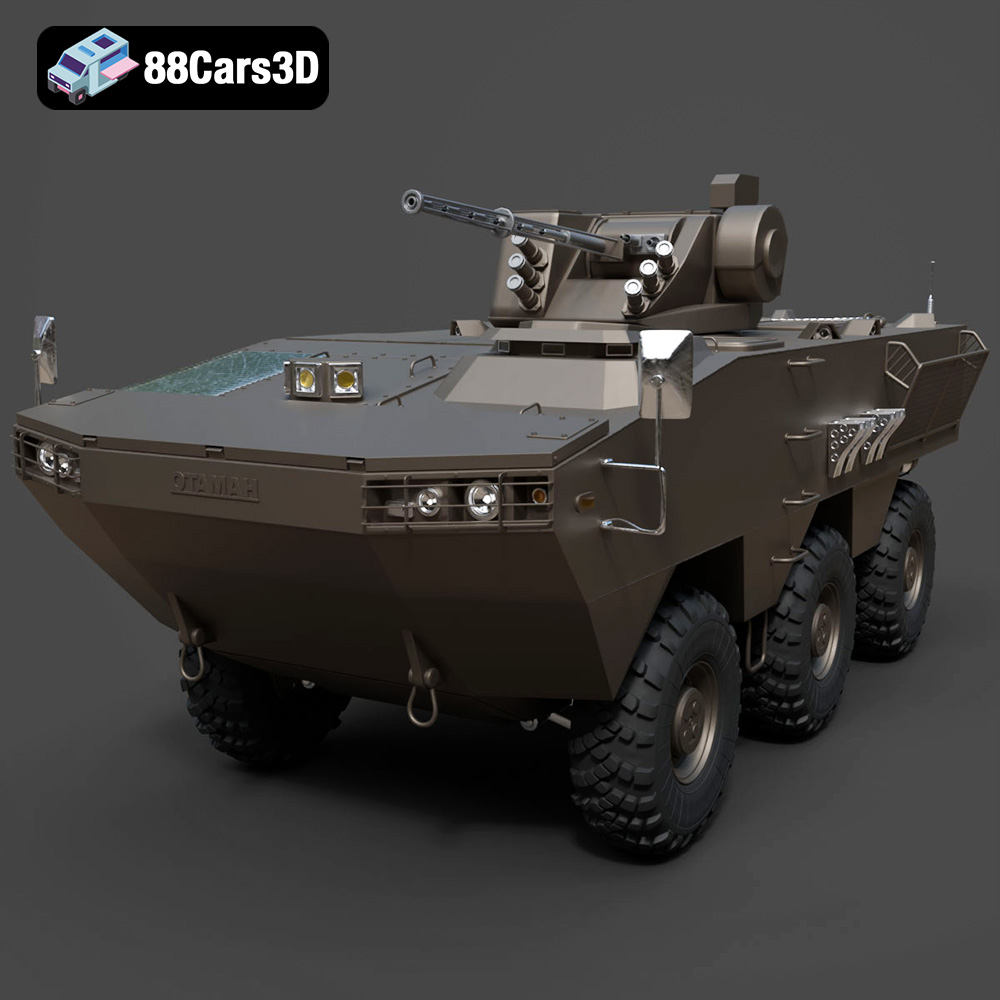
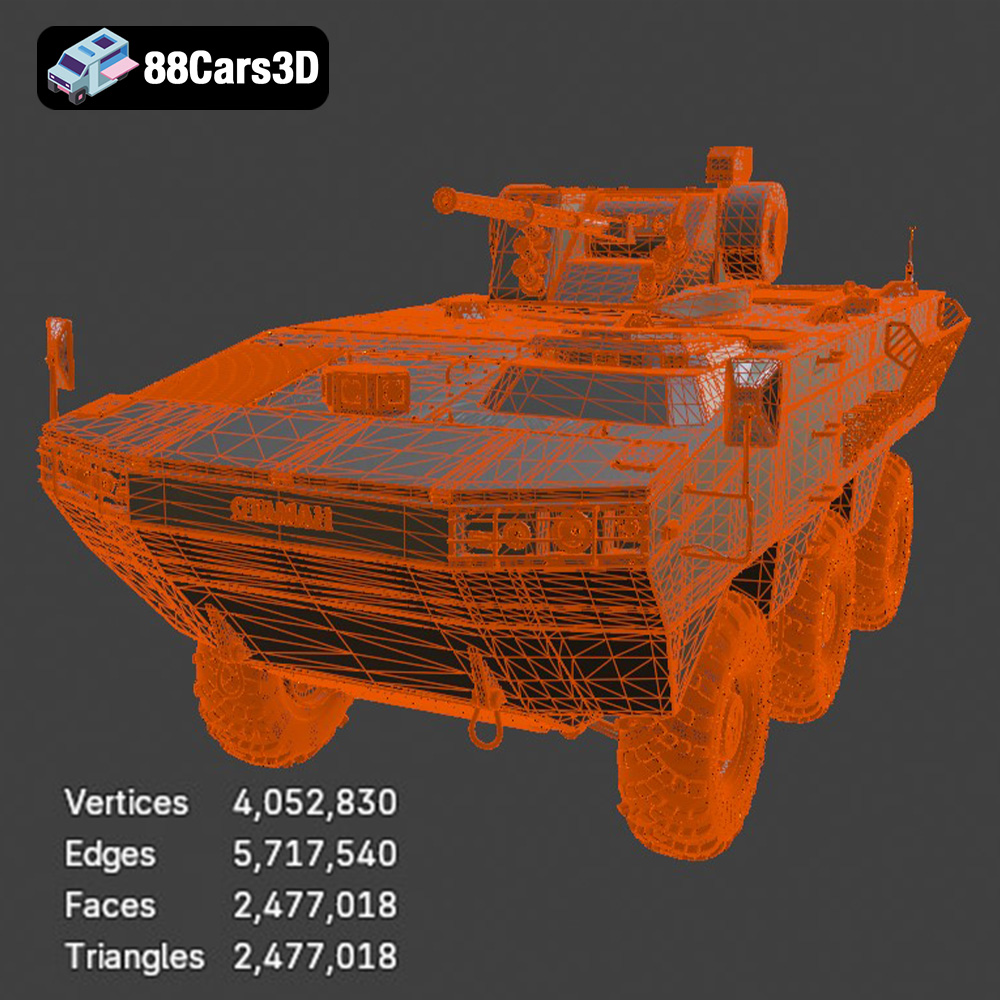
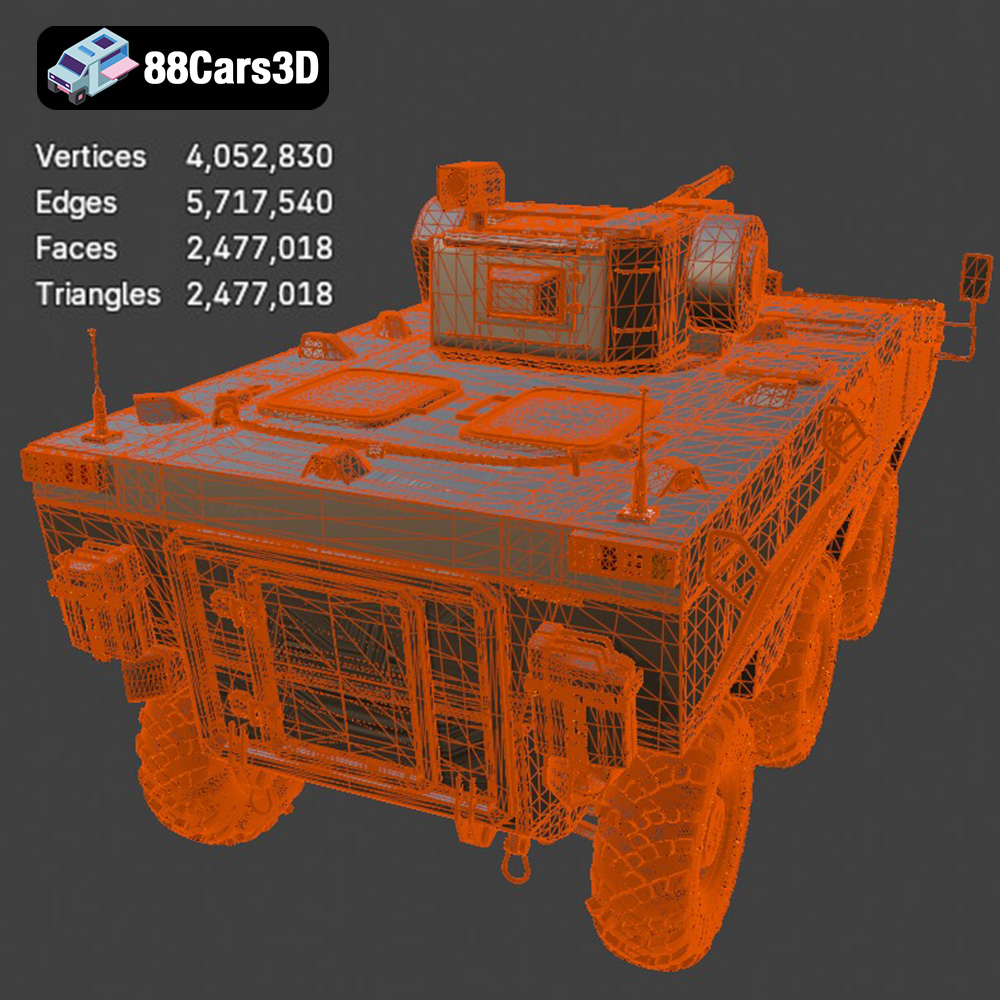
The first impression of any 3D model comes from its geometry. For the BTR Otaman-3 2019, a rich triangle count of 2,477,018 ensures unparalleled visual fidelity. This high polygon density is crucial for capturing the angular ballistic hull, intricate suspension, and detailed weapon systems without sacrificing smoothness or detail at close range. However, high poly counts must be managed intelligently. The model’s description highlights “thoughtfully topologized,” meaning the mesh density is distributed efficiently, avoiding unnecessary polygons while retaining critical details. This balance is vital for both high-end rendering, where fidelity is king, and for optimized integration into game engines, where performance is equally critical. For game assets, even high-poly models often have a lower-poly version or employ techniques like normal mapping to project detail from a high-poly sculpt onto a more manageable mesh.
Beyond raw geometry, textures breathe life into a 3D model. Effective texture mapping relies on well-executed UV layouts – the flattened 2D representation of a 3D model’s surface. A professional asset like the BTR Otaman-3 2019 would feature clean, non-overlapping UVs, allowing for seamless texture application and optimal utilization of texture space. This ensures that intricate details like panel lines, rivets, wear, and camouflage patterns appear crisp and undistorted, contributing significantly to photorealism. PBR (Physically Based Rendering) workflows, which are standard in modern rendering, demand precise texture sets (Albedo, Normal, Roughness, Metallic, Ambient Occlusion) that accurately describe surface properties, and robust UVs are the foundation for these maps.
The modern standard for visual realism in 3D is Physically Based Rendering (PBR). PBR materials simulate how light interacts with surfaces in the real world, producing highly convincing results. For the BTR Otaman-3 2019, this means accurately representing the matte military paint, the metallic sheen of exposed components, and the subtle variations in dirt and grime. The ability to easily adjust material finishes – from clean, factory-fresh paint to weathered battle-hardened metal – is a key customization option. Such flexibility allows the model to be adapted to various scenarios, whether it’s a pristine vehicle in a virtual showroom or a battle-scarred APC on a war-torn battlefield. Professionals require materials that are not only visually appealing but also easy to integrate and modify within their chosen rendering engine.
The versatility of a professional 3D asset is often defined by the range of file formats it supports. Each format serves specific purposes, catering to different software, workflows, and end applications. The BTR Otaman-3 2019 3D Model, with its extensive list of included formats, is designed for maximum compatibility and utility across the professional spectrum. Understanding these formats is crucial for optimizing your pipeline.
The `.blend` file is Blender’s native format and offers a complete, fully editable scene. When you download the BTR Otaman-3 2019 in `.blend` format, you’re getting the entire Blender project, including all mesh data, materials, textures (often packed within the file), cameras, lights, and even animation data if present. This is ideal for Blender users who need to dive deep into the model’s structure, modify its topology, tweak materials, set up custom rigs, or integrate it into an existing Blender scene with full flexibility. It ensures maximum creative control and is a preferred format for artists who primarily work within the Blender ecosystem, allowing for rapid iteration and detailed customization.
FBX (Filmbox) is arguably the most widely adopted format for exchanging 3D data between different software applications. It supports geometry, materials, textures, cameras, lights, and, critically, animation. For the BTR Otaman-3 2019, the `.fbx` format is “ideal for Unreal, Unity, and real-time pipelines” because it efficiently packs all necessary information for engine integration. Its robustness in handling complex hierarchies, pivot points (which are essential for the Otaman-3’s turret, wheels, and suspension), and animation data makes it indispensable for game developers and VFX artists. Most major 3D software (Maya, 3ds Max, Blender, Cinema 4D) have excellent FBX import/export capabilities, ensuring a smooth transfer of the BTR Otaman-3 model into your preferred environment.
OBJ (Object) is a universal, open-standard format primarily used for static 3D geometry. While it doesn’t support animation or advanced material properties directly in the same way as FBX, it is incredibly robust for mesh data and UV coordinates. Almost every 3D software application can import and export `.obj` files, making it a reliable choice for cross-software compatibility. For the BTR Otaman-3, an `.obj` file would contain the mesh, UVs, and references to external material files (`.mtl`). It’s a great fallback format when FBX causes issues or when you only need the pure geometric data for sculpting, retopology, or integration into older pipelines.
GLB (GL Transmission Format Binary) is the binary version of glTF, a royalty-free specification for the efficient transmission and loading of 3D scenes and models by applications. The `.glb` format bundles all assets (model, textures, animations) into a single file, making it “optimized for AR, VR, and browser-based display.” For the BTR Otaman-3, this means it’s ready for immediate deployment in web-based configurators, immersive augmented reality experiences on mobile devices, or virtual reality training simulators. Its compact nature and efficient parsing make it ideal for real-time, lightweight applications where quick loading and broad compatibility across devices are key.
STL (Standard Tessellation Language) is the most common file format for 3D printing. It describes only the surface geometry of a 3D object using a collection of triangular facets. The BTR Otaman-3 2019’s availability in `.stl` format is specifically tailored for “3D printing output,” allowing military hobbyists, diorama builders, or defense contractors to create physical prototypes or display models. While it doesn’t store color or texture information, its simplicity and widespread support by slicing software make it the go-to for bringing digital models into the physical realm. The product description provides detailed 3D print settings, emphasizing the model’s readiness for additive manufacturing.
PLY (Polygon File Format, or Stanford Triangle Format) is a file format for storing three-dimensional data from 3D scanners. It can store a variety of properties, including color, transparency, surface normals, and texture coordinates, in addition to geometry. While less common for general asset exchange than FBX or OBJ, it’s a “precision mesh format for CAD or analysis” applications. For the BTR Otaman-3, a `.ply` file could be useful for engineers or researchers needing highly accurate mesh data, perhaps for aerodynamic simulations or structural analysis, offering a more robust data set than STL for certain analytical tasks.
While not a traditional open file format like FBX or OBJ, `.unreal` implies a pre-packaged asset designed for direct import and optimized use within Unreal Engine. This often means the model has already been through a specific pipeline, potentially including material setup, LODs (Levels of Detail), and physics assets, making it an “Engine-ready asset for real-time environments.” For the BTR Otaman-3, an `.unreal` package would significantly streamline the integration process for game developers and simulation creators using Unreal Engine, saving considerable time and effort in asset preparation.
The `.max` file is the native project format for Autodesk 3ds Max. Similar to Blender’s `.blend` format, it provides a “fully editable 3ds Max project for animation and rendering.” This is invaluable for 3ds Max users who require full access to the model’s scene hierarchy, modifiers, materials, lights, and camera setups. Professionals working in architectural visualization, automotive design, or high-end cinematic production who rely on 3ds Max will find this format offers the most granular control for customization, rendering optimization with V-Ray or Corona, and complex animation sequences involving the BTR Otaman-3.
Game development demands a unique blend of visual excellence and technical efficiency. A high-quality 3D car model like the BTR Otaman-3 2019 is an invaluable game asset, designed to meet the rigorous demands of real-time environments.
The BTR Otaman-3 2019 3D model, despite its 2,477,018 triangle count, is described as “Game-Ready & Optimized,” striking a perfect balance for real-time engines like Unreal and Unity. This optimization isn’t just about polygon count; it involves efficient UV mapping, streamlined material setups (PBR), and often, a hierarchy that supports interactive elements. For a game asset, this means it can be dropped into a level without extensive re-working, maintaining high-end visual realism while adhering to performance budgets. Developers can utilize this model for dynamic battlefield scenarios, interactive training modules, or even as a hero vehicle in tactical shooter games, confident in its technical foundation.
For vehicles in games, interactivity is key. The BTR Otaman-3 2019 model comes with “proper pivot setup for turret rotation, gun elevation, wheel rotation, and multi-axle steering.” This pre-rigged functionality is a significant time-saver, allowing developers to immediately implement vehicle controls and animation without needing to set up complex pivot points and hierarchies from scratch. Further development might involve creating destructible meshes, implementing custom physics assets, or integrating advanced suspension systems, all building upon the solid foundation provided by the initial model. Such technical forethought demonstrates the value of premium 3D models from sources like 88cars3d.com.
Both Unreal Engine and Unity are powerhouse platforms for game development. The `.fbx` format is the common bridge, offering robust support for geometry, materials, and crucial pivot data. For Unreal Engine, the `.unreal` package (if supplied as a native asset) streamlines the process even further. Integrating the BTR Otaman-3 involves importing the model, applying PBR materials (often from supplied textures), and setting up blueprints or scripts for interactive controls. Artists can then customize camouflage patterns, add environmental wear, and animate its components to create dynamic and immersive gameplay experiences. The model’s real-world scale accuracy further enhances realism, making it suitable for realistic military simulators.
Beyond interactive experiences, the BTR Otaman-3 2019 3D Model excels in non-real-time rendering for cinematic sequences, marketing materials, and high-fidelity visualizations. Here, the focus shifts entirely to achieving maximum photorealism.
Modern render engines like V-Ray, Corona, Cycles, and Arnold are capable of producing breathtakingly realistic images. The high triangle count and thoughtful topology of the BTR Otaman-3 2019 model provide the necessary geometric detail for exquisite close-up shots. Photorealism is achieved through a combination of accurate PBR materials, high-resolution textures, and sophisticated lighting setups. The ability to modify material finishes (matte military paint, worn metal) and adapt lighting for different environments (combat, night-vision) allows artists to create compelling narratives. From showcasing the resilience of its heavy armor plating to highlighting the intricacy of its weapon systems, this model provides the raw material for stunning visuals.
Effective lighting is paramount for automotive rendering. Using physically accurate light sources, HDR (High Dynamic Range) environments, and global illumination, artists can simulate realistic outdoor conditions, studio setups, or dramatic combat lighting. The model’s clean geometry and UVs ensure that light interacts with its surfaces predictably, creating realistic reflections, shadows, and specular highlights. Shading plays a critical role too, where custom shader networks can add layers of detail like dust accumulation, mud splashes, or paint chipping, further enhancing realism. Integrating the BTR Otaman-3 into a carefully constructed 3D environment, complete with terrain, foliage, and atmospheric effects, completes the illusion.
Even after a render is complete, post-production is essential for adding that final polish. Techniques such as color grading, depth of field, motion blur, lens flares, and atmospheric haze can significantly enhance the cinematic impact of renders featuring the BTR Otaman-3. Compositing the rendered vehicle with live-action footage or other CGI elements can place it seamlessly into any scene. Whether it’s for a defense industry presentation showcasing new vehicle capabilities or a dramatic cutscene in a video game, the visual foundation provided by a high-quality 3D model is indispensable for achieving professional-grade results.
The utility of the BTR Otaman-3 2019 3D Model extends far beyond traditional screens, embracing tangible and immersive applications that leverage its detailed design.
The inclusion of the `.stl` format specifically caters to 3D printing enthusiasts and professionals. Converting a high-detail model like the BTR Otaman-3 for physical output requires careful consideration. The product description provides excellent guidance: recommended scales (1:35, 1:48, 1:72), layer height suggestions (0.04–0.12 mm for resin printing), wall thickness, infill, and crucial advice on supports and print orientation. Printing the hull angled for structural integrity and separating intricate parts like the turret and wheels are best practices. This ensures that the physical model accurately reflects the digital precision, allowing hobbyists and model makers to produce highly detailed replicas suitable for dioramas or display, bringing a virtual asset into the real world.
Immersive technologies like Augmented Reality (AR) and Virtual Reality (VR) are revolutionizing training, marketing, and entertainment. The BTR Otaman-3 2019 model is “perfect for immersive virtual showrooms, training simulators, and mobile AR experiences.” In VR, trainees can explore the vehicle’s exterior, inspect its components, and even simulate maintenance procedures in a safe, controlled environment. In AR, the vehicle can be overlaid onto a real-world scene via a smartphone or tablet, allowing potential buyers or military personnel to visualize its size and presence in their actual surroundings. The `.glb` format is particularly well-suited for these applications due to its optimized nature for web and mobile platforms, ensuring smooth performance in interactive AR/VR settings.
For the defense industry, precision and realism are non-negotiable. The BTR Otaman-3 2019 3D Model is an excellent tool for “defense industry visualizations.” This includes creating highly accurate simulations for strategic planning, operational briefings, and advanced driver or gunner training. The model’s real-world scale accuracy and detailed exterior features (hull geometry, weapon systems, tactical lighting) make it invaluable for conveying complex information. Furthermore, these visualizations can be used for virtual prototyping, allowing engineers to evaluate designs and modifications in a simulated environment before physical production. The ability to customize camouflage, simulate environmental conditions, and animate functional components makes this asset a powerful training and analysis tool.
The true power of a premium 3D model lies in its adaptability and how seamlessly it integrates into various professional pipelines. The BTR Otaman-3 2019 3D Model is engineered with this flexibility in mind.
No two projects are identical, and the ability to customize assets is paramount. The BTR Otaman-3 2019 offers extensive customization options, including changing camouflage patterns (desert, woodland, urban, winter), modifying tire textures (clean vs. muddy), and adjusting material finishes. This level of control allows artists to tailor the model precisely to their narrative or functional requirements. Imagine a game where the vehicle accumulates mud over time, or a cinematic where the APC transitions from a pristine display to a battle-worn machine. These dynamic adjustments are made possible by the model’s robust material setup and well-organized asset structure.
Time is a critical resource in any professional production. Starting with a meticulously pre-built and optimized 3D model like the BTR Otaman-3 2019 significantly streamlines the asset pipeline. Instead of spending hundreds of hours on modeling, texturing, and initial rigging, teams can immediately focus on integration, animation, and scene dressing. This efficiency translates to faster project turnaround times, reduced costs, and the ability to allocate resources to other creative or technical challenges. For studios working on tight deadlines for game development or cinematic productions, ready-to-use, high-quality 3D car models are indispensable.
The choice of where to source 3D assets is critical. Relying on platforms like 88cars3d.com ensures access to premium, technically sound 3D models that meet professional standards. The BTR Otaman-3 2019 is a testament to this commitment to quality, offering detailed geometry, multiple file formats, and features designed for optimal performance across diverse applications. Investing in such assets from reputable marketplaces guarantees not only visual excellence but also the underlying technical integrity required for demanding professional workflows in automotive rendering, game development, AR/VR, and specialized visualizations. This saves valuable development time and elevates the overall quality of the final product.
The BTR Otaman-3 2019 3D Model represents the pinnacle of modern 3D asset creation, offering an unparalleled blend of visual fidelity, technical precision, and workflow flexibility. From its meticulously crafted geometry and robust pivot setups to its compatibility across a wide array of industry-standard file formats, this model is designed to excel in any professional application. Whether you’re developing the next-generation tactical shooter, crafting cinematic military visualizations, designing immersive AR/VR training simulators, or even producing highly detailed 3D prints, the Otaman-3 provides a solid, versatile foundation. Assets of this caliber, readily available from platforms like 88cars3d.com, empower artists and developers to push the boundaries of digital realism and efficiency. Incorporating such a sophisticated 3D car model into your projects is not just about adding a vehicle; it’s about investing in a high-performance asset that enhances every facet of your creative and technical pipeline, ensuring your output is nothing short of exceptional.
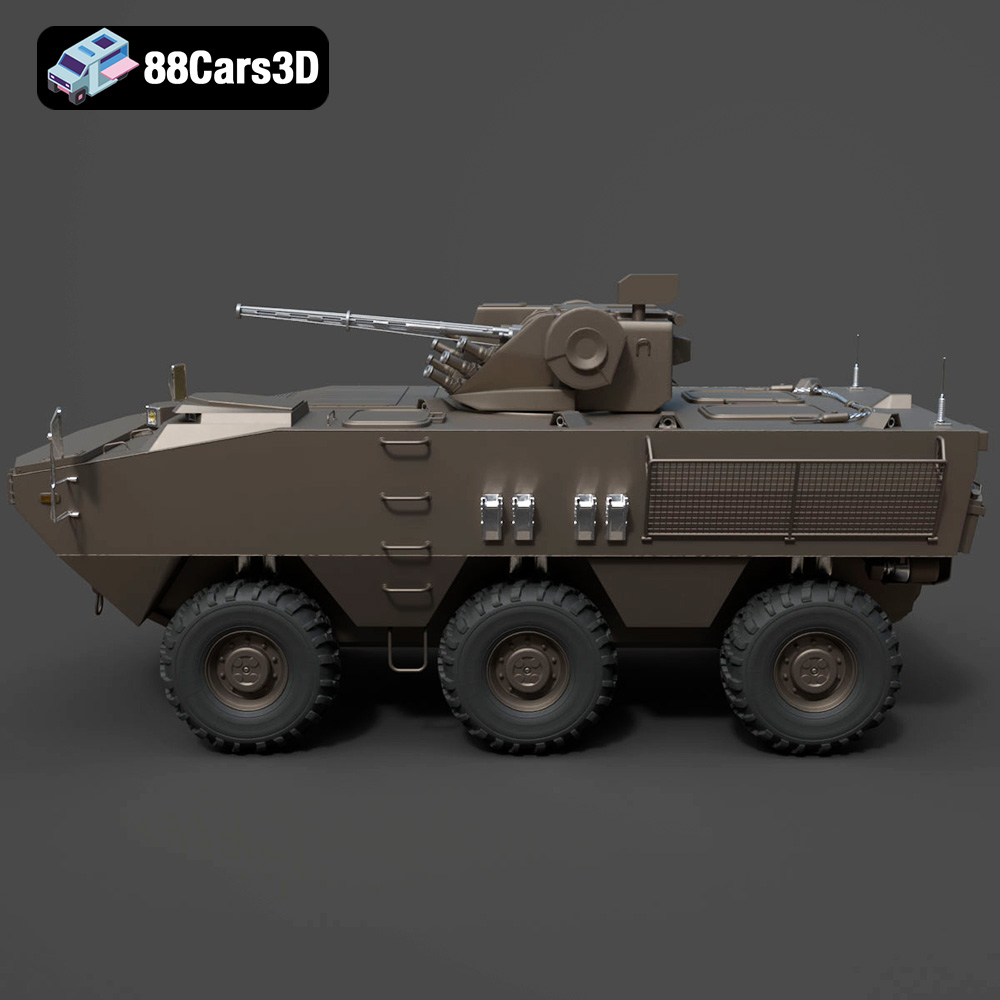
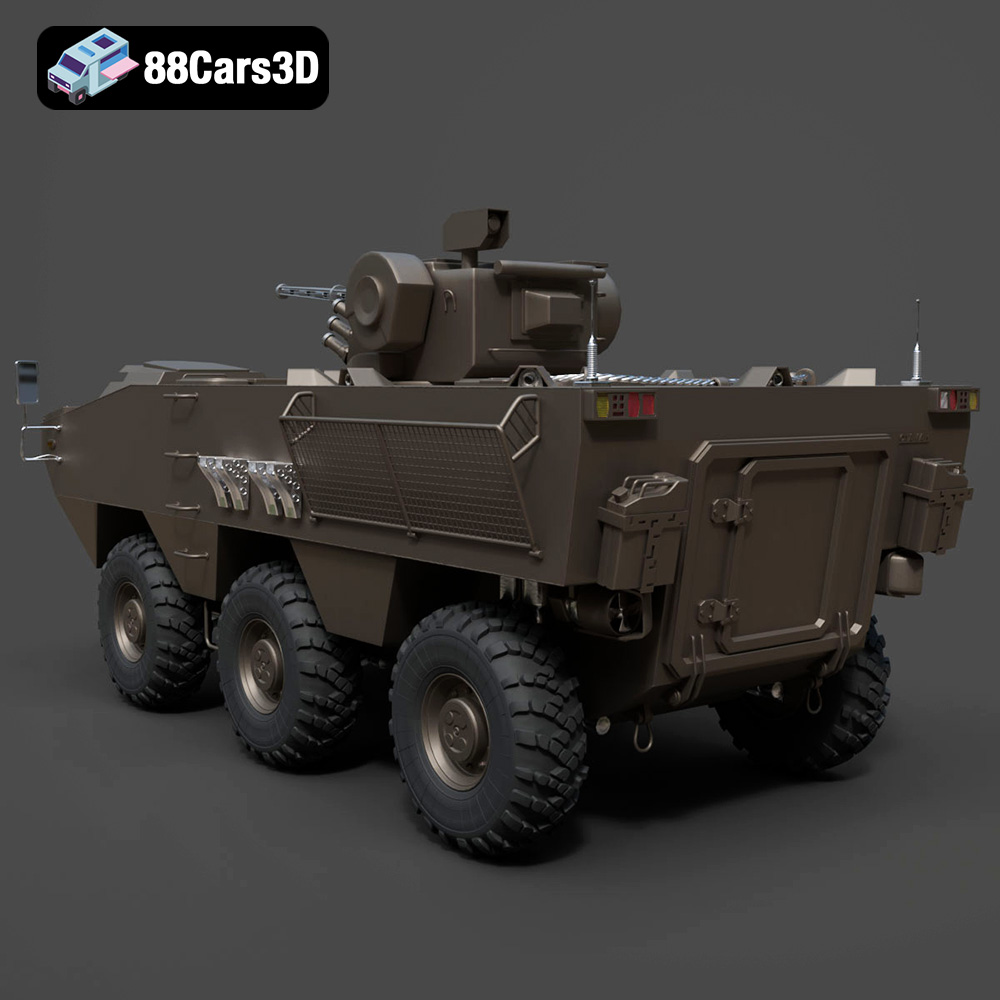
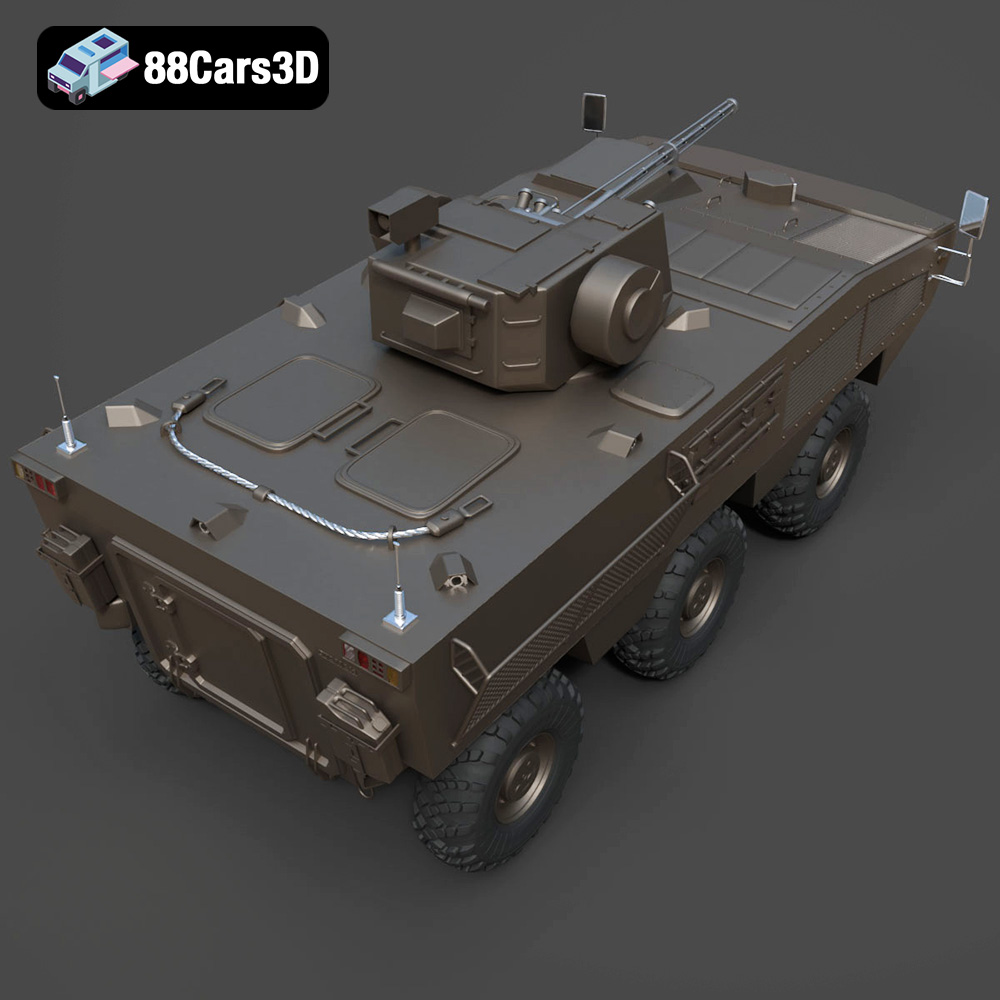
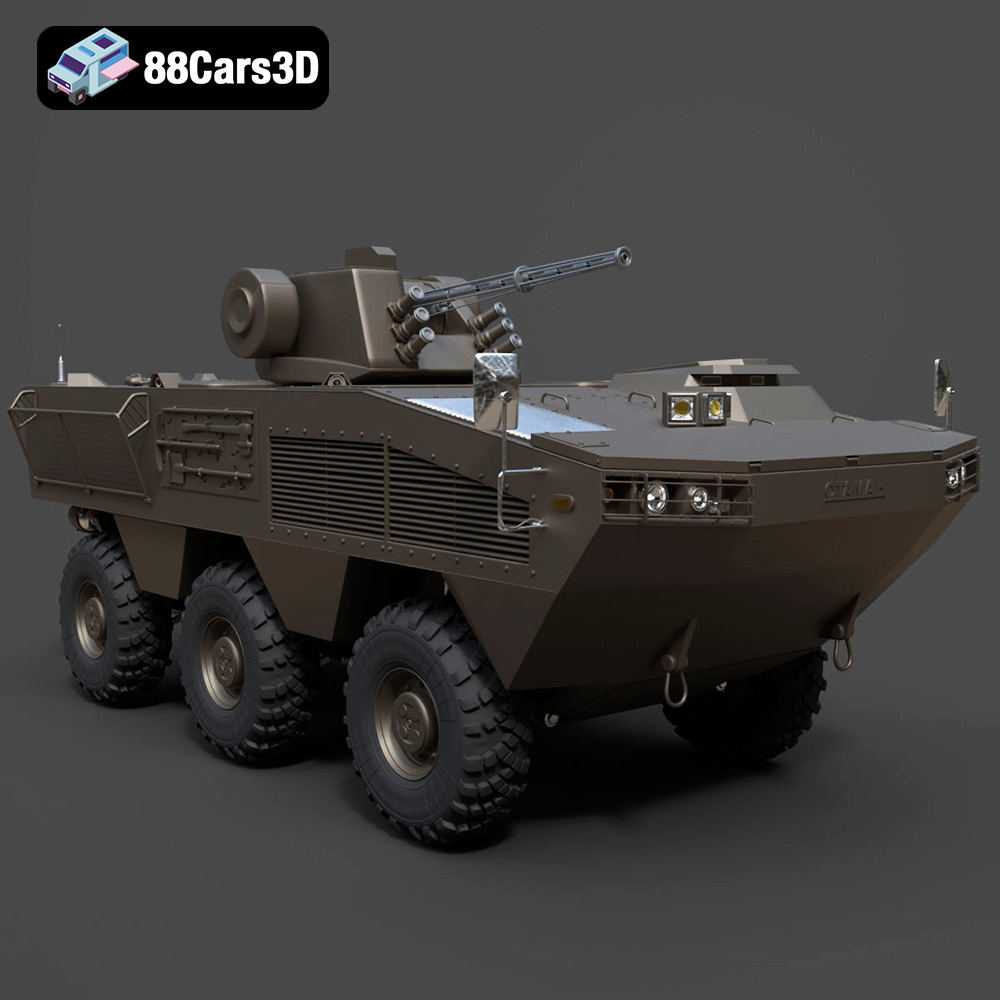
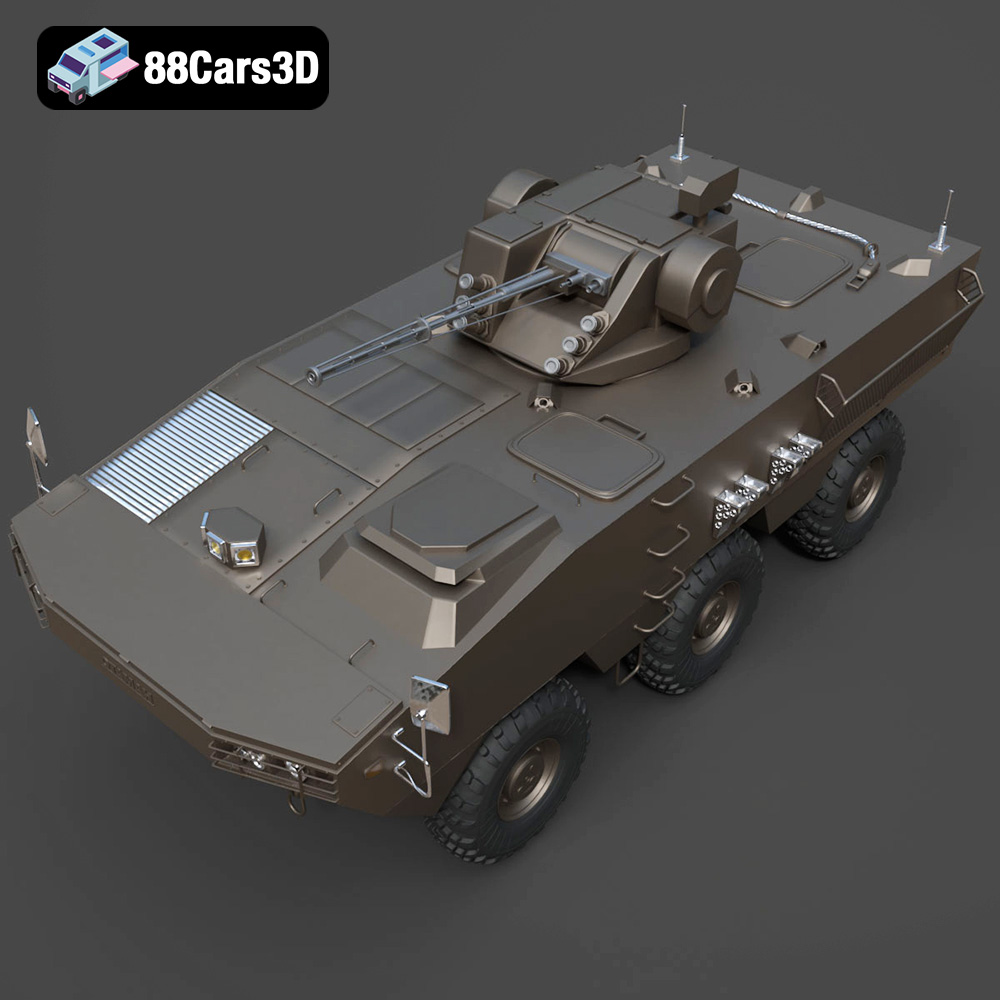
The BTR Otaman-3 2019 is a modern, highly mobile 8×8 armored personnel carrier (APC) designed for rapid deployment, infantry support, and advanced battlefield survival. Known for its robust modular chassis, heavy armor plating, and versatile turret options, the Otaman-3 represents cutting-edge military engineering. This model captures the imposing aesthetic of the vehicle, complete with its angular ballistic hull, heavy-duty suspension, tactical exterior mounts, and sophisticated weaponry systems. This highly detailed 3D model boasts a rich triangle count of 2,477,018, ensuring unparalleled visual fidelity and geometric precision. Despite its high polygon count, the mesh is thoughtfully topologized for high-end rendering, cinematic animation, and optimized integration into modern game engines. It delivers photorealistic results suitable for close-up shots and rigorous military simulations. Perfect for military simulators, tactical shooter games, cinematic war visual effects, and defense industry visualizations.
$89.99
.2019
.apc
.blend
.btr
.fbx
.glb
.max
.obj
.ply
.rendering
.stl
.tank
.unreal
armored-personnel-carrier
game asset
game-ready
high poly
military-vehicle
optimized
otaman-3
vehicle-3d-model
VR/AR